What Is Assam Tea? The Place, and the Malty Style It Names
Assam is unusual among tea names because it points at two things at once: a hot floodplain in northeast India, and a distinct large-leaved variety of the tea plant that grows almost nowhere else in India. The bush explains the malt, and the floodplain explains the volume.
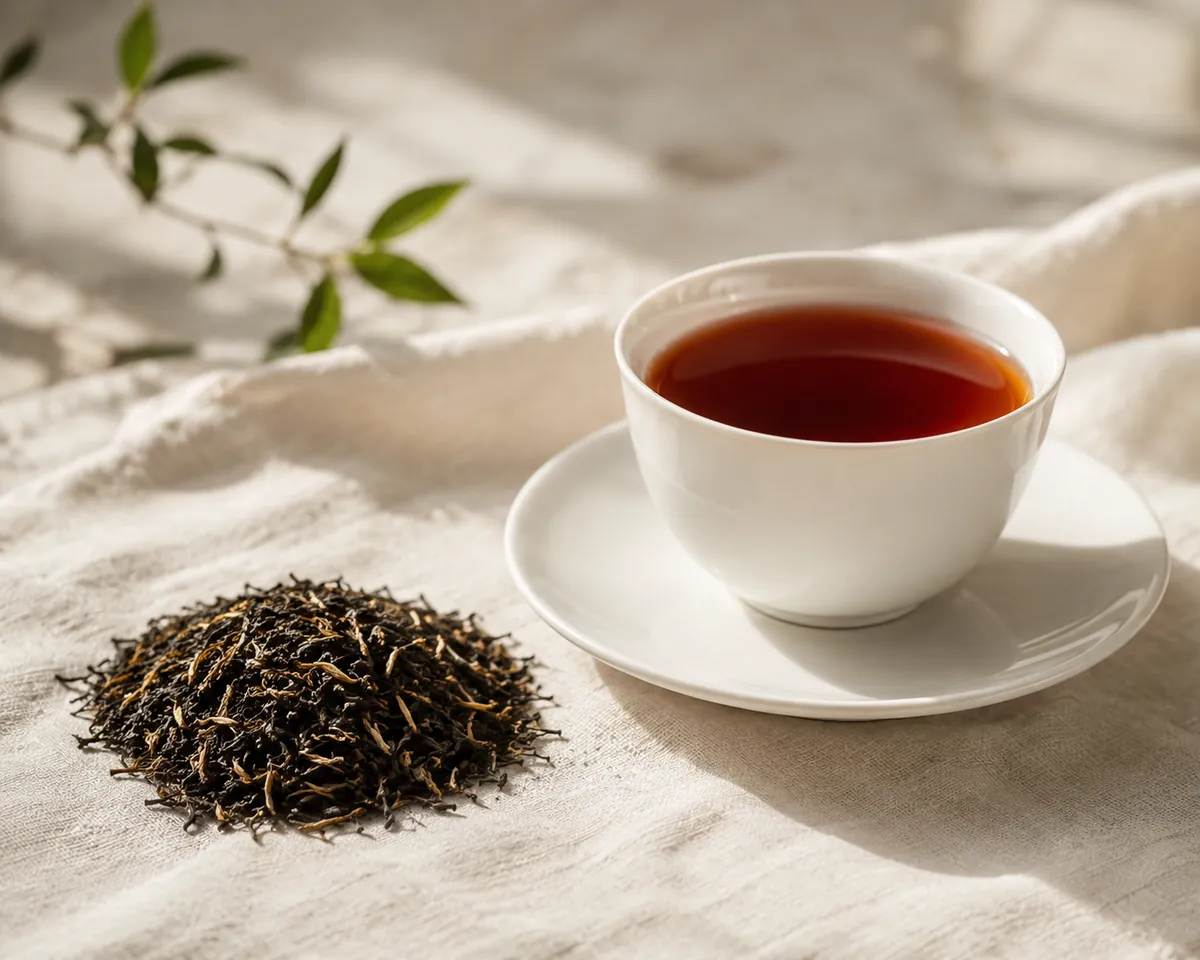
Assam names a state in the far northeast of India, on the floodplain of the Brahmaputra, and it also names a variety of the tea plant that was found growing there. Both meanings are in daily use and they explain different halves of the cup.
The variety is the half people skip. Almost everything else on a tea shelf is made from the small-leaved China bush, and Assam is made from a large-leaved tropical relative that behaves so differently in the field and in the factory that the resulting tea could hardly have turned out any other way.
Heavy, malty, deep red and brisk enough to grip the tongue: that is the shape a big leaf grown fast in a hot wet valley and oxidised to completion arrives in. Everything below is a consequence of those two facts.
Assam at a glance
- What it is
- Black tea from the Brahmaputra valley in northeast India
- The plant
- Camellia sinensis var. assamica, a large-leaved tropical variety
- The land
- Floodplain at around 50 to 100 m, hot, and very wet in the monsoon
- The prized pick
- Second flush, May to June, tippy and malty
- Most of the crop
- Crushed rather than rolled, and destined for bags and blends
- Water
- Boiling, and it takes it without complaint
- Best known as
- The backbone of nearly every English Breakfast blend
The plant is the story, not the district
Tea was found growing wild in the hills and forests of the region in the 1820s, and the discovery caused an argument rather than a celebration. The leaves were much larger than those on the Chinese bushes botanists in London knew, and for some years the plant was dismissed as a relation rather than the real thing.
It was the real thing. What had been found was a distinct variety of the same species, adapted to heat and heavy rain instead of cold hillsides, and it turned out to be far better suited to producing tea at scale than the plant it was being compared against.
| var. sinensis | var. assamica | |
|---|---|---|
| Leaf | Small, narrow, leathery | Large, broad, glossy and soft |
| Habit | A shrub, hardy in cold | A tree if left unpruned, and frost-tender |
| Home ground | Cool hillsides, often at altitude | Hot, wet lowland |
| Polyphenols | Lower | Higher, which suits full oxidation |
| Typical use | Green and white tea, Darjeeling | Black tea, and Yunnan pu-erh |
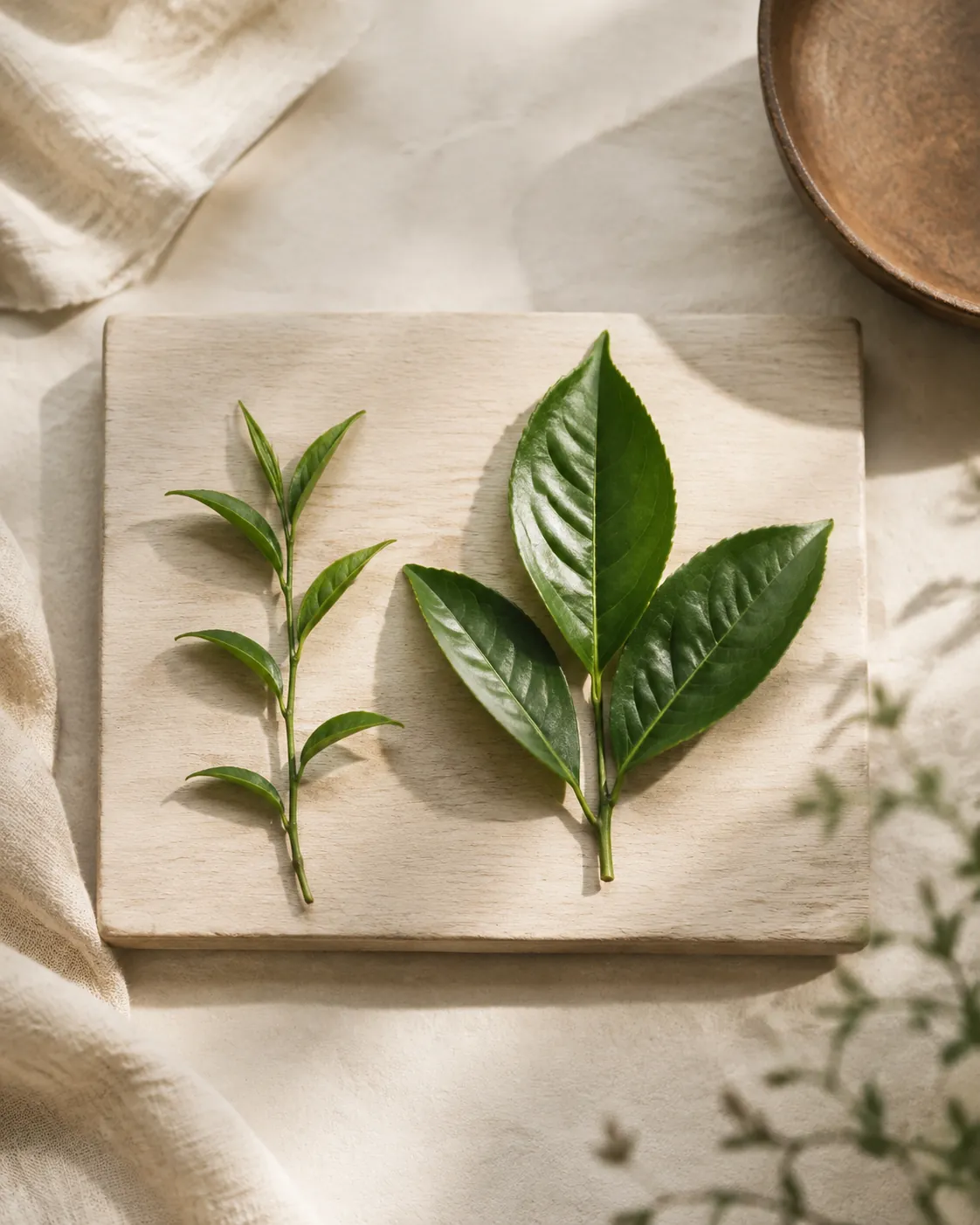
Leaf size is not a detail here. A bigger, softer leaf holds more of the polyphenols that oxidation converts into colour and body, which is why the assamica bush ended up making the heavy black teas and the China bush ended up making the delicate ones.
The same variety is what Yunnan uses for its own large-leaf teas, several hundred miles to the northeast across the mountains. That is a useful thing to hold on to, because it explains why a young raw pu-erh and a young Assam share a thickness that neither shares with anything from a China bush.
What a floodplain does that a hillside cannot
Picture the opposite of a Himalayan tea garden.
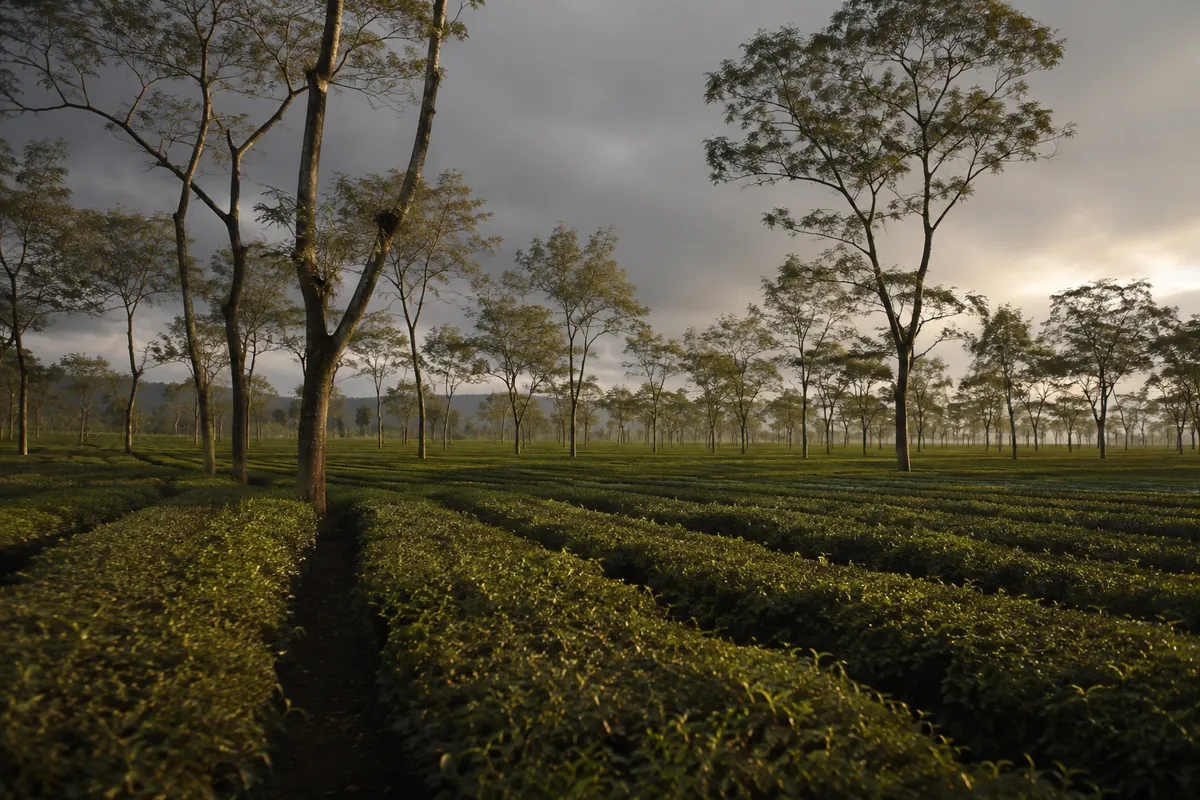
The Assam gardens sit on flat alluvial land only a little above sea level, in a valley that is hot for most of the year and takes an enormous quantity of monsoon rain across a few months.
Silt deposited by a very large river gives deep, fertile soil, and heat and water do the rest. The bushes grow fast and they grow bulky, and a garden here fills a chest in a fraction of the time a high, cold hillside needs.
The trade a growing region makes
- Assam floodplainFast growth, heavy crop, thick and malty leaf
- Ceylon low-grownWarm and productive, with a broader and softer cup
- Ceylon high-grownSlower, brighter, more citric
- Darjeeling hillsideVery low yield, very high aroma, and a price that reflects it
Shade trees are the visible signature of an Assam garden and they are there for a reason. The plant evolved under a forest canopy, so tall trees are left standing or planted through the rows to break the worst of the sun, which is an entirely different intervention from the netting a Japanese grower puts over a field.
Heat has one further consequence that reaches the factory. Withering and oxidation both run quickly in warm humid air, so the reaction goes to completion easily, and completion is what a black tea wants.
Where the malt actually comes from
Malty is the word that follows this tea everywhere, and unlike a good many tasting notes it is a genuine description of something in the cup rather than a habit of the marketing department. What it points at is a cereal sweetness, closer to malt loaf or the smell of a brewery than to anything fruity.
Four things put it there, and they compound.
The variety
A large soft leaf carrying more polyphenols, which oxidation turns into heavier compounds.
Full oxidation
The reaction is taken all the way, in warm humid air that helps it along.
The firing
Drying at the end develops the toasted, bread-like end of the aroma.
Second-flush timing
The May and June pick concentrates the note more than any other harvest does.
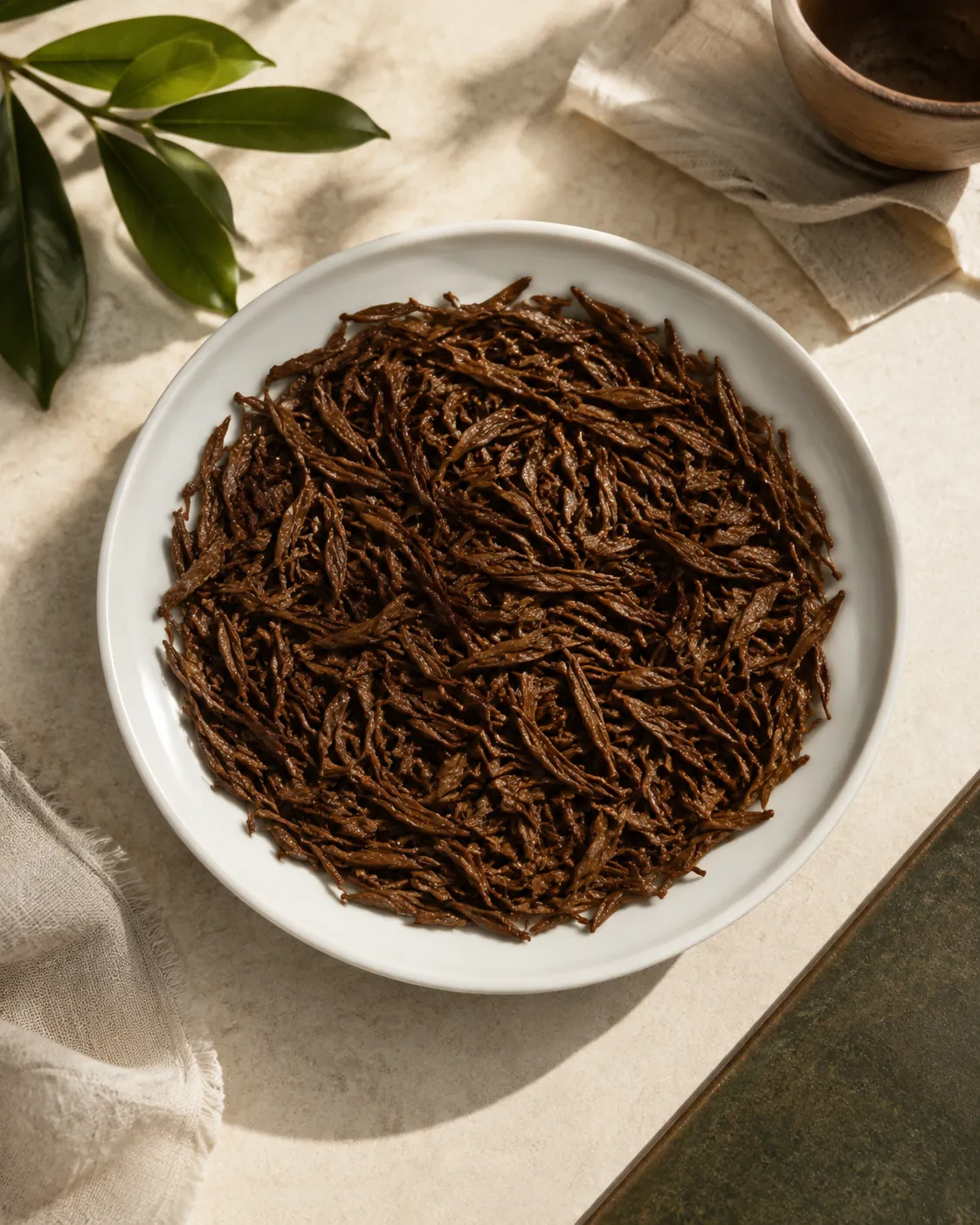
You can check the oxidation in the spent leaf without any expertise at all. Tip it out and look: an Assam gives leaf that is uniformly coppery brown right through, with no green left anywhere, which is exactly what a partially oxidised tea does not give.
Briskness is the other half of the profile and it is the part that decides whether a cup is any good. It is a lively drying grip rather than a taste, it comes from the same tannins the milk is going to bind to, and a tea with malt but no briskness reads flat and slightly stewed.
What Assam tastes like works through the range in detail.
Why the second flush is the one worth paying for
Four picks come off these bushes across the year and they are not variations on one tea. The gap between the March leaf and the May leaf is the widest gap in the Assam year.
| Flush | When | Character | Where it goes |
|---|---|---|---|
| First | March to April | Lighter, brisker, less malt | Some sold as leaf, much of it blended |
| Second | May to June | Full, malty, tippy, deep red | The prized pick, and the one sold by name |
| Monsoon | July to September | Heavy, plain, coloury | Bulk leaf for bags and blends |
| Autumnal | October to November | Softer and thinner | Blending, and low-cost retail |
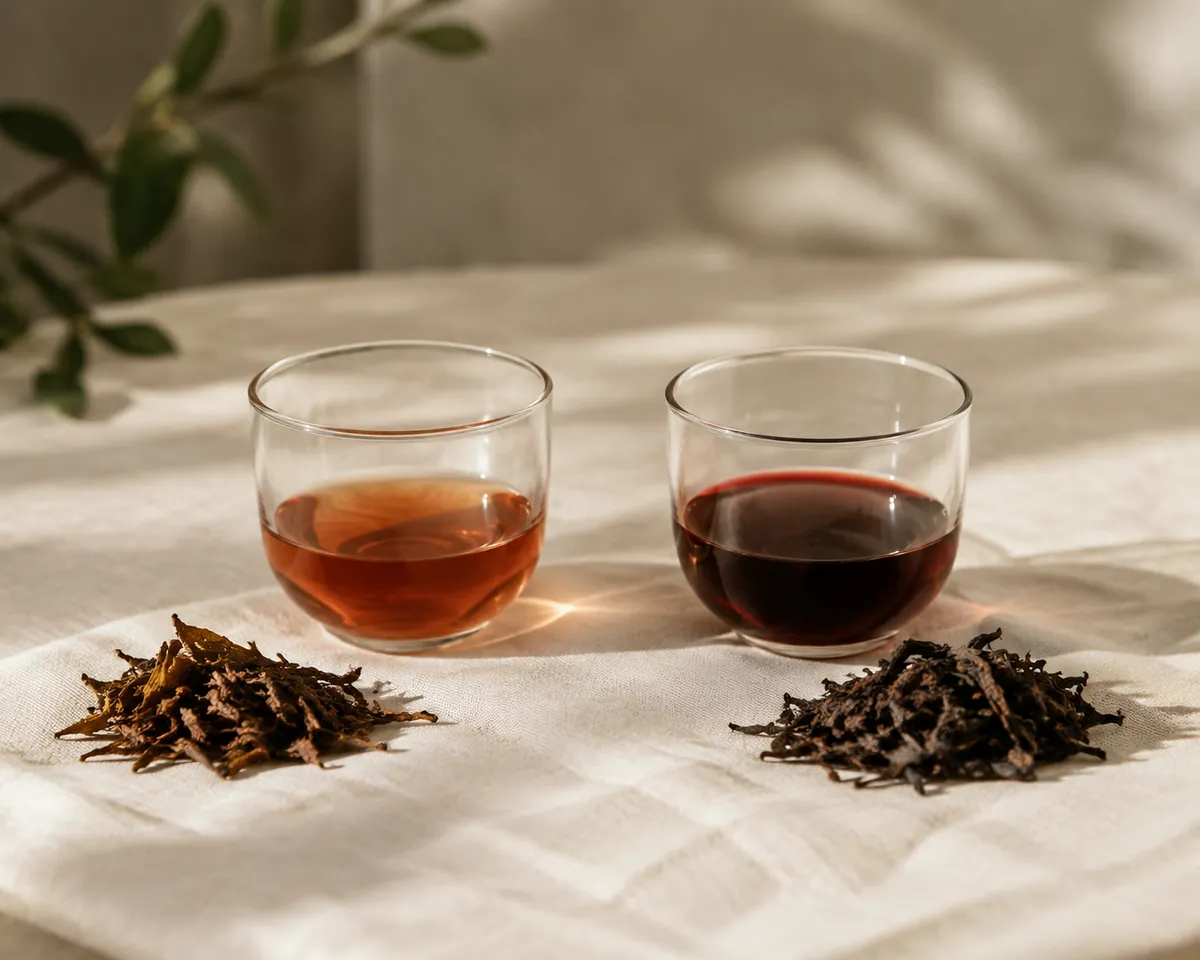
Second flush is what a good single-estate Assam almost always is. The rains have arrived but not yet at full weight, growth is vigorous, the leaf comes in with a high proportion of downy buds, and the malt is at its most pronounced.
That is a different arrangement from the district next door, and it is worth being clear about. In Darjeeling the spring pick is the celebrated one and the summer pick is the fruity one, and here the celebrated pick is the summer one, chosen for weight rather than for perfume.
Monsoon leaf is not a lesser version of the same tea. It is a bulk product, grown through the heaviest rain, and its job is to fill tea bags at a reliable price rather than to be tasted attentively.
What golden tips are, and whether they matter
Look closely at a good loose Assam and the dark leaf is flecked with pale gold. Those flecks are unopened buds, still covered in fine down, which oxidise to a tawny gold rather than to black because the down protects them.
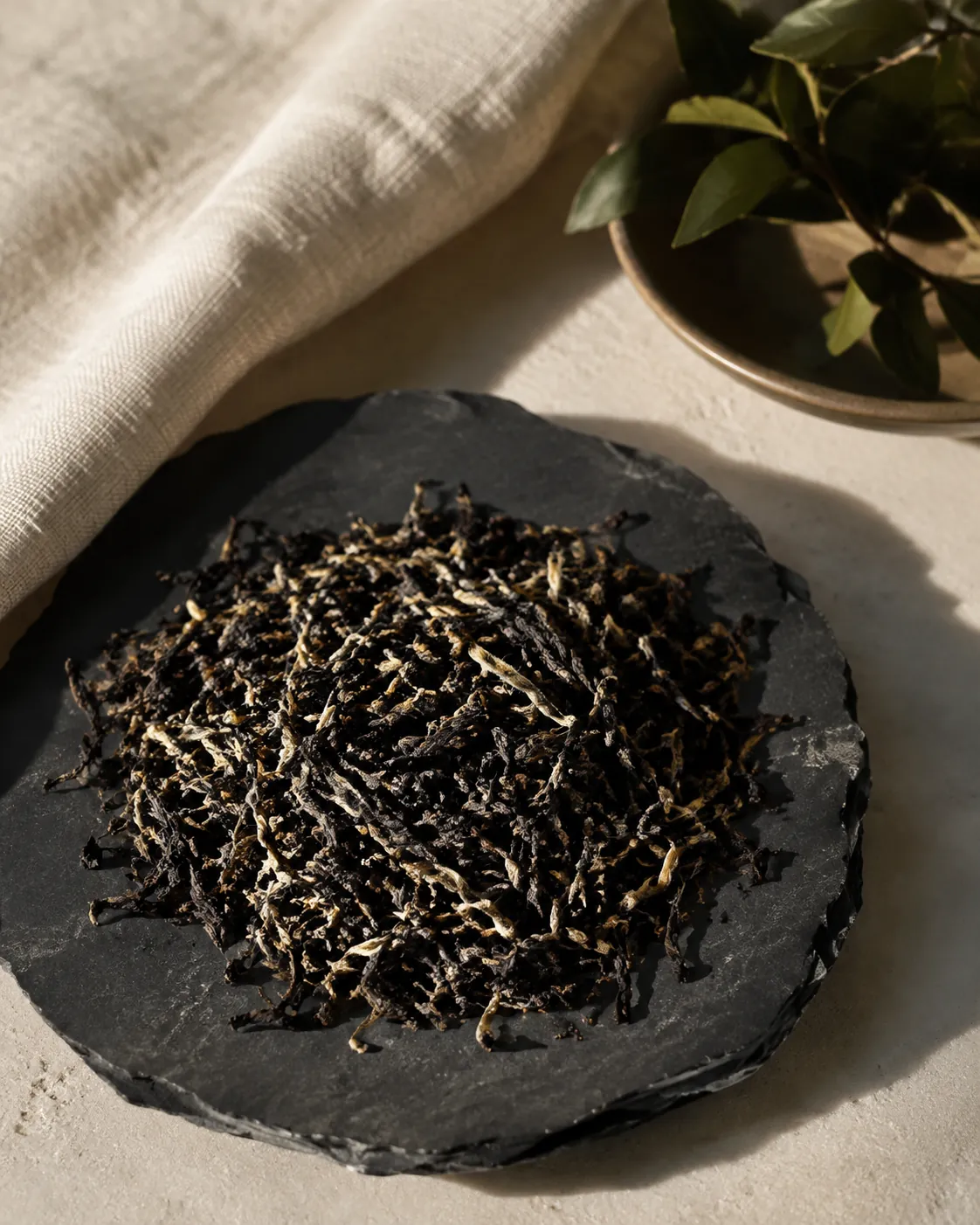
Tip content is a real signal and a partial one, which is the honest position on it.
- Plenty of gold means the pluck took bud and two leaves rather than sweeping the bush.
- Careful plucking correlates with the rest of the garden being run carefully too.
- Buds carry more caffeine and less of the tannin that makes a cup drying.
- Tip alone does not make a tea good, and a tippy leaf can still be flat if it is old.
- Photographs on a packet are not evidence. Look at the actual leaf if you can.
The trade has built a whole vocabulary on this, and the phrase tippy golden turns up in grade strings across the category. The letters describe the leaf and not the cup, which is the warning that applies to every grading system in tea.
The wider account under black tea sets out what those strings actually encode.
What tips genuinely change is the balance. A high-tip second flush tastes rounder and sweeter and grips less, so it survives being drunk plain in a way that a plain broken Assam does not.
Most of it never leaves the crusher
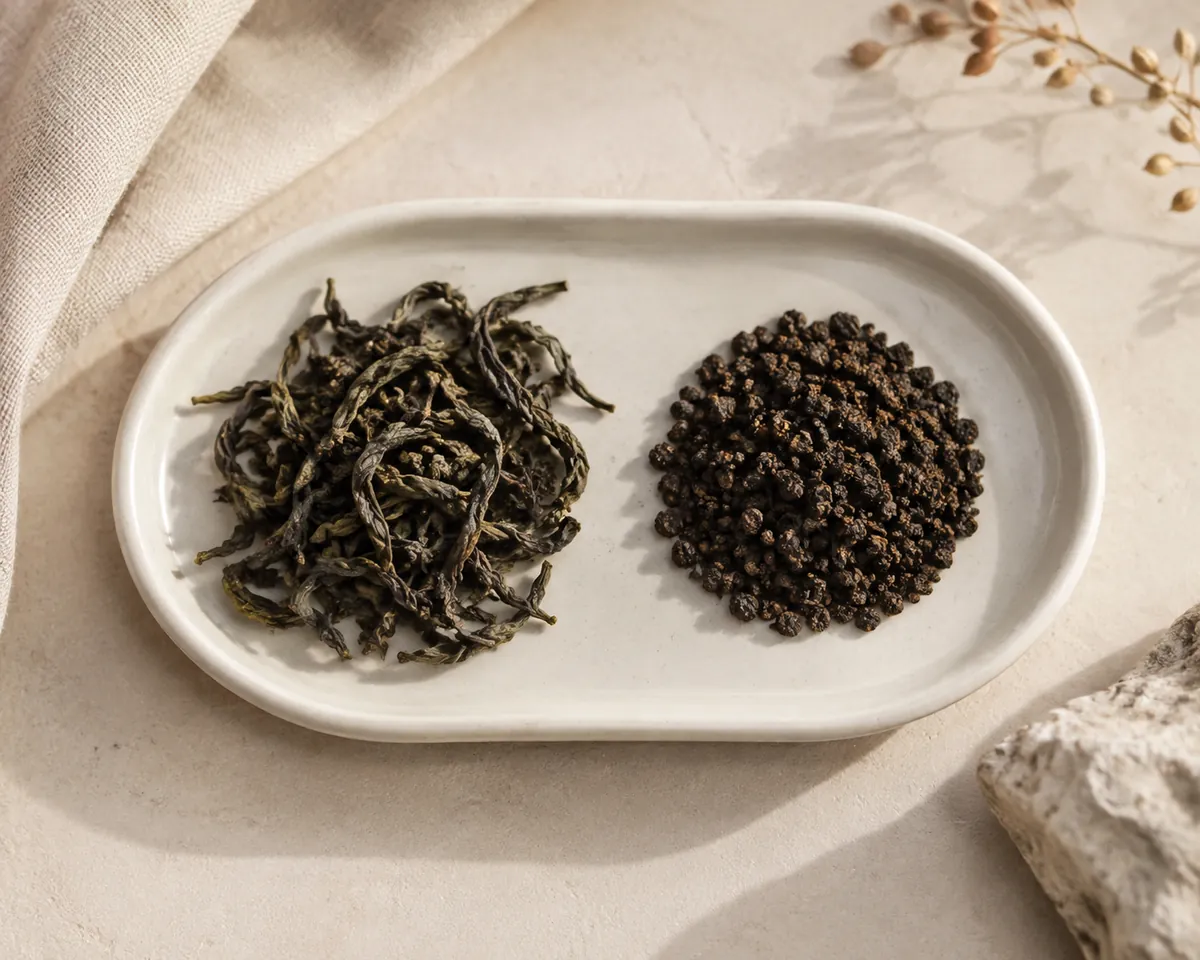
Here is the fact that surprises people who have only met Assam as an expensive loose leaf. The overwhelming majority of the crop is not rolled into whole leaf at all: it is crushed into hard granules, and it is made that way on purpose.
Three markets want it that way. Tea bags need something that gives colour in ninety seconds, milk needs something strong enough to survive being diluted, and masala chai needs a tea that can be boiled hard with milk and spices and still be tasted at the end.
Why the crusher won
- DemandMilk-first tea drinking spread far faster than loose-leaf drinking did.
- SpeedA crushed leaf gives full colour and strength in a minute or two.
- VolumeAssam grows more leaf than orthodox rolling could ever process.
- PriceUniform granules are cheaper to make, ship, blend and bag.
- ConsequenceOrthodox Assam became the specialist product rather than the default.
None of that makes crushed Assam bad. It makes it a different tool, built for a cup that arrives with milk and sugar in it, and judging it against a whole-leaf second flush misses what it was designed to do.
The practical consequence is at the kettle rather than in the shop. A crushed leaf goes from strong to drying in about a minute, so the timing window is narrow, and a forgotten mug is the most common complaint that Assam problems has to answer.
Why the gardens run an hour ahead of the rest of India
Assam keeps its own time, and this is not a figure of speech. The gardens work to what is locally called bagan time or tea garden time, set one hour ahead of Indian Standard Time.
The reason is geography.
India runs on a single time zone across a very wide country, and Assam sits at the far eastern edge of it, where the sun rises and sets much earlier than it does in the west.
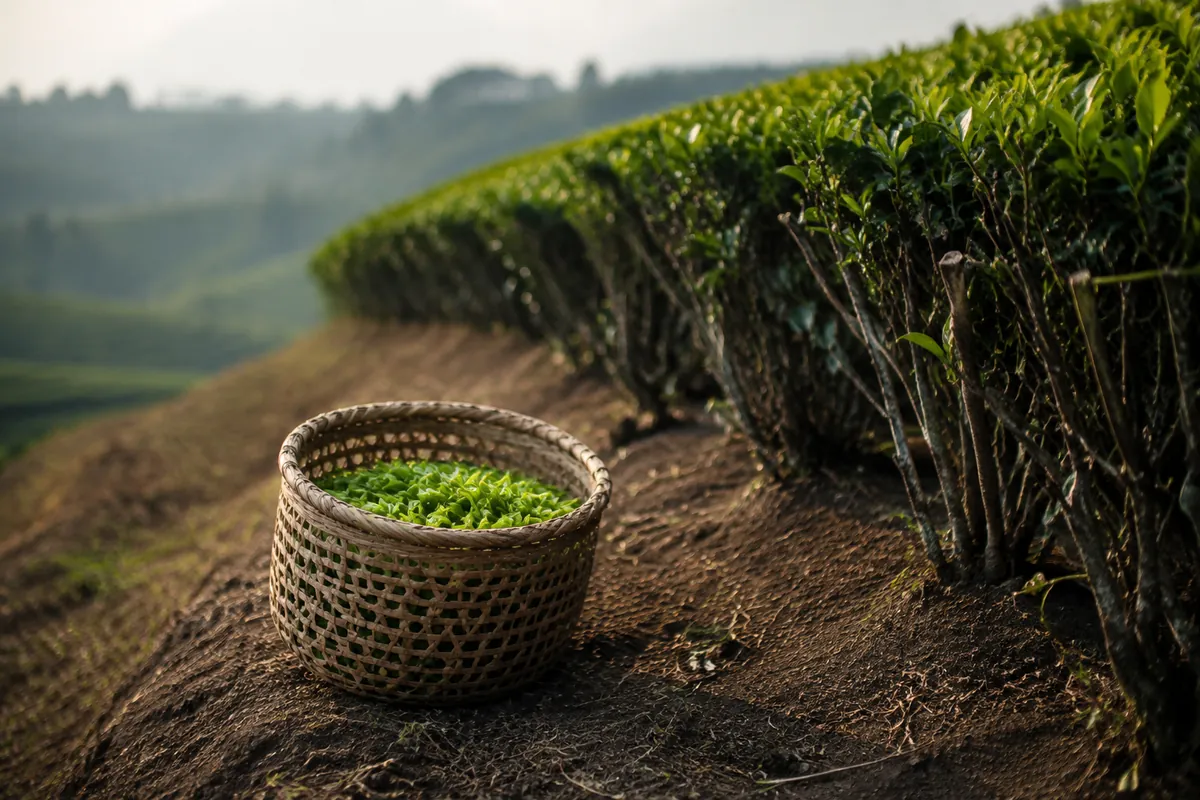
Without the adjustment a garden would lose the best working light of the morning to the clock. Plucking starts early, the leaf has to reach the factory before it deteriorates, and an hour of daylight at the start of the day is worth more here than anywhere else in the country.
It is a small administrative habit with a real effect on the tea. Leaf picked in the cool of the morning and withered promptly makes a better cup than leaf picked hot and left standing, so the clock is part of the quality control.
How to brew it strong without making it drying
Boiling water, and no subtlety about it. The oxidation has already run to completion so nothing fragile remains, and the wider map of where each style sits is set out in steeping temperature basics.
Starting points
- Water
- 95 to 100 C, straight off the boil
- Leaf, orthodox
- 2.5 to 3 g per 200 ml
- Leaf, crushed
- 2 g per 200 ml, and watch the clock
- Steep, orthodox
- 3 to 4 minutes
- Steep, crushed
- 2 minutes, no more
- If milk is going in
- More leaf, never more time
Time is the whole game with this tea. Assam holds a great deal of tannin, and tannin arrives late in the steep, so the difference between a full malty cup and a drying one is measured in tens of seconds rather than in minutes.
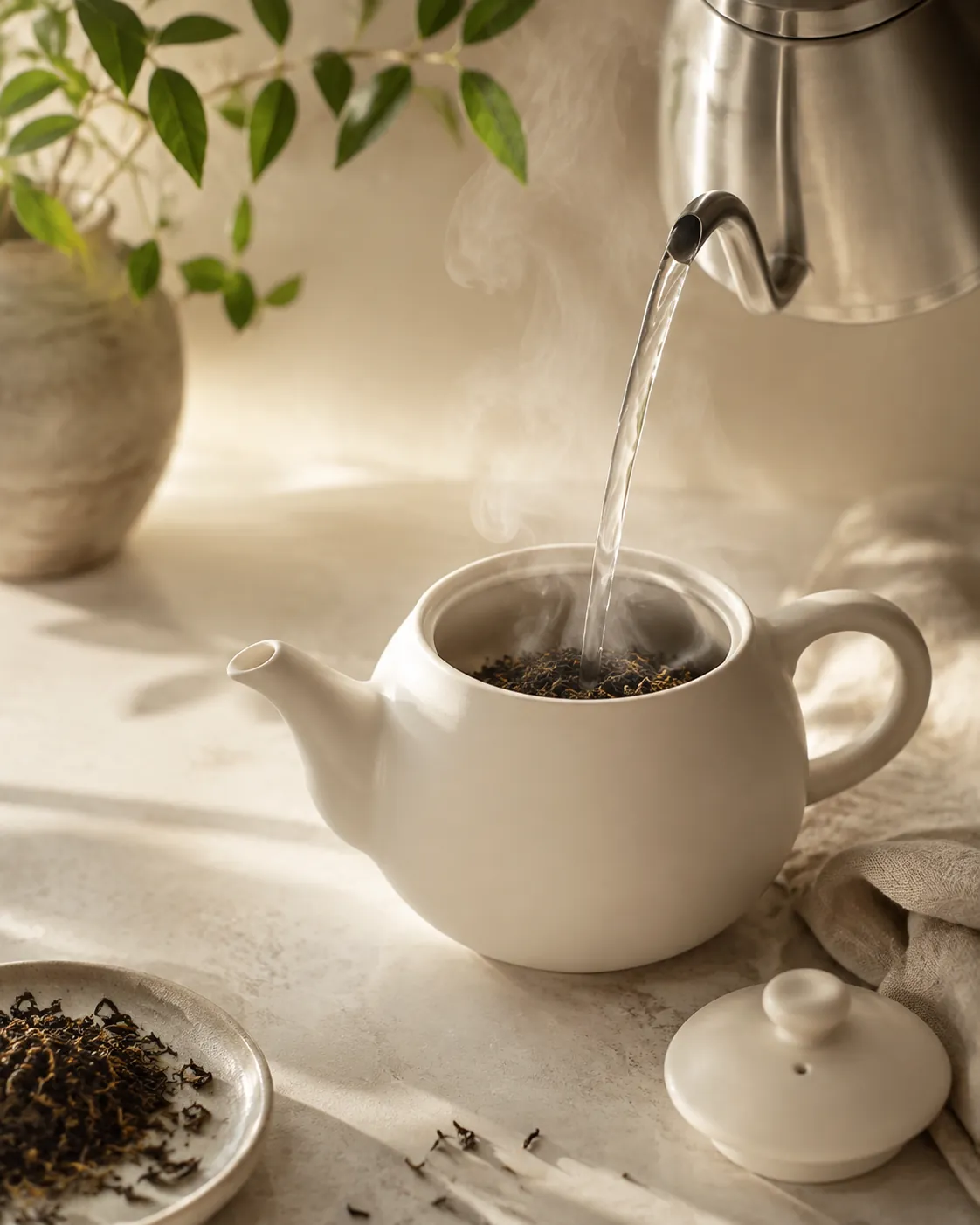
Hard water flattens it in a specific way, dulling the red colour and leaving a film on the surface, which is the case brewing water makes across the whole of tea. Give the leaf room to open as well, because a good second flush is long and wiry and a cramped ball wastes it, which is the argument behind the tea infuser page.
When milk helps, and when it wastes the tea
Milk and Assam are so firmly associated in Britain that nobody thinks to ask the question at all, and it is worth asking, because the answer depends entirely on which Assam is sitting in the pot.
Milk proteins bind to tannins, so the astringency that makes a strong Assam grip is exactly what milk is good at rounding off. A tea with this much of it to work on is close to the ideal case, and the same logic explains why milk does so little for a green tea.
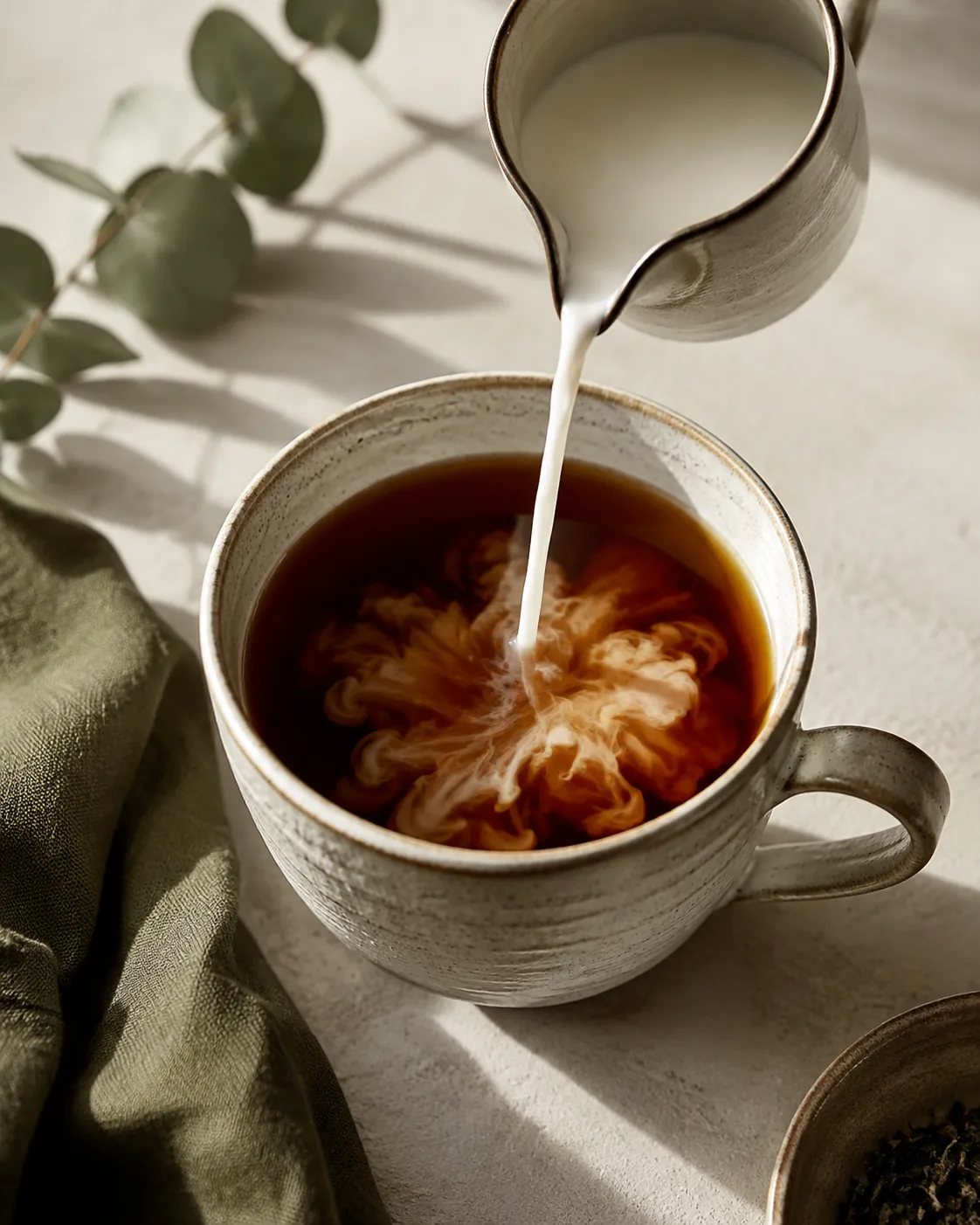
Milk suits
Crushed leaf, monsoon-flush bulk tea and any breakfast blend built on Assam.
Milk wastes
A high-tip single-estate second flush, where the sweetness and the malt are the point.
Strength first
Brew stronger before adding milk, since milk dilutes as well as softens.
Sugar is the other common addition and it does more here than it does in a lighter tea, because sweetness suppresses the perception of astringency directly. A small amount stirred in while the cup is hot changes a brisk Assam more than most people expect, for the reasons set out under cane sugar.
Buy the tea for the way you actually drink it, because a tippy second flush drowned in milk and a cheap crushed leaf drunk plain are both mistakes in the same direction. One wastes money and the other wastes the morning.
Why a malty cup still reads strong
Assam sits at the top of the black tea range, and two separate factors push it there rather than one.
The variety is the first. The large-leaved assamica bush is generally reported to carry more caffeine than the China variety, and buds carry more than mature leaf, so a tippy tea sits at the high end of a high category.
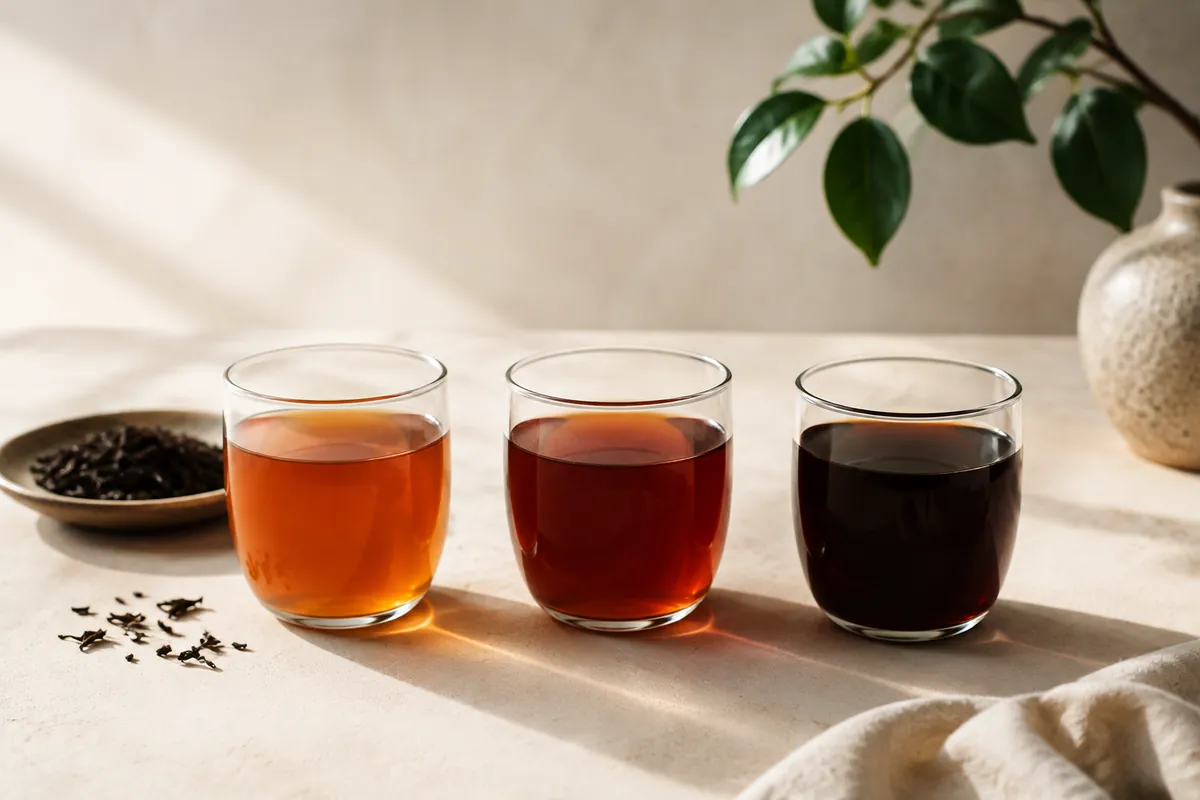
Extraction is the second, and it usually matters more. Crushed leaf brewed at boiling for two minutes gives up more than whole leaf brewed for four, and Assam is the tea most likely to be crushed, brewed hot and brewed strong.
For the variables in detail, how much caffeine is in Assam works through them, black tea against green tea covers the neighbouring comparison, and caffeine by brewing method supplies the coffee benchmark most people ask for next.
The tea that other teas are made of
Most people who drink Assam every day have never once bought a packet of it, and would not pick the name out on a shelf if they were shown it. It is in the breakfast blend, it is in the bag, it is the base under a great deal of flavoured tea including most of the cheaper Earl Grey on a supermarket shelf, and it is what a roadside chai is boiled from.
That invisibility is a consequence of being reliable rather than a comment on quality.
Buy it as leaf when
You want the malt and the tips, and you will drink it plain or with very little milk.
Buy it crushed when
You are making chai, or you want a strong mug with milk in under two minutes.
Skip the upgrade when
The tea is going into a spiced simmer, where an expensive leaf is simply lost.
Keeping it
Fully oxidised and forgiving, so it fades slowly. Storing Assam and the general rules in storing loose-leaf tea both apply gently.
Try next
A single-estate second flush drunk plain, which is the version most people have never met.
It also makes a better cold drink than its reputation suggests. Brewed strong and poured over ice it holds its body where lighter teas hollow out, which is why so much bottled and jugged iced tea is built on it rather than on anything more delicate.
Common questions
What makes Assam tea taste malty?
The malt note comes from the plant rather than from anything added. The large-leaved assamica variety carries more of the polyphenols that oxidation converts into the heavy, cereal-sweet compounds behind that description, and Assam is fully oxidised in a hot, humid climate that runs the reaction quickly and completely.
Is Assam tea the same plant as Darjeeling?
The same species but a different variety. Assam is Camellia sinensis var. assamica, a large-leaved tropical bush that can grow into a tree if left alone, while Darjeeling is mostly the small-leaved China variety, var. sinensis. The leaf size difference is visible in the packet and it explains most of the difference in the cup.
Which Assam flush should you buy?
The second flush, picked in May and June, is the prized one. It gives the fullest body, the strongest malt and the golden tips that a good tippy Assam is sold on, while the first flush is lighter and brisker and the monsoon crop is mostly bulk leaf destined for blends and tea bags.