Caffeine in Coffee by Brewing Method, and Why It Is a Range
An 8 fl oz cup of brewed coffee usually holds about 80 to 100 mg of caffeine. Every other number on this page is a range too, and the reasons for the spread matter more than any single figure.
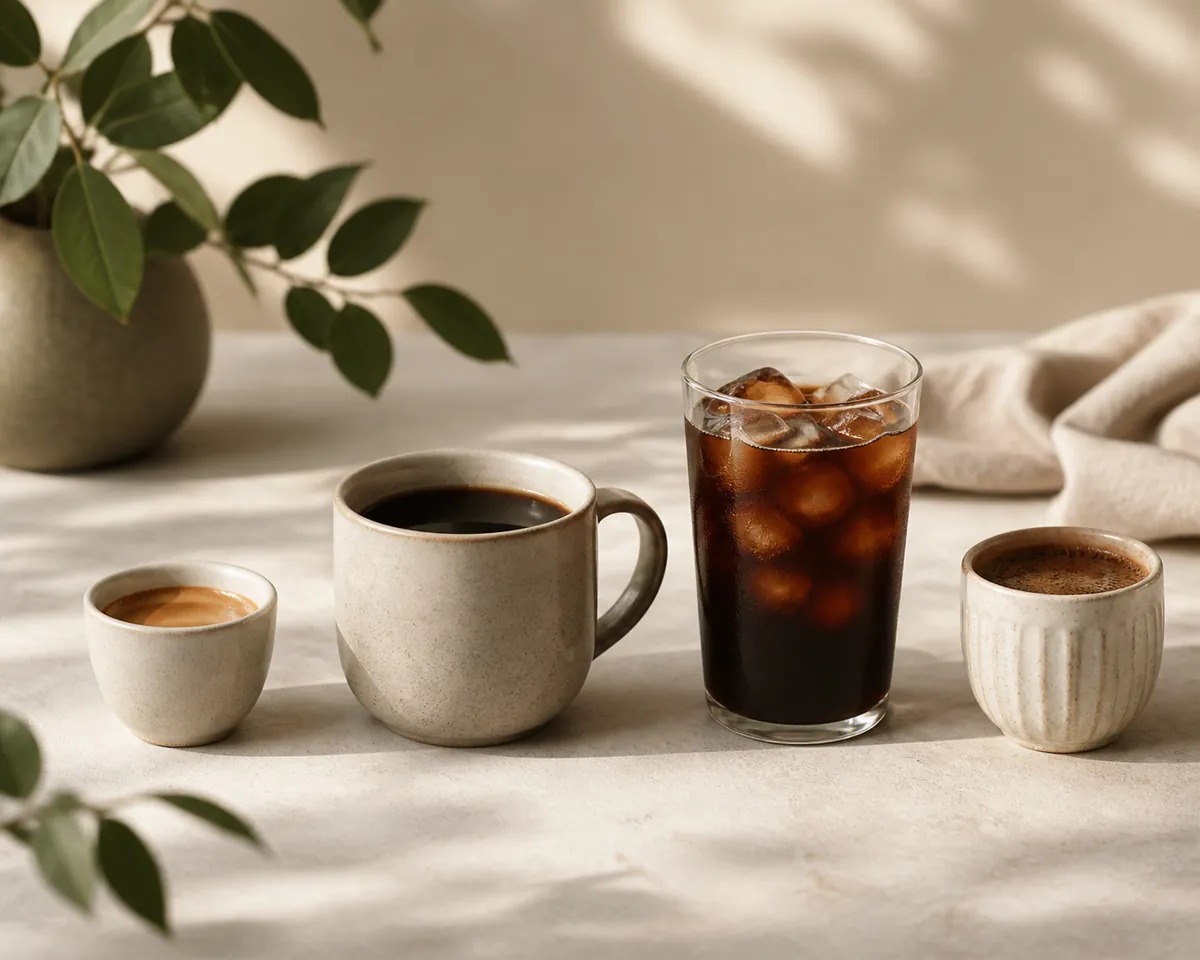
Caffeine figures for coffee are published as single numbers far more often than they should be. The honest version is a range, because the amount in any given cup depends on several things at once: how much dry coffee went into it, how much water came out with it, and which species of bean was in the bag.
None of the numbers below is a fact about your cup. They are typical values for a typical serving, and the spread inside any one row is wide enough that two cups poured in the same kitchen can sit at opposite ends of it.
Where the published ranges sit, and how wide they are
Five rows cover most of what gets sold as coffee, and the width of each row matters considerably more than its midpoint. A figure quoted without its range has quietly picked one cup out of several hundred and presented it as the average.
| Drink | Typical serving | Typical caffeine |
|---|---|---|
| Brewed coffee | 8 fl oz / 240 ml | 80 to 100 mg |
| Espresso | 1 fl oz / 30 ml single shot | 60 to 70 mg |
| Instant coffee | 8 fl oz / 240 ml | 30 to 90 mg |
| Cold brew, ready to drink | 8 fl oz / 240 ml | 100 to 200 mg |
| Decaffeinated coffee | 8 fl oz / 240 ml | 2 to 15 mg |
The brewed coffee and espresso figures follow U.S. Food and Drug Administration guidance.
The rest vary far more between products, and cold brew in particular depends on whether the bottle in question is a concentrate or a finished drink.
Those four numbers span roughly a hundredfold, and every drink behind them is called coffee. The variable that opens the gap widest is not the brewer on the counter but the dose and the volume, neither of which appears on a menu or, usually, on a label.
The espresso illusion, and what strength describes
The drink most people name when asked which coffee carries the most caffeine is the one served in the smallest cup, which is exactly where the confusion begins. Espresso is more concentrated than brewed coffee, but a serving of it is much smaller.
Per millilitre it is far the strongest thing in this article. Per cup it usually delivers less than a mug of drip coffee, for the plain reason that you are drinking 30 ml rather than 240 ml of it.
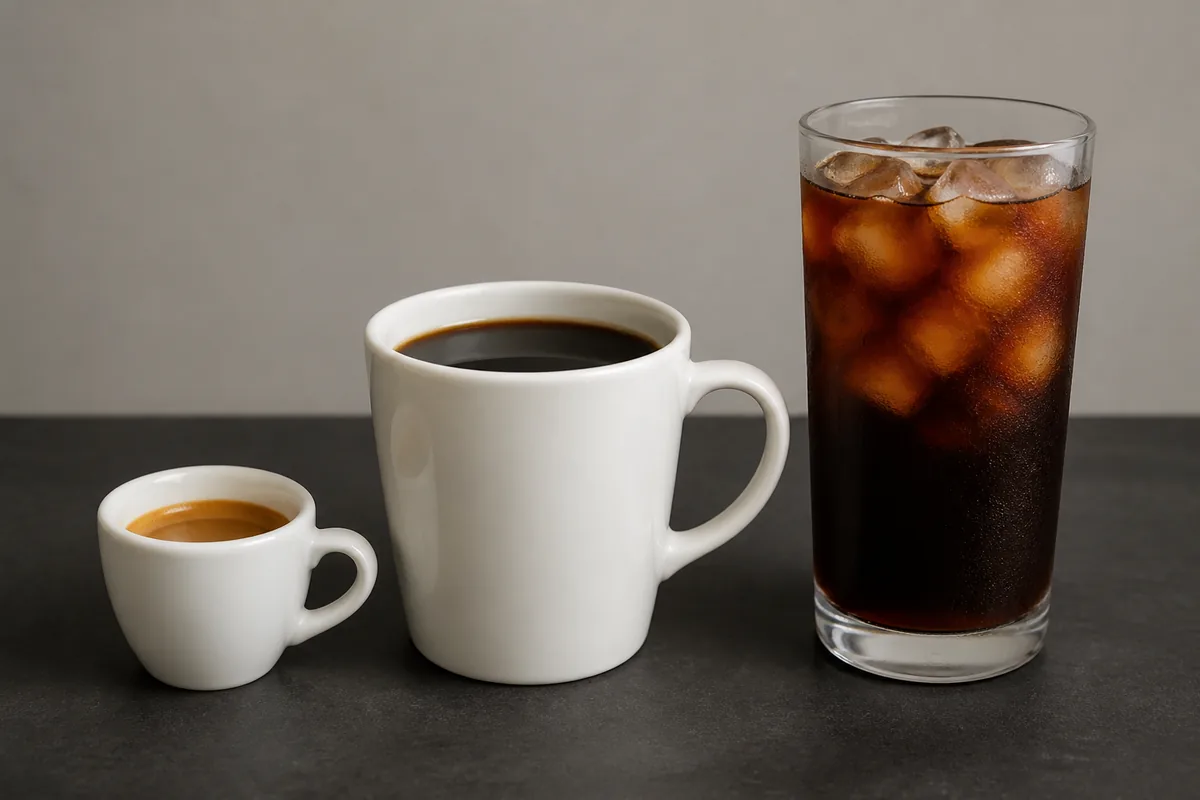
A double changes the arithmetic entirely, and a large milk drink built on two or three shots carries considerably more than the filter mug it is standing next to.
Underneath that sits a second confusion, which is that strong and caffeinated describe different properties. Strength as the tongue registers it is extraction and concentration: how much dissolved coffee solid is carried in the water.
Caffeine is one compound among several hundred in the cup and contributes only a little of the bitterness. A dark roast reads as stronger while carrying marginally less caffeine by volume, and a cold brew reads as smooth and rounded while frequently carrying more than anything else on the counter.
Taste is a poor instrument for this measurement, which is why every figure here comes from a dose and a serving size rather than from a description of flavour.
Dose, mug size and the arithmetic underneath every figure
Dose, extraction, serving size, species and roast all move the number, and they do not move it equally.
Dose
How much dry coffee went in. The largest single factor, and the one most often missing from a comparison.
Extraction
Finer grind, hotter water and longer contact all pull more caffeine from the same dose.
Serving size
A mug is not a cup. Plenty of mugs hold 350 to 400 ml, well past the 240 ml an 8 fl oz figure assumes.
Bean species
Robusta typically carries around twice the caffeine of arabica by weight, and blends rarely say how much of each they contain.
Roast level
Much less than people assume. Caffeine survives roasting largely intact, so the gap between light and dark is small next to dose and volume.
Dose and volume swamp the others so completely that two cups of the same coffee can differ more from each other than two brewing methods do. The roast point deserves a moment, since the claim circulates in both directions online: dark roast beans have expanded and lost mass, so a scoop of them holds fewer beans and slightly less caffeine, which is an effect of measuring by volume rather than of anything the roaster destroyed.
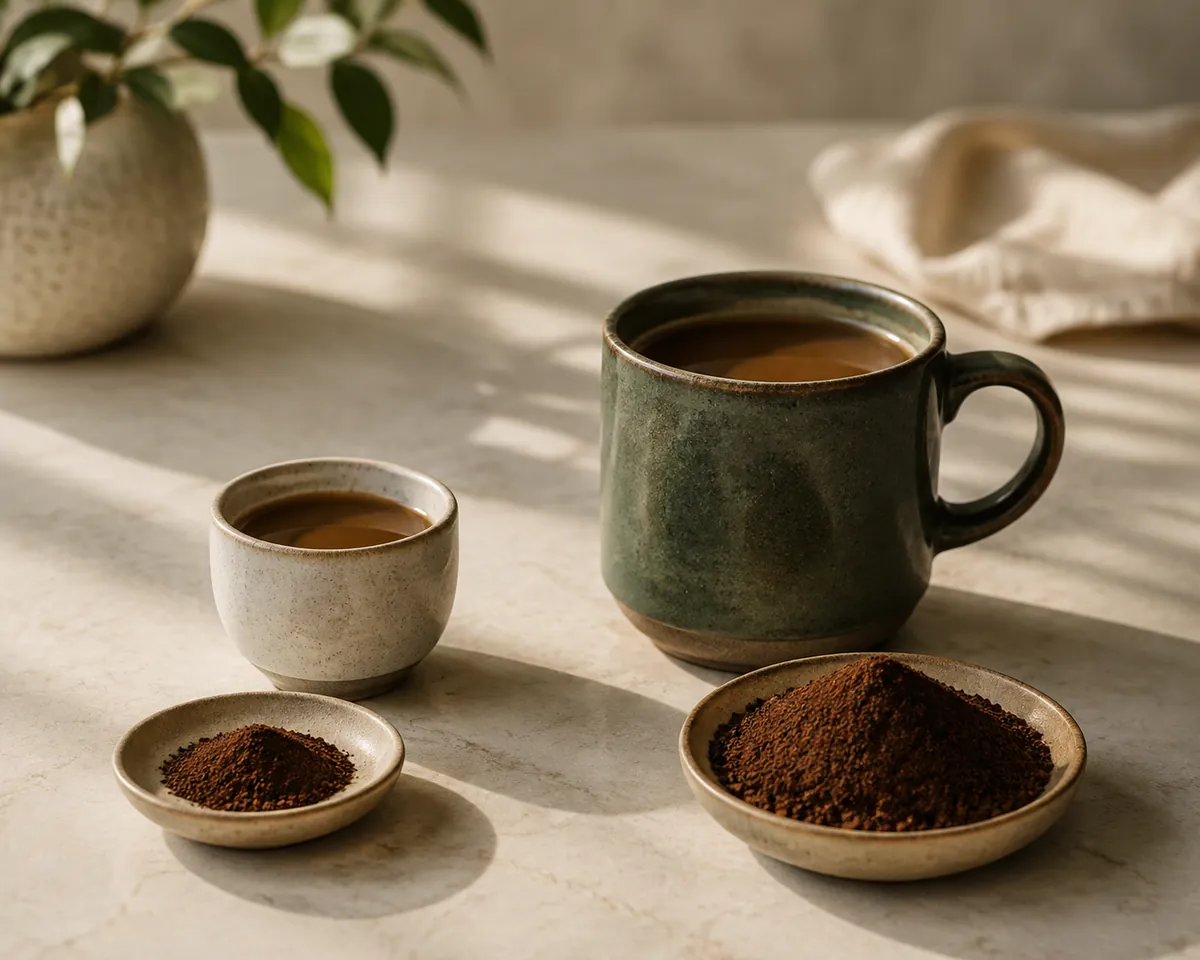
| Cup | Coffee | Water | Rough caffeine |
|---|---|---|---|
| Weak filter | 12 g | 240 ml | Around 70 mg |
| Standard filter | 15 g | 240 ml | Around 90 mg |
| Strong filter | 20 g | 240 ml | Around 120 mg |
| Large mug, standard ratio | 25 g | 400 ml | Around 150 mg |
The mug is the variable that vanishes from every comparison. Filled at the same ratio it carries far more caffeine than a cup, because more coffee went into it, not because it is stronger.
Grinding finer or brewing longer might shift the figure by ten or fifteen per cent; doubling the dose doubles it.
Cold brew, and whether the number describes the bottle or the glass
Cold brew sits above everything else in the table for two reasons that have nothing to do with temperature. It is steeped at a much heavier coffee-to-water ratio than hot coffee, and it is left in contact with that water for twelve hours or more.
Both of those pull caffeine, and the long contact is what people misattribute to the cold.
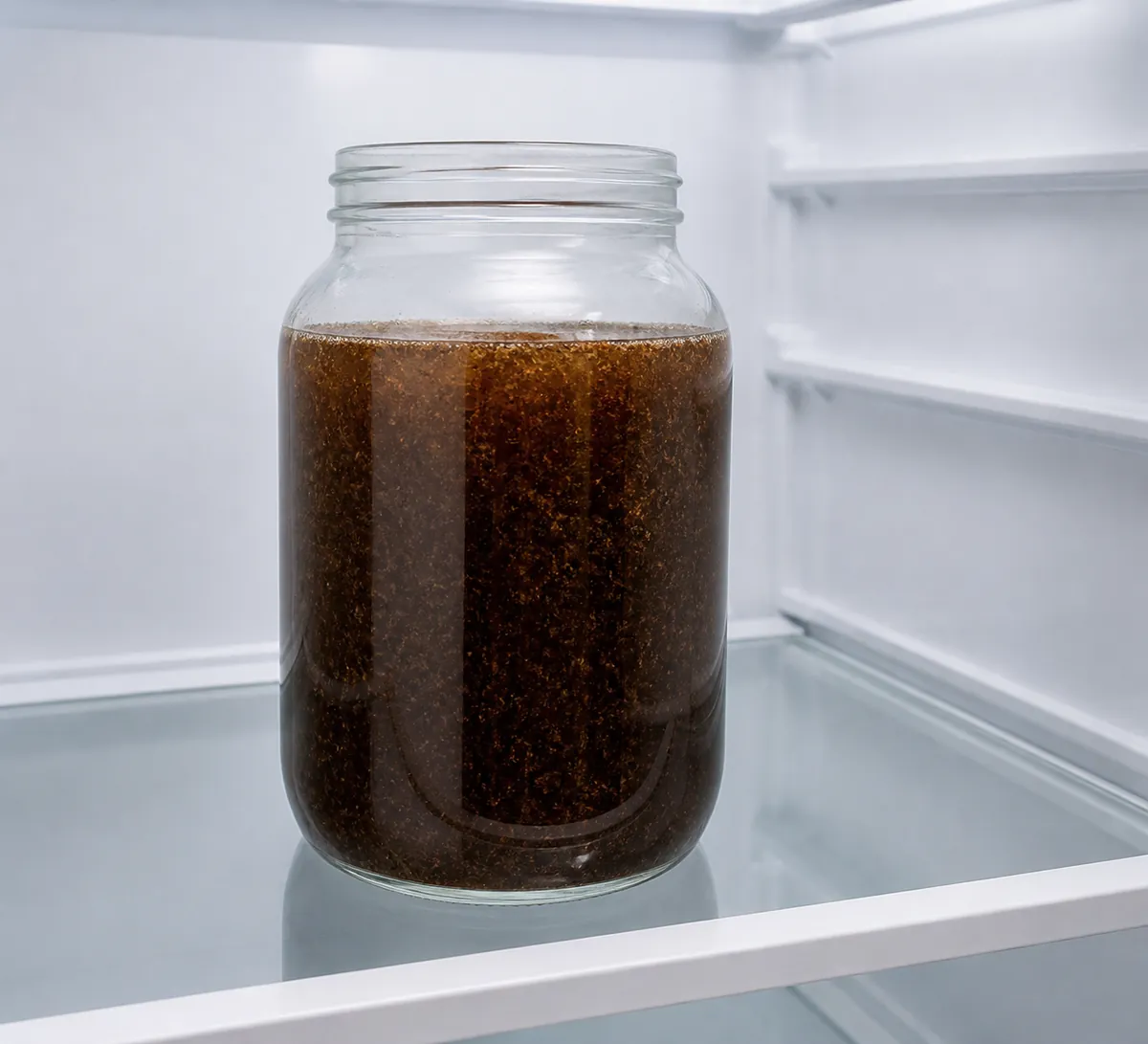
The complication is the concentrate. A bottle sold to be diluted three or four to one carries a number that refers to the finished glass on some labels and to the bottle on others, and the two differ by the whole dilution factor.
Diluted to drinking strength, cold brew lands much closer to ordinary filter coffee than its reputation suggests. Poured neat over ice because the bottle looked ready, it lands somewhere else entirely, and the label is the only thing that distinguishes the two.
The detail behind the cold brew figure is worth reading before setting a bottle against a mug, and what the long steep does to flavour explains why the drink tastes mild while measuring high.
Reading a figure on a label, and why two sources disagree
Because a caffeine number means nothing without the assumptions that produced it, three questions decide whether the one in front of you is telling you anything at all.
- What serving size is it based on? A per-100 ml figure and a per-can figure differ by a factor of three or more.
- Is it measured or estimated? Many published numbers are calculated from a recipe rather than assayed from a sample.
- As sold or as prepared? A concentrate, a capsule and a finished drink can all carry different numbers under one brand name.
The third question catches out more people than the other two together, since a capsule is sold as a dose while a bottle of concentrate is sold as an ingredient, and a brand will happily print both styles of figure on packaging that sits on the same shelf.
Two reputable sources will also disagree with each other about the same drink, and the reasons behind that are mundane rather than suspicious. Nobody is hiding anything; the two numbers were simply built on different assumptions, and neither publisher stated the assumption loudly enough for a reader to notice which one had changed.
Different serving assumptions
One source assumes 8 fl oz, another 12 fl oz, and neither is wrong. The figures are simply not comparable.
Measured against calculated
Some numbers come from laboratory assay of a real sample, others from arithmetic on a recipe.
Sample size
A figure drawn from three cafe samples and one drawn from three hundred are both averages with very different spreads behind them.
Preparation drift
A cup brewed to a laboratory protocol is not the cup a cafe makes at eight on a Monday morning.
Bean composition
Arabica and robusta differ by roughly a factor of two, and the blend is seldom disclosed.
Treat any single published number as the midpoint of a wide range rather than as a measurement of the cup in front of you.
Shot counts, milk drinks and what a cafe menu tells you
Milk drinks are where the arithmetic turns least intuitive, because all of the caffeine arrives in the shots and none of it in the milk. A menu describes cups, so translating a cup back into a shot count is the whole of the practical skill.
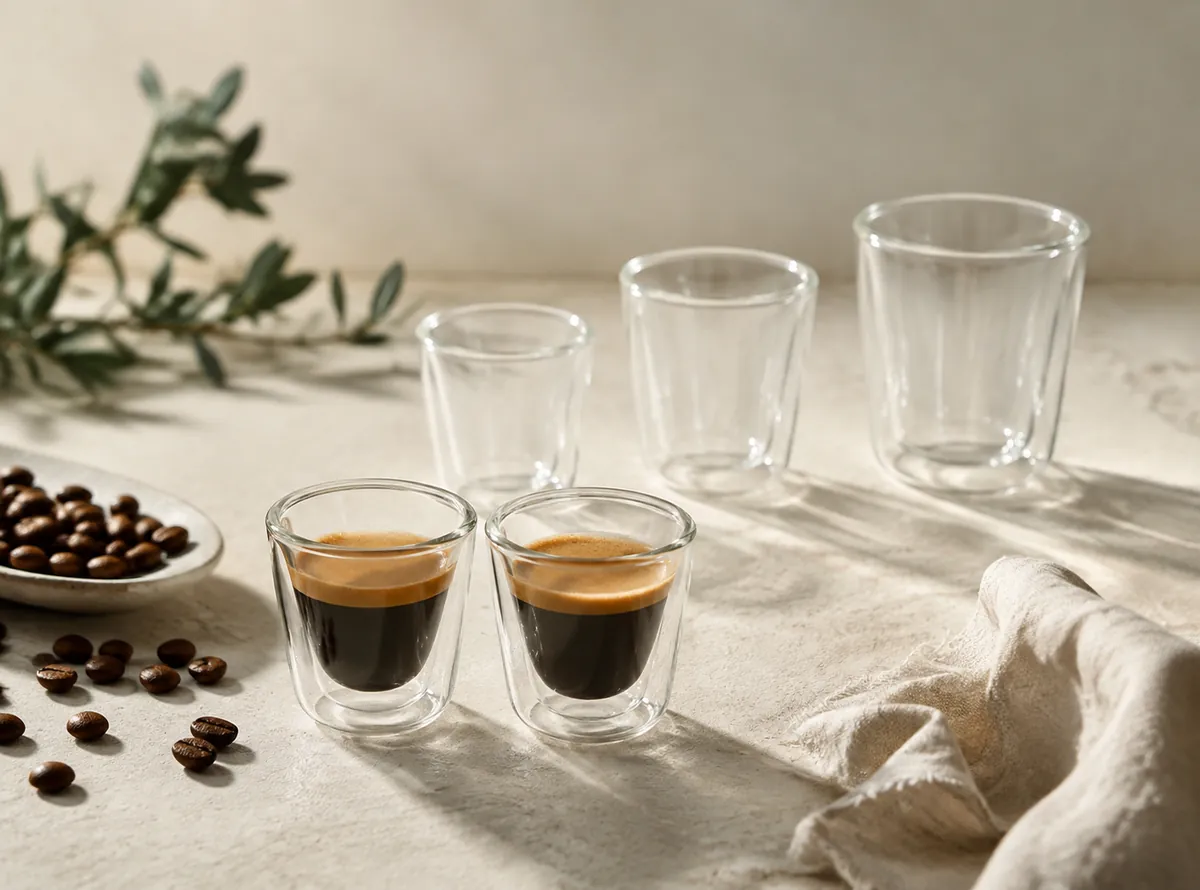
Caffeine by shot count
- Single espresso
- One shot, roughly 60 to 70 mg
- Double espresso
- Two shots, roughly 120 to 140 mg
- Flat white
- Commonly a double, so around 120 to 140 mg
- Latte or cappuccino
- Often a single in a small size, a double in a large
- Americano
- Whatever the shot count is, plus water. The water adds volume and no caffeine
A large latte and a small one carry identical caffeine when both were built on a single shot, and the large is simply more milk. A flat white and a straight espresso pulled from the same double are the same number in different clothes.
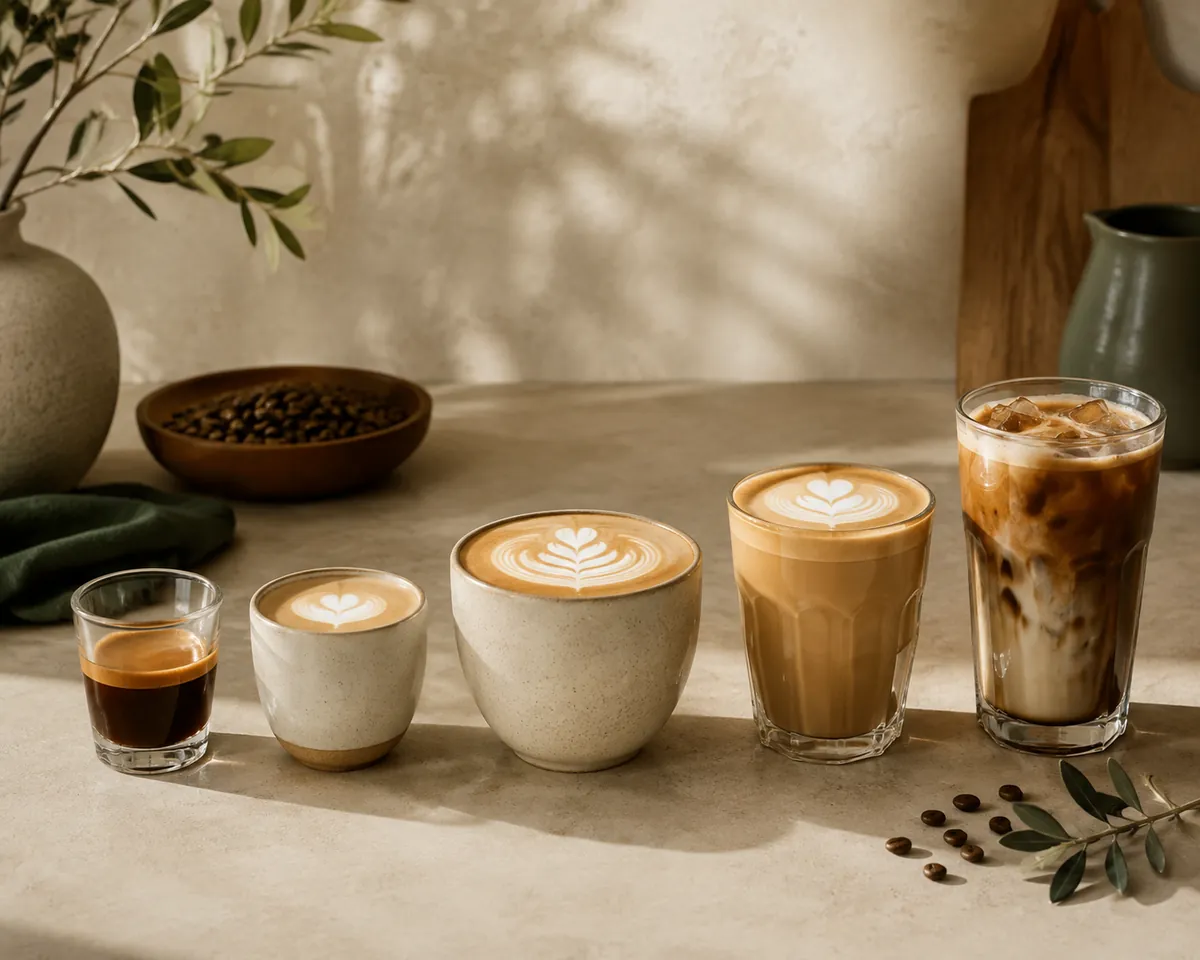
An americano is the clearest case of the illusion: it looks like a mug of filter and usually carries less, since one double shot has been stretched to 250 ml. Cold brew runs the other way and is the one worth asking about at a counter.
The question that settles every case is how many shots, or for brewed coffee how many grams to how much water, and cup size answers neither.
How decaffeination works, and the residue it leaves
Decaffeination happens to green beans before roasting, which is why the residual figure follows from the process standard rather than from anything done later at the machine.
How caffeine is removed
- SoakGreen beans are steamed or soaked so the caffeine becomes mobile.
- ExtractA solvent, carbon dioxide under pressure, or water carries the caffeine out.
- Reintroduce flavourIn water-based methods the flavour-loaded water is returned to the beans.
- Dry and roastThe beans are dried back to their original moisture and roasted as normal.
The common routes are solvent-based processes using ethyl acetate or methylene chloride, supercritical carbon dioxide, and the Swiss Water process, which uses only water and carbon filters. Regulatory standards generally require removal of at least 97 per cent of the caffeine, and that threshold is the entire explanation for the residue in the table: a process that takes out almost all of something leaves a little of it behind.
What decaf is and how it is made covers the four routes in detail, and the figures for a decaf cup sit at the bottom of every range on this page.
Arabica, robusta, and why instant spans the widest band
Species is the one bean variable that moves caffeine substantially.
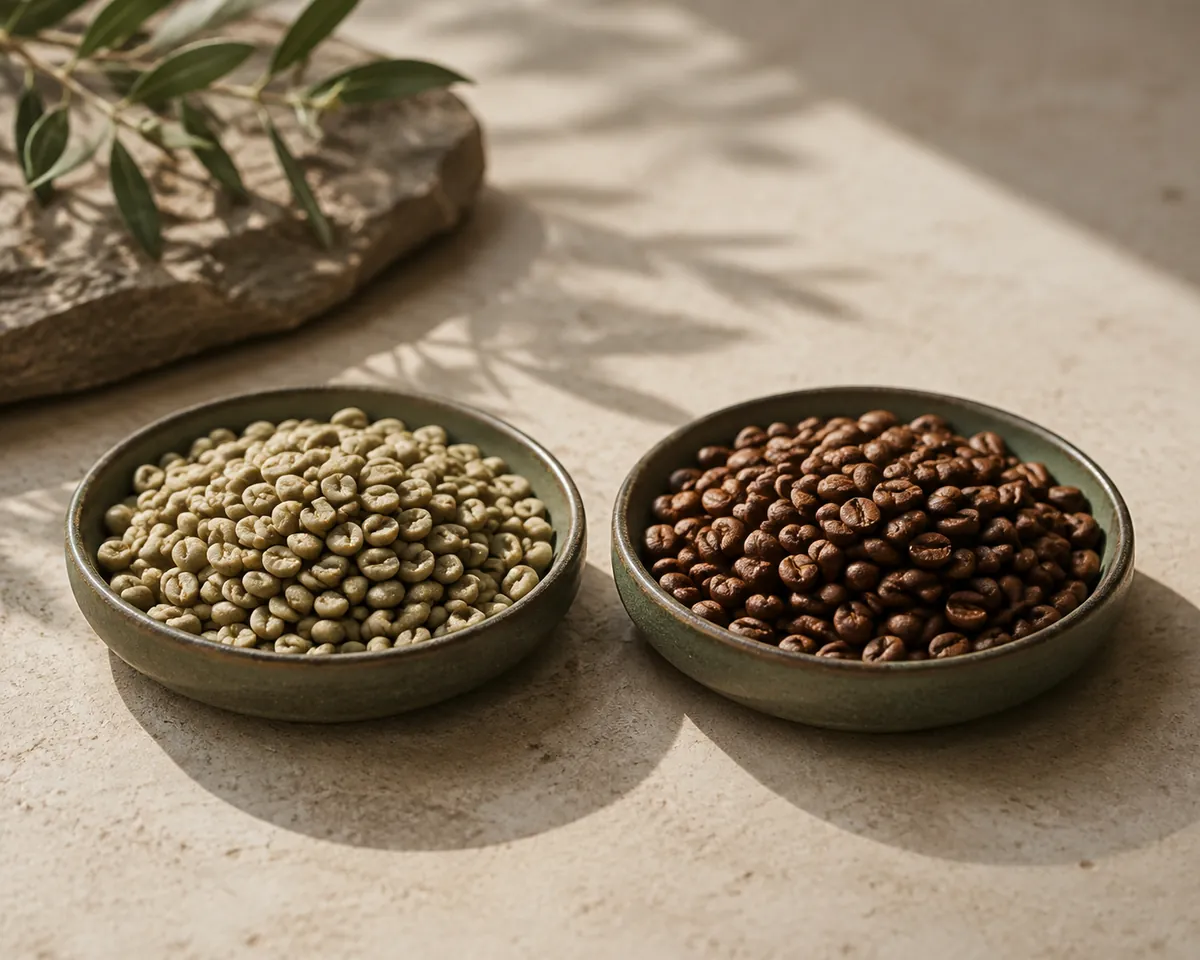
Robusta carries roughly twice the caffeine of arabica by weight, along with more bitterness and less aromatic detail. It is cheaper to grow, more resistant to disease and produces a heavier crema, which is why it turns up in espresso blends without being announced on the front of the bag.
The two commercial species
- Arabica
- Lower caffeine, more aromatic, the bulk of specialty coffee
- Robusta
- Roughly double the caffeine, more bitter, heavier body
- Typical espresso blend
- Often includes robusta for crema and for price
- Instant coffee
- Frequently robusta-heavy, part of why its figures vary so widely
- Labelling
- Species is often undeclared outside specialty bags
That undeclared ratio is most of the reason instant coffee spans 30 to 90 mg, the widest band on this page. Species accounts for perhaps half of it and dose accounts for the rest, because a spoonful is not a measurement: a level teaspoon of a robusta-heavy granule and a heaped one of an arabica blend can differ threefold, from the same shelf, in the same week.
Coffee next to tea, matcha and the cups that break the table
The figures only mean something beside each other, and coffee sits at the strong end of everyday drinks. A few preparations refuse to sit in the table at all, and they are worth naming rather than averaging away.
| Drink | Typical caffeine |
|---|---|
| Brewed coffee | 80 to 100 mg |
| Espresso, single 30 ml shot | 60 to 70 mg |
| Black tea | Around 47 mg |
| Green tea | Around 28 mg |
| Matcha, 2 g bowl | 40 to 90 mg |
| Decaf coffee | 2 to 15 mg |
| Herbal infusion | None |
Serving size is doing most of the work there. A bowl of matcha carries more than a cup of green tea from a third of the volume, because the leaf itself is consumed rather than infused and thrown away, a point the matcha caffeine figures set out at length.
Yerba mate lands near 80 mg for a serving and is then refilled a dozen or twenty times from the same leaf, which no single number can describe.
Among the coffees, Turkish coffee uses a double espresso's dose in a 60 ml cup and leaves a good deal of it behind in the settled grounds, so its concentration is the highest here while the delivered figure is not. Moka pot coffee and the French press both brew heavy doses into small volumes for the same reason.
A mocha draws from two ingredients, and the cocoa contributes far less than people expect while adding theobromine, a different compound entirely.
What these figures describe, and what they leave to someone else
Because caffeine is a subject where drinks writing routinely oversteps, the limits of these figures are worth stating plainly rather than leaving them implied.
What the ranges above are good for is comparison between drinks, and for explaining why a published number moved when nothing about your morning did. They are typical values for a stated serving, drawn from reference data and given as bands because bands are what the underlying measurements support.
A range reads less satisfyingly than a single figure and describes the evidence far more accurately.
For a specific product, the number on that product's own label beats every general table, this one included, because it refers to the thing in your hand rather than to an average of everything sold under the same word.
Common questions
Does espresso have more caffeine than filter coffee?
Per millilitre, yes. Per serving, usually not. A single 30 ml shot holds roughly 60 to 70 mg, while an 8 fl oz cup of filter coffee typically holds 80 to 100 mg.
Does dark roast have less caffeine than light roast?
The difference is small. Roasting does not remove much caffeine, and dose and serving size affect the final number far more than roast level does.
How much caffeine is in decaf coffee?
Typically around 2 to 15 mg per cup. Decaffeination removes most of the caffeine but not all of it, so decaf is low in caffeine rather than free of it.