What Is Yerba Mate? The Leaf That Comes With Its Own Kit
Yerba mate is the only caffeinated drink in this section, and the only one that comes with its own equipment. The gourd is refilled dozens of times from one charge of leaf.
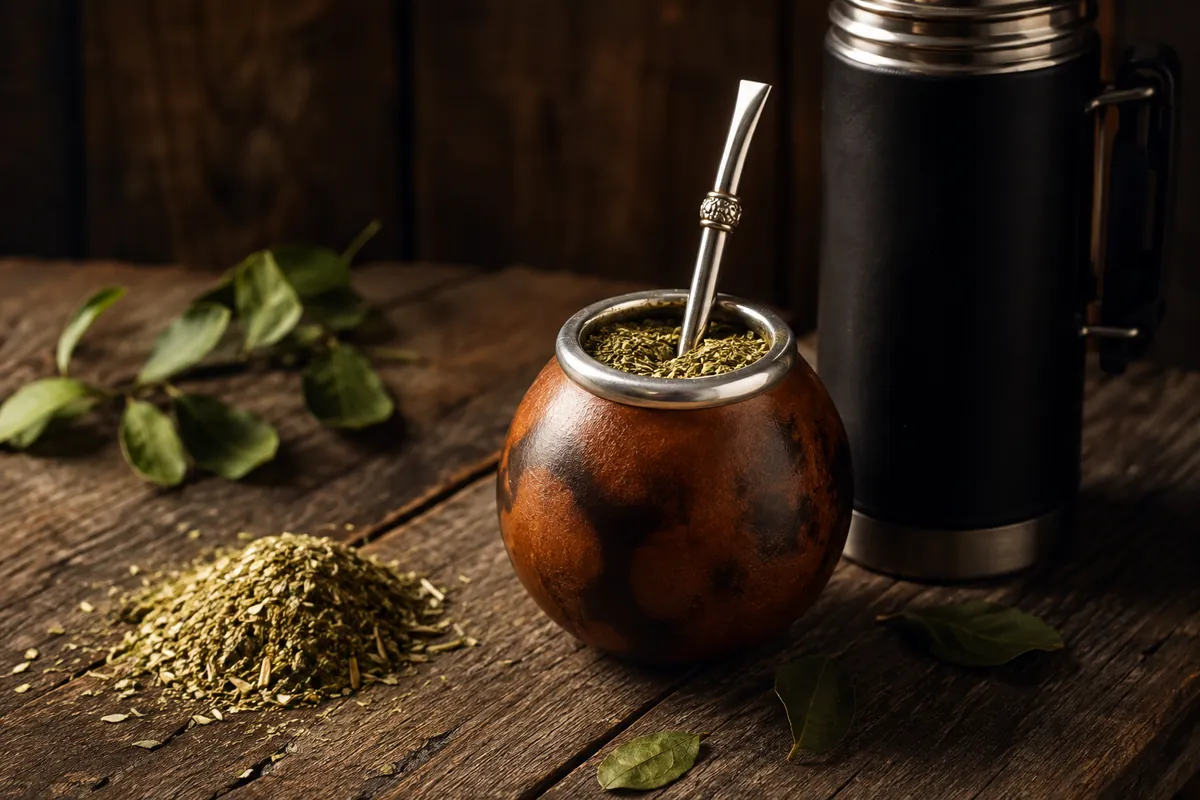
Yerba mate is an infusion of the dried and shredded leaves of Ilex paraguariensis, a holly species native to South America. Its close cousin guayusa comes from the same genus further north and tastes almost nothing like it.
It is not tea, and it is not a tisane in the usual sense, because unlike almost every other herbal infusion it contains caffeine.
Yerba mate at a glance
- Plant
- Ilex paraguariensis, a South American holly, not a tea bush
- Caffeine
- Around 80 mg per 250 ml, between black tea and brewed coffee
- Water
- 70 to 80 C. Boiling water is what makes a gourd bitter
- Traditional vessel
- A hollowed gourd drunk through a metal bombilla
- One charge gives
- Fifteen to twenty refills, past thirty in a large gourd
- Taste
- Vegetal, grassy and distinctly bitter, often smoky
How mate is drunk from a gourd
Traditional mate is drunk from a hollowed gourd through a metal straw with a filter at its base.
That is not decoration. The whole method depends on it: the gourd is packed with leaf, water is added to one small area at a time, and the bombilla draws liquid from the base while keeping the leaf out.
Preparing a gourd
- FillTwo thirds full with yerba, no more.
- TiltShake the gourd so the fine dust settles to one side, then tilt the leaf into a slope.
- WetAdd cool water to the low side and let it absorb for a minute.
- InsertPlace the bombilla into the wet side and do not stir it afterwards.
- ServeAdd hot water to the same low side, refilling many times.
The dry side is deliberately kept dry. Wetting the whole charge at once extracts everything immediately, and the gourd is spent after two or three refills instead of twenty.
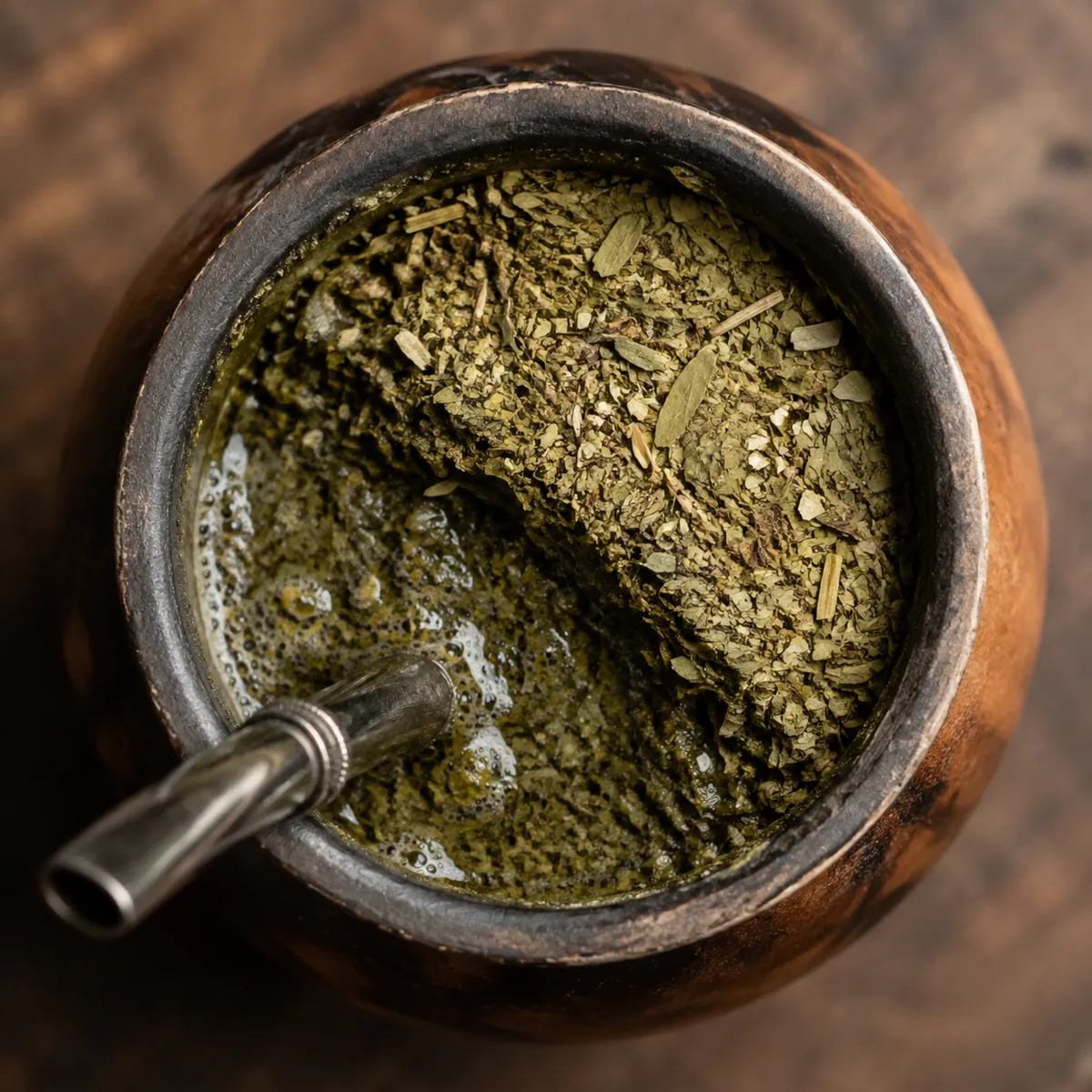
That dry side is a reserve rather than waste. As the wet part washes out, the cebador tilts the gourd a little further to bring untouched leaf into contact with the water, which is what stretches one charge across an afternoon.
Never stir the bombilla once it is in. Moving it lets fines through the filter and clogs it, which is the most common way a beginner ruins a gourd.
The cool water at the wetting step matters more than it looks. It swells the leaf and sets the slope before any hot water arrives, and a gourd wetted straight from the kettle gives up its flavour in a handful of refills.
What temperature the water should be
This is where most mate goes wrong.
Water should be 70 to 80 C, never boiling. Mate is high in the compounds that turn harsh with heat, and boiling water produces an aggressively bitter gourd that no amount of technique recovers.
The mechanism is the one behind bitter green tea, and it is worth understanding once rather than guessing at repeatedly. Heat pulls the bitter compounds faster than the sweet and vegetal ones, so hot water does not extract more evenly, it extracts the wrong things first.
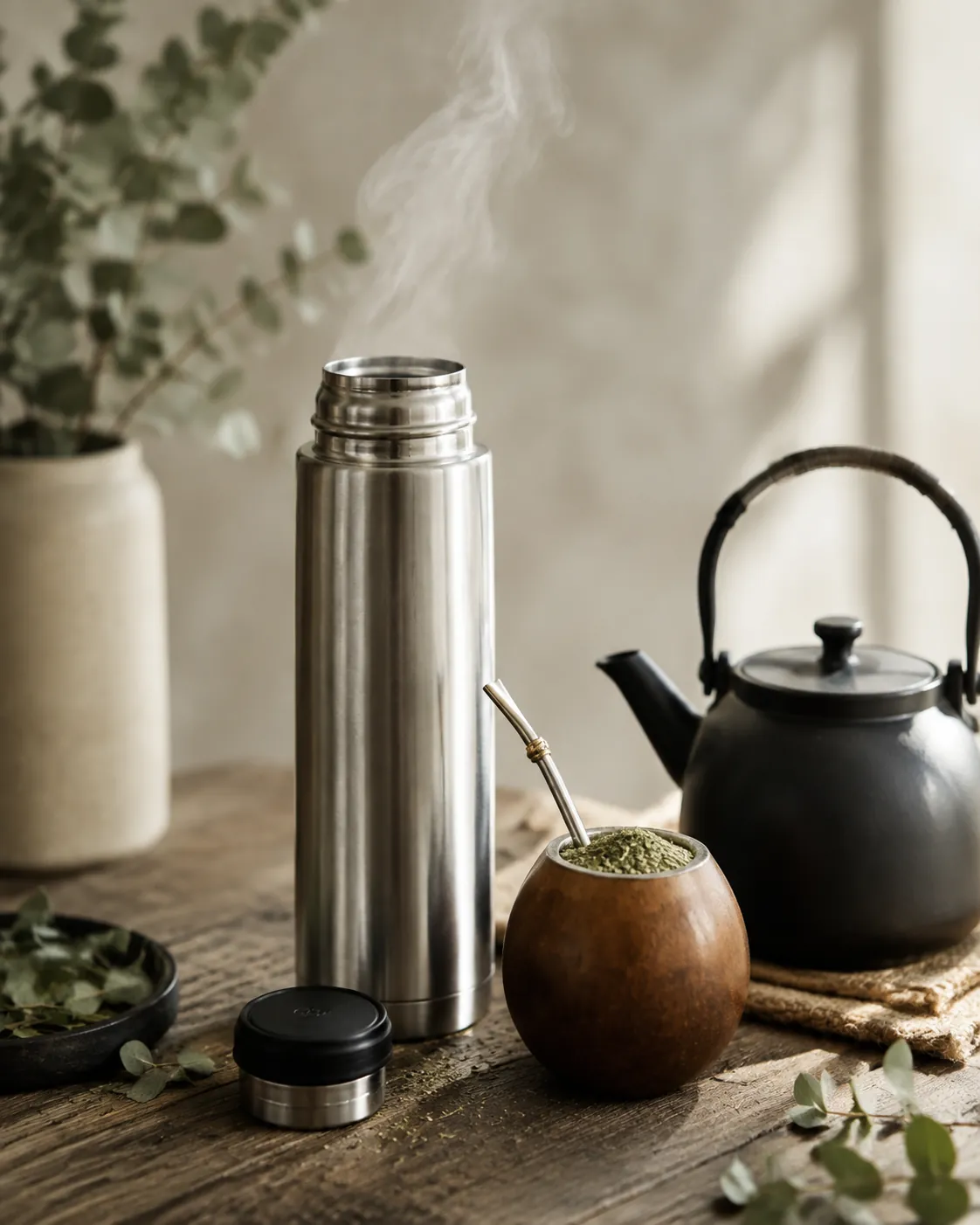
No thermometer is needed. Water off a rolling boil drops through the mate range in roughly two to three minutes in an open kettle, and pouring a little cold into the flask before topping up works just as well.
The same range covers most green leaf, so steeping temperature transfers directly if you already brew tea carefully. What does not transfer is timing, because a gourd is refilled constantly rather than steeped once.
What yerba mate tastes like
Mate is an acquired taste and it is fair to say so plainly.
How hard the bitterness lands
- Traditional gourd, hot water, no sugarThe full vegetal bite
- Cut leaf brewed in a potFirm but easier to drink
- Aged mate, matured a year or moreRounder, less grassy
- Toasted mateNutty and considerably softer
- Guayusa, the mild cousinNo bitterness worth naming
It is vegetal, grassy and distinctly bitter, closer to a strong green tea than to anything herbal. There is a smoky note in most Argentine yerba, because the leaf is traditionally dried over a wood fire.
Unsmoked and air-dried yerba is sold and tastes considerably cleaner and greener. Brazilian chimarrão in particular is milder and less bitter than the Argentine style.
The bitterness is structural rather than a fault, and it does not fade with familiarity so much as stop mattering. Most people who stay with mate report the grassy and slightly sweet notes separating out from the bitterness after a week or two of regular drinking.
Two things change a first experience more than the brand does. Stems in the blend soften it considerably, and water below boiling changes it more than either.
Among the other infusions
Mate sits in this section by botany and stands apart from everything else in it.
The pattern is that every other infusion here is drunk from a cup and finished. Mate is refilled twenty times from one charge, which makes it a session rather than a drink.
That difference runs deeper than the equipment. An infusion made once has a single character, while mate has an arc, and the sections below are mostly about managing that arc rather than about a recipe.
It is also the only caffeinated drink in this section, which is why it gets compared to coffee rather than to the herbs beside it. A reader arriving from chamomile is expecting something gentle and will not find it here.
The practical consequence is that mate is bought in kilos and the others in boxes of bags. A drink refilled twenty times a sitting is stocked the way coffee is stocked, and it changes what a cupboard looks like.
How much caffeine is in yerba mate
Mate is the outlier in this section, and the figures deserve care.
A serving sits between black tea and brewed coffee, which places mate in a familiar range with an unfamiliar delivery.
The complication is that a gourd is refilled repeatedly from the same leaf. A session may run a litre or more of water through one charge, so a single-serving figure describes the first cup rather than the sitting.
That makes published numbers for mate less useful than they look, and more variable than for almost any other drink here. Caffeine by brew method sets out how far figures move with serving size, and mate is the clearest case of that problem in this section.
Extraction also falls across a session rather than holding steady. The early refills carry most of it, and the pale later ones carry progressively less, so the total is not the serving figure multiplied by the number of refills.
How to choose a yerba mate
Mate packaging uses Spanish and Portuguese terms that describe real differences in what is in the bag.
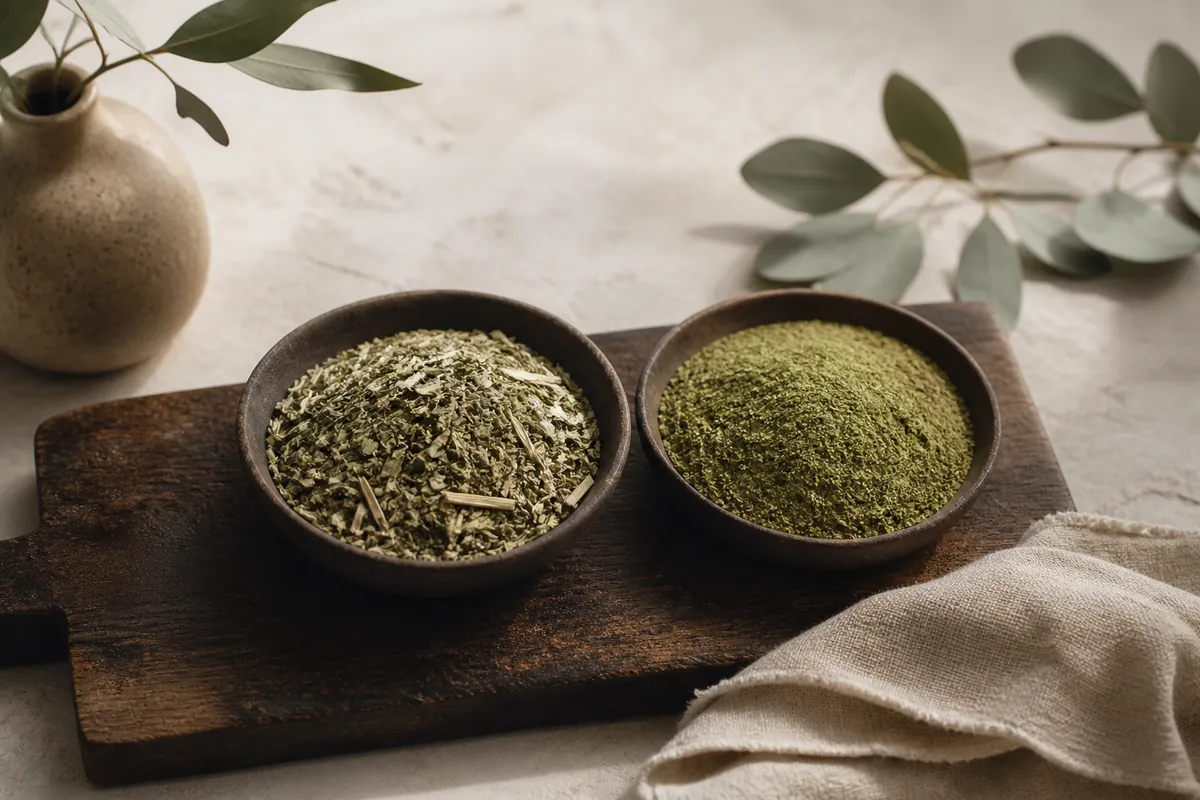
The terms that matter
- Con palo
- With stems. Milder, slower to extract, and the common Argentine style
- Sin palo or despalada
- Without stems. Stronger, more bitter, and it clogs a bombilla faster
- Barbacuá
- Dried over a wood fire. Distinctly smoky, and the traditional method
- Secado sin humo
- Dried without smoke, using hot air. Cleaner and grassier
- Compuesta
- Blended with herbs, citrus peel or mint
- Estacionada
- Aged, usually 12 to 24 months. Rounder and less sharp
- Chimarrão
- The Brazilian style. Very finely ground, bright green, drunk unaged
The stem question is the one that changes a first experience most. Sin palo is what people usually mean when they say mate is too bitter, and switching to con palo softens it without changing anything else.
Ageing is the second lever and it is deliberate rather than neglect. Estacionada yerba has been held twelve to twenty-four months in controlled conditions, which rounds off the sharp edges, while unaged yerba is brighter and more aggressive.
Brazilian chimarrão and Argentine mate are far enough apart to be treated as different drinks. The grind, the drying and the age all differ, and a gourd packed for one behaves badly with the other.
Start with a con palo, secado sin humo, estacionada yerba if the goal is to find out whether you like mate at all. That combination removes the three things most likely to put someone off on a first gourd.
How the regional styles differ
The same plant is prepared very differently across the region, and the differences are larger than the shared name suggests.
| Argentina | Brazil | Paraguay | Uruguay | |
|---|---|---|---|---|
| Name | Mate | Chimarrão | Tereré | Mate |
| Cut | With stems and dust | Very fine, no stems | Coarse | Fine, no stems |
| Water | Hot | Hot | Cold or iced | Hot |
| Character | Balanced, robust | Smooth, green, mild | Refreshing, often with herbs | Strong, large gourd |
Uruguay drinks the strongest version of the four. The gourds are noticeably larger, the cut is fine and stemless, and a drinker will often carry a thermos under one arm through the day.
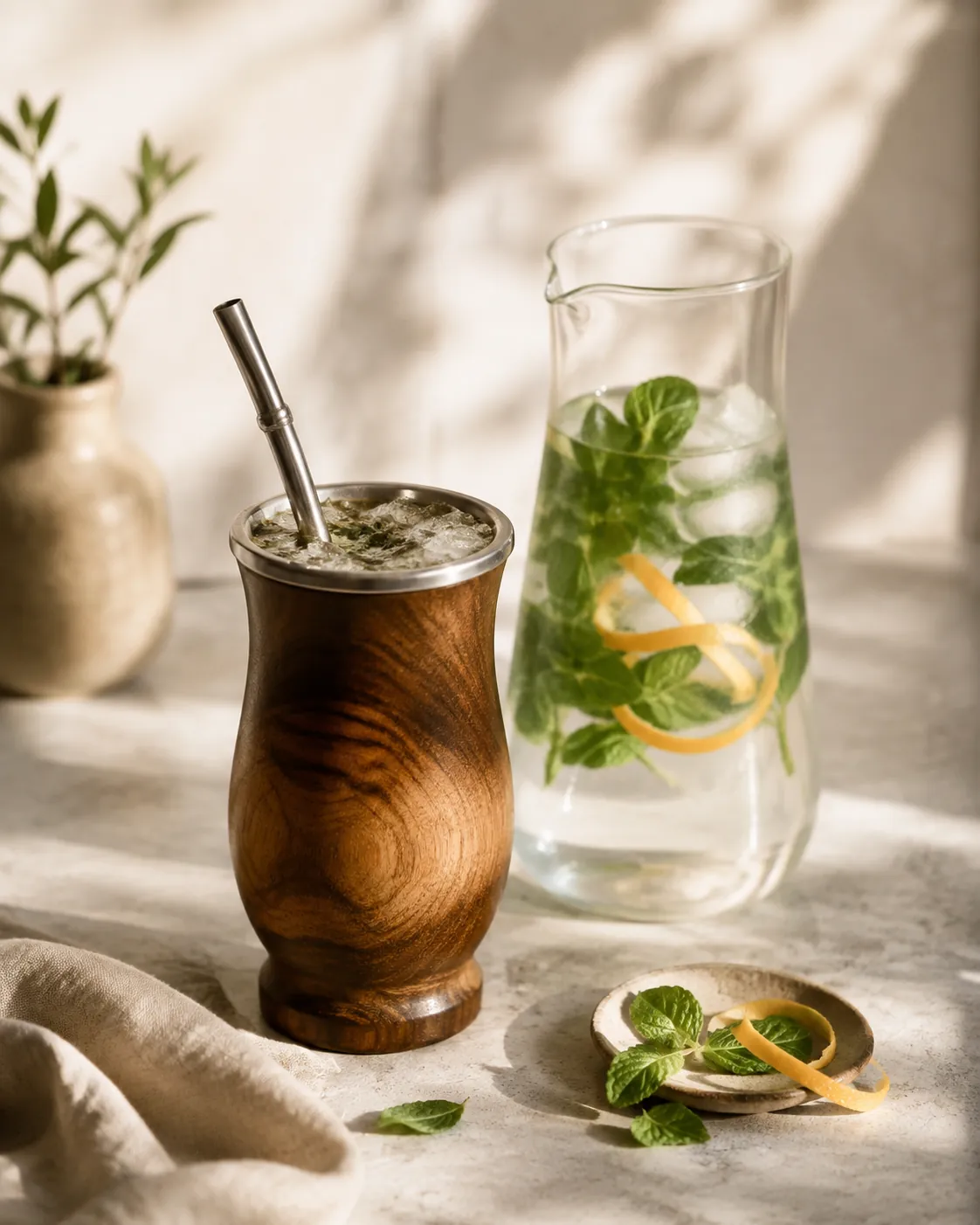
Tereré is a different drink rather than iced mate. The water is cold, and the jug it comes from is usually built with fresh citrus, mint or crushed herbs called yuyos steeping in it, which makes the jug as much a part of the preparation as the gourd.
It is the standard preparation in Paraguayan heat and is drunk from a wide vessel, often a hollowed bull horn called a guampa. Cold water extracts far less bitterness, which is why tereré suits people who find hot mate too sharp.
Chimarrão sits at the other end. The Brazilian cut is almost powder, it is drunk as fresh and green as it can be got, and the resulting drink is smooth and mild in a way Argentine mate never is.
How do you choose a gourd and look after it?
Three decisions sit under this one and they run in order: what to buy, what to do to it before the first session, and what to do after every session afterwards.
Which gourd and bombilla to choose
Both come in several forms, and the choice changes the drink more than the price does.
| Vessel | Character | Care |
|---|---|---|
| Calabash gourd | The traditional one. Seasons over time, adds flavour | Curing, and daily drying |
| Wood, palo santo | Warm and slightly resinous. Holds heat well | Oiling, no soaking |
| Ceramic | Neutral and easy. Wide range of shapes | None |
| Glass or steel | Completely neutral, often insulated | None |
| Hollowed bull horn | Traditional for tereré. Very good cold | Careful drying |
A natural calabash is the one worth having if the routine appeals, and the wrong choice for anyone who will not empty it every time. Glass and steel give up the seasoned flavour and ask nothing in return.
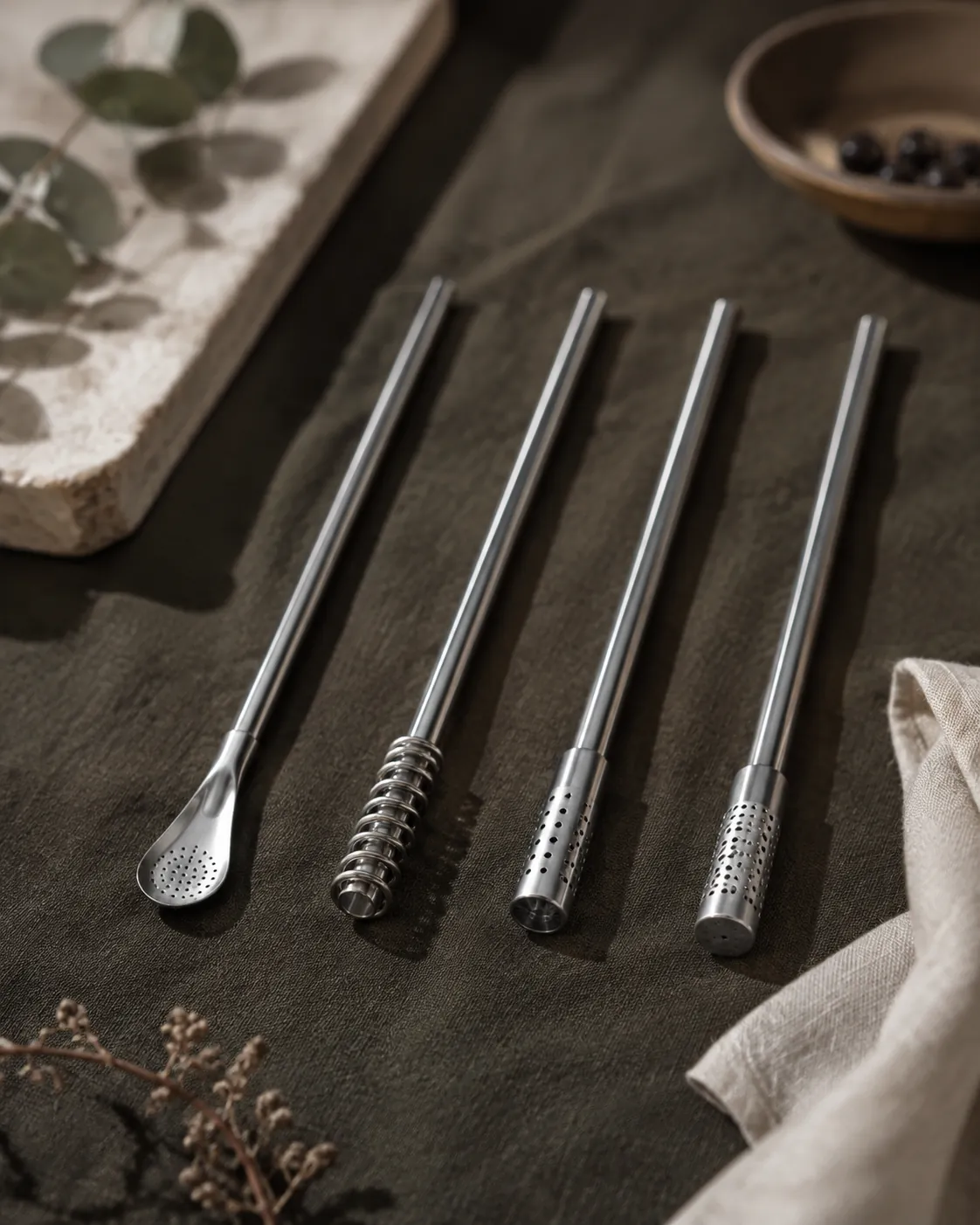
The bombilla matters as much and is chosen for the cut of yerba. A spring filter suits the very fine Brazilian grind, a spoon-shaped perforated end suits Argentine yerba with stems, and a fine-holed straw clogs immediately in chimarrão.
Alpaca and stainless steel are the common materials. Steel is cheaper and conducts heat more, so it is hotter on the lip, and alpaca is softer and traditional.
A mismatched pair is the usual reason a new setup disappoints. A cheap fine-holed straw with a stemless yerba blocks within two refills, and no amount of care with the water fixes it.
How to cure a new gourd
A natural gourd cannot be used straight from the box, and skipping this is the most common way a first gourd is ruined.
An uncured gourd is raw plant material with a soft interior. Left untreated it takes on a green, mouldy taste, and it can go visibly mouldy within days of first use.
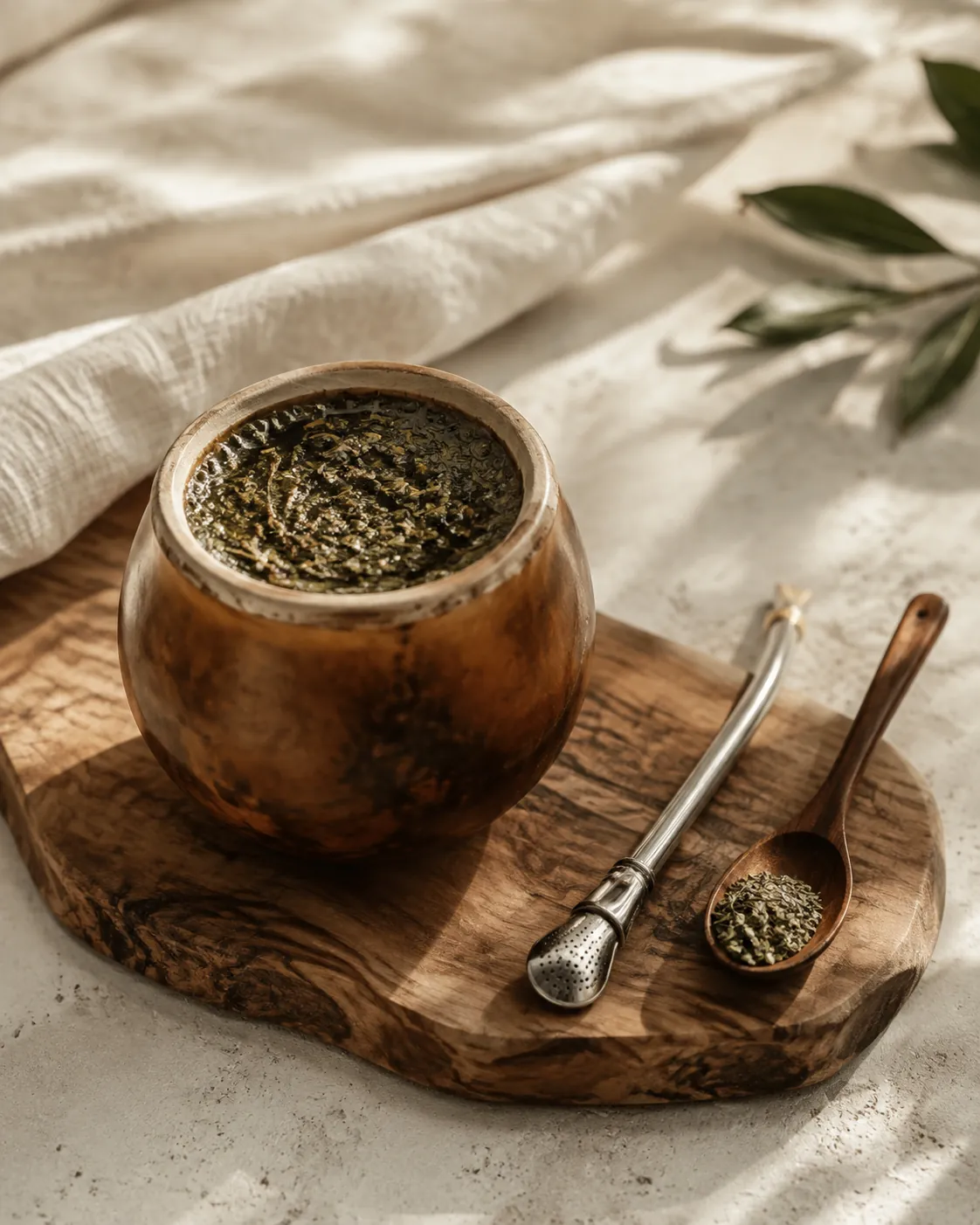
Curing, over two days
- Fill it with used yerbaSpent leaf from a session, packed to the top. Fresh leaf works and is wasteful.
- Add warm waterNot boiling. Fill it, top it up as it soaks in, and leave it to stand.
- Wait 24 hoursIn a cool place. The gourd softens and the interior takes on the mate.
- Scrape the insideA spoon against the walls lifts the soft pulpy layer. Take it back to firm shell.
- Rinse and repeat if neededA second 24 hours is worth it on a thick-walled gourd.
- Dry completelyUpside down, somewhere airy, for a day or two before first use.
The scraping step is the one people skip and the one that matters. Leaving the softened pulp in place is what produces a gourd that tastes green and stale for months, because that layer never dries properly.
Wooden and ceramic vessels need none of this. A wooden one is oiled or simply used, and ceramic, glass and steel are inert and ready immediately.
The cure is also why a well-used gourd tastes better than a new one. Each session deposits a little more into the shell, and the vessel develops character the way a seasoned pan does.
How to keep a gourd from going mouldy
Mould is the enemy and it comes from one habit.
A gourd left with wet leaf in it will grow mould, usually within a couple of days and sometimes overnight in a warm room. Emptying it immediately after a session is not tidiness, it is the whole of gourd care.
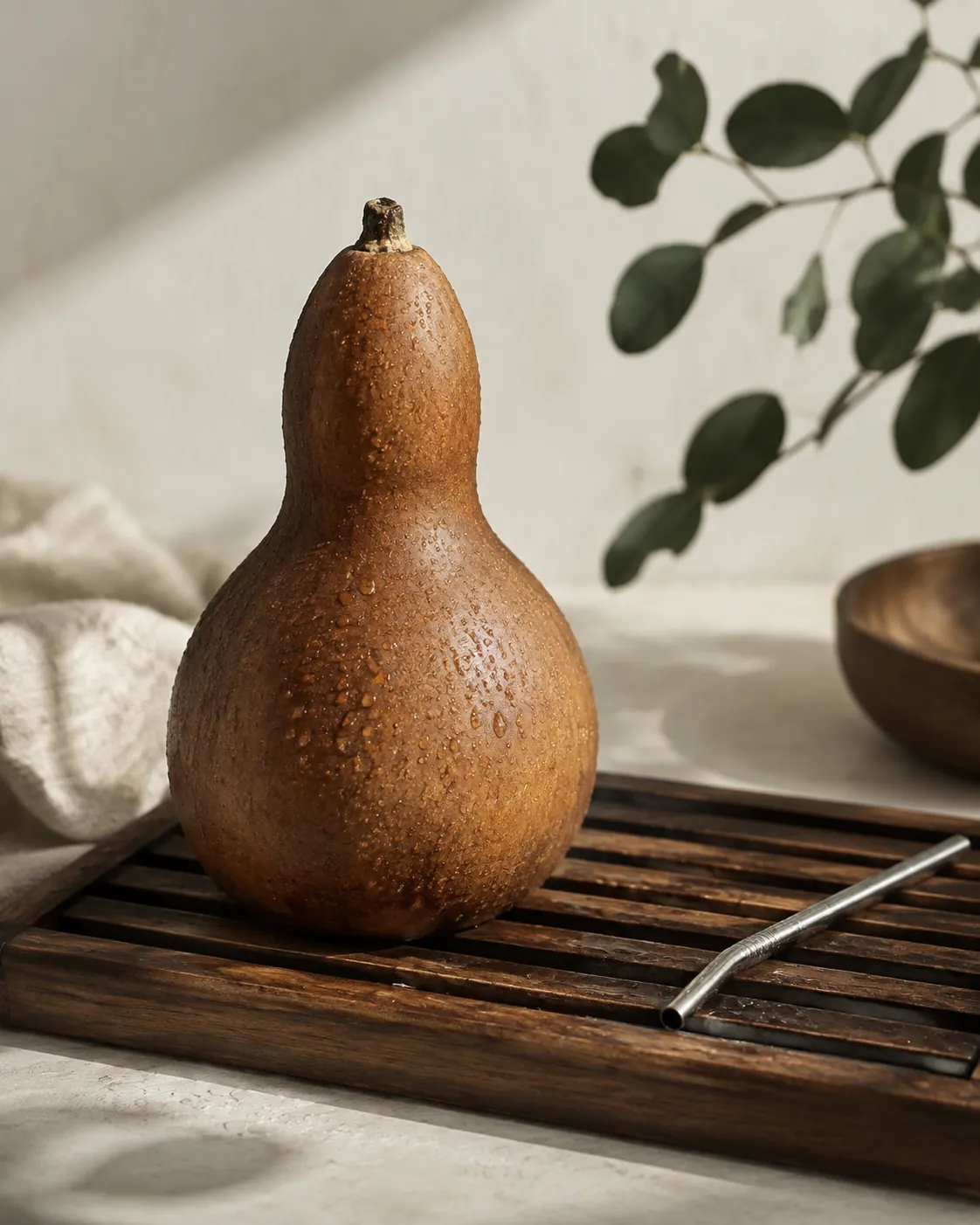
- Empty and rinse with warm water as soon as you finish, every time.
- Never use detergent. Soap soaks into the shell and the taste stays for months.
- Dry upside down, with air reaching the inside. A gourd stood upright holds moisture.
- Scrape out any soft build-up occasionally with a spoon, not a scourer.
- If mould appears, scrape it back to clean shell, rinse, dry fully, and re-cure.
Drying is the step that gets rushed. A gourd emptied and left on its base traps a film of water at the bottom, which is exactly where mould starts, so it wants to sit mouth-down with air moving past it.
Steel and glass gourds sidestep all of it and are the sensible choice for anyone who will not commit to the routine. What they lose is the flavour a seasoned natural gourd contributes.
How many refills a gourd gives
One charge of leaf lasts far longer than a pot of tea, and there are clear signs when it is finished.
A well-packed gourd gives fifteen to twenty refills, and a large Uruguayan one can go past thirty. What ends it is not a count but the taste going flat and pale, at which point the leaf is called lavado, washed out.
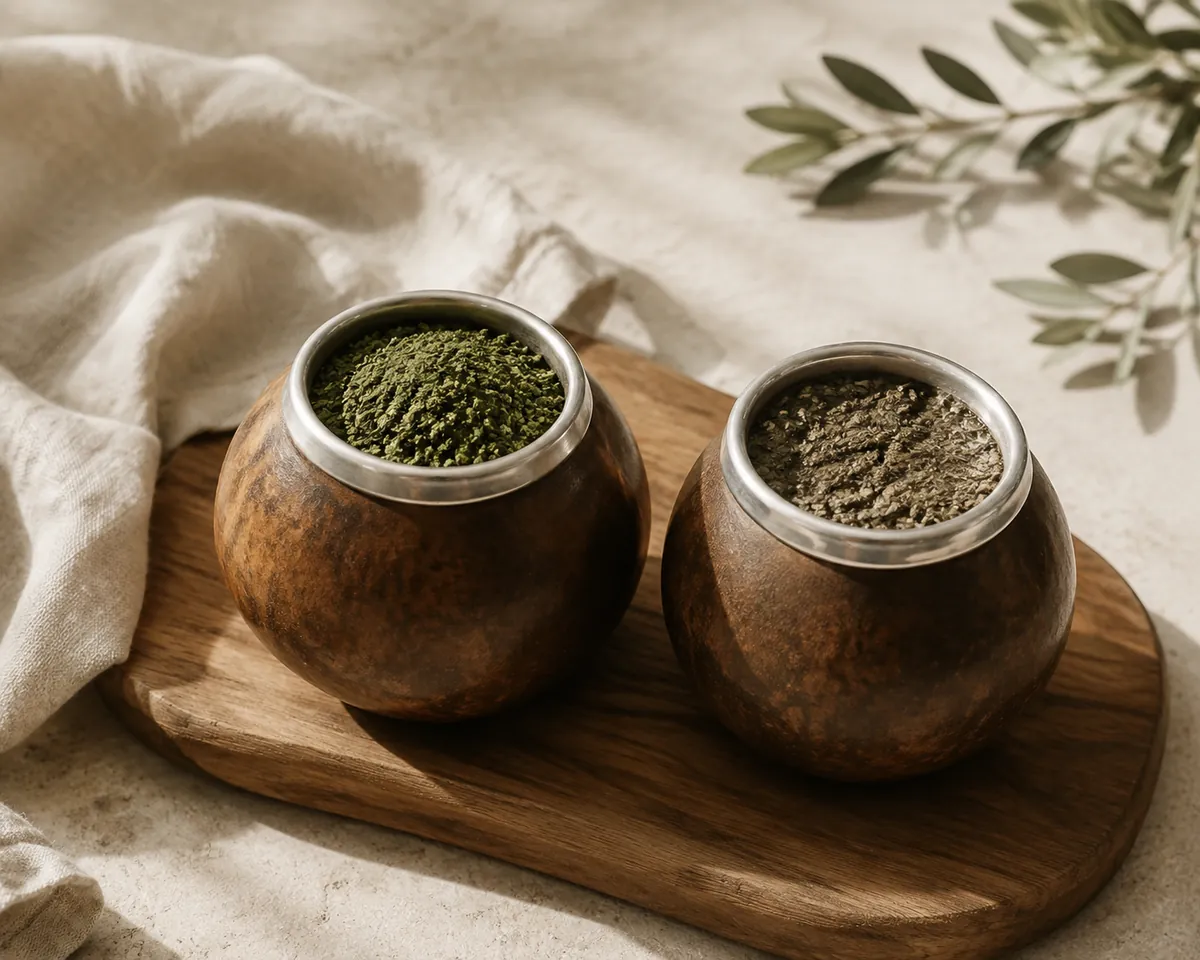
Once fully lavado the leaf is finished, and no amount of hotter water recovers it. Hotter water applied earlier is what usually causes a gourd to wash out in five refills instead of twenty.
The economics follow from that. A 500 g bag covers weeks of daily drinking rather than days, which is why mate is a habit people keep up without thinking about the cost.
Reading the arc across refills is the skill worth having. It is the same attention that brewing in a gaiwan asks for, where many short extractions from one charge of leaf are compared against each other rather than judged one at a time.
How to drink mate without a gourd
The equipment is traditional rather than required, and two alternatives are drunk in far larger volumes than the gourd is.
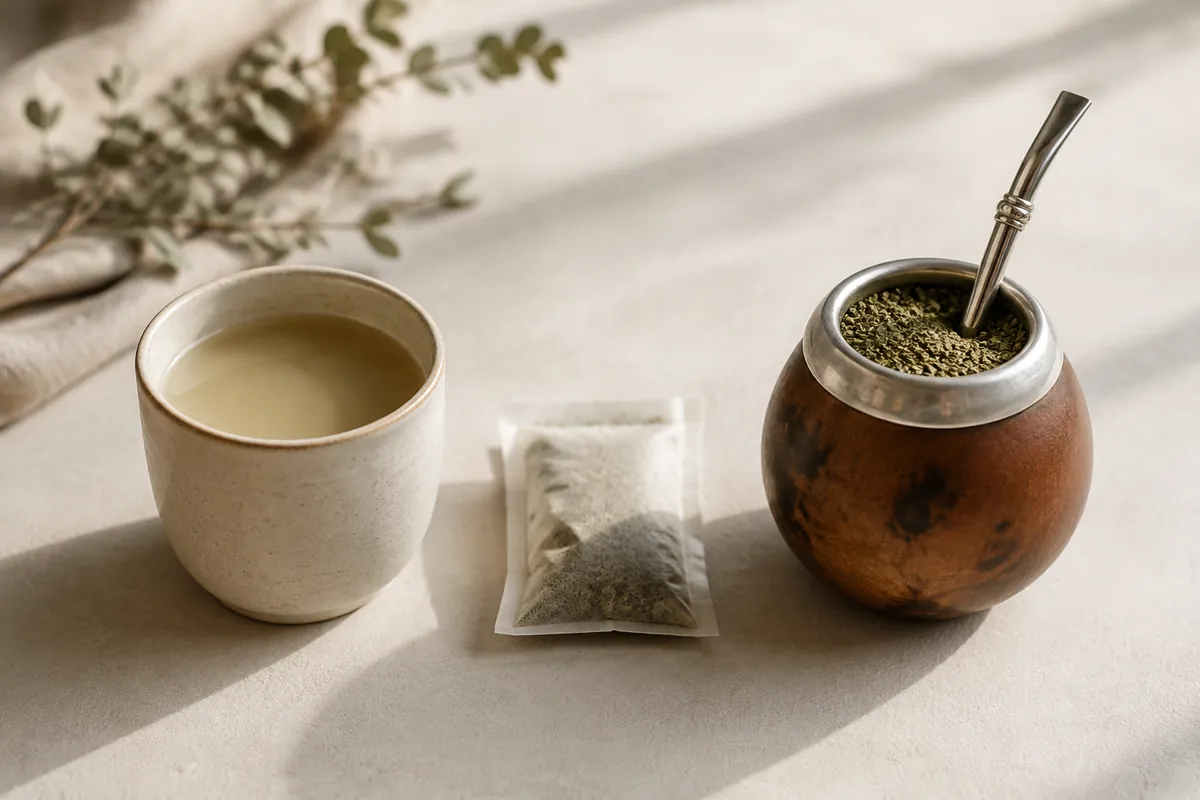
Mate cocido is yerba brewed like tea, in a bag or strained from a pot, and drunk from a cup with milk and sugar. It is a breakfast drink across Argentina and Uruguay, and it is the form most households actually go through the most of.
A French press is the best improvised gourd. The mesh holds the leaf and the plunger stops extraction, and the same 70 to 80 C water and about 10 g per 300 ml apply.
Teabags are convenient and noticeably weaker, because the cut inside them is fine dust that gives everything up at once. Bottled cold mate is usually sweetened and shares an ingredient with the gourd and very little else.
None of these reproduce the gourd, which is as much a social arrangement as a brewing method. One person prepares a single vessel and passes it around a group, refilling it for each drinker in turn.
How to store yerba mate
Yerba is a dried leaf and it keeps on the same terms as any other.
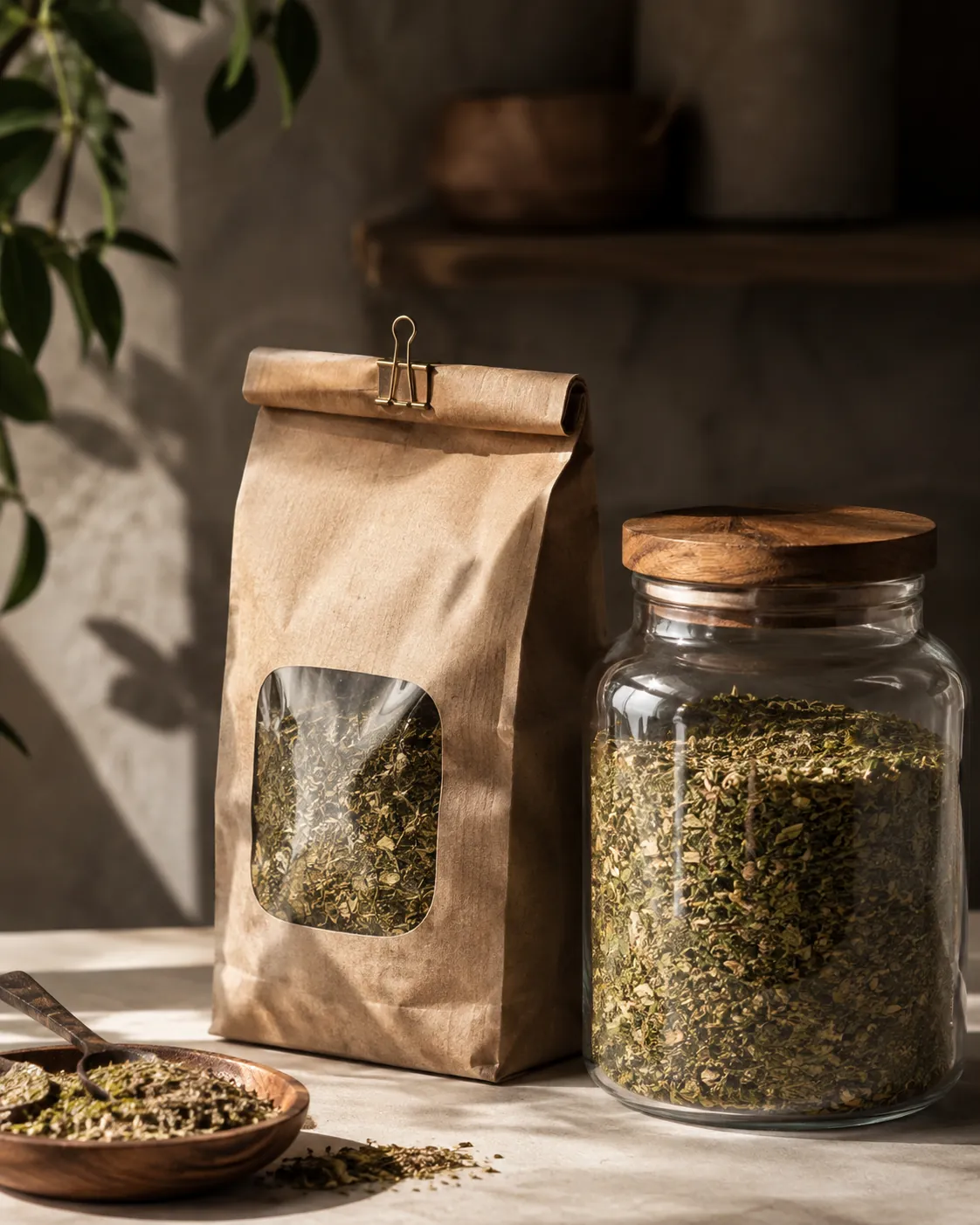
An opened bag holds its character for a few months and then flattens, losing the green aroma first and keeping the bitterness. Sealed and away from light is the whole requirement, and the rules are the same ones that apply to storing loose leaf.
Argentine yerba is often sold already aged for a year or two, which is deliberate and different from going stale. Brazilian chimarrão is the opposite and is drunk as fresh and green as it can be got, so a bag of it rewards being finished quickly.
Buying a kilo is normal in the producing countries and questionable elsewhere. A large bag opened in a humid kitchen flattens before it is half gone, and decanting into a sealed jar solves most of that, which is the same argument that applies to storing coffee beans.
What the rules are at a shared gourd
Mate is passed around, and the conventions are genuinely observed rather than folklore.
How a round actually goes
- The serverOne person pours and drinks the first, weakest gourd
- RefillingThe same server refills and passes to each drinker in turn
- DrinkingFinish it; a gourd is passed back empty, not sipped and returned
- The strawNever stirred with, and never rearranged by a guest
- Saying thanksSays you are finished, so it comes at the end and not before
One person, the cebador, prepares and pours for everyone and drinks the first, weakest gourd themselves. That first serving is the least pleasant and taking it is the host's job.
The gourd is drunk completely, down to the sucking sound, and handed straight back to the cebador rather than passed sideways to the next person. It goes around the circle in a fixed order.
Saying thank you means you have finished and want no more, so it is not said until the end. A guest who thanks the cebador after the first round has left the circle without meaning to.
The bombilla is never moved, adjusted or stirred by a guest. That would wreck the packing the cebador built, and it is the one breach that has a practical consequence rather than a social one.
Common questions
Does yerba mate contain caffeine?
Yes, commonly cited around 80 mg per 250 ml serving, which makes it the only caffeinated drink among the common herbal infusions. A traditional gourd is refilled many times, so a session delivers considerably more than one serving.
Why is my yerba mate so bitter?
Almost always the water temperature. Mate wants 70 to 80 C and turns aggressively bitter with boiling water. Wetting the entire charge of leaf at once instead of one side also exhausts it quickly and increases bitterness.
Why should you not stir the bombilla?
Moving it lets fine particles past the filter at its base and clogs the straw. The gourd is set up once, with the leaf tilted into a slope and only one side wetted, and the bombilla stays where it was placed.