What Is Evaporated Milk? And Why It Is Not Condensed Milk
Evaporated milk and condensed milk look alike and behave nothing alike. One is unsweetened and one is roughly half sugar, and swapping them ruins whatever you are making.
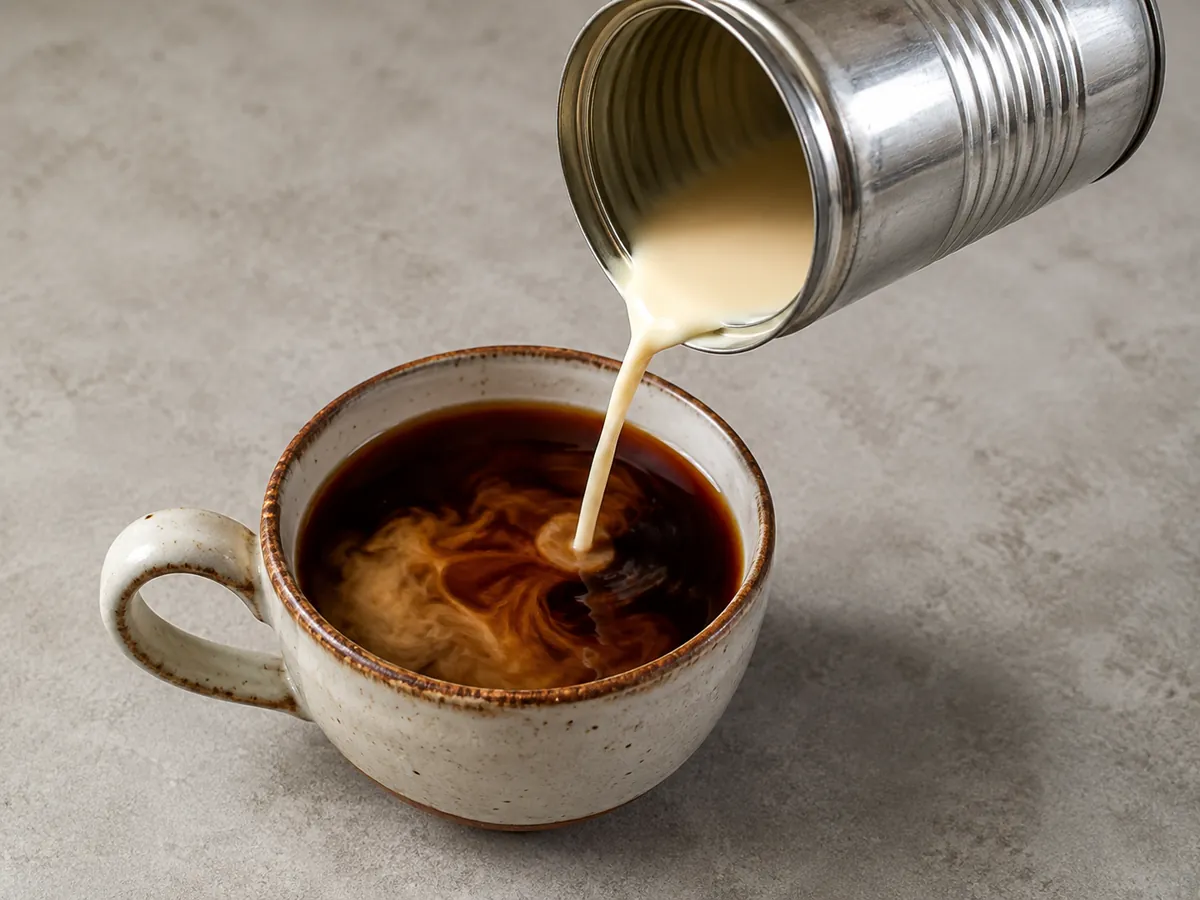
Evaporated milk is milk with roughly 60 per cent of its water removed by heating under vacuum, then sterilised inside the sealed tin.
It is unsweetened. That is the single fact separating it from condensed milk, and it is the one people get wrong at the shelf and again at the pan.
Evaporated milk at a glance
- Made by
- Removing about 60 per cent of milk's water, then sterilising in the tin
- Sugar
- None added, which is the whole difference from condensed milk
- Fat
- Around 7.9 g per 100 ml, roughly double whole milk
- Protein
- Around 6.8 g per 100 ml, also roughly double
- Taste
- Faintly caramelised and slightly savoury, from browning in the sealed tin
- To replace fresh milk
- Equal parts evaporated milk and water
- Once opened
- Decant out of the tin, refrigerate, use within three or four days
Unsweetened, and why it still reads faintly sweet
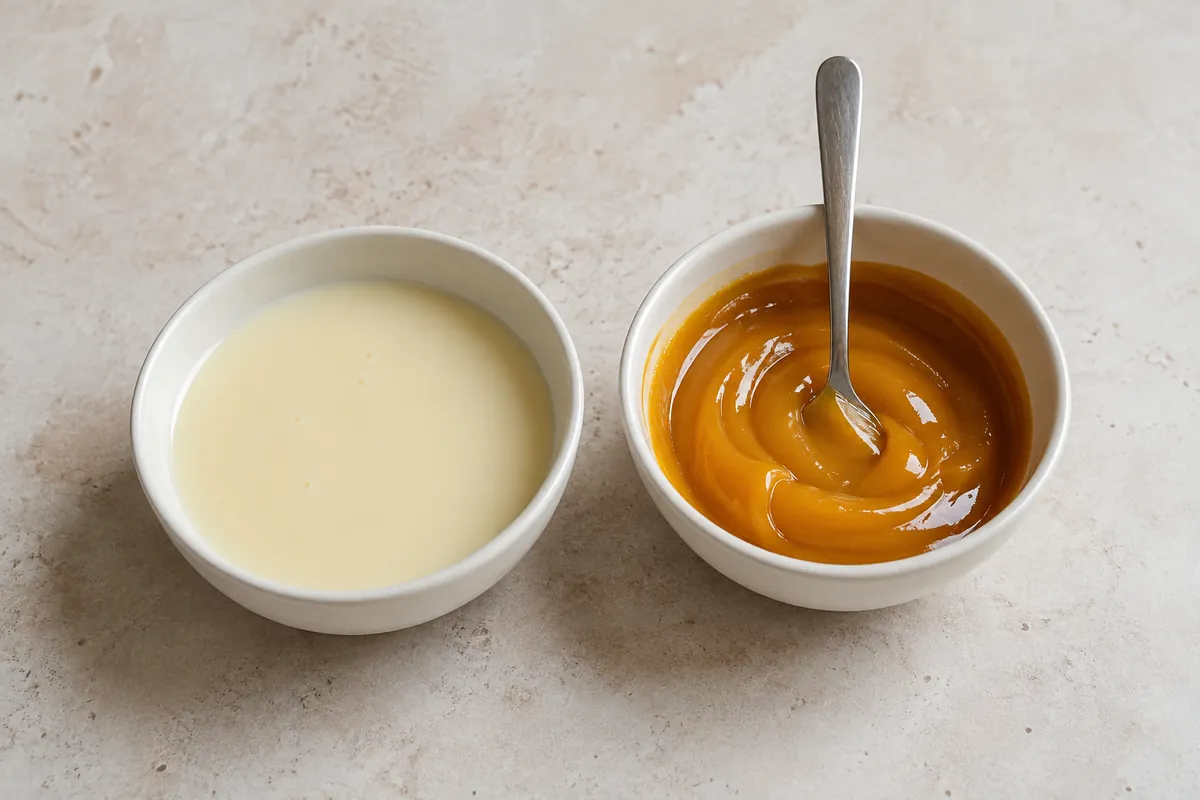
Two tins sit side by side on the same shelf and they are not interchangeable in any recipe. Evaporated milk has had water taken out and nothing put back; sweetened condensed milk has had water taken out and then close to its own weight again in sugar stirred through it.
| Evaporated | Sweetened condensed | |
|---|---|---|
| Sugar | None added | About 45 per cent sugar |
| Texture | Pourable, like single cream | Thick, sticky, syrupy |
| Colour | Pale cream | Deep golden |
| Made by | Removing water, then sterilising | Removing water, then adding sugar |
| Tastes | Cooked, faintly caramelised, savoury | Intensely sweet |
| Used in | Tea, coffee, savoury sauces | Desserts, Vietnamese coffee, sweet drinks |
Substituting one for the other is never a small change. Condensed milk in tea makes it undrinkably sweet, and evaporated milk in a dessert leaves the whole thing with no sugar in it at all. Sweetened condensed milk is the other half of the confusion, and the two are worth reading together once.
The confusion survives because evaporated milk genuinely does taste faintly sweet. Milk carries lactose, and taking out 60 per cent of the water concentrates that lactose along with everything else.
What was a mild background note in fresh milk becomes something you notice in the cup.
Cooking adds to the impression without adding any sugar. Maillard reactions between the lactose and the milk proteins throw off caramel-like aromatics, and the nose reads those as sweetness.
That is why a strong tea made with evaporated milk needs less sugar than one made with fresh, and why condensed milk on top of the same tea overwhelms it. What evaporated milk tastes like separates the two on flavour alone.
Sixty per cent gone, and the numbers that follow from it
Everything distinctive about the tin follows from a single operation. Milk is heated under vacuum until about three fifths of its water has gone, and the concentrate is then sterilised sealed.
Doubling the protein is what makes it behave as it does in a cup and in a pan. More protein means more material to react with heat, which is where the cooked flavour comes from, and more to enrich a sauce with while bringing in none of the water fresh milk carries.
The fat figure puts it between whole milk and single cream. That is the source of the commonest mistake in the category: it enriches like cream but does not thicken like it, because the fat never gets high enough to do that work.
Anything relying on cream for structure comes out loose.
Sterilising in the sealed tin supplies the second half of the flavour. Concentrated sugars and proteins are held at a temperature no open pan reaches, and the Maillard browning that results gives the faintly caramelised, slightly savoury note fresh milk has none of.
Thin or split results almost always trace to what happened after the tin was opened, which is the ground evaporated milk problems covers.
What it does to a strong tea or a strong coffee
Concentration is the whole of its advantage in a cup.
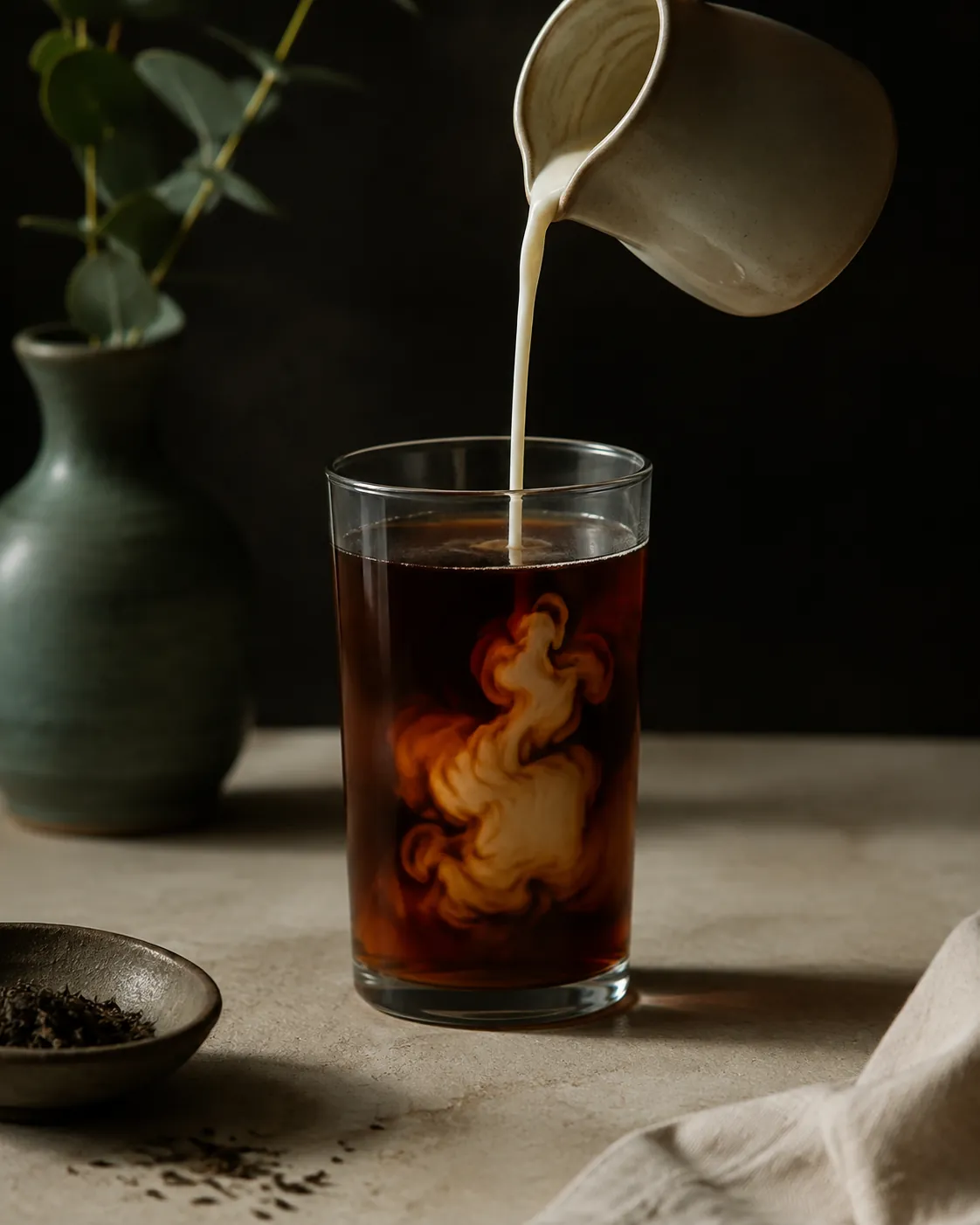
It adds richness and body without diluting what sits underneath. In a weak drink that hardly registers, and in a strong one it decides the result: where fresh milk flattens a brew, the same volume of evaporated milk lightens the colour and leaves the strength where it was.
A spoonful in a mug of instant coffee does more for it than any quantity of fresh milk, since instant is usually drunk strong.
Teh tarik
The Malaysian pulled tea, usually made with condensed rather than evaporated.
Strong black coffee
Adds body without the sweetness of condensed.
Masala chai
An occasional substitute for simmering fresh milk.
Hot chocolate
Richer than milk, and it does not scald as readily.
Reconstituting it
- To replace fresh milk
- Equal parts evaporated milk and water
- Undiluted
- Use where you want richness, as in strong tea
- In tea
- About 30 ml undiluted per 200 ml of strong brew
- Storage, opened
- Decant from the tin, refrigerate, use within 3 to 4 days
- Storage, unopened
- Years at room temperature
The dilution line at the top of that table is the one people skip. Equal parts milk and water turns it back into something close to fresh milk for a cereal bowl or a white sauce.
Used undiluted where a recipe meant fresh milk, it gives a dish that tastes cooked and faintly sweet for no reason the cook can name.
Hong Kong milk tea and the cloth bag it is poured through
The classic use deserves its method, because the drink is precise rather than approximate. The tea is a blend, usually Ceylon for body with a broken grade for strength and colour.
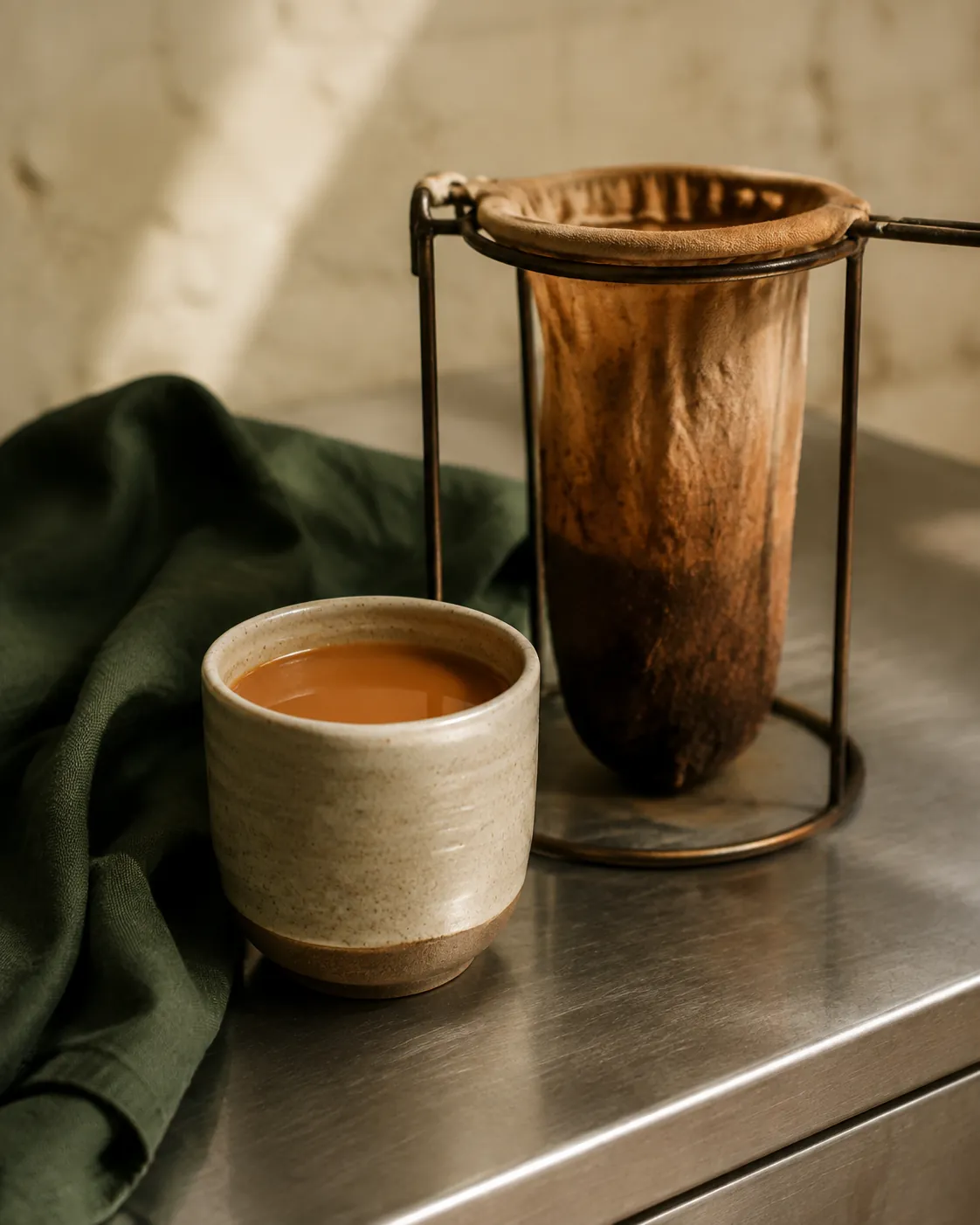
It is brewed far stronger than tea is drunk anywhere else, then strained repeatedly through a long cloth bag that gives the drink its Cantonese name.
One cup
- Tea
- 25 g of a coarse black blend per 500 ml of water
- Brew
- Simmer 4 to 6 minutes, not steep
- Strain
- Through a cloth bag, pouring back through it three or four times
- Evaporated milk
- 30 to 40 ml per 150 ml of tea
- Sugar
- To taste, and traditionally a good deal
Simmering rather than steeping is the first departure from ordinary practice, and it is deliberate. The leaf is boiled hard for several minutes at a concentration that would be undrinkable at any normal steeping temperature.
Pouring the brew back through the bag is the second departure, and it is what separates the drink from strong tea with milk in it. Each pass aerates the liquid and traps more of the fine particles, so the result reads smoother and thicker in the mouth rather than merely stronger.
The milk is not a substitution here either. Its concentration is what lets a dairy product meet tea brewed at five times normal strength, and fresh milk at the same volume simply disappears.
Teh tarik, the shop counters, and how the tins got there
Before reliable refrigeration, tinned concentrated milk was how milk travelled and how it kept. The places it reached in that period are largely the places that still drink it.
Removing water cut weight and volume, and sterilising in the tin made the contents stable for years without a cold chain. That role has mostly gone wherever refrigeration is ordinary, and the flavour stayed behind as a tradition in its own right.
Hong Kong milk tea is not made with evaporated milk because fresh is unavailable.
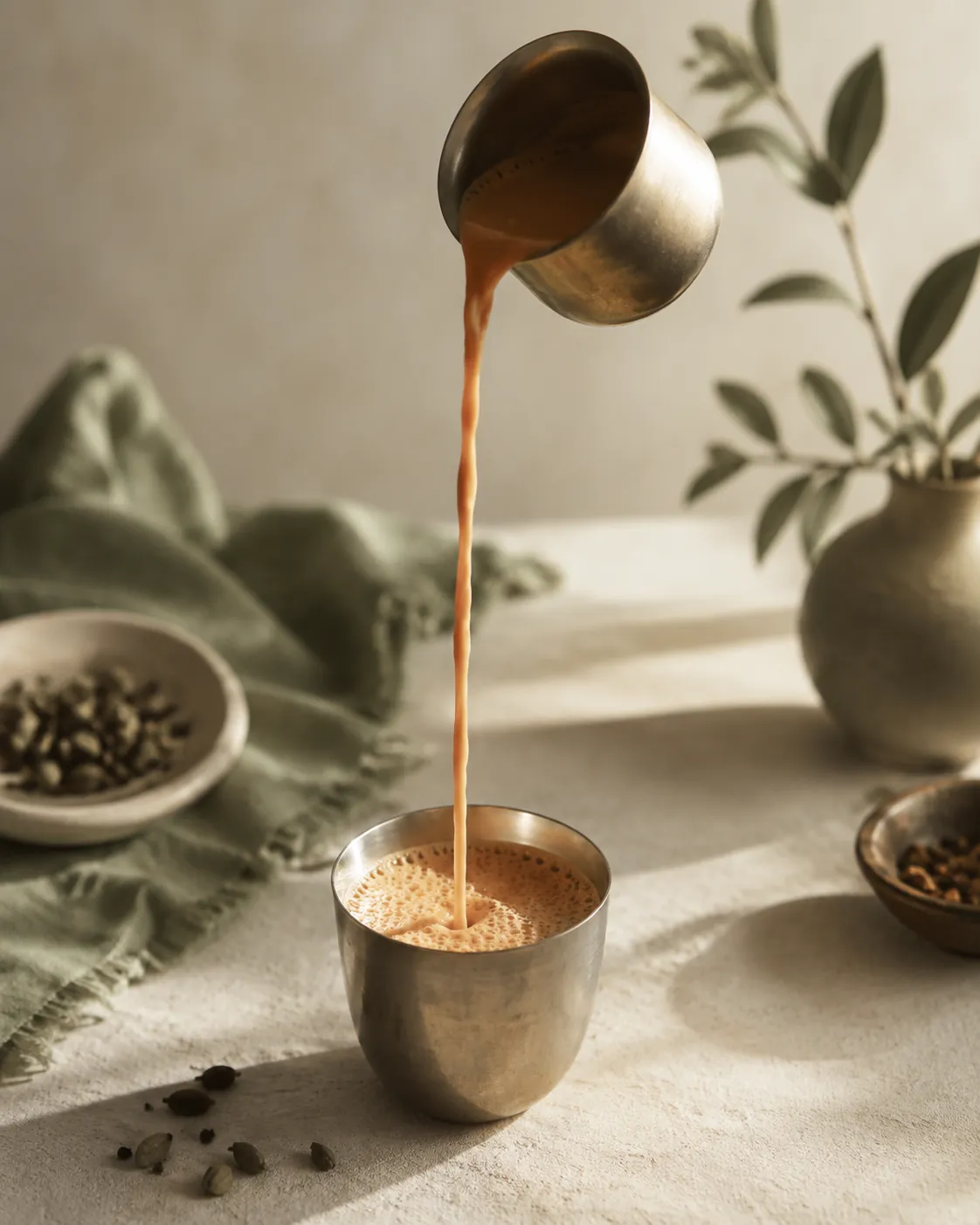
Teh tarik in Malaysia and Singapore is pulled between two vessels from a height, aerating it into a thick foam, and is usually built on condensed rather than evaporated milk. The pulling works on the same principle as pouring back through a cloth bag, which is that air and agitation change texture more than any ingredient does.
Sri Lankan and southern Indian tea shops keep both tins and choose between them by how sweet the drink is meant to be, and a spiced masala chai leaning on cardamom takes evaporated milk well when there is no time to simmer fresh.
The pattern holds firmly enough to state as a rule. Wherever a tinned milk appears in a tea tradition, the tea underneath is brewed several times stronger than a Western cup.
Enriching a pan without adding water to it
Evaporated milk earns most of its shelf space away from the cup, and for exactly the reason it suits a strong tea. It brings dairy richness in without the water that would arrive with fresh milk.
Savoury sauces
Adds body without cream's fat. It does not split as readily as fresh milk.
Custards and puddings
Richer set, and it browns a little more from the concentrated sugars.
Mashed potato
A common substitute for cream, and cheaper.
Fudge and caramel
Where the low water content genuinely matters.
Coffee
A spoonful in strong black coffee, which is how it is drunk across much of Asia.
That matters most where a recipe is already at its liquid limit. A custard, a mash or a pan sauce takes the enrichment and stays where it was.
The concentrated sugars also brown sooner than fresh milk's would, which is worth knowing before the top of a baked pudding goes darker than the timing suggested.
It is not interchangeable with cream, and the grid above is silent on that point. The fat is roughly whole milk's, so it enriches without thickening, and anything relying on cream to set or to hold air will fail with it.
A stovetop cocoa is the easy case, since the chocolate does the structural work and the milk only has to be rich.
Full fat, light, and the trap on the shelf
The category has variants that are not obvious from across the aisle. All of them look like the same tin.
Reading the label
- Full fat evaporated
- Around 7.9 g fat per 100 ml. The standard, and what recipes mean
- Light or reduced fat
- Around 4 g. Thinner in tea and it splits more readily
- Skimmed evaporated
- Under 1 g. Almost no body, and it is a different ingredient
- Evaporated milk product
- Contains added vegetable fat or stabilisers. Not the same thing
- Tin sizes
- 170 ml and 410 ml are the common ones, and the small tin suits a household
The reduced-fat versions are the trap. They cost about the same, they sit in the same place, and they behave noticeably worse in every drink on this page, because the fat is carrying the body that made the tin worth opening.
| Evaporated | Condensed | Whole milk | |
|---|---|---|---|
| Water removed | About 60 per cent | About 60 per cent | None |
| Sugar | None added | About 45 per cent | Lactose only |
| Use in tea | Common, and traditional | Overwhelmingly sweet | The default |
| Shelf stable | Years, unopened | Years, unopened | No |
| Substitutes for | Cream, in part | Nothing else | Itself |
Read across the shelf-stable row and the household problem states itself. Unopened, a tin outlasts everything else in this section by years, and opened it becomes the most perishable thing in the fridge.
Storing evaporated milk is mostly about the three or four days after the lid comes off.
Reducing milk in a pan, and the three stand-ins
Whole milk simmered down gives something close enough to be useful, provided you know in advance which part of the tin you will not be getting.
Reduce it gently until about 60 per cent of the volume has gone, stirring often and never letting it boil. Five hundred millilitres becomes roughly two hundred, and it takes half an hour of attention.
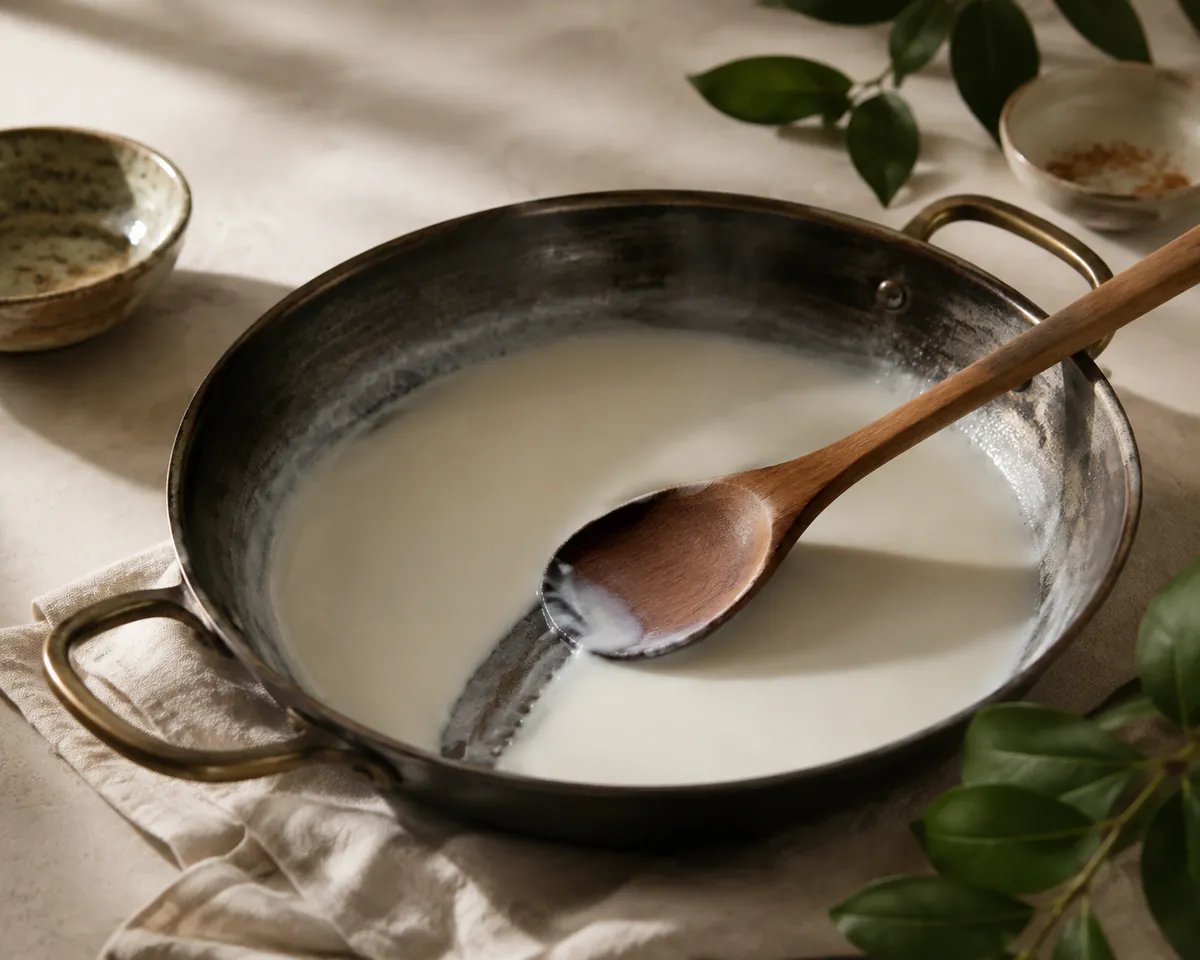
What comes out is concentrated milk with a lightly cooked flavour. What does not come out is the deeper caramelised note, which needs sterilising in a sealed can at a temperature no open pan reaches.
Home-reduced milk also keeps for days rather than years, so it is a technique for a shut shop rather than a replacement. Making evaporated milk sets out the timings properly.
Three other stand-ins work, and each gives up something specific. Cream thinned with milk supplies the right thickness and too much fat, so it reads as heavy rather than concentrated.
Milk powder reconstituted at double strength is the most convenient and the least pleasant, since powdered milk brings a flavour of its own that hides in cooking and announces itself in tea. Reducing oat milk in a pan gives a thin and frequently split liquid rather than a creamy one, and what to use instead of evaporated milk is honest about how short the usable list is.
Whipping it cold, and why the peaks fall
Evaporated milk whips, which is unexpected at the fat content of whole milk.
Chilled hard, close to freezing, it takes air and holds soft peaks for twenty minutes or so. The concentrated protein is doing the job fat does in cream, and a protein foam is weaker and shorter-lived than a fat one.
That sets the ceiling for the whole technique before you start.
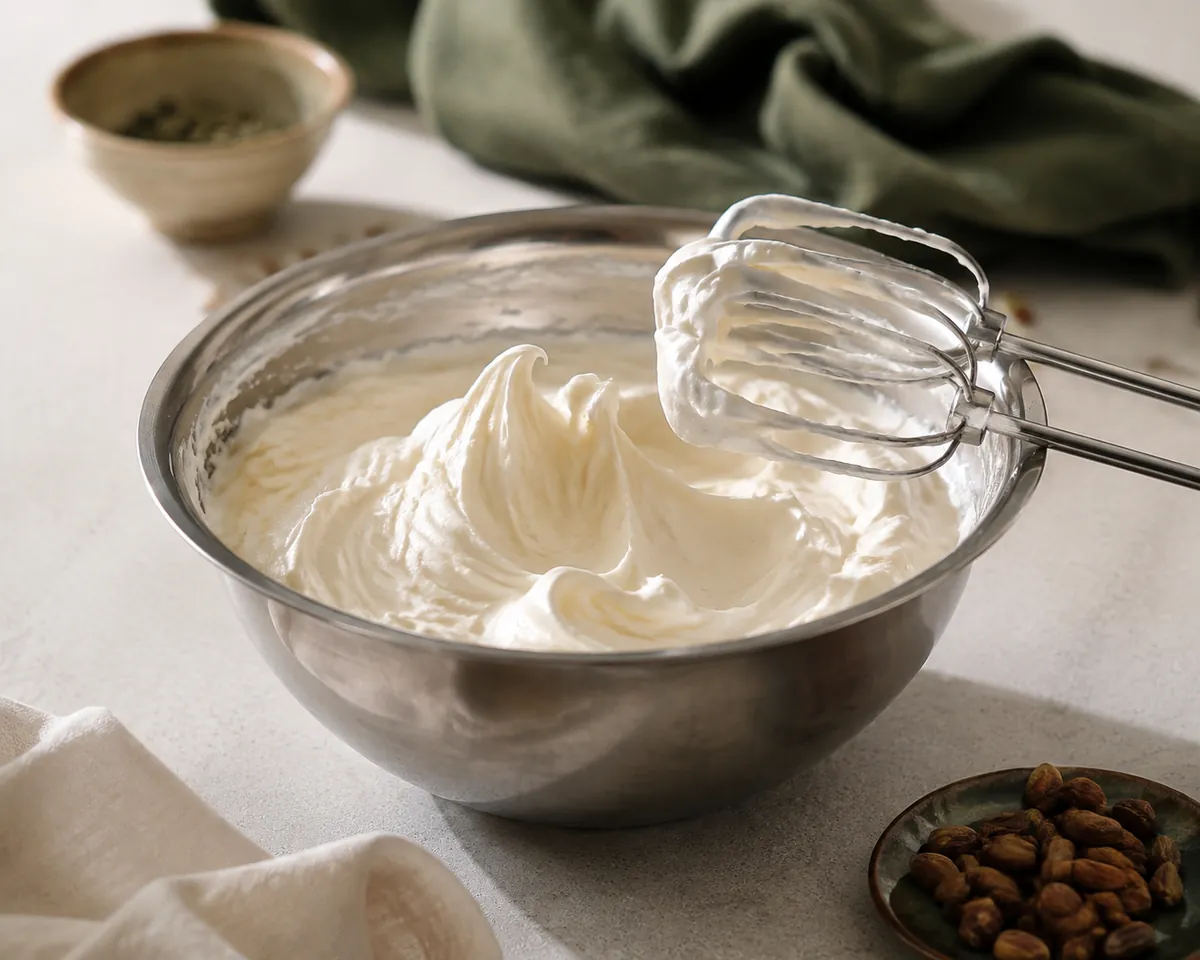
Chill the tin, the bowl and the beaters, and expect to whip for several minutes rather than the thirty seconds cream takes. A squeeze of lemon stabilises it noticeably by nudging the proteins into setting sooner.
It will not hold overnight and it will not pipe, so it is made immediately before serving or not at all. Spooned onto a mug of hot chocolate it works, and it is a good deal lighter than cream.
Why no plant drink converts
Anyone moving a recipe out of dairy hits a wall here that they do not hit anywhere else in this section. Nothing in the plant range is sold concentrated, so there is no shelf equivalent to reach for and no ratio that fixes it.
Reducing a plant drink in a pan is the obvious workaround and it mostly fails. Those emulsions are held together by added gums rather than by milk protein, and sustained heat breaks them instead of concentrating them, by the mechanism set out in why plant milk curdles.
Tinned coconut milk is the honest exception, since it is a concentrated product rather than a diluted one. For a strong spiced tea it works well, at the cost of turning the drink into a coconut one, which is a trade some recipes survive and most do not.
Common questions
What is the difference between evaporated and condensed milk?
Sugar. Evaporated milk is unsweetened, pourable and faintly cooked-tasting. Sweetened condensed milk is about 45 per cent sugar, thick and syrupy. They are not interchangeable in any recipe.
Why does evaporated milk taste cooked?
Removing water concentrates the milk sugars and proteins, and sterilising the sealed tin at high temperature drives Maillard reactions between them. That gives the faintly caramelised character fresh milk lacks.
Can you use evaporated milk instead of fresh milk?
Yes, diluted with an equal part of water. Used undiluted it adds richness and body without diluting the drink, which is why it suits strong tea and coffee.