What Is Iced Tea? Why It Clouds, and Why Sugar Will Not Go In
Tea does two awkward things as it cools. It clouds, and it refuses to dissolve sugar. Both are settled before the glass is cold rather than after, which is why iced tea is really a question of order.
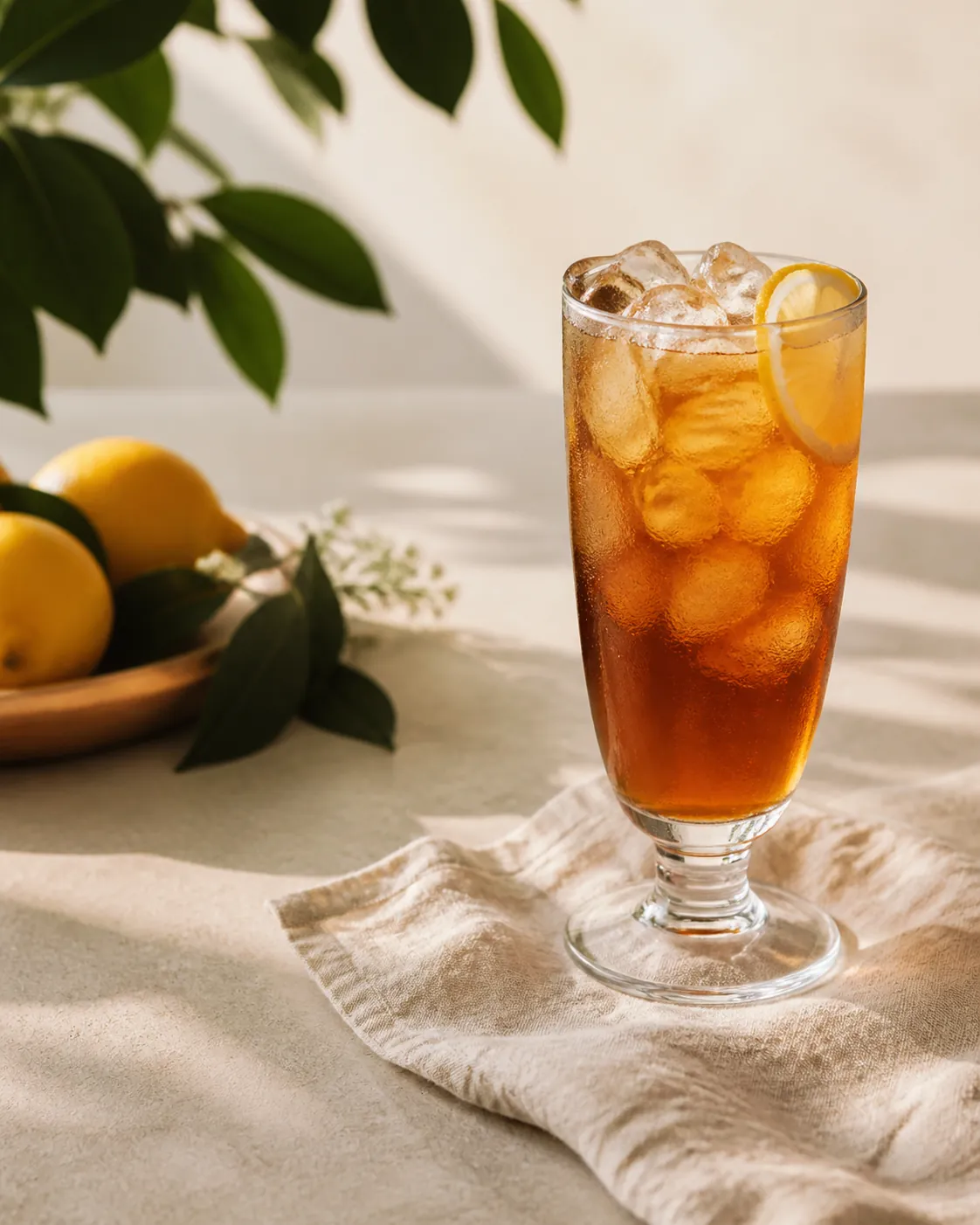
Iced tea is brewed tea served cold. That sounds like the least complicated drink on this site, and it would be, except that tea does two awkward things on the way down in temperature.
It clouds, and it stops accepting sugar. Neither can be fixed once the glass is cold, so almost every decision about iced tea turns out to be a decision about the order things happen in.
Iced tea at a glance
- What it is
- Brewed tea of any leaf, served cold, usually over ice
- Usual leaf
- Black, and most often a brisk blend chosen to survive dilution
- Two routes
- Brew hot and cool it, or steep in cold water for hours
- The visible fault
- Tea cream, a fine haze that appears as a hot brew cools
- Sweetening
- Stirred in while the tea is hot, or added later as sugar already dissolved
- Caffeine
- Whatever the leaf held, minus what cold water leaves behind
- Keeps
- A covered jug in the fridge stays good for a day or two
Iced tea is a serving temperature, not a kind of leaf
No plant makes iced tea. The name describes what has been done to a brew rather than what went into it, so a jug of iced black tea, a cold-steeped sencha and a chilled hibiscus infusion all qualify while sharing almost nothing else.
That matters because the category quietly holds three different things, and people argue past each other about which one they mean.
Brewed and chilled
Real tea, made hot and cooled. The traditional jug, and the one that clouds.
Cold steeped
Leaf left in cold water for hours. A genuinely different extraction, not a shortcut.
Bottled and ready to drink
Usually built from tea extract, acid and sweetener, and engineered to stay clear.
Tea-flavoured soft drinks
Carbonated, heavily sweetened, and tea only in the way a cola is a spice drink.
The middle two get conflated most often. Cold steeping a tea leaf is the same idea as cold brew coffee and produces the same kind of result, which is a sweeter, softer, less astringent drink rather than a weaker one.
Why a chilled jug turns cloudy
Brew a strong black tea, put it in the fridge, and an hour later the clarity has gone. The liquid is not spoiled and it has not separated.
What has happened is that theaflavins and thearubigins, the coloured compounds oxidation created, have bound themselves to caffeine and dropped out of solution as a suspension too fine to settle.
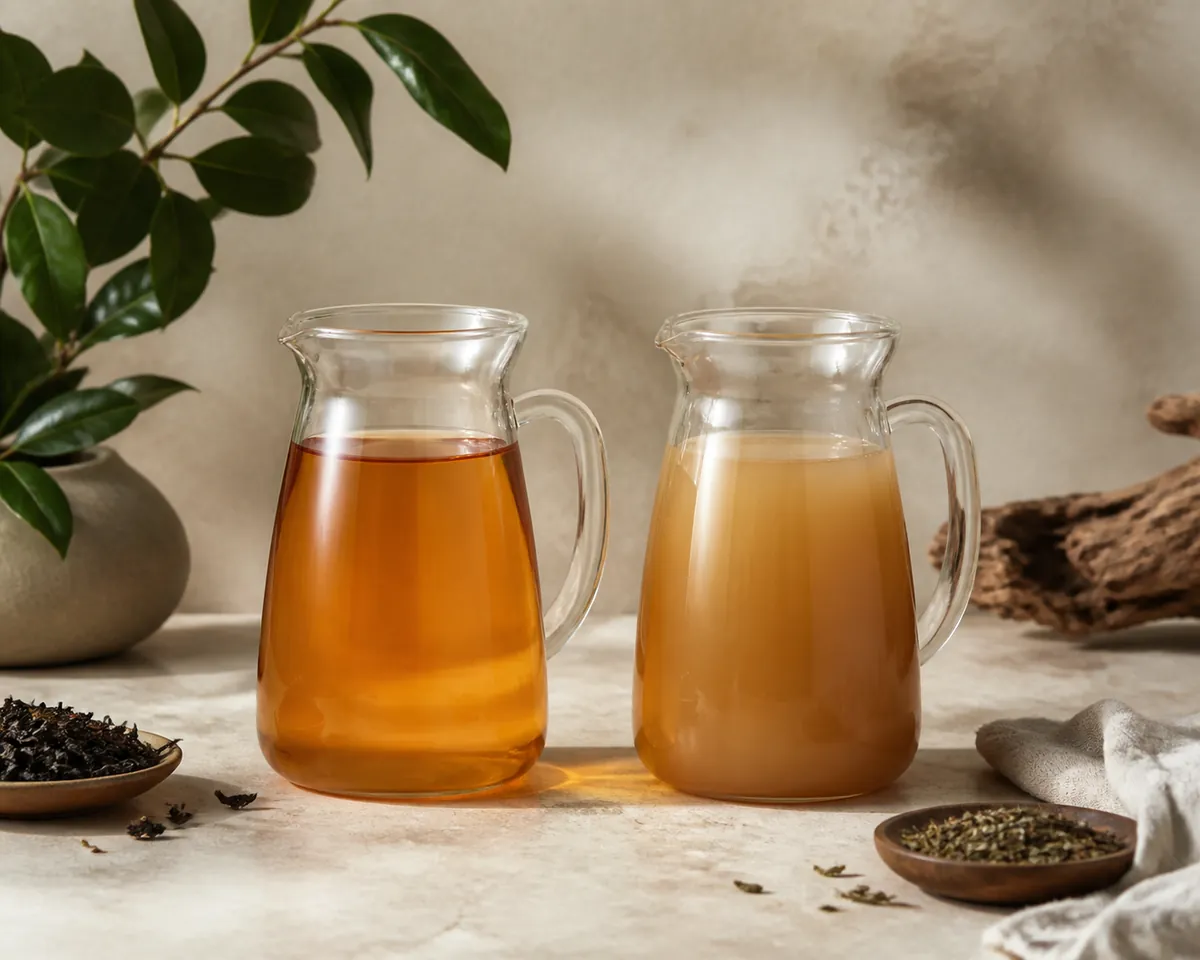
Tea people call it tea cream, or creaming down. It is cosmetic, it changes very little about the flavour, and the proof that nothing is wrong is that gently rewarming the jug makes the haze vanish again.
Two things push it: how much of those compounds the leaf held in the first place, and how hard the water was. A fully oxidised tea has the most of them, so the problem is a black tea problem far more than a green tea one, and the water you brew with is worth a thought before the leaf is.
Hot brewed and chilled, or cold brewed from the start
These are the two honest routes, and they give different drinks rather than the same drink at different speeds. Hot water pulls tannins, caffeine and aromatics out of the leaf within minutes.
Cold water pulls a narrower set of them across several hours and leaves much of the astringent material where it was.
| Hot brewed, then cooled | Cold steeped | |
|---|---|---|
| Time | Five minutes, plus cooling | Six to twelve hours in the fridge |
| Strength | Needs doubling if it will meet ice | Normal dose, no ice in the calculation |
| Character | Brisk, astringent, aromatic | Rounder and sweeter, with less grip |
| Caffeine | The full hot-brew figure | Noticeably less, since cold water is slower at it |
| Clouding | Likely, in any black tea | Almost never, because it never got hot |
| Best for | A brisk blend built to be drunk cold | Green, white and jasmine, which hot brewing bullies |
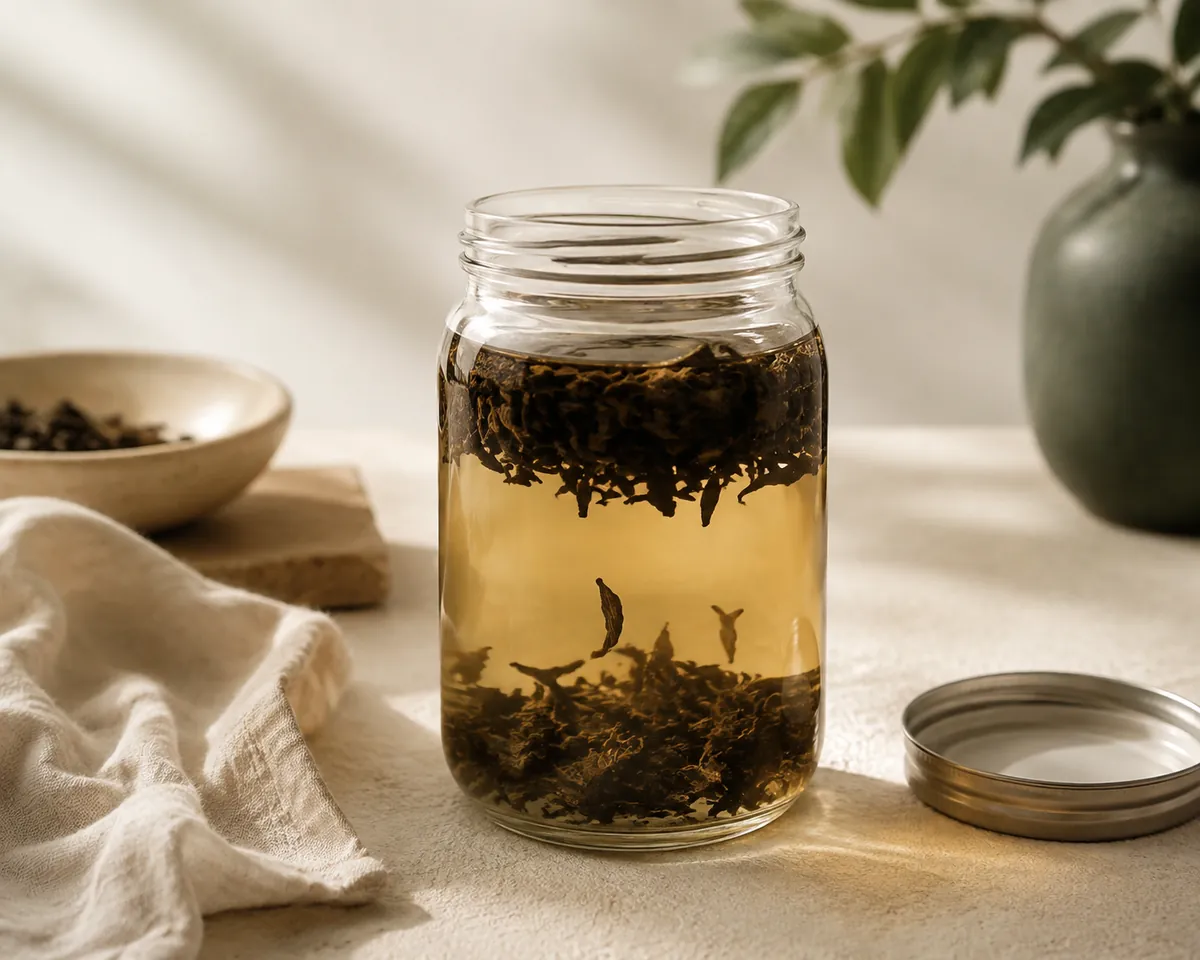
Cold steeping is the more forgiving of the two by a wide margin. There is no temperature to overshoot and no window to miss, so the trap described in green tea bitterness simply does not open, and a leaf left in for fourteen hours instead of ten is barely different.
Hot brewing earns its place on aroma. The volatile compounds that make a fine tea smell like anything at all need heat to leave the leaf, so a cold-steeped tea can taste lovely and still smell of very little, and steeping temperature explains why that trade sits where it does.
How much leaf a glass of ice needs
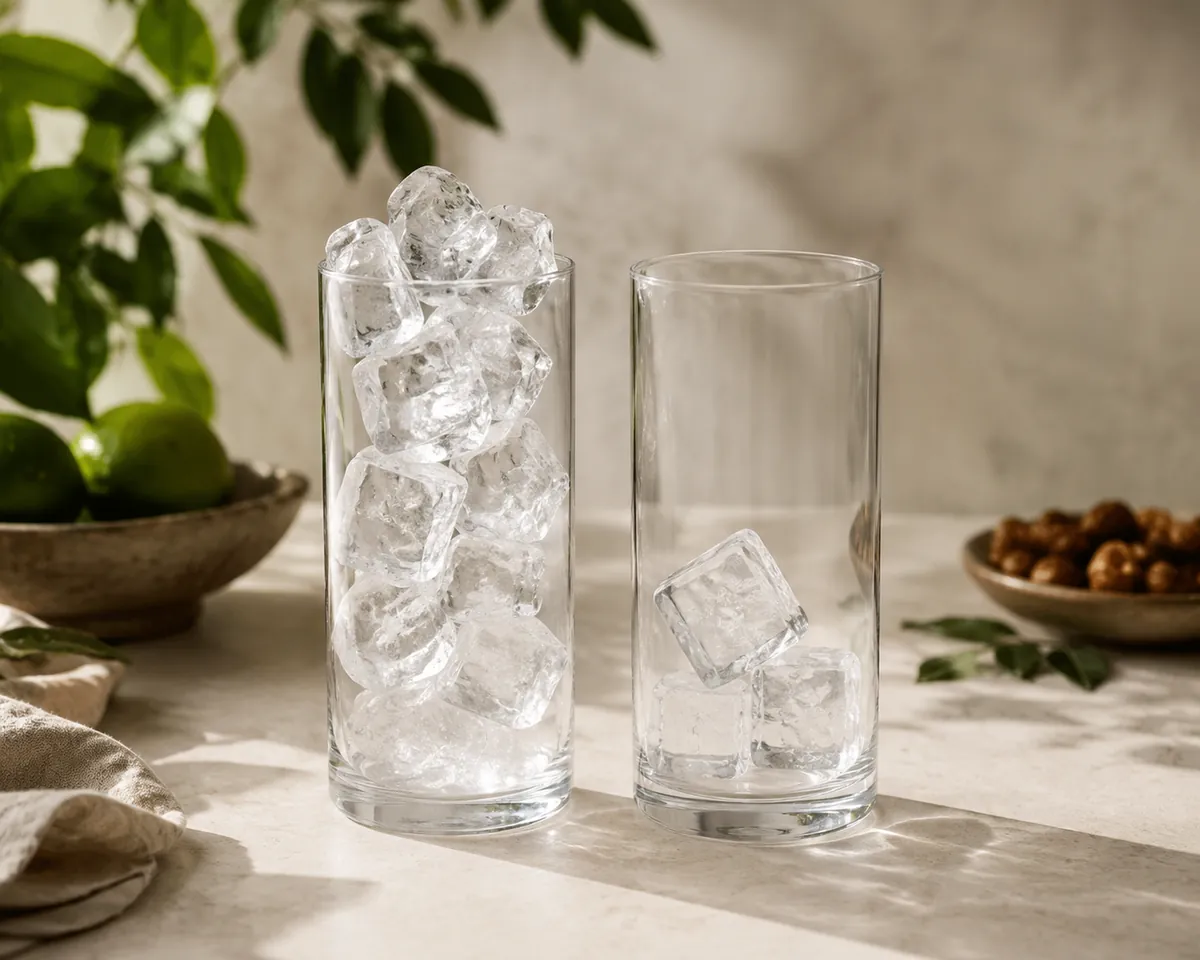
Here is the arithmetic almost everyone gets wrong: the ice is part of the recipe, not an addition to it. A tall glass holds roughly 40 per cent ice by volume, and most of that will be water within twenty minutes.
Brewing at normal strength and pouring it over a full glass therefore produces something around half the concentration intended. The tea has not gone wrong.
It was simply measured against the wrong volume.
Dosing for a drink that will be diluted
- Hot brew, poured over ice
- Double the leaf, or halve the water, then pour hot
- Hot brew, chilled in a jug
- Normal dose, because nothing will melt into it
- Cold steep for a jug
- 8 to 10 g of leaf per litre, no adjustment
- Cold steep, served over ice
- Add about a quarter more leaf
- A jug you will keep overnight
- Slightly under-brew it, since it deepens as it stands
The other half of the arithmetic is cube size, and it works against intuition. A glass packed to the brim melts more slowly than a glass with three cubes rattling in it, because the mass keeps itself cold and the surface area per unit of mass is lower, a point ice in a drink sets out in more detail.
Under-filling is consequently the more common mistake, and it is the one that ruins an otherwise good brew.
Why the sugar goes in while the tea is hot
Sucrose dissolves readily in hot water and very poorly in cold, which is a fact about the crystal rather than about how hard anyone stirs. Spoon it into a cold glass and most of it goes to the bottom, where it waits.
Sweetening, in the order that works
- BestStir the sugar into the tea while it is still hot from the brew, before any cooling.
- Nearly as goodAdd simple syrup, which is sugar that has already done its dissolving.
- WorkableDissolve the sugar in a splash of hot water, then combine with the cold tea.
- AvoidGranulated cane sugar spooned into a finished cold glass.
- Special caseHoney, which seizes into a lump in cold liquid and must be warmed or thinned first.
The failure has a signature that is easy to recognise. First mouthfuls taste unsweetened, so more sugar goes in, and then the last third of the glass arrives thick and cloying as the settled layer finally comes up the straw.
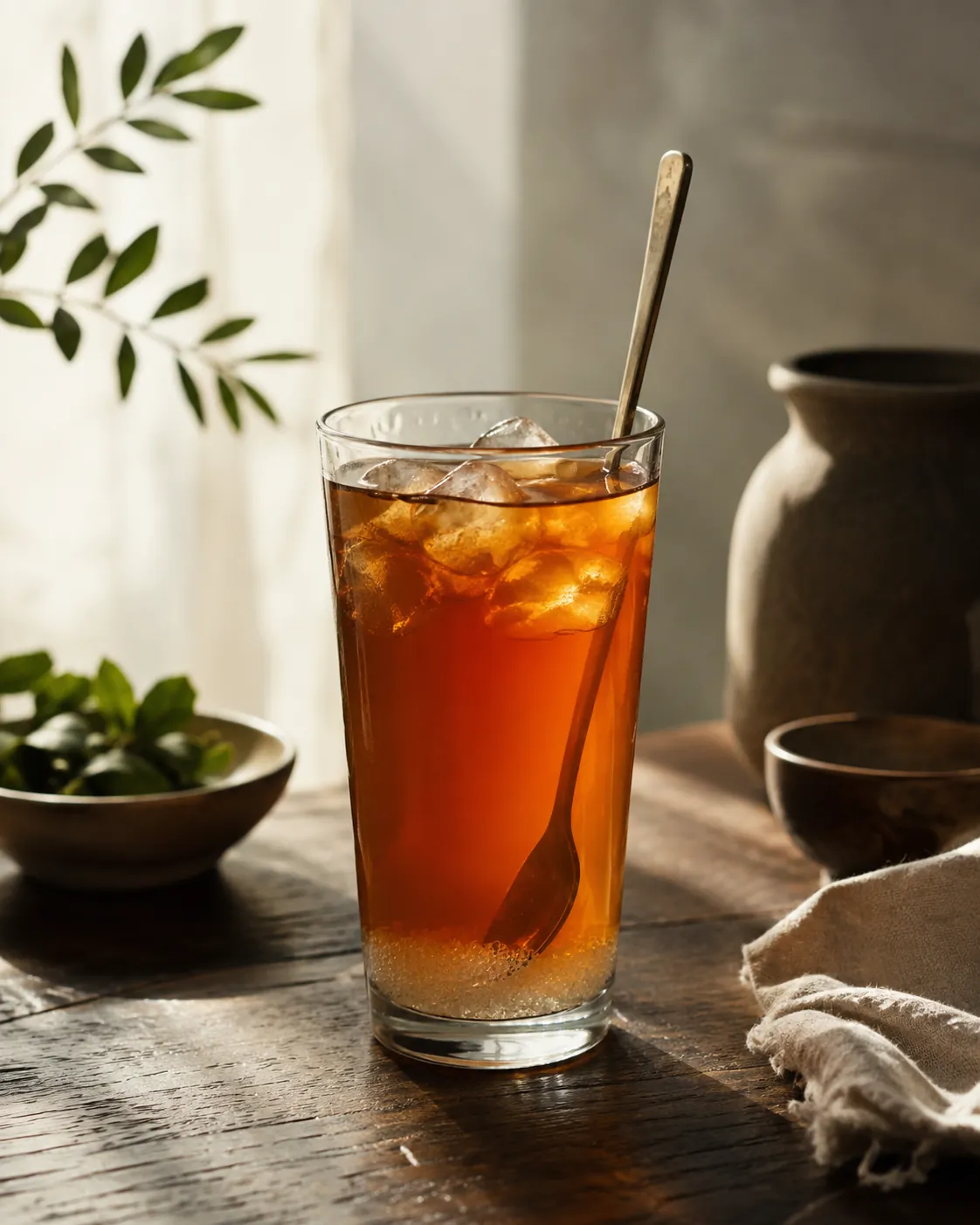
There is a second reason to sweeten hot, and it is about flavour rather than physics. Sugar suppresses how much bitterness and astringency register, so a strong brew sweetened at the pan tastes balanced all the way through, while the same tea sweetened at the table tastes sharp and then suddenly sweet.
Sweet tea is a drink in its own right
In the American South, sweet tea is not iced tea with sugar added. It is a separate preparation with its own method.
Ask for tea in Georgia or Alabama and this is what arrives, unless you say otherwise.
The recipe is a strong black brew, usually from bags rather than loose leaf, sweetened heavily while it is still hot, then diluted with cold water and served over a great deal of ice. The sugar goes in at the point where it can actually dissolve, which is the whole reason the tradition works and the reason it travels badly to a table where sugar arrives in a bowl.
Roughly where sweetened teas land, per 250 ml
- Unsweetened, as brewed0 g, and the tannin has nowhere to hide
- Lightly sweetened jug5 to 8 g, enough to round the astringency
- Bottled iced tea, typical18 to 22 g, close to a soft drink
- Restaurant sweet tea20 to 30 g, and unapologetic about it
- Old-style Southern recipesHigher still, since the brew behind it is stronger too
Half sweet tea and half lemonade is a well-established variation with its own name on American menus, and it works because the acid in the lemonade cuts a sweetness that would otherwise flatten the tea entirely.
What the lemon is doing besides flavour
Citrus turns up in iced tea recipes far more often than in hot tea recipes. The reason is not only that it tastes good in the heat.
Acid breaks up the caffeine and polyphenol complex that makes a jug hazy, so a cloudy tea often clears within a minute of a squeeze going in.
Watch it happen once and the mechanism stops feeling like folklore. The haze thins from the point where the juice lands and spreads outward as the pH drops, which is the same effect commercial bottlers buy with citric or ascorbic acid on an ingredients list.

Lime
Sharper and slightly more bitter. Good with a heavily sweetened tea.
Peach and other fruit
Flavour only, and usually arriving as syrup, so count it as sweetening.
Flavour-wise the lemon is also doing repair work, because dilution takes the edges off a tea while acid puts back a brightness the melted ice removed, and an under-strength jug is therefore more improved by a squeeze than by extra leaf at that stage.
Which teas hold up cold, and which hollow out
Robustness is what decides this, and robustness means having enough body and aroma left after the ice has taken its share. A tea that is delicate at 200 ml in a warm cup often has nothing to say at all in a cold glass.
Black tea leads for good reason. Full oxidation gives it the deepest flavour of the family and an astringency that reads as refreshing rather than harsh once cold, and the brisk blends sold for the purpose were selected on exactly that basis.
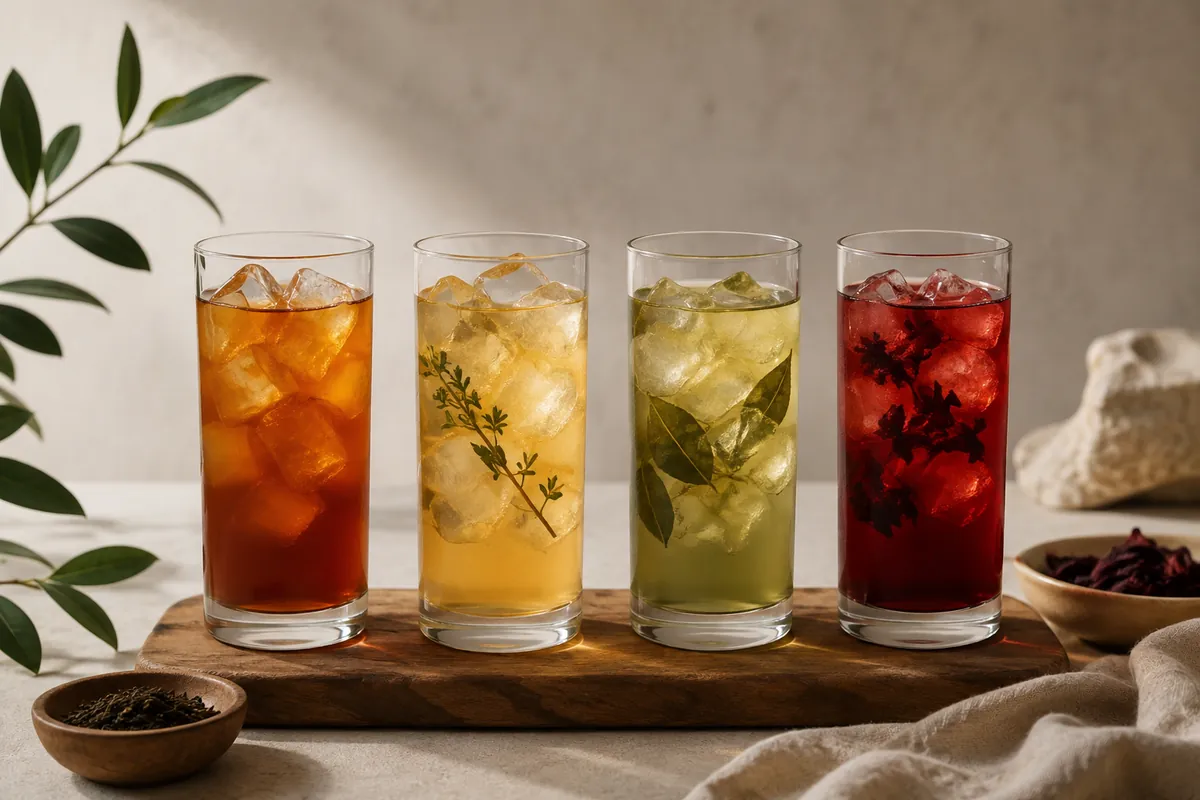
Green tea works, but it wants the cold-steep route rather than the hot one, since hot brewing and then chilling tends to leave it grassy and thin. Oolong sits between the two and is the sleeper of the category.
Jasmine is better cold than most people expect, because its aroma is a coating on the leaf that cold water is perfectly capable of lifting.
The herbal side has an advantage the true teas cannot match: no caffeine and no theaflavins, so no cloudiness and no caffeine question at all. Hibiscus is the standout, holding its colour and its sharpness through any amount of melt, and peppermint is the other that improves in the cold.
How long a jug is worth drinking
Two days is the practical answer for a covered jug in the fridge, and what runs out first is flavour rather than anything else. Aroma compounds are volatile and they leave, so a tea that was fragrant on Monday is merely brown and tannic by Wednesday.
Cold-steeped tea has a wrinkle the hot-brewed kind does not, which is that it keeps extracting until the leaf comes out. Left in, the jug goes from rounded to gripping overnight, so straining is a step rather than an optional tidy-up.
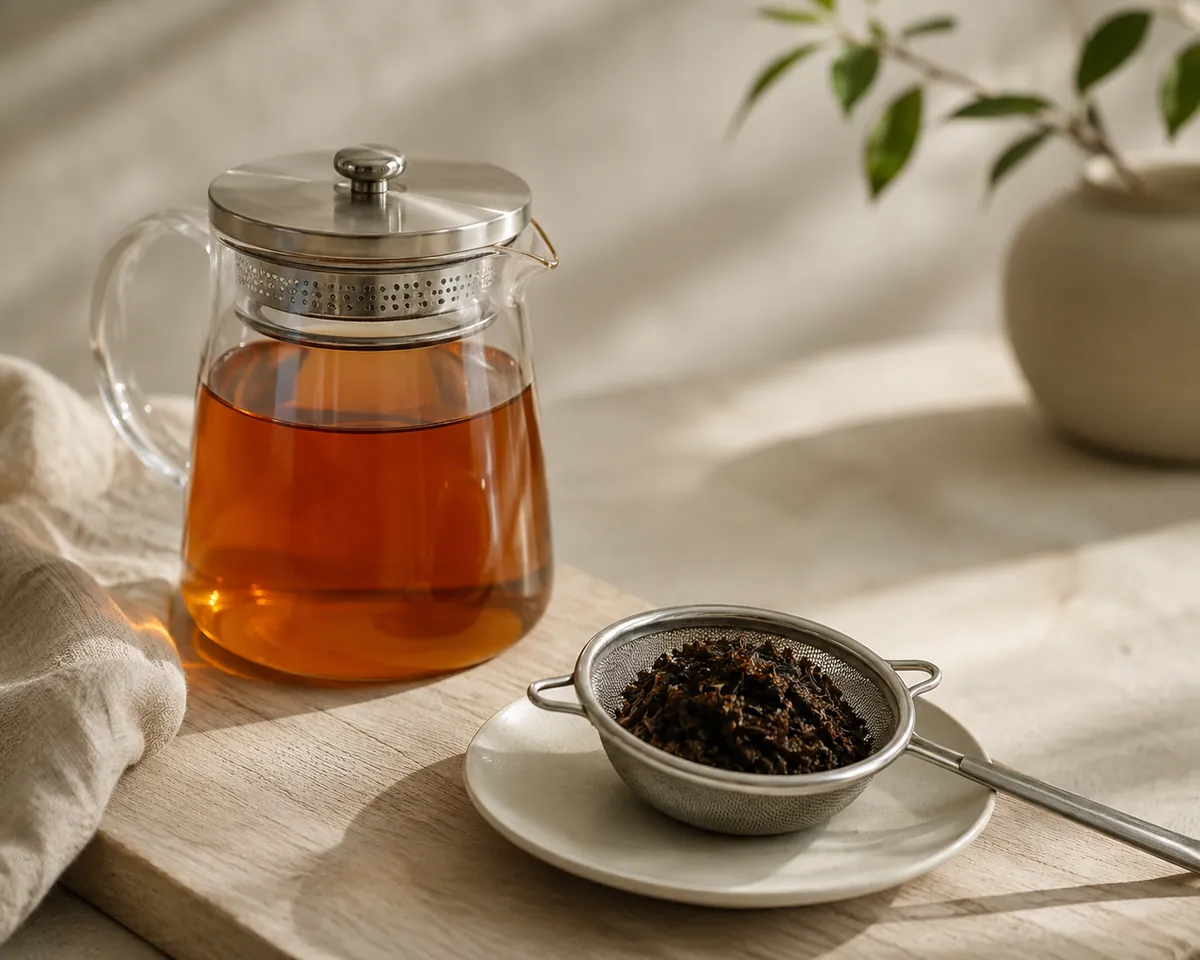
- Strain a cold steep as soon as it tastes right, then chill the strained liquid.
- Cover the jug, since tea takes up fridge odours as readily as loose leaf does.
- Keep it out of the door, where the temperature swings every time someone opens it.
- Do not sweeten a jug you intend to keep, because sugar makes it dull faster.
- Brew fresh rather than reviving something old with more lemon.
Sun tea, brewed by leaving a jar of water and leaf in the sunshine, is the version worth the most caution. Warm water is a slow, weak extractor and the jar sits at a temperature that is neither hot brewing nor cold steeping, so sun tea gives up less of the leaf and should be refrigerated promptly once it is made.
The instinct that governs keeping loose leaf applies to the finished drink too: cool, covered and dark.
What a bottled iced tea carries that a jug does not
Pick up a bottle and the ingredients list explains most of the difference in taste. Very little of it is brewed tea in the sense a jug is, and none of it was expected to be drunk within the hour.
How a bottled tea is put together
- Tea baseUsually an extract or a concentrate rather than a fresh infusion, chosen for consistency.
- AcidCitric, phosphoric or ascorbic, which keeps the liquid clear and stable on a shelf.
- SweetenerSugar or high-fructose syrup, at a level close to a soft drink.
- ClarificationFiltering or leaf selection so the product never creams down in the bottle.
- FlavouringLemon, peach and similar, added as flavour rather than as fruit.
The clarity is the giveaway. A bottled tea that stays perfectly bright after months on a warm shelf has had that engineered into it, and a home jug that clouds within an hour is behaving exactly as tea does.
Carbonated tea is the other shelf variant, and it is closer to a soft drink than to anything in this article. Tea brewed strong and topped with soda water at home is a decent drink in its own right, though the bubbles sharpen the tannin, so it wants a rounder brew than a still glass would.
Building a jug that survives the second glass
Everything above collapses into a short sequence, and the sequence is the point rather than any single instruction in it. Brew stronger than a hot cup.
Sweeten while it is hot, or not at all. Cool it in a way that suits the vessel.
Add acid at the end.
Get those four in order and the common complaints stop appearing. The glass is not weak, because the melt was counted.
It is not gritty, because the sugar dissolved when it could. It is not cloudy, or it clears with a squeeze.
- Decide the route first: hot and brisk, or cold and round. They are not interchangeable.
- Double the leaf whenever ice is in the glass rather than only in the fridge.
- Sweeten at the pan, and use syrup for anything sweetened later.
- Let a jug reach room temperature before the fridge, and pour a single glass straight over ice.
- Keep the lemon for the end, where it does both jobs at once.
From there the variations are just choices, and making iced tea walks through each route step by step. A jug built this way is worth returning to, which is more than most iced tea manages once the ice has done its work.
Common questions
Why does iced tea go cloudy?
It is tea cream, a fine haze that forms as a hot brew cools and certain compounds come out of solution. It is a temperature effect rather than spoilage, and it appears on the way down rather than in the glass.
Why will sugar not dissolve in iced tea?
Sucrose dissolves readily in hot water and very poorly in cold. Sweeten the tea while it is still hot, or add sugar that has already been dissolved as a syrup, because nothing you do once the glass is cold will fix it.
Is iced tea a particular kind of tea?
No. The name describes a serving temperature rather than a leaf, so iced black tea, cold-steeped sencha and a chilled hibiscus infusion all qualify while sharing almost nothing else.