What Is English Breakfast Tea? A Recipe, Not a Plant
English Breakfast is the only major name on a tea shelf that points at a recipe rather than a plant, a place or a process. Nobody grows it, every packer defines it differently, and the whole blend is built around one requirement: it has to still taste of tea after the milk goes in.
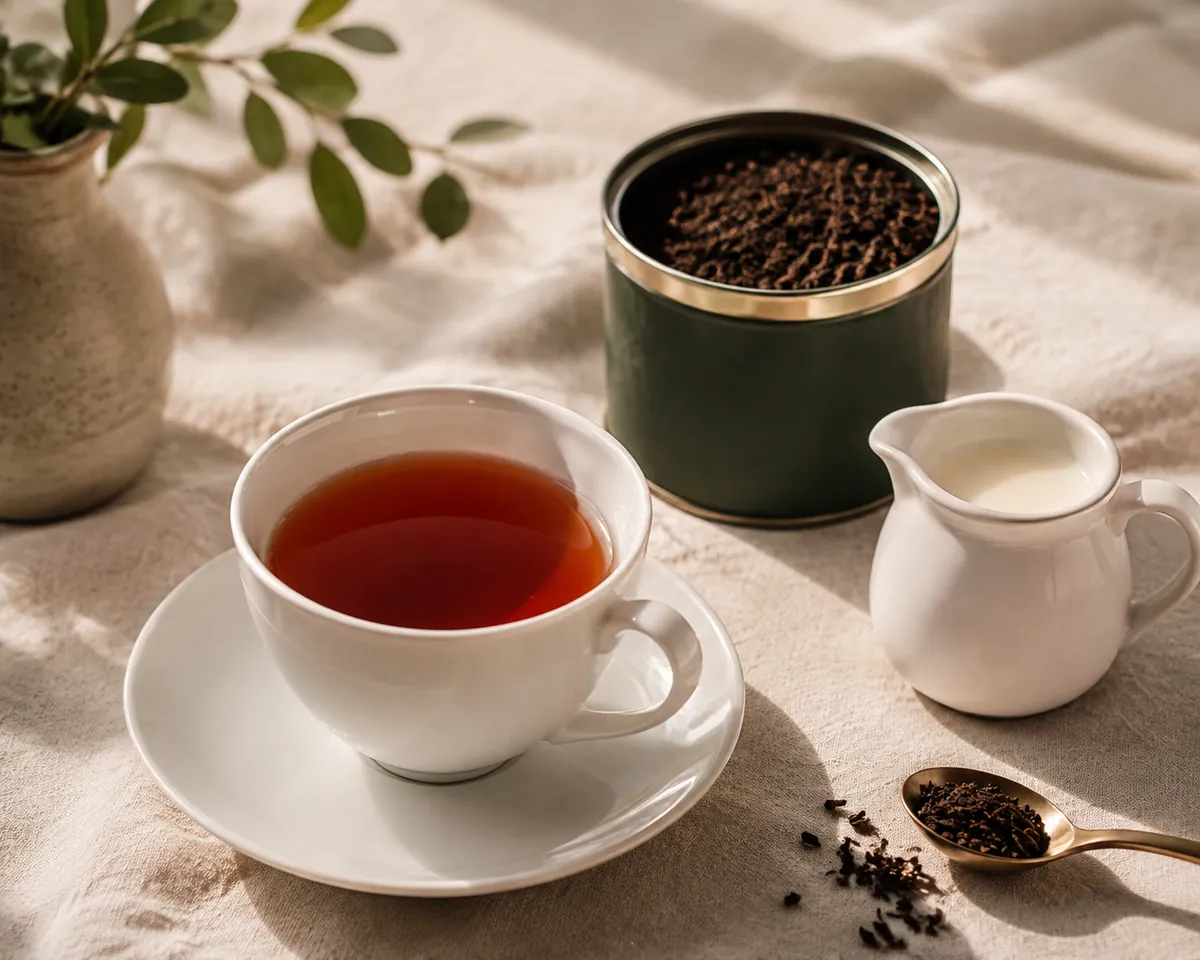
English Breakfast is a recipe rather than a tea. No bush produces it, no district exports it and no processing step defines it, which already sets it apart from nearly every other name on a tea shelf.
What sits in the tin is two, three or four fully oxidised black teas from different countries, chosen and proportioned by a blender against a target the blender wrote down. The target is the interesting part, because every decision underneath it follows from there.
That target is a strong, coloury, briskly tannic cup that still reads as tea after a generous splash of cold milk, and that tastes the same in March as it did the previous October. Those two requirements, milk tolerance and consistency, explain most of what the category is and all of why it exists.
English Breakfast at a glance
- What it is
- A house blend of black teas, not an origin and not a style
- Who defines it
- The company that packs it. There is no standard recipe
- Usual components
- Assam for body, with Ceylon, Kenyan or Keemun alongside
- Built to survive
- Milk, hard water and a fast brew in a mug
- Water
- Boiling, 95 to 100 C
- Steep
- 3 to 5 minutes loose leaf, 2 to 3 minutes in a bag
- The catch
- Two tins bearing the same words can taste almost nothing alike
Nobody grows English Breakfast
Every other name on a tea shelf points at something you could photograph. Assam is a district you can stand in, sencha is a process you can watch being done, and a first flush is a fortnight in the spring.
This one points at a decision taken in a blending room, and the room is rarely named on the packet. The words carry no legal protection and no agreed composition, so any packer anywhere may print them on a box of black tea.
Darjeeling
A protected district. The word certifies where the leaf grew and says nothing about how it was handled afterwards.
First flush
A moment in the growing year. The same bushes give a different tea six weeks later.
English Breakfast
A brief. Strong, coloury, milk-tolerant, and indistinguishable from the batch before it.
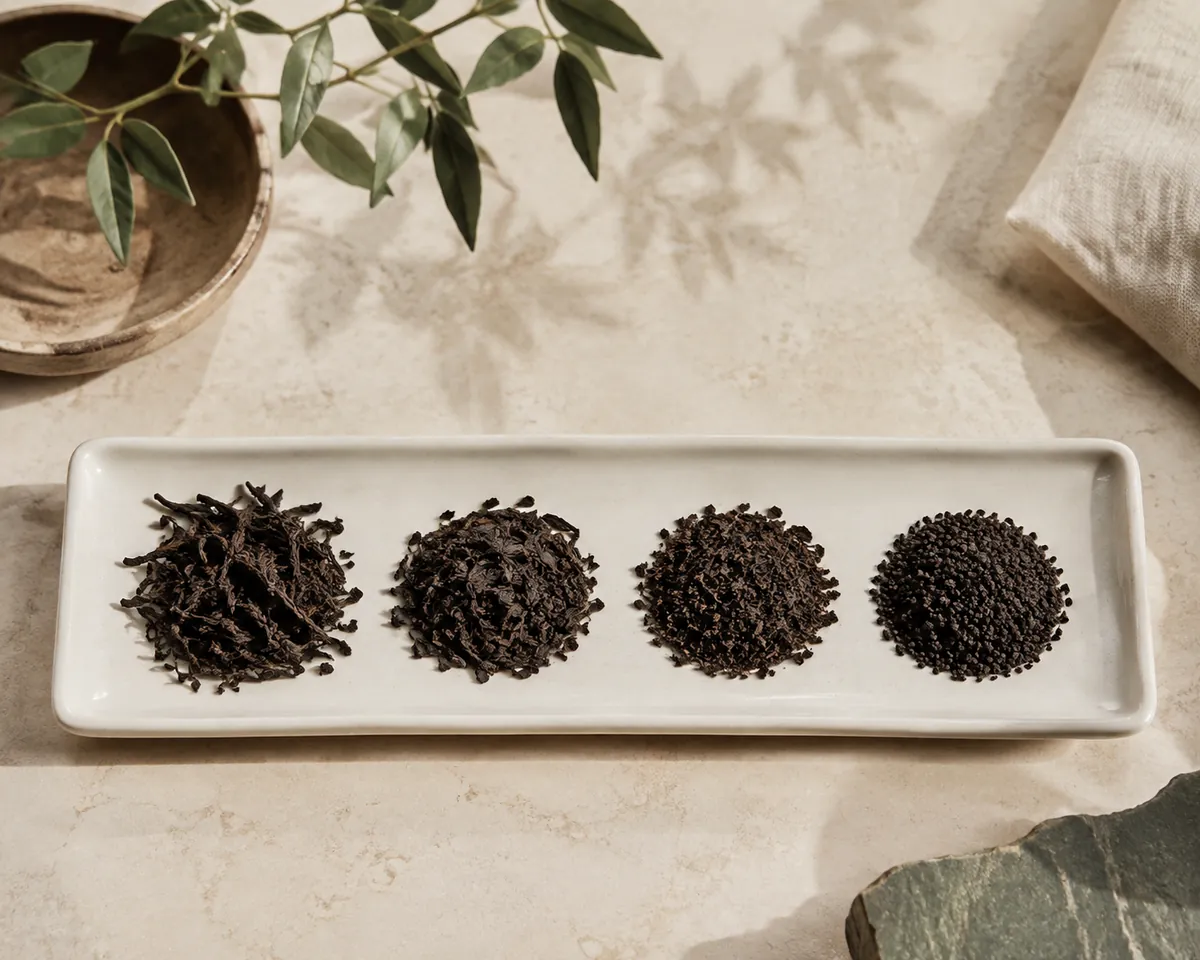
The only thing the name reliably promises is that the contents are black, blended and meant to be drunk strong. That is a promise about effect rather than about ingredients, which is unusual on a shelf where almost everything else is sold by provenance.
What the blend is built to survive
Four things happen to a breakfast tea that a delicate leaf would not tolerate, and the recipe is written with all four in view.
Milk is the first and by some distance the most demanding. Milk proteins bind to tannins, so a tea meant to take milk needs a generous supply of them or the drink comes out pale and hollow, and this is the same mechanism that makes milk useless in a green tea and unremarkable in a light oolong.
- A splash of cold milk, which flattens anything short of a properly brisk brew.
- Hard tap water, which dulls colour and mutes briskness in a delicate tea.
- A short, hot, unattended steep in a mug rather than a warmed pot.
- A boiling kettle, poured the moment it clicks off, with no waiting.
Water is the quiet one. A blend leaning on brightness reads flat in a hard-water town and lively in a soft-water one, which is why brewing water changes a breakfast tin more than most people credit.
Where the brew is very strong, evaporated milk survives it in a way fresh milk does not.
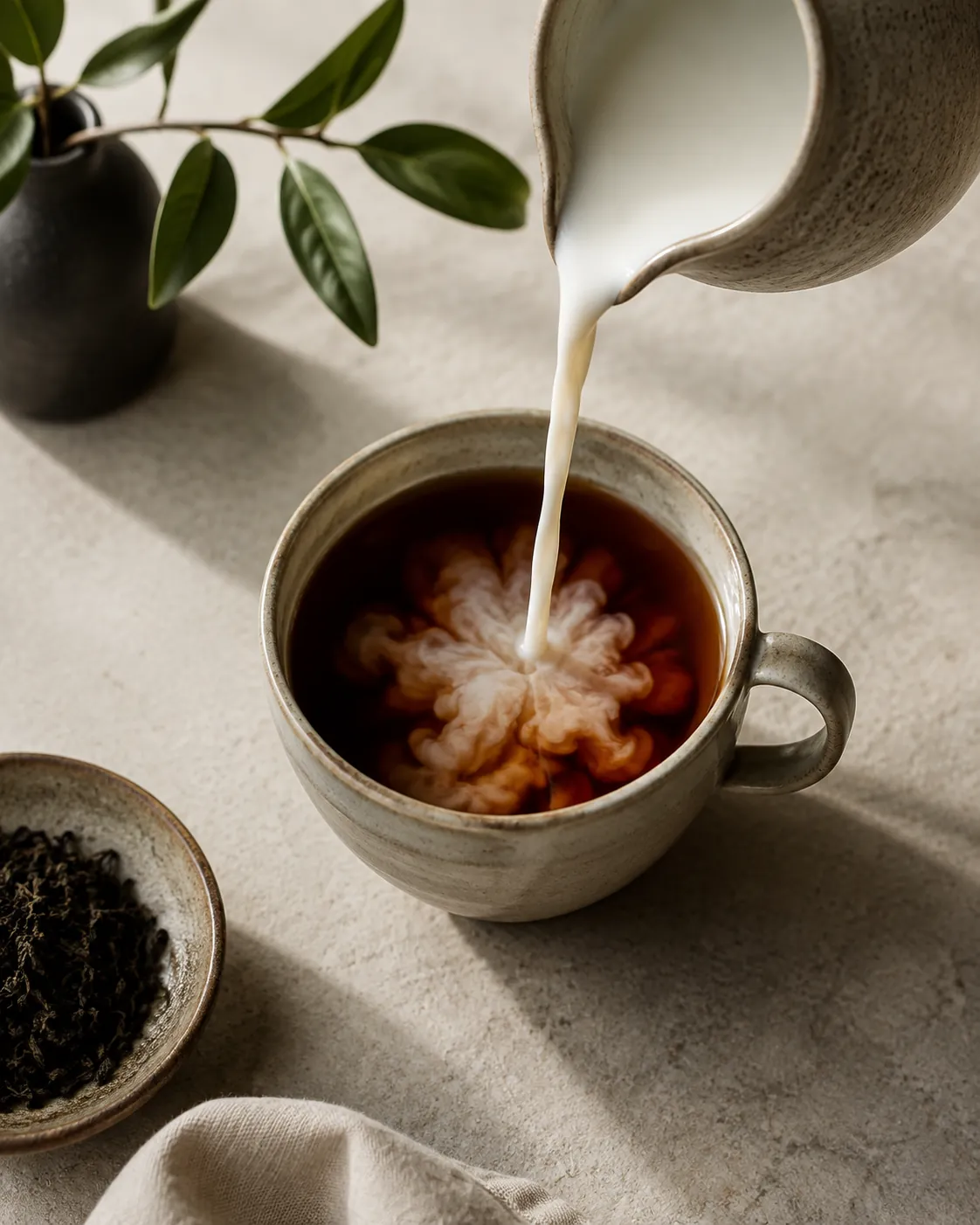
Plant drinks add a fifth pressure the recipe never anticipated. Tea is acidic enough to split an unbuffered oat or soy drink, though far less readily than coffee does, which is the case plant milk curdling works through in detail.
Why no two tins taste the same
Here is the practical consequence of having no definition. The recipe is a house decision, treated as commercial property, and companies that have held one for a century do not publish the proportions.
So the differences between brands are not small variations on a theme. One tin can be led by malty Assam leaf and taste heavy and grain-sweet, while the tin beside it leans on Ceylon and tastes bright, citric and almost thin by comparison.
Where breakfast blends land, by what leads the recipe
- Assam-ledHeavy, grain-sweet, thick in the mouth. The commonest style, and the most milk-tolerant
- Kenyan-ledVery brisk and very coloury. Cheap to make, and often what fills own-brand boxes
- Blended middleAssam for body with Ceylon for lift. What most national brands actually sell
- Ceylon-ledBright, citric, cleaner finish, and noticeably lighter under milk
- Keemun-ledSofter, cocoa-toned, faintly smoky. The older London style, and the least common now
The only way to find out which one suits you is to brew two side by side, at the same strength, in the same water, on the same morning. Nothing on either box will tell you, and a review of one brand does not transfer to another.
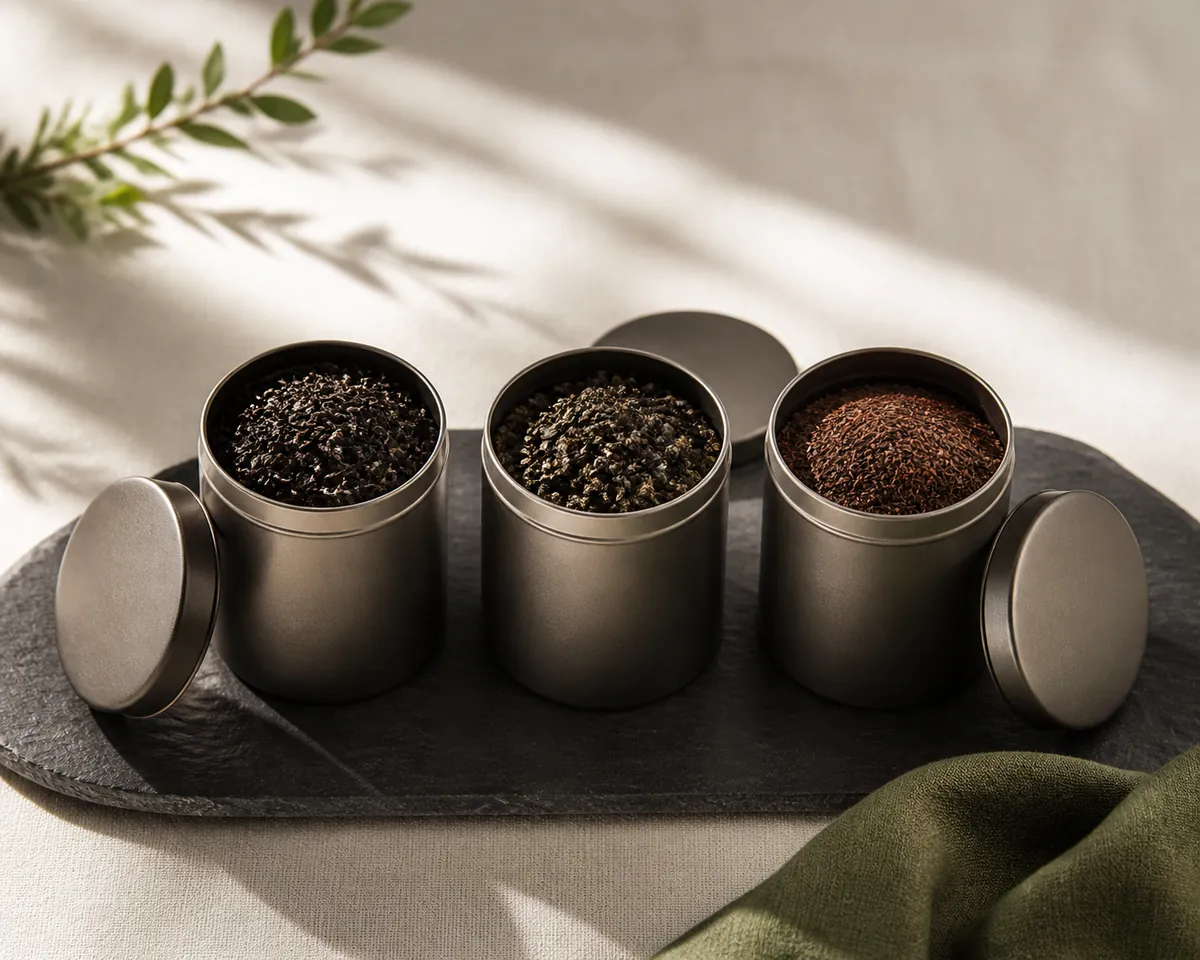
Price is a poor guide here and the country of packing is a worse one. What English Breakfast tastes like takes the range apart in more detail.
What is actually in the tin, and in what proportion
Four teas do nearly all the work in this category, and each is in the recipe for a job that can be stated in a few words.
Proportions are the part nobody discloses. A blender will say the blend is Assam-led and stop there, because the ratio is the asset.
| Component | What it contributes | Why it is there |
|---|---|---|
| Assam | Malt, weight, deep red colour | Body that milk cannot flatten |
| Ceylon | Brightness, citric lift, clean finish | Stops the blend reading as heavy |
| Kenyan | Strength and very fast colour | Volume and price, at consistent quality |
| Keemun | Cocoa, gentle smoke, softness | Character, in the older Chinese-style blends |
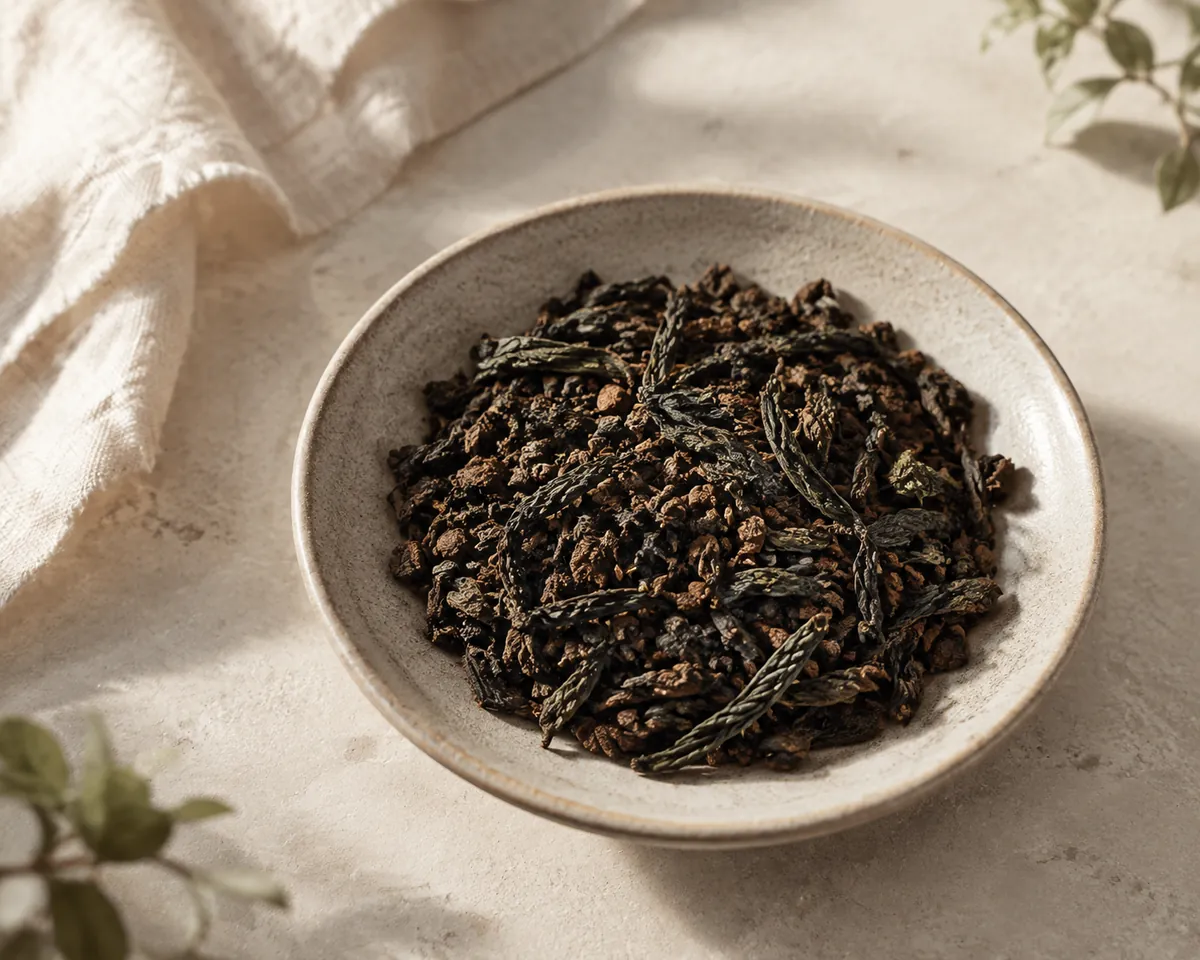
Nothing here is scented and nothing is flavoured, which is the line between this category and the other famous black tea on the shelf. Earl Grey has an oil applied to finished leaf, and a breakfast blend has only tea in it.
The leaf is also generally broken rather than whole, because the brief calls for fast and hard extraction. That grade decision matters more to the cup than the origins do, as the wider account of black tea sets out.
How a blend stays the same when the harvest does not
This is the mechanism that explains the category, and it is invisible from the shelf. A single-origin tea moves with the weather: a wet season, a cold spring or a change of manager at one garden, and the cup moves with it.
A blend is engineered so that it does not.
How a batch is matched to the one before it
- StandardA reference sample of the blend is held as the target the new batch must hit.
- BuyLeaf is bought from many gardens across several countries, so no single crop dominates.
- TasteTrial proportions are brewed to a fixed method and tasted against the standard.
- AdjustThe ratio is moved, often by a few per cent, until the trial matches the reference.
- CommitThe approved ratio is blended at scale, and the standard carries into the next batch.
Buying wide is what makes the matching possible. If a blend draws on dozens of gardens, a poor season at any one of them is a small correction rather than a crisis, and the recipe absorbs the weather instead of reporting it.
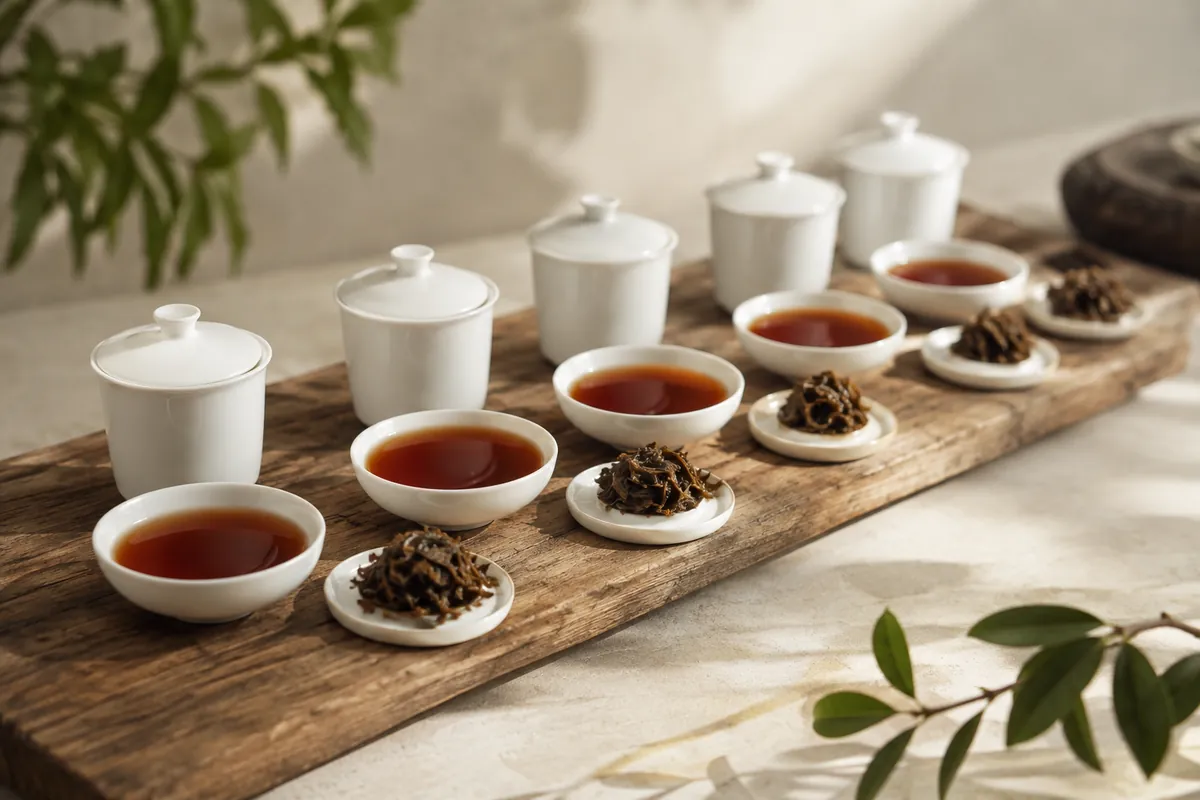
That is the honest answer to why a breakfast blend is not a luxury product even when it is very well made. The skill involved is real, and it is spent on sameness rather than on distinction, which is precisely what a tea drunk every morning at the same time is for.
A single-origin tea tells you about a year, and a breakfast blend is built to tell you nothing about the year at all. Both are legitimate, and they are simply answering different questions.
Why the name says English when no tea grows in England
No commercial tea grows in England, and the name was never a claim that it did. It names an occasion instead, and the occasion is a large cooked breakfast that wanted a drink robust enough to sit beside it.
Where and when the phrase was first printed is disputed, and accounts placing it in nineteenth-century Britain and in colonial North America both circulate. What is not disputed is what the words came to mean commercially, which is a strong blended black tea for the start of the day.
| Name | Conventional character | What the word signals |
|---|---|---|
| English Breakfast | Strong, balanced, milk-ready | The default, and the broadest recipe of the three |
| Irish Breakfast | Heavier, maltier, more Assam | Body first, and usually the strongest of them |
| Scottish Breakfast | Fuller still, and often built for soft water | Blended for the water it was sold into |
| Afternoon blend | Lighter, often with Darjeeling or Ceylon leading | The same logic, run in reverse |
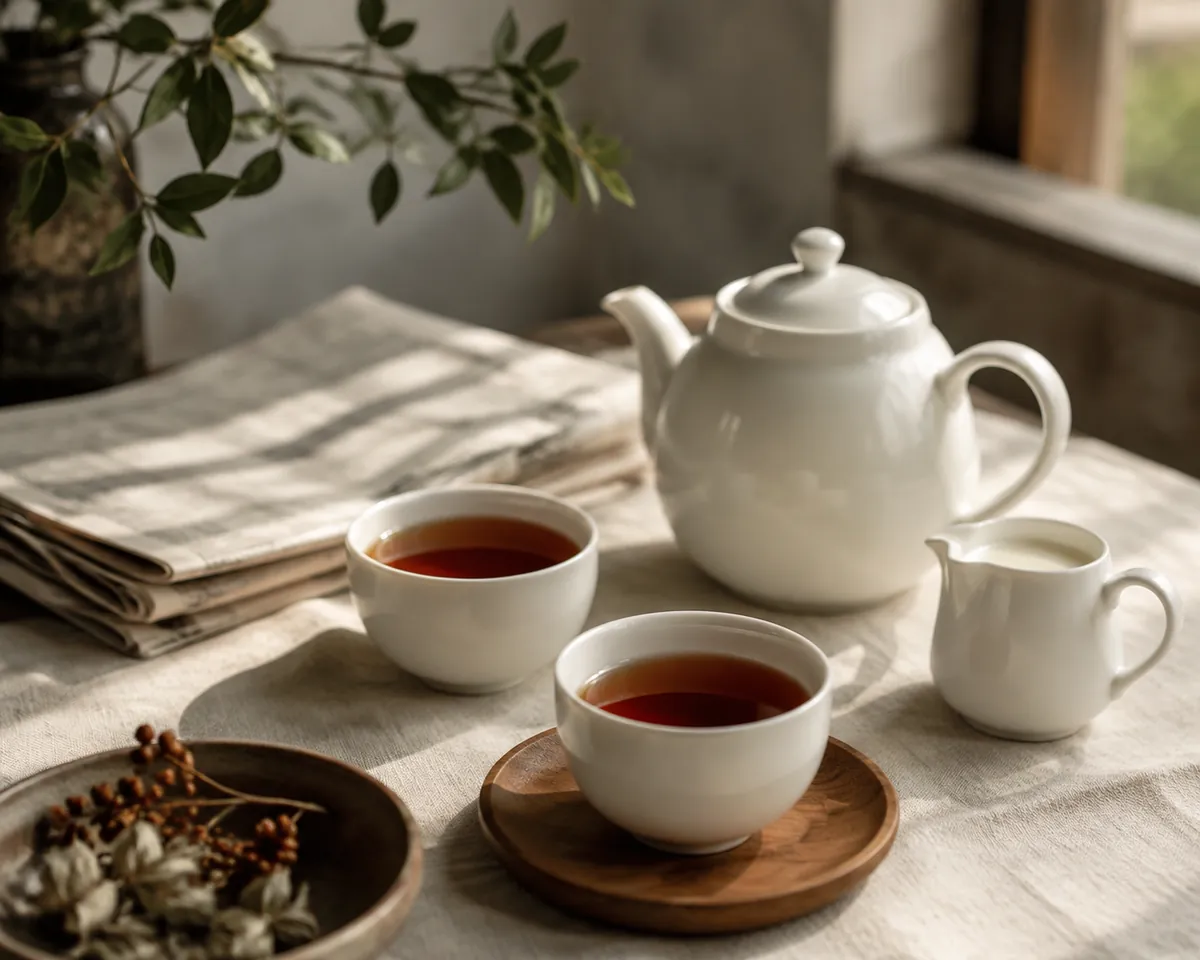
None of those three is regulated either, so the distinctions are conventions rather than rules. An Irish Breakfast from one house can be lighter than an English Breakfast from another, and the only reliable reading is again the leaf in front of you.
How to brew it so the milk still has something to hold
Boiling water is simply correct here, which is unusual and worth saying plainly. The oxidation has already run to completion, so there is nothing fragile left for heat to spoil, and the wider map in steeping temperature basics puts this style at the top of its range.
Starting points
- Water
- 95 to 100 C, straight off the boil
- Leaf
- 3 g per 200 ml, loose
- Steep, loose leaf
- 3 to 5 minutes
- Steep, bagged
- 2 to 3 minutes, then take the bag out
- If milk is going in
- Half as much leaf again, rather than a longer steep
- Vessel
- A warmed pot, or a mug with a lid on it while it brews
The commonest mistake is compensating for milk with time rather than with leaf.
The English Breakfast brewing method adds more leaf for milk instead of extending the steep, because extra minutes add grip and tannic drag without adding body.
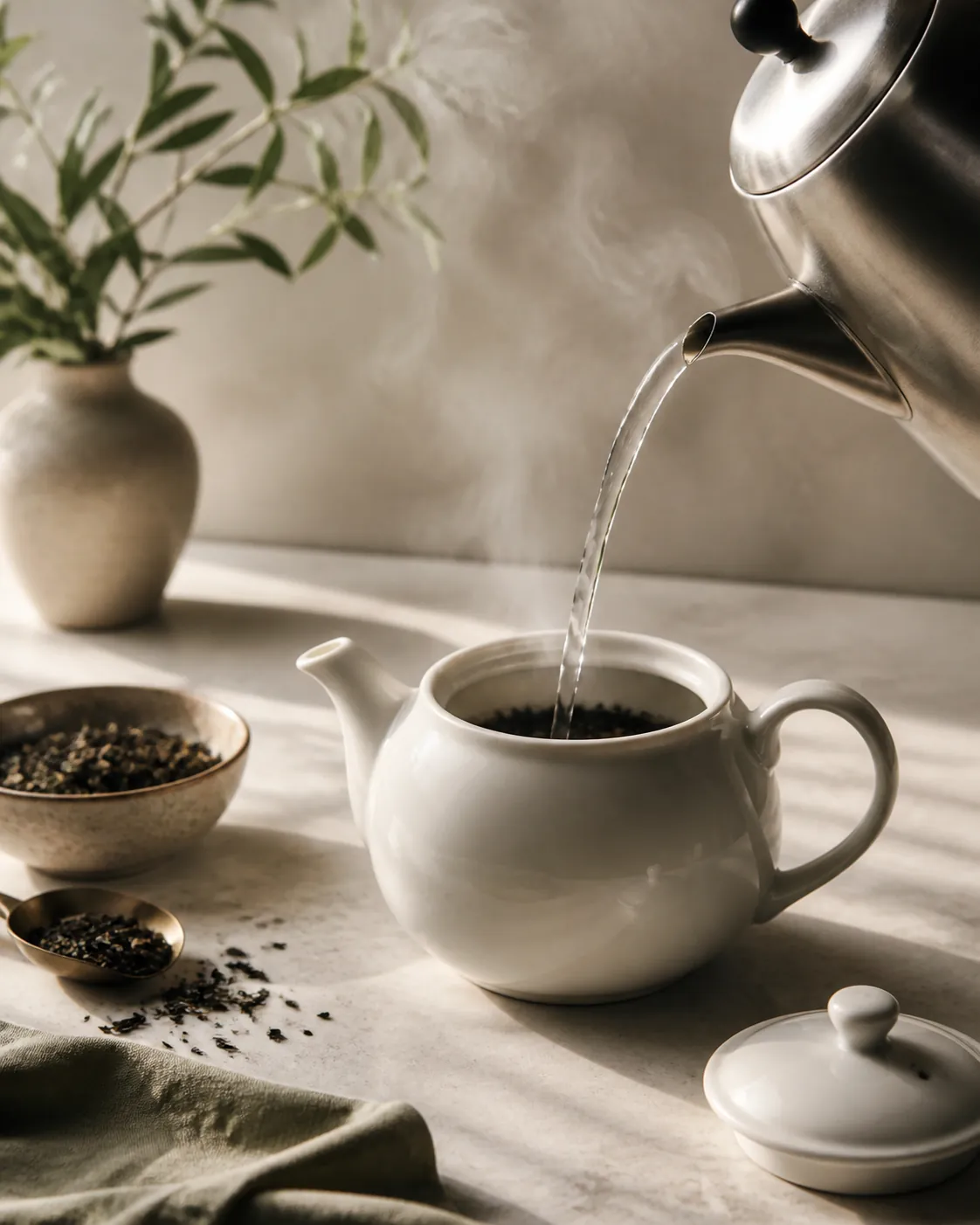
Room for the leaf matters even at a broken grade, and a cramped ball is the usual culprit when a strong tea brews weak, which is the problem the tea infuser page is built around. Sugar, if it is going in, goes in while the cup is hot, for the dissolving reasons set out under cane sugar.
Lemon and milk do not belong in the same cup, since the acid in a slice of lemon curdles the milk on contact. Pick one, and brew accordingly.
Bag or loose leaf, and what the bag decides for you
For most teas the bag is straightforwardly the worse option. For this one the case is genuinely closer, because a breakfast blend was designed for exactly the fast, hard extraction that a broken grade in a paper bag delivers.
What the bag takes away is control and information.
Dose
A bag fixes it at roughly 2 g, which is under-leafed for a large mug and about right for a small cup.
Grade
You cannot see it. Fannings and dust brew fast and then keep going, so a forgotten bag turns drying.
Blend
Loose leaf lets you look at what you bought. In a bag, the recipe is entirely a matter of trust.
Second steep
Effectively none from a bag, and a modest one from whole or larger broken leaf.
Timing window
Wide with loose leaf and narrow with a bag, which is why bagged tea over-brews so readily.
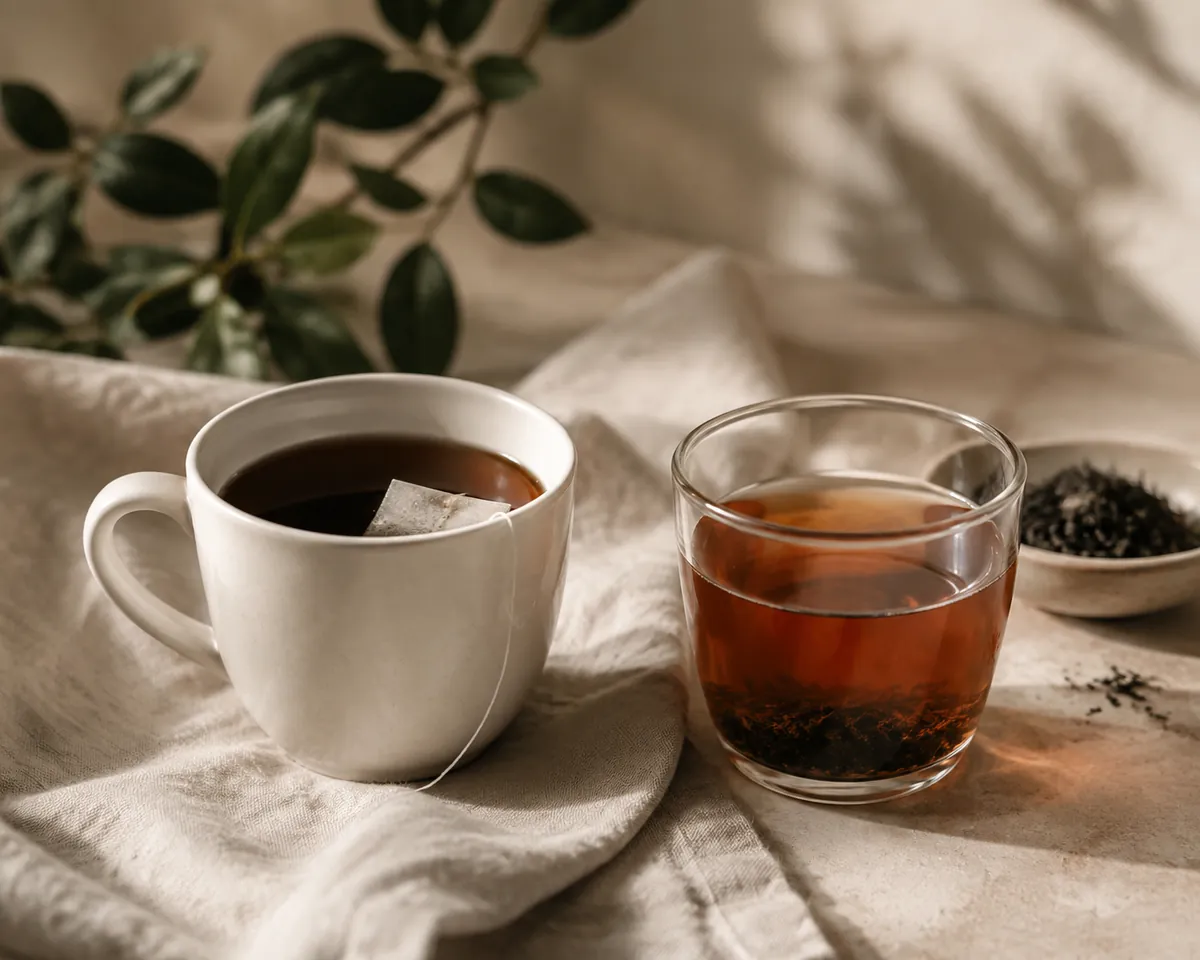
The upgrade that pays best is not loose leaf on its own but loose leaf plus a timer. A bagged blend brewed for two minutes and removed beats the same blend left in for five, and the leaf grade never enters into it.
Keeping is the other half of the decision, and a breakfast blend is among the more durable things in a cupboard. It is fully oxidised, so it fades slowly rather than turning, and the general rules in storing loose-leaf tea and the specifics in keeping a breakfast tin both apply gently here.
How much caffeine a mug of it carries
Breakfast blends sit at the upper end of the black tea range, and the reason is the brewing rather than the botany.
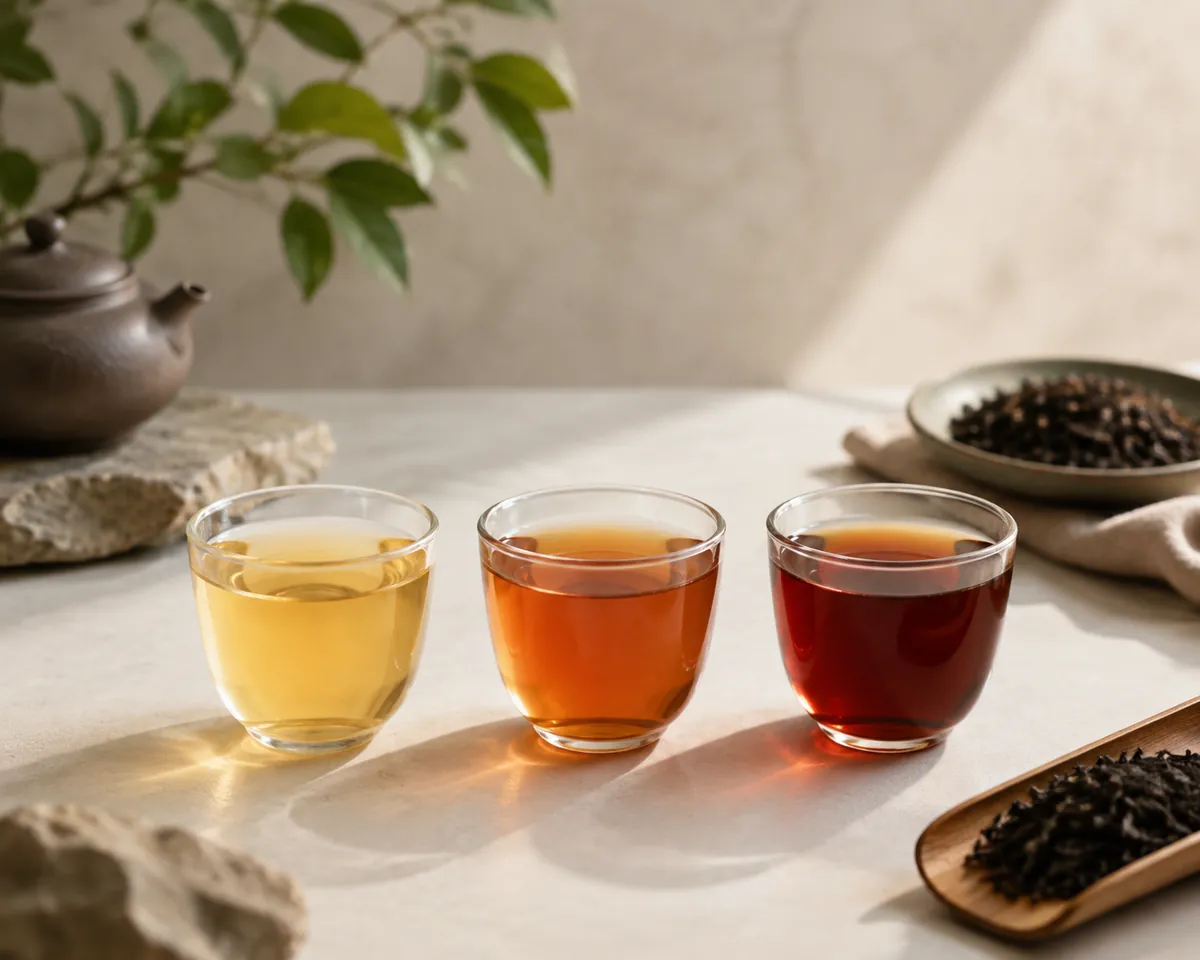
Grade moves the number further than origin does. A broken or CTC leaf gives up more in two minutes than whole leaf gives up in four, and a breakfast blend is usually broken, brewed hot and brewed long, which stacks three variables in the same direction.
Perceived strength and measured caffeine are not the same axis, which catches people out. A tea can taste powerfully strong on tannin and colour while carrying less caffeine than a pale cup brewed from twice the leaf.
How much caffeine is in English Breakfast works through the variables, black tea against green tea covers the neighbouring comparison, and caffeine by brewing method supplies the coffee benchmark most people want next. Where the point is to avoid caffeine rather than to reduce it, rooibos is the honest substitute.
Where a breakfast blend earns its place
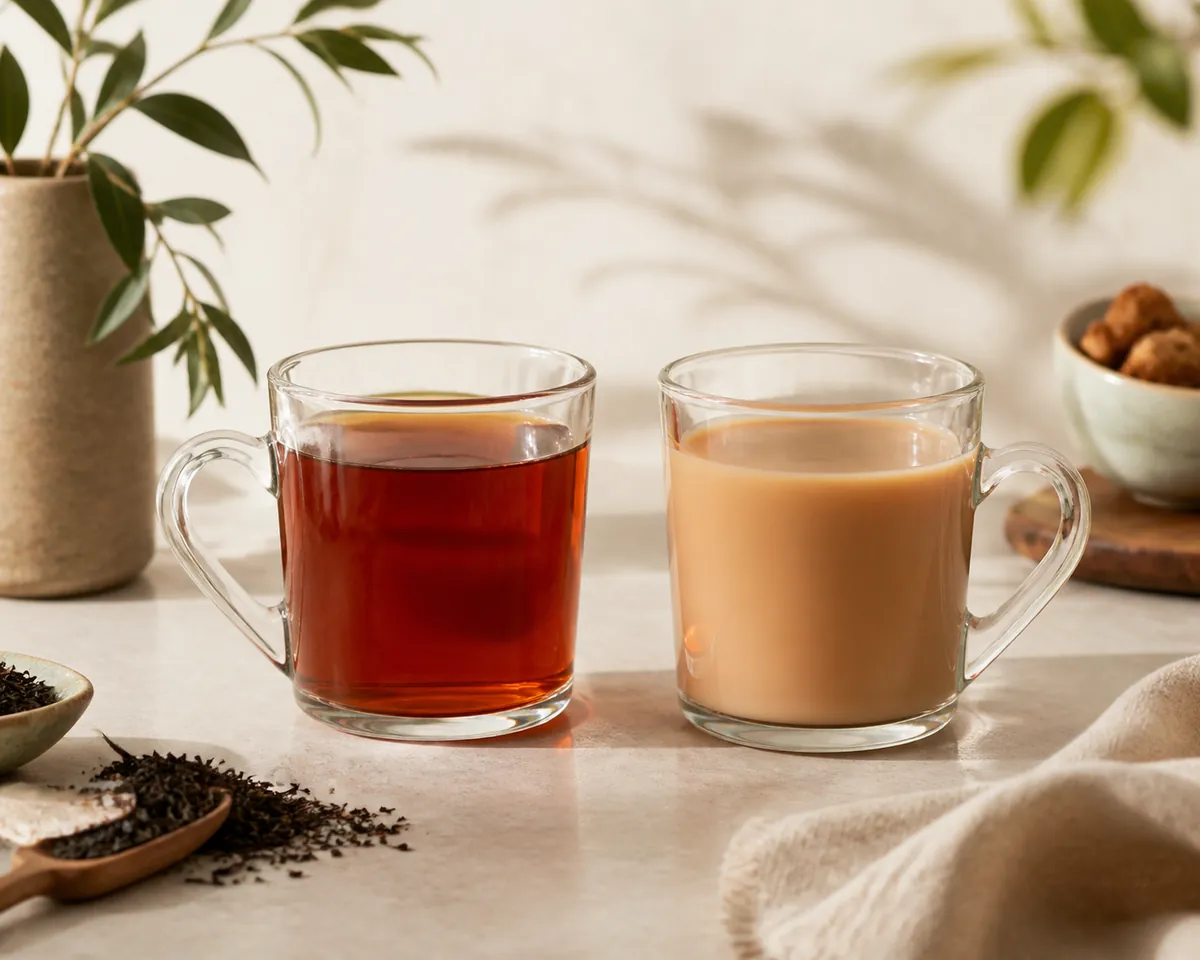
Judged as a tea to sit and think about, this category loses to almost everything around it. Judged as the thing you want at seven in the morning, with milk, in a mug, with your attention elsewhere, nothing else on the shelf comes close.
The design brief and the use case are the same sentence, which is rarer than it sounds.
Right when
You want a strong, dependable mug with milk and no decisions to make about it.
Right when
You are brewing for several people at once and one pot has to please all of them.
Wrong when
You want a tea that changes across a second and a third infusion.
Wrong when
You are drinking it plain and want aroma, where a Darjeeling second flush or a good oolong is the better spend.
Start here
Buy two brands at once, brew them side by side, and keep the one you finish first.
It also cold brews far better than its reputation suggests, since the tannins that make it grip in a hot mug extract slowly and gently in cold water, which makes it a sound and cheap base for a jug of iced tea. Where a hot cup goes wrong, how to make English Breakfast walks the brew through step by step.
Common questions
Why do two English Breakfast teas taste so different?
The name is a brief rather than a recipe, and it carries no legal definition, so each company writes its own. One tin may be led by malty Assam, another by bright Ceylon, another by cocoa-toned Keemun, and the proportions are treated as a trade secret. The words on the front tell you the intended effect and nothing about the contents.
What tea is English Breakfast made from?
Almost always two to four fully oxidised black teas rather than one. Assam supplies malt and body, Ceylon supplies brightness and a clean finish, Kenyan leaf supplies colour and strength at a low price, and Keemun supplies a softer cocoa note in the older Chinese-style blends. No tea is grown in England.
How should English Breakfast be brewed?
Boiling water, three to five minutes for loose leaf and two to three for a bag, at around 3 g per 200 ml. If milk is going in, add roughly half as much leaf again rather than extending the steep, because a longer steep adds grip without adding the body the milk needs to find.