Oat milk vs Soy milk
Oat Milk vs Soy Milk: Protein Against Converted Starch
Soy carries protein at near-dairy levels and does all its structural work with it. Oat converts its starch into sugars and puts the body back with oil. Axis by axis that explains the foam, the curdling, the sweetness and the tofu, and in a mug of delicate tea neither one wins.
Oat milk is milled oats treated with amylase enzymes that cut the starch into shorter sugars, then strained and standardised with oil and salt, which is why an unsweetened carton still tastes sweet. Soy milk is soaked beans ground with water, cooked and strained, carrying about 3.3 g of protein per 100 ml against roughly 1 g in oat. Soy foams best of the plant drinks and splits worst against espresso, and oat does the reverse.
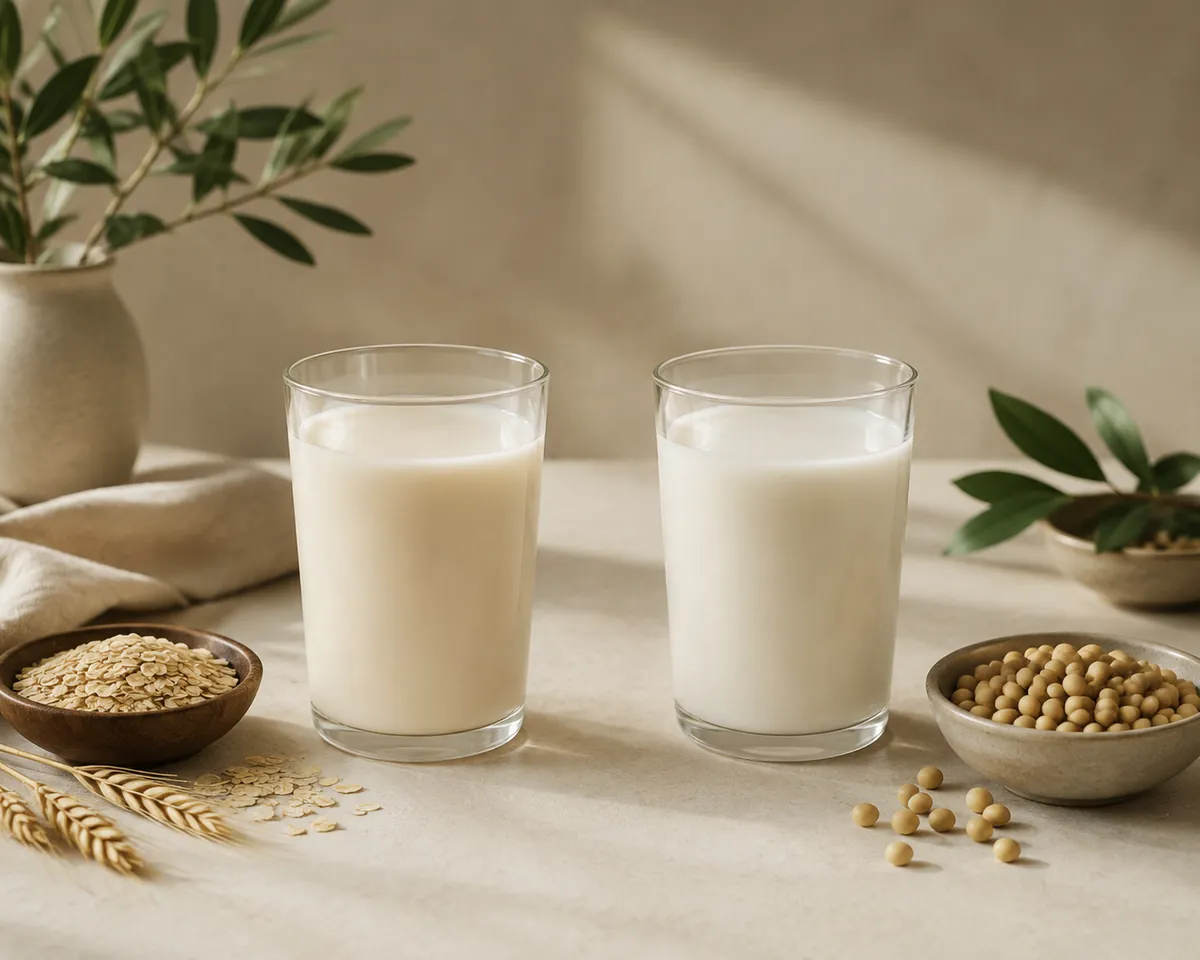
Side by side
| Attribute | Oat milk | Soy milk |
|---|---|---|
| What builds the body | Converted starch plus added oil | Protein, at near-dairy levels |
| Protein per 100 ml | Around 0.3 to 1 g | Around 3.3 g |
| Sweetness | Made from the oats by enzymes, 2 to 8 g per 100 ml | Almost none, with a faint savoury note instead |
| Foam | Good, slightly looser than dairy | The best of the plant drinks |
| Splitting against espresso | Least likely of the common drinks | Most likely, and most visible |
| In a pan | Thickens, and turns gluey if reheated | Skins over as the protein sets |
| Can become a solid | No, since there is nothing to coagulate | Yes, and that solid is tofu |
| Byproduct | Spent bran, with no domestic use | Okara, a food in its own right |
| Made at home | Not properly, since the enzymes are unavailable | Yes, with a blender, a pan and a cloth |
| Added stabilisers needed | A moderate number | The fewest on the shelf |
Protein against converted starch
These two cartons look alike on a shelf and are built on completely different chemistry. One of them gets its body from protein that was already in the raw material.
The other gets its body from starch that was deliberately taken apart.
Soy milk is soaked beans, ground with water, cooked and strained. The protein comes across into the liquid at roughly 3.3 g per 100 ml and does all the structural work from there.
Oat milk is milled oats treated with amylase enzymes that break the oat starch into shorter sugars, then strained and standardised with oil and salt. Nothing structural survives that step except what the formulator puts back.
| Oat | Soy | |
|---|---|---|
| Structural component | Converted starch and added oil | Protein, at near-dairy levels |
| Protein per 100 ml | Around 0.3 to 1 g | Around 3.3 g |
| Sweetness | Made from the oats by enzymes | Almost none, and faintly savoury instead |
| Needs added gums | Moderately | Least of any plant drink |
| The defining step | The enzyme hold | The cook |
| What can go wrong | Too thin, or gluey when reheated | Curdling, and a raw beany note if undercooked |
Every axis below traces to that contrast, and it explains the reversals as well as the obvious wins. The drink with more protein is the one that fails more visibly in coffee, and the drink that is easier to make in a kitchen is the one nobody makes.
What each one is doing to build body
Mouthfeel is the property most people choose a plant drink on, and the two arrive at a similar sensation by routes that have nothing in common.
Soy carries its own weight. Protein at 3.3 g per 100 ml is close to the dairy figure and gives real viscosity, so a plain soy drink can be short on the ingredients list and still feel substantial in the mouth.
Oat borrows its weight. Some comes from partially converted starch and dissolved solids, some from rapeseed or sunflower oil blended in during standardisation, and the balance between those two is set by how long the enzymes ran.
The consequence shows up in what each carton needs on the label. Soy needs the fewest stabilisers on the shelf, oat needs a moderate number, and rice milk at the far end needs the most, so the stabiliser list is a readout of missing protein rather than a mark of a cheap product.
Why an unsweetened oat carton tastes sweet and soy does not
Taste them plain, cold, on their own, and this is the difference nobody has to be told about. One is sweet and cereal, the other is faintly savoury.
Starch is a long chain of glucose units and tastes of nothing.
Cut it into shorter chains and free sugars and the same material tastes distinctly sweet, and that is exactly what the amylase step does, which is why a carton marked unsweetened is telling the truth about what was added rather than what is present.
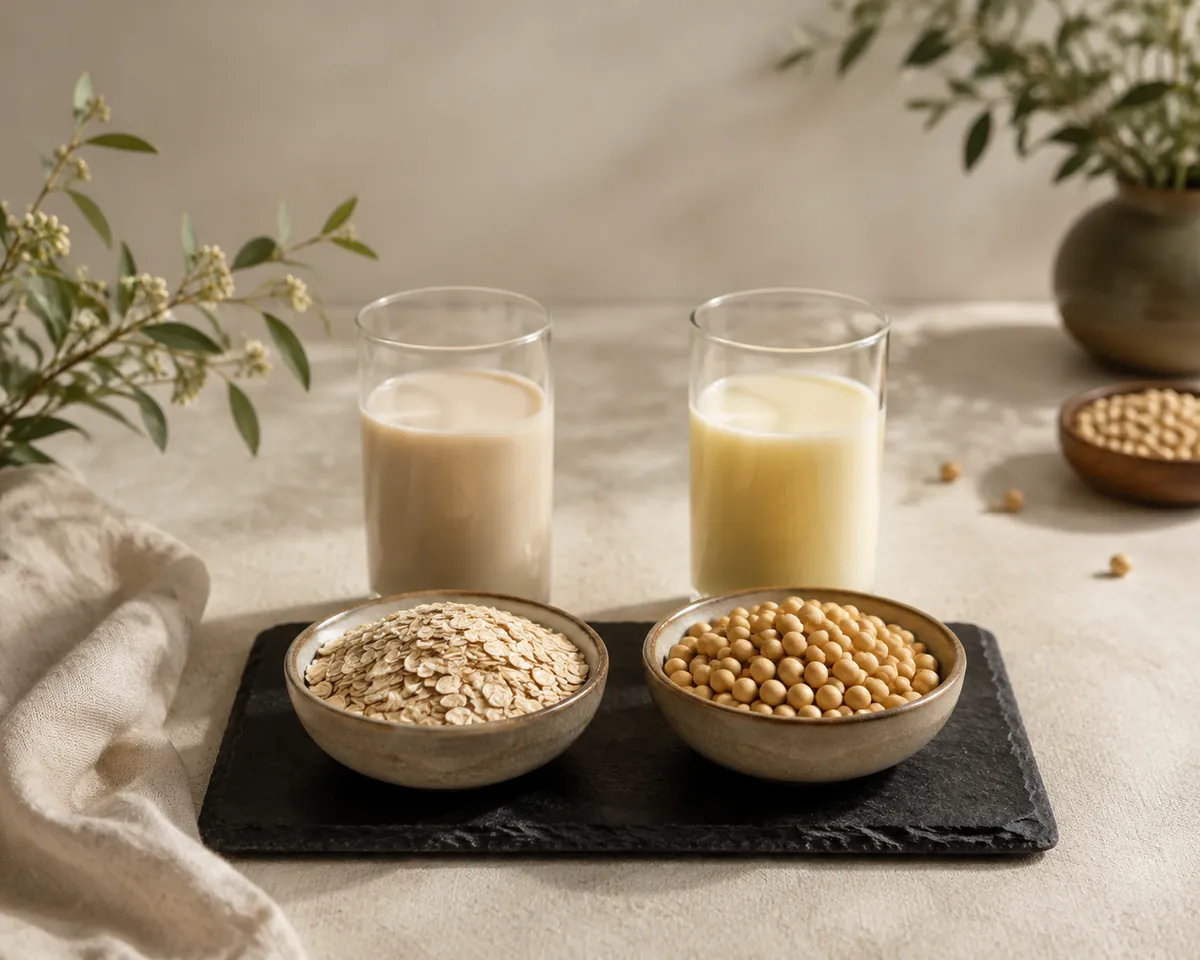
Soy has no equivalent conversion. Beans carry little starch worth breaking down, so nothing sweet is generated, and what the drink tastes of instead is the bean itself: a mild savoury note that decades of deodorising has made far quieter than it used to be.
How much flavour each brings to a cup
- Soy, whole bean and undeodorisedDistinctly beany, and hard to hide
- Oat, long enzyme holdSweet, cereal, and it reads as added sugar
- Soy, modern deodorised cartonMild savoury note, mostly in the finish
- Oat, short enzyme holdThinner and starchier, with less sweetness
- AlmondFaint and nutty, and the most neutral of the four
Neither flavour is neutral, which matters more than which one you prefer. Anything delicate loses either way, so a lightly steeped tea or a floral cordial will be argued with by both cartons in different registers.
Which foams better, and which splits worse
Here the two answers point in opposite directions, and the reason is that one protein is doing both jobs.
Soy foams best of any plant drink. Its protein stretches into a microfoam close to dairy, which is why cafes kept ordering it long after the retail shelf had moved on, and a barista formulation under a milk frother will hold a pattern cleanly.
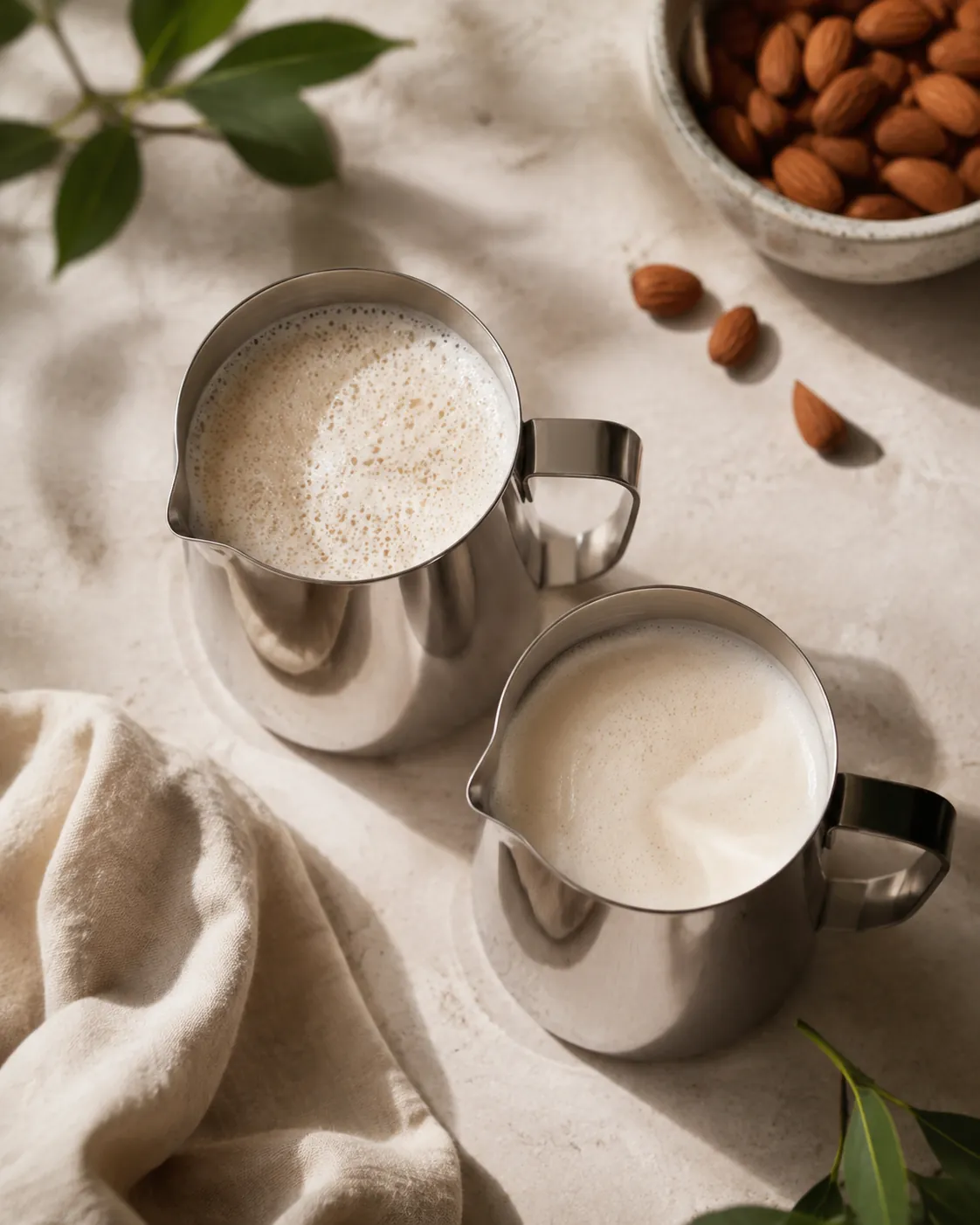
Soy also splits worst. Its protein has an isoelectric point around pH 4.5 and a fresh espresso sits close enough to push it there, so when it goes it goes visibly, in obvious curds rather than a gentle graininess.
| Property | Oat | Soy |
|---|---|---|
| Foam quality | Good, slightly looser than dairy | Best of the plant drinks |
| What builds the foam | Dissolved solids and added oil | Protein |
| Splitting against espresso | Least likely of the common drinks | Most likely, and most visible |
| Best steaming endpoint | 60 to 65 C, cooler than dairy | Similar, and it tolerates a little more |
| Reheats | Badly, and turns faintly gluey | Better, though the foam does not return |
| Barista version fixes | Body and foam | Acidity tolerance |
Soy wins the jug and loses the cup, and oat does the reverse. That is the whole trade, and why plant milk splits against a hot shot is the mechanism underneath it, which is also why oat took the cafes on behaviour rather than on composition.
How each behaves in a pan rather than a jug
Move away from the steam wand and the ranking changes again, because sustained heat asks a different question from a thirty-second stretch.
Soy holds a simmer reasonably well and does something no other plant drink does: left hot and still, it forms a skin on the surface as the protein sets, which is the same phenomenon that yields yuba in a Japanese kitchen.
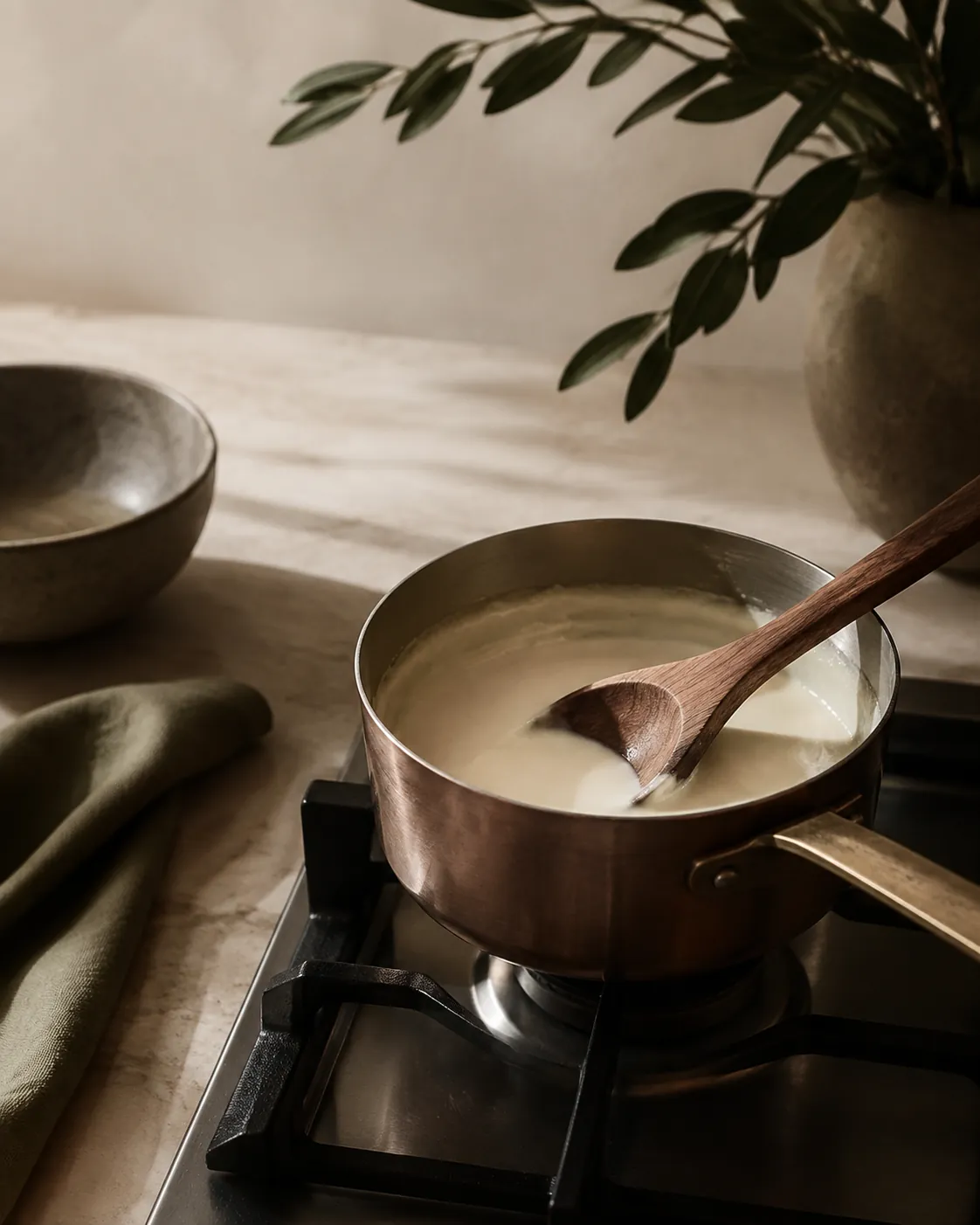
Oat thickens instead. Residual starch swells as it heats, so a pan of oat drink goes noticeably heavier and can turn faintly gluey, and a jug that was steamed once will not recover on a second pass.
Simmered slowly
Soy skins, oat thickens. Neither is a fault, and both change the drink
Boiled hard
Both suffer, and soy is likelier to catch on the base of the pan
Reheated after steaming
Oat is the worse of the two, and thin and gluey is the usual result
In a savoury sauce
Soy, because oat brings a sweetness that has nowhere to go
Timing is the practical lesson on the oat side. It rewards making one drink at a time, since a jug poured over four minutes gives the third cup something noticeably worse than the first, and soy is the more patient of the two in that specific respect.
Only one of them can become a solid
Tofu is soy milk curdled on purpose, and no equivalent exists anywhere on the oat side of this comparison.
Stir a salt coagulant into hot soy milk and curds separate from the whey, and pressing those curds gives a block that gets firmer with pressure. The craft rests entirely on the protein doing precisely what ruins a latte.
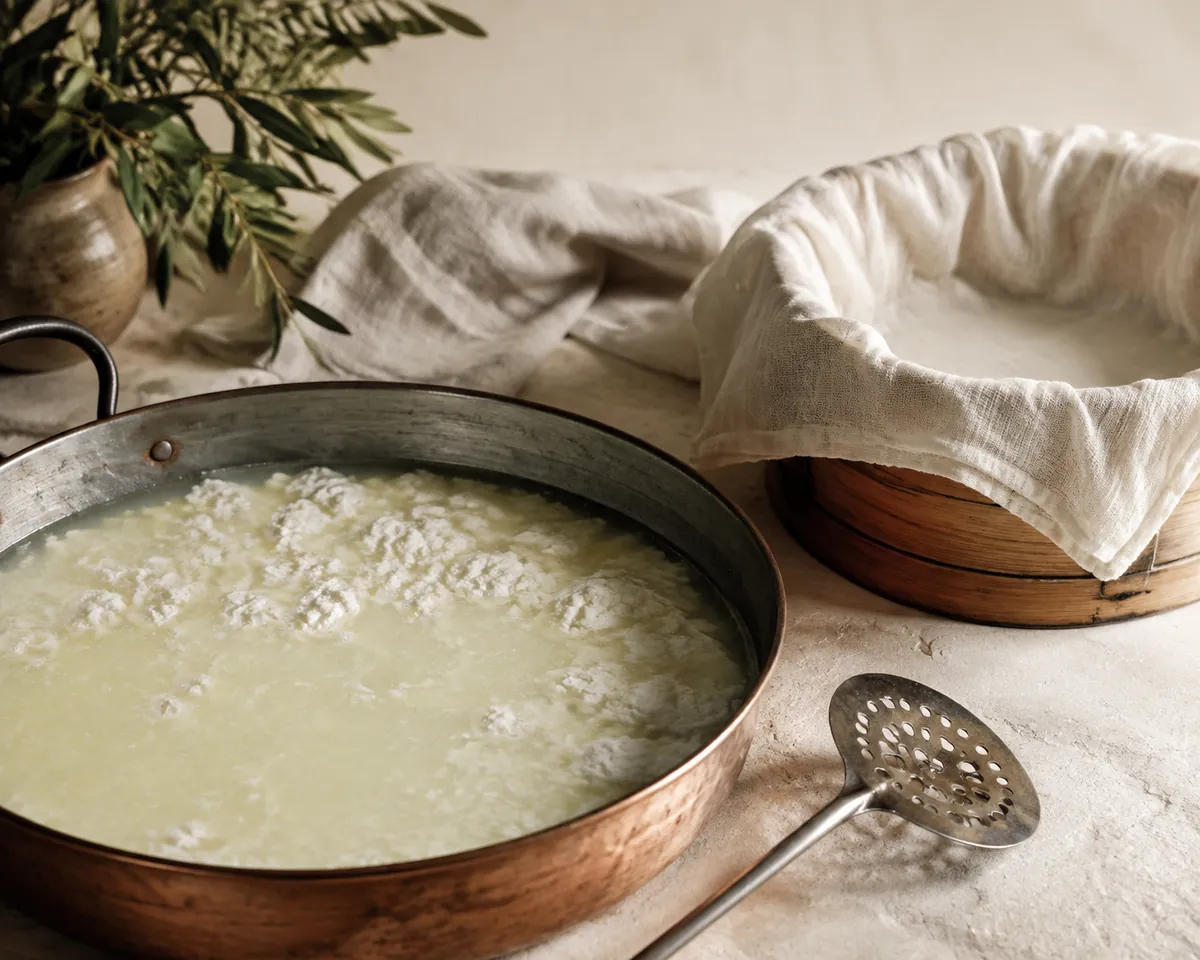
Oat has nothing to coagulate. Converted starch and emulsified oil will not form curds under any coagulant, so the oat side of the shelf produces no solid food at all and never has.
What each material can be turned into
- Soy, coagulatedCurds, pressed into tofu of varying firmness
- Soy, skinnedYuba, lifted off the surface of a hot pan
- Soy, fermentedA long tradition of other foods, all resting on the same protein
- Oat, heatedThicker liquid, and nothing that separates
- Oat, cooledA gel at high starch levels, which is a texture rather than a food
That asymmetry is worth holding onto because it predicts the failure mode better than any warning does. A liquid engineered to become a block when heated with a salt was always going to be sensitive when it meets a hot acid, and the surprise is how often it holds.
The byproducts run in different directions
Both processes strain something out, and what is left behind is treated very differently in each case.
Straining soy leaves okara, the pale crumbly pulp, and it is the most useful byproduct any plant drink produces. Mild enough to disappear into other food and high in fibre, it goes into patties, stews, baking and pickles across east Asian kitchens rather than into the bin.
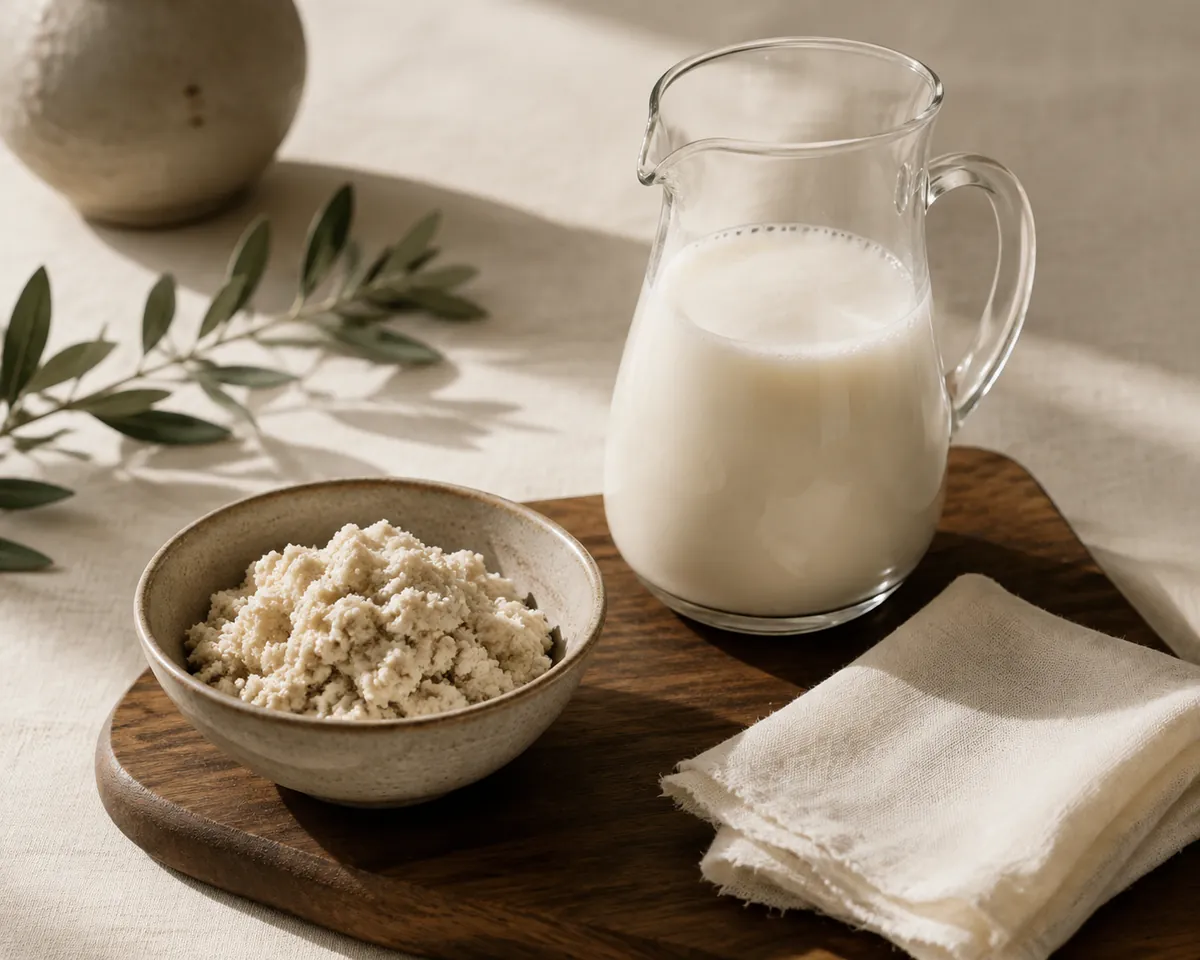
Straining oat leaves a wet slurry of spent bran and hull with most of its starch already converted away. It is fed to livestock or sent to biogas at industrial scale, and there is no kitchen tradition attached to it at all.
- Okara keeps a day or two refrigerated and freezes well.
- Spent oat solids have no domestic use worth the trouble.
- Neither byproduct reaches the carton, so neither shows on a panel.
- The oat process yields more liquid per kilogram of raw material.
- The soy process yields more usable solid food alongside the drink.
- Both are strained through cloth or centrifuged, and the difference is what is caught.
Yield runs one way and usefulness runs the other, which is a fair summary of the two processes. The oat route is more efficient at making liquid, and the soy route makes two foods where the other makes one and a waste stream.
Which one can be made at home
Soy, comfortably. Oat, not really, and that answer surprises everybody who assumes the simpler-sounding ingredient must be the easier one.
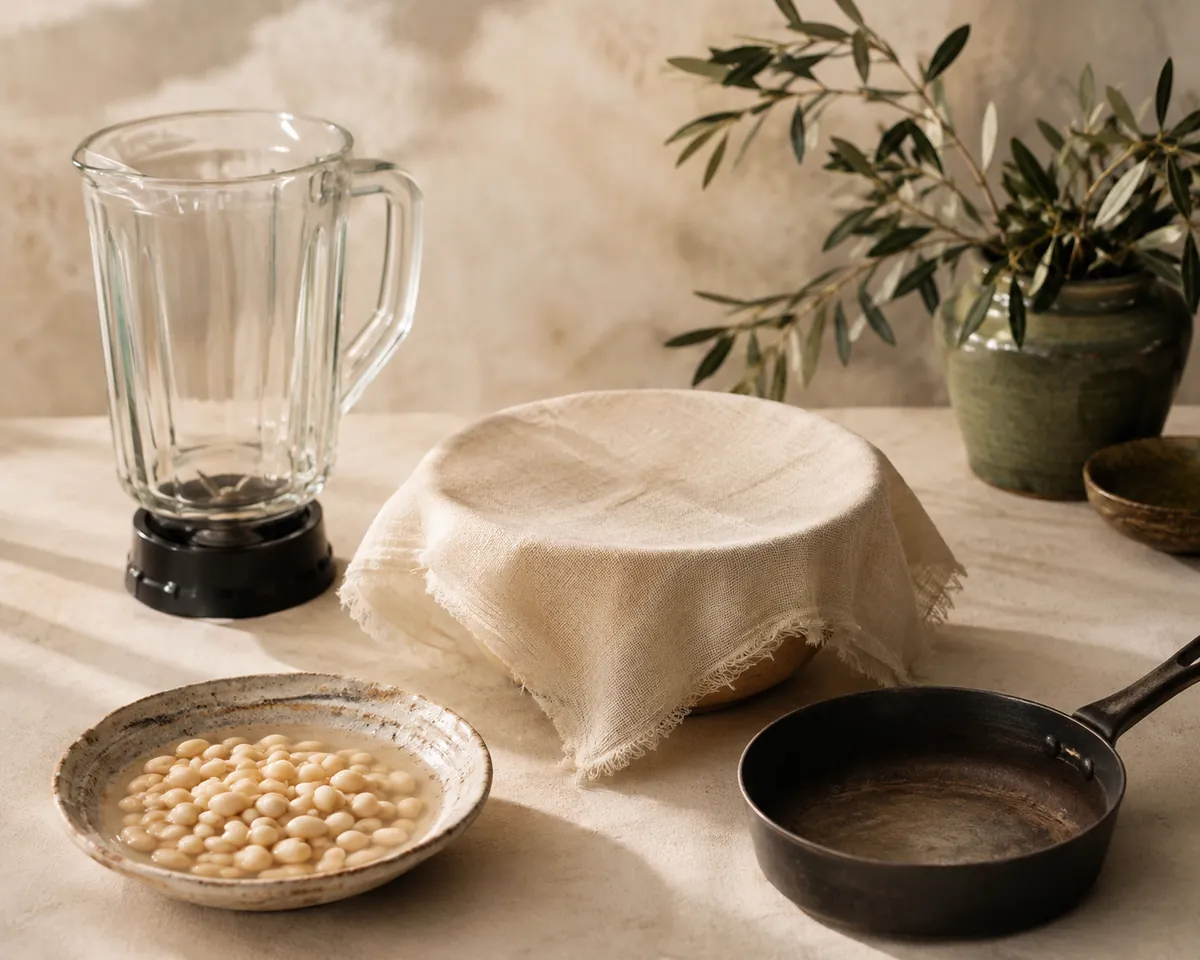
Soaking, grinding, cooking and straining beans is an old domestic process with no special equipment behind it. A blender, a pan and a cloth are enough, the cook is the step that cannot be skipped, and the result is recognisably the drink sold in cartons.
Oat cannot be reproduced without the enzymes.
Blend oats with water at home and the starch stays whole and suspended rather than converted, so what you get is a starchy liquid that turns slimy on standing and gluey the moment it meets heat.
| Step | Soy at home | Oat at home |
|---|---|---|
| Equipment | Blender, pan, straining cloth | Blender and a cloth |
| The critical step | Sustained cooking, which is not optional | Enzyme conversion, which is unavailable |
| Result | Close to a plain commercial carton | Suspended starch, not the same drink |
| Common failure | A raw grassy note from undercooking | Sliminess, worse if the oats were blended warm |
| Cost against buying | Clearly cheaper | Cheaper, and not the same product |
| Byproduct | Okara, worth keeping | Wet bran, worth nothing |
Warm water makes the oat problem worse rather than better, since heat gelatinises the starch during blending. Cold water and a short blend is the least bad version, and it remains a different drink rather than a home-made one, which is the honest thing to say about it.
In tea, the ranking flips
Coffee is the arena these two are usually judged in. Tea reverses part of the verdict, because tea carries far less acid than a fresh shot does.
Soy holds together in a mug of black tea where the same carton would break against a shot, and it brings enough protein to give the cup body that most plant drinks cannot supply. That is the one place its weakness stops applying.
Oat holds together too, and struggles on balance instead. Its cereal sweetness sits over a delicate leaf rather than under it, so a lightly steeped green tea is poorly served by it and a strong assam is not troubled at all.
Strong black tea
Both work. Soy for body, oat for sweetness
Delicate green or white
Neither, and this is a genuine draw rather than a tie broken on points
Iced tea
Either, and cold acid is far less aggressive than hot
Tea with lemon
Neither, for the same reason on both sides
Very milky tea
Oat, because the sweetness is doing more work at that dilution
The reason cafes moved from one to the other was never about tea. Oat arrived with better behaviour against espresso and a more familiar flavour, and it took the coffee menu within a few years while nothing about the soy carton got worse.
What the two panels vary on
Read the backs of several cartons of each and the pattern of variation is different, which is more informative than any single figure.
An oat panel moves on sugars above everything else, anywhere from 2 to 8 g per 100 ml, and that line is a readout of how far the enzyme hold was allowed to run rather than of anything added. Fat moves too, since barista formulations carry more oil.
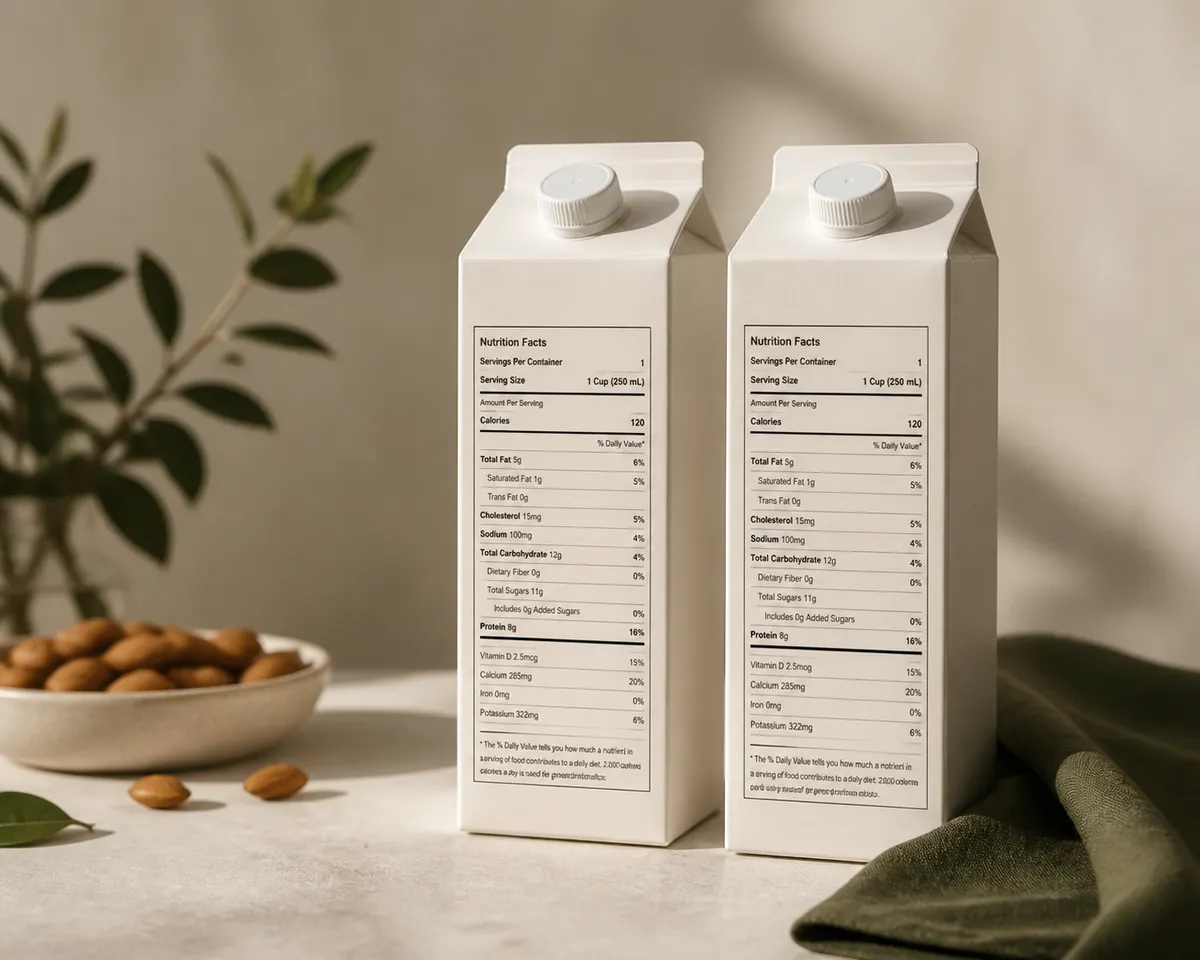
A soy panel is steadier on protein and moves on what the protein came from. Whole beans ground and cooked give one product, and soy protein isolate blended back with oil and water gives another, and the ingredients line is the only place that difference is stated.
Which lines move most, by drink
- Oat sugars2 to 8 g per 100 ml, set by the enzyme hold
- Oat fat0.5 to 3 g per 100 ml, set by the formulation
- Calcium in eitherPresent or absent, since fortification is optional
- Soy sugarsLow unless sweetened, and the label says which
- Soy proteinAround 3.3 g, and the most reliable figure on either carton
Fortification is the line that catches people out on both sides, because an unfortified carton of either drink carries essentially no added calcium while a fortified one is set to a figure near dairy. Neither fact is visible from the front, and these figures describe what is in the carton rather than anybody drinking it.
Which carton for which job
Two questions do most of the work here, and both are about what the drink is going into rather than about which carton is better.
Ask whether heat and acid are arriving together. If they are, as in an espresso drink, oat is the safer carton and soy needs a barista formulation to keep up.
If they are not, soy brings more body and needs less help to do it.
Ask second whether sweetness helps or intrudes. Oat brings its own and cannot be talked out of it, soy brings a savoury note instead, and there is no version of either that is genuinely neutral.
- Espresso drinks: oat, or a barista soy if the foam matters more than the risk.
- A flat white or cappuccino where the cap is the point: barista soy.
- A large latte that will sit for a while: oat, which splits least.
- Tea, strong and black: either, and soy for body.
- Anything savoury in a pan: soy, since oat sweetness has nowhere to go.
- Making it yourself: soy, because oat cannot be made properly without enzymes.
For protein alone, pea milk is the newer entrant on the same ground as soy, and cashew and coconut sit outside this comparison on both counts. Anyone weighing oat against something thinner and more neutral is asking a different question, which is the one oat against almond answers, and against dairy the honest summary is that oat imitates the texture and soy imitates the composition.
Common questions
Which has more protein, oat milk or soy milk?
Soy, by a wide margin. It carries around 3.3 g per 100 ml, close to the dairy figure, while a typical oat drink carries somewhere between 0.3 and 1 g. That protein is doing structural work rather than sitting in a figure, which is why soy needs the fewest added stabilisers of any plant drink.
Why does unsweetened oat milk taste sweet when soy milk does not?
The amylase step in oat production cuts the oat starch into shorter chains and free sugars, and those sugars were made from the oats rather than added to them, so a carton marked unsweetened is accurate about what went in. Soybeans carry little starch worth converting, so nothing sweet is generated and the drink reads faintly savoury instead.
Which one is better in coffee?
Oat is the safer carton and soy is the better foam, which is the whole trade. Soy protein has an isoelectric point around pH 4.5 and a fresh espresso sits close enough to push it there, so it splits visibly into curds, while oat splits least of the common plant drinks. A barista soy formulation moves the acidity tolerance and closes most of the gap.