What Is Hot Chocolate? And How It Differs From Hot Cocoa
Hot chocolate and hot cocoa are different drinks, and the difference is not marketing. One is made from chocolate and the other from cocoa powder, and everything about the texture follows from that.
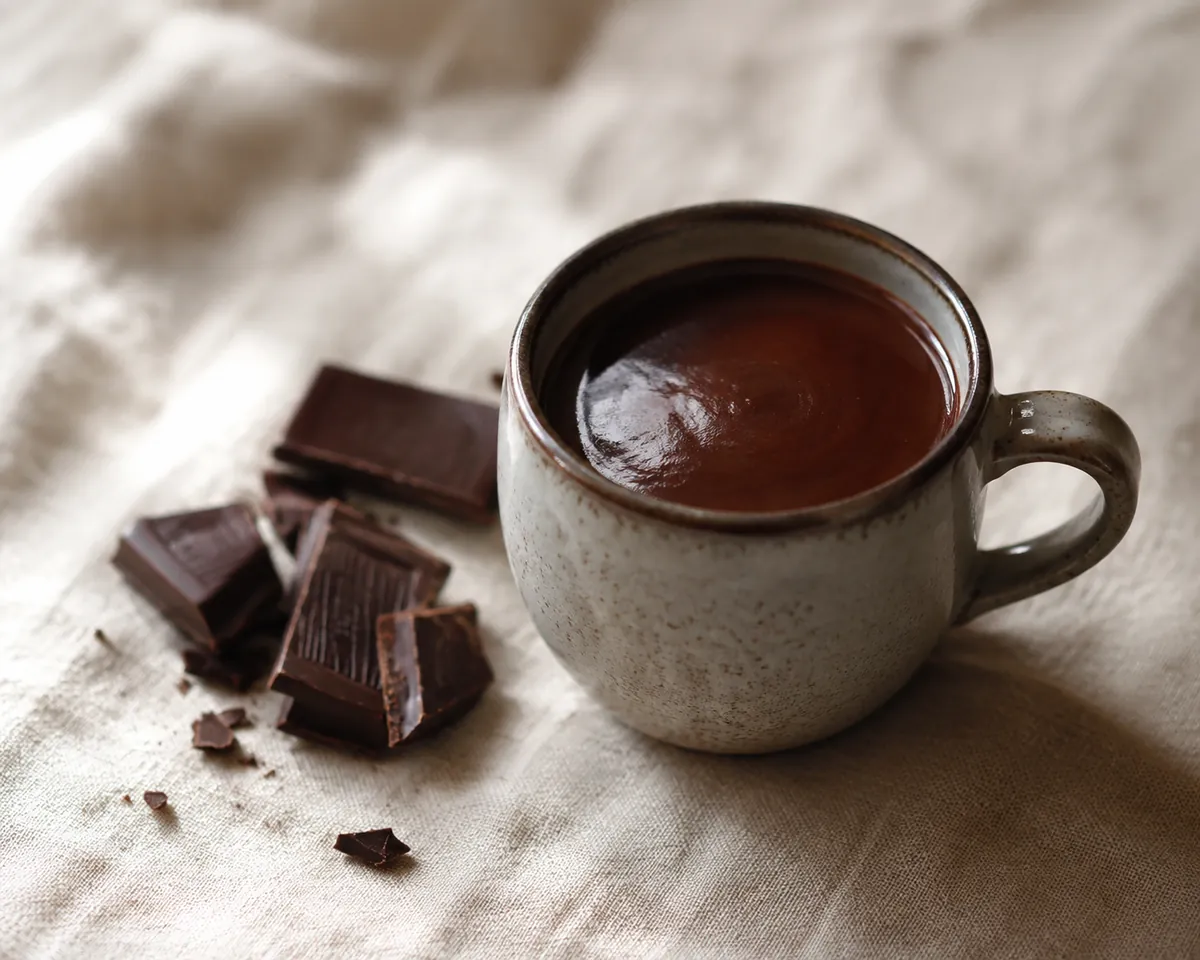
Hot chocolate is made by melting chocolate into hot liquid. Hot cocoa is made by dissolving cocoa powder into it.
They are related drinks and the difference between them is not a matter of naming.
Cocoa butter is what separates the two. A bar carries it at roughly a quarter to two fifths of its weight, and cocoa powder has had most of that fat squeezed out under a press before it was ever milled.
Hot chocolate at a glance
- Made from
- Melted chocolate rather than cocoa powder
- Cocoa butter
- 25 to 40 per cent of the bar it starts from
- Body
- Thick and coating, and thicker still as the cup cools
- Serving size
- 100 to 150 ml, about half a mug of cocoa
- Sweetness
- Fixed by the bar rather than added by the spoon
- Caffeine
- Low, and well below a cup of brewed coffee
- Other names
- Drinking chocolate, chocolat chaud, cioccolata calda
Cocoa butter, and what it does in the cup
The ingredient that divides these two drinks is a fat that stays solid on a shelf and turns liquid a degree or two below body heat, which is precisely why one of them coats the mouth and the other refreshes it.
| Hot chocolate | Hot cocoa | |
|---|---|---|
| Made from | Melted chocolate | Cocoa powder |
| Cocoa butter | Present, 25 to 40 per cent of the chocolate | Mostly removed, 10 to 24 per cent remains |
| Texture | Thick, rich, coating | Lighter, thinner |
| Sweetness | From the chocolate itself | Added separately, so controllable |
| Typical serving | Small, 100 to 150 ml | Large, 250 ml or more |
| Also called | Drinking chocolate, chocolat chaud | Cocoa, cocoa drink |
Cocoa butter is what makes hot chocolate coat the mouth. It melts as it reaches the tongue and begins to set again as the cup cools, so a mug left on a desk for ten minutes has noticeably more body than it had when it was poured.
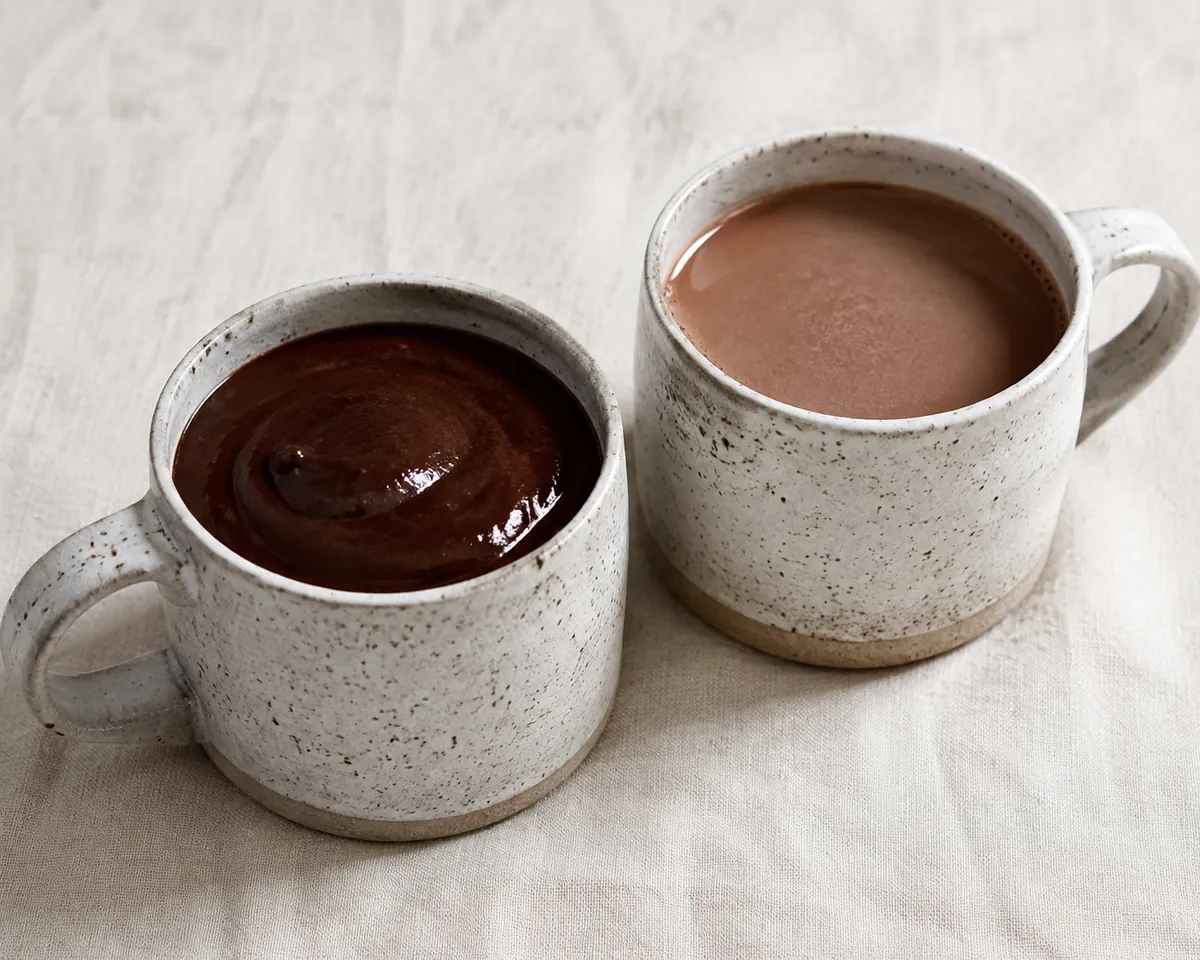
Serving size follows directly from that fat. Sixty grams of chocolate in 150 ml of milk is several times the concentration of three spoons of powder in a full mug, and pouring it at mug volume gives most people more richness than they can finish.
The small cup is arithmetic rather than affectation. Someone expecting a large sweet drink and handed a small dense one tends to call it too much, which is a mismatch of expectation rather than a fault in the drink, and the range of hot chocolate flavour is set out in hot chocolate taste.
Powder, bar or a sachet in the mug
Three routes lead to a chocolate drink, and they are genuinely different products rather than three qualities of the same one.
Cocoa powder
Lighter, controllable sweetness, cheaper. Needs a paste step.
Melted chocolate
Richer, thicker, easier to smooth. Sweetness fixed by the bar.
Instant mixes
Cocoa, sugar, milk powder and emulsifiers. Convenient and thin.
Chocolate shavings
Melt readily and suit a quick single serving.
Cocoa powder does not dissolve. It is a fine solid that has to be dispersed and then held in suspension, which is why the powder route begins with a paste rather than a pour, and the method belongs to hot cocoa on the stove rather than here.
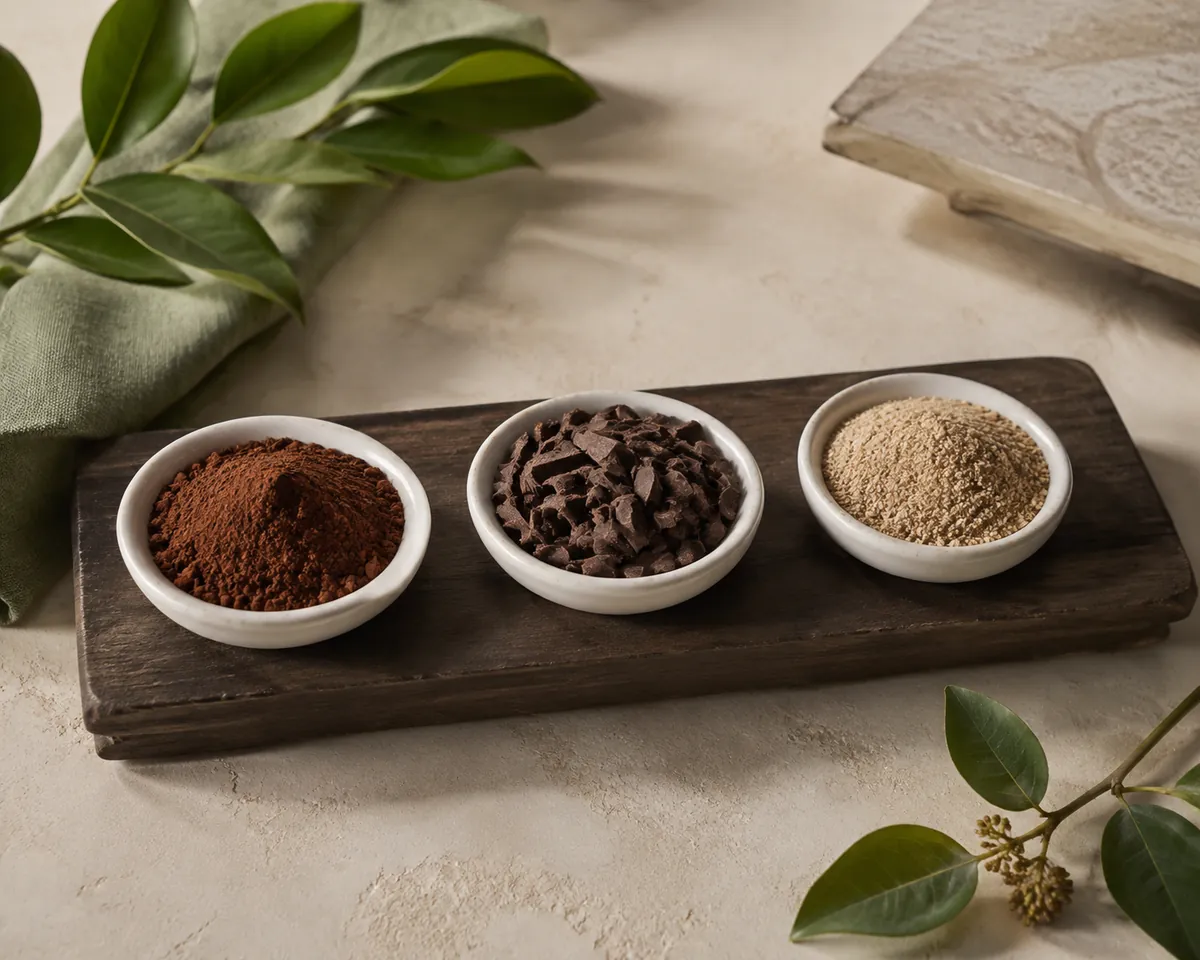
The powder then divides again by treatment. Natural cocoa is sharp and faintly fruity and can read as sour against milk, where the alkalised kind is mellower, darker and far more willing to disperse.
White hot chocolate sits outside the whole scheme, because it is built from a bar carrying cocoa butter and no cocoa solids at all. Nothing bitter in it balances the sugar, so salt or acid has to be supplied from outside, and the case is worked through in white hot chocolate.
Drinking chocolate, and the cups poured around it
Concentration is the whole idea.
Drinking chocolate is chocolate melted into a small volume of liquid until the result is closer to a thin sauce than to a hot drink. Spanish chocolate a la taza and Italian cioccolata calda are both built that way, often with a little cornflour behind them.
Drinking chocolate, roughly
- Dark chocolate
- 60 g, chopped, 60 to 70 per cent cocoa
- Milk
- 150 ml
- Method
- Warm the milk, take off the heat, add chocolate, stir until smooth
- Optional
- A teaspoon of cornflour slaked in cold milk, for the Spanish style
- Serves
- One small cup, and it is meant to be small
This is not a large-mug drink, and the national styles built around it all assume a small cup and a spoon rather than a handle and a marshmallow. The commissioned page on drinking chocolate takes the format further.
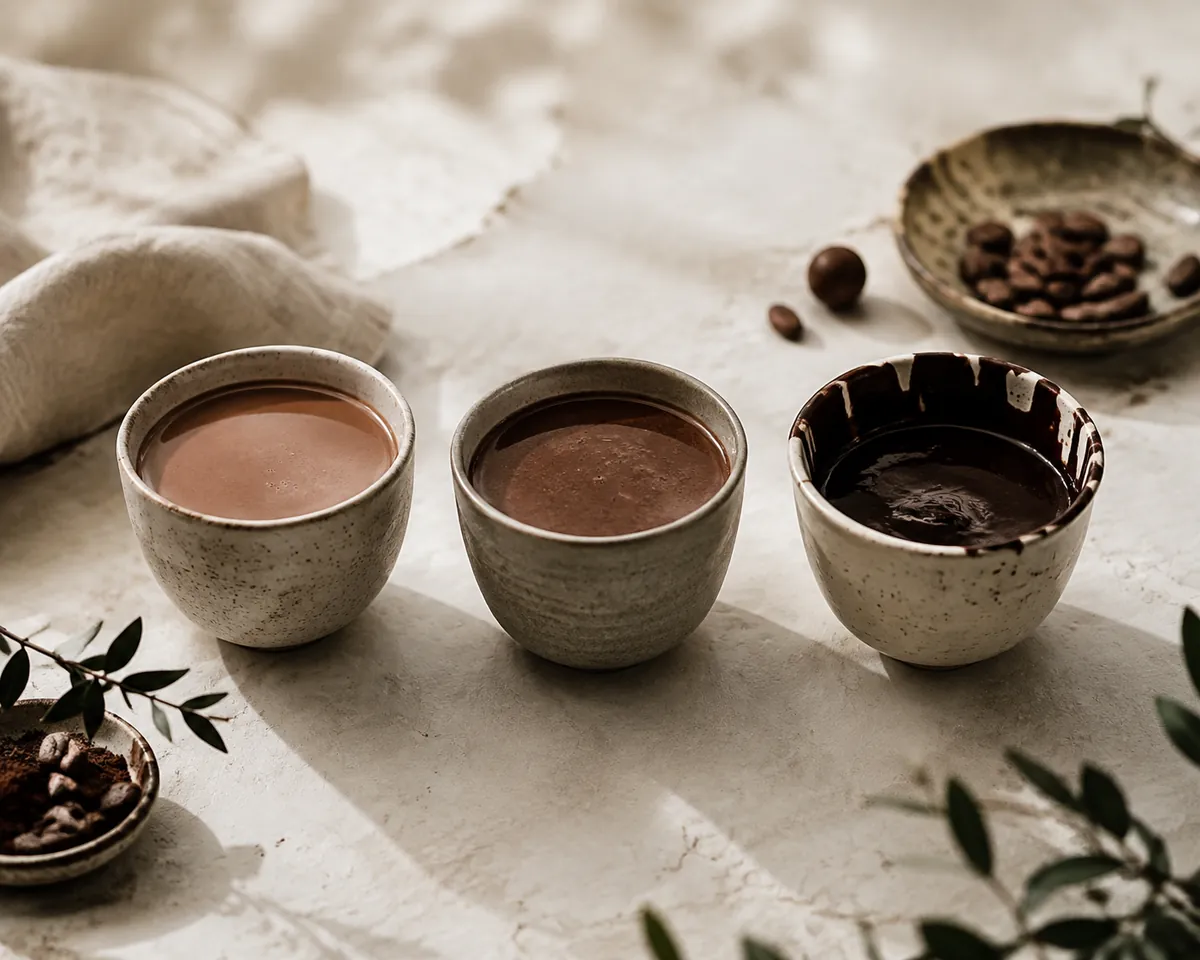
Spanish
Very thick, often cornflour-thickened, served with churros. Closer to a sauce.
Italian
Cioccolata calda. Thick, intense, small servings.
French
Chocolat chaud. Rich but pourable, usually made with couverture and whole milk.
American
Usually cocoa-powder based, sweeter, larger, and often topped with marshmallow.
The Mexican version sits far enough from the others to need separate treatment, since its coarse pressed tablets behave nothing like the smooth couverture the French and Italian cups depend on. That grain is deliberate rather than a defect, and Mexican hot chocolate explains what the tablet is doing.
Seizing, scorching and the failures a pan produces
Chocolate is an emulsion of cocoa solids and sugar suspended in fat, with almost no water in it, and that composition explains every way a pan of hot chocolate goes wrong.
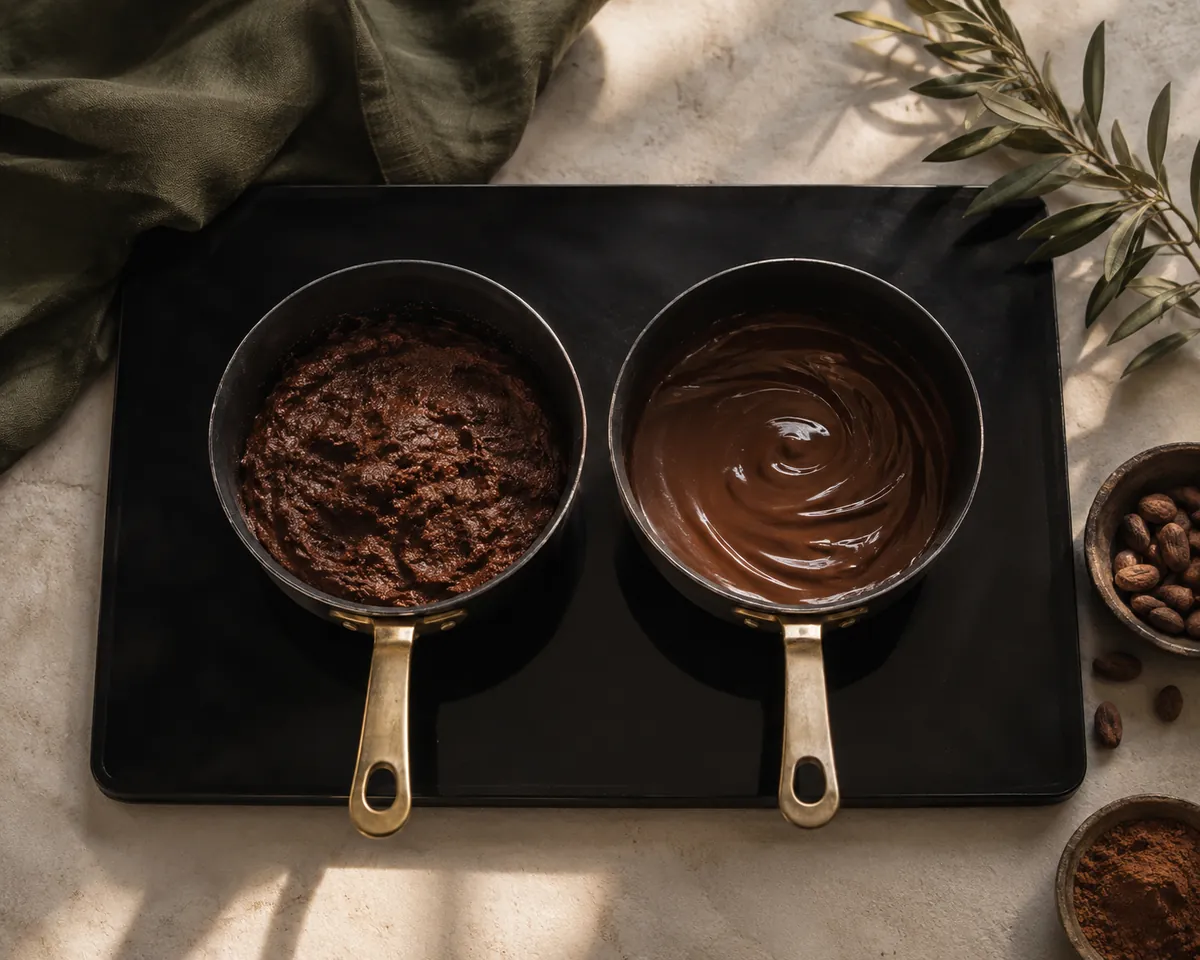
Introduce a very small quantity of water and the sugar and cocoa particles clump against one another and the emulsion breaks. What is left is a dull grainy paste that no amount of stirring recovers, and the counterintuitive repair is more liquid rather than less.
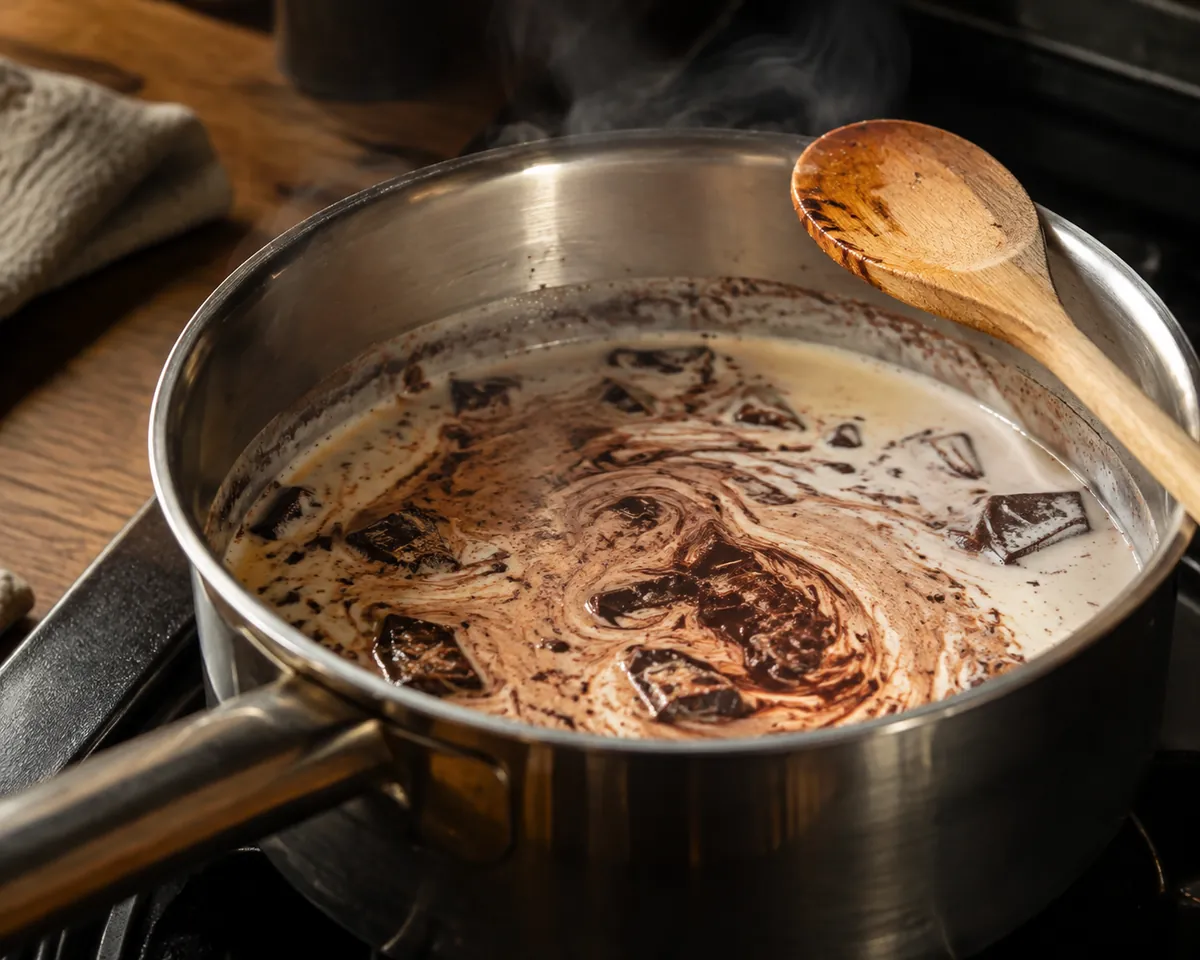
Overheating produces the other failure, and it is permanent in a different way. Cocoa solids catch on the base of the pan and burn there, and that note carries through the whole batch, which is the reason the chocolate goes into milk already taken off the heat.
- Grainy from seizing, caused by a splash of water rather than a generous pour of liquid.
- Scorched, from too much direct heat on the pan base with chocolate already in it.
- Greasy, from chocolate with too high a cocoa butter content for the liquid volume.
- Thin, from using milk chocolate, which carries far fewer cocoa solids.
- Separating on standing, which is normal and fixed by a stir rather than more heat.
Separation alarms people unnecessarily. Cocoa solids are suspended rather than dissolved and they drift to the bottom of a still cup within a few minutes, so a spoon fixes it and more heat makes it worse.
The rest of the diagnostic list belongs to hot chocolate problems.
Percentage, couverture, and the sweetness you cannot take back
Because the sugar arrives already dissolved in the bar, the chocolate you pick decides the sweetness of the finished cup before you have poured anything at all, and that is the one variable a spoon cannot correct afterwards.
How the cocoa percentage changes the cup
- Milk chocolateVery sweet, mild, thinner from lower cocoa solids
- 50 to 55 per centSweet and approachable, the easiest starting point
- 60 to 70 per centThe usual choice. Balanced, clearly chocolatey
- 75 to 85 per centIntense and dry. Needs added sugar for most people
- Above 85 per centVery bitter, and the low sugar makes it harder to emulsify
With powder you add every grain of sugar yourself and the drink can be pushed anywhere along that scale. With a bar the only real adjustments are a different bar or more sugar, and sweetening something already sweet rarely rescues it.
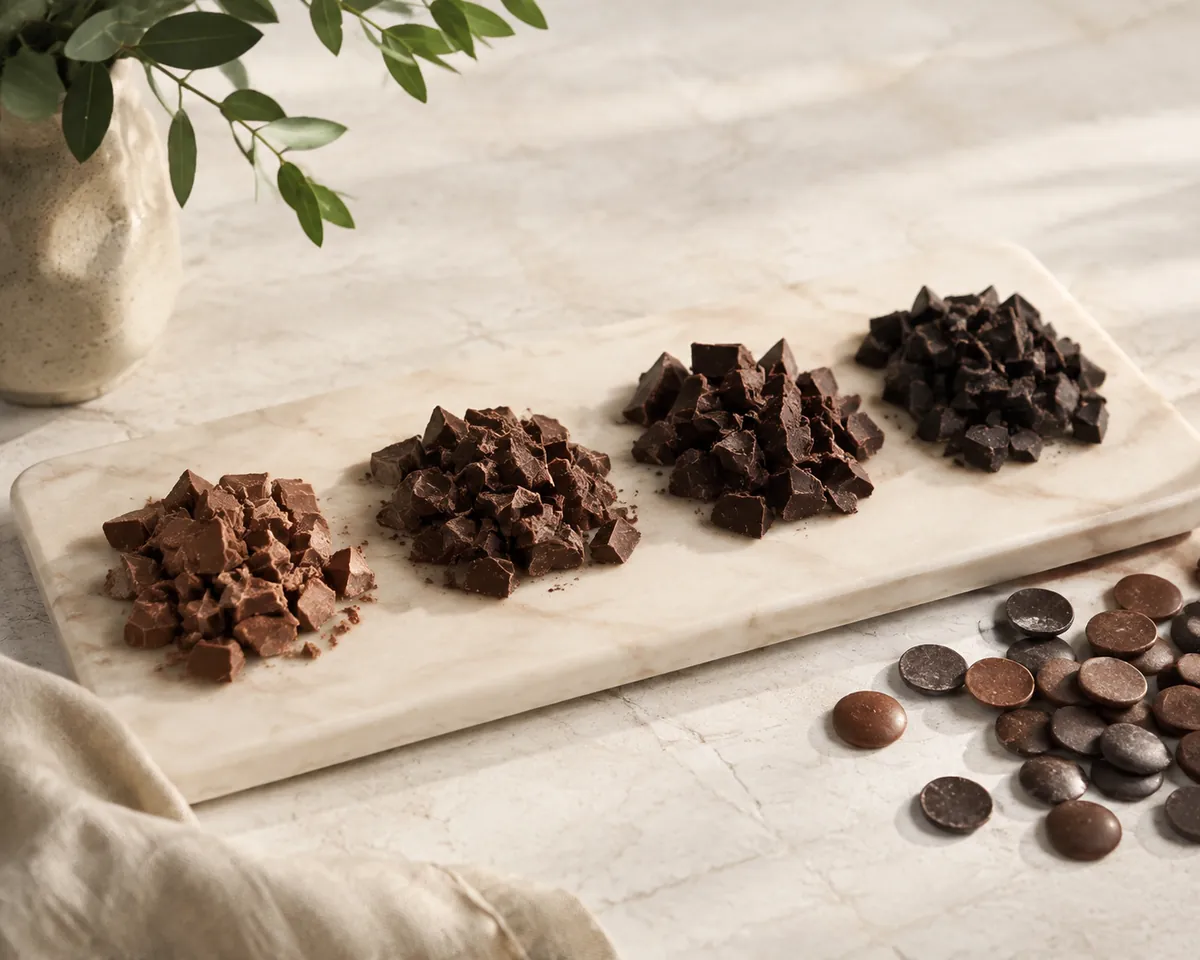
That asymmetry is the practical argument for keeping two chocolates rather than one. A café making drinking chocolate stocks a 55 and a 70 for exactly this reason, and a shop-bought cup that tastes cloying is usually asking for a higher percentage rather than a smaller serving.
Couverture is the other lever worth knowing about. It carries extra cocoa butter, melts more smoothly than ordinary eating chocolate, and is what most cafés reach for when the drink is on the menu daily.
Chocolate chips are the one thing to avoid outright. Many contain stabilisers designed to hold their shape under oven heat, which is precisely the opposite of what a drink needs, and where no good bar is to hand hot chocolate substitutes covers what else will stand in.
What the milk is actually contributing
Liquid is not a neutral carrier here, and swapping it changes the drink about as much as changing the bar does.
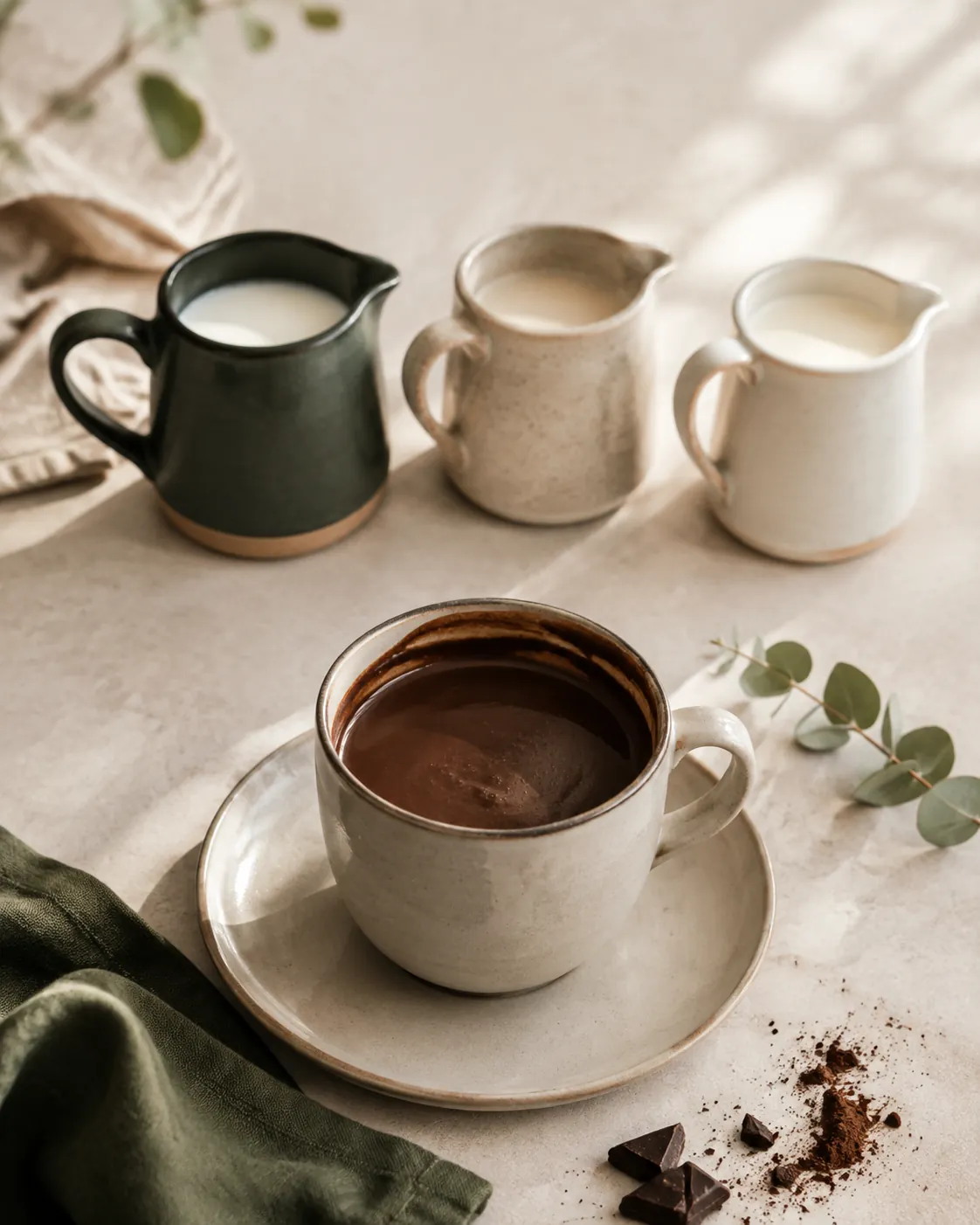
Whole dairy milk is the default because it brings two things rather than one. Fat adds richness on top of the cocoa butter already present, and protein gives the drink body and helps hold the emulsion together as it cools.
What each liquid does
- Whole milk
- Richest and most rounded. The default
- Semi-skimmed
- Thinner, and the chocolate reads slightly more bitter
- Water
- Cleanest. Chocolate flavour is more direct, texture much lighter
- Oat drink
- The closest plant option for body and sweetness
- Coconut drink
- Works well, but the flavour becomes part of the drink
Water is the underrated option on that list. Stripping out dairy fat and protein exposes the chocolate directly, which is how a great deal of the best Continental drinking chocolate is made, and it suits a high-percentage bar that milk would muffle.
Plant drinks work here, with one caveat. Cocoa is only mildly acidic, so splitting is far rarer than it is in coffee, and oat drinks hold up best for the same reasons they behave in a flat white.
The mechanism itself is set out in plant milk curdling, and a milk frother will put a head of foam on a bar-based drink that a spoon never manages.
Theobromine, and where cocoa sits against coffee
Two stimulants, not one.
Theobromine is the compound cocoa carries in much the larger quantity. It is chemically related to caffeine and acts more mildly and more slowly, and both compounds sit in the cocoa solids rather than in the butter, which is why a darker bar carries more of each and a white bar carries almost none.
A cup built from melted chocolate therefore lands higher than a cup built from a spoon of powder at the same volume, simply because there is more cocoa solid in it. Figures for every format are gathered in hot chocolate caffeine.
Set against coffee by brewing method, the whole cocoa category sits low without sitting at zero, which is a useful thing to know and a different claim from calling it caffeine-free.
How hot to serve it, and how thick to make it
Temperature and texture are the two dials left once the chocolate and the liquid have been chosen, and this drink is fussier about both than anything else in the section because the fat in it is doing the work.
Above roughly 70 C the aromatics are driven off and what remains reads flat and merely sweet. Cocoa butter shows its richness better a little cooler too, so a cup that has stood a minute off the heat usually tastes of more than one poured straight from the pan.
- Warm the mug first. Hot chocolate cools fast and thickens as it does.
- Stir before every few sips, since cocoa solids settle quickly.
- Add a pinch of salt, which sharpens the chocolate flavour noticeably.
- Let it stand a minute off the heat before drinking, so the flavour opens.
- Do not reheat it hard. It scorches on the second heating more readily than the first.
A few grains of sea salt do for chocolate what they do for caramel, and the effect is out of all proportion to the quantity used.
Ways to thicken, and what each gives
- More chocolate
- The purest route. Thickens and intensifies together
- Cornflour
- The Spanish method. Adds body without more chocolate or sugar
- Egg yolk
- Very rich and custard-like. Needs low heat or it scrambles
- Cream
- Rich and smooth, but it mutes the chocolate flavour
- Reduction
- Simmering to evaporate liquid. Slow, and it risks scorching
Cornflour is the most controllable of those, since a teaspoon slaked in cold milk and brought briefly to a simmer thickens a cup without shifting the sugar balance at all. Added dry it produces lumps that never disperse, for exactly the reason cocoa powder needs a paste, and the full sequence is laid out in making hot chocolate.
A chocolate base that keeps for a week
Batching works here in a way it does not for coffee or tea, provided you batch the right thing.
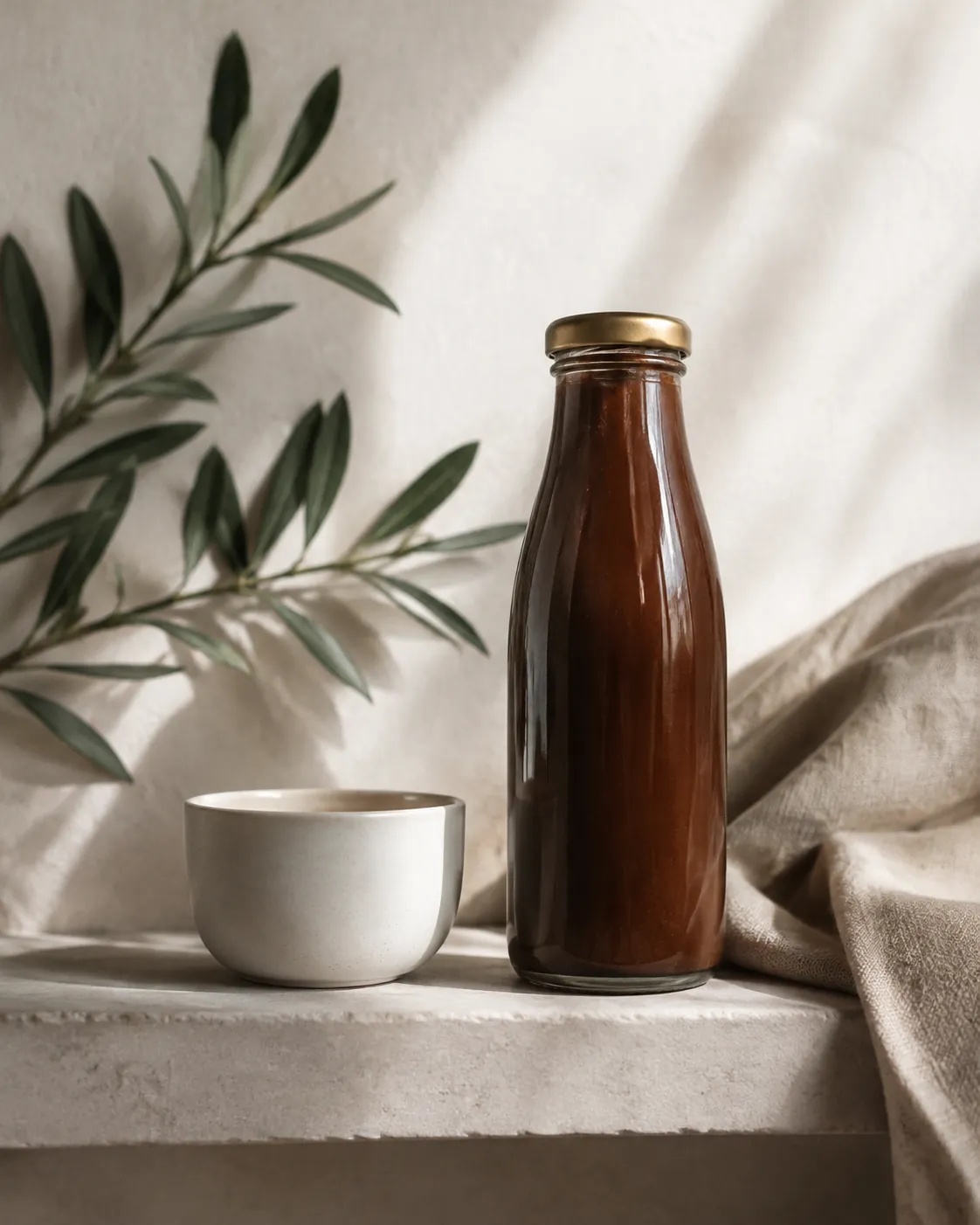
What is worth keeping is a concentrate rather than a finished drink. Melt chocolate into a small volume of milk or cream, refrigerate that thick base, and dilute it cup by cup with hot milk as you want it.
That is essentially what a café does, and it sidesteps both the melting step and the scorching risk of heating one small portion in a large pan.
Made-up hot chocolate does keep, with a caveat. Two or three days in the fridge is realistic, it thickens hard as the cocoa butter sets, and it needs gentle heat and a thorough stir to come back together.
Boiling it on the second heating breaks the emulsion for good, where a fresh batch would have survived the same treatment. Keeping times for every form of the drink are collected in storing hot chocolate.
What is actually in a sachet
Most of the hot chocolate drunk at home never involves a bar at all.
An instant mix is cocoa powder, sugar, milk powder and an emulsifier, formulated to disperse in hot water without a paste stage. Sugar is usually the first ingredient by weight, which frequently puts it above half the sachet, and the emulsifier is doing the job cocoa butter does in a bar.
That makes it a convenience product rather than a bad one, and it does set a low reference point. Anyone whose idea of the drink comes from a sachet finds proper drinking chocolate startlingly intense on first contact, and reads that intensity as a fault rather than as the drink.
The gap between the two is mostly sugar and cocoa butter, and closing it costs about a minute of stirring.
Common questions
What is the difference between hot chocolate and hot cocoa?
Hot chocolate is made from melted chocolate, which contains cocoa butter, so it is thick and rich. Hot cocoa is made from cocoa powder, which has had most of the cocoa butter pressed out, so it is lighter and thinner.
Why did my chocolate go grainy when I made hot chocolate?
It seized. A very small amount of water makes the sugar and cocoa particles clump and breaks the emulsion. Add liquid generously rather than a splash at a time, and keep the heat gentle so the cocoa solids do not scorch.
Can you use chocolate chips for hot chocolate?
Poorly. Many chocolate chips contain stabilisers designed to help them keep their shape when heated, which is the opposite of what you want. Chopped bar chocolate or couverture melts far more smoothly.