What Is Cashew Milk? The Nut Drink That Needs No Straining
Cashew milk is the one nut drink you can make without straining. Cashews soften completely and blend into a smooth suspension, which is why it is creamier than almond and far easier to make at home.
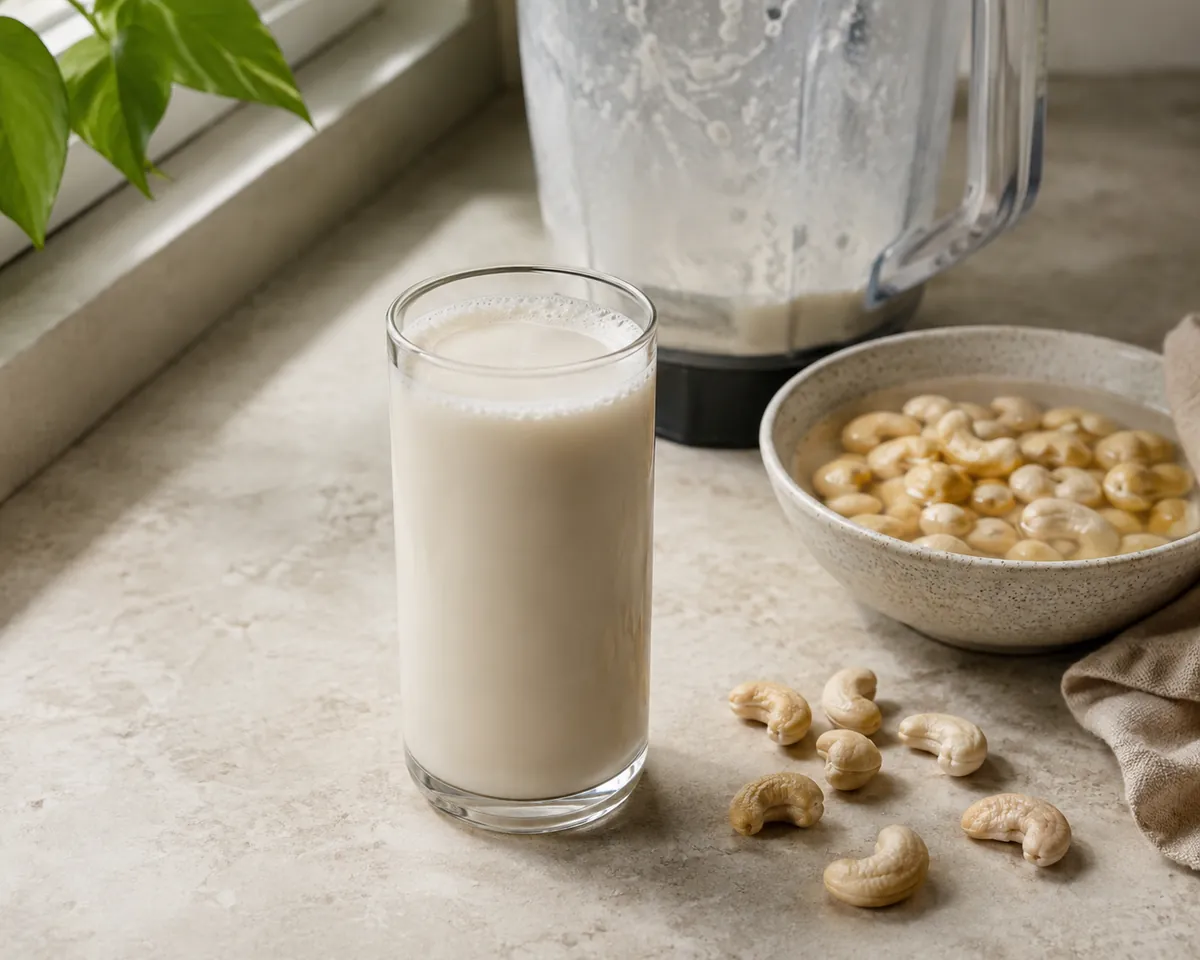
Cashew milk is made by blending cashews with water. Where almond milk has to be strained, cashew usually is not, because the nut breaks down far enough that there is nothing worth catching in a cloth.
That single difference accounts for most of its character, and for the fact that it is the one plant drink a domestic kitchen can produce properly rather than approximately.
Cashew milk at a glance
- Made from
- Raw cashews and water, and in a homemade jug nothing else
- Straining
- Usually none. The nut disperses completely in a good blender
- Body
- Full and slightly opaque, closer to single cream than to almond
- Protein
- Around 0.5 g per 100 ml, the lowest of the nut drinks
- Cashew content
- 2 to 4 per cent in a carton, 10 to 15 per cent homemade
- In coffee
- Better than almond, though the foam collapses from the edge inwards
- Homemade keeps
- Three to four days refrigerated, and it settles within the hour
Why there is nothing left to strain out
Cashews are unusually soft for a nut and unusually low in fibre. Soaked for a few hours and given ninety seconds at full speed they disperse into a suspension fine enough that a straining cloth catches almost nothing, which is why the step exists for almond milk and does not exist here.
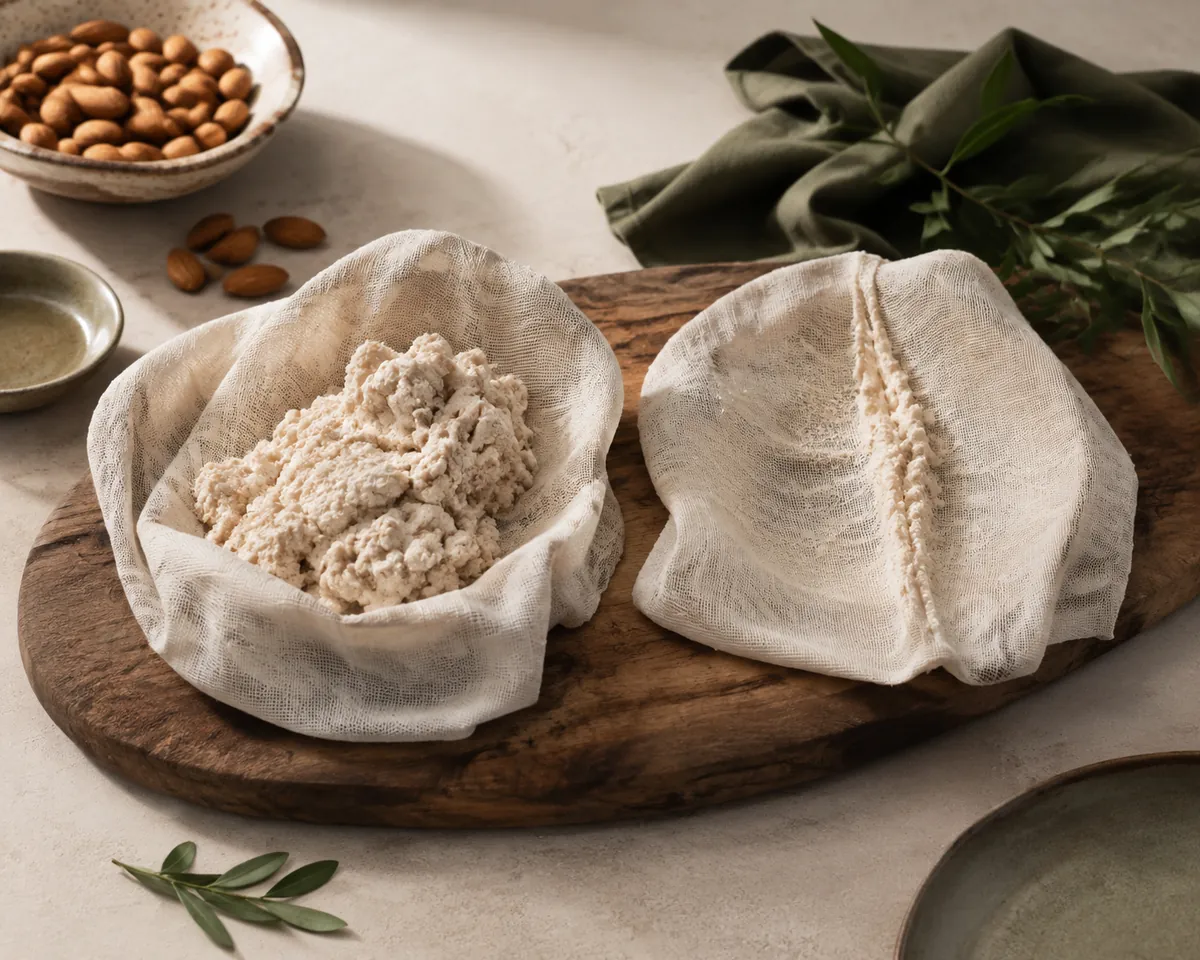
An almond keeps its skins and its fibre as recognisable particles that no domestic blender reduces any further. Straining is the only way to get them out, and it removes a large share of the nut along with them.
A cashew has very little of that structure to start with, so the fat and the fibre finish in the glass instead of in a damp bag of pulp on the worktop.
What staying unstrained gives it
- Body
- All the nut solids remain, so it is markedly thicker
- Fat
- Retained rather than left behind in the pulp
- Waste
- None, unlike almond milk which discards most of the nut
- Yield
- Higher per nut, which offsets the cost of cashews
- Texture
- Smooth and slightly opaque, closer to single cream
Creaminess in cashew milk is retained solids rather than added fat. Commercial cartons are strained and correspondingly thinner, which is why a homemade jug tastes richer than anything sold in one, and why the pulp question that dogs every other nut drink never comes up at all.
Ninety seconds in a blender, and the four things that go wrong
With no cloth to press and no pan to watch, cashew is the only plant drink whose entire method fits inside a single blender jug, and its failure modes are correspondingly few.
Homemade cashew milk
- Cashews
- 100 g raw, unsalted
- Soak
- 4 hours in cold water, or 20 minutes in hot
- Water
- 700 ml fresh
- Salt
- A pinch
- Blend
- 60 to 90 seconds on high. No straining needed
- Keeps
- 3 to 4 days refrigerated
Raw nuts are the part that cannot be negotiated. Roasted ones give a drink tasting emphatically of roasted nut and settling faster than it should, since roasting has already firmed the kernel and altered the fat.
| Symptom | Cause | Fix |
|---|---|---|
| Gritty | Under-blended, or not soaked long enough | 90 seconds at full speed; soak properly |
| Separates within an hour | Normal. It is a suspension, not an emulsion | Shake it. Nothing is wrong |
| Tastes flat | No salt | A pinch, blended in |
| Faintly bitter or sharp | Rancid nuts | Check the smell of the nuts before soaking |
| Thin and watery | Too much water, or roasted nuts used | 100 g per 700 ml, raw only |
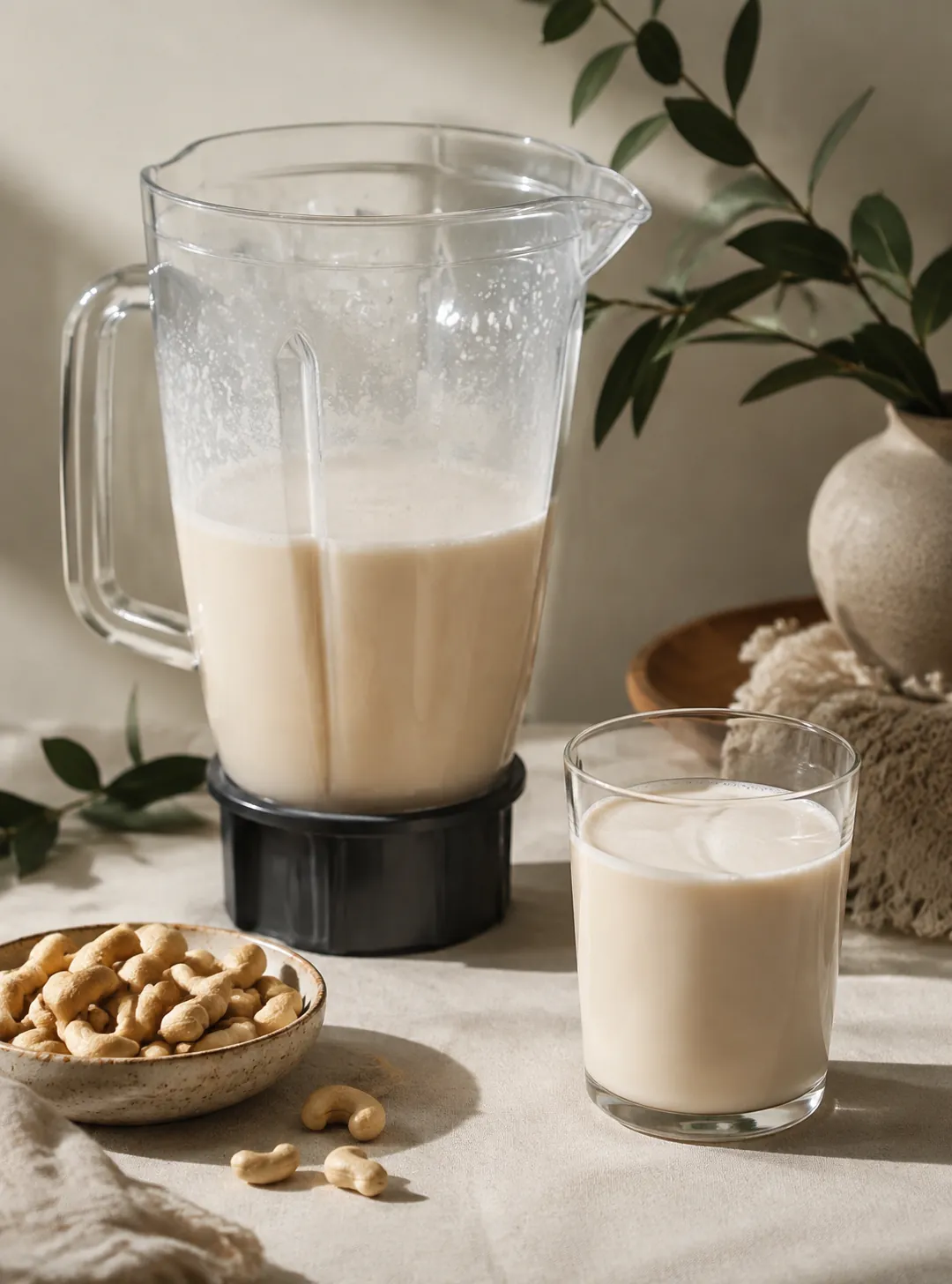
Grittiness is the row worth chasing, because it is the only one that cannot be corrected afterwards: a short blend leaves particles that resting, shaking and straining all fail to remove, and the jug has to be run again from the beginning. The second row is the opposite case and the complaint people report most often, and it is not a fault at all.
Cashew milk problems works through the remainder at length.
Raw pieces, the caustic shell and the shelf price
Buying nuts for a blender is a different exercise from buying nuts to eat, and the difference is worth real money. Cashew pieces and splits sell at a clear discount to whole kernels and make identical milk, since an intact kernel buys an appearance that will not survive the first ten seconds of blending.
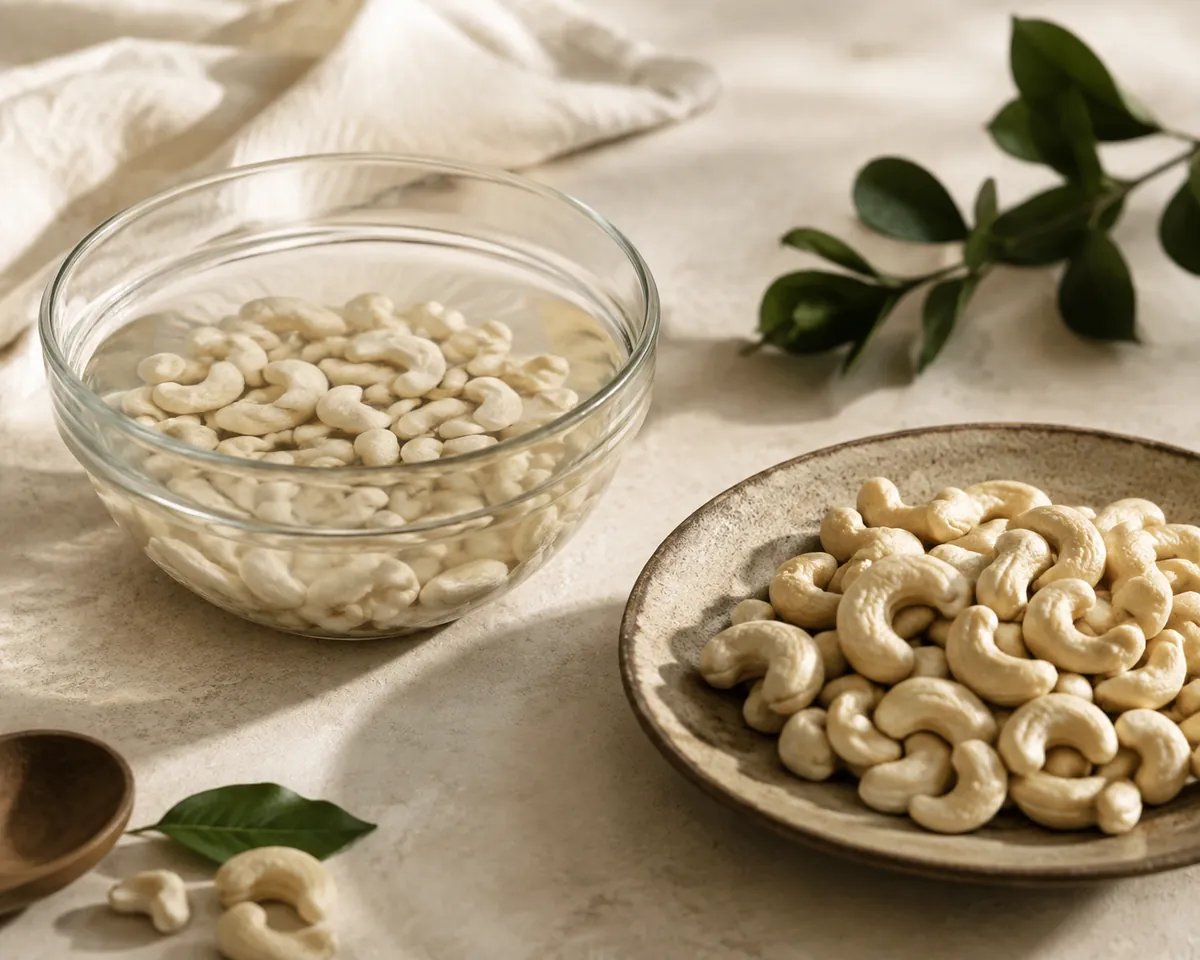
What to look for
- Raw
- Essential. Roasted nuts give a drink that tastes of roasted nut and separates faster
- Pieces or splits
- Cheaper than whole and identical once blended
- W-grades
- W240, W320 and so on are whole-kernel size grades. Irrelevant here
- Colour
- Pale ivory. Yellowing or grey nuts are old and taste faintly rancid
- Smell
- Sweet and faintly milky. Any sharpness means the oils have turned
Freshness outranks every grade on that list. Cashews are high in fat and turn rancid on a scale of months once the bag is open, and a rancid nut gives a drink with a sharp edge that sweetening only makes stranger.
The shelf price comes from the shell rather than from the tree. A cashew grows on the outside of a fruit, inside a shell lined with a caustic resin.
That resin is related to the irritant in poison ivy, so the kernel cannot simply be cracked free. It has to be driven off by roasting or steaming first, and much of the double-shelling that follows is still hand work.
Nuts sold as raw have already been heat-treated to remove it, which is a separate operation from roasting for flavour, and the labour behind that step is why cashew sits near the top of the plant drink shelf on price.
Soft foam that collapses from the edge inwards
Cashew sits in the middle of the plant drinks for coffee, and its ceiling is texture rather than flavour.
Its fat gives reasonable body and it foams better than almond, though nowhere near as well as soy milk or oat, since there is very little protein available to build a structure with.
It also splits less readily than almond, largely because the retained solids give the liquid more to hold on to; the mechanism is the one set out in why plant milk curdles, and a hot, fresh, lightly roasted espresso is the hardest test you can put it to.

The practical limit shows up in the pour. Cashew foam is soft and collapses from the edge inwards, so a poured pattern blurs within half a minute: perfectly adequate in a flat white, and no use for the rosetta a latte gets judged on.
Homemade is the weakest case of the lot, because it carries no stabiliser whatever and the solids drop out of the cup within a minute of pouring, separating even when nothing has curdled.
Cashew cream, and the reduction almond cannot manage
Take the same two ingredients and cut the water by three quarters, and the result stops behaving like a milk and starts behaving like something a kitchen has considerably more use for.
Cashew cream
- Cashews
- 100 g raw
- Soak
- 4 hours cold, or 20 minutes in just-boiled water
- Water
- 150 to 200 ml, rather than 700
- Blend
- 2 minutes at full speed, scraping down once
- Result
- Thick, pourable, close to single cream
- Keeps
- 4 days refrigerated. It thickens further as it stands

This is the version worth making for coffee. At cream strength it holds its own in a cup where the thinner milk simply vanishes, and its neutrality lightens the drink without flavouring it, which is the argument for keeping a small jar rather than a large bottle.
It also reduces in a pan, which almost nothing else in this category does. The retained solids concentrate rather than separating, so a sauce thickens instead of going watery.
That behaviour is the strongest practical case for cashew over almond. Where a recipe asks for concentrated dairy, evaporated milk is the thing being imitated, and cashew cream gets nearer to it than any other plant drink here.
Where the retained solids earn their place
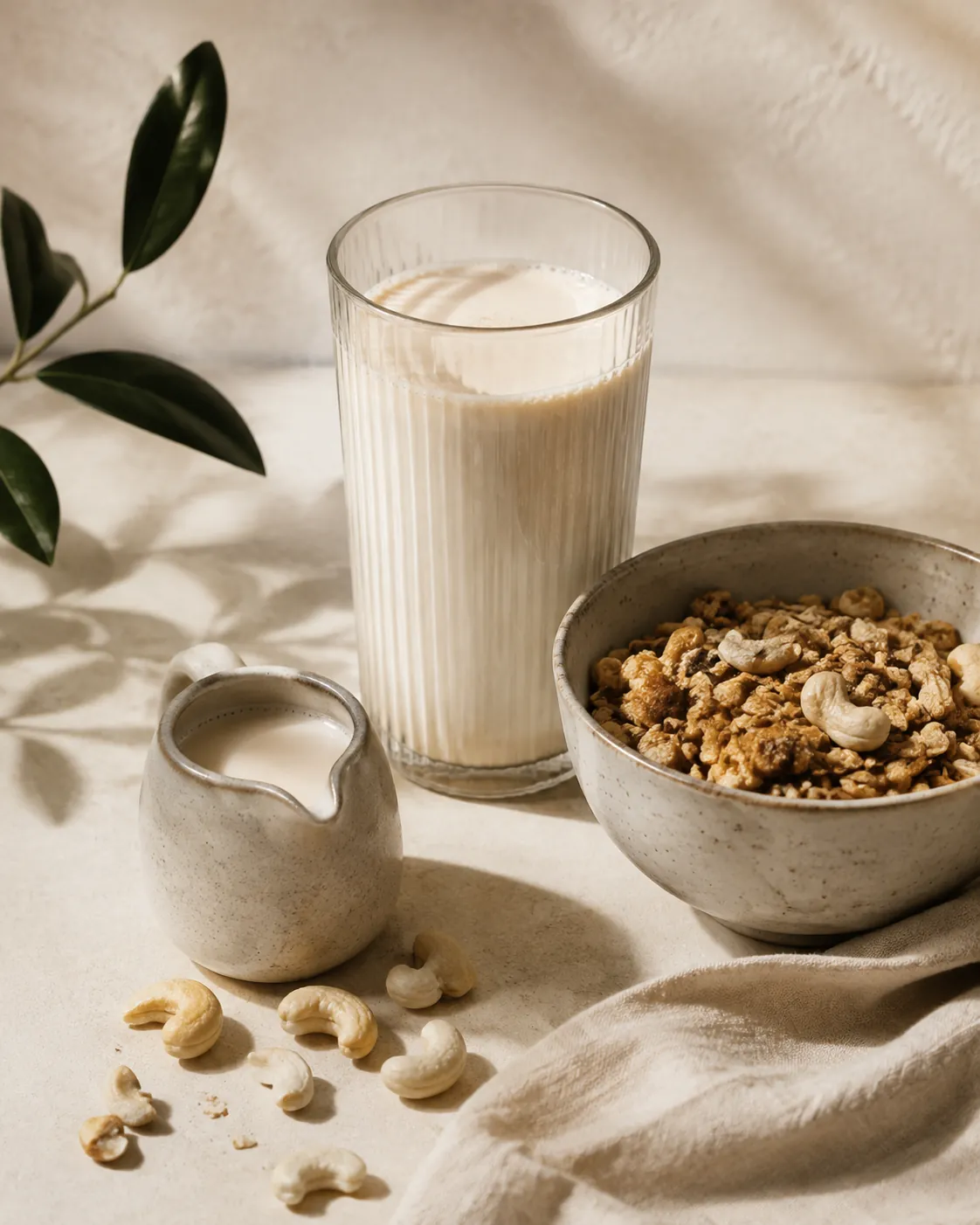
Body is the whole of cashew's case, so it suits the jobs where a drink is being asked to carry something. Cereal, smoothies and sauces all want that, and a delicate tea emphatically does not.
| Cashew | Almond | Oat | Soy | |
|---|---|---|---|---|
| Strained | Often not | Always | Usually | Always |
| Body | Full, from retained solids | Thin | Full | Full |
| Protein | Low | Very low | Low | High |
| Foams | Moderately | Poorly | Well | Best |
| Home-made | Easiest. No straining | Needs straining | Needs enzymes | Needs cooking |
In coffee
Adequate, and better than almond. Buy a barista version if it matters.
In smoothies
Very good. The body carries fruit without needing banana.
In cooking
Excellent. It thickens sauces where almond and rice cannot.
On cereal
Rich, and some find it too heavy for everyday use.
Plain
Mild and creamy, with a faint sweetness and almost no nuttiness.
The cooking line is what separates it from the rest of the nut shelf. A strained drink is mostly water and behaves like water in a pan, while cashew carries enough suspended material to thicken rather than to thin a sauce out.
Almond
The nut drink cashew is usually compared with. Thinner, strained, and it wastes most of the nut.
Set against that column, cashew is a texture product rather than a nutritional one, and anyone choosing a plant drink for protein is choosing the wrong nut. What to use instead of cashew milk turns almost entirely on which of those two things the carton was bought for.
Two to four per cent, and what fills the rest of the carton
The distance between a homemade jug and a bought carton comes down to arithmetic on the ingredients panel rather than to anything a factory does better.
Those four figures explain why the homemade version tastes so much more of cashew. A carton is largely water carrying a small quantity of nut paste, gums to hold that paste in suspension, and usually added oil standing in for the body the missing nuts would have supplied.
That is sound engineering, and it is a different product from the one that comes out of a blender.
Added calcium and vitamins appear on nearly every carton and are exactly that, added, since nothing in the nut supplies them at 2 per cent dilution. What cashew milk tastes like sets the commercial and homemade versions against each other on flavour rather than on the panel.
Settling, souring, and what freezes and what does not
Everything that makes homemade cashew milk good also makes it fragile. More suspended material means more to settle out and more to spoil, so it separates within the hour and sours faster than a strained drink of the same age would.
- Three to four days refrigerated, and trust the smell over the date.
- Shake hard before every pour. Separation is normal and reverses completely.
- Keep it in a sealed bottle in the body of the fridge, not the door.
- Do not freeze it for drinking; the emulsion breaks and will not come back.
- Commercial cartons keep far longer, because they are strained and stabilised.
A thick pale layer at the base of the bottle is the solids and nothing more. A sharp or sour smell is spoilage, and it arrives in days rather than weeks, which is what makes a large batch a false economy.
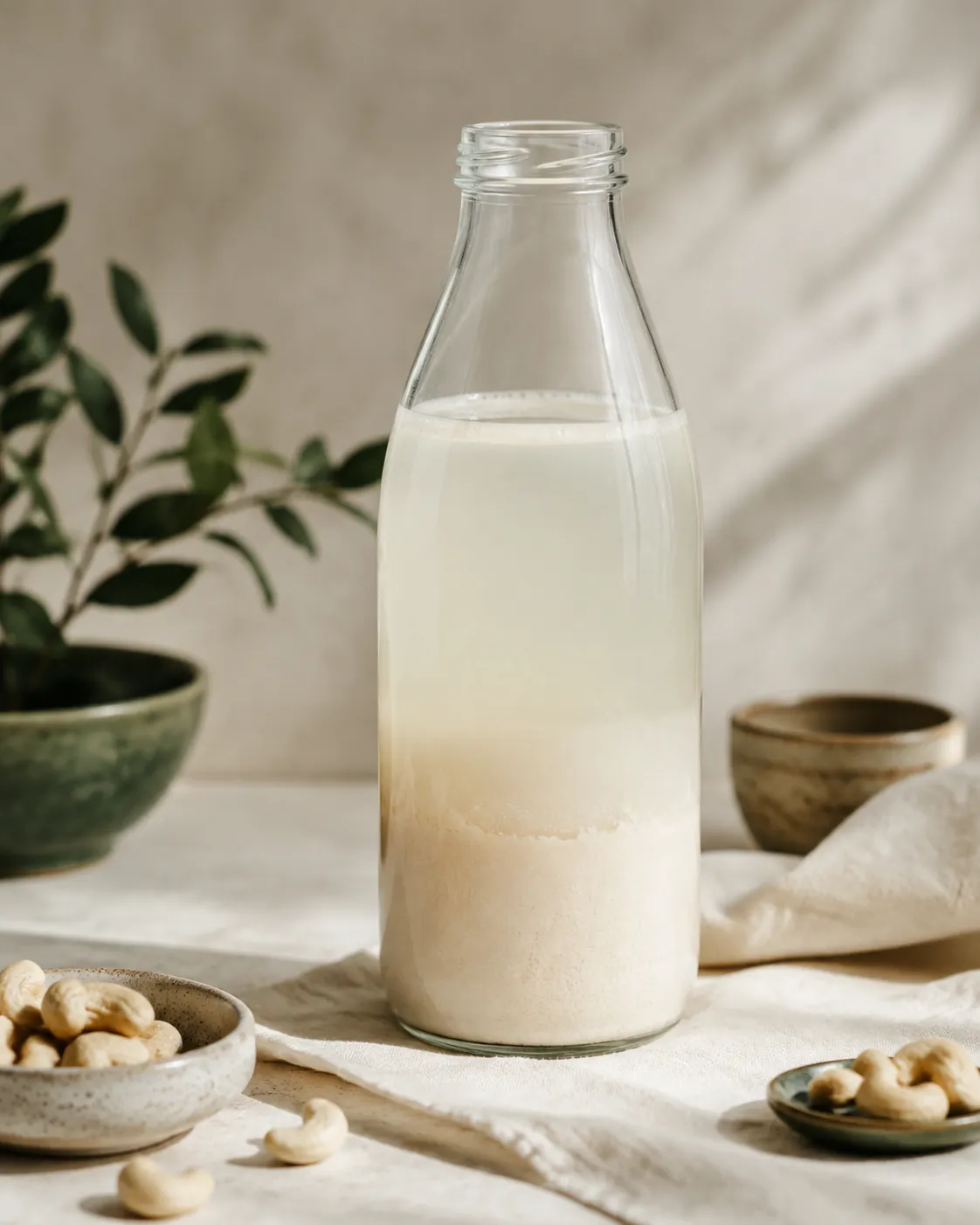
Freezing splits the question in two. Soaked cashews freeze perfectly and blended milk does not, so a bag of drained nuts in 100 g portions turns a fresh jug into ninety seconds of work rather than a four-hour plan, while a thawed jug has broken permanently and is fit only for cooking.
Cream is the exception, since at that thickness it behaves more like a paste than an emulsion, and it wants thawing in the fridge and beating smooth. Storing cashew milk keeps the homemade and carton timelines apart, which is necessary because they are nothing alike.
Salt, dates, and the one thing not to blend in
Plain cashew milk is mild rather than blank, and it answers to very small additions.
Salt
A pinch, always. Without it the drink tastes flat rather than sweet.
Dates
Two soft dates blended in gives sweetness and a faint caramel note, with no refined sugar.
Vanilla
A quarter teaspoon of extract. The most common commercial flavouring and it suits the nut.
Cocoa
10 g of cocoa powder makes a chocolate version that needs no straining and no heat.
Salt is the entry that is not optional. Without a pinch the drink reads flat and faintly chalky, and with one the nut comes forward without anything registering as salted at all.
Dates are the addition worth trying first, because they dissolve completely in a decent blender and give a sweetness with a caramel edge that granulated sugar cannot. Anything acidic goes in last or not at all, since citrus blended into cashew milk curdles it on contact, and a running blender is the worst possible way to introduce acid: it arrives everywhere at once and at full strength.
Making cashew milk treats the chocolate and date-sweetened versions as ratios of their own.
In matcha, in tea and in a cold blender
Outside coffee the ranking changes, because the qualities that hold cashew back in a steaming jug stop mattering the moment nothing is being stretched into foam.
In matcha it performs better than almond and about as well as oat, with enough body to carry the powder and little enough flavour to leave the tea audible. In black tea it is adequate without being a first choice, since tea wants something that reads as milk and cashew lightens the colour without giving the cup any weight.
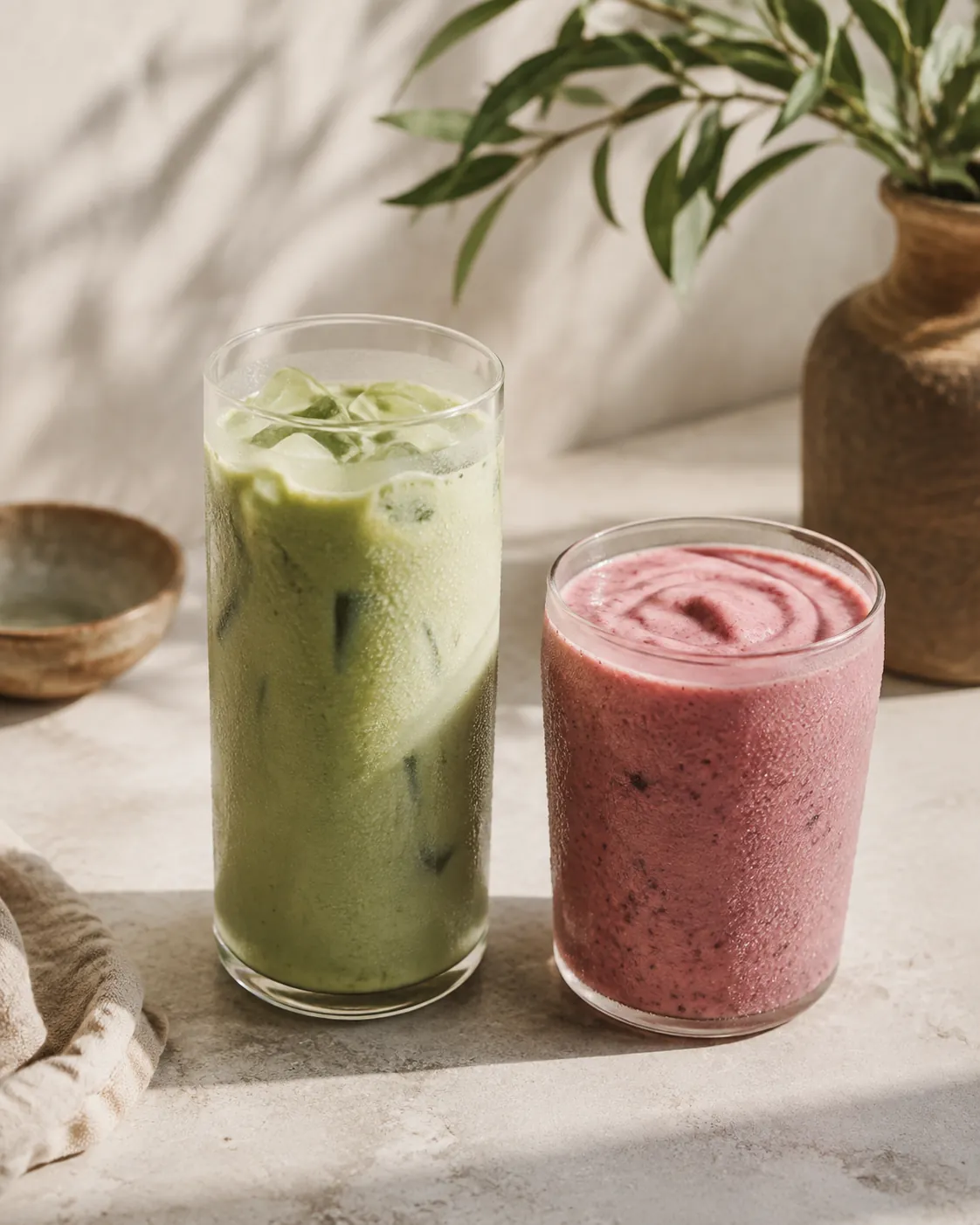
Cold blending is where it wins outright. A berry smoothie built on it needs no banana for texture, because the retained solids are already doing that job, and a green smoothie gets body without the sweetness that would argue with the leaves.
In both cases the nut is contributing structure rather than taste, which is the clearest statement of what this drink is for.
Common questions
Why does cashew milk not need straining?
Cashews are soft and low in fibre, so they break down almost completely when soaked and blended. Almonds leave skins and fibre as gritty particles, which is why almond milk must be strained and loses most of the nut.
Is cashew milk creamier than almond milk?
Yes, when unstrained. All the nut solids stay in the drink rather than being discarded with the pulp, so it has more body and fat. Commercial cashew milk is often strained and closer to almond in thinness.
Does cashew milk work in coffee?
Better than almond, less well than soy or oat. Its fat gives reasonable body but it has little protein to build foam with. A barista formulation with added stabilisers performs noticeably better.