What Is a Mocha? A Latte With Chocolate, and a Port's Name
A mocha is a latte with chocolate in it. The name comes from a Yemeni port, not from chocolate, which is a coincidence that has confused the drink for a century.
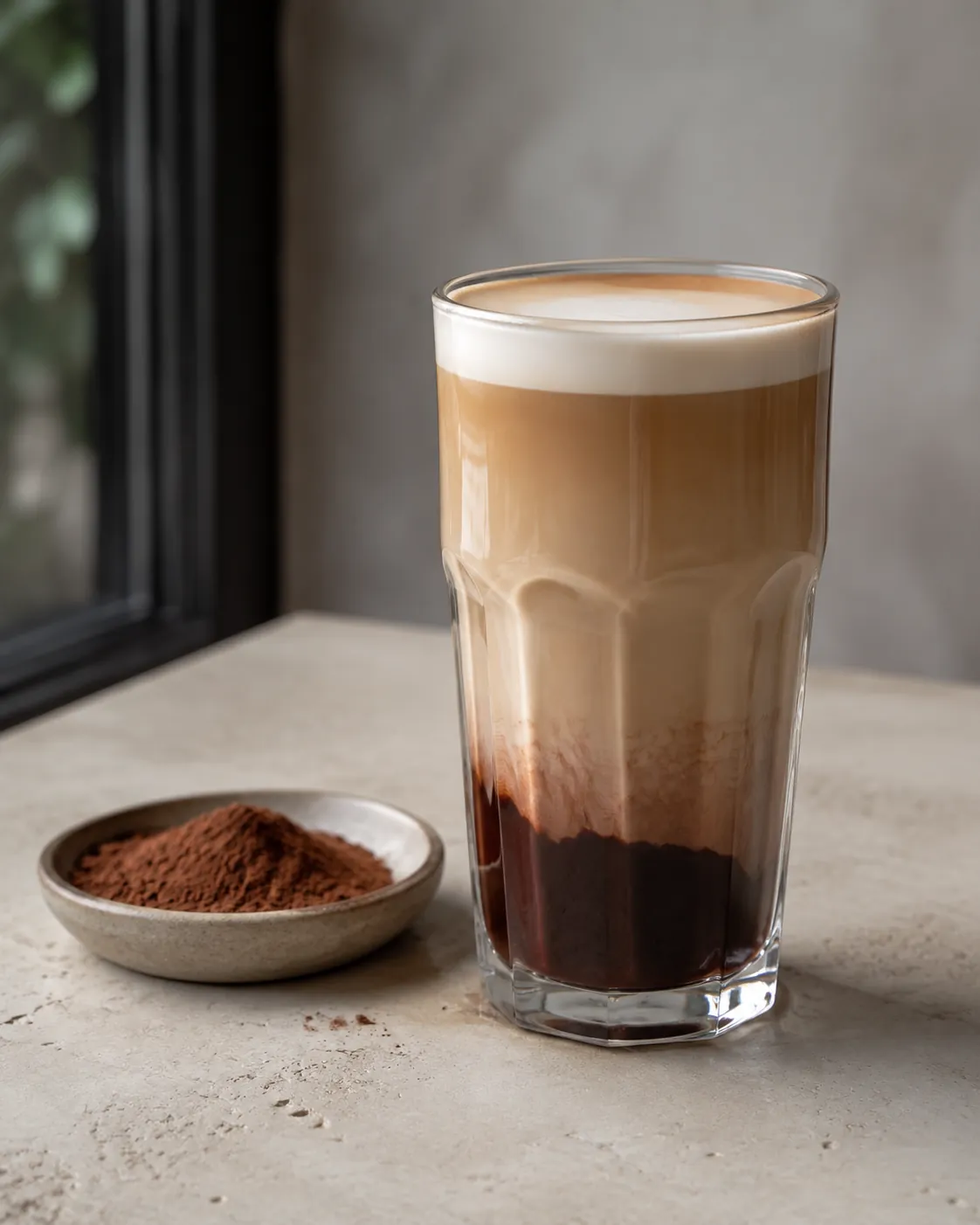
A mocha, or caffè mocha, is espresso combined with chocolate and steamed milk. In proportion it sits close to a latte, with chocolate taking the place of some of the milk.
The name is a historical accident.
Mokha was a Yemeni port that shipped coffee for centuries, and its beans had a naturally chocolatey character. The drink was named for the flavour association, not for containing chocolate.
A mocha at a glance
- Built from
- A double espresso, chocolate, and steamed milk
- Chocolate
- 10 to 15 g of cocoa, or 30 ml of syrup or ganache
- Milk
- 180 to 220 ml, steamed to 60 to 65 C
- Proportions
- Close to a latte, with chocolate displacing some of the milk
- The one rule
- Cocoa is pasted with the hot espresso, never stirred into milk
- Caffeine
- Whatever the shots carry. The cocoa adds very little
- Named after
- Mokha, a Yemeni port, for a flavour note rather than an ingredient
Powder, syrup or ganache
Which form the chocolate arrives in decides the drink more than the coffee does, and the three formats are not interchangeable.
| Cocoa powder | Chocolate syrup | Melted chocolate or ganache | |
|---|---|---|---|
| Richness | Lowest. No cocoa butter | Low to moderate | Highest |
| Sweetness | You control it | Fixed and usually high | You control it |
| Dissolves | Needs a paste first | Instantly | Needs warming |
| Texture | Can be thin or gritty | Smooth, slightly syrupy | Thick and coating |
| Used by | Home and budget cafés | Most chain cafés | Specialty cafés |
Cocoa powder will not disperse in milk. It has to be made into a paste with the hot espresso first, exactly as when making hot cocoa, or it stays as lumps on the surface and grit at the bottom. Ganache gives the best result and takes the most effort: equal parts chocolate and hot cream melted together, which keeps a week refrigerated and makes a noticeably richer drink than syrup does.
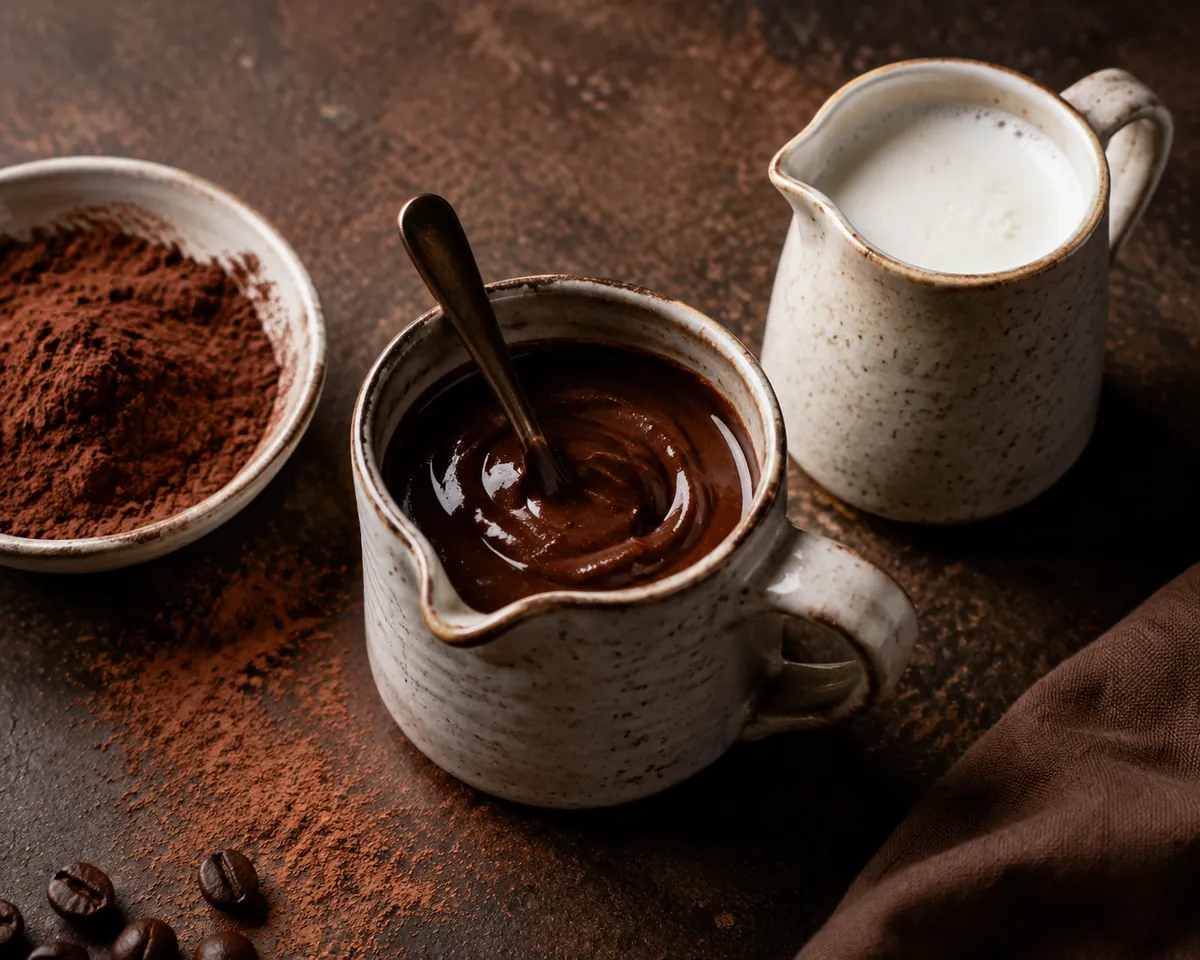
If the format is powder, the type of powder is the next decision, and it mirrors the baking question without the baking consequences. Dutch-process cocoa has been alkalised, so it wets more readily and gives a smoother, darker, mellower cup; it is the easier choice and what most cafés use.
Natural cocoa is sharper and fruitier, and its acidity can read as sour against milk, which makes it the more interesting mocha and the less reliable one. Neither raises a leavening question in a cup, so unlike in a cake the choice here is purely about flavour and about how the milk will behave.
Pasting it with the shot
Order of operations decides whether this works, and it is the same order as any drink built on a powder.
A standard mocha
- Espresso
- A double, 36 to 40 g
- Cocoa powder
- 10 to 15 g, or 30 ml of syrup or ganache
- Sugar
- To taste, only if using unsweetened cocoa
- Method
- Paste the cocoa with the hot espresso until smooth, then add milk
- Milk
- 180 to 220 ml, steamed to 60 to 65 C
The mechanism is worth holding on to, because it also explains several failures further down this page. Cocoa particles are hydrophobic on the outside, and milk's fat and protein coat them before water ever reaches the starch inside, which is why a lump in a mocha survives a spoon indefinitely.
A small volume of very hot, fat-free liquid wets them all at once instead. Steam the milk after the paste is made, not before, so the shot is still hot enough to do that work, and pour it in as you would for a latte, which making a mocha sets out step by step.
Cocoa percentage, chips and couverture
The formats above cover how the chocolate gets in. This is what to keep in the cupboard for it.
The dessert end of the same idea is an affogato, where the shot goes over ice cream instead of into chocolate. For a mocha built on real chocolate, a 60 to 70 per cent dark bar is the working range.
Below 55 per cent there is enough sugar in the bar that the drink turns into a dessert before you have added any of your own; above 75 the cocoa solids start fighting the coffee's bitterness rather than sitting alongside it, and the result tastes drier rather than more chocolatey.
What to look for
- Cocoa percentage
- 60 to 70 for drinking. It is the total of solids and butter, not a quality score
- Ingredients
- Cocoa mass, cocoa butter, sugar. Anything with vegetable fat behaves badly when melted
- Lecithin
- Fine, and it helps the chocolate melt smoothly into the espresso
- Couverture
- Higher cocoa butter, made for melting. The best choice if you can find it
- Chocolate chips
- Formulated to hold their shape under heat, which is the opposite of what you want
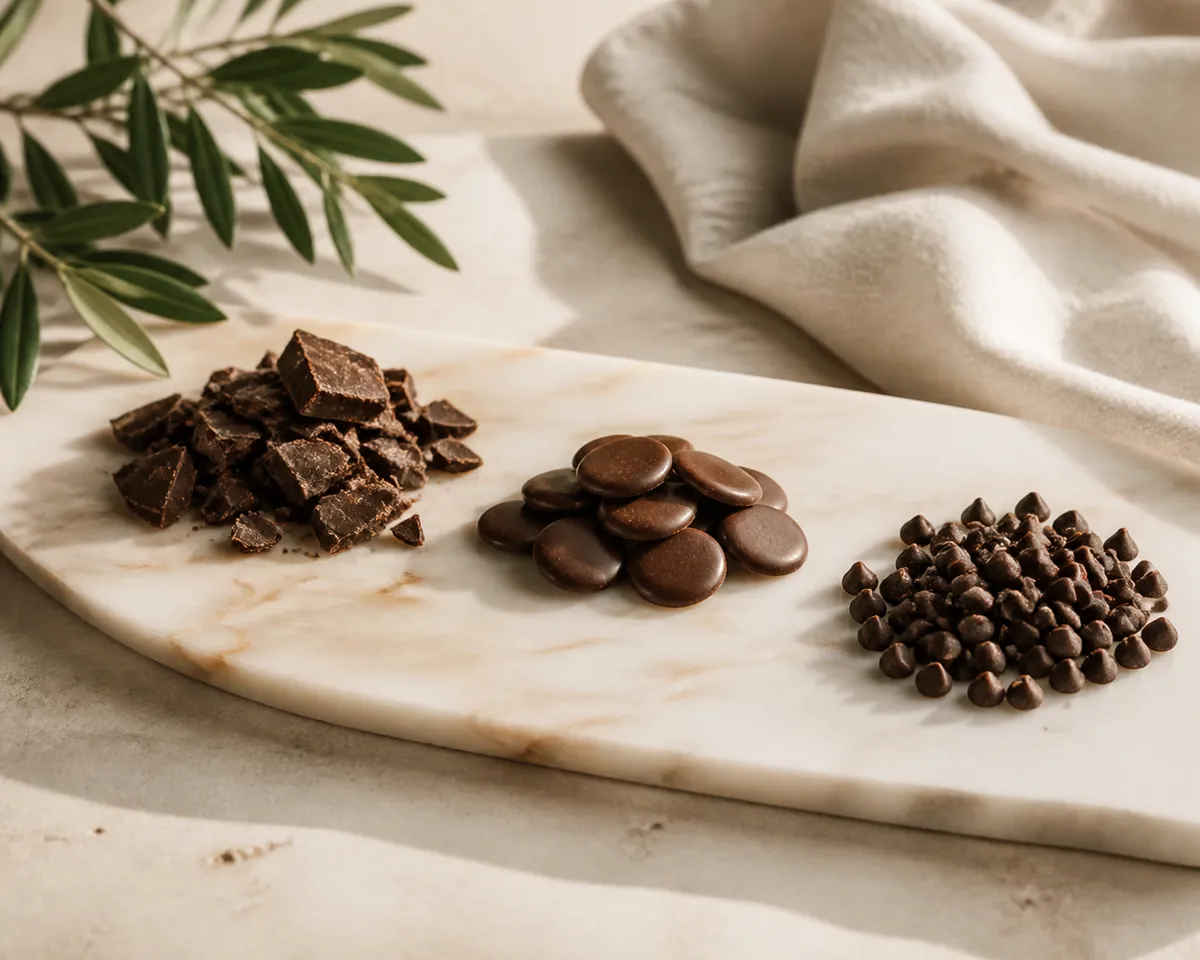
Chocolate chips are the common mistake and the reason a home mocha sometimes refuses to go smooth. They are made with less cocoa butter, and often a stabiliser, specifically so that they hold their shape in a hot oven, which is precisely the property you do not want in a cup.
Couverture is the opposite formulation and melts into a hot shot almost on contact.
Mochaccino, white mocha and what sits either side
The family around a mocha is smaller than the latte family, and the boundaries at its edges are the ones worth knowing before ordering.
Standard mocha
Espresso, chocolate, steamed milk, thin foam. Roughly latte proportions.
Mochaccino
Loosely, a mocha with cappuccino proportions and thicker foam. Not standardised.
White mocha
Made with white chocolate, so no cocoa solids and much sweeter.
Iced mocha
Cold milk, so the chocolate must be a syrup or a pre-made paste.
Affogato-style
Espresso poured over chocolate ice cream. A different drink entirely.
The white version is the outlier, since white chocolate contains cocoa butter and no cocoa solids at all, so it brings sweetness and fat without any of the bitterness that balances a normal mocha; it behaves in the cup much more like white hot chocolate than like the drink it is named after.
| Mocha | Hot chocolate | Latte | Affogato | |
|---|---|---|---|---|
| Coffee | A double shot | None | A double shot | A single shot |
| Chocolate | 10 to 15 g | 25 to 40 g | None | None, unless the ice cream has it |
| Milk | 180 to 220 ml steamed | 200 ml, often with cream | 180 to 220 ml steamed | None |
| Reads as | Coffee with chocolate | Chocolate | Coffee with milk | Coffee and dessert |
| Sweetness | Moderate to high | High | Low unless added | High |
A mocha is a coffee drink and a hot chocolate is not, which sounds obvious and settles most disappointment with either. Someone who wanted chocolate and ordered a mocha got a coffee; someone who wanted coffee and ordered a hot chocolate got a pudding.
Why the chain version reads as dessert
Most disappointing mochas share a single cause, and it is a formulation decision rather than a mistake by whoever made the drink.
Chain versions are built on sweetened syrup, which fixes the chocolate quantity and the sugar in one movement of the pump. There is no way to ask for more chocolate without also asking for more sugar, and the usual request, a mocha with less syrup, makes the drink weaker in chocolate as well as less sweet.
That is why the request so rarely produces what the person wanted.
Unsweetened cocoa separates the two variables completely. A mocha built on 15 g of cocoa and only a little sugar tastes strongly of chocolate without being a pudding, which is what most people who say they dislike mochas are actually objecting to.
If sweetness is wanted at all, adding it as simple syrup keeps the decision separate from the chocolate one, and how a mocha tastes describes what the unsweetened version leaves you with.
Two stimulants, and the larger one is not caffeine
A mocha is the only drink on this site where the caffeine arrives from two ingredients, and the second contributes far less than people assume.
What the cocoa does bring in quantity is theobromine, a related but milder compound that accounts for much of chocolate's reputation and is regularly mistaken for caffeine on a label. The practical figure is therefore the shot count, exactly as for any other espresso drink, and a mocha built on a single shot sits below a mug of filter coffee despite tasting far richer than one.
The arithmetic per cup is set out in mocha caffeine.
Moka pot, AeroPress and a very strong filter
What a mocha actually needs is concentrated coffee rather than espresso specifically, which opens it up to any brewer that makes something small and strong.
How close each brewer gets to a shot
- Moka potSmall, intense, and hot enough to paste cocoa properly
- AeroPress, brewed short18 g to 80 ml. Cleaner, and still concentrated
- Strong filter80 g per litre, 120 ml in the cup, milk cut to 150 ml
- Filter at normal strengthToo dilute. The drink ends up watery whatever you do
A moka pot is the closest match. It produces a small volume of intense coffee, hot enough to paste cocoa properly, and the slightly bitter edge it carries is well covered by chocolate.
An AeroPress brewed short works too and gives a cleaner result: use 18 g of coffee to 80 ml of water and treat the output as you would a double shot.
Strong filter coffee is the weakest of the three and still workable, brewed at around 80 g per litre, with 120 ml of it in the cup and the milk cut back to 150 ml so the drink does not end up watery, which is the one case where a pour-over is being asked to do something it was not designed for.
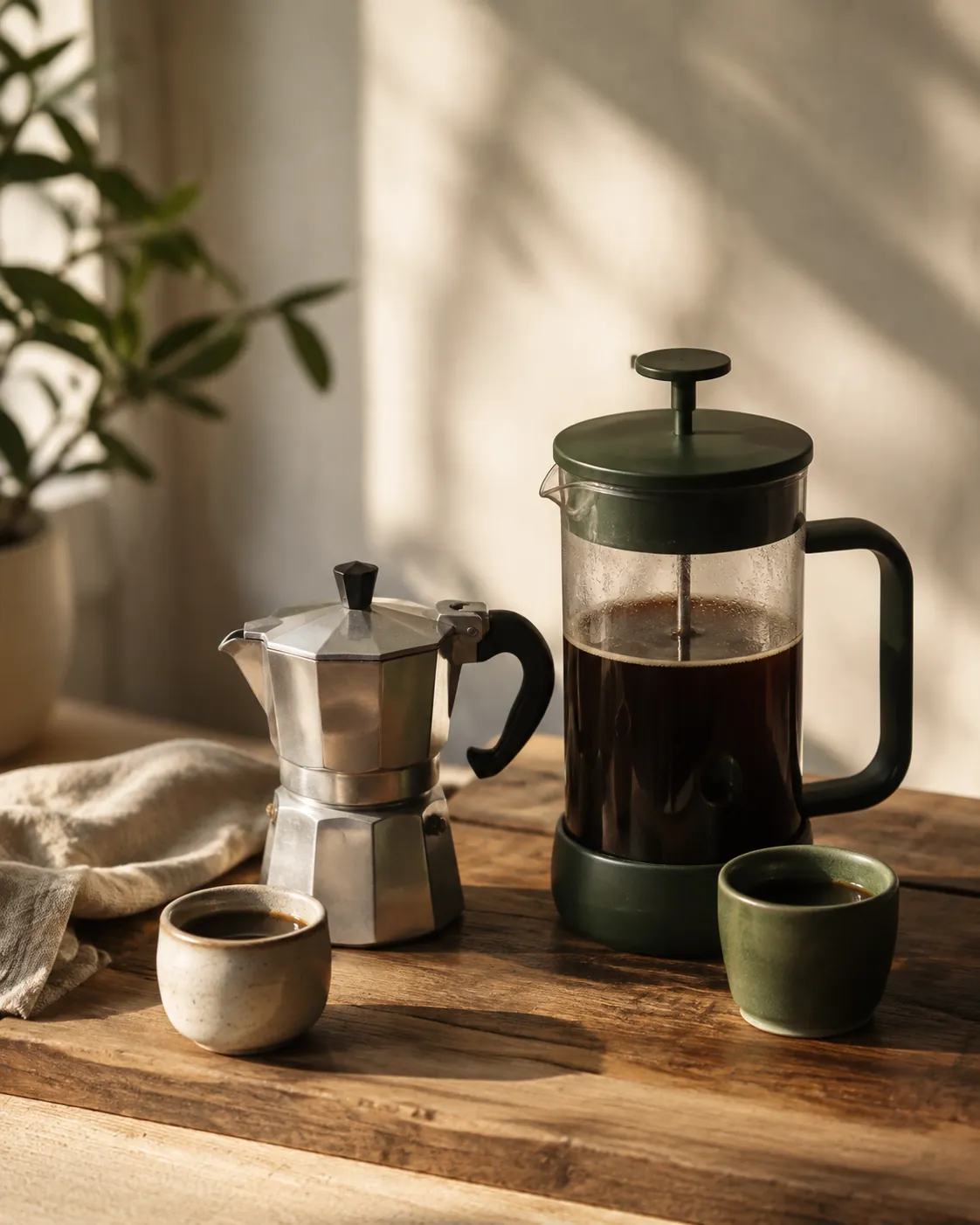
What none of them gives is the crema and the syrupy body that make a café mocha feel rich before the chocolate is tasted at all. The flavour transfers and the texture does not, and no amount of chocolate compensates, which is the argument for an espresso machine if this is a drink you make often.
Cocoa acid, and the plant drinks that split
Cocoa is acidic, which makes a mocha harder on plant drinks than a plain latte is, and the espresso underneath is already pushing in the same direction.
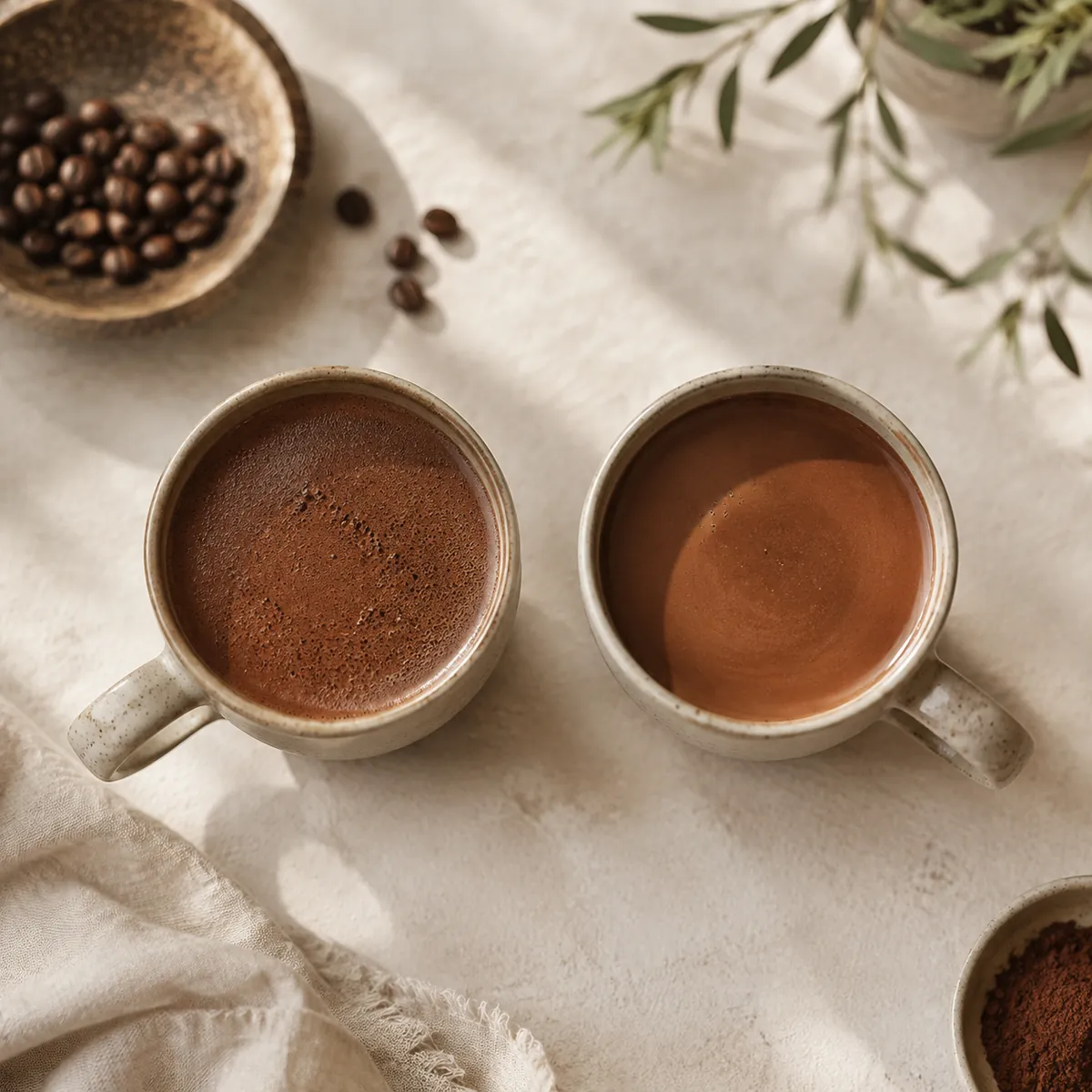
Natural cocoa in particular can drop the pH of the mixture far enough to destabilise an unstabilised plant drink, and the proteins then clump into the grain you can see at the edge of the cup. That is the mechanism described in why plant milk curdles, with a second acid stacked on top of the first.
Whole dairy
The reference. Enough fat and protein to carry cocoa without splitting.
Barista oat
The best plant option. Stabilisers and added oil handle both acids.
Almond
The most likely to split, and the thinnest against a rich drink.
Switching to Dutch-process cocoa solves most plant-drink splitting on its own, because alkalisation is precisely the removal of that acidity, and it costs nothing but a slightly mellower flavour. A barista-formulated oat drink is the other reliable route, and between them they cover almost every case; where a cup still goes grainy, mocha problems works through the remaining causes.
Cold, and the order that keeps it smooth
An iced mocha is not the hot one poured over ice, and treating it as though it were is why so many of them are gritty.
Chocolate needs heat to disperse and a finished cold drink has none, so the paste has to be made hot, with the espresso, and then chilled before any cold milk comes near it. Skipping the chilling step gives a warm, thin drink that melts the ice on contact and dilutes itself before it reaches the table.
An iced mocha
- Espresso
- A double, pulled over the cocoa
- Cocoa
- 12 g, pasted into the hot shot until glossy
- Chill
- Stand the paste in the fridge, or over ice, until cold
- Milk
- 200 ml, cold
- Ice
- Fill the glass, and add it last
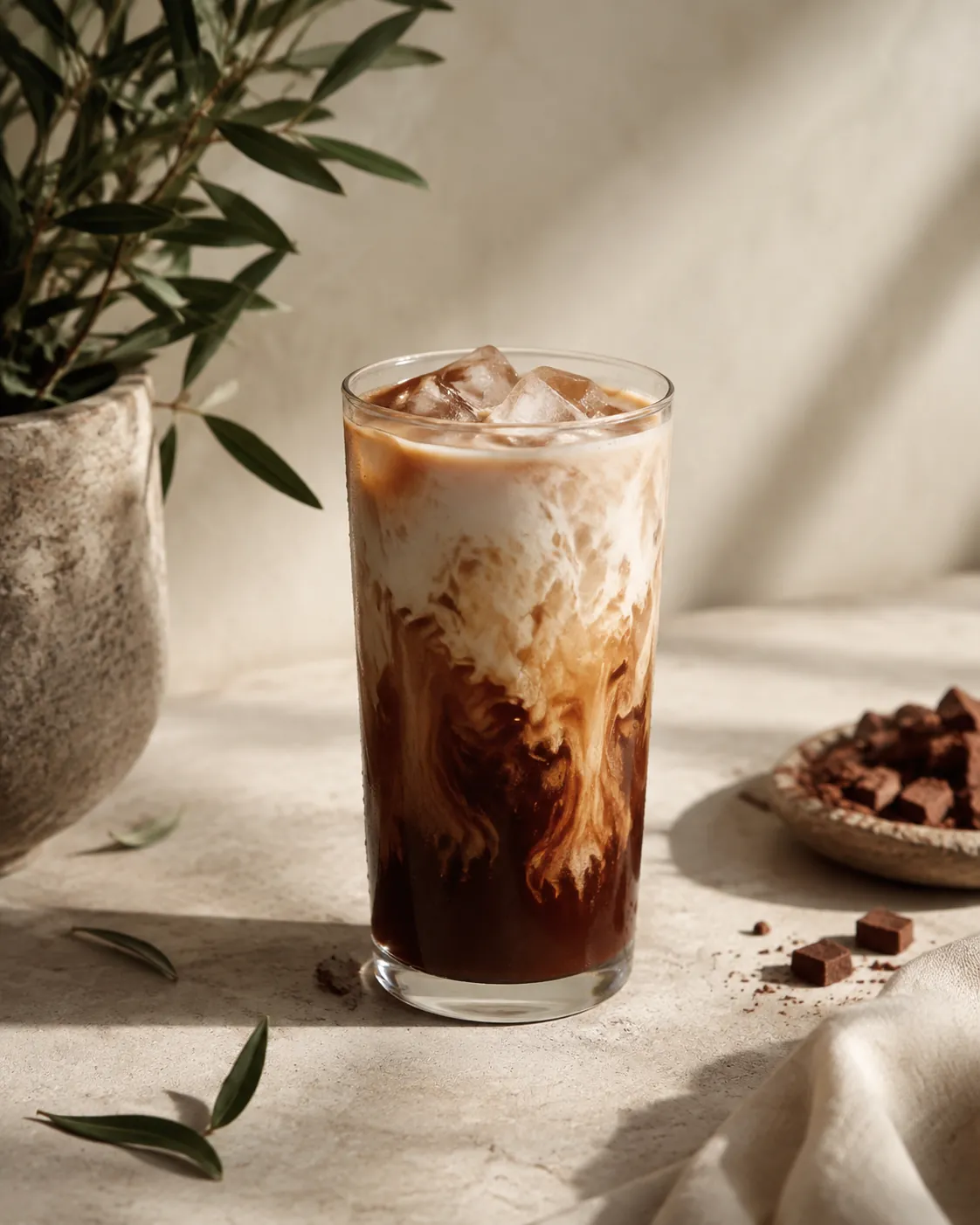
A syrup or a ganache skips the chilling entirely, which is most of why cafés use them for cold drinks. Both are already liquid and already emulsified, so they disperse into cold milk without any help.
Add the ice last, after the milk, so that it chills the finished drink rather than diluting the paste while you are still building it, and drink it soon, since storing a mocha is mostly a list of reasons not to.
A ganache base, and what goes on top
Pasting cocoa into every single shot is the part that stops people making these at home, and it can be done once a week instead.
Mocha base, about 300 ml
- Dark chocolate
- 150 g, 60 to 70 per cent, chopped
- Cream or whole milk
- 150 ml
- Salt
- A few grains
- Method
- Heat the cream to just below a simmer, pour over the chocolate, stand 2 minutes, stir smooth
- Keeps
- A week refrigerated. It sets firm and softens in a warm cup
- Per drink
- 30 to 40 ml
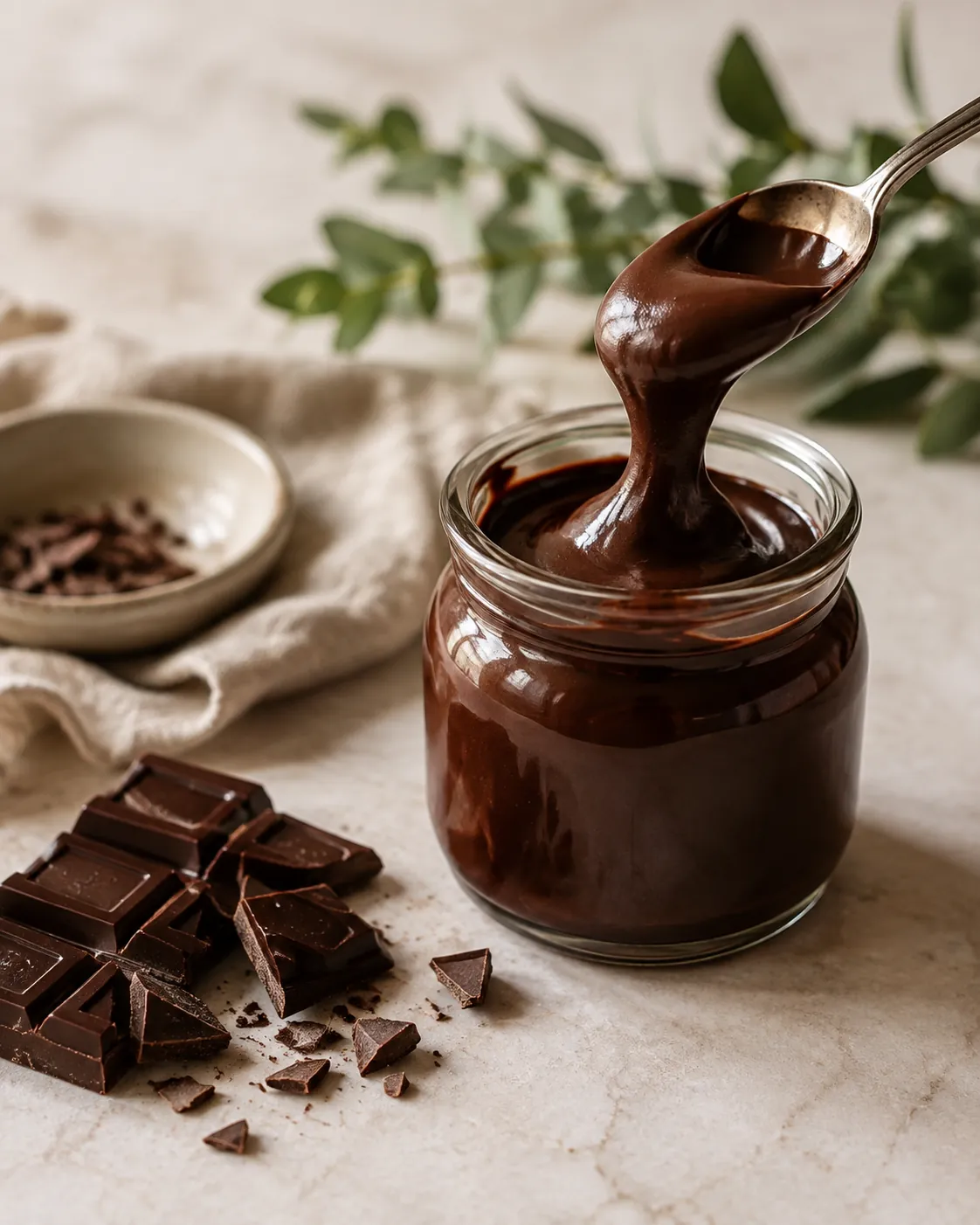
That is a ganache, and it is what a good café is using. It dissolves into hot espresso in seconds, mixes into cold milk without help, and it takes the sweetness decision out of the chocolate decision permanently.
A cocoa-powder version keeps just as well and costs less: whisk 100 g of cocoa with 200 ml of water and 100 g of sugar, simmer two minutes until it thickens slightly, and bottle it.
Whipped cream
Insulates and sweetens. It also means the first third of the drink is cream rather than mocha.
A few grains of salt
The most useful addition. It suppresses bitterness and makes the chocolate read as more chocolatey.
Cocoa dust
Aroma on the first sip and nothing after. A garnish.
Marshmallow
Melts into the surface and adds sugar to a drink that usually has enough.
Salt is the one worth adopting as standard, and a few grains of sea salt in the ganache is the easiest place to put it. The quantity is well below anything that would taste salty, and the effect on a chocolate drink is larger than on almost anything else you could add it to.
The port of Mokha
The port explains the name, and the word still turns up on coffee bags meaning something else again.
Mokha, on the Red Sea coast of Yemen, was the main export point for coffee from the fifteenth to the seventeenth century, when Yemen was effectively the world's only source. Beans leaving it were simply called mocha, after the harbour rather than after any flavour.
Those beans did have a distinctive character, though: winey, fruity, and with a pronounced chocolate note that is unusual in an unblended coffee, and it is that note which attached the word to chocolate in the first place.
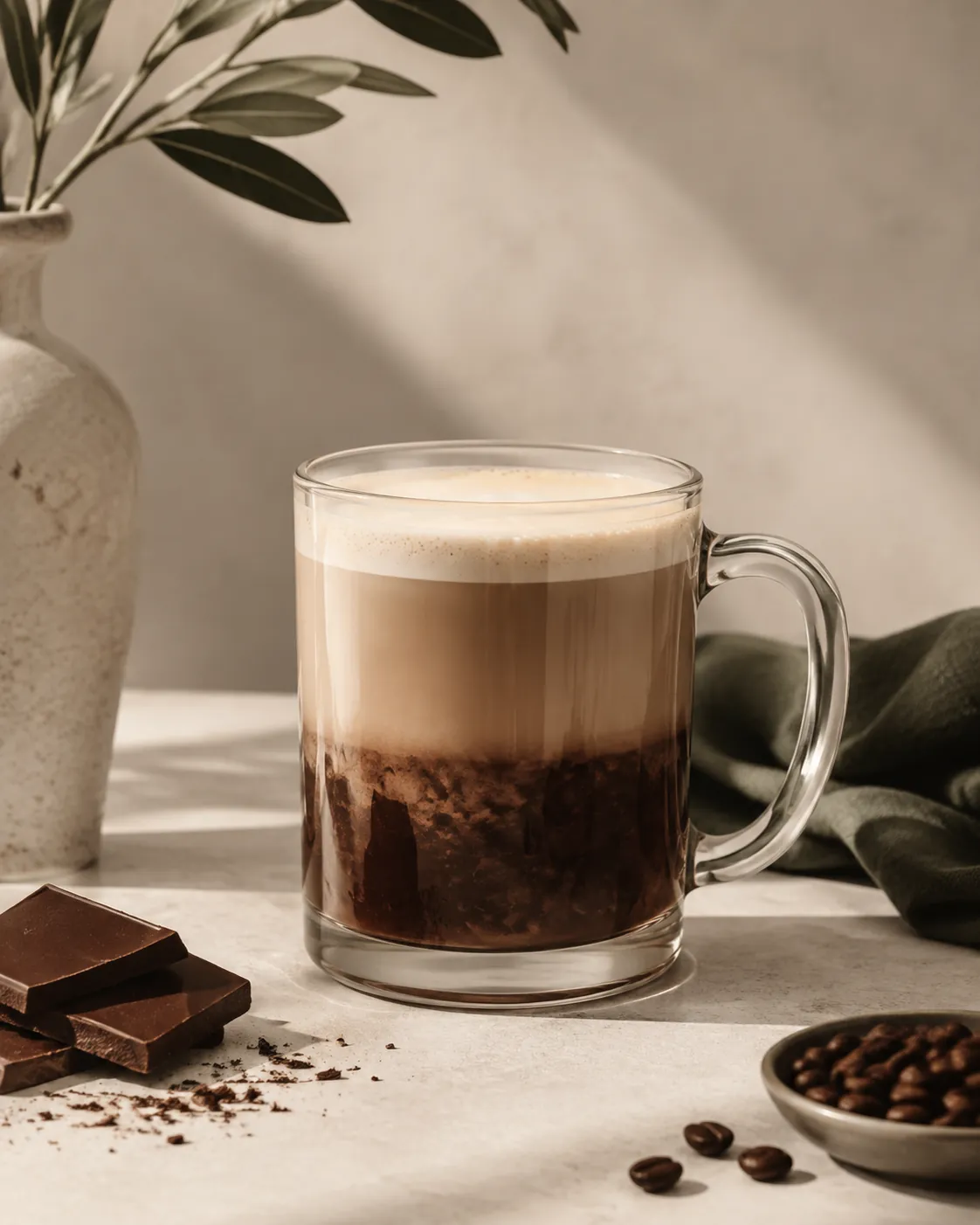
Mocha-Java, still sold today, is the oldest known coffee blend and was originally exactly what its name says: Yemeni beans blended with Indonesian ones. Most bags carrying the name now contain neither, and use the word as a flavour description, which is worth knowing before buying one expecting either half of the original.
Common questions
Why is it called a mocha if the name has nothing to do with chocolate?
Mokha was a Yemeni port that shipped coffee for centuries, and its beans had a naturally chocolatey character. The drink was named for that flavour association, and the coincidence has confused things ever since.
Why is my mocha lumpy or gritty?
Cocoa powder will not disperse in milk. It must be pasted with the hot espresso first, which is small in volume and free of the fat and protein that prevent cocoa wetting properly. Adding cocoa to steamed milk always leaves lumps.
Why are café mochas so sweet?
They are usually built on sweetened chocolate syrup, so chocolate quantity and sugar are the same decision. Using unsweetened cocoa separates the two, letting you have a strongly chocolatey drink that is not a dessert.