Drip coffee vs Espresso
Drip Coffee vs Espresso: Gravity Against Nine Bars
Drip coffee is gravity and espresso is pressure, and the four minutes one gets against the twenty-five seconds the other gets explains the grind, the crema, the tolerance for error and the price of the counter space. On strength the two answers disagree, and both are correct.
Drip coffee is percolation: hot water falls through a flat bed of medium grounds for four to six minutes at about 60 g per litre, and the paper holds back the oils to give a clear cup near 1.2 per cent dissolved solids. Espresso is pressure: 18 to 20 g of very fine grounds yield 36 to 40 g of liquid at roughly nine bars in 25 to 30 seconds, with the oils emulsified and carbon dioxide forced into solution as crema. Espresso wins on concentration and drip wins per serving, at about 95 mg of caffeine per 8 fl oz against 63 mg a shot.
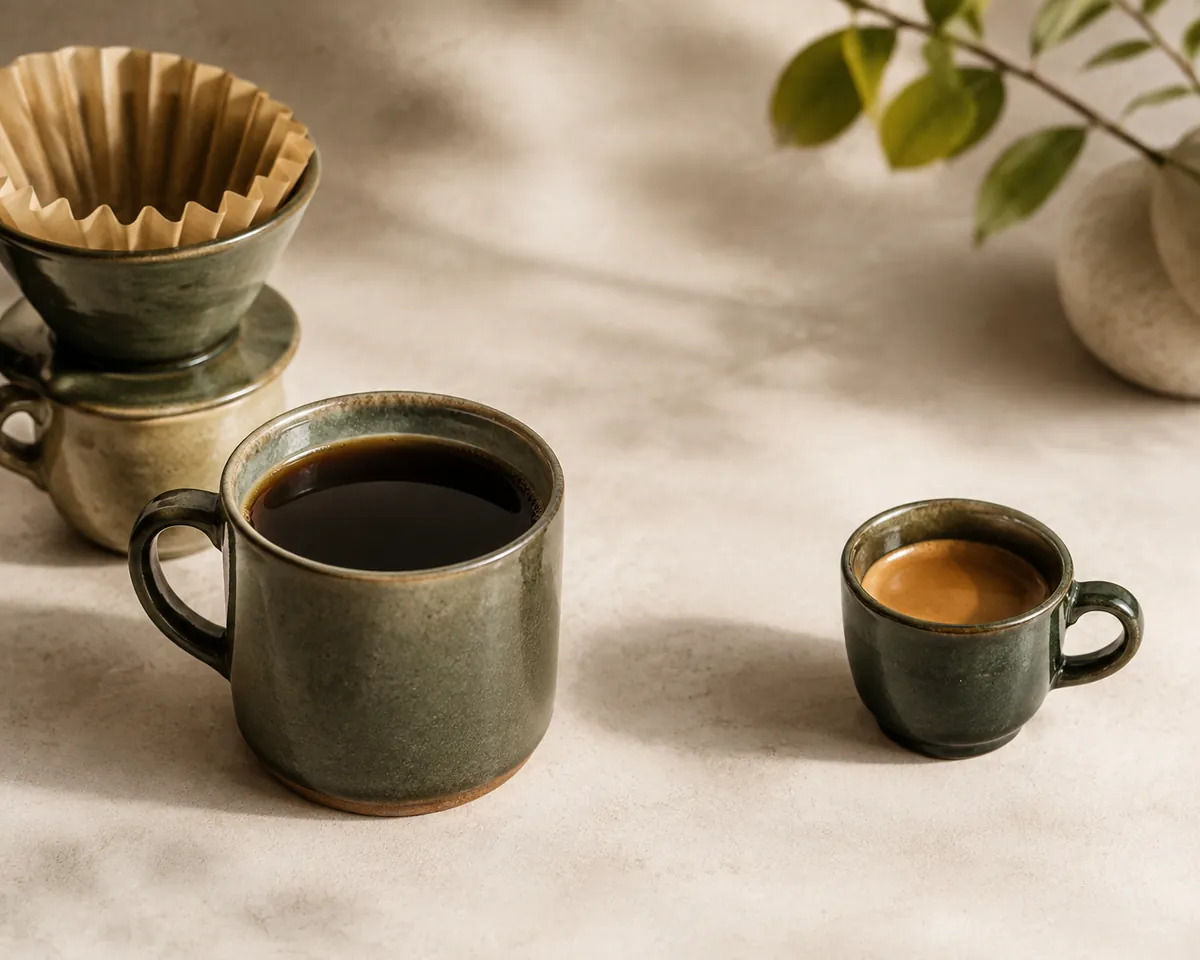
Side by side
| Attribute | Drip coffee | Espresso |
|---|---|---|
| How the water moves | Falls through a flat bed under gravity | Forced through a compressed puck at about 9 bars |
| Contact time | Four to six minutes for a full pot | 25 to 30 seconds from the pump starting |
| Grind | Medium, roughly caster sugar, and forgiving | Fine, roughly table salt, and unforgiving |
| Ratio | About 60 g per litre, nearer 1:16 | 18 to 20 g dose to 36 to 40 g yield, about 1:2 |
| Surface of the cup | Clear, with the oils held back by paper | Dense hazel crema, with the oils emulsified in |
| Caffeine | Near 95 mg per 8 fl oz, USDA figure | Near 63 mg in a single 30 ml shot |
| What it survives next | Dilutes away under milk | Holds its shape under 200 ml of steamed milk |
| Kit that decides the result | The machine, plus dose, grind and water | The grinder, ahead of the machine itself |
Gravity against nine bars
Two coffees, one bean, and two entirely different jobs asked of the water. That is the whole comparison, and every axis below is a consequence of it.
Drip coffee lets hot water fall through a flat bed of medium grounds under nothing but its own weight, pass once, and drain into a pot. Nobody is pushing.
The bed is shallow, the paper holds back the oils, and the result is around a litre of clear liquid at roughly 1.2 per cent dissolved solids.
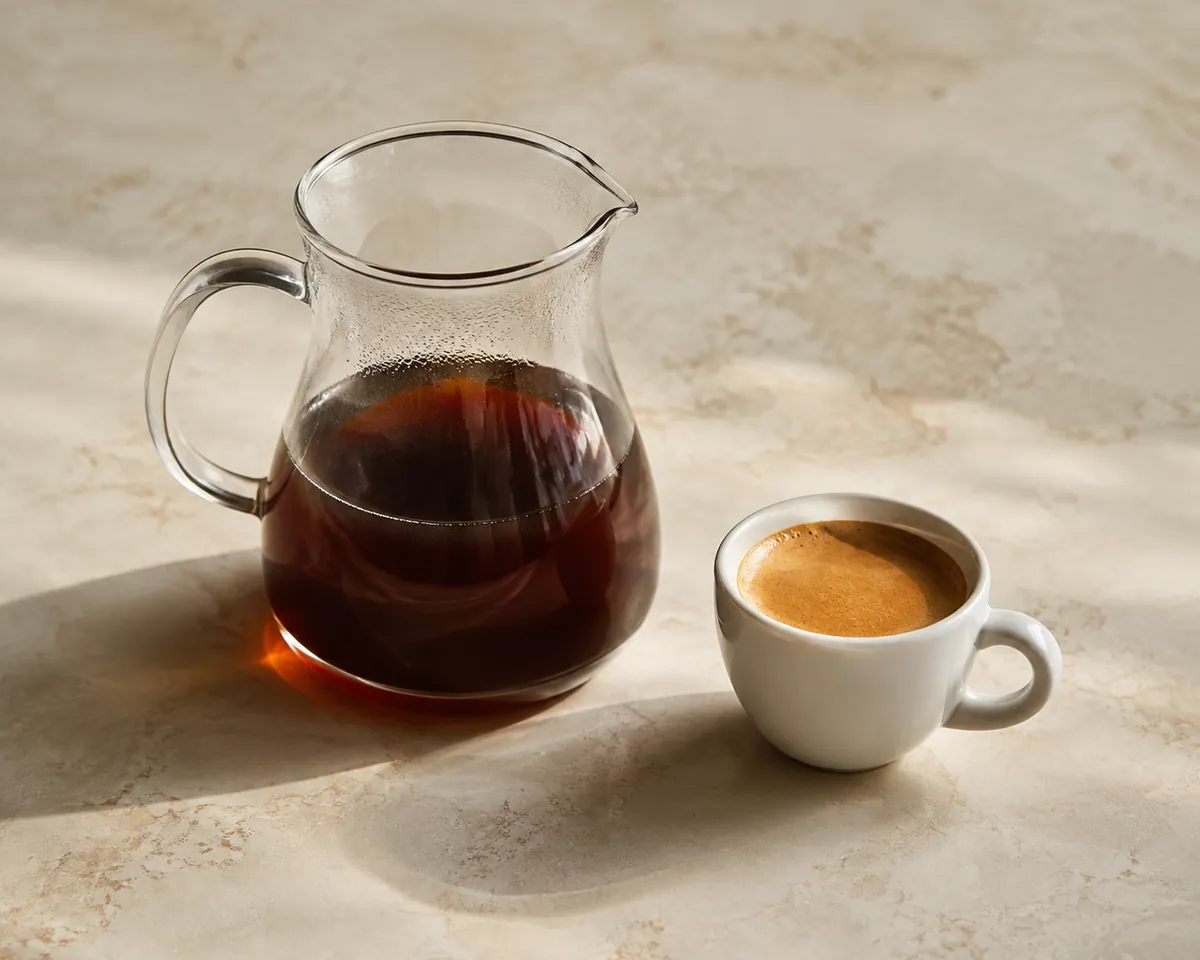
Espresso forces water through a compressed puck of very fine grounds at about nine bars for 25 to 30 seconds. Everything about it is compressed as well: the time, the volume, the grind and the tolerance for error.
The two belong to different brewing families, which is worth stating before anything else. One is percolation, the same family as a pour-over cone, and the other is pressure, the family a moka pot sits in at a fifth of the force.
These are not two settings of one dial.
Why the water gets four minutes in one and twenty-five seconds in the other
Contact time is the root variable, and almost every difference further down is downstream of it.
A full drip pot runs four to six minutes. Water enters at the top of the bed, works down through medium grounds and leaves, and the coffee has the whole of that window to give up its soluble material at an unhurried rate.
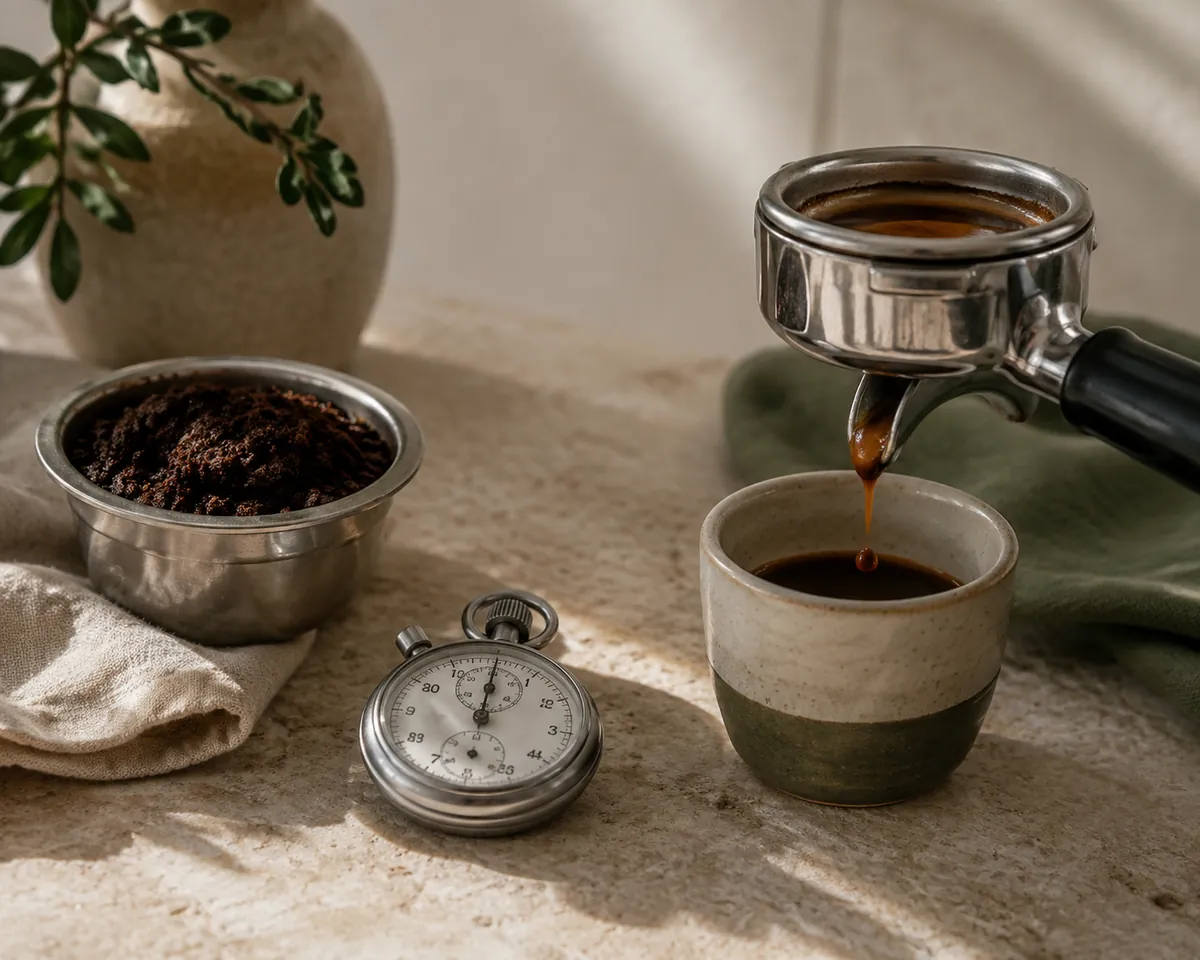
Espresso has under half a minute. The pump starts, the shot runs, and by the time a filter bed would still be blooming the cup is finished and the puck is spent.
What each method has to solve
- DripPlenty of time, so the job is spreading water evenly over a wide flat bed
- EspressoAlmost no time, so the job is presenting enough surface area to extract at all
- Drip, the failureWater finds one route and races out, leaving most of the bed dry
- Espresso, the failureWater finds one route and races out, in a quarter of a minute
- BothThe same fault, at two completely different speeds
The consequence is that everything in an espresso is pushed to an extreme to compensate for the missing minutes. Neither method wins on time, because they are not trying to be fast or slow, they are trying to be complete.
What the short window really buys is a small volume of very concentrated liquid, and what the long window buys is a pot.
What the grind has to do in each
Grind size is where the time difference becomes visible on the counter.
Drip wants a medium grind, roughly the texture of caster sugar, and it tolerates a fair spread of particle sizes around that. Espresso wants a fine one, nearer table salt, and it tolerates almost nothing.
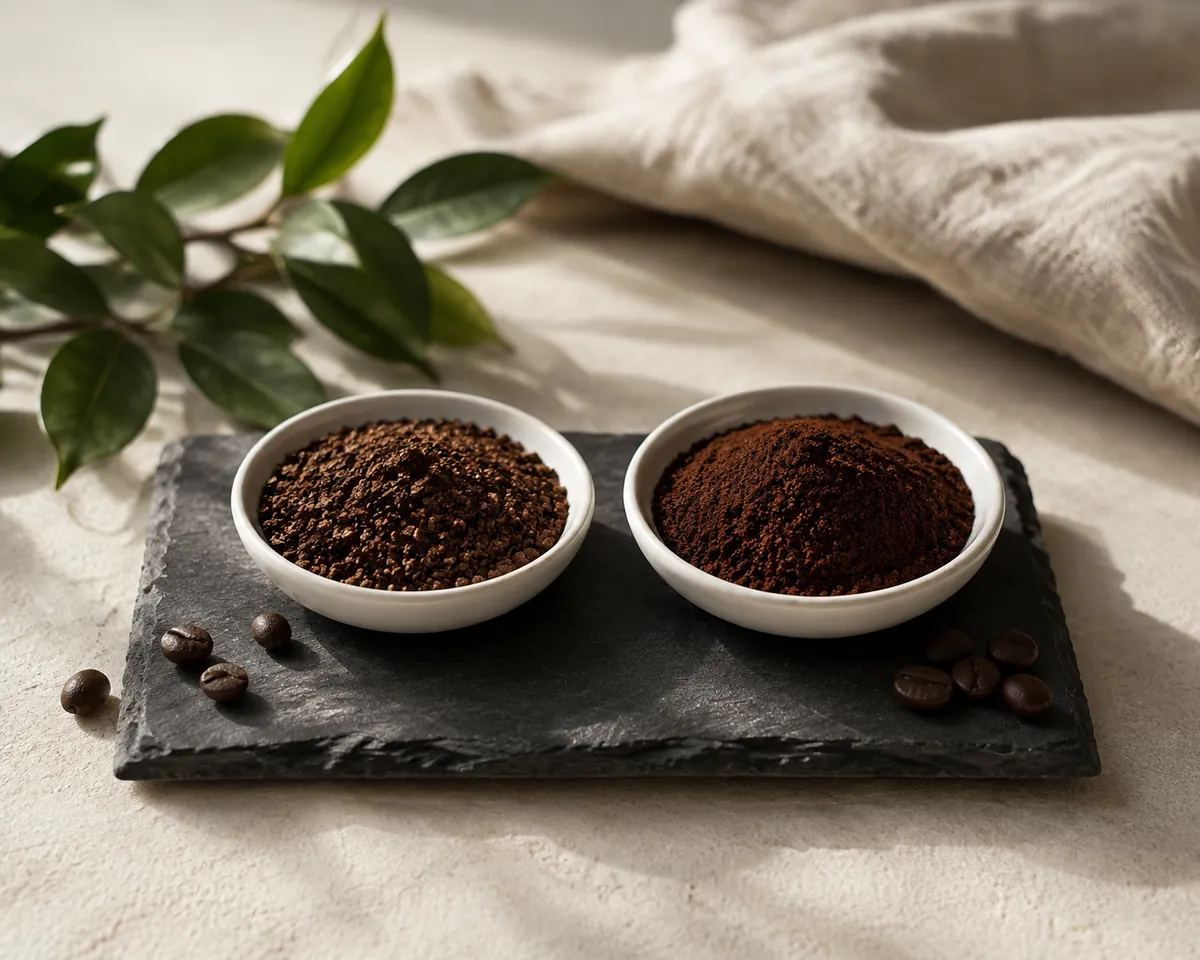
Grind size across the coffee methods
- TurkishPowder, finer than espresso
- EspressoFine, roughly like table salt
- Moka potA shade coarser than espresso
- Drip and pour-overMedium, like caster sugar
- French pressCoarse, like sea salt
Drip wins this axis outright, and the win is about equipment rather than skill. A cheap grinder that produces boulders and dust puts a merely disappointing cup in a drip carafe, since the dust slows the bed a little and the boulders give up a little less.
The same grinder makes espresso impossible, because an uneven bed channels under pressure and no adjustment recovers it.
That is why a burr grinder is the first purchase on the pressure side and an optional improvement on the gravity side. It is also why grind is the only lever worth moving while a new bag of espresso is still being found, and one of three levers on a drip machine.
Which one is stronger, and the two answers
Strong is doing two jobs in this comparison, and the two answers point in opposite directions.
By concentration espresso wins by a wide margin. An 18 to 20 g dose yields 36 to 40 g of liquid, which is a ratio near 1:2, against roughly 60 g of coffee per litre for drip.
Per millilitre there is nothing else on a coffee menu close to it.
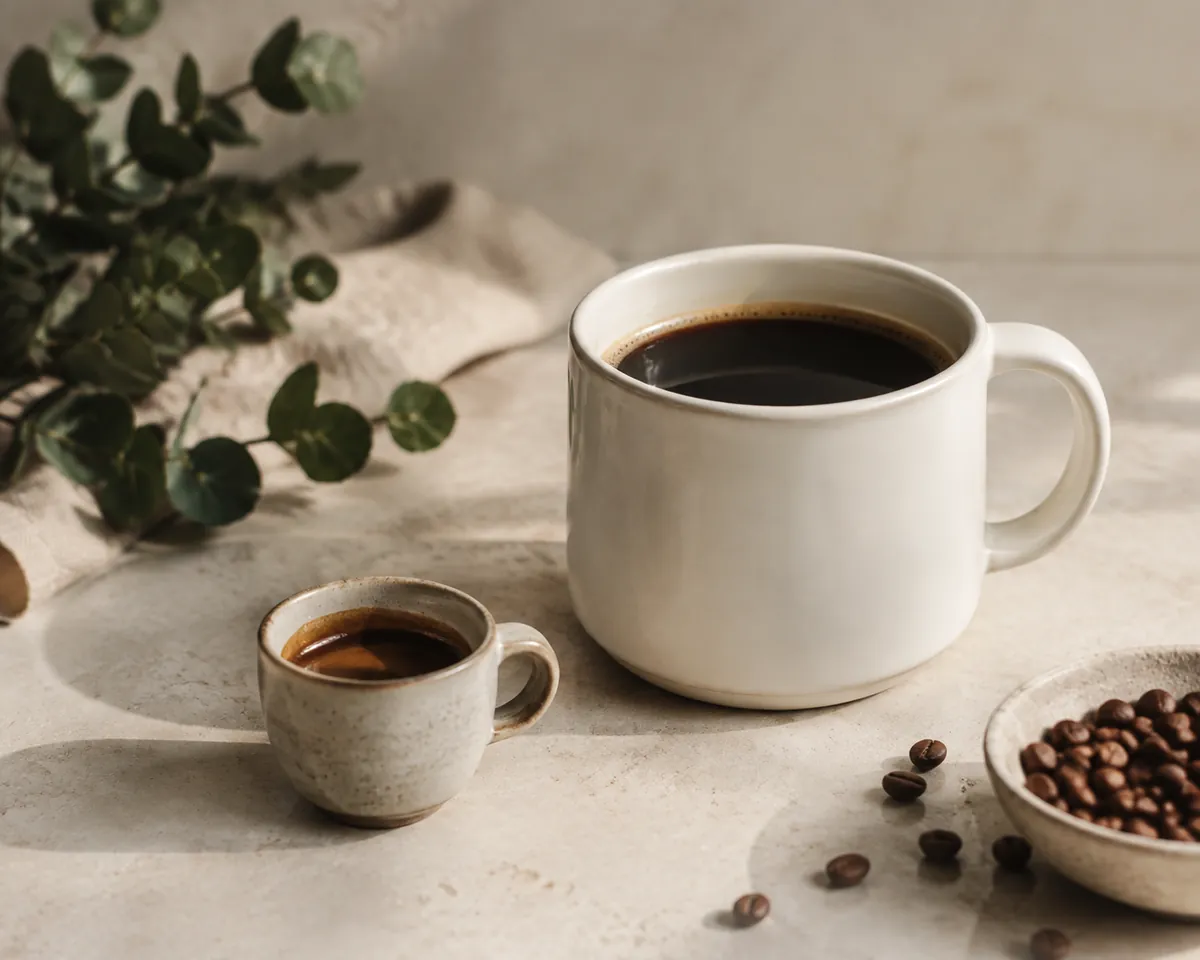
By the serving, drip wins, and the reversal catches almost everybody. Brewed coffee sits near 95 mg of caffeine per 8 fl oz on the USDA figure and a single shot near 63 mg, so a mug carries more caffeine in total while tasting far milder in the mouth.
The arithmetic is not mysterious once the volumes are written down. A shot is a small, dense drink and a mug is a large, dilute one, so the concentration ranking and the per-serving ranking disagree, and both are correct.
Caffeine by brew method works the same comparison across every preparation, and a decaf version of either is reduced rather than emptied.
Why only one of them makes crema
The hazel foam is the most recognisable difference between the two cups, and it exists for a reason that has nothing to do with quality.
Crema is an emulsion of carbon dioxide bubbles suspended in coffee oils. The gas is left over from roasting, the pressure in the group head drives it into solution, and it comes out again the instant the liquid returns to room pressure.
No pressure, no emulsion.
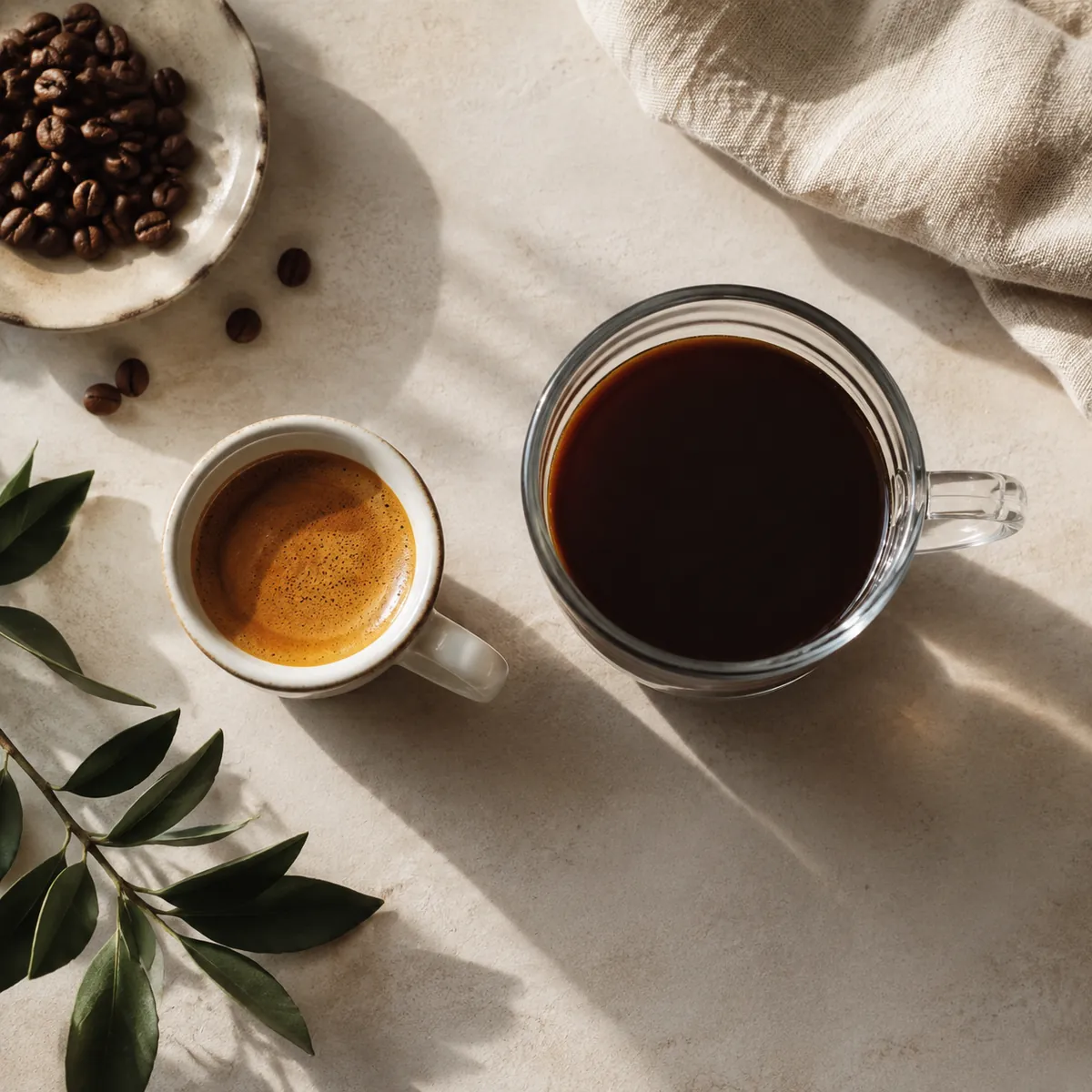
Drip cannot produce it and is not failing to. Water at atmospheric pressure has no mechanism to force gas into solution, and the paper filter removes the oils that would have carried the bubbles anyway, which is the same paper that gives the cup its clarity.
| Drip coffee | Espresso | |
|---|---|---|
| Surface of the cup | Clear, sometimes a faint ring of bubbles | Dense hazel crema, mottled |
| What produces it | Nothing. Gas escapes freely as the coffee falls | CO2 forced into solution at about 9 bars |
| Oils | Held back by the paper | Emulsified and carried into the cup |
| Sediment | None | Fine particles present, and part of the texture |
| What it signals | Nothing about the coffee | Freshness, and robusta content |
| Lifespan | Not applicable | Collapses in a couple of minutes |
Crema is not a grade, which is worth saying because it is read as one constantly. Robusta foams more readily than arabica at any quality level, so a photograph of a thick golden head reports the blend rather than the cup underneath it.
What paper takes out that a metal basket leaves in
Texture is the axis that most decides which cup somebody prefers, and there is no winner on it.
A paper filter holds back the coffee oils and the fine particles, so drip arrives clear, light in body and free of silt. Aroma reads high, acidity reads brightly, and the sweetness sits in the middle of the mouth rather than at the front.
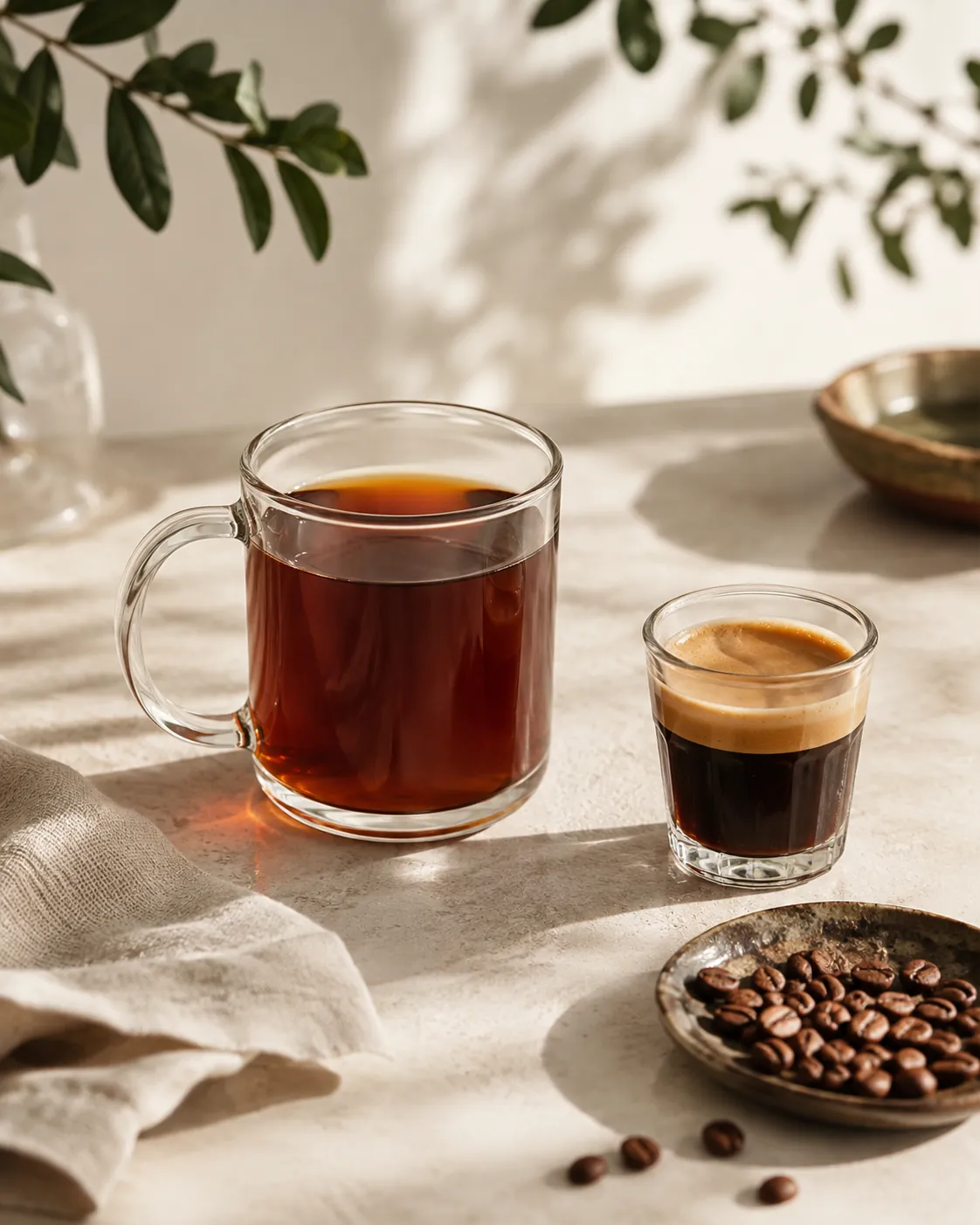
Espresso keeps everything the paper would have removed. The oils are emulsified into the liquid, the fine particles come through with them, and the drink is syrupy and coating in a way no gravity method reaches.
Drip, black
Clean, transparent, bright, and free of sediment
Espresso, black
Thick, coating, intense, and finished quickly
Drip, milky
Diluted rather than transformed, and the coffee thins out
Espresso, milky
Built for it, since 200 ml of milk does not erase 40 g of shot
Drip, cold
Holds up as an iced filter, since it was clean to begin with
So one method shows the bean plainly and the other shows it loudly. A cafe pours batch brew when it wants a coffee to speak for itself, and pulls shots when the drink has to survive milk, which is a difference in purpose rather than in quality.
How much each one forgives
Espresso loses this axis badly, and the gap is the largest on the page.
On a drip machine three things belong to the drinker and everything else belongs to the equipment. Dose, grind and the water in the tank are the whole list, since pour rate, pour pattern, agitation and contact time were all decided at the factory.
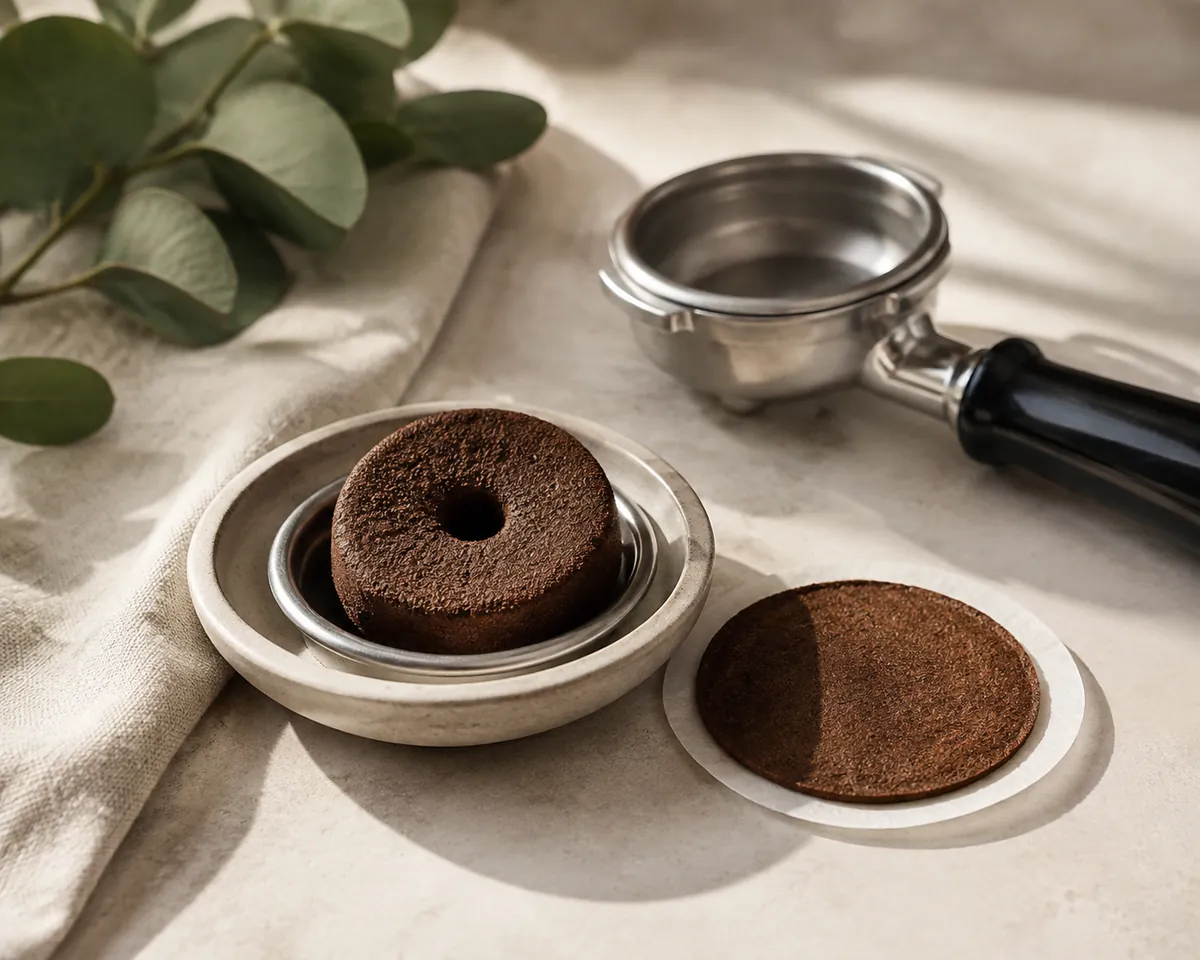
Espresso hands almost every one of those back, and it punishes each of them inside thirty seconds. Distribution, tamp level, dose to a tenth of a gram, basket cleanliness and grind to a micron all decide whether the water goes through the puck or around one side of it.
| Variable | Drip coffee | Espresso |
|---|---|---|
| Dose | Weigh it, to the nearest gram | Weigh it, to a tenth of a gram |
| Grind | One step at a time, forgiving | The main lever, and unforgiving |
| Distribution | A shake of the dry bed helps | Decides the shot |
| Tamp | Not a thing | Level matters, force much less |
| Water temperature | Fixed by the machine | 92 to 96 C, and it shows |
| Recoverable mistakes | Most of them | Almost none, so tip it and start again |
Reading the spent bed is free information on both sides and it tells different stories. A flat, level, uniformly dark drip bed means the spray reached everything, while a domed espresso puck that releases cleanly means the dose suited the basket and a crater or a bore hole is channelling made visible.
Faults on either side sort themselves out at drip coffee problems and espresso faults.
Which beans each one flatters
Neither method wins here, and the reason is that they do opposite things to the same bag.
Espresso concentrates whatever is already present, including the parts nobody wanted. A defect that slips past unnoticed in a filter brew is unmissable at 1:2, and a coffee roasted two or three days ago is still venting so much gas that the puck foams and the shot runs sour whatever the grind does.
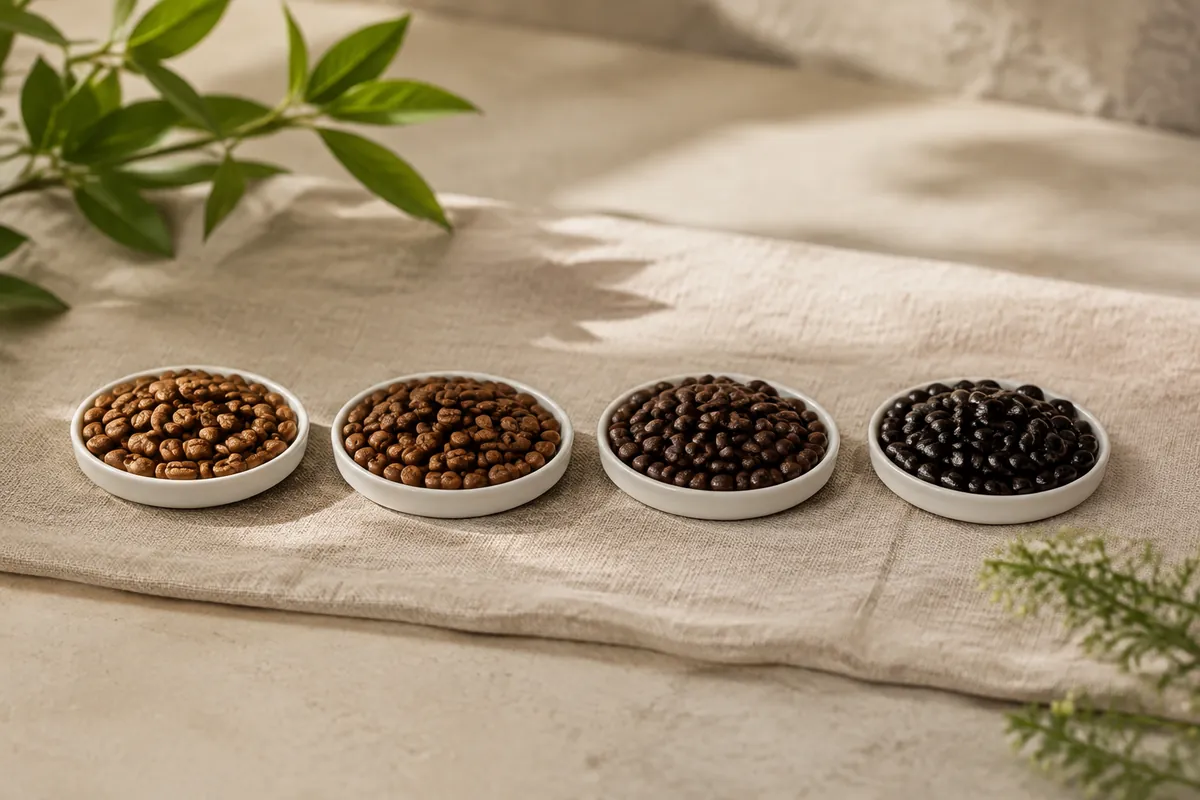
How a bag behaves in each
- Dark, with robusta in the blendBody and crema for milk drinks, flat and ashy through paper
- Medium-darkReliable in both, and the safest bag to own if you make both
- MediumThe drip default, and a sound modern shot
- Medium-light single originBright and clear as filter, and narrow to dial in as espresso
- Light and delicateShows plainly through paper, and vanishes under milk
Drip asks less of the roast date and more of the water. A bed of medium grounds does not care much whether the bag was opened last week, and a mug is above 98 per cent water by mass, so the tap decides more of the outcome than most kitchens expect.
Both methods punish soft water in the same way, with a hollow flat cup that no grind change repairs, and both fur up with limescale where the water is very hard. Brewing water sets out the mineral range, and storing beans covers the half of freshness that matters far more on the pressure side.
The cost of the counter space, and what keeps costing
Money is the axis where drip wins without argument, and the gap widens after the purchase rather than at it.
A filter machine, a bag of paper cones and a jug of filtered water is the entire outlay, and the machine will make a litre and a half at a time with no attention. The running costs are paper and electricity.
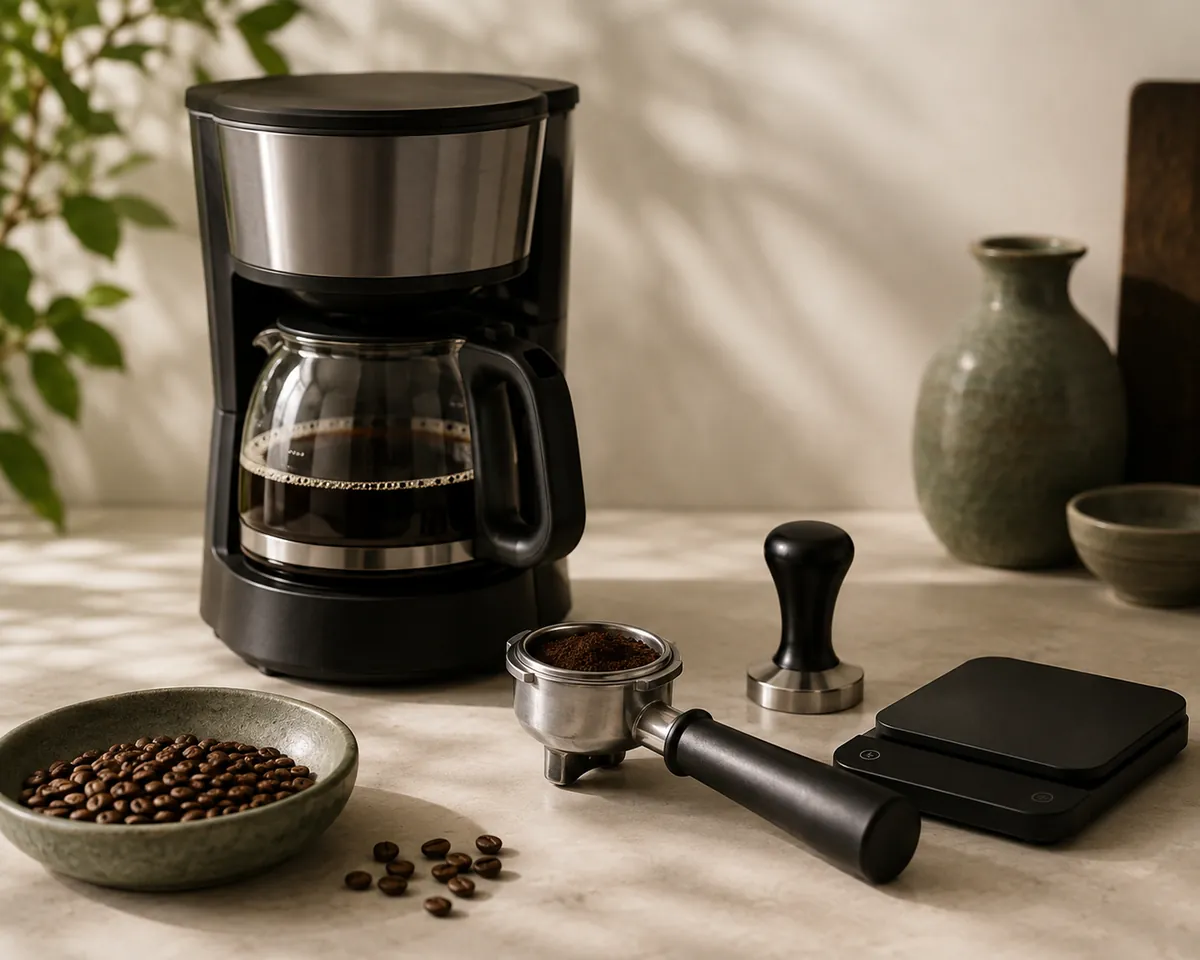
- Weigh the drip dose at about 60 g per litre, and set the grind to caster sugar.
- Filter the water for either method if it tastes of anything on its own.
- Buy the grinder before the espresso machine, since an uneven bed channels whatever the boiler cost.
- Expect to tip several shots away when a new bag of espresso goes on.
- Drink drip within twenty minutes, or move it off the hotplate into a flask.
- Backflush and descale a pressure machine on a schedule, since scale kills temperature stability.
The pressure side is a system rather than an appliance. A grinder that adjusts in very fine steps, scales that read to a tenth of a gram, a tamper, a knock box and a descaling routine all come with the espresso machine, and the grinder outranks the machine in every sensible order of purchase.
A modest machine with a good grinder beats an expensive machine with a poor one, which reverses the order most kitchens shop in.
Time is a running cost too. A drip coffee maker charges nothing but the four minutes it spends on its own, and a shot charges attention every single time, which is the same axis that separates a press from a cone.
Where neither method wins
Several comparisons that get made between these two turn out not to separate them, and saying so is more useful than inventing a verdict.
Caffeine is the clearest case, since the ranking simply depends on which unit is being used, and both units are legitimate. Origin character is the second, because both show it and they show it differently rather than more or less faithfully.
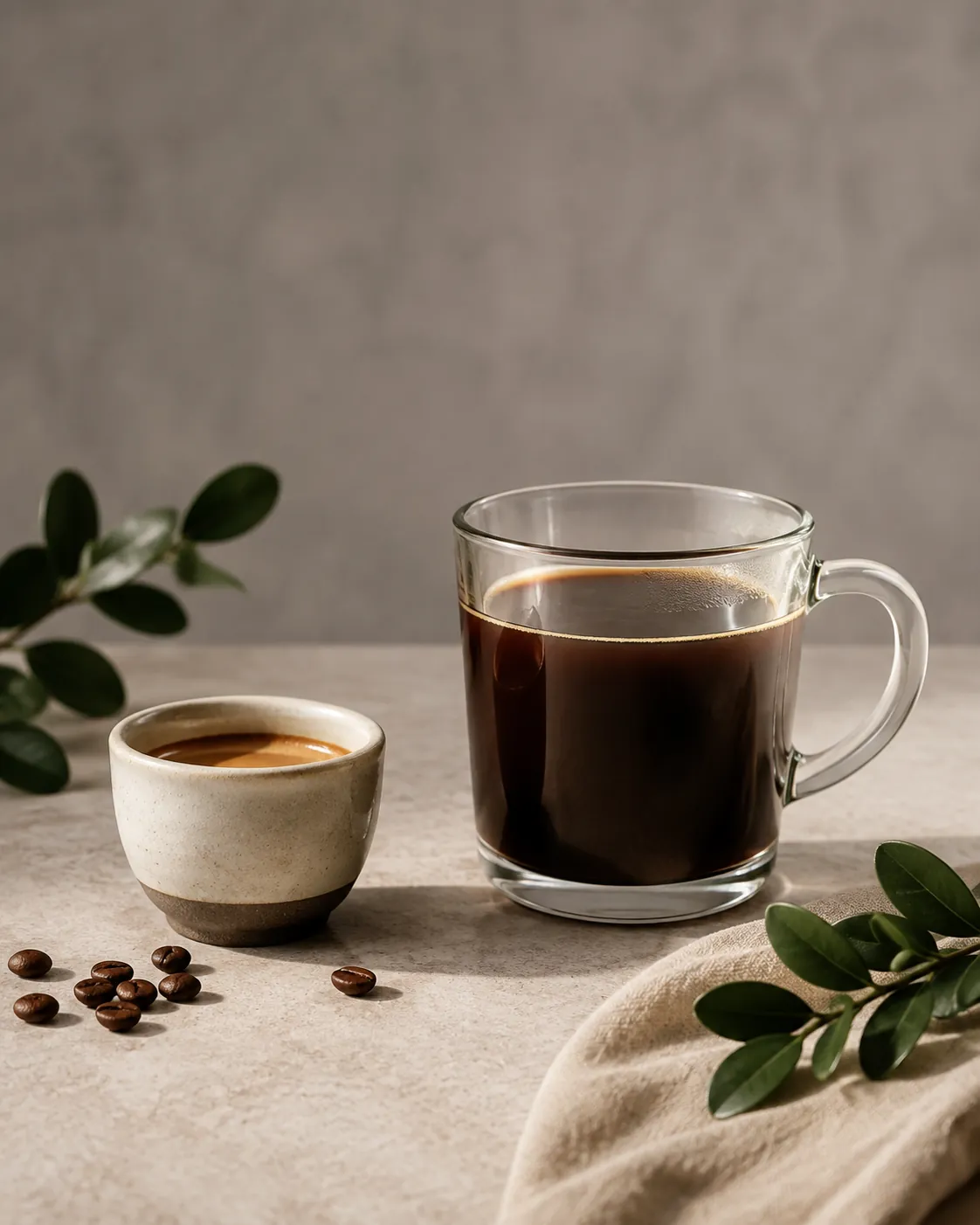
Caffeine
Espresso per millilitre, drip per serving, and both figures are true
Origin character
Shown plainly through paper, shown loudly under pressure
Water quality
Decisive for both, and the first thing to check on either side
Freshness
Matters to both, and far more to the shot than to the pot
Skill ceiling
A good shot and a good mug are both achievable at home
Which tastes better
A preference between clarity and concentration
Reach for the third possibility as well, since neither of these is the only route to a strong cup. A stovetop pot reaches about 1.5 bars and gives concentration without crema, an AeroPress presses at well under a bar, and instant coffee is a different product rather than a failed brew.
The borrowed name is the only real problem in that group. Calling a stovetop brew espresso sets an expectation the cup was never built to meet, which is a labelling fault rather than a fault in the drink.
Choosing between them on what the cup has to do next
The useful question is not which method is better but what the coffee has to survive after it leaves the brewer.
Milk settles it faster than anything else. Forty grams of shot holds its shape under 200 ml of steamed milk, which is why a flat white, a cappuccino and a cortado are all built on espresso, and why the same volume of drip becomes pale coffee-flavoured milk instead.
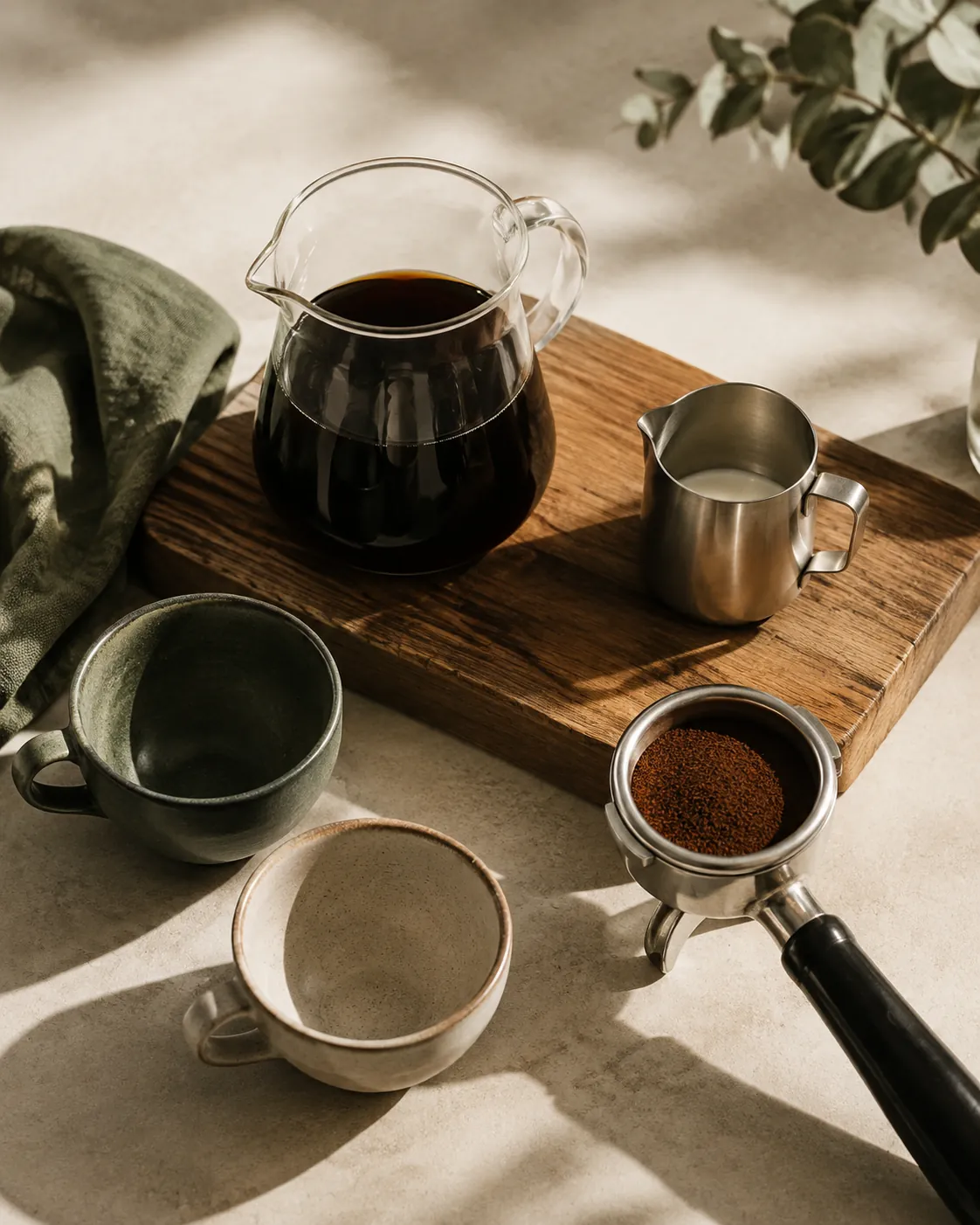
| Question | Drip coffee | Espresso |
|---|---|---|
| Makes a litre at once | Yes | No |
| Survives being cut with milk | No | Yes |
| Needs a precise grinder | No | Yes |
| Forgives a careless morning | Yes | No |
| Highest concentration | No | Yes |
| Most caffeine per serving | Yes | No |
Volume answers the rest. A house that wants a pot on the go all morning is buying a filter machine whatever anybody says about extraction, and a house that wants two milk drinks a day is buying a grinder and a pump.
The sequences themselves sit apart from the comparison. Making drip coffee is a short routine that runs the same way every day, making espresso is a dialling-in process that starts again with each bag, and the wider family of gravity brews is gathered under brewed coffee.
Common questions
Does espresso have more caffeine than drip coffee?
It depends on the unit. Per millilitre espresso is far more concentrated than anything else on a coffee menu, but a single shot of about 30 ml sits near 63 mg while an 8 fl oz cup of brewed coffee sits near 95 mg on the USDA figure. A mug of drip therefore carries more caffeine in total while tasting much milder.
Why does drip coffee have no crema?
Crema is an emulsion of carbon dioxide bubbles suspended in coffee oils, and the gas is driven into solution by about nine bars of pressure in the group head. Water falling through a filter bed at atmospheric pressure has no mechanism to do that, and the paper filter removes the oils that would have carried the bubbles anyway.
Can I use the same grinder for both?
Only if it adjusts in very fine steps. Drip wants a medium grind about the texture of caster sugar and tolerates a spread of particle sizes, while espresso wants a fine grind nearer table salt and tolerates almost none, because an uneven bed channels under pressure and no adjustment recovers the shot.