What Is a Cortado? Espresso Cut With an Equal Part of Milk
A cortado is espresso cut with about the same amount of milk and nothing else. It is the smallest drink where the milk is a real ingredient rather than a garnish, and the glass it comes in is part of the definition.

Cortado is the past participle of cortar, to cut. The name is an instruction rather than a description: espresso, cut with milk, in roughly equal measure.
That single ratio is nearly the whole drink. There is no foam to speak of, no size beyond the small glass it is served in, and the cortado method asks only for warm milk poured steadily.
What the cortado does have is a proportion that has to be right, because nothing in the cup can cover for it.
A cortado at a glance
- What the name means
- Cut. The milk cuts the acidity and the bite of the shot
- The ratio
- About one to one, coffee to milk, by volume
- Foam
- A thin skin at most, and usually none at all
- Total volume
- 90 to 130 ml
- Served in
- A small straight-sided glass, often on a saucer
- Milk temperature
- About 55 to 60 C, cooler than most milk coffees
- Where it is ordinary
- Spain, where it sits between the solo and the cafe con leche
The cut, and what one to one actually means
Cutting is a corrective operation rather than a recipe for something creamy. An equal volume of warm milk takes the acidity and the hard edge off a shot without burying it, and the proportion is what keeps the operation corrective.
Double it and the coffee stops being the thing you taste.
A cortado
- Espresso
- 1 shot, about 30 ml, or a double where doubles are standard
- Milk
- About the same again, steamed warm rather than aerated
- Foam
- A thin skin at most, often none
- Total
- 90 to 130 ml
- Glass
- Small and straight-sided, often on a saucer
- Sugar
- Optional, and common in Spain
The milk is heated to around 55 to 60 C rather than the 65 C a cappuccino wants, and the lower figure is deliberate. Cooler milk keeps more of its natural sweetness and does not need foam to feel round in the mouth, which suits a drink meant to be finished in four or five mouthfuls rather than nursed.
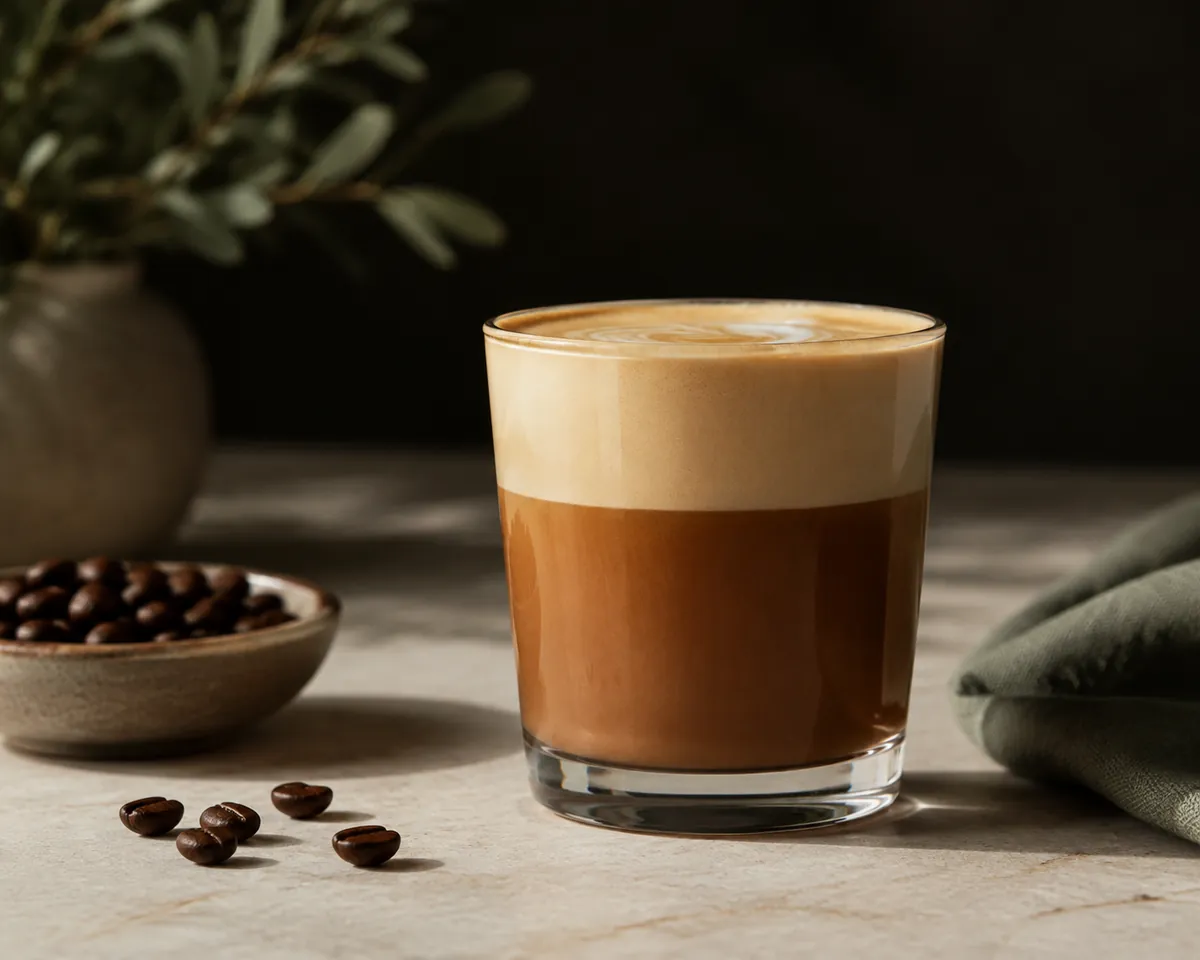
A cortado is the last order on the menu where the coffee is still the loudest thing in the glass.
Equal parts is also the point at which the shot stays legible. Below that proportion the milk reads as an afterthought and the drink is closer to a marked espresso.
Above it the coffee is diluted past the point where its acidity registers as brightness, and what is left is a small mild milk drink that happens to have been made with a good shot. The cortado sits on the narrow strip between those two failures, which is why it is one of the few coffees where an extra 30 ml of milk changes the name of what you are holding.
The glass is the measuring instrument
A cortado is served in glass for a working reason rather than a decorative one. A straight-sided glass shows the line where coffee meets milk, and that line is the only check the drink offers before you taste it: too pale and the shot has been drowned, too dark and it will still bite.
Glass also holds far less heat than ceramic, which matters at this volume. A 100 ml cortado in a thick warmed cup arrives hotter than the 55 to 60 C the milk was taken to, undoing the reason for steaming it gently in the first place.
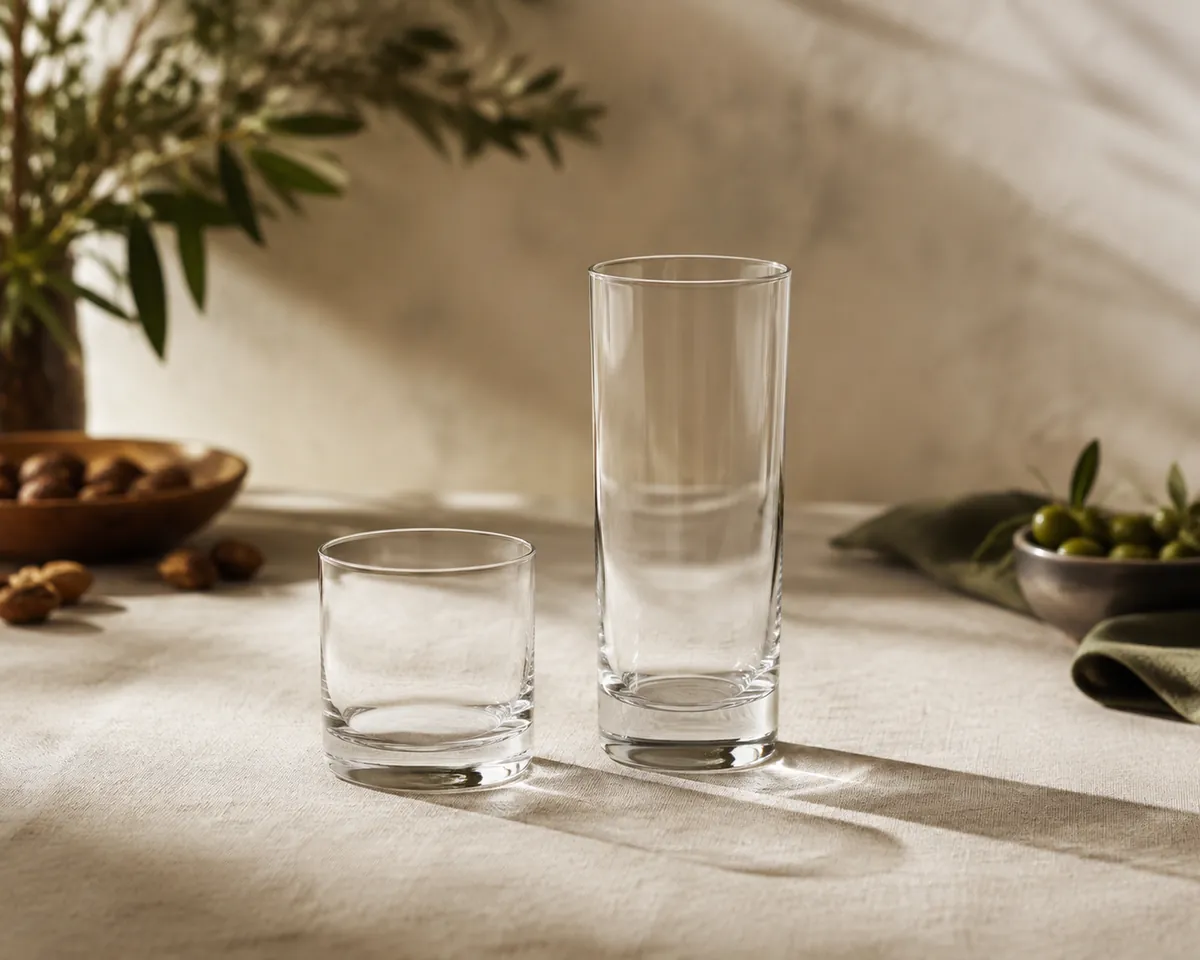
| Glass | Capacity | Suits |
|---|---|---|
| Spanish bar glass | 90 to 110 ml | A single shot cut one to one, the traditional build |
| Libbey Gibraltar, 4.5 oz | About 130 ml | A double shot cut one to one, the specialty build |
| Anything larger | 180 ml and up | Nothing. The ratio breaks and the drink becomes a small latte |
Straight sides matter more than the exact capacity, since a tapered glass hides the boundary and takes the one visual check away.
A thick base and thin walls is the combination to look for: the base survives being set down hard on a bar, and thin walls decline to hold heat the drink was never meant to keep.
The Spanish bar, from solo to manchada
Spain treats this as an everyday order rather than a specialty item. It sits on the same board as the cafe solo and the cafe con leche, and the only thing separating those three is how much milk each carries, which makes a Spanish bar counter a working demonstration of what milk does to a shot.

From coffee to milk
- Cafe soloA shot, nothing added
- CortadoEqual parts, 90 to 130 ml
- Cafe con lecheTwo to three times the coffee, 180 to 240 ml
- Leche manchadaMilk with a stain of coffee in it
Leche manchada is the one worth noticing, because it is the exact reverse of a cortado built on the same logic: milk marked with coffee rather than coffee cut with milk. Between those two poles, the switch happens at roughly twice the coffee volume, which is also the point at which the drink leaves the small glass and moves into a cup.
| Order | Milk | Roughly |
|---|---|---|
| Cafe solo | None | A single espresso |
| Cortado | About equal to the coffee | 90 to 130 ml |
| Cafe con leche | Two to three times the coffee | 180 to 240 ml, often in a cup |
| Leche manchada | Almost all milk | Milk stained with a little coffee |
When each is drunk is the practical difference. A cafe con leche is a breakfast drink and takes a bowl-sized cup that can be dipped into.
A cortado is ordered at any hour, drunk standing at the counter, and finished before the change has been counted out, which is a use rather than a recipe and explains the size better than any ratio does.
Torrefacto, robusta and what survives the cut
With half the milk of a flat white and no foam at all, a cortado exposes the roast more than any other milk coffee does. There is nothing between the shot and the drinker except an equal volume of warm milk, so a coffee that tastes thin or sour on its own will taste thin and sour here too.
Dark and traditional
What the drink was built around. Heavy, low in acid, and still legible under milk.
Medium
The safest modern choice. Enough body to survive the cut, enough clarity to taste of something.
Light and fruity
The riskiest. Acidity that reads as bright in a straight shot can read as sour once milk arrives.
Spanish bar coffee is frequently torrefacto, meaning sugar was added during roasting, where it caramelises onto the bean and gives a heavy, faintly burnt finish. The style has a poor reputation among people who drink coffee black, and it was designed for exactly this ratio, where a lighter roast would disappear.
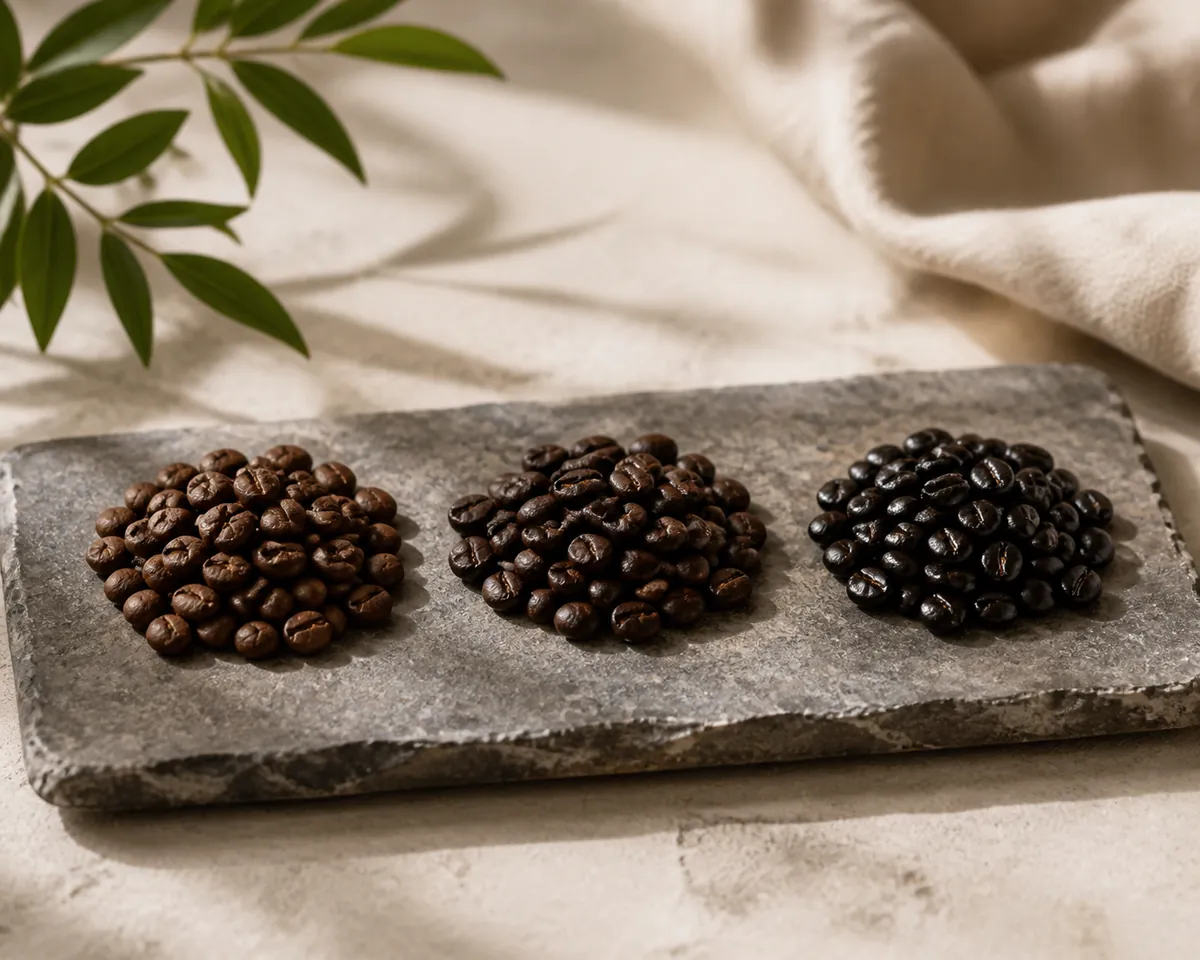
That last point is worth holding on to before dismissing a blend on its label. Robusta carries a reputation earned by cheap instant coffee and does genuine work in a small milk drink, where body matters more than delicacy.
A blend that tastes coarse as a straight espresso can be the right choice here, and the only way to find out is to cut it with milk and see whether it holds its shape.
Why it is finished standing up
Nobody lingers over one, and the reasons are physical rather than cultural. The volume is small, the glass is thin, and no foam layer insulates the surface, so heat leaves through the walls and the top at the same time.
Cooling also changes the taste in a direction this particular drink cannot absorb. As espresso cools its acidity comes forward, and with only an equal volume of milk there is not enough sweetness in the glass to balance it, so a cortado left for ten minutes tastes sharper than the same cortado did when it arrived.
Milk warmed to 55 to 60 C starts closer to that edge than a cappuccino does, which is the trade the lower temperature makes.
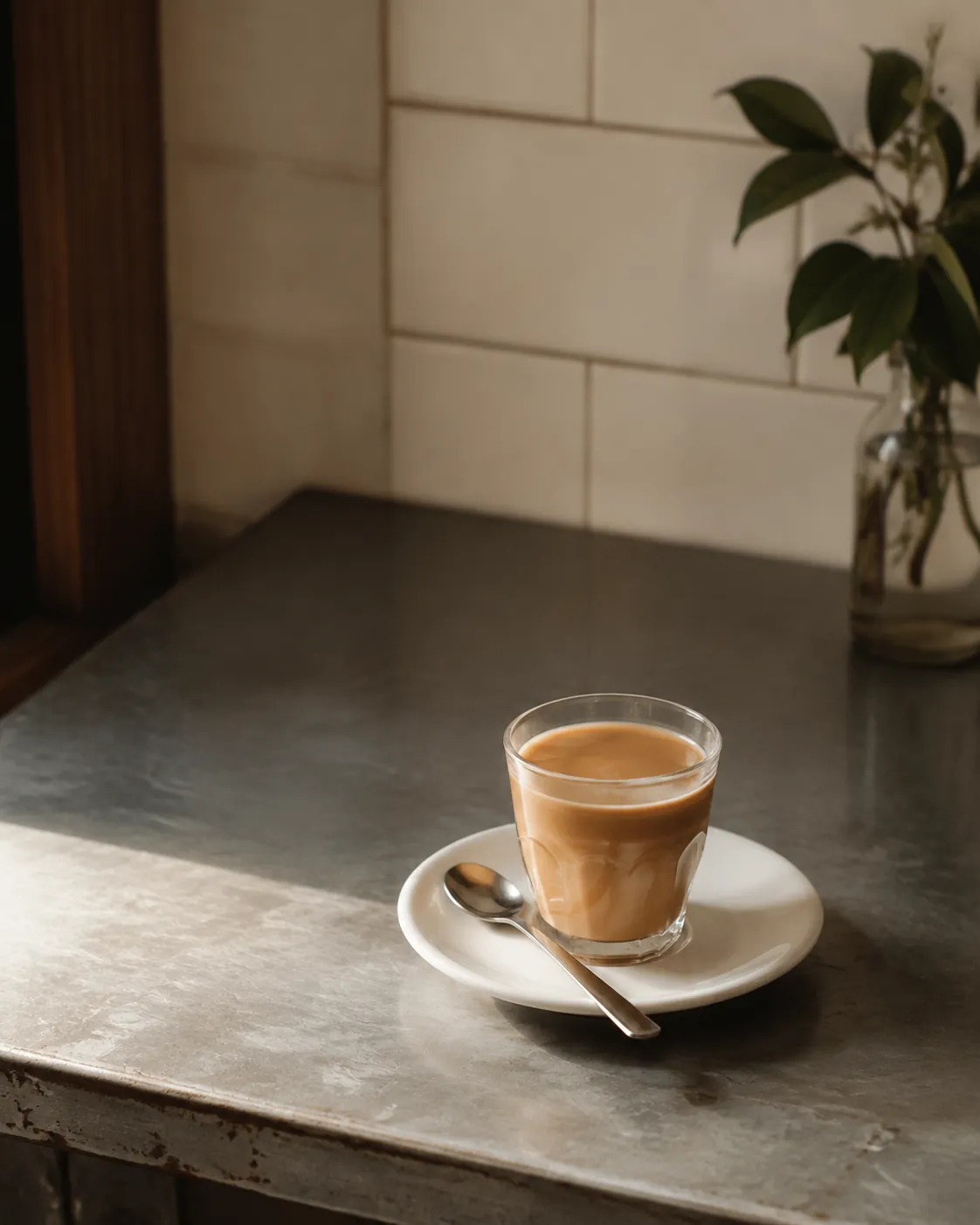
The same small volume is why it tastes so strong for its size, and the arithmetic is worth seeing plainly.
Doubling the milk halves the concentration without changing the caffeine at all. That is the entire reason small drinks read as strong, and it is worth knowing before ordering a larger cup in the hope of a milder effect, since the shot count is what moves that figure and the milk is not involved.
Gibraltar, cortadito, noisette, and finding it on a menu
At least four names cover the same glass, and the distances between them are shorter than the vocabulary implies.
Gibraltar
An American name, taken from the Libbey Gibraltar glass a San Francisco roaster served it in. Same drink, same size.
Cortadito
The Cuban version, built on espresso sweetened during brewing so the sugar dissolves rather than sits.
Noisette
The French name, from the hazelnut colour the cut produces. Usually a single shot with a little hot milk.
Piccolo
An Australian relative, closer to a very small latte, with more milk and a thin layer of foam.
The piccolo is the one that is genuinely a different drink rather than a translation. It carries more milk and some foam, where a cortado is defined by carrying neither, and that puts it a step towards the flat white rather than alongside the cortado.
On an American menu the drink appears more often than the word does. Specialty cafes list it as a cortado or a gibraltar, usually at four to four and a half ounces on a double shot, while chains rarely list it at all.
Asking for a double espresso in a small cup with an equal amount of steamed milk gets the same drink from anyone with a steam wand. The phrase to avoid is a small latte, which produces a latte in a small cup: more milk than the ratio wants, and usually a layer of foam the drink is defined by not having.
A cortado on a machine that cannot texture milk
A weak steam wand is no obstacle here, because nothing in the glass depends on microfoam. Domestic machines that struggle to texture 150 ml for a cappuccino manage this without complaint, and so does a pan on the hob.
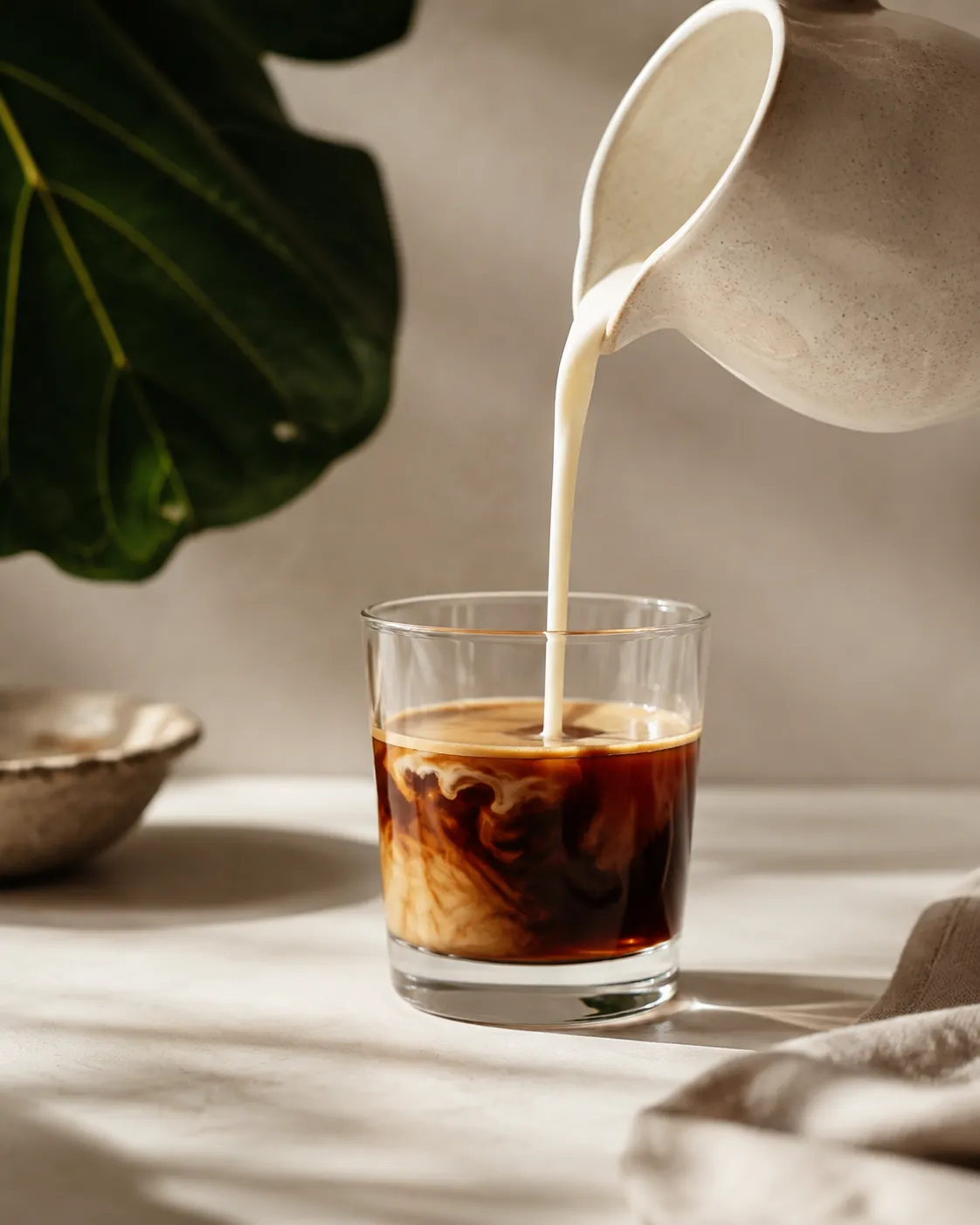
A cortado on any machine
- Warm the glassRinse with hot water. Glass loses heat fast and the drink is small.
- Pull the shotStraight into the glass. A double if your machine only pulls doubles, and use the larger glass.
- Heat the milk to about 55 to 60 CSteam it, or warm it in a pan or a microwave. Do not aerate. If it foams, tap the foam out.
- Pour steadily from lowOne continuous pour into the centre folds the milk through the crema without needing technique.
- Serve at onceIt cools quickly, and it is meant to be drunk quickly.
A moka pot makes a workable base, since the drink asks for strength rather than crema. Use about 45 ml of moka coffee to 45 ml of milk and expect something slightly heavier than a bar cortado.
A hand milk frother is not needed and can be a liability, because it introduces the air the drink is defined by not carrying, and making a cortado is the rare coffee procedure where doing less produces a better result than doing it carefully.
Why plant milk is easier here than anywhere else
Foam needs protein and texture needs fat, and a cortado asks for neither of them. That makes it the most forgiving drink on the menu for plant drinks, since there is no foam to hold and no glossy surface to fail at.
Almond milk and rice milk, which produce large collapsing bubbles in a cappuccino and are usually avoided there, are perfectly usable in a cortado. They only have to be warm and to pour, and the standard rather than the barista carton is enough.
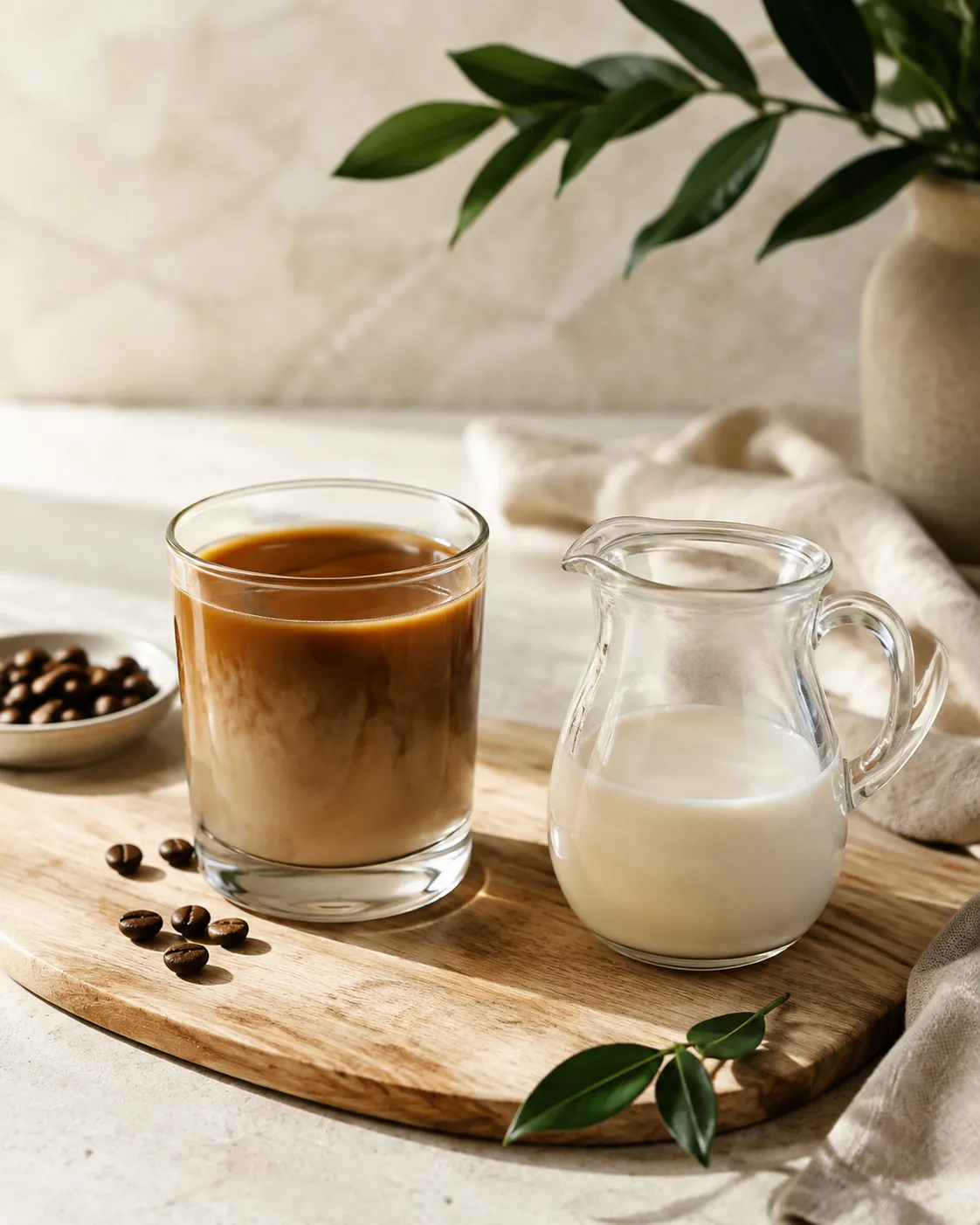
The one risk is higher than average, and it is splitting. A small volume of milk meeting a hot, acidic, freshly pulled shot is the textbook condition for it, and a cortado is exactly that meeting with nothing else in the glass to dilute it.
Warming the milk before it meets the coffee is the single most effective precaution, since a cold plant drink hitting a hot shot curdles far more readily than a warm one does, and pouring steadily rather than dumping it in helps for the same reason. Why plant milk curdles sets out the mechanism, and a decaf shot behaves no differently, since the acidity is unaffected by decaffeination.
The cortadito, and sugar whipped in before brewing
The Cuban version is worth building once, because it demonstrates something about sugar that no amount of stirring will show you.
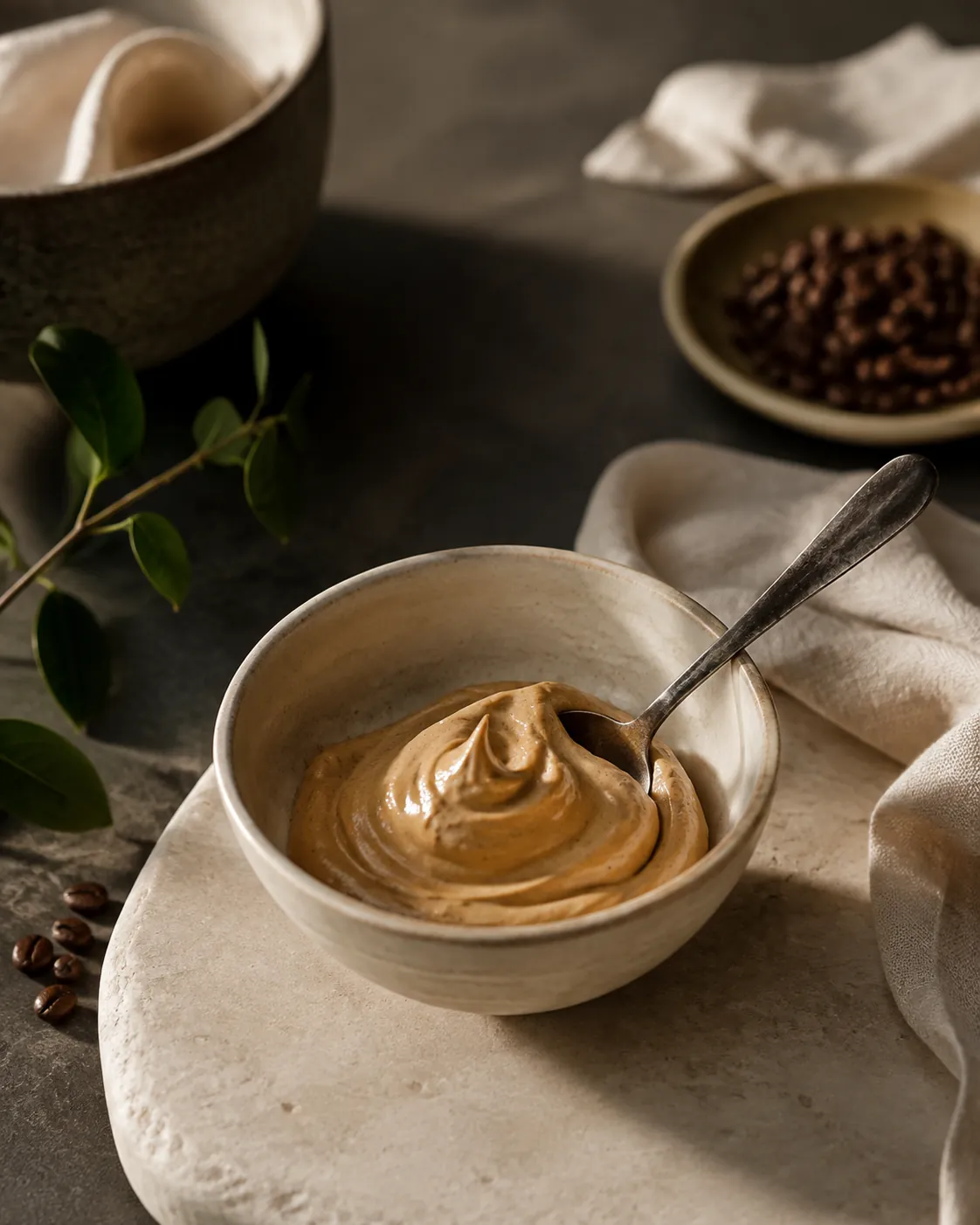
Cuban practice is to catch the first few drops of espresso, whip them hard with sugar into a pale paste called the espuma, and then brew the rest of the shot through it. The sugar dissolves completely into the coffee oils and the drink carries a fine, stable foam on top, which a spoonful stirred in at the table never produces however long you stir.
The result is sweeter than most people expect from the same quantity of sugar, and it is structurally a different drink rather than a cortado with sugar in it. Dissolved sugar behaves unlike granulated sugar, which is the same argument simple syrup makes about cold drinks, where undissolved crystals sink and the top half of the glass tastes unsweetened.
Sugar at the table is still normal in Spain and nobody will look at you strangely for it. The point of the espuma is not that one is correct, only that adding sugar early changes the texture of the drink as well as its sweetness, and the cortadito is the cheapest way to taste that difference.
Reading a poor cortado
Most disappointing cortados fail on the ratio rather than on the coffee, and the glass usually tells you which before the first mouthful does.
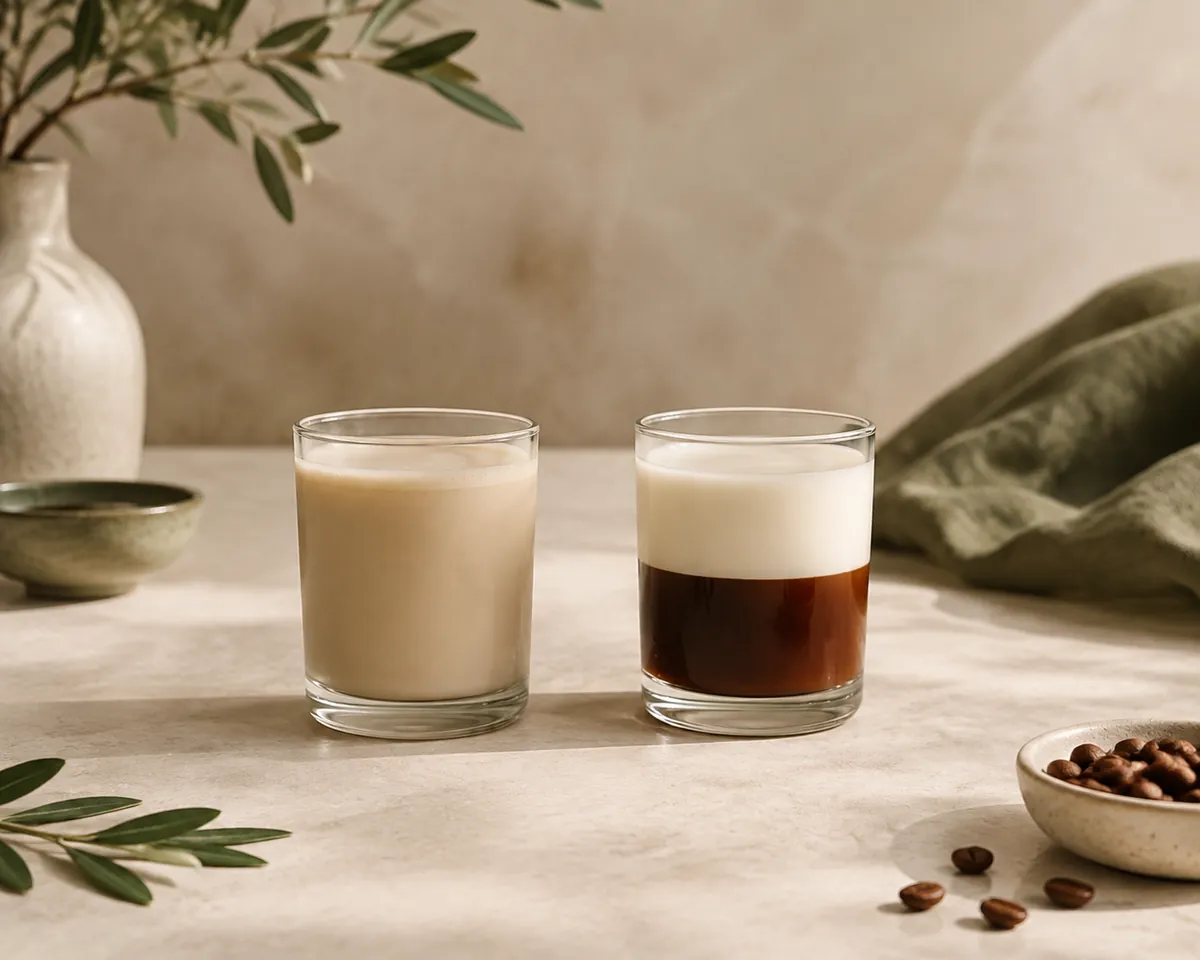
| What you notice | Cause | What to change |
|---|---|---|
| Sharp and thin | Too little milk, or milk poured too cold | Match the milk to the coffee by volume and warm it properly |
| Milky and flat | Glass too large for one shot | A smaller glass, or a double |
| A skin on top | Milk overheated | 55 to 60 C is enough. This drink does not want 65 |
| Sharp visible line | Milk poured too slowly to fold | One steady pour into the centre |
| Curdled flecks | Plant milk against a hot fresh shot | Warm the milk first, or use a barista carton |
The first row accounts for most of them. Without foam to hide behind and without volume to soften anything, a cortado that is short of milk is simply a harsh espresso with a splash in it, and no amount of care over the shot will rescue the proportion.
The second row is the commoner fault at home, where the glass on the shelf was bought for something else. A single shot in a 180 ml tumbler cannot be cut one to one without leaving the glass two-thirds empty, so the milk gets stretched to fill it and the drink quietly becomes a small mild latte.
Buying the right glass fixes more cortados than buying better coffee, which is not something that can be said about many drinks, and common cortado faults covers the rest of them.
Common questions
What is the difference between a cortado and a flat white?
Milk. A cortado is roughly equal parts coffee and milk at 90 to 130 ml, with no foam. A flat white carries about twice the coffee in milk at 150 to 180 ml, with a few millimetres of foam folded through it.
Is a gibraltar the same as a cortado?
Yes. Gibraltar is an American name for the same drink, taken from the Libbey Gibraltar glass a San Francisco roaster served it in. The ratio and the size are the same.
Does a cortado have foam?
Little or none. The milk is warmed rather than aerated, so a correct cortado carries at most a thin skin. Visible foam means it was steamed like a cappuccino.
How hot should the milk be in a cortado?
Around 55 to 60 C, cooler than the 65 C a cappuccino wants. The drink is small and finished quickly, and cooler milk keeps more of its sweetness.
Can you make a cortado with plant milk?
Yes, and it is the most forgiving milk coffee for it, because no foam is required. Splitting is the only real risk, since a small volume of milk meets a hot acidic shot; warming the milk first reduces it.