What Is Pea Milk? Built From Isolated Yellow Pea Protein
Pea milk is not made from peas in any recognisable sense. It is built from isolated yellow pea protein, which is why it carries protein like soy and tastes of almost nothing.
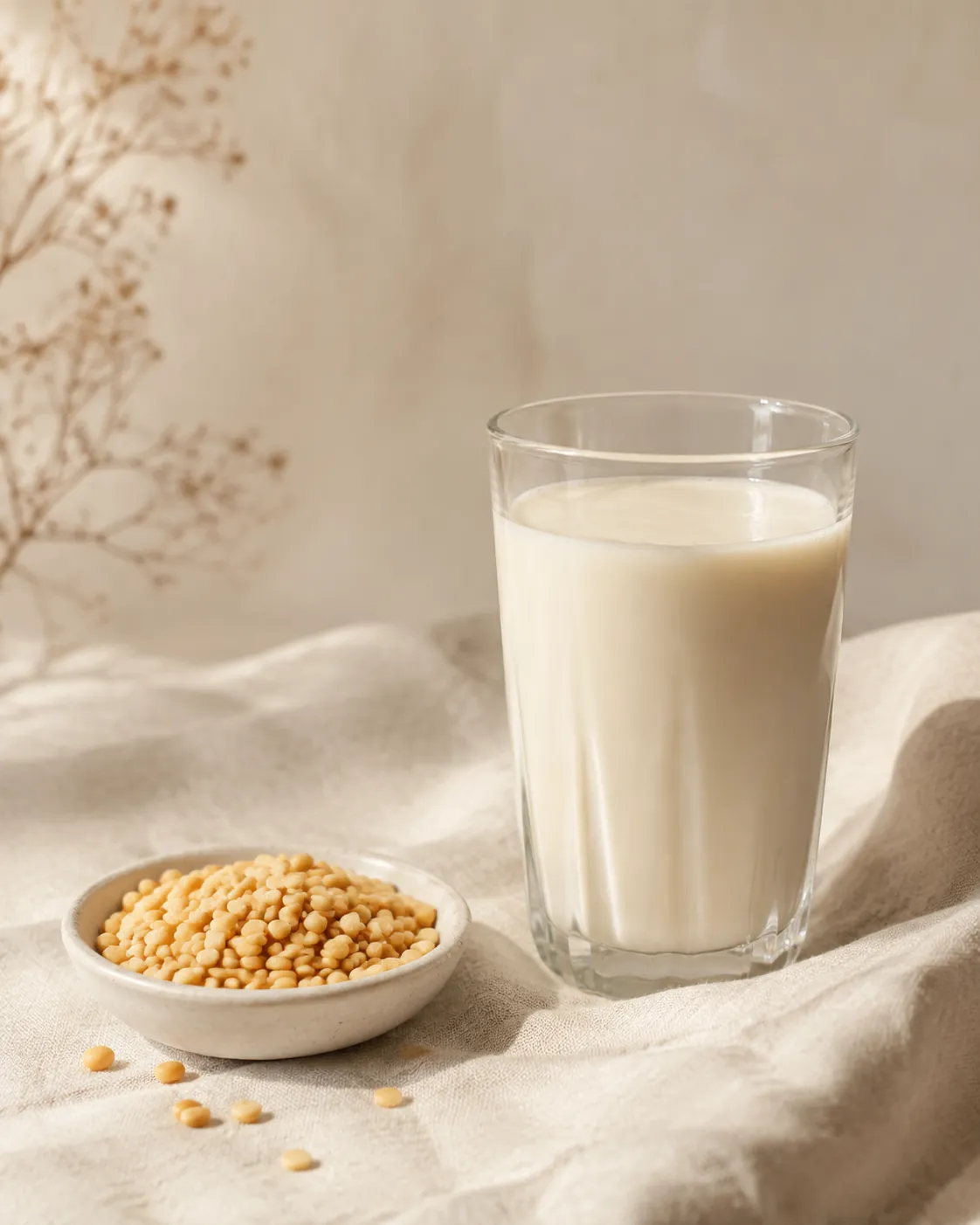
Pea milk is made from yellow field peas, the same crop as dried split peas, processed into a protein isolate and then recombined with water, oil and stabilisers.
It is a manufactured product rather than a pressed or blended one, which is unusual in this category and explains almost everything else about it.
Pea milk at a glance
- Made from
- Yellow field pea protein isolate, water, added oil and gums
- Protein
- 3.3 g per 100 ml, level with soy and close to dairy
- Colour
- Pale, because yellow field peas are not green peas
- Taste
- Near-neutral and faintly sweet. Some brands leave a vegetal note
- In coffee
- Foams properly. The barista version is the one to buy
- Once opened
- Five to seven days refrigerated. Months sealed and ambient
What pea milk is made from
Yellow field peas are not green peas. They are a different crop, dried and pale, and the isolate extracted from them is close to white, so nothing is bleached or decoloured to get there.
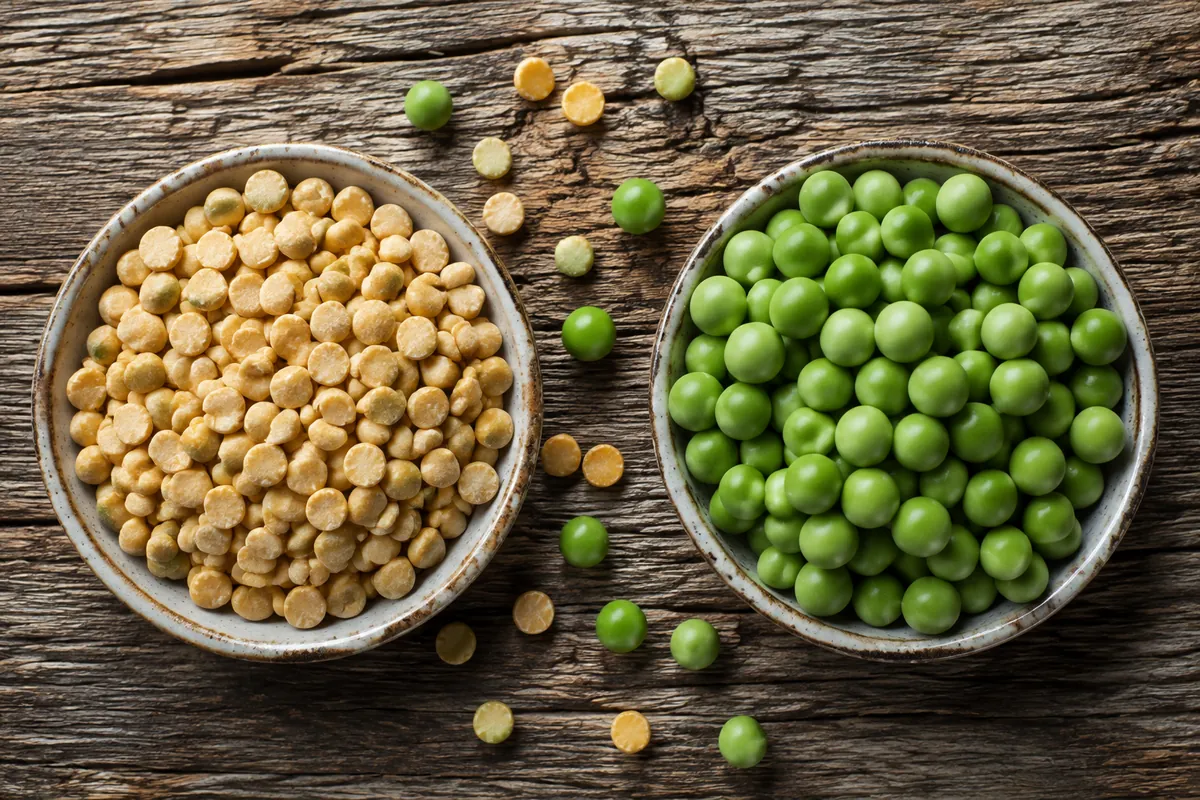
The process has more in common with food manufacturing than with milling nuts or steeping grain.
From pea to carton
- MillDried yellow peas are milled to flour.
- SeparateProtein is isolated from starch and fibre.
- RecombineThe isolate is mixed with water, oil, and often calcium and vitamins.
- EmulsifyGums and emulsifiers hold the oil and protein in suspension.
- Heat treatUHT processing for shelf life.
Almost none of the original pea reaches the carton. The starch and fibre go elsewhere, and what remains is protein plus added fat, which is the reason the flavour is so neutral.
That separation step is doing more work than it looks. Starch and fibre are exactly the parts carrying pea flavour, so removing them is what turns an emphatically vegetal raw material into something that disappears into coffee.
Oil is then doing the job the isolate cannot. Protein alone pours thin and tastes lean, so the fat added back is what supplies body and mouthfeel rather than richness for its own sake.
How much protein pea milk has
This is the drink's actual selling point and the reason the category exists.
Pea and soy are the only two common plant drinks in dairy's range. The practical difference between them is flavour and source rather than the protein figure, which is effectively identical.
That is the gap pea arrived to fill. Soy carries the protein and a large share of drinkers avoid it, almond and cashew are nuts, and oat and rice carry very little protein at all.
Choose pea
For soy-level protein without soy or nuts, and for neutrality.
Choose soy
For the same protein at lower cost and wider availability.
Choose cashew or almond
For lightness, where protein is not the point.
Its case is narrow and genuinely its own. It is the highest-protein plant drink that is neither soy nor a nut, and for anyone avoiding both, that is the whole argument.
What pea milk tastes like
Neutrality is the point, and it mostly succeeds.
Pea milk tastes faintly sweet and slightly savoury, without the beany note soy carries or the nuttiness of almond. Most people cannot identify it blind, which is unusual in this category.
The thing to test on a new brand is the aftertaste. Some leave a faint vegetal or cardboard-like note that others do not, and it is the isolate showing through rather than a fault in the carton.
That variation is wider here than for soy or oat, because the category is young and producers differ in how far they purify the isolate. A bad first experience with pea milk is usually a bad experience with one brand of it, and what pea milk tastes like sets the brands' common notes side by side.
Sweetening hides a good deal of it. Unsweetened versions taste noticeably more vegetal, which is worth knowing before buying one on principle and concluding the whole category tastes of soup.
How pea milk behaves in coffee
Pea performs well, for the same reason soy does: real protein means real foam.
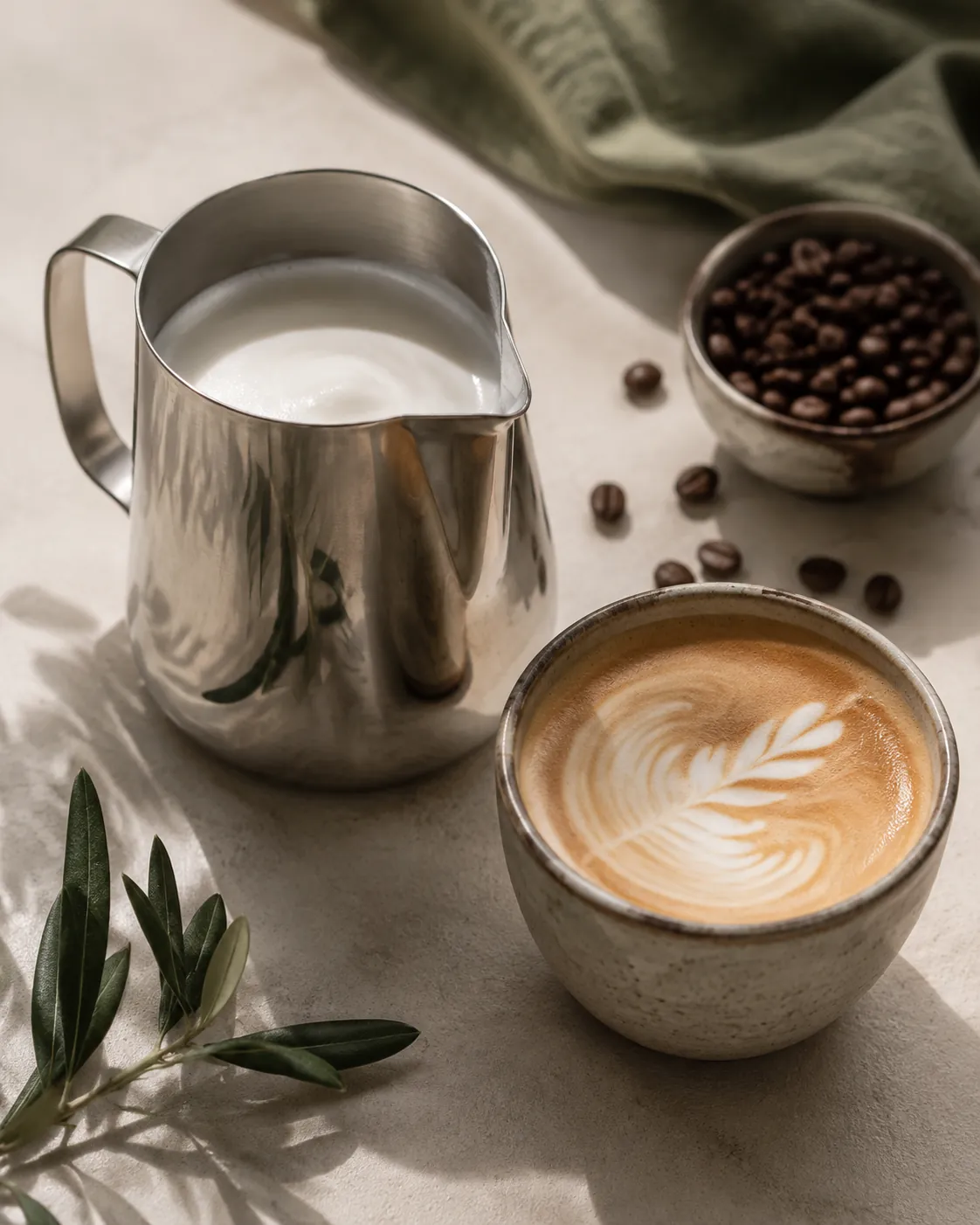
It stretches and holds microfoam properly rather than producing the large collapsing bubbles almond gives. The foam is slightly looser than dairy's and pours acceptably for latte art, so a latte made with it looks like one.
Like soy, it can curdle against acid, and a very fresh espresso is the hardest case it meets. Barista formulations adjust the acidity buffering and are worth buying if you make milk coffee regularly.
The quirk worth knowing before the first attempt is temperature. Pea milk turns noticeably savoury above about 65 C, more sharply than dairy does, and a jug taken to 70 tastes of vegetable stock in a way coffee cannot hide.
Stop earlier than feels right, in other words. The window is narrower than dairy's and the failure is a flavour change rather than a texture one, so a thermometer helps more here than with most milks, and a milk frother with a fixed cut-off is safer than a wand for anyone learning it.
The savoury-above-65 fault leads the list in pea milk problems.
What to look for on a pea milk label
Pea milk carries a shorter ingredients list than most plant drinks, and each item is doing an identifiable job.
A typical carton
- Pea protein isolate
- The base. Around 8 g of protein per 250 ml, close to dairy
- Sunflower or algal oil
- Supplies the body and mouthfeel the isolate has none of
- Gellan gum
- Holds the protein and oil in suspension so it does not separate
- Added calcium
- Not present in the pea. Added to match dairy
- Sugar or none
- Unsweetened versions exist and taste noticeably more vegetal
- Natural flavour
- Covers the isolate's aftertaste, which is the product's main challenge
Oil content is where brands differ most. A carton with more added oil pours richer and steams better, and one with less tastes thinner and reads as more obviously processed.
The formats on a shelf differ more than for soy or oat, because the category is young enough that producers are still deciding what it is for.
Original
Lightly sweetened, and the version most people meet first.
Unsweetened
Noticeably more vegetal, since the sugar was covering the isolate.
Barista
More added oil and buffering salts. The one to buy for coffee.
Chocolate
Common, and it works because cocoa hides the aftertaste entirely.
Blends
Pea combined with oat or almond, taking protein from one and flavour from the other.
Blends are worth noticing because they are increasingly the default. A carton fronting oat may carry pea protein for the protein figure, and the ingredients list is the only way to tell.
Why pea milk cannot be made at home
Almost every plant drink on this site can be made in a kitchen. This one effectively cannot, and the reason is instructive rather than a limitation of the recipe.
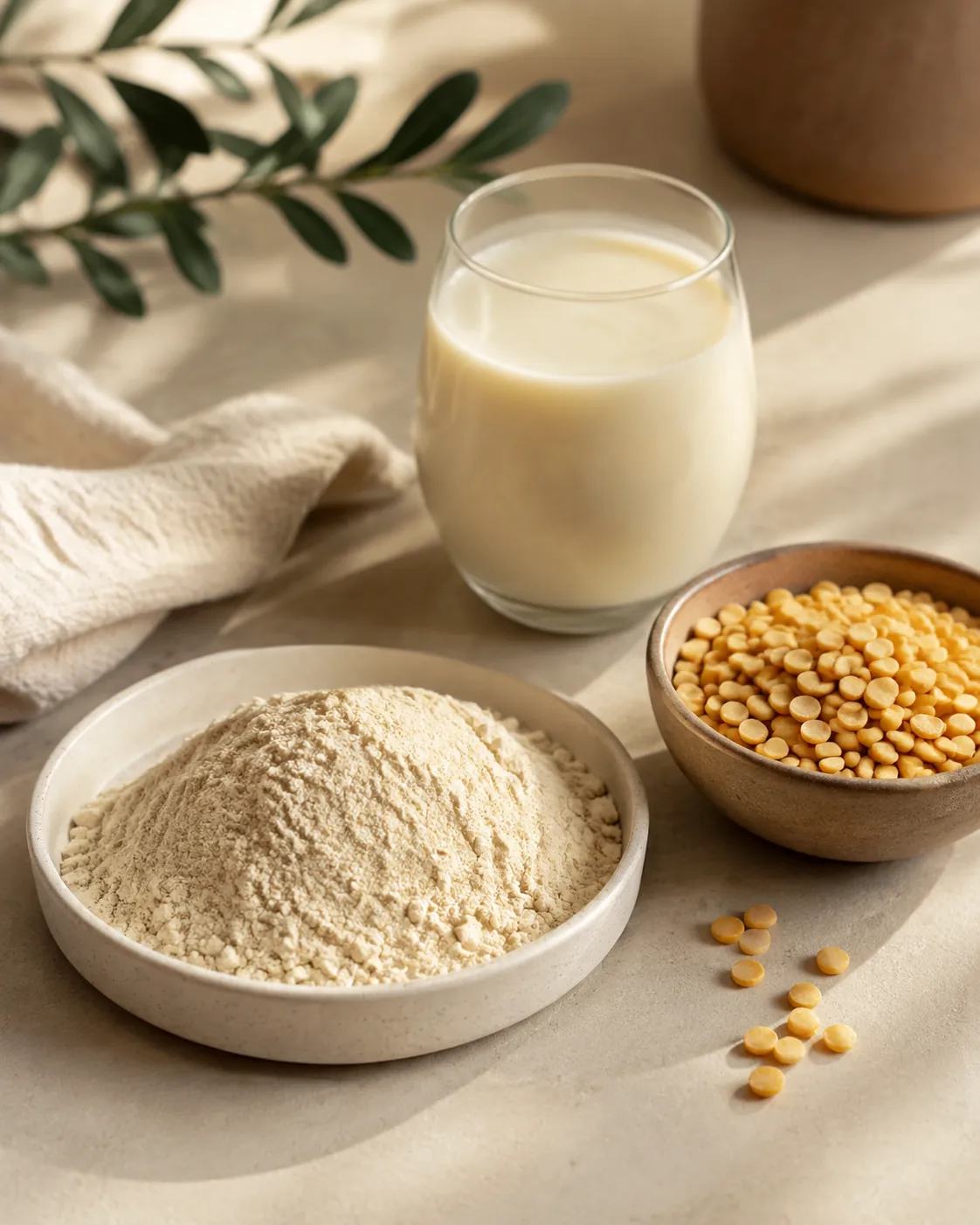
The base ingredient is a protein isolate, produced by wet-milling, extracting and drying at industrial scale. There is no domestic equivalent, and buying isolate powder to reconstitute produces something closer to a shake than to a milk.
Blending whole yellow peas with water is possible and produces a drink that tastes emphatically of pea soup. The starch and fibre manufacturing removes are exactly the parts carrying that flavour, which is why making pea milk comes down to so few steps.
That makes pea milk the least transparent product in the category. With oat or cashew you can make a rough version at home and understand what the carton is doing, and here you have to take the process on trust.
How pea milk behaves in cooking and smoothies
Coffee gets the attention because that is where plant drinks are tested. Pea behaves differently elsewhere, and mostly better.
In a pan it behaves much as soy does.
Real protein means it thickens sauces and sets custards where almond and rice drinks cannot, and its neutrality is the practical advantage: it contributes body without contributing taste, which is what most cooking wants from a milk.
In black tea it works well, since tea has less acid to fight with than coffee does. In green tea and matcha the neutrality is a positive advantage, because nothing competes with a delicate flavour.
In cocoa it is among the better options. Protein gives body, the neutral flavour lets the chocolate lead, and the added oil supplies richness a low-fat plant drink cannot.
Hot cocoa
Among the best uses. Protein gives body and the neutral flavour lets chocolate lead.
Delicate teas
The neutrality is a positive advantage rather than merely harmless.
Anything sharp and cold
The weak case. Citrus and berries curdle it in the glass.
Where it struggles is anything cold and acidic. A berry smoothie heavy in citrus or sharp fruit can curdle it in the glass, and the same happens in a tomato-based sauce.
The fix in both cases is order rather than substitution. Blend the milk in last and briefly, or add the acid off the heat, and the protein never meets acid at full strength.
How to store pea milk
Pea milk is UHT-processed, which shapes both how it is sold and how it behaves once open.
Unopened cartons keep for months at room temperature, because the heat treatment is severe. Once open it wants refrigeration and lasts around five to seven days, which is shorter than dairy and typical for the category.
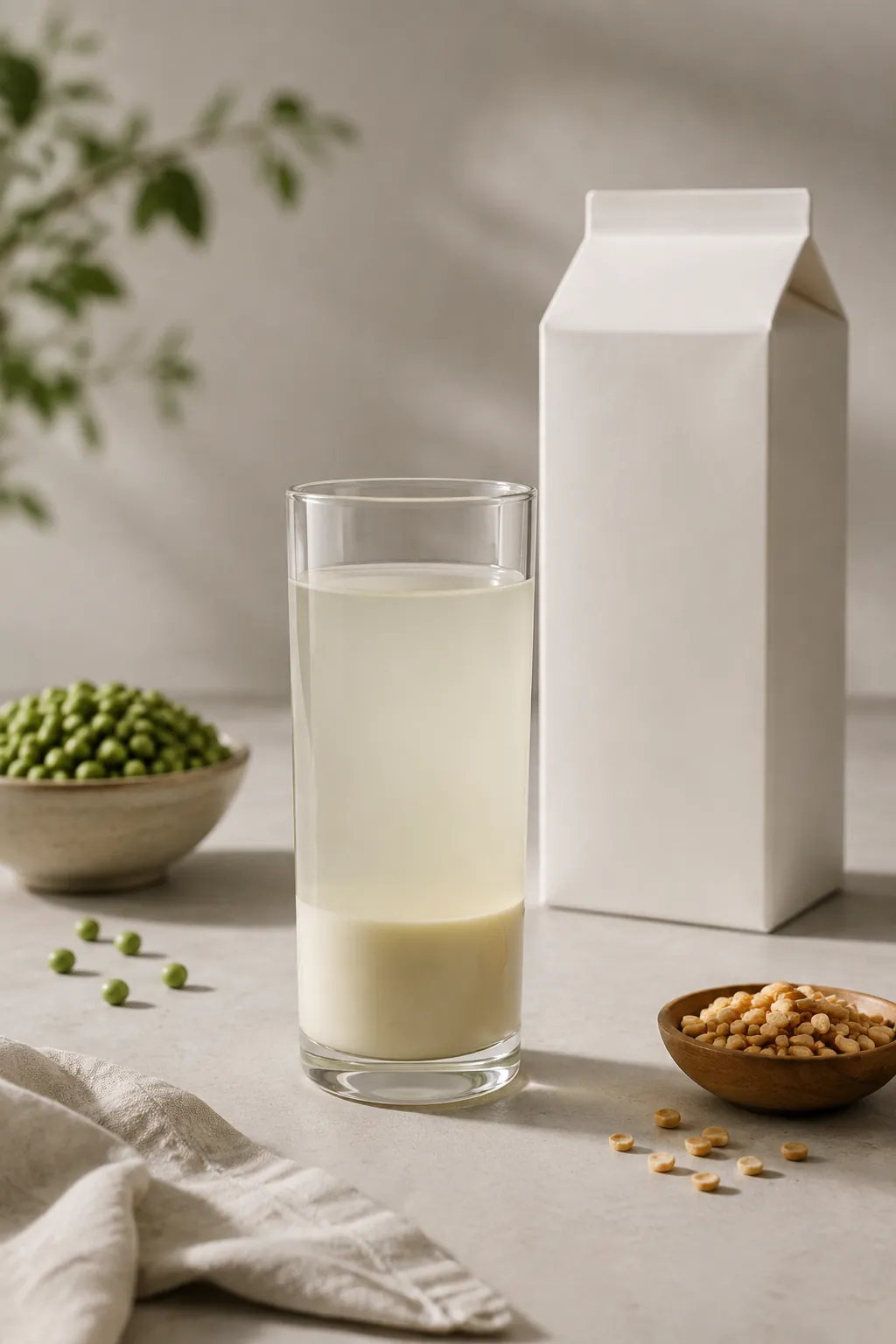
Separation in the carton is normal and reverses with a shake. The gellan gum holding oil and protein in suspension loses grip over time, and a layer at the bottom is settled solids rather than spoilage.
What is not normal is thickening or a sour smell. Both mean the carton has gone, and unlike dairy there is no gradual souring stage that is still usable in cooking.
Storing pea milk separates the ambient and chilled formats, which fail on different timescales.
Keeping it cold matters more than for a low-protein drink. Protein and oil in suspension is a less stable arrangement than water and starch, so a carton left out warms and separates faster than a rice or oat drink would.
Why pea milk costs more
Pea milk is consistently among the most expensive plant drinks on the shelf, priced by the processing rather than by the crop.
Yellow field peas are cheap and widely grown. Isolating protein from them is an industrial wet-milling process with several separation stages, and that cost carries all the way to the carton.
Compare that with oat, where the process is enzymatic and close to milling and steeping, or with almond, where nuts are ground and strained. Both are far simpler operations with fewer stages to pay for.
How much processing stands between the crop and the carton
- RiceMilled grain cooked with enzymes, then strained
- Almond and cashewNuts soaked, blended with water and strained
- OatOats milled, then enzyme-treated to release sweetness, then strained
- SoyBeans soaked, ground, cooked and strained, then deodorised
- PeaPeas milled to flour, protein separated from starch and fibre, dried to an isolate, then recombined with water and oil
The category is also young and made by fewer producers, so there is less competition and less scale. Prices have come down as that has changed, and pea still sits above soy for a comparable protein figure.
Where the price stops being worth it, what to use instead of pea milk is mostly a choice between soy's cost and oat's behaviour in a cup of hot chocolate.
Yellow peas are nitrogen-fixing and grown widely in temperate regions, which producers cite in contrast to almonds grown in dry climates. That is a claim about agriculture rather than about the drink, and this page does not extend it any further than that.
Why a carton says drink rather than milk
Naming rules vary by market, and they explain some otherwise confusing labels.
In the European Union, milk is a protected term for dairy, so a pea product is sold as a drink instead. Cartons read pea drink or pea-based drink, and the word milk appears nowhere on the front.
In the United States and several other markets, plant milk is permitted and the labelling is straightforward. That is why the same product carries different wording depending on where it is sold.
The ingredient list is unaffected by any of it and remains the reliable place to look. A carton calling itself a drink and one calling itself milk can be identical, and neither name says anything about how much pea protein is inside.
Common questions
Why is pea milk not green?
It is made from dried yellow field peas, not green garden peas, and from an isolated protein that is close to white. Nothing is bleached; the raw material is simply pale.
Does pea milk have as much protein as soy?
Yes, both sit at around 3.3 g per 100 ml, essentially matching dairy's 3.4 g. They are the only two common plant drinks in that range.
Does pea milk foam for coffee?
Reasonably well, because it carries real protein to build foam structure. It splits less readily than almond, though like soy it can curdle against a very acidic espresso. Barista versions buffer that.