What Is Rice Milk? Sweet Without Any Sugar Being Added
Rice milk is naturally sweet without any sugar being added, because enzymes break the rice starch into sugars during production. It is also the thinnest plant drink on the shelf, for the same reason.
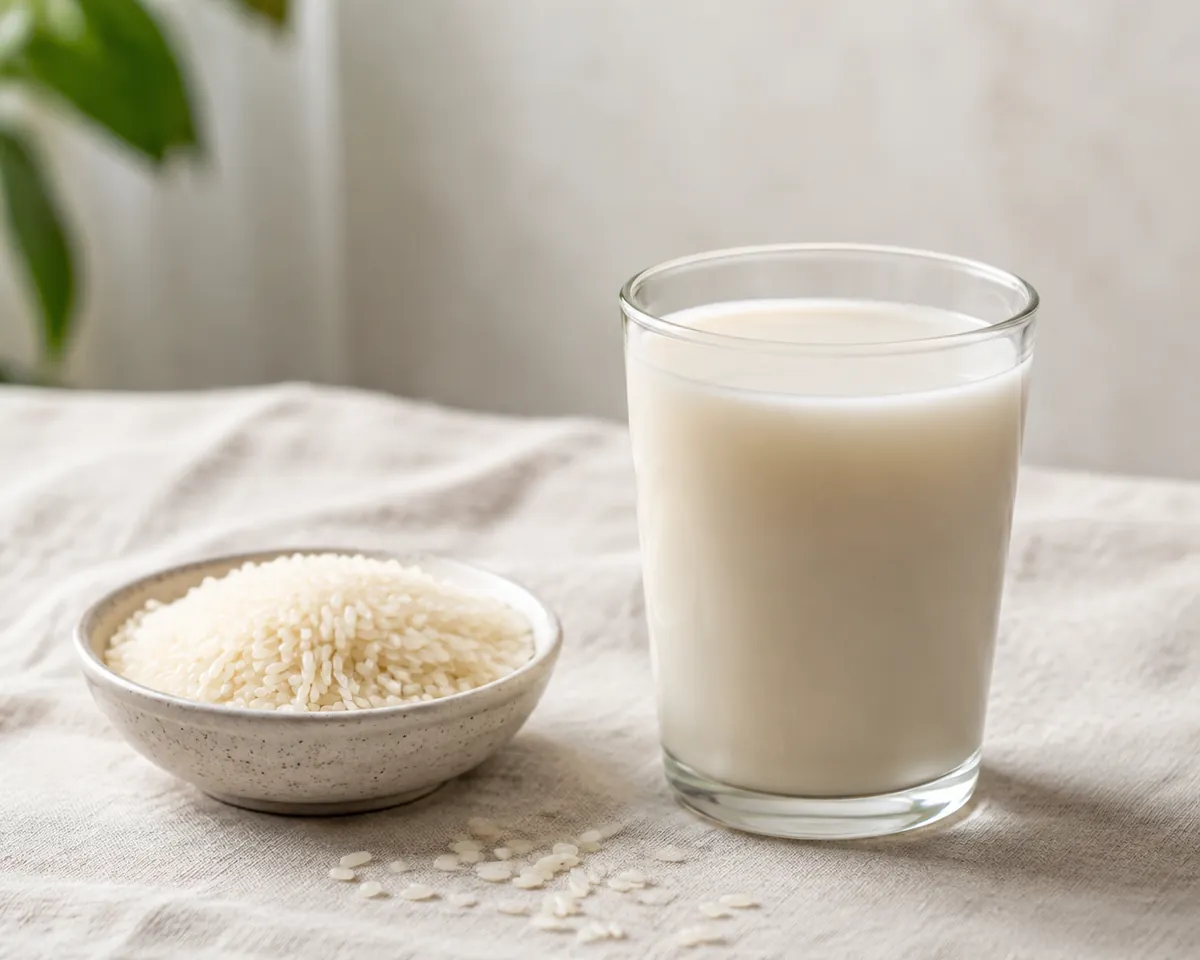
Rice milk is made by cooking rice, breaking its starch down with enzymes, and straining what is left. The sweetness people notice in the glass is produced during that process rather than added to it afterwards.
It is the mildest and the thinnest of the common plant drinks, and both of those properties come from the same step in the making.
Rice milk at a glance
- Made from
- Milled rice, water, enzymes, and usually a little added oil
- Sugar
- 5 to 6 g per 100 ml with nothing added, all of it converted starch
- Protein
- Around 0.1 to 0.3 g per 100 ml, the lowest in the category
- Body
- The thinnest of the plant drinks, and stabilisers do most of the holding together
- Taste
- Clean, mild and sweet, with very little aftertaste
- In coffee
- It will not foam, though it is among the least likely to split
Where the sweetness comes from when nothing is added
Rice is mostly starch, and starch is a long chain of glucose units that the tongue reads as bland rather than sweet. Enzymes, usually amylases, cut those chains into short sugars, principally maltose, and short sugars are sweet.
The whole character of the drink is decided by how far that cut is allowed to go.
Where the sugar comes from
- CookRice is cooked so the starch granules swell and become accessible.
- Add enzymesAmylase is introduced, or naturally present enzymes are activated by temperature.
- ConvertStarch chains are cut into maltose and glucose over a controlled period.
- StrainRemaining solids are filtered out.
- StopHeat deactivates the enzymes, fixing the sweetness at the chosen point.
No sugar is added, and the drink is still sweet. A producer choosing when to apply that final heat is choosing the sweetness of the finished carton, which is why two unsweetened rice drinks can taste noticeably different from each other.
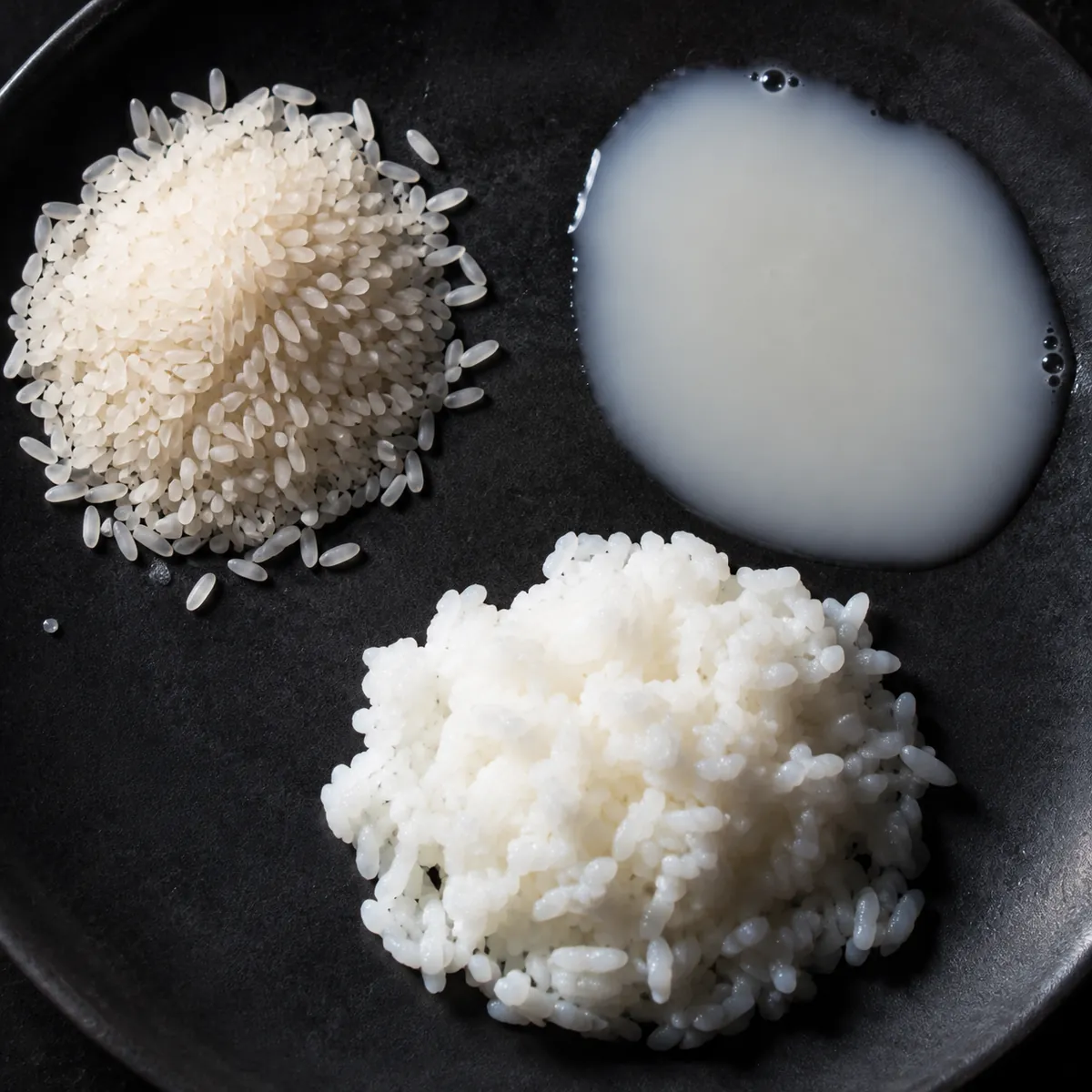
The same enzymatic step is what makes oat milk taste sweet, and the figures above are the reason a carton can carry the word unsweetened and still out-sugar a sweetened almond drink. Unsweetened here means nothing was added, not that there is little sugar in the glass.
Why converting the starch leaves nothing to hold on to
Starch is the only thing in rice that could have given the drink body, and the process exists to destroy it. Once a chain has been cut into maltose it contributes sweetness and effectively no viscosity, so what pours out of the carton is close to sweet water with a little oil dispersed through it.
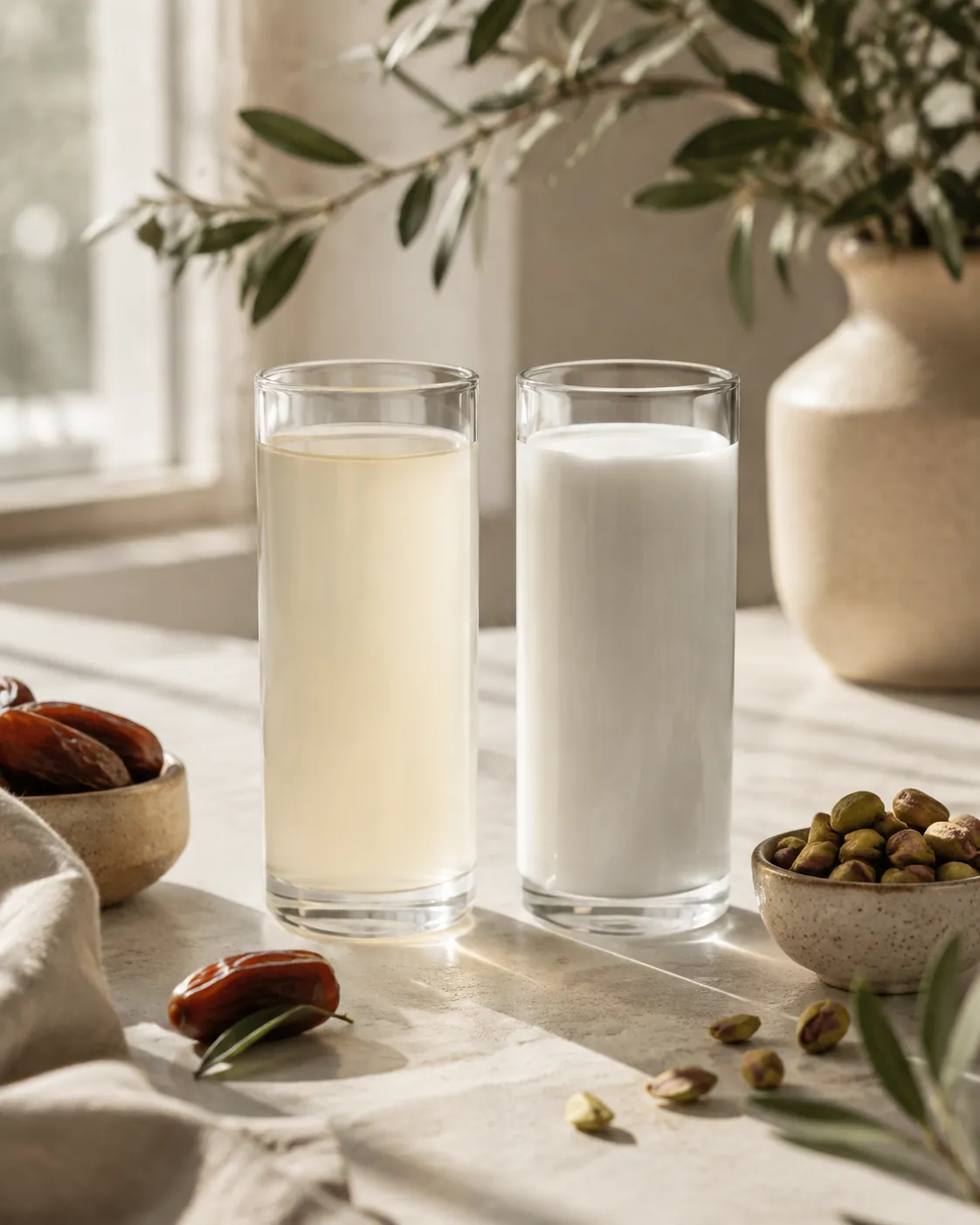
What is and is not in it
- Protein
- Around 0.1 to 0.3 g per 100 ml. The lowest of any plant drink
- Fat
- Very low unless oil is added, which many brands do
- Starch
- Largely converted, which is the point of the process
- Fibre
- Removed during straining
- Stabilisers
- Almost always present, because there is nothing else holding it together
That description of the composition explains both where it succeeds and where it fails, and it is not a criticism of the manufacturing. Rice has no protein worth extracting and the grain carries almost no fat, so there is nothing for a producer to build body from except added oil and gum.
Compare that with pea milk, where protein is the entire product, and the distance between the two ends of this category becomes obvious. Rice milk is the extreme case of a plant drink that is a flavour and a liquid rather than a structure.
The mildest thing on the shelf
Mildness is the selling point, and rice takes it further than any of its neighbours do.
How much flavour each plant drink brings
- RiceMild, clean, sweet. Almost no character of its own
- AlmondFaintly nutty
- OatCereal sweetness, noticeable
- SoyBeany and savoury
- CoconutStrongly and unmistakably coconut
The sweetness reads as clean and faintly cereal, closest to the water left in the pan after cooking rice, and it clears the palate quickly, because there is nothing fatty or proteinous to hold it there. Very little aftertaste is unusual in this category, and it is the quality worth buying the drink for.
What rice milk tastes like works through the brown and blended versions on the same axis.
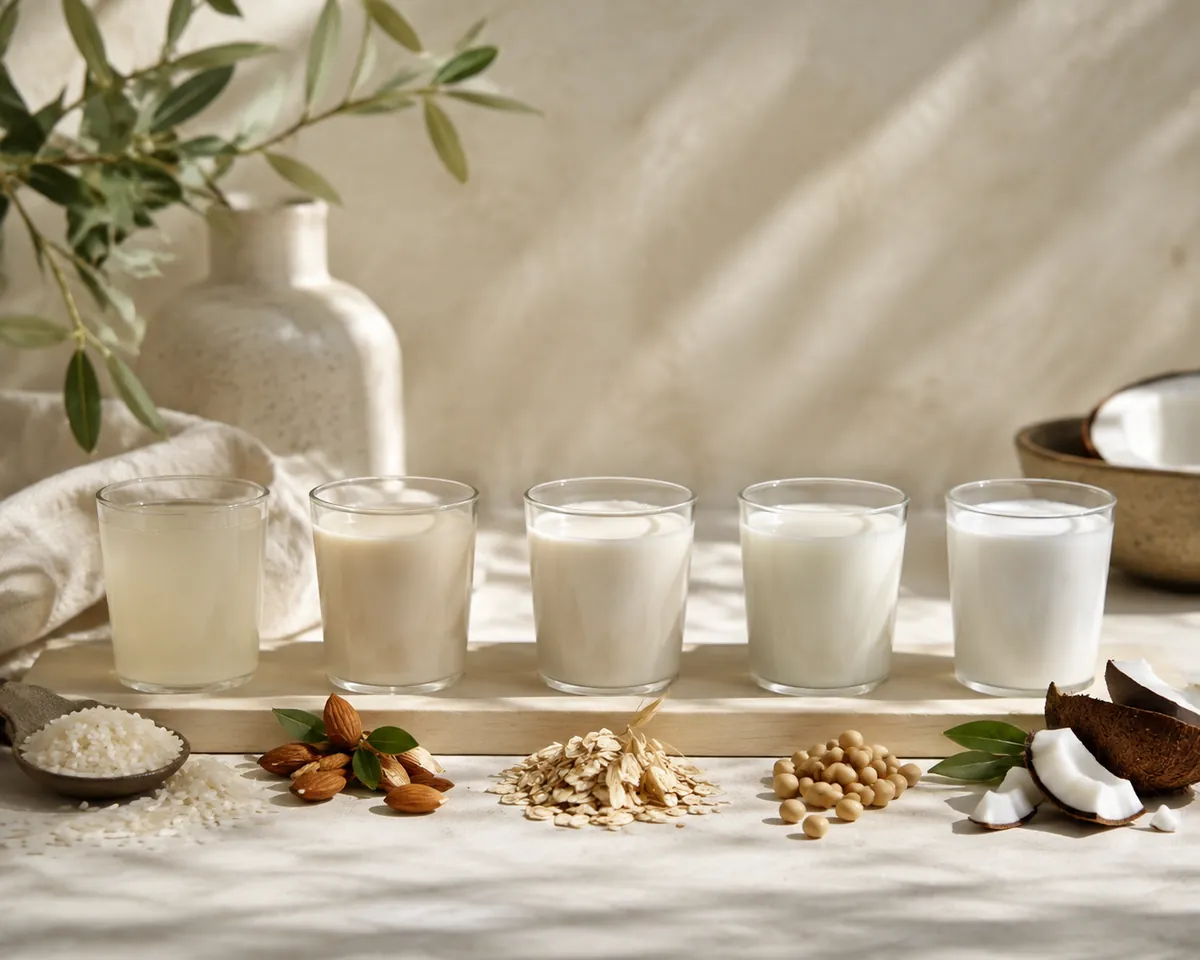
| Rice | Almond | Soy | Coconut | |
|---|---|---|---|---|
| Protein | Lowest | Very low | High | Very low |
| Natural sweetness | Highest | Low | Low | Moderate |
| Body | Thinnest | Thin | Full | Rich |
| Foams | No | Poorly | Best | Poorly |
| Flavour | Mildest | Faint, nutty | Beany | Strongly coconut |
Read across that table and rice sits at an extreme in every column, which is a useful thing to know before buying it as a general-purpose substitute. Soy milk occupies the opposite corner on each measure, and coconut drink is bought for precisely the thing rice was bought to avoid.
What happens when it meets coffee
Rice milk performs poorly in coffee, and both halves of the reason are already on this page.

Foam needs protein or fat to stabilise a bubble wall, and rice milk has almost neither, so a steam wand produces large bubbles that burst as fast as they form. A milk frother does no better, because the problem is the composition rather than the technique.
The second failure is subtler and more annoying: rice milk is contributing water and sugar rather than body, so it thins the cup as it lightens it, and a latte made with it tastes like a sweetened long black.
Barista rice formulations add oil and stabilisers, which buys some texture without touching the foam problem, and they are the sensible buy only if you take milk coffee long and black-adjacent. Cup acidity is the other half of the picture, since brewing water changes how sharp an extraction tastes, and thin coffee heads the list in rice milk problems.
The jobs it is genuinely good at
Coffee gets the attention because that is where plant drinks are tested against each other, and it is the one place rice milk should not be judged.
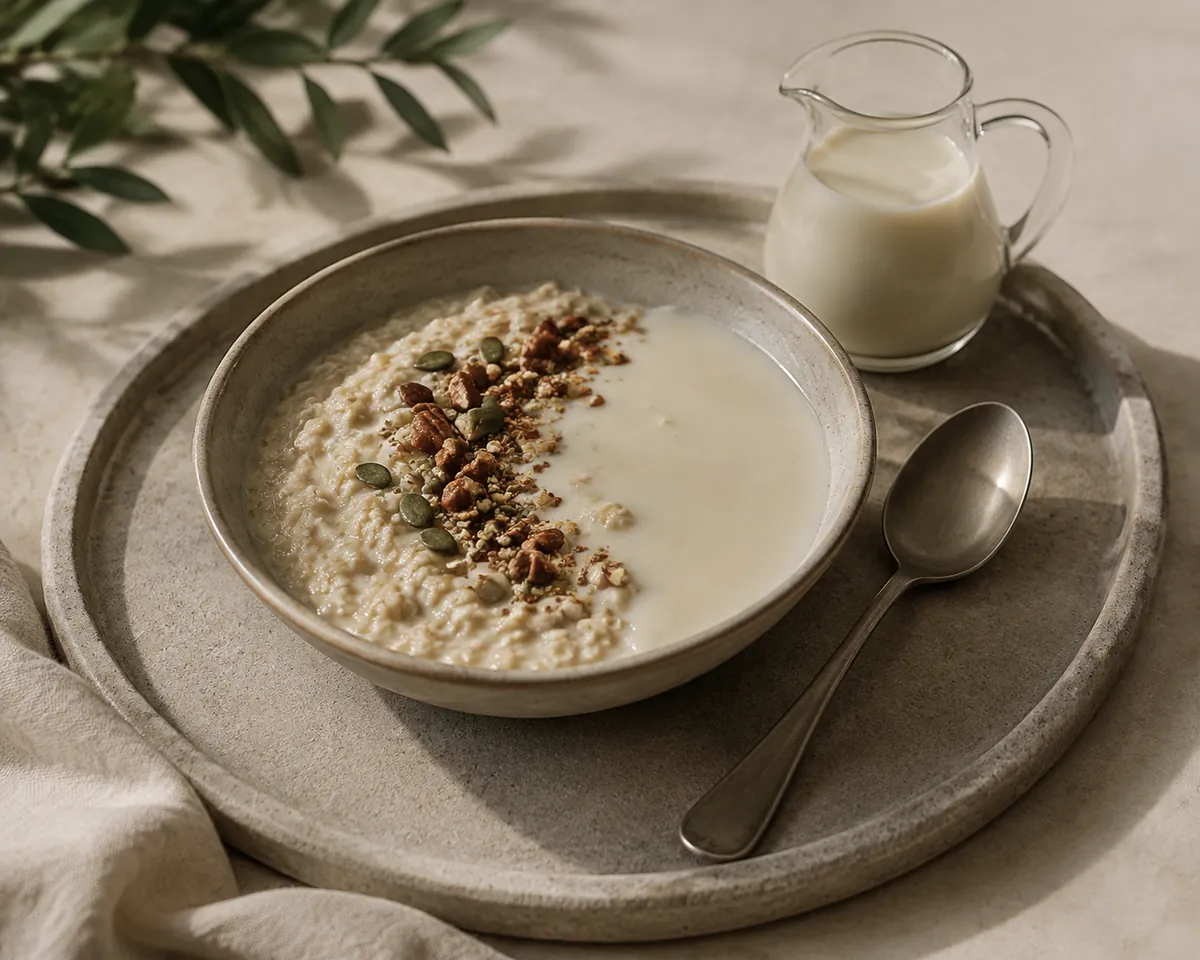
Cereal and porridge
Its sweetness suits breakfast, and thinness matters less against grains.
Baking
Works well in cakes and pancakes where liquid is liquid and sweetness is welcome.
Smoothies
The neutral flavour lets fruit lead, and the thinness is masked by the fruit.
Rice pudding
Naturally, and the sweetness means less sugar is needed.
Horchata
The traditional Spanish and Latin American rice drink, which is a close relative.
What those uses have in common is that something else supplies the body. In a bowl of porridge the oats do it, in a cake the flour and egg do it, and in a berry smoothie the fruit does it, so the drink is asked only to be sweet and to get out of the way.
Where it goes wrong is anything that needs the liquid itself to build something: custards will not set, white sauces stay loose, and savoury dishes come out oddly sweet. Buying it as a default milk substitute is the common mistake, and it leads to thin coffee and sugary gravy in the same week.
It contains no nuts, soy or gluten, which is a statement about what is in the carton rather than advice of any kind, and where the thinness is the problem what to use instead of rice milk is really a question about which of those jobs you need done.
Horchata, and why a home batch is a different drink
Rice milk has a traditional relative that tastes considerably better than the carton, and comparing the two is the quickest way to understand what the enzymes take away.
Spanish horchata is made from tiger nuts rather than rice. The Mexican version is rice-based: rice soaked with cinnamon, blended, strained and sweetened, and served very cold over ice.
Mexican-style horchata, roughly
- White rice
- 200 g, uncooked
- Water
- 1 litre, plus 500 ml to dilute
- Cinnamon
- One stick
- Method
- Soak rice and cinnamon overnight, blend, strain twice through fine cloth
- Sweeten
- To taste, plus a little vanilla
- Serve
- Very cold over ice
Nothing in that method converts starch, so horchata keeps the body a carton has had removed: it is cloudy and slightly starchy, and its sweetness is added rather than produced. That difference in body is the whole gap between a drink and a liquid.
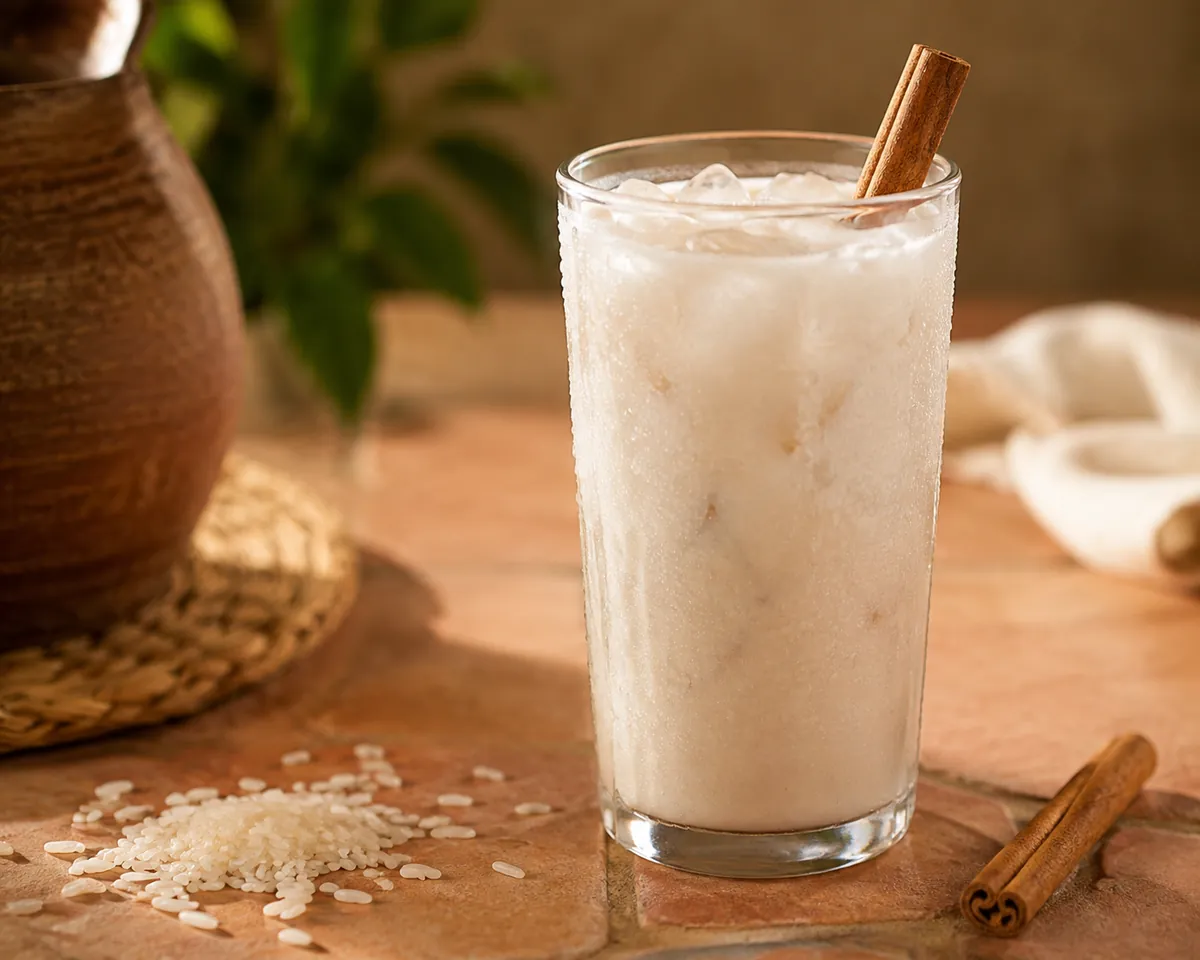
Anything you make at home lands nearer horchata than the carton, because domestic kitchens have no amylase and no way to stop it at the right moment, which is why making rice milk produces a starchy suspension that separates within the hour.
What a very short ingredients list still hides
Rice milk carries one of the shortest panels in the plant drinks aisle, and the few lines on it decide almost everything about how the carton behaves.
- Check for added oil, which most brands include and which carries most of the body.
- Look for added calcium and vitamins, since rice contributes essentially none.
- Brown rice versions taste nuttier and slightly less clean than white.
- Check for a barista designation if you intend to use it in coffee, though expectations should be low.
- Compare sugar figures knowing that none of it was added; it is all converted starch.
The oil line is what separates a pleasant carton from a watery one, since it is supplying every scrap of body the drink has.
Blending is the other variable, and a large share of cartons fronting rice are mixed with something else to patch the obvious gaps: rice and coconut is the common pairing, where the coconut fat adds weight and a little foam while the rice keeps the flavour mild, and rice and almond is mostly a price decision, since rice is the cheaper base by a distance.
Blends are an honest attempt to fix a single-ingredient drink's weaknesses rather than a dilution of it, and they frequently succeed.
White rice, brown rice, and rice syrup
Two cartons sold under nearly the same name can hold noticeably different drinks, and the grain is the reason.
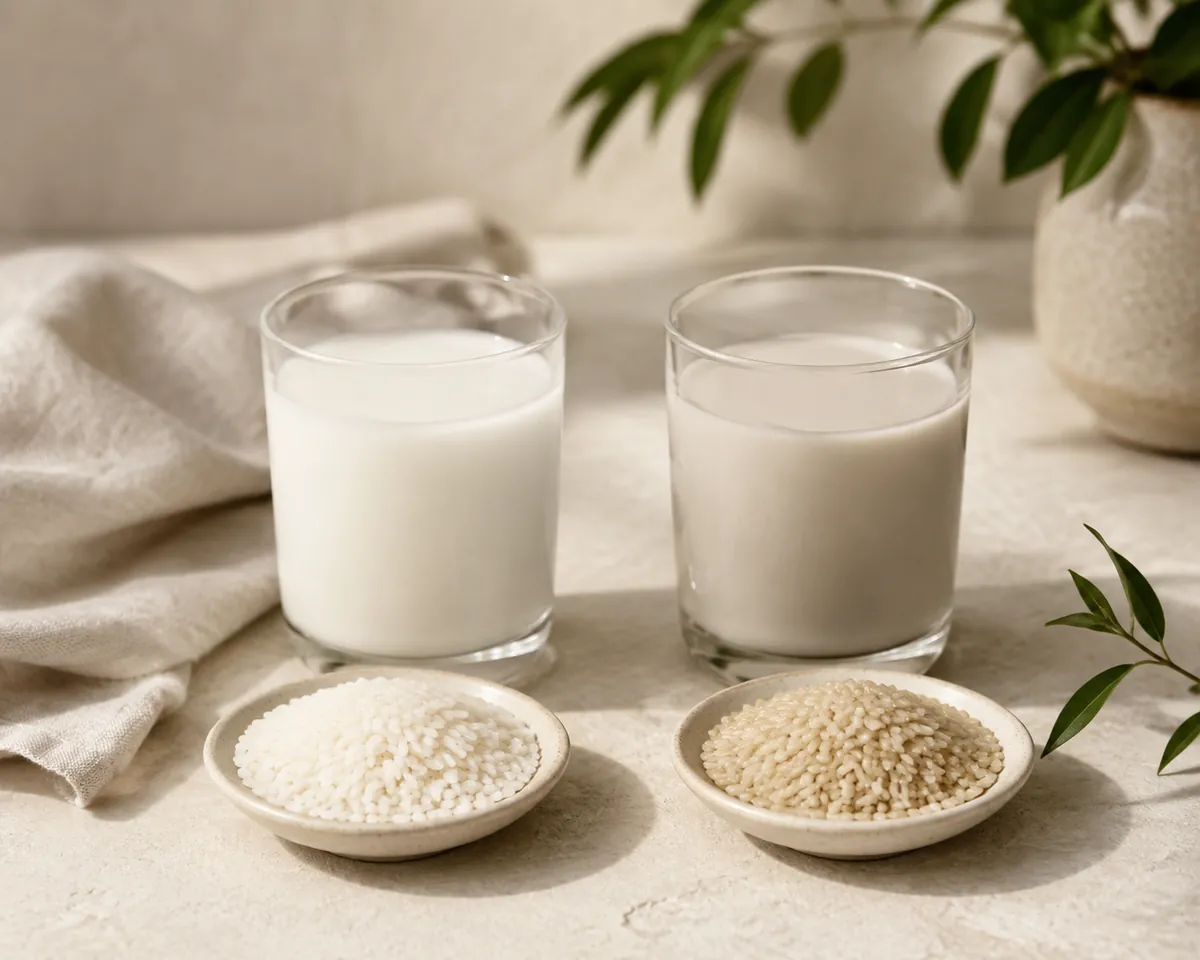
Brown rice keeps its bran and germ, which carry oil and a good deal more flavour, so a brown rice drink tastes nuttier and faintly toasted and pours a visible beige. It also runs slightly less sweet, since less of the grain is available starch for the enzymes to work on.
White rice gives the clean neutral sweetness the category is bought for, and it is what most producers use.
Choosing between them
- White rice
- Cleaner, sweeter, more neutral. The standard
- Brown rice
- Nuttier, fuller, slightly less sweet
- Colour
- Brown versions are noticeably beige rather than white
- Price
- Brown is usually a little higher
- Best for
- White for neutrality, brown where a little flavour is welcome
Grain quality matters far less here than it would anywhere else, because the rice is being taken apart chemically regardless: broken grains and milling fractions are normal and are not a fault. Some producers skip the grain entirely and start from rice syrup, which is the same conversion carried out earlier in the supply chain.
Neither version foams, so the choice between them is entirely a question of flavour.
How a carton of rice milk goes off quietly
Spoilage here is less dramatic than in the rest of the category, which makes it easier to miss until the drink is in the bowl.
A soy or cashew carton that has turned announces itself by thickening or curdling, because there is protein in it to coagulate. Rice milk is largely sugar and water with a trace of oil, so it has nothing to seize up with.
It goes sour at the edges instead, and it pours on the last day looking exactly as it did on the first. Smell it rather than trusting the appearance.
Unopened ambient cartons keep for months on a cupboard shelf, and five to seven days refrigerated is realistic once opened, with separation between pours being normal and reversible. Freezing is a poor idea: the stabilisers break and the drink thaws watery and grainy, and the sugar concentrates unevenly as it does so.
Storing rice milk covers the ambient and chilled formats, which behave differently once the seal is off.
Why it is the cheapest carton in the aisle
Price is the last reason people pick it up, and it is the one that holds up best under examination.
Rice is the cheapest base ingredient in the category by a wide margin, and the conversion uses very little of it, so a carton of largely water, converted starch and a spoonful of oil starts from a low ingredient cost. Enzymes add expense but are dosed in tiny quantities and work efficiently at scale, and nothing about the process is labour-intensive in the way that soaking and pressing nuts is.
Low price here reflects a low ingredient cost rather than a corner cut somewhere.
The useful consequence is that the gap between a cheap rice milk and an expensive one is much narrower than the equivalent gap in almond or coconut, because there is far less in the formulation to vary. Spending more buys added calcium, organic certification or a little more oil, and it does not buy a different drink.
That predictability is worth something in a category where two cartons of hot chocolate made with different plant drinks can taste nothing alike.
Common questions
Why is rice milk sweet if no sugar is added?
Enzymes break the rice starch into shorter sugars, mainly maltose, during production. The sweetness is created from the rice itself, which is why an unsweetened rice milk can carry more sugar than a sweetened almond one.
Does rice milk foam for coffee?
Not really. Foam needs protein or fat to stabilise the bubbles, and rice milk has very little of either. It produces large bubbles that collapse immediately. It does resist curdling well, for the same reason.
Can you make rice milk at home?
You can make a rice drink, but not the commercial product. Without added enzymes you get a starchy suspension rather than a converted sweet liquid. The result is closer to horchata, and it must be blended cold or it turns gluey.