What Is a Cappuccino? The Thirds, and What They Actually Do
A cappuccino is the drink people order when they want coffee with milk and something on top. The thirds that define it are a rule of thumb rather than a measurement, and almost everything that separates a good one from a bad one happens in the jug.
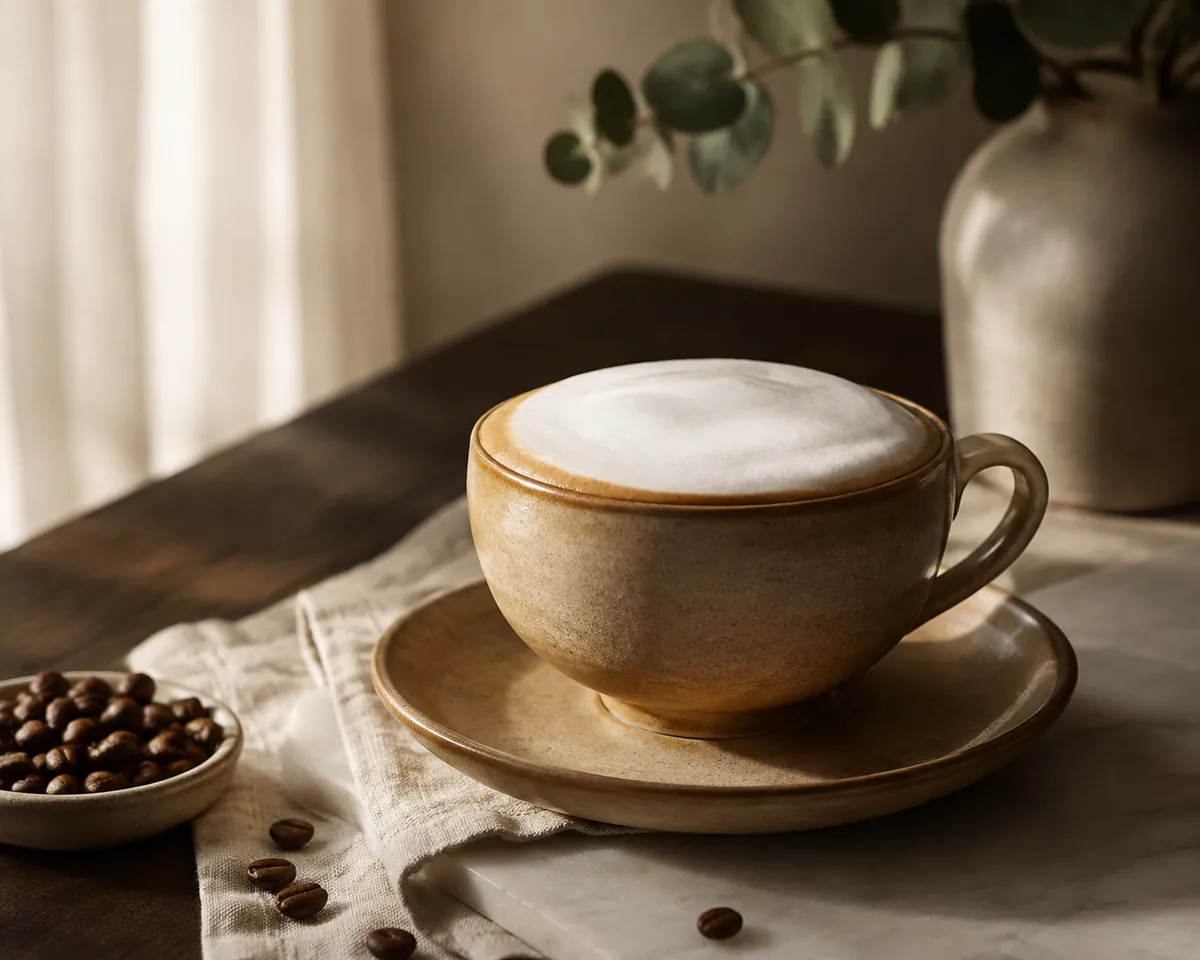
Order a cappuccino in Naples and in Melbourne and you get two different drinks. Both are espresso and milk, and everything that separates them happened in the jug, in the two or three seconds when air was going in.
A cappuccino is defined by its foam rather than by its size, its cup or its coffee, which is why every argument about what one should be turns out to be an argument about how much air is correct. Take the air out and it becomes a different drink with a different name.
A cappuccino at a glance
- What defines it
- The foam. Volume, cup and coffee are all secondary
- Espresso
- One shot in Italy, a double in most places that adopted it
- Total volume
- 150 to 180 ml, the size at which the thirds hold
- Foam depth
- 1 to 2 cm, standing proud of the milk beneath
- Milk temperature
- 60 to 65 C, above which the sweetness goes
- Cup
- Wide, short, thick-walled and warmed
- The two useful words
- Wet and dry, which ask for less foam and more foam
The thirds, and why they are a drawing rather than a measure
Equal parts espresso, steamed milk and foam is the definition most often quoted, and it is a useful picture rather than a usable measurement. Nothing in a cafe is ever measured in thirds, and the rule holds only at one particular volume.
A cappuccino, as usually built
- Espresso
- 1 shot, about 30 ml, or a double in most places outside Italy
- Steamed milk
- About 60 ml, poured under the foam
- Foam
- About 60 ml, sitting 1 to 2 cm proud of the milk
- Total volume
- 150 to 180 ml, which is the size that makes the thirds work
- Cup
- Wide and short, warmed
Pour the same shot into a 350 ml cup and the proportions collapse, which is why a large cappuccino from a chain tastes like a weak latte with a hat on. The rule is also newer than the drink: the Italian convention settled in the twentieth century around a small cup and a single shot, and the thirds are a training shorthand for that cup rather than a law that travels with the name.
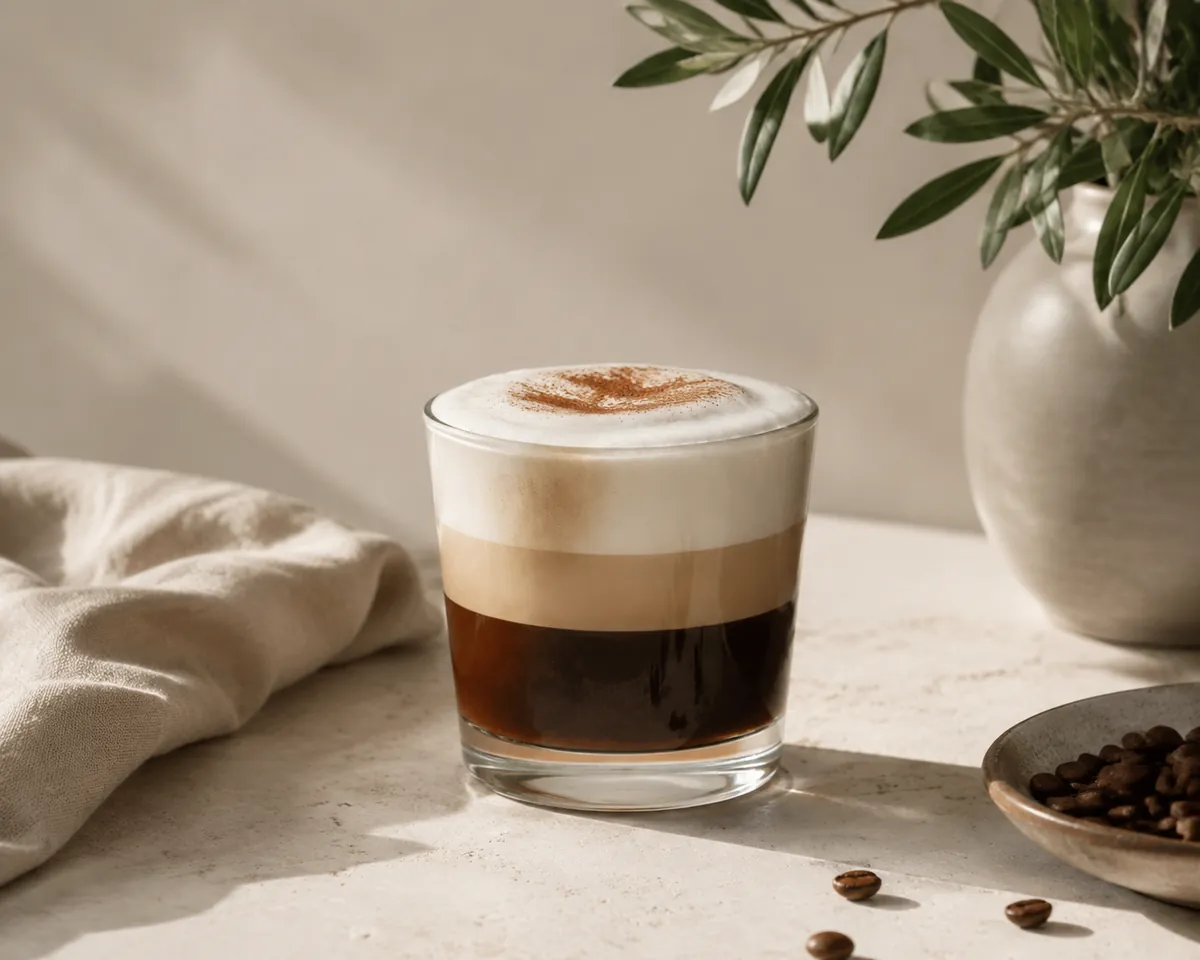
| Cappuccino | Flat white | Latte | |
|---|---|---|---|
| Air in the cup | Roughly a third of the volume | A few millimetres of it | A few millimetres of it |
| Cap depth | 1 to 2 cm, standing proud | 3 to 5 mm, folded in | About 5 mm, folded in |
| Liquid milk | About 60 ml | Most of the cup | Most of a much larger cup |
| Reads as | Airy, with the coffee forward | Dense and glossy | Long and mild |
Every argument about what a cappuccino should be is an argument about air, and the rest follows from it.
The three neat bands in that picture are the part to be sceptical about. A well-made cappuccino is not layered in the way the drawing suggests: the steamed milk and the espresso are folded together, and the only genuine separation is the foam cap resting on top of a single integrated liquid.
A drink that really does arrive in three visible stripes has usually been assembled by spooning rather than poured, and it will taste of milk first and coffee at the bottom.
Foam, froth, and how much air the milk will take
Two different substances answer to the name foam, and only one of them belongs in this cup. Stiff dry froth is air whipped into large bubbles that sit on the surface, drain back into the milk within a minute, and taste of very little while they last.
Microfoam is milk with air worked through it so finely that no individual bubble is visible. It is glossy rather than matt, it pours instead of being spooned, and it carries the sweetness that heating develops in the milk.
The difference is entirely in bubble size, and bubble size is set by how the air went in rather than by how much of it there is.
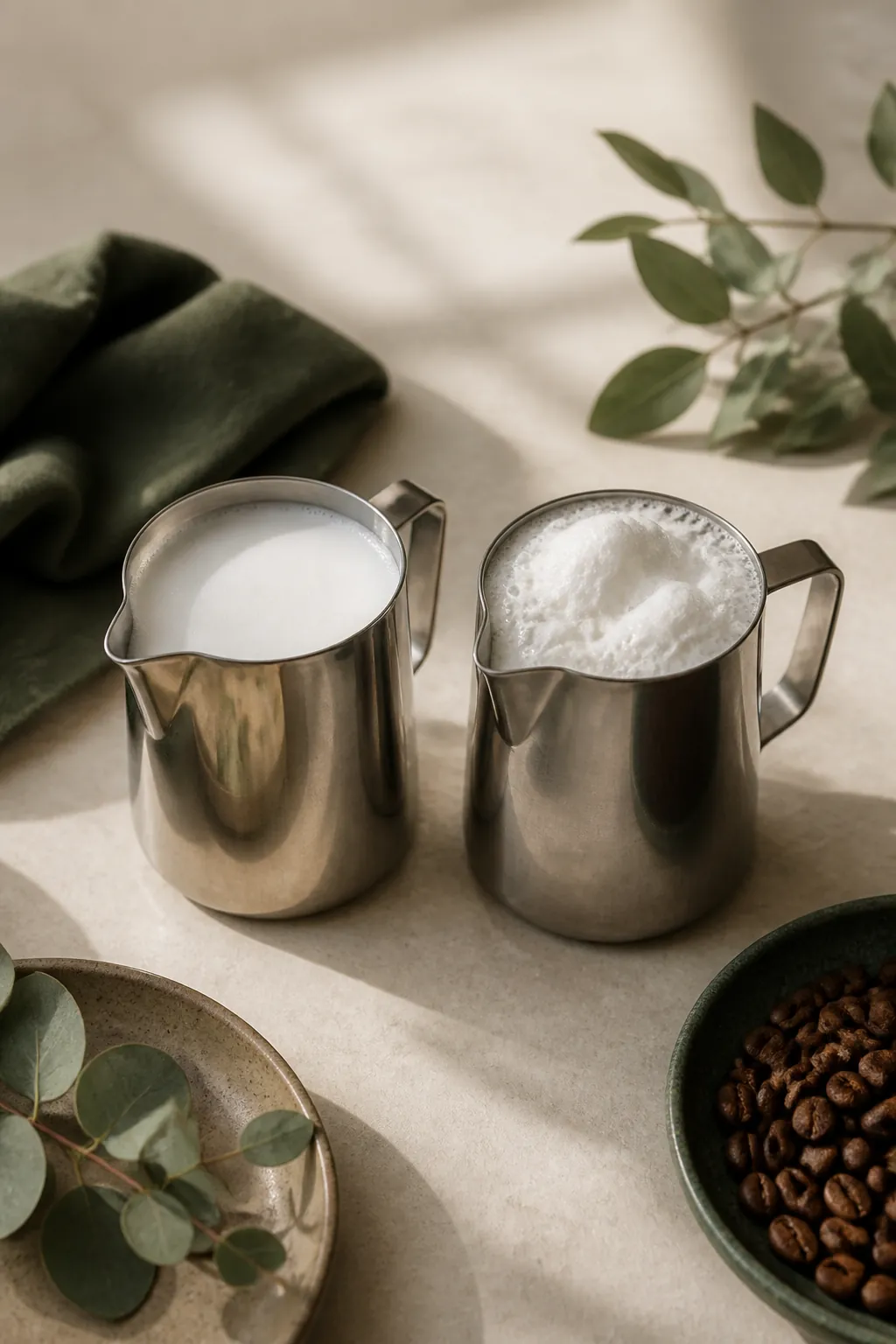
That limit on air is also the reason the drink refuses to scale. Foam volume is capped by how much air a given quantity of milk can hold while the bubbles stay small, so doubling the cup means doubling the milk, and a 300 ml jug aerated to the same texture is a considerably harder pour than 150 ml.
Most large cappuccinos solve the problem by adding milk instead of foam, at which point the name is doing marketing work rather than describing anything. If a cafe's large size is genuinely a cappuccino, it will have a second shot in it and a jug that was textured separately.
Wet, dry, and what the words actually buy you
These two words are the only reliable way to get the cappuccino you had in mind, and they are understood almost everywhere the drink is sold.

| Order | Foam | What arrives |
|---|---|---|
| Wet cappuccino | Less, folded through | Closer to a small latte, smoother, more milk in the mouth |
| Standard | Roughly the thirds | Distinct foam layer over milk over coffee |
| Dry cappuccino | Much more, spooned on | Mostly foam, very little liquid milk, coffee reads stronger |
| Bone dry | Foam only | Espresso with a foam cap and no steamed milk at all |
A dry cappuccino is neither a mistake nor a joke order, and the logic behind it is sound. Foam is mostly air, so taking the liquid milk out leaves the espresso less diluted while keeping the soft mouthfeel a bare shot lacks, and people who find a cortado too sharp and a latte too long often land here.
What you trade is heat and time. Foam has a fraction of the thermal mass of liquid milk and an enormous surface area, so a dry cappuccino cools noticeably faster than a wet one and is a drink to finish rather than to sit beside.
Wet is the safer order in a cafe you do not know, since it fails towards a small latte, whereas a badly made dry one is a cup of warm air with a shot underneath it.
Why the cup is wide and short
Width, height and wall thickness each do a specific job here, which is why a cappuccino cup looks nothing like a latte glass and cannot stand in for one. The cup is only the visible end of it; foam, milk volume and how fast each drink cools all move together, and cappuccino against latte sets the two side by side in full.
Wide
Gives the foam surface area, which is what lets it settle as an even layer rather than a dome. It also makes any pattern on top visible.
Short
Keeps the total volume near 180 ml, which is the only volume at which the thirds mean anything.
Thick-walled
Holds heat. A thin cup drops the drink several degrees before it reaches the table.
Warmed
A cold cup takes more heat out of 150 ml than most people expect, and foam collapses faster as it cools.

Of everything on a home coffee bench, this is the piece worth buying before a better machine. A correct cup improves a mediocre cappuccino more than a better grinder does, because the foam is what the drink is judged on and the cup decides whether the foam holds its shape for the length of time it takes to drink it.
The warming step is the one people skip and the one that costs most. Cups sitting on the top of an espresso machine are there for a reason rather than for display, and a minute under hot water achieves the same thing on a machine without a cup warmer.
The Capuchin colour, and why Italy stops at eleven
The drink is named after a colour, and the colour after a religious order. Capuchin friars wear a brown habit with a pointed hood, the cappuccio that gives the order its name, and Viennese coffee houses of the eighteenth century served a Kapuziner: coffee lightened with cream until it matched that brown.
The Italian cappuccino as it is now recognised is a twentieth-century drink that needed the espresso machine to exist at all. What survived the trip south is the name and the test buried inside it, and that test still works.
A cappuccino that looks white has too much milk in it, and one that looks black has too little, so the colour reports the ratio before you have picked the cup up.
Whether that timing has any basis beyond habit is not something this page can settle, and it works better as a description of what people order than as anything else. The drink itself is unchanged at any hour, and nothing about the cup knows what time it is.
Cocoa on top, and decaf underneath
Two changes get made to the standard build more often than any others, and both of them work on the same principle: a cappuccino's foam and milk cover a great deal, so what happens above and below them shows up less than you would expect.
Dusting cocoa is standard in some countries and considered an error in others, and both positions are defensible. The case against is that a well-made cappuccino already has sweetness from the milk and the cocoa buries the coffee under it.
The case for is that most cappuccinos are not well made, and a little bitterness on the surface gives a flat drink somewhere to go.
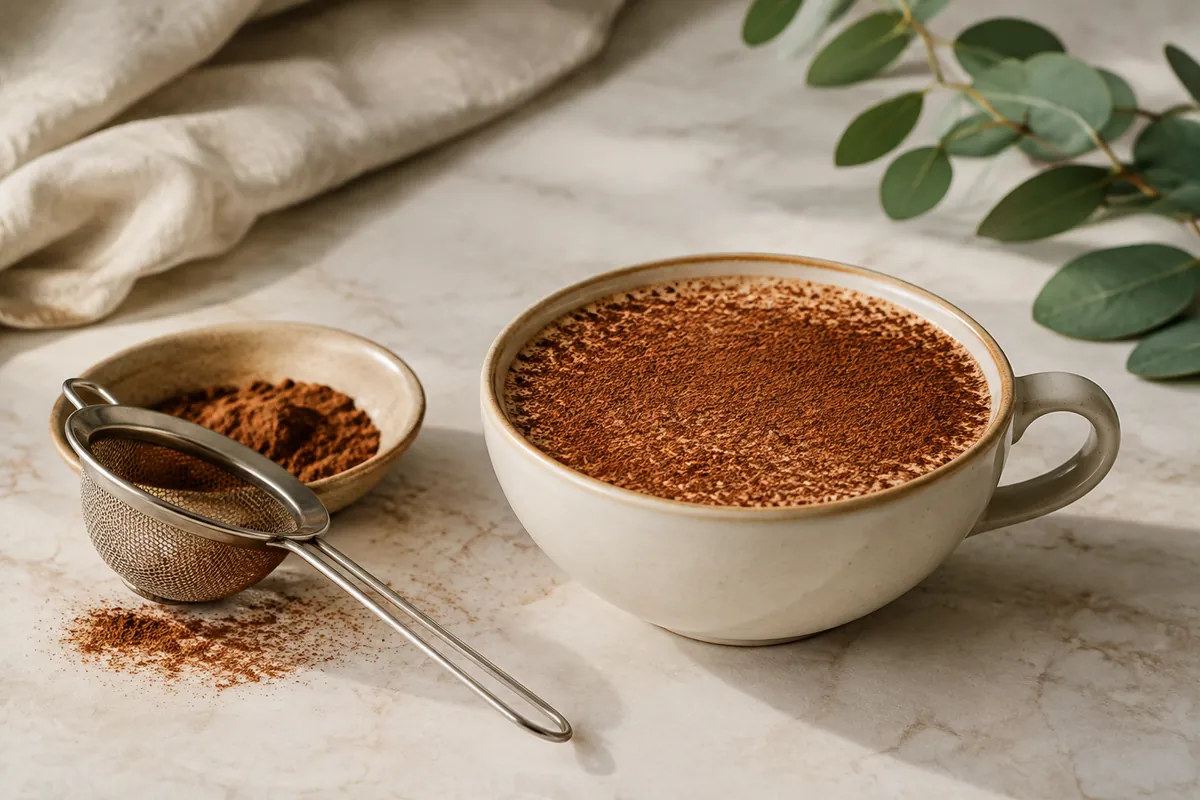
Unsweetened natural cocoa
The right choice if you dust. Sharp, low in sugar, and it dissolves into the foam rather than sitting on it.
Dutch-process cocoa
Darker and milder, and it colours the foam more dramatically for the same quantity.
Drinking-chocolate mix
Mostly sugar. It forms a crust on the surface and sweetens the first mouthful only.
Decaf behaves better in a cappuccino than in almost anything else, for the same reason. Decaffeination costs the beans a good deal of their aroma.
That loss is obvious in a straight shot and much less so under 120 ml of steamed milk, where the sweetness the milk develops fills part of the gap. Freshness is the thing to watch, because decaf stales faster than regular coffee, and a stale shot in a small milk drink reads as flat and papery rather than merely weak.
Making one without a steam wand
The foam is the difficult half at home, and it is also the half that can be faked convincingly with a jar and a microwave. Nothing about the method is elegant, and it produces a better cap than an underpowered domestic wand does.
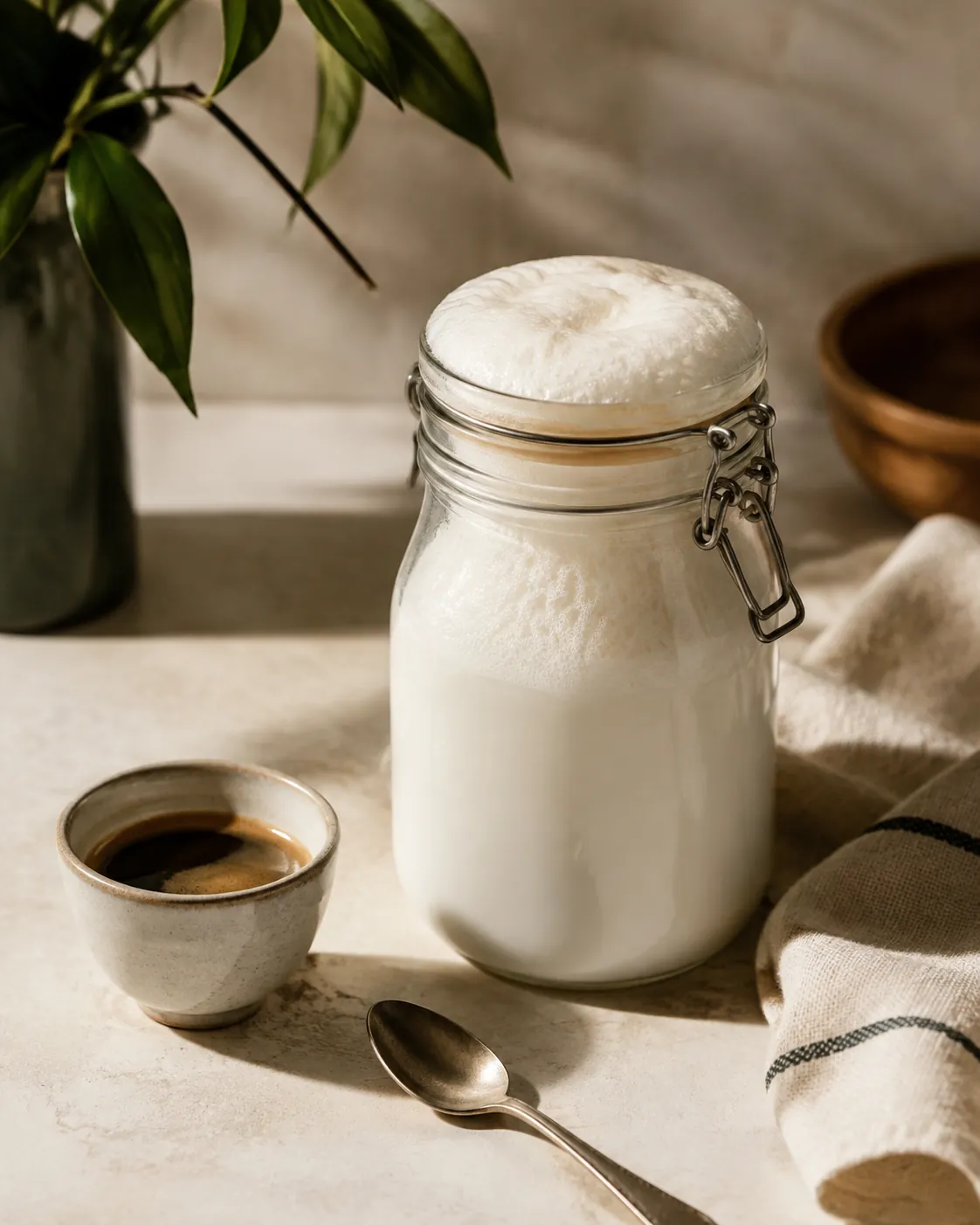
A cappuccino with a jar
- Pull or brew the coffeeA moka pot or an AeroPress concentrate both work. Aim for about 30 ml of strong coffee.
- Warm the cupFill it with hot water while you do the milk, then tip it out.
- Shake the milkPut 100 ml of cold whole milk in a jar with a tight lid, filled no more than a third, and shake hard for 30 to 45 seconds.
- Heat itMicrowave the open jar for about 30 seconds. The heat stabilises the foam and separates it cleanly from the milk below.
- Pour and spoonPour the liquid milk into the coffee first, then spoon the foam on top.
Shaking cold milk works because agitation drives air in while the proteins are still able to hold it, and the heating step afterwards sets what the shaking built. Doing it in the other order gives you hot milk and a few large bubbles.
A hand milk frother does the same job with less noise and gives a finer texture, though neither route reaches the sheen a steam wand produces.
The gap is smaller here than for any other milk drink, because a cappuccino wants foam volume rather than the glassy surface a poured pattern needs. Making a cappuccino begins by choosing the texture the available tool can actually produce.
Which plant drinks hold a cap
Protein or added stabilisers are what keep a foam standing, and the plant drinks differ sharply on both counts. A cappuccino asks more of them than any other coffee on the menu, because the cap has to survive being carried to a table rather than merely existing for the length of a pour.
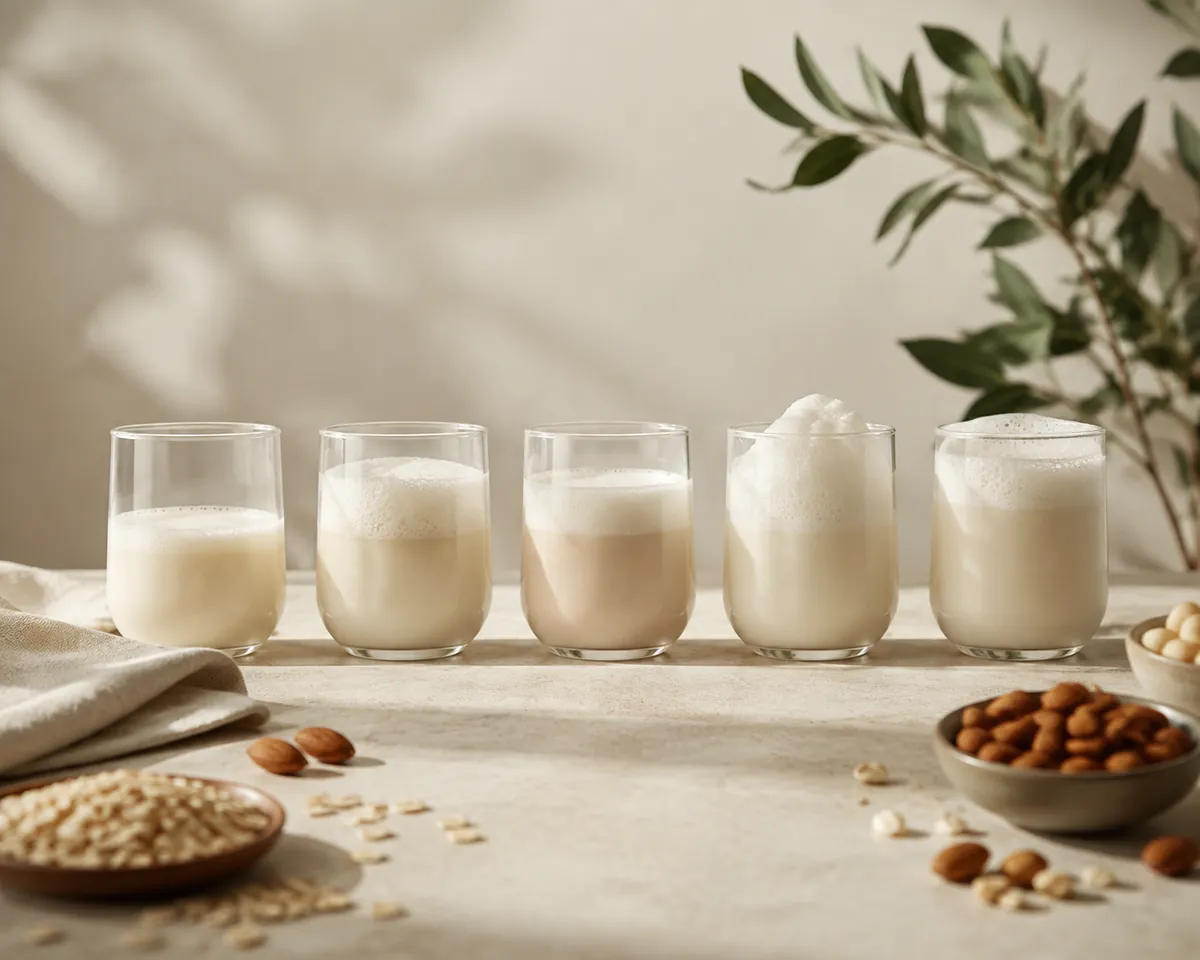
How well each one holds a cappuccino foam
- SoyHighest protein of the plant drinks and the closest to dairy for foam
- Barista oatAdded fat and stabilisers do the work the oat cannot
- Standard oatFoams softly and drops within a minute
- Cashew and coconutFat without protein, so the foam is loose
- Almond and riceVery little of either, and the foam is mostly large bubbles
The gap between a barista carton and a standard one is wider here than anywhere else on the menu. Oat milk in its ordinary form foams into something that looks right in the jug and has dropped by the time the drink is set down, while the barista version holds because fat and stabilisers were added specifically to do that job.
Soy milk is the reliable choice for a standing cap and carries a separate problem, since it also splits against a hot shot more dramatically than the others do. Warming it slightly before the espresso meets it reduces that, and why plant milk curdles covers the chemistry, which is a different failure from a foam that will not hold.
Reading a disappointing cappuccino
Five faults account for almost every bad one, and each has a visible cause you can correct on the next attempt.

| What you notice | Cause | What to change |
|---|---|---|
| Foam collapses in a minute | Aerated too coarsely, large bubbles | Introduce air for two or three seconds only, then submerge the wand |
| Tastes of hot milk | Too much liquid milk for the shot | Smaller cup, or order it dry |
| Thin and sharp | Cup too large for a single shot | Double shot, or a smaller cup |
| Scalded, slightly eggy | Milk taken past about 70 C | Stop at 60 to 65 C. The jug should be uncomfortable to hold, not painful |
| Foam sits in a lump | Milk not swirled before pouring | Tap and swirl until the surface is glossy |
The scalded note is the one most often blamed on the coffee, and it is almost always the milk. Past roughly 70 C the milk proteins change and the sweetness that made the drink worth having disappears, leaving a cooked flavour that no shot underneath it can cover.
Anyone who orders extra hot is asking for that flavour without knowing it.
The first row is the fault that separates a good cafe from an ordinary one, since it is invisible at the moment of service and obvious ninety seconds later. A cap that has sunk by the time you sit down was built from large bubbles, and no amount of skill in the pour will save milk that was aerated for too long, which is where common cappuccino faults begins.
Why iced barely exists, and the freddo that does
No settled iced cappuccino exists anywhere, and the foam is the reason. Cold milk foam is a different material: it holds because of protein rather than heat, it is denser and stiffer, and it sits on a cold drink as a separate cap instead of merging into it.
Most of what is sold as an iced cappuccino is an iced latte with some foam spooned over the top, which is a perfectly reasonable drink under an inaccurate name.
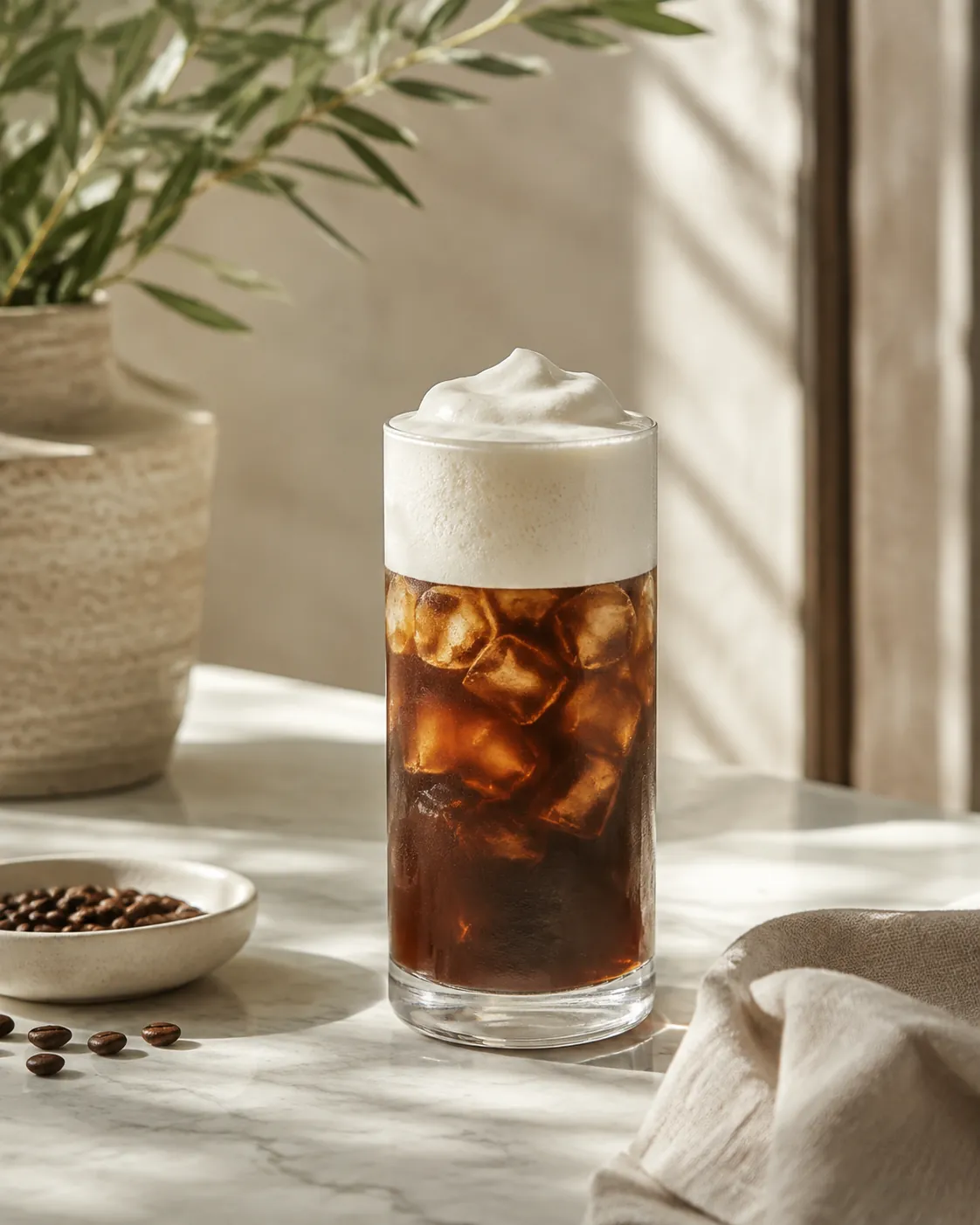
Greece and Cyprus settled the problem decades ago, and the answer is on every menu there.
Cappuccino freddo, roughly
- Espresso
- A double, chilled or shaken with sugar while hot
- Ice
- A tall glass, filled
- Afrogala
- 80 to 100 ml of cold milk, frothed 30 to 60 seconds until stiff
- Sugar
- Added to the coffee before shaking, never to the foam
- Served
- Unstirred, so the foam stays on top
A cappuccino freddo is espresso shaken or frothed cold, poured over ice and topped with afrogala: cold milk whipped with a handheld frother until it stands. The cap is stiff, white and spoonable, and it stays where it was put rather than draining into the drink, because protein is holding it rather than warmth.
The sugar has to go into the coffee while it is still hot, since nothing dissolves in the cold foam and a spoonful on top simply sinks through it.
If what you want is the texture rather than the drink, cold foam over cold brew reaches the same place by a shorter route, and the caffeine follows the shot count either way, as caffeine by brewing method sets out.
Common questions
Is a cappuccino stronger than a latte?
Per mouthful, yes, if both carry the same shot. A cappuccino is 150 to 180 ml against a latte's 240 to 350 ml, so the same coffee is spread through less liquid. In total caffeine the two are identical when the shot count matches.
What is the difference between a cappuccino and a flat white?
Foam depth. Both are around 150 to 180 ml on one or two shots, but a cappuccino carries 1 to 2 cm of foam and a flat white carries a few millimetres. The flat white therefore holds more liquid milk and reads denser and stronger.
Should a cappuccino have chocolate on top?
It is a regional convention rather than part of the definition. Dusting is standard in some countries and skipped in others, and unsweetened cocoa covers less of the coffee than a sweetened drinking-chocolate mix does.
Why does my cappuccino foam disappear so fast?
The milk was aerated too coarsely. Large bubbles drain back into the liquid within a minute, where microfoam holds. Introduce air for two or three seconds at the start of steaming, then keep the wand submerged.
Can you make a cappuccino with plant milk?
Yes, and the carton decides the result. Soy has the most protein and foams closest to dairy, barista oat is formulated with added fat and stabilisers, and almond and rice hold a thick foam poorly.