Why an Americano Tastes Worse Than the Shot It Came From
A shot you were happy with can turn harsh once hot water goes in, and most of the faults belong to the water rather than to the espresso.
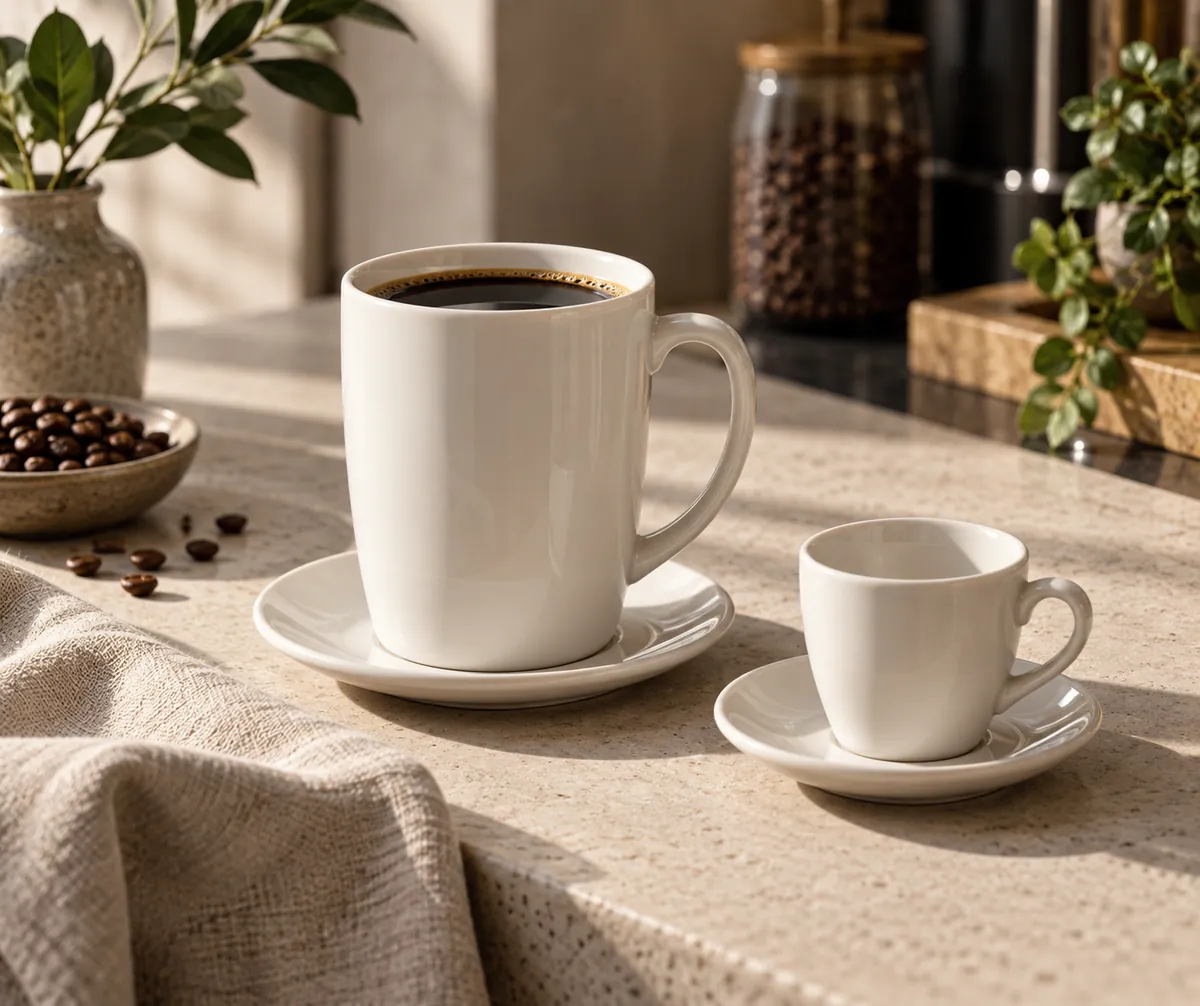
An americano in a mug has two ingredients, and most faults belong to the one nobody counts as an ingredient.
People pull an espresso shot they are happy with, add hot water, and get something harsher than what they started from. That is no coincidence, and the beans are not the cause.
How do you separate a shot fault from a water fault?
Split one espresso into two small cups before adding anything.
Taste the first as espresso and dilute the second with a measured amount of fresh kettle water, which keeps the coffee constant while the new ingredient changes.
The split-cup test
- Pull onceUse one even extraction and stir it before dividing
- Taste neatNote sourness, bitterness, sweetness, and finish in the first cup
- DiluteAdd three to four parts fresh water near 80 C to the second cup
- Compare warmLet both cool slightly and identify what appeared only after dilution
- ConfirmRepeat with a different water source only if the diluted cup changed
If both cups are sour, bitter, or hollow, repair the espresso extraction first and make sure the burr grinder can hold a repeatable setting. Dilution can expose that fault, but it did not create it.
If the neat shot is balanced and the americano is harsh, the useful suspects are water temperature, mineral character, crema, and ratio. Changing the grinder now would only destroy the control you just established.
This test also distinguishes thinness from under-extraction. A good but over-diluted shot tastes clean and weak, while an under-extracted shot remains sharp even at a shorter ratio.
Keep the shot constant while testing the water, because that turns a vague complaint into a correction you can repeat.
Why does it taste more bitter than the espresso it came from?
Water dilutes every dissolved compound by the same physical ratio, but your senses do not register all of them in lockstep.
Sweetness and body can become less obvious as water goes in, while bitter and drying notes may remain easy to notice. The drink can therefore seem proportionally harsher even though every soluble component was diluted in the same proportion.
Acidity seems to thin noticeably as well, so the brightness fades.
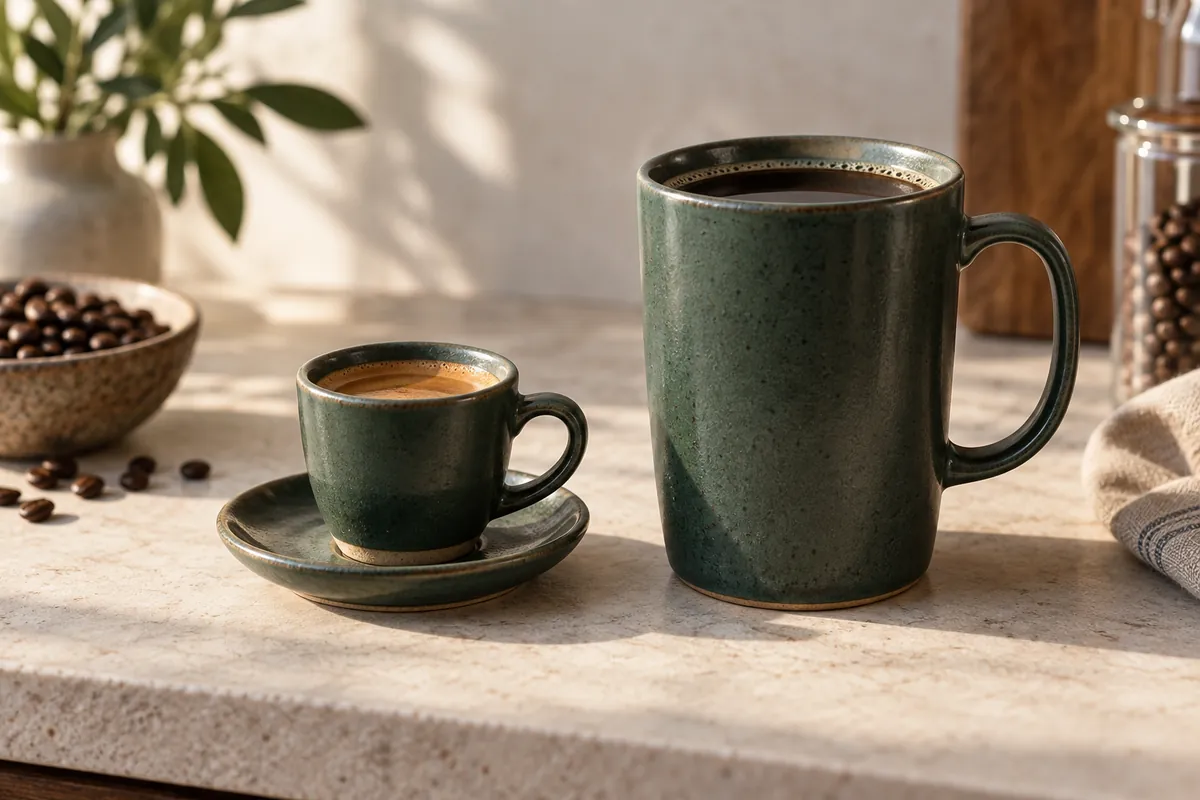
Forty grams of coffee is being spread across two hundred, and the parts of it that were holding the bitterness in check are the first things to go.
The crema makes it worse rather than better. It carries bitter oils and fine particles, and once the water breaks it those spread through the whole cup instead of sitting on top of a small one.
There is also nowhere to hide. A milk drink buries a rough shot under fat and sugar, and this drink puts the same shot in front of you with nothing over it.
Two faults are genuinely the coffee. A properly over-extracted shot tastes bitter here and everywhere else, a robusta blend more so again, and a very light roast comes through as sour rather than harsh.
Why does water from the machine make it worse?
On many machines the hot water tap is the culprit, because it can run hotter than anything touching coffee should.
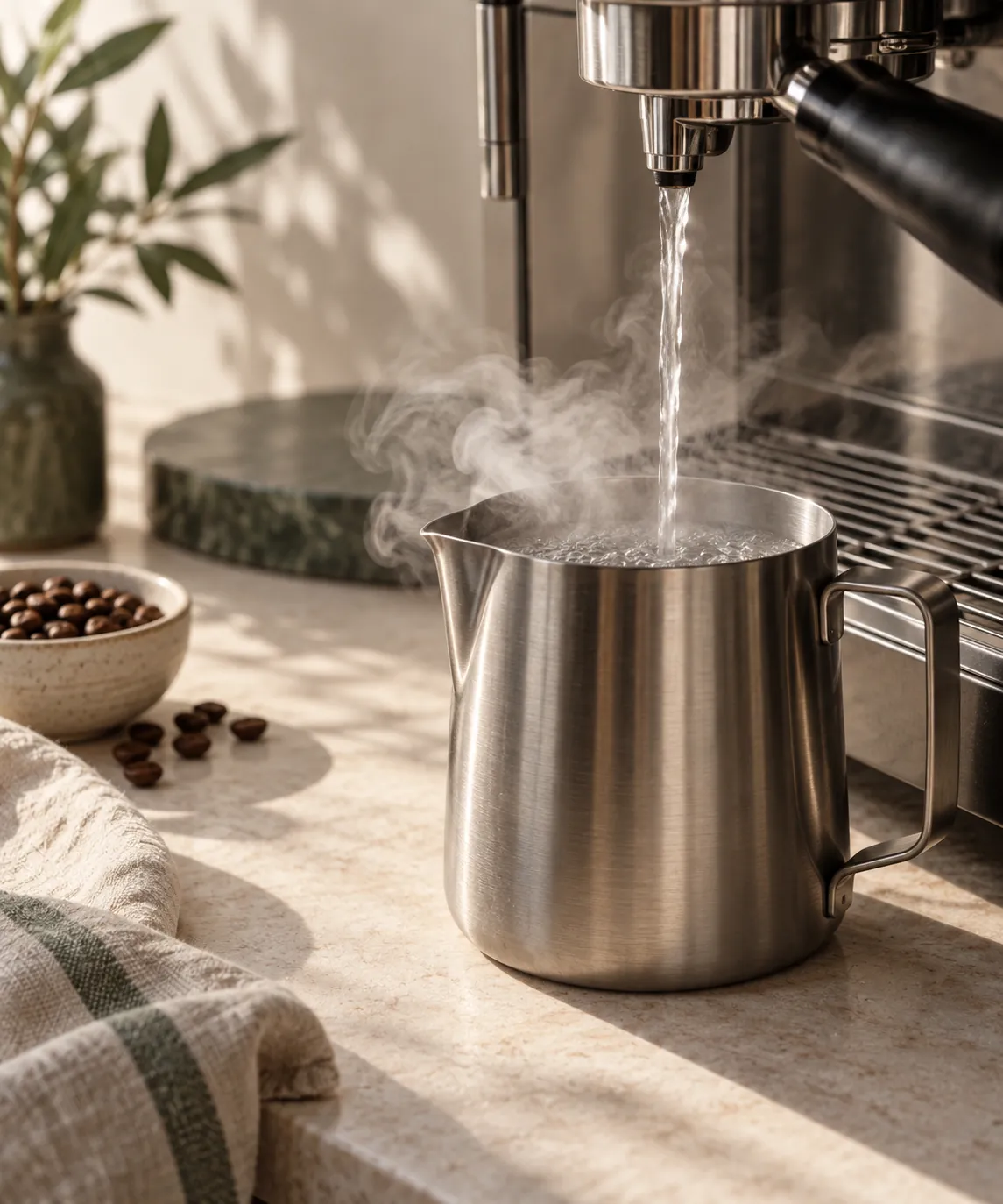
Near-boiling water cannot extract a finished shot again because the grounds are gone. It can make the drink seem harsher by pushing the serving temperature too high and by carrying scale or stale flavours from the boiler into a cup that is mostly water.
Temperature is only half the problem. Scale, mineral concentration, and coffee residue can affect water held in a machine, so taste the outlet water by itself before blaming the espresso.
A useful comparison is fresh water from a kettle at roughly 75 to 85 C. If that cup tastes cleaner, descale or service the espresso machine water path rather than changing the coffee recipe.
Some machines are fine, since a separate hot water circuit that mixes fresh cold water avoids most of this. If yours has one, you can look elsewhere for the fault.
A kettle is not automatically better, though, since old scale, lingering coffee oils in the cup, or strongly chlorinated tap water can follow the drink whichever appliance heated it.
What do chlorine, scale, and soft water taste like here?
An americano exposes brewing water more clearly than espresso because water makes up most of the finished cup. A defect that was faint in a 40 g shot becomes the background of every sip you take after dilution.
| What you notice | Likely water issue | Practical check |
|---|---|---|
| Swimming-pool or medicinal aroma | Chlorine or chloramine | Smell the heated water without coffee |
| Chalky, dull finish | High hardness or scale | Check the kettle and compare filtered water |
| Flat, empty cup | Very soft or heavily treated water | Compare a balanced bottled or filtered water |
| Metallic edge | Plumbing, stale boiler water, or a dirty vessel | Taste the hot water alone in a clean cup |
| Good aroma but thin flavour | Ratio rather than water quality | Reduce dilution before changing water |
Do not diagnose water through coffee alone, since tasting the water on its own is faster than spending several shots trying to infer a background flavour through espresso. Heat a small cup from the same source, let it cool enough to sip, and smell and taste it beside the finished drink.
Visible scale in your kettle is a useful clue, not a complete mineral test. Some hardness supports extraction and flavour, so replacing every mineral with distilled water usually creates a flatter cup rather than a cleaner one.
A carbon filter can reduce common chlorine odours, but it does not correct every dissolved mineral. The mineral-water guide explains why hardness and alkalinity affect flavour differently.
Clean the cup and kettle before blaming the supply. Coffee oils in a travel mug and old scale in a kettle can survive a water change, which makes a good test look ineffective.
What ratio should an americano be?
One part espresso to four parts, by weight.
A weighed starting point
- Espresso
- 40 g, a double
- Water
- 160 g
- Finished
- About 200 g in the cup
- Adjust
- Less water for body, more for length

The standard build sets this by cup size instead. The mug holds three hundred millilitres, so three hundred millilitres go in, and the shot underneath has no say in it.
That is how a fine espresso becomes a thin bitter drink. The ratio should follow the shot, not the vessel, and a large mug simply wants a second shot rather than more water.
Going shorter is a real option, and at one to two you have something much closer to espresso with a longer finish, which is worth trying if you keep finding the cup empty of flavour.
A long black usually uses less water than an americano, which is worth knowing before ordering one expecting a revelation.
Which goes in first, water or espresso?
Order decides whether the crema survives. Poured one way it stays, poured the other it breaks on impact.
Pull the shot over water already in the cup and the crema mostly survives. Pull it into the cup first and add water, which is the usual cafe order, and the water breaks the crema.
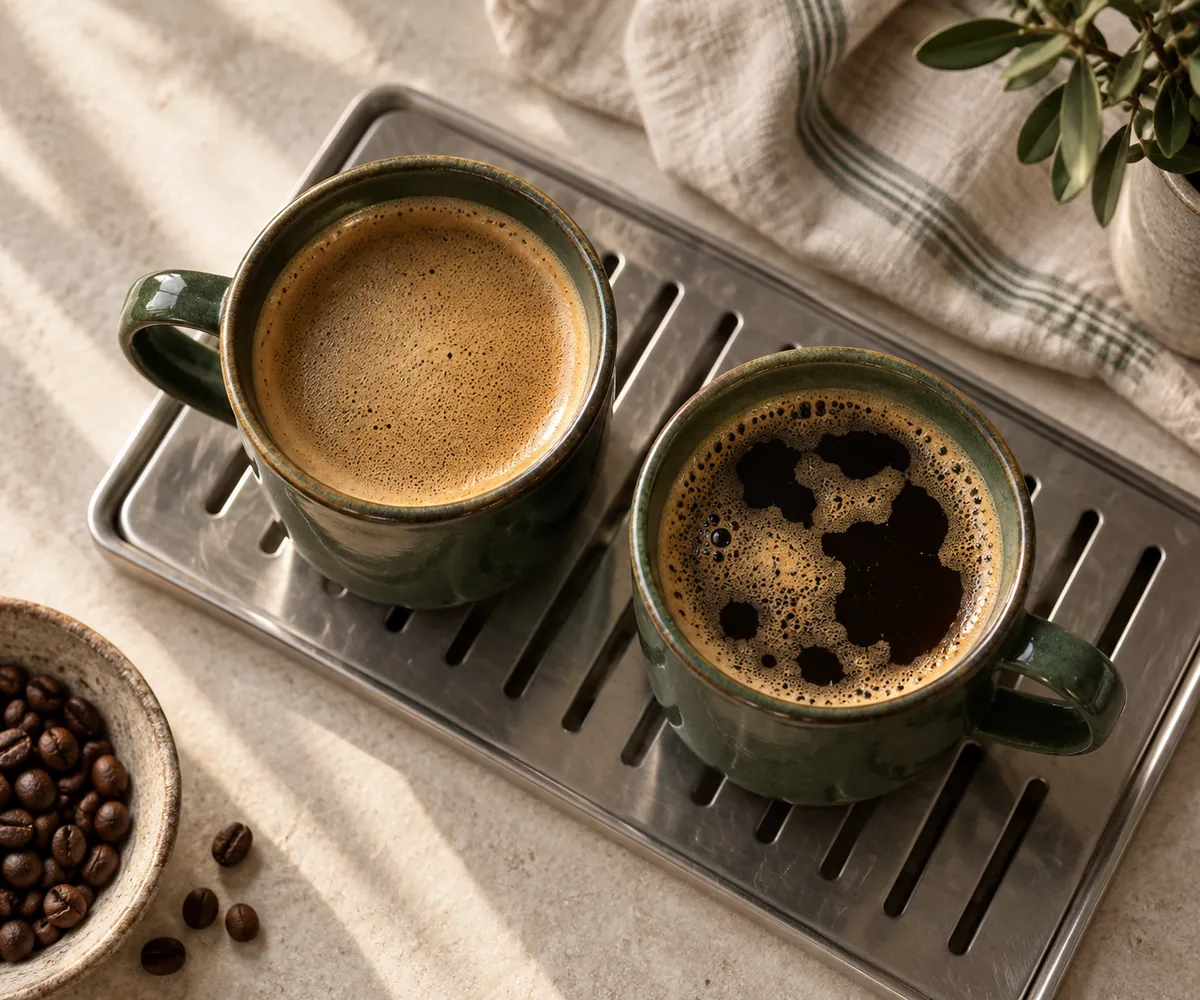
The order often separates the two names: espresso poured over water is usually called a long black, and water poured over espresso an americano, though cafes vary.
The order also changes what the shot meets first, since landing in water that has already cooled slightly is gentler than having near-boiling water poured onto it.
Keep the effect in proportion though. Pouring order matters less than water temperature by a wide margin, so if you fix only the order, you will be disappointed.
Stirring erases most of it anyway. If you stir the cup before drinking, the crema difference lasts about as long as the spoon takes to come out.
What does skimming the crema change?
It takes out a real source of bitterness, and it costs a little aroma.
A thin, patchy crema from a stale shot has little to remove, so skimming is not worth the bother in that case.
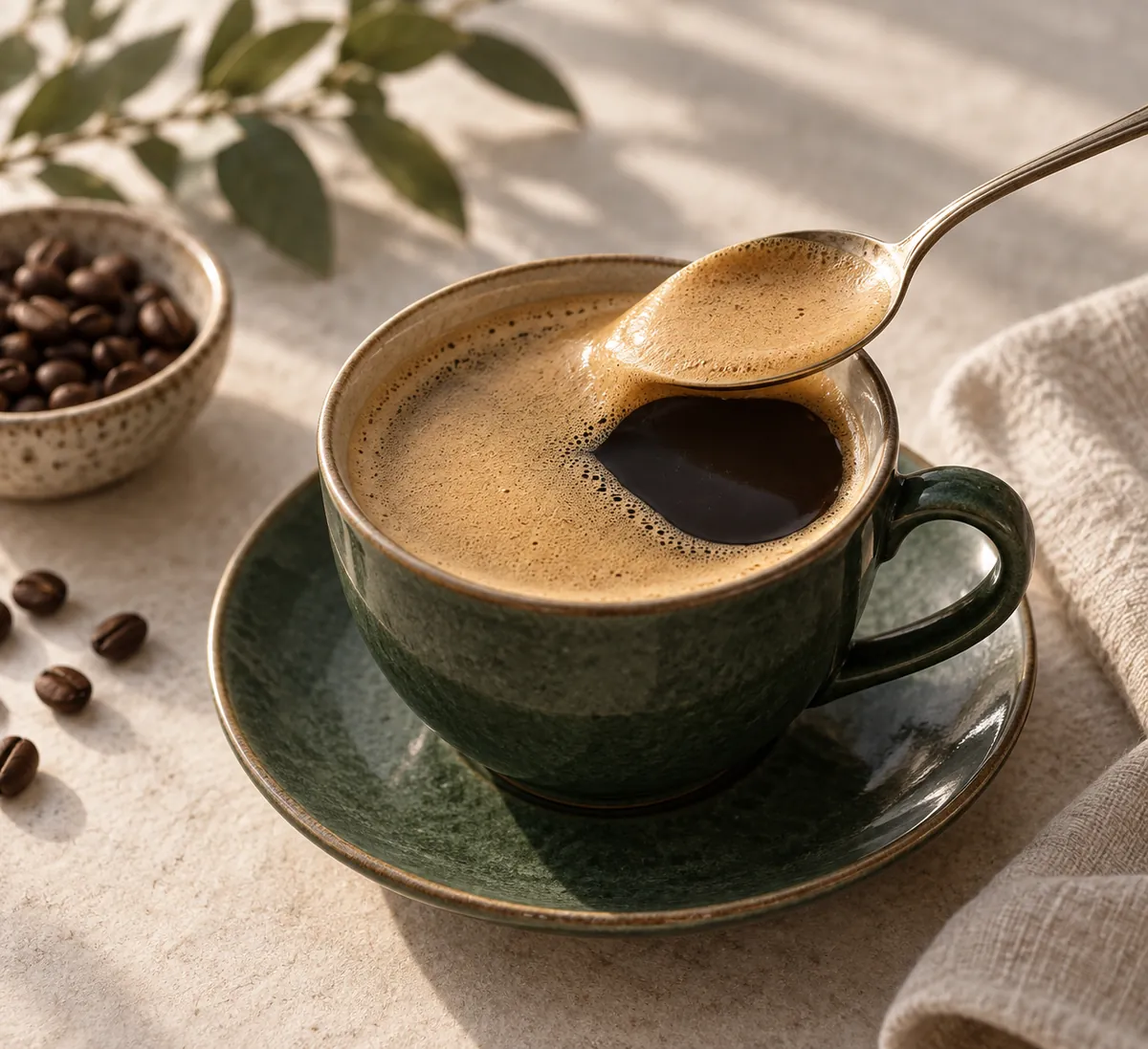
It is one spoonful and it takes a second. Skim before adding water, while the crema is still an intact layer rather than something dispersed through two hundred millilitres.
The cup underneath is noticeably cleaner, a little brighter and more acidic, with the flat bitter edge that people describe as the machine taste largely gone.
The crema fades on its own within a minute anyway, so the only choice is whether it ends up in the drink or on the saucer.
It looks eccentric in company, so it suits a cup you make for yourself.
Why does it taste thin and watery instead?
This is the opposite fault, and it wants the opposite correction.
Which way to move
- ThinPale, tastes of warm water | Too much water for one shot
- BalancedDark, full, coffee flavour carries | The target
- HarshDark but drying and flat | Water too hot, or too little of it

A single shot in a large mug is the usual cause. No adjustment to temperature or order rescues a ratio that is out by a factor of two.
A thin and sour cup together points at the shot. That combination means the espresso was under-extracted before any water arrived, and the americano is only showing you what was already there.
Preheat the cup while you are at it. A cold ceramic mug takes several degrees out of a drink that is already only warm, and lukewarm reads as thin even when the ratio is right.
A lungo base is a trap here. It is already a diluted shot, so adding water to it gives you something twice removed from strength and no amount of ratio work brings it back.
Which fixes actually work?
Not all of these are worth the same, so spend your next cup on the top of the list.
- Have you used water that did not come from the machine boiler?
- Is the water filtered, or is it whatever the tap gives?
- Is the ratio set by the shot, or by the size of the mug?
- Have you tried skimming the crema before adding water?
Start with the split-cup test, because it tells you whether water deserves attention at all. When the neat shot is good and the diluted cup is harsh, comparing fresh kettle water with machine water is the cleanest next experiment.
Ratio remains a major lever, so once the water tastes clean, shorten an empty cup before making smaller adjustments to crema or pouring order.
Crema and pouring order are last. Both are free, both are genuine, and both are small enough that changing them alone will not rescue a cup.
None of this fixes a badly extracted shot, and very hard water puts a ceiling on how good the drink can get whatever else you change.
What changes as the americano cools?
Heat suppresses some distinctions and makes steam carry aroma quickly, so the first hot sip is a poor final verdict.
As the drink cools, sweetness, acidity, and water taints become easier to separate.
A balanced cup should remain recognisably sweet and clean when warm. If it turns sharply sour, revisit the shot; if it becomes chalky or metallic, revisit the water.
Cooling also changes body. A long ratio that seemed pleasantly light when hot can feel empty ten minutes later, which is another reason to set water by the shot rather than by the mug.
Judge the cup once it is warm enough to drink comfortably but no longer steaming hard.
Do not solve a cooling problem by serving near boiling. A better answer is a preheated smaller cup, a shorter ratio, or a drink made close to the time you will finish it.
A cup will not taste identical at every temperature, so the goal is a cup that changes without collapsing, keeping sweetness and a clean finish after the initial heat has gone.
Common questions
Can you make an americano with decaf espresso?
Yes. Pull the decaf shot with its own grind and yield, then set the added water from that shot rather than copying the ratio from a different coffee.
Why does an americano sometimes have an oily film?
Coffee oils and broken crema can form a surface sheen. If the film smells stale or clings to the cup, clean the vessel and machine outlet before blaming the beans.
Can you reheat an americano?
You can, but repeated heating drives off aroma and can make bitter notes more conspicuous. A smaller freshly made drink usually holds together better.
Should you stir an americano?
Stirring makes concentration even from top to bottom and breaks the crema. Leave it alone for a layered aromatic surface, or stir when consistency matters more.