What Is Arabica? The Species Behind Most of the World's Coffee
Arabica accounts for roughly 60 per cent of world coffee production and almost all of specialty coffee. It is also the more fragile plant, and the two facts are connected.
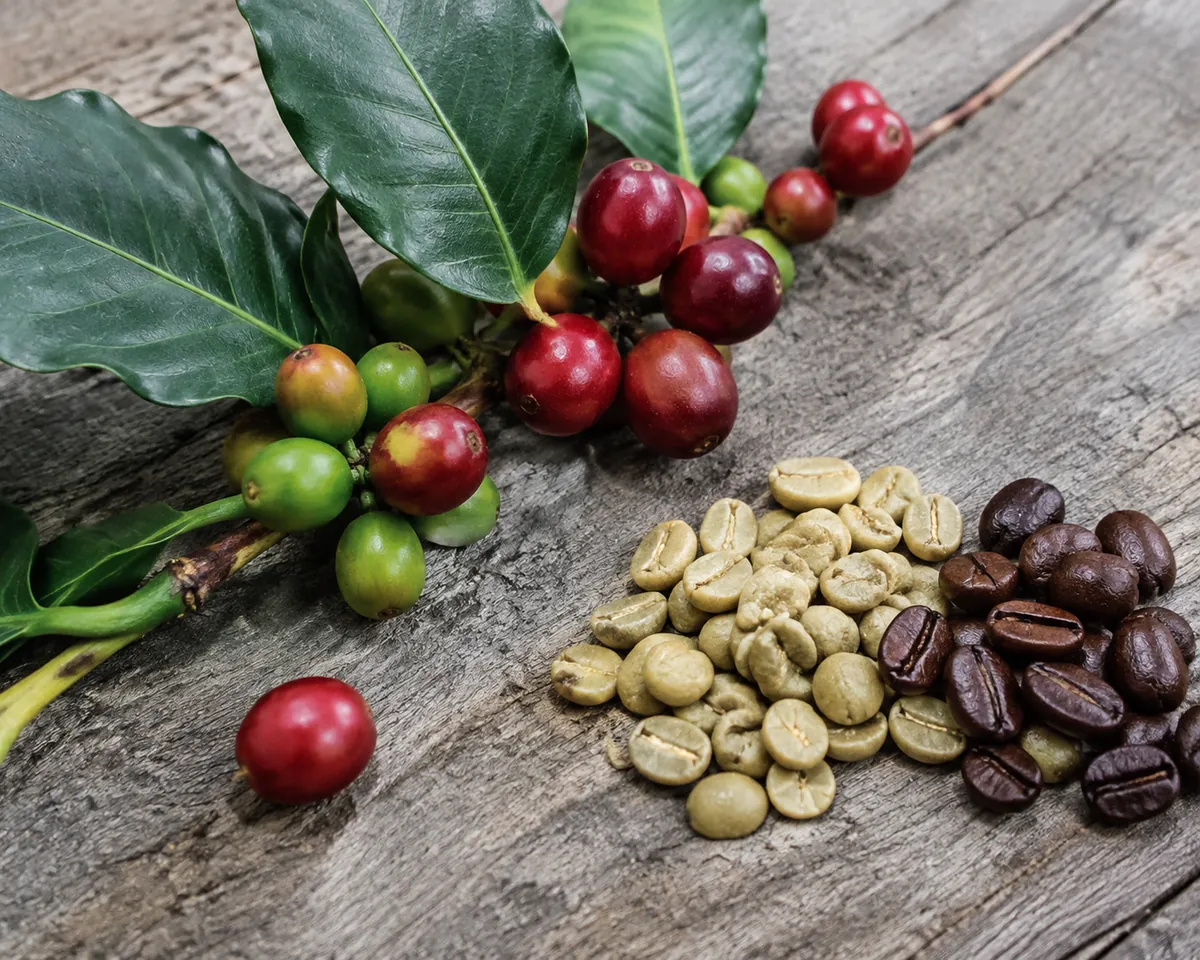
Coffea arabica is one of two species grown commercially at scale. The other is robusta, and almost everything sold as specialty coffee is arabica.
It is the older of the two in cultivation and the more difficult to grow, which is most of why it costs more.
Arabica at a glance
- Species
- Coffea arabica, a natural hybrid carrying two full genomes
- Share of world production
- Roughly 60 per cent, and nearly all specialty coffee
- Grows at
- 900 to 2,000 m, in a band about 25 degrees either side of the equator
- Wants
- Around 18 to 22 C, a defined dry season, and no frost
- Signature
- Acidity and aroma, both of which come from slow ripening
- Main cultivar lines
- Typica and Bourbon, plus the rust-resistant crosses since
- Weakness
- A very narrow gene pool, and almost no resistance to leaf rust
Sugar, lipids and where the acidity comes from
What arabica is bought for is acidity and aroma, and both of those are compositional facts rather than matters of opinion. A bean with more sugar in it has more to caramelise during the roast; a bean with more fat in it has more to carry the volatile compounds that reach the nose.
Arabica against robusta, by composition
- Sugars
- Roughly twice as much, which gives sweetness and caramelisation in the roast
- Lipids
- Around 60 per cent more, which carries aroma and gives body
- Caffeine
- About half. Caffeine is bitter, so less of it means less harshness
- Chlorogenic acids
- Lower, which reduces the harsh, rubbery notes
- Aroma compounds
- A far wider range, which is where the fruit and floral notes come from
More sugar and less caffeine is the short version. Those two facts account for most of arabica's reputation, and the acidity that sits on top of them is the thing everything else keeps returning to, because altitude, cultivar and processing all act on it.
None of that makes every arabica good. A poorly grown, badly processed lot is worse in the cup than a carefully made robusta, and the species sets a ceiling rather than issuing a guarantee.
What arabica cannot do is also worth knowing before choosing a blend, since crema, heavy body and caffeine are exactly where the other species is stronger, and how robusta tastes is where that side of the comparison lives.
Altitude, density and the slowly ripened cherry
Height is the single variable that does the most to a coffee before anyone touches it, and the mechanism is temperature rather than thin air.
Higher ground is cooler, so the cherry ripens more slowly, and a longer ripening period lets the plant accumulate more sugar and more acid in the seed. The bean that results is physically denser, which is why the trade grades on it.
Arabica wants a narrow band of around 18 to 22 C to do this at all, and it tolerates neither real heat nor frost, so the plant is confined to highlands within the tropics rather than spread across them.
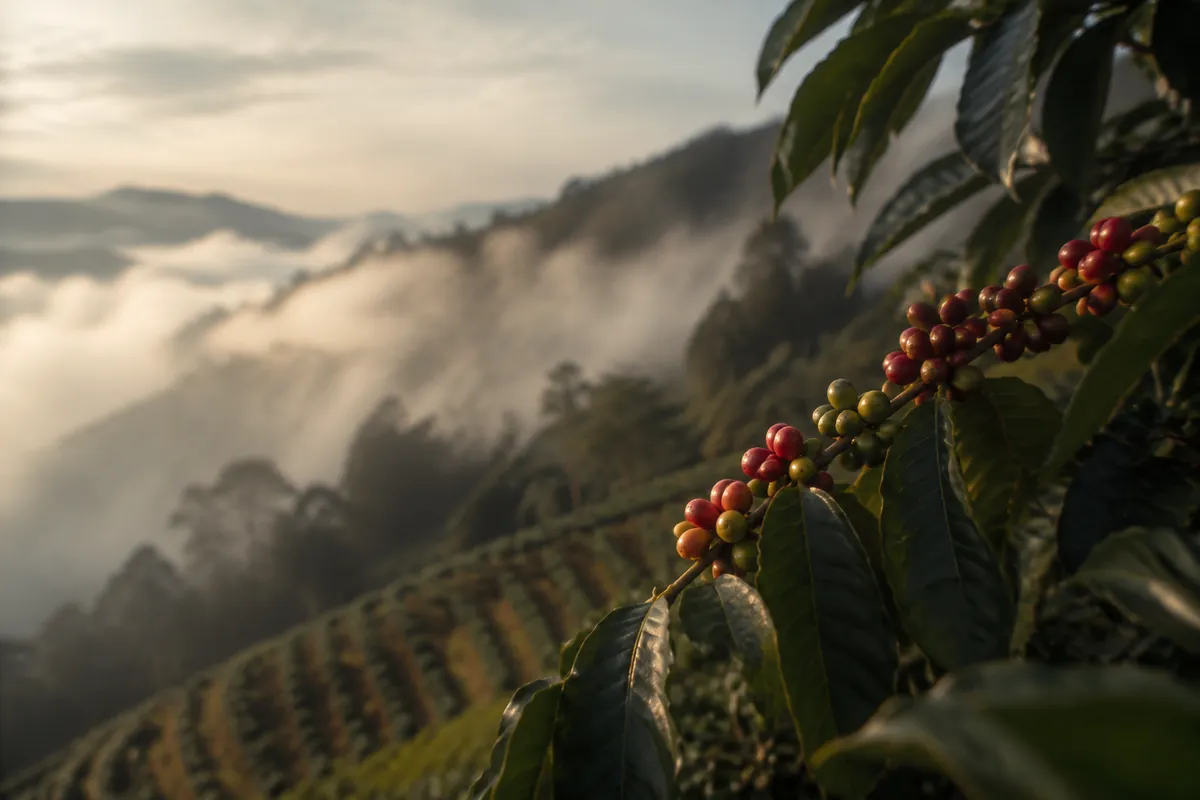
Altitude and what it produces
- 1800 m and aboveVery dense, intensely acidic, complex. Slow to ripen and low yielding
- 1400 to 1800 mThe specialty range. Clear acidity and defined origin character
- 1000 to 1400 mSofter, rounder, less acidity. Much of the commercial crop
- Below 1000 mFlat and low in acidity. Arabica struggles, and robusta does better
Density is the property all of this is really about, and it follows the drinker home. A denser bean holds more of everything the roast will develop, and it also behaves differently in the roaster, needing more energy to reach the same colour and taking a grind setting a notch finer than a soft low-grown bean at the same recipe.
Anyone moving from a supermarket blend to a high-grown single origin will find their grinder needs adjusting before anything else does, and brewing arabica covers the rest of that adjustment.
Typica, Bourbon and everything descended from them
Cultivar names appear on specialty bags in small type. Nearly all of them trace back to one of two original lines, and reading them predicts acidity rather better than reading the country does.
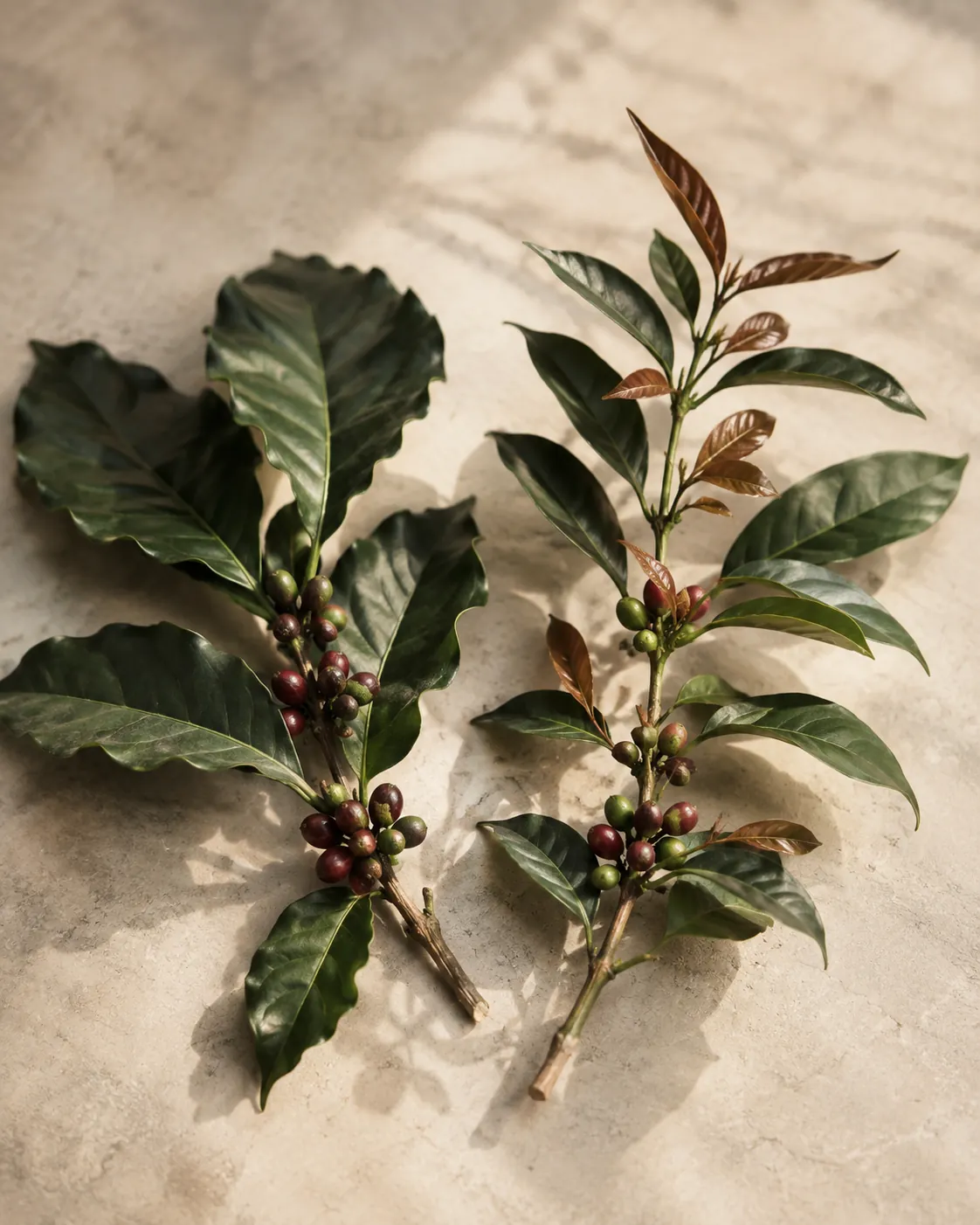
Typica is the older, the type that travelled from Yemen through Java and into the Americas. It is tall, low-yielding and highly regarded, and Jamaica Blue Mountain and Kona are both Typica selections.
Bourbon arose separately on the island of the same name and yields around a third more; Caturra, Pacas and Villa Sarchi are all natural mutations of it, and Catuai and Mundo Novo are crosses involving it.
Typica
The original cultivated lineage. Excellent cup, very low yield.
Bourbon
A Typica mutation from Réunion. Sweeter, still low yielding.
Caturra
A compact Bourbon mutation. Higher yield, widely planted in Latin America.
Geisha
From Ethiopia via Panama. Intensely floral and jasmine-like, and extremely expensive.
SL28 and SL34
Kenyan selections known for blackcurrant acidity.
A persistent trade-off runs through that list: the cultivars that taste best tend to yield least and resist disease worst, which is the entire reason hybrids with robusta parentage exist. Between them Typica and Bourbon account for most arabica planted before 1950, so a bag naming a cultivar is almost always naming a descendant of one or the other, and a Kenyan SL28 will carry blackcurrant acidity whether it was grown in Kenya or not.
Leaf rust, and the lines bred to survive it
The newer names on that list were bred to survive one thing. Knowing what it is makes the whole list legible.
Coffee leaf rust, Hemileia vastatrix, is a fungus that strips arabica of its foliage, and it has reshaped the industry more than once: it ended coffee growing in Ceylon in the nineteenth century and caused severe outbreaks across Central America in the 2010s. Arabica's gene pool is narrow enough that it had almost no resistance to offer.
The response was to cross it with robusta, which is resistant, and a spontaneous hybrid found on Timor became the source of nearly all of that breeding.
The resistant lines
- Timor hybrid
- A natural arabica and robusta cross. The resistance source for nearly everything since
- Catimor
- Timor crossed with Caturra. Widely planted, and long criticised on flavour
- Sarchimor
- Timor crossed with Villa Sarchi. Generally better regarded in the cup
- Castillo
- A Colombian selection, now a large share of that country's crop
- Ruiru 11 and Batian
- Kenyan resistant lines, bred to keep Kenyan cup character
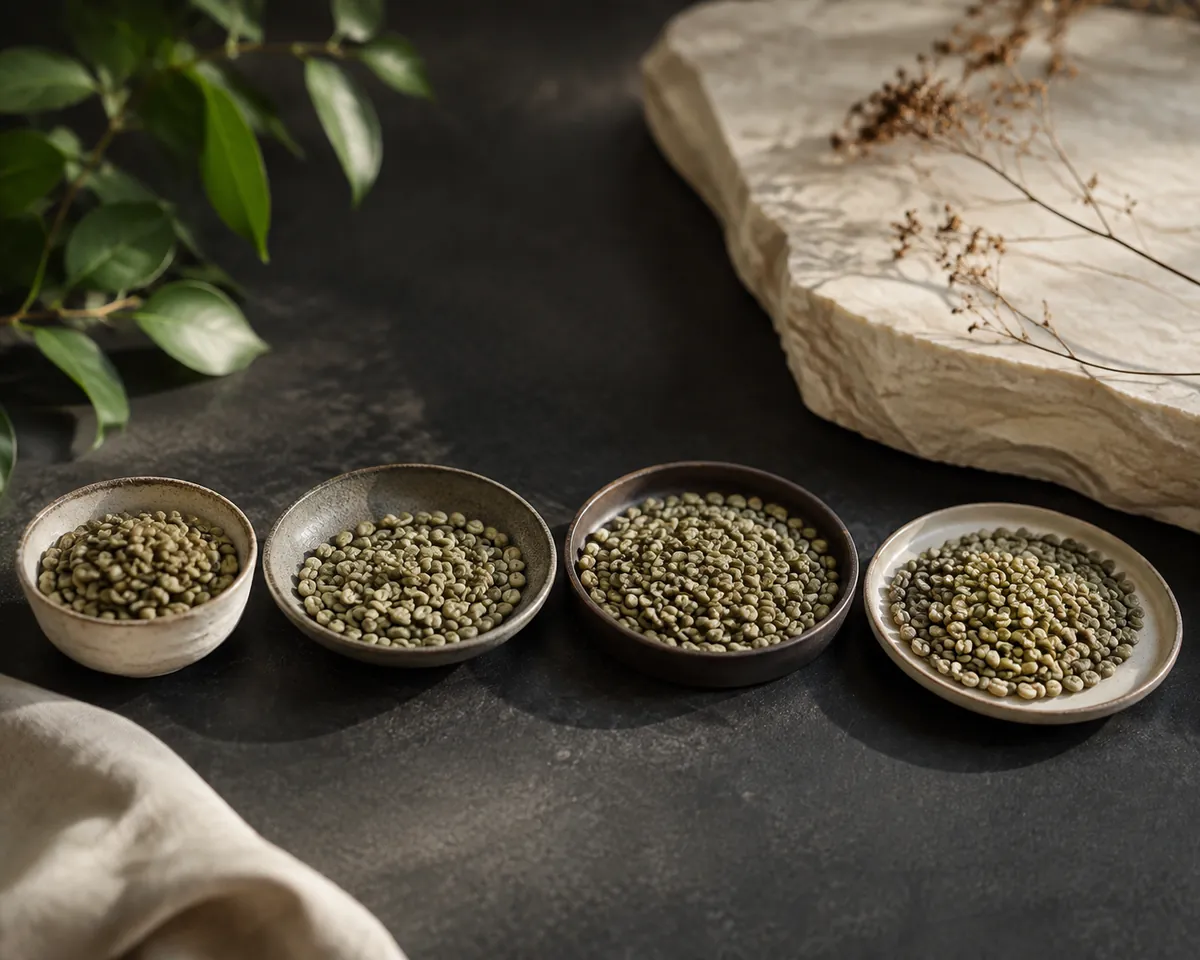
The reputation of these lines is improving as breeding continues. Early catimors did taste of their robusta parent, and later selections increasingly do not, which matters because resistant cultivars are now unavoidable across much of the growing world.
Dismissing them on the strength of a catimor drunk fifteen years ago is a fair description of the old plantings and a poor guide to what is being replanted today.
Washed, natural and honey
Origin is the most prominent thing on a specialty bag and it is a weaker signal than most people assume, because processing shapes the cup at least as much as the country does and is usually printed in smaller type.
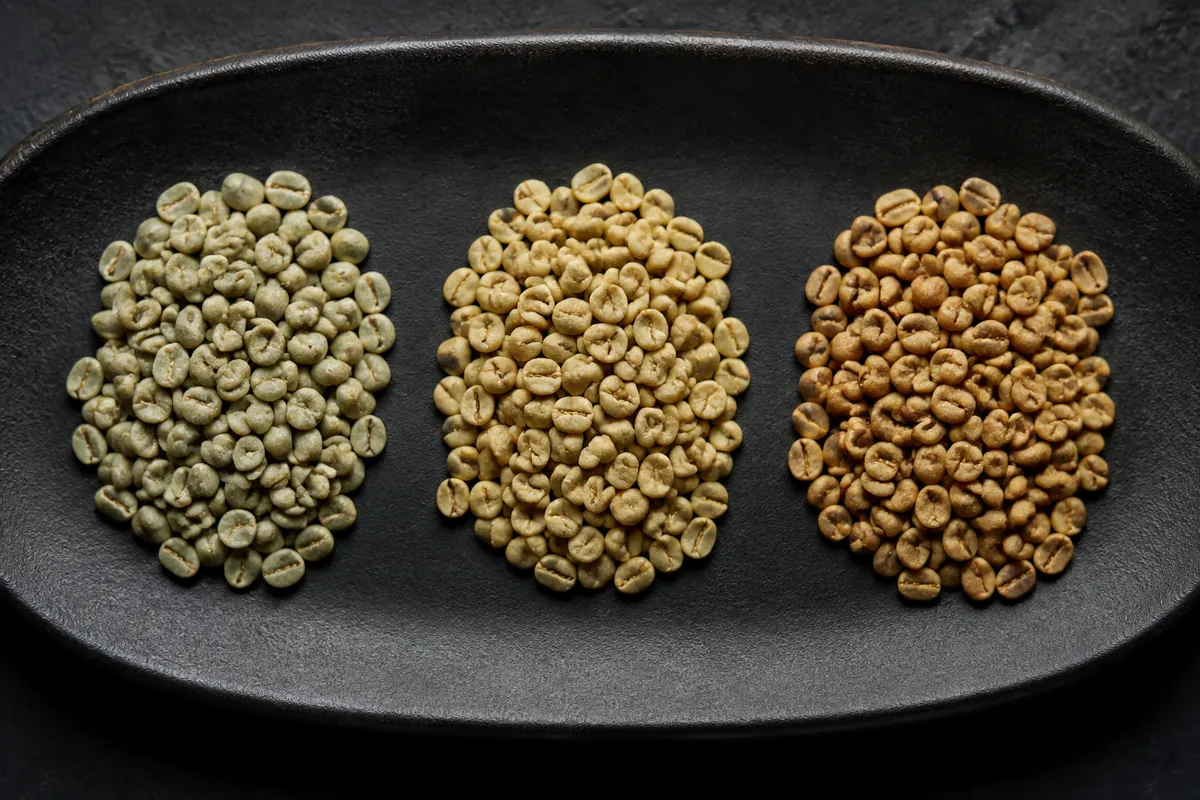
Processing describes what happens to the cherry within hours of picking, on the farm rather than at the roastery.
| Washed | Natural | Honey | |
|---|---|---|---|
| The fruit | Removed before drying | Left on through drying | Partly removed, some mucilage left |
| Also called | Wet process | Dry process | Pulped natural |
| Acidity | High and clean | Lower | Between the two |
| Body | Lighter | Heavier | Medium |
| Flavour | Clear, origin-transparent | Fruity, fermented, jammy | Sweet, rounded |
| Consistency | Most consistent | Most variable | Variable |
| Water use | High | Very low | Low |
Washed coffee tastes of the place; natural coffee tastes of the process. A washed Ethiopian reads as floral and tea-like while a natural from the same farm reads as blueberry and jam, which is a larger difference than most country-to-country comparisons produce.
Some broad regional characters do hold: East African coffees tend toward bright and floral, Latin American ones toward balanced and chocolatey, Indonesian ones toward earthy and heavy.
But faced with an unfamiliar origin, the process line predicts the cup more reliably, and anaerobic and carbonic maceration lots, fermented in sealed tanks, push that further still into flavours that owe more to the fermentation than to the farm.
A few plants out of Ethiopia
Arabica came out of one forest. The species is native to the highlands of southwestern Ethiopia, where it still grows wild, and everything cultivated beyond that region descends from a very small number of plants taken first to Yemen and then, in the eighteenth century, to the rest of the tropics.
The founding population was tiny, and cultivated arabica is genetically narrow as a consequence, which is why a single fungus can travel through it so destructively and why so much modern breeding has had to reach outside the species altogether.
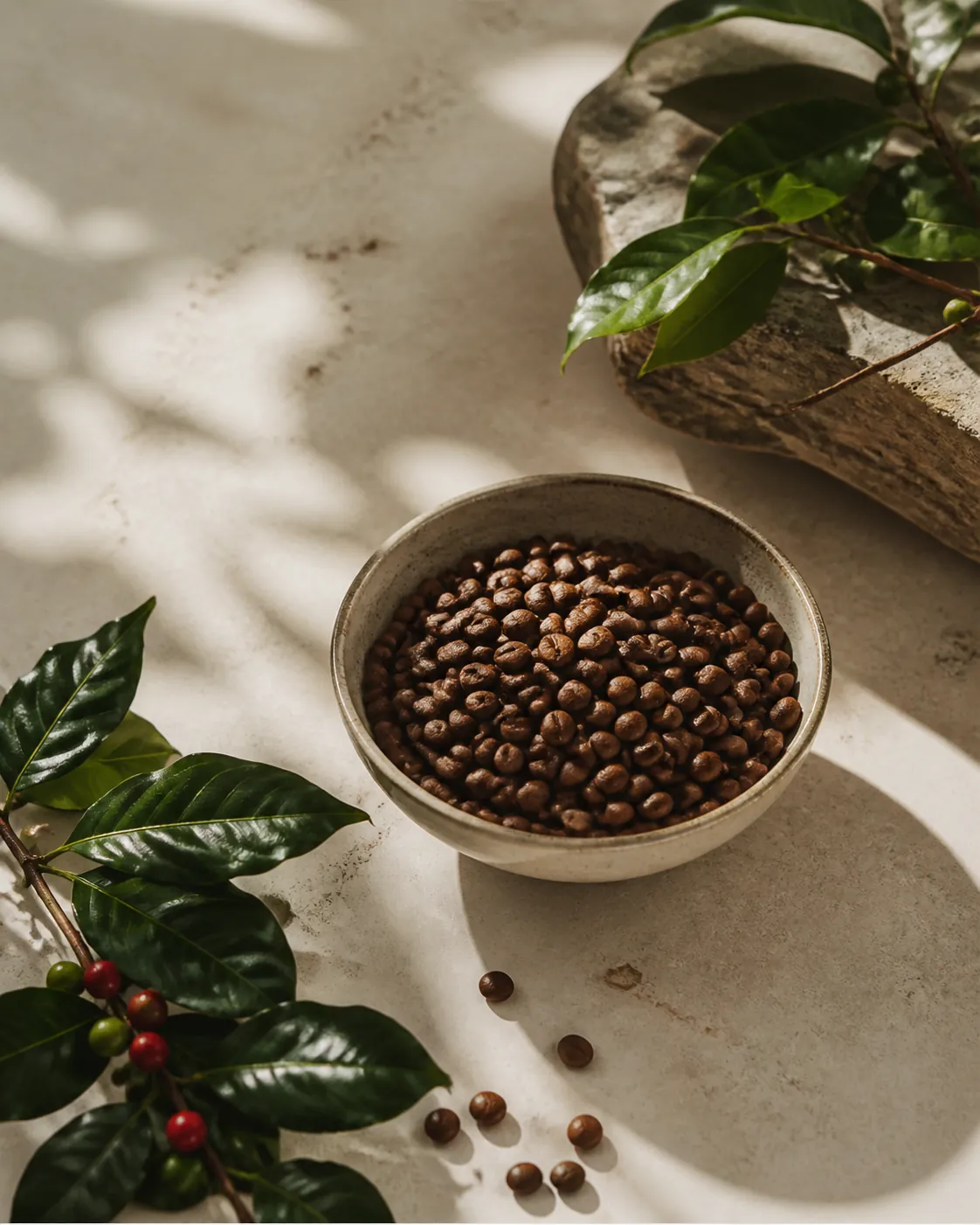
The wild Ethiopian populations still hold variation that cultivated arabica lost on the way out, which is why they matter to breeders far more than their volume would suggest. It is also why Ethiopian coffees carry cultivar names that describe local landraces rather than named selections, and why an Ethiopian lot can taste unlike anything else on the shelf.
How the roast spends what the altitude bought
Origin character survives only so far into a roast. How far is worth settling before paying for a coffee that has any.
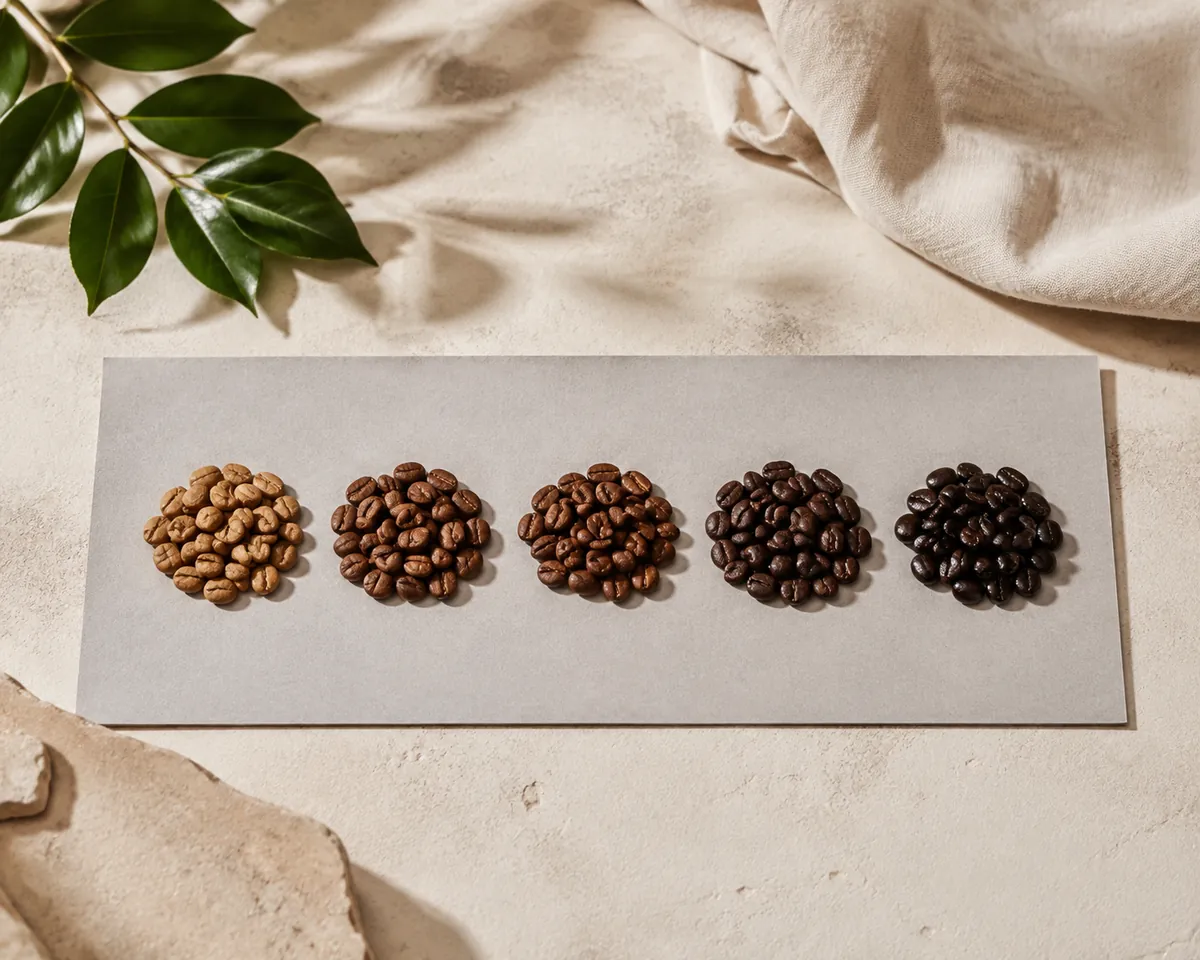
How much origin survives
- LightAcidity and florals intact. Origin is the dominant flavour
- Medium-lightThe specialty default. Balance of origin and sweetness
- MediumCaramelisation starts to compete with origin
- Medium-darkRoast character leads. Origin is a background note
- DarkRoast is the flavour. Origin barely detectable
Paying for an expensive single origin and roasting it dark spends the money on something the roast then removes, since the acidity and florals are the first casualties of a long development. That is not an argument against dark roasts, which are consistent, forgiving and the sensible treatment for commodity coffee where there is no origin character worth protecting.
It is an argument against pairing the two. If a bag names a farm, an altitude and a cultivar, the roast that justifies all three is a light or medium-light one, and how arabica tastes describes what that leaves in the cup.
The C market, cup scores and screen sizes
Two pricing systems govern what a bag costs, and neither one describes flavour directly.
Commodity arabica is priced against the C market, a futures contract that sets a single global reference regardless of who grew it or how, and that price moves on weather and speculation rather than on quality. Specialty coffee is bought outside it, at negotiated prices tied to a cup score: above 80 on the Specialty Coffee Association's 100-point scale a coffee qualifies as specialty, and the price climbs steeply above 85.
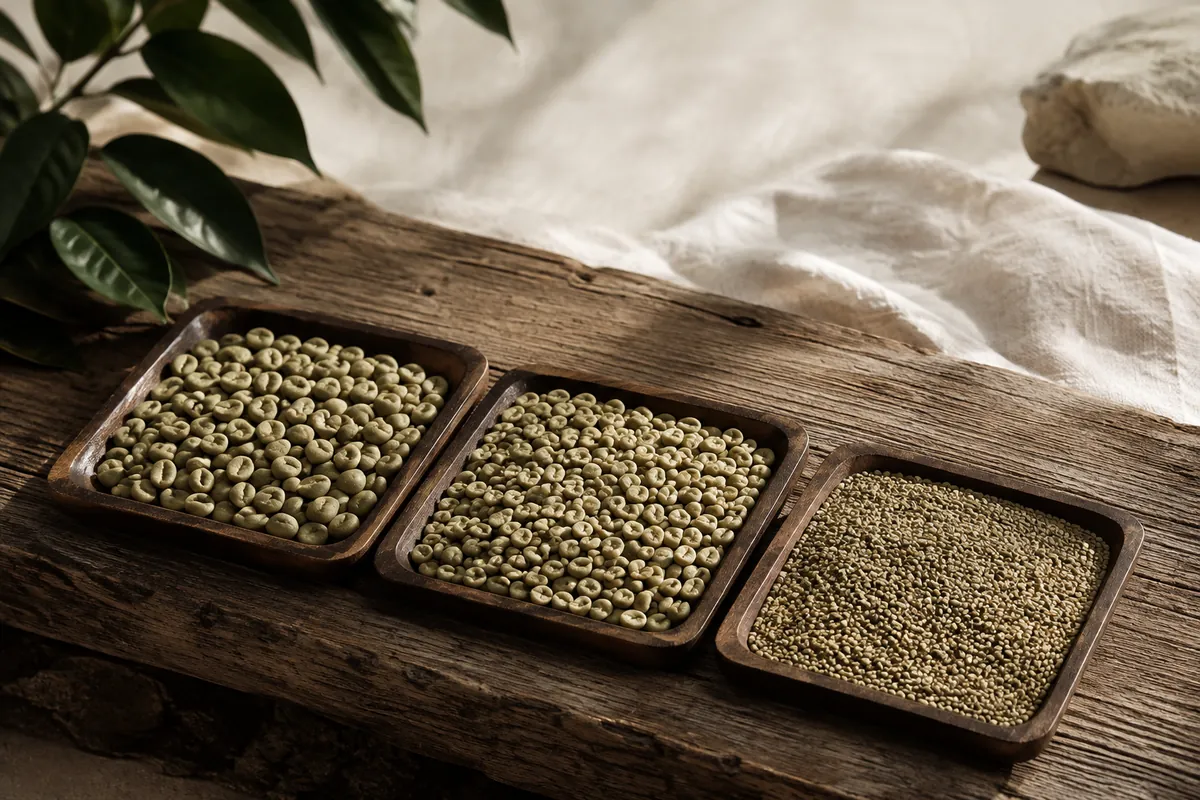
Size grading sits alongside both and is frequently mistaken for a quality claim. Screen sizes describe the mesh a bean passes over, so Kenyan AA and Colombian Supremo are statements about bean size.
Size correlates loosely with quality and does not measure it, so a bag marked AA is not necessarily better than one marked AB, and the two are often the same lot sorted twice.
How altitude changes the cup
- Below 900 mSoft, low acidity, simple. Often blended
- 900 to 1200 mBalanced, moderate acidity
- 1200 to 1500 mBrighter, more complex, clearly acidic
- 1500 to 1900 mDense beans, high acidity, pronounced florals and fruit
- Above 1900 mRare, and only viable near the equator
Altitude grades work the same way. Strictly Hard Bean and Strictly High Grown both mean the crop came from above roughly 1350 m, and both are density claims wearing altitude's clothes.
- "100 per cent arabica" is a floor, not a recommendation; most decent coffee qualifies.
- Look for a roast date, which matters more than the species.
- Look for the process: washed, natural or honey.
- Altitude or a grade like SHG indicates density and usually complexity.
- A named farm or cooperative beats a named country.
The roast date is the line that most often decides whether a bag is worth buying, and storing coffee beans explains how quickly it stops mattering once the bag is open.
Where the acidity is worth paying for
The species earns its price in some preparations and is thrown away in others. The pattern is consistent enough to shop by.
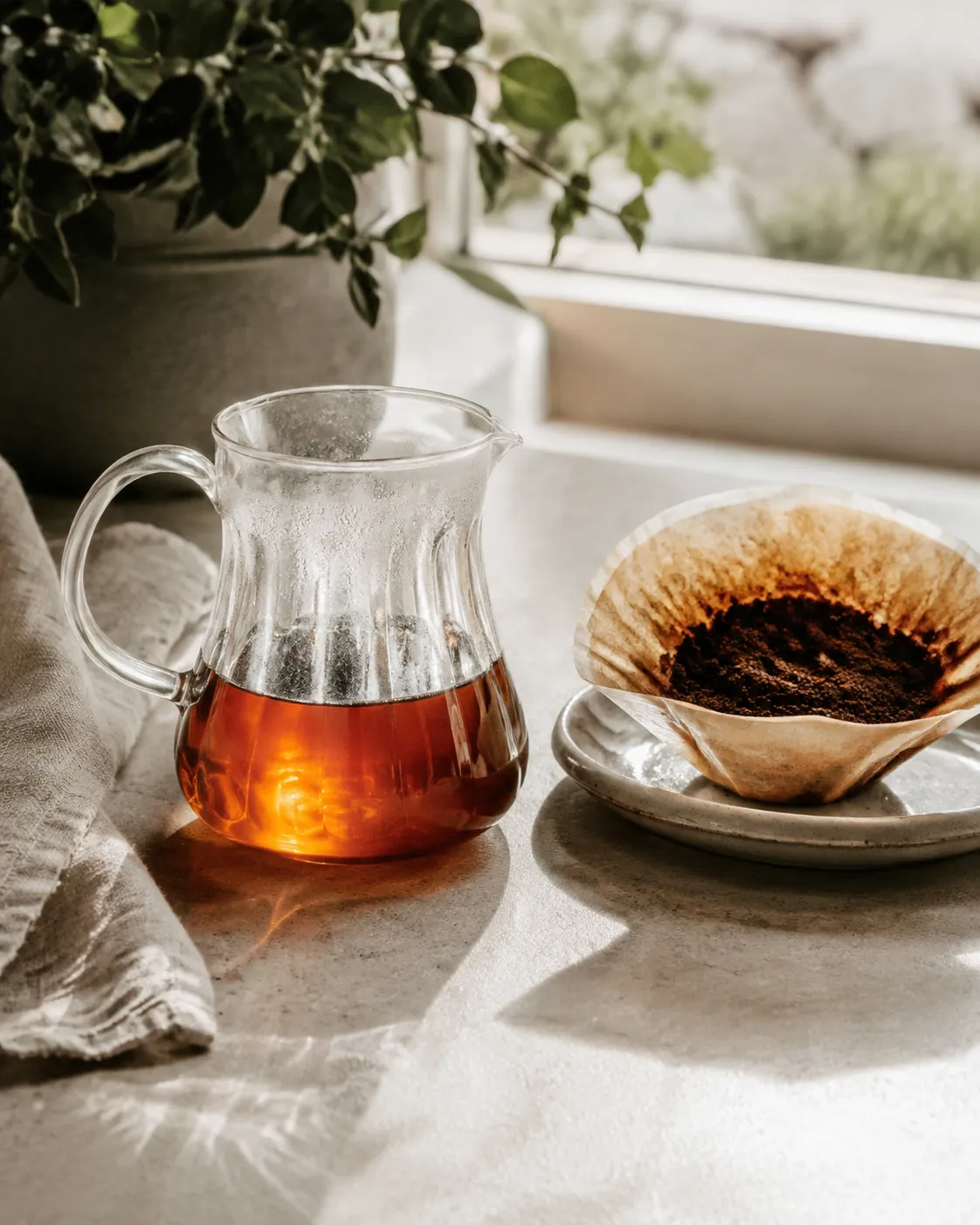
Filter and pour-over
Where origin character is clearest. Paper filtration keeps the cup clean enough to read it.
Espresso
Concentration exaggerates both the acidity and any fault, which is why single-origin espresso is polarising.
Arabica's advantages are acidity, aroma and clarity, so any method that removes those removes the reason to pay for it. That is the roast argument from earlier applied to brewing rather than to heat, and it explains why a French press sits somewhere in the middle: the metal mesh lets through body and fines that blur exactly the definition a paper filter preserves.
Cold extraction is the clearest case of all, as how cold brew tastes sets out, and decaffeination follows the same reasoning, since decaf processing costs some aromatics whatever the method, and an expensive green lot is rarely the sensible input for it.
A band 25 degrees wide, and moving
The range is narrow and it is moving. That pressure is the background to every breeding programme and resistant cultivar named above.
The plant needs its temperature band, a defined dry season and no frost, which confines it to roughly 25 degrees either side of the equator and, inside that, to altitude. Its territory is therefore a scatter of highland islands rather than a continuous belt.
Warming pushes those islands upward: growers report moving new plantings higher decade by decade, and there is a hard ceiling, because a mountain eventually runs out and the land above the current range is often forest or simply is not there.
That is the practical reason robusta and the resistant hybrids matter more than they used to, since both grow where arabica is becoming marginal. Where a bag comes from is likely to shift over the next decades for reasons that have nothing to do with taste, and arabica problems covers the ones a drinker can actually do something about.
Most of it is never sold as arabica
Most arabica is never sold under its own name. Where the rest of it goes explains the price range better than any label does.
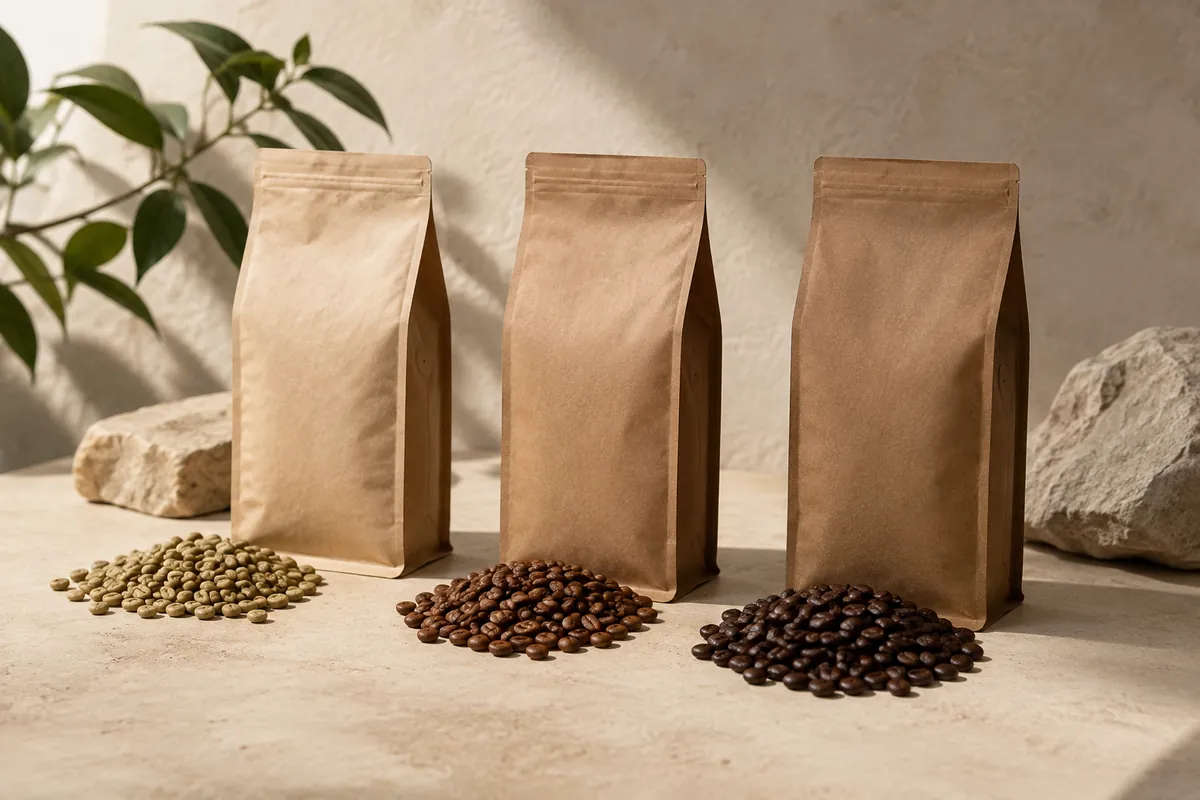
Supermarket ground coffee is generally a blend of unstated origins bought on the commodity market, and the arabica figure on the front is a percentage rather than a description of anything. On a jar of instant the same phrase does real work, since the alternative there is cheaper robusta, but on a bag of whole beans it tells you nothing you had not already assumed.
Espresso blends sit at the other end of that range. A named arabica may be 70 or 80 per cent of a recipe, the remainder chosen deliberately for body and crema, which is a formulation rather than a compromise and is where a great deal of well-made coffee lives.
Keeping any of it worth drinking is a storage question rather than a species one, and storing arabica treats these beans no differently from any others once roasted.
Common questions
Why is arabica better than robusta?
Composition. Arabica carries roughly twice the sugars, about 60 per cent more lipids, and half the caffeine, which is itself bitter. That means more sweetness and aroma and less harshness. It is a ceiling rather than a guarantee: a badly made arabica loses to a well-made robusta.
Does altitude really matter for coffee?
Yes. Cooler temperatures at altitude slow the cherry's development, letting sugars accumulate and producing denser beans with more acidity and complexity. Grades like SHB and SHG use altitude as a proxy for that density.
Is 100 per cent arabica a useful label?
Rarely on specialty coffee, where almost everything is arabica anyway. It is genuinely useful on instant coffee and supermarket blends, where robusta content is common and usually undisclosed.