What Is Turkish Coffee? The One Method That Keeps the Grounds
Turkish coffee is the only common method where the grounds are never separated from the drink. Everything about it, from the powder-fine grind to the tiny cup, follows from that.
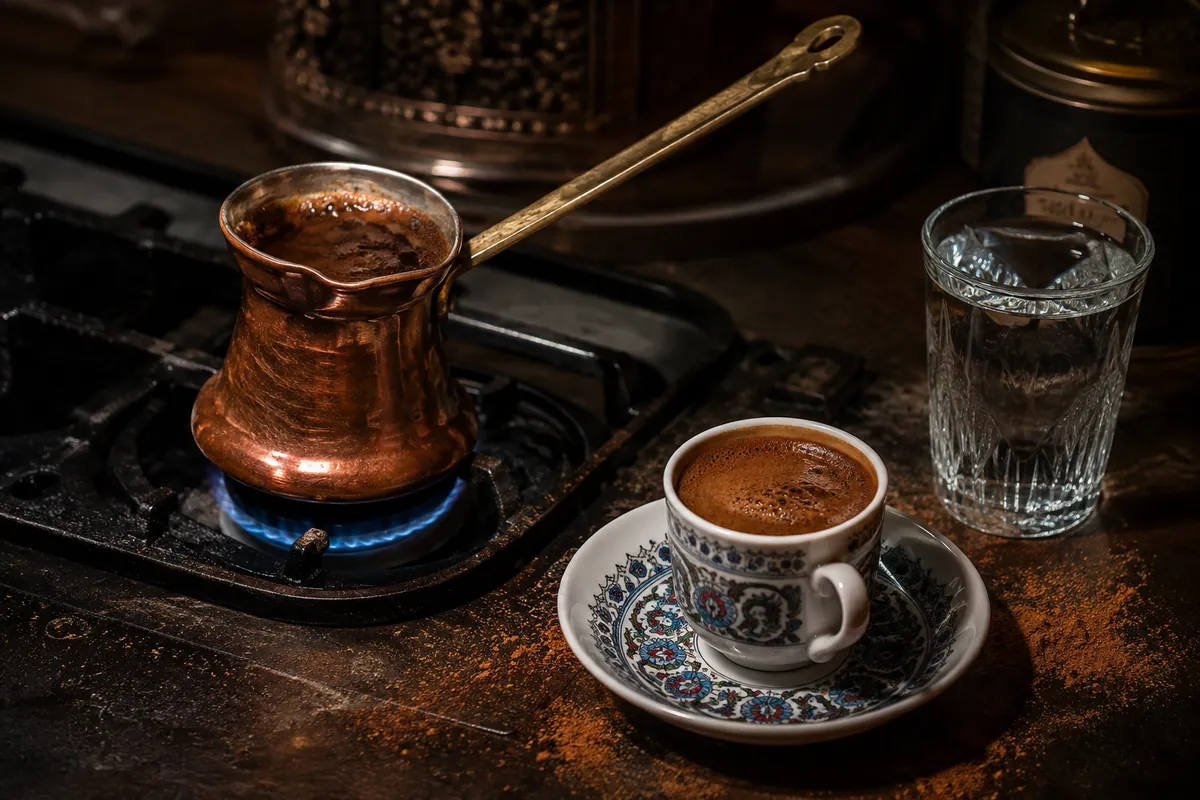
Turkish coffee is made by simmering very finely ground coffee with water in a small long-handled pot called a cezve, then pouring the whole thing, grounds included, into a cup.
The grounds settle. You drink the liquid above them and stop before you reach the sludge.
Nothing is filtered at any stage, and every instruction below follows from that one omission. The grind has to be fine enough to settle compactly, the heat has to be slow enough to raise foam, and the cup has to stand on the table before anyone lifts it.
Turkish coffee at a glance
- What it is
- Very fine coffee simmered with water in a cezve and poured unfiltered
- Grind
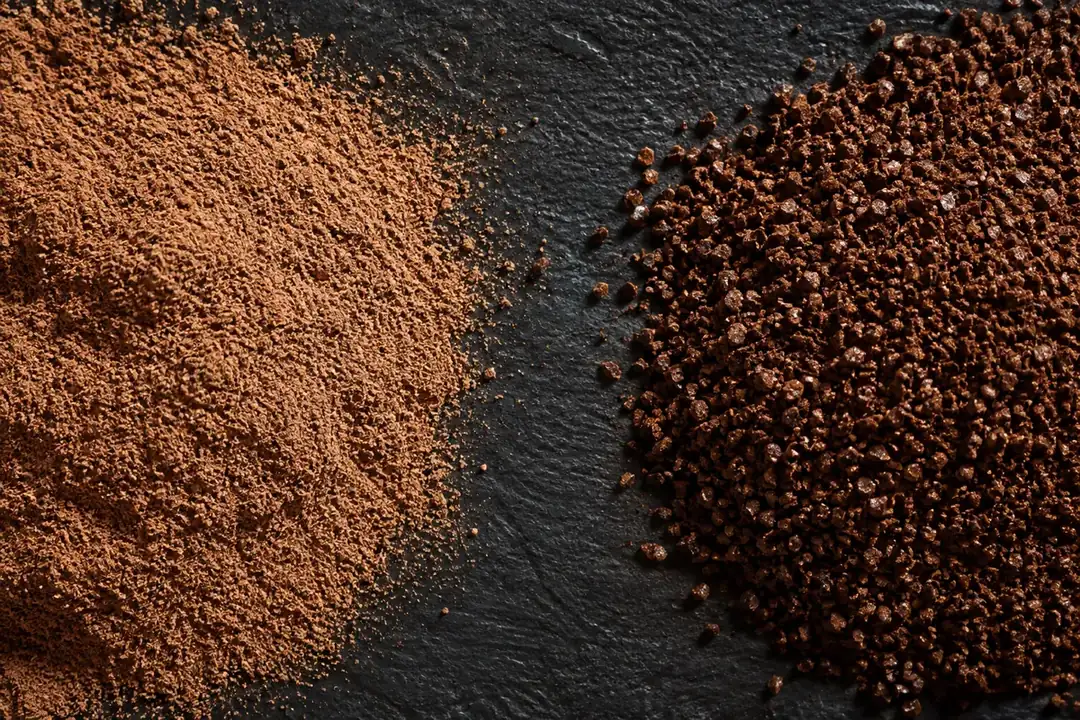
- Powder-fine, like icing sugar. Nothing coarser works
- A single cup
- 60 to 70 ml cold water to about 7 g of coffee
- Heat
- Low, taking three to four minutes to rise. It must never boil
- Sugar
- Added at the start, not at the table
- Caffeine
- Roughly 50 to 65 mg in a 60 ml cup
Powder-fine, and why nothing coarser works
No other brewing method asks for a grind this fine, and the requirement is mechanical rather than ceremonial. Particles have to stay suspended while the water heats, so that extraction happens throughout the pot rather than only at the bottom, and then drop into a dense bed within a minute of reaching the cup.
A merely fine grind drifts instead of settling, and the cup is still cloudy by the time anyone drinks it.
The reference point is espresso, and Turkish coffee sits a clear step finer than that, closer to icing sugar than to salt.
Grind fineness by method
- TurkishPowder, like icing sugar
- EspressoFine, like table salt
- Moka potSlightly coarser than espresso
- Pour-overMedium, like caster sugar
- French pressCoarse, like sea salt
Most domestic burr grinders stop a step or two short of it, since their adjustment range is built to end at espresso. A hand mill made for the purpose, with a long screw adjustment beneath the burr, is the usual answer, and pre-ground Turkish coffee is sold everywhere precisely because so few home grinders reach it.
Coffee ground this fine also goes flat faster than in any other form. Surface area governs staling and there is more of it here than in an espresso grind, so a bag is noticeably dull within two to three weeks against a month or more for whole beans.
Buy small quantities often, keep them sealed and opaque as storing coffee beans sets out, and halve every timescale on that page.
The cezve, the low heat and the rise
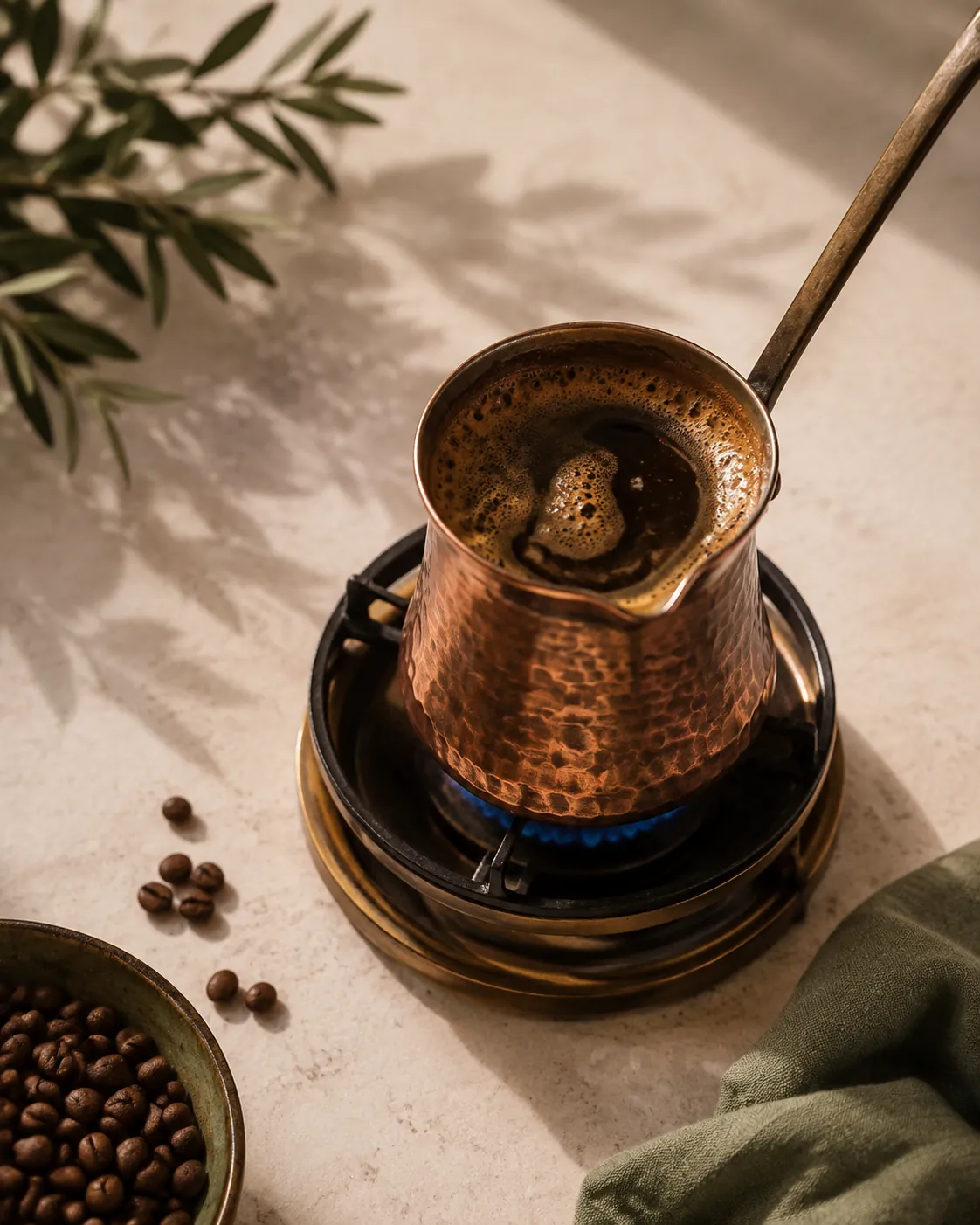
Everything that separates a good cezve of coffee from a bad one happens in the three or four minutes between the pot going on the heat and the foam swelling toward the rim, which is why the recipe is trivial to write down and the timing is not.
One cup
- Water
- 60 to 70 ml, cold
- Coffee
- 1 heaped teaspoon, about 7 g, powder-fine
- Sugar
- Added now, not later. None, one, or two teaspoons
- Heat
- Low. It should take three to four minutes to rise
- Serve
- Pour slowly, foam first, and let it settle a minute
One cup in a cezve
- Measure cold water into the cupUse the cup you will drink from to measure, then tip it into the pot. It is the only reliable way to get the level right.
- Add coffee and sugar togetherBoth go in cold, before any heat. Sugar stirred in later will not dissolve properly and will disturb the foam.
- Stir once, then stopMix until the powder is wetted and no longer floating. From here the pot is not stirred again.
- Heat low and slowThree to four minutes to rise. A fast heat gives no time for foam to build.
- Watch for the ringFoam gathers at the edge first and then moves inward. That ring is the signal to pay attention.
- Lift before it breaksTake the pot off as the foam swells toward the rim, well before any bubble breaks the surface.
- Divide the foam firstSpoon or pour a little foam into each cup before filling any of them.
- Fill slowly and let it standA minute on the table lets the grounds settle into a bed at the bottom.
Measuring with the cup rather than a jug is the traditional habit and it is also the accurate one. A cezve is sized in cups rather than millilitres, so filling it to a mark ignores the volume the grounds themselves will take up, and a pot filled past two thirds will climb over the rim as the foam builds.
The water is a smaller variable here than in a filter brew, though the water you brew with still shows up as a chalky edge when it is very hard.
Some traditions lift and return the pot two or three times, letting the foam rise and subside at each pass, which builds a thicker head without the liquid ever boiling. Three lifts is the usual limit; past that the coffee starts to taste cooked and the foam stops rebuilding, and the sequence for a single cup is set out at greater length in making Turkish coffee.
Kopuk, and how it gets divided between cups
Kopuk, the foam, is not decoration, and a cup served without it is read as carelessness rather than as a minor difference. In some settings it is a genuine social slight.
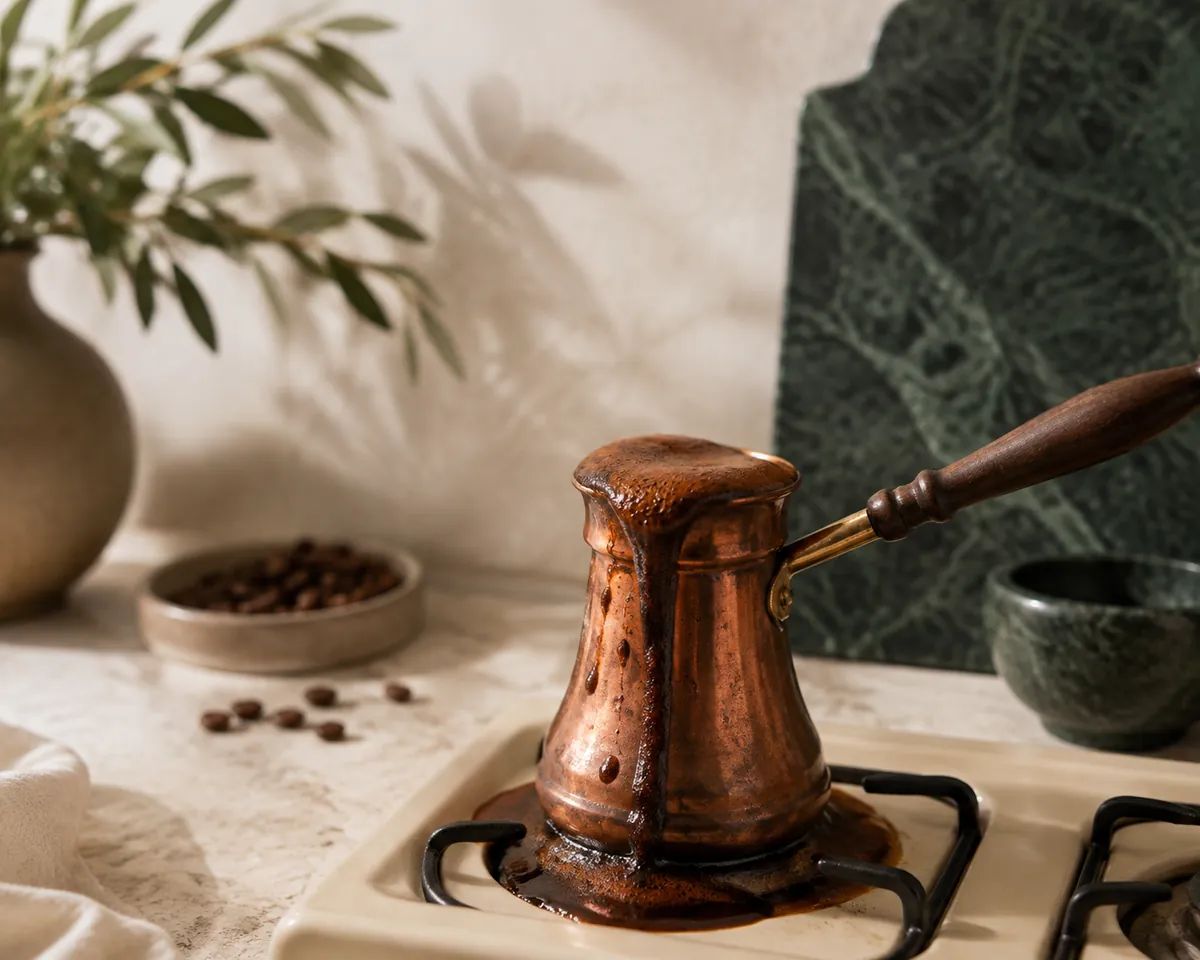
The foam is produced by the slow rise of the brew and by fine grounds holding gas against the surface, and it collapses the instant the pot is allowed to boil.
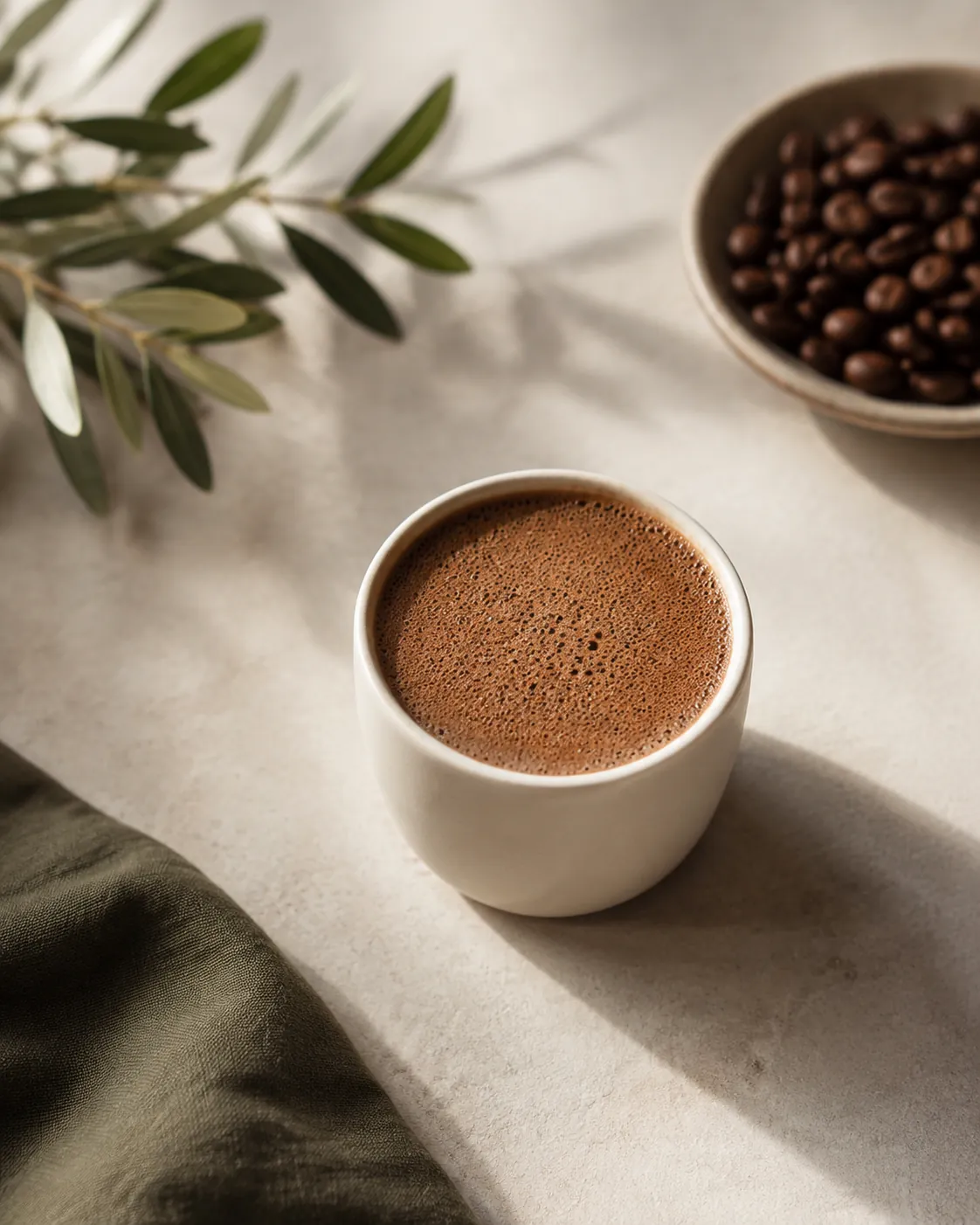
Dividing it is where most home attempts fail, because foam does not distribute itself and the first cup filled takes almost all of it. Fill one cup to the top and the second drinker gets black coffee with a bare surface.
The fix is the seventh step above: spoon a little foam into every cup first, in turn, and only then go back and fill each one.
A cezve holds two or three cups at most, and the constraint is the foam rather than the volume. Beyond three, brew in batches rather than buying a wider pot, because a wide base spreads the coffee bed thin and the head that forms over it is correspondingly weak.
Copper, tin and the narrowing neck
The pot is simple, and two details of it do real work. Copper with a tin lining is traditional because copper responds almost immediately to a change in the flame, which suits a method whose only difficult instruction is to take the heat away at the right second.
Stainless steel works and lags, so the coffee keeps climbing for a moment after the pot leaves the ring.
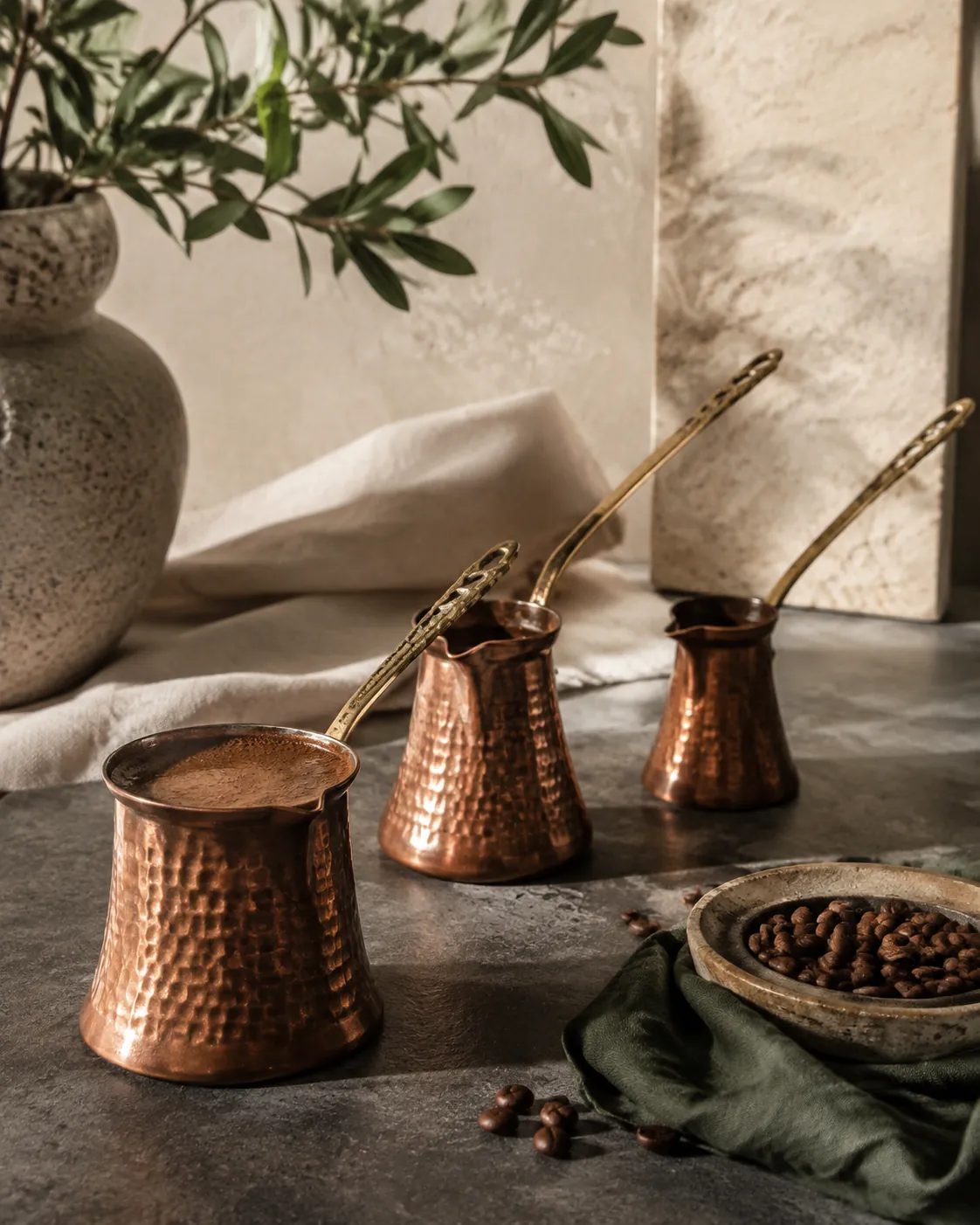
Size matters more than material. The neck narrows toward the top, so rising foam is funnelled into a smaller area and thickens as it goes; brewing one cup in a three-cup pot leaves that foam spread across too wide a surface and it never builds.
Match the pot to the number of cups rather than buying the largest one on the shelf.
The long handle is functional too, since it keeps the hand well clear of a pot that has to be lifted off the flame instantly and without fuss. Names for it are regional: cezve is Turkish, ibrik is used more broadly, and the same vessel appears under other names across the Balkans, the Levant and the Caucasus, where versions of this method are equally traditional.
Roast, bean and buying it already ground
Conventions on the bean are narrower here than for any other preparation, because the method extracts hard and fast and leaves nothing to hide behind. A medium to medium-dark roast is the traditional range.
Very dark roasts turn harsh at this concentration, and light specialty roasts taste sour and thin, since the acidity that would read as brightness in a filter cup arrives undiluted.
Arabica is the standard choice, though blends carrying some robusta are common and contribute body and a heavier, longer-lasting head. Freshness counts for less than it does in espresso, because much of the delicate aromatic character is lost to the simmer regardless of how recently the beans were roasted.
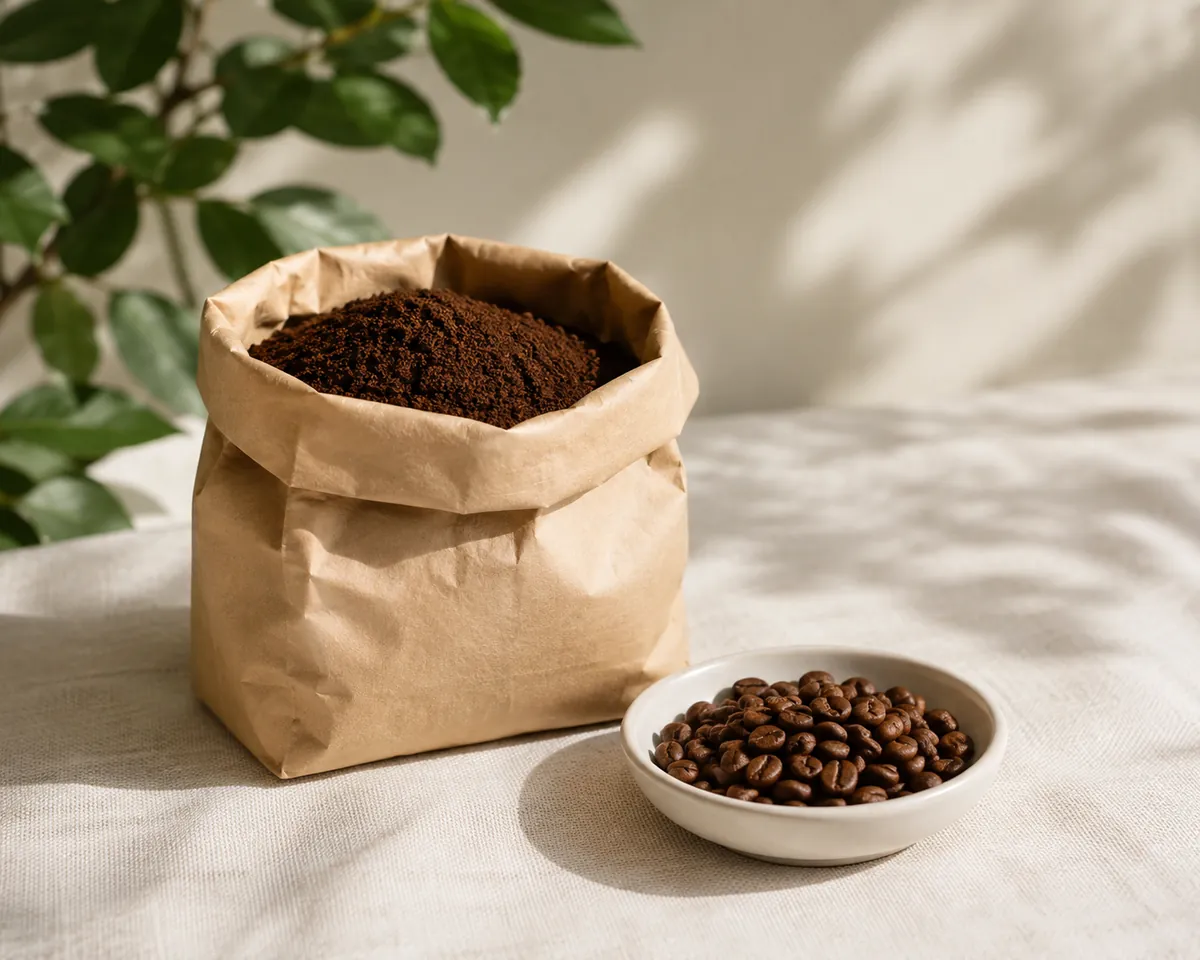
- Buy it pre-ground unless you own a mill that reaches powder fineness.
- Medium to medium-dark roast, not a light specialty roast.
- Buy small quantities: ground this fine, it stales in weeks.
- Some blends are sold pre-mixed with cardamom, which is traditional in parts of the region.
- Avoid anything sold as espresso grind; it is not fine enough.
Turkish-grind decaf coffee is stocked in some places and behaves the same way in the pot, though decaffeination costs a little body and the foam is slightly thinner for it.
Sade, orta, sekerli, and the tray it arrives on
Sugar is the practical difference that catches people out, because it goes into the cezve at the start alongside the coffee and the cold water. There is no way to stir it into a finished cup without lifting the settled bed off the bottom, so the decision has to be made before the pot ever meets the heat, and the drink is therefore ordered by sweetness level rather than adjusted at the table.
Sade
No sugar at all.
Az sekerli
A little, roughly half a teaspoon.
Orta
Medium, about one teaspoon. The most common order.
Sekerli
Sweet, two teaspoons or more.
Because the sugar dissolves during brewing rather than being stirred in afterwards, it integrates into the liquid differently and reads as less sharply sweet than the same quantity added to a finished cup.
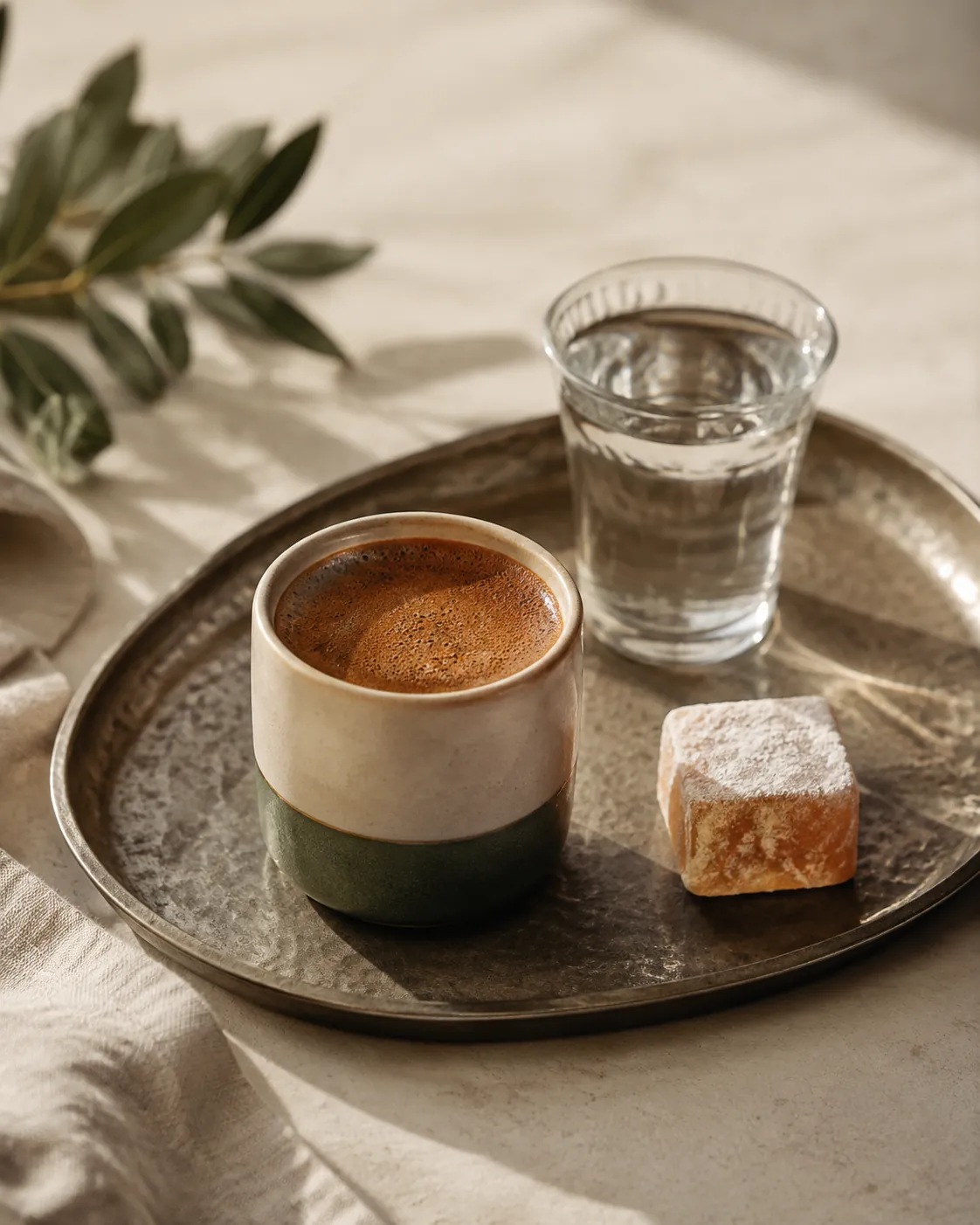
What arrives alongside is part of the drink rather than garnish. A glass of cold water comes with it and is drunk first, since the coffee is concentrated and carries suspended grounds, so a cleared palate genuinely changes the first sip.
Something sweet sits on the tray, traditionally Turkish delight or a date, eaten between sips rather than with them. The cup is small and it is not refilled: 60 to 70 ml, finished slowly over ten or fifteen minutes, which is also how the grounds get the time they need.
Letting it stand, and stopping a centimetre short
Two conventions govern the cup once it is poured, and both sound like etiquette while being entirely practical.
Let it stand for a minute before drinking. The bed has to form, and a cup lifted straight from the pour gives a mouthful of silt that will be blamed on the grind when the timing was the problem.
Then stop before the bottom: roughly the last centimetre is grounds, it is not meant to be drunk, and tipping the cup up to finish it is the mistake almost every first-time drinker makes.
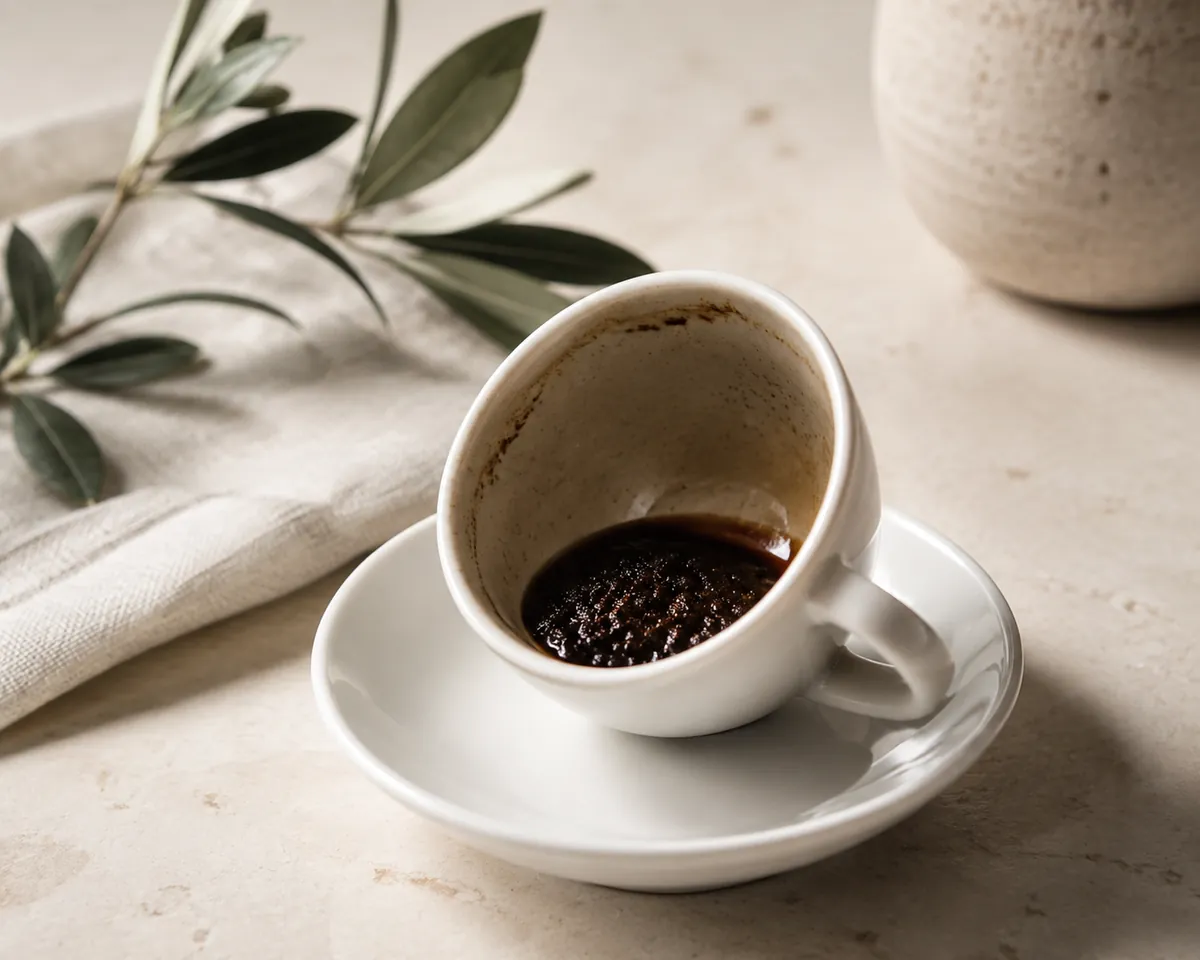
The settled bed has a second life in much of the region. Reading the cup is a widespread custom in which the drinker inverts the finished cup onto its saucer, waits for it to cool, and interprets the shapes the grounds leave against the porcelain.
It is entertainment rather than anything more, and it is a real part of how the drink is shared rather than a curiosity put on for visitors. What that sediment tastes like, as against how it behaves, belongs to how Turkish coffee tastes.
Greek, Bosnian, and the cardamom that changes qahwa
Turkish coffee is one name for a method used across a wide region, and the variations between the names are real but mostly small.
| Name | Where | What differs |
|---|---|---|
| Turkish | Turkey | The reference version. Sugar added during brewing |
| Greek | Greece | Essentially identical method and pot, different name |
| Arabic, qahwa | Gulf states | Lighter roast, heavily spiced with cardamom, often unsweetened |
| Bosnian | Bosnia | Water boiled first, then a little poured over the grounds before combining |
| Armenian, Serbian | Caucasus, Balkans | Local names for the same preparation |
Gulf qahwa is the one genuinely different drink in that list. A much lighter roast, a great deal of cardamom, sometimes saffron or cloves, and usually no sugar at all produce something pale gold rather than dark, served in smaller handleless cups and refilled rather than sipped for a quarter of an hour.
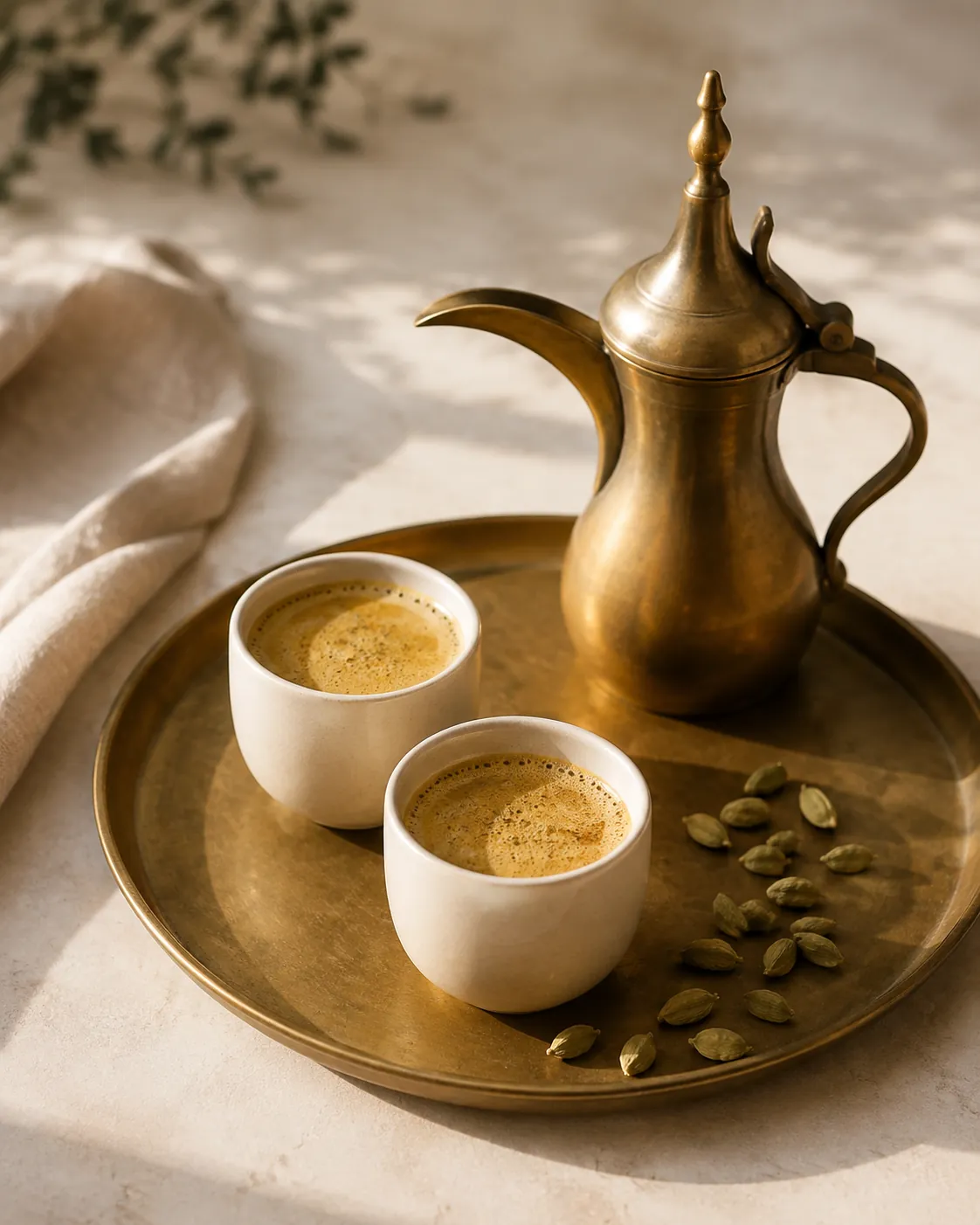
Spicing is traditional rather than a modern flourish, and where it goes in matters. Whole green pods go into the cezve with the coffee and the cold water so they simmer through the brew; one pod per cup is enough, and it can be left in or fished out before pouring.
Ground cardamom stirred into the coffee is the commercial shortcut, which is what pre-spiced Turkish grind uses, and it fades faster. Mastic, cloves and cinnamon all appear regionally.
What never works is adding anything after brewing, since the settled bed means the cup cannot be stirred.
Where it goes wrong, and why the boil causes most of it
Failures in this method are unusually predictable, which makes diagnosis quick.
| Symptom | Cause | Fix |
|---|---|---|
| No foam | Boiled, or heated too fast | Low heat, remove as the foam rises |
| Bitter | Boiled, or roast too dark | Never let it boil; try a medium roast |
| Gritty in the mouth | Not rested, or poured too fast | Let it stand a minute; pour gently |
| Thin and weak | Grind too coarse | It must be powder-fine |
| Overflows | Pot too full, or heat too high | Fill to two thirds at most |
Boiling accounts for two of those five outright and contributes to a third, which is why the single most repeated instruction for the method is to lift the pot before it happens. The second most common fault is stirring, since a spoon put back into the pot after the coffee is wetted tears the forming head apart and it does not rebuild afterwards.
Fill to two thirds, stir once at the start, and watch the ring of foam at the edge rather than the clock; the wider set of faults is collected in Turkish coffee problems.
Seven grams into sixty millilitres
The figures for this cup look strange until the serving size is put beside them.
The dose is large and the volume is tiny, so the concentration is among the highest in coffee while the total per cup lands below a mug of filter. Some of the caffeine also stays behind in the bed rather than reaching the drinker, since the last centimetre is left in the cup by convention.
Set against the other preparations in caffeine by brew method, Turkish sits high on strength per millilitre and mid-table on the figure that actually reaches you, and the arithmetic per cup is worked through in Turkish coffee caffeine.
Against espresso and the other small strong cups
Several traditions arrive at a very small, very concentrated cup, and they get there by different routes.
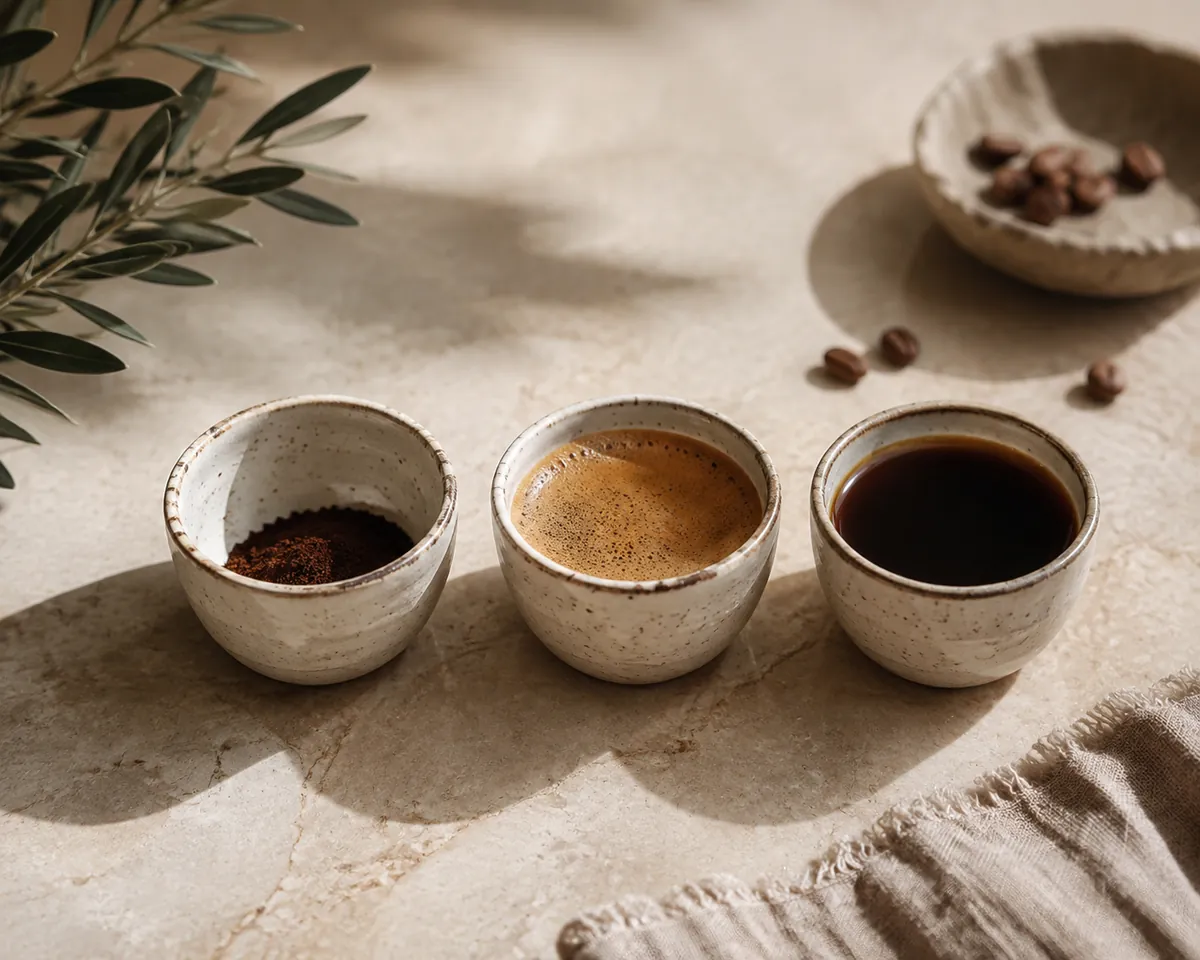
Espresso
Pressure and 25 seconds. Similar strength, no grounds in the cup, and a completely different texture.
What separates Turkish from all of them is that nothing is filtered and nothing is pressed, so the grind has to do the work an espresso machine does with a pump and a basket. Seven grams into 60 ml is roughly a double shot's coffee in a third of the liquid, which makes it the most concentrated preparation in the list by dose, and much of that dose is left in the cup rather than swallowed.
It is also the only one of them that keeps changing while it sits, as the bed compacts and the liquid above it clears. Ground coffee for it behaves the way ground coffee always does, and storing Turkish coffee is mostly the storing-beans rules run on a shorter clock.
Common questions
How fine does Turkish coffee need to be ground?
To a powder, finer than espresso and close to icing sugar. Most domestic burr grinders cannot reach it, which is why dedicated Turkish mills and pre-ground Turkish coffee are both common.
Why should Turkish coffee never boil?
Boiling destroys the foam, which is regarded as the mark of a properly made cup, and it makes the coffee bitter. It is brought slowly to the point where foam rises, then removed from the heat, sometimes two or three times.
Why is sugar added before brewing?
Because the grounds are never filtered out, so stirring a finished cup would disturb the settled sediment. Sweetness is chosen at the start, which is why Turkish coffee is ordered by level: sade, az sekerli, orta or sekerli.