What Is Robusta? The Species Nobody Admitted to Using
Robusta has spent decades as the cheap species nobody admits to using. That is changing, partly because it is genuinely good at some things and partly because a warming climate is making arabica harder to grow.
Coffea canephora, sold as robusta, is the second commercial coffee species. It accounts for roughly 40 per cent of world production and the great majority of instant coffee.
Its reputation is poor and only partly deserved.
Robusta at a glance
- Species
- Coffea canephora, the second of the two grown at scale
- Share of world production
- Roughly 40 per cent
- Caffeine
- About 2.2 per cent of dry weight, roughly twice arabica's
- Crema
- Thicker and longer-lasting than arabica gives
- Grows at
- Sea level to about 800 m, on far more land than arabica can use
- Usual share of an Italian espresso blend
- 10 to 30 per cent
- Where you meet it
- Instant coffee, espresso blends, Vietnamese coffee, budget ground coffee
Crema, body and the caffeine that comes with them
Robusta is not simply a worse arabica, and treating it that way misses the two things it does that arabica cannot. It carries about twice the caffeine, and it produces a head of crema that arabica on its own struggles to match.
| Robusta | Arabica | |
|---|---|---|
| Caffeine | About 2.2 per cent | About 1.2 per cent |
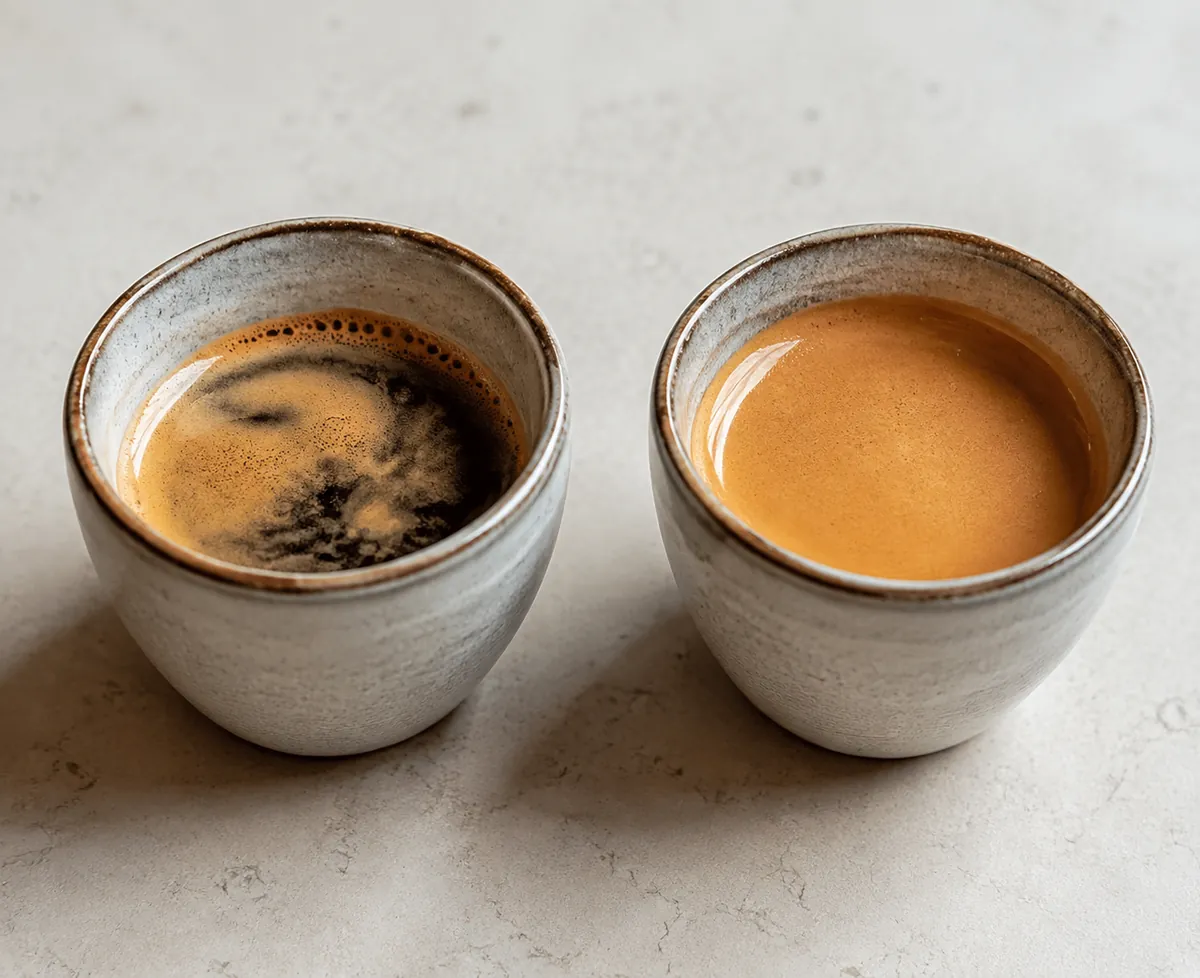
| Crema | Thick and persistent | Thinner, fades faster |
| Body | Heavy, sometimes rubbery | Lighter, more refined |
| Acidity | Very low | Moderate to high |
| Yield per hectare | Substantially higher | Lower |
| Disease resistance | Strong, including leaf rust | Weak |
| Grows at | Sea level to about 800 m | 900 to 2000 m |
Crema is the property espresso blends actually want. Robusta carries more of the soluble material that stabilises the foam, so the layer it produces is denser and survives longer in the cup, and that alone explains why traditional Italian blends keep a share of it.
The first two figures are the plant's chemical defences, and they are the same compounds that give the cup its bitterness and its harder edge. Higher caffeine and more chlorogenic acid are why it resists pests and why it tastes the way it does; the two cannot be separated.
The lipid figure is the quiet one, since fats carry aroma, and a third less of them is part of why robusta reads as flatter even when it has been grown and dried carefully.
The chromosome count is a reminder that these are not close relatives with a quality gap between them but two different plants, and how much caffeine ends up in a given cup is a question of brewing as much as of species, which caffeine by brew method works through and robusta caffeine narrows to this bean.
Where the harshness comes from, and how much of it is the drying
The notes people object to have identifiable causes, and only some of them belong to the species.
Robusta carries far more chlorogenic acids than arabica, and those are the source of the woody, rubbery character that made its name. It also has less sugar to caramelise in the roast and fewer lipids to carry aroma, so there is less sweetness and less perfume to set against the harshness.
That much is the plant.
The rest is how it has been handled. Robusta has historically been grown for volume, stripped from the branch by machine with ripe and unripe cherries together, and dried on the ground, because no buyer was paying for anything better.
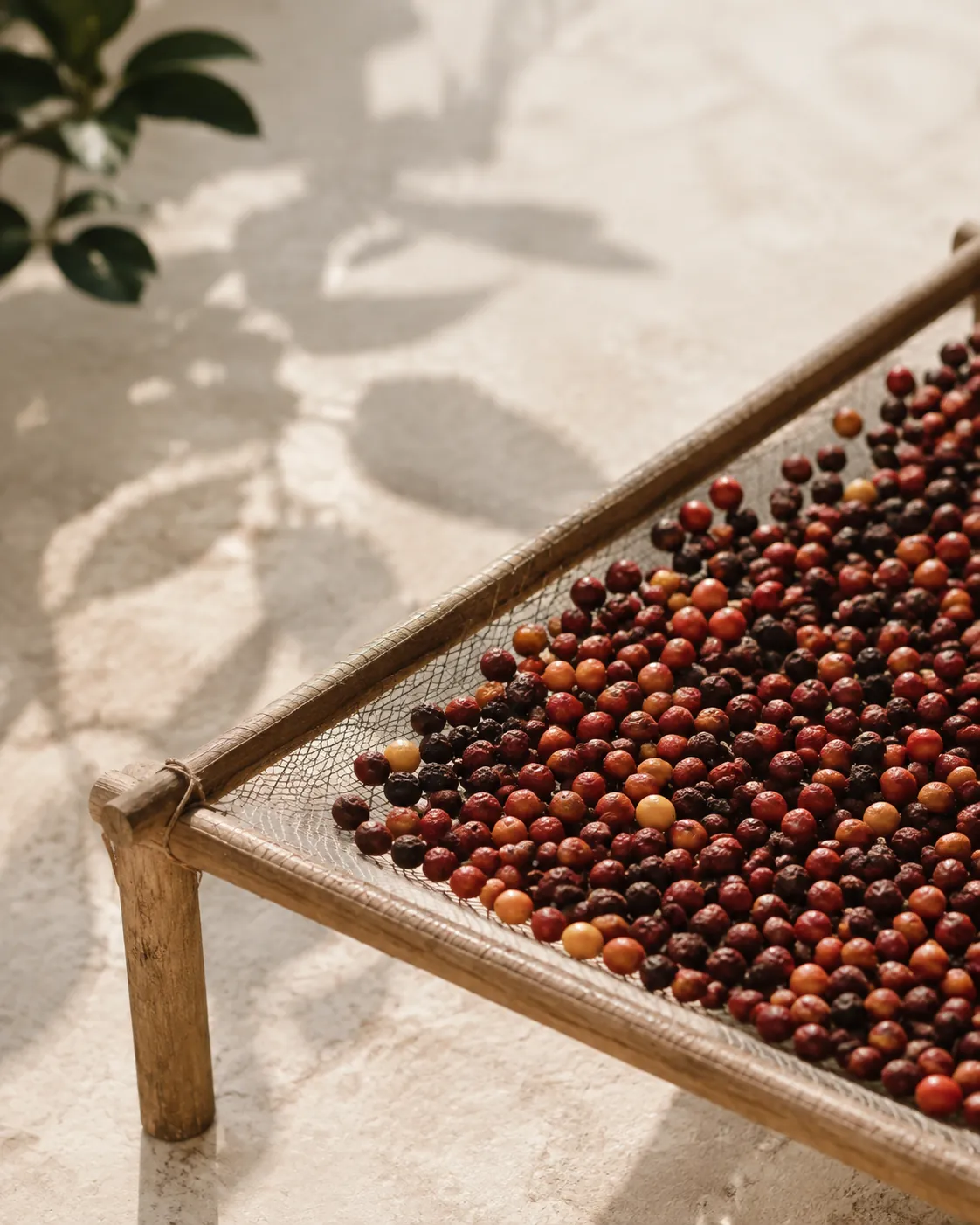
The great majority of the crop is dry processed, with whole cherries dried in the sun and hulled afterwards. It is the cheapest route, it suits a crop grown by the tonne, and it leaves in the fermented, heavy notes robusta gets criticised for.
Washed robusta exists and is uncommon.
| Dry processed | Washed | |
|---|---|---|
| Share of the crop | The great majority | A small fraction |
| Cost | Lowest | Higher, and it needs water and infrastructure |
| Cup | Heavy, woody, sometimes rubbery | Cleaner, sweeter, more chocolate than rubber |
| Consistency | Variable, since unripe cherries dry alongside ripe | More consistent, since floating sorts them |
| Where | Vietnam and Indonesia at scale | India and parts of Uganda |
A great deal of what gets described as the taste of robusta is the taste of cheap dry processing, which arabica handled the same way suffers from equally. Removing the fruit before drying strips out most of the fermented edge, and a washed robusta tastes noticeably cleaner and sweeter than the commodity norm; the sensory range is set out in how robusta tastes.
Ten to thirty per cent, and the cups you are already drinking
Italy never treated robusta as controversial, and the reason is physical rather than a matter of national taste.
A traditional Italian espresso blend runs 10 to 30 per cent robusta, and some southern styles go higher still. The crema is the first reason: more of it, denser, and still intact when the cup reaches the table, which is what a bar espresso machine is judged on by anyone watching the pour.
The second is that robusta's bitterness and body survive milk, where a pure light-roast arabica can vanish under it, which is precisely why a cappuccino built on an Italian blend tastes of coffee all the way down. The specialty movement rejected the species for a decade and has partly returned to it: a well-processed robusta at 10 to 15 per cent is now a defensible formulation choice rather than an admission of cost-cutting.
Instant coffee
Heavily robusta, because it yields more soluble solids per kilo.
Italian espresso blends
Commonly 10 to 30 per cent, for crema and body.
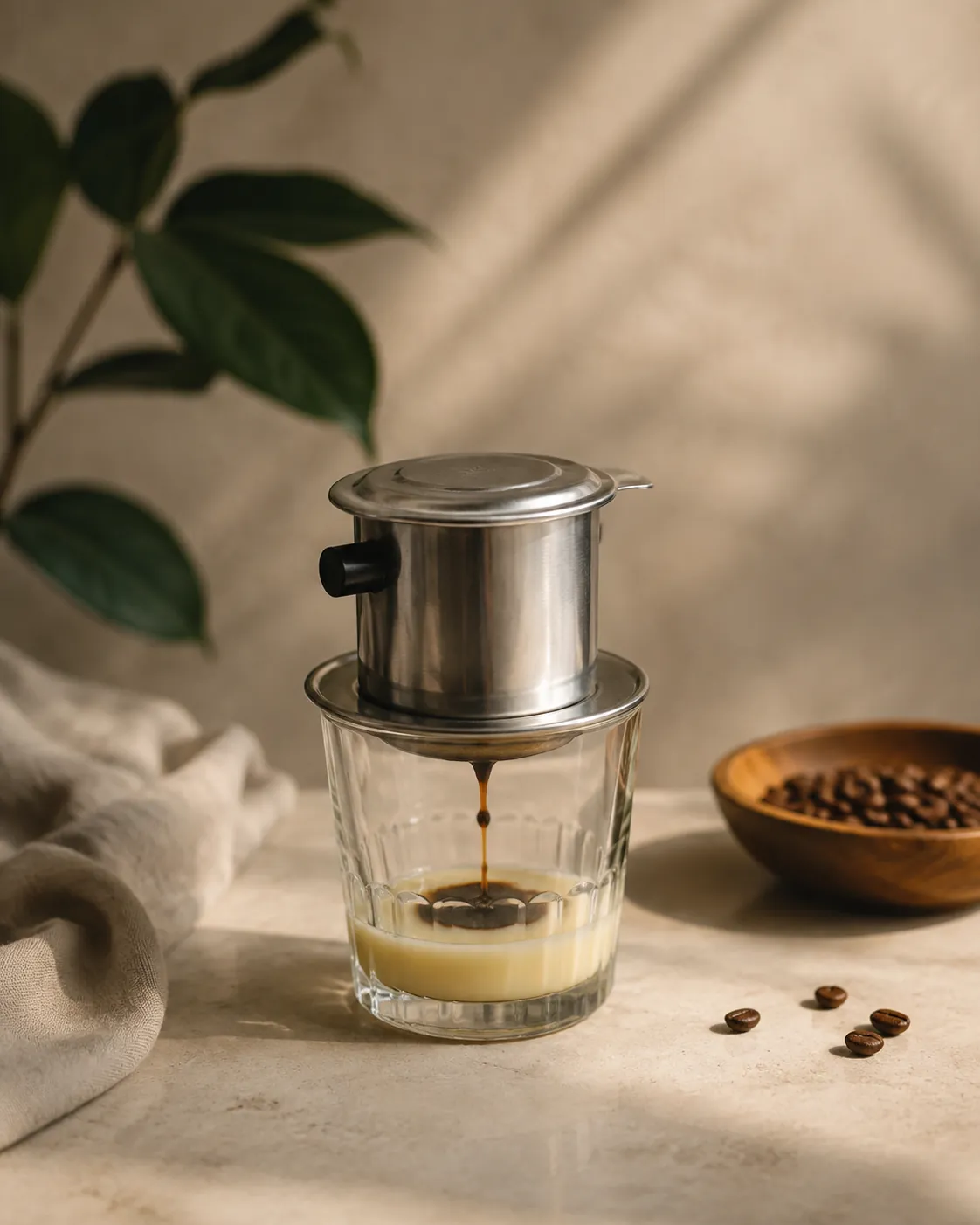
Vietnamese coffee
Predominantly robusta, and the style is built around it.
Supermarket ground coffee
Often blended, and rarely disclosed as a percentage.
Decaf
Sometimes robusta-based, since the process costs the same either way.
Turkish-grind blends often carry a share for the same reason, since the extra soluble material thickens the foam that Turkish coffee is judged by. Vietnamese coffee is the clearest case of a tradition built around the species rather than apologising for it.
Strong, dark, low in acidity and served over condensed milk, it suits robusta's profile so exactly that substituting a delicate arabica would break the drink. Much decaf coffee starts here too, on the reasoning that decaffeination costs the same per kilo whatever went in.
Brewing it lower and shorter than you would arabica
Robusta rewards being handled on its own terms rather than as a substitute, and the adjustments are small.
Lower the water temperature first. Its chlorogenic acids extract aggressively at the top of the usual range, so 88 to 92 C is often better than 94, and the difference between those two settings is larger in a robusta than it would be in a washed Kenyan.
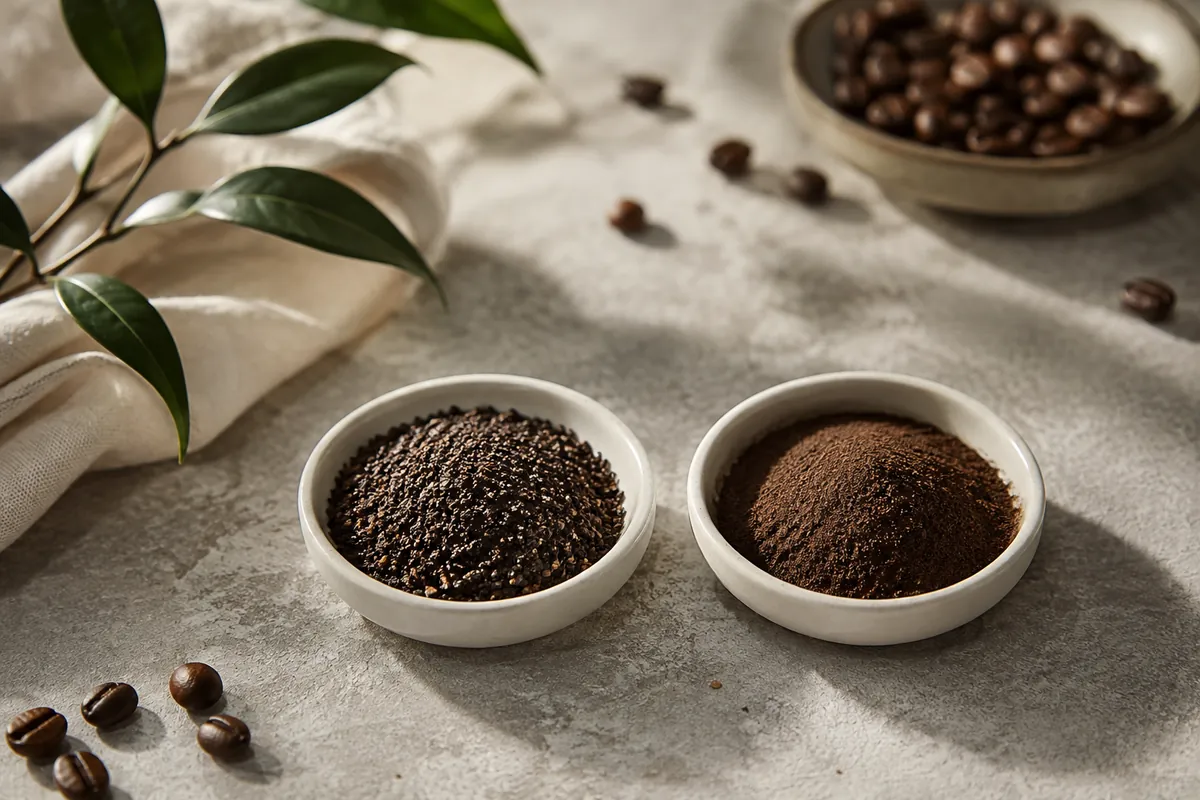
Grind and dose follow the same logic: err coarser and shorter rather than finer and longer, since the compounds you are trying to leave behind are the ones that come out last.
Method matters as much as temperature. Anything built for concentration and body plays to its strengths, which means espresso, a moka pot and the Vietnamese phin filter; a delicate pour-over does the opposite, laying bare a clarity the bean does not have.
Milk and sugar are not a confession of failure here either, since low acidity and heavy body stand up to both far better than a bright arabica does. The full set of adjustments is in brewing robusta.
Sea level, and the economics that follow from it
Robusta's geography is unusually concentrated, and it explains the price more directly than anything about the cup does.
| Country | Position | Note |
|---|---|---|
| Vietnam | By far the largest | Central Highlands. Robusta dominates its exports |
| Brazil | Second | Grown as conilon, alongside its much larger arabica crop |
| Indonesia | Significant | Sumatra and Java, some of it processed distinctively |
| India | Moderate | Much of it shade-grown, and better regarded than average |
| Uganda | Growing | Includes wild-growing native robusta |
Vietnam's rise is recent and enormous: from almost nothing in the 1980s it became the world's second-largest coffee producer inside two decades, and that single expansion is most of why robusta is cheap. Altitude is the practical difference from arabica, since robusta grows from sea level to about 800 m and therefore has vastly more land available to it, on flatter ground where machinery works.
Four things hold the price down and none of them is a judgement on the cup. Yield per hectare is substantially higher; the plant tolerates heat, disease and neglect, so losses are lower; low ground is cheaper and easier to mechanise; and the buyers are industrial ones competing on cost rather than on cup score.
A grower who wanted to make something fine would have to give up most of the yield advantage, which is exactly why the good stuff costs several times commodity robusta and stays rare.
The straight crease, and why no bag admits to it
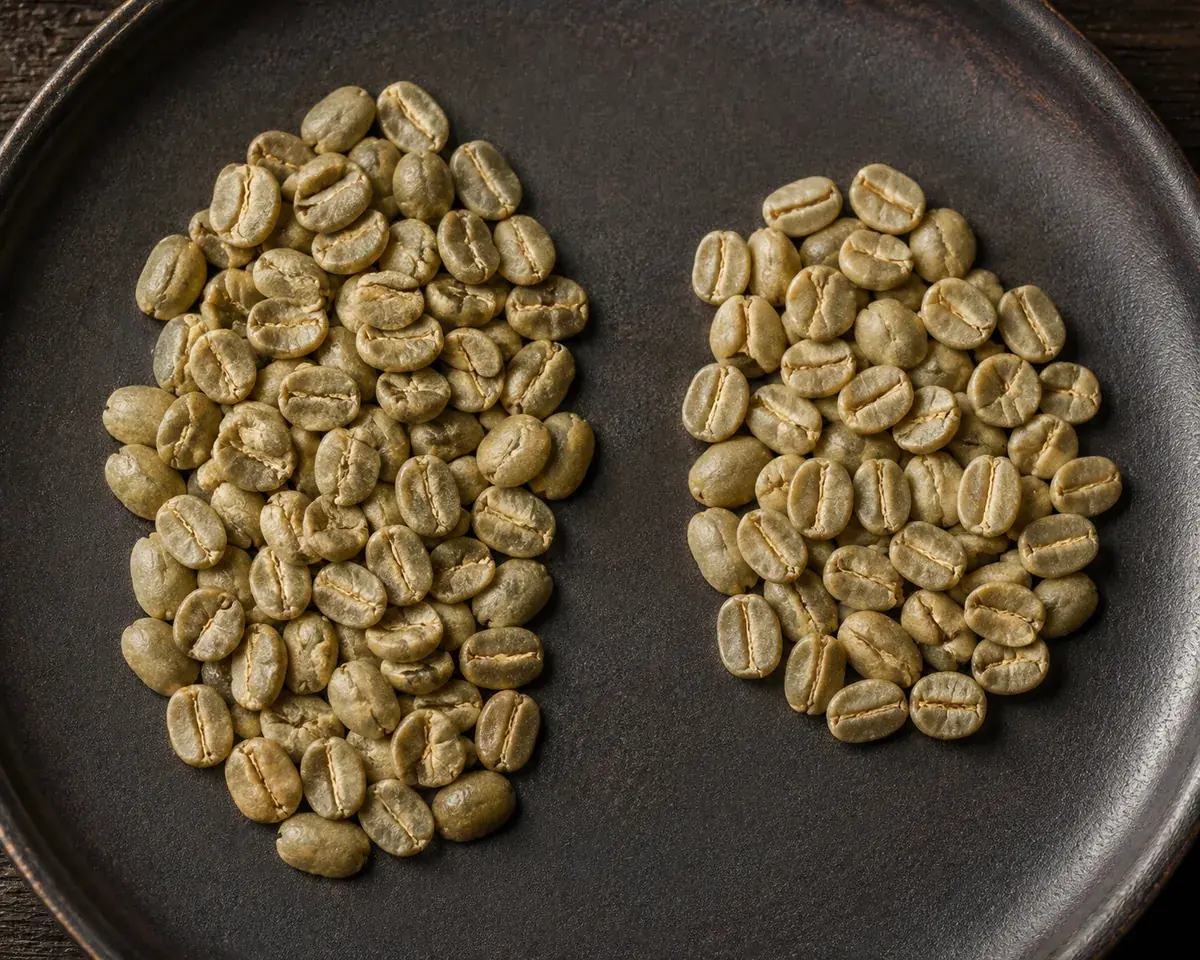
Green robusta and green arabica are easy to tell apart once you know where to look, and roasted robusta is nearly impossible.
Bean identification
- Shape
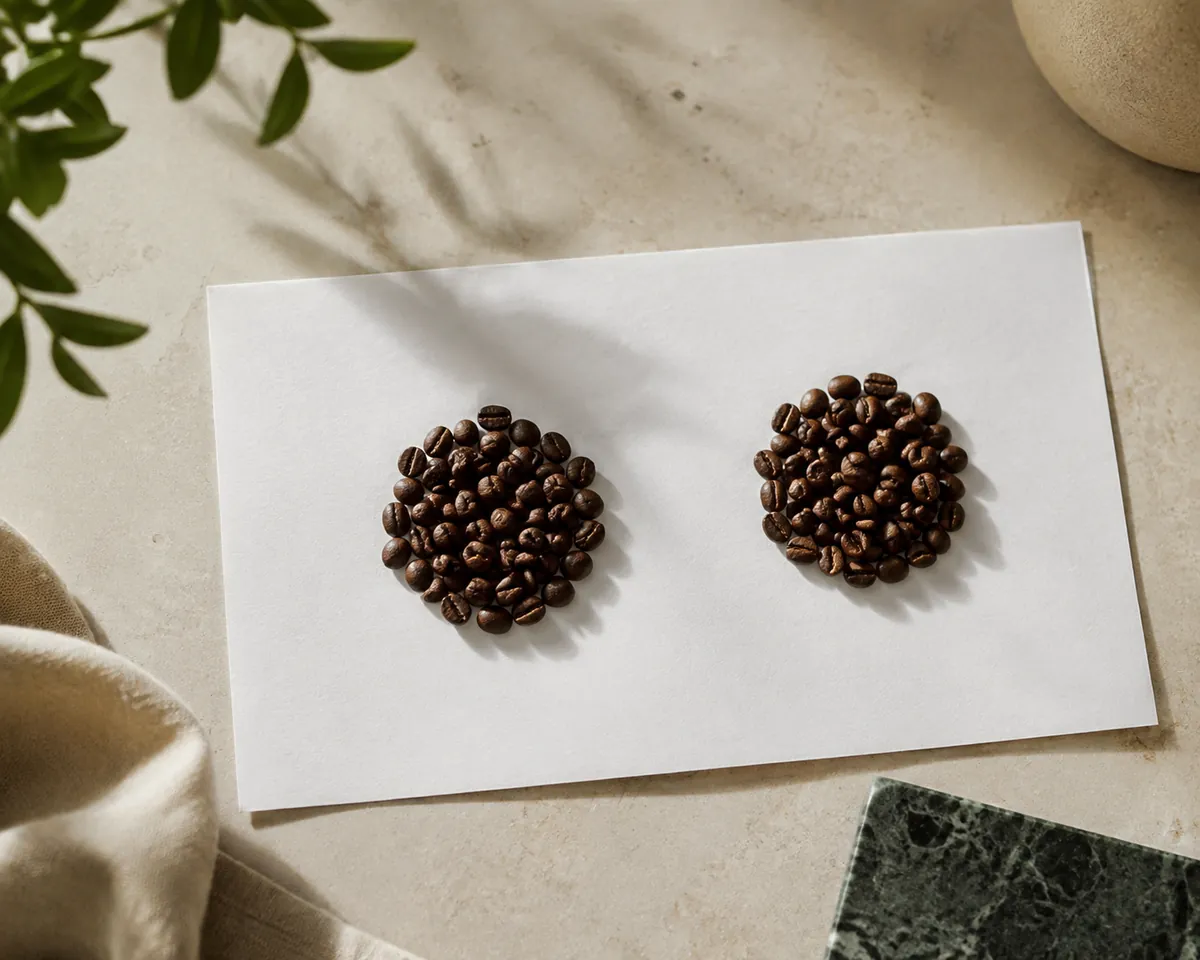
- Robusta is smaller and rounder; arabica longer and more oval
- Centre crease
- Robusta's is straight; arabica's is curved and S-shaped
- Colour
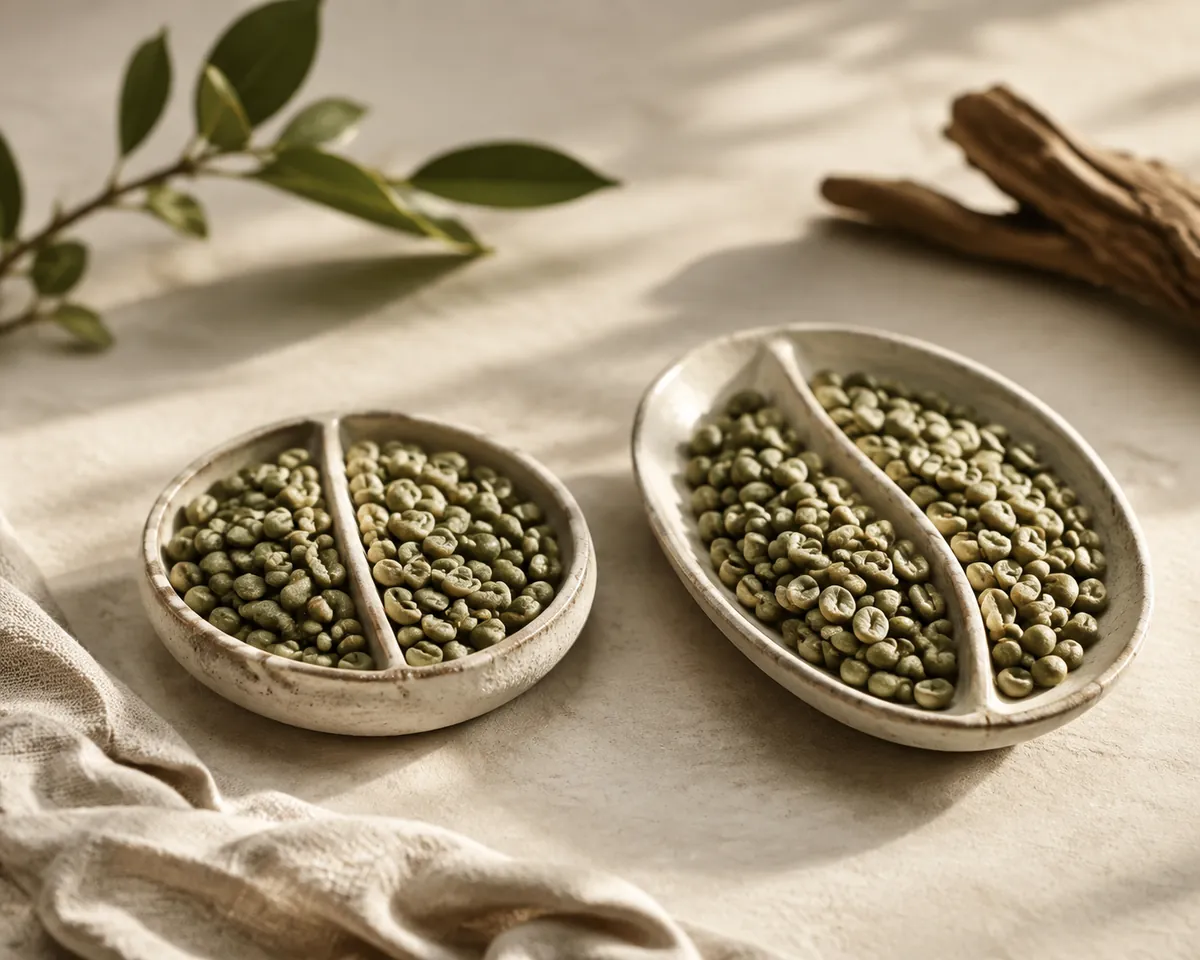
- Robusta is often a paler, browner green
- Size
- Robusta beans are generally smaller for the same grade
- Roasted
- Much harder to tell apart once dark, which is why blends are undisclosed
The crease is the reliable tell: straight on a robusta, wavy on an arabica, visible on any green bean held to the light. Once both are roasted dark the shape difference narrows and the colour difference disappears, so a bag of ground coffee cannot be checked at all.
That is the practical background to the labelling.
Robusta content is the least disclosed fact in coffee. Bags rarely give a percentage, and "100 per cent arabica" is the only reliable signal in the other direction, which makes silence on species a fair indication that some robusta is present.
None of that is a warning. It is worth knowing chiefly when a blend seems harsher, heavier or more caffeinated than its stated origin would suggest, and it is one more reason a roast date and a process note tell you more than a species claim does, as storing coffee beans sets out for the rest of the label.
Fine robusta, and what deliberate picking changes
The processing argument above has a positive form, and it is the basis of a genuine shift over the past decade.
Robusta grown on purpose rather than by default, picked ripe and dried on raised beds, produces something quite unlike the commodity version: chocolatey, nutty, heavy-bodied and very low in acidity, with none of the rubber. It has its own grading protocol under the specialty coffee bodies, which is a meaningful step, because a species with no quality scale attached to it has no way to be paid more for being better.
Whether it becomes common is partly a question of climate rather than of taste, and partly one of who is willing to pay for careful drying on a crop the market has always bought by weight.
Buying one worth judging the species on
The category exists in specialty shops and it takes some looking for, since it is rarely in the main range.
Indian robusta is the most available good example, sold as Kaapi Royale or as monsooned lots, much of it shade-grown and washed. Ugandan robusta is native rather than introduced and is increasingly sold on its own terms.
Vietnamese specialty robusta has appeared in the last decade, which is a real shift for a country that built its industry on volume, though it remains a small fraction of a very large crop.
Expect to pay several times commodity robusta and less than a comparable arabica. What to avoid for a first try is the cheapest supermarket ground coffee, which is dry-processed commodity robusta from the bottom of the grade range; judging the species on that is like judging arabica on the cheapest jar of instant.
Italian espresso blends are the other accessible route, and they will tell you robusta is present without saying how much, which is still enough to hear what it contributes to crema and body. Ground robusta keeps no better than any other coffee, as storing robusta sets out.
Heat, disease and a rising share of the crop
Robusta's share of world production has been climbing, and drinkers changing their minds has nothing to do with it.
Arabica's range is defined by temperature and altitude, and both are moving. Robusta tolerates heat, lower ground and more erratic rainfall, which makes it viable on land where arabica is becoming marginal, so the shift is a supply story rather than a quality one.
It is also why breeding programmes keep crossing the two species, and why most disease-resistant arabica cultivars now carry robusta genetics somewhere in their parentage, which the arabica page traces through the individual lines.
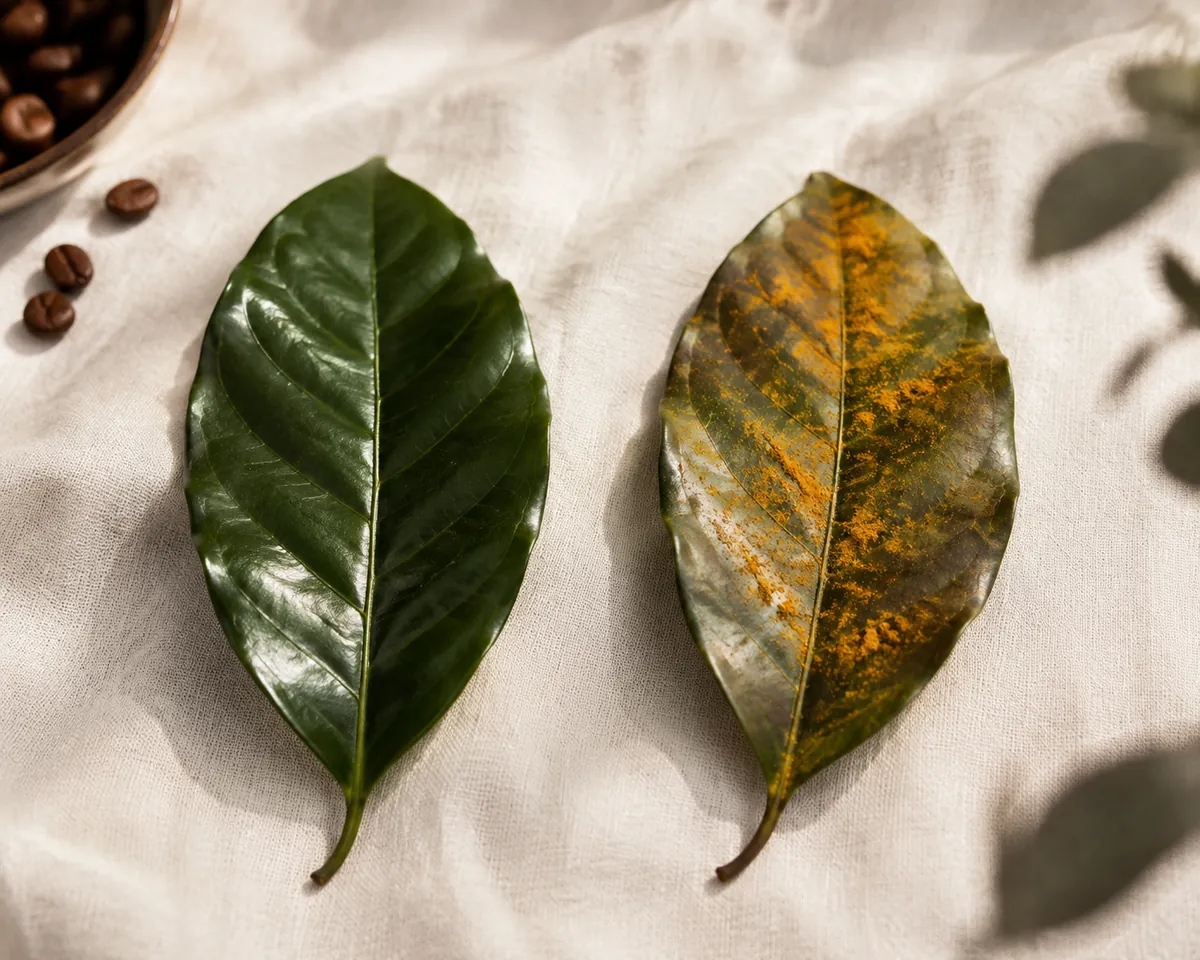
For a drinker the practical consequence is simple enough: robusta will be in more cups over time, disclosed or not. Knowing what it tastes like and what careful processing does to it is more useful than trying to avoid it.
Tasting it against a cheap arabica, not a good one
Most people meet robusta without knowing it, so forming a view means buying one deliberately and brewing it in the format least likely to flatter its faults.
Buy a single-origin washed robusta and make it as a filter coffee rather than as espresso. Espresso concentrates everything, which is the least forgiving presentation for a bean already carrying more bitterness than arabica, and a paper filter takes out some of the heaviness that would otherwise dominate.
Expect very low acidity, a heavy body, and notes closer to dark chocolate, wood and grain than to anything fruity.
The comparison worth making is against a cheap arabica, not a specialty one. Judged beside a bright washed Ethiopian it will seem flat, because it is being asked to do something it cannot; judged beside a commodity supermarket arabica at the same price, a well-processed robusta frequently wins outright.
If the cup comes out harsh rather than merely heavy, the cause is usually temperature or dose rather than the bean, and robusta problems sorts one from the other.
Common questions
Is robusta bad coffee?
Commodity robusta is often poor, but much of that is processing rather than species: grown for volume, picked unripe and dried carelessly. Fine robusta, grown and processed deliberately, is chocolatey and heavy-bodied and has its own specialty grading protocol.
Why do espresso blends contain robusta?
Crema and body. Robusta's higher soluble solids produce a thicker, longer-lasting crema, which is why traditional Italian blends include 10 to 30 per cent. Cost is usually a factor too, but the contribution is real.
How much more caffeine does robusta have?
Roughly double: about 2.2 per cent by weight against arabica's 1.2 per cent. A robusta-heavy blend brews noticeably stronger at the same dose, which is one reason instant coffee can be more caffeinated than expected.