What Is Decaf Coffee? How the Caffeine Comes Out of the Bean
Decaf is coffee with most of its caffeine removed from the green bean before roasting. Which process was used changes the flavour more than most people realise, and it is usually printed on the bag.
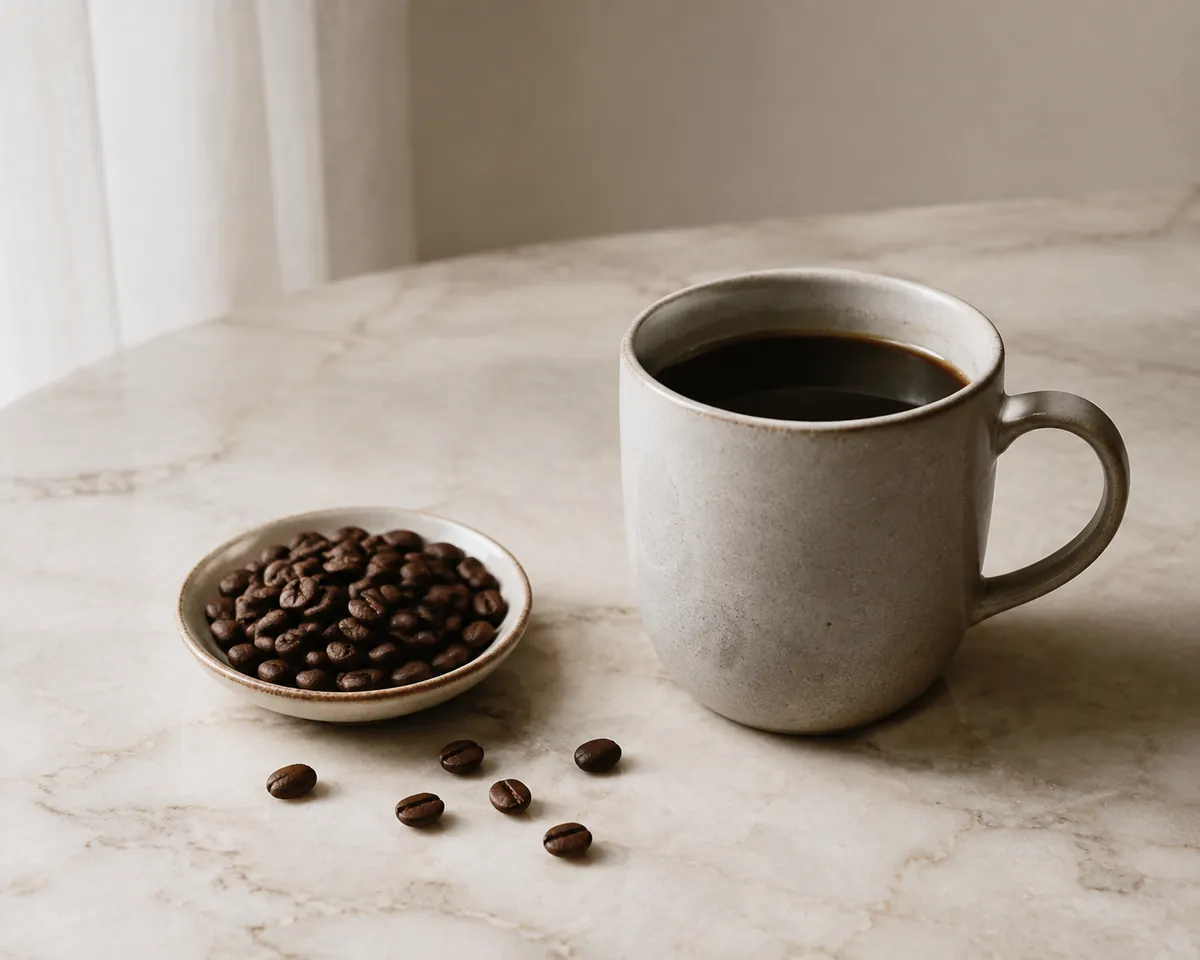
Decaffeinated coffee is coffee from which most of the caffeine has been removed. The process happens to green, unroasted beans, before roasting and long before anyone brews decaf coffee, which is why the choice of method belongs to the importer rather than to the person holding the kettle.
It is not caffeine-free, and no commercial process removes all of it, which is why caffeine by brewing method still lists a figure for it.
Decaf at a glance
- What it is
- Green coffee with most of its caffeine extracted before roasting
- When it happens
- To the raw bean, before it reaches a roaster
- Residual caffeine
- Roughly 2 to 5 mg in a typical 8 fl oz cup
- Regulatory threshold
- At least 97 per cent removal, with some processes reaching 99.9
- Common processes
- Swiss Water, supercritical CO2, ethyl acetate, methylene chloride
- Effect on the bean
- More porous, already brown, faster to roast and faster to stale
- Effect on price
- Higher, because decaffeination is an extra industrial stage
How much caffeine is left, and what the label may claim
The figures are regulated, small, and worth stating precisely rather than rounding to zero in conversation.
Regulations generally require at least 97 per cent removal in the European Union and 97 per cent or more in the United States, with some processes reaching 99.9 per cent. Decaf therefore carries somewhere around two to five per cent of the caffeine of the same cup made from regular beans, which is a very large reduction and not an elimination.
Two words on a bag mean different things because of that. "Decaffeinated" is a regulated term tied to the thresholds above, while "caffeine-free" is a claim no coffee can legitimately make, since a residue always remains.
The detailed figures for a decaf cup sit at the bottom of every comparison table on this site for exactly that reason.
The four processes, and what carries the caffeine away
Which method was used is the single most useful thing printed on a bag of decaf, and it is missing from most of them.
| Process | Agent | Character | Cost |
|---|---|---|---|
| Swiss Water | Water and carbon filters | Clean, no solvent, good flavour retention | High |
| CO2 | Pressurised carbon dioxide | Very selective, excellent flavour retention | High |
| Ethyl acetate | Solvent, often cane-derived | Slight sweetness, sometimes fruity | Moderate |
| Methylene chloride | Solvent | Efficient, and the most common industrially | Low |
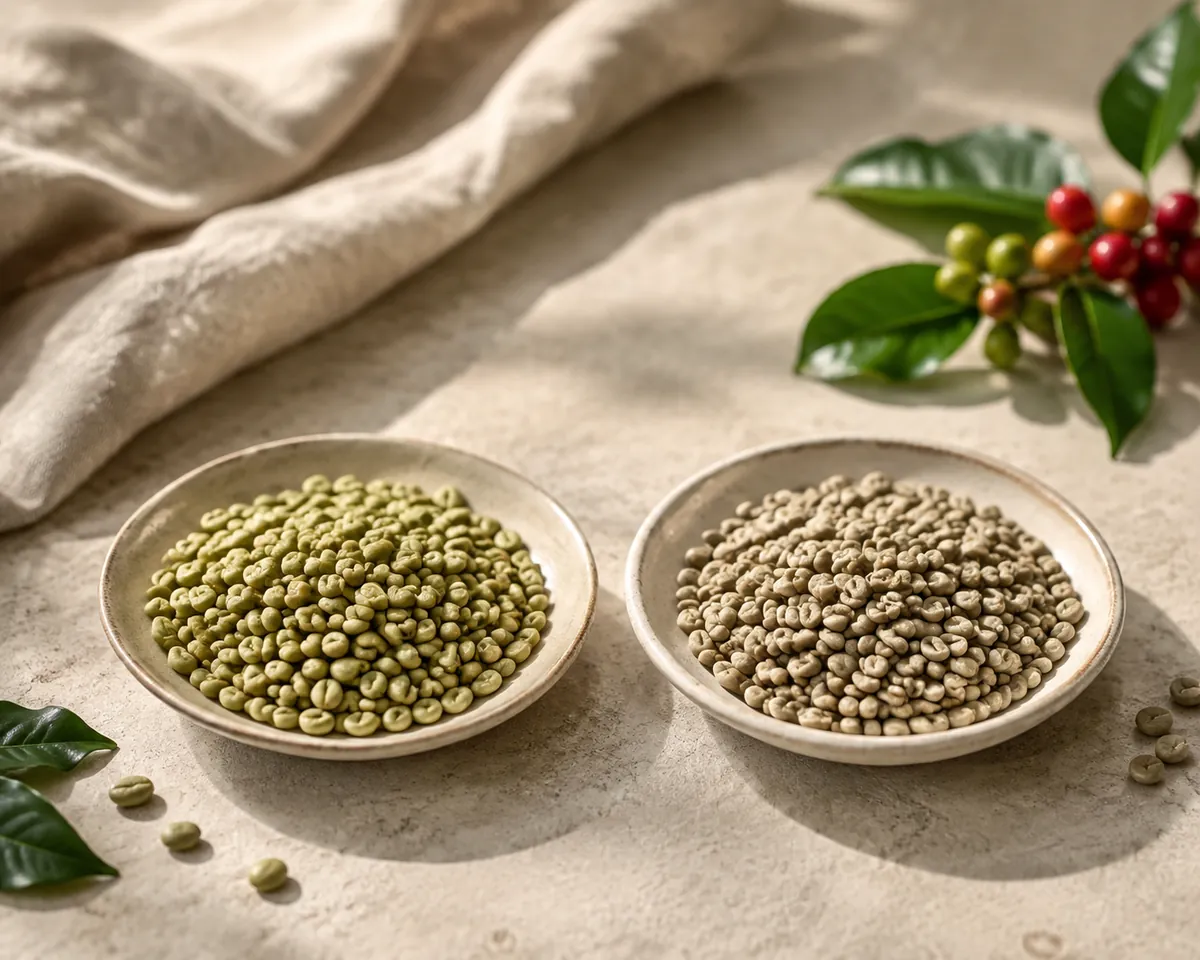
All four begin the same way: the green beans are soaked so the caffeine can move out of them. What differs is what carries the caffeine away afterwards, and the two solvent-free routes are the ones that get advertised.
Swiss Water works by saturation. Green coffee extract is loaded with everything a bean contains except caffeine, so when beans meet it, flavour compounds have nowhere to go and only caffeine migrates out; carbon filters then strip that caffeine so the extract can be used again.
CO2 decaffeination puts carbon dioxide under enough pressure to reach a supercritical state, where it behaves as liquid and gas at once and turns out to be unusually selective for caffeine while largely ignoring the aromatics.
Swiss Water
Chemical-free, widely available, reliable. The most commonly advertised.
CO2
Excellent flavour retention, expensive plant, used for large volumes.
Sugarcane or natural EA
Ethyl acetate derived from fermented cane, often marketed as natural.
Mountain Water
A comparable water process used mainly with Mexican coffees.
"Chemical-free" on a bag usually means Swiss Water or CO2. Solvent methods do not leave meaningful residue in the finished cup either, since the beans are steamed afterwards and then roasted at temperatures far above the boiling point of anything used on them.
Why decaf earned a flat reputation, and why it is losing it
Decaf tastes different for two real reasons and one that stopped being true decades ago.
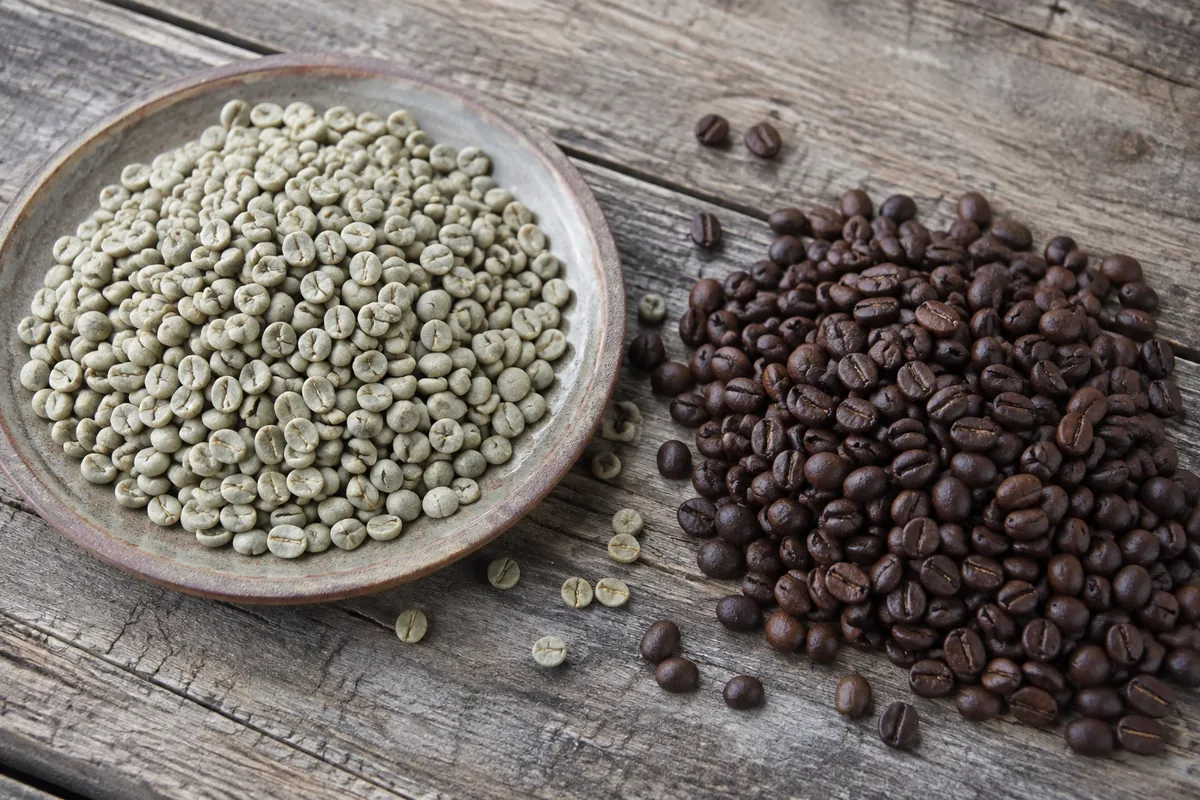
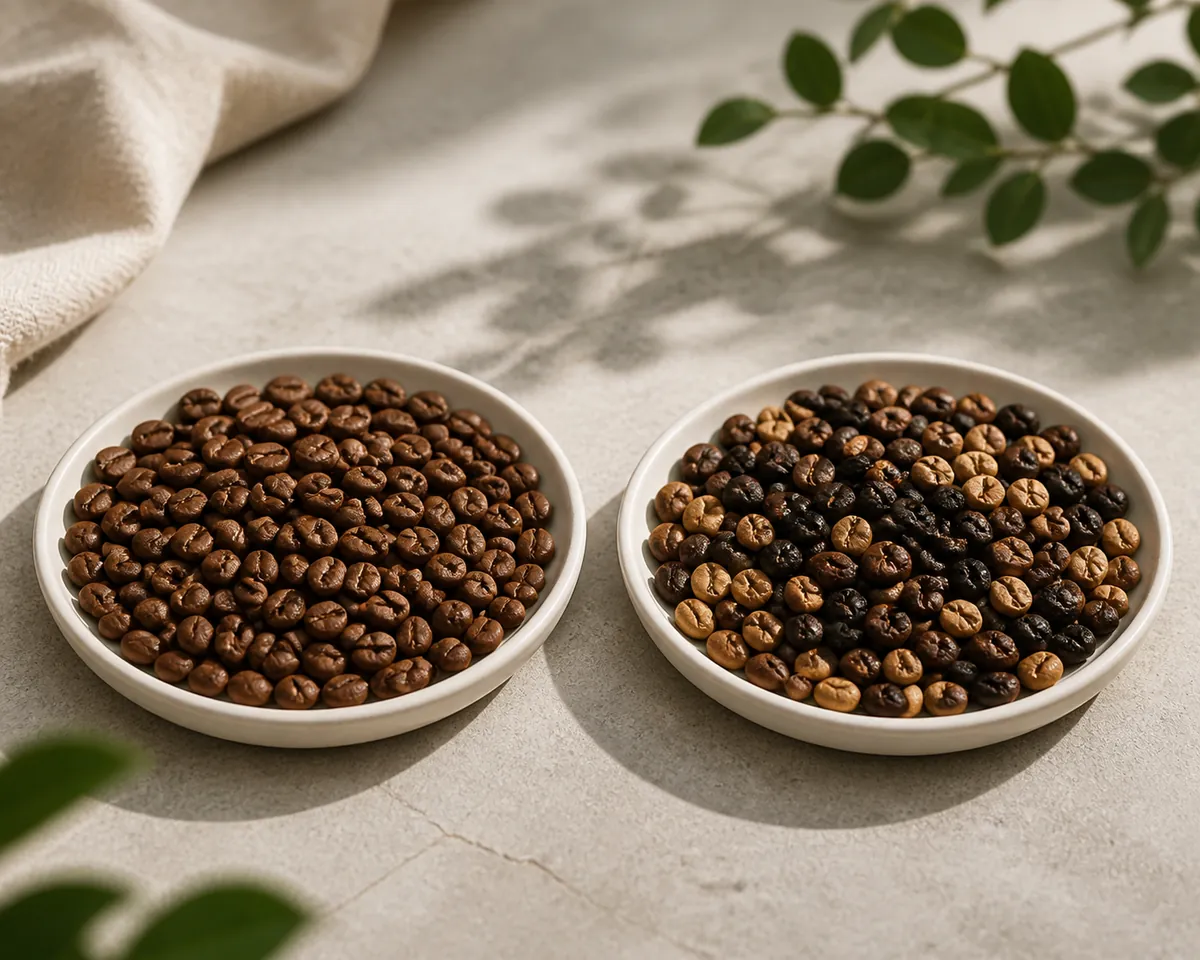
The process removes some flavour compounds alongside the caffeine, which is unavoidable at any price. The second reason is mechanical rather than chemical: decaffeinated green beans arrive at the roaster already brown, more porous, and lighter, so every visual cue a roaster uses is wrong and the beans move through the roast faster than the machine expects.
Why roasting decaf is harder
- Colour
- Green decaf beans are already brown, so visual roast cues do not work
- Density
- The beans are more porous and conduct heat faster
- Speed
- They roast faster, and the window for a good roast is narrower
- Scorching
- Easier to scorch the surface before the centre develops
- Consistency
- Batch-to-batch variation is higher than for regular coffee
The obsolete reason is bean quality. Decaf was historically made from whatever was cheapest, on the assumption that nobody drinking it was paying attention, and specialty decaf from named origins is now widely sold, including as instant coffee.
Freshly roasted decaf, brewed properly, produces a cup most people cannot reliably pick out in a blind comparison, and there is no reason to serve it with an apology attached. What survives of the reputation is largely a supply problem, described two sections below.
Anyone curious about the sensory difference will find it set out in what decaf coffee tastes like.
What a decaf bag should tell you, and what to buy on
Label reading pays better here than on regular coffee, because two bags at the same price can differ by an entire industrial process.
- Look for the process. Swiss Water, CO2 or EA should be printed; if nothing is stated, assume a solvent method.
- Check the roast date. Decaf stales faster because the beans are more porous.
- Buy whole bean where possible, for the same reason.
- Prefer a named origin over a generic decaf blend.
- Expect to pay more. Decaffeination is an extra industrial step and it is priced in.
Three decisions follow from that list, in order of how much they change the cup. Process comes first if you care about it: Swiss Water or CO2 for solvent-free, ethyl acetate for the slightly sweeter and occasionally fruity result, methylene chloride for the cheapest and by far the most common.
Freshness comes second, and a roast date under three weeks old is worth paying for here in a way it is not for a robust dark roast. Origin comes third, and a decaf from a stated farm or region roasted by somebody who takes it seriously is a genuinely good coffee rather than a concession, which was not reliably true twenty years ago.
Storing decaf is where the third of those decisions is either protected or wasted.
Porosity, and why the clock runs faster on a decaf bag
Decaffeination is a wet process followed by re-drying, and the bean it hands back is structurally weaker than the one that went in.
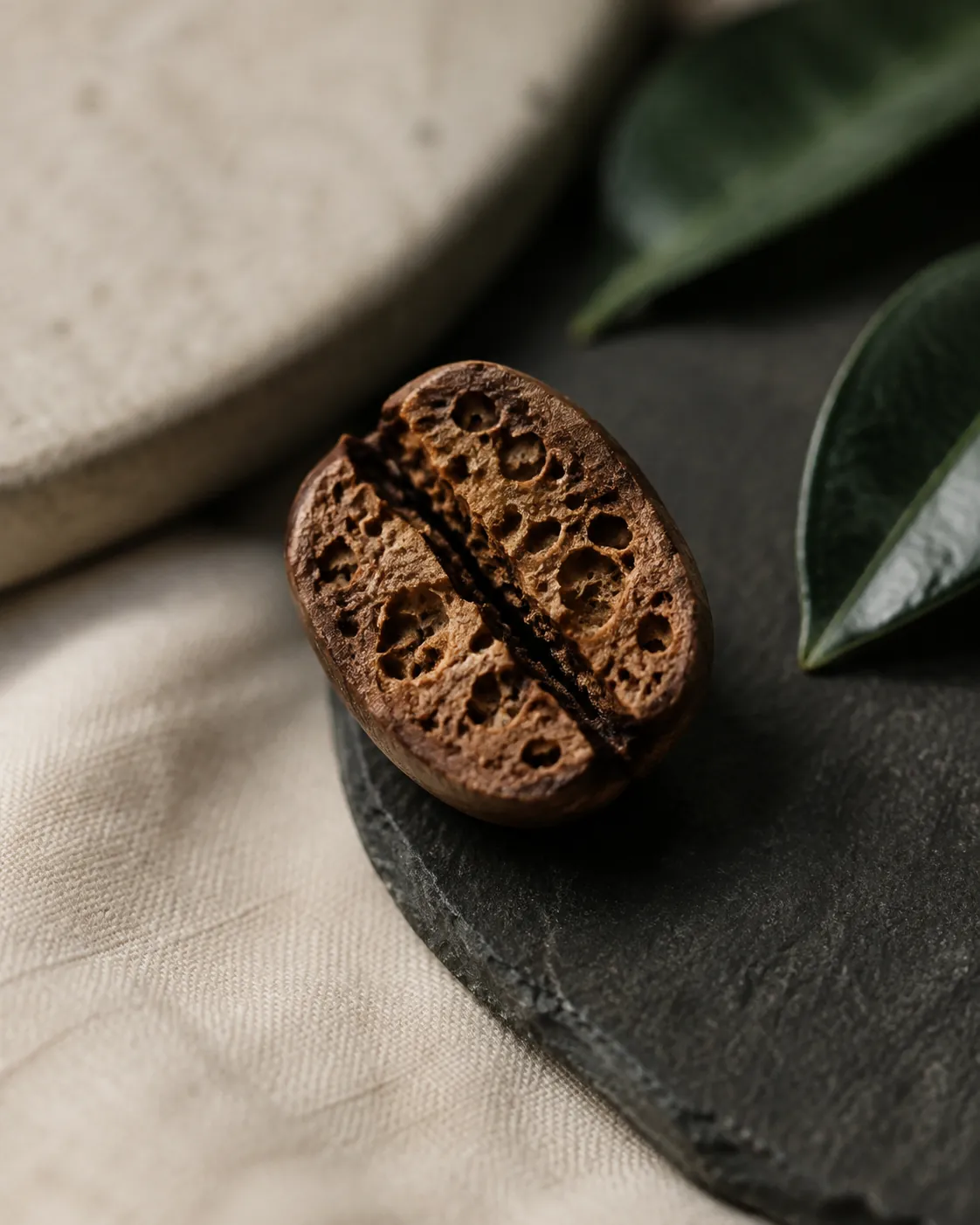
The same opened-up structure that let caffeine out lets oxygen in afterwards, so there is more exposed surface reacting with air at every moment the bag is on a shelf. Decaf also degasses faster after roasting, which is why it often needs a shorter rest before it brews well and why beans that would still be lively at three weeks as regular coffee can taste tired at two.
The failure mode this produces is specific: a bag bought in a large size to save money, opened daily for a month, tasting noticeably duller in the last week than the first without anything visible having changed.
- Buy smaller quantities more often, since a large bag will fade before it is finished.
- Keep it whole bean and grind at brew time, which matters more here than for regular coffee.
- Store it sealed, cool and dark, away from the hob and the kettle.
- Check the roast date rather than the best-before, and prefer bags under three weeks old.
- Buy from somewhere with turnover, since decaf sits on shelves longer than regular coffee.
The turnover point does most of the work in that list. Much of what people dislike about decaf is coffee that was fine when it was roasted and stale by the time it was sold.
Everything in storing coffee beans applies here with the clock running slightly faster.
Brewing it coarser and cooler, and otherwise not changing anything
Small adjustments do the job; a different method does not.
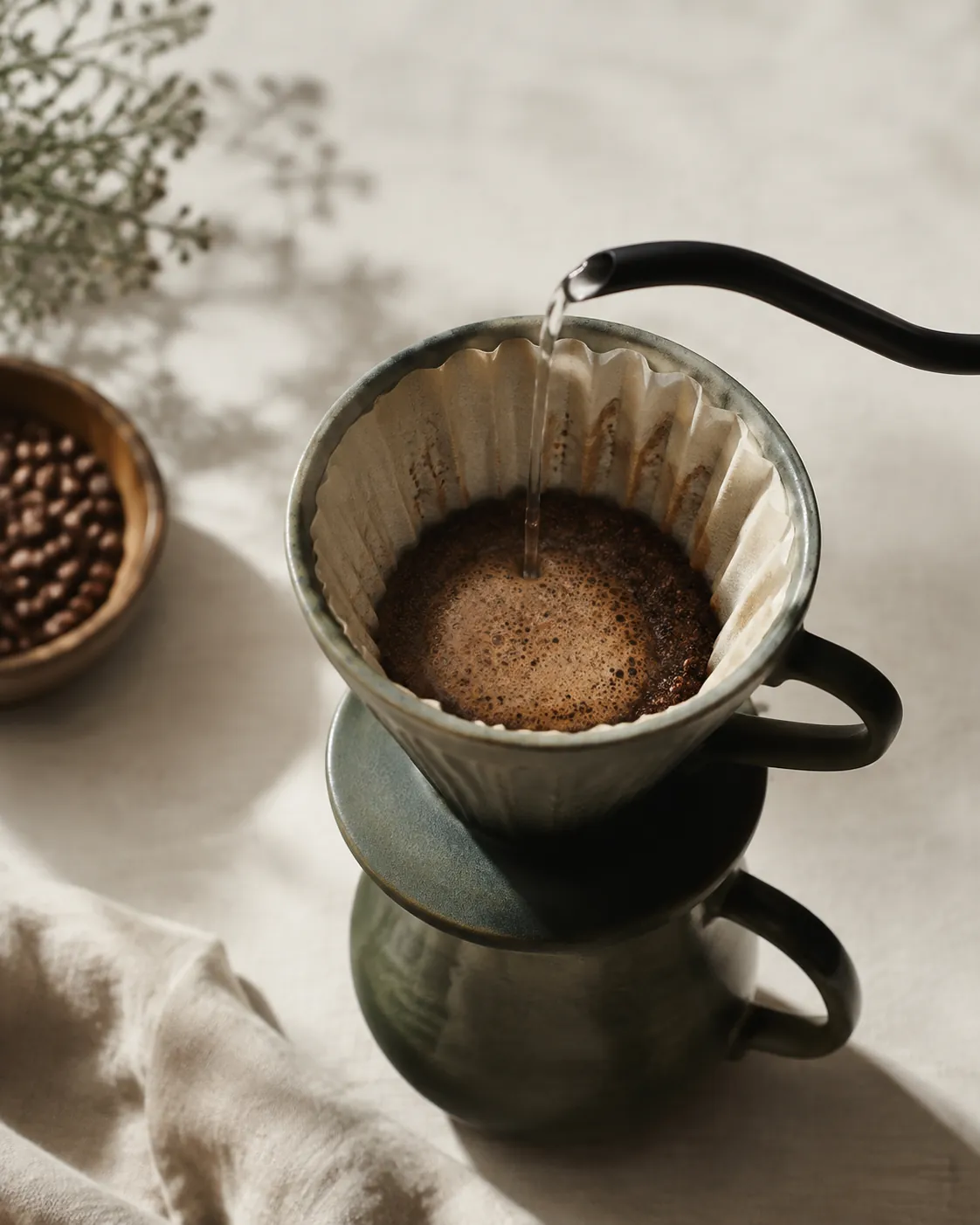
Because the beans are more porous, water gets through and into them faster, and the same grind that suited a regular coffee will over-extract a decaf on the same equipment. Going one or two steps coarser on a burr grinder usually restores the balance, and the adjustment matters most for an espresso shot, where the margin between sour and bitter is measured in seconds.
Water temperature can come down a little for the same reason, since decaf turns bitter more readily at the top of the usual range and a few degrees below it often produces a cleaner cup.
The bloom is the other visible difference. Decaf that has already degassed will barely rise when wetted, which reads as a sign of stale coffee and frequently is not; on a fresh decaf it simply means the carbon dioxide left earlier than it would have done.
Beyond that the method is unchanged, and decaf works in a French press, a drip machine, a cold brew jar or anything else you already own. Making decaf coffee walks through the adjustments one method at a time.
Half-caff, smaller cups and the other routes
Reducing caffeine has several routes and decaf is only one of them, which matters because the routes suit different reasons for asking.
Half-caff
A blend of regular and decaf beans, usually equal parts. Easy to mix at home, and the ratio is entirely yours to set.
A smaller serving
Changes the number without changing the coffee. A single shot already carries less than a mug of brewed coffee.
Full decaf
The route that keeps the coffee itself and removes almost all of the caffeine.
Something that never had any
A tisane sidesteps the question rather than answering it.
Which of those fits depends on whether the coffee or the caffeine is the point. When the coffee is the point, decaf is the answer and a good one, because it keeps the origin character, the roast and the ritual intact.
When the ritual is what is wanted, a rooibos infusion or another herbal drink does the job with no processing involved at all, and no residue to describe. No position is taken here on which anyone chooses; the useful thing is knowing that these are four different answers rather than four grades of the same one.
Where the process came from, and where the caffeine goes
Decaffeination is a good deal older than most people assume, and its history explains both the names on modern bags and the absence of names on most of them.
How decaffeination reached the modern bag
- Early 1900sThe first commercial process, developed in Germany with benzene as the solvent. Long obsolete, though the original product name survives in some markets as a generic word for decaf.
- 1930sSwiss Water is developed in Switzerland, and commercialised in Canada decades afterwards.
- 1970sSupercritical CO2 arrives and gradually takes the largest volumes, despite Swiss Water being the better-known name.
- TodayCheap solvent routes handle most supermarket coffee, and say nothing about it on the bag.
The gap between what is used and what is marketed is precisely why most supermarket decaf carries no process claim at all: the cheap solvent routes are unremarkable, they work perfectly well, and they give a producer nothing worth printing on the front of a packet.
The extracted caffeine has a destination too. It is purified and sold into soft drinks, energy drinks and pharmaceuticals, and that revenue offsets part of the cost of the process, which is a large part of why decaffeination is viable at the price it is.
The caffeine in a cola drink may well have started life inside a coffee bean.
Decaf tea, and the drinks that never had any
Coffee is not the only thing decaffeinated commercially, and tea comes off worse from the same treatment.
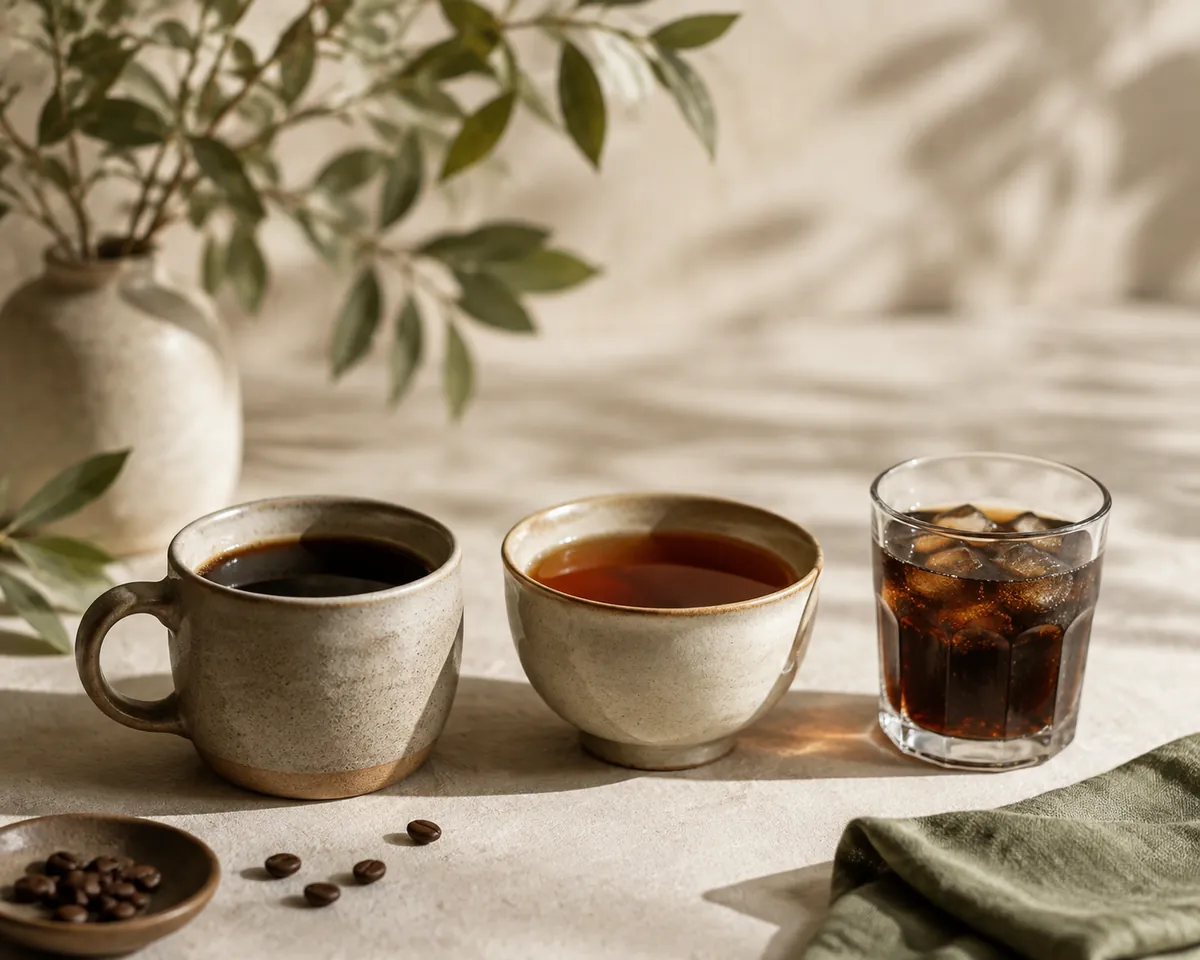
Tea is decaffeinated after processing rather than as a raw leaf, so the flavour compounds have already developed by the time the solvent or the carbon dioxide reaches them, and more of those compounds are lost. Decaf tea consequently sits further from its regular equivalent than decaf coffee does from a caffeinated bean.
Ethyl acetate and CO2 are both used, and CO2 gives the better result for the same selectivity reason it does in coffee. Anyone comparing should try a decaffeinated leaf against the green tea it came from before assuming the two are interchangeable.
A separate category sits alongside all of this: drinks that never contained caffeine and were never processed to remove it. Barley tea, chicory and dandelion drinks are all sold in the coffee aisle and genuinely contain none, because nothing caffeinated went into them.
Treating those as a stronger form of decaf leads to disappointment in both directions, since they neither taste like coffee nor need to.
Common questions
Does decaf coffee have any caffeine?
Yes, a small amount. Regulations require at least 97 per cent removal, leaving roughly 2 to 5 mg per cup against about 95 mg in regular brewed coffee. It is a very large reduction rather than an elimination.
What is the Swiss Water process?
A solvent-free method using green coffee extract already saturated with flavour compounds, so only caffeine migrates out of the beans into it. Carbon filters strip the caffeine from the extract so it can be reused.
Why does decaf coffee taste different?
Two reasons: decaffeination removes some flavour compounds alongside the caffeine, and decaffeinated green beans are more porous and already brown, which makes them roast faster and harder to judge.