French press vs Pour over
French Press vs Pour Over: The Filter Decides the Drink
Both make excellent coffee from the same beans, and they make genuinely different drinks. The filter decides which one you want.
Choose a French press if you want a heavy, rich, forgiving cup and would rather not learn a technique. Choose pour over if you want a clean, detailed cup that shows what a good bean is actually doing, and you do not mind that the first few attempts will be inconsistent.
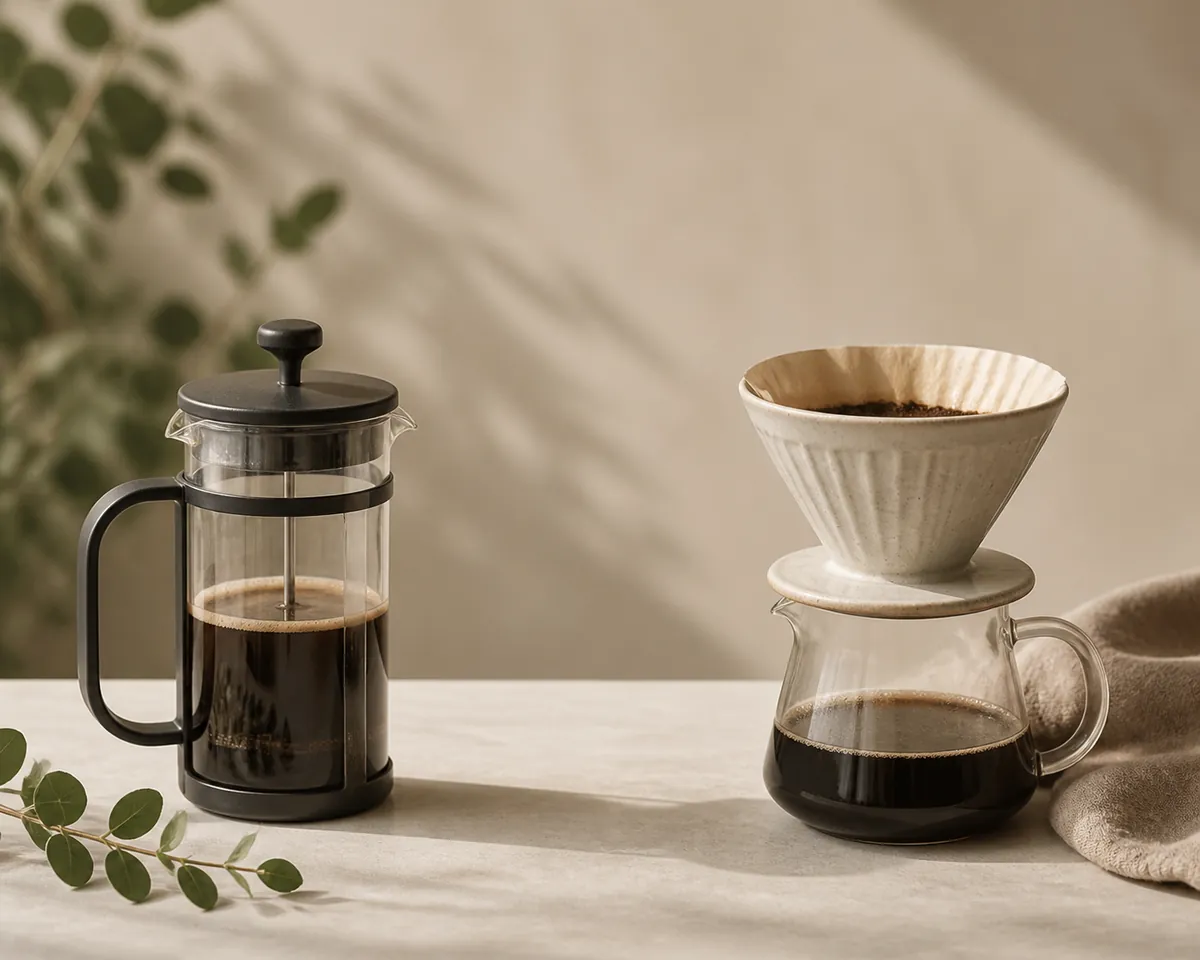
Side by side
| Attribute | French press | Pour over |
|---|---|---|
| Mechanism | Immersion. Grounds sit in the full body of water throughout. | Percolation. Fresh water passes through the bed and drains away. |
| Filter | Metal mesh. Oils and fine particles pass into the cup. | Paper. Oils and fines are trapped. |
| Body | Heavy, rounded, coats the mouth. | Light and clean, closer to tea in weight. |
| Clarity | Lower. Delicate notes are muddied by the body. | High. Individual flavour notes are easy to pick out. |
| Sediment | A fine layer settles in the cup. | None. |
| Grind | Coarse, like raw sugar. | Medium, like table salt. |
| Skill required | Very little. Timing errors of 30 seconds barely register. | Real technique. Pour rate and distribution change the result. |
| Brew time | About 4 minutes, mostly unattended. | About 3 minutes of active pouring. |
| Consumables | None beyond coffee. | Paper filters. |
| Scales to a crowd | Easily. A 1 litre press serves four. | Awkwardly. Beyond two or three cups it becomes a chore. |
| Suits which beans | Medium and dark roasts, chocolatey and nutty coffees. | Light roasts, floral and fruity coffees with delicate aromatics. |
The filter decides everything downstream
Everything else follows from one decision. What holds the grounds back also decides what reaches the cup.
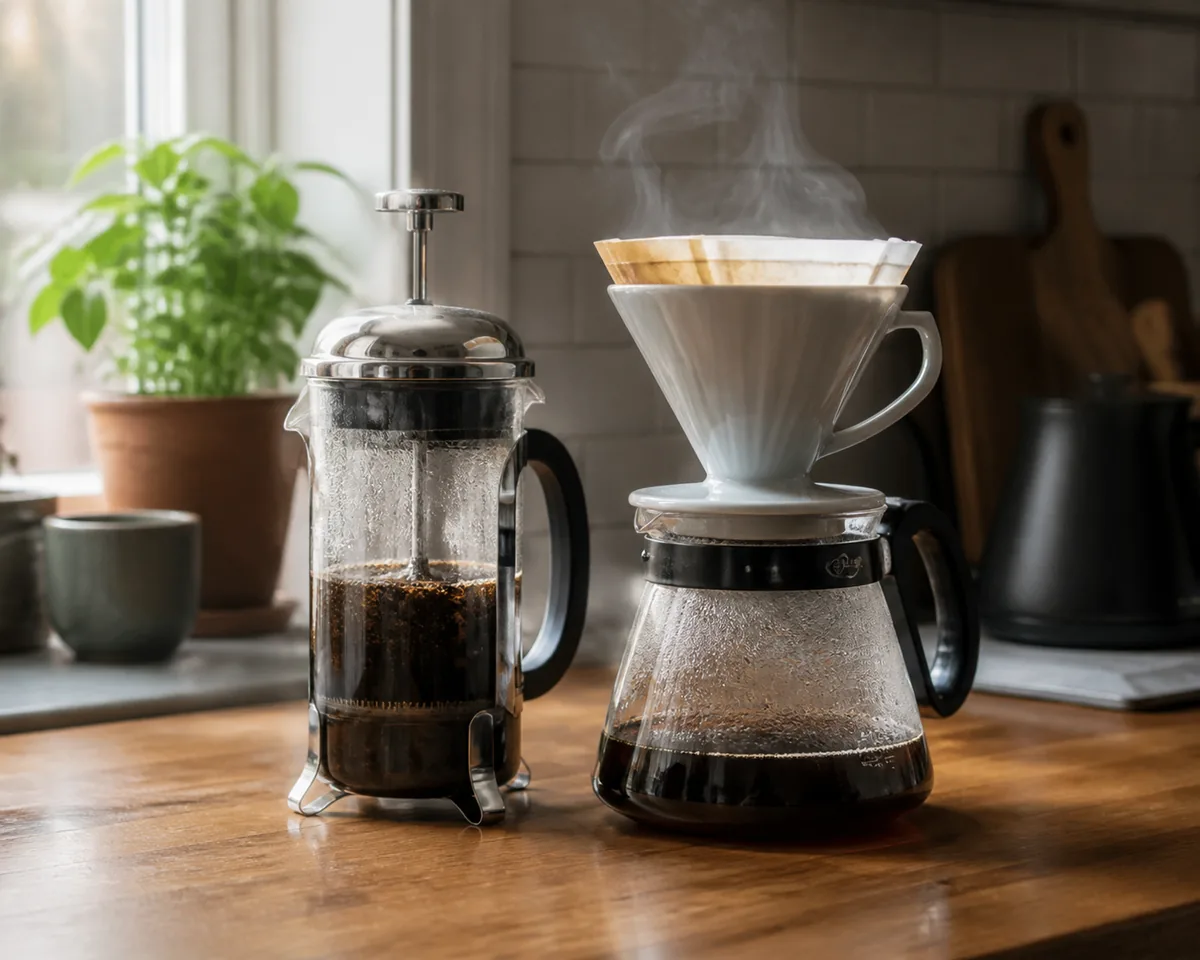
A French press uses a metal mesh, which lets coffee oils and some very fine particles through. Those oils carry aroma and give the cup real weight, and the fines that ride along with them settle as a thin layer at the bottom.
A cone uses paper, which traps both. What is left is lighter, far more transparent, and free of sediment, which is a change in what you are drinking rather than a verdict on either method.
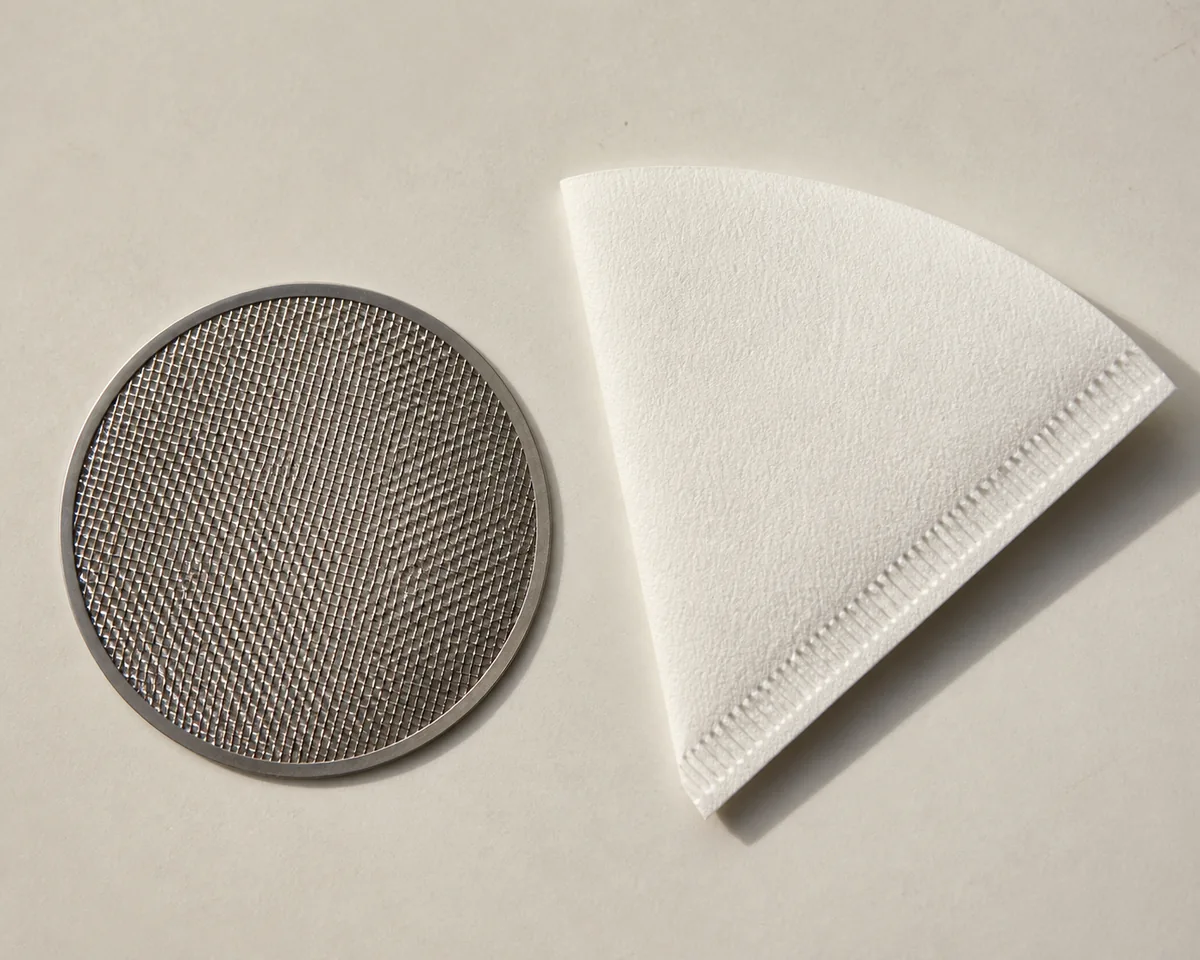
What the filter lets through
- Paper, thickCleanest cup, most body removed
- Paper, standardThe pour-over norm
- ClothSome oils pass, between paper and metal
- Metal meshOils and fine particles reach the cup
- No filterGrounds left in the cup, as in cupping
A second difference sits underneath the filter and is easy to miss. A press is immersion and a cone is percolation, so the water meets the coffee in a completely different way long before any filter matters, and that is why the two methods want different grinds and different attention.
Immersion means every ground sits in the same water for the whole brew. Percolation means fresh water passes over the bed continuously, so the coffee at the top meets stronger solvent than the coffee at the bottom, and how you pour decides how even that is.
Reliability against detail, and what a slip costs
Immersion is inherently even, and that single property is what makes the press the more reliable of the two in a way no amount of practice closes.
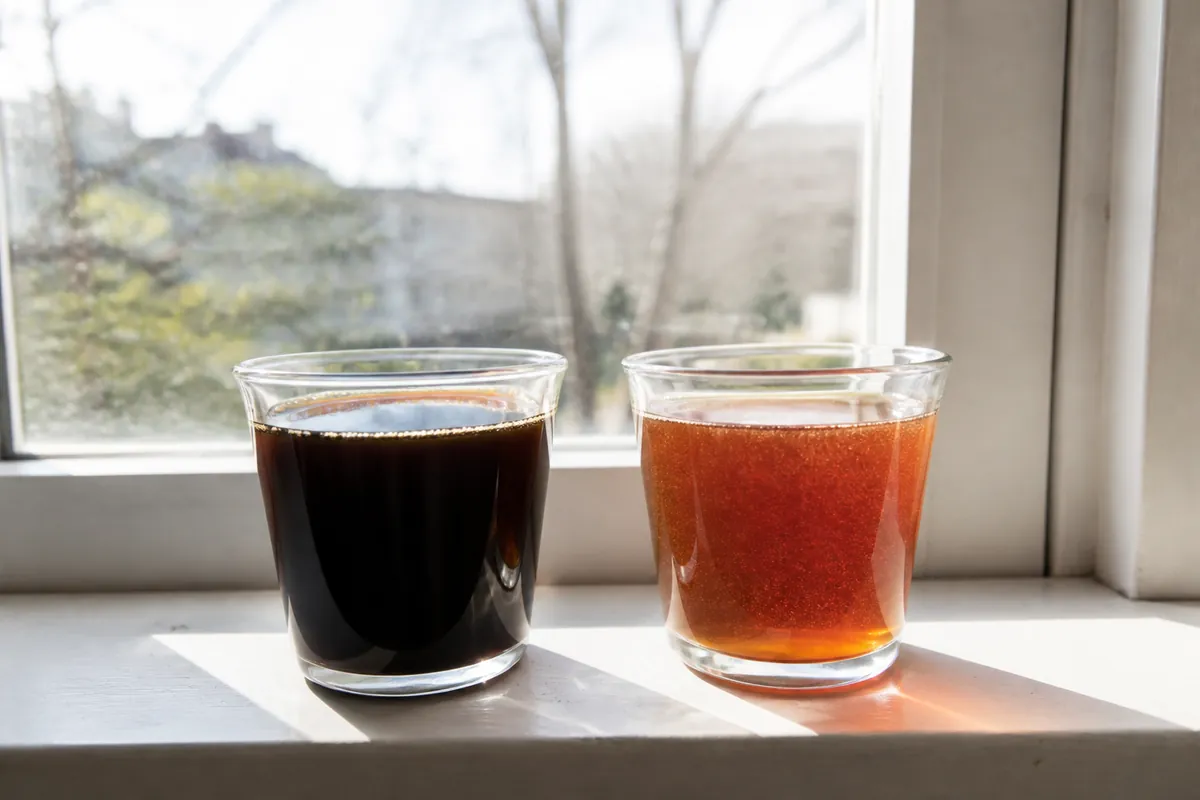
Every ground sits in the same water for the same time, so there is no pouring technique to acquire and no way for water to channel through one part of the bed. A first attempt is usually good and a hundredth is usually the same as the first, which is a claim pour-over cannot make.
What the cone buys with that difficulty is definition. Paper strips the body out, and what remains is the coffee's own character, so a lightly roasted Ethiopian bought for its bergamot and stone fruit shows those clearly through a cone and arrives flattened under the weight of a press.
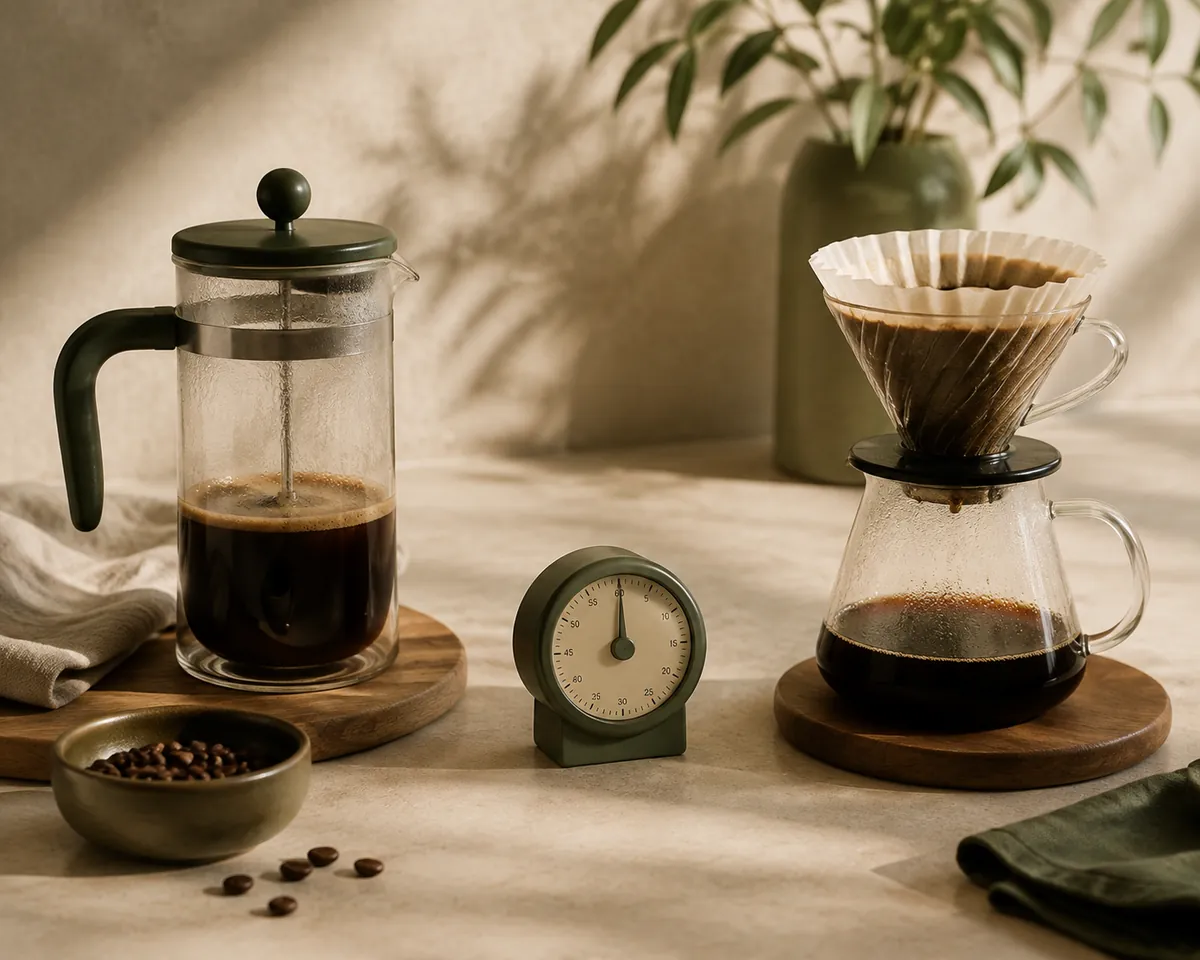
- Grind too fine. In a press you get sediment and harshness. In a cone the bed chokes and the brew stalls completely.
- Thirty seconds late. In a press, barely noticeable. In a cone, the water has already drained, so nothing happens at all.
- Uneven pour. Impossible in a press. In a cone it channels water and under-extracts part of the bed.
- Wrong dose. Both forgive it, and both taste weak or harsh in the same predictable way.
The press fails gently and the cone fails obviously, and which of those is preferable depends on whether you want to be told. A gentle failure is a slightly dull mug you drink anyway, and an obvious one is a sour cup that names the mistake, which is the faster teacher and the worse breakfast.
Matching the bag to the brewer
Body flatters coffees that are chocolatey, nutty and rounded, which covers most medium and dark roasts.
Clarity flatters coffees that are floral, citric and aromatic, which covers most light roasts and most washed African lots. The two properties are supplied by the two filters, so the choice of brewer is partly a choice about what you buy.
| Coffee | Suits a press | Suits a cone |
|---|---|---|
| Dark roast, chocolatey | Strongly. Body amplifies what is already there | Thins it out |
| Medium roast, balanced | Well | Well. This is the safe middle ground |
| Light roast, floral or citric | Poorly. The aromatics are buried | Strongly. This is what paper is for |
| Naturally processed, fruity | Mixed. Body can muddy the fruit | Cleanly, with the fruit intact |
Brewing an expensive light-roast bag in a press wastes money rather than ruining coffee. You pay for aromatics the method is least equipped to show, and the same beans in a cone are a different and more interesting drink at no extra cost.
The reverse case is less often stated and equally true. A supermarket dark roast through paper loses the body that was carrying it, and what is left is thin and slightly ashy, so the cheaper bag is genuinely better served by the press.
Where the roast sits matters more than which species is in the bag, though arabica and robusta push the body in opposite directions before the brewer ever sees them.
Running costs, and who does the washing up
Both brewers are cheap to buy and the ongoing costs diverge in small ways that add up over a year.
A press has no consumables at all. A cone needs paper filters, which cost little and run out at the least convenient moment.
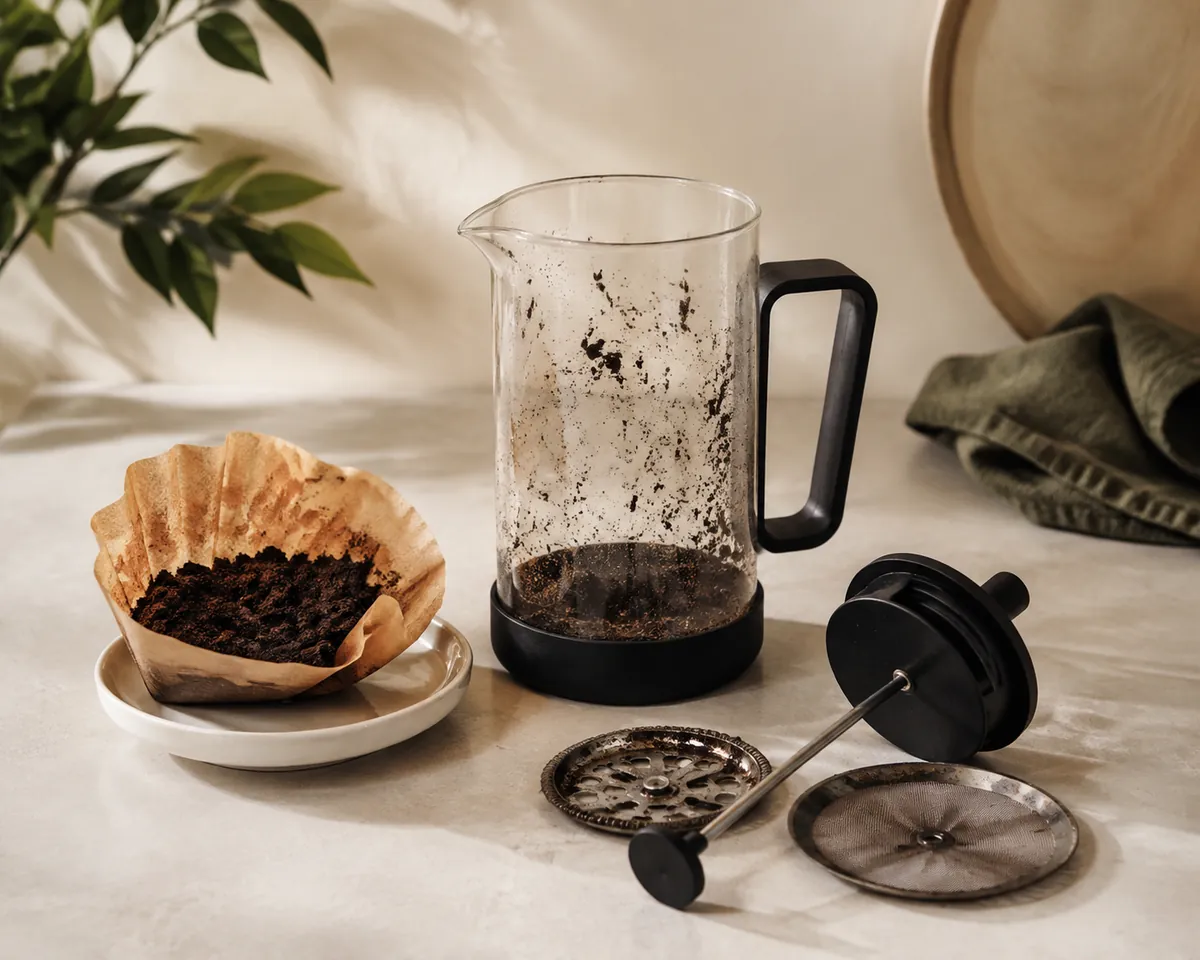
The other real difference is a gooseneck kettle. A controlled pour is the whole technique of the cone, so the kettle earns its price there, and the press has no use for one in any form.
What each one actually costs to run
- Brewer
- Both are cheap. A basic press and a basic cone cost about the same
- Consumables
- Press: none. Cone: paper filters, a small ongoing cost
- Kettle
- Press: any kettle. Cone: a gooseneck makes a real difference
- Grinder
- Both need a burr grinder, and it matters more than the brewer does
- Time at the counter
- Press: about 30 seconds of attention. Cone: about 3 minutes of it
The grinder is the line item people underestimate, because it costs more than either brewer and improves both. That is the argument for buying one good grinder and the cheaper brewer, rather than a better brewer and whatever mill is on offer.
Cleaning runs the other way and settles a surprising number of arguments. A cone means lifting out a paper filter full of grounds and rinsing the plastic or glass, which takes seconds, where a press means digging wet grounds out of a narrow beaker and periodically dismantling the plunger assembly to clear old oils from the mesh.
Those oils are the same ones that give the cup its weight, so a neglected press slowly starts tasting of every bag that came before, which is a fault no amount of good bean storage will hide. A dull cup from a clean press points at the bag, and a dull cup from a neglected one points at the mesh, which is the first thing the French press method asks you to rule out.
One washed Ethiopian, brewed twice
Brew one bag both ways on the same morning and taste them side by side, because the difference is far easier to hear described than to predict.
Use the same ratio, around 60 g per litre, and the same water. Grind coarser for the press and medium for the cone, which is the one variable that has to differ between the two.
| French press | Pour-over | |
|---|---|---|
| Aroma | Muted, rounded | Forward, floral |
| Body | Heavy, slightly syrupy | Light, tea-like |
| Acidity | Present but softened | Bright and defined |
| Aftertaste | Long, coating | Clean, shorter |
| Sediment | A fine layer | None |
Neither cup is the wrong answer. The press has taken one coffee and given it weight at the cost of definition, and the cone has done exactly the reverse with the same grams of the same beans.
What surprises most people running this for the first time is how much of the gap is texture rather than flavour. The oils a metal mesh passes change how the coffee feels in the mouth more than what it tastes of, which is also why the press cup seems stronger at the same ratio when it is not.
Coarse as sea salt against medium as sand
Grind is where the two methods fail in opposite directions, and it is the setting that cannot be shared between them.
A press holds the grounds in water for four minutes with no escape, so a fine grind over-extracts and floods the cup with fines the mesh cannot hold. Coarse is not a matter of taste here, it is what stops the method producing silt.
A cone drains continuously, so grind sets how long water stays in contact with coffee at all. Too coarse and the water runs through before it has taken anything, and too fine and the bed chokes, the water backs up, and the brew stalls.
Grind, coarsest to finest
- Cold brewCoarser than a press, for a twelve-hour steep
- French pressCoarse, like sea salt
- Pour-overMedium, like coarse sand
- Drip machineMedium, slightly finer
- EspressoFine, like flour
That is why a burr grinder matters more than either brewer. A blade grinder produces both extremes in the same batch, and the press turns the fine half into sediment while the cone turns it into a stalled bed, so the same bad grinder ruins the two methods by different routes.
The cone punishes a cool kettle
Water somewhere around 92 to 96 C suits both, and the two react very differently when it is not.
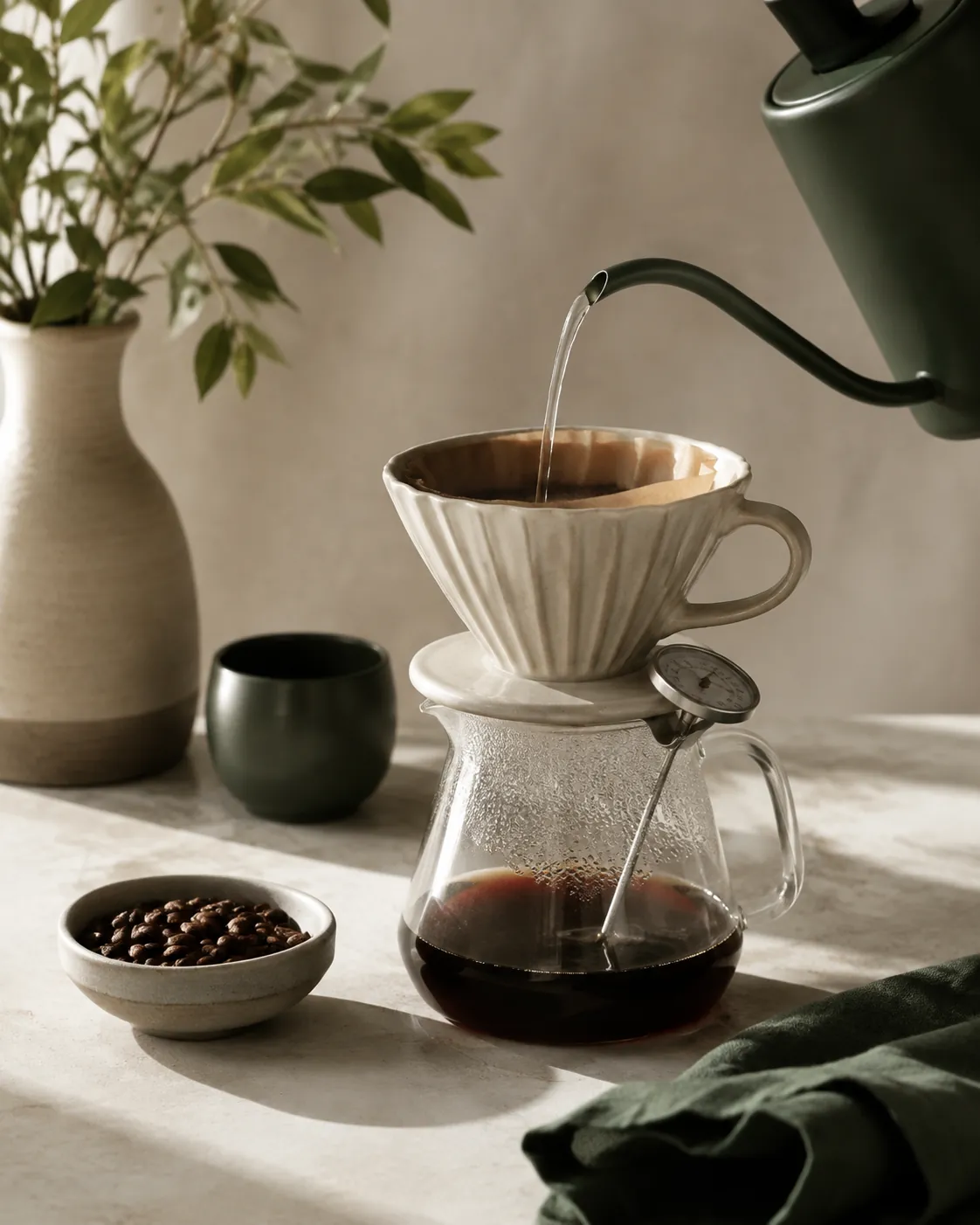
A press holds a litre in a thick glass beaker for four minutes and loses heat steadily through the brew. That works in its favour, since the average temperature across the steep is what governs extraction, and a few degrees at the start average away over the following minutes.
A cone passes water through in three minutes in a thin stream that cools on the way down. Starting ten degrees low means the entire brew runs cool, and the cup arrives sour and thin rather than merely weak, which is a fault people usually blame on the beans.
Water composition affects both equally and shows more in the cone, for the same reason clarity shows more there. Brewing water sets out what to test when a cup tastes flat in both brewers, which is the case where the kettle is innocent.
Which to learn first, and what the second one adds
Start with the press.
- Start with the French press if you want coffee without technique
- Start with the pour-over if you already own a decent grinder
- Add the second only once the first is producing a cup you like
- Expect the pour-over to expose the grinder the press was hiding
- Keep both if you drink alone on weekdays and for people at weekends
It teaches dose, grind and time, because those are the only variables it has, and all three carry over to every other method you will ever use. Get them wrong and the cup says so plainly, get them right and the result repeats without any technique to acquire.
A cone teaches pour rate, bed agitation and how extraction shifts across a single brew. Those are the skills that transfer to an AeroPress, to a batch brewer, and eventually to the pressure methods, which is why it is the better second purchase and the worse first one.
Learning both at once is the sequence that wastes most. Starting on the cone means two unknowns in every bad cup, and no way to tell whether the grind or the pour caused it, where the press isolates the first three variables and hands them over solved.
Four cups is where the cone stops
Volume is the decision most households actually make, and it is the one axis where the two methods are not close.
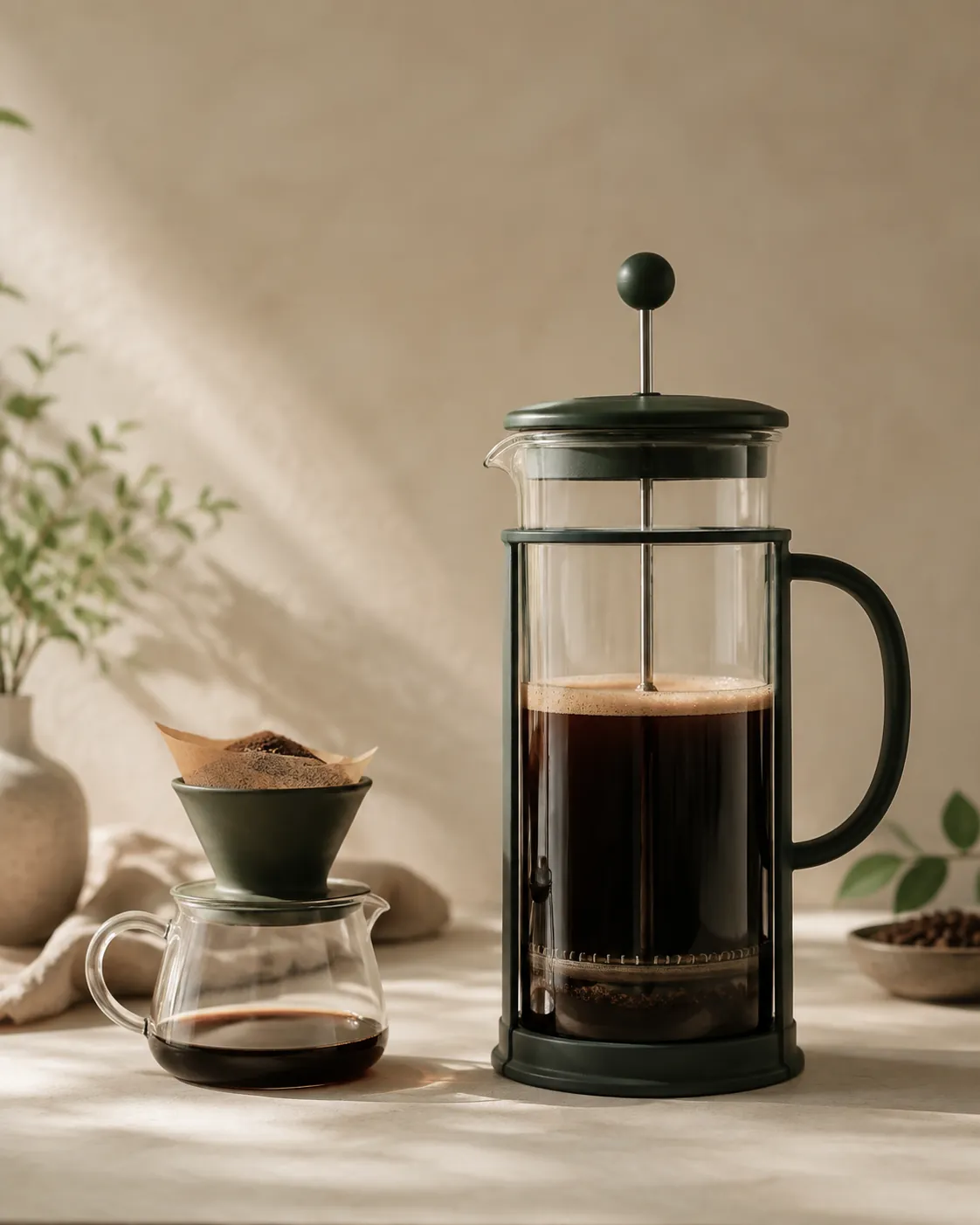
A press scales by being filled. A three-cup and a twelve-cup press are the same procedure at two sizes, and the only adjustment is a slightly longer steep in the larger one.
A cone does not scale that way at all, because doubling the dose deepens the coffee bed and changes how water moves through it. Past about four cups it stops being practical and a batch machine or a large press is the honest answer, which is exactly why cafes keep drip machines for volume and cones for single orders.
Several cups, every morning
The press. It brews a litre unattended while you do something else.
One careful cup at the weekend
The cone. It shows what you paid for in the bag.
You buy light-roast single origins
The cone, clearly. A press flattens exactly what you are paying for.
You buy supermarket dark roast
The press. Body flatters what is already there.
You dislike sediment
The cone, or a press with a slower plunge and the last centimetre left behind.
You want one brewer only
The press, and spend the difference on the grinder.
Anyone drinking coffee daily and buying from a roaster ends up wanting both, and the order above is the cheaper way to arrive there. Owning the pair is less extravagant than it sounds, since the grinder is the expensive part and it serves either one.
What neither of them does
Neither method brews under pressure, which puts a firm boundary around this whole comparison.
No crema, no syrupy concentration, and no route to milk drinks. Anyone who wants those is shopping for an espresso machine or, at much lower cost and with a different result, a moka pot.
Neither is a route to cold brew either, though a press is commonly used as the vessel for it. That is immersion at room temperature over twelve hours, a different extraction rather than a chilled version of this one, and the flavour difference it produces is set out under cold brew taste.
Neither makes coffee unattended, which is the reason drip machines sell in the volumes they do. A press wants you back at the four-minute mark and a cone wants you present throughout, so a timer that goes unheard costs the press a brew and costs the cone the whole cup.
What both do is turn ground beans and hot water into a mug of black coffee, better than a machine at the same price, with no consumables beyond a paper filter in one of the two cases. That is a narrow claim and it is the true one.
Start with the French press method
Anyone still undecided should look in the cupboard rather than at the two methods, because how recently the beans were roasted moves a cup further than the filter does. Strength is a similar case of misplaced blame, and caffeine by brew method shows how little of it the choice between these two actually decides.
Common questions
Which makes stronger coffee, French press or pour over?
Strength depends on the ratio of coffee to water, not on the method. At the same ratio the French press tastes stronger because its heavier body reads as intensity, but the two extract comparable amounts.
Is pour over better than French press?
Neither is better. Pour over gives a cleaner, more detailed cup and asks for technique. French press gives a heavier, richer cup and is much more forgiving. The filter decides which drink you get.
Can I use the same grind for both?
No. A French press needs a coarse grind so the fines do not pass through the metal mesh, while pour over needs a medium grind because the coffee bed itself sets the flow rate.