What Is an Americano? Espresso, Water, and Which Goes First
An americano is espresso with hot water added. That sounds like it should taste the same as any other black coffee, and it does not, because dilution and extraction are different things.
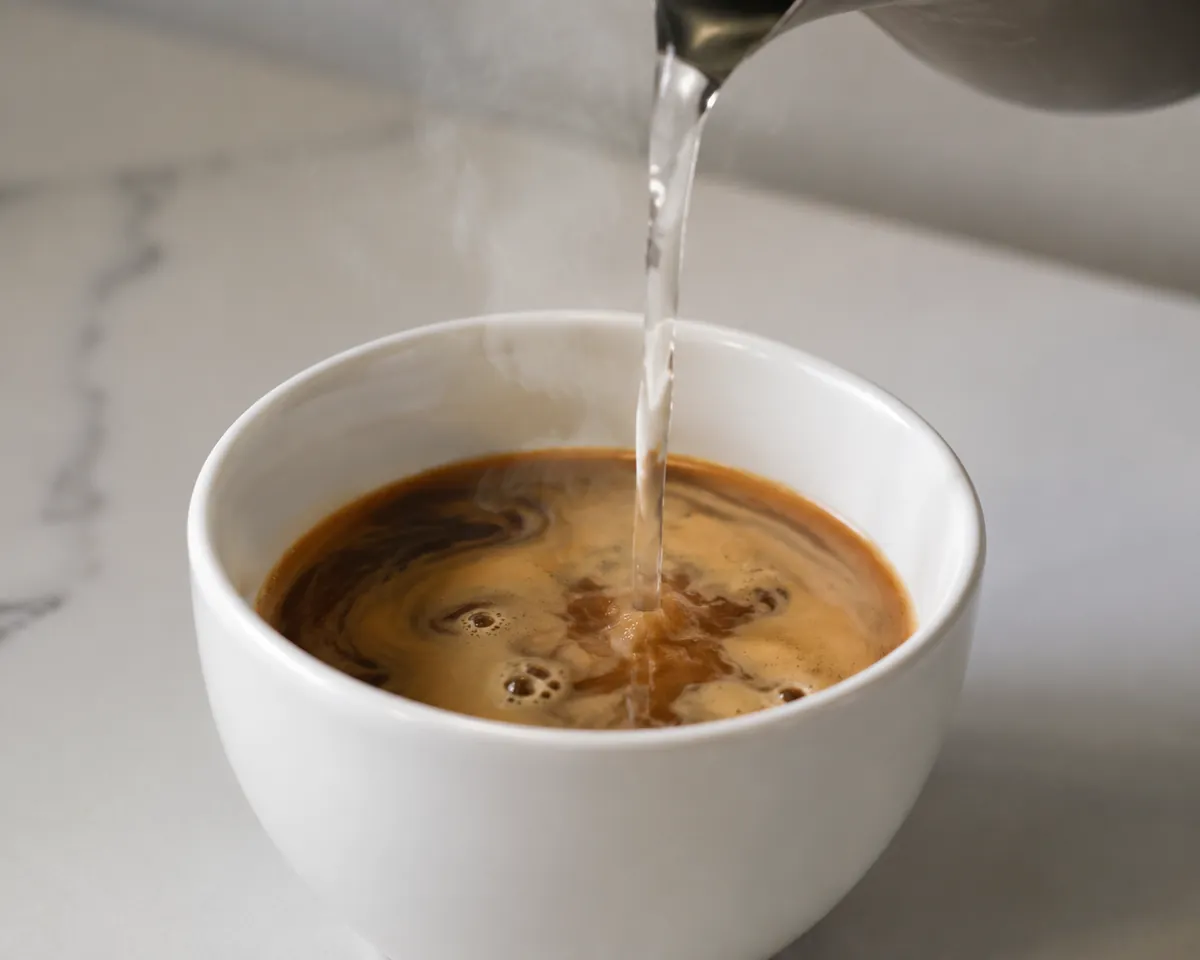
An americano is a shot of espresso lengthened with hot water, typically to somewhere between 150 and 250 ml.
The name is generally attributed to American soldiers in Italy during the Second World War, diluting espresso toward the longer coffee they were used to. What they invented was a way of getting a mugful out of a machine built to produce thimblefuls, and every quirk of the drink follows from that.
The americano at a glance
- What it is
- Espresso lengthened with hot water after the shot has been pulled
- Typical volume
- 150 to 250 ml in the cup
- Base
- A double shot, 36 to 40 g of liquid espresso
- Ratio
- Roughly 1 part espresso to 3 or 4 parts water
- Water temperature
- 80 to 85 C, not straight off the boil
- Caffeine
- Whatever the shots carry. Water adds volume and none
- Not the same as
- A lungo, which extracts further rather than diluting
Dilution, and why it is not extraction
Adding water and pulling more water through coffee sound like the same operation and produce different liquids, which is the point that explains why an americano tastes unlike filter coffee of the same strength.
Espresso pulls a specific set of compounds out under pressure in about 25 seconds. Water added afterwards spreads those same compounds through more liquid without extracting anything further, so the profile is unchanged and only the concentration moves.
Filter coffee extracts a different profile over four minutes with no pressure at all, which makes the two chemically distinct even when they arrive at identical strength.
| Americano | Lungo | Filter | |
|---|---|---|---|
| Made by | Espresso plus hot water afterwards | More water through the same grounds | Percolation over 3 to 4 minutes |
| Extraction | Espresso's, then diluted | Higher, and often over-extracted | Different profile entirely |
| Body | Fuller than filter | Fuller still | Cleanest |
| Bitterness | Low, unless the shot was poor | Often noticeably higher | Low |
| Crema | Some, and it disperses | More | None |
A lungo extracts more; an americano extracts the same and dilutes. That single difference is why a lungo is frequently bitter and an americano rarely is.
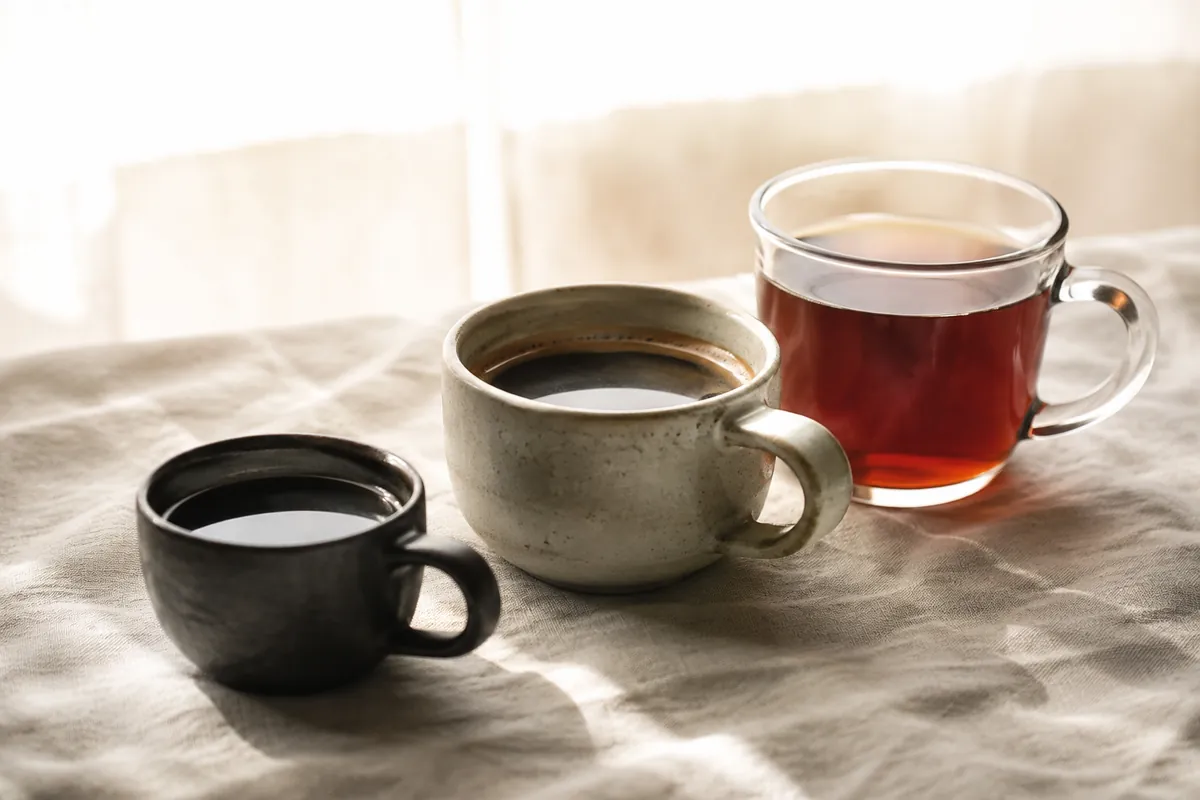
The practical case for the drink follows from the same fact. It is how you get a long black coffee out of an espresso machine, which is what most cafes own, and it lets one grinder and one dose serve every drink on the menu.
At home it does the same job: an espresso machine and a kettle produce a mug of black coffee without a second brewing method on the counter. Where it cannot help is when what you actually want is filter clarity and acidity, because those come from the method rather than the concentration, and drip coffee reaches them by a route no amount of added water can imitate.
Pouring order, water temperature and the ratio
Whether the water or the espresso goes into the cup first is argued about far more than it deserves, and there is a real if small difference underneath the argument.
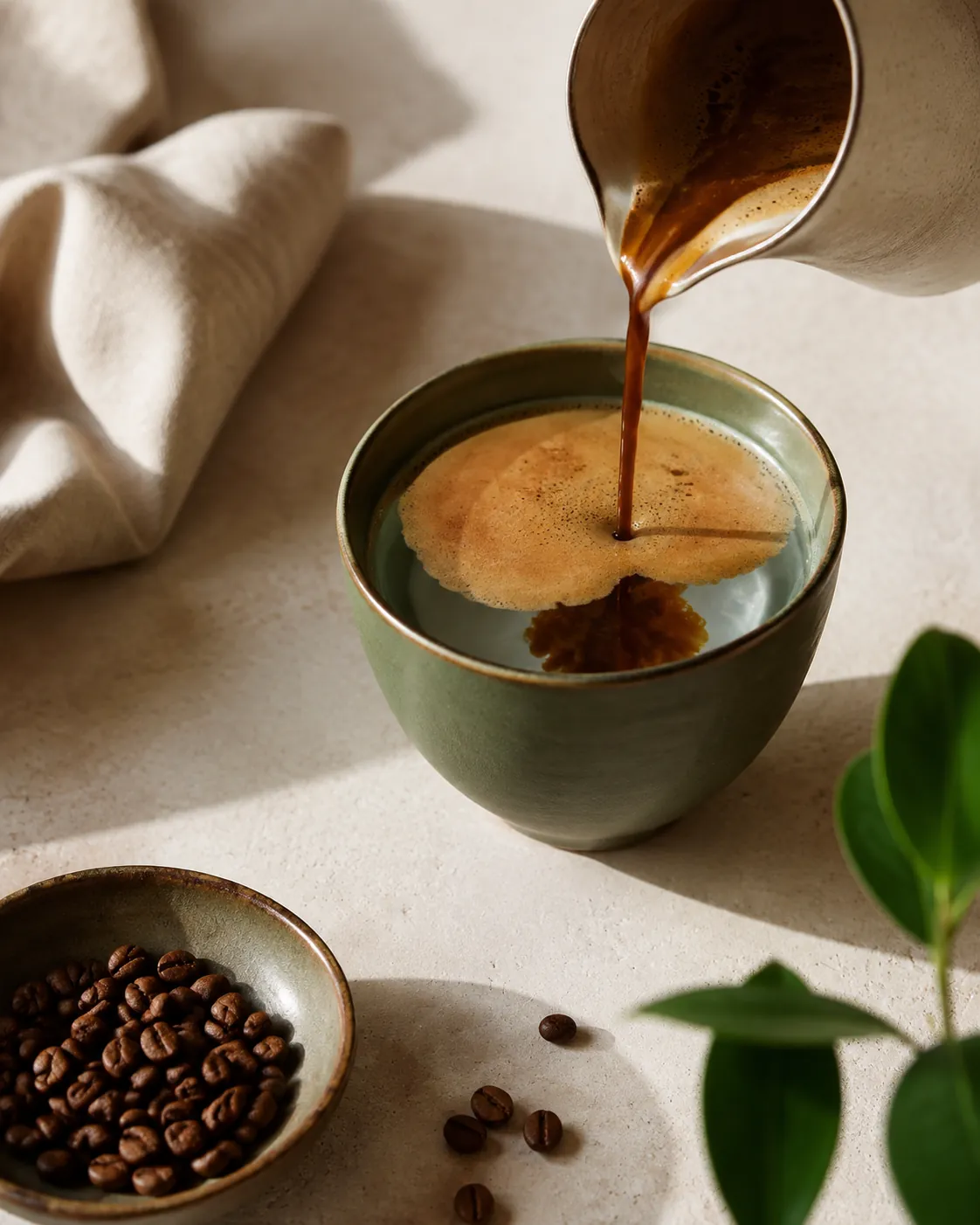
Espresso poured into water keeps its crema, which floats rather than being broken up by an incoming stream; water poured onto espresso disperses it within seconds. The first version is what Australia and New Zealand call a long black, and it is a marginally better drink for it.
No standard ratio exists, which is exactly why the drink varies so widely between one counter and the next.
A reasonable starting point
- Espresso
- A double, 36 to 40 g
- Water
- 120 to 180 ml
- Ratio
- Roughly 1 part espresso to 3 or 4 parts water
- Cup
- 200 to 250 ml
- Adjust
- Less water for more intensity, more for a longer drink
Ask for less water rather than more coffee when a cafe americano tastes weak. Most are stretched further than one double can carry, and taking the water back restores the drink without paying for an extra shot.
Making an americano at home is the same adjustment made in advance.
The shot underneath, and where it goes wrong
Dilution exposes a shot in a way milk never does, and this is the drink where a mediocre espresso has nowhere at all to hide. Milk covers harshness, coats the palate and contributes sweetness of its own.
Hot water contributes nothing and takes the concentration away, so whatever the shot was carrying is still present, spread thinner and much easier to taste one component at a time.
Lighter roasts
Come into their own. The acidity that reads as sharp in an espresso reads as brightness at americano strength.
Medium roasts
The safe default, and what most cafes pull.
Dark roasts
Read as flat and ashy once lengthened. The roast character survives dilution better than anything else in the cup.
Stale beans
Obvious here. Papery notes that milk would bury sit in plain view, which is an argument for fresher beans than a milk drink needs.
A blend that tastes good as a flat white can taste poor as an americano, since the two ask opposite things of the coffee. That is why some cafes keep a second, lighter option on a separate grinder.
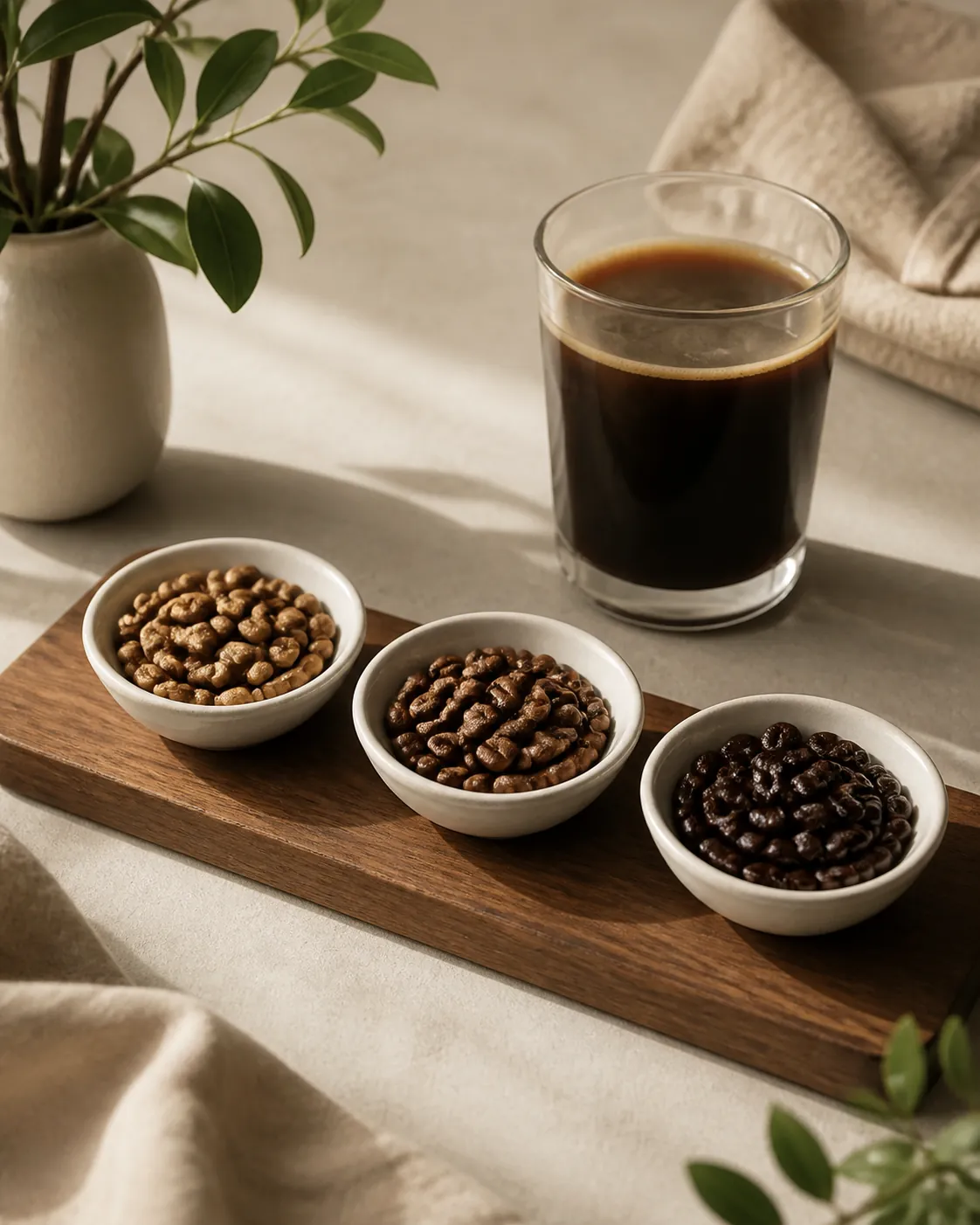
| Symptom | Cause | Fix |
|---|---|---|
| Watery and hollow | Too much water for one shot | Less water, or a second shot |
| Harsh and papery | Water at boiling poured onto the shot | 80 to 85 C |
| Sour and thin | The shot was under-extracted before dilution | Fix the shot, not the water |
| Bitter | Dark roast, or an over-extracted shot | Lighter roast; check the grind |
| Cold halfway down | Large unwarmed cup, cool water | Preheat the cup |
Four of those five faults are inherited from the espresso rather than created by the dilution, which is why adjusting the water so rarely rescues a bad one and why an americano that tastes wrong is usually a grinder problem.
Does an americano have less caffeine than espresso?
Water changes the concentration and not the total, and that trips people up in both directions at once.
A large americano built on one double carries less caffeine than a mug of filter coffee while looking identical and taking twice as long to drink. A small one built on two doubles carries considerably more than either.
The variable is the shot count, which is the one thing a cup size never reveals, and caffeine by brew method sets out how far the figures move once dose and volume are allowed to vary. The americano figures on their own follow the same arithmetic.
Iced, and the order that keeps it strong
The cold version is straightforward and carries exactly one trap.
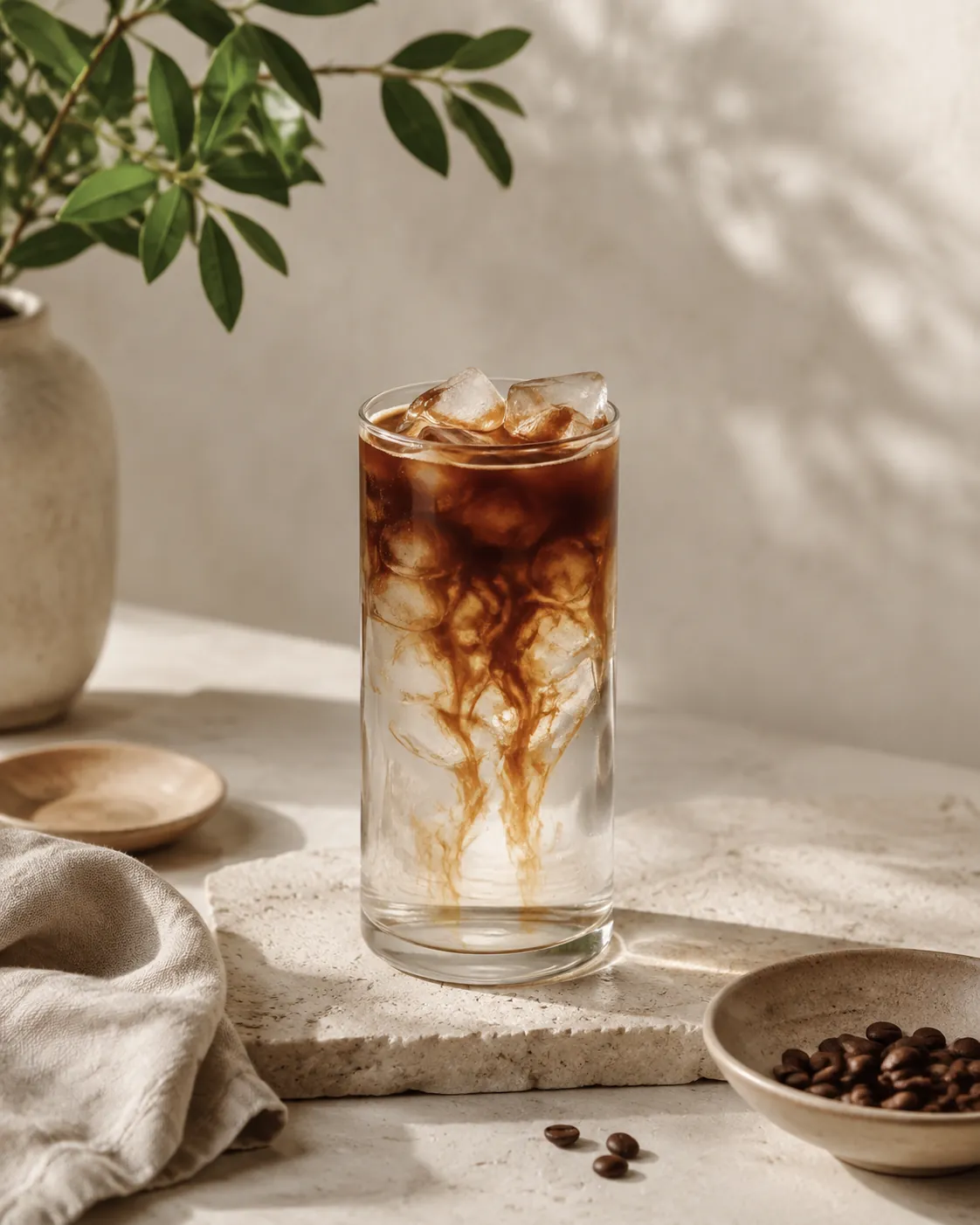
Pull the shot straight over ice and top with cold water. A double is small enough to chill almost on contact, so very little of the ice melts and the drink lands close to the strength it was built at.
The trap is the reverse order: hot water first, ice after, which melts a great deal of the ice before anything else happens and leaves a drink that started correct and finished watery.
Glass size does the rest of the damage. A tall glass filled with ice and topped up to the rim holds more water than the same volume looks like it holds, so a single double stretched across it arrives thin.
Two shots for a tall glass is the sensible default, and it is the same correction the hot drink needs when it is over-lengthened.
Milk in one, and the drink that results
A splash of milk in an americano is common enough to have several names and settled enough to have none.
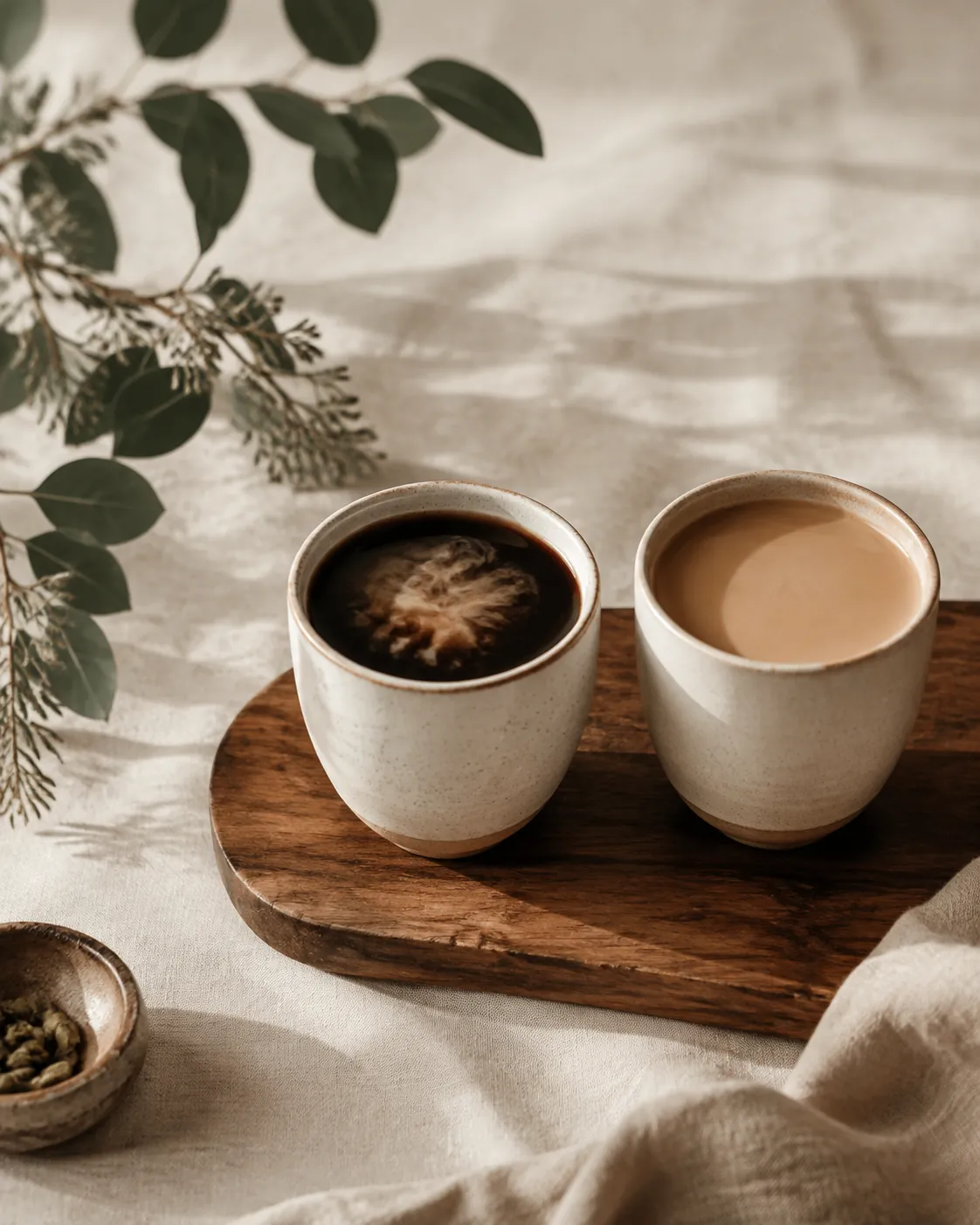
It gets sold as a white americano or an americano misto, and what it is not is a latte. The difference is textural rather than a question of quantity: latte milk is steamed and aerated into a body of its own, while americano milk goes in flat, cold or briefly warmed, and simply softens what is already there.
The result is thinner and far more coffee-forward than any milk drink from the same machine, which is the point for anyone who wants milk to take an edge off a coffee rather than become half of it.
Temperature is the one thing to watch. Cold milk poured into a drink that is already four fifths water drops it below drinking temperature fast, so in a large cup it is worth warming the milk for a few seconds first.
A cortado solves the same wish differently, by keeping the coffee concentrated and adding a small quantity of milk to it.
Making one without a pump machine, capsules included
Espresso plus water is the definition, so anything that produces coffee concentrated enough to be lengthened can stand in for the machine.
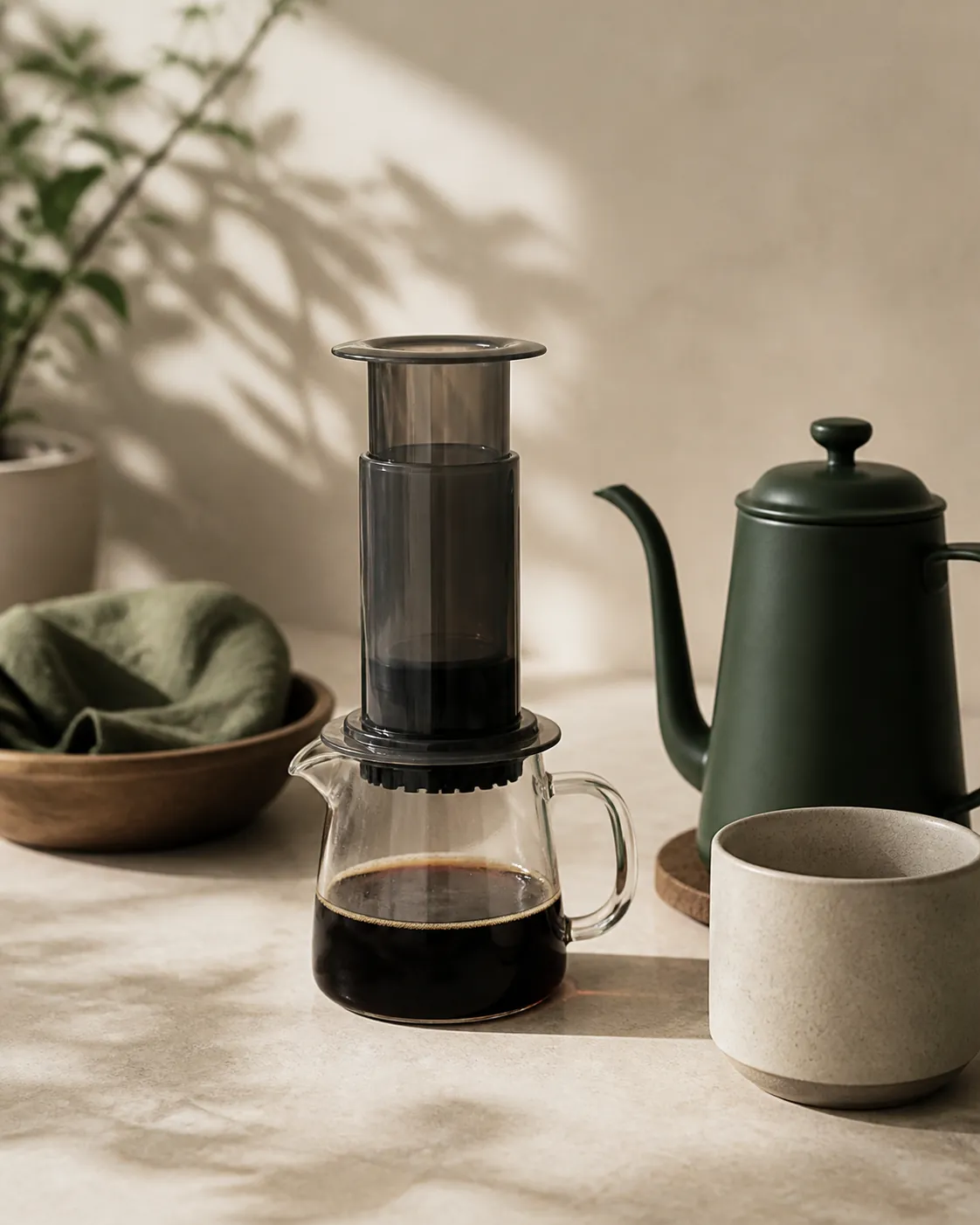
A moka pot brews at roughly a third of espresso's concentration and far above filter's, so lengthening it one part to two gives a recognisable long black: heavier and more bitter than the real thing, and much closer than filter coffee gets. An AeroPress is the better route, since brewed short and fine it produces a small volume of intense coffee designed to be diluted, and the paper filter leaves it cleaner than the moka pot's cup.
AeroPress concentrate for a long black
- Coffee
- 18 g, fine
- Water
- 80 ml at 90 C
- Steep
- 90 seconds, then press slowly
- Dilute
- 120 to 150 ml hot water
- Note
- Closer to filter in character than to espresso, and none the worse
Capsule machines are the common case and they have a trap built into the buttons. The lungo button pushes more water through the same capsule, which extracts further and produces the bitterness described at the top of this page; an americano dilutes a finished shot instead.
Pull the espresso button and add kettle water at around 85 C. Capsule coffee is generally roasted darker than a specialty shot, so it lengthens into something heavier, and cutting the water rather than adding more is the fix.
Long black, allonge, red eye, and the names that shift at a border
Several drinks sit close enough to be confused with this one, and two of the words for it mean something else entirely in the wrong country.
Italy
Caffe americano, understood everywhere and drunk by almost nobody local. Asking for one marks you out and gets you exactly what you wanted.
Australia and New Zealand
Long black. Espresso poured into hot water so the crema survives, and generally shorter than a British americano at around 120 ml.
France
Cafe allonge. Usually a lungo, pulled long through the grounds, rather than an espresso diluted afterwards.
Capsule machines
The lungo button extracts more water through the same capsule. A different drink, and often a more bitter one.
United States
Americano sits on the menu beside drip coffee, and the two are not interchangeable despite looking identical.
Two near neighbours are worth naming separately. A ristretto americano starts from a short, restricted shot, and less water through the same coffee gives a sweeter, denser extraction that lengthens into a noticeably rounder cup.
A red eye is filter coffee with a shot added rather than a shot with water added, so it carries the caffeine of both and tastes of the filter coffee with a sharpened edge.
Ordering a double shot in a small cup travels better than any of the names, because it describes the drink instead of relying on a word that changes meaning across a border. What an americano tastes like is the same wherever it is ordered, provided the shot count and the water are right.
Water, which is most of what is in the cup
Two thirds to four fifths of an americano is water by volume, which makes it the coffee most exposed to whatever comes out of the tap.
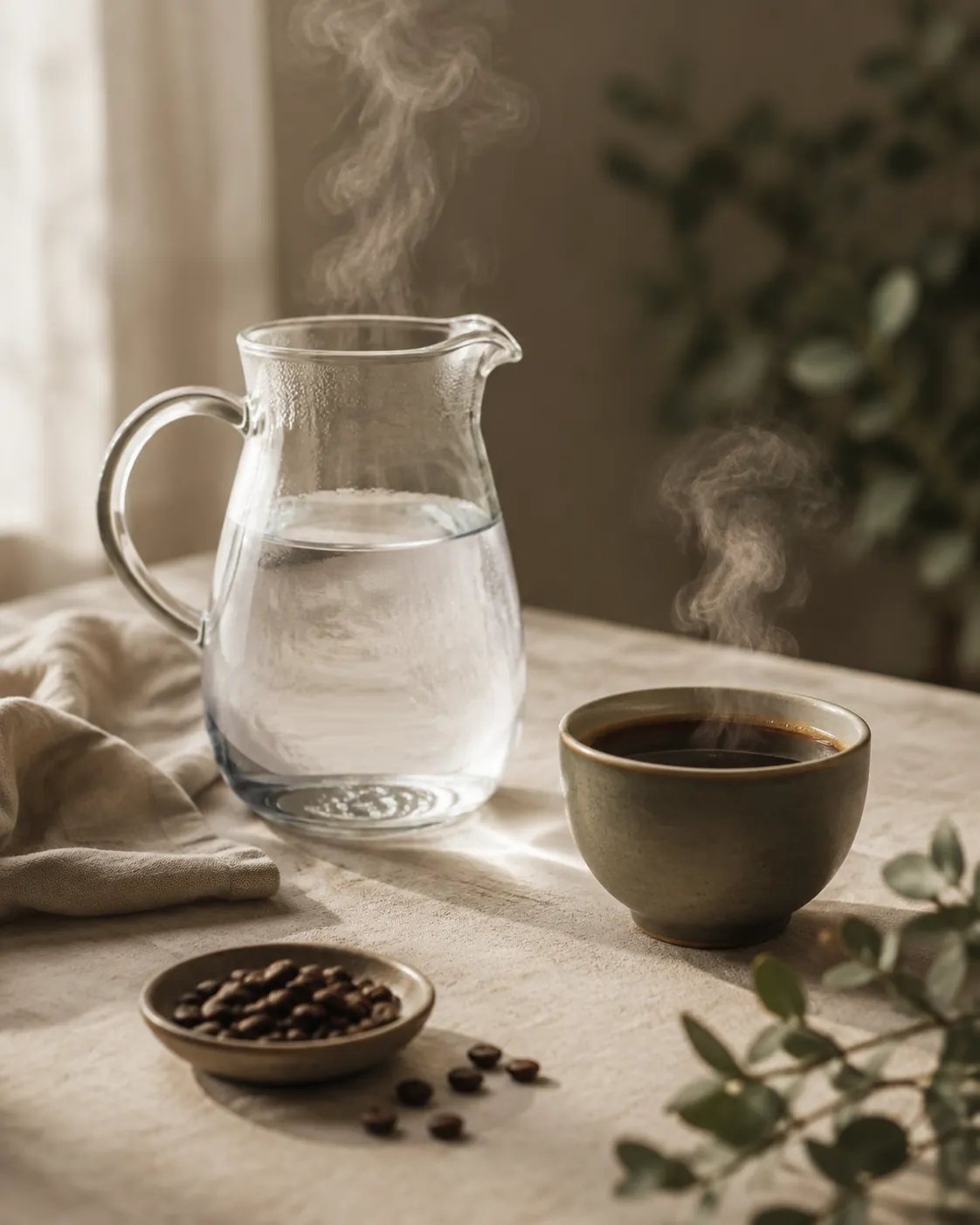
Chlorine is the obvious fault and it survives dilution rather than being masked by anything, so a shot that tasted clean on its own can arrive papery once lengthened. High alkalinity is the subtler one: it flattens the acidity a lighter roast was chosen for, which is why the same beans give a lively cup in one kitchen and a dull one two streets away.
The kettle is the other half of it, since boiling and cooling to a consistent 85 C removes a variable that otherwise changes with how long the cup sat waiting. Brewing water covers what to test when the cup stays flat after everything else has been ruled out.
Common questions
What is the difference between an americano and a lungo?
A lungo pushes more water through the same coffee, extracting more and often becoming bitter. An americano dilutes a normally extracted shot with water afterwards, so the extraction is unchanged and only the concentration falls.
Does it matter whether water or espresso goes in first?
Slightly. Pouring espresso into water preserves the crema rather than breaking it up, which is what a long black is. Water temperature matters more: around 80 to 85 C rather than boiling makes a noticeably smoother drink.
Is an americano the same as filter coffee?
No. Espresso extracts a different set of compounds under pressure in 25 seconds than percolation does over four minutes, so the two are chemically different liquids even at similar strengths. An americano has more body; filter has more clarity.