How the Moka Pot Works, and Why the Coffee Burns
The moka pot brews coffee by pushing water up through grounds with steam pressure. It has a reputation for bitterness, and almost all of that comes from a single fixable mistake.
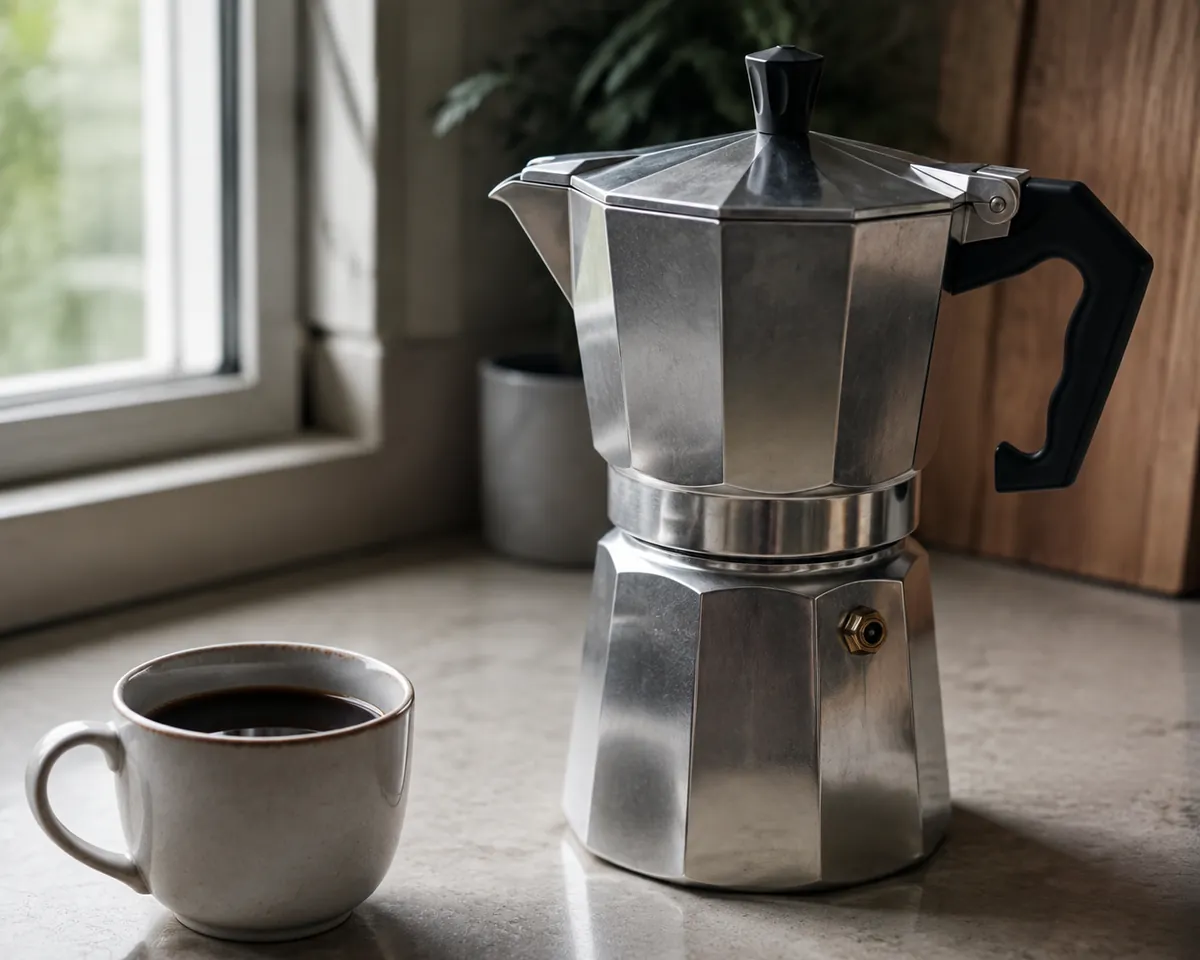
A moka pot is a stovetop brewer in three parts: a water chamber at the bottom, a funnel-shaped coffee basket, and a collecting chamber on top.
Heating the base builds steam pressure, which pushes water up through the coffee and out into the top chamber. Nothing about the design is adjustable, so almost everything that can be done well or badly with one happens at the hob rather than in the pot.
The moka pot as a piece of equipment
- Mechanism
- Steam pressure in a sealed base, forcing water up through a fixed coffee bed
- Pressure
- Roughly 1 to 1.5 bars
- Parts
- Base, funnel basket, top chamber, gasket, filter plate, safety valve
- Materials
- Aluminium, or stainless steel for induction hobs
- Yield
- About 50 to 60 ml from a three-cup pot, in espresso-sized cups
- Time on the hob
- Two minutes with pre-boiled water, five with cold
- Consumables
- A rubber gasket, once a year or so
Steam pressure, and what the sputter at the end does
The mechanism is simple, and it accounts for every characteristic of the cup including the one everybody complains about.
What happens on the hob
- HeatThe water in the base warms and begins producing steam.
- PressureSteam has nowhere to go, so pressure builds above the water.
- PushThat pressure forces liquid water up the funnel and through the coffee bed.
- CollectBrewed coffee emerges into the top chamber.
- SputterWhen the water runs out, steam follows and the pot hisses and spits.
That final sputter is where the bitterness comes from. Steam passing through a bed that has already given up its sugars strips the harshest compounds out of it and delivers them into coffee that was, thirty seconds earlier, perfectly good.
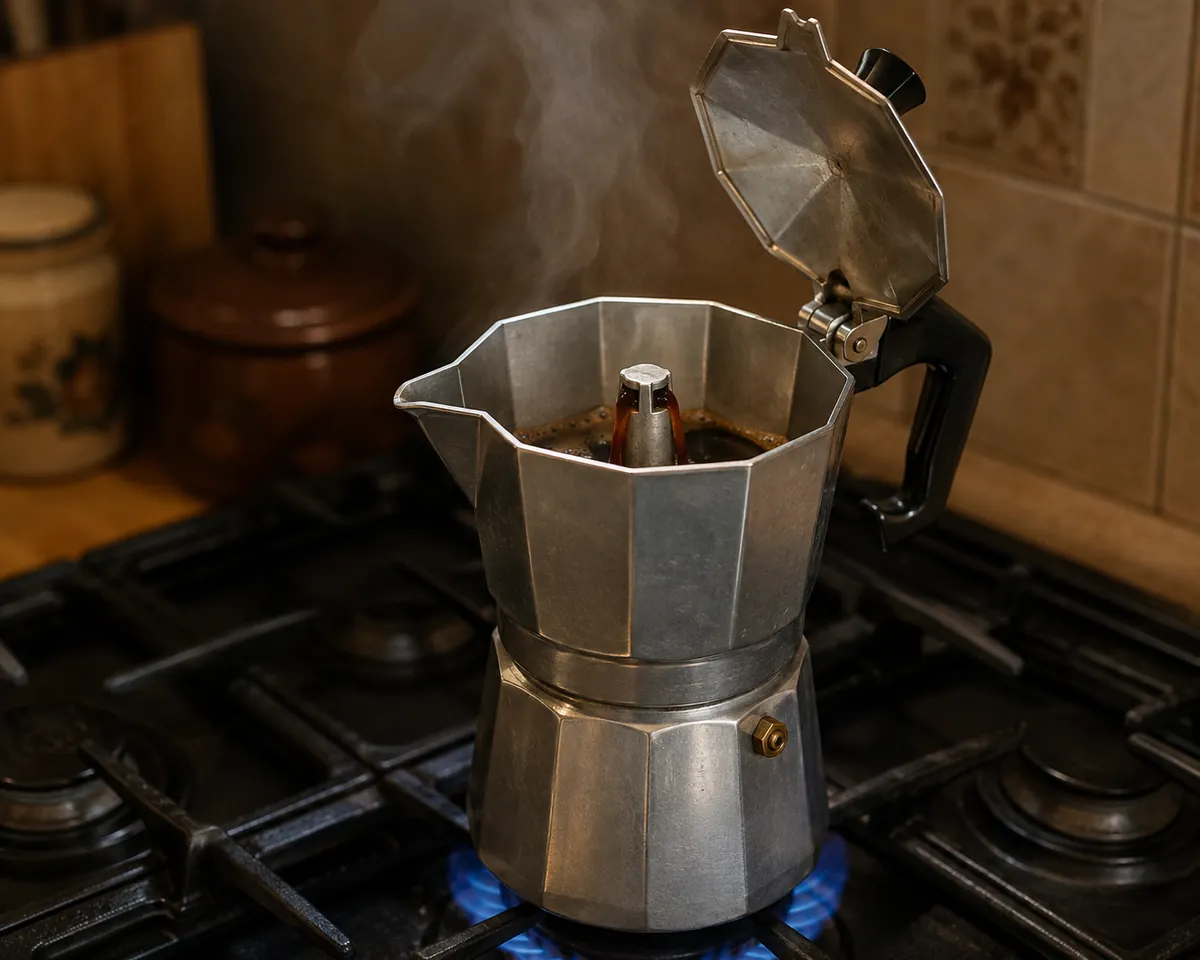
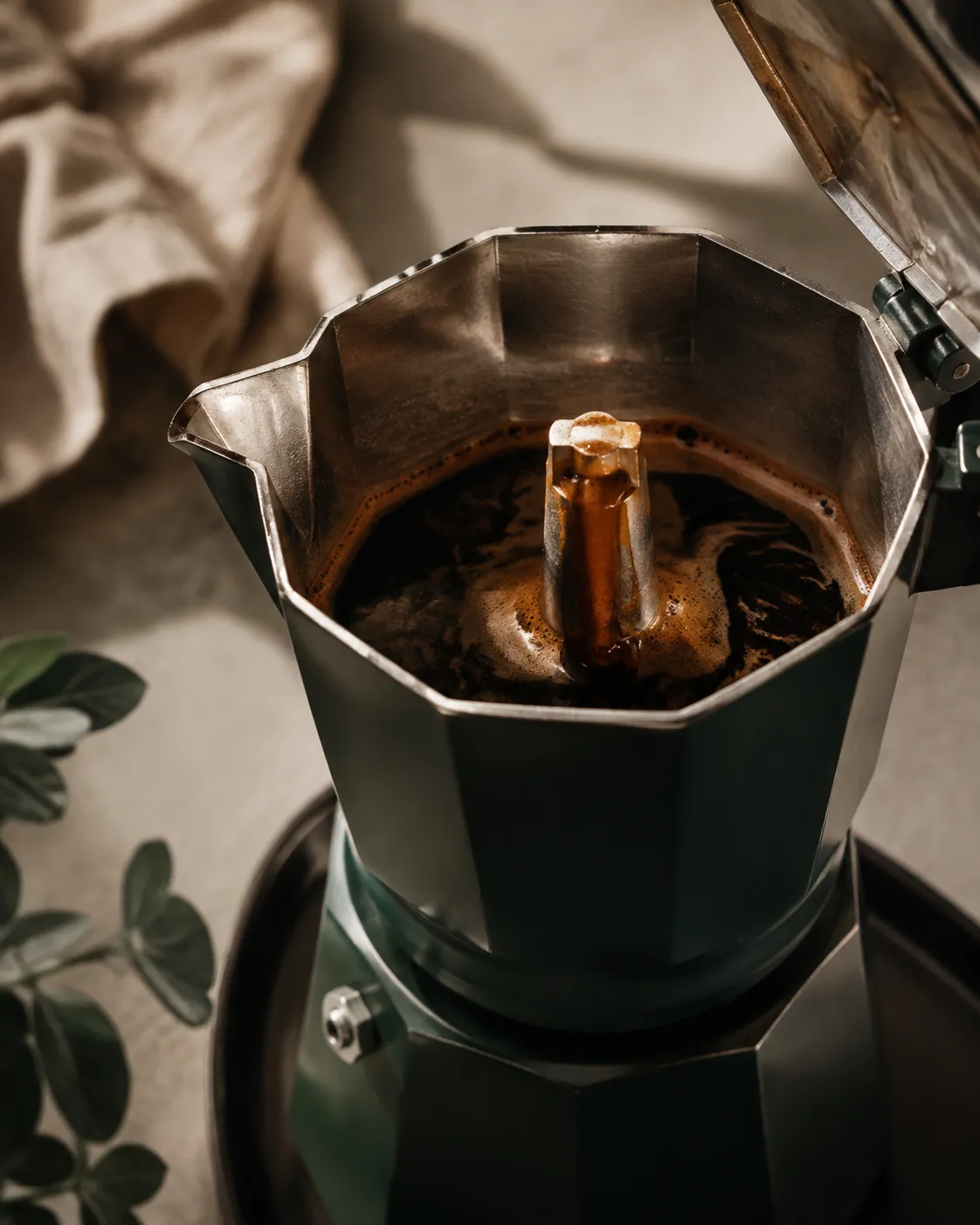
Lift the pot off the heat before that happens and most of this brewer's reputation for bitterness goes with it. The signal is visual rather than audible if you are watching: the stream turns from dark and steady to pale and foamy, and the moment it pales is the moment to move it.
Standing at the hob for two minutes is the whole skill, and what moka pot coffee tastes like describes the difference between a pot caught in time and one that was not.
One and a half bars, and the word on the box
Moka pots are sold as stovetop espresso makers, and the name sets up an expectation the device cannot meet.
A moka pot generates roughly 1 to 1.5 bars. Espresso proper needs about nine, which only an espresso machine delivers, and the gap is not one of degree: it separates pushing water through coffee from forcing it through a compressed bed under load.
That gap is the whole argument for buying one over the other, which an espresso machine against a moka pot works through in cost, upkeep and what lands in the cup.
| Moka pot | Espresso | |
|---|---|---|
| Pressure | 1 to 1.5 bars | About 9 bars |
| Grind | Medium-fine | Fine |
| Brew time | 4 to 5 minutes total | 25 to 30 seconds |
| Crema | Little, and it collapses fast | Thick and persistent |
| Volume | 50 to 60 ml per two-cup pot | 30 to 40 ml per double |
| Body | Heavy and concentrated | Syrupy and more concentrated still |
It is a legitimate brewer producing a legitimate drink, and the only real problem with the comparison is the expectation it creates.
Some pots try to close part of that gap with a weighted valve. A Brikka-style valve holds pressure back until it passes a higher threshold and then releases it in a burst, which throws a thicker, foamier layer onto the top of the cup.
The foam is coarser than crema and collapses faster, though the cup underneath it is genuinely a little more concentrated and more textured. Whether that is worth the extra money depends almost entirely on whether you drink it black, since in milk the difference disappears.
Pre-boiled water, and the two minutes it saves
One change improves a moka pot more than everything else on this page combined.
Cold water in the base means the pot sits on the heat for several minutes while it warms, and during those minutes the dry coffee in the basket above is slowly being roasted a second time by heat rising through the metal. That produces a burnt, ashy note before a drop of water has reached it, and no adjustment further down the process removes it.
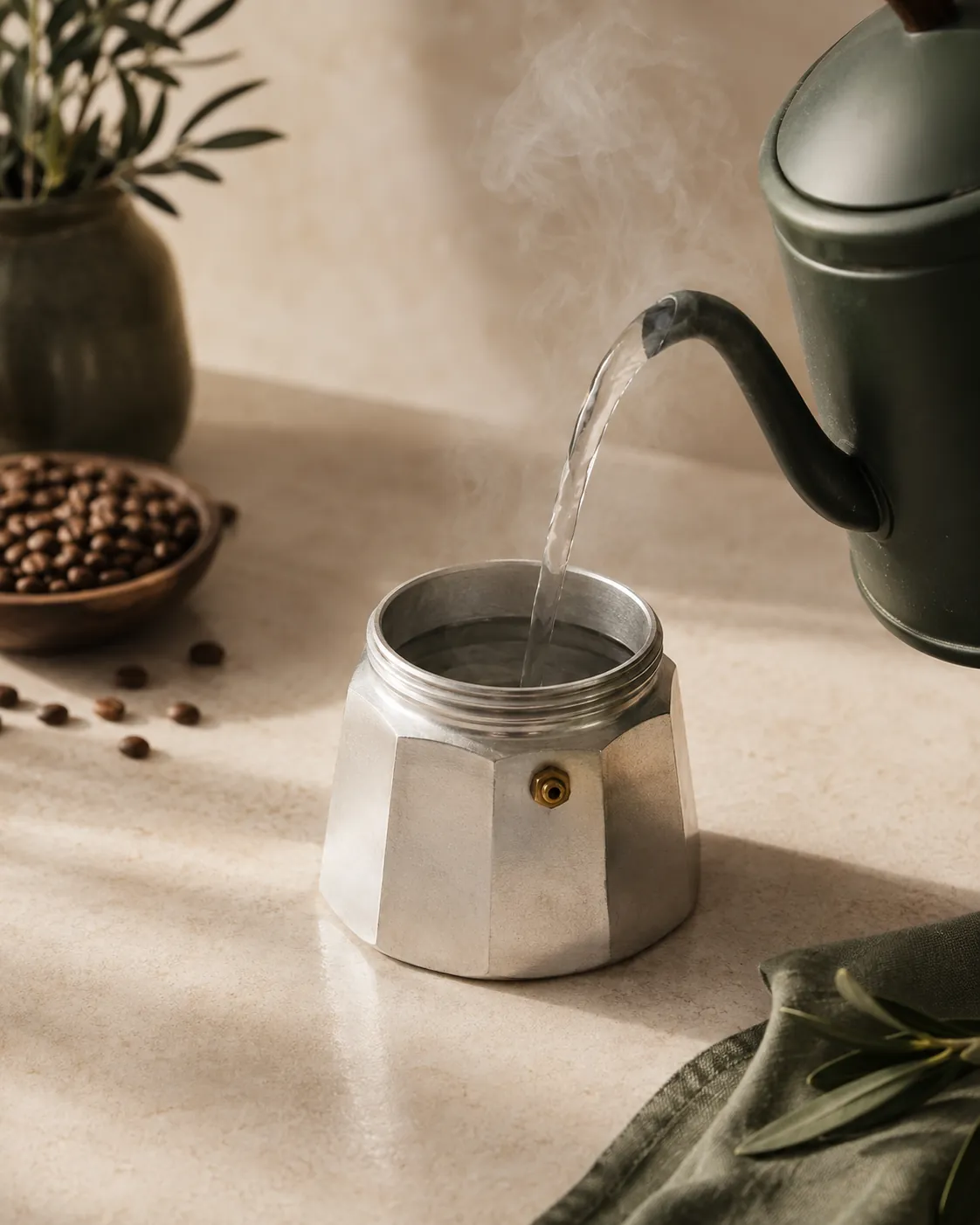
The method that fixes it
- Water
- Pre-boiled from a kettle, filled to just below the safety valve
- Coffee
- Fill the basket level, do not tamp
- Heat
- Medium, never high
- Handle
- Use a cloth; the pot is hot from the moment you fill it
- Remove
- The instant the flow turns from dark to pale and starts to gurgle
Pre-boiled water also cuts the time on the hob from five minutes to about two, which is where most of the improvement comes from, and two minutes is short enough that standing over it stops feeling like a chore. Making moka pot coffee sets out the full sequence.
Grind, dose, and the basket you must never tamp
Both variables here are far more constrained than in any other brewer, because the pot decides most of them for you.
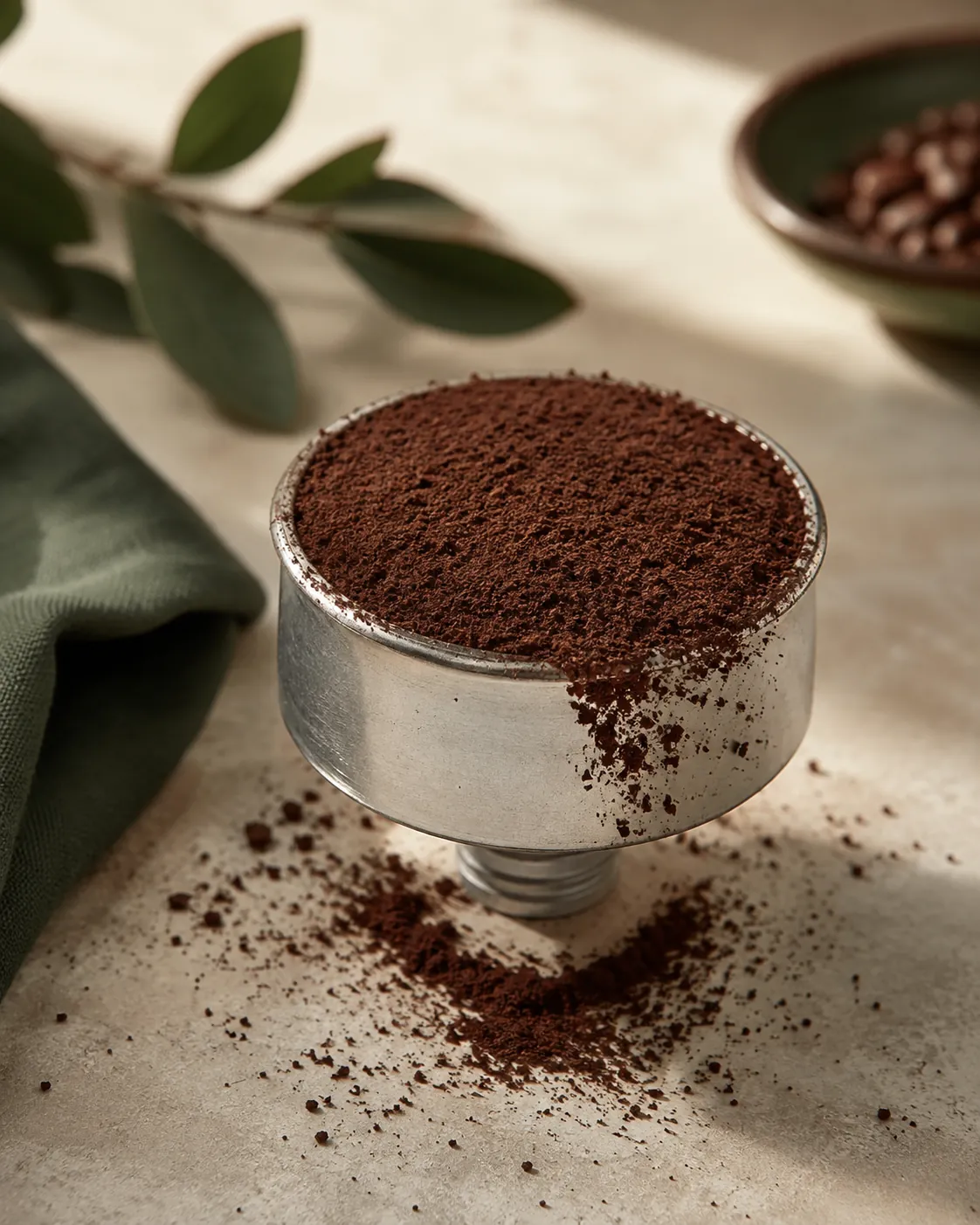
Grind wants to be medium-fine, noticeably coarser than an espresso shot and finer than a pour-over cone would take. Too fine and the pressure available cannot push through the bed, which either trips the safety valve or forces a slow, scorched trickle that tastes exactly as it sounds.
A burr grinder is the one accessory that reliably improves this pot, since an uneven grind gives the water an easy channel and it will take it.
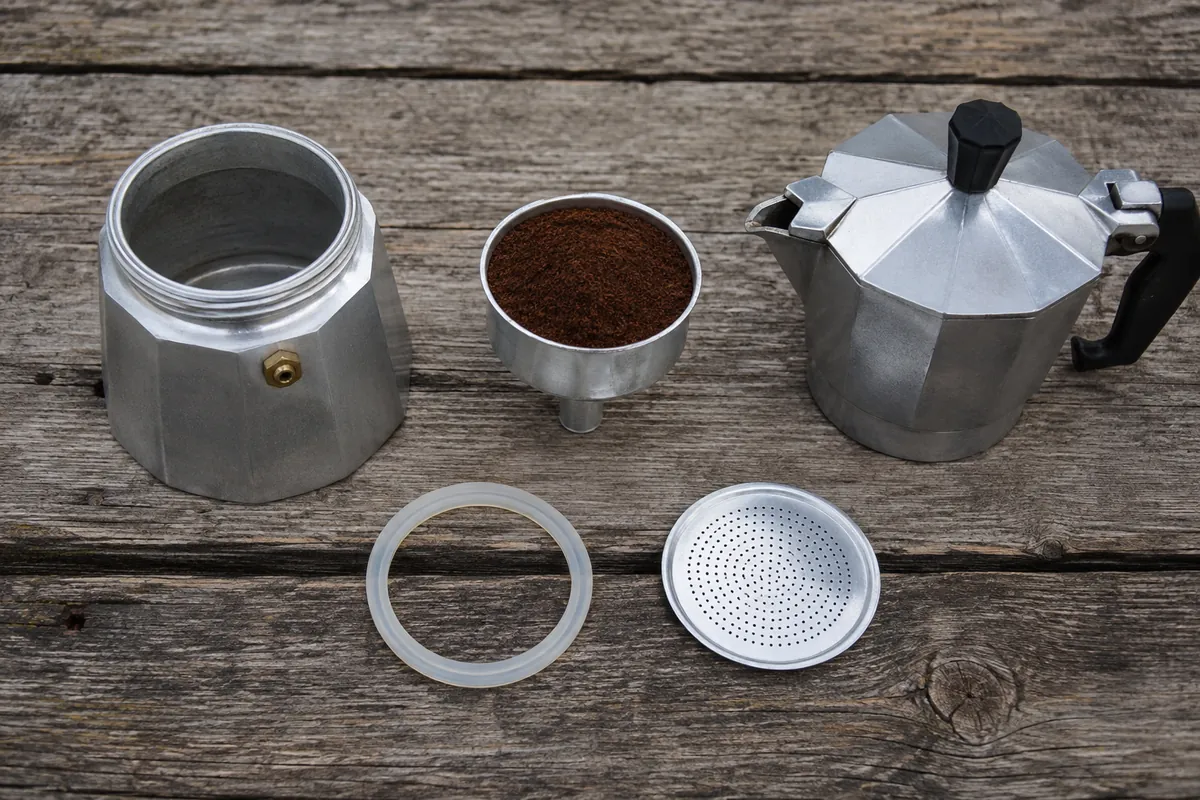
Dose is fixed by the basket, so fill it level, strike it flat, and leave it alone. Tamping has no place here, because the design has no mechanism for handling a compressed bed and the result is channelling or a blockage.
The pot must also be filled to its rated size: half-filling a six-cup does not produce three cups, it produces a badly extracted six, since the geometry between water, bed and valve height is fixed at the factory.
Aluminium, steel, and the size worth buying
Material and capacity are the two purchase decisions, and both are easier to get wrong than the brewing is.
Aluminium
The traditional material. Conducts heat fast, light, cheap. Not induction compatible without an adapter.
Stainless steel
Slower and more even heating, dishwasher safe, induction compatible, more expensive.
Seasoning
Aluminium pots develop a coffee patina that many people prefer not to scrub off.
Reactivity
Aluminium is reactive, which is why detergent and dishwashers are usually advised against.
Never put an aluminium pot in a dishwasher. Detergent strips the patina and oxidises the surface, and the metallic taste that follows takes several brews to clear.
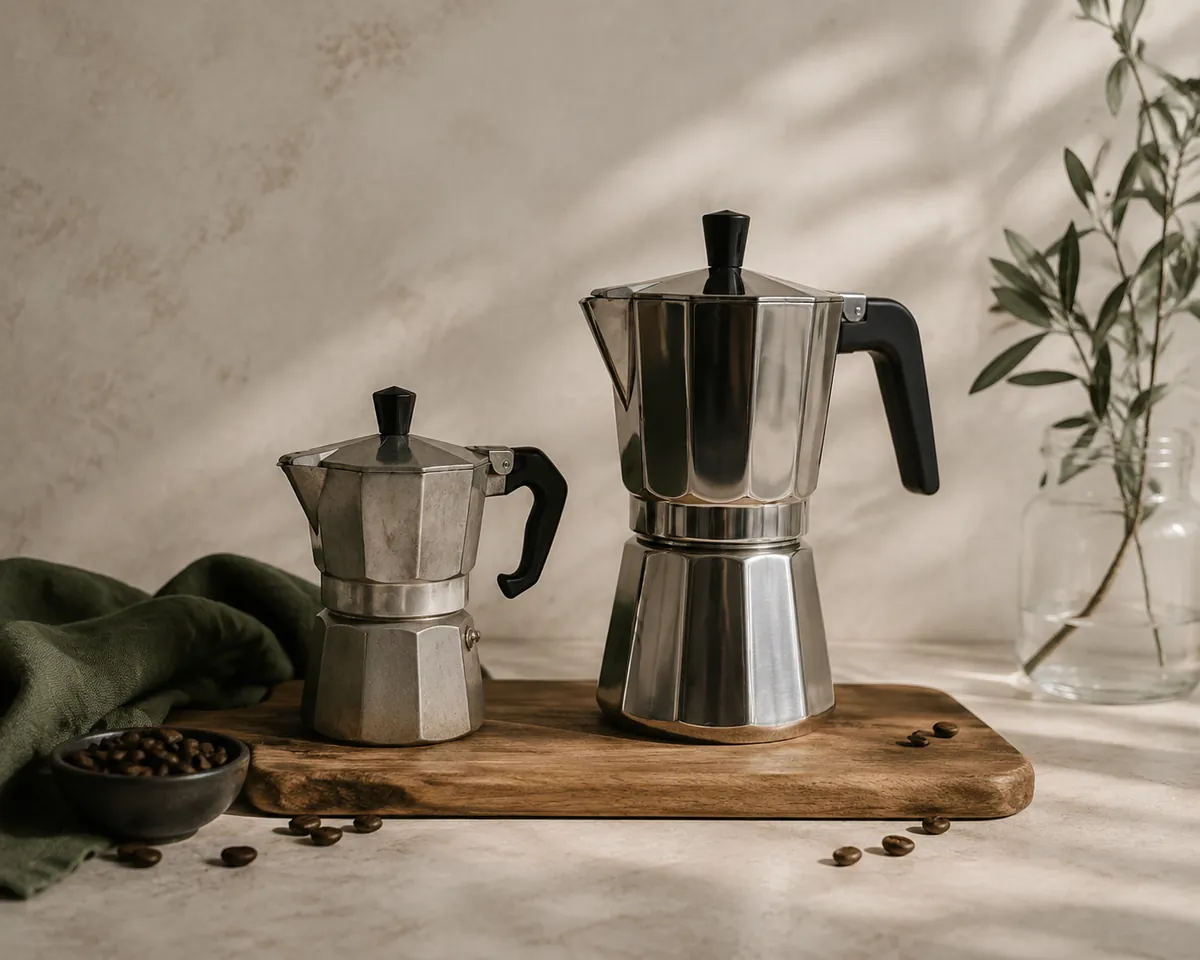
Size is sold in cups, and the cups are small ones. A three-cup pot makes roughly 130 ml in total, which is two modest servings or one generous cup, and a six-cup makes around 270 ml.
- Buy the size you will actually fill, since half-filling gives a poor brew.
- Check induction compatibility if you have an induction hob; most aluminium pots need an adapter.
- Look for a replaceable gasket and filter plate, which every good pot has.
- Prefer a pot with a heat-resistant handle that does not sit over the burner.
- Buy spare gaskets at the same time; they are cheap and easy to forget about.
Most households are better served by two small pots than by one large one, for the same fixed-geometry reason.
The gasket, the filter plate and the valve nobody checks
Three consumable parts sit inside a pot that otherwise lasts decades, and neglecting them is the second commonest cause of bad coffee from one.
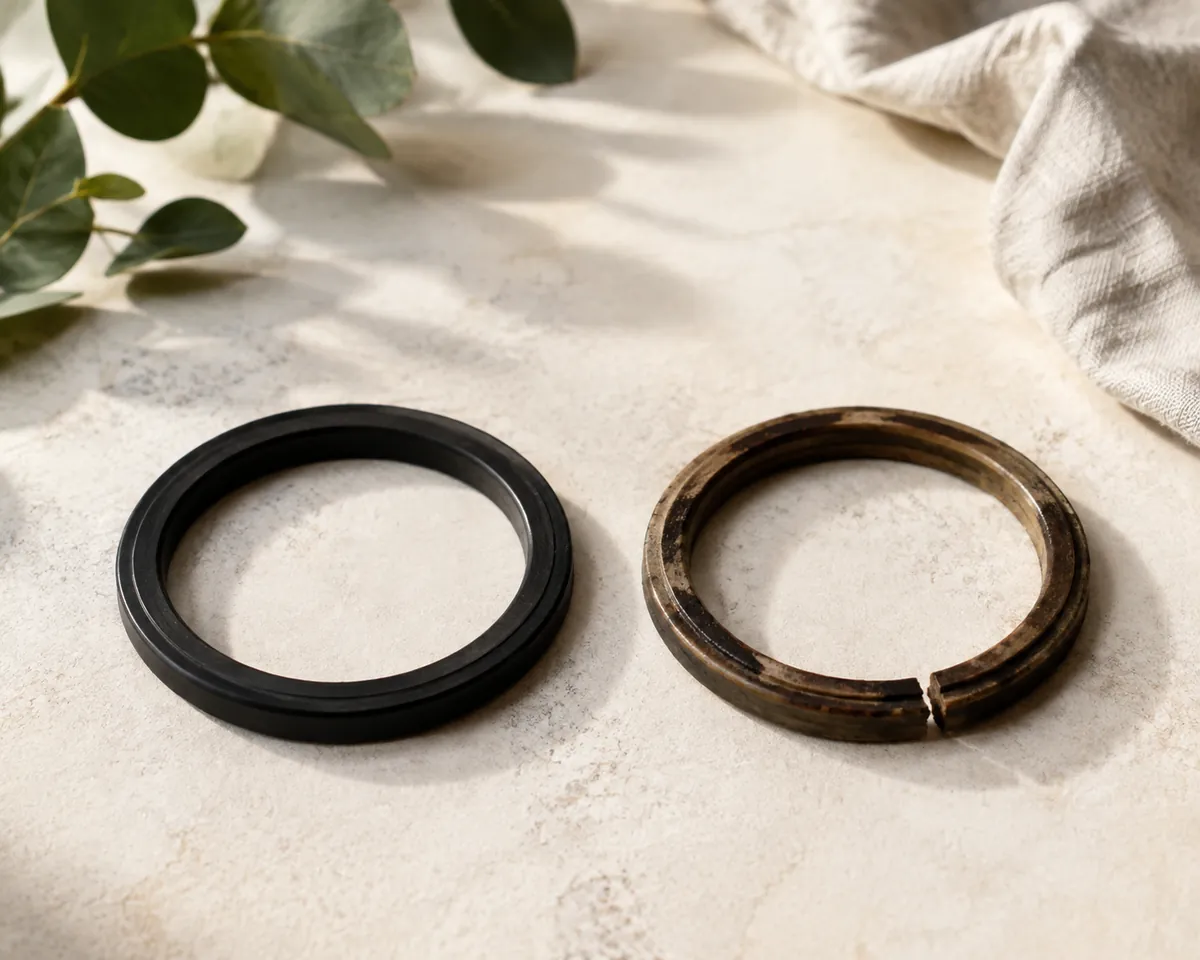
- Replace the rubber gasket every year or so, or whenever it hardens or leaks.
- Check the filter plate for blocked holes and clear them with a brush.
- Never obstruct the safety valve, and clean around it so it can operate.
- Rinse with hot water only, and dry all three parts separately before storing.
- Store it disassembled, so the gasket is not compressed and the pot does not trap moisture.
A pot that leaks from the seam almost always wants a gasket rather than replacing, and the part costs very little. The safety valve is the one to take seriously, since it is the pressure release for a sealed vessel of boiling water and a scale-blocked valve is the only genuinely unsafe thing about the design.
Cleaning is quick, and one traditional instruction is worth examining rather than repeating. The advice never to use detergent rests on the coffee patina improving the brew.
There is something in that for aluminium, where detergent also dulls the surface. Rinsing is not optional, though: spent grounds out and all three parts under hot water after every use, because oils left in a warm pot go rancid and a stale pot taints everything brewed in it afterwards.
Dry the parts separately and store it in pieces, since screwing a wet pot together traps moisture against the gasket.
The cup it makes, and the roasts that suit it
Moka pot coffee belongs to neither of the families most drinkers know, which is why it disappoints people expecting either one.
It arrives concentrated, heavy-bodied and low in acidity, carrying a strong roasted quality and very little of the clarity a paper filter gives, since the metal plate lets oils and fines straight through. Badly made it is ashy and harsh; well made it is rich and chocolatey, and it takes milk better than almost anything short of a real shot, which is why it underpins so much home coffee across Italy and Latin America.
How well each roast suits a moka pot
- DarkChocolate and roast notes, and it takes milk well
- Medium-darkThe most balanced choice, and the usual recommendation
- MediumWorks, though it can read as thin against the method
- LightAcidity gets lost, and the body is not there to replace it
- Light fruity single originWasted. Brew it as a pour-over instead
Roast character outranks origin character in this pot, which is worth knowing before spending money on beans for it. A delicate light arabica is largely thrown away here for the same reason it is in cold brew, and a dark robusta blend that would be brutal in a cone behaves itself.
The five failures, and the burnt one at the top of the list
Almost every complaint about this brewer traces to one of five causes, and they are not equally likely.
The five failures, in order of frequency
- Cold water in the base
- Bakes the coffee before brewing starts
- Heat too high
- Forces the brew through fast and scorches it
- Left through the sputter
- Steam pushes bitterness into the finished cup
- Tamped basket
- Channels or blocks, since the design cannot handle it
- Perished gasket
- Drops pressure, giving a weak and uneven brew
The first line accounts for most complaints on its own, and the first three are versions of one fault, heat applied for longer than the coffee wanted it. Work down the list before concluding the pot or the bag is at fault, since a perished gasket in particular produces a weak, slow, uneven brew that reads exactly like bad coffee.
Why moka pot coffee tastes wrong covers what is left once these five are eliminated.
Serving it straight, long, or under milk
What comes out is concentrated enough to be treated as a base rather than as a finished mug, and there are four sensible things to do with it.
Serving what a three-cup pot makes
- Straight
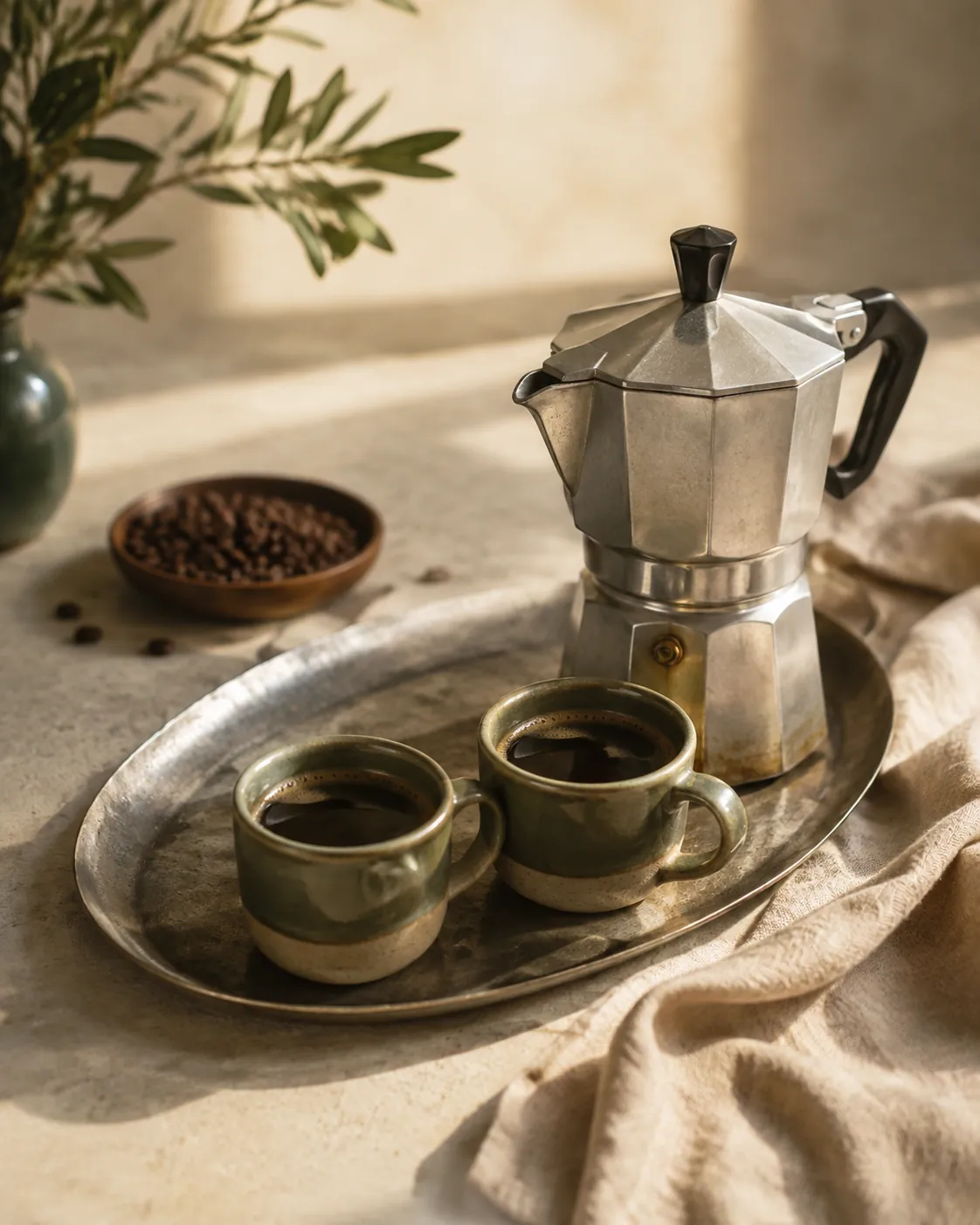
- 50 to 60 ml, in a small cup, often with sugar
- As an americano
- Topped with 100 to 150 ml hot water
- With milk
- Topped with 120 ml hot or steamed milk
- Over ice
- Poured over a full glass, since it survives dilution well
- Note
- Those cups are espresso-sized, not mugs
Straight and sweetened is the traditional serve, and it is a short strong drink rather than a mugful. Lengthened with hot water it becomes something close to an americano, low in acidity and a fair stand-in for filter coffee.
Milk is where it is genuinely at its best, because the heavy body and low acidity hold up under hot or steamed milk in a way a filter brew does not, and a home latte built on a moka pot is far closer to the cafe version than the same attempt from a drip machine.
Poured over a full glass of ice it survives the dilution better than most brews, which makes it the quickest route to iced coffee in a kitchen with no cold brew waiting in the fridge.
Where it fits, and what it costs you
The moka pot is probably the most widely owned coffee brewer in the world, and its case is made of practicalities rather than of flavour.
Works well for
- Makes strong, concentrated coffee with no paper, no power and no consumables at all
- Costs a fraction of anything else producing a drink this strong
- Effectively indestructible in steel, and repairable in aluminium since gaskets are sold everywhere
- Works on any heat source, which is why it travels and why it suits a camp stove
- One device, one procedure, and nothing to dial in beyond the grind
Struggles with
- Not espresso, and it will not make a shot that behaves like one under milk
- Almost no control: the pressure is whatever the heat produces
- Easy to burn, and a burnt brew cannot be rescued
- Fixed to its own size, so a three-cup pot makes three cups or nothing
- Aluminium models react with detergent and must never go in a dishwasher
Cheap, powerless, decades-long and suited to milk is a combination nothing else offers, and it fits the way coffee is actually drunk where the pot comes from: small, strong, often milky, made on a hob that was already lit. Its limitations are all about control rather than quality, since ratio, pressure and contact time are effectively fixed, which is precisely why it is simple enough to use half asleep.
Choose a moka pot
For strong concentrated coffee, especially with milk, cheaply and without power.
The size restriction catches more people out than the flavour does, and the caffeine in what it produces follows the same fixed geometry: a full pot is a full dose, and there is no half measure to make.
Common questions
Why does my moka pot coffee taste bitter and burnt?
Almost always cold water in the base. The pot sits on heat for minutes while the water warms, slowly roasting the coffee above it. Start with pre-boiled water and use medium heat, and remove it as soon as the flow pales.
Is moka pot coffee espresso?
No. A moka pot generates around 1 to 1.5 bars against espresso's nine. It makes a concentrated, heavy-bodied coffee that suits milk well, but it is a different drink with different characteristics.
Should you tamp the coffee in a moka pot?
No. Fill the basket level and strike it flat. The design has no way to handle a compressed bed, and tamping causes channelling or blocks the flow entirely.