What Is Drip Coffee? When the Machine Decides How Water Arrives
In every other brewing method a person decides how the water arrives. In drip coffee a machine decides, which removes technique from the equation and leaves three variables that matter enormously: how much coffee, how finely it is ground, and what came out of the tap.

Drip coffee is what you get when hot water falls through a bed of ground coffee, passes it once, and drains away into a pot. It is the most-drunk preparation of coffee in the world and the least discussed, largely because there is so little for the drinker to do while it happens.
That is the interesting part rather than a shortcoming. Every other method hands a person some say over how the water arrives, and this one does not.
Drip coffee at a glance
- What it is
- Hot water dripped once through a paper-filtered bed of grounds
- Also called
- Filter coffee, and batch brew when a cafe makes it in volume
- Ratio
- Around 60 g of coffee per litre of water
- Grind
- Medium, roughly the texture of caster sugar
- Contact time
- Four to six minutes for a full pot
- Body
- Light and clean, with no sediment, because the paper holds the oils back
- Caffeine
- Near 95 mg per 8 fl oz, USDA figure for brewed coffee
- The three variables
- Dose, grind and water. Technique is not one of them
Drip coffee is percolation, not soaking
Coffee brewing splits into three families, and knowing which one you are in explains most of what follows. Water can sit with the grounds and be separated later, it can be forced through them under pressure, or it can fall through them under gravity and leave.
Drip belongs firmly to the third.
The distinction is not academic, because fresh water is meeting the grounds continuously. In a French press the same water sits there getting steadily more saturated with what it has already dissolved, which slows extraction down as it goes.
Percolation keeps the gradient steep from beginning to end.
Pressure
Water forced through a compressed puck in seconds. Espresso and, at lower pressure, a moka pot.
What is still yours to change once the machine pours
Strip away everything the machine has taken over and a surprisingly short list is left.
Pour rate, pour pattern, agitation and the timing of each addition all belong to the equipment now, which is why arguing about technique in front of a drip machine is arguing about nothing. When making drip coffee, what remains is how much coffee goes in, how coarsely it was ground, and what the water was like before it was heated.
Who decides what
- The machineWater temperature, flow rate, where the water lands, total contact time.
- YouDose, grind size, water, and how fresh the beans were.
- SharedBed depth, which follows from your dose and the machine's basket.
- Not a variableTechnique, in any sense a manual brewer would recognise.
Those three levers are more than enough, and they move a cup further than most people expect. A dose out by a third and a grind out by one step will produce a bad brew on a certified machine and a good one on a mediocre machine, which is the reverse of the order most kitchens work in.
The counter-argument to this page is really an equipment question, and it belongs with the drip coffee maker rather than here.
Why the bed is flat
Look into the basket of almost any drip machine and the grounds sit in a shallow, level layer with vertical sides. That shape is doing real work, and it is the single biggest structural difference between this drink and a hand-poured one.
Water takes the fastest route through any bed of particles, so the depth of coffee it has to travel through sets how long it spends in contact. A flat bed presents the same depth everywhere, which means every path through it takes roughly the same time and every part of the bed extracts to roughly the same degree.
A cone does the opposite: the centre is deep and the edges are shallow, so the middle gives up more than the sides.
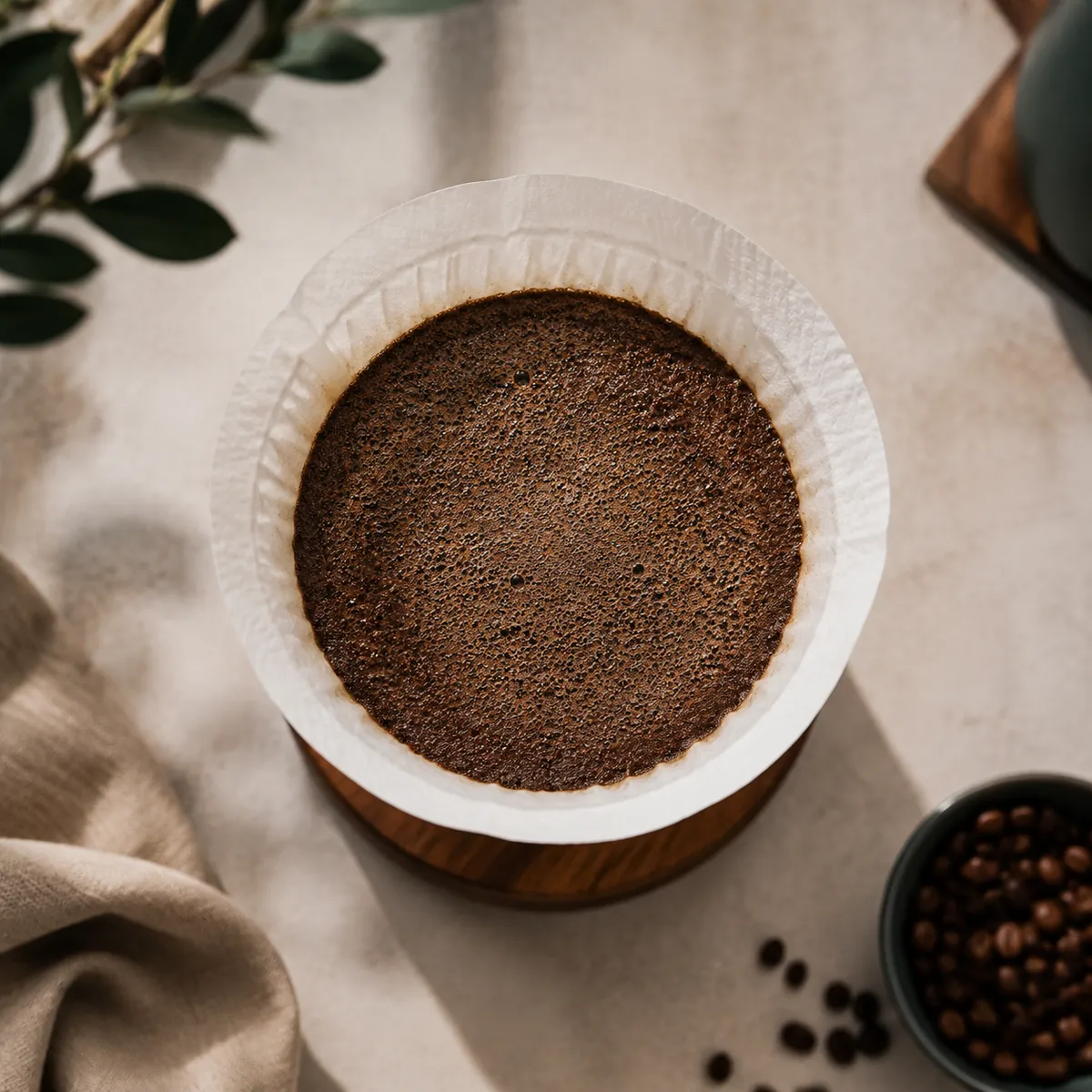
Uniformity is the reason a flat bed forgives so much. A machine cannot correct its own pour, so it needs a geometry that survives an imperfect one, and a shallow level layer is that geometry.
The cost is a slightly less expressive cup. Even extraction gives a balanced, dependable result rather than the sharp separation of flavours a cone can pull out of a good bean, which is a fair trade when nobody is standing over it.
What the shower head is standing in for
Water has to reach the whole bed, and in a hand method a person accomplishes that by moving a spout in circles. A machine has no spout to move, so it drills a pattern of holes into a plate above the basket and lets gravity do the rest.
That plate is a substitute for a pour rather than a component in its own right.
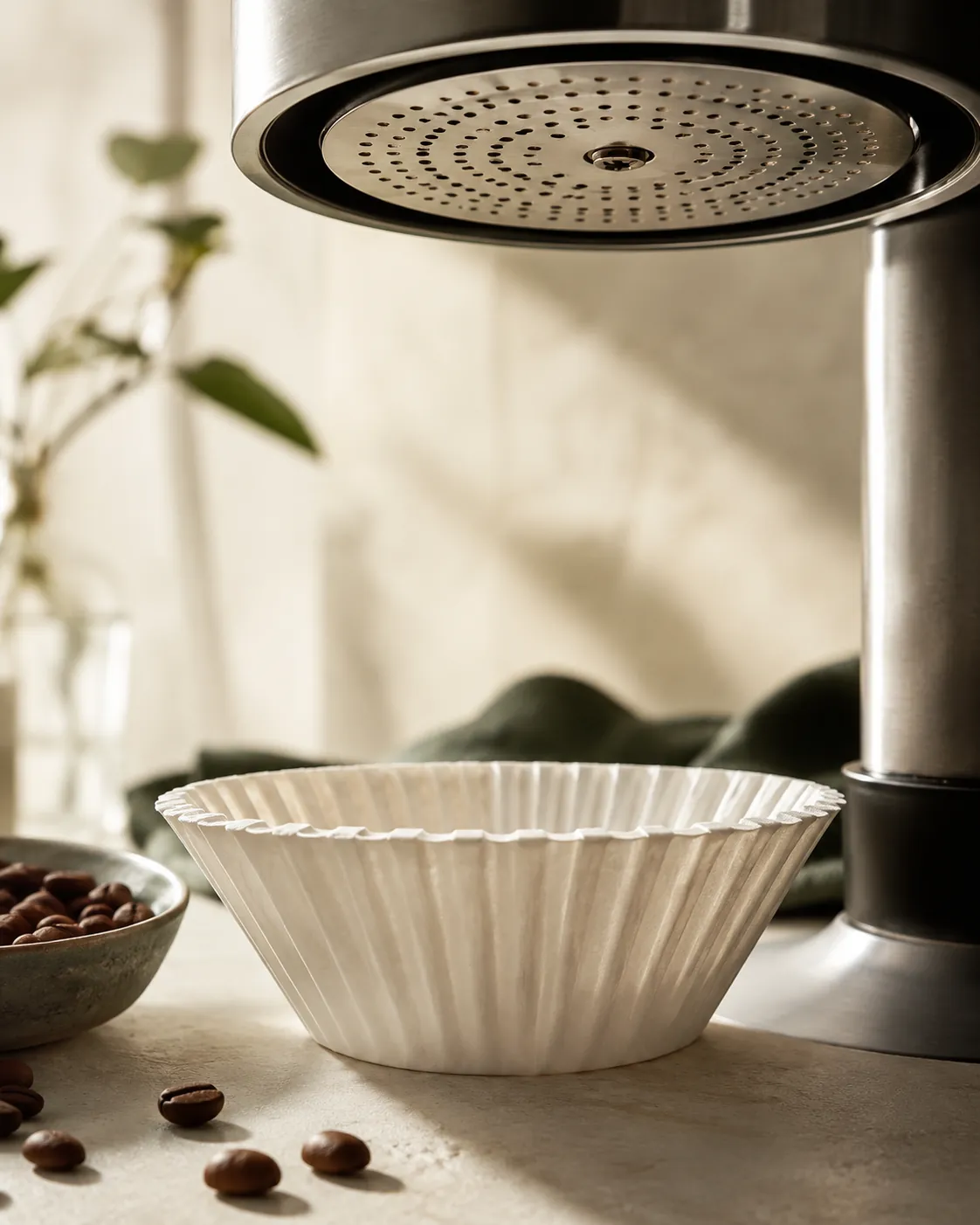
When it works, the whole surface darkens at once and the bed stays level from start to finish. When it does not, water lands in a single spot, digs a channel down through the grounds, and races out of the bottom having barely touched most of the coffee.
The resulting cup is the one people find hardest to describe, because it is weak and harsh at the same time: the channel over-extracted while everything around it was left dry.
Levelling the dry grounds with a shake before brewing costs a second and helps more than it ought to, since an even starting surface gives a mediocre spray less to work against.
Dose sets strength, and only strength
The single most useful idea in brewed coffee is that strength and extraction are two different things, and dose is the lever that moves the first without touching the second. Strength is how much dissolved coffee is in the water, and it is fixed by the ratio you chose.
Around 60 g of coffee per litre is the standard, which works out near 15 g for a large mug. Coffee brewed at that ratio and properly extracted lands somewhere around 1.2 per cent dissolved solids, and that figure is what people are describing when they call a cup strong or weak.

Ratios worth knowing
- Standard
- 60 g per litre, the usual reference point
- Lighter
- 50 g per litre, still balanced, noticeably thinner
- Stronger
- 70 g per litre, dense, and it needs a slightly coarser grind
- A single large mug
- About 15 g of coffee to 250 ml of water
- A full carafe
- About 60 g to a litre, weighed rather than scooped
Scooping is where this most often goes wrong, and the reason is that a scoop measures volume while the recipe is in mass. A dark roast is less dense than a light one, so the same scoop of each differs by several grams, and roughly a fifth of the dose disappearing is enough to move a cup from balanced to watery.
Weighing the coffee removes a variable that never needed to be there in the first place, which matters more once the beans have been sitting a while and storing coffee beans has done its own quiet damage.
Why the grind moves flavour when the dose does not
Extraction is the other half, and grind is what controls it.
Finer particles have more surface area and slow the water down, so more of the coffee dissolves. Coarser particles do the reverse.
The target for brewed coffee is an extraction yield somewhere between 18 and 22 per cent of the ground coffee's mass, and either side of that window has a signature you can learn to recognise in a single sip.
What the grind does to the cup
- Too fineBitter, drying, hollow. The bed clogs and the basket may overflow
- Slightly fineDeep and sweet, with a firm finish. Where a light roast often wants to be
- Correct, like caster sugarBalanced, clear, sweet through the middle
- Slightly coarseBright and light, sometimes a touch sour at the end
- Too coarseSour, thin, and watery. Water drains before it has dissolved much
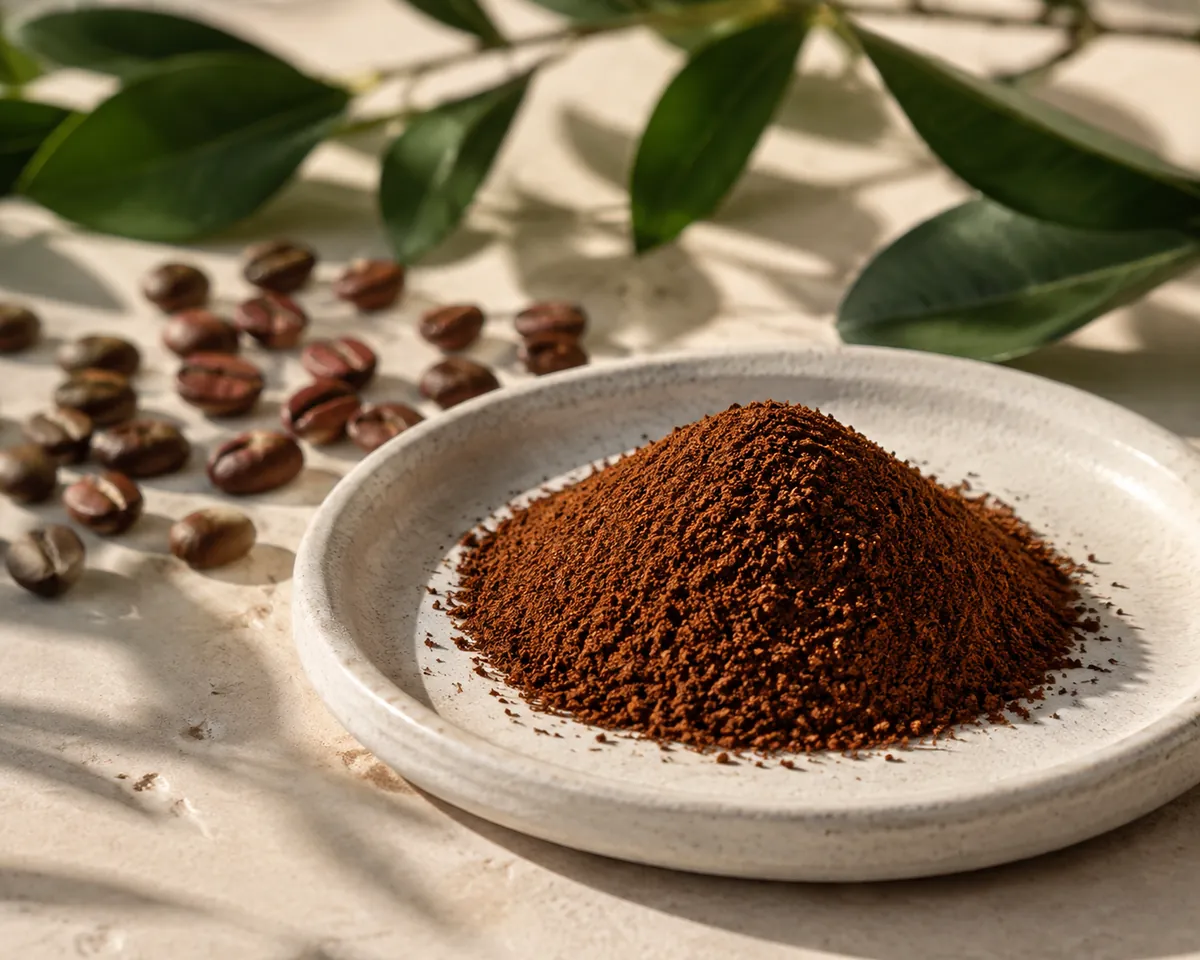
Consistency of particle size matters as much as the setting itself. A blade grinder produces boulders and dust in the same batch.
In a drip bed the dust blocks the flow while the boulders give up almost nothing, so the cup carries both faults at once. That is the argument a burr grinder makes better than any other upgrade on a counter.
Change one step at a time and taste in between, because grind interacts with dose and moving both leaves you nowhere.
Water is over 98 per cent of it
A mug of drip coffee is somewhere above 98 per cent water by mass, and the remaining fraction is everything anyone argues about. That ratio alone should settle how much attention the tap deserves.
Hard water and soft water extract differently, not merely differently to taste.
Minerals in the water actively bind to flavour compounds and carry them out of the grounds, so very soft water gives a flat, hollow cup no matter how good the beans were, while very hard water gives a dull, chalky one and coats the machine on the way. Somewhere in the middle is a range where coffee simply works, and brewing water sets out where that range sits and how to get into it.
A filter jug is the cheapest improvement available to most kitchens, ahead of beans and well ahead of equipment.
- Use fresh cold water each time rather than what has been standing in the tank.
- Filter it if your supply is heavily chlorinated, since the brew concentrates that note.
- Avoid distilled or heavily softened water, which has nothing left to extract with.
- Fill by measured volume rather than trusting the markings on the tank.
- Taste the water on its own once, cold, before deciding the coffee is the problem.
What the bloom does, and why most machines skip it
Freshly roasted coffee is full of carbon dioxide, and grinding releases only part of it. The rest comes out the moment hot water arrives, which is why a fresh bed swells and foams for the first thirty seconds or so.
That gas physically pushes water away from the particles while it escapes.
A hand brewer deals with this by wetting the bed, waiting half a minute, and only then pouring properly. Almost no drip machine does anything of the kind, so the first water through the basket is fighting the gas rather than dissolving coffee.
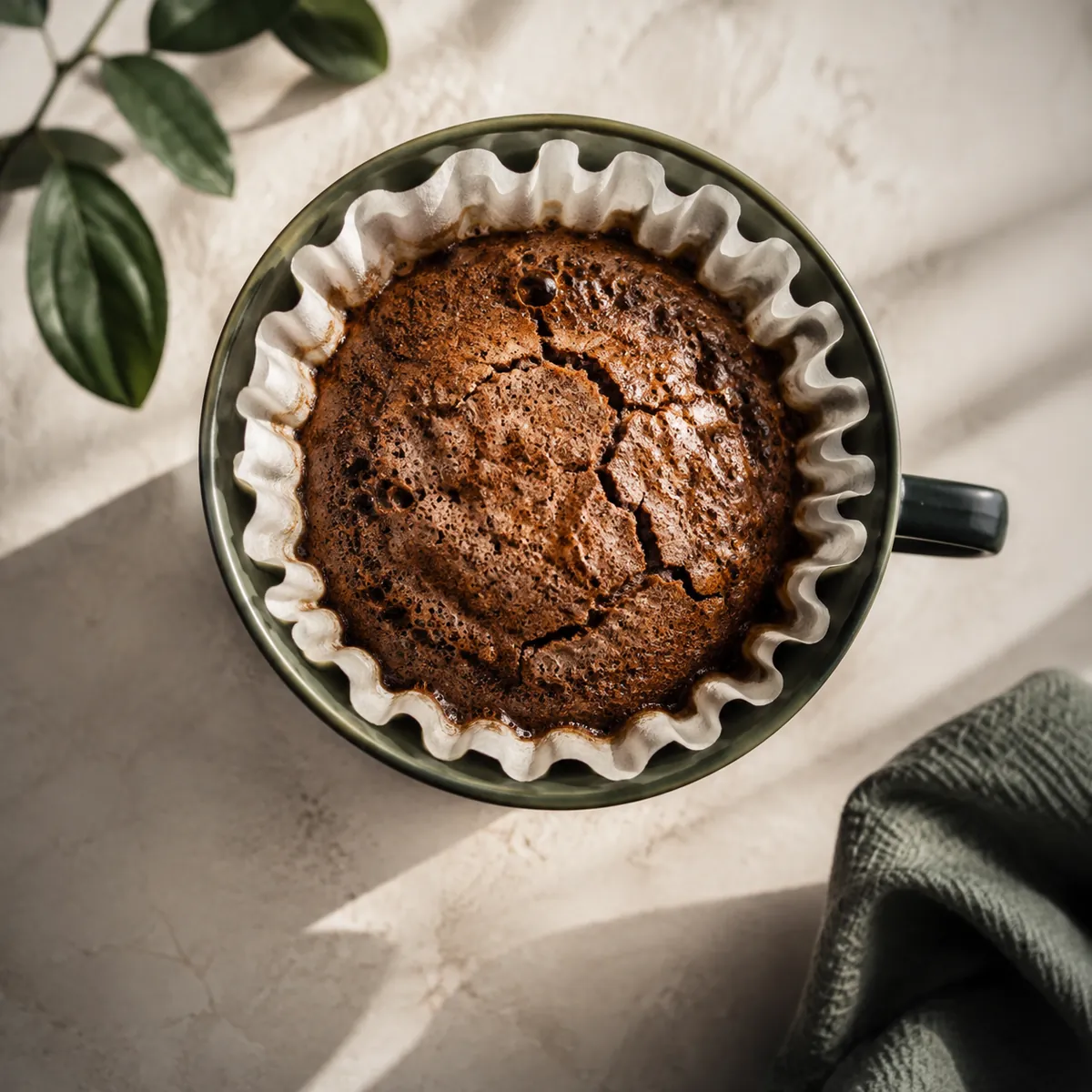
The practical effect is smaller than the internet suggests, and it depends entirely on how fresh the beans are. Coffee more than three weeks past roast has already lost most of its gas and blooms hardly at all, so the step matters most with the freshest beans and not at all with a supermarket bag opened last month.
Forcing a bloom on a machine that has none
- Start the brewLet the machine run for about ten seconds, enough to wet the bed.
- Interrupt itSwitch it off, or slide the carafe out if the basket has a drip stop.
- WaitThirty to forty seconds. The bed will rise and settle again.
- RestartLet it finish the cycle normally.
- Skip all of thisIf the beans are older than about three weeks, since there is little gas left to release.
Drip and pour-over are the same brew by different hands
Set a filter machine beside a pour-over cone and the mechanism is identical: hot water, a paper filter, a bed of medium-ground coffee, gravity, four minutes.
Everything that separates them is who is holding the kettle. A person can vary the pour rate, pause, agitate, wet the edges deliberately and swirl the bed at the end, and a machine repeats the same pattern every single time whether or not it is the right one.
| Drip machine | Hand-poured cone | |
|---|---|---|
| Bed shape | Flat, shallow, even depth | Conical, deep in the middle |
| Water delivery | Fixed spray from a plate | A gooseneck kettle, moved by hand |
| Bloom | Rarely, unless you interrupt it | Standard practice |
| Consistency | Very high, batch to batch | As good as the person that morning |
| Volume | Up to a litre and a half | One or two cups |
| Ceiling | A very good cup | A slightly better cup, on a good day |
Which of the two makes better coffee is less interesting than how close they are. A drip machine holding its water at the right temperature produces something most drinkers cannot pick out of a line-up against a careful hand brew, and the gap that remains is smaller than the gap between two grind settings.
The genuine difference is attention: one method costs four minutes of standing there, and the other costs none, which is the same axis press against cone is arranged along.
How much caffeine a mug of drip carries
Brewed coffee sits near 95 mg per 8 fl oz on the USDA figure, and drip is the method most often poured into vessels considerably larger than 8 fl oz. Serving size does more work here than anything about the brewing.
That espresso comparison is the one that surprises people, and it is entirely about volume. A shot is stronger in the sense of concentration and smaller in the sense of how much liquid arrives, so a mug of drip carries more caffeine in total while tasting far milder, a point caffeine by brew method works through across the whole range.
The bean matters too, since robusta carries roughly twice what arabica does. Caffeine is one line of several, and drip against espresso takes the rest of them: strength, body, cost per cup and what each is good for.
What a well-made drip cup actually tastes like
Clean is the word that does most of the work. Paper takes out the oils and the fine particles, so a drip cup arrives clear, light in body and without the silt that settles at the bottom of a press, and that clarity is what the method is for rather than a limitation of it.
Aroma is high, acidity reads brightly, and the sweetness sits in the middle of the mouth rather than at the front.
Against its neighbours it is the moderate one on every axis.
A press gives more weight and more texture, cold-brewed coffee gives roundness and almost no acidity, and an americano built from a shot tastes of the shot rather than of the bean's origin. Drip sits between all of them and shows a good bean more plainly than any of them, which is why cafes pour it as batch brew when they want a coffee to speak for itself.

- Weigh the dose before you change anything else, at about 60 g per litre.
- Set the grind to caster sugar and adjust one step at a time.
- Filter the water if it tastes of anything on its own.
- Drink it within twenty minutes, or move it off any heat source into a flask.
- Buy beans roasted within the last month and grind them the morning you use them.

Do those five and the method delivers what it promises, which is a litre of dependable coffee for no attention at all. The full routine written out in order is in making drip coffee, the faults and their causes are in drip coffee problems, and the rest of the family sits under brewed coffee.
Common questions
What is the difference between drip coffee and pour-over?
The principle is the same, gravity pulling water once through a filtered bed. The difference is who pours: a drip machine does it, and in a pour-over a person does, which makes the pour itself part of the technique.
What ratio should drip coffee use?
Around 60 g of coffee per litre of water, at a medium grind roughly the texture of caster sugar, with a contact time of four to six minutes for a full pot.
Why is drip coffee cleaner than a French press?
The paper filter holds back the oils and the fine sediment, so the cup arrives light and clear. A press uses a metal mesh, which lets both through and gives a heavier body.