What Does Cold Brew Taste Like? Rounder, Sweeter, Less Acid
Cold brew tastes rounder and sweeter than hot coffee, with much less acidity and more chocolate, nut, and dried fruit. The reason is temperature: cold water simply does not dissolve the same compounds.
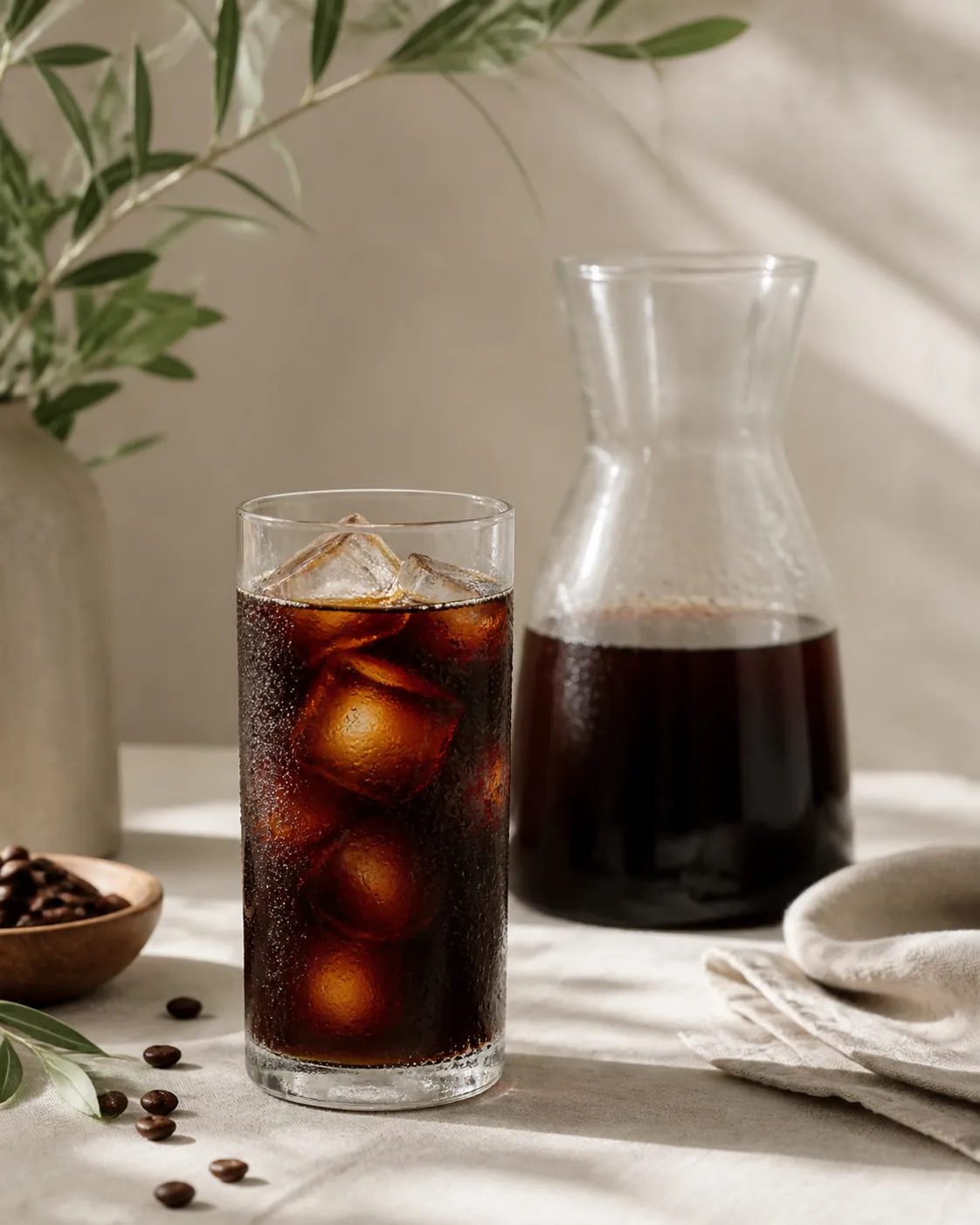
Cold brew tastes smoother, sweeter and rounder than the same coffee brewed hot, with far less of the sharpness people associate with a strong cup. What it loses along the way is brightness.
The difference is not subtle, and it is not a matter of temperature at the moment of drinking. Hot coffee poured over ice still tastes like hot coffee.
What cold brew tastes like
The dominant notes are chocolate, caramel, malt and nut. Acidity is low enough that many people who avoid coffee for its sourness get on with cold brew.
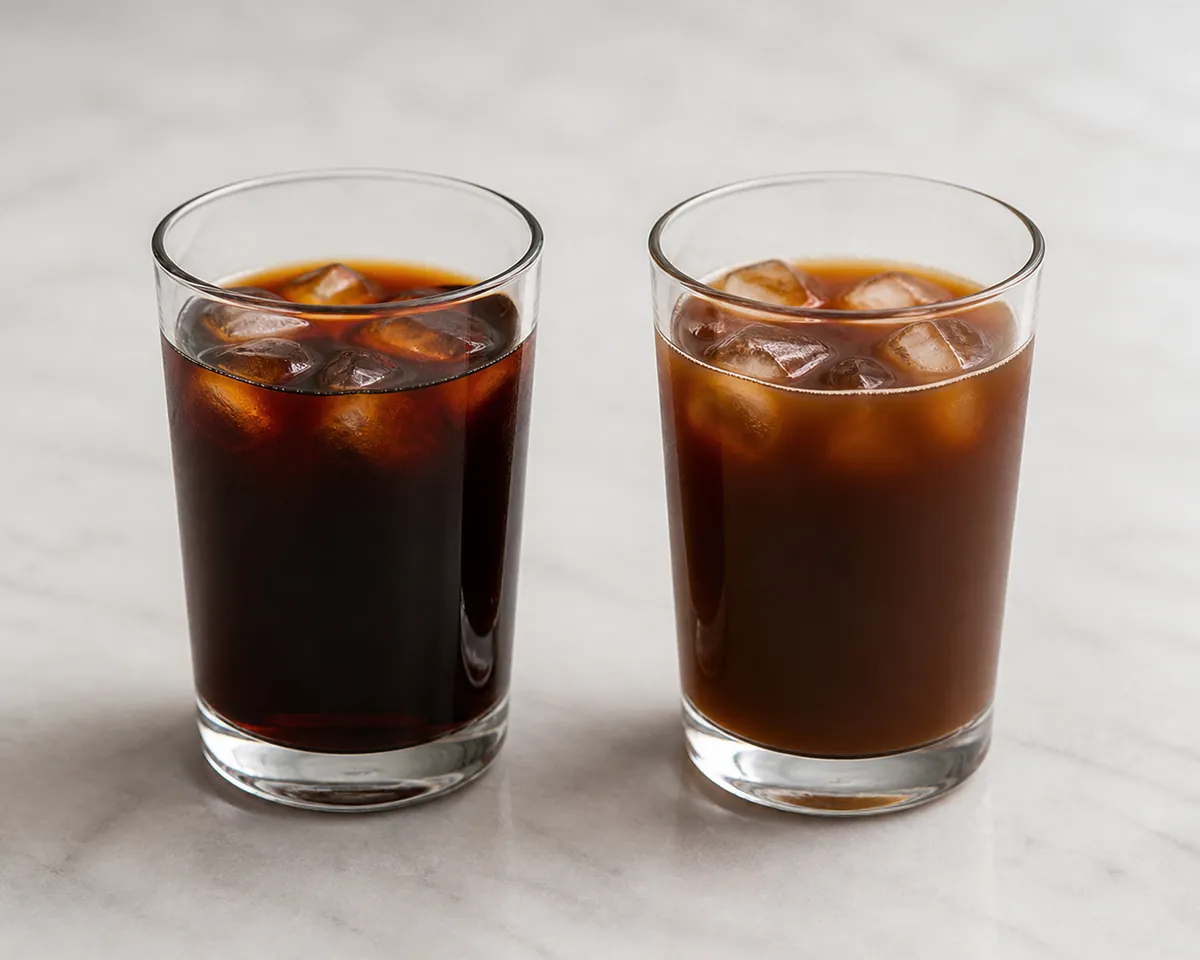
Put the two side by side and the cold brew reads darker and quieter.
The sharp edge is simply absent, which is what most people mean when they call it smooth.
The cold brew flavour profile at a glance
- Dominant notes
- Chocolate, caramel, malt, roasted nut
- Acidity
- Low. This is the single biggest departure from hot brewing
- Bitterness
- Usually low, but rises sharply with a long steep or a fine grind
- Body
- Round and slightly syrupy, heavier than filter coffee
- What is missing
- Floral, citric and fruit notes, which are largely acid-borne
Bitterness is usually low too, though it climbs quickly if the steep runs long or the grind is too fine. That profile is consistent enough across beans that cold brew is a poor way to taste what makes one coffee different from another.
Judge it after dilution, then, or you are judging a syrup rather than a drink. In one line, cold brew tastes like the same coffee with its sharp edge removed, and whether that is a gain or a loss is a matter of what you drink coffee for.
Why cold water makes it sweeter
Temperature decides what dissolves. Cold water is a much poorer solvent, so it takes the easily soluble compounds and leaves a great deal behind.
The compounds that arrive last in hot brewing are the ones responsible for sharpness and bitterness, and cold water largely never reaches them.
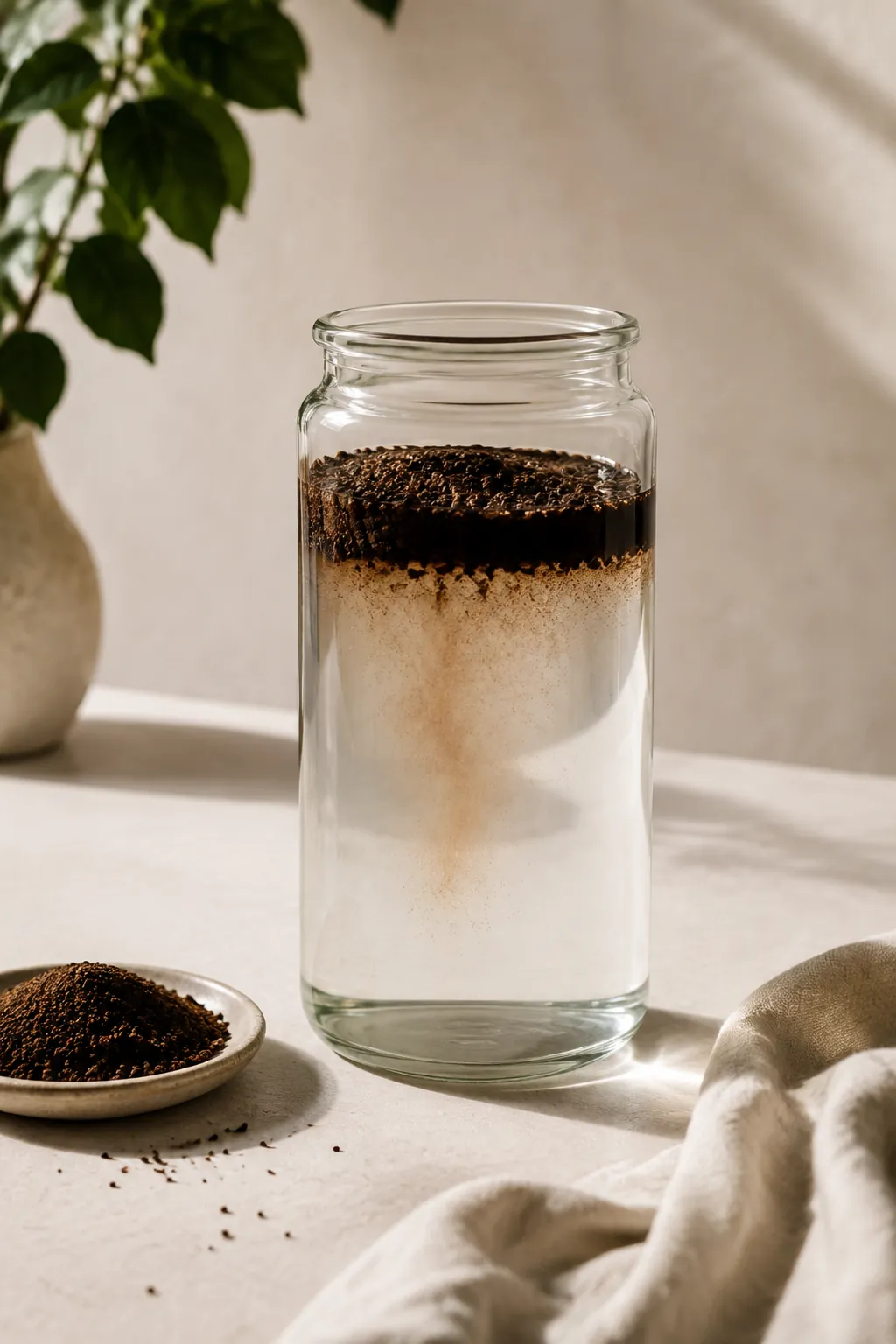
- Acids extract slowly in cold water, so the citric and malic notes stay in the grounds.
- Bitter compounds need heat and time together, and cold brew gives only time.
- Sugars and chocolate notes dissolve readily even cold, so they dominate what is left.
What cold water gets to, in order
- SugarsDissolve fully in cold water, which is why sweetness leads
- Chocolate and caramel notesFollow closely, and survive the long steep
- Body-forming compoundsExtract steadily across twelve hours
- Fruit acidsSlow in cold water, so citric and malic notes stay behind
- Bitter compoundsNeed heat as well as time, and never really arrive
The sweetness people notice is real, and nothing has been added to produce it. Sugars in coffee dissolve readily even in cold water, so they arrive in full, while the acids and bitter compounds that would normally balance them are largely missing.
Perception does the rest. Sweetness reads more strongly when acidity and bitterness are low, so the same quantity of sugar tastes like more of it.
That is why adding sugar to cold brew often overshoots. The drink already sits at the sweet end of where coffee lands, and a spoonful that suits a filter cup pushes it past pleasant.
A dash of simple syrup mixes in far better than granulated sugar does, since nothing in a cold drink is going to dissolve a spoonful of crystals.
Where cold brew sits on the acidity scale
Low acidity comes up throughout this page, and it is easier to judge against the other coffees than on its own.
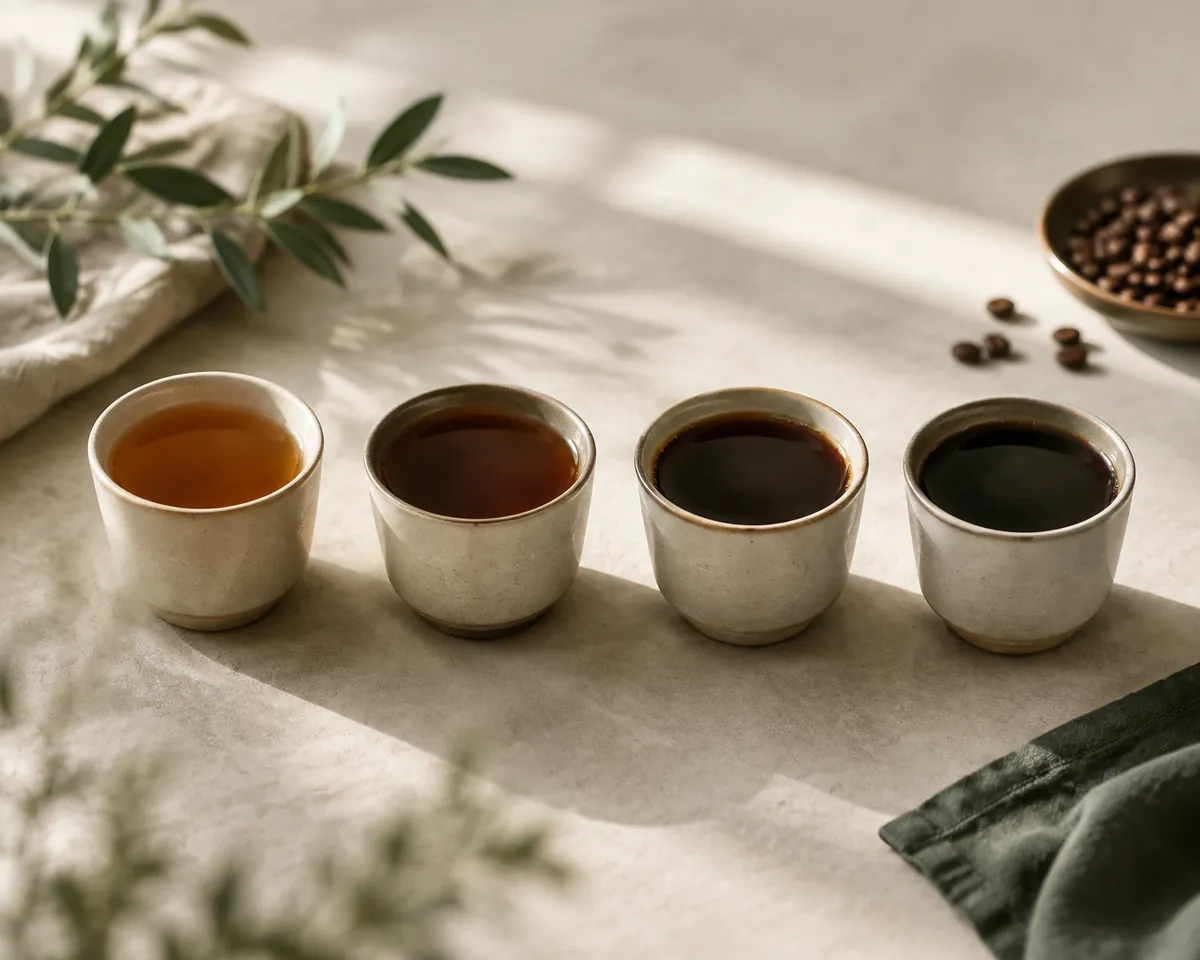
Perceived acidity, brightest to quietest
- Japanese iced, light roastHighest. Brewed hot onto ice, so the acidity is extracted and then locked in
- Pour-over, light roastBright and clean, with the origin character forward
- Espresso, mediumConcentrated, so the acidity reads sharp even at a medium roast
- Drip, mediumThe middle of the range, and the reference most people hold
- Cold brew, mediumNoticeably quiet. The sharp edge is absent rather than balanced
- Cold brew, dark roastQuietest of all, and where the chocolate and malt notes dominate completely
The gap between the top and the bottom of that scale is larger than the gap between two different origins brewed the same way. Method is doing more here than the bean is, which is the opposite of how coffee is usually discussed.
That is also why a drinker who dislikes cold brew for tasting flat is better served by the top of the scale than by another cold brew recipe.
How the beans and the roast show through
A cold brew tastes far more of the roast than of the origin.
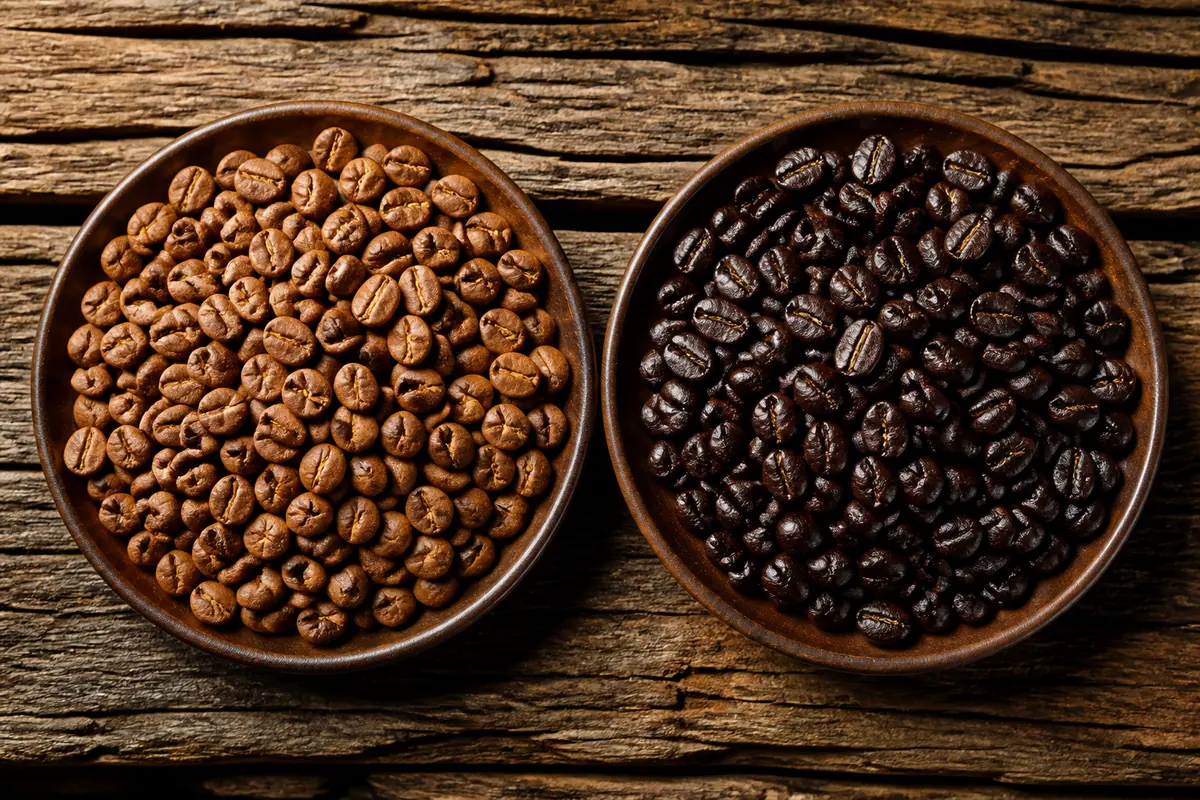
The delicate floral and fruit notes that distinguish one high-grown arabica from another are largely acid-borne, and cold water does not extract them. An expensive single origin is mostly wasted here.
Roasters increasingly sell coffee specifically for cold brew, and the choices behind those bags explain the flavour. A cold brew roast is usually taken slightly darker than the same roaster's filter offering.
| Roast | In cold brew | Verdict |
|---|---|---|
| Light | Thin and slightly sour. The acidity that defines it never extracts | Poor match |
| Medium | Balanced, with the chocolate notes present | Reliable |
| Medium-dark | Rich, sweet, full bodied | The usual target |
| Dark | Heavy and sometimes ashy over a long steep | Workable but easy to overdo |
That develops the chocolate and caramel notes cold water extracts well, and it reduces an acidity cold water would have left behind anyway. So a bag labelled for cold brew is worth buying even though nothing about the beans is physically different.
Cold brew from a supermarket blend is often perfectly good for the same reason, provided the beans are still fresh. The method flattens the difference the price was paying for.
How steep time and grind change it
Cold brew is defined by a long contact time, and moving that time moves the flavour in a predictable direction.
| Steep | What you get | Where it goes wrong |
|---|---|---|
| 8 hours | Light, sweet, slightly under-developed | Thin, and the chocolate notes have not arrived |
| 12 to 16 hours | The usual window. Balanced and rounded | Little goes wrong here |
| 20 hours | Deeper, heavier, more bitter | The smoothness starts to give way |
| 24 hours and beyond | Woody and harsh | Over-extracted, and dilution will not fix it |
Cold brew is forgiving in hours rather than minutes, which is the opposite of espresso and the reason it suits people who do not want to watch a timer. Temperature interacts with that window, so a brew left on the counter runs faster than one in the fridge and wants the shorter end of the range.
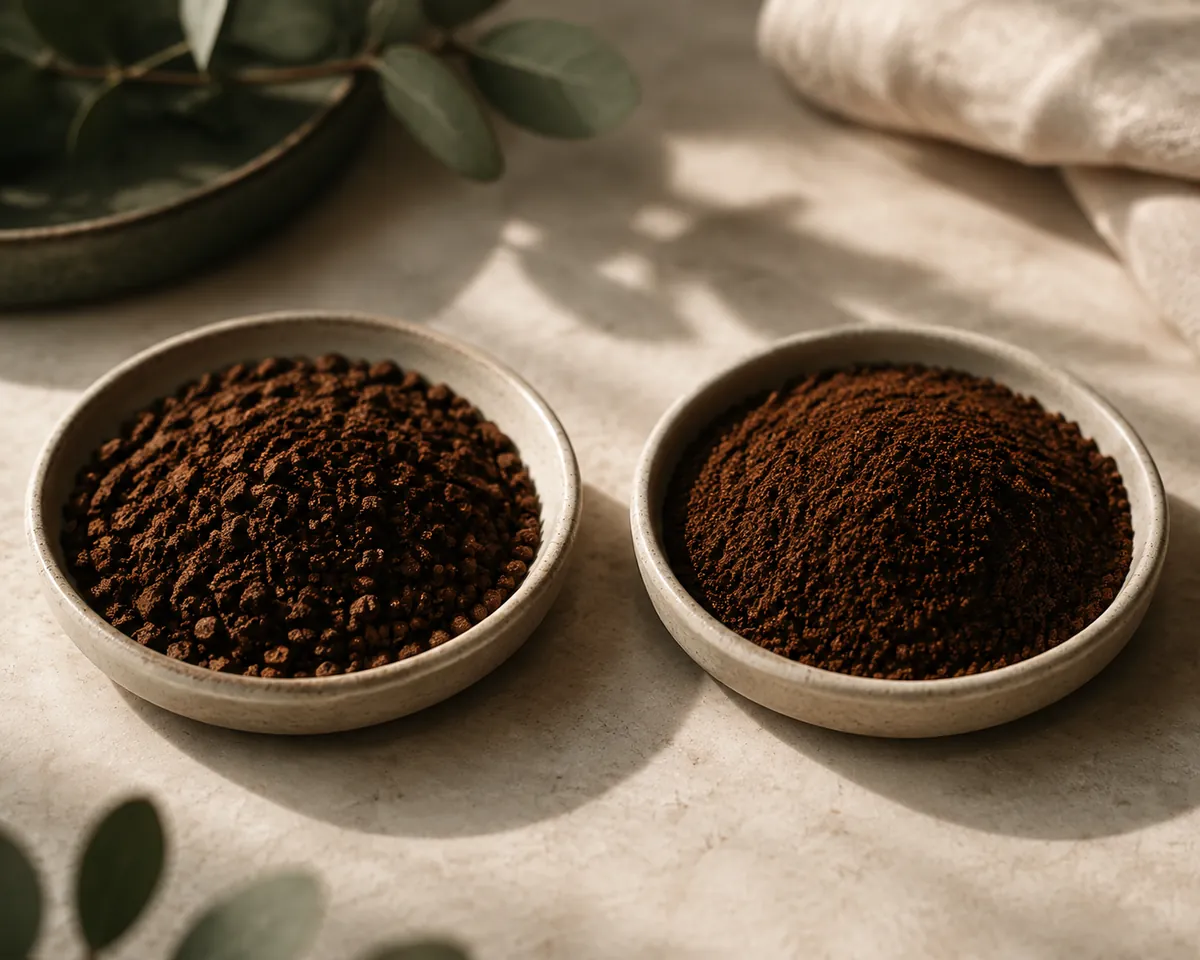
Grind matters differently here than in any other method. Nothing is passing through the bed under pressure, so grind is not setting a flow rate.
It is setting surface area, and over twelve hours a fine grind has far too much of it.
Too fine
Over-extracts across the long steep and turns bitter and muddy. Also very hard to filter.
Correct, coarse
Roughly breadcrumb texture. Extracts slowly and evenly over the full period.
Too coarse
Under-extracts, giving a weak brew that tastes watery rather than smooth.
Inconsistent
A blade grinder produces both extremes at once, so the batch is bitter and weak together.
Filtering is the practical reason to grind coarse. Fine grounds clog a filter and force fines through into the finished brew, which then keeps extracting in the bottle.
Concentrate, ready to drink, and nitro
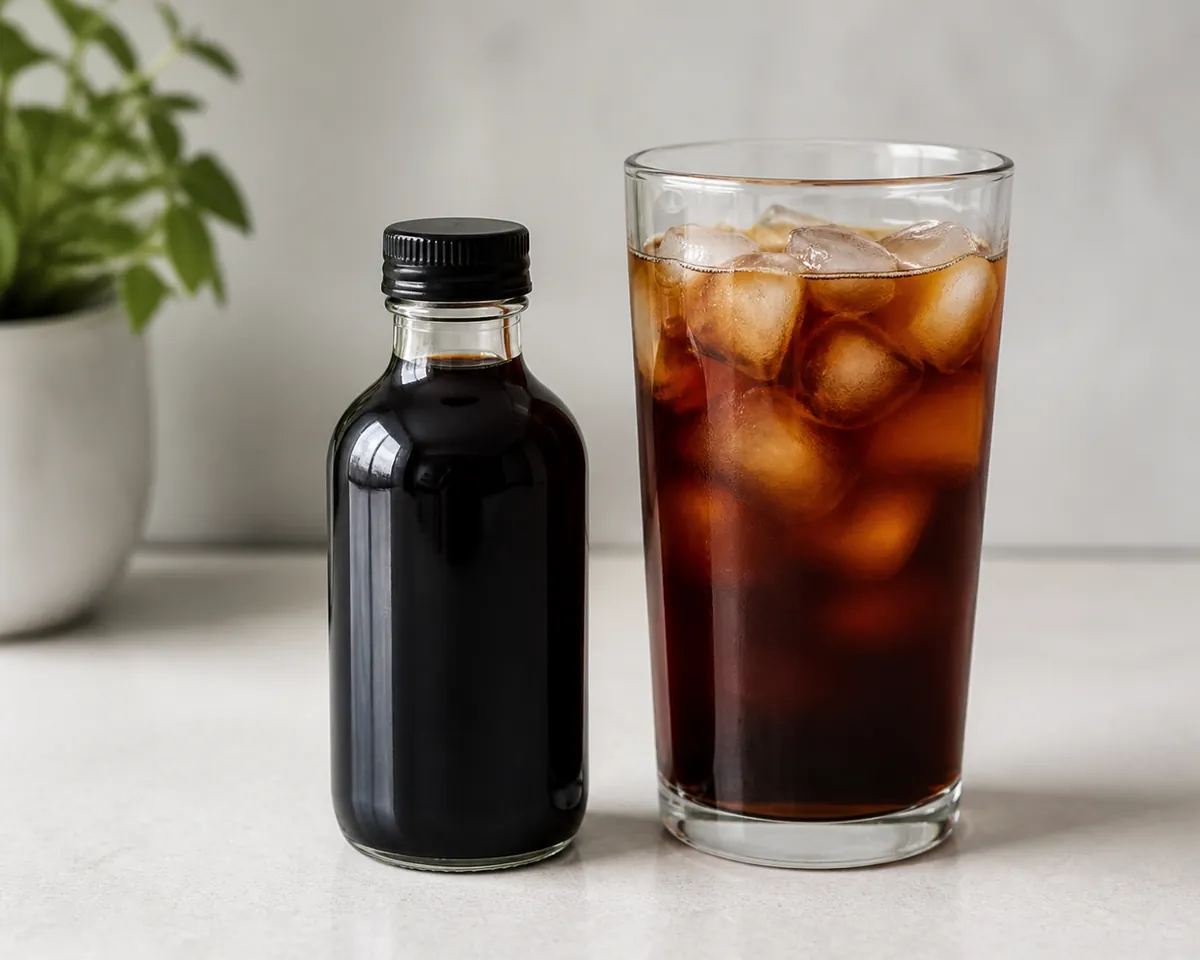
Most cold brew is made as a concentrate and diluted. The two are different drinks and get labelled the same way.
| Concentrate | Ready to drink | |
|---|---|---|
| Typical ratio | Brewed at roughly 1:4 to 1:8 coffee to water | Already diluted to about 1:15 |
| How to serve | Cut with water or milk, usually one to one or weaker | Straight from the bottle over ice |
| Strength | Much stronger than filter coffee before dilution | Comparable to filter coffee |
| Keeps | Around two weeks refrigerated | A few days once opened |
If a cold brew tastes overwhelming, dilution is the first thing to check rather than the beans or the steep. The caffeine figures by brewing method make the same point about concentrate.
- Dilute concentrate before judging it. One to one with water is the usual starting point.
- Use less ice than you would for iced coffee, since cold brew is already cold.
- Add milk after dilution rather than instead of it. Milk softens the drink but does not reduce the strength.
- Serve it in a tall glass rather than a mug. The drink reads better cold and diluted.
- Keep it refrigerated and finish it within about two weeks, and store the beans as carefully as for a French press.
Nitro is a third format and it changes nothing about extraction. Nitrogen is far less soluble in water than carbon dioxide, so it forms very small bubbles that leave solution slowly, giving the cascading pour and a dense, almost creamy head.
The perceived sweetness rises and the perceived acidity falls with no change in what is actually dissolved. It is a texture effect the palate reads as flavour, which is why a nitro and a bottled cold brew from one batch differ in body and not in what was extracted.
The same trick is what a milk frother plays on a flat white, and what the surfactants in a root beer play on a soft drink.
Why cold brew and iced coffee taste nothing alike
They are made from the same beans and end up as different drinks, and the confusion is worth settling.
Two routes to a cold coffee
- Cold brewCoarse grounds steep in cold water for 12 to 16 hours, then are filtered out.
- Iced coffeeCoffee is brewed hot as normal, then poured over ice or chilled.
- Japanese icedCoffee is brewed hot directly onto ice, so it chills the instant it is made.
- ResultCold brew keeps almost no acidity. Both hot-brewed routes keep it deliberately.
Iced coffee is brewed hot and cooled, so it keeps the acidity and then gets diluted by melting ice. Cold brew never meets hot water at all, which is the whole of the difference.
Japanese iced coffee is the interesting middle case. It is brewed hot, so the acidity is extracted, but it is chilled instantly so none of it is lost to sitting warm.
If you like the brightness of a good filter coffee and want it cold, that method gets you there and cold brew does not. Reading cold brew as flat rather than smooth is a preference rather than a fault in the method.
How cold brew tastes against other coffees
Descriptions only settle when the cups are side by side, and cold brew is best understood against three specific comparisons.
| Against | What they share | Where they part |
|---|---|---|
| Espresso | Both are concentrated | Espresso is intense and sharp, cold brew is intense and quiet. People who dislike one often like the other |
| Americano | Comparable volume and strength | The americano keeps the shot brightness in dilute form. Cold brew never had it |
| Instant | Low acidity, heavy roast character | Cold brew wins on body and cleanliness rather than on complexity |
| Decaf cold brew | Both are subtractions | They overlap. Cold brewing had already removed the aromatics decaffeination takes, so it loses less than decaf does hot |
Against an americano, the volume and strength are comparable and almost nothing else is. The americano keeps the shot's brightness in dilute form, and cold brew never had it.
Against instant, the honest comparison is closer than the price gap suggests. Both are low in acidity and heavy on roast character, and a good cold brew wins on body and cleanliness rather than on complexity.
The one that surprises people is decaf cold brew, which loses less than decaf does hot. Cold brewing was already removing the delicate aromatics that decaffeination takes, so the two subtractions overlap rather than stack.
What cold brew is bad at, and what to try instead
The method has one clear weakness, and disliking cold brew usually means disliking one specific thing about it.

Cold brew flattens origin character. That makes it a poor way to taste an expensive single origin, and an excellent way to make a large batch of pleasant, low-acid coffee from something ordinary.
- Too flat or muted. You are missing acidity, which this method removes by design rather than by accident. The hot-brewed routes above are the fix.
- Too strong. Almost always dilution rather than the brew. Cut it further before changing anything else.
- Too bitter. The steep ran long or the grind was too fine. Both push it past the smooth window.
- Watery. Over-diluted, or a ready-to-drink product built to a weak ratio.
- Boring. A fair reaction, and the method will not fix it.
The first and the last are preferences rather than faults. No adjustment to grind, steep or dilution turns cold brew into a bright coffee, because the brightness was never extracted in the first place.
The three in the middle are worth working through in order, because each is cheaper to test than the one after it. Dilution costs nothing and resolves most complaints, a shorter steep costs a day, and a coarser grind costs a bag of beans to confirm.
Knowing which of the five you are actually reacting to is most of the work. A drinker who wants brightness and a drinker who over-brewed their batch describe the result in almost the same words, and only one of them has a problem the method can solve.
Common questions
Is cold brew the same as iced coffee?
No. Iced coffee is brewed hot and then chilled, so it keeps the acidity of hot coffee. Cold brew is extracted in cold water over many hours, which produces a different flavour profile.
Why is cold brew less acidic?
Many of the compounds behind coffee's acidity dissolve much more readily in hot water than in cold. Cold extraction leaves a good deal of them in the grounds.
Is cold brew weaker than hot coffee?
It tastes smoother, but it is usually not weaker. Cold brew is typically made at a high ratio and steeped for many hours, and ready-to-drink versions often carry more caffeine per serving than filter coffee.