Cold brew vs Iced coffee
Cold Brew vs Iced Coffee: One Never Meets Hot Water
Cold brew never meets hot water and iced coffee is nothing but hot coffee made cold. Axis by axis, that one variable explains the acidity, the keeping time, the dilution arithmetic and the shopping list, and on several axes neither of them wins.
Cold brew is coarse grounds steeped in cold water for 12 to 24 hours and then strained, which leaves most of the chlorogenic acids and volatile aromatics in the grounds and gives a sweet, low-acid concentrate that keeps for seven to ten days. Iced coffee is brewed hot and then chilled in minutes, so it keeps the full acidity and aroma of the beans and loses them again within the hour. Caffeine is set by dose and dilution on both sides rather than by the temperature of the water.

Side by side
| Attribute | Cold brew | Iced coffee |
|---|---|---|
| Water at extraction | Cold or room temperature, never heated | Around 93 C, as for any hot brew |
| Time from grinding to the glass | 12 to 24 hours, plus straining | Minutes, start to finish |
| Acidity | Low, since chlorogenic acids extract far less | Kept in full, and more exposed once cold |
| Origin character | Muted, so the method outweighs the bean | Comes through, and fastest chilling keeps most |
| Keeps | Seven to ten days as sealed concentrate | Under an hour at its best, a day covered |
| Handling the melt | Planned for, since it is cut at the glass | Only if brewed at 1:8 to 1:10 on purpose |
| Dominant fault | A bad strain, leaving fines that keep extracting | A ratio built for a mug, not for a glass of ice |
| Which bag to buy | Medium to medium-dark, and nothing expensive | The bag you would drink black and hot |
Two cold coffees that share nothing but their temperature
Both arrive in a tall glass with ice rattling in it, and menus set them side by side as though one were a slower version of the other. They are made by different processes, and they do not taste alike.
Iced coffee is brewed with hot water and then made cold. Every hot method qualifies, so a filter batch, a press, a moka pot or a pulled shot can all end up in the glass.
The brewing part is ordinary and the chilling is the part that needs thought.

Cold brew never meets hot water at any stage. Coarse grounds sit in cold or room-temperature water for 12 to 24 hours and are then strained out, which is immersion in the same sense that a French press is immersion, run several hundred times more slowly.
One variable separates them, and it is the temperature of the water at the moment of extraction. That variable decides every axis below, because temperature governs which compounds dissolve at all and how fast.
Where the two look close on an axis, it is usually because something else was changed to compensate.
Which one still tastes of the beans
One of the two wins this outright. It is worth saying so plainly, before the several axes further down that end in a draw instead.
Hot water reaches compounds cold water barely touches. Chlorogenic acids extract heavily, volatile aromatics come out in quantity, and the liquid leaves the brewer carrying the full acidity and aromatic range of the lot it was made from.
An iced drip coffee and a hot one drawn from the same batch are the same liquid at two temperatures.
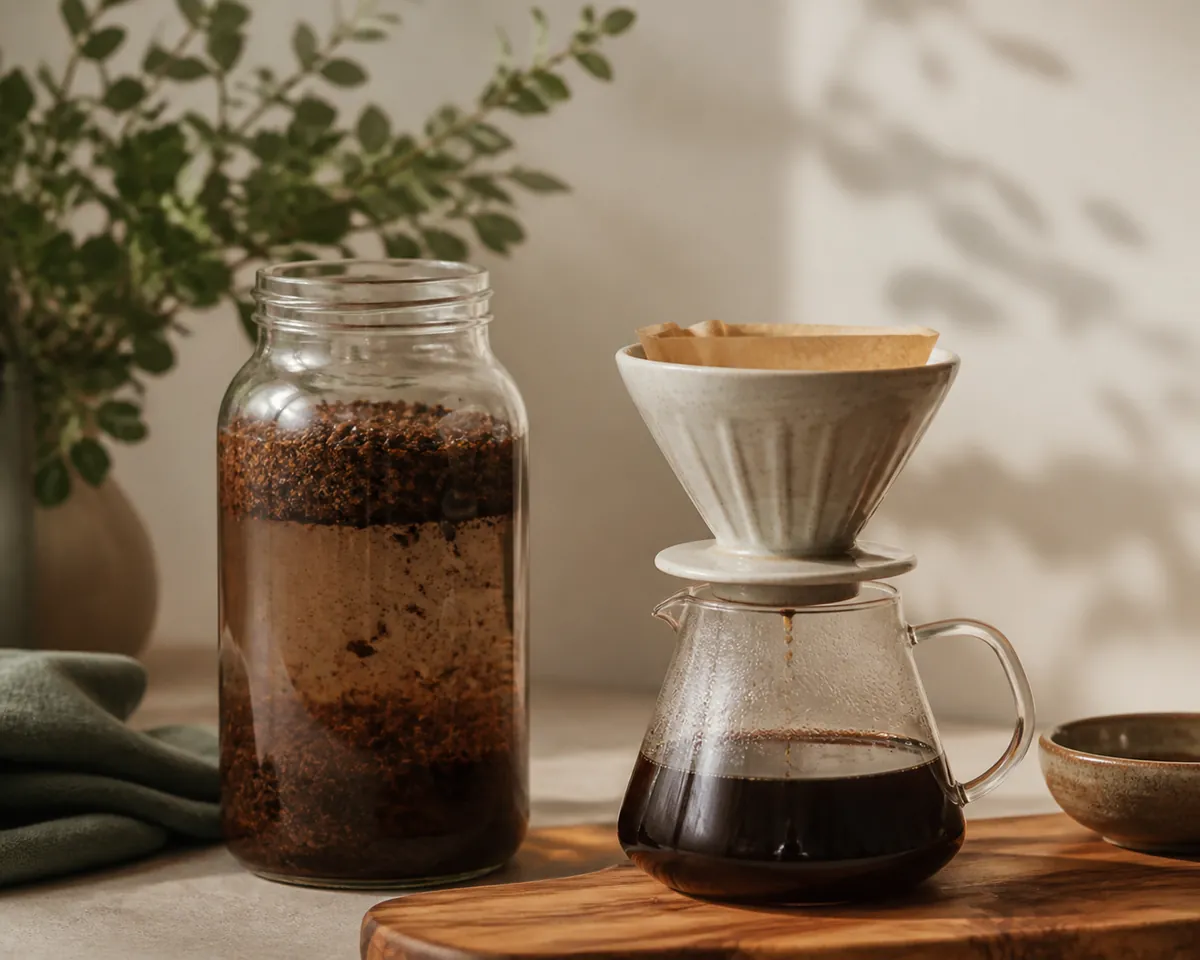
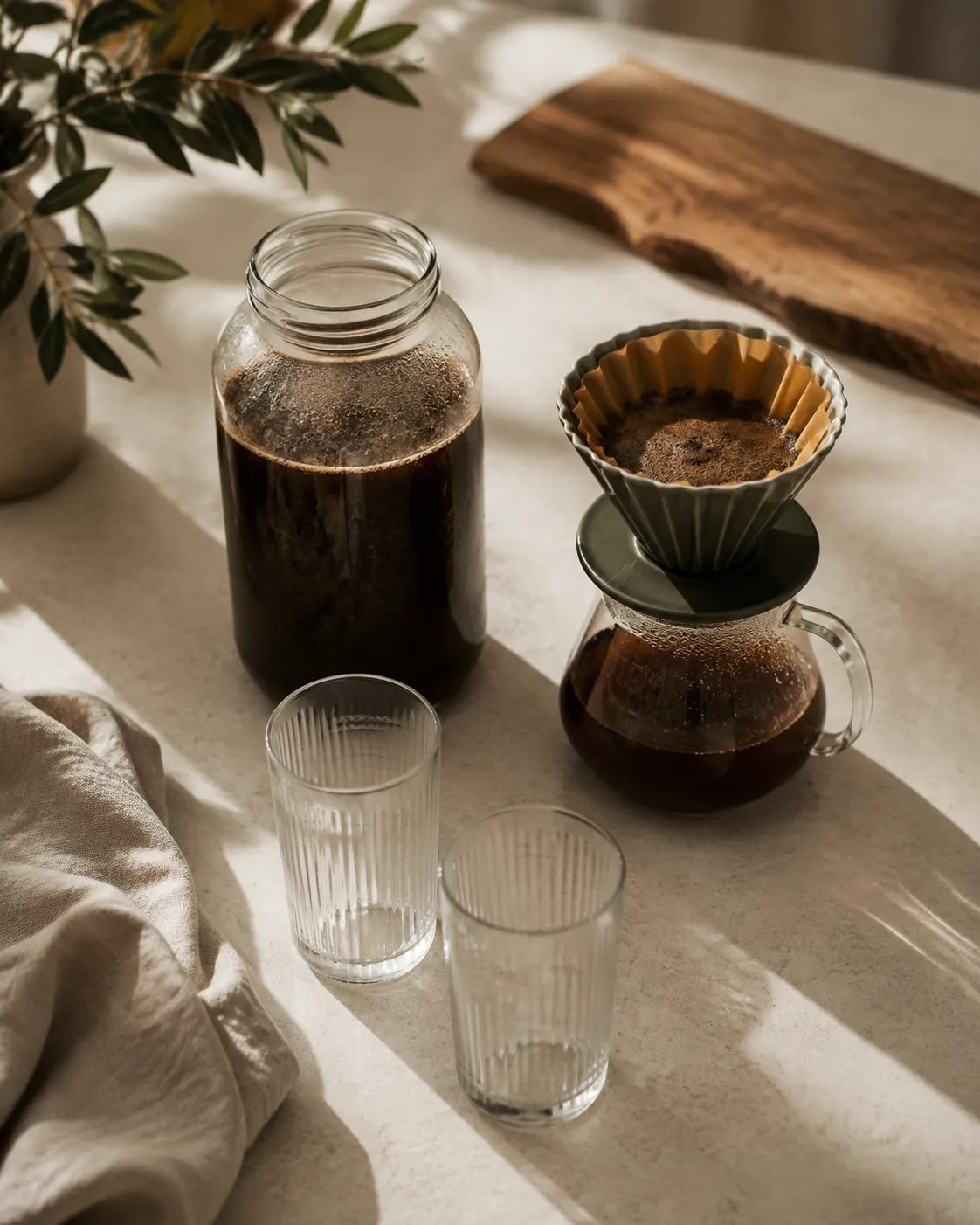
Cold extraction is selective in the opposite direction. Sugars and caffeine dissolve readily even at fridge temperature, chlorogenic acids extract far less, and most of the volatile compounds that make a hot cup smell vivid stay in the grounds and go into the bin with them.
| Cold brew | Iced coffee | |
|---|---|---|
| Water at extraction | Cold or room temperature | Around 93 C, as for any hot brew |
| Contact time | 12 to 24 hours | Two to five minutes |
| Chlorogenic acids | Extracted far less | Fully extracted |
| Volatile aromatics | Largely left behind | Extracted, then lost to standing time |
| Sugars | Dissolve well | Dissolve well |
| Caffeine | Dissolves readily | Dissolves readily |
The consequence is that the method decides more of the flavour than the bean does in a cold steep. Two very different coffees steeped that way land closer together than anyone expects, which is a real loss of information about the coffee and a real gain in consistency.
Iced coffee gives up nothing on this axis, and a cup that is cold within seconds gives up least of all.
Why one reads as sweet and the other as sharp
Neither of them wins this one. Sweetness is where the two split most obviously in the mouth, and the split is a preference rather than a defect on either side.
Cold brew tastes sweet without anything being added to it. The sugars are fully present and the chlorogenic acids that would have balanced them are not, so the same coffee reads rounder and softer than it does hot.
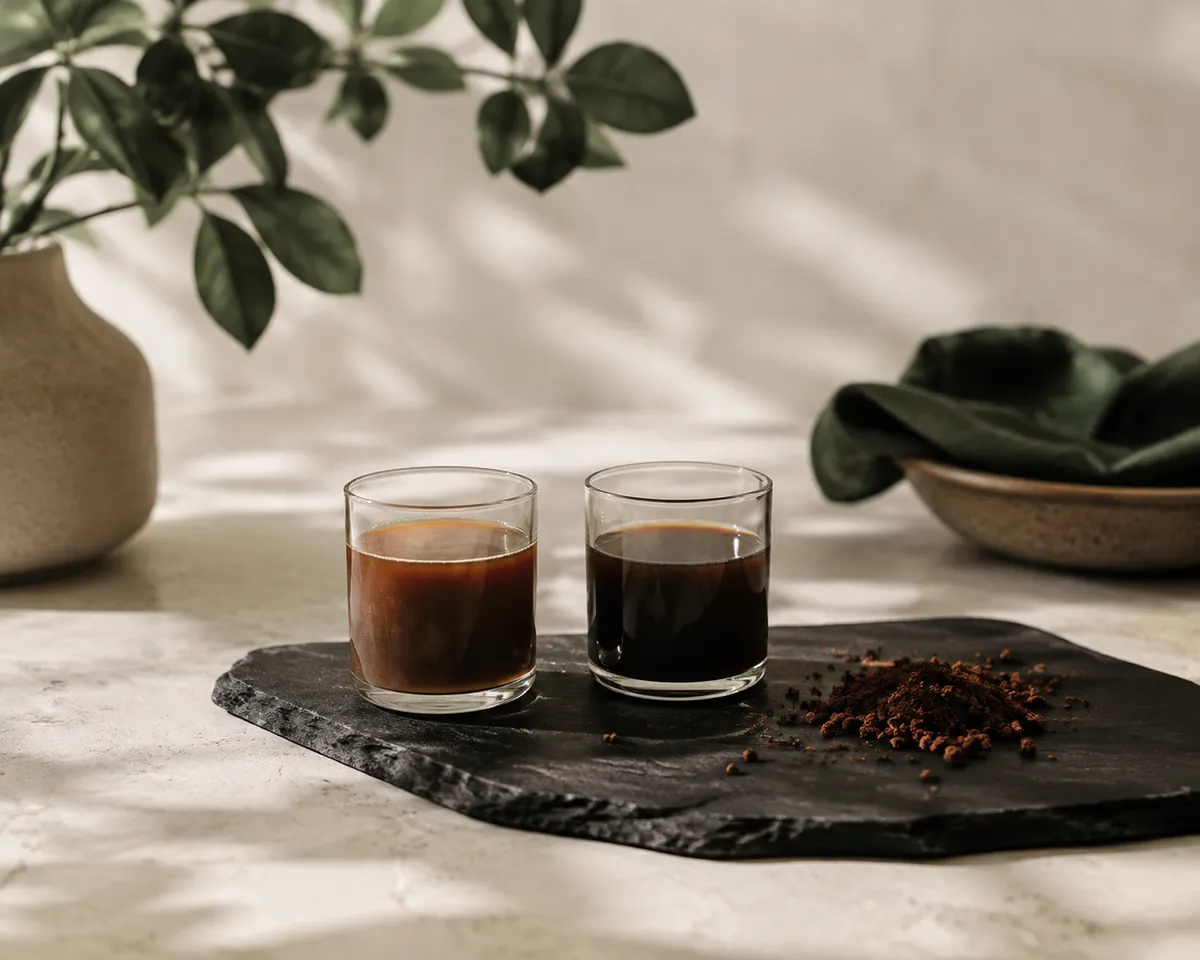
Iced coffee arrives from the other direction and then gets an extra push. Aroma release falls steeply as a liquid cools and perceived sweetness falls with it, while sourness is barely affected, so a chilled cup keeps its acidity and loses two of the three things that were holding it in balance.
A coffee has the same pH hot and cold, and only your access to everything around the acidity has changed.
Cold brew, black
Sweet, low in acid, heavy, and quiet in the nose
Iced coffee, black
Bright, acid-forward, aromatic, and thinner in the body
Cold brew, light roast
Flattened. The acidity it was bought for never came out
Iced coffee, light roast
The riskiest cup here, and the most interesting when it lands
Either, with milk
The gap narrows, and the steeped version reads as the sweeter base
So the honest reading is that one is a low-acid drink and the other a high-acid one. Anyone who finds hot coffee too sharp will prefer the steeped version, and anyone who buys single origins to drink black will find it muffled.
How cold brew tastes sets out that side of it in full.
How long each takes from grinding to the first sip
On elapsed time the gap is not close, and this is the axis most likely to settle the question in a kitchen at seven in the morning.
Iced coffee is minutes. Grind, brew, chill, drink, with the whole job done inside the time a kettle and a filter cone normally take plus the seconds the ice needs to work.
Nothing has to be planned the day before.
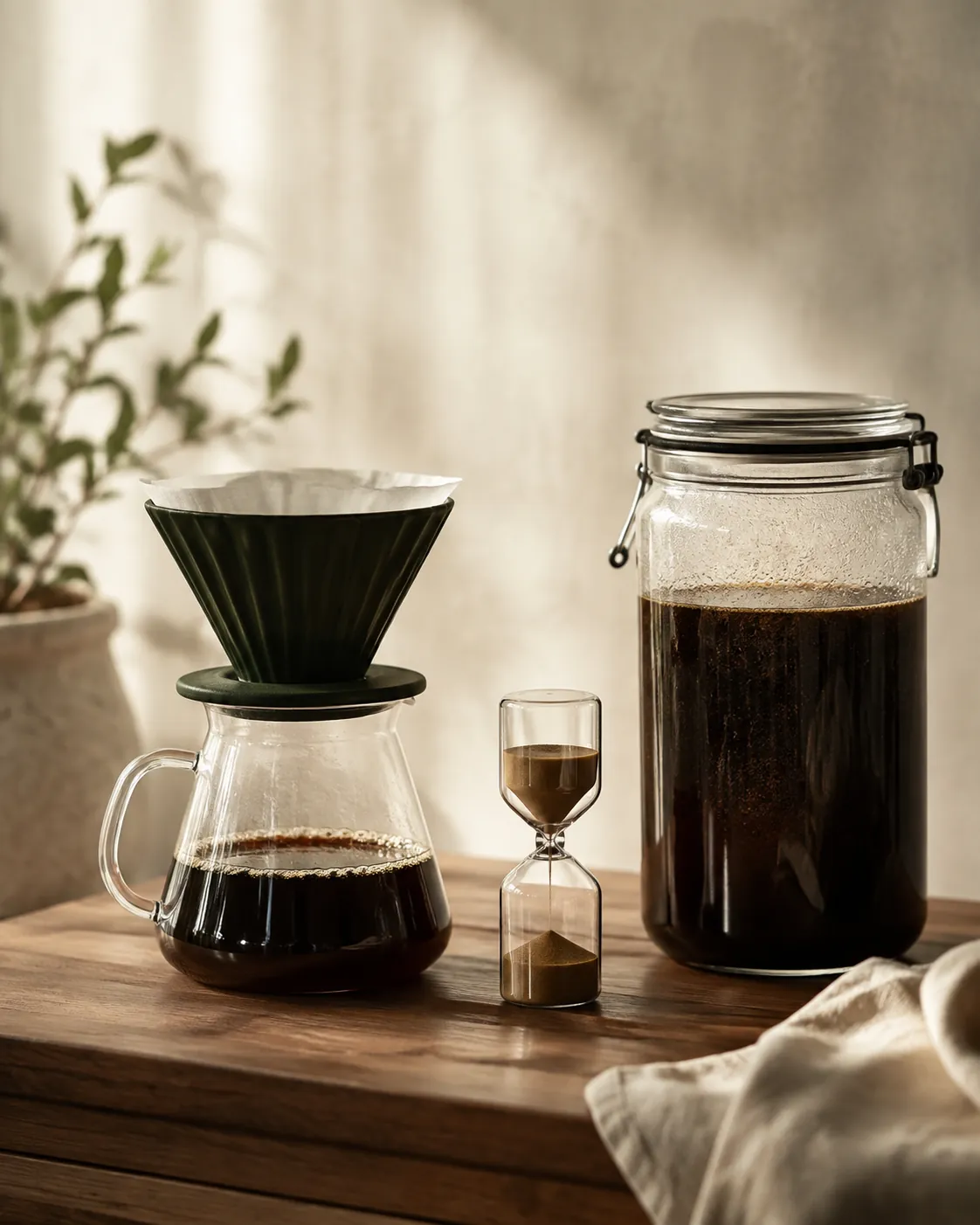
Cold brew is a day. Twelve to sixteen hours at room temperature gives a fuller, slightly heavier result, and eighteen to twenty-four in the fridge gives a cleaner one, with straining and dilution still to come after that.
Where the time actually goes
- Iced coffeeGrind, brew hot, pour onto ice, drink. Minutes, start to finish
- Cold brew, day oneWeigh, grind coarse, wet the grounds, cover, walk away
- Cold brew, day twoStrain twice, bottle, then cut each glass as you pour it
- Iced coffee, second glassBrew it again, since the first one has already faded
- Cold brew, second glassPour it, because the batch was made yesterday
The reversal at the end of that list matters more than the headline figure. The first glass of cold brew is the slowest and the tenth is the fastest, since one twelve-hour session yields a week of servings, while iced coffee charges its full few minutes every single time.
That is the whole reason a cafe holds a jug of the steeped kind, and the sequence itself belongs with making cold brew.
What three days in the fridge do to each
Keeping is the axis where cold brew wins by a distance. The reason follows directly from what was never extracted in the first place, since compounds still sitting in the grounds cannot go stale in the bottle.
Concentrate holds seven to ten days refrigerated in a sealed container, provided it was strained properly, since fines left in the bottle carry on extracting and turn it steadily more bitter. Diluted cold brew is a shorter proposition at two or three days, because the water it was cut with brings nothing that preserves it.

Iced coffee counts in hours rather than days. The aromatics that justify the method leave the surface from the moment it is brewed, acids keep oxidising while the liquid is still warm, and a jug cooled slowly in a deep container has been venting the whole way down.
How long each holds what it was made for
- Cold brew concentrate, sealedSeven to ten days refrigerated
- Cold brew, dilutedTwo or three days before it goes flat
- Iced coffee, covered in the fridgeA day, and noticeably duller by then
- Iced coffee, standing in the glassUnder an hour at its best
- Iced coffee cooling slowly on a counterLosing aroma for every minute it takes
There is a fair way to state the result. Cold brew is a stock item and iced coffee is a made-to-order one, so the real comparison is between a jug you can rely on midweek and a glass that is only itself while it is fresh.
Timescales for each sit with keeping cold brew and, separately, with keeping iced coffee.
How each one handles the meltwater
Ice is the common enemy, and the two methods answer it in ways that are not equivalent, so this axis is closer than it first looks.
Melting a gram of ice absorbs about 334 joules, while cooling a gram of water by one degree takes only about 4.2, which is why the arithmetic is so unforgiving. Taking 200 g of coffee from roughly 90 C down to a few degrees above freezing calls for something close to 200 g of ice, and every gram of it ends up in the drink.

Cold brew sidesteps the problem by design. It is stored as a concentrate at around 1:5 and cut at the moment of pouring, so meltwater is simply part of a dilution that was always going to happen, and the glass has been planned around it from the start.
Iced coffee built against the melt
- Coffee
- 30 g, ground a shade finer than usual
- Hot water
- 250 ml at about 93 C
- Ice in the glass
- 200 to 250 g, filled to the rim
- Finished volume
- Around 450 ml
- Effective ratio
- About 1:15 once the ice has done its work
Iced coffee has to be built stronger on purpose, at something nearer 1:8 or 1:10 rather than the 1:16 of a hot filter, and doubling the dose without also grinding finer gives a sour hollow cup instead of a strong one. A burr grinder turns that into a one-notch correction.
The third route, weighing the ice into the server and brewing straight onto it, is the only version that keeps the aromatics as well, and it beats a cold steep on flavour and on dilution at the same time.
Caffeine, and the comparison that gets reported backwards
The popular claim here runs the wrong way round. Neither drink wins this axis, and a cold steep is not the gentler of the two by any mechanism that survives inspection.
Caffeine is highly soluble and thermally stable, so it comes out readily in cold water and then survives brewing, chilling and dilution intact. Nothing about a cold steep removes it.
What differs between the two drinks is concentration rather than quantity, and concentration is set by the dose and the finished volume rather than by the temperature of the water.
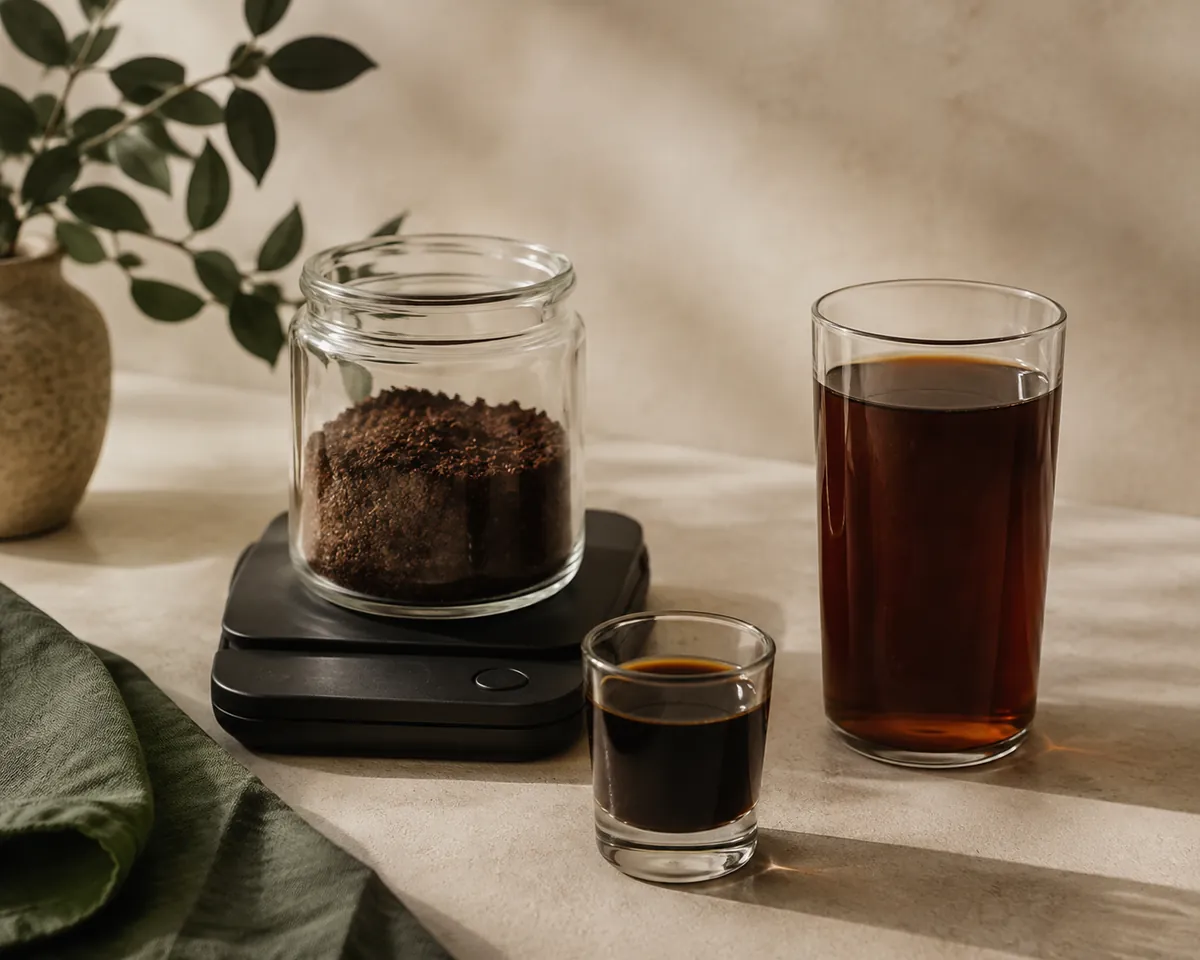
| Cold brew | Iced coffee | |
|---|---|---|
| Undiluted concentrate | Very high, and not meant to be drunk neat | Not applicable |
| Typical served glass | Depends entirely on how it was cut | Around 150 to 200 mg for a large double-strength filter |
| Ready-to-drink bottle | Can carry twice a filter coffee at a similar volume | Comparable to the hot cup it came from |
| Reference point | An 8 fl oz cup of brewed coffee sits near 80 to 100 mg | The same reference applies |
| What sets the figure | Dose and dilution ratio | Dose and how much ice melted |
The trap on both sides is the word strong, which is doing two jobs at once. Concentration is how much dissolved coffee sits in the liquid, and a 1:5 steep is very high on that measure.
Extraction is how much came out of the grounds, and a cold steep is genuinely low on that one, which is why the same mouthful can read as intense and mild together. These are descriptive figures about drinks, and caffeine by brew method places them beside the other preparations while cold brew caffeine and iced coffee caffeine work out the per-glass arithmetic.
Which coffee to buy for each
Shopping is the axis where the verdict reverses depending on what is already in the cupboard, which makes it the most useful one to get straight.
A delicate, expensive, light-roasted single origin is largely wasted on a cold steep. The floral aromatics and the bright acidity that justify the price are precisely what cold water leaves behind, so a fine Ethiopian ends up tasting much like an ordinary Brazilian.
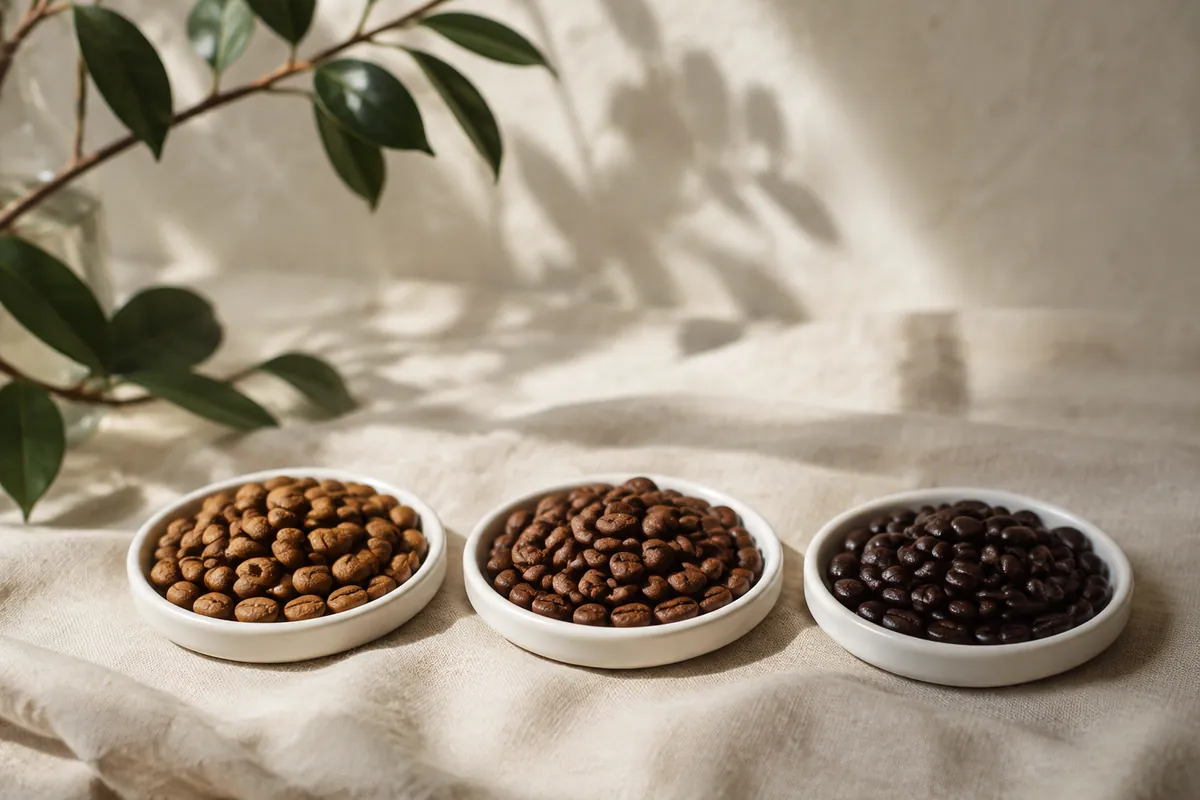
How a bag behaves in each method
- Medium-darkChocolate and nut notes survive cold extraction intact, and hold body over melt
- DarkWorks steeped, and holds its shape through dilution better than anything else
- MediumThe safe centre for either, and what most commercial cold brew uses
- Medium-lightBright and clean iced, thin and hollow steeped
- Light, fruity single originThe most wasted in a steep, and the whole point of a fast chill
Iced coffee rewards the opposite purchase. A bag you would happily drink black and hot deserves a method that keeps its acidity, and chilling it quickly is the only way to hear what it was doing.
Freshness shows more in a cold glass too, because there is less warmth and aroma to hide behind, which makes storing beans more consequential for anyone drinking cold coffee every day.
A little robusta in a blend is an asset to both, since the heavy body it brings holds up against melt and milk and the harshness it can carry never fully extracts in cold water. A washed arabica picked for delicacy is the bean that disappears fastest in either glass when the ratio is wrong.
What goes wrong in each, and how the faults differ
Each method has one dominant fault, and they are not the same fault. Failure modes separate the pair more sharply than flavour does, which is why a fix that rescues one glass does nothing for the other.
Cold brew fails at the strain. A grind that was too fine turns straining into a slow silty job, fines end up in the bottle and keep extracting for the rest of the week, and squeezing the filter to hurry things along pushes through exactly what the second pass was there to remove.

Iced coffee fails at the ratio. A brew built for a mug and then poured over ice is roughly half the strength it was designed to be, and the instinct to add more cubes makes it worse, since more ice cools faster and dilutes more in the same movement.
- Grind coarse for a steep, coarser than for a press if anything.
- Strain a steep twice, and never press the grounds.
- Store a steep concentrated, and cut each glass as you pour it.
- Brew iced coffee at roughly double strength, and grind a shade finer when you do.
- Weigh the ice if you are brewing straight onto it, since leftover cubes mean the split was wrong.
- Sweeten an iced cup while it is still hot, or use a syrup that has already been dissolved.
Neither fault is a bean problem, which is the practical point. A batch of steeped coffee that came out harsh almost always points at the grind or the strain, and a glass of iced coffee that came out thin almost always points at the arithmetic, so cold brew problems and iced coffee problems sort one class of fault from the other.
The claims that do not survive a side-by-side
Several axes people expect to be decisive turn out not to separate the two at all, and naming them is more useful than manufacturing a verdict.
Milk is the clearest case. Behind cold milk the gap narrows a long way, an iced latte built on concentrate and one built on a shot sit closer together than either black version does, and splitting is driven by heat acting on acid, so a plant drink that curdles in a hot cup usually holds in both of these.

Curdling
Cold acid splits far less than hot acid, so both are safer than a hot cup
Equipment
A jar and a sieve on one side, a kettle and a cone on the other. Neither is a purchase
Caffeine
Set by dose and dilution in both, and not by the temperature of the water
Cost per glass
The same beans and the same water. Only the yield per session differs
Which tastes better
A preference between low acid and high acid, and not a measurement
Equipment deserves its own note, because both methods are unusually cheap to begin. A large jar, a sieve and a paper filter match any purpose-made cold brew maker, and a pour-over cone standing over an ice-filled carafe is the whole apparatus on the other side.
Nothing on either list costs what an espresso setup does.
The one piece of kit that helps both equally is the grinder, since an even coarse grind decides the strain on one side and a one-notch adjustment decides the extraction on the other.
Choosing between them on what can be measured
What is left is a short set of questions that are answerable from the kitchen, and every one of them is about the coffee rather than about the drinker.
Reach for the steeped route when you want a jug on Monday that is still good on Thursday, when the coffee is decent rather than special, and when low acidity is the thing you are after. Reach for the hot-brewed route when the coffee itself is the point, when you want it in the next five minutes, and when you would rather have brightness than roundness.
| Question | Cold brew | Iced coffee |
|---|---|---|
| Ready in minutes | No | Yes |
| Keeps for days | Yes | No |
| Keeps origin character | No | Yes |
| Low in acid | Yes | No |
| Survives melting ice | Yes, by design | Only if it was brewed for it |
| Rewards an expensive bag | No | Yes |
Two halves of that table are worth reading together. The rows favouring the steeped method are all about logistics, and the rows favouring the hot-brewed one are all about flavour, which is a fair summary of why cafes serve so much of the first and why people who buy single origins drink so much of the second.
Around the pair sit the near relations. Nitro coffee is a steeped batch charged with gas, so its creaminess is physics rather than dairy.
An iced americano is a shot let down with cold water, which hides nothing at all. Asking what the water was doing, and at what temperature, is the only approach that makes a cold coffee menu legible.
Common questions
Is cold brew just iced coffee left in the fridge?
No, because the water temperature at extraction is different and that changes what dissolves. Iced coffee is brewed with hot water at around 93 C and then chilled, so it carries the full acidity and aromatic range of the beans. Cold brew never meets hot water at any point, so chlorogenic acids extract far less and most of the volatile aromatics stay in the grounds.
Does cold brew have less caffeine than iced coffee?
Not as a rule. Caffeine is highly soluble and thermally stable, so it dissolves readily in cold water and survives chilling and dilution intact. What separates the two glasses is concentration rather than quantity, and concentration is set by the dose and the finished volume, which is why a ready-to-drink cold brew bottle can carry twice a filter coffee at a similar volume.
Why does iced coffee taste watery when cold brew does not?
Melting a gram of ice absorbs about 334 joules, so chilling 200 g of hot coffee takes close to 200 g of ice and every gram of it joins the drink. Cold brew is stored as a concentrate at around 1:5 and cut at the glass, so the meltwater is part of a dilution that was planned. Iced coffee has to be brewed at roughly double strength, nearer 1:8 or 1:10, to survive the same melt.