How to Make French Press Coffee: Grind, Ratio, and Timing
Coarse grind, a 1:16 ratio of coffee to water, water just off the boil, four minutes, then plunge slowly and pour it all out. That is the whole method, and each number is doing a specific job.
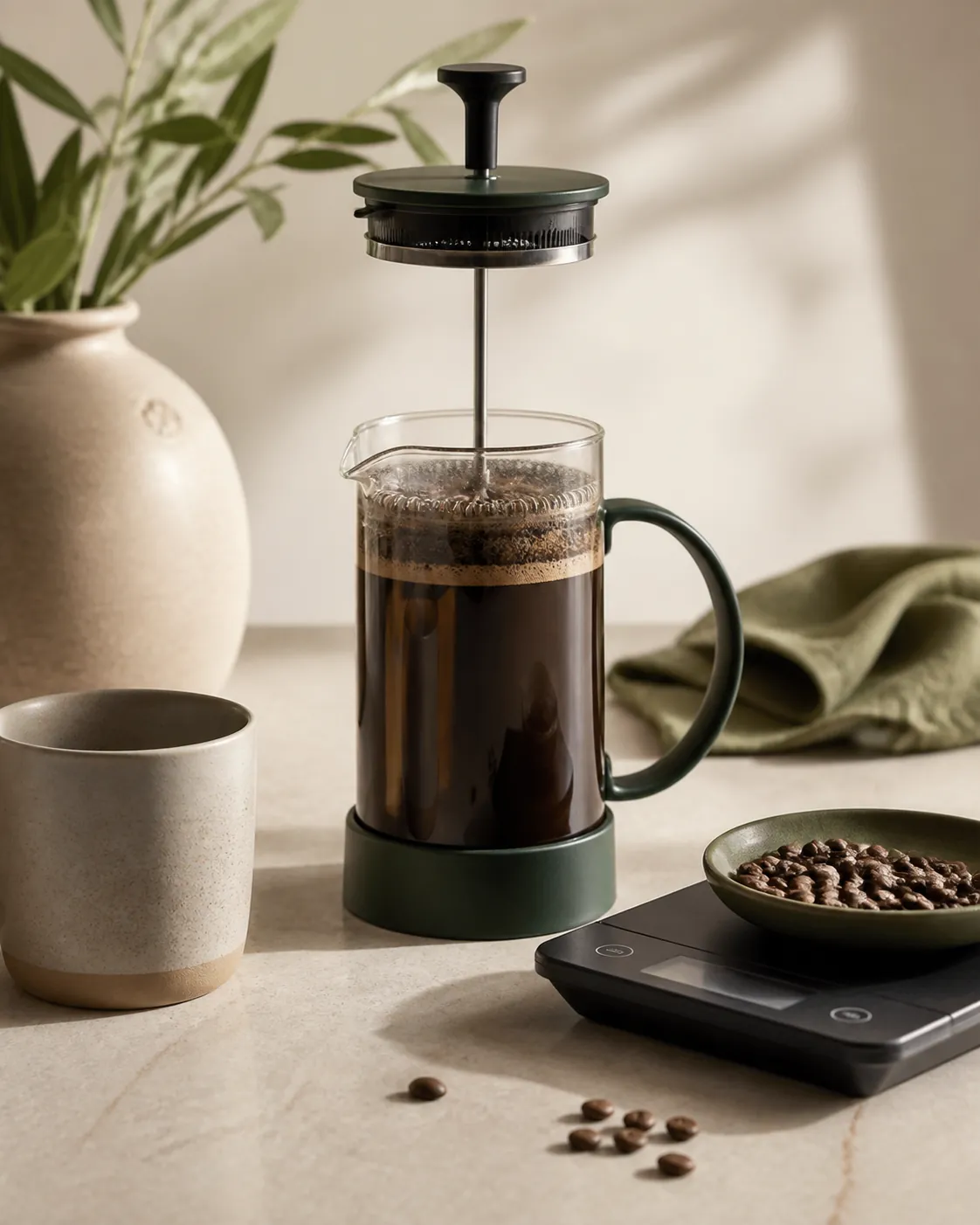
A French press is an immersion brewer: the grounds sit in the full body of water for the whole brew, then a mesh screen holds them back while you pour.
There is no paper filter, so the coffee's oils and some very fine particles stay in the cup. That is what gives French press its heavy, rounded body, and it is why the recipe below is built around keeping the fines down rather than around pouring technique.
The method has four numbers and one habit. Get those right and the press is the most repeatable brewer in a home kitchen; get the habit wrong and the second cup tastes nothing like the first.
The four numbers, and the habit that matters more
Everything below scales from one ratio and one clock, so it is worth having both in front of you before the kettle boils.
The numbers
- Coffee
- 60 g per litre, a 1:16 ratio
- Grind
- Coarse, like raw sugar
- Water
- 94 C, just off the boil
- Steep
- 4 minutes
- Plunge
- Slowly, over about 20 seconds
Scale that down as needed. A single mug is about 20 g of coffee to 320 ml of water, which is a rounder number to remember than a fifth of a litre.
Making it
- Heat the pressPour hot water in, swirl, and tip it out. A cold glass beaker steals several degrees from the brew.
- Weigh and grindGrind coarse, immediately before brewing. Ground coffee stales within minutes rather than days.
- Add water and start the timerPour to about twice the weight of the coffee, wait 30 seconds for the bloom, then fill to the full weight.
- Stir the crustAfter the bloom, break the floating crust with a spoon so every ground is wet.
- Wait four minutesFit the lid with the plunger raised. Do not press yet.
- Plunge slowlyAbout 20 seconds from top to bottom. Forcing it stirs fines through the mesh.
- Decant immediatelyPour the whole press out, even the part you are not drinking yet.
That last step is the habit, it is the one most often skipped, and it costs more than any of the numbers above it.
What the four minutes are doing
- ZeroWater hits the grounds and the bloom releases trapped carbon dioxide.
- Thirty secondsThe crust is broken so every ground is wet and extraction is even.
- One to three minutesSugars and acids dissolve. This is where the cup is made.
- Four minutesPlunge and decant, before the harsher compounds take over.
The clock is only a proxy for what the water is doing to the coffee. A coarser grind lengthens that useful window and a finer one shortens it, which is why the time is the last thing to change and the grind is the first.
Where each of those numbers comes from
Coarse grind
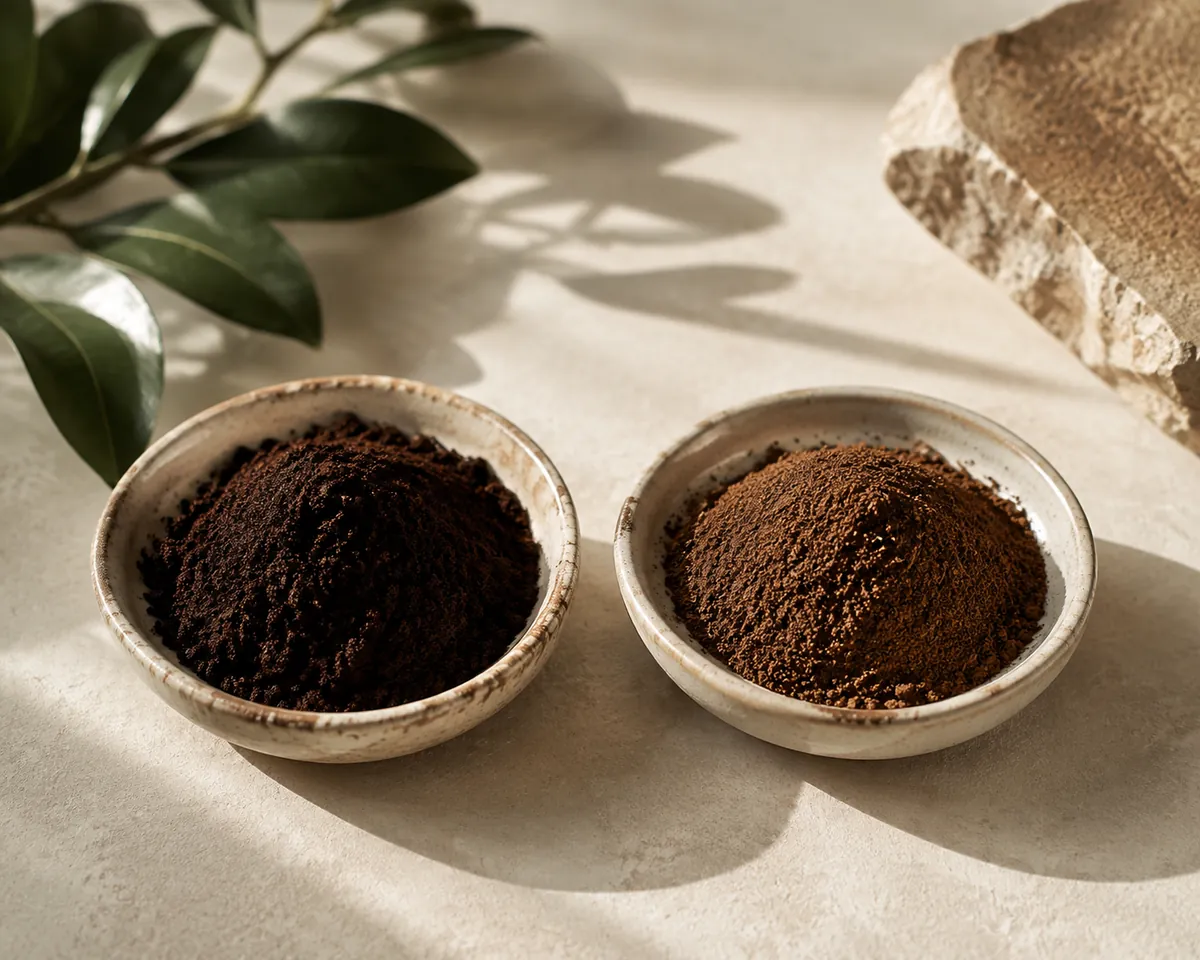
Grind size is the most powerful lever you have, so change it before you change anything else. The mesh screen only stops particles above a certain size. Grind fine and the fines slip through, leaving sediment in the cup and continuing to extract after you pour.
Coarse grounds also give up their solubles more slowly, which is what makes four minutes the right length rather than a disaster.
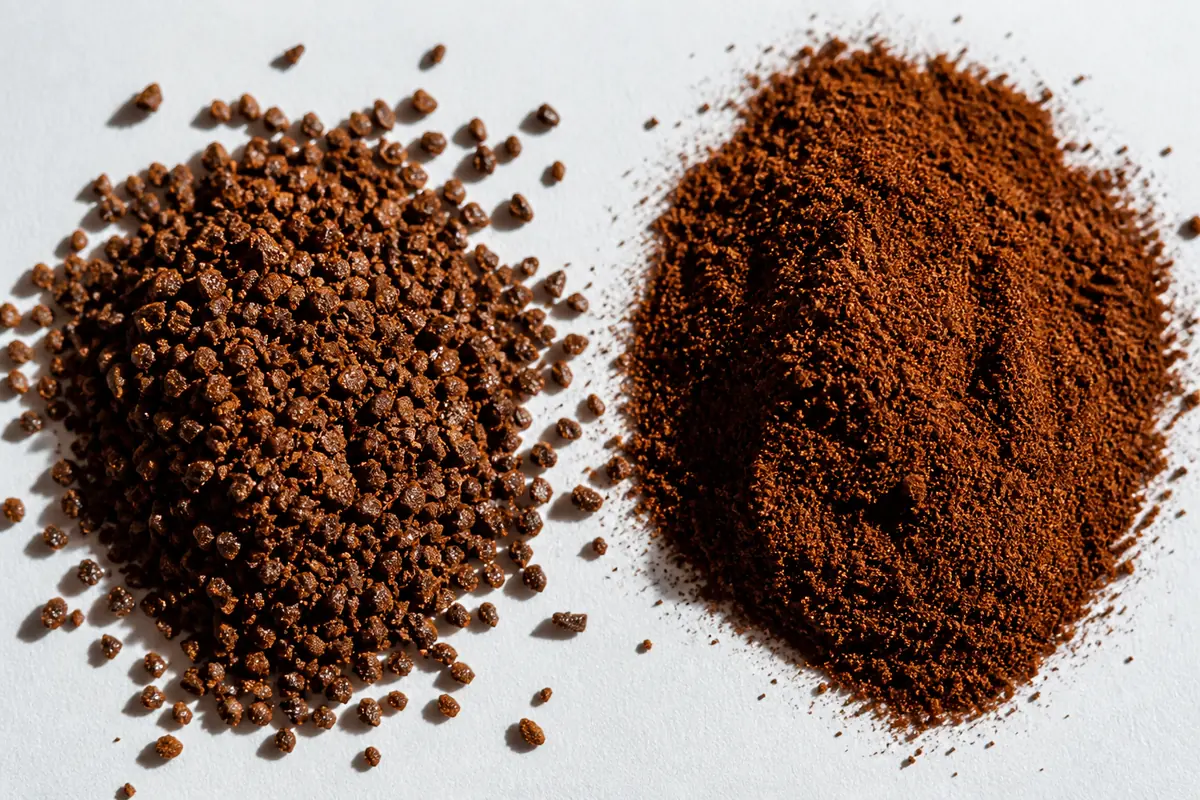
The pile on the left is what a press wants. The one on the right belongs in an espresso machine, where pressure does in 25 seconds what immersion needs four minutes for.
A 1:16 ratio
Sixty grams of coffee to a litre of water is a well-established middle of the road strength. Move to 1:15 for a stronger cup or 1:17 for a lighter one, both perfectly reasonable, and the number matters mainly because it is repeatable from one morning to the next.
94 C water
Hot enough to extract properly and below boiling so it does not scorch. Thirty seconds off the boil gets you close on most kettles, and a gooseneck kettle is unnecessary here in a way it is not for a cone.
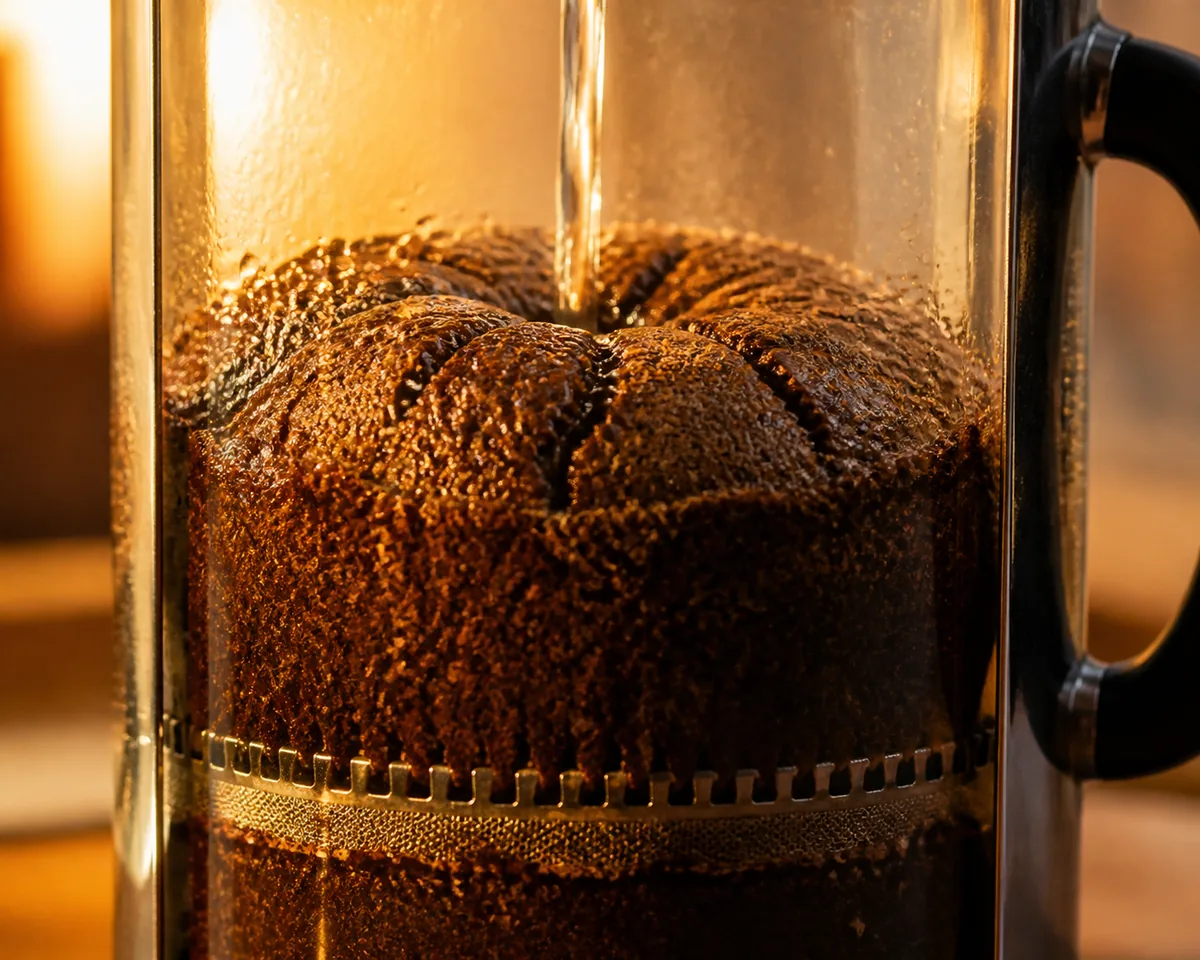
That rising crust is carbon dioxide leaving fresh coffee, which is a sign the beans are recent and the reason the bloom is worth thirty seconds.
Four minutes
Long enough for coarse grounds to give up their sugars and acids, short enough to stop before the harsher compounds dominate.
Change one number at a time. Adjusting grind and dose together leaves you unable to say which of them moved the cup.
The plunge, and the crust floating above it
Pressing hard forces water sideways through the bed rather than letting the mesh simply hold the grounds down, which is the mechanical reason the plunge is slow.
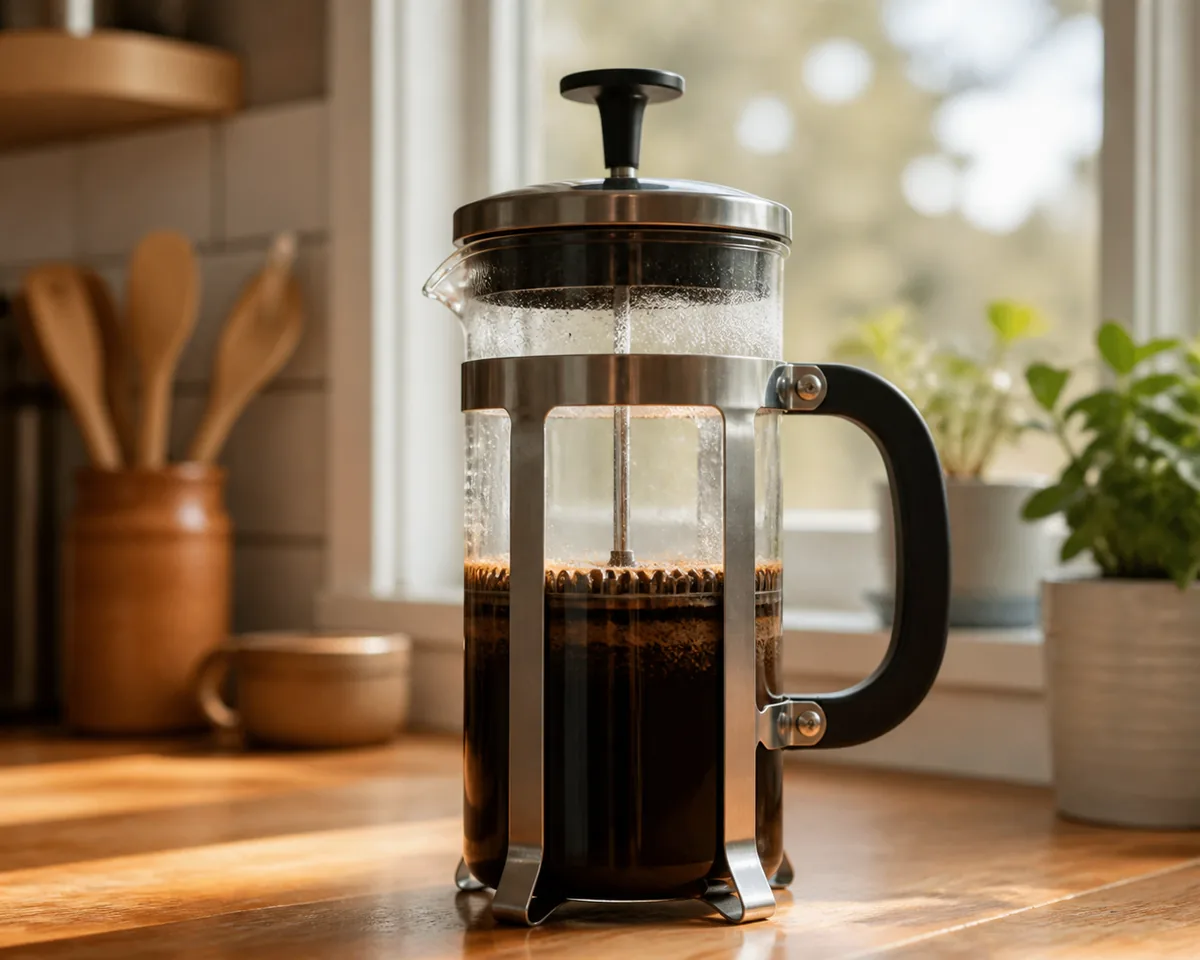
Two things follow from pressing hard, both unwanted. Fine particles are stirred up through the screen and into the cup, and the bed is agitated enough to release a further burst of exactly the harsh compounds the timer was stopped to avoid.
Resistance means the grind is too fine, so lift the plunger rather than forcing it.
Above the plunger sits the crust, and how it is handled changes the cup more than the plunge speed does. Coffee floats because trapped carbon dioxide holds the grounds at the surface, and that floating layer insulates the brew while keeping a good part of the dose out of contact with the water underneath.
Breaking it
- Wait the full four minutesThe crust forms in the first minute and does its work over the next three.
- Stir gently, twiceA spoon through the surface, no more. This sinks most of the grounds.
- Skim the foamTwo spoons drawn across the surface lift the remaining floating grounds and the foam with them.
- Wait five more minutesWith the grounds now sinking, the brew clarifies noticeably.
- Plunge to the surface onlyPress until the mesh meets the liquid, not to the bottom.
- Pour without stoppingAnd leave the last centimetre in the press.
Skimming is the step doing most of the work there, since most of the fines are carried in the foam and lifting them out beforehand beats any refinement of the plunge itself. The longer routine costs five extra minutes and a slightly cooler drink, and it is worth running once to see how much of the sediment was avoidable.
Sour against bitter, and coffee you did not grind yourself
Two words separate almost every fault worth diagnosing. Sour is under-extraction and means the water needed more from the coffee; bitter is over-extraction and means it took too much.
| What you taste | Likely cause | What to change |
|---|---|---|
| Sour, thin, watery | Under-extracted | Grind finer, or add 30 seconds |
| Harsh, drying, hollow | Over-extracted | Grind coarser, or cut to 3 min 30 |
| Gritty in the mouth | Grind too fine, or plunged too fast | Grind coarser; press down over about 20 seconds |
| Weak but not sour | Not enough coffee | Move from 1:16 towards 1:15 |
| Bitter in the second cup | Coffee left on the grounds | Decant the whole press straight after plunging |
Work one row at a time, starting with grind, since it moves the cup further than anything else on the list.
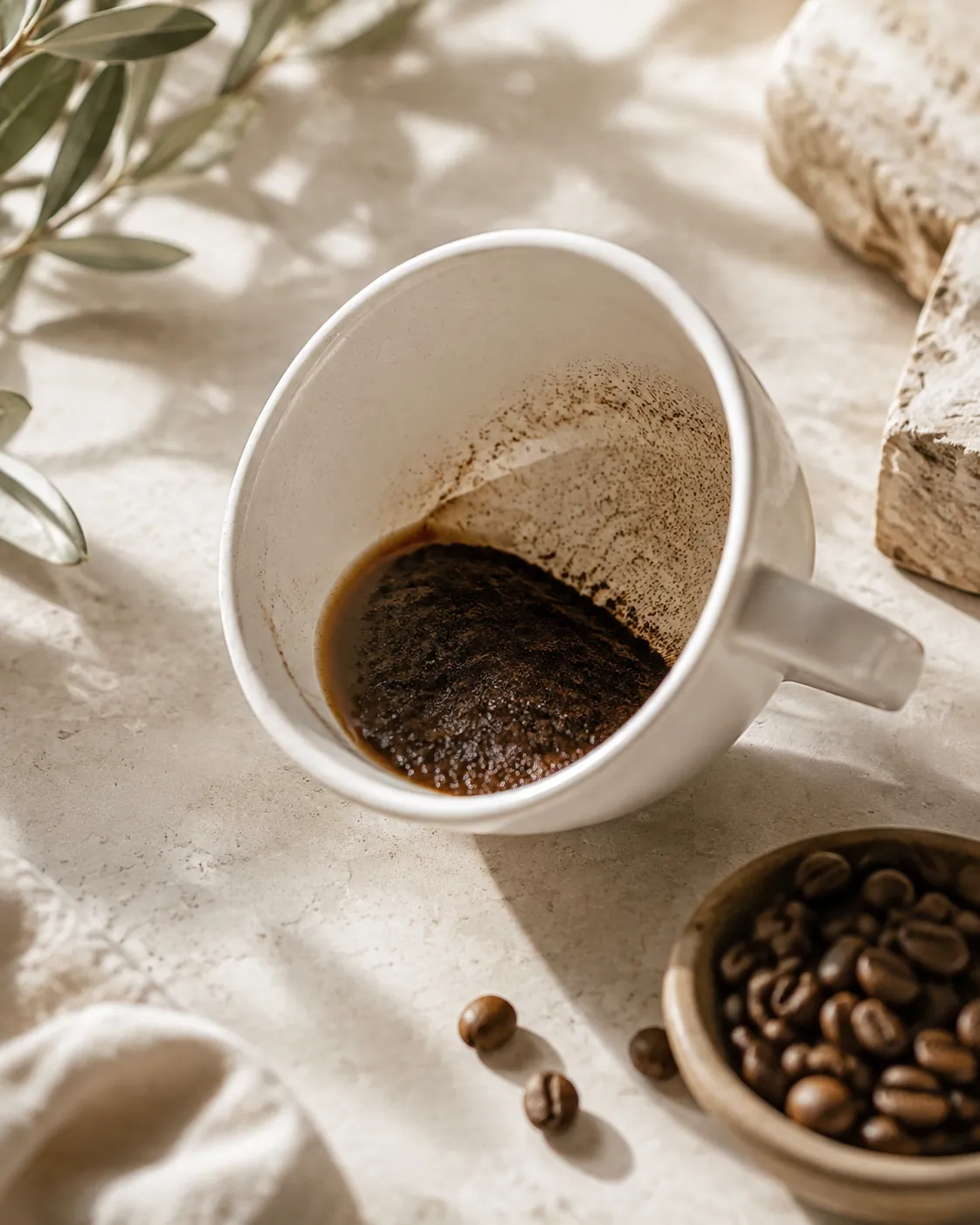
The awkward case is a kitchen with no grinder, which is most kitchens. Pre-ground coffee sold for filter is finer than a press wants, and that is why supermarket coffee brewed this way so often arrives bitter and silty.
Buying it ground coarse from a shop that grinds to order is the direct fix. Failing that, shorten rather than lengthen: filter-ground coffee wants two and a half to three minutes in a press, because smaller particles give up their solubles faster.
A blade grinder is worse than pre-ground here, producing dust and boulders together, and the dust goes straight through the mesh, which is the fault the method is already prone to. A burr grinder changes this brewer more than it changes any other.
Water, the variable nobody checks
Water is the ingredient by weight, and it decides how much of the coffee ever reaches the cup.
- Very hard water mutes acidity and leaves the cup flat, and it scales the kettle at the same time.
- Very soft or distilled water extracts poorly, because dissolved minerals are part of how water grabs flavour compounds.
- Heavily chlorinated water carries straight through into the brew and reads as a papery, swimming-pool edge.
A simple filter jug solves most of it for the price of a few bags of coffee, and it is the cheapest improvement available to anyone who has already bought a grinder. The effect is easiest to hear in a press because there is no paper to hold anything back: whatever is in the water is in the cup, alongside the oils that would otherwise have been filtered out.
Brewing water covers what is actually in tap water and what to do about it, and the same test explains why the same beans taste different in two kitchens on the same street.
Brewing a full press, and brewing for several people
The ratio holds at every size and the timing does not quite, which is the only complication in scaling this method up.
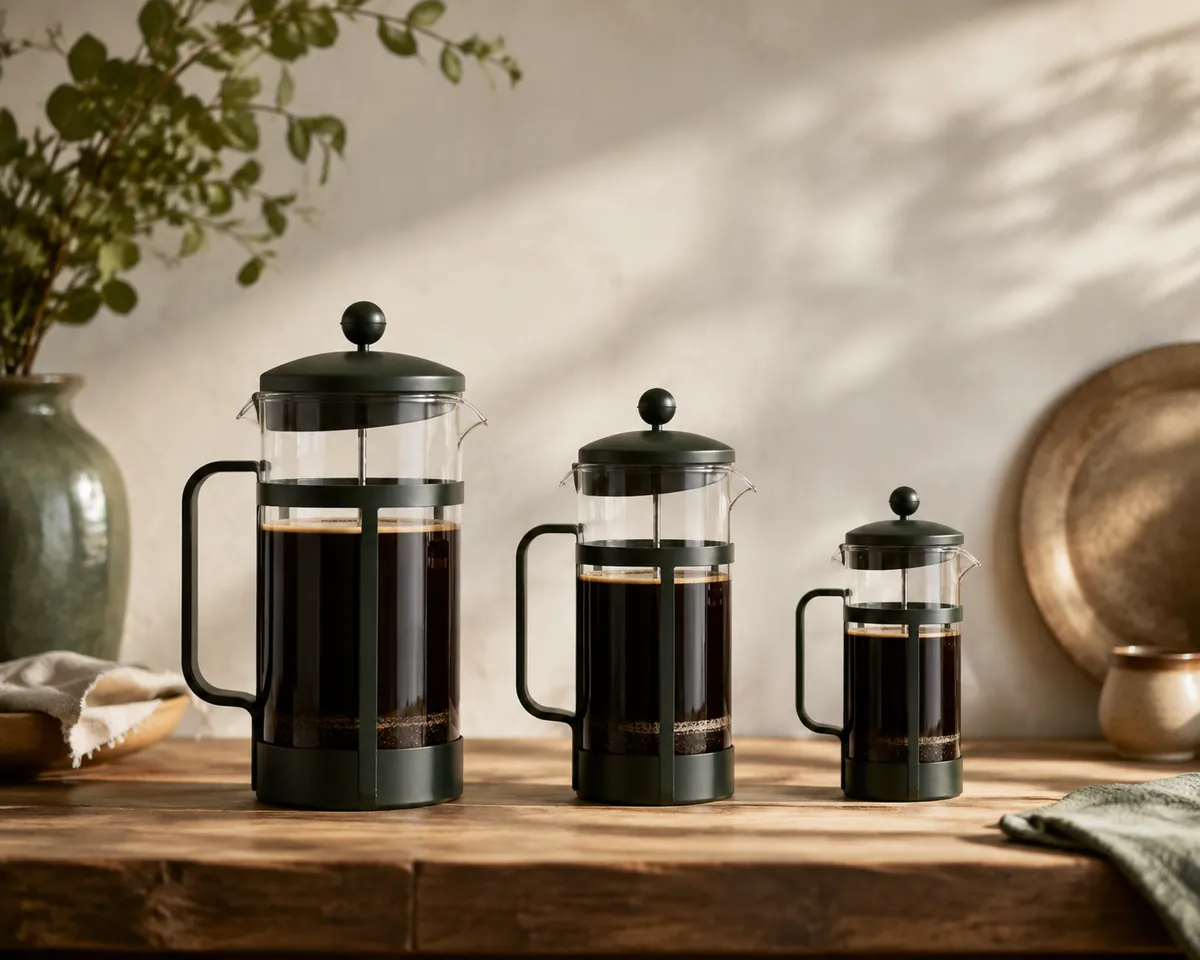
| Press | Water | Coffee at 1:16 | Steep |
|---|---|---|---|
| 3 cup, 350 ml | 330 ml | 21 g | 4 minutes |
| 8 cup, 1 litre | 950 ml | 60 g | 4 minutes |
| 12 cup, 1.5 litre | 1400 ml | 88 g | 4 to 5 minutes |
| Half a large press | Not recommended | Brews unevenly |
Larger volumes hold their heat better, so a full 12-cup press extracts slightly faster at the same time on the clock; the extra minute in that last row compensates for the depth of the bed rather than for the volume of water. Half-filling a large press is the case to avoid altogether, because the plunger needs to sit in liquid and the bed is too shallow for its diameter, which the press itself sets out in more detail.
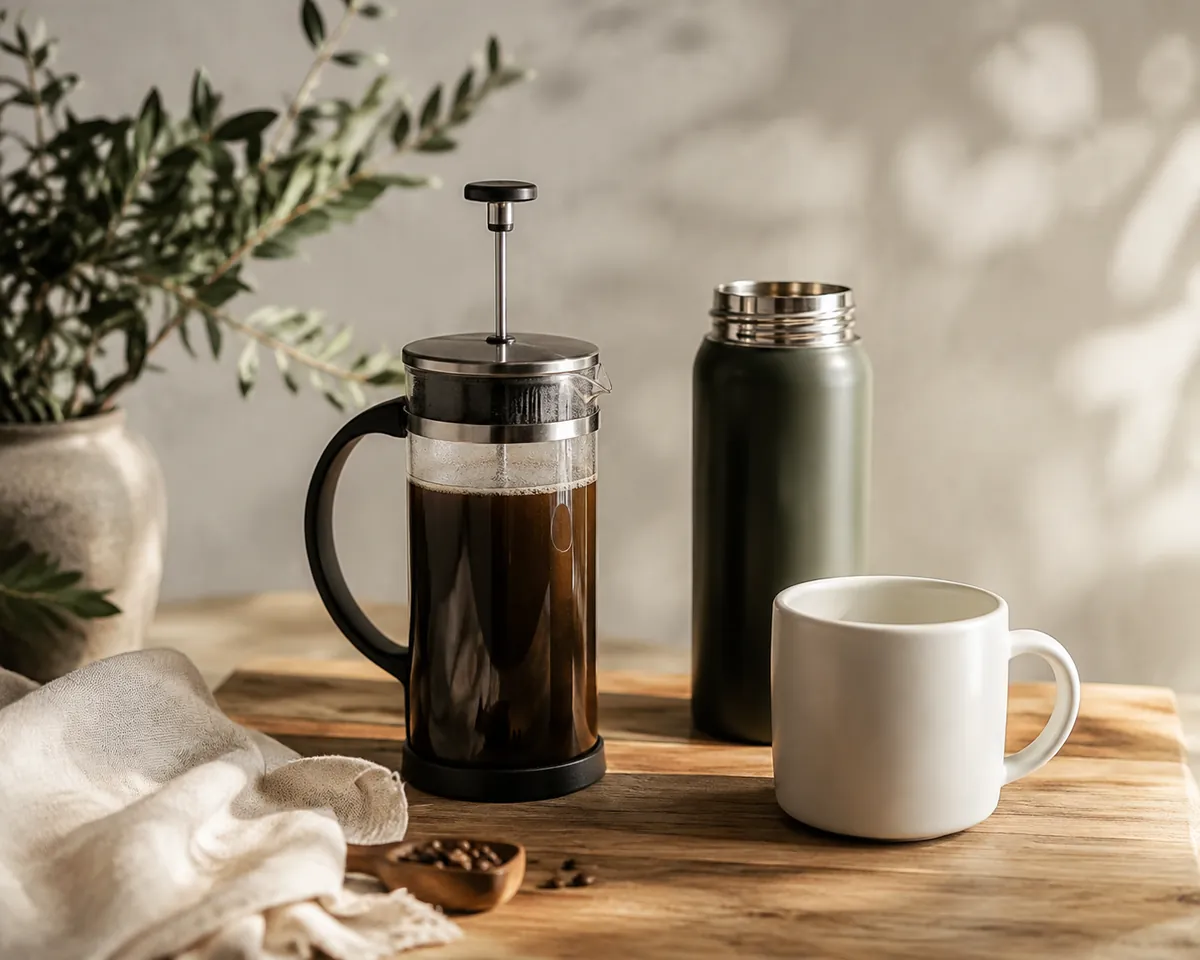
Two habits carry the whole thing when you are brewing for a table. Preheat the beaker while the kettle finishes and tip the water out before the grounds go in, since a cold litre-sized glass takes several degrees off the brew and at that volume it is enough to under-extract.
Then decant into a warmed flask the moment it is plunged, because four cups' worth left sitting on the grounds is a slow ruin rather than a fast one.
Decaf, dark and light roasts each want a different clock
Three common cases pull the four-minute standard in different directions, and each pulls it for a structural reason rather than a matter of taste.
Decaf beans come out of processing more porous than they went in, so water reaches their interior faster and they extract faster with it. Take thirty seconds off the steep and grind slightly coarser than for the same roast in caffeinated form, and keep an eye on the bag date, since storing decaf runs on a shorter clock too.
Dark roasts are more soluble and more brittle, which means they extract faster and shatter into more fines under the burrs at the same setting. Three and a half minutes at a coarser grind suits them better than the standard four.
Light roasts run the other way: denser, less soluble, and slower to give anything up, and a press is forgiving enough to take five minutes on them without turning harsh, which is one of the few cases where a longer steep is the right correction rather than a lazy one.
What the method flatters, and what it flattens
Coffee choice is the half of the result the recipe cannot reach, and this brewer has clear preferences.
Works well for
- Full, heavy body, because the oils are not caught by a paper filter
- Very forgiving of timing compared with pour-over methods
- No consumables beyond the coffee itself
- Easy to scale up for several people at once
Struggles with
- Sediment in the cup, which not everyone wants
- Poor at showing delicate, floral, high-grown coffees, which the heavy body flattens
- Awkward to clean, since wet grounds should not go down a sink
- Loses heat quickly in glass, so a large press cools while you drink it
The press flatters medium and darker roasts, because heavy body and unfiltered oils suit coffees carrying sweetness rather than delicate acidity, and an AeroPress with its paper filter is the cheaper way to hear what a delicate one is doing. A bright light-roast arabica is not wrong in one, and it is showing you less of itself than a cone would; French press against pour-over is the comparison to read before buying beans for either.
Medium roast, single origin
The reliable default. Enough character to notice, enough body to suit the method.
Dark roast blend
What most people already own. Grind coarser and steep shorter.
Robusta blends
Heavy and bitter here, since the press keeps everything a paper filter would remove.
Very light roast
Possible, and better served by a filter method.
Freshness matters as much as roast level, with four to fourteen days off roast being the window and storing coffee beans being what keeps a bag inside it. Caffeine sits a little above a drip coffee at the same dose, because full immersion extracts it thoroughly, and caffeine by brew method sets out how far those figures move once dose and volume change.
The method
- Makes
- 1 litre, about 4 cups
- Ratio
- 1:16 coffee to water
- Water temp
- 94 C / 200 F
- Grind
- Coarse, like raw sugar
- Total time
- 9 min
What you need
- 60 g coarsely ground coffee, about 8 level tablespoons
- 1 litre water at 94 C / 200 F
Equipment
- A 1 litre French press
- A burr grinder, if you are grinding your own
- A kettle
- A scale, if you have one
Method
- Heat the waterBring it to the boil, then let it stand for about 30 seconds. Boiling water scorches the grounds and adds a burnt edge.
- Warm the pressSwirl a little hot water in the empty press and tip it out, so the brew does not lose heat into cold glass.
- Grind and add the coffeeGrind coarse, like raw sugar. Add 60 g to the empty press.
- Pour and stirPour all the water in a steady stream, then stir gently once to wet every ground. A dry clump on top is coffee that never brewed.
- Steep for four minutesPut the lid on with the plunger up. Leave it alone.
- Break the crustStir the floating layer once so it sinks, and skim off any foam with a spoon if you want a cleaner cup.
- Plunge slowlyPress down over about 20 seconds. Forcing it fast pushes fines through the mesh and stirs up sediment.
- Pour it all outDecant every drop into cups or a carafe. Coffee left sitting on the grounds keeps extracting and turns bitter.
Common questions
What is the right coffee to water ratio for a French press?
1:16 by weight is a solid default, which is 60 g of coffee to 1 litre of water. Move to 1:15 for a stronger cup or 1:17 for a lighter one.
How long should coffee steep in a French press?
Four minutes with a coarse grind. Shorten it to three and a half if the cup tastes harsh, or lengthen it slightly if it tastes thin and sour.
Why is my French press coffee gritty?
Either the grind is too fine for the mesh to hold back, or the plunger was pressed down too fast and forced fines through. Grind coarser and press over about 20 seconds.