What Is Club Soda? The Fraction of a Gram That Buffers It
Club soda carries well under a gram of mineral salts in a litre, and that fraction of a gram is a buffer. Everything the drink does differently from a plain carbonated water follows from it.
Club soda is carbonated water with a small quantity of mineral salts stirred into it on purpose. Sodium bicarbonate is almost always the first of them, and potassium sulphate, sodium citrate or disodium phosphate sometimes sit alongside it.
Those salts are the entire difference between club soda and seltzer, which has nothing added after the gas. They amount to well under a gram in a whole litre, and they are not there for nutrition, for preservation or for anything a marketing department can claim.
They are there because they are a buffer. A buffer resists a change in acidity, and that turns out to decide how the water behaves the moment anything sour arrives in the glass.
Club soda at a glance
- What it is
- Carbonated water with mineral salts deliberately added
- The salt that matters
- Sodium bicarbonate, which buffers the carbonic acid
- Sometimes joined by
- Potassium sulphate, sodium citrate, disodium phosphate
- Typical sodium
- Roughly 20 to 60 mg per 250 ml
- Typical pH
- Around 5 to 6, against roughly 4 for an unbuffered water
- Same product as
- Soda water, in most markets, under a different name
- Name from
- A Dublin bottler, and a Dublin gentlemen's club
Club soda is a buffered water, and that is the whole of it
A buffer is an odd thing to put into a drink whose appeal is partly acidic. Carbonating water creates carbonic acid, the carbonic acid is the bite at the back of a mouthful, and bicarbonate stirred in afterwards neutralises part of what the carbonator has just made.
Read that sequence cold and it looks like a producer paying to undo its own work.
It is not self-defeating, because carbonic acid is only one of the things carbonation contributes and the buffering leaves the rest of them alone.
The prickle
Physical, from bubbles collapsing against the tongue. Buffering does not touch it.
The bite
Chemical, from carbonic acid. This is the one the bicarbonate blunts.
The lift
Rising gas carrying aroma up out of the glass. Unaffected.
The body
Slightly increased by the dissolved solids rather than reduced.
The finish
Shorter and rounder, because the sourness stops sooner.
The trade is therefore narrow and deliberate. You give up the angular edge that makes a plain unsalted sparkling water so bracing, you keep everything else, and what you buy with it is a water that stays predictable when something sour lands in it.
What the buffer does to the acid already in the glass
Numbers settle this faster than adjectives do. An unbuffered sparkling water sits at roughly pH 4 because nothing is opposing the carbonic acid, and a club soda usually lands between 5 and 6, which on a logarithmic scale is a substantial distance rather than a nuance.
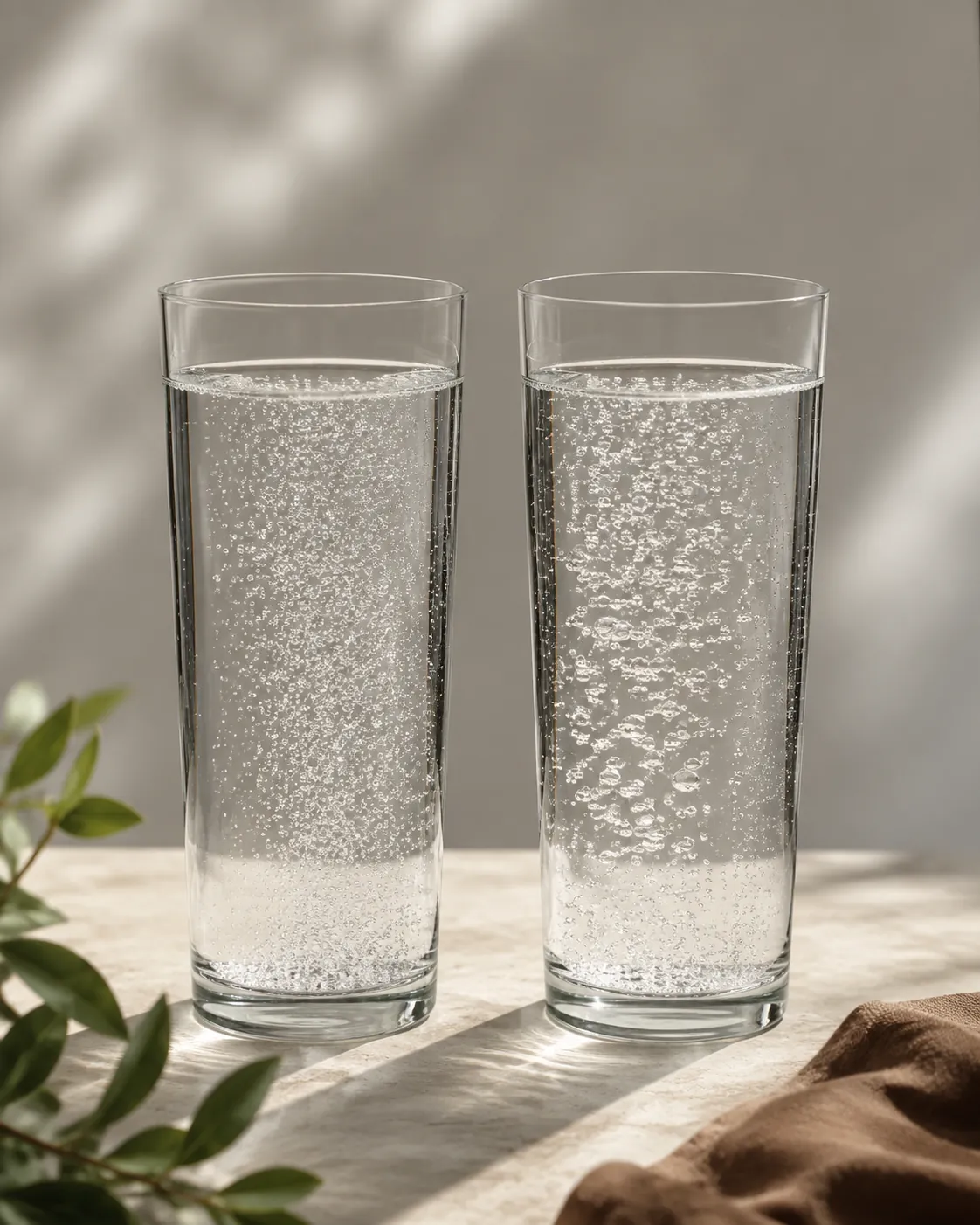
That gap is why two waters carrying identical carbonation can taste a level apart. Tasters routinely report the unbuffered one as fizzier, and it is not; it is sharper, and the tongue files sharpness under fizz because the two sensations arrive together and nothing in ordinary experience separates them.
Where it shows most is the second after you swallow. A mouthful of club soda releases its gas and then stops cleanly, and a mouthful of the unsalted version keeps a thin sour thread running underneath for a moment longer.
Neither is better in the abstract. One of them is a drink and the other is more often a component, and that is a different question.
People who like alkaline water for its softness are often describing the same buffered quality arriving by another route.
Why a squeeze of lemon makes it foam over
This is the behaviour nobody warns you about, and it is the plainest demonstration that the salts are genuinely in the bottle. Drop a wedge of lemon into a glass of club soda and it froths up in a way the same wedge in unsalted water does not.
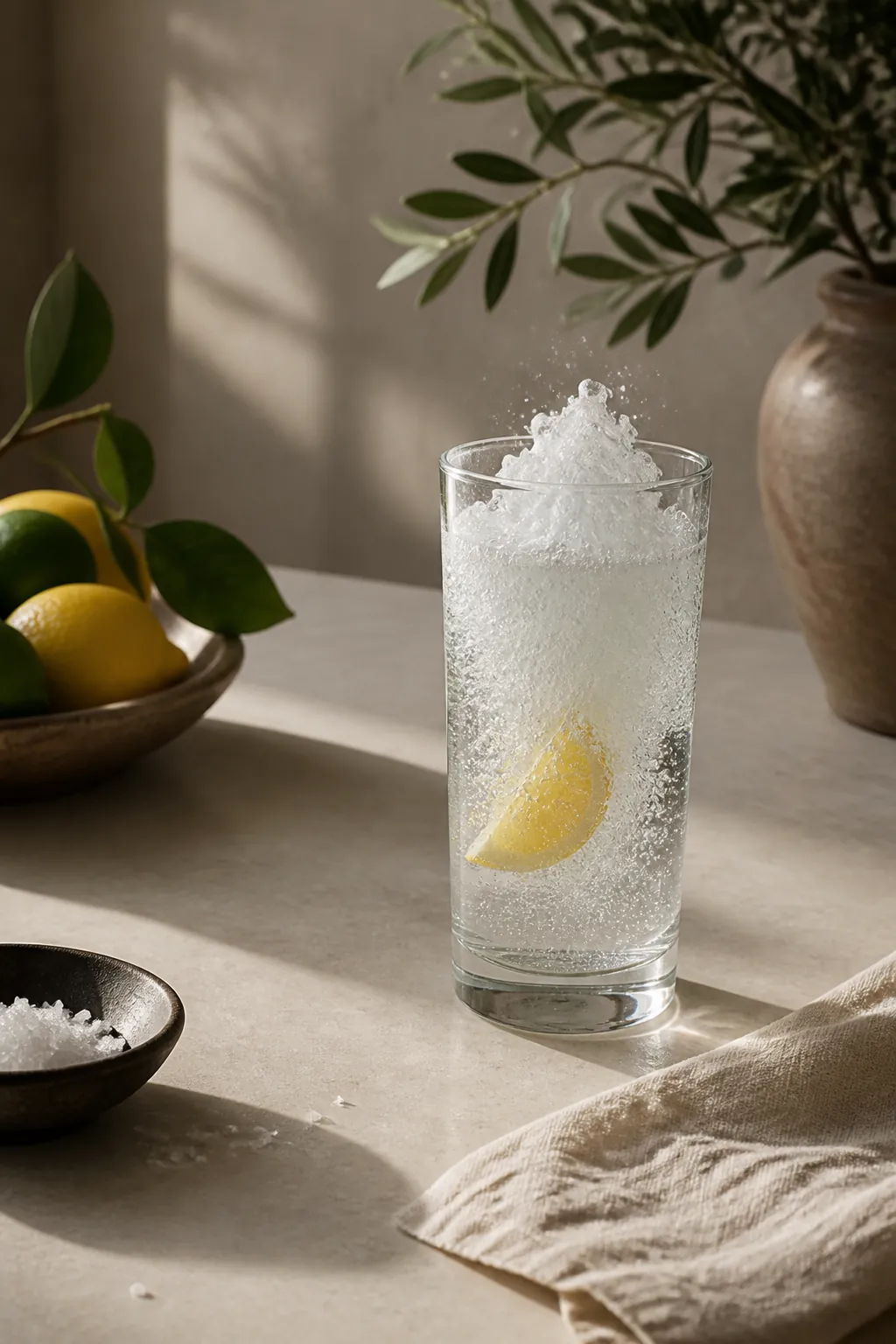
Three things are happening at once, and only the first of them is peculiar to a buffered water.
What happens when acid meets a buffered water
- NeutralisationCitric acid converts bicarbonate into carbonic acid, which promptly leaves as gas.
- SolubilityThe falling pH reduces how much carbon dioxide the water can hold on to.
- NucleationPulp, pith and the rough cut face of the wedge give that gas somewhere to gather.
- ResultA surge of foam, and a drink noticeably flatter half a minute later.
None of this makes club soda a bad choice for a citrus drink. It makes it an ordering problem, and the order is not difficult: acid last, poured gently, into a glass that is already properly cold.
How far the buffering goes before it runs out
Buffer capacity is finite, and that is the part routinely left out of the comparison. A litre of club soda holds well under a gram of bicarbonate, and a single tablespoon of lemon juice carries enough acid to spend a good deal of it.
Past that point the water is no longer rounder than an unsalted one in any way you could taste. It has used its buffer, shed some of its gas doing so, and what is left in the glass is a slightly flatter carbonated water with a trace of sodium in it.
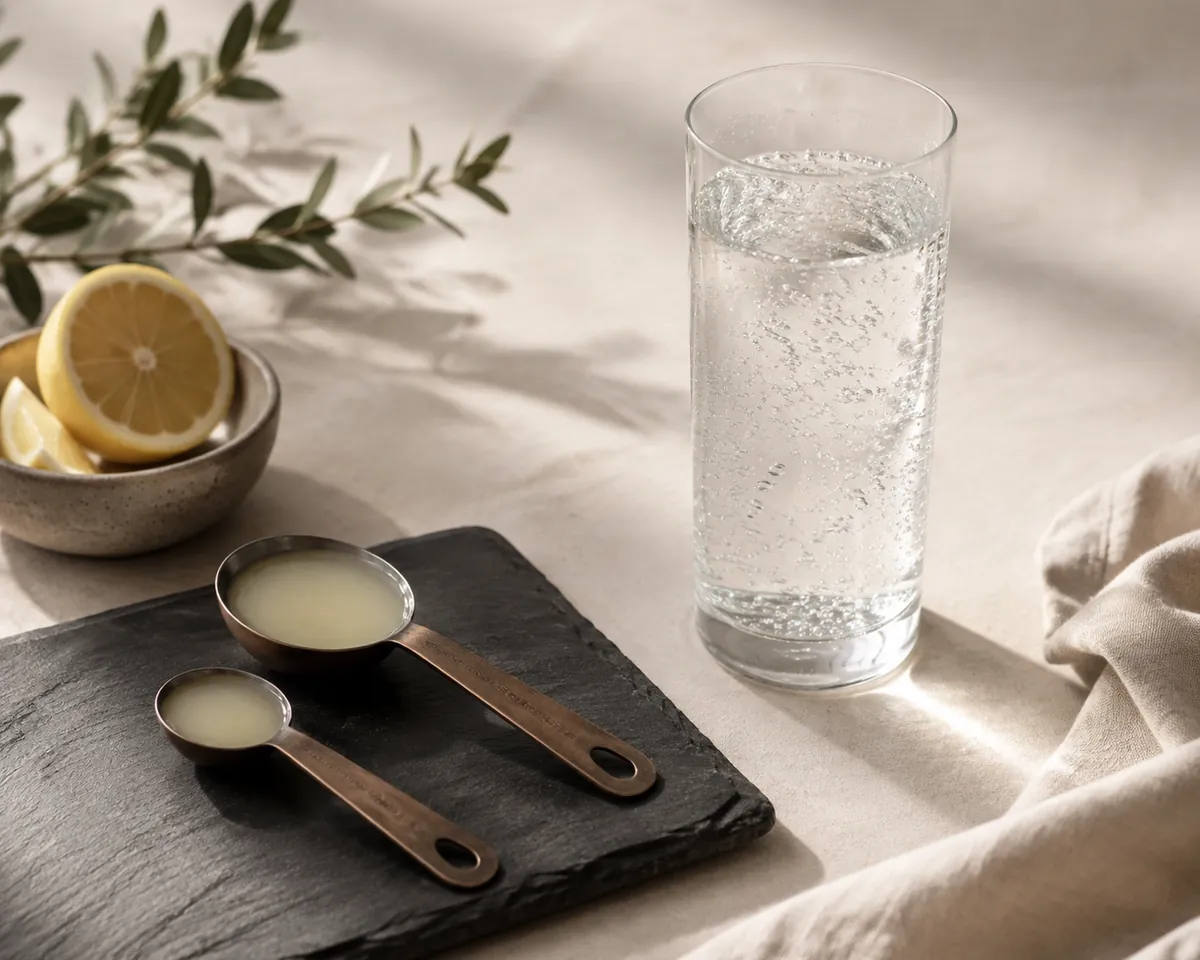
How much acid the buffer absorbs, comfortable to overwhelmed
- A twist of peelNo juice at all, so no demand on the buffer whatsoever
- A teaspoon of juiceComfortably absorbed, and the drink stays round
- A tablespoon of juiceMost of the buffer spent, with a visible release of gas
- A dose of citric acid solutionBuffer gone at once, and a violent foam with it
- A full cordial or squashBuffer irrelevant, because the acid load dwarfs it
So club soda is the better base for a lightly acidic long drink and makes almost no difference to a heavily acidic one. Below a certain acid load the salts are doing real work, and above it they are a rounding error somebody charged you a little extra for.
Why the sodium in it never tastes salty
Read the panel and the sodium figure looks like it ought to be noticeable. Taste the water blind and nobody calls it salty.
Both of those observations are correct, and the thing reconciling them is a threshold.
Detecting salt in plain water generally takes somewhere around half a gram to a gram per litre. Club soda carries a fraction of that, so its sodium sits below the level at which it registers as a flavour of its own and comfortably above the level at which it alters other flavours.
Sub-threshold sodium suppresses bitterness and makes the rest of the glass read a shade more strongly, which is the same mechanism behind adding a few grains of sea salt to a dark coffee. The difference is that here the dose was set by a formulator and you cannot adjust it.
What tasters actually report is not saltiness but roundness, or weight, or something they call mineral. Those are the words a sub-threshold salt produces, and they are why somebody can reliably pick the club soda out of a blind line-up while being quite unable to say what they are tasting.
Where the club in club soda came from
The name is Irish, commercial, and not descriptive of anything. It is generally traced to Cantrell and Cochrane, a Dublin bottler of aerated waters, which registered Club Soda as a trade name in the 1870s, the club in question being a Dublin gentlemen's club whose members drank a good deal of it.
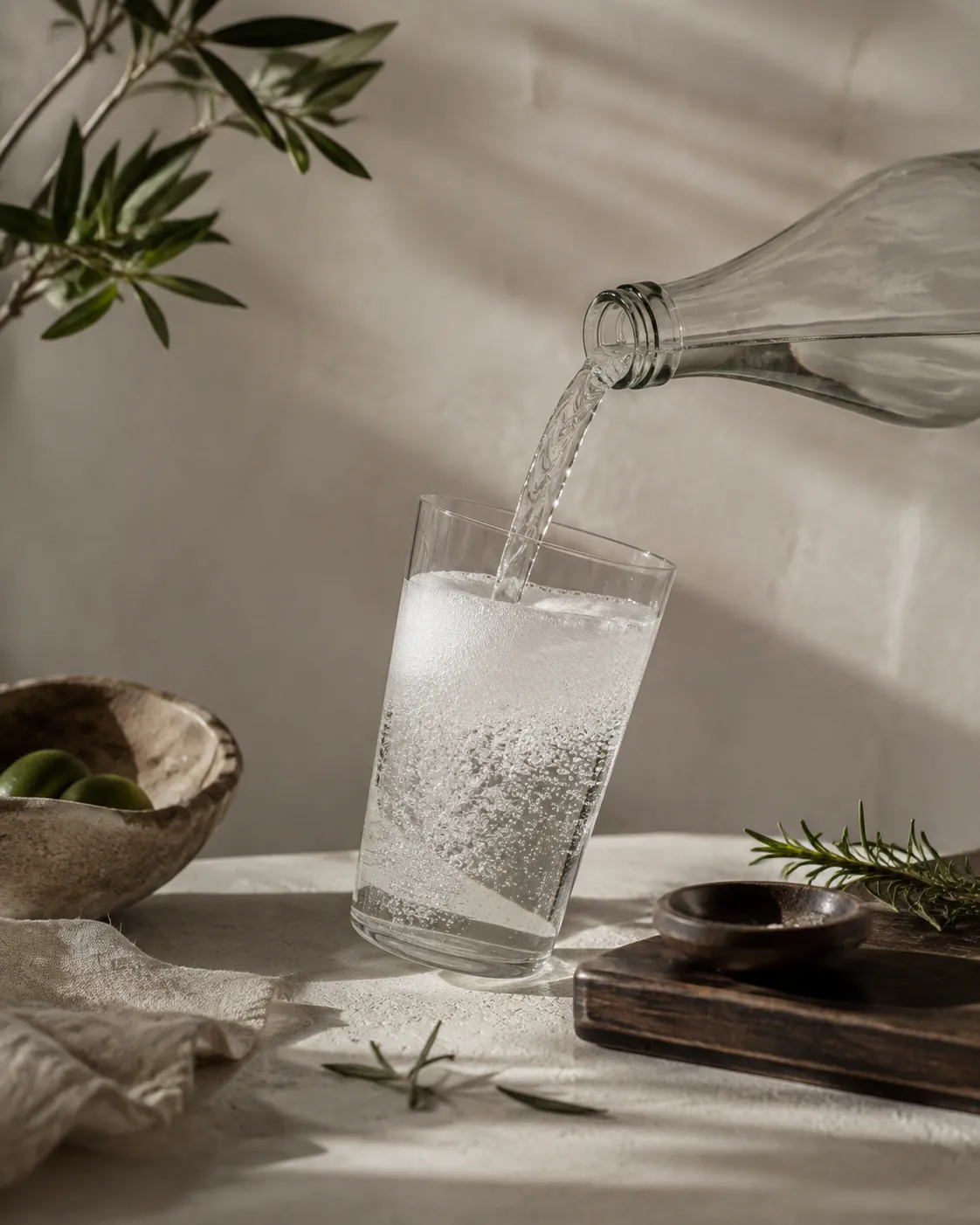
That origin explains a small oddity of the shelf. Club soda is a brand name that escaped, in the way thermos and biro did, which is why it names an entire category in some countries and means nothing at all in others.
Set the three names next to each other and only one of them is honest. Seltzer comes from a German spring village, soda water comes from sodium carbonate, and club soda comes from a marketing department in Dublin.
The one that sounds most technical tells you least about the contents, and the whole tangle of shelf names is worth reading once and then setting aside.
Potassium sulphate, and a second kind of dryness
Bicarbonate is not the only salt in play, and where a producer adds a second one it is almost always doing something the bicarbonate cannot.
| What it does | How it reads in the mouth | |
|---|---|---|
| Sodium bicarbonate | Buffers the carbonic acid | Rounder, softer, a shorter finish |
| Potassium sulphate | Puts sulphate into the water | Dry, firm, a faintly bitter edge |
| Sodium citrate | Buffers, and binds trace metals | Round, with a very faint tang |
| Sodium chloride | Contributes sodium only | A little weight, no buffering at all |
Sulphate is the interesting one, because it pulls in the opposite direction from the bicarbonate. Brewers have understood for well over a century that sulphate in water accentuates a dry, firm finish, and a club soda carrying both salts comes out rounded through the middle and crisp at the end rather than uniformly soft.
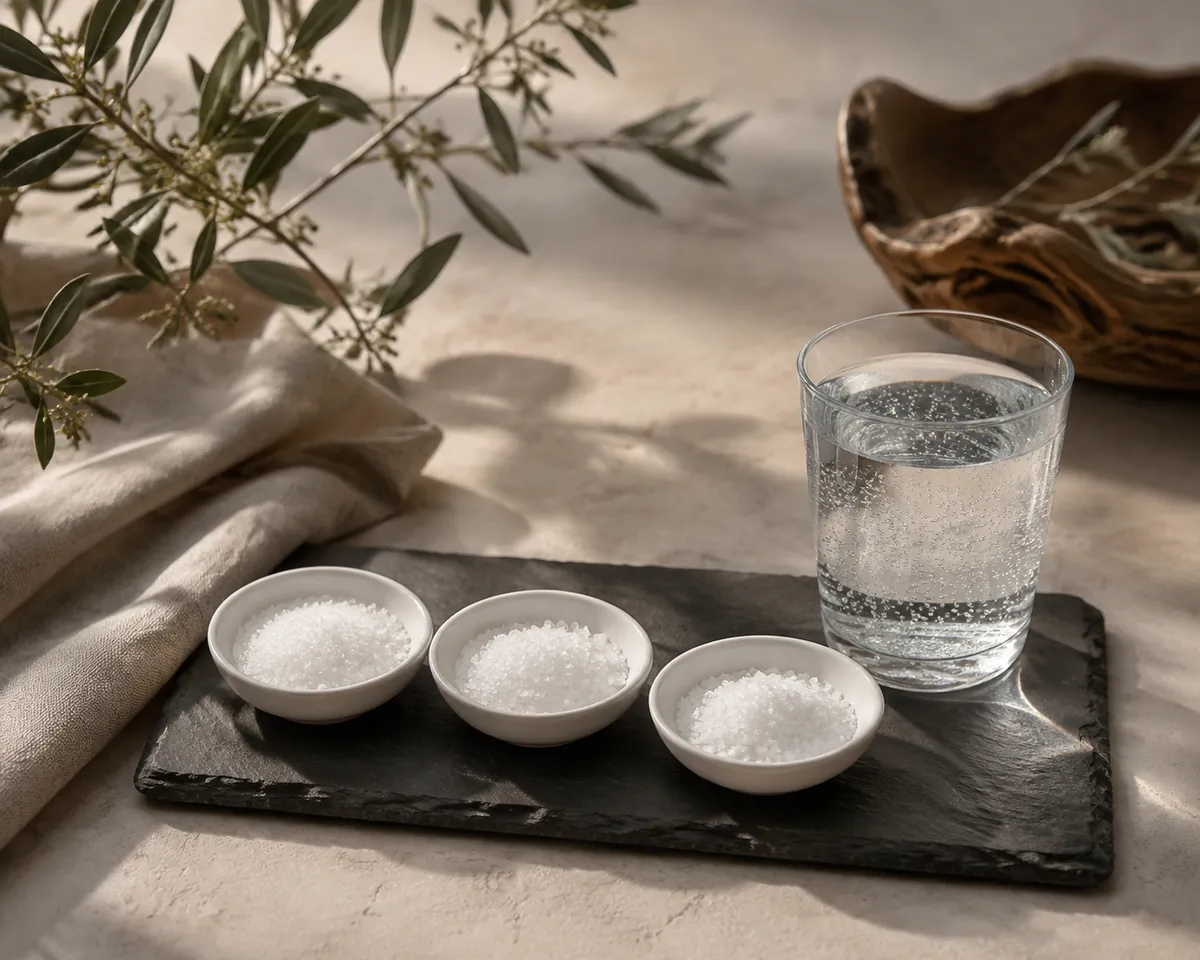
That is most of the answer to why two supposedly neutral waters are distinguishable side by side. The bicarbonate dose sets the roundness and the sulphate sets the finish, so a producer choosing between them is making a flavour decision about a product sold as having no flavour.
It is the argument brewing water makes about coffee, arriving from the opposite end, and it is why sparkling mineral water tastes of somewhere while club soda tastes of a recipe.
What a label is allowed to call it
Naming here is convention rather than law in most markets, which is why the same water changes identity at a border and nobody is lying.
| Name | Where it means this drink | What else it can mean |
|---|---|---|
| Club soda | United States, Canada, Ireland | Nothing else |
| Soda water | United Kingdom, Australia | Occasionally an unsalted water |
| Seltzer | Nowhere | Carbonated water with nothing added |
| Sparkling water | Nowhere in particular | The umbrella over all of them |
The failure this causes is small and endlessly repeated. A recipe written in one country gets made in another with the wrong bottle, and because the difference is a fraction of a gram of salt, nobody diagnoses anything except that the drink came out thinner or duller than it was supposed to.
Two rules survive the confusion intact, and both of them live on the back of the bottle rather than the front. If the panel lists minerals, you are holding a club soda whatever the label says.
If it lists carbonated water and stops there, you are holding an unsalted water wearing somebody else's name.
Which drinks the salts flatter, and which they dull
Choosing between the two plain waters is really a question about what is going on top of them, and the answer flips depending on how sweet and how sour that is.
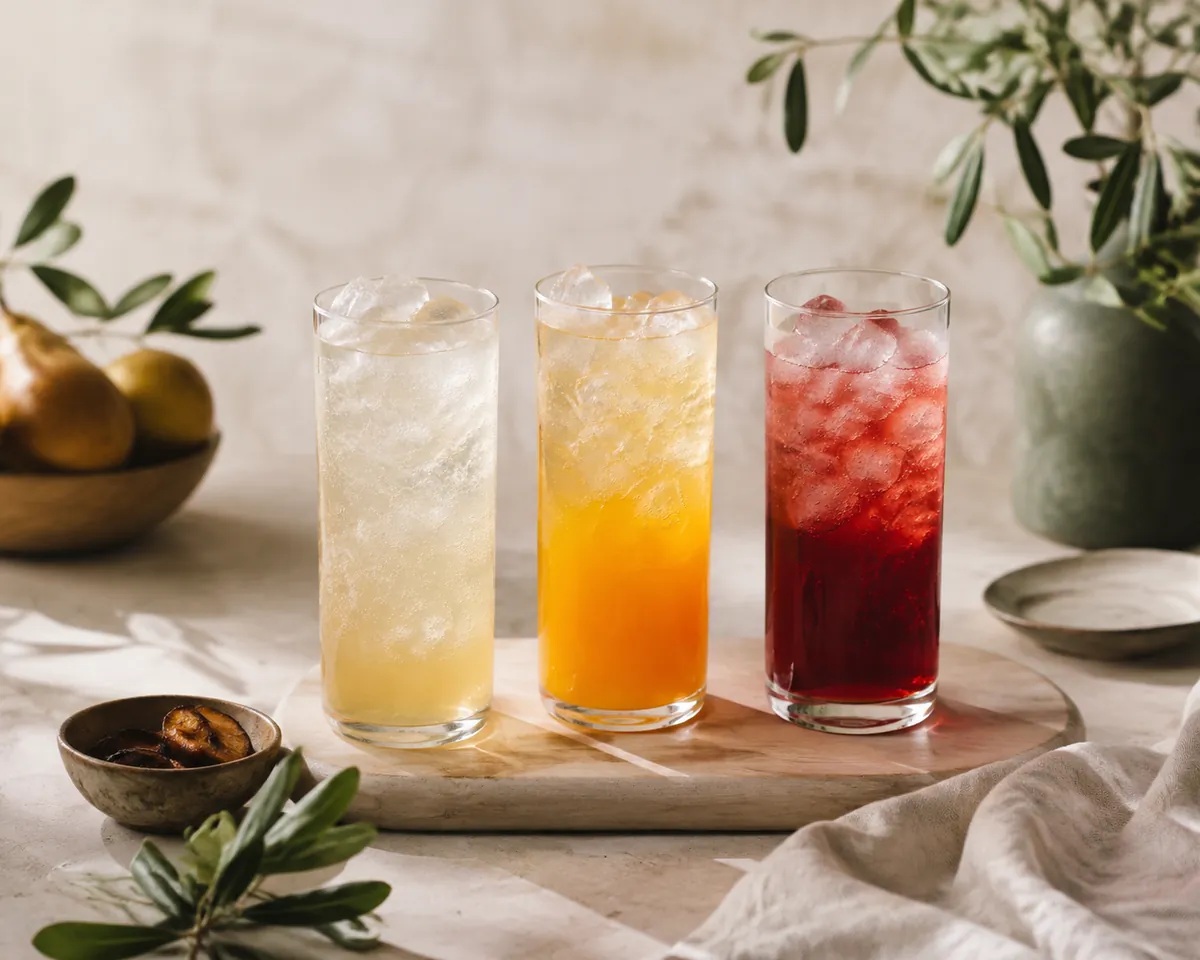
A syrup-led long drink
Club soda. The salts cut the sweetness and stop an Italian soda reading as cloying.
A tart juice poured long
Club soda again, because the buffer takes the hardest edge off an orange juice.
A floral cordial
The unsalted water. Sub-threshold salt pushes delicate aromatics around rather than lifting them.
Cold brew over ice
Depends on the roast. Bitterness suppression suits a dark one and dulls a bright one.
A strong hibiscus infusion
Either will do, though the buffer removes some of the sharpness that was the point.
There is a single pattern underneath all six, and it is easy to hold once you have seen it stated. Club soda helps wherever there is something to soften or something to cut, and it gets in the way wherever the flavour on top is fragile enough to be moved by a trace of salt.
The sweeter the syrup, the stronger the case for the salts, and the more delicate the aromatic sitting on top, the better an unsalted water serves it. Nothing else about the two bottles matters nearly as much as that.
How to tell a real club soda from a relabelled seltzer
Plenty of bottles carry the name and none of the salts, and the front of the label is no help at all in sorting them out.
- Read the ingredients panel first, since minerals listed means club soda and carbonated water alone does not.
- Look for a sodium figure in the nutrition table, because a zero there settles the question outright.
- Compare the pH if you have test strips to hand, as anything above 5 means something is buffering.
- Taste them against each other very cold, in identical glasses, poured at the same moment.
- Ignore whatever the front says about a spring, since the added salts dominate anything the source contributed.
The side-by-side is worth doing once and then never again. Pour both, take a mouthful of each in turn, and attend to the second after you swallow rather than to the impact on the way in.
The one that stops is the club soda.
The one that leaves a faint sour thread running is the unsalted water, and having noticed that difference once you will find it difficult to stop noticing. Making your own is the other route to certainty, since a carbonation machine produces an unsalted water and the salts are added afterwards, a short routine set out under making it at home alongside the faults it can develop.
The bottle to keep when you only keep one
There is no universal answer between the two plain waters, and the honest recommendation turns on whether you drink sparkling water or build things with it. For drinking plain, the unsalted bottle wins by being the least intrusive thing available.
For everything else club soda is the more forgiving choice, because most of what people assemble at home involves either sugar or acid and the salts have something useful to say about both.
- Buy small bottles if you mix only occasionally, since a part-used litre is a poor mixer by the following day.
- Serve it colder than seems necessary, because cold water holds gas and warm water sheds it immediately.
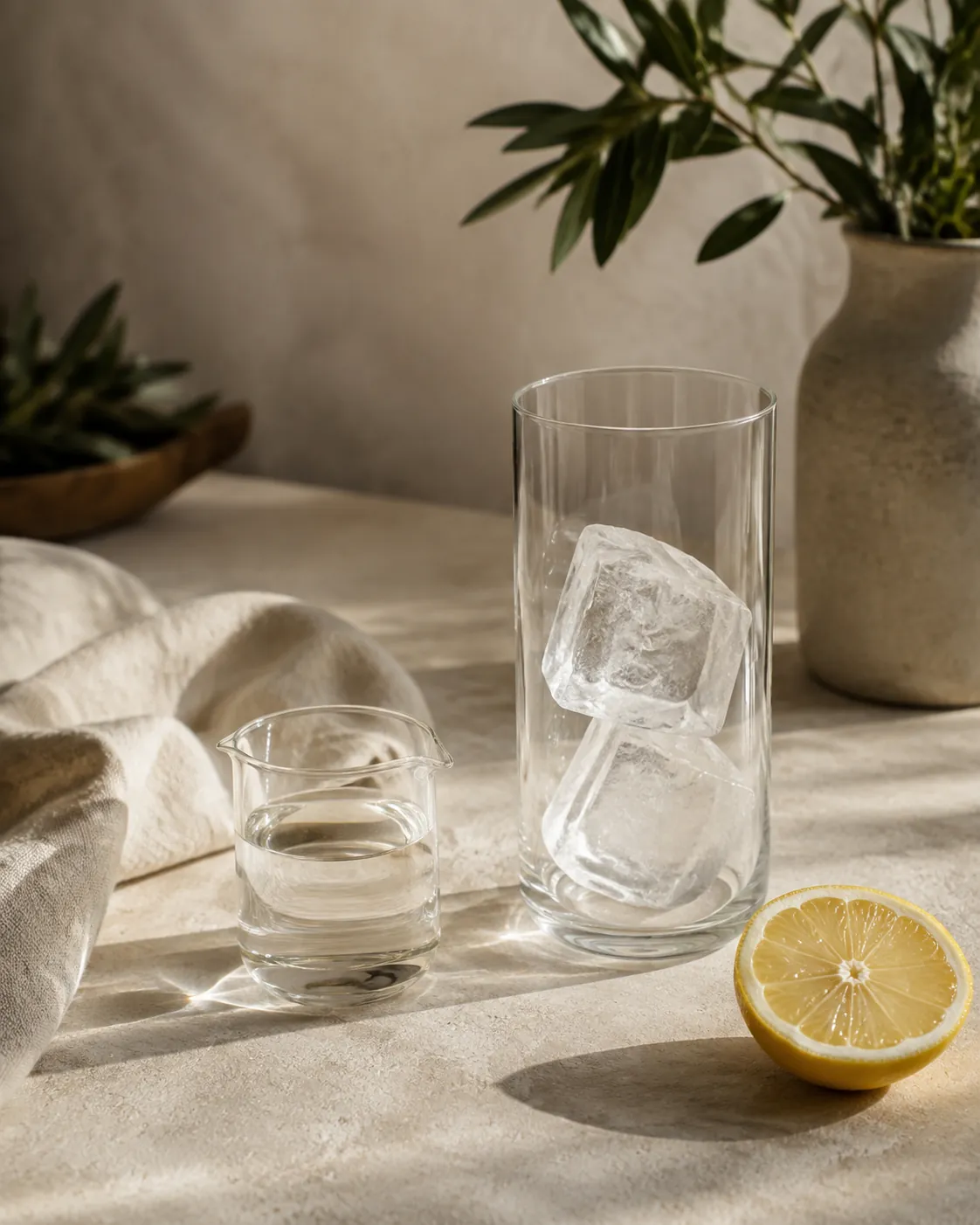
- Use large cubes of ice rather than crushed, which scrubs the carbonation out on contact.
- Put the simple syrup in first and the acid in last, then top up and stir exactly once.
- Do not reach for it in place of tonic water, which is a different drink entirely.
That last substitution is the one people make most often and regret fastest. Quinine bitterness and a heavy load of sugar put tonic in another category, as do bitter lemon and any sweetened ginger ale, and none of the three can stand in for a water that brings nothing but buffering.
Club soda's whole usefulness is that it decides one thing for you and leaves the rest alone. It sets the acidity and then gets out of the way, which is why it survives on a shelf full of bottles with far more to say.
How it reads on its own is a short subject, handled under what club soda tastes like, as is keeping an opened bottle alive for more than a day.
Common questions
What is the difference between club soda and seltzer?
Club soda has mineral salts added on purpose, usually sodium bicarbonate and sometimes potassium sulphate, while seltzer has nothing added after the gas. The bicarbonate buffers the carbonic acid, so club soda sits around pH 5 to 6 where an unsalted water sits nearer 4, and it finishes rounder and shorter as a result.
Why does club soda foam up when you add lemon?
Three things happen at once. The citric acid converts bicarbonate into carbonic acid, which leaves as gas; the falling pH reduces how much carbon dioxide the water can hold; and the pulp and cut face of the wedge give that gas somewhere to gather. Expressing the juice down the inside of the glass rather than dropping a wedge through the surface avoids most of it.
Can you taste the sodium in club soda?
Not as saltiness. Detecting salt in plain water generally takes around half a gram to a gram per litre, and club soda carries a fraction of that, so the sodium sits below the level at which it registers as its own flavour while still suppressing bitterness and making other flavours read more strongly. Tasters describe it as roundness or weight rather than salt.