What Is Root Beer? Roots, Barks, and Spices in One Glass
Root beer is a carbonated soft drink flavoured with a blend of roots, barks and spices. It is the most regionally divisive drink in this section: familiar and nostalgic in North America, and often described as medicinal everywhere else.
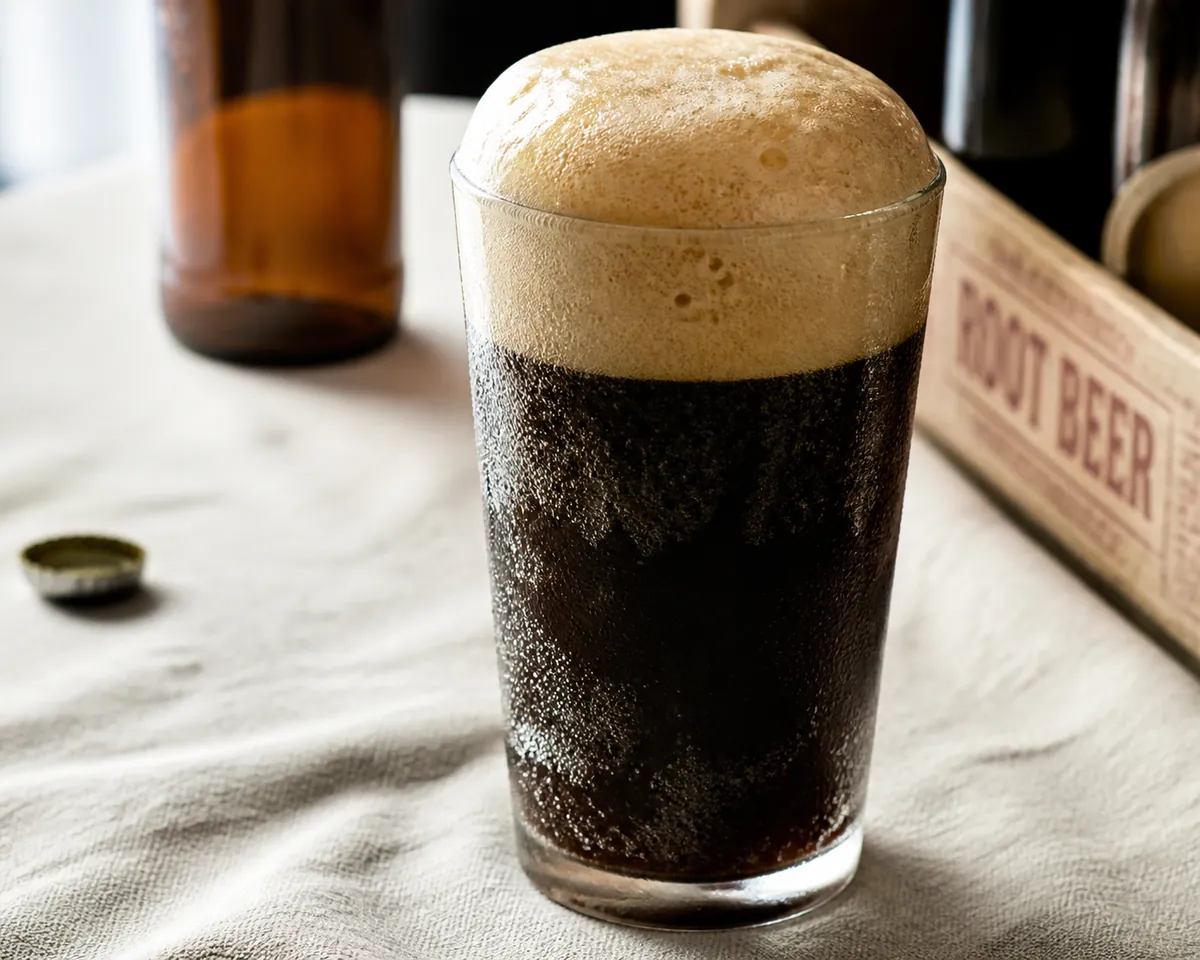
Root beer is a sweetened carbonated soft drink flavoured with a blend of roots, barks and spices. Like ginger ale it is not brewed and contains no alcohol, and the word beer records an origin rather than a method.
It is also the drink in this section that people react to most strongly, in both directions.
Root beer at a glance
- What it is
- A sweetened, force-carbonated soft drink flavoured with roots and barks
- Leading note
- Wintergreen, which is what most people identify as root beer
- Original base
- Sassafras root bark, banned as a food additive in 1960
- Acidity
- Low, which is why it reads creamy rather than sharp
- Caffeine
- Usually none, though a few brands add it
- The divide
- Nostalgic in North America, medicinal almost everywhere else
What is in root beer
A blend, and no two are alike.
The recurring flavour components
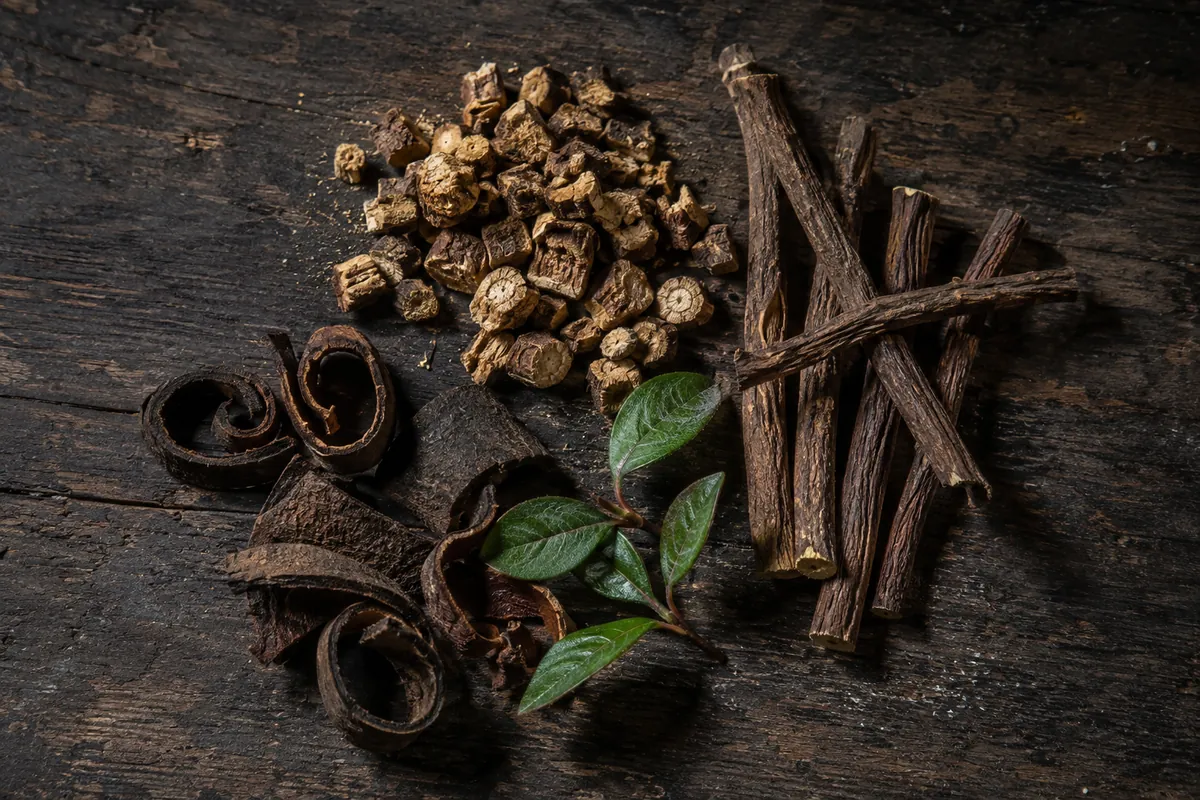
- Wintergreen
- Methyl salicylate. The dominant note in most modern root beer
- Sarsaparilla
- A vine root, earthy and slightly bitter
- Liquorice root
- Sweetness and a rounded anise character
- Vanilla
- Softens the blend and adds body
- Spices
- Cinnamon, clove, nutmeg and anise in varying amounts
- Sassafras
- Historically the base. Now used only as safrole-free extract
Wintergreen is the note most people actually identify as root beer. It is the same compound that flavours some mouthwashes and topical ointments, which is precisely why the drink reads as medicinal to anyone who did not grow up with it.
Set the associations aside and the flavour has a clear structure.
What arrives, in order
- WintergreenSharp, cool, immediately identifiable
- SweetnessHeavy, and higher than most soft drinks
- Vanilla and creaminessFills the middle and softens the wintergreen
- Liquorice and aniseA rounded warmth underneath
- Earthy bitternessSarsaparilla and bark notes on the finish
It is sweeter than a standard cola and considerably less acidic, which is what makes it read as creamy rather than sharp. What root beer tastes like takes that sequence apart in more detail.
Why sassafras was replaced, and where the name came from
The most significant thing that ever happened to root beer is that the ingredient it was named and built around stopped being legal to put in food, and the industry had to rebuild the flavour without it.
Sassafras root bark was the original base. It contains safrole, which was banned as a food additive in the United States in 1960, and the industry moved to safrole-free sassafras extract and to wintergreen-forward formulations.
How the formulation shifted
- Nineteenth centurySassafras root bark as the base, alongside sarsaparilla and spices.
- Early twentiethCommercial production standardises around sassafras and vanilla.
- 1960Safrole banned as a food additive; sassafras root bark can no longer be used.
- AfterSafrole-free extract and wintergreen take over as the leading notes.
- NowWintergreen dominates most mass-market formulations.
Modern root beer does not taste like nineteenth-century root beer, and the difference is not nostalgia. The base flavour was substituted for regulatory reasons.
The name records an older origin still. Root beer descends from small beer: low-alcohol home-brewed drinks made from roots, barks and molasses, common in colonial North America and genuinely fermented, producing a little alcohol and natural carbonation.
Commercial producers in the late nineteenth century moved to sweetened, force-carbonated, unfermented versions, and the name stayed. A few traditional recipes are still fermented briefly, which produces carbonation and a trace of alcohol, but the mass-market product is not.
Why root beer divides people
Few drinks produce such a clean split, and the explanation is about association rather than the drink.
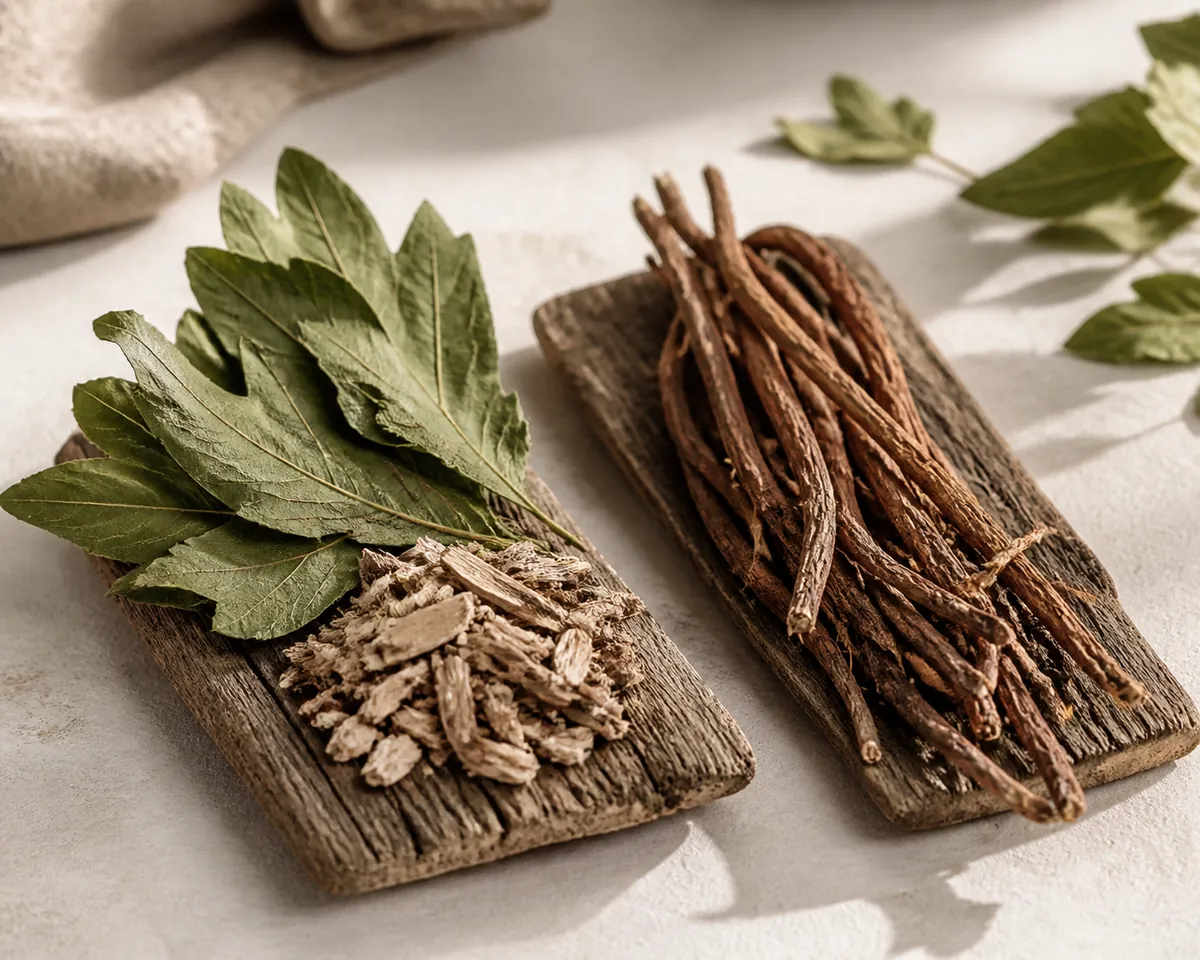
In North America, root beer is a childhood flavour with no competing association. Elsewhere, methyl salicylate's primary association is with liniment, mouthwash and pain-relief rubs, so the same compound reads as medicinal.
That is why recommending it rarely works. The obstacle is not the recipe but the listener's existing association, and no amount of describing will move it.
Judged as a formulation it is more interesting than most soft drinks: wintergreen over vanilla over liquorice and bark, with a sweetness that carries the whole thing. What decides whether someone enjoys it is almost entirely whether they met wintergreen in a glass or in a medicine cabinet first.
That is not something the drink can overcome, and it is not a fault in either the drink or the drinker. Someone who dislikes root beer may simply dislike wintergreen, which is a fact about a compound rather than a verdict on a category.
Root beer, birch beer and sarsaparilla
Three drinks, routinely confused.
| Root beer | Birch beer | Sarsaparilla | |
|---|---|---|---|
| Base flavour | Wintergreen and sassafras extract | Birch bark oil | Sarsaparilla vine root |
| Character | Sweet, creamy, complex | Sharper, more minty, drier | Earthier, more bitter, less sweet |
| Colour | Dark brown | Brown, red or clear by region | Dark brown |
| Where common | United States and Canada | Pennsylvania and the north-east | Historically wider, now niche |
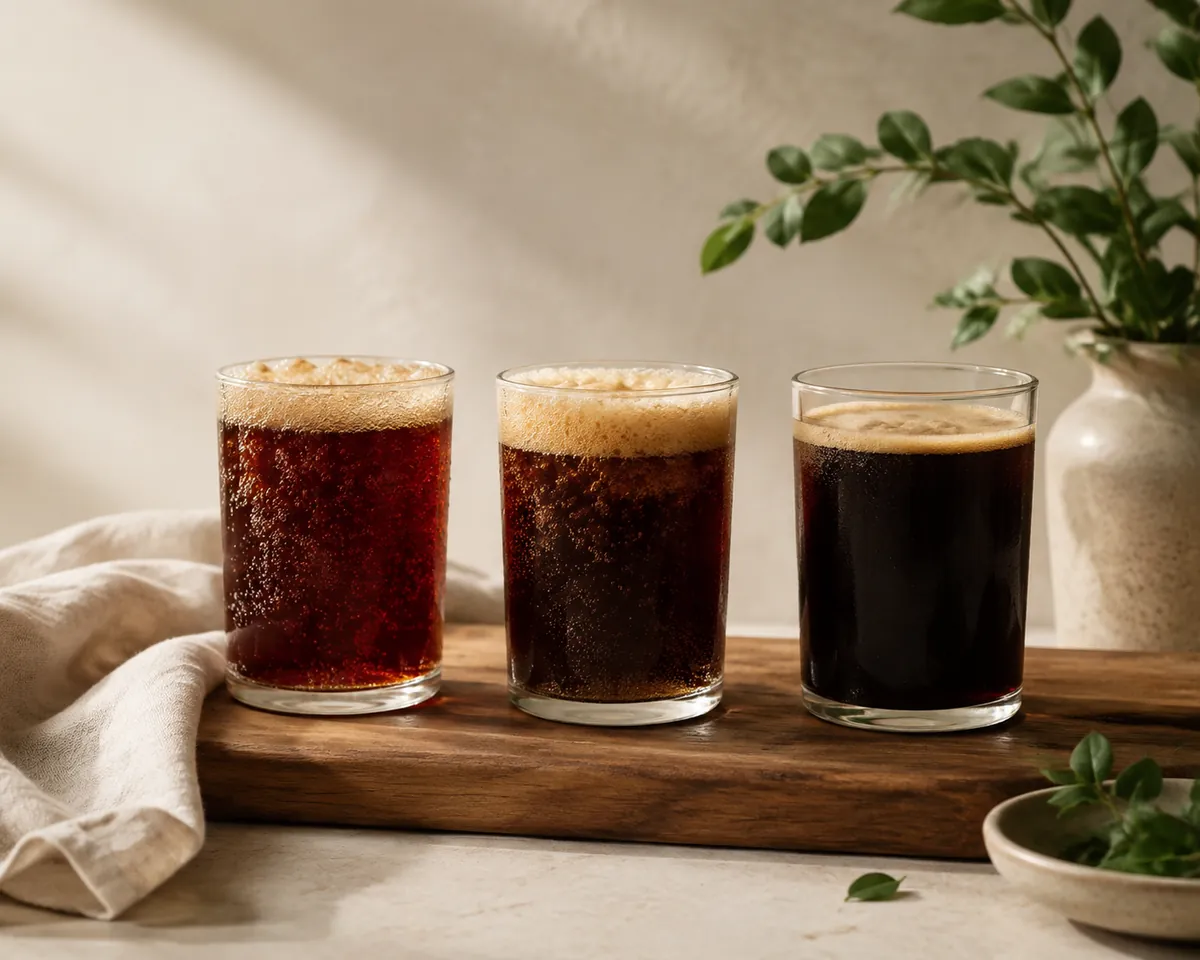
Birch beer is the closest neighbour and the one most often mistaken for root beer. It leads with birch oil rather than wintergreen, which makes it noticeably sharper and drier.
Sarsaparilla is the one worth seeking out if wintergreen is the problem. It is built on the vine root rather than the mint compound, so it keeps the earthy bark character and loses the association that puts people off.
Tasting the three side by side is the fastest way to understand any of them. Each is legible against the others in a way none of them is on its own.
The foam, and how to serve it
Root beer holds a head far longer than any other soft drink on this shelf, and that is a formulation decision rather than a happy accident of the recipe.
Most formulations include a foaming agent, historically quillaia extract from soap bark and now sometimes yucca extract. These are surfactants: they lower surface tension so bubbles hold together instead of collapsing.
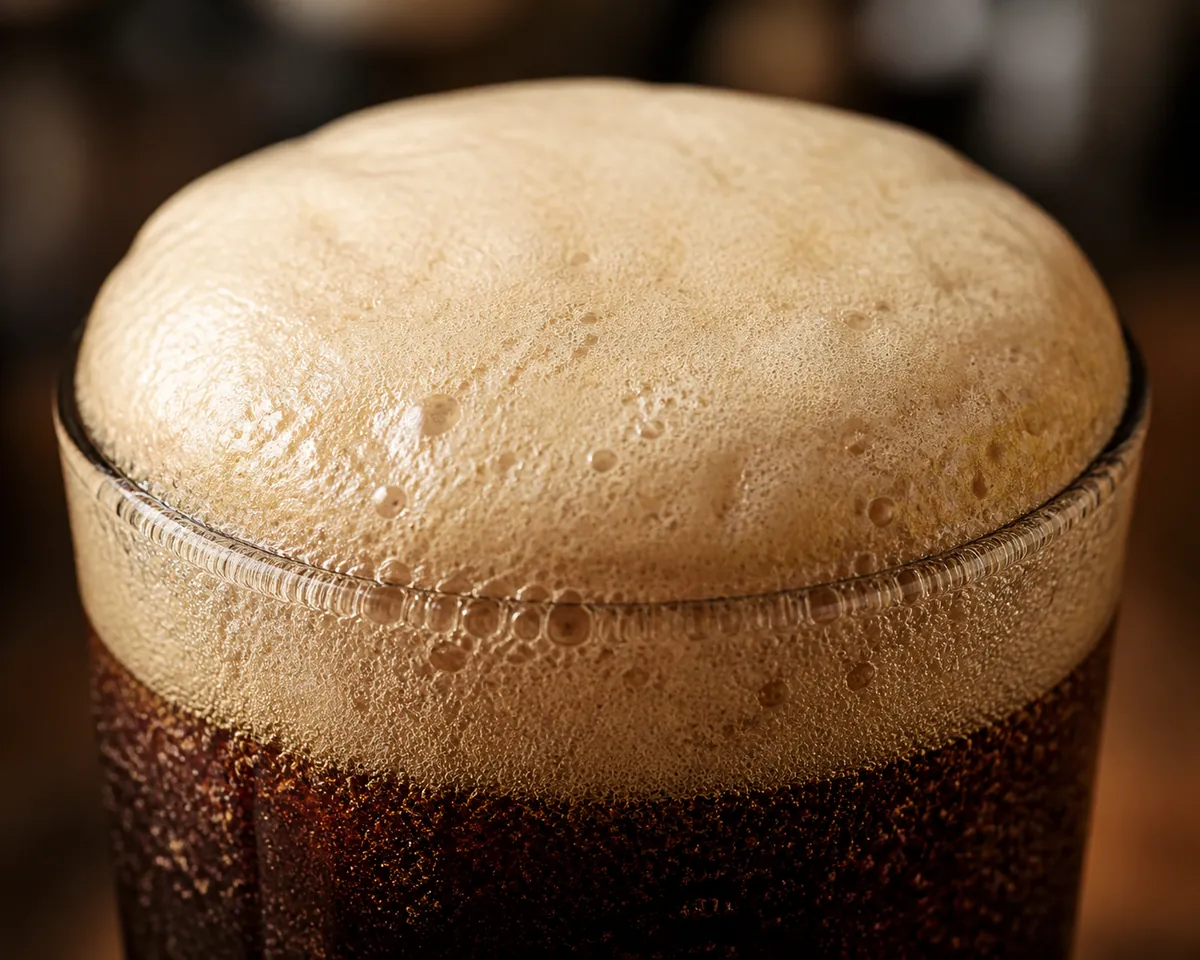
Pour it very cold and slowly down the side of a tall glass, which builds a head without losing the carbonation to a violent overflow. A chilled glass helps here in a way it does not for sparkling water, which has no such agent and produces a head that collapses within seconds.
It is also one of the few soft drinks better without ice. The drink is already served cold, and ice dilutes a flavour that depends on its sweetness for balance.
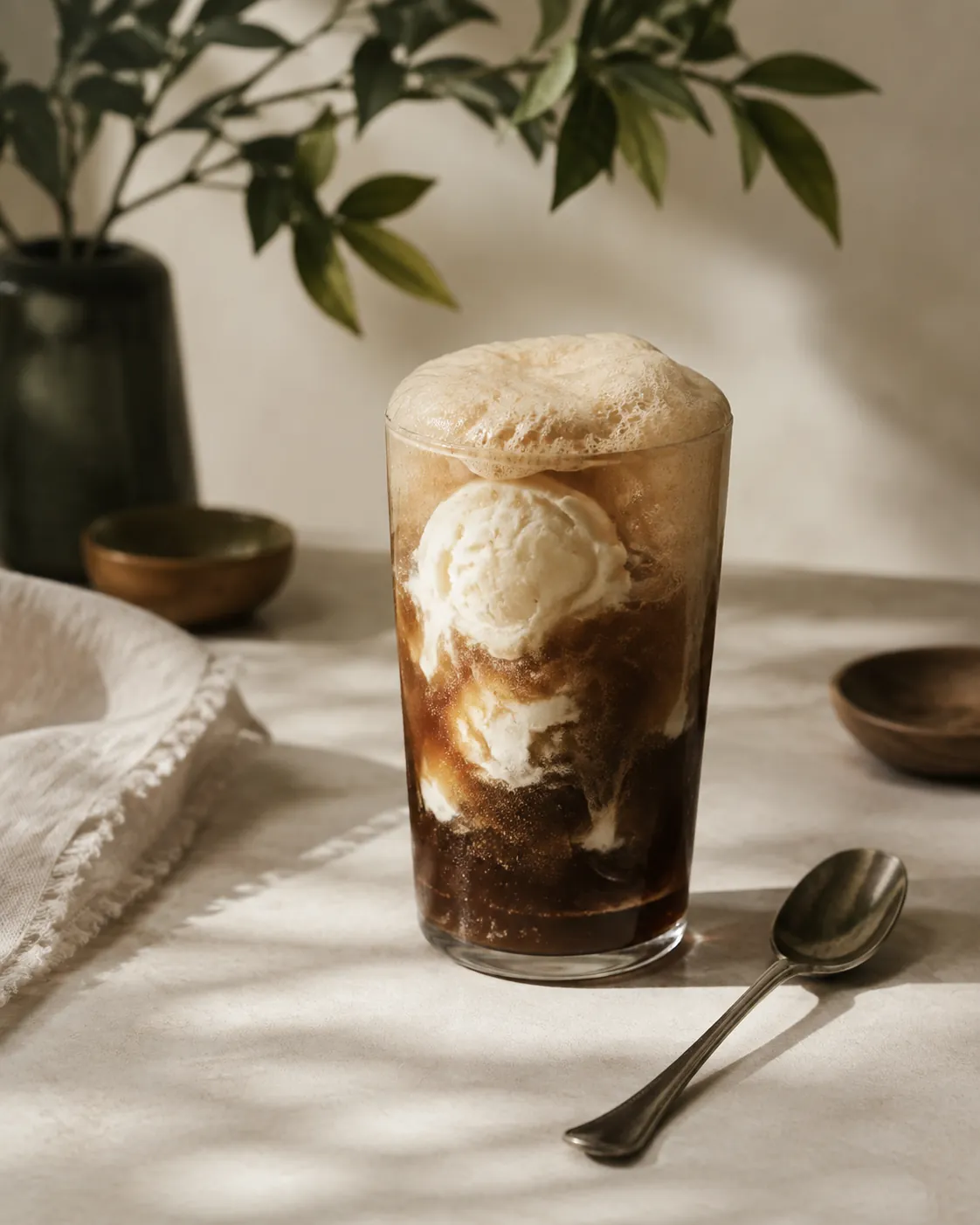
That persistence is why a float works so well. The fat in ice cream flattens most carbonated drinks almost immediately, and here the surfactants hold the foam instead, so the two reinforce each other.
A float, roughly
- Root beer
- 250 ml, very cold
- Vanilla ice cream
- Two scoops
- Glass
- Tall, and chilled beforehand
- Method
- Ice cream first, then pour the root beer slowly down the side
- Note
- Pouring fast produces an overflow rather than a head
Ice cream goes in first, and that is the whole technique. Pouring soda over a scoop from a height creates a head that leaves the glass, which is the failure everyone has seen, and it is the same carbonation problem an Italian soda has when it is built in the wrong order.
Vanilla is the standard choice because root beer already contains vanilla, so the two reinforce rather than compete.
How brands differ, and what craft versions change
Brand matters more here than anywhere else in the section.
- Check whether wintergreen or sassafras extract leads; the label usually hints at it.
- Look for vanilla high in the ingredients, which marks the creamier styles.
- Craft root beers are generally less sweet and more herbal than mass-market ones.
- Some brands add caffeine. If that matters to you, the label will say.
- Try a birch beer alongside if you can, since the contrast makes both legible.
If you have only tried one root beer, you have not really tried the category. The spread between a mass-market brand and a herbal craft one is wider than between two colas.
Two decisions account for that gap. The first is sweetness: mass-market root beer is very sweet, and enough of it is cane sugar or corn syrup to flatten the herbal complexity underneath, while craft versions dial the sugar back and let the sarsaparilla and bark notes through.
The second is the flavour base. Where mass-market formulations lean heavily on wintergreen, many craft producers rebuild the blend around sarsaparilla, liquorice and spice, which produces something closer to the pre-1960 drink.
A sarsaparilla-forward craft version is therefore a genuinely different proposition, and worth one try before writing the category off.
How to make root beer at home
Making it properly is a real project rather than a quick mix, and there are two quite different routes into it depending on how much of the flavour you want to build yourself.
Extract and soda water, the simple route
- Root beer extract
- 1 to 2 teaspoons, sold in small bottles
- Sugar syrup
- 40 ml simple syrup, adjusted to taste
- Soda water
- 200 ml, well chilled
- Method
- Stir extract into syrup, then top with soda water and stir once
- Note
- Add a drop of vanilla, or swap part of the syrup for vanilla syrup
The more involved route is a decoction: simmering sarsaparilla, liquorice root, birch bark and spices, then sweetening and carbonating. It behaves the same way ginger tea does, in that roots and barks need simmering rather than steeping.
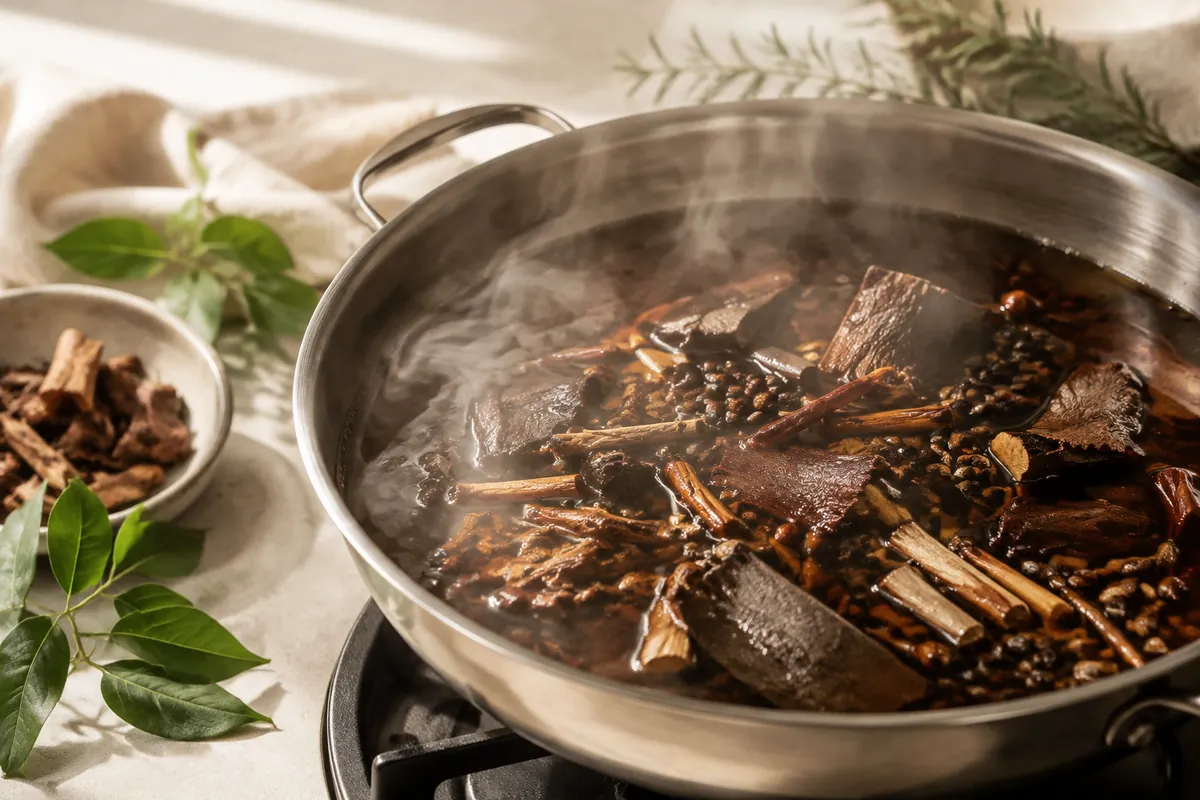
The extract is the decision that determines the result, and extracts vary enormously. Some are wintergreen-dominant and reproduce the mass-market flavour closely; others are built around sarsaparilla and spice and give something noticeably more herbal.
- Read the ingredients rather than the front label, since the leading flavour is usually listed first.
- Buy a small bottle first. A little goes a long way and preferences here are strong.
- Check whether it is sweetened. Some extracts include sugar and change your syrup ratio.
- Look for vanilla content, which is what gives the creamy character.
- Keep it dark and sealed; the volatile oils fade once opened.
Extract strength varies by a factor of several between brands, so the teaspoon measure in any recipe is a starting point rather than an instruction. Mix one glass and adjust before making a batch.
Making root beer covers the decoction route properly.
How to store an opened bottle
The foam works against it once the bottle is open.
Every pour agitates the remaining liquid and the surfactants hold the resulting foam, so more gas leaves solution than would from a plain carbonated drink. A bottle poured three times is noticeably flatter than a soda water poured three times.
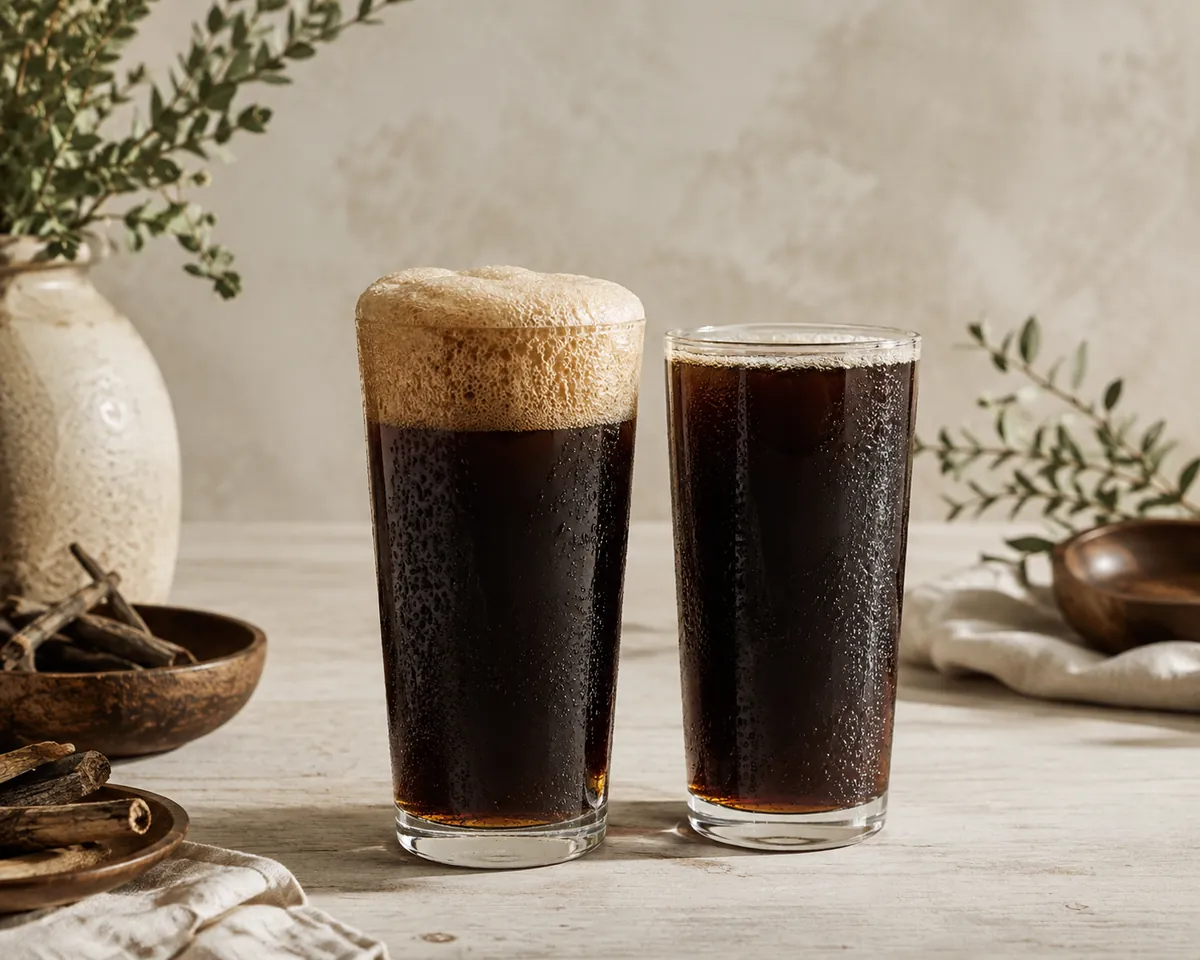
Keep it upright, cold and tightly sealed, and pour gently down the side of the glass. Warmth is the other enemy, since gas solubility falls as temperature rises and a bottle left out loses more in an hour than a day in the fridge costs it.
If you drink it occasionally rather than regularly, cans or small bottles waste far less than a large bottle does. Storing root beer applies to the whole carbonated category, and root beer is simply the worst case in it.
Where root beer sits among the others
Best understood next to the drinks it is shelved with.
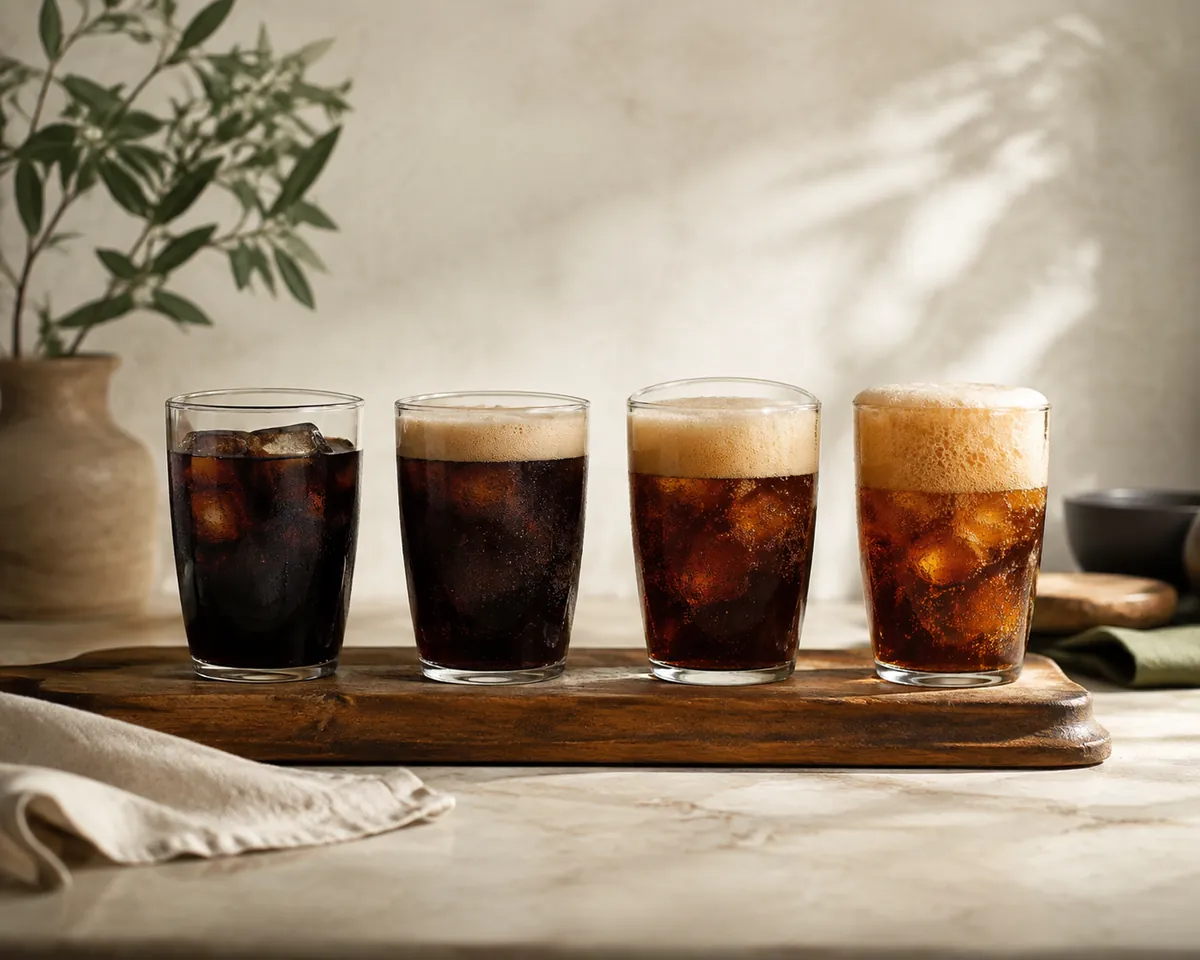
| Root beer | Cola | Ginger ale | Tonic water | |
|---|---|---|---|---|
| Sweetness | Highest | High | Moderate to high | High |
| Acidity | Low | Very high | Moderate | High |
| Body | Creamy, full | Sharp, thin | Light | Light |
| Head | Thick and persistent | Collapses fast | Collapses fast | Collapses fast |
| Caffeine | Usually none | Usually yes | None | None |
Cola drinks are the useful comparison: both are dark, caramel-coloured, spice-blend soft drinks, and they differ most in acidity. Cola is built around a sharp phosphoric finish, and root beer has almost none.
Ginger ale and tonic water both work as mixers, and root beer does not, for the same reason cola does not: the flavour is too complete to leave room for anything else. A drink built on wintergreen, vanilla, liquorice and bark has already used the space that a mixer needs to leave empty.
The head is the other thing that sets it apart on this shelf. Every other drink in the table loses its foam within seconds, because none of them carries a surfactant, and root beer is the only one where a thick tan head is part of what you ordered rather than a sign the pour went wrong.
That completeness is the argument for it and the limit on it at once. It is a finished drink rather than an ingredient, which is why the float is its only traditional preparation and why nothing else on this shelf is served with a spoon.
Where it does go wrong, it goes wrong on foam and on sweetness rather than on flavour, and root beer problems works through both.
Common questions
Why does root beer taste like medicine to some people?
Because of wintergreen, or methyl salicylate, which leads most modern formulations. Outside North America that compound's main association is with liniment and mouthwash, so the same flavour lands in a completely different context.
Is there still sassafras in root beer?
Only as safrole-free extract. Sassafras root bark contains safrole, which was banned as a food additive in the United States in 1960, so producers moved to treated extract and wintergreen-forward blends.
Does root beer contain alcohol or caffeine?
Commercial root beer contains no alcohol despite the name, and most brands are caffeine-free, which is unusual for a dark soft drink. A few brands do add caffeine and label it.