What Is Cola? A Category Built on Citrus and Spice Oils
Cola is a category rather than a single recipe. Its flavour comes mostly from citrus and spice oils, and the kola nut it is named after plays almost no part in the modern drink.
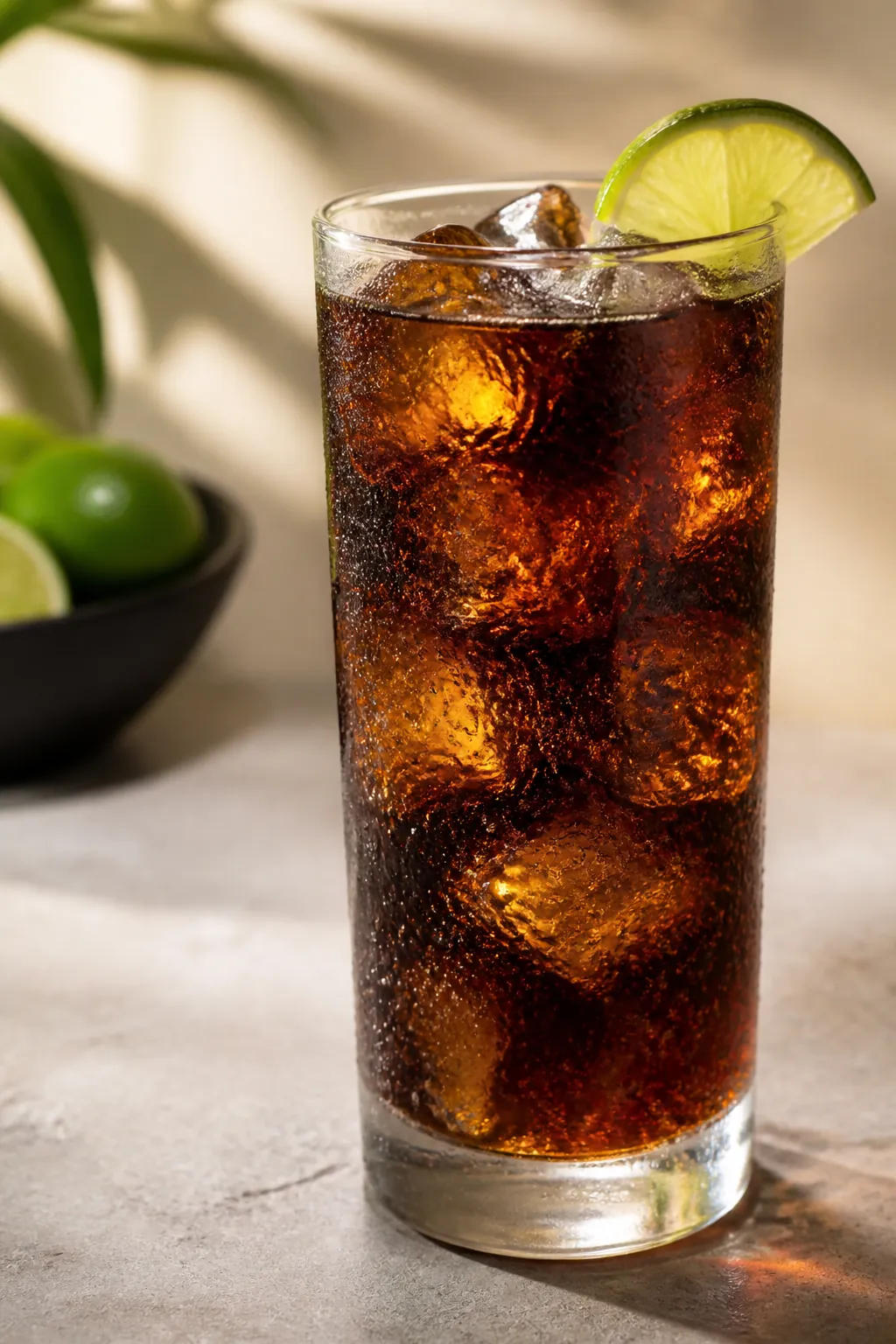
Cola is a sweetened carbonated soft drink built on a blend of citrus and spice oils, coloured with caramel and acidified, usually with phosphoric acid.
It is a category with many producers rather than one recipe, and the individual formulations are closely guarded. What they have in common is a recognisable flavour profile that can be described accurately even when the exact proportions cannot.
Cola at a glance
- What it is
- A carbonated soft drink flavoured with citrus and spice oils
- The acid
- Phosphoric acid, which almost nothing else in the aisle uses
- The colour
- Caramel, which also contributes a faint burnt-sugar note
- Typical sugar
- Around 10 to 11 g per 100 ml in a standard version
- Typical caffeine
- Around 10 mg per 100 ml, added as purified caffeine
- Typical pH
- Around 2.5, more acidic than most fruit juice
The citrus, the spice and the order they arrive in
The distinctive taste is not one ingredient. It is a blend, and the components are well understood even where the ratios are not public.
The recognised flavour components
- Citrus oils
- Orange, lemon and lime oils. The brightest and most immediately recognisable part
- Spice oils
- Cinnamon, nutmeg and coriander are the ones most consistently identified
- Vanilla
- Rounds the blend and softens the acidity
- Caramel
- Provides the colour and a faint burnt-sugar note
- Acid
- Phosphoric acid in most colas, which gives a distinctive dry sharpness
The citrus is doing more than people expect. Asked to describe cola, most people reach first for vanilla or caramel, and the top note that actually makes it identifiable in a blind taste is citrus oil. That is also why a warm, flat cola tastes so unlike itself, since the volatile citrus notes are the first things to leave.
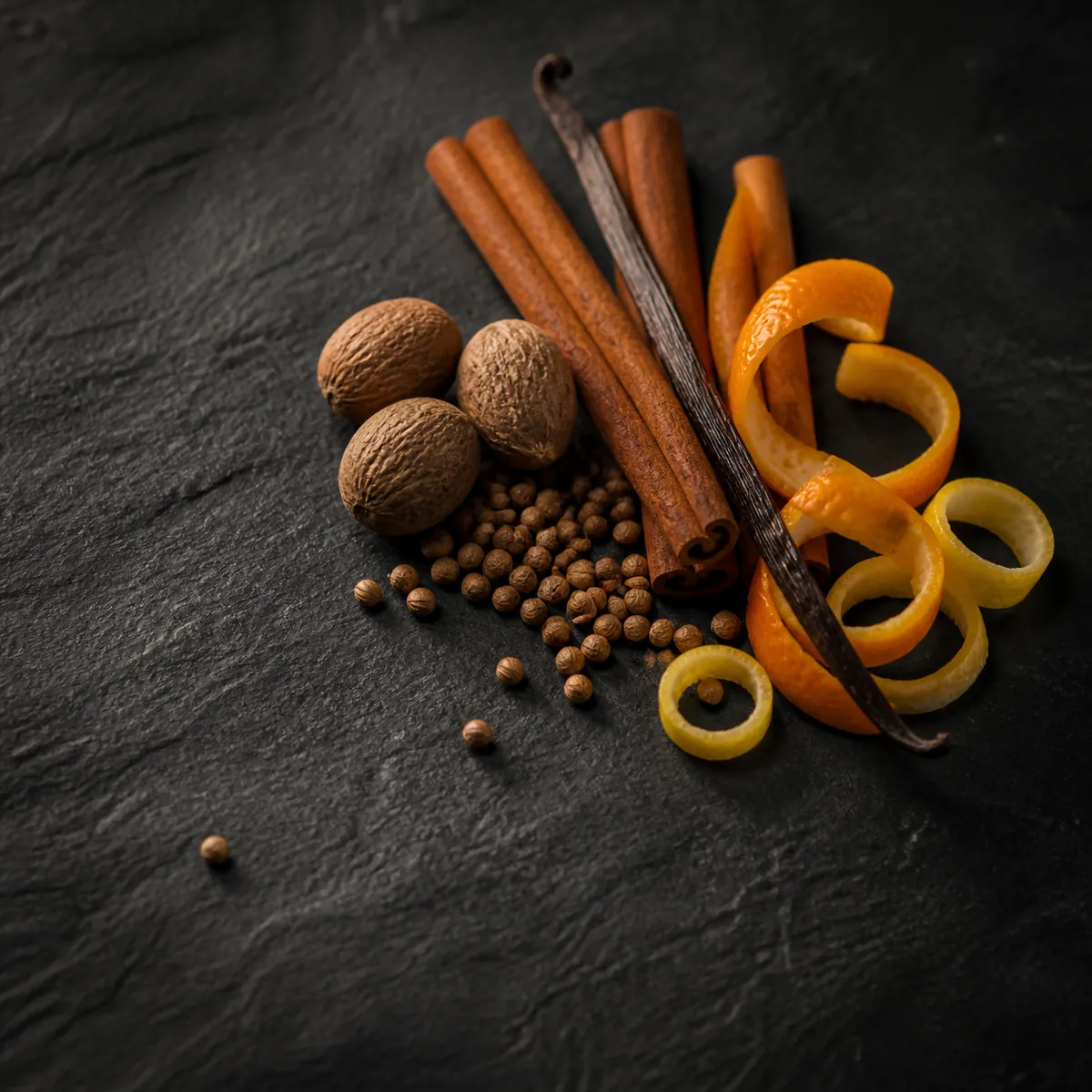
Describing the drink precisely is harder than it should be, because familiarity gets in the way and most people report the label rather than the mouthful. Taking it in sequence helps.
What arrives, in order
- Citrus oilsBright orange and lemon, in the first moment
- CarbonationThe prickle, which arrives with the acid
- SweetnessBuilds through the middle
- Spice and vanillaCinnamon and vanilla underneath, rounding it
- Dry acid finishPhosphoric acid, leaving the mouth dry rather than sour
The dry finish is the least noticed and the most distinctive part of the whole thing.
Set it beside a citric-acid soft drink such as bitter lemon and cola's finish is flatter, drier and much less fruity, which is a difference in the acid rather than in the flavouring.
Phosphoric acid, and why nothing else uses it
Most soft drinks are acidified with citric acid. Cola is the significant exception, and the choice is audible in the glass rather than being a technicality on the label.
| Phosphoric | Citric | |
|---|---|---|
| Used in | Cola, and little else | Most other soft drinks |
| Character | Dry, flat, mineral | Bright, fruity, sharp |
| Effect on sweetness | Cuts it firmly | Cuts it more softly |
| pH of the finished drink | Around 2.5 | Usually higher |
Phosphoric acid gives a flatter, drier, more mineral sharpness than the bright fruit sourness of citric acid, and that is a large part of why cola tastes the way it does rather than like a generic sweet fizzy drink. Swap one for the other in a home recipe and the result is recognisably a soft drink and recognisably not a cola, however carefully the oils are matched.
Cola is among the most acidic drinks commonly sold, typically around pH 2.5, which puts it below most fruit juice on the scale. That acidity is structural rather than incidental.
Take it out and the sugar level, which is high enough to be cloying on its own, has nothing pushing back against it, which is the same reason a flat and warm glass reads as syrupy rather than merely less fizzy.
The kola nut, and the caffeine that replaced it
The name points at an ingredient that is largely absent from the modern product. Kola nut is a west African seed containing caffeine, it was genuinely used in nineteenth-century formulations, and it contributed both the caffeine and a bitter note that sat under the sweetness.
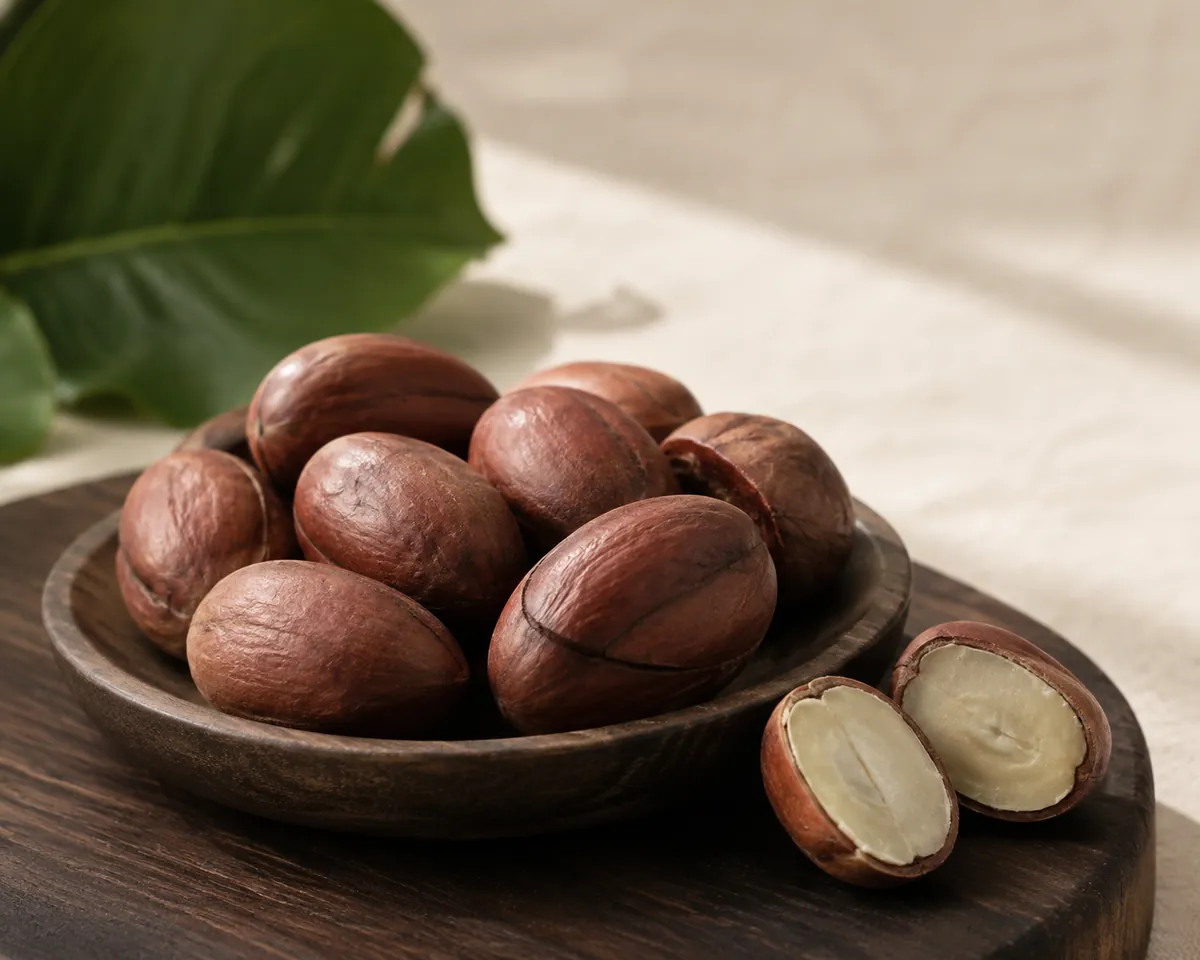
Modern colas almost universally use added purified caffeine instead, which is cheaper, more consistent and far easier to dose to a specification. Kola extract survives in some craft colas as a deliberate point of difference, so the name now records history rather than contents, in the same way that ginger ale records a brewing method it no longer uses.
Caffeine is added at roughly 10 mg per 100 ml in most standard colas, though the figure varies by brand and by market regulation, and caffeine-free versions are widely available and labelled as such. Its role in the flavour is small and not nothing: caffeine is bitter, it contributes a little to the balance against the sugar, and that is one reason a caffeine-free version tastes marginally sweeter than the drink it copies.
Sugar, sweeteners, and the cane against corn argument
Sugar in a cola is a structural component rather than a topping. It carries the body and the mouthfeel as well as the sweetness, which is why removing it changes more than one thing at a time.
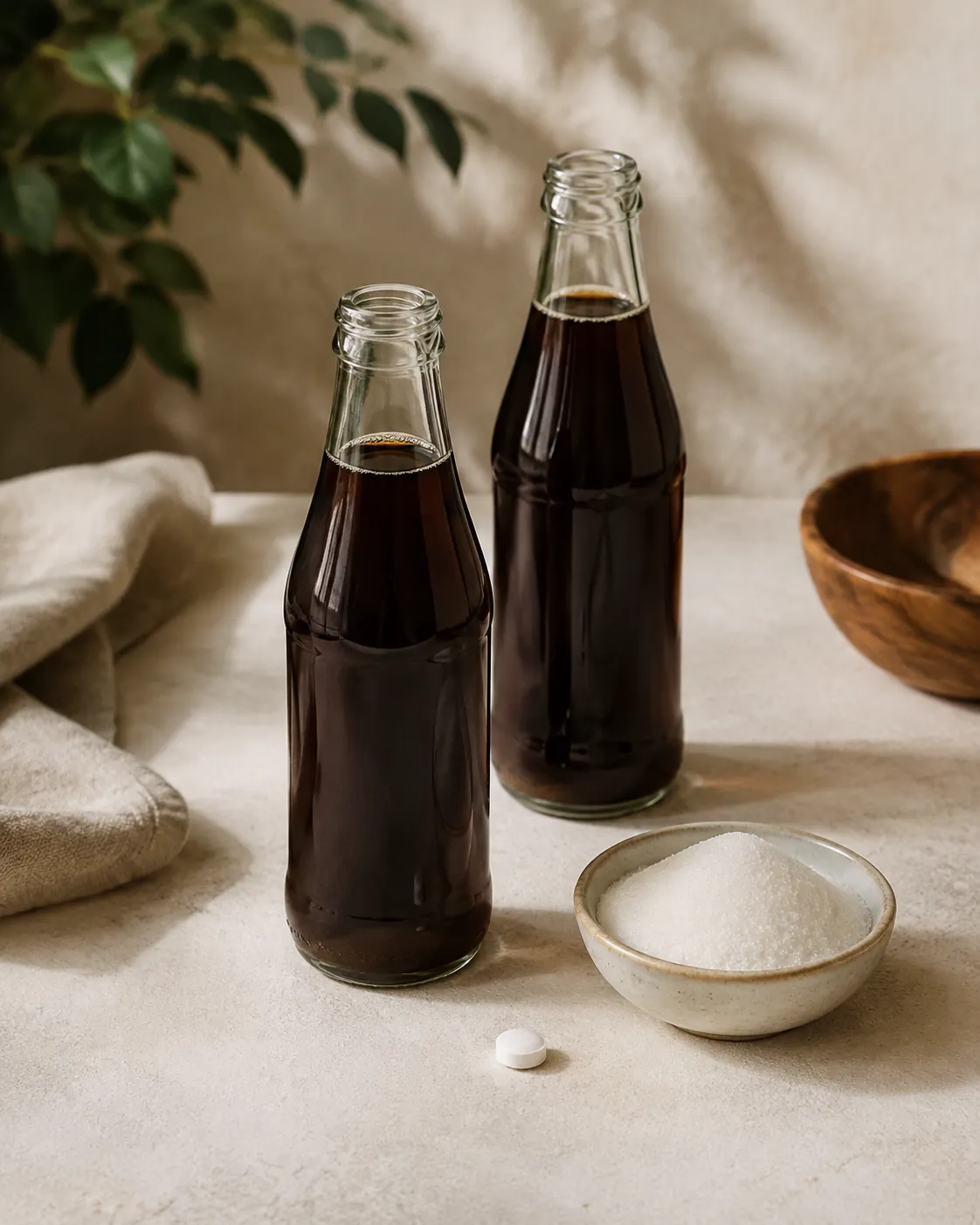
Diet and zero versions use aspartame, acesulfame K, sucralose or a blend of them, and they taste distinctly different for a reason beyond the sweetener itself: sugar contributes viscosity that a sweetener at a fraction of a gram per litre cannot, so the drink reads as thinner in the mouth.
The two are also formulated differently in flavour terms, not merely sweetened differently, which is why producers sell them as separate products rather than as one drink in two forms.
The cane-against-corn question generates a great deal of discussion and a real but small difference. Colas built on sucrose from cane sugar or beet, and those built on high fructose corn syrup, differ slightly in the shape of the sweetness, with sucrose usually described as cleaner and faster and corn syrup as a little heavier through the middle.
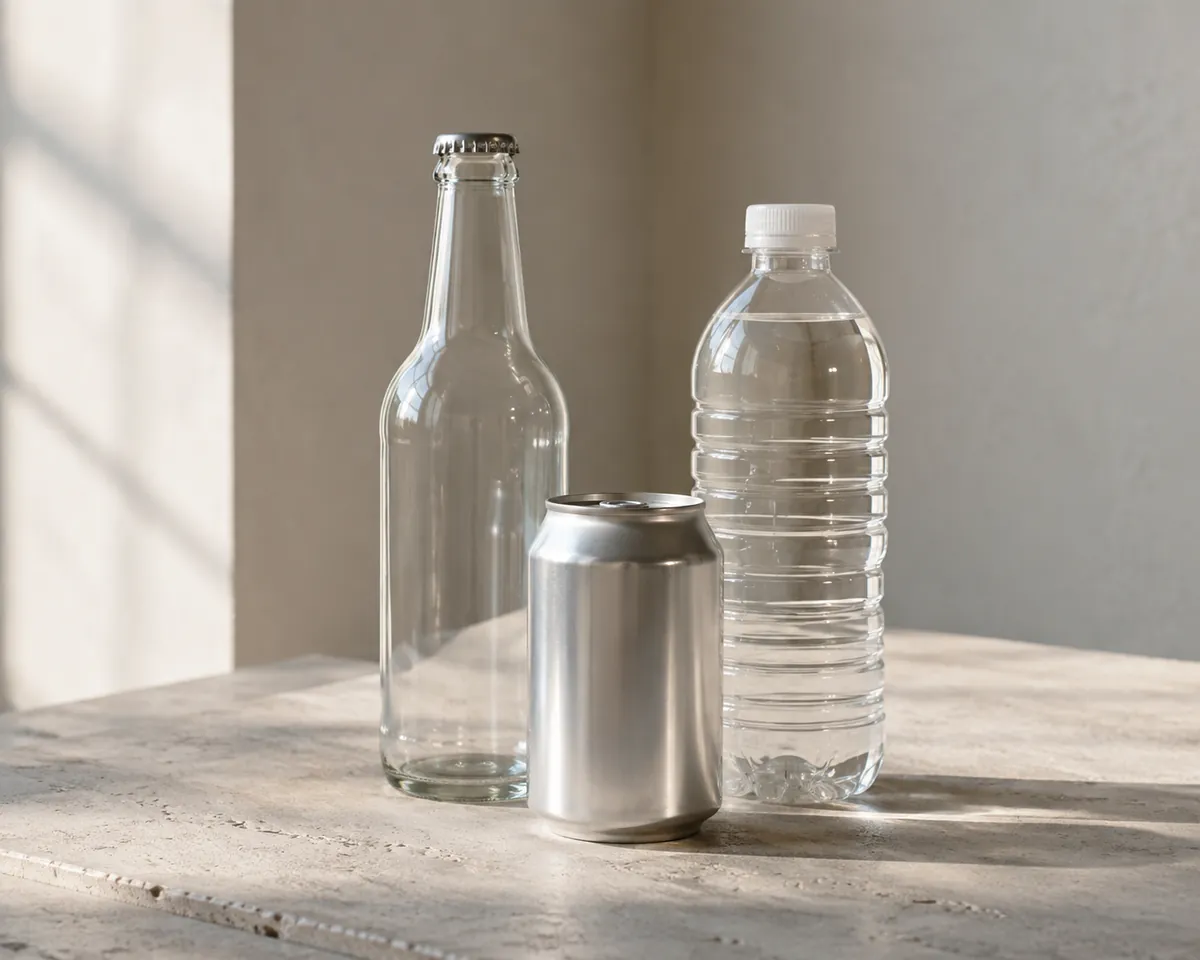
Container material contributes at least as much as the sweetener does. Glass is inert, aluminium cans are lined with a polymer, and plastic is slightly gas-permeable, so the same formulation genuinely tastes different across the three, and that is most of what people are noticing when they say cola from a glass bottle is better.
Cold, gently poured, and finished quickly
Cola is more sensitive to serving conditions than most soft drinks, largely because so much of its character sits in volatile oils that leave as soon as they are given the chance.
- Serve it properly cold. Warm cola loses its citrus top notes and reads as syrupy.
- Use plenty of ice but pour gently, since violent nucleation strips the carbonation.
- A wedge of lemon or lime reinforces the citrus already in the formulation.
- Drink it from glass where you can. It is the only inert container of the three.
- Do not pre-mix and stand it. It is at its best within a minute or two of pouring.
The useful temperature range is genuinely narrow. Cold enough that the sweetness recedes and the drink reads dry, not so cold that the aromatics are muted and it becomes acid and prickle with nothing above them.
Straight from the fridge over a moderate quantity of ice is close to right, and a glass filled with ice and topped from a warm bottle is not, because warm liquid holds far less gas and loses it instantly on contact.
Flat cola is a different drink rather than a weaker one, and a much sweeter one, since the prickle was doing part of the work of balancing the sugar. That is also the shape of the storage problem.
Unopened in glass it holds for a year or more, in plastic it degrades faster because carbon dioxide escapes slowly through the bottle wall, and once opened the headspace behaves exactly as it does with any sparkling water, so buying the size you will finish beats any trick for keeping it.
Craft colas, regional colas and syrups
The category is much broader than the two brands that dominate it, and the ones outside that pair are the fastest way to understand what the familiar drink is actually doing.
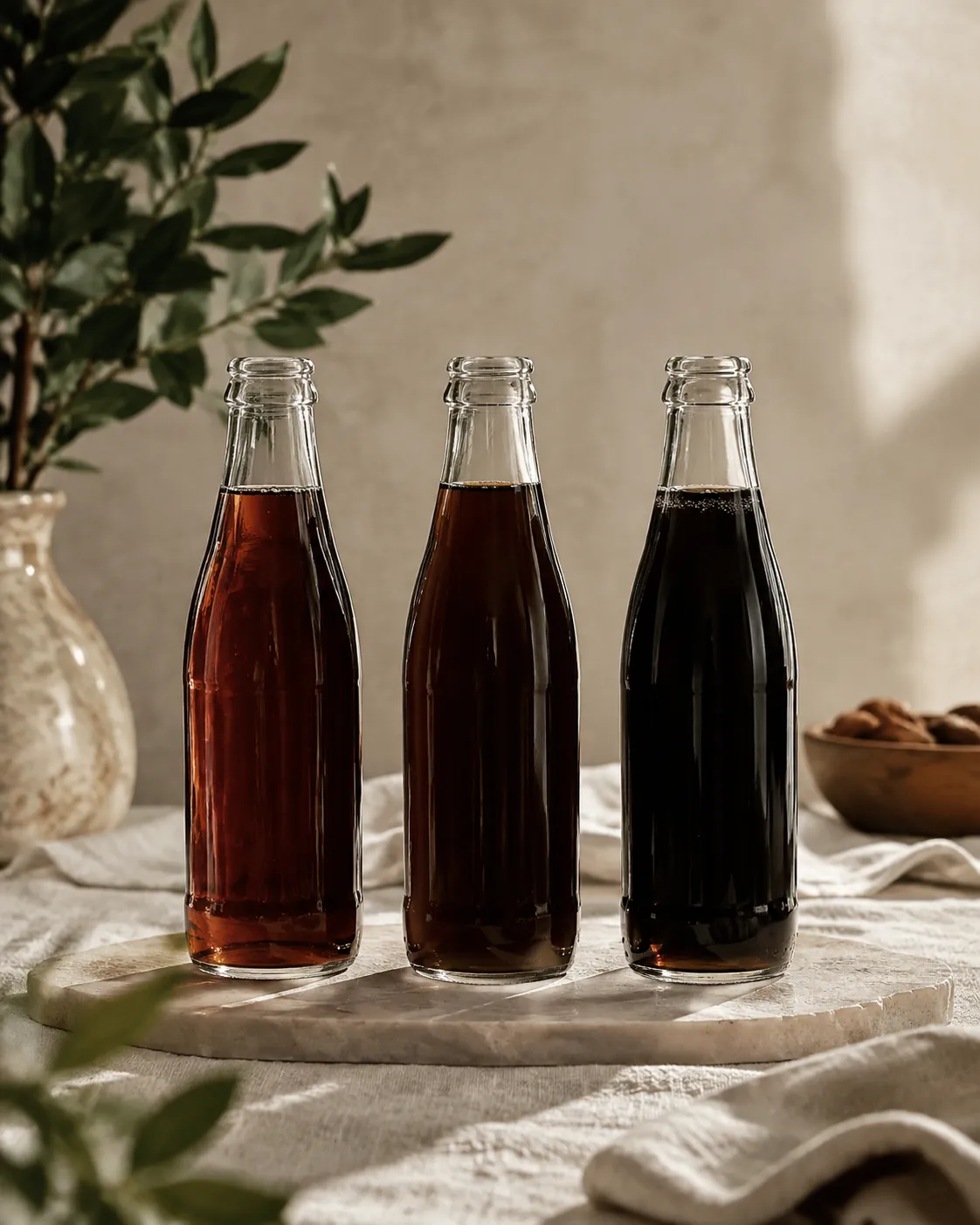
Craft colas
Often use real kola extract, cane sugar and more visible spice. Noticeably less sweet.
Regional colas
Many countries have long-established local brands with their own flavour balance.
Cola syrups
Sold for home carbonation, and the easiest way to vary strength and sweetness.
Cola-adjacent
Herbal and regional drinks that share the format but not the flavour blend.
Tasted beside a mass-market bottle, a craft cola makes the familiar flavour legible: the spice that was sitting quietly underneath comes forward, and it becomes obvious how much of the standard drink is sweetness and acid holding a small quantity of oil in place. Syrups are the other route in, because a soda maker and a bottle of cola syrup let you build the same drink at half the usual dilution and taste what changes.
Nobody needs to do this to enjoy a cola. It is worth doing once, because the comparison is the only reliable way to separate what you like about the drink from what you are used to about it, and making a cola from scratch teaches the same lesson more slowly.
Reading the label, and the one line that is secret
The ingredients list is short and every item on it is doing a specific job, which makes it an unusually informative label for a drink with a reputation for mystery.
What each line is for
- Carbonated water
- The bulk, and the carrier for everything else
- Sugar or sweetener
- Sweetness, and in the sugar version body and mouthfeel
- Caramel colour
- Colour, plus a faint burnt note. Class III or IV in most colas
- Phosphoric acid
- The dry sharpness that defines the category
- Natural flavourings
- The citrus and spice oil blend, and the only secret part
- Caffeine
- Bitterness and stimulation, added separately and purified
Everything except "natural flavourings" is disclosed and unremarkable. The proprietary part is a single line, and secrecy is the only mechanism available to protect it, because a flavour formulation cannot be patented and small shifts in the proportions of volatile oils are audible to anyone who drinks the stuff regularly.
That has produced a long tradition of reverse-engineered recipes, most of which are approximations that get the citrus and spice components broadly right and the proportions wrong, which is enough for something cola-like and not for something identical.
The gap between a good homemade cola and a commercial one is consistency rather than complexity: producing the same blend to the same specification, batch after batch, is the harder problem, and it is the one the disclosed ingredients give no help with.
Root beer, ginger ale and tonic
Cola is the most-drunk soft drink in the world, which makes it the reference point everything else on the shelf gets described against, usually inaccurately.
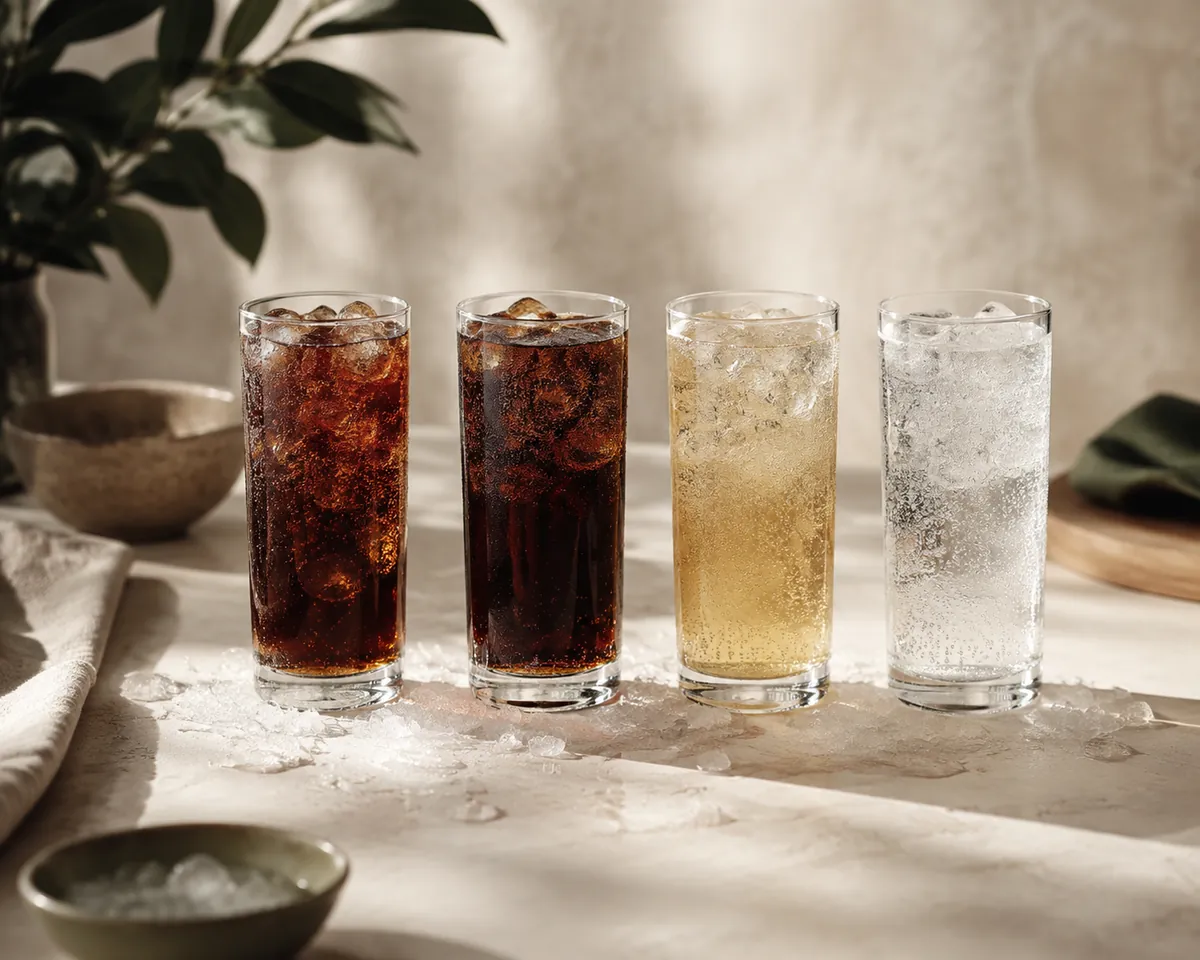
| Cola | Root beer | Ginger ale | Tonic water | |
|---|---|---|---|---|
| Acid | Phosphoric, pH around 2.5 | Low | Citric, moderate | Citric, high |
| Sweetness | High | Highest | Moderate to high | High |
| Caffeine | Usually yes | Usually no | No | No |
| Bitterness | Slight, from caffeine | Slight, from bark | None | High, from quinine |
| Colour source | Caramel | Caramel | Caramel or none | None |
Root beer is the closest structural relative, sharing the caramel colour and the spice-blend approach while being far less acidic, and it is built on sassafras or wintergreen, which reads medicinal and minty to anyone who did not grow up with it. Tonic water shares the high acidity and replaces the spice with quinine, so it is the neighbour that feels closest on the tongue and furthest on the label.
What cola has that none of them do is phosphoric acid. That is the whole of its dryness, it is why the drink cuts through fat and dilution better than a sweeter soda, and it explains why an Italian soda built on fruit syrup can be sweeter than cola while tasting far less intense.
Why it does not lengthen anything
Unlike almost everything else in this part of the aisle, cola is rarely used to lengthen another drink, and the reason is that its flavour is already complete.
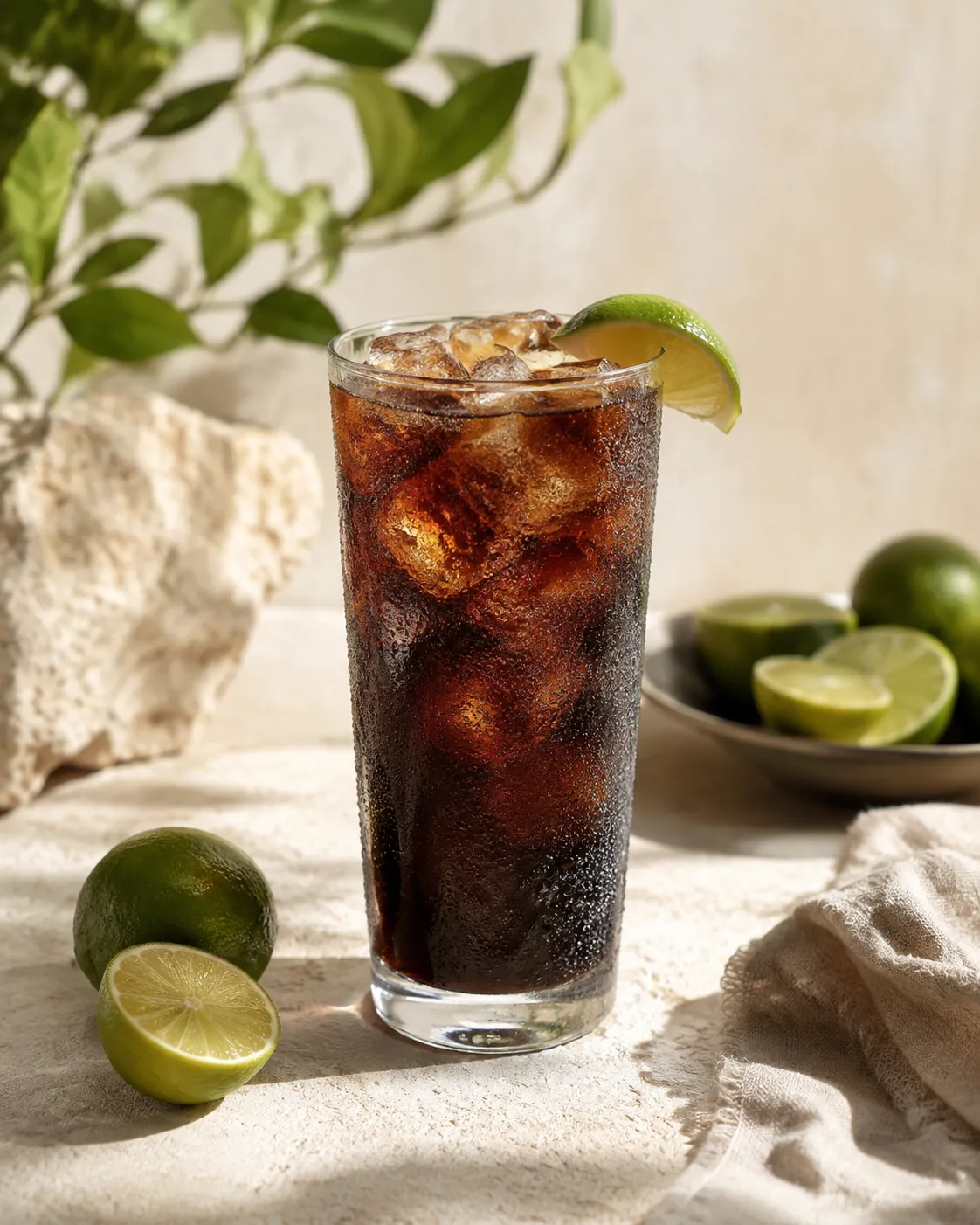
A drink built on citrus oils, spice, vanilla, caramel and phosphoric acid leaves very little room for anything else to sit alongside it, so most additions read as a contamination rather than a combination. The few that work are the ones that reinforce something already in the blend rather than introducing a new idea.
With coffee
A regional habit in several countries, and better than it sounds with a bright roast.
With bitters
A few dashes make it drier and less sweet, and it is one of the few genuine improvements.
With juice
Generally poor. The acids fight each other and the result tastes muddled.
If what you want is a carbonated base that contributes body and very little flavour, soda water is the correct tool and seltzer is the neutral one. Cola is neither.
It is a finished drink that happens to be carbonated, and treating it as a mixer means starting from a full glass of decisions somebody else has already made.
Common questions
Does cola contain kola nut?
Usually not. Kola nut was used in early formulations, but modern colas almost always use added purified caffeine instead. Some craft colas do use real kola extract and say so on the label.
Why does cola taste different from a glass bottle?
Container material genuinely affects it. Glass is inert, cans have a polymer lining, and plastic is slightly gas-permeable and lets carbonation escape over time. The same formulation tastes different across the three.
How much caffeine is in a can of cola?
Around 33 mg in a 330 ml can, based on roughly 10 mg per 100 ml. That is about a third of a typical cup of brewed coffee. Caffeine-free versions are widely sold and labelled.