What Makes Tonic Water Bitter? Quinine, From Cinchona Bark
Tonic water is bitter because of quinine, a compound extracted from the bark of the cinchona tree. It is the only common soft drink built around a bitter note rather than working to hide one.
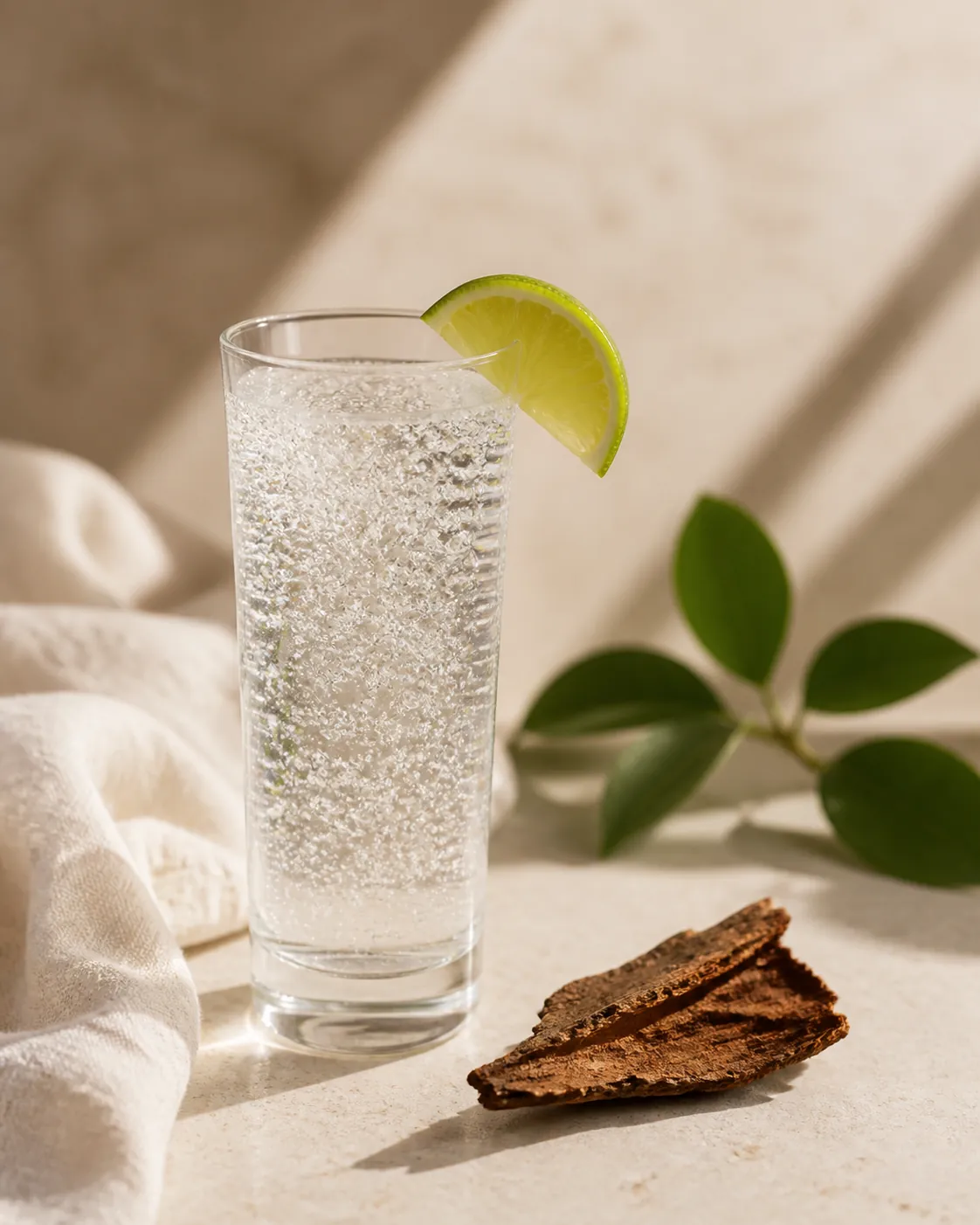
Quinine is an alkaloid found in the bark of trees in the genus Cinchona, native to the Andes. It is intensely bitter, detectable at very low concentrations, and it is the single ingredient that makes tonic water tonic rather than sweetened fizzy water.
Take the quinine out and what remains is lemonade with bubbles.
Tonic water at a glance
- What it is
- A sweetened, carbonated soft drink bittered with quinine
- The bitter compound
- Quinine, an alkaloid from the bark of Cinchona trees
- Typical sugar
- 7 to 9 g per 100 ml in a full-sugar tonic
- United States ceiling
- 83 parts per million of quinine
- European Union ceiling
- 100 mg of quinine per litre
- Also in the bottle
- Citric acid, carbonation, and often citrus or herbal botanicals
- Tell-tale sign
- Quinine fluoresces pale blue under ultraviolet light
Quinine, and how little of it the drink needs
Every market that permits quinine in a soft drink caps how much may go in, and the caps are low enough that what reaches the glass is measured in parts per million rather than in grams.
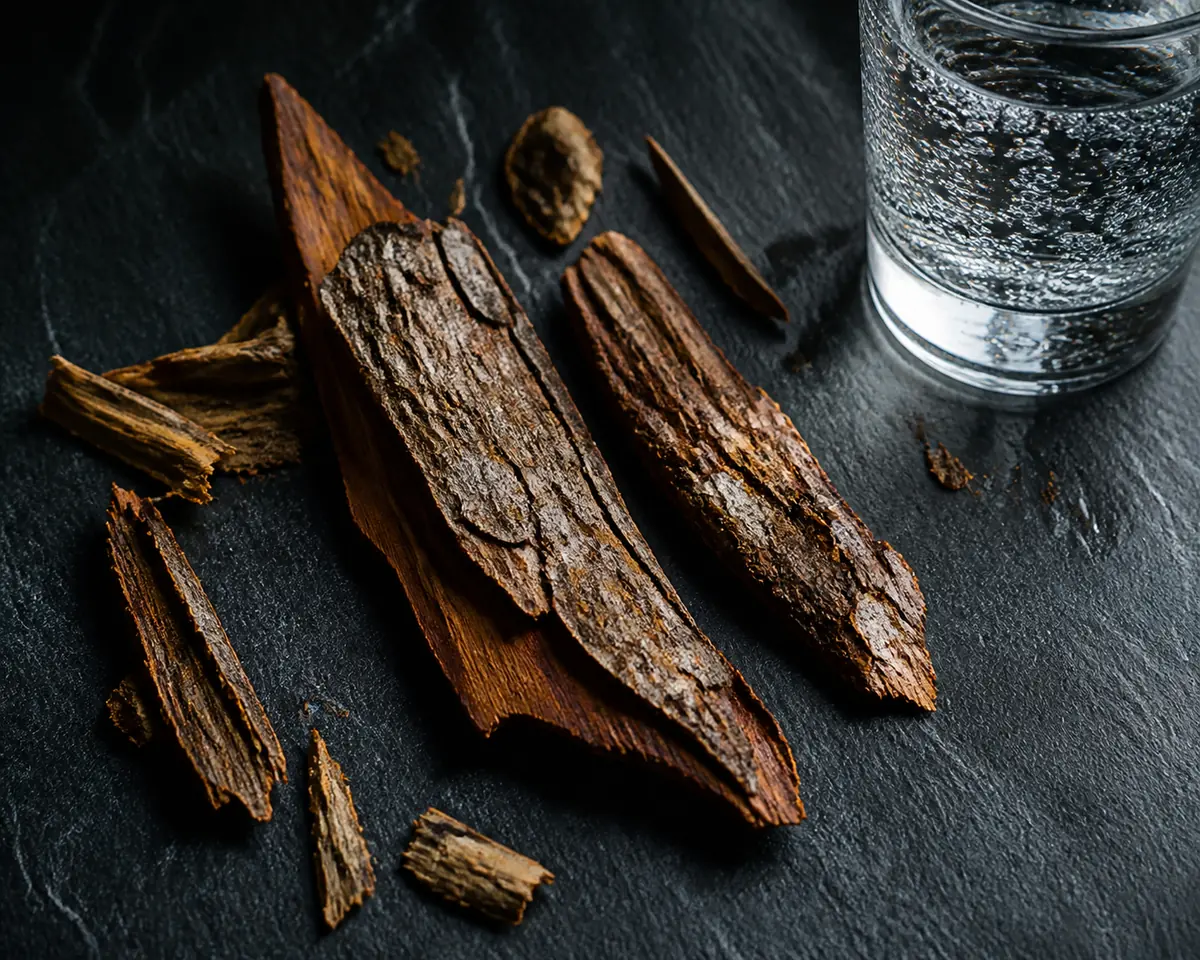
That is still far more than enough to dominate the flavour. Bitterness is the taste humans detect at the lowest concentration, generally understood as a defence against toxic plants, and quinine sits near the top of that sensitivity range.
The gap between the legal cap and the detection threshold is the number that explains the drink. Quinine registers at somewhere near a fiftieth of the permitted level, so even a tightly limited quantity decides everything about how a bottle tastes.
The sugar figure is the one people misjudge, because the bitterness masks it thoroughly: a tonic and a can of cola carry a similar load and taste nothing alike.
Why the sugar, the acid and the bubbles are all load-bearing
Straight quinine at drinkable concentrations is unpleasant on its own. Tonic water balances it with a substantial quantity of sugar or sweetener plus citric acid, and those three work as a system rather than as a list of ingredients.
Quinine
The bitterness. Present in tiny quantity and impossible to miss.
Sugar or sweetener
Suppresses the perception of bitterness. Usually 7 to 9 g per 100 ml in a full-sugar tonic.
Citric acid
Adds brightness and stops the sugar reading as syrup.
Carbonation
Carbonic acid adds its own faint sharpness and lifts the aromatics.
Sweetness suppresses the perception of bitterness rather than removing it, and the acid brightens the result so the sugar does not read as flat and syrupy. The same arithmetic runs in a cup of tea, which is why green tea bitterness answers to the same corrections.
Take the sugar out and the identical quinine reads much harsher, which is why a reduced-sugar tonic tastes like a different drink rather than a lighter one.
Carbonation is the third leg and the one people forget about, because dissolved carbon dioxide forms carbonic acid and contributes a real part of the sharpness. When the gas leaves, that acidity leaves with it and the balance tips toward the sweet, so a bottle opened yesterday tastes wrong rather than merely still.
Nothing has been added; a third of what was holding the sugar in check has simply gone. Storing tonic water is mostly a matter of accepting that and buying smaller bottles.
Four clear fizzy drinks, and only one of them bitter
Put them side by side and nothing about the appearance separates them, which is exactly why the names get used interchangeably and wrongly.
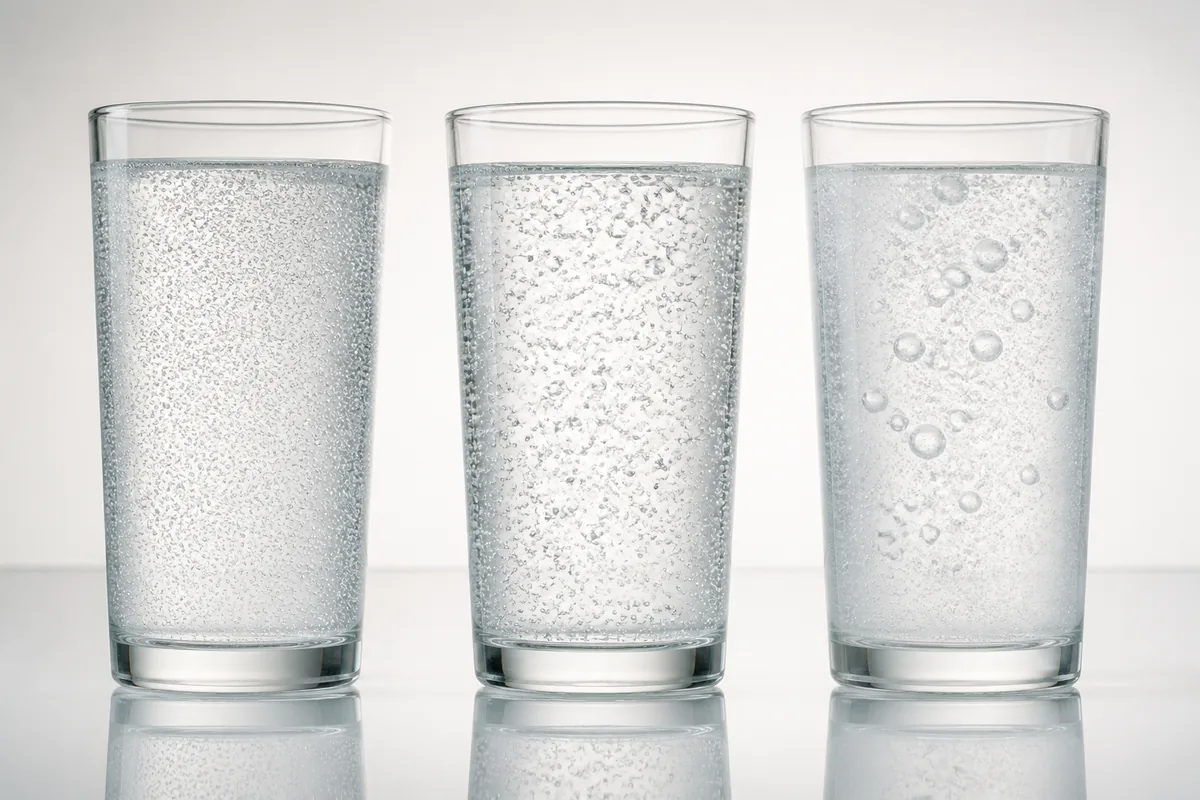
| Drink | Contains | Tastes |
|---|---|---|
| Tonic water | Quinine, sugar, citric acid, carbonation | Bitter, sweet, sharp |
| Soda water | Carbonation, sometimes added mineral salts | Faintly saline, otherwise neutral |
| Club soda | Carbonation plus added minerals such as sodium bicarbonate | Slightly more mineral than soda water |
| Sparkling mineral water | Naturally occurring minerals, carbonation | Varies by source, never bitter |
Sugar separates tonic from the other three at least as much as the quinine does. A tonic and a soda water are both clear and fizzy, and only one of them is a soft drink; swapping one for the other takes out the bitterness, the sugar and the acid together, which is why the result tastes hollow rather than lighter.
Soda water against tonic water sets the pair out properly, and club soda sits between them on minerals alone.
Two shelf neighbours fall just outside that table. Bitter lemon is tonic plus citrus juice and pith, so it runs two bittering systems rather than one, and ginger ale is sweet and warm rather than bitter, which makes it the usual alternative for anyone who dislikes quinine.
One difference is visible rather than tasted.
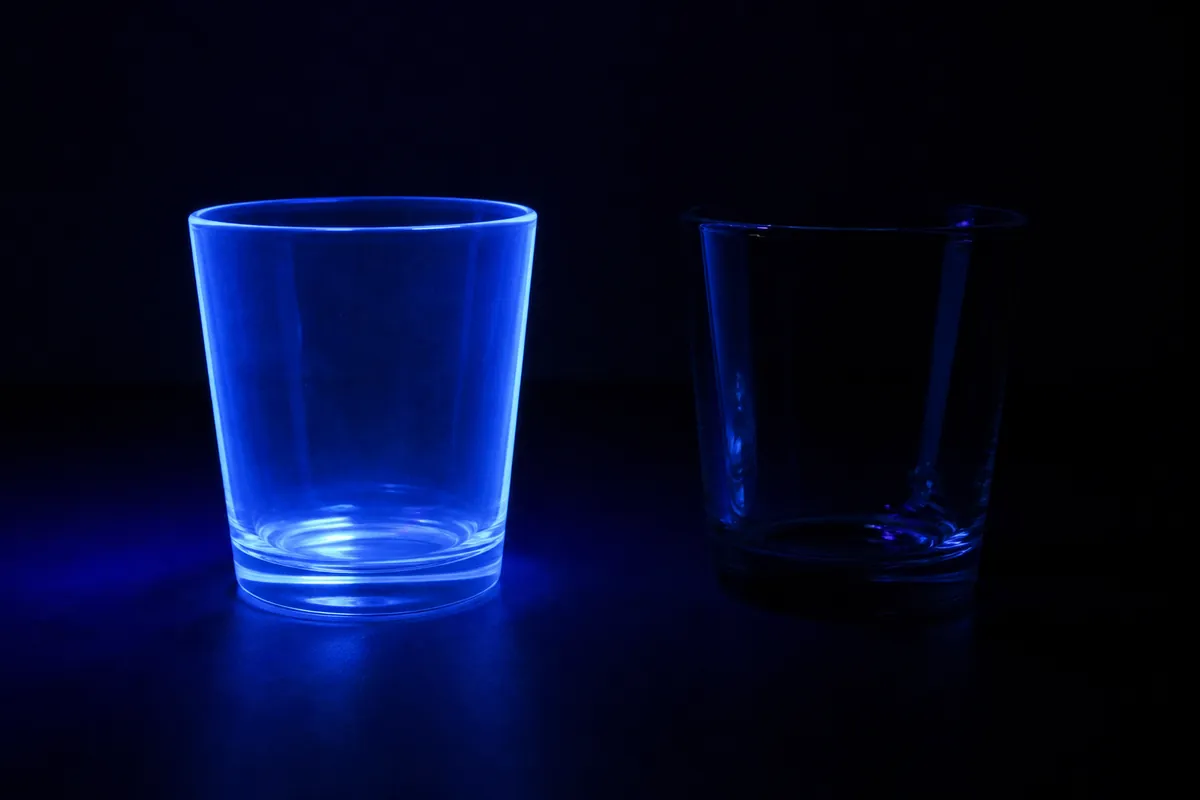
Quinine fluoresces under ultraviolet light, and that pale blue glow is the simplest way to tell a real tonic from a soda water without tasting either.
From an antimalarial to a flavouring
Quinine was used as an antimalarial long before anyone drank it for pleasure. Cinchona bark had been carried out of the Andes to Europe in the seventeenth century, and by the nineteenth it was the standard treatment.
A therapeutic dose is extremely bitter, so British officials in colonial India took it dissolved in water and added sugar and soda to make it drinkable. That mixture is the direct ancestor of the drink sold today, with one important difference.
The quinine in a modern tonic is a flavouring, not a dose. The word tonic survives from that period, describing what the mixture was for in 1850 and telling you nothing about what is in a bottle now.
Almost no commercial tonic starts from bark. Quinine is extracted and purified industrially and reaches the factory as a salt, usually quinine sulfate or quinine hydrochloride.
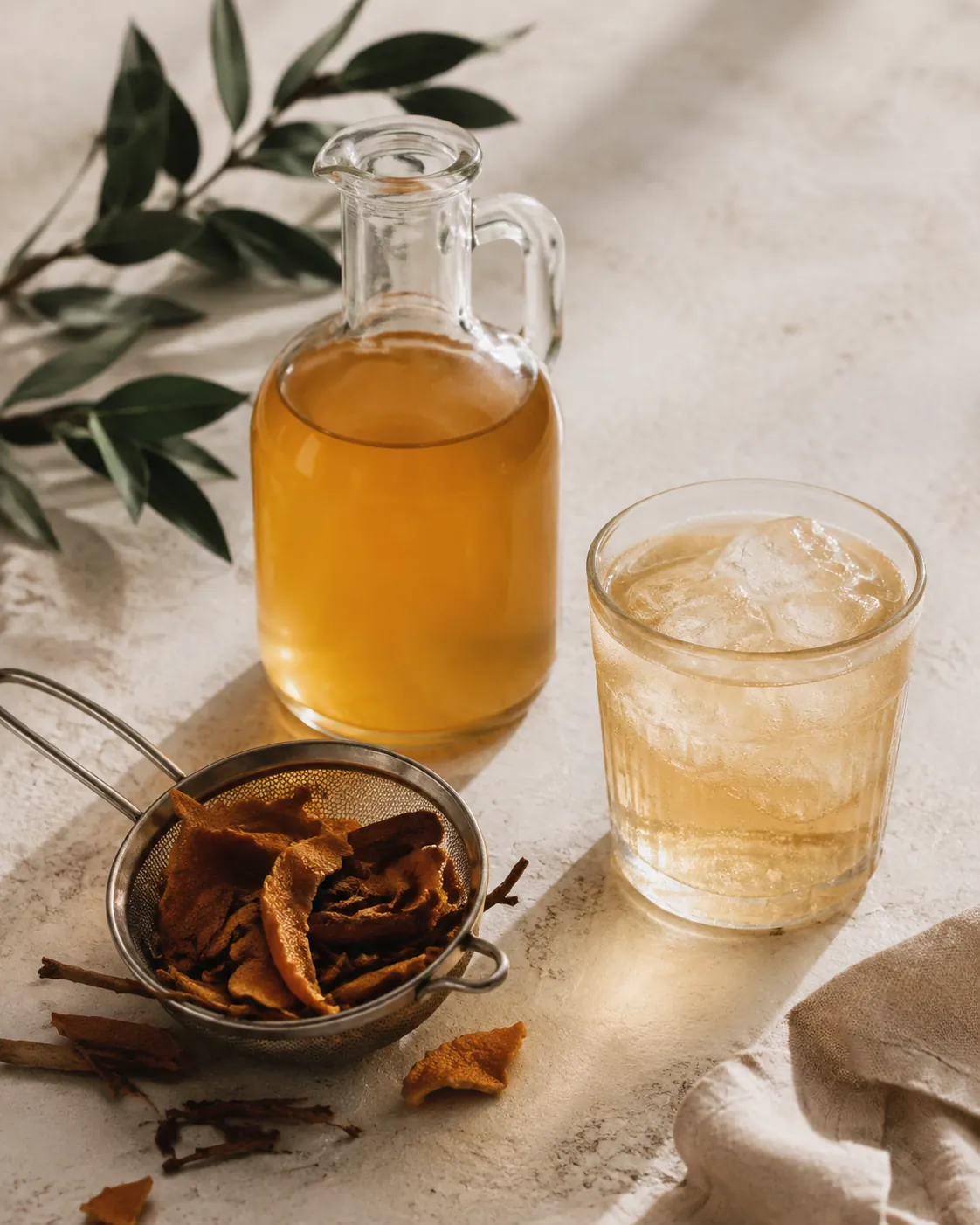
From ingredient to bottle
- DissolveQuinine salt is dissolved into water, in quantities measured in parts per million.
- SweetenSugar, high fructose syrup or a non-nutritive sweetener is blended in.
- AcidifyCitric acid is added, which brightens the drink and helps preserve it.
- FlavourMany producers add botanicals such as citrus peel, juniper or florals.
- CarbonateThe finished syrup is diluted and carbonated under pressure, then bottled.
Carbonation comes last because dissolved gas escapes during every earlier step, and that ordering is the reason making tonic water at home means building a syrup and carbonating the dilution rather than fizzing a finished drink.
Why two tonics on the same shelf taste different
There is no recipe standard for tonic beyond the legal ceiling on quinine, which leaves producers free to differ on every other axis, and they take the freedom.
- Quinine level. Some sit near the legal maximum, others well below it.
- Sweetener. Cane sugar, high fructose syrup, stevia and sucralose all carry different aftertastes.
- Botanicals. Many premium tonics add citrus peel, juniper or florals on top of the base.
- Carbonation. Bubble size and pressure change how sharp the first sip reads.
The legal ceiling is not the same everywhere either, and that alone alters the product. The United States caps quinine in carbonated soft drinks at 83 parts per million, the European Union permits it as a flavouring up to 100 mg per litre, and elsewhere limits vary, with some markets requiring the presence of quinine to be declared on the label.
A tonic formulated for one market can therefore taste measurably more bitter than the same brand's bottle in another, which is worth knowing before you conclude that a recipe has been quietly changed. With no house standard to converge on, two tonics can differ from each other more than two colas ever do.
The styles that arrived with the premium wave
For most of the twentieth century tonic was a commodity, made to one recipe and sold as something nobody was expected to think about. That changed in the mid 2000s, when producers began treating it as a drink with a character worth arguing over.
The shift came down to two decisions: replacing high fructose syrup with cane sugar, and adding botanicals that had never been near a tonic before.
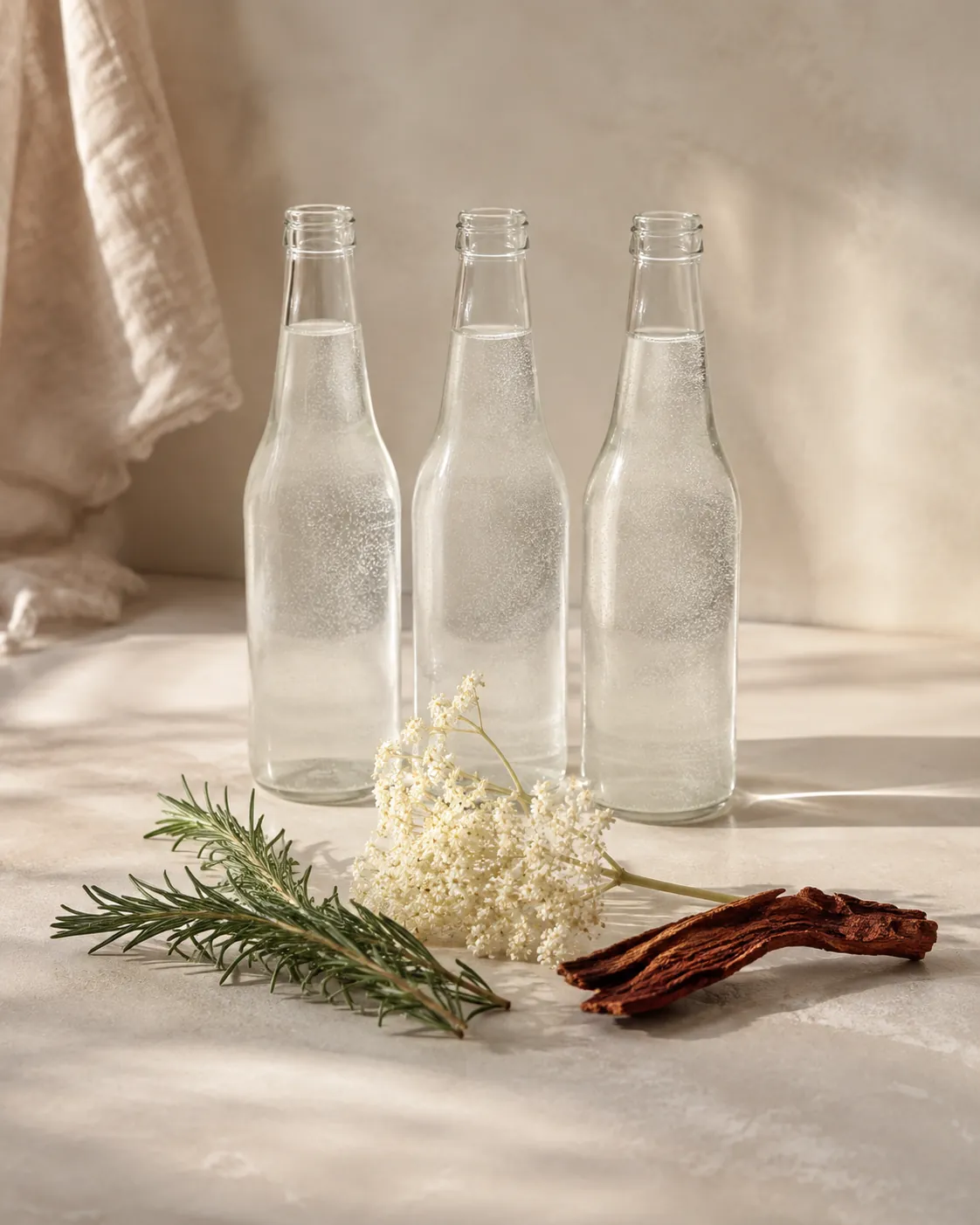
Indian tonic
The traditional style. Straightforwardly bitter, moderately sweet, no added botanicals.
Mediterranean
Lower quinine, floral and herbal botanicals such as rosemary and thyme.
Elderflower
Sweeter and more perfumed, with the bitterness pushed well back.
Light or slimline
Reduced sugar, which leaves the same quinine tasting sharper.
Bark-based syrup
Made from whole cinchona, earthier and cloudier than an industrial tonic.
None of those styles is more authentic than another. Indian tonic is simply the oldest, and the rest are deliberate departures from it.
What the wave really overturned was the assumption that one bottle of tonic is much like the next, so what tonic water tastes like is now a question with several answers. If the quinine rather than the drink is the obstacle, the Mediterranean and elderflower styles are where to start, since both push the bitterness a long way back without pretending it is absent.
Pouring it, and reading the label
Tonic is more fragile than most soft drinks, and how it is poured decides how much of it survives to the second mouthful.
- Chill the bottle thoroughly. Cold liquid holds carbon dioxide far better than warm, so a room-temperature pour goes flat as it hits the glass.
- Fill the glass with ice before pouring rather than after. Pouring onto a few cubes agitates the liquid and drives off gas.
- Pour down the side of the glass, not into the middle.
- Use a small bottle rather than a large one. Once opened, the clock starts.
- Add citrus at the end if at all. The oils in peel suppress foam and change the aroma more than people expect.
None of that is ceremony. Each step protects the carbonation, which protects the acidity that balances the sugar, and losing that balance is behind most tonic water problems: a drink that has turned syrupy because the sharpness escaped rather than because anything went off.
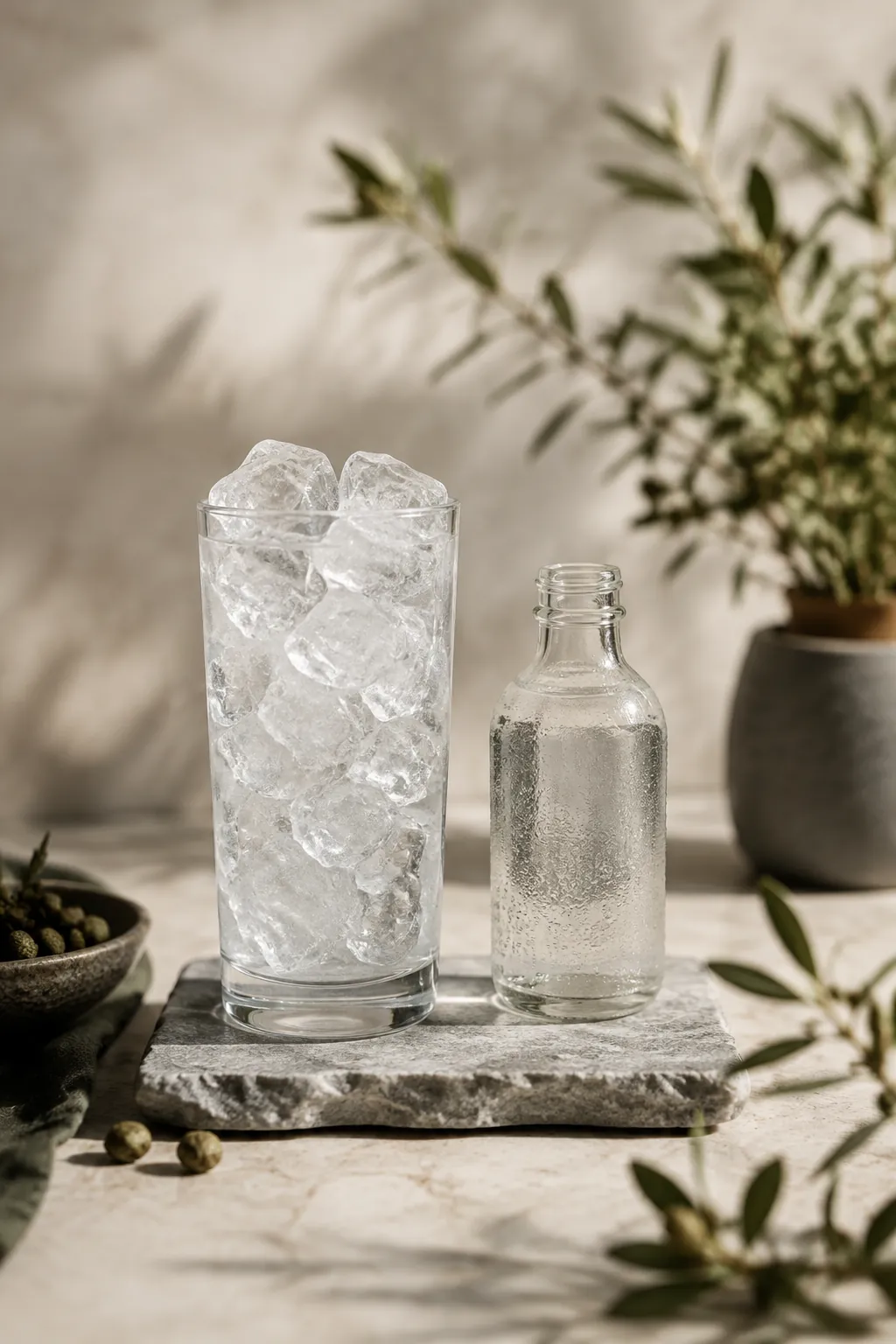
The informative parts of a label are the dull ones, as usual.
- Check whether quinine is declared. In several markets it must be, and its absence means the product is not a tonic.
- Check the sugar figure per 100 ml, not per bottle. Full-sugar tonics commonly sit between 7 and 9 g.
- Check the sweetener if it is a light version. Sucralose, stevia and aspartame taste noticeably different from each other.
- Check the bottle size. Tonic goes flat quickly once opened, so a 150 or 200 ml bottle wastes less than a litre.
- Ignore the botanical list on the front until you have read the first three.
Bottle size is the line most people skip and the one that most often decides whether the second glass is any good. A 150 ml bottle poured once wastes nothing, where a litre opened on Friday is a different drink by Sunday.
Tonic syrup, and why bark is not a kitchen ingredient
A small category of producers sells tonic as a syrup rather than as a finished drink, and it is worth understanding because it hands back two decisions that a sealed bottle takes away.
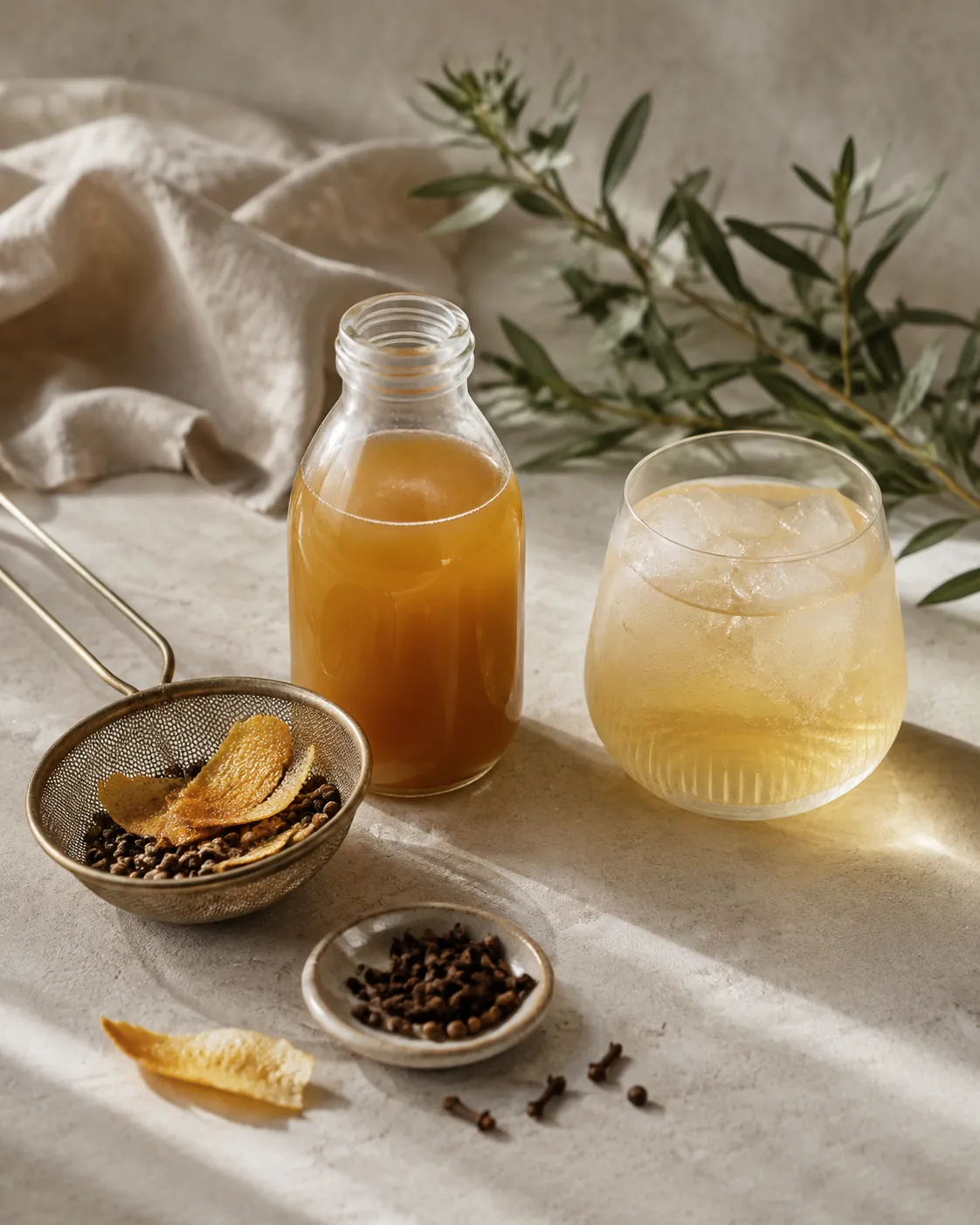
The syrup carries the quinine, sugar, acid and botanicals in concentrate, and you add the carbonated water yourself, which sets strength and fizz separately instead of together. A soda maker driven hard gives a sharper glass than most bottled tonic manages, because the gas level is yours to choose.
Typical syrup dilution
- Syrup
- 25 ml
- Soda water
- 100 to 150 ml
- Ratio
- Roughly 1 part syrup to 4 to 6 parts water
- Result
- Cloudier and earthier than a bottled tonic
Home-made tonic from raw cinchona bark is a different proposition entirely. Bark is not a standardised ingredient, its quinine content varies from piece to piece, and a home cook has no way to measure what ends up in the glass.
Commercial syrup is the sensible route to that flavour, because somebody has already done the measuring. A simple syrup infused with citrus peel and spice will give you a pleasant sharp soda, but never a bitter one.
Four things people repeat about tonic
Four claims come up again and again, and none of them survives contact with the numbers. Each is repeated confidently enough to have become part of the drink's folklore, which is reason enough to set them out plainly rather than let them stand.
That it is a health drink
The name is a historical artefact. The quinine content is a flavouring quantity, not a therapeutic one.
That soda water will do instead
Substituting a plain seltzer takes out the bitterness, the sugar and the acid at once, which is why the result tastes hollow rather than lighter.
That diet tonic is the same drink
Sweeteners suppress bitterness on a different curve, so a light version reads more bitter early and thinner at the finish.
That the ultraviolet glow means something
Quinine fluoresces. It is a property of the molecule and says nothing about quality or quantity beyond its presence.
The glow claim is genuinely useful for exactly one purpose, which is telling a real tonic from a soda water in a dark room, and useless for all the others it gets put to. The first claim is the one most worth retiring, because the word is doing all the work: tonic is a label left over from a chemist's shelf rather than a description of what is now in the bottle.
The second causes the most disappointment at the table, since a drink built to sit underneath quinine and sugar has nothing left to lean on once both of them are gone.
Drinking it with nothing else in the glass
Tonic is bought as something to build longer drinks on, and it is drunk plain often enough to be worth getting right. Very cold, over a full glass of ice, in a tall glass rather than a short one.
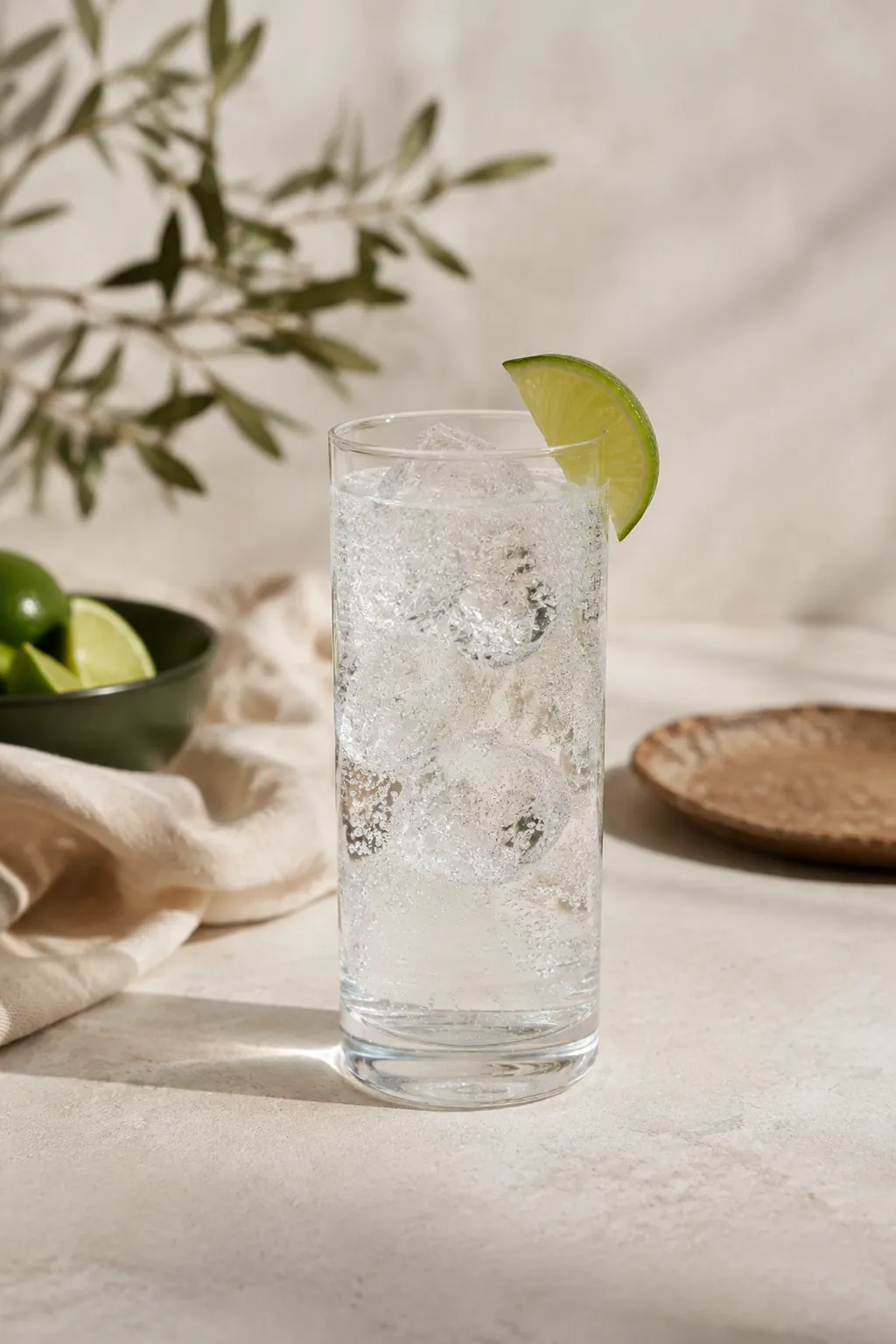
Bitterness reads harsher as the liquid warms, and a half-filled glass of ice dilutes faster than a full one, so the two corrections pull in the same direction and neither works properly without the other.
Citrus is the usual addition and the choice matters more than it looks. A wedge of lemon reinforces the sourness already there, where lime or grapefruit peel adds aroma without adding acid, which is the better move when the drink is sharp enough already.
Lemon wedge
Reinforces the sourness already in the glass. The default, and the sharpest of the four.
Lime peel
Aroma without much added acid, which suits a tonic that is already keen.
Grapefruit peel
Rounder and more perfumed, and it flatters the floral styles in particular.
Nothing at all
The only way to taste what the quinine and the sugar are actually doing to each other.
Cutting it with sparkling water is the honest fix for anyone who finds tonic too sweet rather than too bitter, since it reduces both together and keeps the carbonation intact. As the base of a longer drink it behaves like the syrup half of an Italian soda, assertive enough that whatever joins it has to be strong or the tonic simply wins.
Fruit juice loses that argument almost every time, which is the practical reason tonic is usually left alone.
Common questions
How much quinine is in tonic water?
Very little. The U.S. Food and Drug Administration limits quinine in carbonated soft drinks to 83 parts per million. It dominates the flavour because human sensitivity to bitterness is extremely high.
Is tonic water the same as soda water?
No. Soda water is carbonated water with mineral salts and is neither bitter nor sweet. Tonic water contains quinine and a significant amount of sugar or sweetener.
Why does tonic water glow under UV light?
Quinine fluoresces under ultraviolet light, giving tonic water a pale blue glow. It is the same compound responsible for the bitterness.