What Is Hibiscus Tea? The Calyx, Not the Flower
Hibiscus tea is not made from the flower. It is made from the calyx, the fleshy cup that sits under the bloom, and that is why it is sour rather than floral.
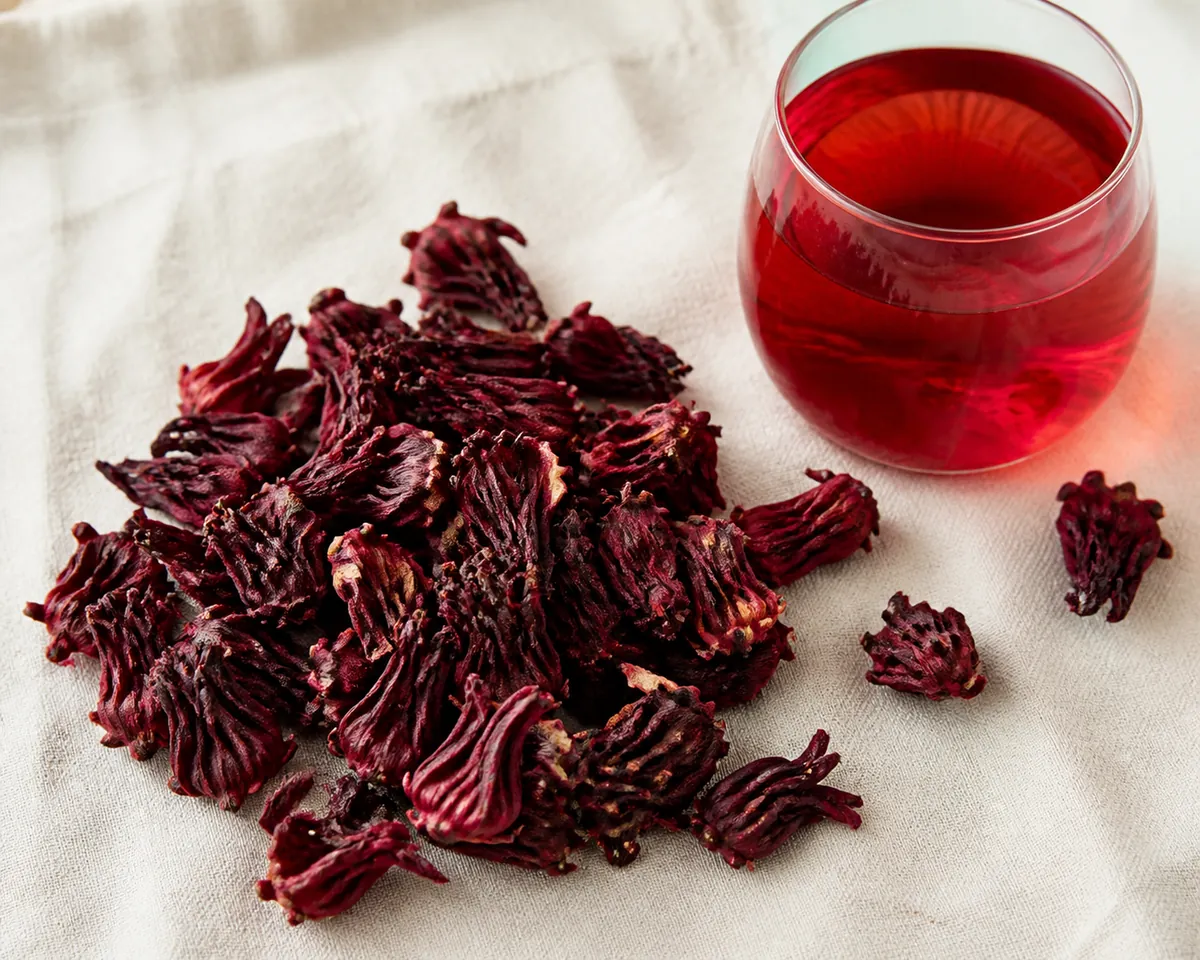
Hibiscus tea is an infusion of the dried calyces of Hibiscus sabdariffa, a plant also called roselle. It contains no Camellia sinensis, which makes it a tisane.
The most common misunderstanding about it is in that first sentence: the part used is not the petal, and almost everything that follows about colour, sourness and body depends on that.
Hibiscus tea at a glance
- What it is
- An infusion of the dried calyx of Hibiscus sabdariffa, or roselle
- Part used
- The fleshy cup left after the bloom drops. Not the petal
- Colour
- Anthocyanins, the pigment group also found in blackcurrants and red cabbage
- Sourness
- Genuine acidity from citric and malic acid, not astringency
- Caffeine
- None, since it is not a tea plant
- Dose
- 1.5 to 2 g per 250 ml, less than you would use for a leaf
- Keeps
- About two years sealed and dark, and it loses colour before flavour
The calyx, and why it is not a petal
After a hibiscus bloom drops, what remains at the base of the flower is a swollen fleshy cup, and that cup, the calyx, is what gets dried, bagged and sold as hibiscus tea.
Why that matters
- Colour
- Anthocyanins in the calyx give the deep red, the same pigment family as in blackcurrants
- Sourness
- The calyx is high in citric and malic acid, which is why the drink is genuinely tart
- Body
- It is fleshy rather than papery, so it gives a fuller infusion than a dried petal would
- Petals
- Actual hibiscus petals are thin and almost flavourless, and are not what is in the packet
The sourness is real acidity, not astringency. That distinction matters in the cup: astringency dries the mouth, while acidity makes it water, and hibiscus does the second.
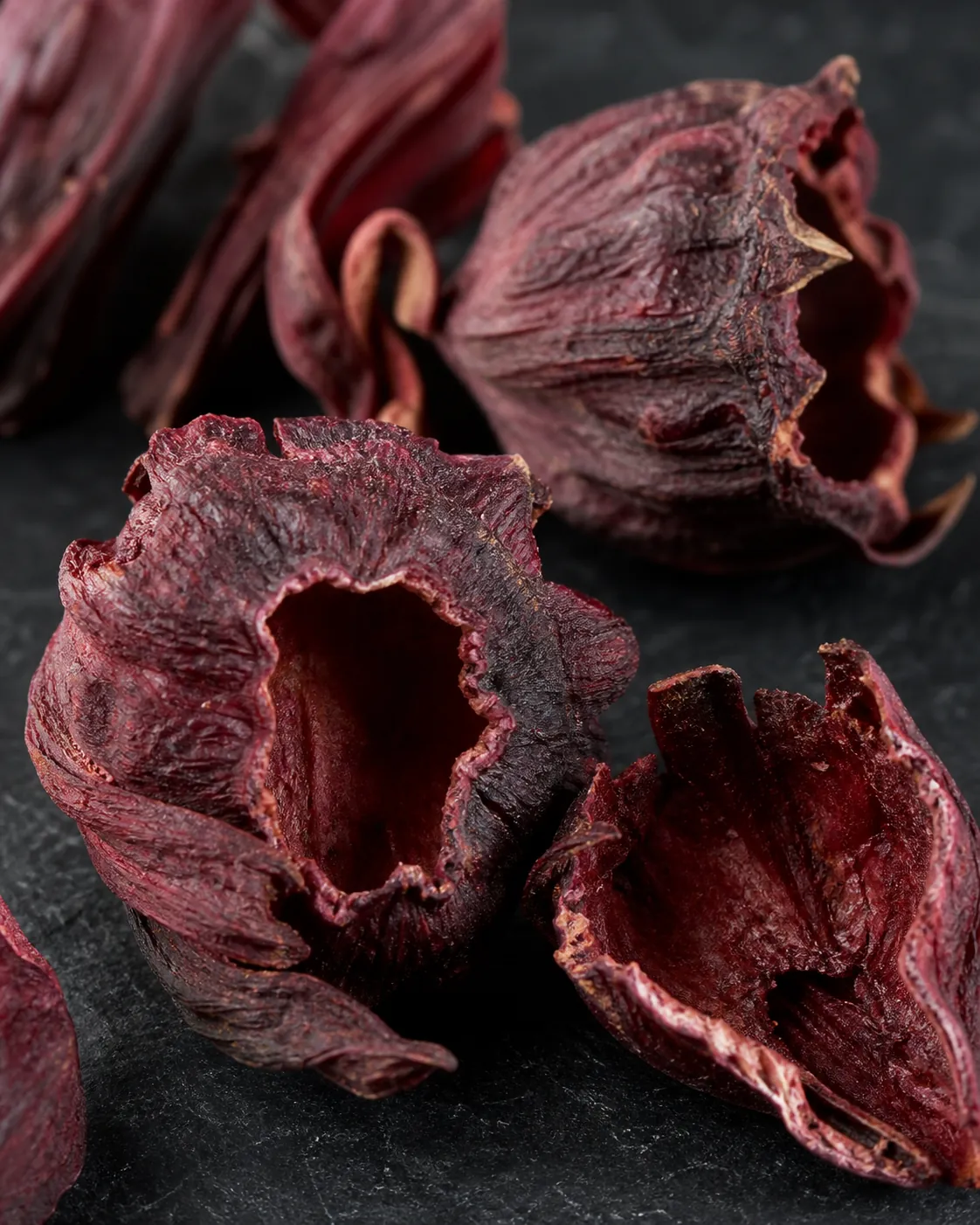
The pink flower printed on so much packaging is decoration rather than a picture of the contents, since the petals themselves carry almost no flavour and none of the colour.
Treating it as a tea is what leads people to brew it badly. Sourness and bitterness are separate sensations, the same distinction that makes tonic water bitter rather than sour, and only one of them can be sweetened away.
The fleshy calyx also yields a fuller infusion than any dried petal could, which is why a small quantity travels a long way. Hibiscus flavour works through the notes in order.
Jamaica, karkade, sorrel and bissap
One plant, a great many names.
Hibiscus travels under more of them than almost any other drink here, and they describe preparations rather than different products.
Agua de Jamaica
Mexico and Central America. Served cold and sweetened, usually in large jugs.
Karkade
Egypt and Sudan. Drunk hot or cold, and often very strong.
Sorrel
The Caribbean. Spiced with ginger and cloves, associated with Christmas.
Bissap
West Africa, particularly Senegal, where it is often blended with mint.
Roselle
The plant's botanical common name, used in Southeast Asia and Australia.
The dried calyx is broadly the same across all of them. What changes is the strength, the sweetening, and whatever goes in alongside.
Caribbean sorrel is the one worth naming separately, since ginger is a defining part of it rather than an option somebody added later.
Hibiscus sabdariffa is an annual grown across the tropics, with Nigeria, Sudan, Egypt, Mexico and Thailand among the main producers. The calyces are picked by hand a few weeks after flowering, while they are still fleshy.
They are split from the seed pod and sun dried, so quality tracks the weather at harvest closely. A wet drying season gives browner, mustier material and a duller drink from it.
Being an annual crop rather than a perennial bush, supply and price move year to year far more than they do for tea or for rooibos.
Sour rather than bitter, and what to do about it
Hibiscus is the most assertive infusion in this section: one note, delivered loudly.
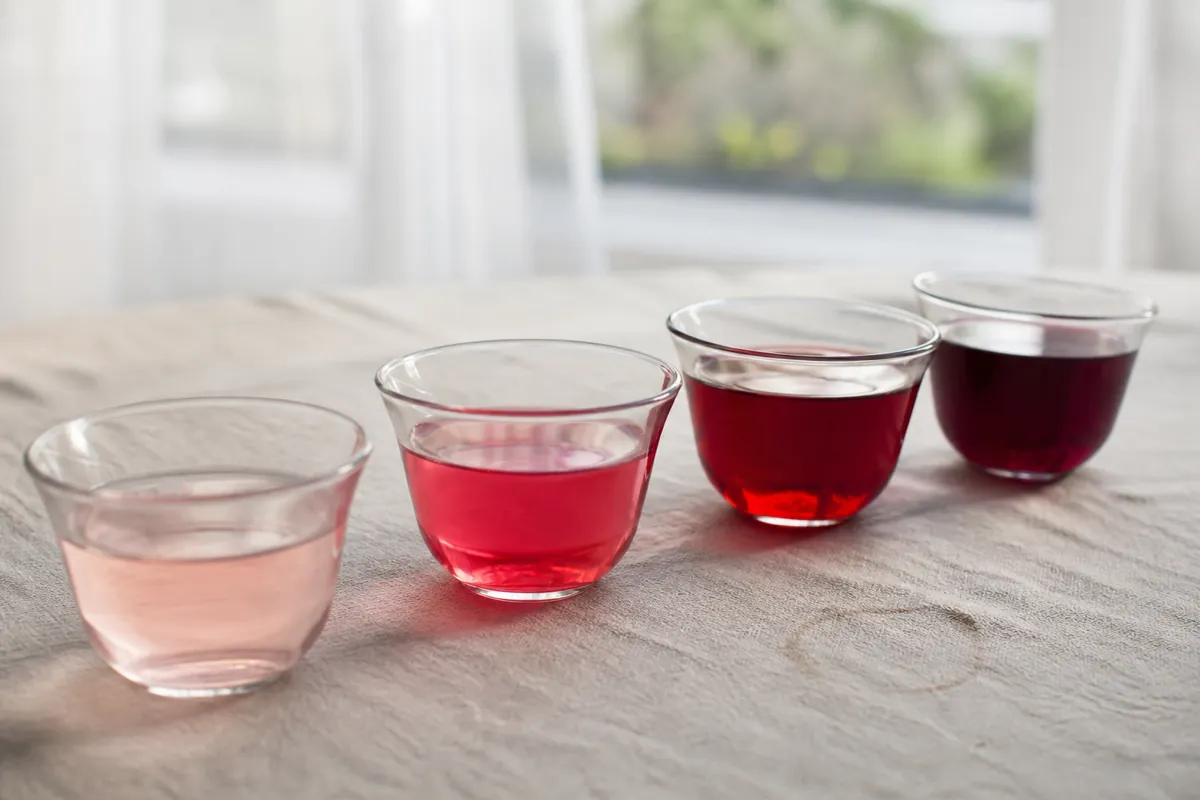
Sourness by steep length
- 2 minutesLight pink, gently tart, thin
- 4 minutesDeep red, clearly sour, balanced
- 6 minutesVery red, sharply acidic, needs sweetening
- 10 minutes and beyondAggressively sour, with a drying vegetal edge appearing
The core notes are cranberry, redcurrant and rhubarb, over a faint green vegetal base that grows more obvious the longer it steeps.
Unlike chamomile flowers, it does not turn bitter with time. It turns sour, which is a different failure and one that sweetening genuinely repairs.
That is why sweetening is close to standard here rather than optional. Almost everywhere hibiscus is drunk traditionally it arrives sweetened, and at full strength unsweetened it is as tart as undiluted cranberry juice.
What each sweetener does
- Sugar
- Neutral. Dissolve it while the liquid is hot
- Honey
- Adds a floral note that suits it well
- Cane or piloncillo
- The traditional choice for agua de Jamaica, slightly molasses-like
- Nothing
- Legitimate, but brew it weaker or it is punishing
Sweeten while it is warm, then chill. Sugar dissolves poorly in a cold acidic liquid, and stirring it into an iced glass leaves grit sitting at the bottom.
Honey is the one sweetener that changes the character rather than only the sweetness, bringing a floral note that sits alongside the fruit instead of covering it.
The low dose most people miss
Almost everyone uses too much.
Hibiscus extracts fast and hard, and a heaped spoon gives something closer to undiluted cordial than to a drink. The dose is what goes wrong here, well before the timing does.
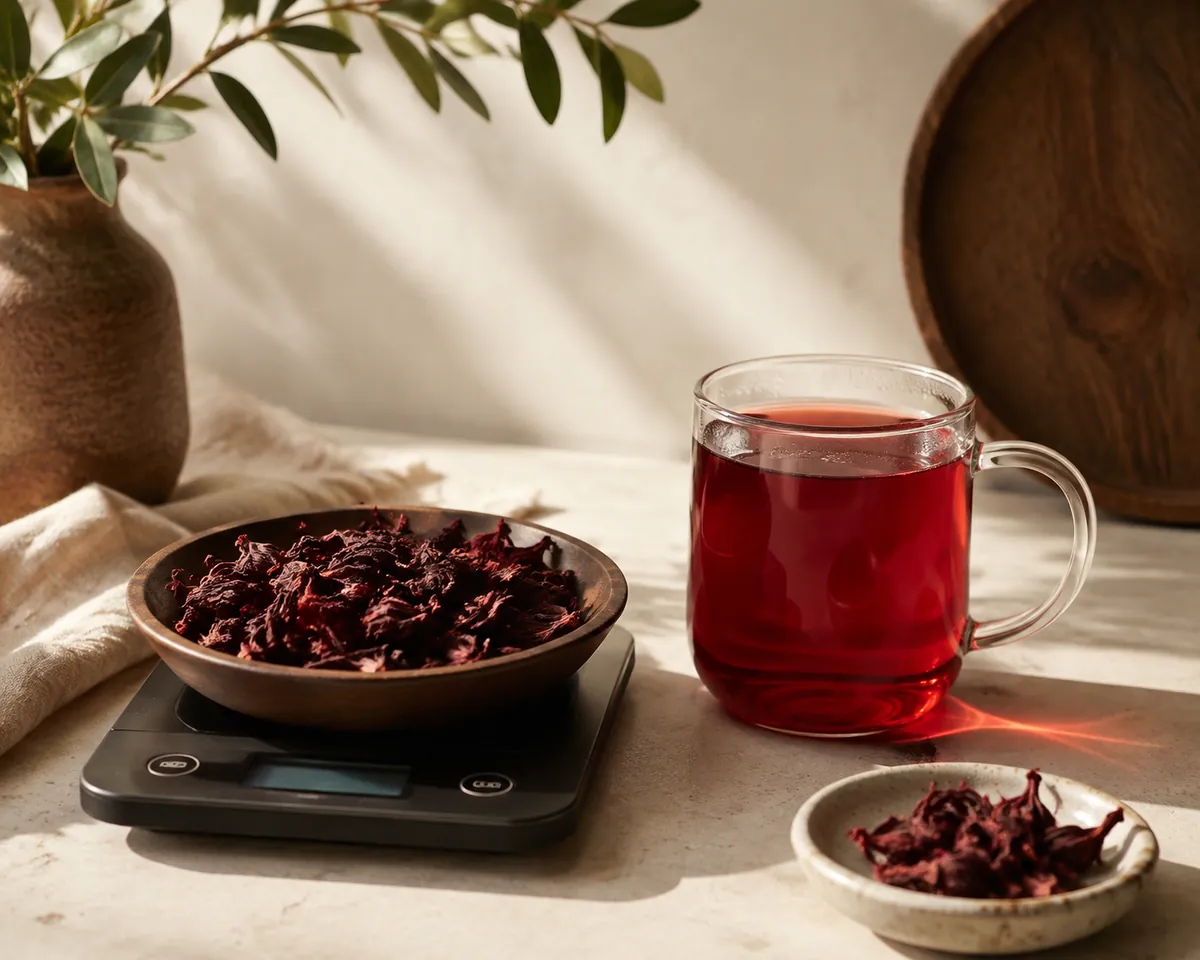
Starting point
- Water
- Boiling
- Steep
- 4 to 5 minutes hot
- Calyces
- 1.5 to 2 g per 250 ml, less than you would use for a leaf infusion
- Sweetening
- Optional, but it is genuinely tart unsweetened
- Vessel
- Glass, if you want to watch the colour develop
Water hardness matters here in a way it does not elsewhere. Alkaline water neutralises some of the acid and shifts the colour toward purple, which is the same chemistry that makes hibiscus a natural pH indicator.
What comes out of your tap is covered in brewing water, and it alters the appearance of this drink more visibly than it alters any other on the site.
Steeping time is the smaller lever of the two. Four to five minutes is right for a hot cup, and pushing on to ten does not deepen the flavour so much as strip the fruit notes and leave the acid standing alone.
Scaling either way is a matter of arithmetic rather than judgement, and making hibiscus tea sets out both the mug and the jug.
Cold by the jug, hot by the mug
Across most of the world hibiscus is drunk cold far more often than hot, and it suits the cold better than almost any other infusion, because the acidity that can feel aggressive in a mug reads as refreshing over ice.
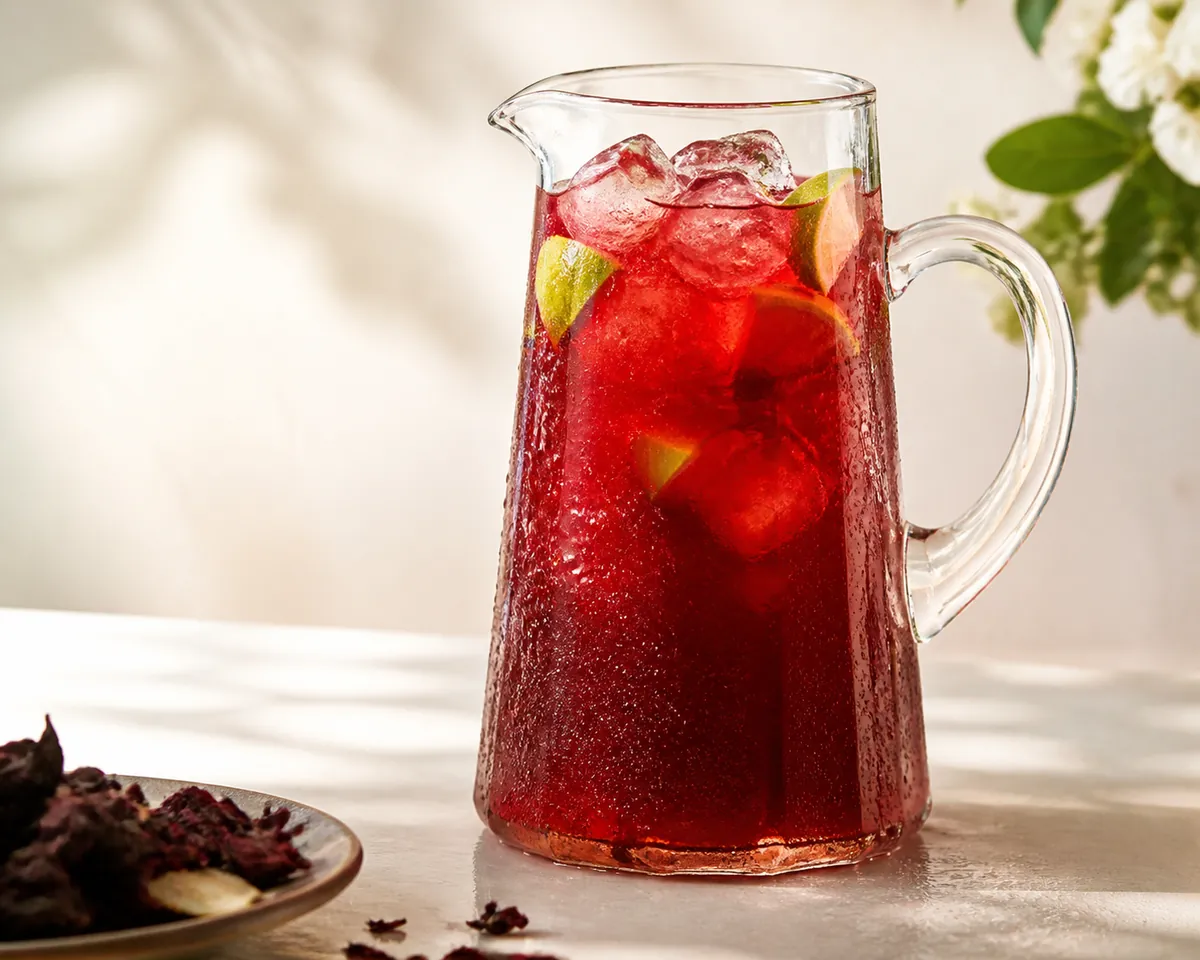
Agua de Jamaica, roughly
- Calyces
- 30 g per litre of water
- Method
- Steep in just-boiled water for 10 to 15 minutes, then strain
- Dilute
- Top up to 2 litres with cold water
- Sweeten
- To taste while still warm, so it dissolves
- Serve
- Over ice, often with a squeeze of lime
A strong concentrate followed by dilution gives far more control than trying to brew the final strength directly, and it is how agua de Jamaica is made at any volume worth making.
Hot wants a lighter hand, because heat sharpens the perception of acidity. Around 1.5 g per 250 ml over four minutes is a sensible strength, roughly half what you would brew for a jug before diluting it.
It takes spice well when hot. A single clove or a short piece of cinnamon turns it into something close to a mulled drink, which is how it is served through winter across much of North Africa.
Over ice it wants lime rather than spice, since the extra acid sharpens the fruit instead of introducing a second idea beside it.
Anthocyanins, and the colour that reports your water
Hibiscus is the only drink on this site that visibly reports the chemistry of the water it was made with.
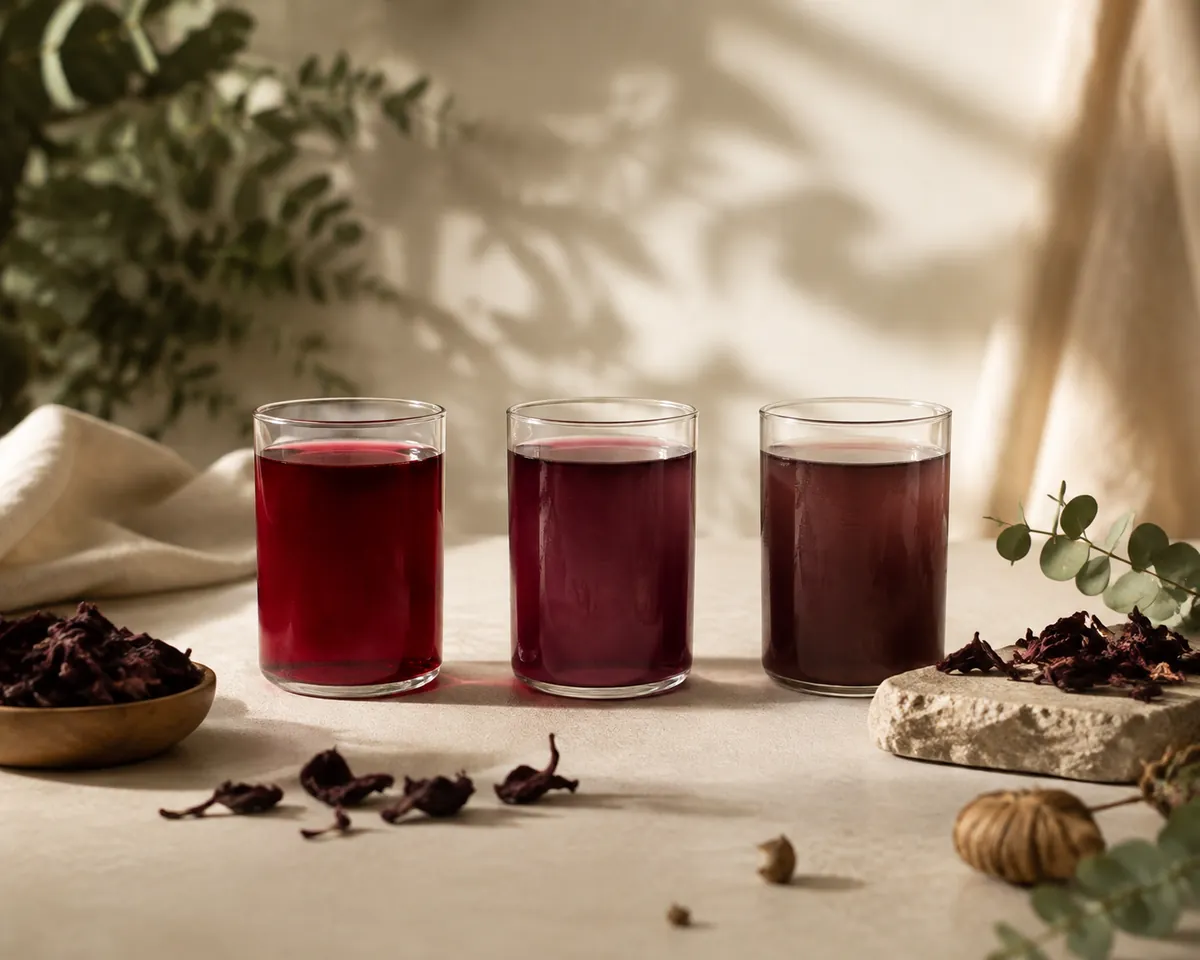
The red comes from anthocyanins, the pigment group also found in blackcurrants, red cabbage and blueberries. Those pigments shift with acidity: strongly red in acidic conditions, moving through purple toward blue-grey as alkalinity rises.
What the colour is telling you
- Bright ruby redAcidic water, and the flavour will be at its sharpest.
- Deep redThe normal result with neutral or lightly mineral water.
- Purple-tingedAlkaline water is neutralising some of the acid.
- Dull brownOld material, or a long steep that has taken it past the fruit notes.
A squeeze of lemon pulls a purple infusion back to red, which is a party trick and a genuine fix where the tap water runs alkaline.
Brown is the one shift that cannot be corrected. It means the pigments themselves have degraded, on the shelf or in the light, and the flavour will have gone the same way.
The indicator runs in reverse too, which is worth knowing before blaming the calyces. A jug that looked ruby in the kitchen and purple at the table has met something alkaline in the glass rather than changed on its own.
Buying it well, and why it barely fades
Hibiscus is cheap, its quality is legible at a glance, and it survives a careless cupboard better than anything else in this section, which together make it one of the easier purchases on a herbal shelf.
- Look for whole or large broken calyces, deep red to almost purple, not brown.
- Avoid dusty, faded material, which has lost both colour and acidity.
- Check for seeds and stem. Some is normal; a lot means careless processing.
- Ignore packaging that shows a pink hibiscus flower, which is not what is inside.
- Buy from a food shop rather than a tea shop where possible, since it is often a fraction of the price.
It is dramatically cheaper in a food shop than in a specialty tea shop, and what comes out of the larger bag is usually the identical product with less printing on it.
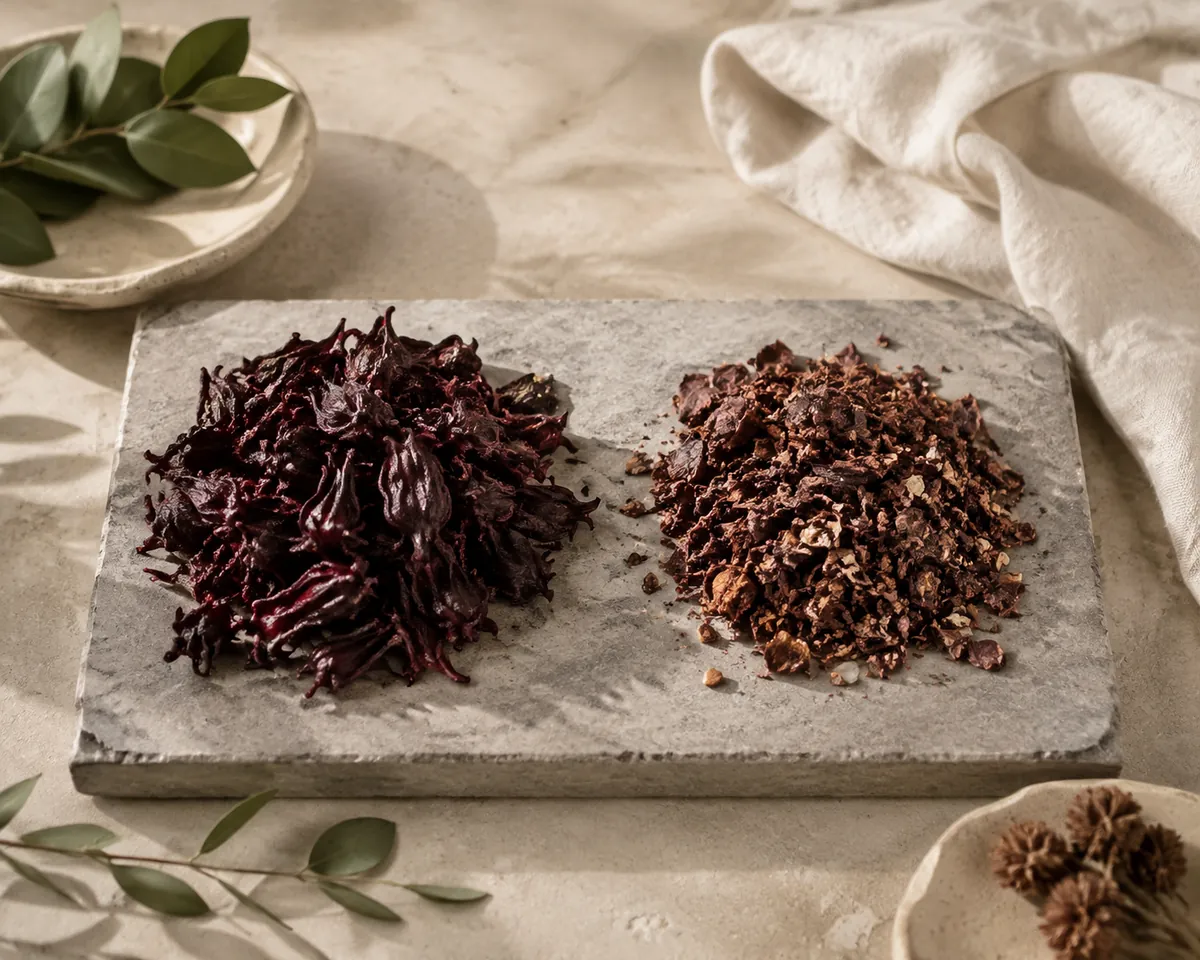
The acids carrying its character are not volatile, so unlike peppermint leaf it does not lose its main quality to the air. What it loses is colour, and it loses that slowly.
Two years in a sealed opaque container is realistic. Kept in the light it fades visibly to brown, and the drink follows the packet down at the same rate.
The container logic is the one that governs storing loose-leaf tea, with light rather than air as the thing to exclude.
Pigment is the part that goes first here, which reverses the usual order, and storing hibiscus covers what a faded bag still gives you.
The backbone of every fruit infusion
Hibiscus is one of the most widely used blending ingredients in the fruit-infusion category, and it is very often the main one in the bag. That is worth knowing before buying rosehip, which is frequently sold as a hibiscus blend under its own name.
Colour
A little goes a long way; a fifth of the blend can dominate the glass
Acidity
The structure other fruit ingredients lack entirely
Body
Thin on its own, which is why it is blended rather than drunk alone
Cost
Cheap by weight, which is the other reason it leads so many bags
Most commercial berry and fruit infusions are largely hibiscus with flavouring. It supplies the red colour and the tartness that people read as fruit, at a very low cost, which is why the ingredients list so often begins with it.
If hibiscus appears first on that list, the drink is mostly hibiscus. The berries pictured on the front are frequently a small percentage, sometimes under five.
That is not automatically a bad product, and it does mean anyone who likes a berry infusion may well like plain calyces at a fraction of the price, with the fruit added at home.
The logic runs the other way as well. If commercial fruit teas taste oddly sour to you, hibiscus is the reason, and infusions built on a red bush base or on apple will suit you better.
Where it genuinely works is against something sweet and warm. Rooibos, cinnamon, apple and ginger all balance the acid instead of fighting it, and hibiscus faults covers the pairings that do not.
Where it sits among the infusions, and at a table
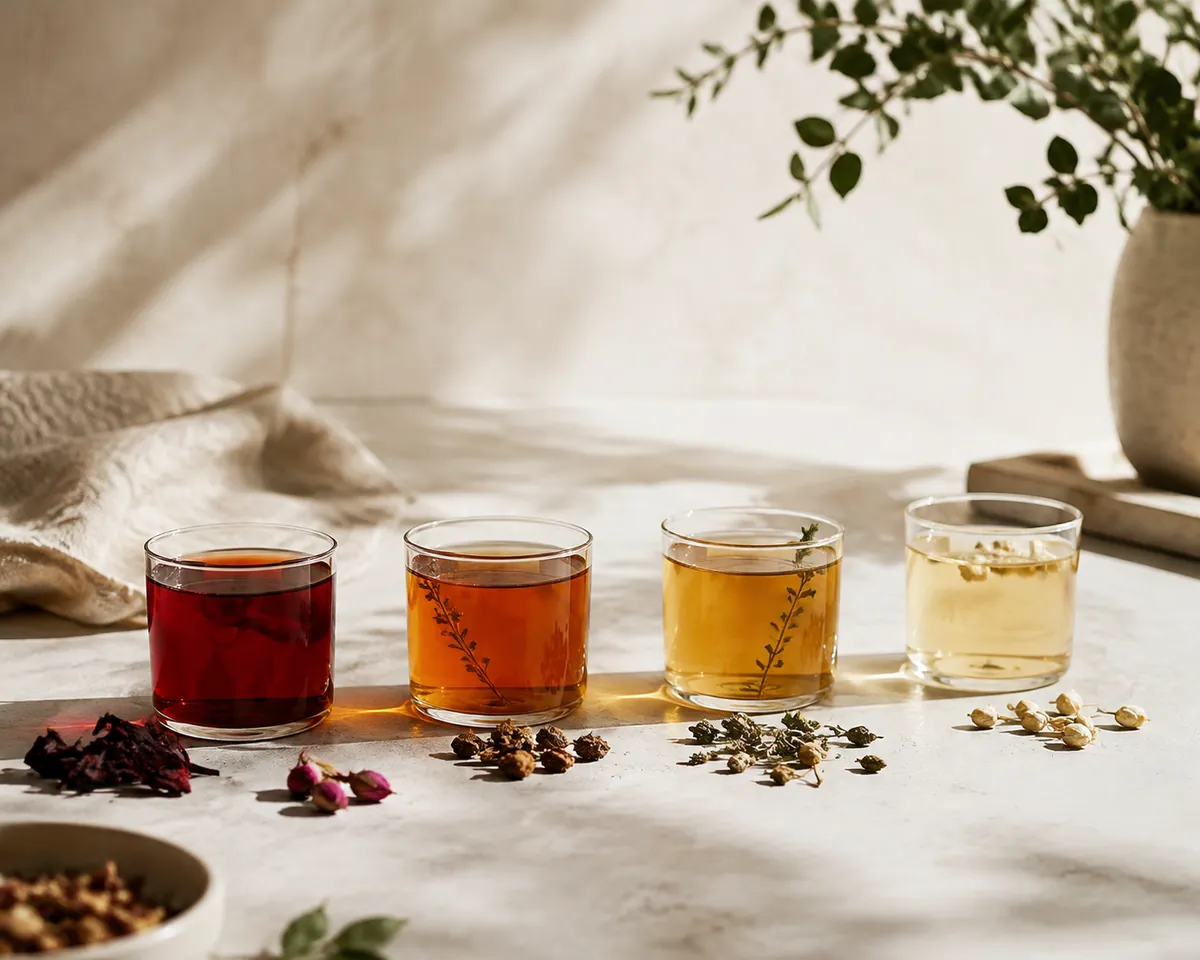
It is the outlier here.
| Hibiscus | Chamomile | Ginger | |
|---|---|---|---|
| Plant part | Calyx | Flower head | Rhizome |
| Dominant note | Sour and fruity | Sweet and apple-like | Hot and citric |
| Method | Steep, 4 to 5 minutes | Steep, 4 to 5 minutes | Simmer, 15 to 20 minutes |
| Over-brews into | Sourness | Bitterness | Woodiness |
| Serve cold | Excellent, its usual form | Good | Good |
It is the only infusion in this section that is genuinely acidic, which is why it behaves like a fruit drink rather than a tea, and why it can be pushed much too far without ever turning bitter.
That makes it the natural partner for ginger tea, where sharp acid and warm heat balance one another, and a poor partner for anything delicate.
At a table the same acidity decides everything. It works beside rich, fatty or fried food, doing the job a squeeze of citrus would, and served cold and unsweetened it is genuinely useful rather than merely pleasant.
It works badly with anything already sour, and it overruns delicate food outright, since there is no version of hibiscus subtle enough to sit underneath a mild dish.
Where it earns its place in a blend is exactly that acidity. Lemongrass and rooibos both lack it entirely, and a small proportion of hibiscus gives either one the backbone it does not have alone.
What to do with the spent calyces
Hibiscus leaves behind more usable material than any other infusion here, and binning it is a small waste.
The strained calyces are still soft, still red and still tart. In Mexico and West Africa they are commonly chopped into salsas, cooked into jam, or used as a filling, and they behave a good deal like a sour cooked fruit.
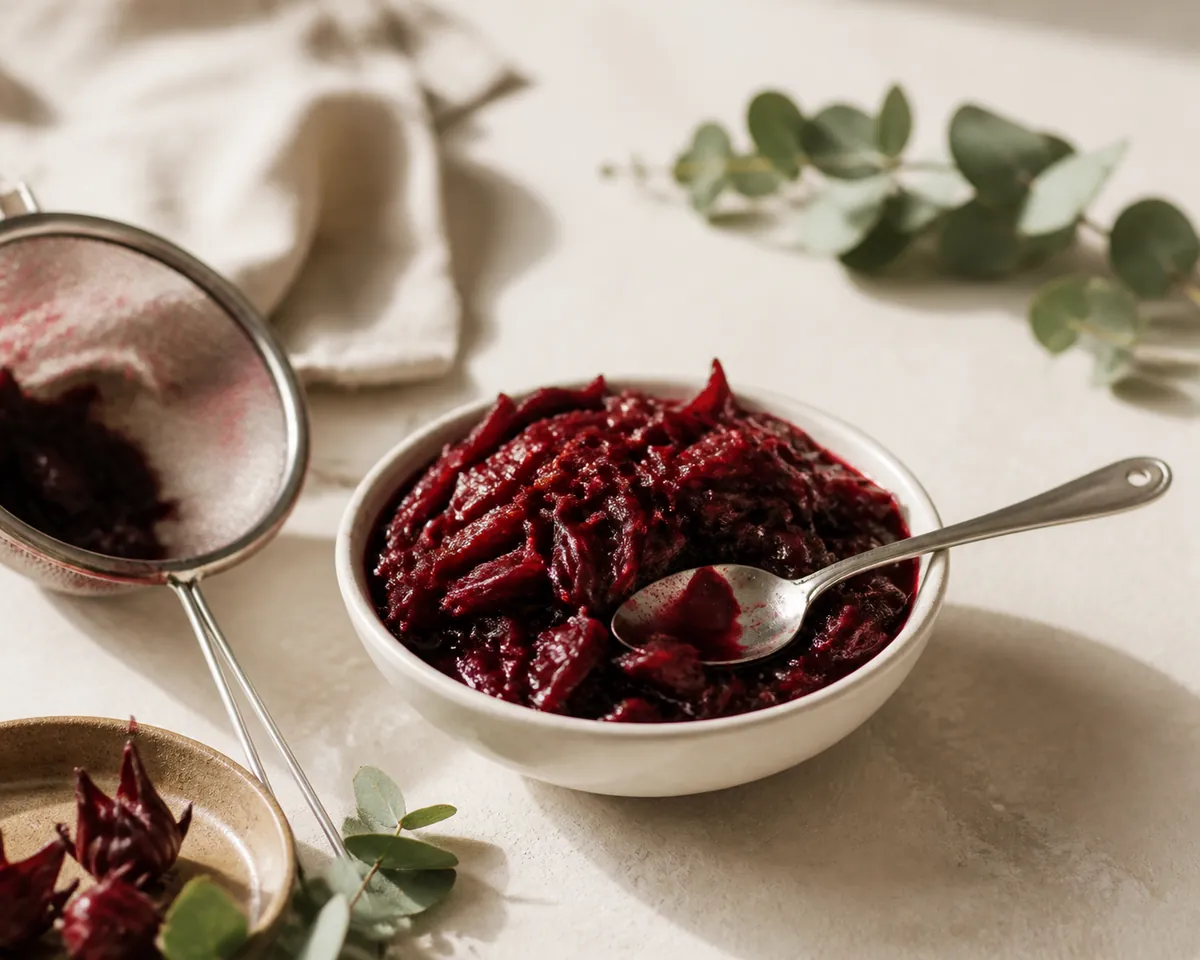
They will also give a second, much lighter infusion. It is thin next to the first and it is still a legitimate weak drink rather than coloured water, which is not true of a second steep of most herbs.
The exception is a long first brew. Push that first infusion to ten minutes and both the acid and the pigment are spent, so what is left really is wet plant material with nothing left to give.
Neither steep carries caffeine, since the plant never made any, and hibiscus and caffeine sets that zero against the rest of the shelf.
Common questions
Is hibiscus tea made from flower petals?
No. It is made from the calyx, the fleshy cup at the base of the flower that remains after the bloom drops. Actual petals are thin and nearly flavourless.
Why is hibiscus tea so sour?
The calyx is high in citric and malic acid. That is genuine acidity rather than astringency, which is why it makes the mouth water rather than dry, and why sweetening balances it effectively.
Why did my hibiscus tea turn purple?
Alkaline water. The anthocyanin pigments act as a pH indicator, staying red in acidic conditions and shifting toward purple as alkalinity rises. Hard, alkaline tap water is the usual cause.