A Home Soda Maker, and Getting Proper Carbonation
A soda maker forces carbon dioxide into water in a sealed bottle. Almost everyone under-carbonates, and the fix is colder water and longer bursts than the instructions suggest.
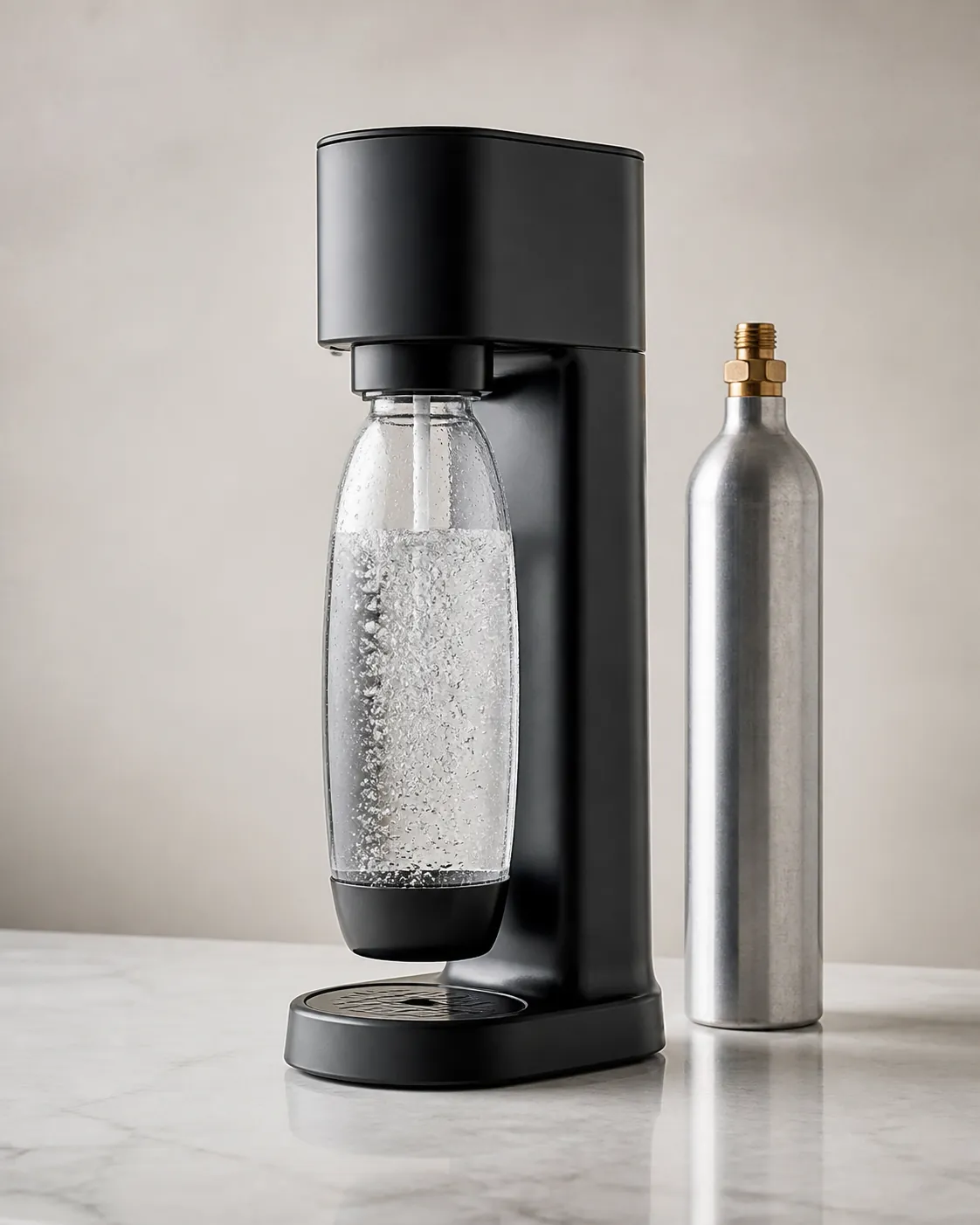
A soda maker injects carbon dioxide from a pressurised cylinder into a sealed bottle of water. Some gas dissolves; the rest vents when the pressure is released.
What comes out is seltzer: plain carbonated water with nothing added, as what sparkling water is sets out. The machine adds no minerals, no sweetness and no flavour, so every difference between one bottle and the next comes down to how much gas you managed to hold in solution before opening it.
The soda maker at a glance
- What it does
- Forces carbon dioxide into sealed, still water under pressure
- What comes out
- Seltzer. No minerals, no sugar, no flavour
- Water temperature
- Around 4 C. Warm water will not hold the gas
- What goes in the bottle
- Plain water only. Syrup and pulp foam into the head
- Cylinder yield
- Roughly 60 litres at full carbonation
- Bottle life
- Two to three years, stamped on the bottle itself
- What it cannot make
- A mineral water. The output is whatever water went in
Why cold water holds the gas and warm water refuses
Gas solubility falls sharply as water warms, and that single fact explains most of the distance between home soda that reads as commercial and home soda that reads as apologetic. Water at fridge temperature holds substantially more carbon dioxide than the same water at room temperature, and the gap is wide enough to see in the glass before you have tasted anything.
How much gas the water will hold
- Just above freezingMaximum. Fine, dense, persistent bubbles
- Fridge cold, 4 CThe practical target
- Cool tap water, 15 CNoticeably less, and it vents more on release
- Room temperature, 20 CPoor. Much of the gas escapes rather than dissolving
- WarmBarely carbonates at all
Carbonating warm water wastes gas, and no number of extra bursts will rescue it. Pressure only presses gas against the surface of the water; how much of it goes in is set by temperature before you touch the machine at all.
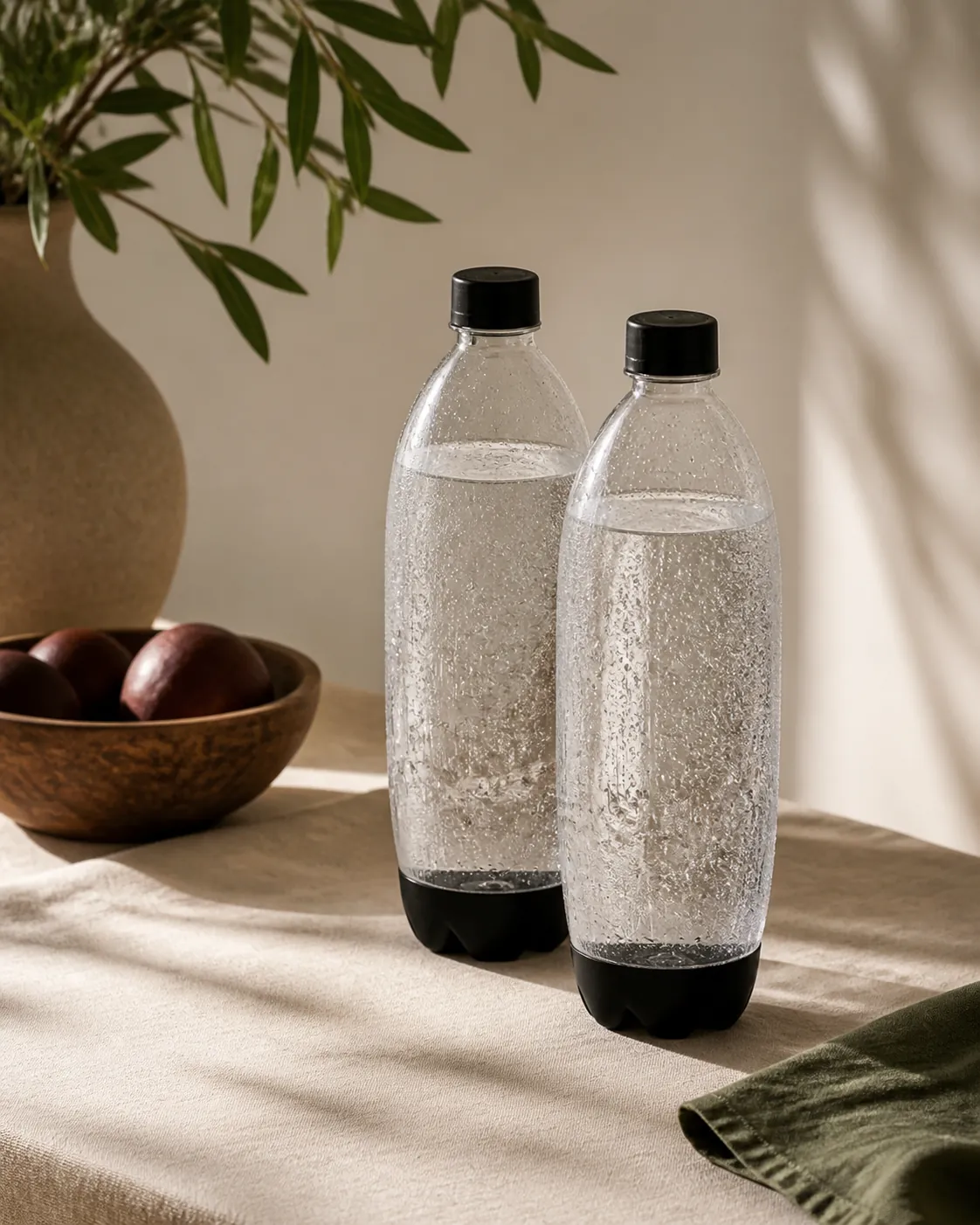
The practical form of this is a filled bottle living in the fridge, not a tap you run for a while first. Cold tap water in most kitchens sits somewhere in the teens, which already costs a visible amount of fizz, and you cannot shortcut the chilling with ice cubes because they occupy the volume the water needs.
Two bottles in rotation is the arrangement that survives contact with an ordinary week.
Bursts, pauses and the slow release at the end
Because most manuals suggest two or three short bursts and most people follow them, the commonest home soda is one that fizzes politely for a minute and then gives up. Commercial sparkling water is carbonated to a higher volume than a domestic head reaches in three seconds, so matching it means ignoring the number printed in the instructions.
One bottle, done properly
- Start coldWater straight from the fridge, at around 4 C. This is worth more than everything below it combined.
- Fill to the lineNo higher. The headspace is where carbonation happens, and overfilling both weakens the result and pushes water into the gas head.
- Seat the bottleSquare and fully engaged. A bottle at a slight angle leaks gas with a hiss and never reaches pressure.
- Burst, then pausePress for two seconds, release, wait two seconds. Gas needs time to dissolve, and continuous pressing mostly vents.
- Repeat five or six timesMore than the manual suggests. Commercial sparkling water is carbonated harder than three bursts reach.
- Release slowlyEase the pressure out over several seconds rather than venting it at once.
- Chill again before openingTen minutes in the fridge lets gas settle back into solution and cuts the foam-over when you unscrew it.
The pause between bursts is the step that is invisible and matters most. Carbon dioxide dissolves at a rate rather than instantly, so gas that has not gone into solution by the time you press again simply leaves through the vent, which is why four seconds of continuous pressing puts less into the bottle than two bursts of two seconds with a wait between them.
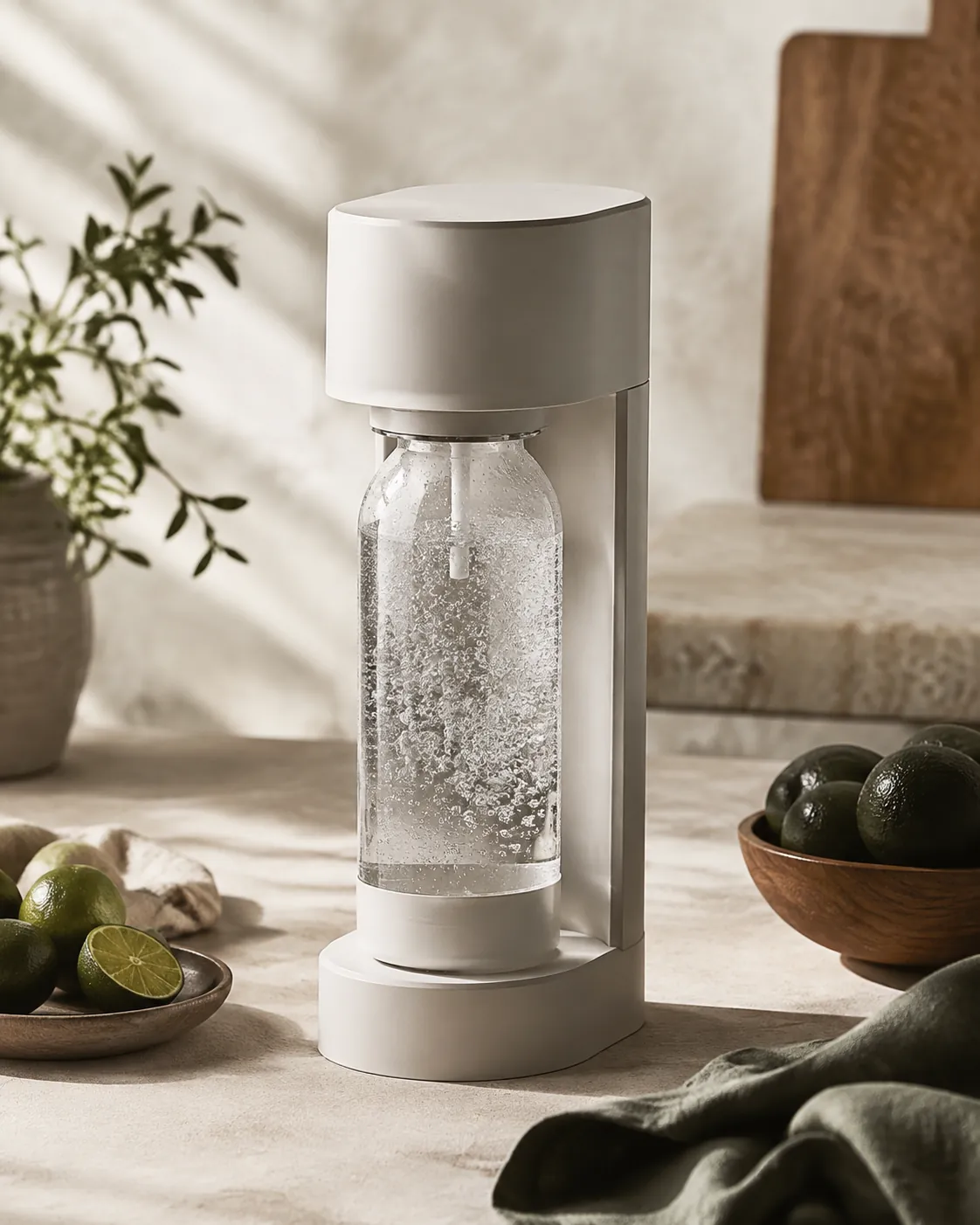
Slow release at the end recovers a surprising amount of what you have just put in. A fast vent drops the pressure so sharply that dissolved gas comes back out of solution on the way, which is the effect a shaken bottle shows when it is opened.
Easing the pressure out over several seconds and then returning the bottle to the fridge for ten minutes is the whole difference between a controlled pour and a foam-over across the counter. The routine in making seltzer follows the same order.
Why nothing but plain water goes in the bottle
Syrup is the one instruction worth obeying exactly.
Sugar, pulp and dissolved solids give carbon dioxide somewhere to leave solution. Every particle and every dissolved molecule works as a nucleation site, so a flavoured liquid under pressure does not fizz gently, it erupts, and the eruption travels upward into the carbonation head where the gas line is.
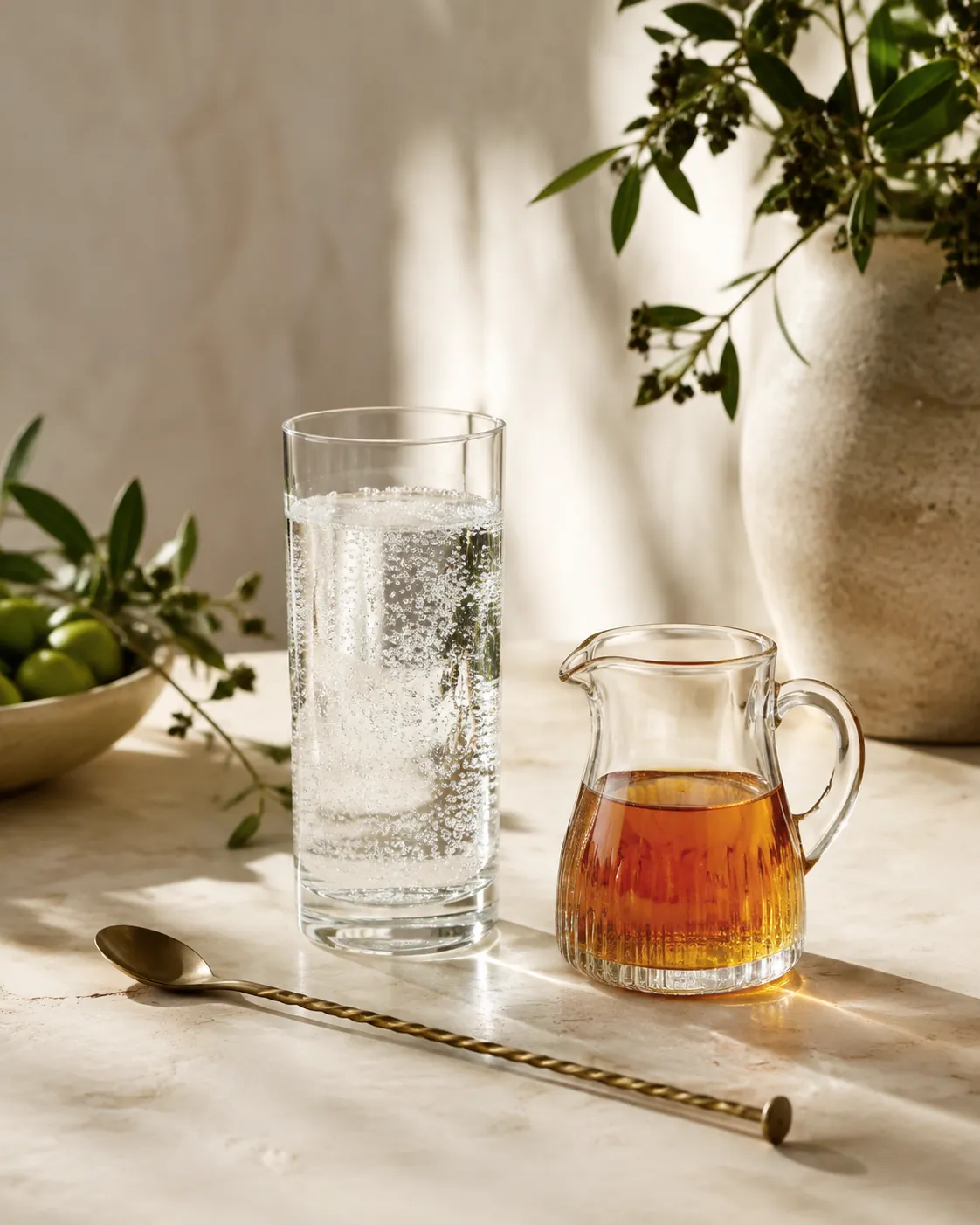
Carbonate first, then add simple syrup, cordial or juice to the glass, and stir once and gently. Vigorous stirring drives the gas straight back out, which is why a briskly stirred flavoured soda often ends up flatter than the seltzer it was built from.
The same rule governs turning seltzer into soda water, which is seltzer carrying a small amount of mineral salt and a slightly rounder body for it. Roughly an eighth of a teaspoon of sodium bicarbonate per litre is the usual amount, and it goes in after the bottle comes off the machine.
Undissolved salt sitting in the bottle during carbonation foams over for precisely the reason above, and it does so faster than sugar because the crystals are still solid when the pressure drops.
Which machine, and which cylinder fitting
The category looks uniform from the outside. It splits along two lines, and only one of them is visible on the shelf.
How the bottle attaches decides the daily annoyance; how the cylinder attaches decides what you pay per litre for as long as you own the machine.
| Screw-in | Snap-in | Mains-powered | |
|---|---|---|---|
| Fitting the bottle | Threaded, several turns | One push, quarter turn | Usually snap-in |
| Speed | Slower, and easy to cross-thread | Quick | Quick |
| Carbonation control | Manual, by feel and sound | Manual | Preset levels, repeatable |
| Glass bottles | Rare | On some models | On several models |
| Power needed | None | None | Mains socket |
Manual machines need no power and will sit anywhere on a counter, which is most of their appeal, while the preset levels on a mains-powered model remove exactly the guesswork the two sections above exist to solve. That is worth something in a household where several people use it and nobody agrees on how many bursts count as enough.
The cylinder fitting is the choice that outlives the machine. A proprietary fitting ties you to one supplier's exchange price; a standard thread lets you use cheaper refills, or run a large cylinder through an adapter.
Exchange schemes
Convenient, widely available, priced per swap.
Refill adapters
Cheaper per litre, and they need a larger cylinder and some setup.
Proprietary fittings
Lock you into one supplier. Worth checking before buying.
Bottle life
Plastic carbonating bottles have an expiry date and should be replaced.
The fitting is usually buried in the specification rather than advertised on the box, so it takes a minute to find before buying and cannot be changed afterwards.
Bottle expiry, cylinder handling and the rules that are not preferences
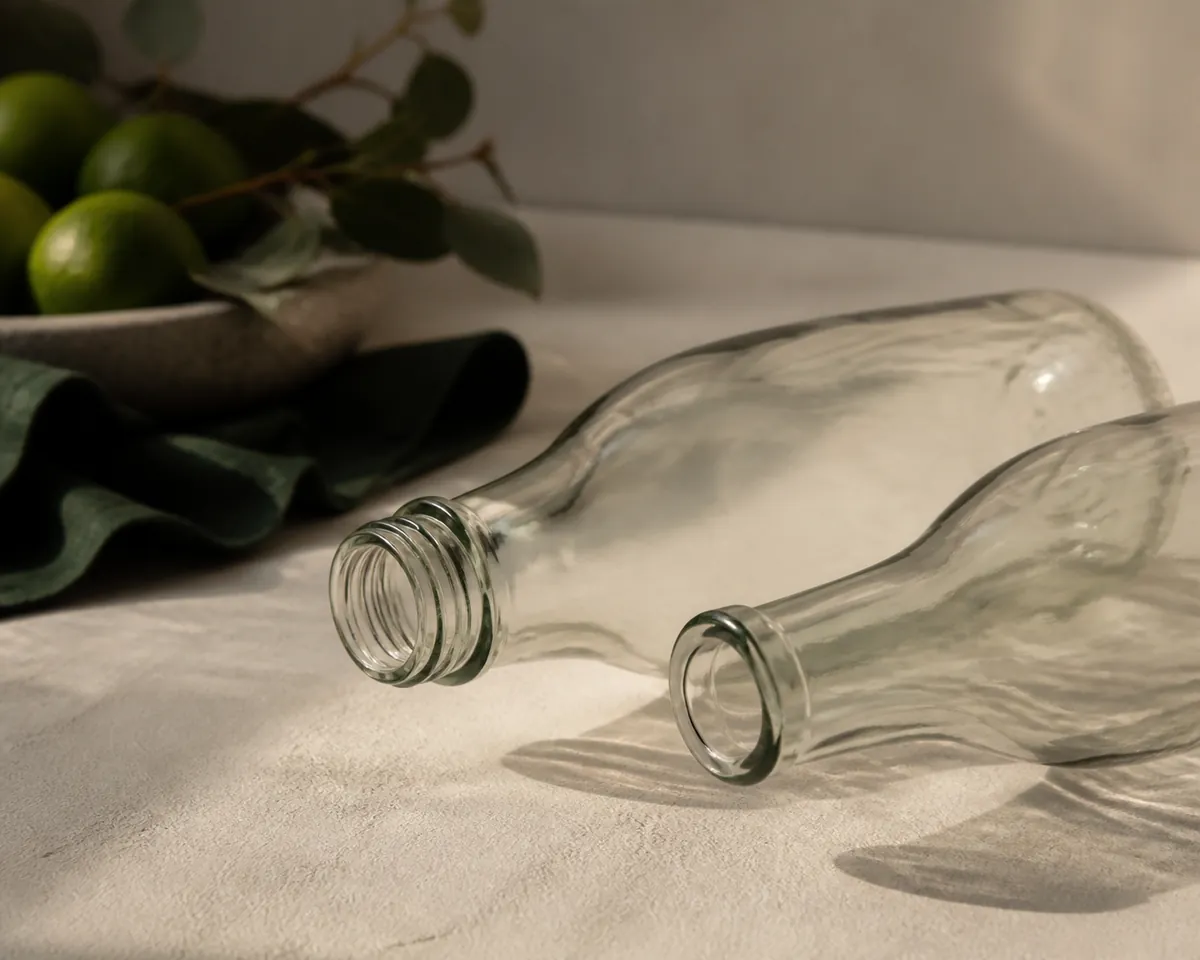
A carbonating bottle is a pressure vessel with a service life, which is why it carries a stamped date on the shoulder rather than a vague suggestion somewhere in the manual, and why that date is printed on the bottle and not on the packaging it arrived in.
Repeated pressure cycles fatigue the plastic over roughly two to three years from manufacture. Heat and impact accelerate that invisibly, so a bottle that has been through a dishwasher, cooked in a car or dropped on a tiled floor looks identical to a sound one.
Replace on the date, not on appearance.
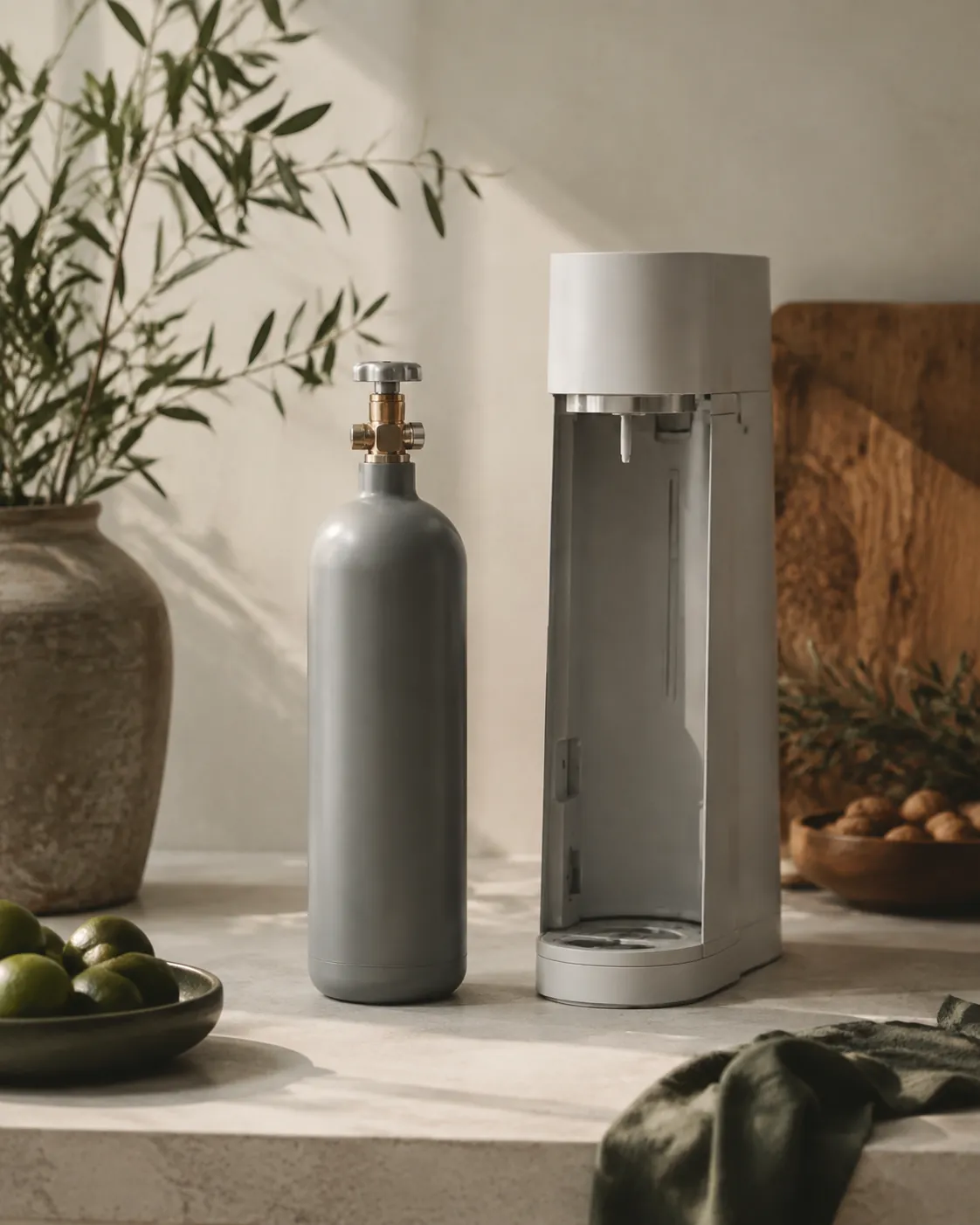
Cylinders ask less of you and ask it firmly: upright, away from heat, never refilled at home. Weighing one is the only honest way to know what is left inside, since full and empty weights are stamped on the collar and the difference between them is the gas you still have.
Shaking a cylinder tells you nothing at all, because the contents sit as a liquid under pressure rather than as a gas sloshing about.
What a year of fizzy water actually costs
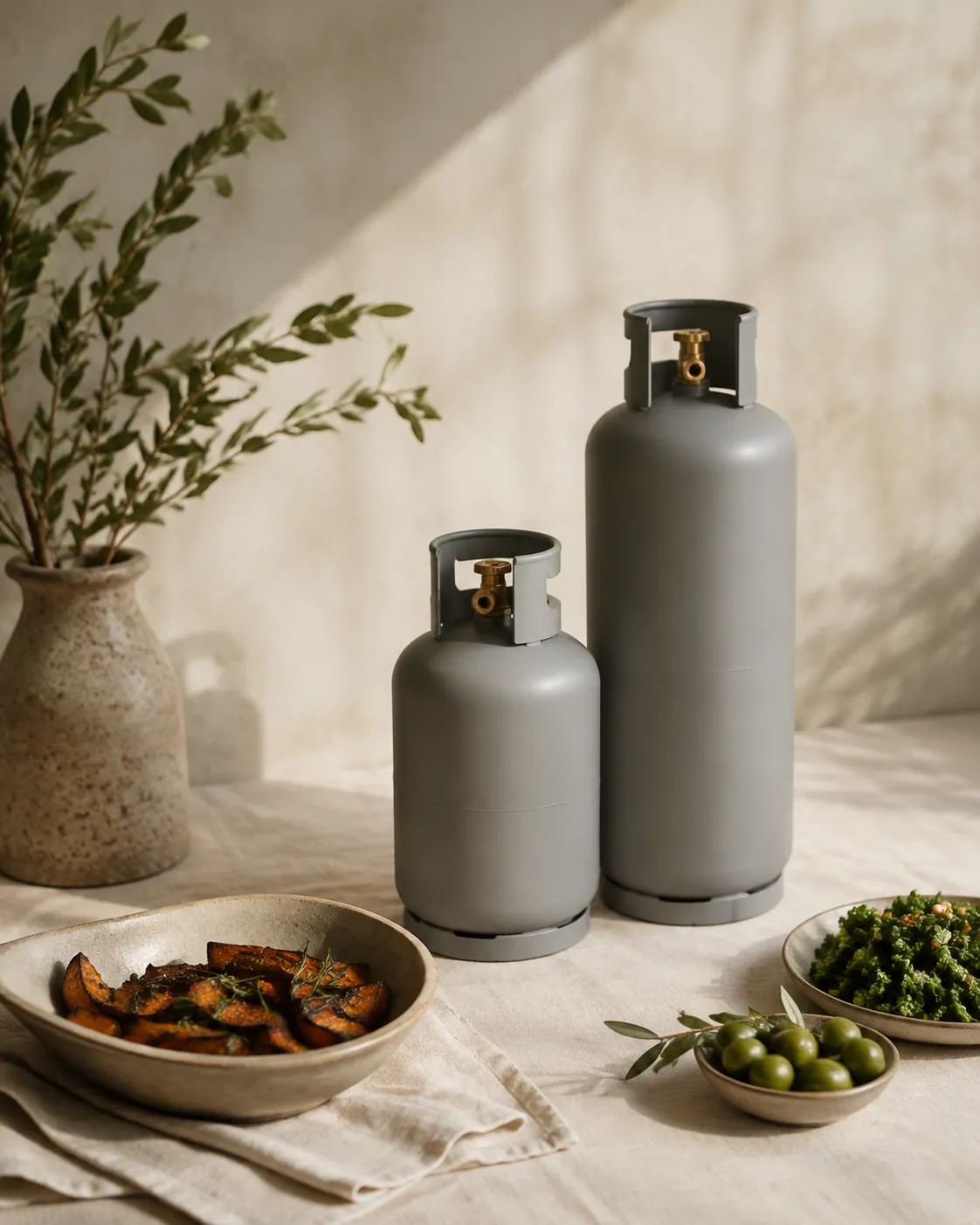
The machine is the small number here and the consumables are the real one. A standard cylinder carbonates around 60 litres at full strength, which covers roughly two litres a day for a month.
A household drinking that much gets through twelve exchanges a year, and that figure rather than the machine price is what to set against the shopping bill it replaces. Two things pull the arithmetic in opposite directions.
Carbonating harder than the manual suggests, which everything above recommends, uses more gas per litre and shortens the life of a cylinder; a large cylinder on an adapter cuts the cost per litre substantially, at the price of housing a considerably bigger object.
Bottles are the quiet expense nobody budgets for. They expire on a printed date rather than when they start to look worn, so a household running four of them replaces the whole set every two or three years whether or not anything appears wrong with them.
The water going in is the water coming out
A soda maker changes one thing about water and nothing else.
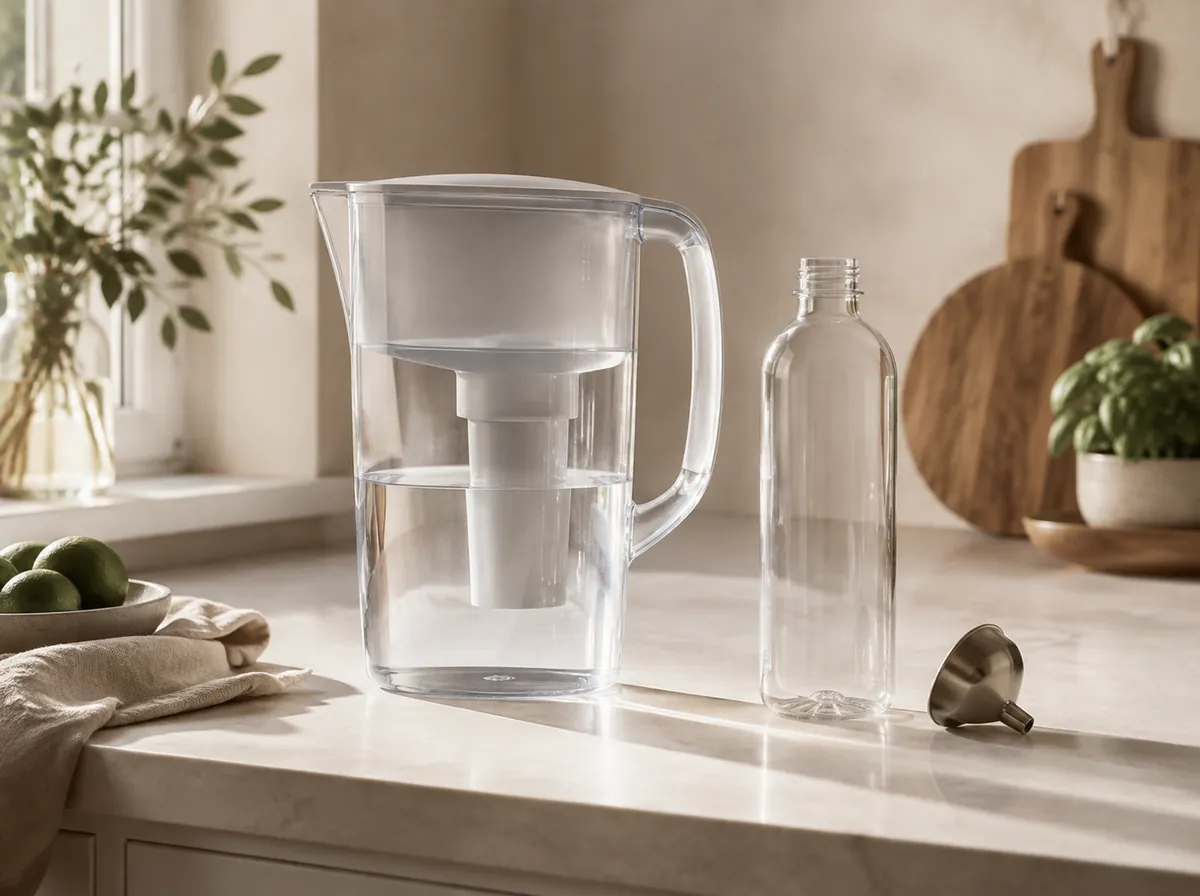
Hard, chlorinated tap water becomes carbonated hard, chlorinated tap water, and carbonation sharpens both faults slightly by lowering the pH. A jug filter in front of the bottle is the cheapest improvement available to the whole machine, and the one most owners never make.
Filtered tap water
The sensible default. Removes chlorine and some hardness.
Soft tap water
Carbonates well and tastes clean, with slightly less body.
Hard tap water
Workable, and the mineral edge is more noticeable once fizzy.
Distilled
Carbonates fine and tastes flat and slightly odd, since some minerals are wanted.
Anyone unsure which they have can look inside a kettle. Heavy scale means hard water, and brewing water covers what that mineral content is doing to everything else in the kitchen.
Distilled water is the instructive failure at the other end: it carbonates perfectly well and tastes flat and faintly wrong, because dissolved minerals are part of what water tastes like at all.
When it is fizzy for a minute and then is not
Weak carbonation has four causes and only one of them is the machine. Working through them in order takes about a minute and usually stops at the first.
| Symptom | Cause | Fix |
|---|---|---|
| Soft, sparse bubbles | Water not cold enough | Keep a filled bottle in the fridge |
| Fizzy at first, flat in the glass | Too few bursts, or a fast vent | Five or six bursts; release slowly |
| Loud hiss while carbonating | Bottle not seated squarely | Reseat it; check the O-ring |
| Foams out of the bottle | Overfilled, or something dissolved in the water | Fill to the line; carbonate plain water only |
| No gas at all | Empty cylinder, or a cross-threaded fitting | Weigh the cylinder; refit slowly by hand |
The five habits below settle the first two rows on their own, which covers most complaints.
- Use water straight from the fridge, not the tap.
- Give it more bursts than the manual suggests, five or six rather than three.
- Pause a couple of seconds between bursts so gas has time to dissolve.
- Release the pressure slowly at the end, which keeps more gas in solution.
- Chill the bottle again after carbonating and before opening.
The O-ring in the machine head is the part that fails silently. It hardens over a couple of years, begins leaking during the burst, and looks entirely normal while doing it, so the symptom arrives as gradually weaker soda rather than as a fault you can point at.
A machine that once carbonated in four bursts and now wants eight has usually lost its seal rather than its gas. Worn bottle threads give the same reading in the glass, and both are covered further in sparkling water problems.
What it replaces, and what it will never be
The case for owning one is real and considerably narrower than the marketing around it: the machine removes the weight, the packaging and the shopping of bottled sparkling water, at a lower cost per litre, with a fizz level you set rather than accept.
For a household drinking it daily that is a genuine saving in money and in hassle, and it turns infused water and homemade cordials into something much closer to a soft drink than a jug of flavoured water ever reaches.
Works well for
- Removes the weight, storage and packaging of bottled sparkling water entirely
- Costs well under half the per-litre price of bottled, cylinder included
- Fizz level is yours to set, which no bottled product offers
- Turns cordials and juices into something close to a soft drink
- The machine itself needs no power and takes little space
Struggles with
- Carbonates plain water only, so every flavour is a second step
- Bottles and cylinders are consumables with ongoing cost and bulk
- Never quite matches a hard-carbonated commercial bottle for bubble persistence
- Proprietary fittings can lock the running cost to one supplier
- Nothing it makes is a mineral water, whatever goes into the bottle
Bubble persistence is the honest gap. A commercial line carbonates cold water under sustained pressure for far longer than a domestic head manages, so home soda softens in the glass a little faster than a bottle of club soda does, noticeable across twenty minutes rather than across five and worth knowing if you pour and then wander off.
The habits in keeping sparkling water fizzy apply to a home bottle exactly as they do to a shop-bought one.
The second gap cannot be closed by the machine at all. What comes out is a seltzer whatever you put in, and the character of a bottled mineral water comes from a source rather than from a cylinder.
Italian soda, seltzer over cold brew, and the tonic problem
Plain seltzer is the base and the interesting part starts once the bottle is open. Everything below is built in the glass, for the foaming reason set out above.
An Italian soda is the simplest use: carbonated water, a flavoured syrup, ice, and cream on top if you want one, with the proportions covered in building one properly.
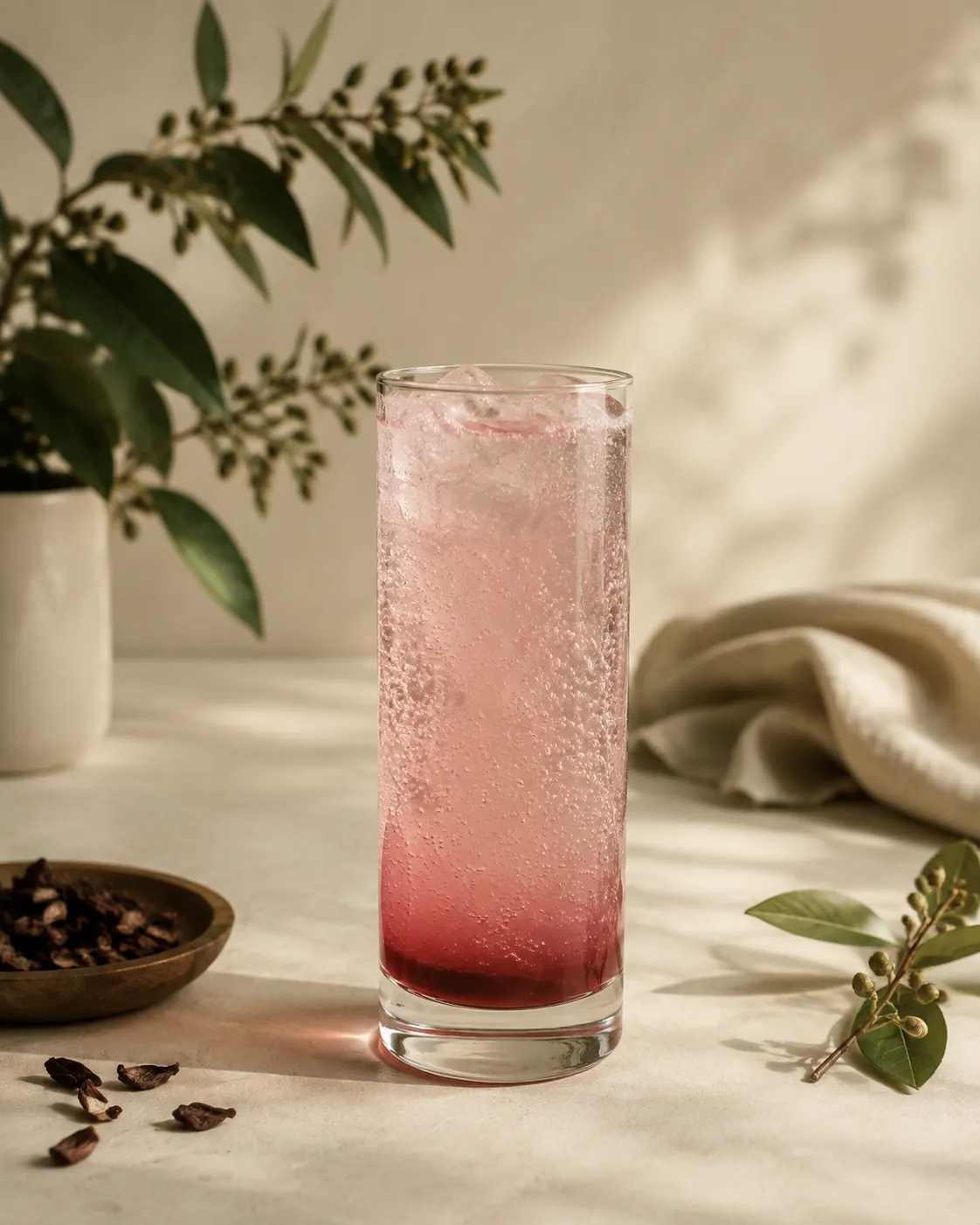
Cold brew topped with seltzer makes a sharp, bitter long drink that sits closer to a soft drink than to iced coffee. A quarter cold brew concentrate to three quarters seltzer over plenty of ice is a reasonable starting ratio, and a squeeze of lemon pulls the bitterness forward rather than covering it.
Home tonic is possible and it is a different project, since the bitterness in a commercial bottle comes from quinine under strict legal limits, as what makes tonic bitter sets out. Bittering a home soda with grapefruit peel and gentian gets somewhere adjacent without going near cinchona bark, and the result reads drier and less sweet than the bottled version you are measuring it against.
A home ginger ale is the easier win of the two, because a ginger syrup keeps for weeks in the fridge and the finished drink is mostly seltzer by volume.
Common questions
Why is my homemade sparkling water not fizzy enough?
Two reasons: the water was not cold enough, and you did not carbonate long enough. Gas solubility falls sharply as temperature rises, so use water straight from the fridge and give it five or six bursts rather than three.
Can you carbonate juice or squash in a soda maker?
No. Sugars and pulp act as nucleation sites and foam violently up into the carbonation head, where they are hard to clean and can damage the machine. Carbonate plain water and add flavour to the glass afterwards.
Does a soda maker make soda water or seltzer?
Seltzer, which is plain carbonated water with nothing added. Adding about an eighth of a teaspoon of sodium bicarbonate per litre after carbonating turns it into soda water, which has slightly more body.