What Is Tonic Water? Deliberately Bitter, and Surprisingly Sweet
Tonic water is the only mainstream soft drink made deliberately bitter, and it is also far sweeter than anyone guesses. Those two facts are the same fact, because each taste is hiding the other.
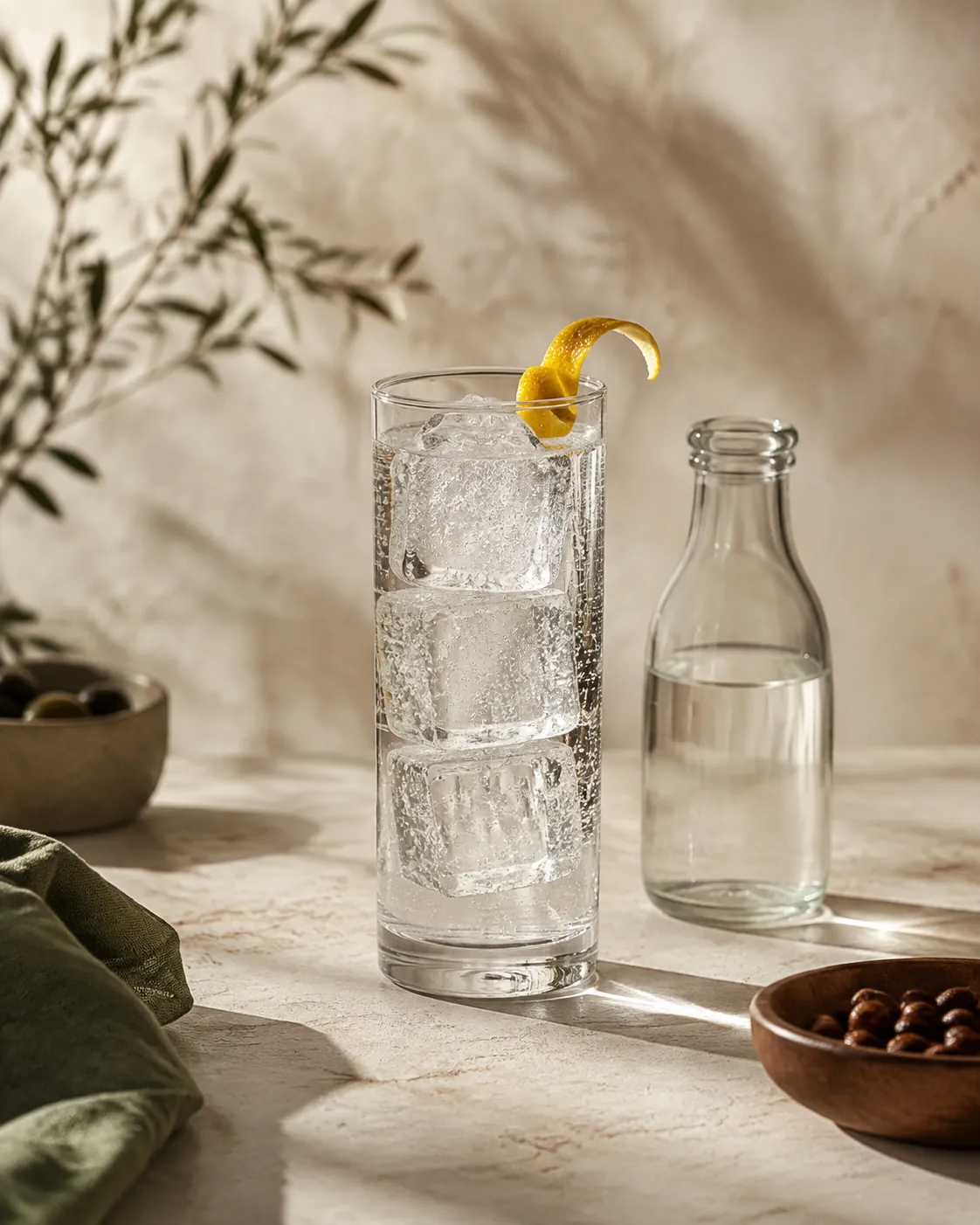
Tonic water is a carbonated soft drink built from four things: water, a large quantity of sugar, an acid, and a trace of quinine. It is clear, it is sharp, and it is the only mainstream soft drink deliberately made bitter.
The sugar is the part almost everybody underestimates. A standard tonic carries roughly as much of it as a cola, and nobody guesses that from tasting one, because the quinine is busy hiding it.
That relationship runs the whole product. Take the sugar out and the bitterness becomes unbearable; take the quinine out and what is left is a very sweet lemonade with no reason to exist.
Tonic water at a glance
- Category
- A flavoured carbonated soft drink, not a water
- The four essentials
- Carbonated water, sugar or sweetener, citric acid, quinine
- Typical sugar
- 7 to 9 g per 100 ml in a full-sugar bottle
- Quinine
- A purified salt, dosed in parts per million and legally capped
- Colour
- None added. Tonic is clear because quinine is colourless
- Common formats
- 150 and 200 ml bottles, cans, litre bottles, syrup, bar dispensers
- Why it is bitter
- Covered in full under quinine and how the bitterness works
Quinine, sugar, and what else is dissolved in it
Turn a bottle round and the panel is short, which surprises people who expect something with this much character to have a long recipe behind it. Carbonated water comes first because it is almost all of the volume.
Sugar comes second, and on a full-sugar tonic it is the only ingredient present in anything you would call a quantity.
Everything after that is measured in fractions of a per cent.
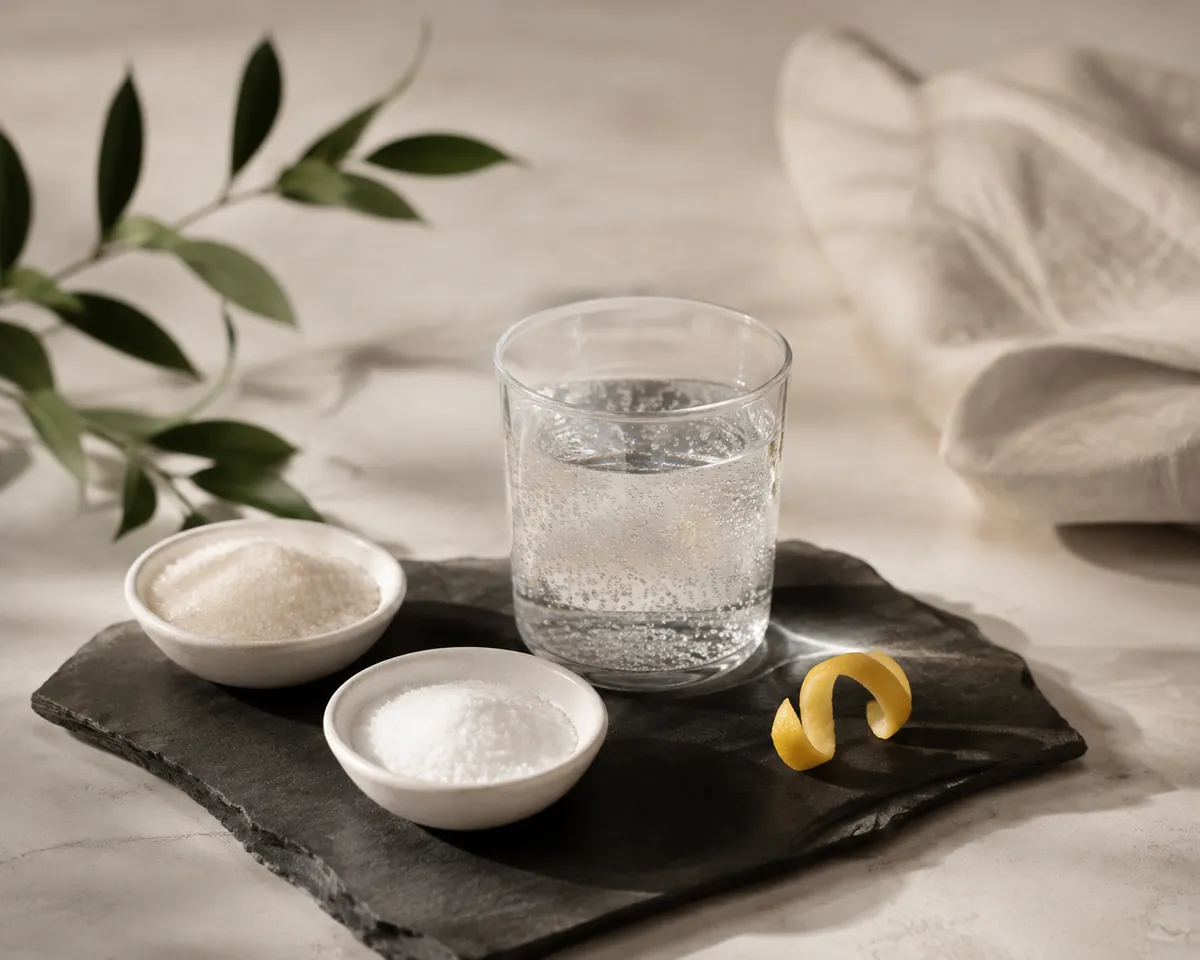
Carbonated water
Around 90 per cent of the bottle by weight, treated and gassed hard.
Sugar or sweetener
The second ingredient, and by a very wide margin.
Quinine
Added as a purified salt, not as bark, in parts per million.
Flavourings
Citrus oils and botanicals, which supply the entire aroma.
Preservative
Often sodium benzoate, particularly in plastic and larger formats.
Quinine is last on the list and first in the mouth, which is a fair summary of the whole drink. The one thing not on the panel is colour.
Tonic is transparent because nothing in it is coloured, and that transparency is why it gets confused with waters it has nothing else in common with.
Why tonic is sweeter than almost anything beside it
Ask somebody to rank the soft drinks on a shelf by sugar and tonic lands near the bottom of the guess and near the top of the fact. Its reputation is for bitterness, so the assumption is that bitterness must be replacing something.
It is not. It is sitting on top of it.
Sugar per 100 ml, roughly, across the shelf
- A can of colaAround 10 to 11 g, the usual benchmark
- Full-sugar tonic7 to 9 g, closer to that benchmark than anyone expects
- Ginger ale8 to 9 g, and it tastes every bit of it
- Bitter lemonSimilar to tonic, and for the same reason
- Root beerAround 8 to 10 g, depending heavily on the brand
- Sparkling waterNone, which is the entire point of it
A 200 ml bottle therefore delivers somewhere near 15 to 18 g of sugar, which is three or four teaspoons of cane sugar in a glass most people would describe as dry. That gap between the perception and the panel is the single most useful thing to know about tonic water.
How the bitterness hides that sugar from you
Sweetness suppressing bitterness is the half of this relationship everybody knows, and it is why the sugar is in the bottle at all. The other half gets far less attention and explains the misjudgement above: bitterness suppresses sweetness just as effectively in the other direction.
Put the two tastes in the same mouthful and each subtracts from the perceived intensity of the other. What you register is not the sum of a very sweet drink and a very bitter one but a partial cancellation, and the drink ends up reading as moderately sharp rather than as either extreme.
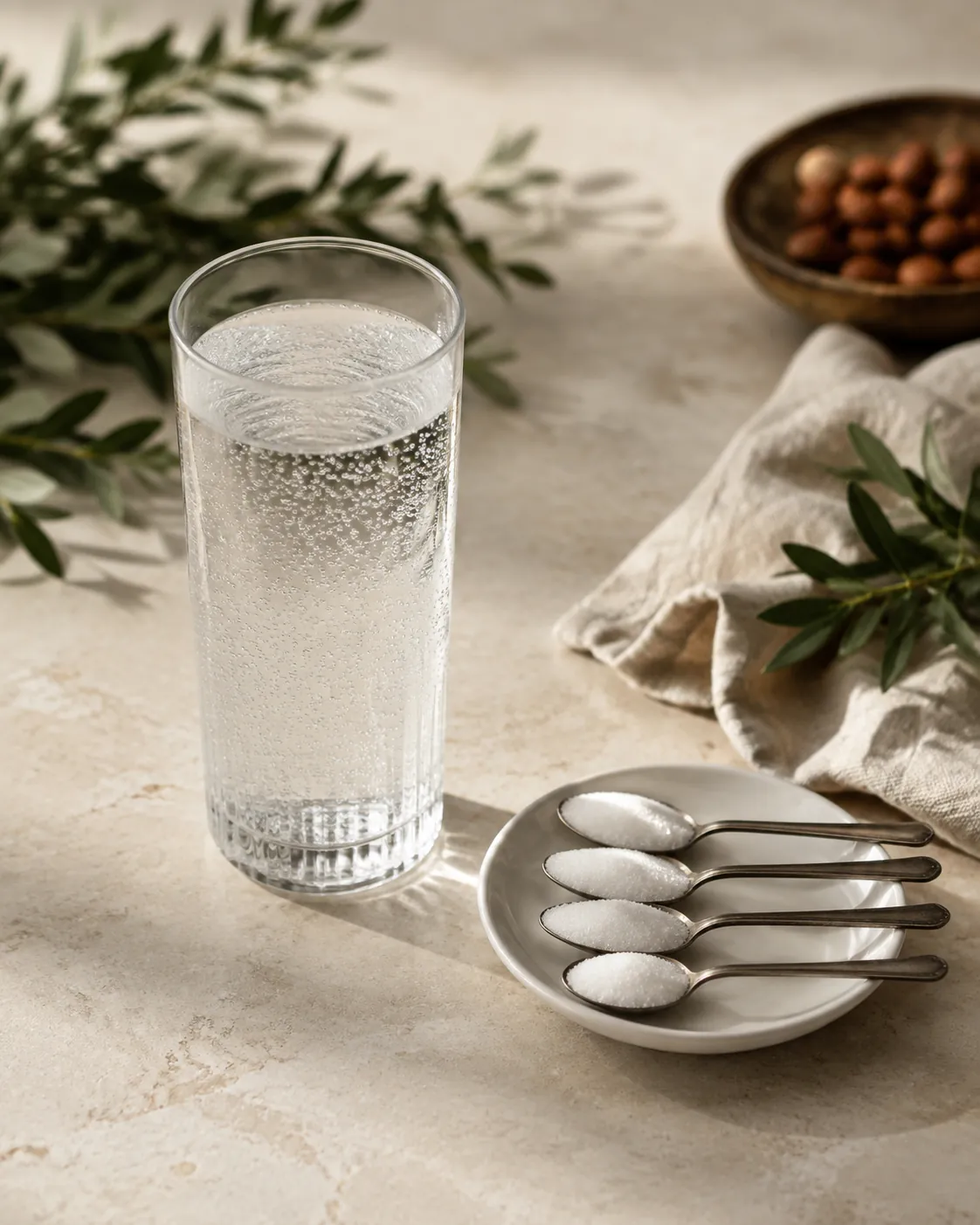
The proof is easy and slightly unpleasant. Let a glass of tonic go completely flat and warm, then taste it: the carbonic acid has gone, the aromatics have gone, and the sweetness that was hidden underneath arrives without anything holding it down.
It is the same liquid, minus one of the things that was balancing it.
The same arithmetic runs anywhere bitterness and sugar meet. It is why the bitterness in over-brewed green tea answers to a spoon of sugar, and why a very dark espresso takes more sweetening than a light one before it reads as sweet at all.
The only soft drink designed around a taste people avoid
Bitterness is the taste humans detect at the lowest concentration, and the usual explanation is that it evolved as a warning rather than an invitation. Almost the entire soft drink aisle is built to avoid triggering it.
Sweet, sour, cold, fizzy: that is the formula, repeated with different flavourings, from cola to lemonade to every fruit-flavoured can beside them.
Tonic breaks that pattern on purpose, and it is the only mainstream soft drink that does. It is the one people call an acquired taste, it divides a room more sharply than anything else on the shelf, and children generally refuse it outright. Its nearest relative in that respect is bitter lemon, which runs two bittering systems rather than one.
That asymmetry in timing is most of why tonic is polarising rather than merely strong-tasting. The pleasant part of the drink arrives first and leaves first, and the demanding part is what you are left holding.
What quinine contributes besides bitterness
Quinine is odourless. It is a heavy, non-volatile alkaloid that does not reach the nose at all, so none of what a glass of tonic smells like comes from the ingredient that defines it.
Everything you smell is the flavouring: citrus oils, juniper, florals, whatever the producer has put in. That is why a poured tonic smells like a sweet citrus drink and then tastes like something else entirely, and why the gap between the two is wider here than in any other soft drink.
What each part of the drink is responsible for
- AromaEntirely from the added botanicals and citrus oils. Quinine contributes none.
- First impressionSweetness and acid, arriving together and fast.
- MiddleCarbonation, which sharpens the acid and lifts the aromatics.
- FinishQuinine, arriving late and staying, dry and slightly astringent.
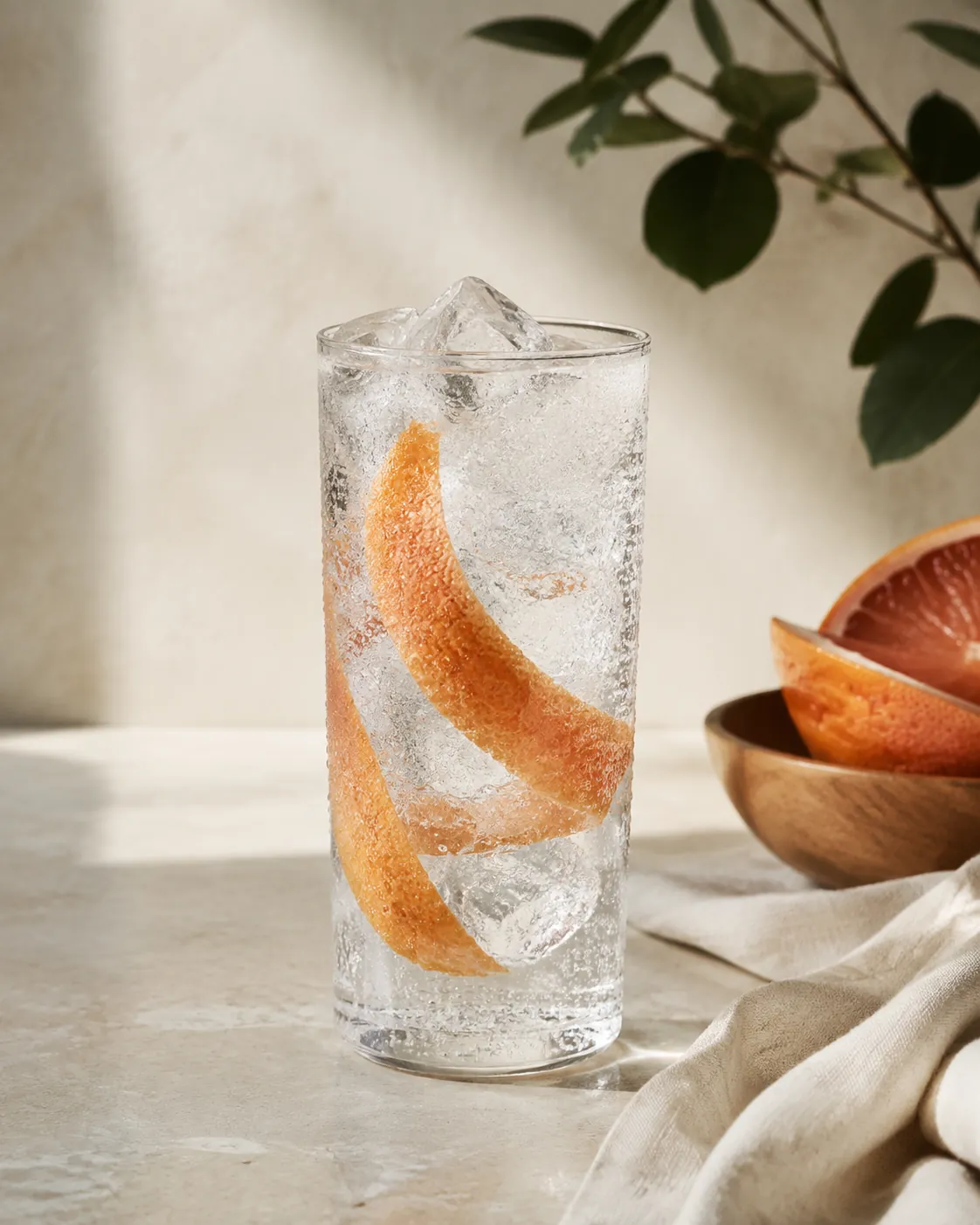
The dryness at the end is worth naming separately from the bitterness. Quinine leaves a mouth-drying, faintly puckering sensation that behaves more like tannin than like a taste, and it is a large part of why tonic reads as refreshing despite carrying four teaspoons of sugar.
A drink that finished sweet would be cloying by the third mouthful.
Which numbers separate one bottle from another
There is no house standard for tonic, so two bottles can differ on every axis at once. Four numbers account for nearly all of the variation, and only two of them are printed anywhere.
| Variable | Range in practice | On the label |
|---|---|---|
| Quinine | From well below the legal ceiling up to it | Declared in some markets, rarely quantified |
| Sugar | 7 to 9 g per 100 ml, or none at all | Yes, per 100 ml |
| Acid | Enough to shift the sharpness noticeably | Listed but never quantified |
| Carbonation | From softly fizzy to aggressively gassed | No |
The two invisible ones are where most of the disagreement between drinkers comes from. A softly carbonated tonic with a high quinine dose and a firmly gassed one with a low dose can carry identical sugar figures and taste nothing alike, and no amount of label reading will predict it.
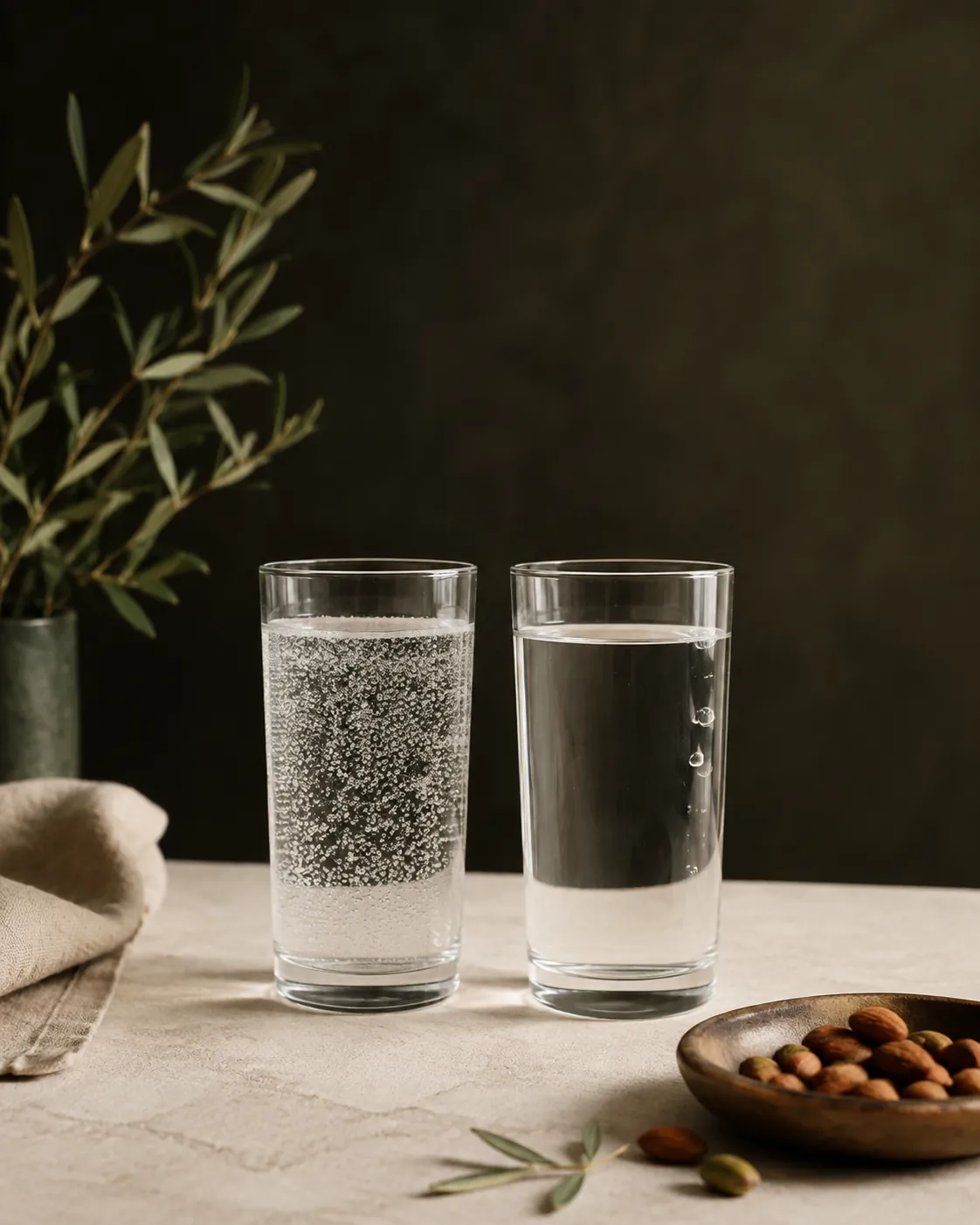
Carbonation is the variable people misattribute most often. A hard-gassed bottle reads as more bitter than it is, because the carbonic acid sharpens everything, which is the same trick a well-made club soda plays in reverse by softening it.
Where the styles come from and what the botanicals are doing is set out under what tonic water tastes like.
The retail formats, and what each one costs you
Tonic is sold in more shapes than any other mixer, and the choice is not neutral. Carbonation and volume are in direct conflict once a container is opened, so format decides how much of the drink survives to the last glass.
| Format | Typical size | The trade |
|---|---|---|
| Small glass bottle | 150 to 200 ml | Best carbonation, highest cost per litre, nothing wasted |
| Can | 150 to 330 ml | Very good gas retention, and no resealing at all |
| Litre bottle | 1 litre | Cheapest, and flat well before it is finished |
| Plastic multipack | 250 ml to 2 litres | Loses gas slowly through the wall even unopened |
| Tonic syrup | 200 to 500 ml concentrate | You set the strength and the fizz separately |
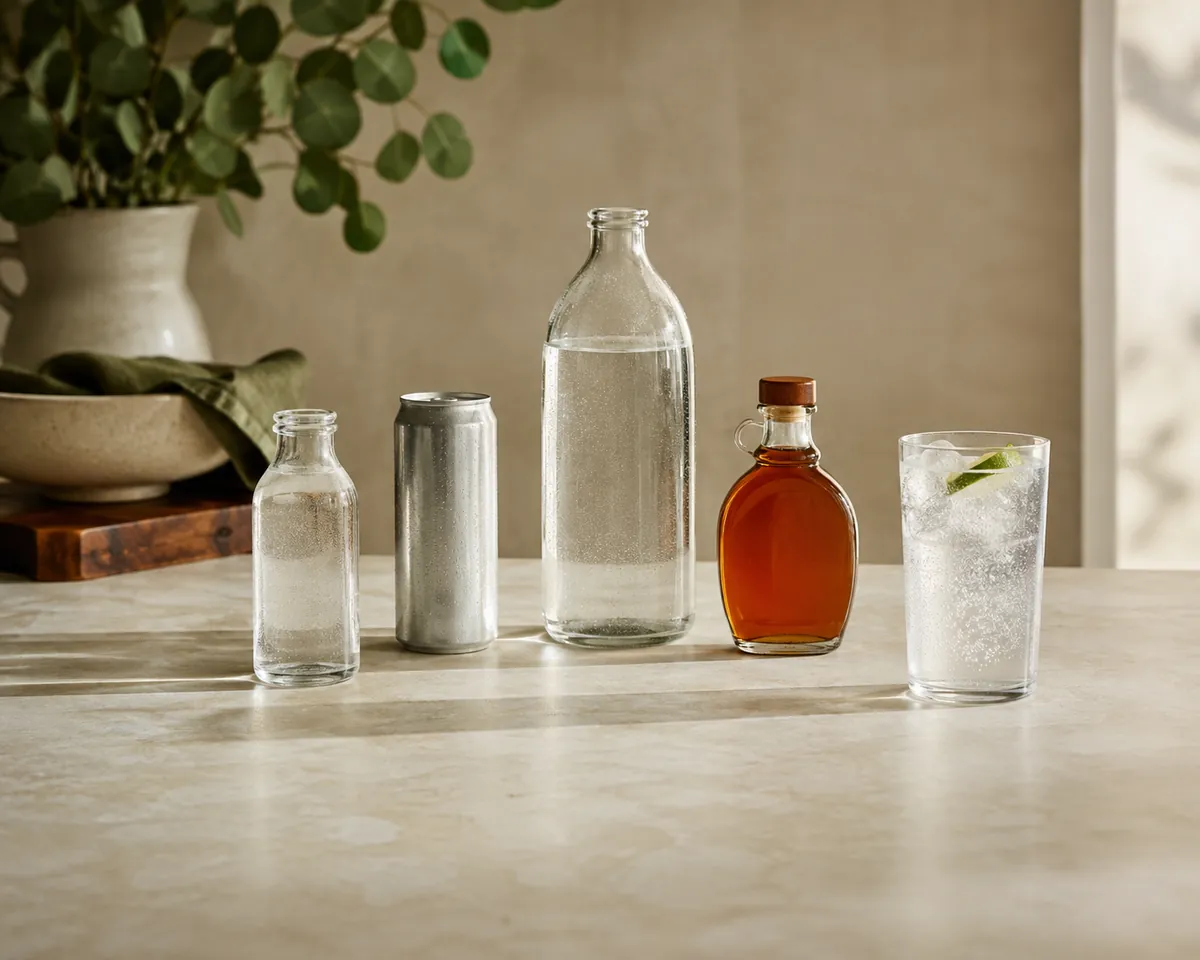
The small glass bottle is the format the drink is best suited to, and the reason is arithmetic rather than snobbery. A 200 ml bottle poured once loses nothing, where a litre opened on a Friday has surrendered a third of its gas by Sunday, and with the gas goes the carbonic acid that was holding the sugar in check.
Syrup is the interesting outlier because it separates two decisions that a sealed bottle welds together. You dilute it with whatever carbonated water you like, at whatever strength you like, so a hard-run home carbonator gives a sharper glass than most bottled tonic manages.
That is the practical half of making it at home, and the rest of the argument about opened bottles belongs under keeping an opened bottle.
Why a bar tonic and a bottled tonic are not the same drink
Tonic from a dispenser gun is a different product from tonic out of a bottle, and it is not a matter of quality alone.
A gun holds concentrated syrup in a bag-in-box and dilutes it with carbonated water at the moment of pour, at a ratio somewhere around one part syrup to five parts water. Three things then drift.
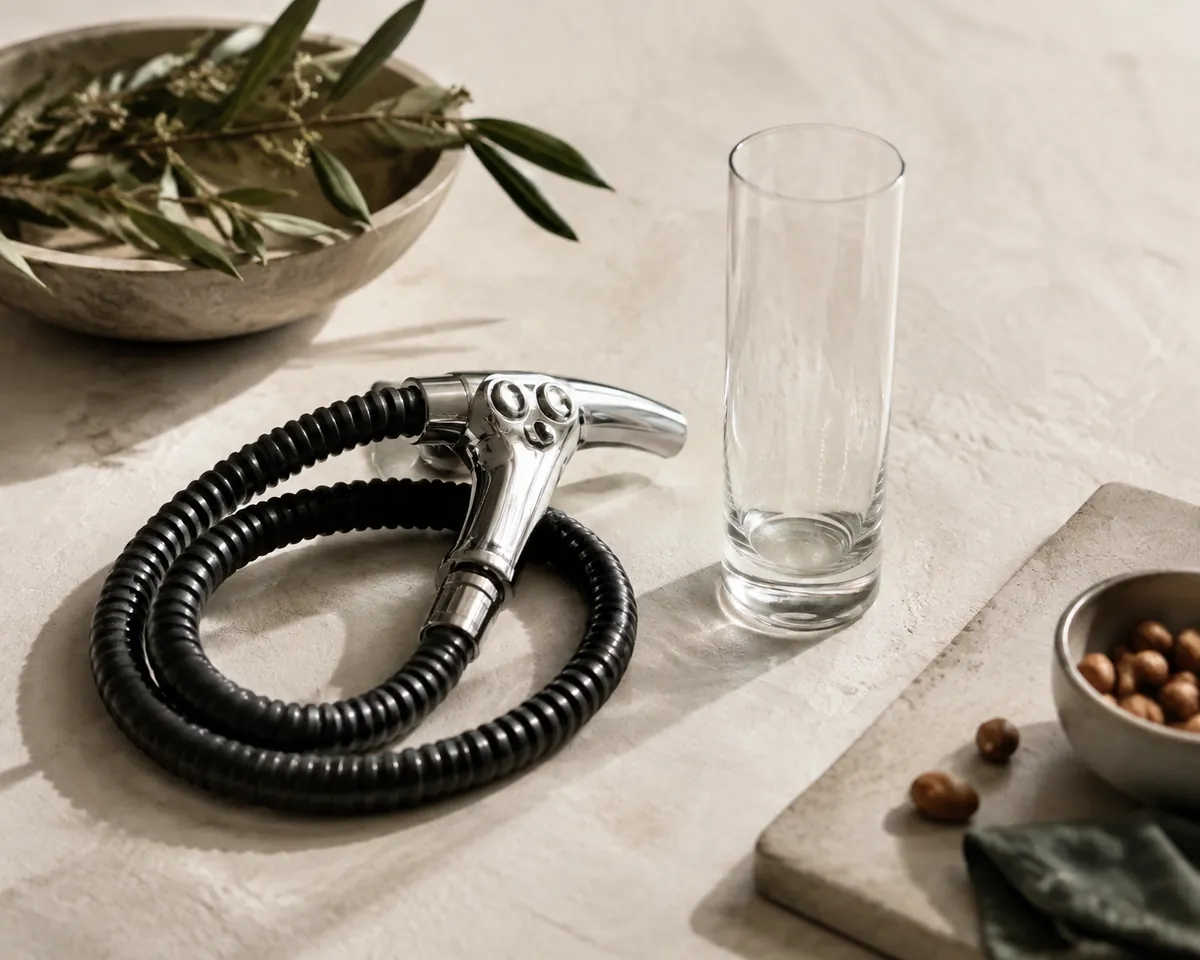
- The dilution ratio, which is set by a valve and goes out of adjustment quietly.
- The carbonation level, which depends on the carbonator and the pressure it is running at.
- The line temperature, since warm lines shed gas before the liquid reaches the glass.
- The syrup itself, which is formulated for dispensing rather than for bottling.
- The rinse water in the nozzle, which arrives ahead of the pour and dilutes the first of it.
None of that makes gun tonic bad, and a well-maintained system pours a perfectly good glass. It does explain why the same brand tastes different in two places, and why somewhere serving from small bottles is making a real claim rather than a decorative one.
The tell is the finish. A gun tonic that has drifted usually reads sweeter and softer than the bottle, because a slightly generous syrup ratio and slightly low carbonation both push in the same direction, and the quinine has less to push against.
What the sugar-free versions actually change
Removing the sugar removes more than the sugar, which is why a light tonic is a different drink rather than a lighter one.
Sweetness
Restored by sucralose, aspartame or stevia, but on a different time curve.
Body
Lost entirely. Sugar contributes weight that no intense sweetener replaces.
Bitterness
Reads higher, since there is less mass suppressing it.
Aftertaste
Longer, and in the case of stevia carrying a bitterness of its own.
Balance
Tips from sweet-then-bitter to bitter-almost-throughout.
The body loss is the part worth understanding, because it is the same effect that makes a sugar-free version of anything taste thin. Dissolved sugar thickens a liquid slightly, and a sweetener dosed at a thousandth of the weight cannot do that, so the drink arrives with nothing underneath it.
Stevia is the awkward case in a bitter drink specifically. It carries a bitter and slightly liquorice-like note of its own, and in a product already built on bitterness those two do not cancel; they stack.
A stevia tonic reads as more bitter than the full-sugar version, which is the opposite of what most people expect from a lighter product.
Where a sweetened tonic works, it works because the producer has reduced the quinine to match rather than simply pulling the sugar out. That is a reformulation rather than a substitution, and it is why light versions vary far more between brands than full-sugar ones do.
Against the other bitter bottles
Tonic gets shelved with the clear waters and belongs with the soft drinks, and that misfiling causes most of the substitution errors people make.
| Tonic water | Cola | Ginger ale | Bitter lemon | |
|---|---|---|---|---|
| Sugar | High | High | High | High |
| Bitter | Yes, from quinine | Slight, from the flavouring | No | Yes, from quinine and pith |
| Acid | Citric | Phosphoric | Citric | Citric, plus juice |
| Aroma | Citrus and botanicals | Citrus and spice | Ginger | Lemon |
| Colour | Clear | Dark | Pale gold | Cloudy pale |
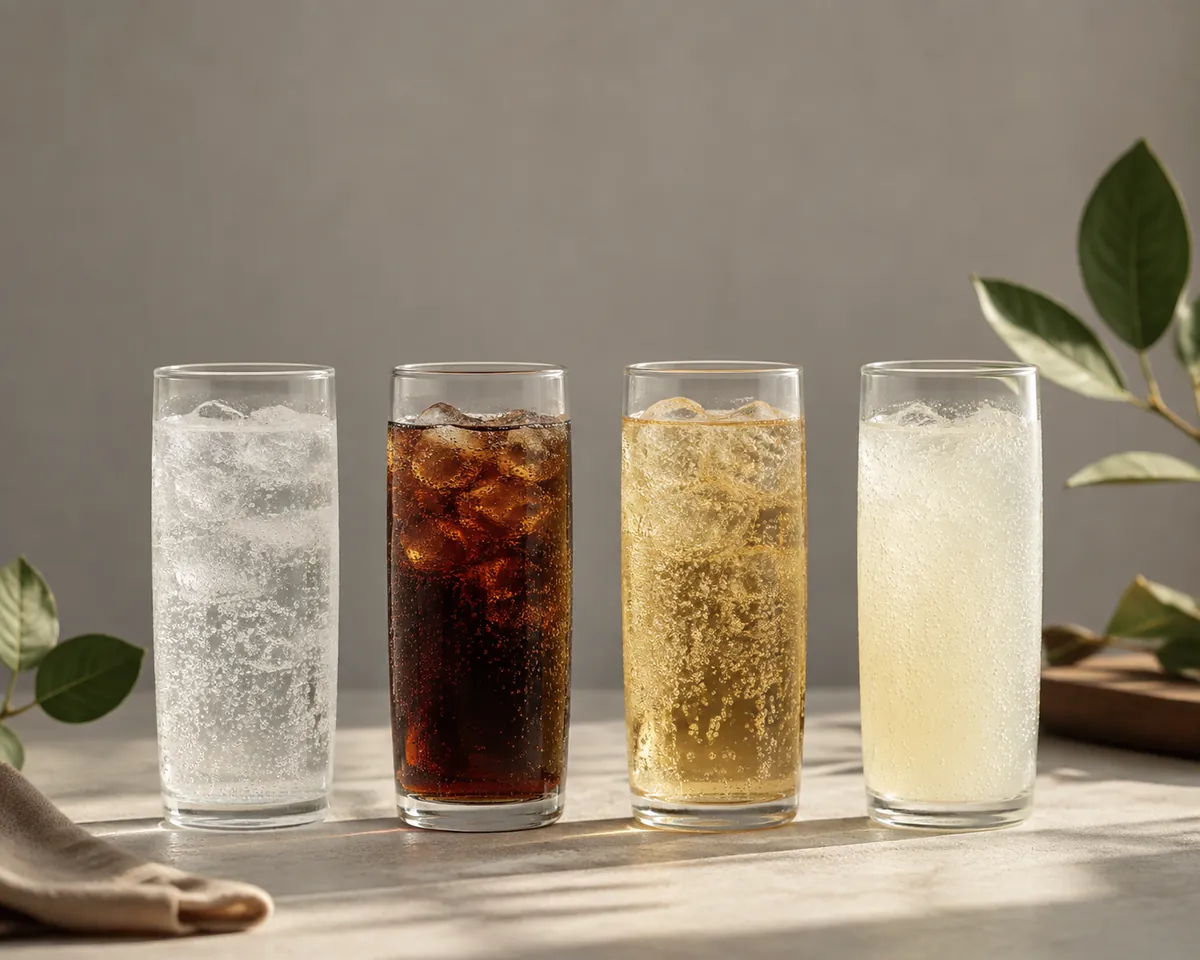
Every one of those is a finished drink rather than a base, which is the distinction that matters when a recipe calls for a mixer. Soda water and an unsalted seltzer are bases: they bring bubbles and nothing else, and they leave the sweetening and the flavouring to you.
Tonic brings sugar, acid, aroma and bitterness already decided.
Nor is it a water in any sense that bottled mineral water would recognise. The confusion is purely visual, and the sparkling water shelf is where the real waters live.
When tonic is the wrong bottle to reach for
Because it arrives complete, tonic dominates almost anything mixed into it, and the list of things that survive the encounter is short.
- Do not use it where a recipe asks for a neutral carbonated water, since it brings sugar and bitterness of its own.
- Do not build an Italian soda on it, because the syrup and the tonic will fight rather than combine.
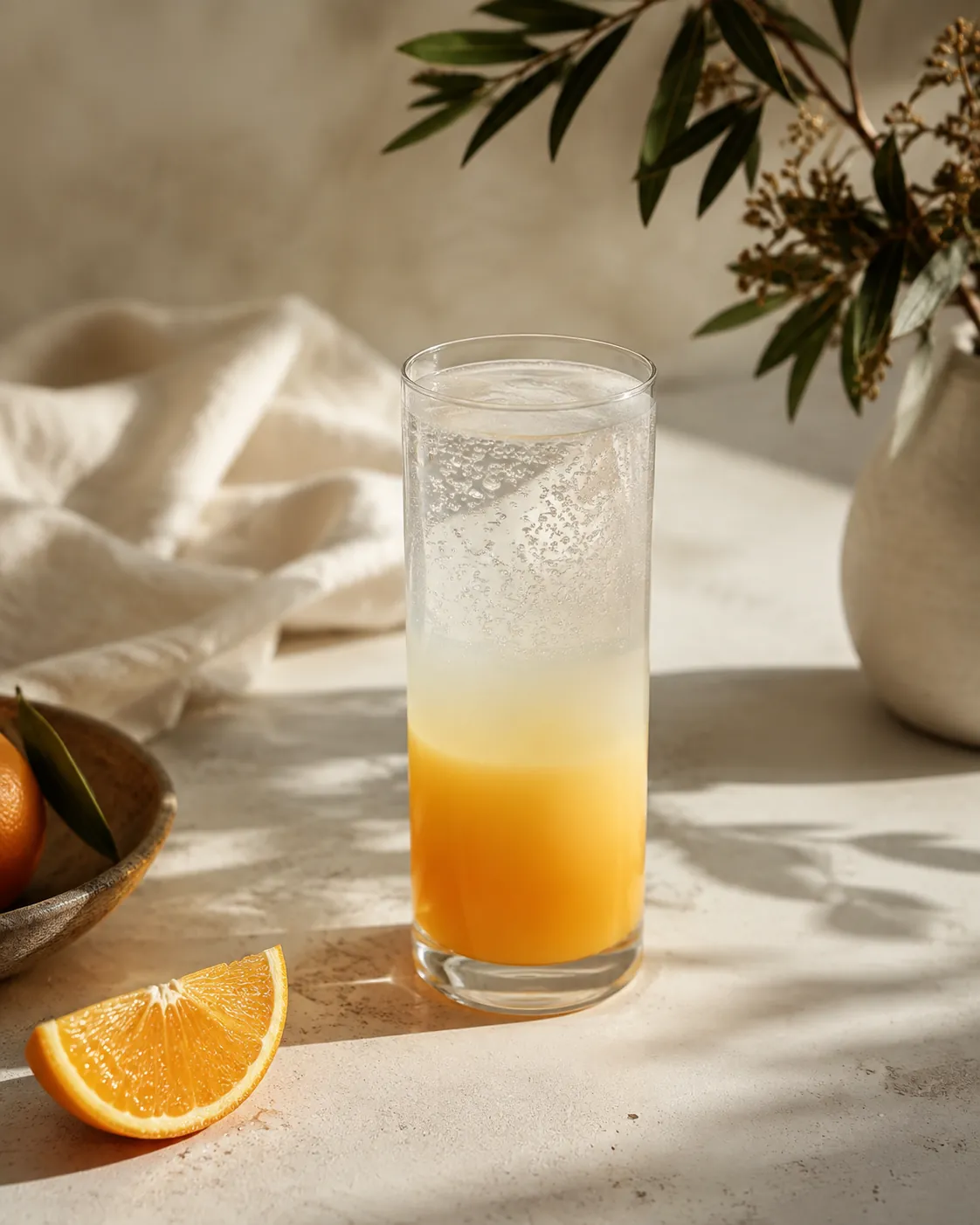
- Do not lengthen a delicate juice with it. Orange juice loses that argument outright.
- Do not add a plain sugar syrup to soften it, which makes it cloying without making it less bitter.
- Do serve it very cold, in a tall glass filled properly with ice rather than half filled.
Drunk on its own it is a genuinely good cold drink, and it wants very little help. A wedge of lemon reinforces the sourness that is already there, citrus peel adds aroma without adding acid, and nothing at all is the honest way to find out what a given bottle is doing.
There is one counter-intuitive fix for a tonic that reads too bitter, and it is not more sugar. A trace of salt suppresses bitterness far more efficiently than sweetness does, so a few grains of salt will soften a glass in a way a spoon of syrup cannot.
It is the same lever, pulled from a different direction, and it is worth knowing before you write the drink off. What goes wrong the rest of the time is mostly temperature, dilution and an old bottle, which is the subject of the faults it develops.
Common questions
How much sugar is in tonic water?
A full-sugar tonic typically carries 7 to 9 g per 100 ml, which puts it close to a cola at 10 to 11 g and roughly level with ginger ale. A 200 ml bottle therefore delivers somewhere near 15 to 18 g, or three to four teaspoons, in a glass most people would describe as dry.
Why does tonic water not taste as sweet as it is?
Because bitterness and sweetness suppress each other in both directions. Sugar lowers the perceived bitterness of the quinine, and the quinine lowers the perceived sweetness of the sugar, so the drink reads as moderately sharp rather than as either extreme. Let a glass go flat and warm and the hidden sweetness arrives with nothing holding it down.
Why does tonic water smell sweeter than it tastes?
Quinine is a heavy, non-volatile alkaloid with no smell at all, so none of a tonic's aroma comes from the ingredient that defines it. Everything you smell is the added citrus oils and botanicals, which is why the drink promises a sweet citrus soda and then finishes dry and bitter.