What Is Ginger Ale? Sweet, Carbonated, and Not a Beer
Ginger ale is a sweetened carbonated soft drink flavoured with ginger. Despite the name it contains no alcohol, and despite the ingredient it often contains very little ginger.
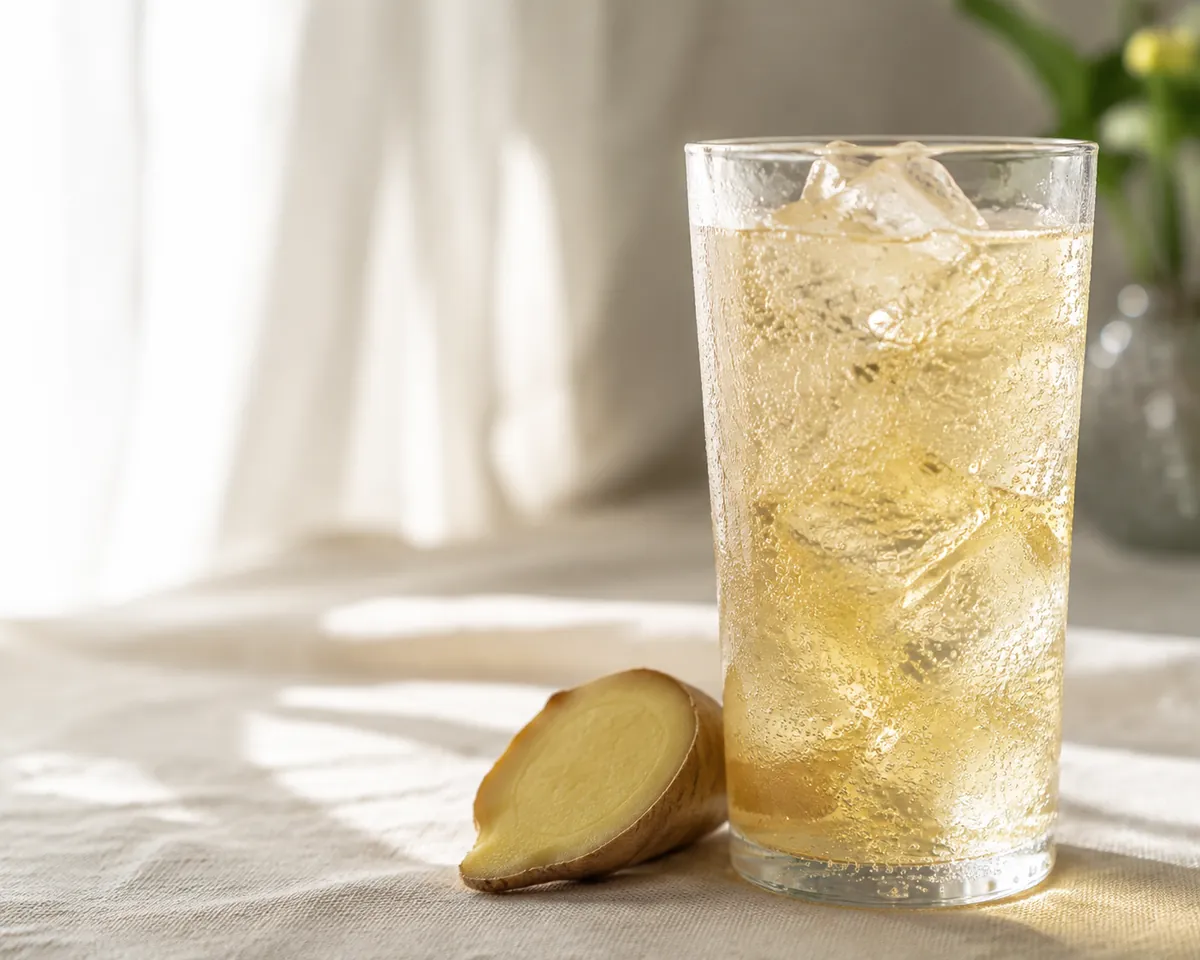
Ginger ale is a carbonated soft drink flavoured with ginger and sweetened. The word ale is a historical leftover: it contains no alcohol and is not brewed in the sense that ale is.
It is also, in most commercial versions, a drink that contains very little actual ginger.
Ginger ale at a glance
- What it is
- A sweetened, force-carbonated soft drink flavoured with ginger
- Two styles
- Dry, which is pale and restrained, and golden, which is amber and spicier
- Typical sugar
- 8 to 11 g per 100 ml in a full-sugar bottle
- Caffeine
- None
- Ginger content
- Usually an extract under the words natural flavouring
- Colour
- In golden styles it comes from caramel colour, not from the spice
- Why the name
- Inherited from ginger beer, which genuinely was brewed
Dry and golden, and how to tell them apart
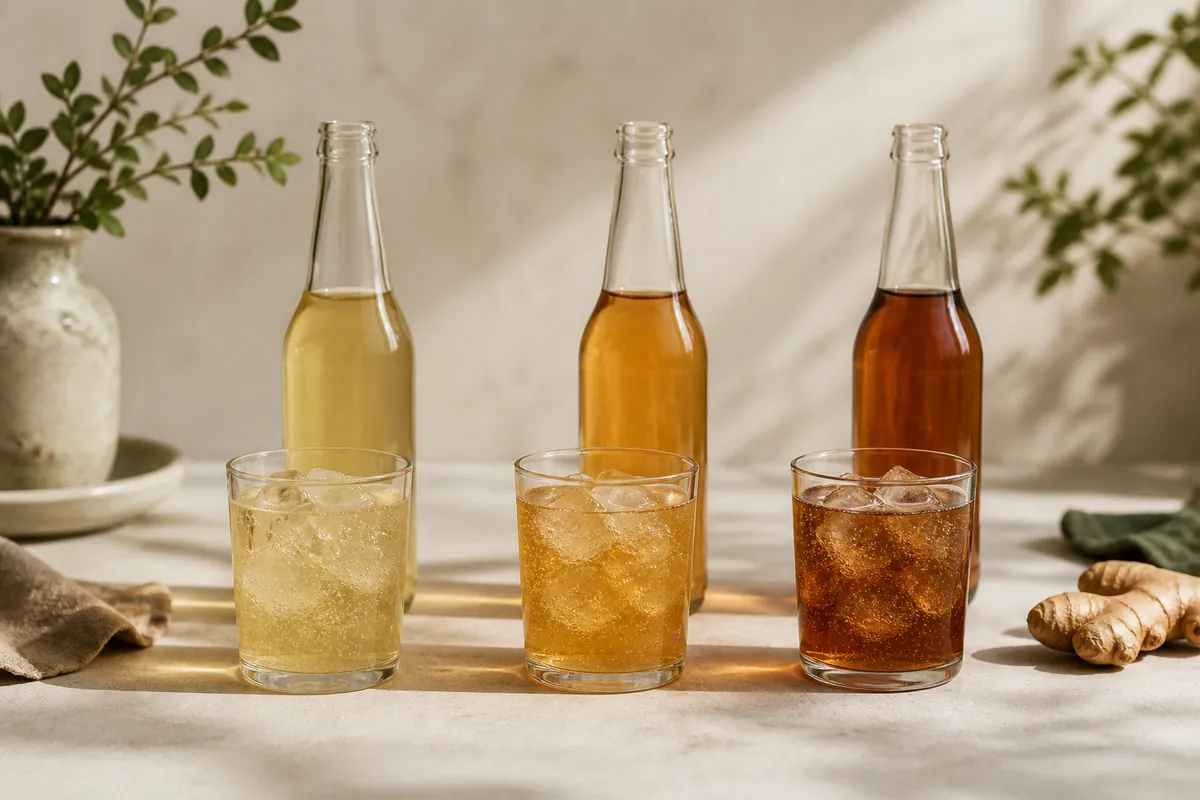
Ginger ale splits into two traditions that taste substantially different, and the style is not always marked anywhere on the label.
| Dry | Golden | |
|---|---|---|
| Colour | Pale, almost clear | Deep amber |
| Ginger | Restrained, clean | Forward, spicier |
| Sweetness | Moderate | Higher |
| Origin | Canada, early twentieth century | The older nineteenth-century style |
| Typical use | Mixer, where it should not dominate | Drunk on its own |
Almost every mass-market ginger ale is the dry style. It was designed as a neutral, lightly spiced lengthener and it succeeds by not asserting itself, which is also why drinking it alone can feel like drinking sweetened fizz with an idea of spice behind it.
Golden ginger ale is now the specialty product and is closer to what the drink originally was: darker, sweeter and much more obviously gingery.
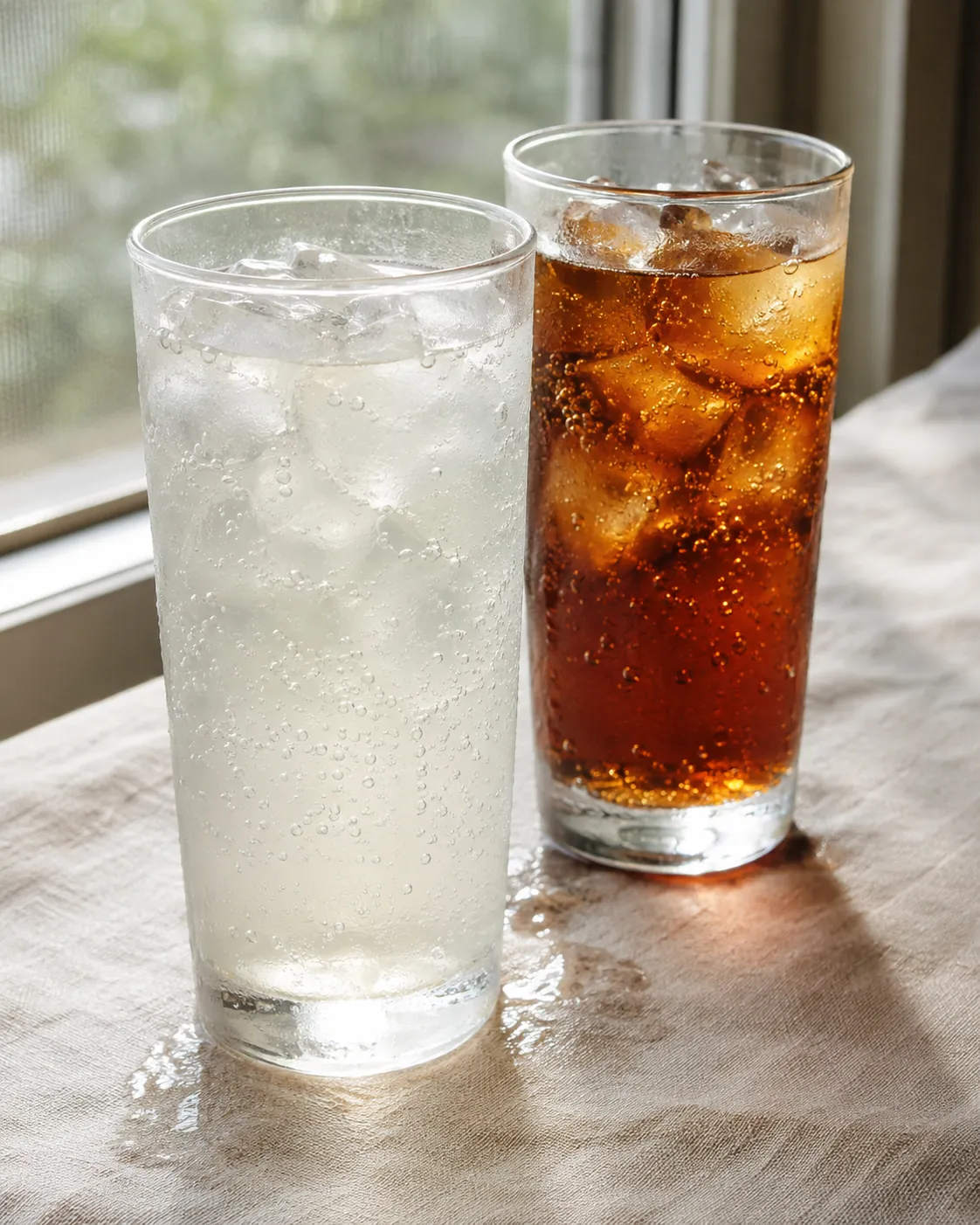
If the bottle does not say which it is, the colour does. Beyond that, a few things on the label repay reading.
- Look for real ginger in the ingredients rather than natural flavouring alone.
- Compare sugar per 100 ml between brands; the spread across the category is wide.
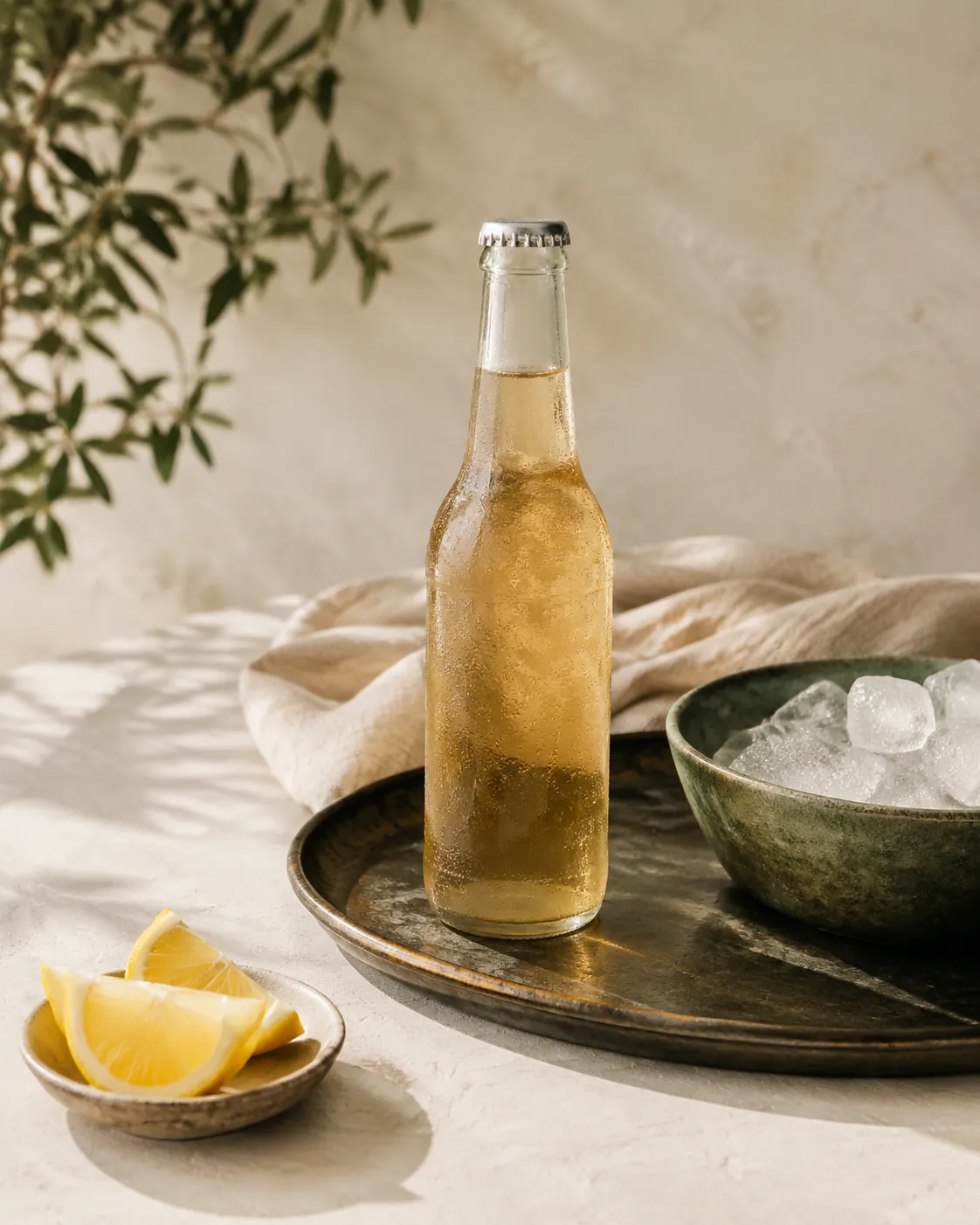
- Glass bottles hold carbonation better than plastic and matter if you drink it slowly.
- Try a craft brand once for reference, since the mass-market version defines the category badly.
Price tracks ginger content fairly reliably here, which is not true of every drink, because real rhizome is expensive next to flavouring and the difference reaches the shelf price. Anyone who has found ginger ale disappointingly bland has almost certainly only met the dry style, which is why what ginger ale tastes like has two answers rather than one.
What natural flavouring actually permits
The ingredients list is short, and it explains why the ginger in most bottles is so faint. Nothing on it is concealed; the useful information sits in how much ground the words are allowed to cover.
A typical commercial ginger ale
- Carbonated water
- The bulk of it
- Sugar or sweetener
- High fructose corn syrup, sucrose, or a non-nutritive sweetener
- Citric acid
- Provides tartness and balances the sweetness
- Natural flavouring
- Where the ginger character comes from, often as an extract
- Caramel colour
- In golden styles, for the amber colour
The phrase to look for is natural flavouring. It permits a ginger extract and requires no meaningful quantity of the rhizome itself, so a bottle can be labelled honestly and still contain almost no ginger.
A product made with real root usually announces it on the front, because the ingredient costs more and the claim sells.
Caramel colour is the second line worth noticing, since in a golden ginger ale the amber comes from colouring rather than from spice. Colour is not evidence of ginger content, and a pale craft bottle can easily carry more heat than a dark supermarket one.
The citric acid is doing the job a squeeze of fruit would do at home: it stops the sugar reading as flat, and it is why a warm ginger ale tastes sour as well as sweet rather than simply syrupy.
Where the heat went, and what gingerol has to do with it
Ginger ale delivers less ginger heat than its name promises, and heat is the thing that goes missing.
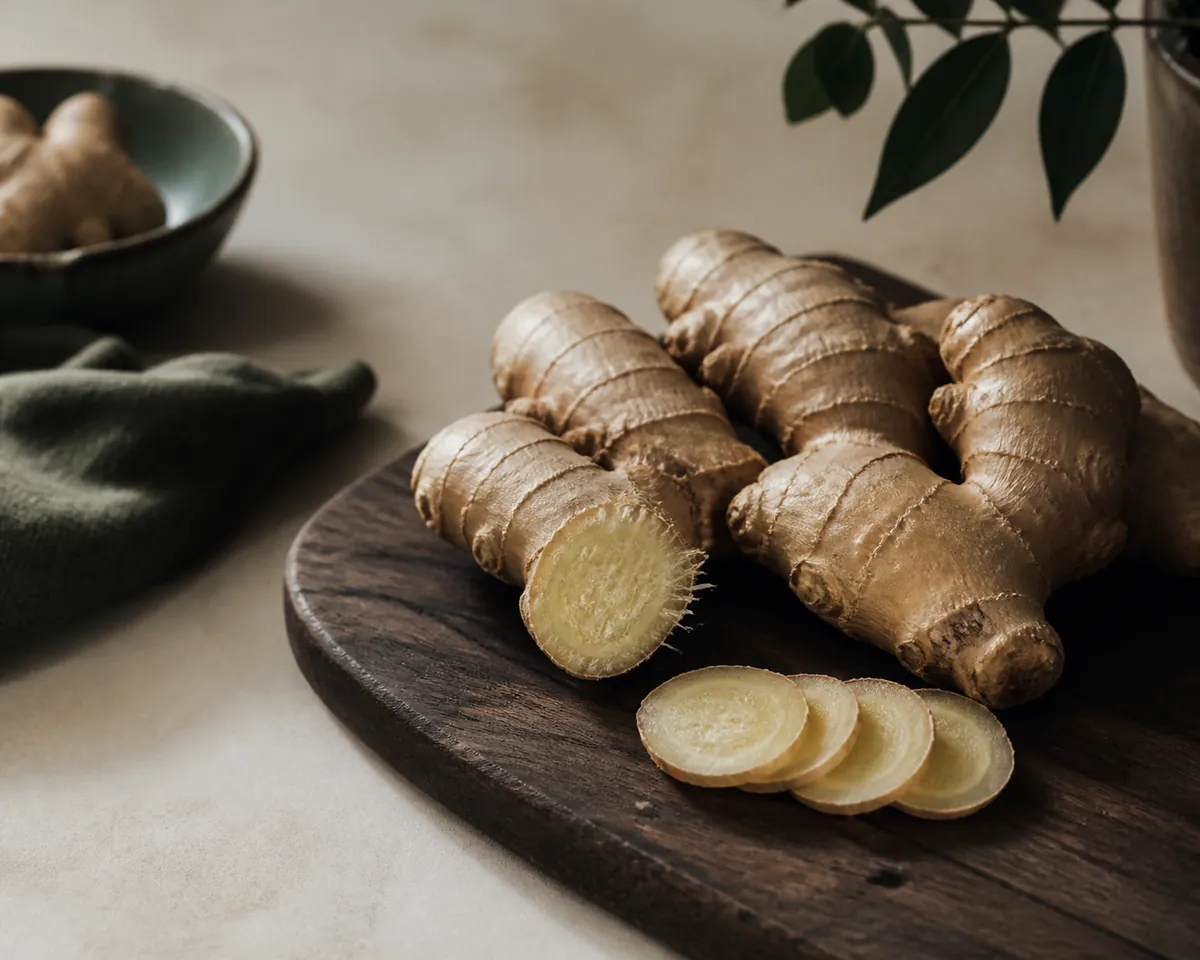
The dominant notes are sweetness and a citric tartness, with a light warm spice behind them. What is largely absent is the throat heat that fresh rhizome produces, because gingerol and shogaol do not survive most commercial flavouring processes intact.
Gingerol is the pungent compound in the fresh root and it converts to the sharper shogaol on drying, so a ginger ale can smell clearly of ginger while delivering nothing at all at the back of the throat.
Ginger heat across the category
- Mass-market dry ginger aleA hint of spice, mostly sweet
- Golden ginger aleClearly gingery, still gentle
- Craft ginger aleReal ginger, noticeable warmth
- Commercial ginger beerAssertive heat
- Homemade ginger syrup and sodaAs hot as you choose to make it
The distance between the two ends of that scale is why the words on a label tell you so little on their own, and it is the whole reason a homemade version is better than it has any right to be. A syrup made from simmered fresh rhizome keeps the heat, and topping it with carbonated water does nothing to take it away again.
Brewing ginger tea once from fresh root makes the comparison obvious in a way that tasting bottles never will.
Ginger ale, ginger beer and the word that stuck
These two are constantly confused and they are genuinely different drinks, made by different routes and carrying very different quantities of spice. The name causes most of the trouble, and the name is a historical accident.
| Ginger ale | Ginger beer | |
|---|---|---|
| Method | Flavoured and carbonated | Traditionally brewed and fermented |
| Alcohol | None | None in the modern product; trace in traditional brewing |
| Ginger intensity | Low to moderate | High, often genuinely hot |
| Cloudiness | Clear | Often cloudy, sometimes with visible sediment |
| Body | Light | Fuller, sometimes slightly sedimented |
Ginger beer is the stronger drink by a wide margin. Modern commercial ginger beer is usually not fermented either, but it is formulated to carry far more heat, and that changes what each one can do in a glass. Ginger beer stands up to strong flavours and to a glassful of ice; ginger ale is a lengthener, which is why it sits in the mixer aisle next to soda water rather than among the colas.
Substituting one for the other changes a recipe considerably, and generally not in the direction anyone intended.
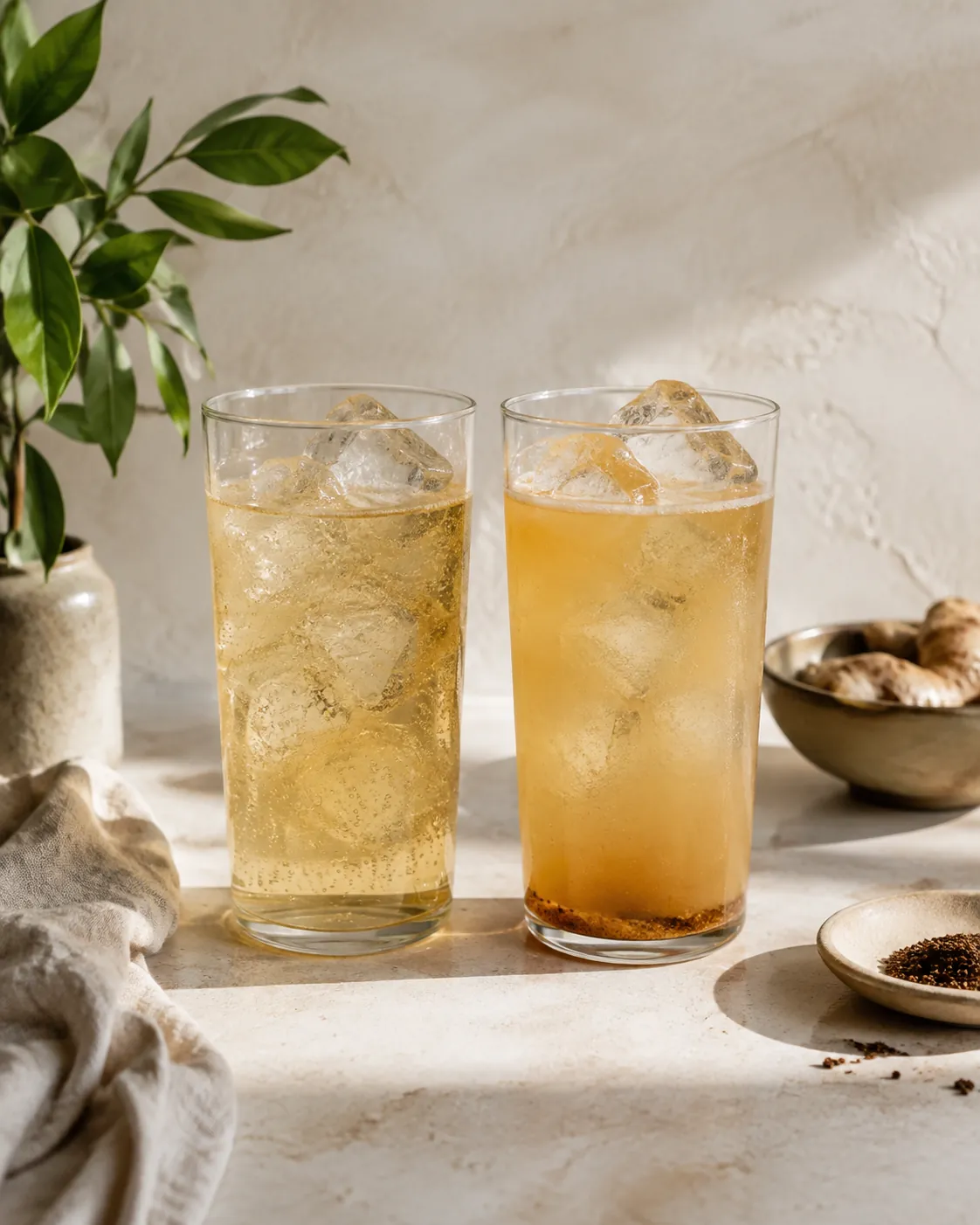
Ginger ale descends directly from ginger beer, which genuinely was brewed and fermented and carbonated itself in the process. When producers moved to forced carbonation and bought-in flavouring in the nineteenth century, the drink stopped being brewed and kept the brewing word, and the dry style developed in Canada in the early twentieth century went on to dominate worldwide.
The name therefore records a production method that has not touched the mass-market product in over a century, much as tonic water's bitterness records a use the drink no longer serves.
Making it from fresh rhizome
Ginger ale is one of the few soft drinks a home cook beats the shops at outright, because the thing the industry loses in processing is precisely the thing a saucepan preserves.
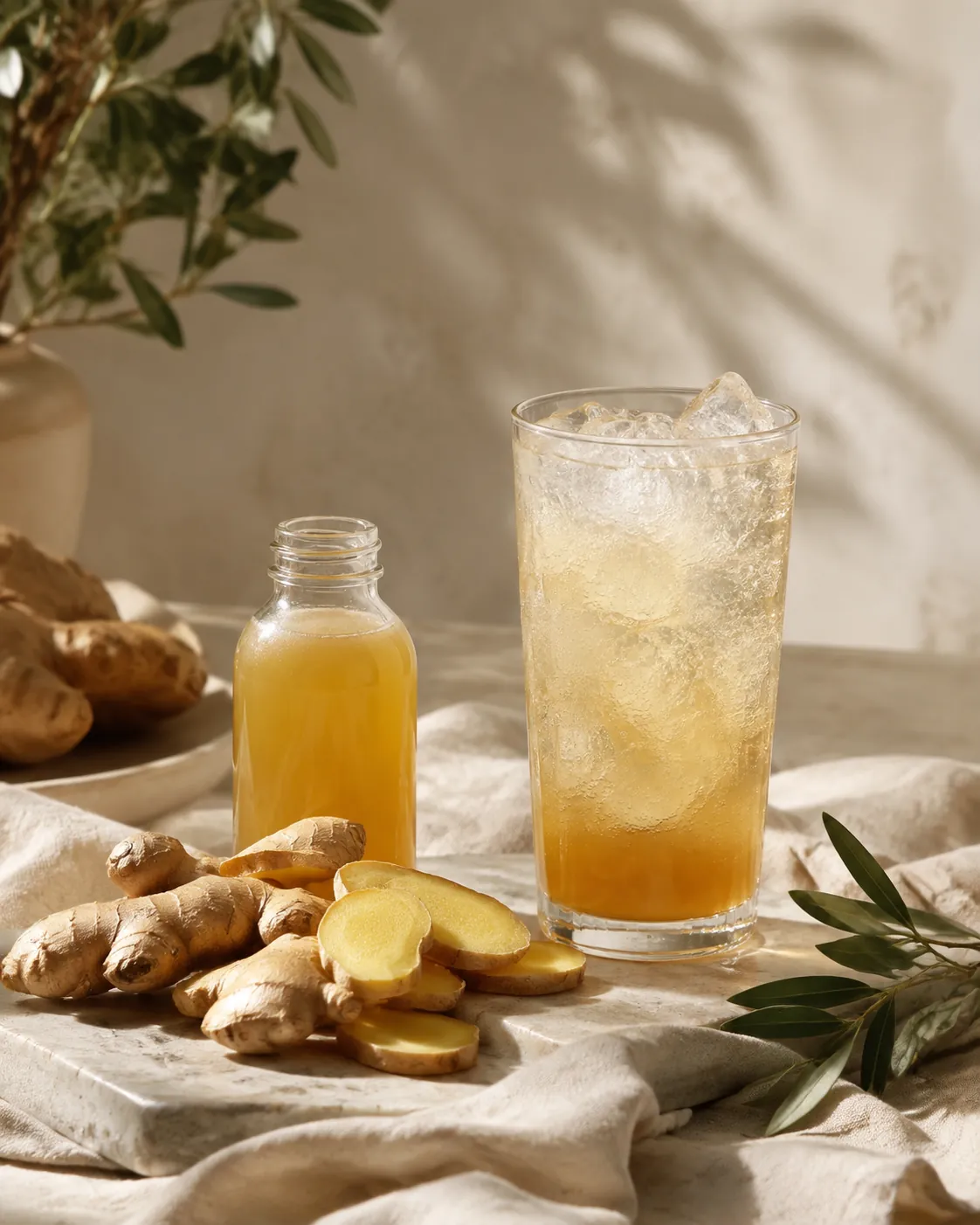
Ginger syrup and soda
- Ginger
- 100 g fresh, scrubbed and thinly sliced
- Water
- 250 ml
- Sugar
- 200 g
- Method
- Simmer ginger and water 20 minutes, add sugar, dissolve, cool and strain
- To serve
- 30 to 40 ml syrup topped with 150 ml chilled soda water
- Keeps
- About three weeks in the fridge
That ratio is a starting point rather than a rule, and the syrup keeps long enough to argue with over a fortnight of glasses.
Simmer rather than boil hard. A rolling boil drives off the aromatics and leaves you the heat without the perfume, which is the single most common way a homemade batch disappoints. Working from syrup is also more flexible than trying to carbonate a finished drink, since it sets the strength glass by glass, and a soda maker driven hard gives more prickle than most bottled water manages.
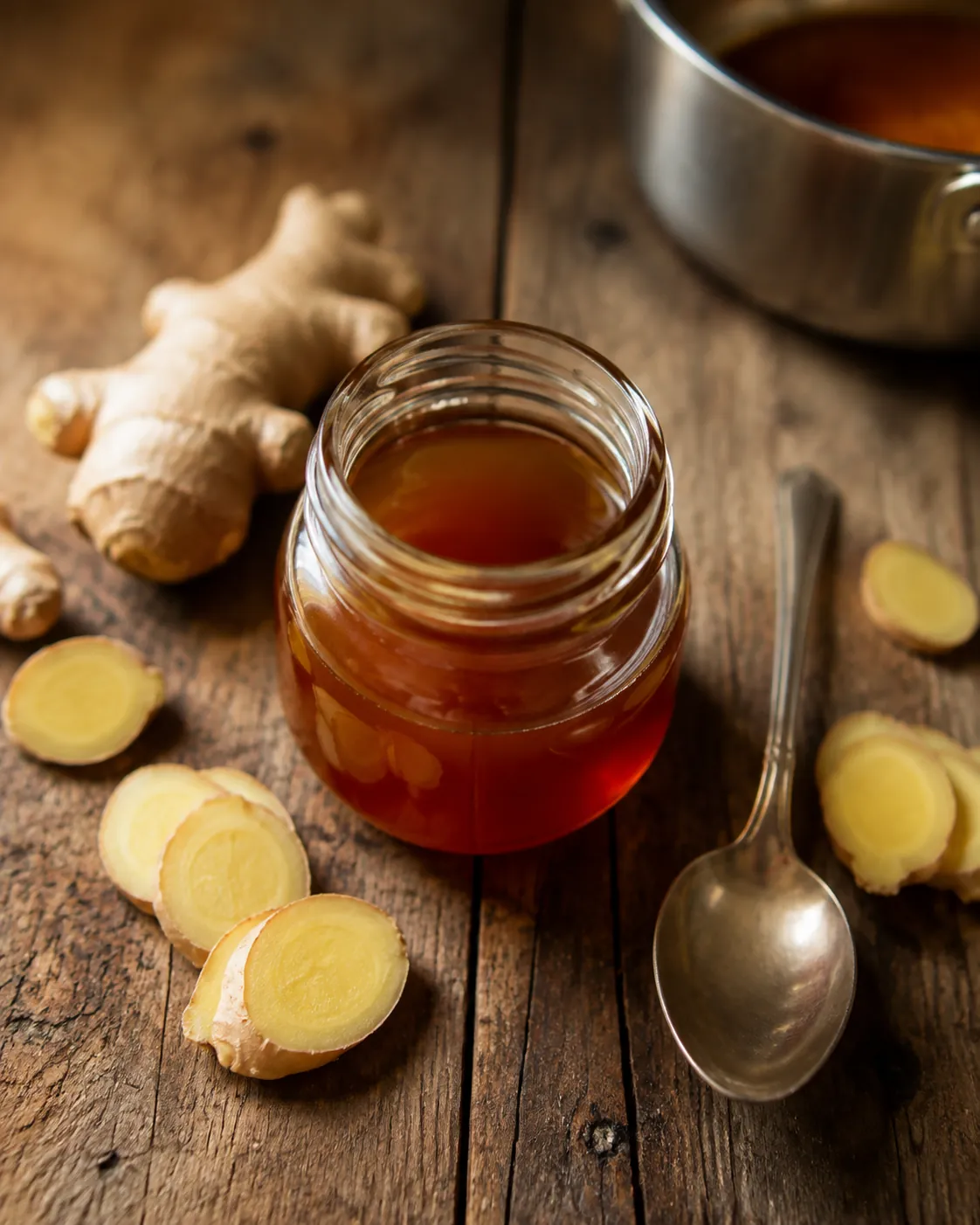
Made this way it lands closer to a golden ginger ale than a dry one and is considerably hotter than either, which is worth knowing before pouring it for somebody who only ever liked the pale kind. Making ginger ale works through the syrup and the carbonation properly.
A lemon in the house will do at a pinch, but the callout above is not a preference so much as a repeated finding.
What it lengthens well, and what it flattens
Dry ginger ale exists to be added to something else, and it is unusually good at the job.
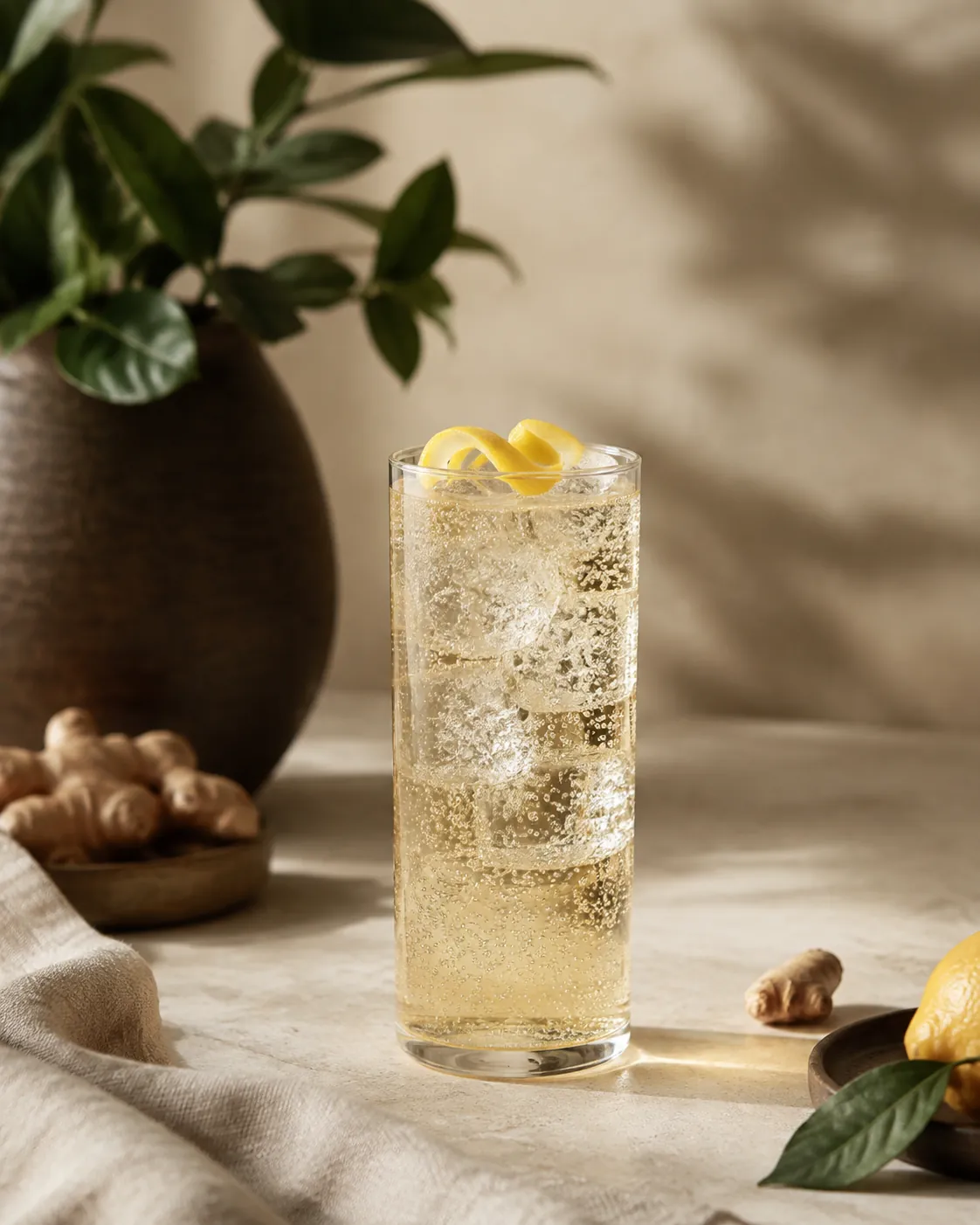
With a slice of fresh ginger
The cheapest way to put back what the flavouring left out.
With lime and mint
A long, cool drink in its own right, and better with the golden style.
Ginger occupies an unusual position among flavourings: warm and aromatic without being fruity, and neither sweet nor sour enough to take charge. That combination lets it add character without competing, and its moderate acidity means it does not clash the way a strongly citric partner can.
Where it works less well is against anything delicate, because the sweetness and the acidity together will erase a subtle infusion, which is why it is rarely poured over a light tea. The dry style pushed that restraint so far that drunk alone it can taste like very little, and that is the trade the whole category made: a drink engineered to vanish into a tall glass is not going to reward being sipped slowly on its own.
Sugar, and what the zero-sugar versions change
Ginger ale is a sweetened drink before it is a spiced one, and the sweetening accounts for a large share of what you are actually tasting.
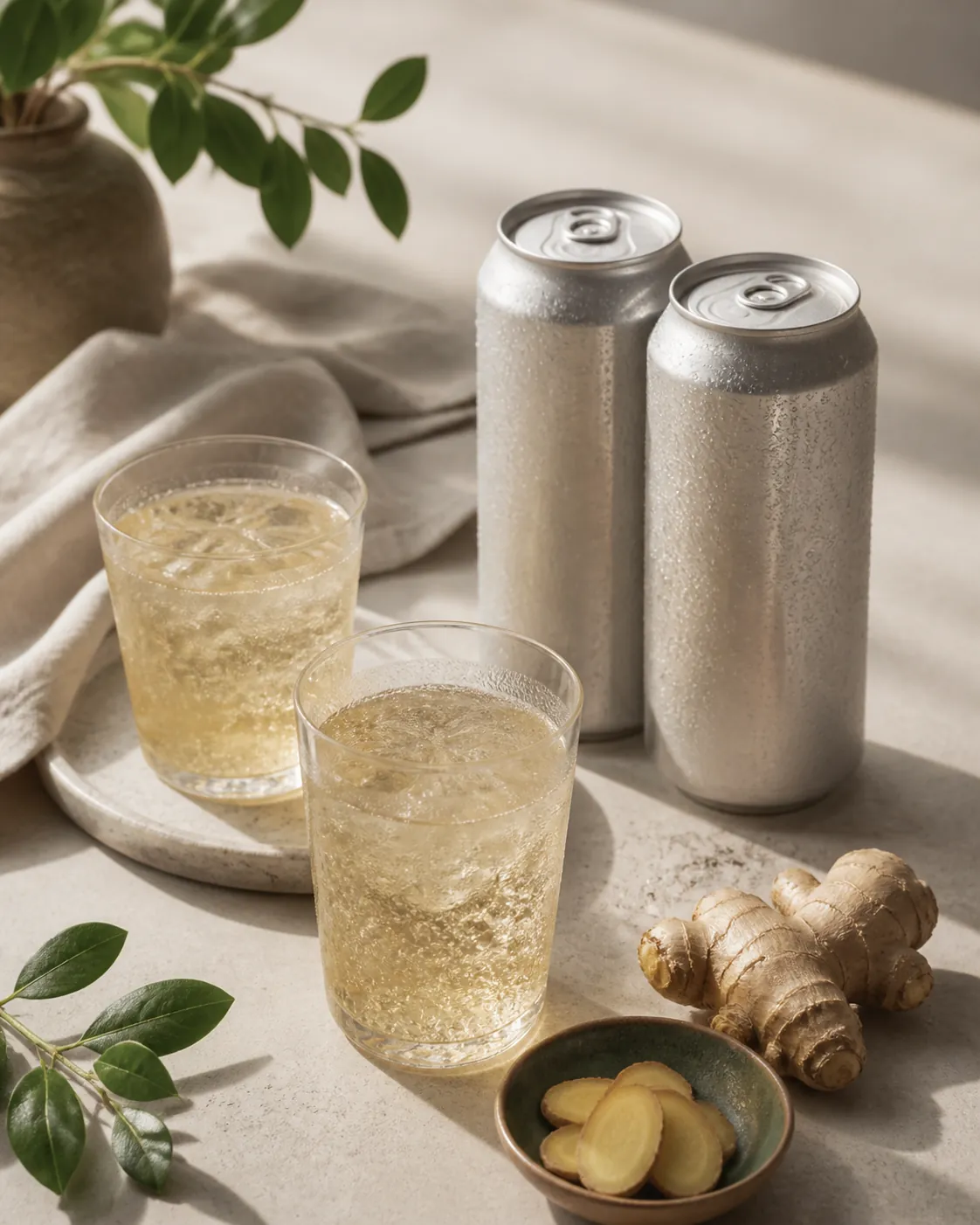
A typical full-sugar ginger ale carries somewhere around 8 to 11 g of sugar per 100 ml, which puts it in the same range as most carbonated soft drinks, and golden styles usually sit at the top of that range rather than the middle.
Zero-sugar versions replace sucrose or corn syrup with aspartame, sucralose or stevia, and they taste noticeably different rather than identical. Cane sugar contributes body and mouthfeel as well as sweetness, where a high-intensity sweetener contributes only the sweetness, so in a drink this light the gap shows more than it would in a cola: the zero-sugar version reads thinner, and the citric acid becomes suddenly audible.
Why a flat one tastes worse than flat water
Ginger ale is a sugared carbonated drink, and both halves of that description govern how it keeps. Unopened it holds for months, though the ginger and citrus notes flatten well before the date printed on the bottle.
Once it is open, lost carbonation is the first change, and a flat ginger ale is worse than flat water rather than merely duller. The sugar and the acid were balanced against the prickle of the bubbles, and without them the drink reads as syrupy and sour at the same time, which is a fault no amount of chilling answers.
Keep it cold and tightly sealed, and buy the size you will finish, because the headspace problem that affects sparkling water applies here with the sugar making it worse.
A soda maker demonstrates the same pressure principle from the opposite direction: carbon dioxide stays dissolved while the container is sealed and escapes faster each time the pressure is released. A can is the honest format for anyone who drinks a glass at a time, and storing ginger ale largely comes down to admitting that.
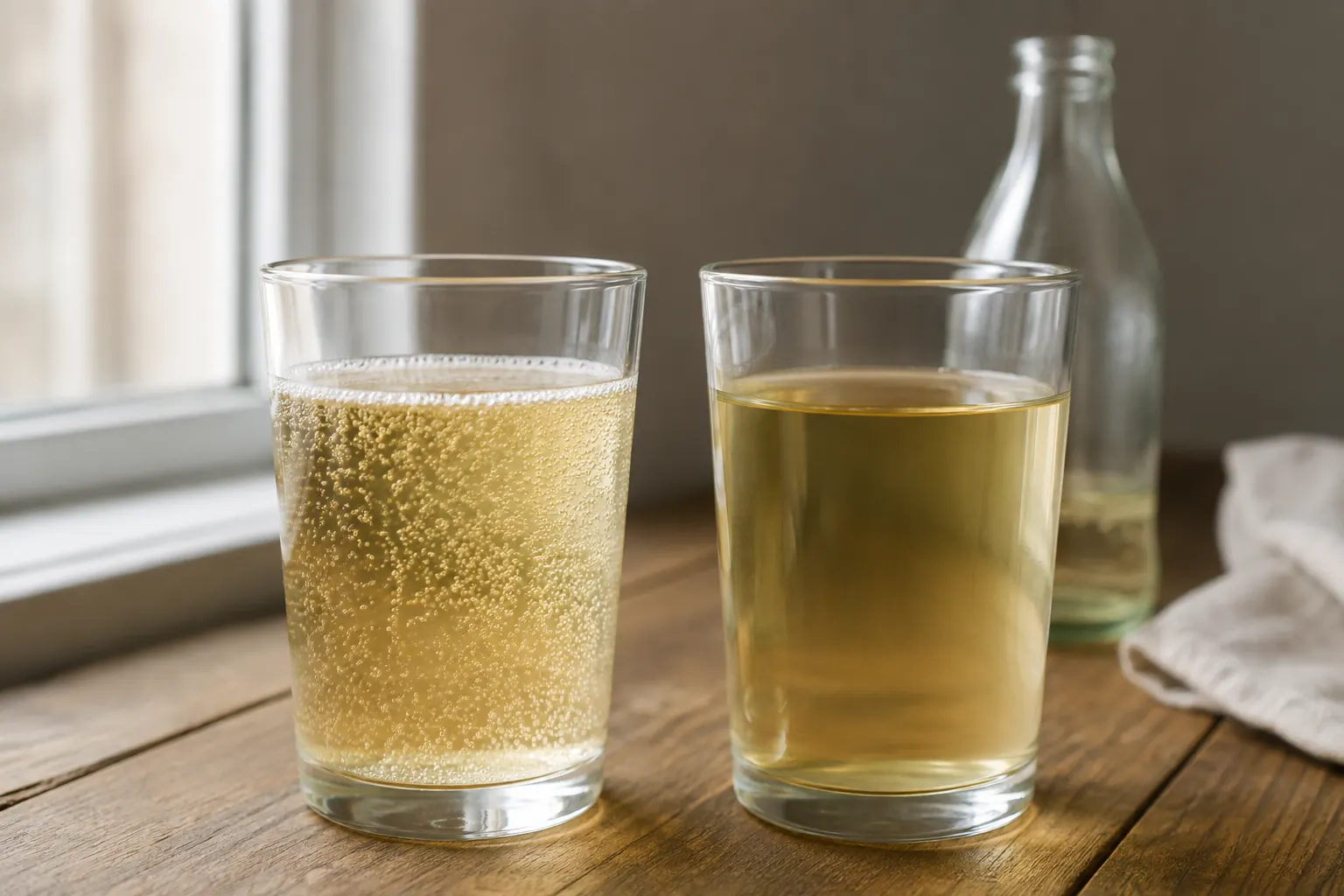
Fine bubbles also scrub aroma upward as they rise, so the flat glass loses some of its citrus and ginger scent as well as its prickle. Chilling slows the escape but cannot restore gas that has already left the drink.
Most ginger ale problems begin with lost carbonation, even when the first complaint is excessive sweetness or a dull ginger aroma.
Regional versions, and buying for one job or the other
The drink carries far more regional variation than its mass-market form suggests.
North America
Dry, pale and very widely drunk, often as a standalone soft drink.
United Kingdom
Dry ginger is understood primarily as a mixer rather than a drink in itself.
Ireland
Red lemonade and ginger ale occupy overlapping territory, with local brands dominating.
Japan
Often spicier and less sweet than the North American style, and treated as a serious soft drink.
Caribbean
Ginger beer dominates instead, and it is far hotter than any ginger ale.
That split is why advice about ginger ale so often fails to travel. A recipe written in one market may assume a drink that is not sold in another, and a Japanese bottle is taken about as seriously there as a sparkling mineral water is in Europe.
The same problem appears on a single shelf, because a bottle bought to lengthen something and a bottle bought to drink are genuinely different purchases. A lengthener should be restrained: dry style, moderate sweetness, a clean finish that does not argue with whatever it joins.
A drink in its own right can afford to assert itself, with golden colour, real rhizome, more heat and more body, all of which would overwhelm most things it was added to. Buying one bottle for both jobs is the usual mistake, so if you mostly lengthen, buy dry and cheap, and if you mostly drink it, buy golden and good.
Where ginger ale sits among the other sodas
Ginger ale is one of several sweetened carbonated drinks that get shelved together, and knowing which one you actually want saves a disappointing purchase more reliably than any tasting note.
| Ginger ale | Tonic water | Cola | Root beer | |
|---|---|---|---|---|
| Dominant flavour | Ginger, light | Quinine bitterness | Citrus and spice | Wintergreen and vanilla |
| Sweetness | Moderate to high | High | High | Highest |
| Acidity | Citric, moderate | Citric, high | Phosphoric, very high | Low |
| Works as a mixer | Yes, its main role | Yes | Rarely | Rarely |
Tonic water is the opposite choice on the same shelf, adding bitterness where ginger ale adds warmth and sweetness, and bitter lemon doubles down on the bitterness with citrus pith on top of the quinine.
Cola drinks and root beer sit firmly on the drink side rather than the lengthener side, because their flavours are too complete to leave room for anything else. An Italian soda is the nearest neighbour to a homemade ginger ale, since syrup topped with carbonated water is exactly the build described above.
Acidity is the line that matters most in that table: ginger ale's is moderate and citric, which is why it sits comfortably beside fruit and dairy where a phosphoric cola will not.
Common questions
Does ginger ale contain alcohol?
No. The word ale is a leftover from ginger beer, which was genuinely brewed and fermented. Modern ginger ale is flavoured and force-carbonated, and contains no alcohol.
What is the difference between ginger ale and ginger beer?
Ginger beer is formulated to carry far more ginger heat and is often cloudy and fuller-bodied. Ginger ale is lighter, clearer and much milder. They are not interchangeable in a recipe.
Is there real ginger in ginger ale?
Often very little. Most mass-market versions rely on natural flavouring, which permits ginger extract without requiring meaningful quantities of the rhizome. Products made with real ginger usually say so on the label.