How to Make Ginger Ale at Home Without Fermentation
Fresh ginger syrup plus separately carbonated water gives direct control over flavour and fizz without yeast, sealed-bottle fermentation or uncertain alcohol.
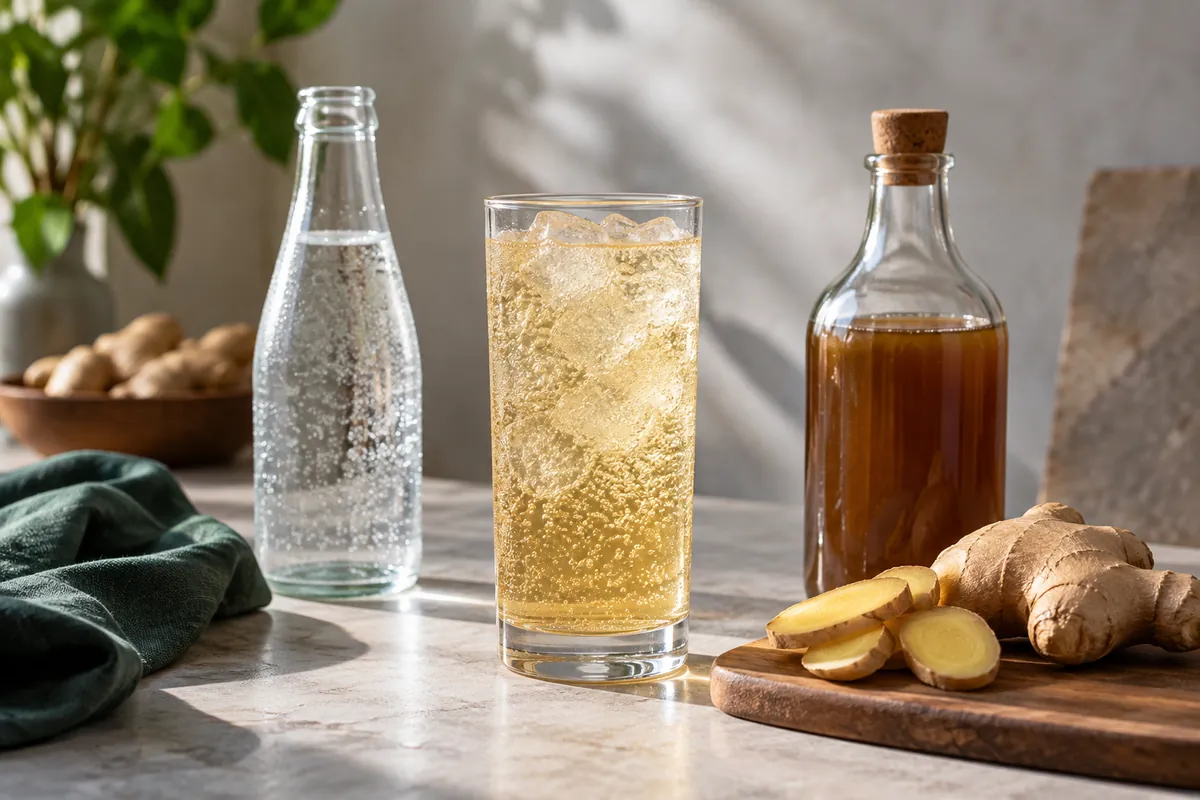
You can make ginger ale by simmering fresh ginger into a concentrated syrup, chilling it fully, then mixing one part syrup with three parts sparkling water.
This method is alcohol-free because it uses no yeast and no fermentation.
Keeping the syrup and bubbles separate also makes the drink easier to adjust. You can change the ginger heat, sweetness and carbonation in one glass without committing an entire bottle.
Why this method does not use a ginger bug
A ginger bug is a living culture whose yeast can give a sweet stored bottle both pressure and alcohol.
Forced carbonation keeps the alcohol boundary clear. Use purchased sparkling water or carbonate plain water in a home soda maker designed for it, then add the flavour after carbonation.
This method makes ginger ale rather than a fermented ginger beer, and because the name does not set a universal heat level, you can still make it dry, spicy or gentle.
Fresh ginger can give heat, citrus and woodiness
Young smooth-skinned ginger is juicy and bright, while older fibrous roots can taste hotter and more woody and therefore need different handling.
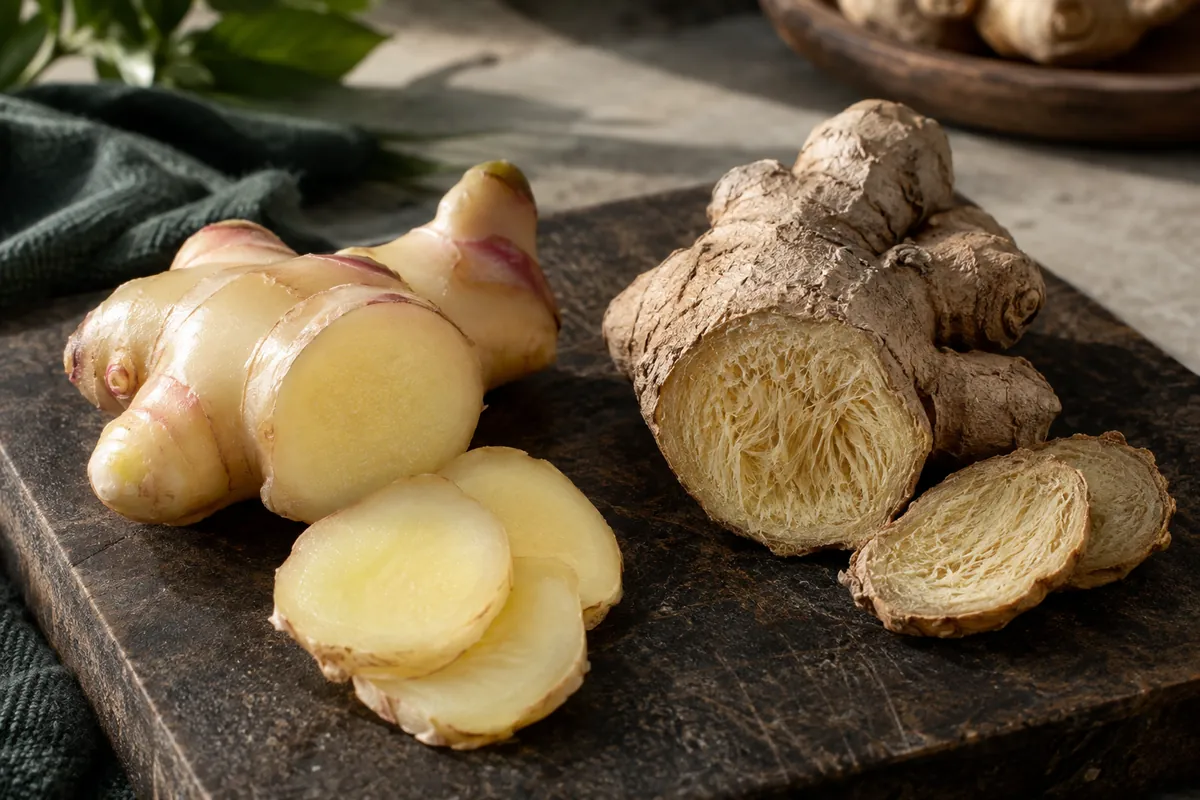
Thin slices give a broad clean surface with little sediment, while fine grating gives fast heat with more starch and sediment.
Slice first when clarity matters, and grate only when heat matters more than a clear glass, then filter through a finer cloth.
If the root is fresh, scrubbed and free of damaged areas, peeling is optional. Cut away dried ends and soft spots, and discard a root that shows mould, rather than trying to hide it beneath sugar and citrus.
Simmer, steep and strain for a layered syrup
Put sliced ginger, still water and lemon peel in a saucepan and bring it to a gentle simmer. Cook uncovered for 20 minutes, dissolve the cane sugar, then simmer for five minutes more, remove the pan from the heat and cover it for 15 minutes before straining.
The base behaves like a flavoured simple syrup, dissolving in a cold drink without leaving loose sugar at the bottom.
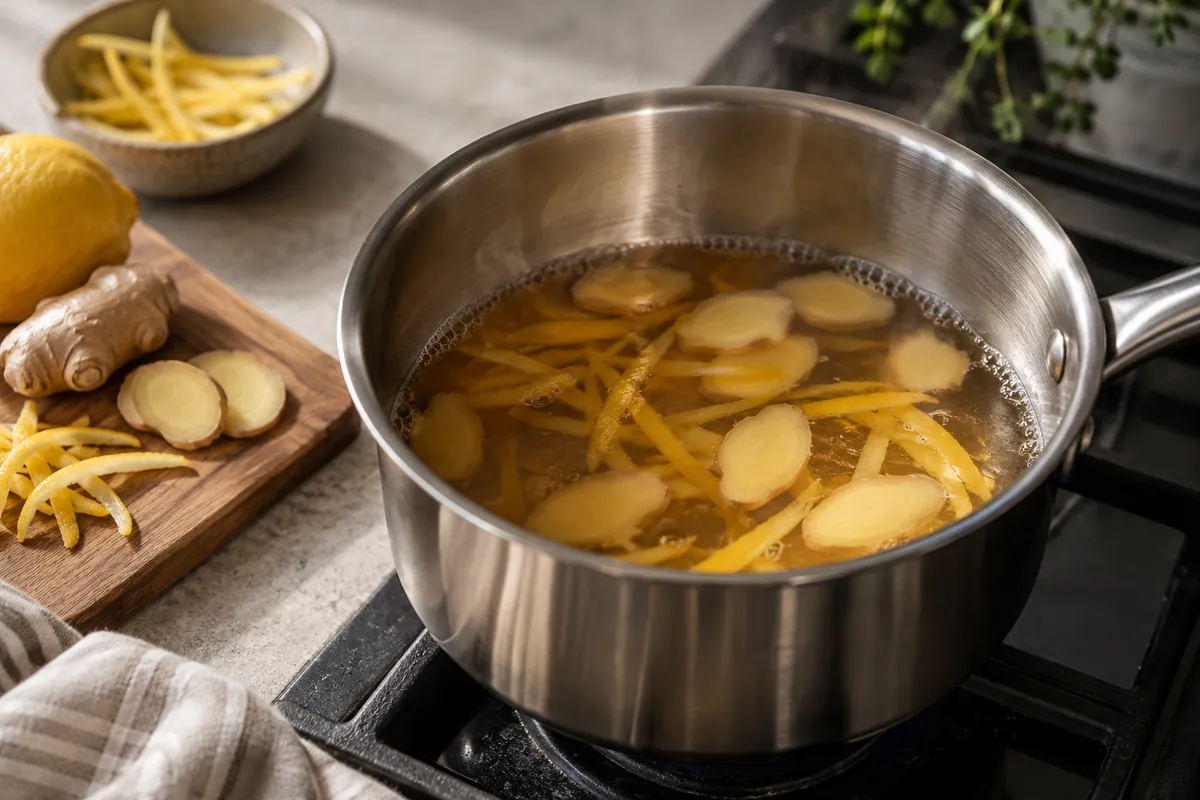
The covered rest carries flavour without boiling away more water, and a cooled spoonful after 15 minutes shows you the sweetness and ginger heat more clearly.
Pressing the cooked ginger hard produces more liquid but also more fine particles. Let the sieve drain, then use the spent slices for another planned use or discard them.
Set ginger heat before chasing sweetness
Sugar softens the perception of heat but cannot turn weak extraction into strong ginger flavour.
| Wanted result | Change in the syrup | Keep constant |
|---|---|---|
| Gentler | Use 100 g ginger or shorten the covered rest | Water and sugar |
| Brighter | Add fresh lemon peel during the covered rest | Ginger dose |
| Hotter | Use 180 g ginger or include some finely grated ginger | Final drink ratio |
| Drier | Reduce sugar to 150 g | Ginger and extraction time |
| Rounder | Keep 200 g sugar and extend the rest slightly | Simmer time |
Taste diluted syrup, not syrup alone. A spoonful of concentrate should seem too strong because three parts of sparkling water still have to meet it.
Citrus and spice controls
- Lemon juice
- Adds acidity; measure it into cooled syrup
- Coloured peel
- Adds aroma with much less acid; simmer thin strips without white pith
- White pith
- Adds persistent bitterness; trim it rather than balancing it with sugar
- Whole spice
- Defines one batch cleanly; contain small pieces in a mesh infuser
Aromatic peel, acidic juice and bitter pith are separate levers, so treating them as one ingredient makes correction difficult.
Carbonate plain water, then add syrup
Sugar, ginger particles and pulp can foam aggressively in a carbonator. Many home appliances are designed only for plain water, so follow the machine instructions rather than assuming every liquid is safe to carbonate.
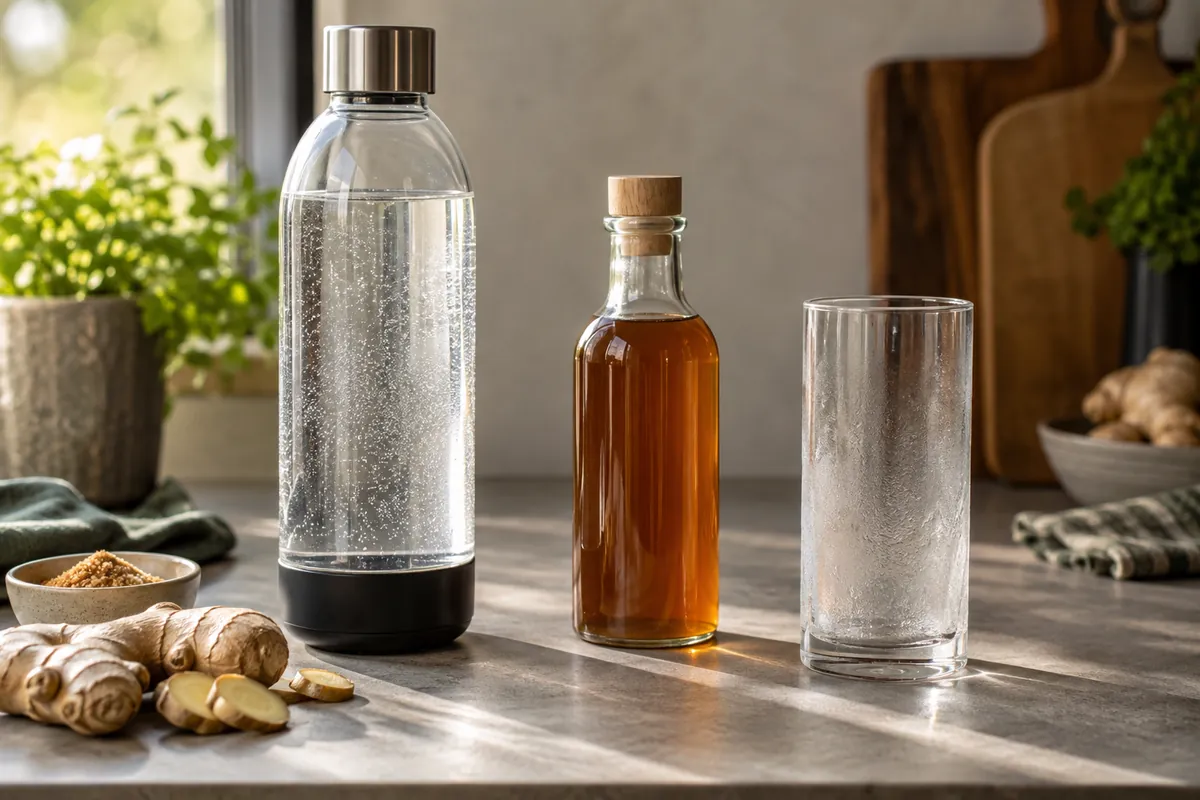
Purchased seltzer, sparkling water or club soda all provide bubbles, but mineral and sodium content can change the taste. Plain unsalted sparkling water gives the cleanest baseline.
Cold water holds carbonation better, so chill the water, syrup and glass and stir only enough to combine them.
Pour sparkling water into the tilted glass first, then add syrup down the side. This gentler meeting preserves more bubbles than beating syrup into a foaming surface.
Build by ratio instead of filling by eye
For a 300 ml drink, start with 75 ml syrup and 225 ml sparkling water, moving toward 50 ml for a drier glass or 90 ml for stronger ginger.
Add 5 ml of lemon or lime juice if you like, garnish with a thin ginger slice or strip of peel, and put the ice in after measuring the liquids.
Measure the first glass and adjust the second. Ice displacement makes a full-looking glass a poor measure of the syrup and water you actually poured.
When making a pitcher, combine only what will be served at once. A large stirred batch loses bubbles faster, and leftover mixed soda cannot be restored by adding more flat syrup.
Control cloudiness without stripping the ginger
Cloudiness mostly comes from fine ginger particles and starch, so sliced ginger and a fine sieve give you a clearer syrup than grated ginger.
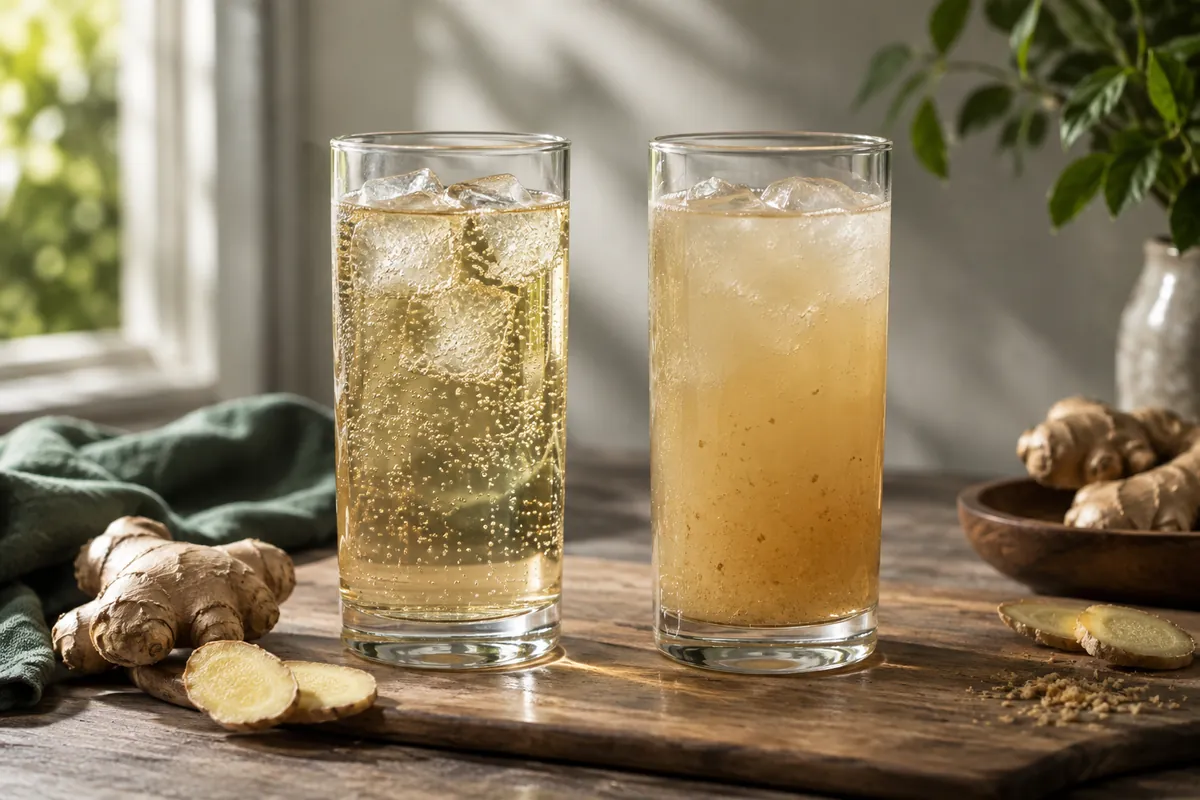
Let a very cloudy syrup settle cold, then pour the clear portion from above the sediment. A coffee filter creates a brighter syrup but works slowly and can hold back some aromatic material.
A little haze is a presentation choice, not a failed batch. Filter further only when the floating sediment feels rough or causes uncontrolled foaming.
Discard stored syrup that develops gas, rope-like texture or an unexpected fermented smell instead of treating the change as fresh haze.
| Water | Mineral character | Carbonation result |
|---|---|---|
| Seltzer | Usually closest to plain carbonated water | A neutral baseline for the syrup |
| Club soda | May add bicarbonate or mineral salts | May change the taste, sometimes with a faint saline note |
| Sparkling mineral water | Carries a source-specific mineral profile | Test before mixing a full pitcher |
| Highly carbonated mixer | Varies by water type | Keeps more fizz after syrup and ice |
Select water by bubbles and mineral taste because the same syrup can read dry, salty or flat across different bottles.
Fix a flat, harsh or candy-sweet glass
Diagnose water and syrup separately because changing ginger extraction cannot repair flat water, and adding ice cannot repair weak syrup.
Ginger ale fault finder
- Flat
- Water was warm, old or stirred hard. Open a fresh cold bottle
- Too sweet
- Reduce syrup and replace the volume with sparkling water
- Hot but hollow
- Ginger dose was high but extraction was short. Use sliced ginger and a covered rest
- Bitter
- Too much citrus pith or scorched sugar. Use thin peel without white pith
- Weak ginger
- Syrup was over-diluted. Add chilled concentrate in small steps
- Foams over
- Syrup met carbonation too fast or carried fine pulp. Pour down the glass wall
- Metallic
- Can come from a mineral-heavy mixer or reactive cookware. Compare plain seltzer and stainless steel
Repair the glass with the missing component. Adding sugar to flat soda or bubbles to bitter pith only creates two faults at once.
Ice can make a balanced first sip watery later. Use large cold cubes, pre-chill the liquids or reduce the initial sparkling-water amount slightly when the drink will stand.
The saucepan reduction decides yield. Mark the starting level on a wooden spoon or measure the strained syrup after cooling, then add a little boiled and cooled water when evaporation has taken the batch far below plan.
Very concentrated syrup is harder to measure, crystallises more readily and can flatten the sparkling water during heavy stirring.
If sugar crystals appear on a clean chilled bottle, warm only the syrup gently until they dissolve and cool it again before mixing. Discard the bottle instead when crystals appear alongside gas, off odour or pressure.
Concentration should support a simple serving ratio that can be poured accurately without vigorous mixing.
Store syrup and sparkling water separately
Oklahoma State University's version keeps strained ginger syrup covered and chilled for up to one week, with a clean bottle and prompt refrigeration preserving its brighter aroma.
Mixing at service protects both storage and carbonation. The syrup stays still and inspectable, while unopened sparkling water keeps its pressure.
Keep home-carbonation bottles within their marked life and condition limits. A scratched or heat-damaged pressure bottle should not be used, and the U.S. Consumer Product Safety Commission told owners to stop using the Drinkmate 1 litre carbonation bottles it recalled in August 2025.
Make variations from the same controlled base
Keep additions alcohol-free and introduce them in the glass so one finished syrup can support several variations without changing the carbonation method.
Dry ginger ale
Less syrup with plain high-carbonation water
Ginger lime
Fresh lime juice added after dilution
Dark ginger
A small part of the white sugar replaced with brown sugar
A variation should change one clear axis. Too many spices and acids hide the quality of the ginger and make the next correction difficult.
Oils, thick fruit purées and ground spices stay out of a home carbonator unless its manufacturer explicitly permits them, and go in after the water is carbonated.
Non-fermented ginger ale
- Makes
- 8 tall glasses, about 2 litres
- Water temp
- Simmer the syrup, serve the soda very cold
- Total time
- 75 min
What you need
- 150 g fresh ginger
- 750 ml water
- 200 g sugar
- Three strips of lemon peel
- 15 ml lemon juice, optional
- 1.25 litres chilled plain sparkling water
- Ice
Equipment
- A medium saucepan
- A fine-mesh sieve
- A heatproof jug
- A clean covered bottle
- Tall serving glasses
Method
- Slice the gingerScrub it clean and slice thinly across the fibres. Peeling is optional when the skin is sound.
- Extract the syrupCombine ginger, still water and lemon peel, bring to a gentle simmer and cook uncovered for 20 minutes.
- Dissolve the sugarStir it into the hot liquid, then simmer for five more minutes.
- Steep and strainRemove from heat, cover for 15 minutes, then strain without pressing fine sediment through.
- Chill completelyRefrigerate the syrup in a clean covered bottle.
- Build each glassCombine one part syrup with three parts very cold sparkling water, add ice and adjust after tasting.
Common questions
Can homemade ginger ale be non-alcoholic?
Yes. Make a cooked ginger syrup and combine it with separately carbonated water. Do not add yeast, a ginger bug or another live starter.
What is the best ginger syrup to soda ratio?
Start with one part syrup to three parts cold sparkling water. For a 300 ml glass, that is 75 ml syrup and 225 ml sparkling water before ice.
Why is homemade ginger ale flat?
The sparkling water may be warm or old, or the drink may have been stirred too hard. Chill every part, open fresh water and mix gently down the side of a tilted glass.
How long does ginger syrup keep?
Keep strained syrup covered in the refrigerator and use it within one week. Discard it sooner if it develops pressure, gas, fermented odour, mould or rope-like texture.