What Is Sparkling Water? An Umbrella Over Several Products
Sparkling water is an umbrella term covering several genuinely different products. The names on the shelf are not interchangeable, and the difference is minerals rather than bubbles.
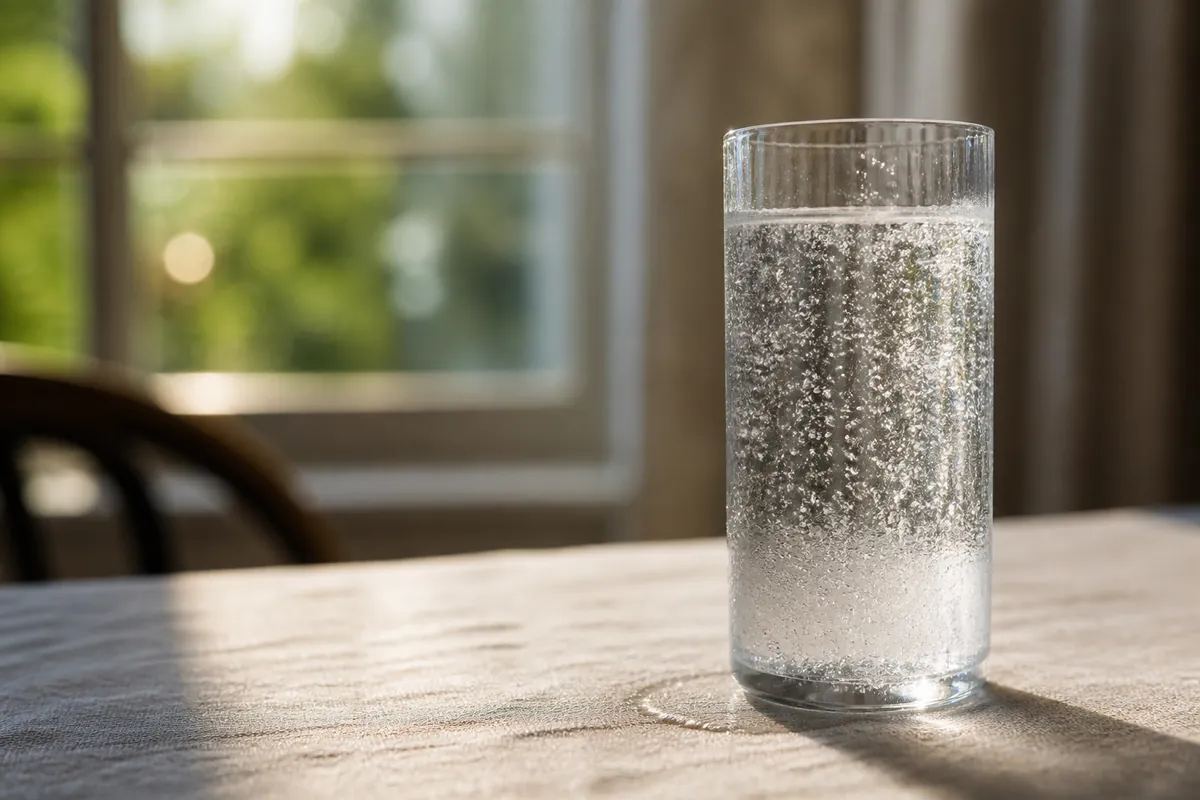
Sparkling water is water containing dissolved carbon dioxide. That single sentence covers products that differ enough to be worth separating, which is why the shelf carries four or five names for what looks like the same thing.
The differences have almost nothing to do with how fizzy each one is. They are about what else is dissolved in the water besides the gas, and about whether the gas arrived from a compressor or from a rock.
Sparkling water at a glance
- What it is
- Water with carbon dioxide dissolved into it under pressure
- Where the gas comes from
- Injected at a plant, or picked up underground from volcanic activity
- Acidity
- Mildly acidic, roughly pH 4 to 5, from carbonic acid
- The prickle
- A trigeminal nerve response rather than a taste
- What varies most
- Dissolved minerals, which decide whether it tastes of anything
- Serving temperature
- Cold, because solubility falls steeply as water warms
- Shelf names
- Seltzer, club soda, soda water, sparkling mineral water
Seltzer, club soda and the rest of the shelf names
Five names cover this shelf in most markets, and although the labelling is loose the distinctions behind it are real: each name says something about whether minerals were added, were already there, or were never involved.
| Name | Carbonation | Minerals | Notes |
|---|---|---|---|
| Seltzer | Added | None added | Plain carbonated water. The neutral baseline |
| Club soda | Added | Added deliberately | Sodium bicarbonate and similar salts, for taste |
| Soda water | Added | Usually added | Broadly interchangeable with club soda in most markets |
| Sparkling mineral water | Natural or added | Naturally present | From a spring, with the source's own mineral profile |
| Sparkling water | Either | Either | The umbrella term, and legally the loosest |
The mineral content is what you actually taste. Carbon dioxide contributes acidity and physical sensation, but the flavour differences between brands come from dissolved salts. That is why an unflavoured water bottled from a spring can taste distinctly of something while seltzer tastes of almost nothing, and neither is a fault.
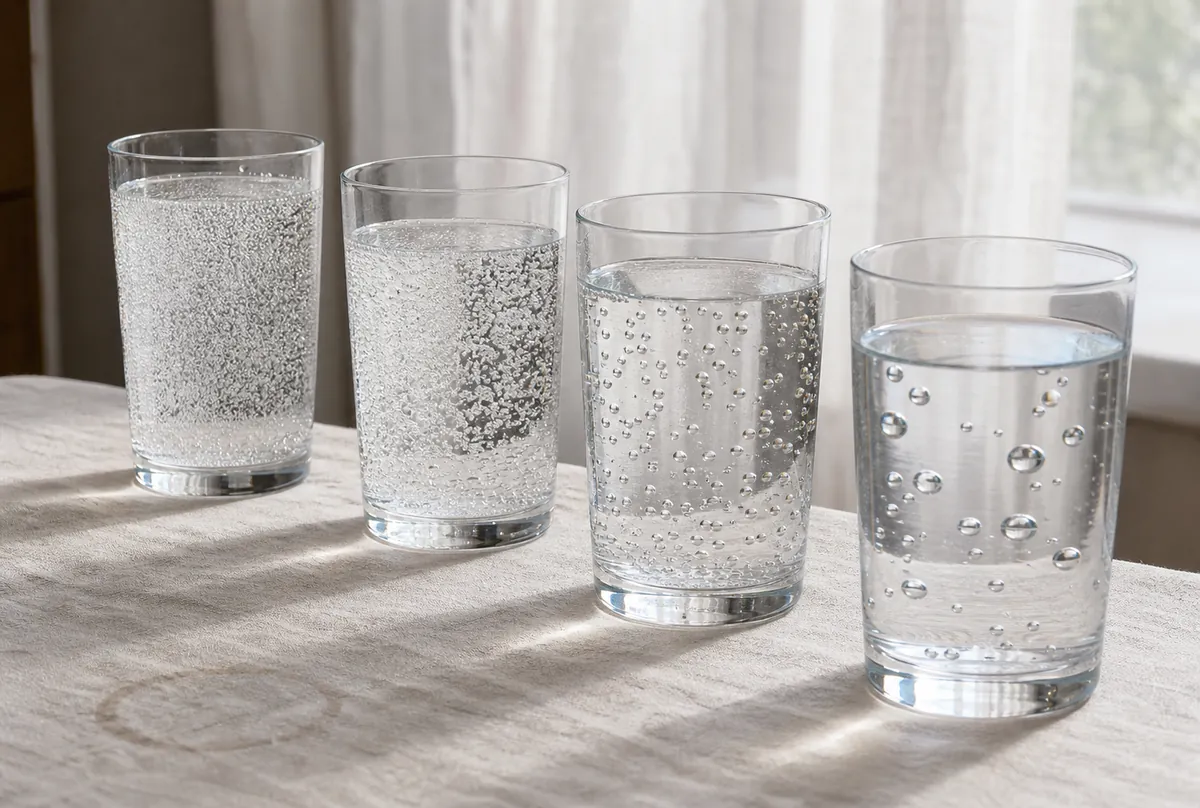
The practical consequence turns up in recipes. A mixing instruction calling for soda water is usually not satisfied by seltzer, because the added bicarbonate in the former rounds off acidity that the latter leaves exposed, and club soda sits in the same bracket under a different name.
Where the line falls between the two most-confused names is the subject of seltzer against sparkling water.
What the pressure does, and why the fridge decides the result
Carbon dioxide is forced into water under pressure. Most of it stays as dissolved gas, and a small fraction reacts with the water itself to form carbonic acid, which is the source of the mild sourness rather than any flavouring.
What happens from bottle to glass
- Under pressureCO2 is dissolved into chilled water and the container is sealed.
- OpenedPressure drops, the water is now supersaturated, and gas begins to leave.
- PouredBubbles form on scratches and particles in the glass, not in the liquid itself.
- WarmingSolubility falls as temperature rises, so gas escapes faster.
- FlatEquilibrium is reached and only the carbonic acid tang remains.
Bubbles need something to form on. They nucleate on imperfections in the glass and on airborne dust, which is why a scratched tumbler fizzes more vigorously than a smooth one and why a stream of bubbles rises from one fixed point rather than from the body of the liquid.
Temperature is the single biggest variable under your control, and the relationship is steep rather than gradual. Gas solubility in water falls sharply as the water warms, so a bottle at fridge temperature holds substantially more dissolved carbon dioxide than the identical bottle left on a counter for an hour.
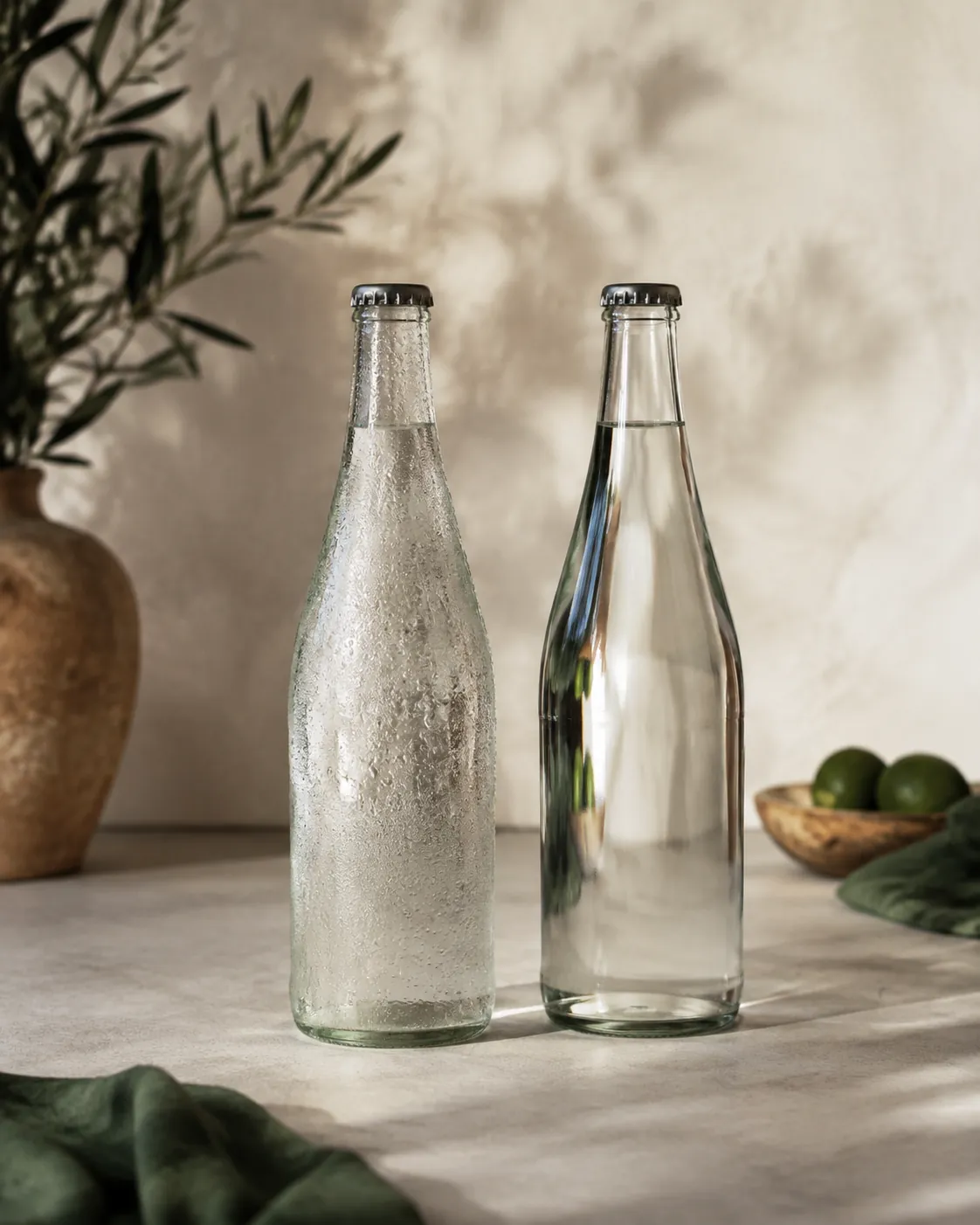
How well it holds its gas
- Just above freezingMaximum solubility, very fine persistent bubbles
- Fridge coldThe normal serving state
- Cellar coolNoticeably livelier on opening, flatter within minutes
- Room temperatureFoams hard on opening, then goes flat quickly
- WarmBarely holds anything after the first pour
The same relationship governs a home machine. Carbonating water at room temperature wastes gas cylinders and produces a weaker result, which is the most common reason a home-made bottle disappoints against a shop-bought one.
The prickle, the acid and the size of the bubble
Plain sparkling water is far from tasteless, and what registers arrives from several sources at once, only one of which is a taste in the ordinary sense.
The two components
- Carbonic acid
- A mild sourness and a faint bite. Genuine acidity, around pH 4 to 5
- Trigeminal sensation
- The prickle, which is a physical nerve response rather than a taste
- Minerals
- Sodium, calcium, magnesium and sulphates, which give body and a saline edge
- Bubble size
- Finer bubbles read as softer, coarser bubbles as sharper and more aggressive
The prickle is worth separating out because it is not a flavour at all. It is detected by the trigeminal nerve, the same system that registers chilli heat and the cooling of peppermint menthol, which is why strong carbonation can cross from lively into almost painful without anything about the water having changed.
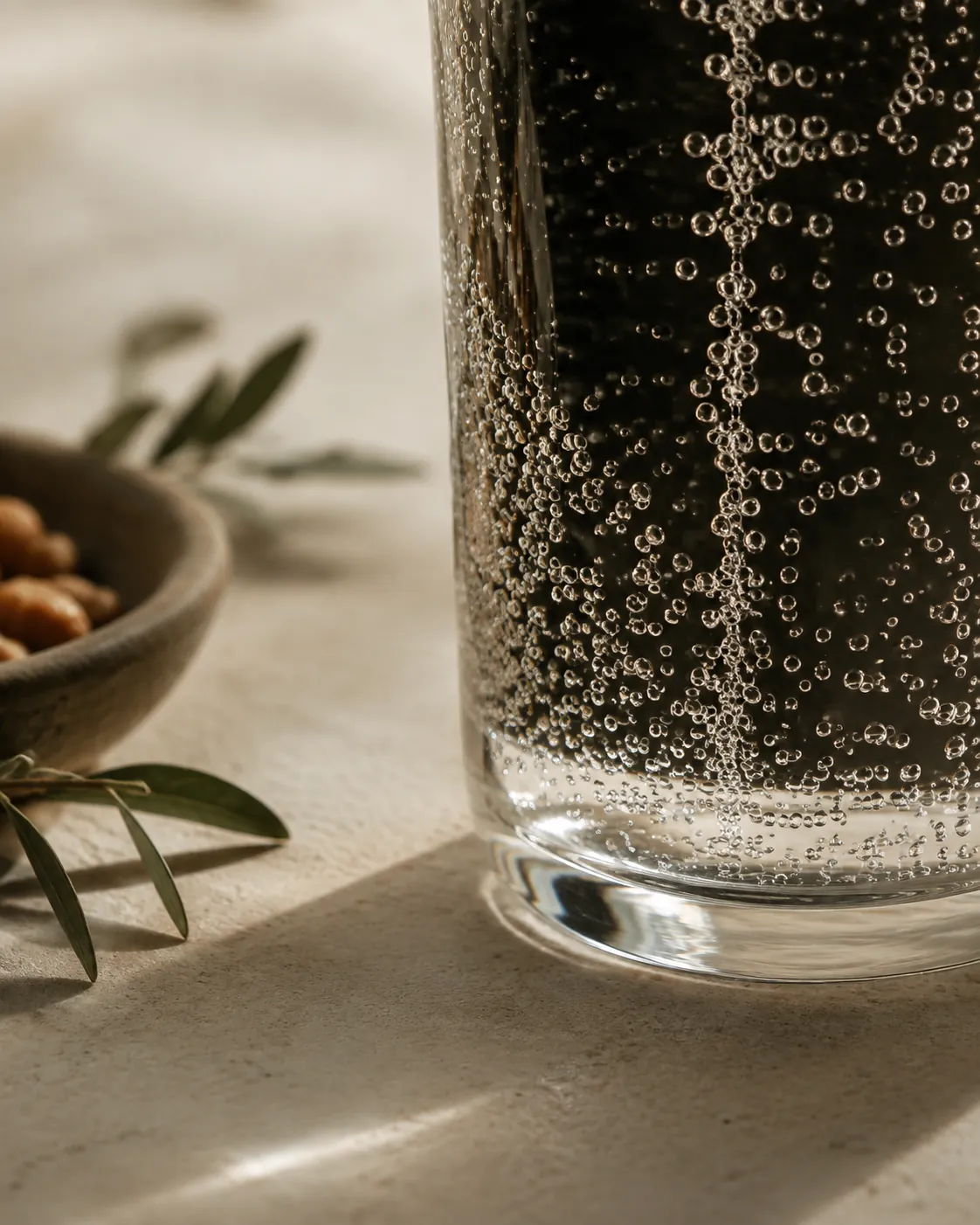
Bubble size decides how that nerve response lands. It depends on how much gas is dissolved, how fast it comes out of solution, and what surfaces it forms on: fine dense bubbles read as creamy, while large fast ones read as sharp.
People who describe a brand as harsh are usually describing coarse bubbles rather than more of them, and the difference between one water's texture and another's is measurable rather than imagined.
What makes bubbles finer
- Higher pressure
- More dissolved gas, released more gradually
- Colder liquid
- Slower release, so bubbles have less time to coalesce
- Smooth glass
- Fewer large nucleation sites, so fewer big bubbles
- Dissolved minerals
- More small nucleation points, giving a finer stream
- Gentle pouring
- Avoids the violent release that produces coarse foam
A harsh sparkling water is very often a warm one poured hard. Before changing brand, try the same bottle properly chilled and tipped down the side of a clean smooth glass, which shifts the sensation further than switching product does.
Gas from a volcano, gas from a compressor
A few waters arrive at the bottling plant already carbonated, and the distinction that labelling makes of it is smaller in practice than the wording suggests.
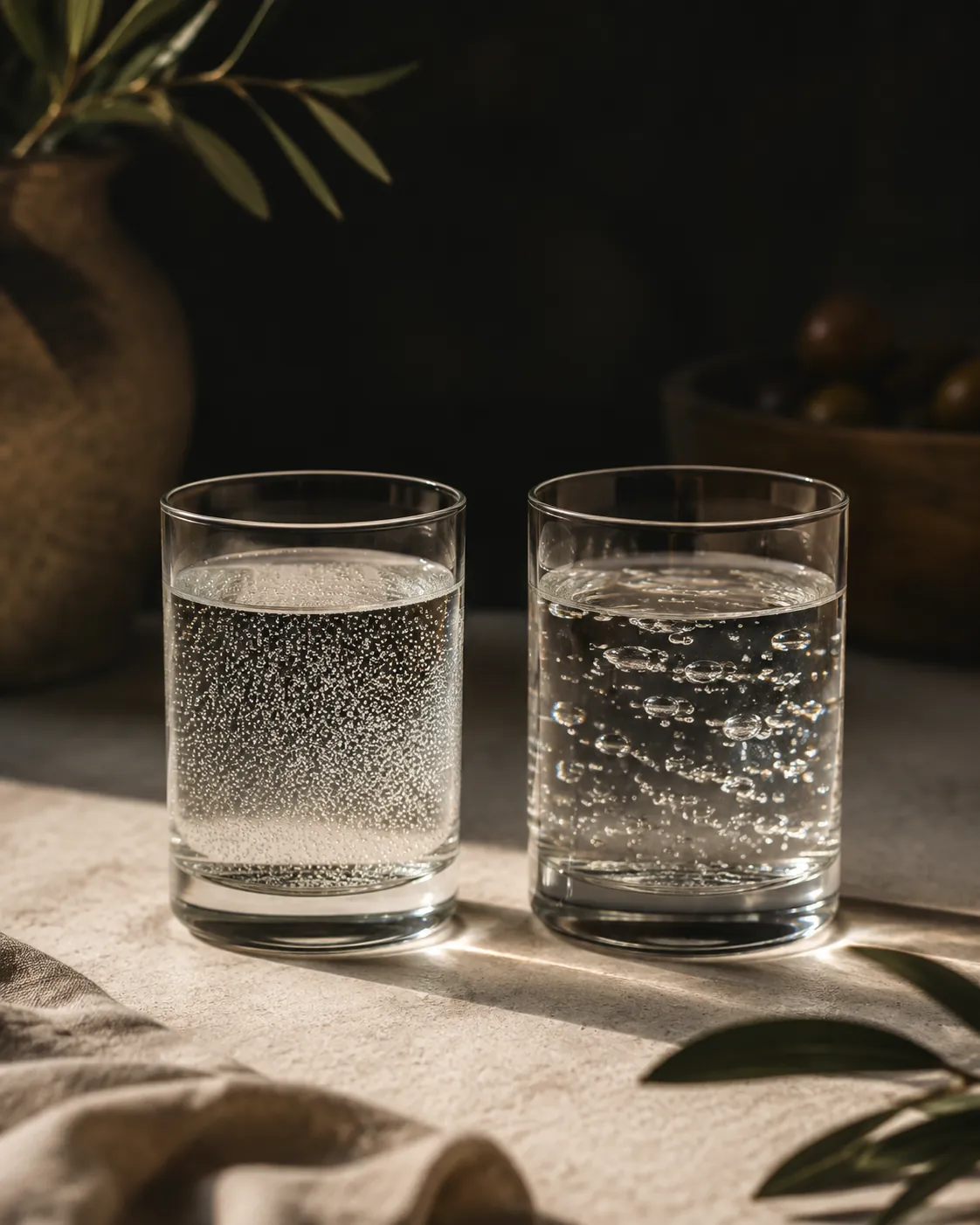
Naturally sparkling water picks up carbon dioxide underground, generally from volcanic activity beneath the aquifer. In most cases the gas is captured at the source, the water is piped or trucked separately, and the gas is put back before bottling, an arrangement that still qualifies for the natural description in many markets.
What the label is really telling you is the origin of the molecule rather than anything about the finished drink.
What survives the trip to the bottling line is the mineral profile, and that is fixed by geology rather than by the plant. Most bottled sparkling water prints its analysis, and four figures on that panel are enough to predict how the carbonation will feel in the mouth.
| Figure | Low | High | What changes |
|---|---|---|---|
| Total dissolved solids | Under 100 mg/l | Over 1000 mg/l | Body and how much it tastes of anything |
| Sodium | Under 20 mg/l | Over 200 mg/l | A saline roundness |
| Sulphate | Under 50 mg/l | Over 200 mg/l | A dry, firm, slightly bitter finish |
| Bicarbonate | Under 100 mg/l | Over 600 mg/l | Softness, and it blunts the acidic bite |
A high-bicarbonate water tastes softer than its carbonation suggests, because bicarbonate buffers the carbonic acid that supplies the bite. That is the same chemistry that makes club soda taste rounder than seltzer, and it means a harsh bottle is better answered by a softer analysis than by a gentler fizz.
Where those figures come from, and why one spring differs from the next, belongs with bottled mineral waters rather than here.
Carbonating at home, and the glass you pour it into
Two things sit between a cylinder of gas and a glass that tastes right, and neither of them is the machine.
- Start with water straight from the fridge. Cold water takes and holds far more gas.
- Carbonate longer than feels necessary. Most machines under-gas on the default setting.
- Use filtered water if your tap water is heavily chlorinated, since carbonation sharpens that note.
- Chill the bottle again after carbonating and before opening, which reduces foam-over.
- Add flavouring after carbonating, never before, or it foams uncontrollably.
Home-carbonated water lands closest to seltzer: plain carbonated water carrying whatever the tap supplied and nothing else. Turning it into club soda means adding a small quantity of mineral salts, which is genuinely all the commercial product is.
The equipment side of that, and what separates one machine from another, is covered under the soda maker, while the water going in is covered under brewing water.
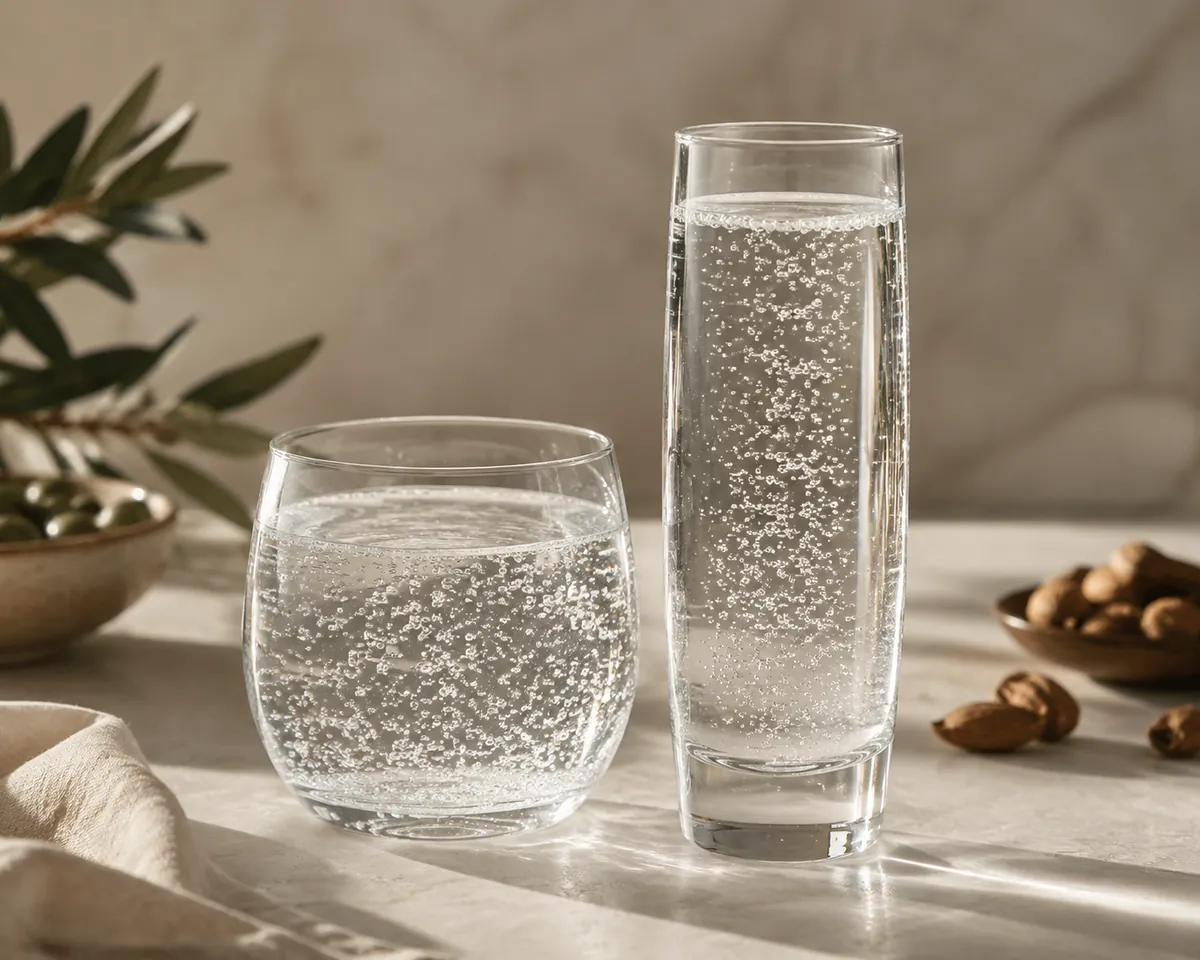
The glass then does more to sparkling water than it does to any still drink, on purely physical grounds. A narrow glass presents less surface for gas to escape from and holds carbonation noticeably longer; a wide one loses gas faster but releases more aroma, which only matters if the water is flavoured.
Adding ice does the same thing on a smaller scale, since every cube is a mass of nucleation sites. A glass fizzes hard the moment ice goes in and settles flat sooner afterwards, which is a fair trade in a mixed drink and a poor one in plain water.
Keeping an opened bottle alive
Half a bottle left in the door of a fridge is the commonest way carbonation is lost, and most of the folk remedies aimed at it do nothing.
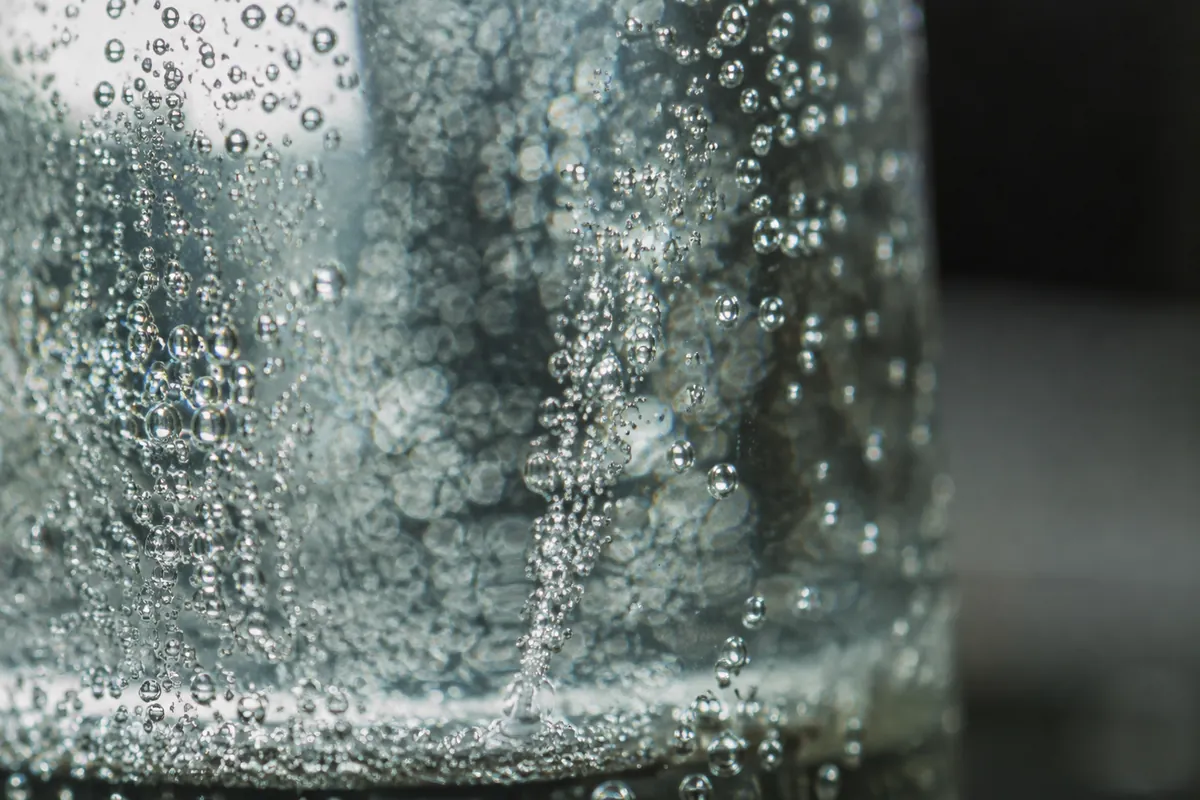
The mechanism is equilibrium rather than escape. Once the seal is broken, gas leaves the liquid until the pressure in the headspace balances what remains dissolved, and every reopening vents that headspace and restarts the process.
Anything that increases the headspace, or that reduces the pressure it can build, works against you.
What helps and what does not
- Keep it cold
- Works. The single most effective thing
- Reseal tightly
- Works. It lets pressure rebuild in the headspace
- Smaller bottle
- Works. Less headspace means less gas leaves solution
- A spoon in the neck
- Does not work. There is no mechanism
- Squeezing the bottle
- Counterproductive. It reduces the pressure holding gas in
Buying the bottle size you will actually finish beats every trick applied afterwards. Headspace is the enemy, and a half-empty two-litre bottle goes flat faster than a full 500 ml one no matter how carefully either is resealed.
The longer view of that, including what happens to flavoured versions over weeks, sits with storing sparkling water, and a bottle that fizzes wrongly from the first pour is usually a fault worth diagnosing.
At the table and in the batter
Carbonated water behaves quite differently from still water alongside food, and the effect is usable rather than decorative.
The carbonic acid and the physical prickle together act as a palate cleanser, cutting through fat and salt in a way still water cannot, which is why it is the default bottle on a table across much of southern Europe.
Against delicate food the same properties work in reverse: the acidity and the prickle both compete for attention, so a light infusion such as white tea or a subtly seasoned dish is better served by still water at the same temperature.
As a palate cleanser
Acid and prickle together cut fat and salt between mouthfuls of rich food.
Against delicate flavours
The same prickle competes with anything subtle, so still water serves better.
In a batter
Dissolved gas expands in hot oil and leaves a lighter, crisper coating.
On cut fruit
Mild surface acidity slows browning slightly, and only slightly.
In a kitchen the useful properties are the gas and the acid rather than any flavour. Dissolved carbon dioxide in a batter expands as it hits hot oil and leaves a lighter, crisper coating, though the effect is short-lived enough that the batter has to be mixed and used within minutes.
The mild acidity also slows the browning of cut fruit slightly, by lowering the pH at the cut surface, in much the same way a squeeze of lemon does and rather less effectively.
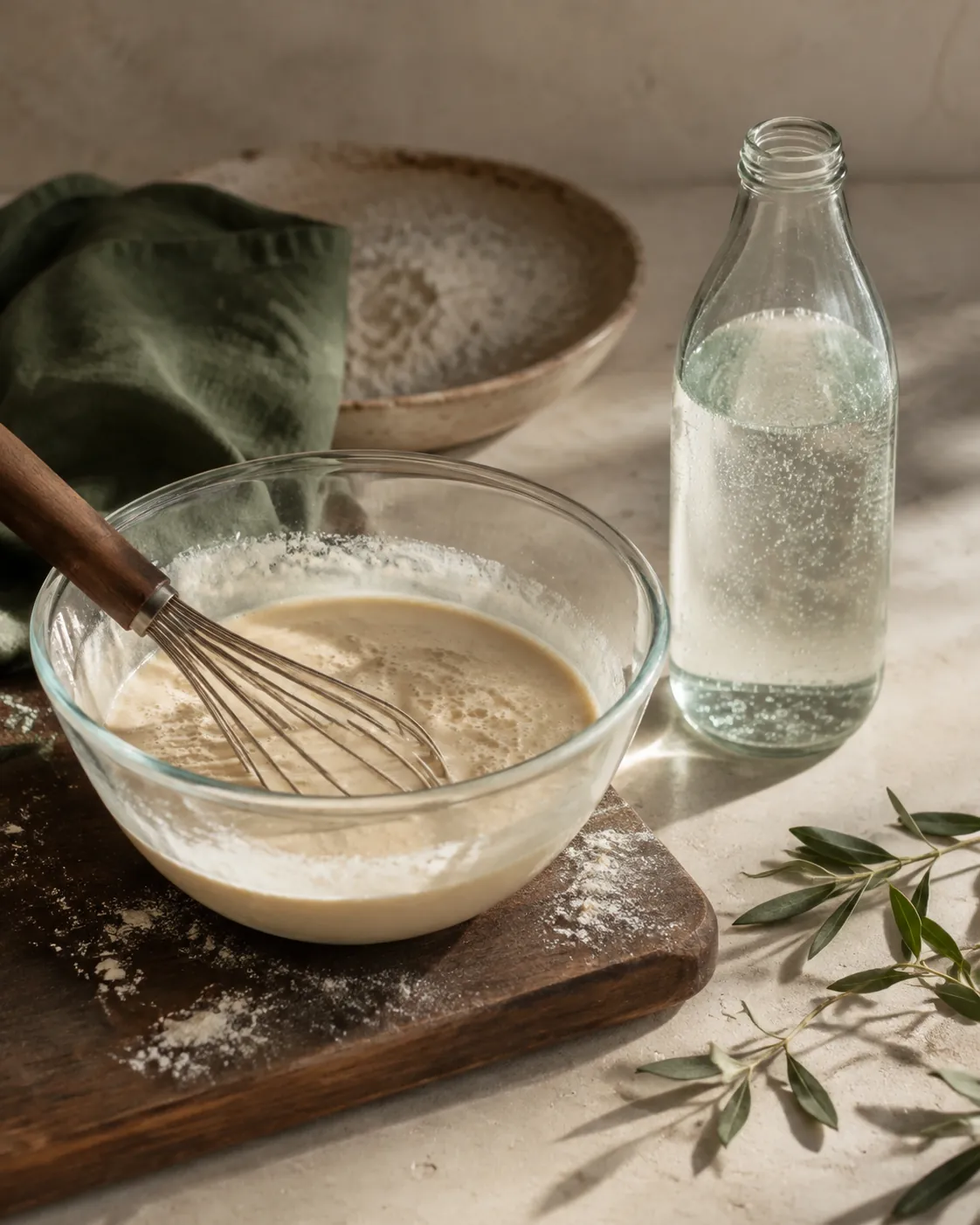
What sparkling water does not do is tenderise meat or shorten a cooking time. Both claims circulate widely and neither has a mechanism behind it: the gas is gone within seconds of the liquid warming, and carbonic acid is far too weak to act on protein.
Flavoured cans, and where the category line falls
Growth in this category is almost entirely flavoured, and the labelling repays a careful look.
Unsweetened flavoured sparkling water is carbonated water with a natural flavouring and nothing else, which keeps it inside the category. Once sugar or a sweetener joins it, the product is a soft drink by any reasonable definition whatever the front of the can implies, and the ingredients list is the only place that distinction is reliably visible.
Flavoured sparkling water
Carbonated water plus flavouring. No sugar, no sweetener.
Sparkling soft drink
Sugar or sweetener added. A different product category.
Tonic water
Always sweetened, and bittered with quinine. Not a sparkling water at all.
Sparkling juice
Carbonated juice or juice blend. Sugar comes from the fruit.
A third group sits between the first two, carrying high-intensity sweeteners and no sugar at all. It reads sweeter than the plain flavoured cans and lighter than the sugared ones, and which of the three is in front of you is settled by the ingredients panel rather than the artwork.
Tonic water is the one most often shelved beside plain waters and least like them, since it carries both sugar and a bittering agent, and its particular bitterness comes from quinine rather than from the carbonation.
Carbonated, and otherwise nothing alike
Sparkling water shares a shelf with several drinks that have dissolved carbon dioxide in common and very little else, so the boundary is worth drawing explicitly.
| Sparkling water | Ginger ale | Cola | Root beer | |
|---|---|---|---|---|
| Sugar | None | High | High | High |
| Acid | Carbonic only | Citric | Phosphoric | Low |
| Flavouring | None or unsweetened | Ginger | Citrus and spice oils | Roots and wintergreen |
| Purpose | Drink or mixer | Mixer or drink | Drink | Drink |
Ginger ale, cola drinks and root beer are sweetened soft drinks that happen to be carbonated, and filing them next to plain carbonated water obscures more than it explains. An Italian soda makes the point from the other direction, since it is sparkling water plus syrup assembled in the glass, so the same base sits under both categories depending on what is poured into it.
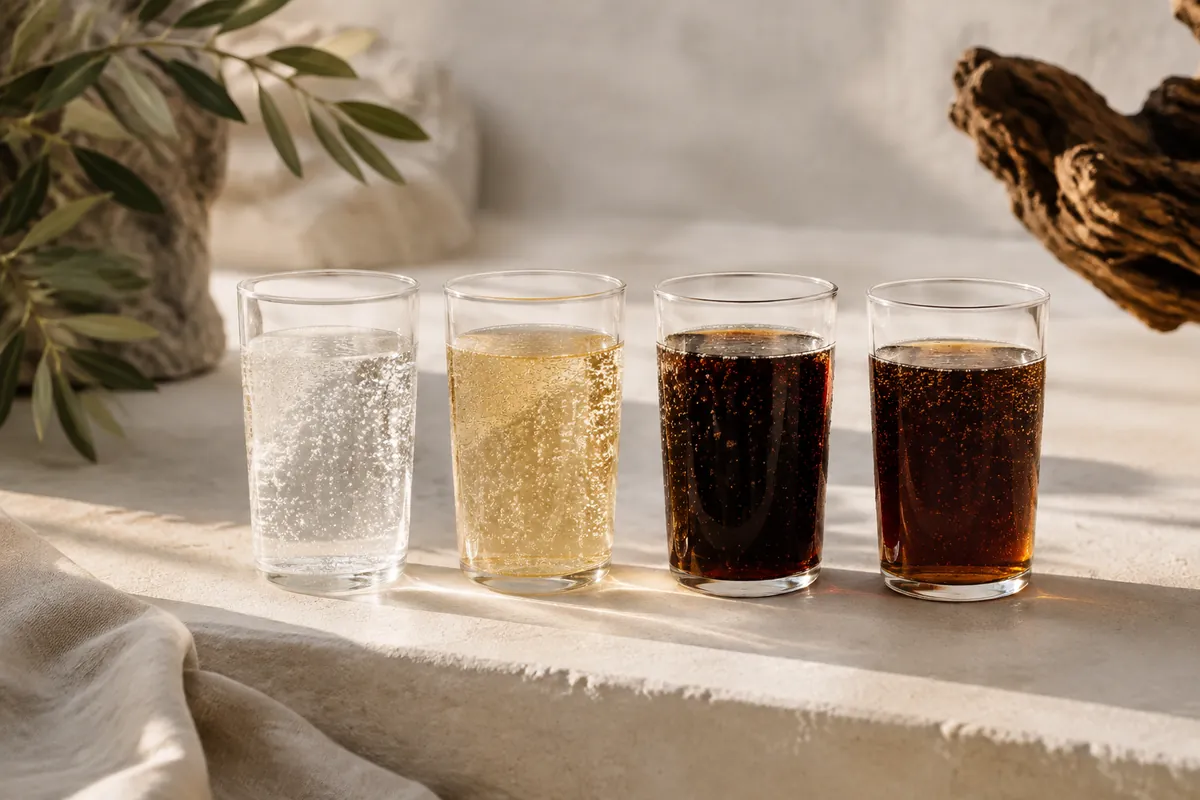
Where plain and flavoured sparkling water genuinely resemble the sweetened shelf is in the sensation rather than the composition: the carbonation, the cold and the acidity are shared, and the sugar is the whole of the difference. Anyone assembling one at home rather than buying it will find the mechanics under making sparkling water.
Common questions
What is the difference between seltzer and club soda?
Seltzer is plain carbonated water with nothing added. Club soda is carbonated water with mineral salts such as sodium bicarbonate added deliberately, which gives it a slightly rounder, faintly saline taste.
Why does sparkling water go flat so quickly once opened?
Opening the bottle drops the pressure, leaving the water supersaturated, so gas escapes until a new equilibrium is reached. Warmth speeds it up because gas solubility falls as temperature rises.
Is sparkling water acidic?
Mildly. A small fraction of the dissolved carbon dioxide forms carbonic acid, typically putting plain sparkling water around pH 4 to 5. Waters high in bicarbonate buffer that and taste softer.