What Is Seltzer? The Bottle Defined by What Is Absent
Seltzer is the one bottle on the sparkling shelf defined by an absence. No salts, no minerals from a spring, no sugar and no sweetener, which turns out to decide almost everything about how it tastes and what it is good for.
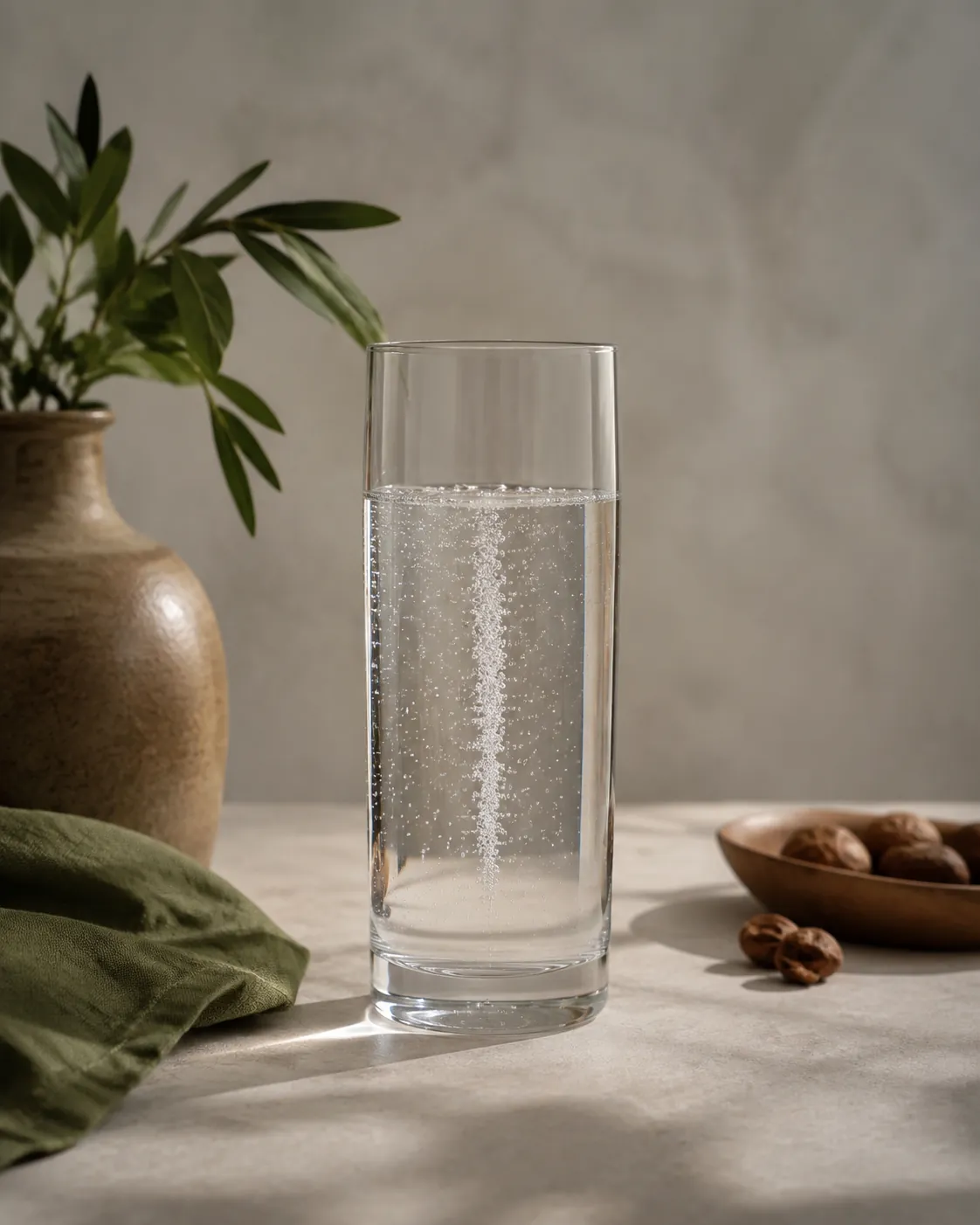
Seltzer is water with carbon dioxide dissolved into it and nothing else whatsoever. That is the entire specification, and it is unusual among drinks in being written as a list of absences rather than a list of ingredients.
No mineral salts were stirred in. No spring contributed dissolved solids.
No sugar, no sweetener, no acid beyond the carbonic acid the gas makes for itself.
Seltzer at a glance
- What it is
- Plain water, carbonated under pressure, with no additions
- Added minerals
- None, which is the definition rather than a detail
- Not the same as
- The club soda bottle, which has salts added on purpose
- Also not
- Sparkling mineral water, whose solids come from the rock
- Taste
- Whatever the source water tasted of, plus a clean acidic bite
- Name from
- Niederselters, a spring village in Hesse, Germany
- Typical pH
- Around 4, at the sharper end of the sparkling range
Seltzer is defined by what is not in it
Most drinks are described by what has gone into them. Seltzer is the exception, and the whole of its identity sits in a negative: carbonated water that has had nothing added after the gas.
Read the panel on a genuine one and the ingredients line says carbonated water, full stop.
That absence is not a shortfall.
It is the reason seltzer works where the other sparkling waters get in the way, because a drink with nothing in it cannot argue with whatever you put beside it. The moment a producer adds bicarbonate for roundness or bottles from a spring with a mineral profile, the product has left this category and joined one of the two next to it.
Seltzer
Carbonated water, nothing added. Neutral by construction.
Sparkling mineral water
Bottled from a source, carrying that source's own dissolved solids.
Why a mineral-free water is named after a mineral spring
The name is borrowed from Niederselters, a village in Hesse in western Germany with a naturally carbonated spring. Its water was bottled and shipped across Europe in stoneware jugs from the eighteenth century onwards, under the name Selterswasser, and it was a genuine mineral water in every sense.
English took the word as seltzer and then applied it to something the original was not. Once Joseph Priestley showed in 1767 that water could be impregnated with fixed air, and Johann Jacob Schweppe turned that into a commercial process a couple of decades later, imitations of the famous spring waters could be made anywhere.
The imitation kept the name and dropped the minerals, which is why the plainest bottle on the shelf is the one named after a mineral spring.
German kept the older sense, so Selters there still points at spring water rather than at the mineral-free article, and in American English the drift went furthest of all.
The word travelled to the United States with German-speaking immigrants in the nineteenth century and settled into New York, where seltzer was delivered house to house in heavy siphon bottles well into living memory. That is the version most English speakers now mean, and the full tangle of shelf names still carries the fingerprints of all of it.
What separates it from club soda and sparkling mineral water
All three are clear, all three fizz, and a blind glass of each looks identical.
The differences are compositional rather than sensory in origin, though they end up being tasted. One has salts put in by a person, one has solids picked up from rock, and one has neither, so the ranking that matters is not fizziness but how much is dissolved in the water besides the gas.
| Seltzer | Club soda | Sparkling mineral water | |
|---|---|---|---|
| Dissolved solids | Effectively none | Small, and deliberate | Whatever the source holds |
| Who put them there | Nobody | The producer | Geology |
| Sodium | None | Roughly 20 to 60 mg per 250 ml | Varies enormously by spring |
| Taste | Clean, sharp, close to neutral | Rounder, faintly saline | Distinctly of its source |
| Legal identity | Loose in most markets | Loose | Tightly defined, with a printed analysis |
| Best use | Plain drinking, delicate flavouring | Mixing, where body helps | Drinking on its own merits |
Mineral water is the one with the strictest rules behind it, since a bottle claiming the name has to come from a protected source and print its analysis, and what that analysis means is the substance of the product. Seltzer has no such story to tell and is not trying to.
Where the line falls between it and the umbrella term is worked through in seltzer against sparkling water.
Why it tastes sharper than the water beside it
Dissolving carbon dioxide in water creates carbonic acid, and that acid is the bite you feel at the back of a mouthful. Seltzer has no buffer against it, because buffering is exactly what the bicarbonate in club soda is for.
The result is a slightly lower pH and a cleaner, more angular finish at the same level of carbonation.
People often read that sharpness as more fizz. It is not, and the test is easy: pour a seltzer and a club soda that carry the same gas, and the seltzer will still finish drier and quicker.
Whether that reads as a virtue depends entirely on the job. Drunk plain, the sharpness is the appeal, and it is why seltzer is the sparkling water people reach for when the water is the drink.
Poured into a mixed glass, the same quality thins things out, which is the case soda water makes for its salts.
The tap water is the entire ingredients list
Nothing was added, so everything you taste came in with the water. That is obvious once said and it explains most of the complaints people have about home-made seltzer.
Chlorinated tap water carbonated at home produces chlorinated seltzer, and the acidity sharpens that note rather than hiding it.
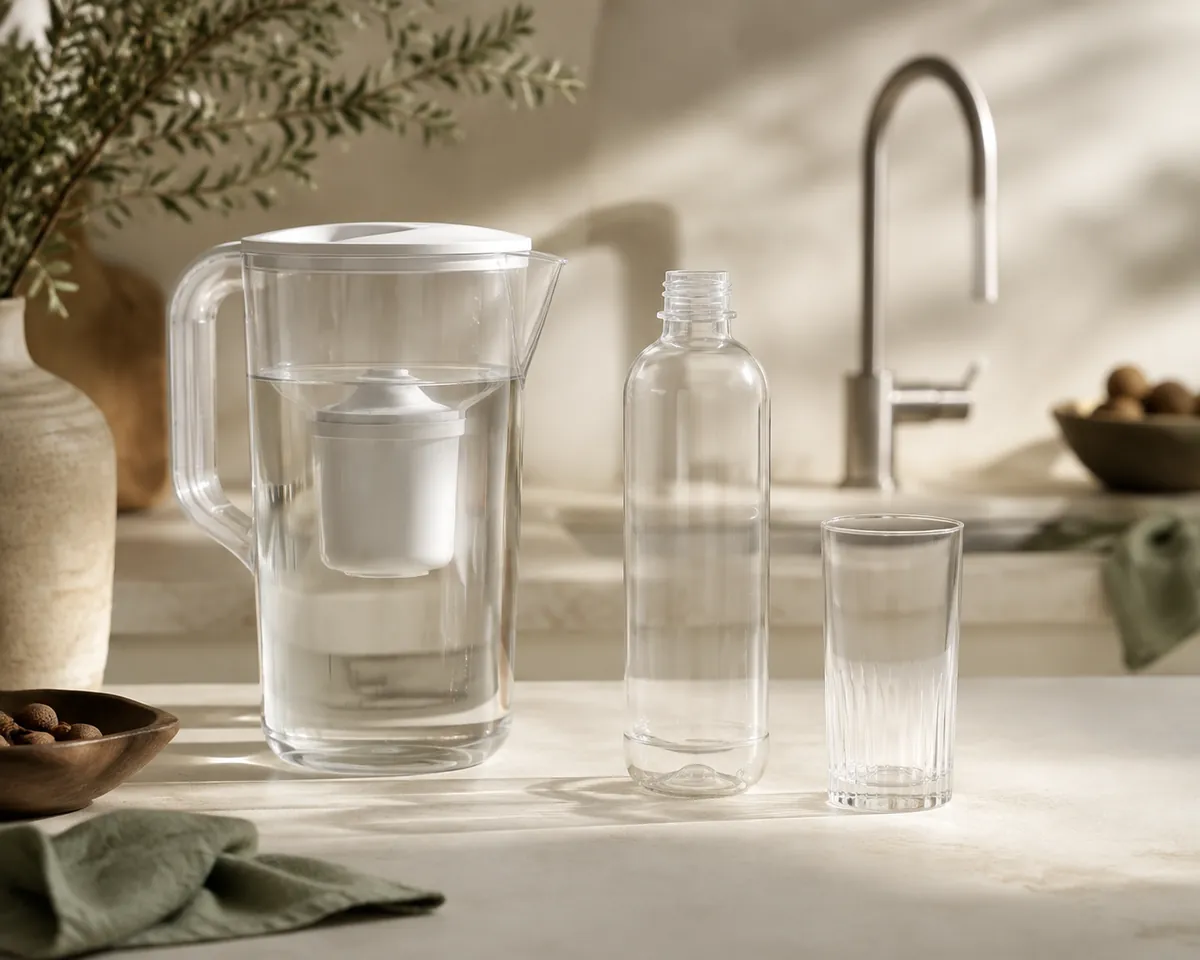
- Filter the water first if your supply tastes of chlorine, since carbonation makes it more obvious.
- Start cold, because gas dissolves far better into water straight from the fridge.
- Use a fresh bottle of water rather than one that has stood open overnight taking up kitchen smells.
- Try a soft bottled still water once, as a control, to hear what your tap is contributing.
- Do not bother with any additive until you have tasted the plain result.
The same principle runs the other way and is worth knowing before you blame the machine. A very hard tap supply gives a home seltzer a faint chalky weight that no amount of extra gas will remove, and a very soft one gives something so blank it can feel thin, which is the same argument brewing water makes about coffee and tea from the other end.
Commercial seltzer producers deal with this by treating their water heavily before it ever meets the carbonator. That is the one step a kitchen cannot easily copy, and it is most of why two seltzers from the same city can taste different.
How much fizz a seltzer actually carries
Carbonation is measured in volumes, meaning the litres of carbon dioxide dissolved in each litre of liquid at standard pressure and temperature. It is a useful number because it puts a figure on something people otherwise argue about in adjectives.
Roughly where carbonation levels sit
- Seltzer and club sodaAround 3.5 to 4.5 volumes, the fizziest things on the shelf
- ColaClose behind, near 3.5 to 4
- Ginger ale and tonicSimilar again, in the mid threes
- Sparkling mineral waterWide range, from lightly petillant to firmly sparkling
- A home machine on defaultUsually under-gassed, nearer 2.5 to 3
Plain waters are gassed hard on purpose. There is no sugar and no flavour to carry the drink, so the carbonation is doing nearly all of the sensory work, and a lightly carbonated seltzer has very little left to offer.
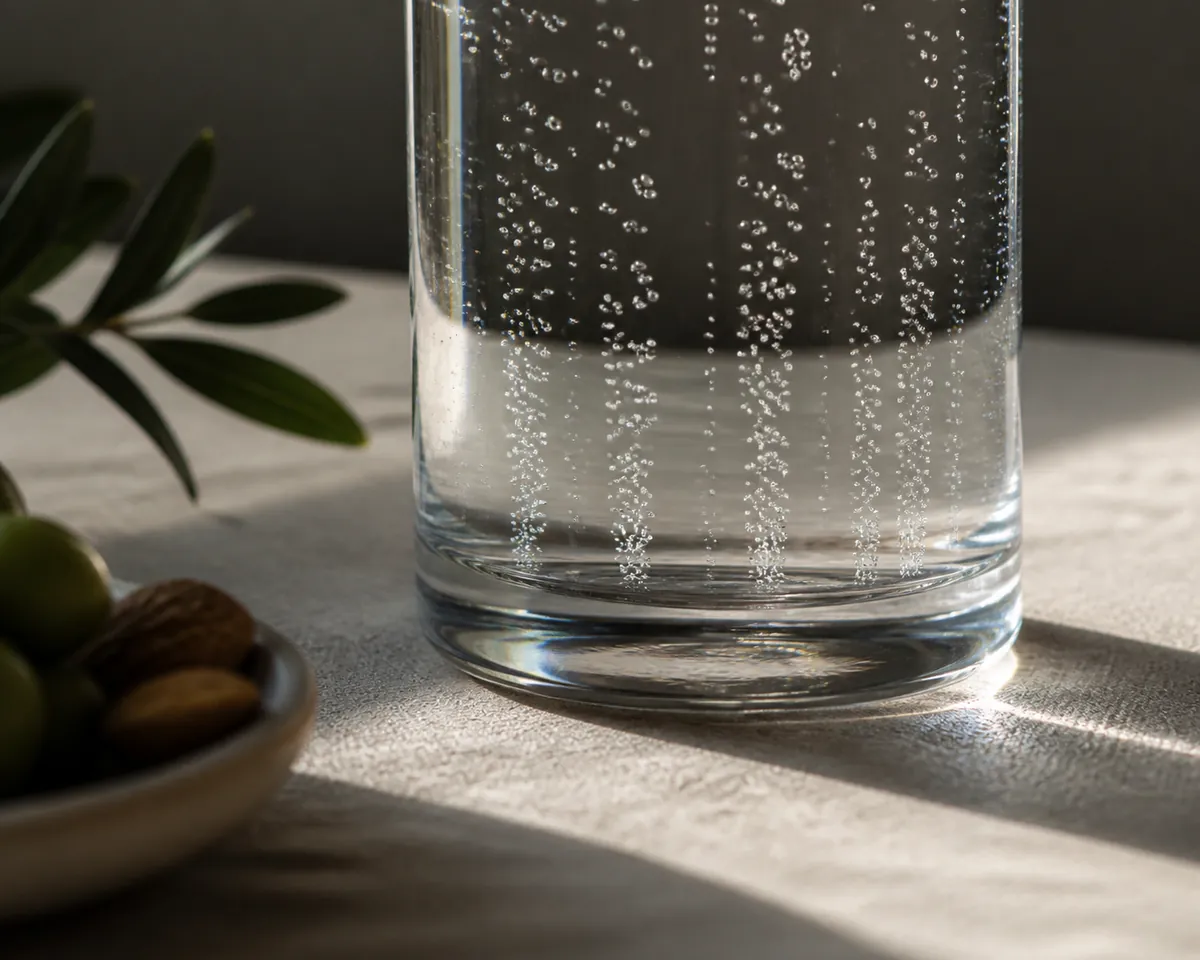
That also explains the most common disappointment with home carbonation. Machines are conservative on their default setting, and the honest fix is to run the cycle two or three times more than feels reasonable, which is covered properly under the soda maker.
What is inside a flavoured seltzer
Flavoured seltzer is now the larger half of the category, and the panel on a real one is almost as short as on the plain version: carbonated water, natural flavours, and that is the end of it.
Those natural flavours are usually essences rather than juice. Fruit oils and aromatic compounds are captured by distilling or pressing the fruit, then dosed at a level measured in fractions of a per cent, which is enough to smell strongly and not enough to contribute sweetness, colour or body.
How a flavoured can is put together
- BaseTreated water, carbonated hard, exactly as for the plain product.
- EssenceA tiny dose of fruit oil or distilled aroma, not juice.
- No sweetenerNothing sugared and nothing intense, which is what keeps it a seltzer.
- No acid addedThe carbonic acid already supplies the tartness.
- ResultA drink that smells of fruit and finishes as dry as water.
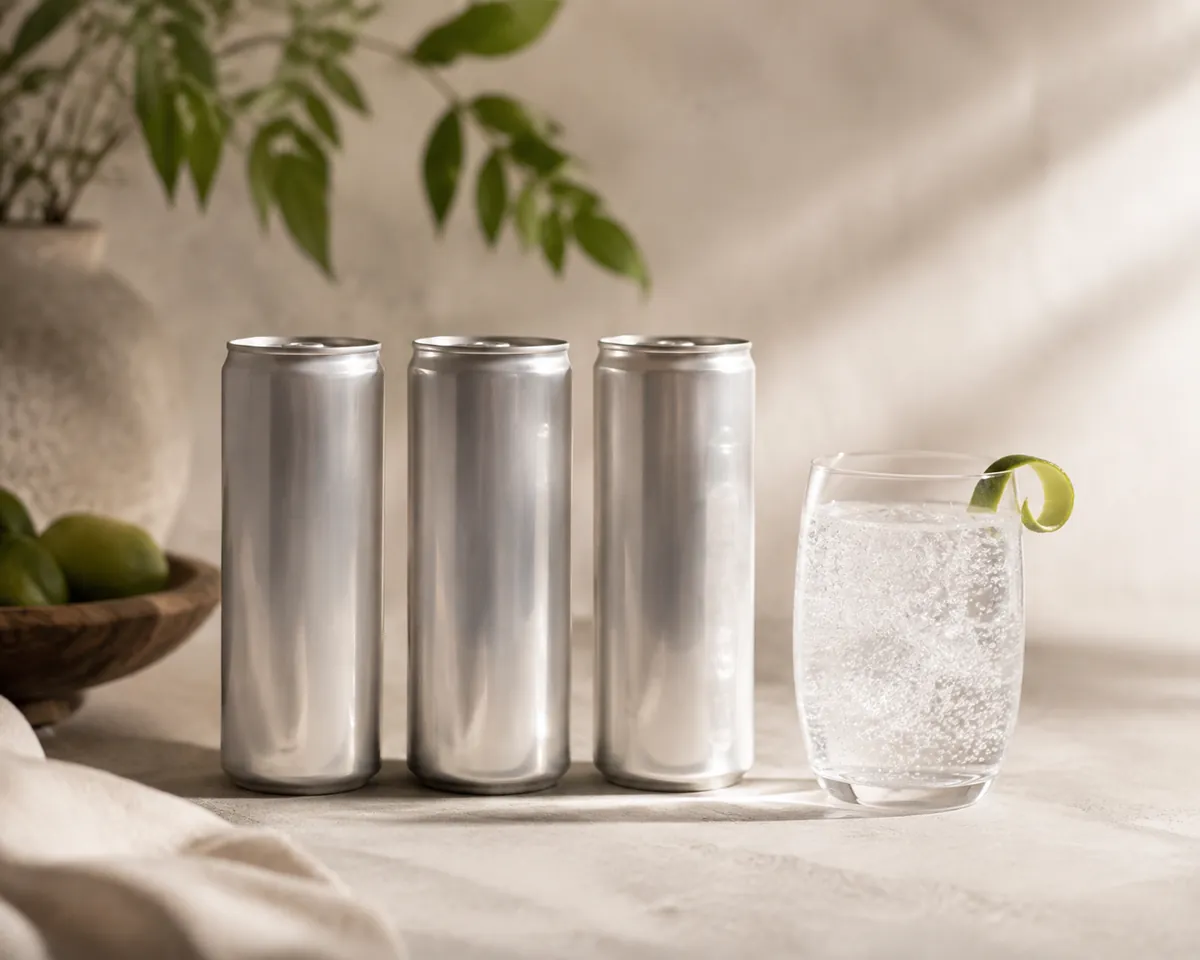
Once a sweetener joins the list the product has moved category, whatever the front of the can suggests. Sugar or an intense sweetener makes it a soft drink, and the ingredients panel is the only reliable place to see which one you are holding.
Why a flavoured can smells sweet and finishes dry
This is the thing new drinkers of flavoured seltzer find hardest to place, and it has a clean explanation. Aroma and taste are separate senses that the brain reports as one impression, so an intense fruit smell arriving with no sugar behind it registers as a promise the mouth does not keep.
Most of what we call fruit flavour is smell.
Strawberry, peach and lime are almost entirely aromatic, and the sweetness people associate with them is a learned expectation rather than part of the aroma itself. A seltzer supplies the aroma at full strength and the sweetness at zero, which is why the first can of a flavour often reads as strange and the third reads as refreshing.
Building the same effect at home is straightforward and cheaper than the cans. A twist of lemon peel expressed over the glass, or a few berries left in a jug of infused water before carbonating the strained liquid, gives aroma without sugar in exactly the same way.
When seltzer is the right choice, and when it is not
Neutrality is the whole case for it, so the answer follows from whether neutrality helps. When the water is the drink, seltzer wins on being the least intrusive thing available.
When the water is a vehicle, it is often the weaker option. Anyone who wants fizz with something behind it is usually reaching for kombucha or a fruit infusion rather than for a plain carbonated water.
Lengthening a syrup or a juice with a completely neutral carbonated water thins the result faster than lengthening it with something that carries a little body, which is precisely why bar recipes bother to specify. An Italian soda built on seltzer tastes cleaner and lighter than the same drink built on club soda, and whether that is an improvement depends on the syrup.
Plain, very cold
Its best form, and the one the category was built for.
With a citrus twist
Aroma only, no sugar, and the cheapest good drink in this article.
With a tart infusion
A strong hibiscus brew topped with seltzer stays sharp rather than turning syrupy.
Over a delicate cordial
Better than club soda here, since the salts would flatten anything floral.
Under a sweet syrup
Weaker than club soda, because there is no body to offset the dilution.
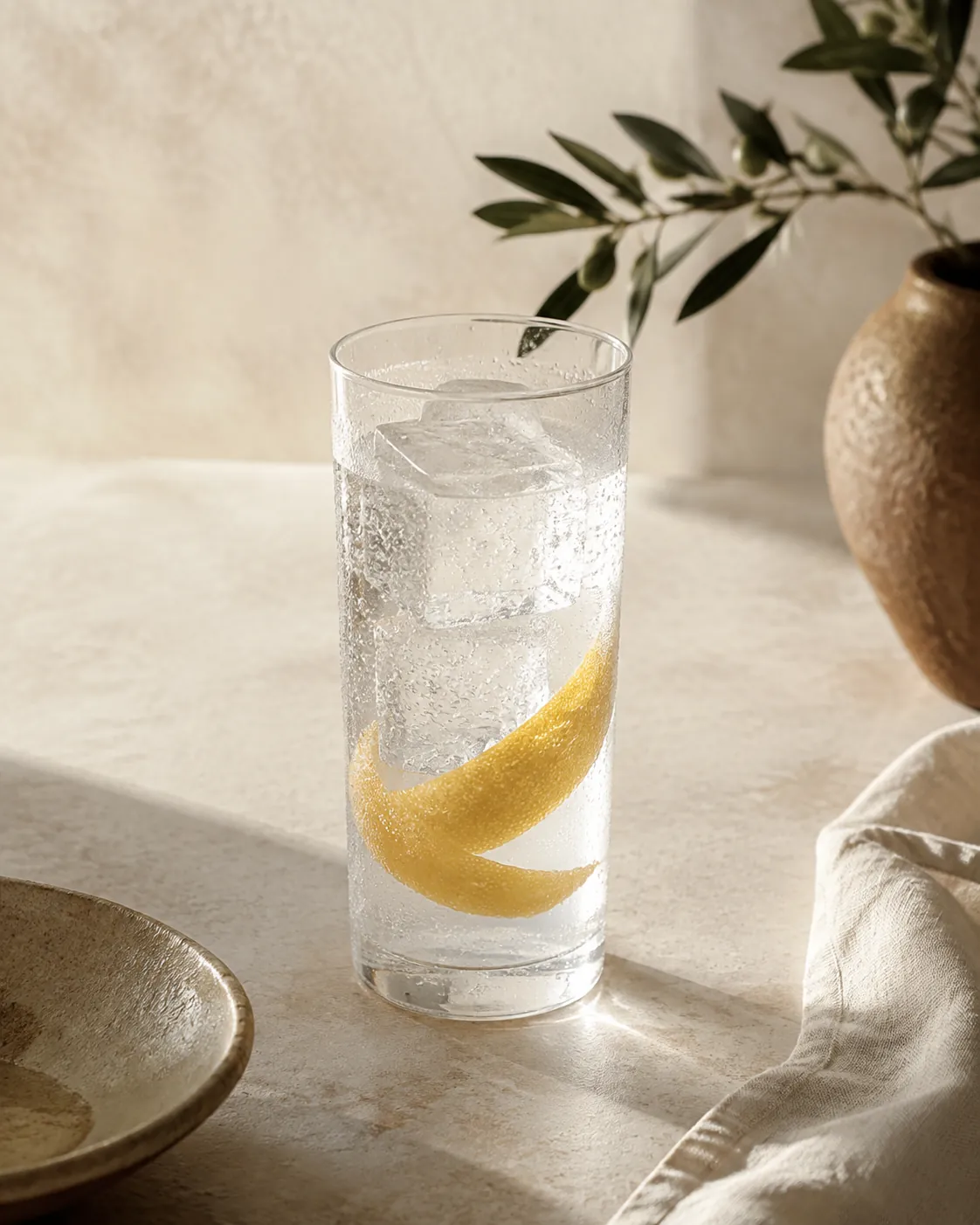
Against the sweetened bottles there is no contest and no comparison worth making, since bitter lemon and root beer are finished drinks rather than bases. Reaching for one of those when a recipe says seltzer changes the drink entirely.
Making it at home comes down to the water
Every home carbonation machine makes seltzer and only seltzer, which is a point worth stating plainly because a great many people expect otherwise.
There is no mineral cartridge and no spring involved.
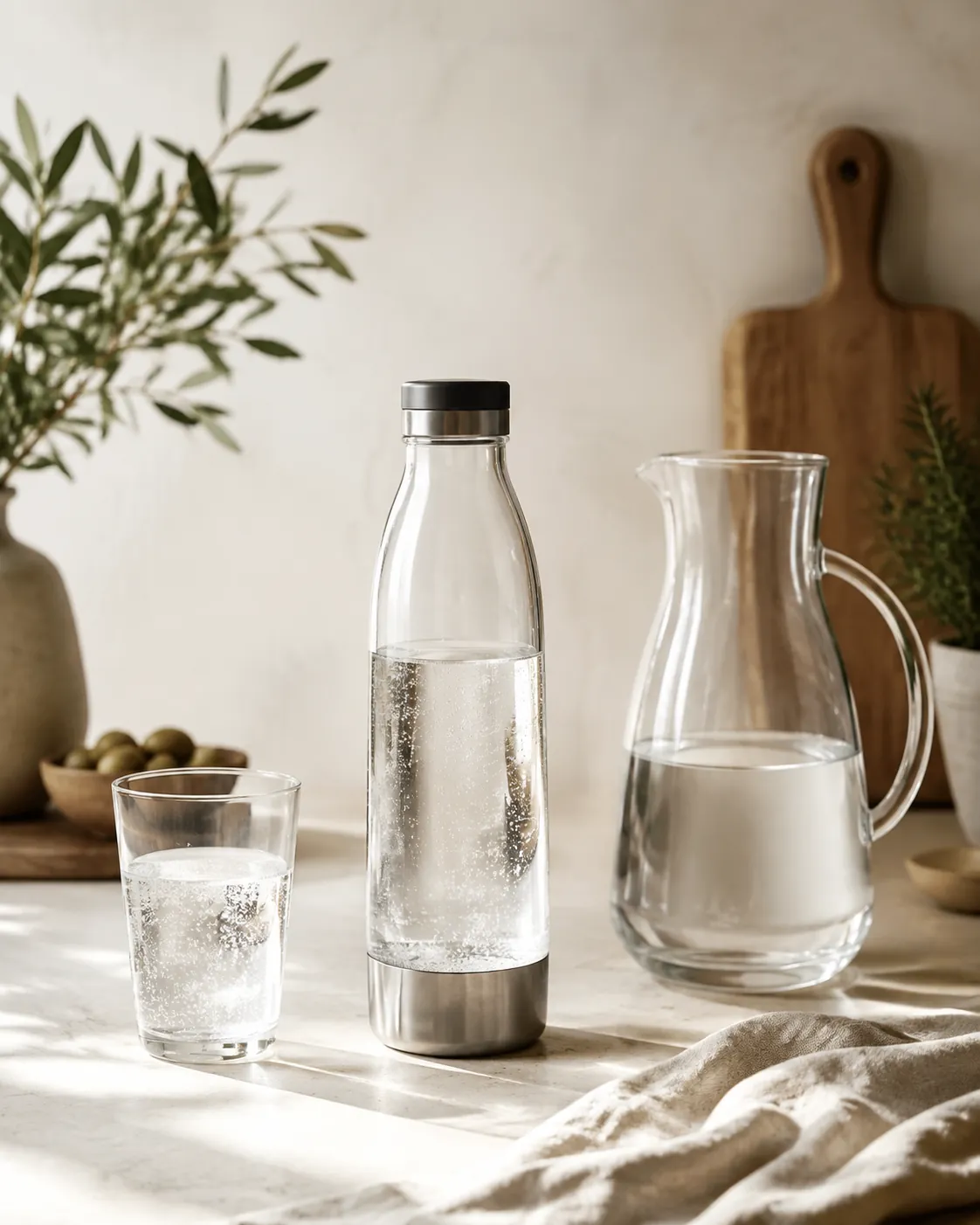
The machine forces carbon dioxide into whatever you put in the bottle, so the water you start with is the only variable you control, along with how many times you press the button.
The order that gives a good bottle
- Chill firstFridge-cold water takes and holds substantially more gas than cool water.
- Fill to the lineOverfilling causes a foam-over on release and wastes most of the charge.
- Gas generouslyTwo or three cycles past the default, since factory settings run light.
- Rest it coldPut the sealed bottle back in the fridge for a few minutes before opening.
- Flavour lastAny essence, peel or syrup goes in after carbonating, never before.
Turning the result into club soda is a second and separate step involving a pinch of bicarbonate, and that recipe belongs with the salted version of this drink rather than here. What matters for seltzer is that you have already finished when the machine stops, and the routine end to end sits under making seltzer.
The case for the plainest bottle on the shelf
Seltzer earns its place by refusing to contribute. It brings carbonation, cold and a clean acidic edge, and it declines to bring anything else, which makes it the most useful sparkling water to keep in the house even though it is the least interesting to describe.
Everything else on that shelf has an opinion. Club soda is rounder, mineral water tastes of its own geology, tonic water's quinine brings bitterness and sugar together, and each of those is right for something and wrong for a great deal else.
- Buy the size you will finish, since a part-used bottle is a poor mixer within a day.
- Serve it colder than you think, because carbonation and cold do all the work here.
- Check the panel says carbonated water and nothing more, whatever the front says.
- Keep large cubes rather than crushed ice, which scrubs gas out on contact.
- Pour down the side of a tilted glass, and top up last of all.
Kept cold and opened fresh, it is also the drink that most rewards doing very little to it, and storing seltzer is a short subject for the same reason.
Common questions
What is the difference between seltzer and club soda?
Club soda has mineral salts added on purpose, which give it a faintly rounder, slightly saline character. Seltzer has nothing added after the gas, so it tastes of whatever the source water tasted of and nothing more.
Is seltzer the same as sparkling mineral water?
No. Sparkling mineral water carries dissolved solids that came from the rock at its source, and those vary by spring. Seltzer is plain water carbonated under pressure with no such contribution.
Where does the name seltzer come from?
From Niederselters, a spring village in Hesse, Germany, whose naturally carbonated water was widely bottled and traded. The name travelled with the style.