Seltzer vs Sparkling water
Seltzer vs Sparkling Water: Reading the Ingredients Panel
Seltzer means carbonated water with nothing added, which is a claim about the ingredients panel. Sparkling water means water with gas dissolved in it, which is a claim about the gas and nothing more. That difference in kind explains the flavour, the substitutions and the machine on the counter, and on fizz and price it decides nothing.
Seltzer is carbonated water with nothing added, so it is neutral by construction and always gassed at a plant rather than underground. Sparkling water is the umbrella term for any water carrying dissolved carbon dioxide, which admits mineral springs, salted bottles and seltzer alike. Every seltzer belongs to the wider set and most of the set is not seltzer, so the ingredients panel rather than the front label is what separates them.
Side by side
| Attribute | Seltzer | Sparkling water |
|---|---|---|
| What the name claims | A composition, checkable on the panel | A physical state, and nothing about the contents |
| Added minerals | Excluded by definition | Permitted, and common |
| Source minerals | Excluded, since the base is treated water | Permitted, and sometimes the whole point |
| Where the gas came from | A compressor, always | A compressor or a rock |
| Flavour of its own | Close to none, by construction | Anything from none to distinctly mineral |
| Typical carbonation | 3.5 to 4.5 volumes, consistently hard | 1 to 4.5 volumes, with no rule at all |
| Made by a home machine | Yes, and it is the only thing one makes | Only the seltzer part of the category |
| Set relationship | A subset of the other | The umbrella term |
| Common on a British shelf | Rarely printed as a word | The usual wording for both |
| Goes flat once open | At a rate set by temperature and headspace | At the same rate, for the same reasons |
A specification against a state
These two words are not opposites and they are not synonyms, which is why the comparison feels slippery until the shapes are named. One of them describes a composition.
The other describes a physical condition and stops there.
Seltzer means carbonated water with nothing added. That is a claim about the ingredients panel, and a bottle either meets it or does not.
Sparkling water means water with carbon dioxide dissolved in it, which is a claim about the gas and about nothing else at all.
The relationship between them is therefore one of membership rather than rivalry. Every seltzer is a sparkling water; most sparkling waters are not seltzer, because the wider name admits anything from a mineral-free bottle to a spring water carrying a gram of dissolved solids per litre.
| Seltzer | Sparkling water | |
|---|---|---|
| Type of claim | Composition | Physical state |
| Carbonation | Required | Required |
| Added minerals | Excluded by definition | Permitted, and common |
| Source minerals | Excluded, since the base is treated water | Permitted, and sometimes the point |
| Where the gas came from | A compressor, always | A compressor or a rock |
| Set relationship | A subset | The umbrella |
Almost every argument on this shelf comes from treating the second word as though it carried the first word's promise. It does not, and reading the panel is the only way through.
What each name promises on the ingredients panel
Turn both bottles round. The difference is legible in a second, which is more than can be said for the front of either.
A genuine seltzer prints carbonated water and then stops. There is no bicarbonate, no potassium salt, no citrate, no sweetener and no acidulant, and the carbonic acid that gives it a bite was made by the gas reacting with the water rather than added from a drum.
A bottle labelled sparkling water can print the same short line, or it can print a mineral analysis running to eight rows, or it can print carbonated water followed by sodium bicarbonate and potassium sulphate. All three are honest uses of the phrase.
Carbonated water, full stop
A seltzer, whatever the front of the bottle calls it
Carbonated natural mineral water
A spring product with a printed analysis, and not a seltzer
Carbonated spring water, no analysis
Somewhere between the two, and the panel is the only guide
Carbonated water plus sweetener
A soft drink now, and outside both names
Carbonated water plus natural flavours
Still a seltzer, provided nothing sweet joined it
The front of the pack is marketing and the back is the specification, which is a dull rule and the only reliable one.
Anyone who buys by the word on the front will occasionally get salts they did not want and occasionally get a mineral profile they were not expecting.
Why one of them can taste of something and the other cannot
Carbonation supplies acidity and a physical prickle, and both bottles get an equal share of that. What separates them on the tongue is everything that is dissolved besides the gas, and only one of the two names permits any of it.
Seltzer is neutral by construction. Nothing was added, so the only flavour it can carry is whatever survived the treatment of the base water, which in practice is very close to nothing.
Sparkling water can taste of a great deal. A bottled mineral water with high sulphate reads firm and slightly bitter, one with high bicarbonate reads round and soft, and a high-sodium spring reads faintly saline before you have thought about it.
How much flavour each kind of bottle can carry
- Sparkling mineral water, high dissolved solidsDistinctly of its source, and recognisable blind
- Sparkling mineral water, low dissolved solidsA light minerality behind the gas
- Club soda or soda waterRounder and faintly saline, from salts a producer chose
- Seltzer from treated tap waterClose to neutral, with the local water faintly audible
- Seltzer from purified waterAs near to nothing as a drink gets
Neutrality is a property one of these names guarantees and the other cannot even discuss. That is the practical core of the difference, and it is why a recipe that wants the water to disappear names the narrower word.
How the gas got in, and whether the name tells you
There are two ways carbon dioxide ends up in a bottle of water, and the two names report on this question with wildly different precision.
Seltzer is always injected. The base water is chilled, gas is forced into it under pressure in a plant, and the bottle is sealed, so no seltzer anywhere is naturally carbonated even though the word is borrowed from a naturally carbonated spring in Hesse.
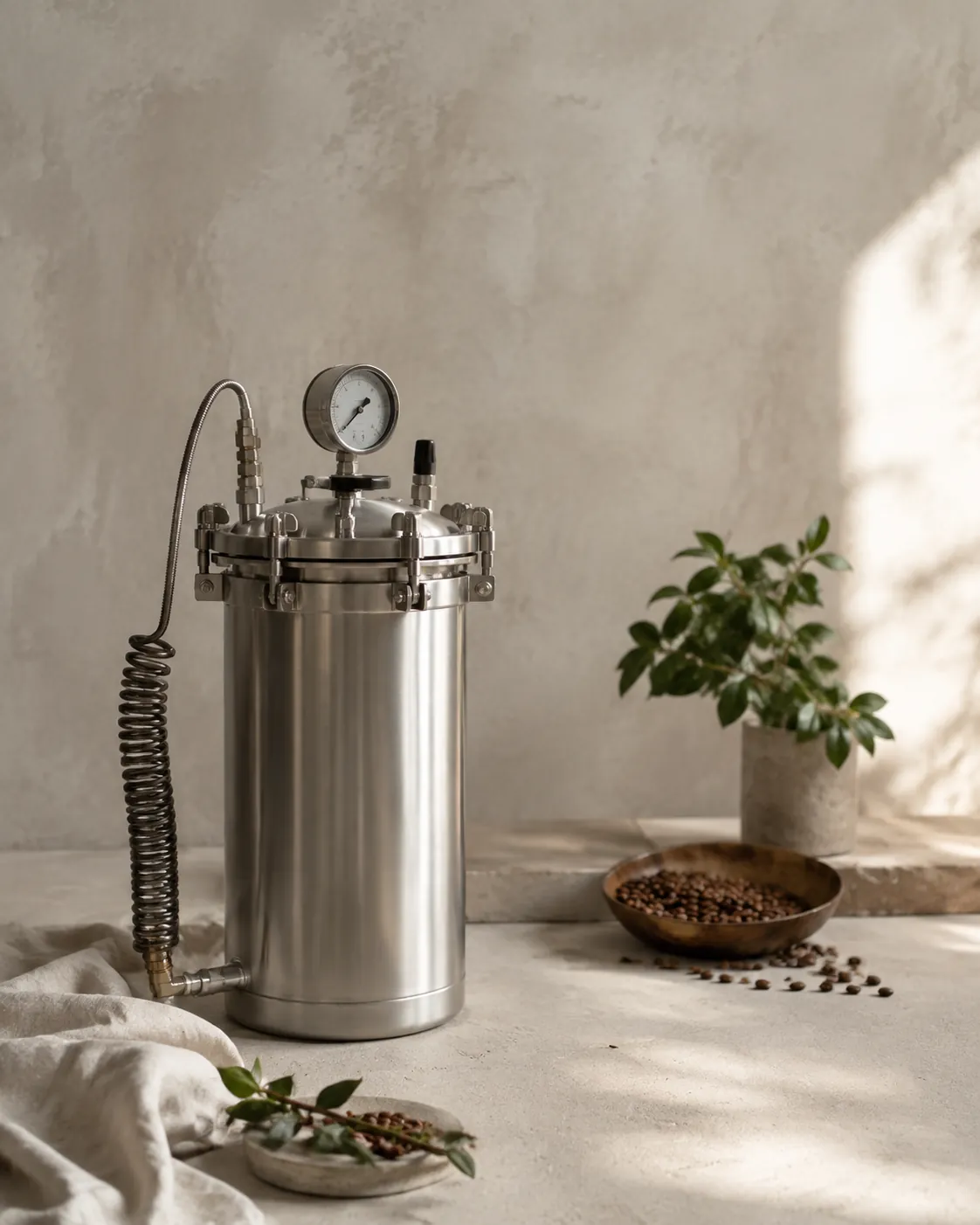
Sparkling water covers both routes. Some springs emerge already carbonated from volcanic activity underground, some are bottled still and gassed at the plant, and some are naturally sparkling but topped up with gas from the same source to a consistent level.
The three routes into a sparkling bottle
- Naturally carbonatedThe gas came out of the ground with the water and stayed in it
- Carbonated from the sourceStill spring water, regassed with carbon dioxide captured at that spring
- InjectedTreated water plus industrial carbon dioxide, which is the seltzer route
- Which name covers itSparkling water covers all three, seltzer covers only the third
- What you can tasteBubble size and mineral content, rather than the origin of the gas itself
The origin of the gas is the axis with the most romance attached and the least effect in the glass.
Carbon dioxide is carbon dioxide, and what differs between a volcanic spring and a compressor is the water it went into rather than the molecule.
The fizz levels overlap more than the names suggest
Carbonation is measured in volumes. That means litres of gas dissolved per litre of liquid, and the honest finding is that neither name predicts the figure well.
Seltzer is gassed hard as a rule, usually somewhere in the region of 3.5 to 4.5 volumes, because with no sugar and no flavour to carry it the bubbles are doing nearly all the work. That is a convention of the category rather than a requirement of the word.
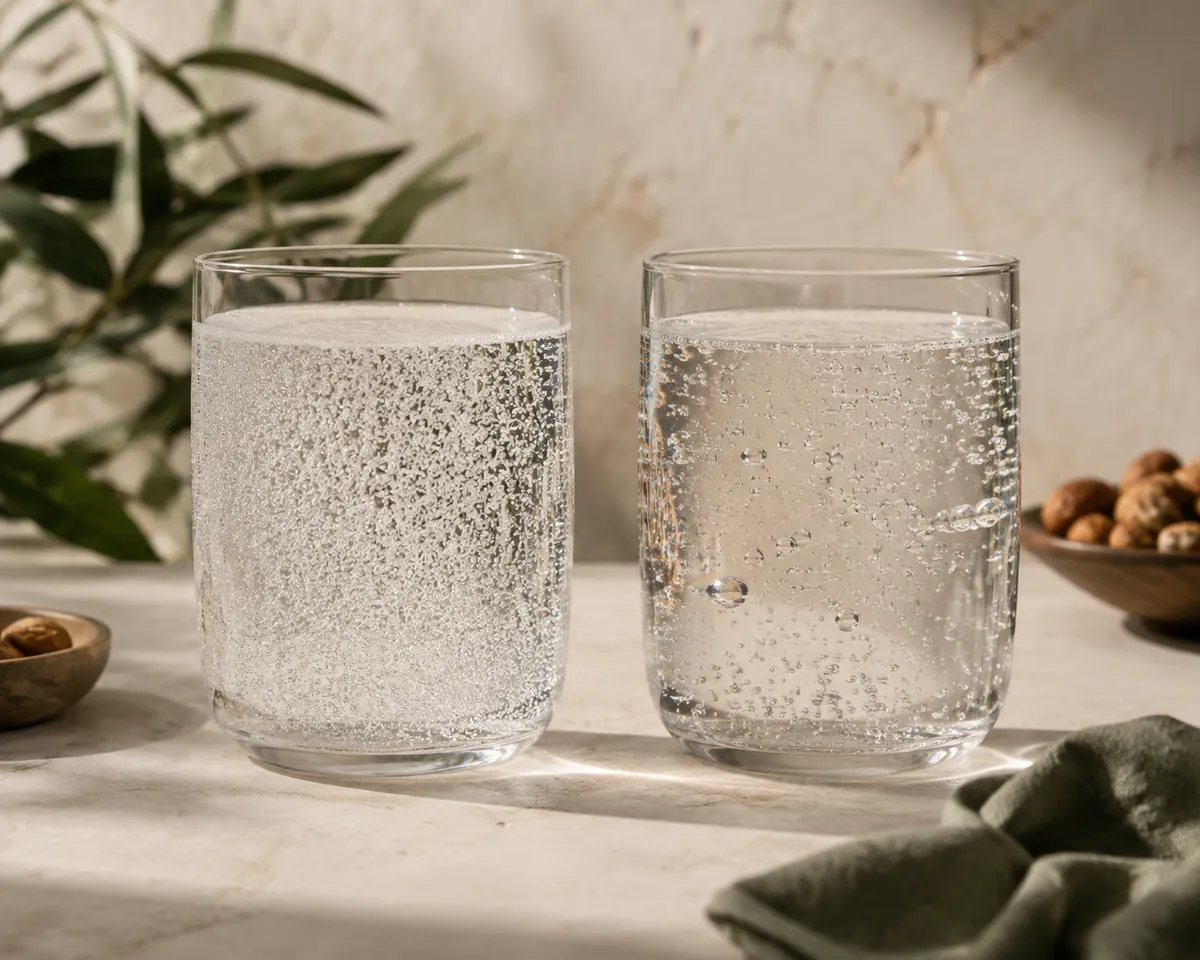
Sparkling water runs from barely petillant to harder than any seltzer on the shelf. Some springs are bottled with a gentle prickle on purpose, some are gassed to soft-drink levels, and a bottle carrying the same figure as cola is not unusual.
So the reliable statement is narrow. Seltzer is consistently fizzy and sparkling water is not consistently anything, and if a particular level of carbonation matters, the only route to it is buying a bottle you have already tried.
Which one a recipe means when it asks for sparkling water
Substitution is where the vagueness stops being academic, because the wider name is used in recipes as though it were the narrower one and the two do not always behave alike.
A recipe asking for sparkling water usually wants something neutral, and a seltzer satisfies that reading exactly. Reach instead for a strongly mineral bottle and the sulphates and bicarbonate will argue with a delicate cordial in a way the writer did not intend.
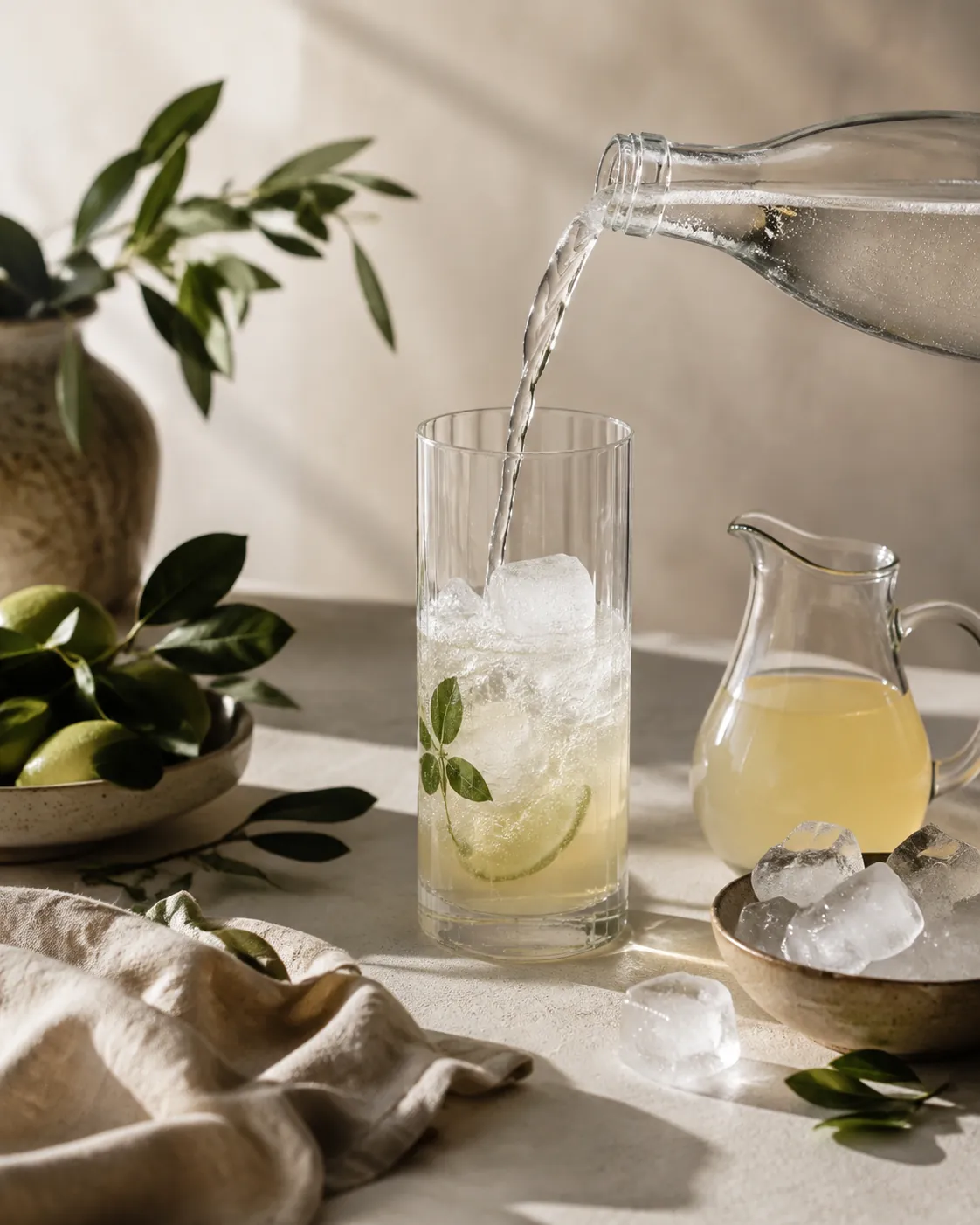
The reverse substitution is riskier than it looks. Recipes that specify soda water or club soda want the added salts, since a little sodium bicarbonate rounds off acidity and gives body to a long drink, and building the same thing on seltzer gives a thinner and sharper result.
| The instruction | Safest reading | What goes wrong with the other choice |
|---|---|---|
| Sparkling water | Seltzer | A mineral bottle can fight a floral or citrus cordial |
| Soda water | Club soda | Seltzer leaves the acidity exposed and the drink thin |
| Carbonated water | Seltzer | Nothing much, since neutrality rarely hurts |
| Fizzy water | Whatever is open | Only the carbonation level really matters here |
| Mineral water, sparkling | A named spring | A seltzer removes the character the recipe wanted |
| Top up with soda | Club soda | An Italian soda on seltzer reads lighter and cleaner |
None of this is about strength of fizz. It is about dissolved solids, which is the same axis that separated the two names in the first place, and citric acid or a spoon of simple syrup will cover a bad substitution more effectively than more gas will.
The home machine makes only one of the two
A countertop carbonator settles this question without asking you.
The machine has no way of making the wider category, so whoever owns one has already chosen.
A soda maker forces gas into whatever is in the bottle. There is no mineral cartridge, no spring and no dosing step, so the output is carbonated tap water and the output is therefore seltzer, however the box is worded.
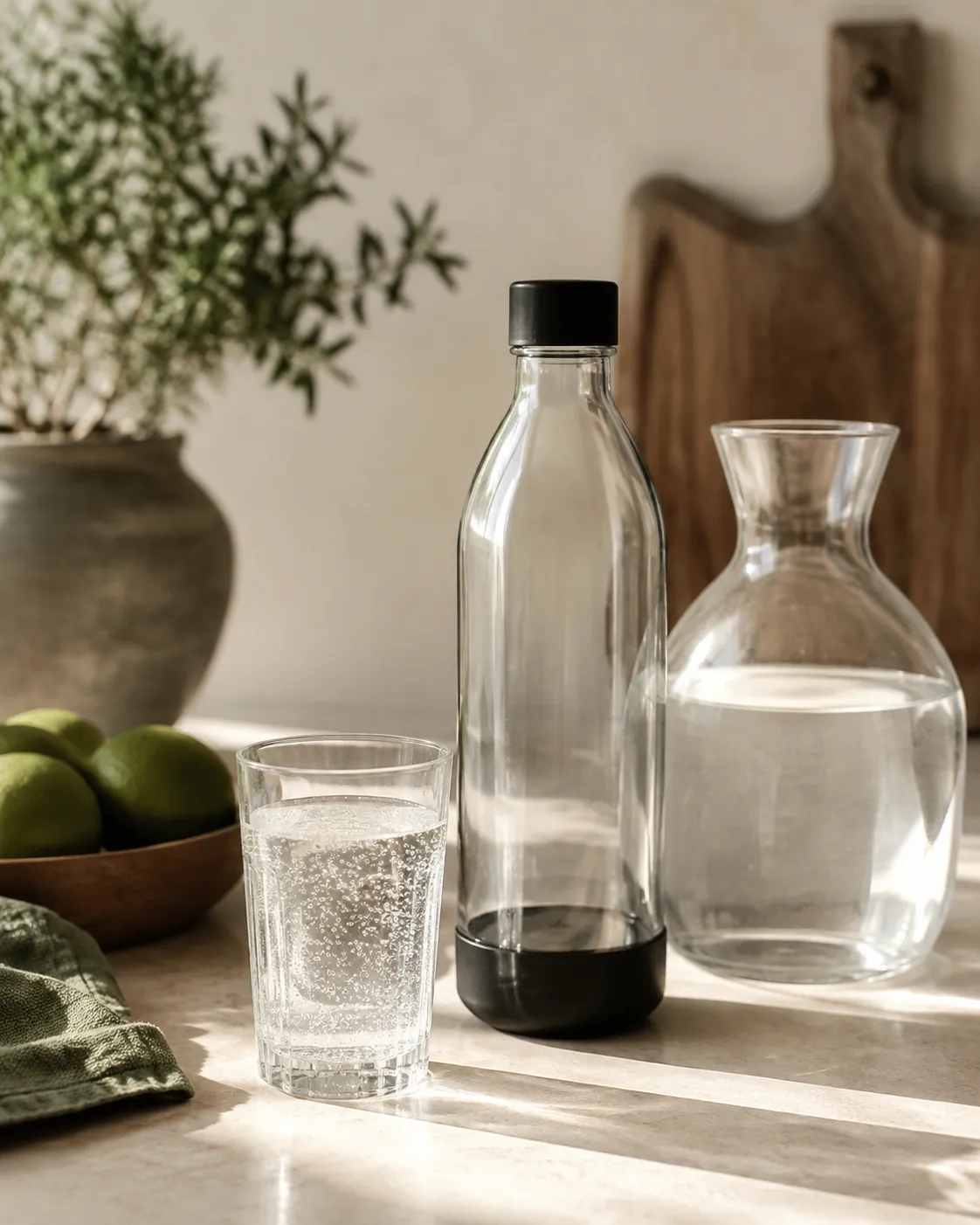
Making the other half of the comparison at home takes a second step. A pinch of sodium bicarbonate stirred into the finished bottle produces something close to club soda, and no addition at all will reproduce a spring, since the minerals in one arrived over geological time through rock.
- Chill the water before gassing, since cold water takes and holds far more of it.
- Run two or three cycles past the default, which is set conservatively.
- Add any flavouring after carbonating, never before.
- Expect the result to be a seltzer, because that is all the machine can produce.
- For anything mineral, buy the bottle, since the salts cannot be improvised convincingly.
- Keep large cubes rather than crushed ice, which scrubs the gas out on contact.
The economics point one way and the range points the other. Home carbonation is far cheaper per litre and gives you one product, while the shelf costs more and is the only route to the rest of the category.
Why the word barely appears on a British shelf
Geography decides which of these two words a person grew up with, and that is most of the reason the pairing causes confusion at all.
In American English, seltzer is an everyday word. It was carried to the United States by German-speaking immigrants in the nineteenth century, delivered in siphon bottles for generations, and it now names an enormous flavoured category as well as the plain one.
In British and Irish shops the word is close to absent. The same plain product sits there under sparkling water, fizzy water or soda water, and a British shopper looking for a seltzer is usually looking for a bottle that is already in front of them under a different name.
German kept the older meaning and points the word back at spring water, so the same four letters mean the plainest thing on one shelf and a mineral product on another.
The word travelled further than the drink did, and the confusion between the two names is a fair record of it.
What a flavoured can is under either name
The flavoured half of this shelf inherits the same ambiguity. It has grown faster than the plain half, and it adds one more line to the panel to argue over.
A flavoured seltzer holds carbonated water and a fraction of a per cent of fruit essence, which is aromatic oil rather than juice. Nothing sweet joins it, which is why the can smells emphatically of lime and finishes as dry as a glass of plain water.
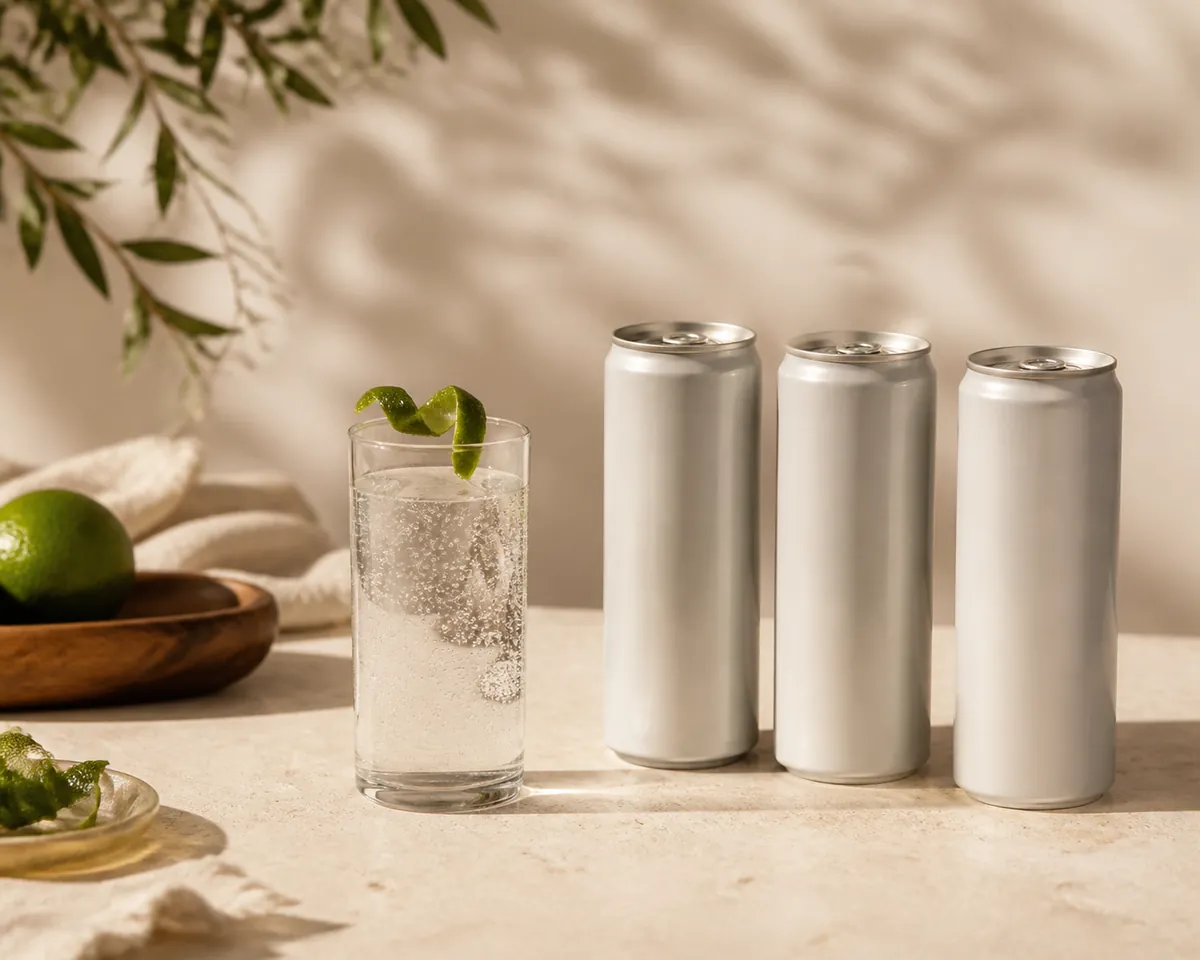
A can labelled flavoured sparkling water can be the same drink or a different one entirely. It may carry juice, sugar, an intense sweetener or added acid, and any of those pushes it towards the soft drinks without changing the phrase on the front.
Carbonated water and natural flavours
A seltzer, dry, and colourless
Plus fruit juice
Sweetness and a tint arrive, and the drink leaves the seltzer definition
Plus an intense sweetener
Still a soft drink, and the panel will name it
The tell is the sugar row on the nutrition panel rather than any word on the front. Zero there means the can is a seltzer whichever name it is sold under, and anything above zero means the wider term is doing some concealing.
The axes on which neither name decides anything
Several of the things people expect these words to settle turn out to be settled by handling instead, and it is worth naming them so the comparison stays honest.
Gas retention is the clearest case. An opened bottle goes flat at a rate set by temperature, headspace and how often the cap comes off, and the name on the label predicts none of that.
| Question | Seltzer | Sparkling water |
|---|---|---|
| Goes flat when warm | Yes | Yes, at the same rate |
| Bubbles need a nucleation site | Yes | Yes |
| Acidity from carbonic acid | Around pH 4 | Around pH 4, before minerals shift it |
| Better cold | Yes, decisively | Yes, decisively |
| Contains sugar | No | Not unless the panel says so |
| Which tastes better | A preference about minerality | A preference about minerality |
Cost is the other draw, and it runs on format rather than on category. A large plain bottle of either is among the cheapest drinks in the shop, a slim can of either is among the dearest per litre, and the packaging decides the price far more than the words do.
Which bottle to reach for, and when it matters
What is left is a short set of questions that can be answered at the shelf, and most of the time the distinction does not matter.
If the water is the drink, pick by minerality and not by name. If the water is going into something delicate, the narrower word is the safer buy, since neutrality is the one thing it guarantees.
If the recipe asked for soda water, neither of these is quite right and the salted bottle is.
Which to buy, by what you are doing with it
- Topping a floral or citrus cordialSeltzer, since minerals interfere
- Drinking a glass on its own meritsA mineral bottle, where the source is the point
- Lengthening cold brewSeltzer, which keeps a bright roast bright
- Everyday water in the fridgeEither, and price per litre decides it
- Following a recipe that says sodaClub soda, which is neither of the two here
- Refilling from a machineSeltzer, because that is what comes out
One last habit is worth more than the vocabulary. Read the panel, note whether the solids figure is nothing or something, and buy the same bottle again when it worked, which is a shorter route to a reliable glass than learning what the sweetened bottles like bitter lemon and root beer have in common with plain water, which is only the gas.
Common questions
Is seltzer the same thing as sparkling water?
Not quite. Seltzer is carbonated water with nothing added, which is a claim about composition, while sparkling water only says that carbon dioxide is dissolved in the water. Every seltzer counts as a sparkling water, and a bottle sold as sparkling water may carry added salts or a spring's own minerals and still be labelled correctly.
Why can one bottle of sparkling water taste of something when seltzer tastes of nothing?
The gas contributes acidity and prickle in both, so the flavour comes from what else is dissolved. Seltzer has nothing else in it by definition, while a mineral bottle carries sulphate, bicarbonate or sodium from its source, which read as firm, round or faintly saline before any flavouring is involved.
Does a home carbonating machine make seltzer or sparkling water?
It makes seltzer. The machine forces gas into whatever water is in the bottle and there is no mineral dosing step, so the result is carbonated water with nothing added. Producing anything like club soda takes a second step with a pinch of bicarbonate, and a spring's mineral profile cannot be reproduced at all.