What Is Bitter Lemon? Tonic Water, Lemon, and the Pith
Bitter lemon is tonic water with lemon added, and the addition includes the pith. That is where the second layer of bitterness comes from, and why the drink is cloudy.
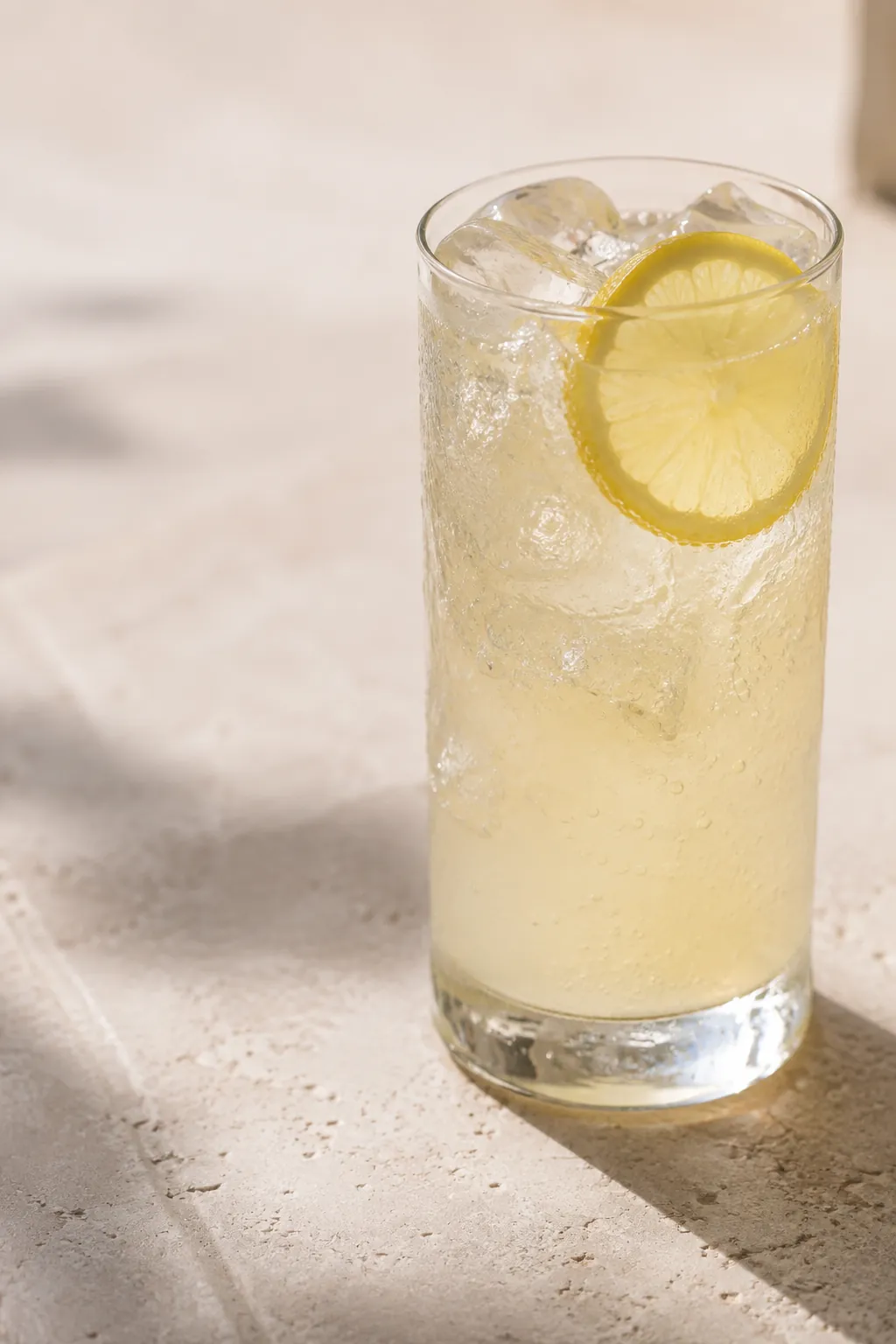
Bitter lemon is a carbonated soft drink: quinine-bittered tonic with lemon juice and lemon pith added, sweetened to balance.
It is essentially tonic water with a citrus layer on top, and it has been sold since the 1950s.
What makes it bitter
- Quinine
- From cinchona bark, the same bittering agent as tonic water
- Limonin and pith compounds
- From lemon peel and the white pith, which is added deliberately
- Citric acid
- Sourness rather than bitterness, but it sharpens both
- Sugar
- Balances the two, and there is a good deal of it
- Cloudiness
- Suspended citrus solids, which clear tonic does not have
The pith, and why it is put in deliberately
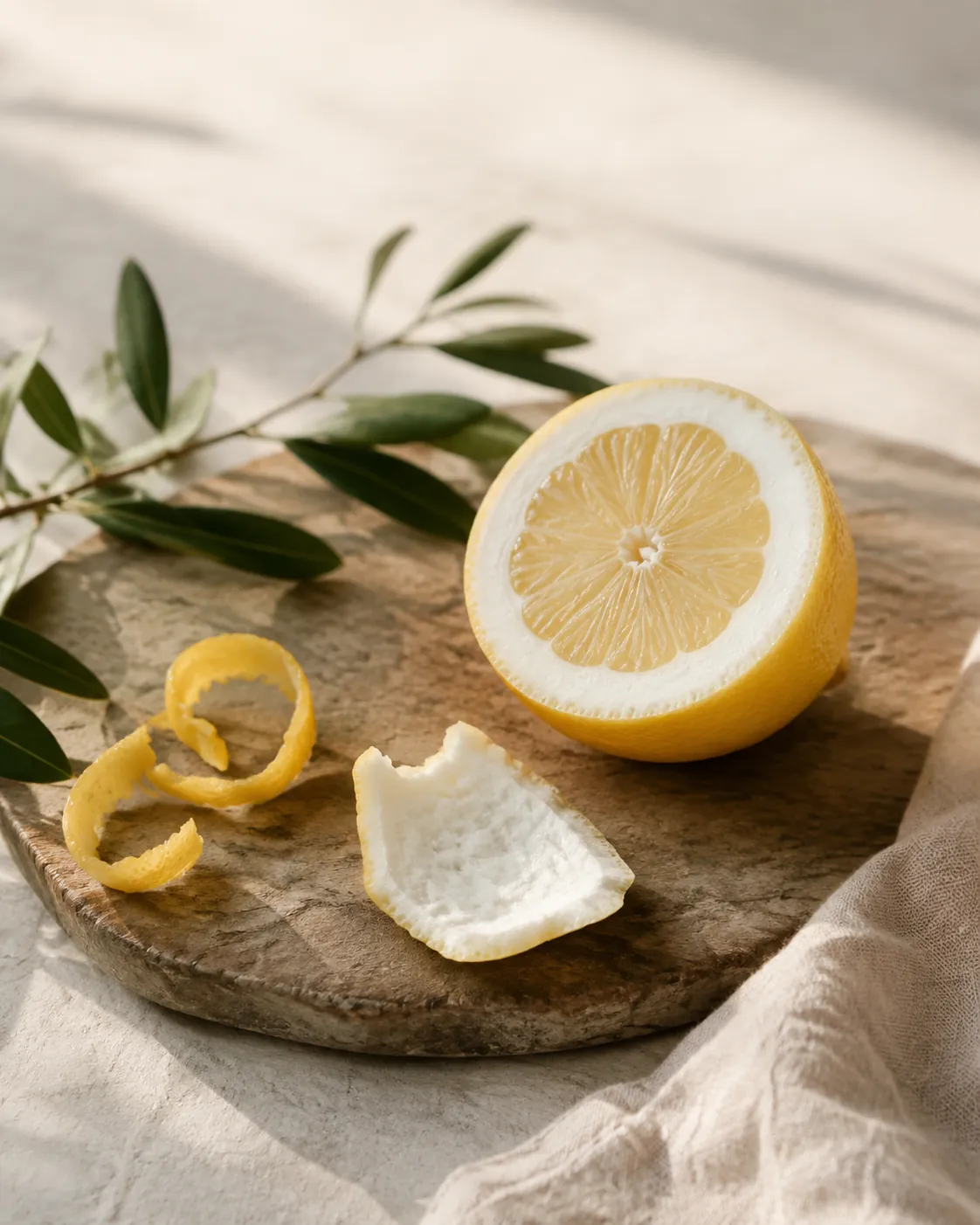
What separates bitter lemon from every other citrus soft drink is the part of the fruit that goes into it. The pith is added on purpose. In juice-making the white layer under the peel is the thing most carefully avoided, because it turns a drink bitter, and here that is exactly the point.
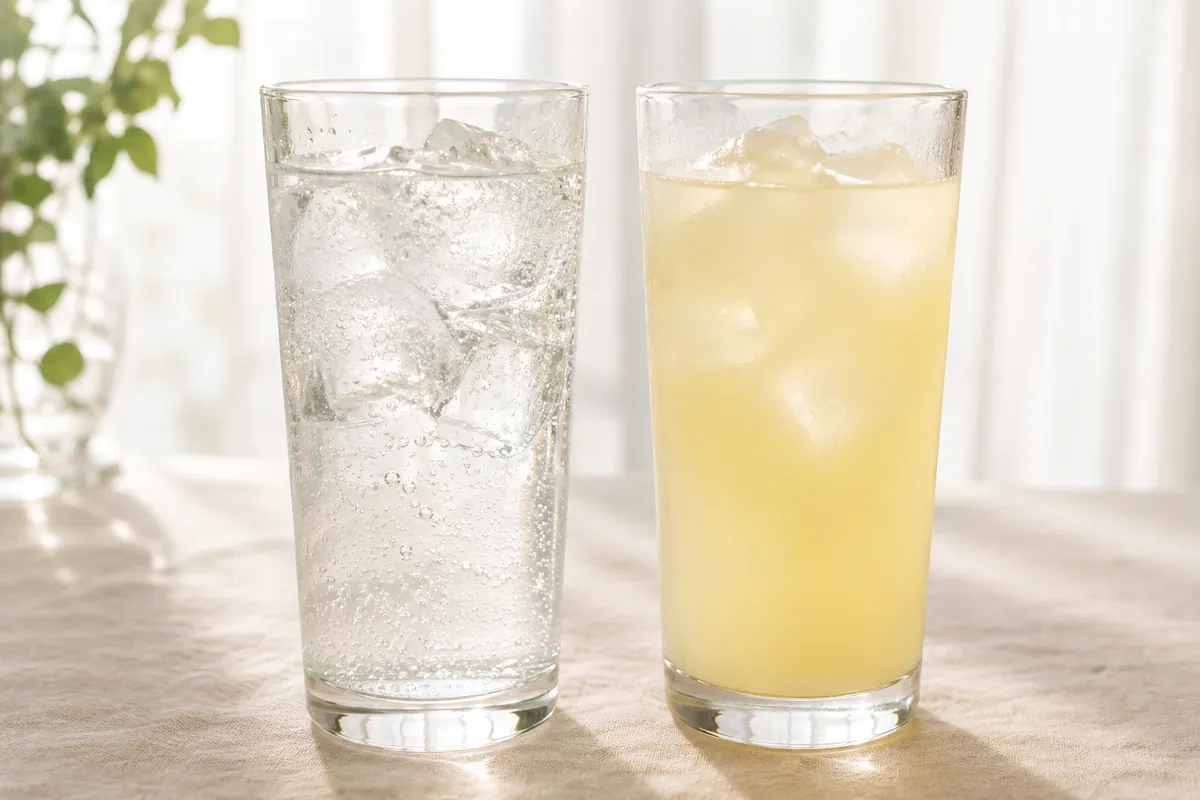
The bitterness arrives from two chemically unrelated directions. Quinine comes out of cinchona bark, as it does in tonic, where the mechanism behind it is set out at length.
Limonin and its relatives in the pith and peel are a different chemistry altogether, built by the fruit rather than extracted from a tree, and they sit lower and stay longer on the palate than quinine does.
Perceived bitterness in clear mixers
- Bitter lemonQuinine and citrus pith together, which is why it leads
- Tonic waterQuinine alone, and more sugar to balance it
- Bitter orange sodaBitter peel, no quinine. Rounder and more aromatic
- Lemonade, cloudySour rather than bitter. No bitter principle at all
- Soda waterMineral salts only. A faint saline edge, no bitterness
Bitter lemon leads that scale because it runs both systems at once, and the two neither cancel nor blend. The quinine arrives first and reads clean; the pith bitterness follows it and stays, which is why the finish is so much longer than tonic's and why what bitter lemon tastes like is a harder question than the name suggests.
Loved or refused, rarely just tolerated
The response to bitter lemon is unusually polarised, and the reason sits in the drinker rather than in the bottle.
Bitterness is detected by a family of receptors that vary considerably between individuals, and sensitivity to particular bitter compounds is inherited. Two people drinking from the same bottle can report genuinely different sensations rather than different preferences, which is why the argument never resolves.
Stacking pith bitterness on top of quinine widens that gap instead of splitting the difference. There is no level of chilling or dilution at which the citrus bitterness disappears, because it is dissolved right through the liquid rather than sitting on the surface of it, so nobody is talked round by being handed a colder glass.
It shares that with root beer in one respect only: both are drinks people love or refuse rather than tolerate, and it is worth knowing before buying a large bottle for a table of six.
Cloudy by design rather than by juice content
Clarity is the visible difference from tonic, and it is engineered rather than incidental.
Citrus oils do not dissolve in water, so a lemon-flavoured soft drink needs the oil held in suspension or it separates into a ring at the neck of the bottle. The industry answer is a clouding emulsion: oil, water and a weighting agent that brings the oil's density close to the water's.
Historically that weighting agent was often brominated vegetable oil, withdrawn or restricted in most markets since; modern formulations use ester gum or sucrose acetate isobutyrate instead, and both appear on ingredient lists under those names. The cloudiness is therefore doing a job rather than signalling fruit content.
Cloudy orange juice is cloudy because of pulp that came out of the fruit, where a cloudy soda is usually cloudy because a formulator put an emulsion in it, so the juice percentage on the back tells you more than the look of the bottle ever will.
Suspended solids settle, which is the practical consequence of all that engineering.
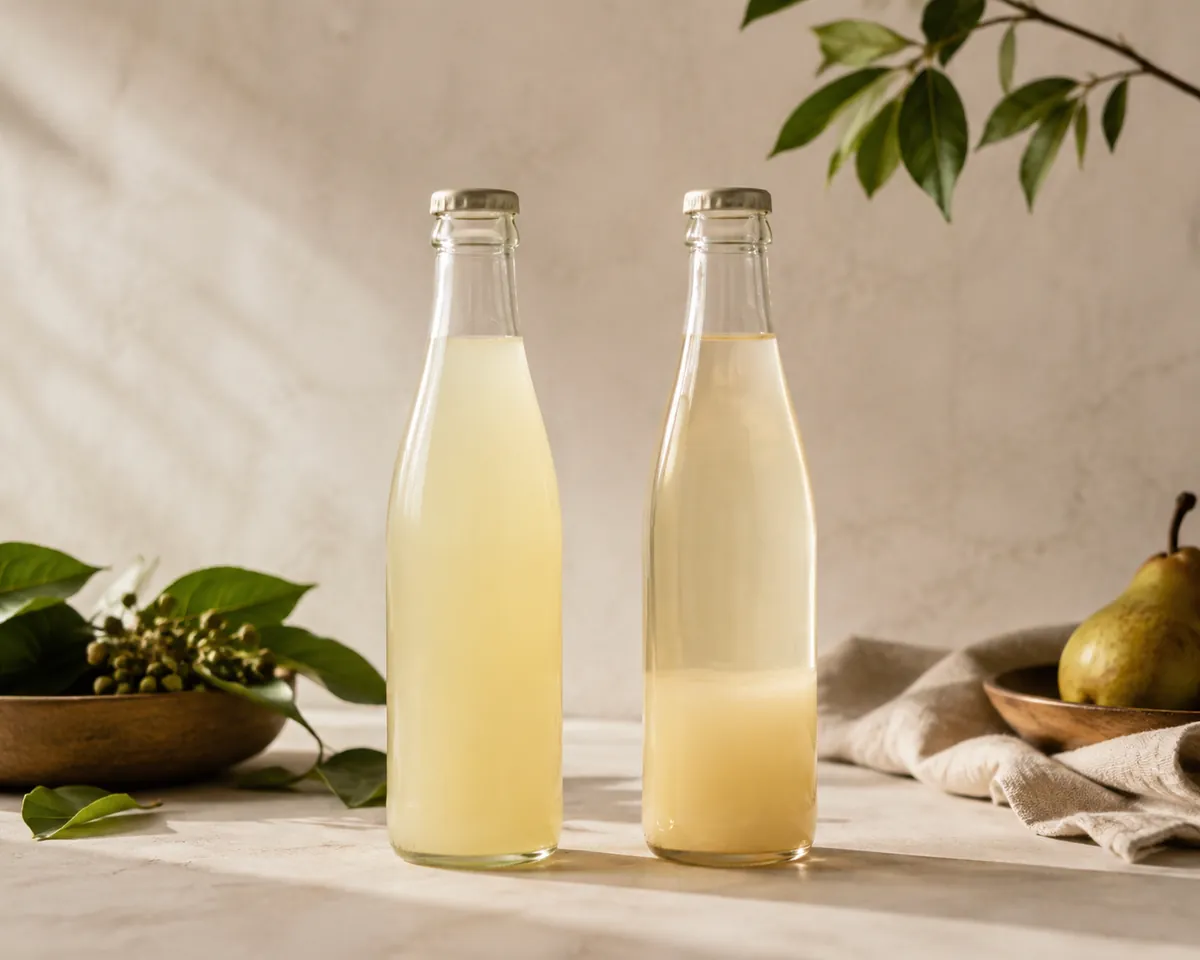
Inverting the bottle slowly two or three times redistributes them without costing the carbonation, where shaking does the same job and takes a good deal of the fizz with it. Cans have the identical problem and hide it completely, so the inversion is worth doing by habit rather than by sight.
Bitter lemon, bitter orange and a cloudy lemonade
The category is small and the boundaries repay drawing, because the drink it most resembles in the glass is the one it least resembles on the tongue.
| Bitter lemon | Tonic water | Bitter orange | |
|---|---|---|---|
| Bittering | Quinine plus citrus pith | Quinine | Quinine plus bitter orange peel |
| Appearance | Cloudy, pale yellow | Clear | Cloudy, pale orange |
| Sourness | High, from lemon juice | Low | Moderate |
| Sweetness | High, to balance the bitterness | Moderate to high | High |
| Availability | Common in Europe, rarer elsewhere | Universal | Regional |
A cloudy lemonade is the comparison that trips people up, since the two look alike and share the fruit. What a lemonade has is sourness from juice and citric acid, sweetness on top of it, and nothing bitter underneath at all; take the quinine and the pith out of a bitter lemon and a cloudy lemonade is more or less what remains.
The difference shows in what happens after you swallow. Lemonade finishes clean and short, while bitter lemon leaves a dry edge that arrives late and holds, and no quantity of sugar in a lemonade will produce it.
The bitterness is a structural component rather than a setting, so the two are not points on a single scale, and a recipe that asks for one will not work with the other. A plain tonic water is much the closer substitute, missing only the citrus.
Why it is easy to find in one country and impossible in another
Bitter lemon is a mid-century commercial invention rather than a traditional drink, which is exactly why its distribution around the world is so uneven.
Schweppes launched it in the United Kingdom in 1957, building on the tonic water the company had sold since the previous century. The idea was straightforward: take the quinine drink that already sold, and put in the citrus note that drinkers were adding themselves with a slice.
It spread through the Commonwealth and into continental Europe and never established itself in the United States, where the bitter category stayed with tonic alone. That is why the drink is unremarkable on a Dutch or South African shelf, hard to find in an American one, and why a recipe calling for it is not always a recipe you can follow where you live.
The category has stayed small and stable since: a handful of manufacturers make essentially the same formulation, and it has had no premium revival of the kind that reshaped the sparkling water aisle.
Cold, tall, and full of ice
Bitter lemon is drunk plain far more often than tonic is, and that changes what a good pour looks like.
- Chill the bottle hard before opening. Bitterness reads harsher warm and the sweetness reads as cloying.
- Fill a tall glass with ice first and pour onto it, rather than adding cubes afterwards.
- Pour down the side of a tilted glass, once, instead of into the middle.
- Choose a wheel of lime rather than a slice of lemon for anyone trying it for the first time.
- Drink it promptly. This is not a glass that improves over twenty minutes.
Ice does more work here than in almost any other soft drink. A tall glass packed with it holds the liquid close to freezing for as long as it takes to finish, and the dilution as it melts is welcome rather than a loss, because water softens the quinine while barely touching the citrus.
The garnish is not decoration either. Lemon reinforces what is already in the glass, lime gives the palate a second and brighter citrus to read the pith against, and a strip of peel with no flesh contributes aroma without adding acid to a drink that has plenty.
If a first glass is still too much, halving it with plain carbonated water is the honest next step rather than a climbdown, since it takes both bitter systems down together and leaves the character intact.
Diluting it, and the partners that survive it
Bitter lemon dictates rather than supports. A drink carrying sweetness, sourness and two kinds of bitterness will dominate whatever it meets, so the combinations that work either dilute it outright or answer it with something equally assertive.
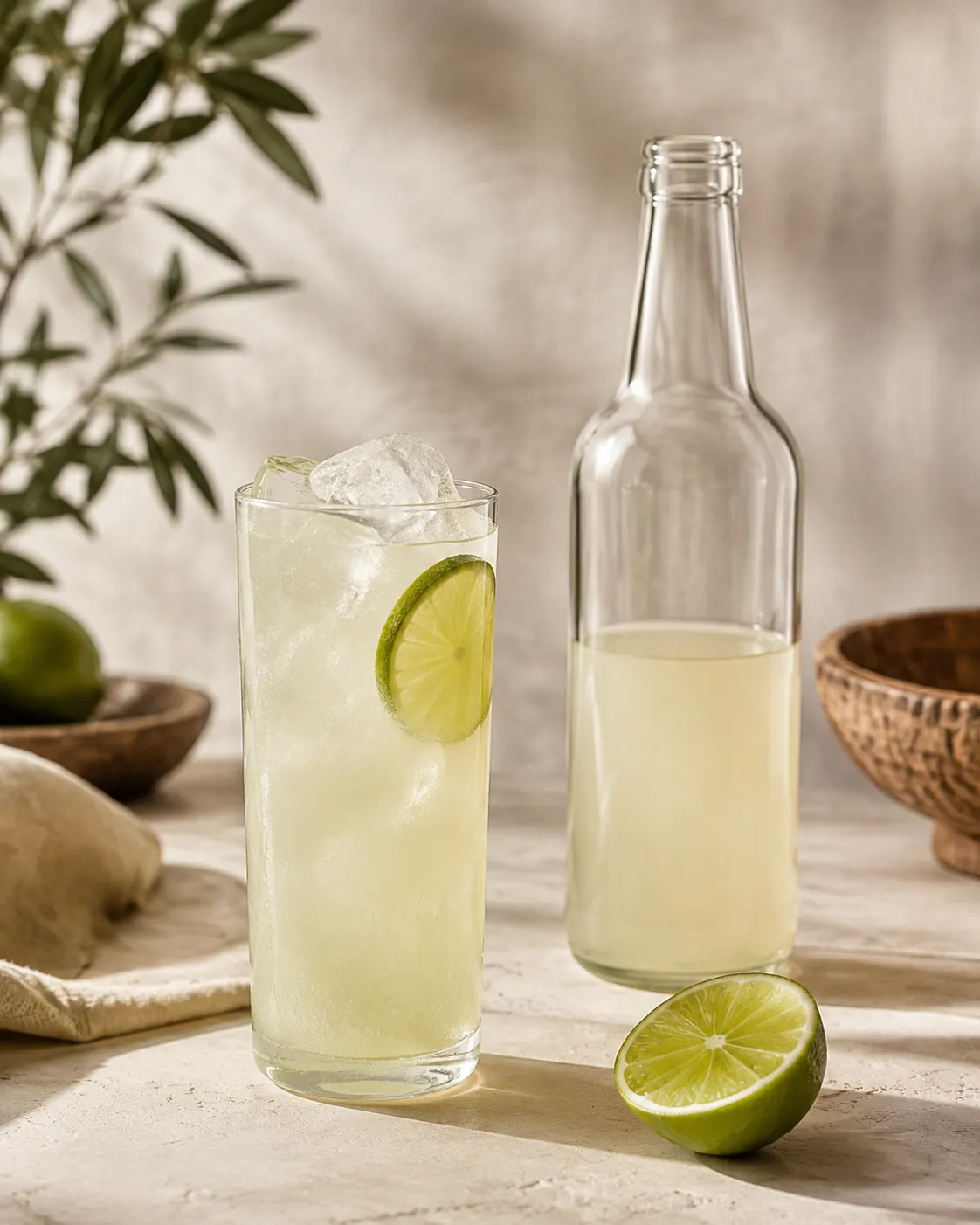
With soda water
Halves the sweetness and the bitterness together. The simplest fix if you find it cloying.
With bitters
A few dashes of aromatic bitters deepens it and cuts the sugar.
With juice
Poorly. The acids clash and the result tastes muddled.
Three that work
- Long bitter lemon
- 100 ml bitter lemon, 100 ml carbonated water, ice, lime wheel
- Bitter iced tea
- 100 ml strong cold black tea, 150 ml bitter lemon, no sugar
- Bitter and ginger
- Equal parts bitter lemon and ginger ale, plenty of ice
- Rule
- Dilute it or pair it with a single strong partner. Never with fruit juice
- Glass
- Tall, filled with ice, and cold before the liquid arrives
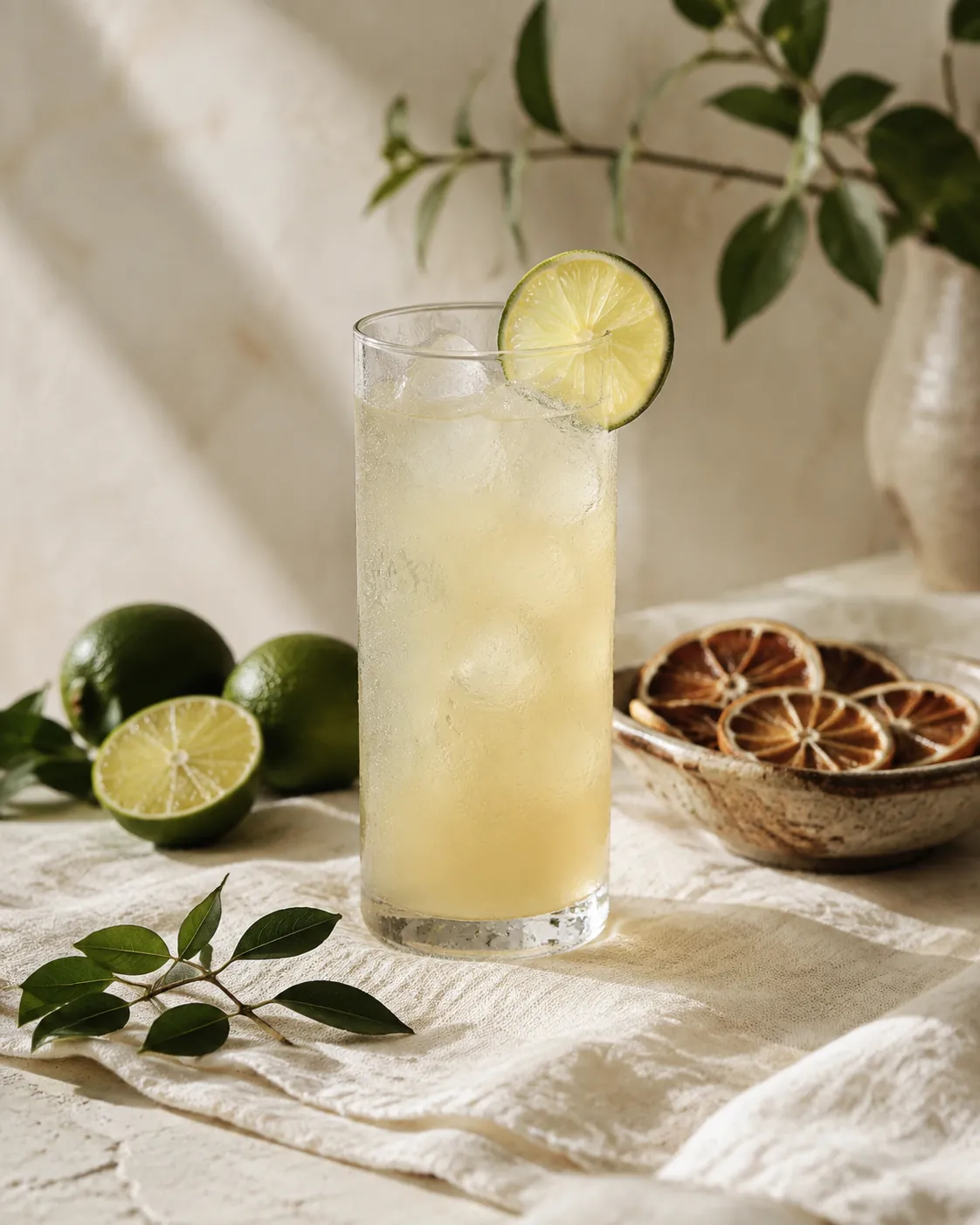
None of those five is an equal partnership, and the grid is really a list of ways to spend the drink's dominance rather than to hide it. The cold tea version is the one to try first.
Tannin and quinine are bitter by entirely different routes, and the pair reads dry and layered rather than doubly harsh. Juice is the reliable failure in the other direction: the acids clash, the sweetness compounds, and what comes out tastes muddled rather than long.
The sugar, and what a light version changes
Like tonic, bitter lemon is a sweetened soft drink rather than a flavoured water, and the quantity is easy to overlook because two bitter systems are busy masking it.
Typical products carry somewhere around 8 to 9 g of sugar per 100 ml, close to a standard cola, and the sourness suppresses how sweet any of that reads.
A reduced-sugar version is a different balance rather than the same drink with less sugar in it, and the reason is what the sugar was doing. Bitter lemon has two bittering systems to suppress at once, so taking the sweetness out exposes both together, which is why light versions read markedly sharper and more medicinal than a diet tonic does.
High-intensity sweeteners behave differently across the palate as well. They arrive later and leave sooner than cane sugar, so the bitterness meets the tongue first and lingers after the sweetness has gone.
Producers compensate by trimming the quinine slightly and lifting the citrus, which works, and which makes a light bitter lemon a separate formulation rather than a substitution.
Why it goes flat faster than tonic, and what to buy
Bitter lemon loses its carbonation faster than most soft drinks, for two reasons stacked one on the other.
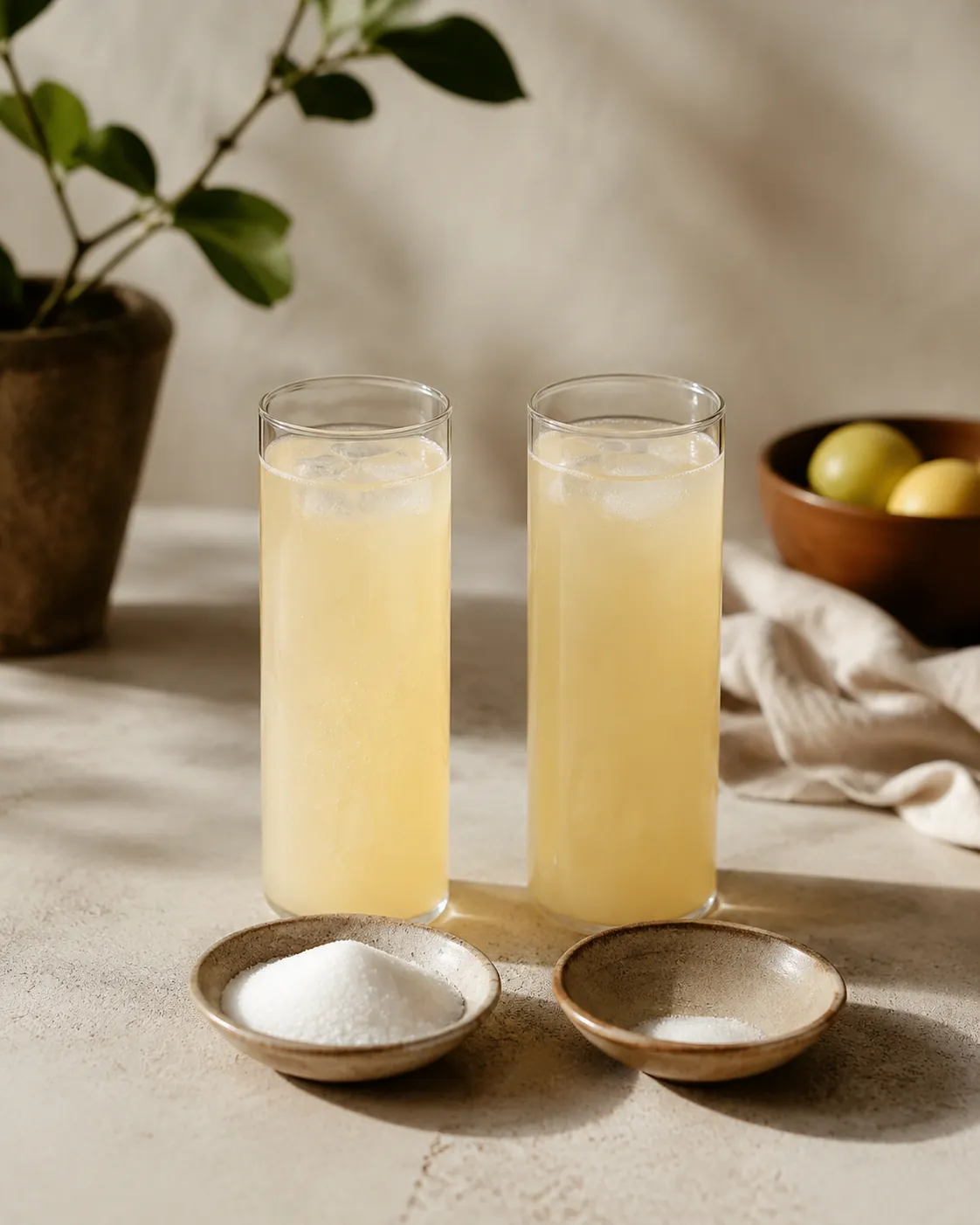
Dissolved sugar gives carbon dioxide somewhere to gather and leave solution, the same nucleation effect that flattens an Italian soda built carelessly, and there is a good deal of sugar here. The suspended citrus solids do the same thing more efficiently still, because every particle is another surface, so a cloudy soft drink will always go flat faster than a clear one carbonated to the same level.
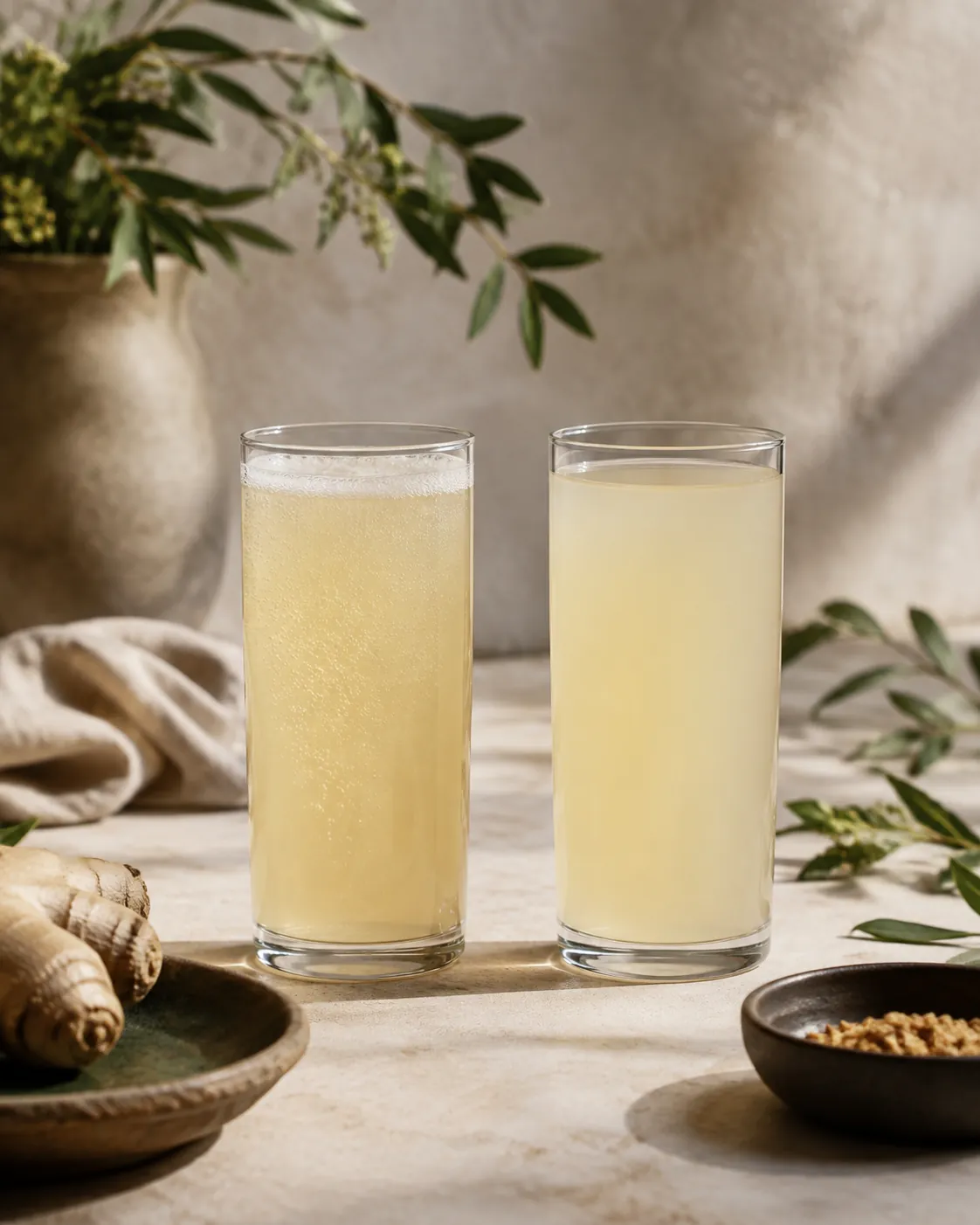
- Buy small. A 200 ml bottle or a can poured over a full glass of ice is the format the drink was built around.
- Check the juice percentage, which runs from a token quantity to around five per cent.
- Check the sweetener if it is a light version, since the substitutions taste noticeably different from each other.
- Keep bottles upright, cold and out of direct light.
- Treat a reopened large bottle as a different drink rather than the same one a day later.
That format advice is not fussiness: a large bottle reopened on the second day is noticeably softer than tonic from an equivalent bottle would be, and there is no way to put the gas back. Storing bitter lemon comes down to upright, cold and dark, because citrus oils degrade under light faster than most flavourings and a bottle off a bright shelf tastes duller before it is even opened.
Most of what turns up in bitter lemon problems traces back to one of those two failures rather than to the drink itself.
Making the citrus half at home
There is no exact home version, because quinine is not sold as a domestic ingredient in most places. What can be built is the other half of the drink, and it is worth building.
Steep lemon juice, zest and a little pith in simple syrup, strain it, and top with carbonated water. The pith is the step people skip and the one that decides the result: ten minutes gives a faint dry edge, an hour gives something much closer to the commercial drink, and longer than that tips into harshness with no way back, so taste as it goes rather than trusting a clock.
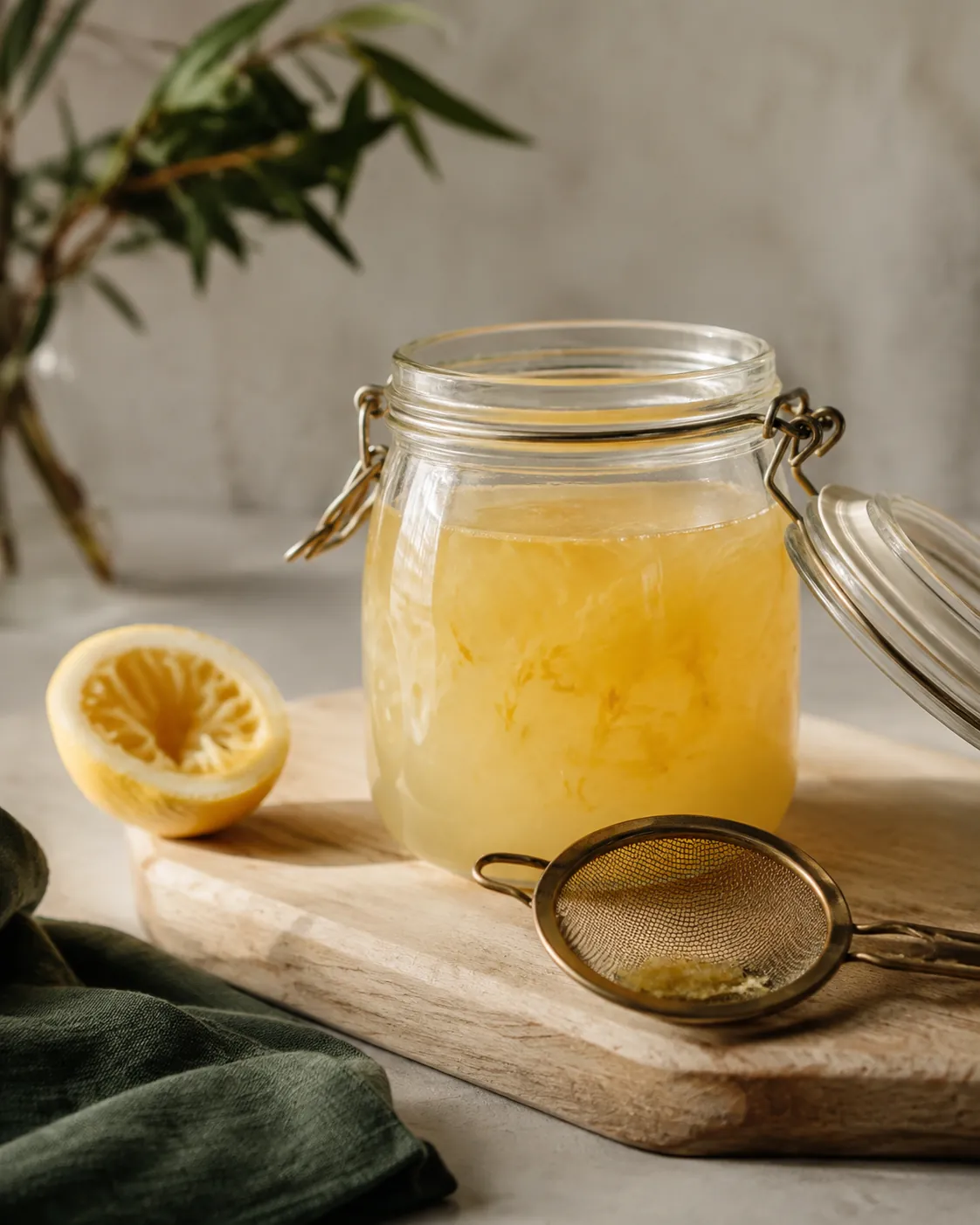
What comes out is cloudy, sweet-sour and faintly bitter. It is a good drink, and it is missing the quinine, which is the component that makes the bought version distinctive rather than merely lemony.
Making bitter lemon works through the syrup in more detail, and no quantity of extra pith substitutes for the bark.
Common questions
What is the difference between bitter lemon and tonic water?
Bitter lemon is tonic with lemon juice and lemon pith added. It has two sources of bitterness, quinine and the citrus pith compounds, plus much more sourness, and it is cloudy where tonic is clear.
Why is bitter lemon cloudy?
Suspended citrus solids from the lemon juice and pith that are added to it. They settle over time, so the bottle should be gently shaken or stirred before pouring.
Can you make bitter lemon at home?
Only an approximation. The citrus half is straightforward with lemon juice, zest, a little pith and simple syrup topped with soda water. The quinine is not, and extracting it from bark at home is not a domestic process.