What Is Ginger Tea? Brewed From a Stem, Not a Leaf
Ginger tea is made from an underground stem, which makes it the odd one out in this section. It also means the usual advice about steeping does not apply: ginger generally needs simmering, not soaking.
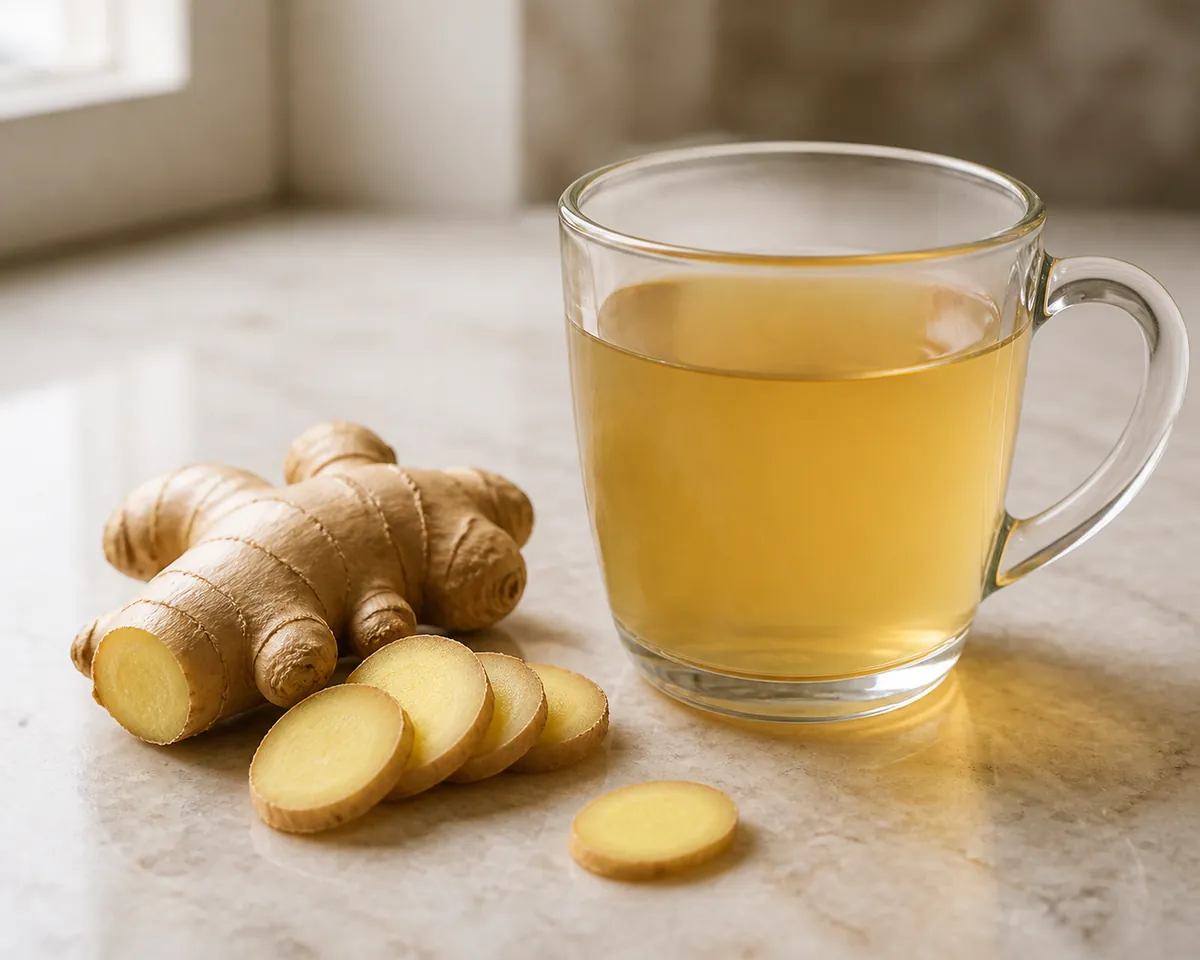
Ginger tea is made from the rhizome of Zingiber officinale, an underground stem rather than a root, a leaf or a flower.
That makes it structurally different from everything else in the herbal section, and the difference changes how it has to be brewed. Leaves and flowers such as chamomile flowers are infused; a rhizome has to be cooked.
Ginger tea at a glance
- Plant part
- A rhizome, an underground stem. The only one in this section
- Method
- Simmered, not steeped. A decoction rather than an infusion
- Fresh
- 15 g per 500 ml, simmered 15 to 20 minutes covered
- Dried
- About 3 g per 500 ml. Hotter, deeper, less citric
- Do not peel
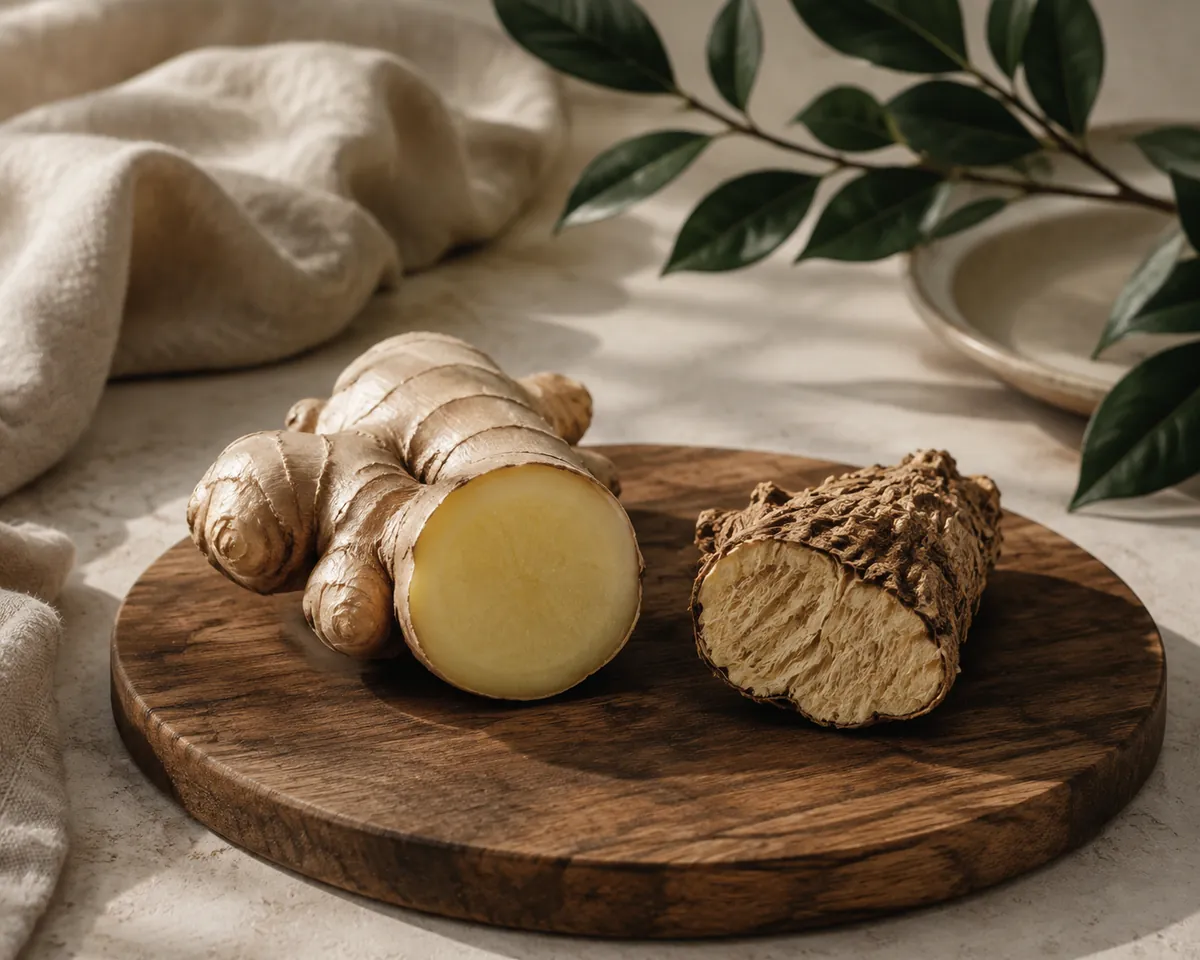
- Most of the aroma sits just under the skin
- Keeps
- Frozen whole for six months, and grated straight from frozen
Why ginger needs simmering
Leaves and flowers give up their flavour in hot water within minutes. A dense woody rhizome does not.
How much the method extracts
- Sliced, steeped 5 minutesFaintly warm, mostly water
- Grated, steeped 10 minutesClearly gingery, thin
- Sliced, simmered 10 minutesFull flavour, moderate heat
- Sliced, simmered 20 minutesStrong and properly hot
- Crushed, simmered 20 minutesStrongest, and slightly cloudy
Steeping ginger the way you would steep a leaf produces a weak drink. The technical term for what it actually needs is a decoction: simmering rather than infusing, which is the standard method for roots, barks and seeds.
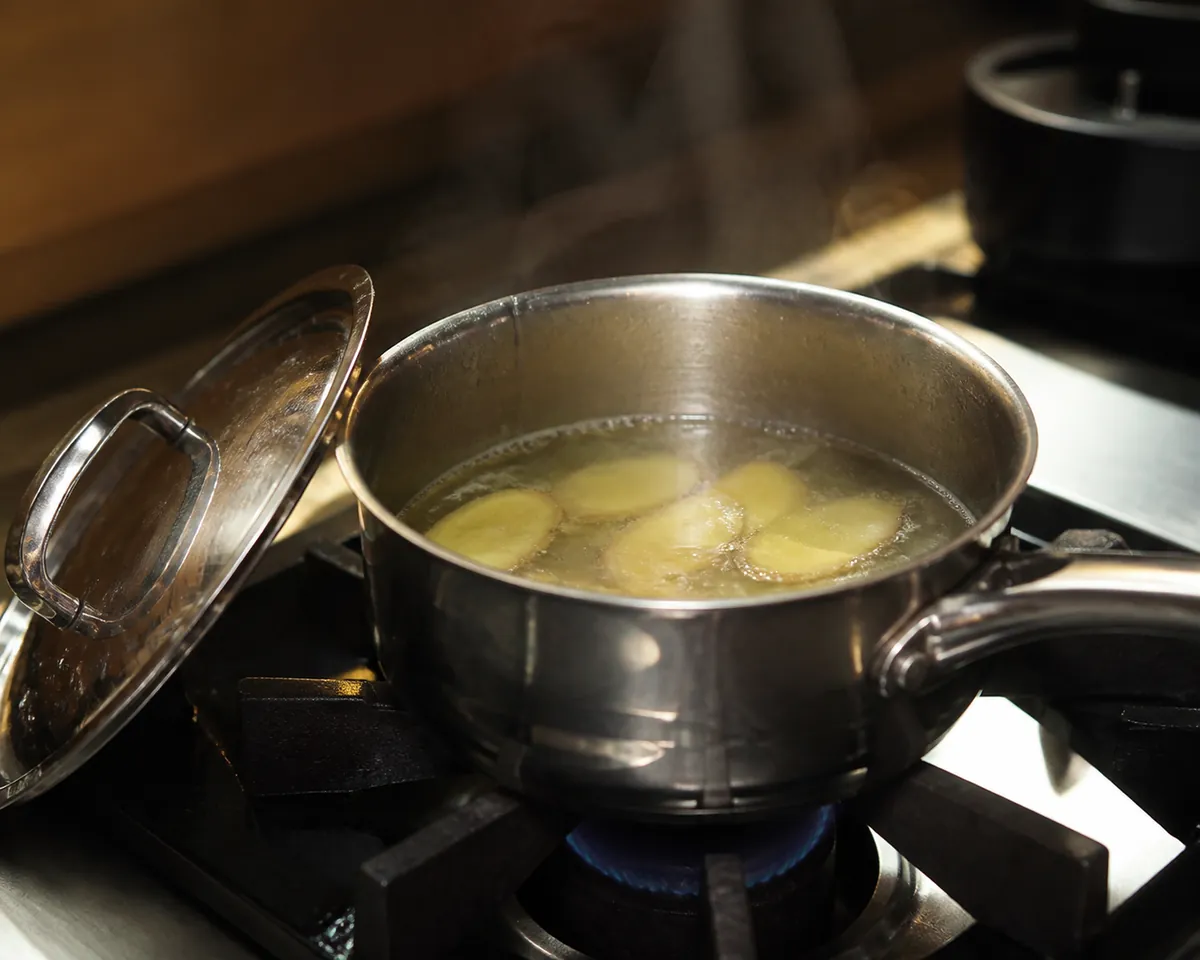
The other lever is surface area. Grating or crushing exposes far more of the rhizome than slicing does, and it roughly halves the time needed.
Covering the pan matters as much as the time. Simmering uncovered for twenty minutes drives off a good deal of the citric top note along with the steam, leaving something flatter and hotter than it should be.
Fresh against dried ginger, and what the heat sits on
Drying changes the chemistry, so the two are not interchangeable by weight.
| Fresh | Dried | |
|---|---|---|
| Main compound | Gingerol | Shogaol |
| Character | Bright, citric, green, sharply hot | Deeper, woodier, more pungent |
| Heat | Immediate and clean | Slower to arrive, lingers longer |
| Best method | Simmer 15 to 20 minutes | Simmer 10 minutes, less needed |
| Amount | About 15 g per 500 ml | About 3 g per 500 ml |
Drying converts gingerol into shogaol, which is noticeably more pungent. That is why ground ginger tastes hotter and less fresh than the raw rhizome.
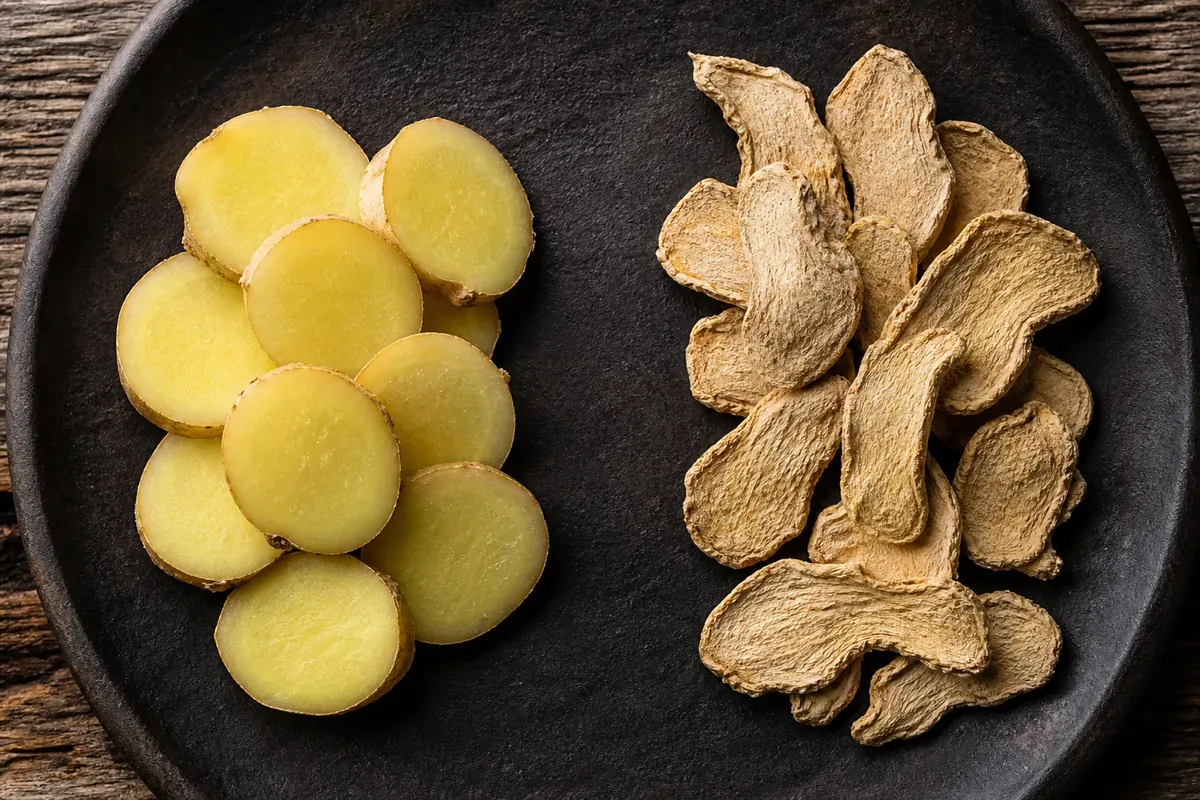
Ground ginger powder is the least satisfactory option for a drink. It does not dissolve, so it settles as grit, and it lacks the citric brightness that makes fresh ginger worth using.
What sits under the heat
- Heat
- Gingerol and shogaol, which act on the same receptor as chilli capsaicin
- Citrus
- A bright lemony top note in fresh ginger, largely lost on drying
- Woodiness
- A resinous base that becomes prominent with long simmering
- Sweetness
- Faint, and easily missed unless the drink is under-strength
- Soapiness
- A fault note from old ginger, sometimes described as perfumed
The heat is genuinely a chemical irritant rather than a flavour, which is why it builds in the throat and why a strong ginger drink can feel warming. What ginger tea tastes like works through the rest of that structure.
How to make ginger tea
There is no single correct strength, so treat the first pot as calibration.
Starting point, fresh ginger
- Ginger
- 15 g, roughly a thumb-sized piece, sliced thin
- Water
- 500 ml
- Method
- Bring to a simmer, hold 15 to 20 minutes covered
- Strain
- Yes, unless you want it to keep strengthening
- Additions
- Lemon and honey are the traditional pair
Taste it at ten minutes and again at twenty, and you will know which end of that range you want before you make it a habit. Making ginger tea covers the variations in full.
If you drink it often, brewing by the cup is a poor use of twenty minutes. A strong concentrate keeps in the fridge for about a week and turns a fifteen-minute job into a thirty-second one.
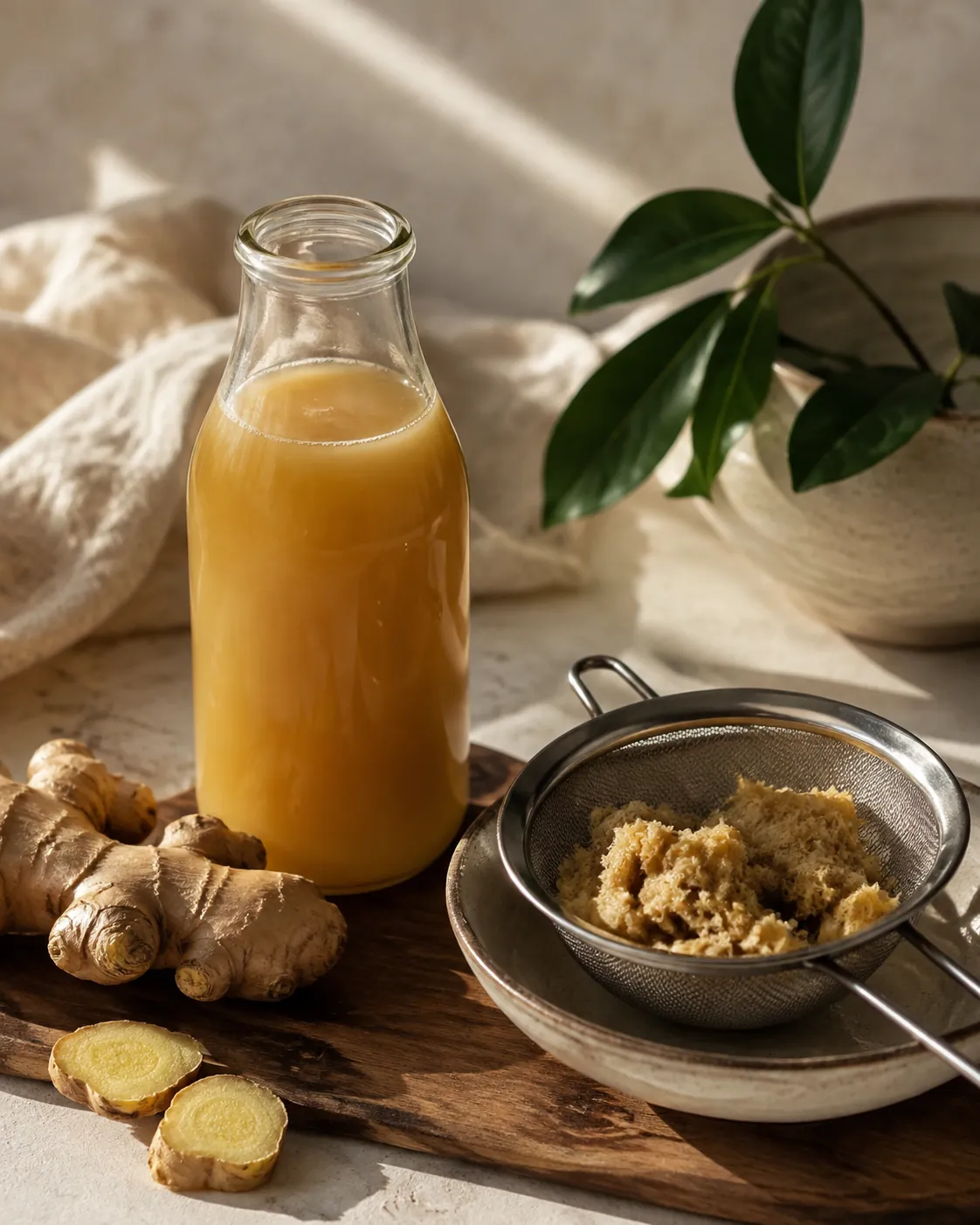
Ginger concentrate
- Ginger
- 100 g fresh, scrubbed and thinly sliced
- Water
- 500 ml
- Method
- Simmer covered for 30 minutes, then strain and press the solids
- Yield
- Roughly 350 ml of concentrate
- To serve
- 40 to 60 ml topped up with hot water
Pressing the strained slices matters. A good deal of the liquid is held in the fibre, and it is the strongest part of the batch.
Adding sugar turns the same concentrate into a syrup that keeps for several weeks and works in cold drinks, which is how most ginger sodas begin.
Young ginger and mature ginger
Harvest age changes ginger's character more than anything that happens after it.
Ginger is a tropical perennial grown across India, China, Nigeria, Indonesia and Nepal, with India the largest producer by a wide margin. It is lifted from about eight months for young ginger and ten months or more for mature.
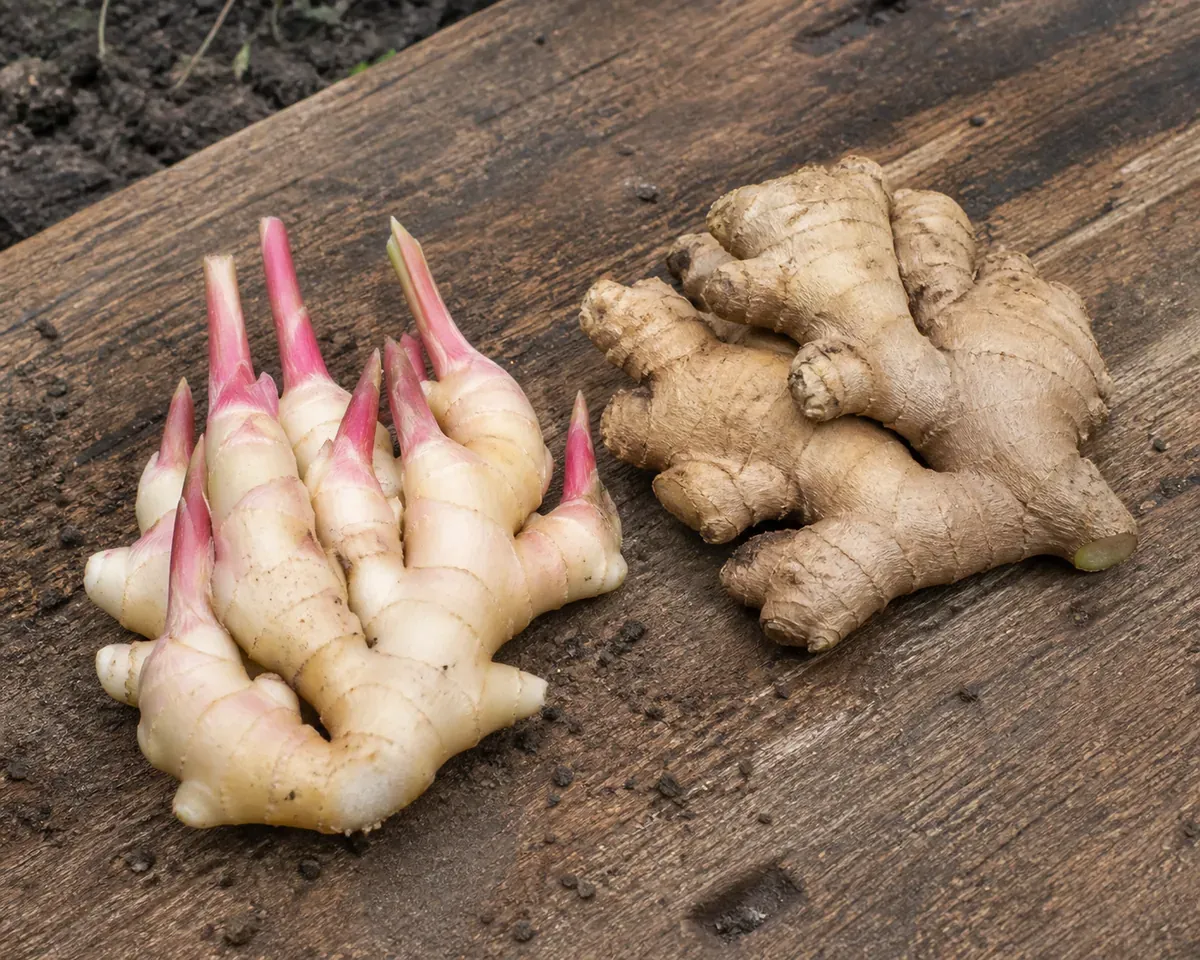
| Young | Mature | |
|---|---|---|
| Skin | Thin, pale, translucent | Tough, tan, papery |
| Fibre | Very little | Noticeable and stringy |
| Heat | Mild | High |
| Availability | Seasonal, Asian groceries | Year round, everywhere |
| In a drink | Delicate and juicy, needs more of it | Standard, strong, keeps well |
Use roughly double the weight of young ginger for a comparable strength, and shorten the simmer, since there is much less fibre to work through.
Age is also why supermarket ginger is so consistent. Mature ginger is more fibrous, hotter and stores far better, so almost all exported ginger is mature and the young pink-tipped kind stays a seasonal find.
- The rhizome should be firm and heavy, with taut unwrinkled skin.
- Snap a piece. It should break cleanly and smell sharply of ginger, not dusty.
- Avoid soft spots, mould at the cut ends, or a greenish-blue tinge inside.
- Thin smooth skin means young ginger, which is milder and less fibrous.
- Buy small amounts often. It dries out on the counter within about two weeks.
Freezing whole is the most useful habit here, and storing ginger tea covers the brewed drink separately. Frozen ginger grates more easily than fresh, because the fibres shatter rather than stringing, and it goes straight into the pan.
What ginger goes with
The most sociable ingredient in this section.
Lemon
The classic partner. The acid lifts the citric note that heat alone would flatten.
Turmeric
Common, and it needs fat or it stays gritty and dull.
Black tea
The basis of masala chai, where ginger is one spice among several.
Hibiscus
Sharp acid against warm heat, and the basis of Caribbean sorrel.
Chamomile
An unusual pairing, and a good one. The apple note survives the heat.
Rooibos
Sweet and woody underneath, which gives ginger something to sit on.
Unlike peppermint leaf, which erases whatever it is blended with, ginger sits underneath other flavours and pushes them forward. That is why it appears in so many blends without being named on the front of the packet.
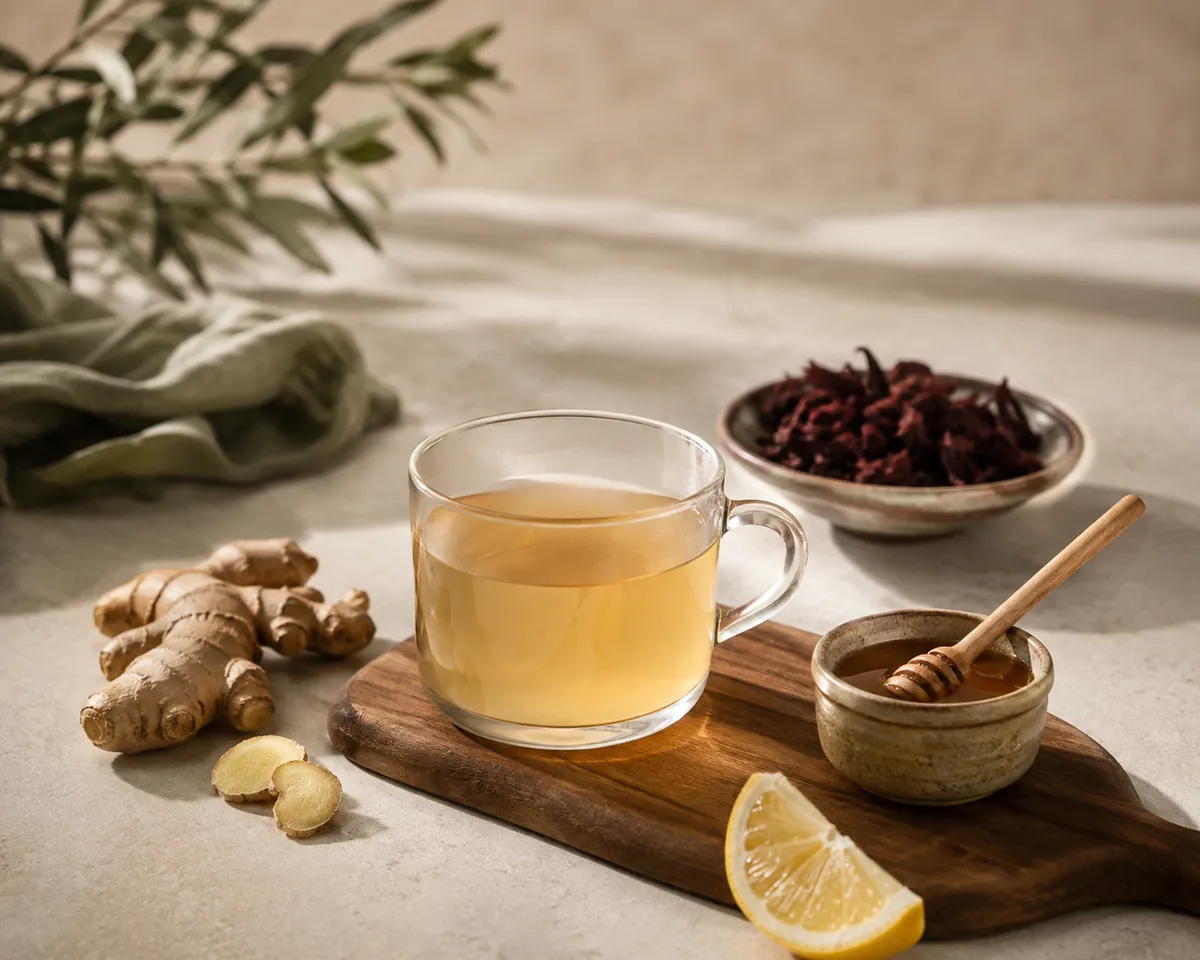
Against hibiscus calyces it plays the warm half of a very old pairing, which is the basis of Caribbean sorrel and one of the few places ginger is the junior partner.
The pattern behind the good pairings is acid or sweetness, and preferably both. Ginger supplies heat and a resinous base and supplies almost no sweetness of its own, so anything joining it either lifts the top with acid or fills the middle with sugar.
Turmeric is the pairing that most often disappoints, and the reason is physical rather than a clash of flavour. Its colour compounds are fat-soluble, so in a drink of water and ginger they stay suspended as grit rather than dissolving, which is why the combination is usually made with milk.
Ginger in chai and other blends
Its commonest appearance is not as a drink of its own.
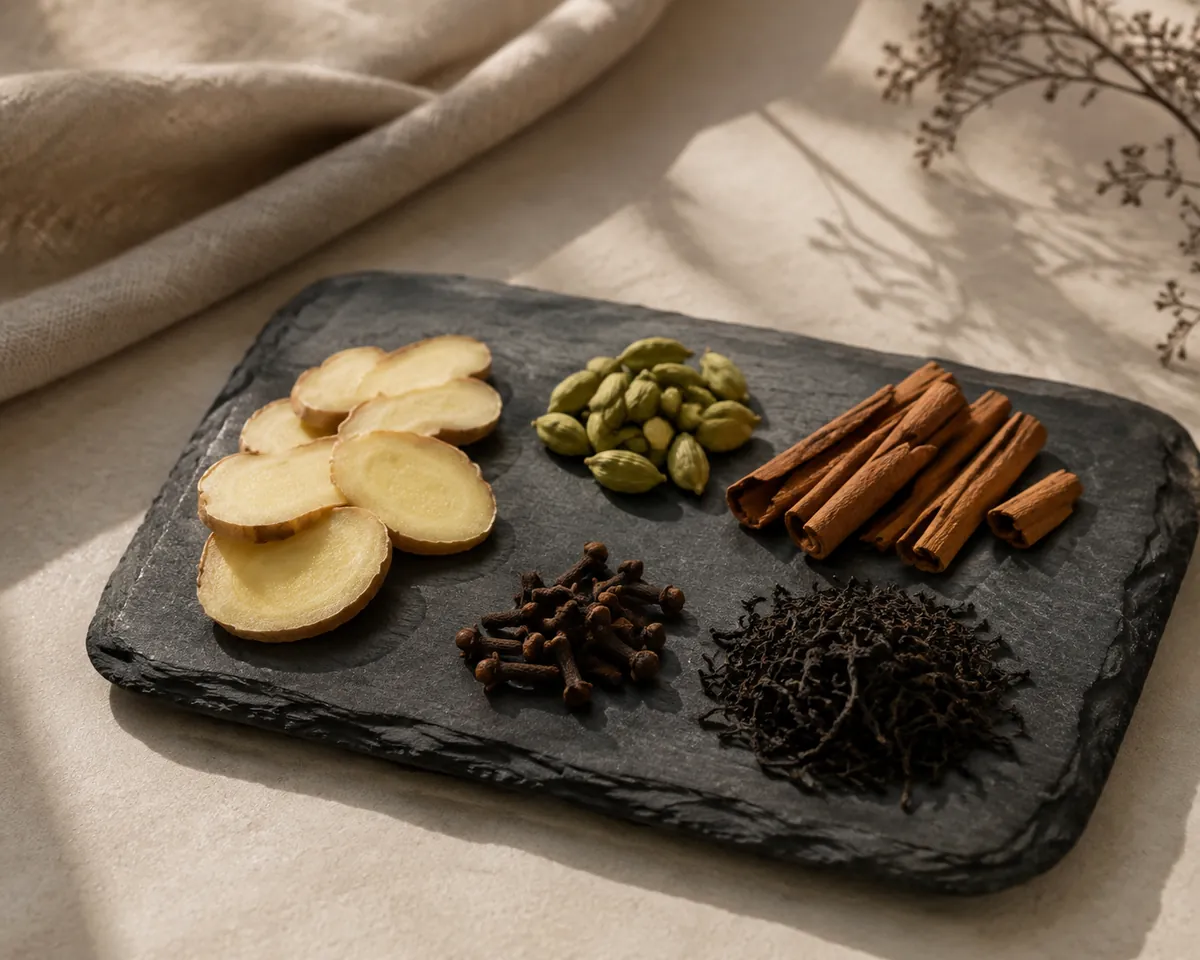
In masala chai it is one of a group of spices, usually alongside cardamom, cinnamon, clove and pepper, simmered with black tea and milk. Its job there is heat and depth rather than a leading flavour.
Why chai spices need a simmer
- Ginger
- A dense rhizome. Hot water alone barely touches it
- Cardamom
- A hard seed pod that has to be crushed and then cooked
- Cinnamon
- Bark, and the slowest of the group to give anything up
- Clove
- Releases quickly, and turns harsh if simmered too long
- Black tea
- The one ingredient that does steep, and goes in late
Chai is a decoction for the same reason a plain ginger drink is: the spices are seeds, bark and rhizome, none of which give up much to a short steep. If you have ever made chai by steeping a spice teabag and found it thin, the method rather than the recipe was the problem.
Ginger also turns up unannounced in a great many commercial blends, particularly anything sold as warming or spiced. It is cheap, stable when dried, and it makes thin blends taste fuller, which is exactly the job a filler ingredient does.
The way to tell is the finish. A blend carrying real ginger leaves a slow heat at the back of the throat that arrives a second or two after you swallow, and no flavouring reproduces that.
What usually goes wrong
Hard to ruin, easy to underwhelm.
- Too weak, because it was steeped rather than simmered. This is the most common by far.
- Too thin, because the ginger was sliced thick and left whole rather than crushed.
- Flat and merely hot, because it simmered uncovered and the citric notes escaped.
- Gritty, because ground powder was used instead of fresh or dried slices.
- Soapy or perfumed, which means the rhizome was old before it went in the pan.
A drink that tastes only of heat has usually lost its top notes rather than gained too much ginger. Covering the pan and shortening the simmer will bring the brightness back.
Sweetness is worth adding late. Honey stirred in at the end keeps its own character, and honey simmered for twenty minutes largely does not.
The underwhelming pot is far more common than the ruined one, and it is nearly always a method problem rather than a quantity problem. Doubling the ginger in a five-minute steep produces a slightly stronger cup of hot water; simmering the original amount for fifteen minutes produces the drink.
Reheating is the one thing that genuinely spoils a good batch. A second boil drives off what survived the first and concentrates the resinous base, so a reheated pot reads heavier and duller than it did an hour earlier.
Common problems with ginger tea works through the rarer ones, including the cloudy pot and the batch that turns bitter on reheating.
Ginger in cold drinks
It works cold, but not by chilling the hot version.
Heat carries the volatile citric notes to the nose. Chilled, those recede and what remains is the burn, which is why a cooled ginger infusion often tastes harsher and flatter than it did hot.
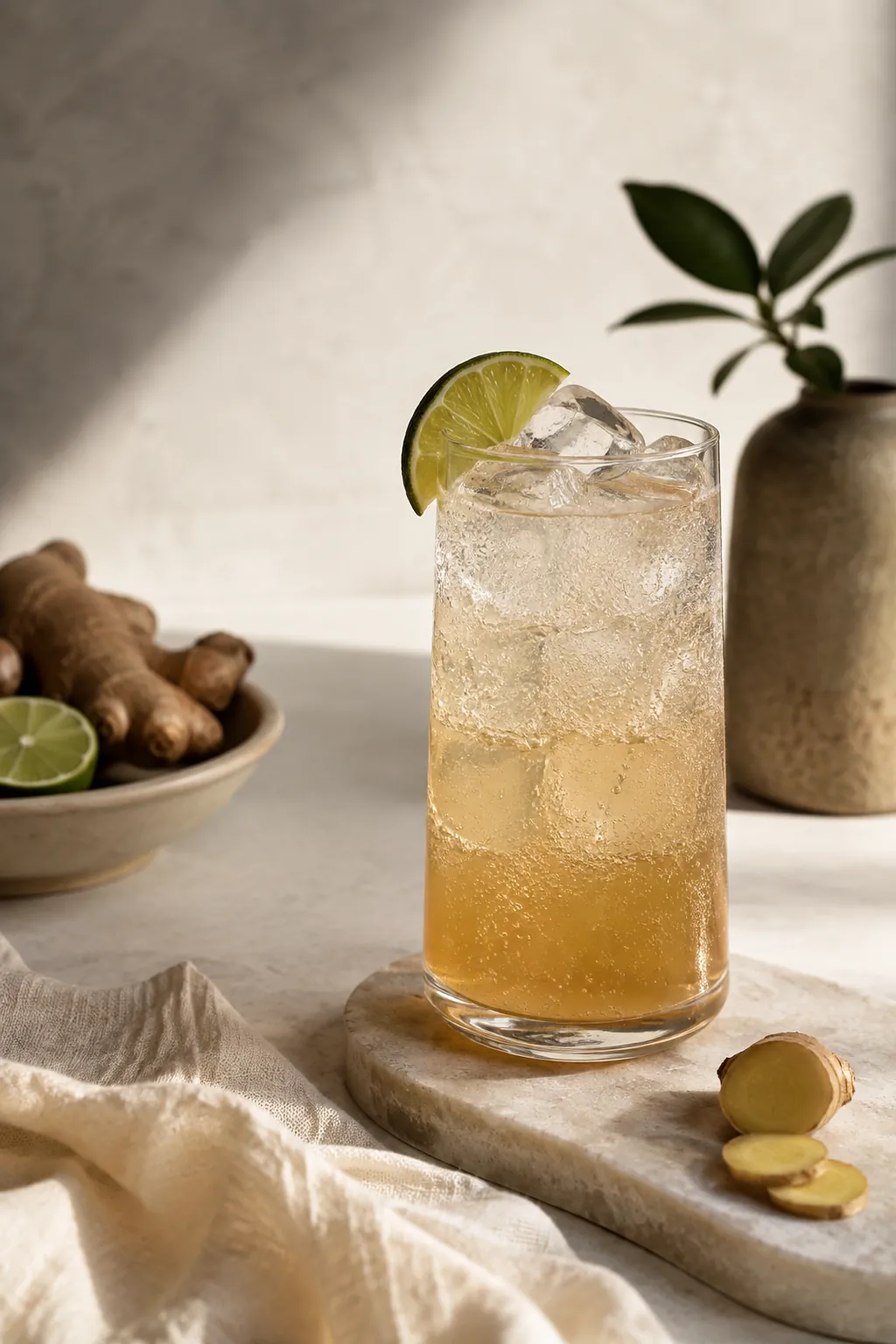
The fix is to build the cold drink differently: a sweetened syrup, plenty of lemon or lime, and dilution with sparkling water rather than still. The acid and the bubbles both restore the lift the temperature took away.
Carbonation changes how the heat reads, in the same way it changes tonic water bitterness. Plant drinks behave differently again, since acid plus protein is what makes plant milk curdle.
That is essentially the recipe for ginger beer and ginger ale, which are cold ginger drinks designed from the start rather than hot ones that were put in the fridge.
Where ginger tea sits among the herbal infusions
Its method makes it the odd one out, and setting it beside the others shows why.
| Ginger | Peppermint | Hibiscus | |
|---|---|---|---|
| Plant part | Rhizome | Leaf | Calyx |
| Method | Simmer, 15 to 20 minutes | Steep, 5 to 7 minutes | Steep, 4 to 5 minutes |
| Dominant note | Hot, citric, resinous | Cold menthol | Sour and fruity |
| Role in a blend | Supports and lifts others | Dominates everything | Provides colour and acid |
| Fresh version | Common and better | Possible, milder | Rare |
It is the only one here normally made from fresh material rather than dried, and the only one that needs a pan rather than a cup.
That single difference explains most of the disappointment people report with it. Every instruction they have absorbed from other herbal drinks is about steeping, and applying it here produces hot water that smells faintly of ginger.
A sweet woody base such as rooibos is the closest thing in this section to what ginger wants underneath it, which is why the two blend better than either does with a sharper partner.
Common questions
Should you simmer or steep ginger tea?
Simmer it. Ginger is a dense rhizome rather than a leaf, so hot water alone extracts very little. Fifteen to twenty minutes at a simmer produces a properly strong drink; five minutes of steeping produces barely flavoured water.
Do you need to peel ginger for tea?
No. Most of the aromatic compounds sit just under the skin, so peeling removes flavour. Scrub it and slice it with the peel on unless the skin is very old and tough.
Is dried ginger the same as fresh in tea?
No. Drying converts gingerol into shogaol, which is more pungent and less citric. Dried ginger tastes deeper and hotter, fresh tastes brighter, and you need roughly a fifth of the weight when using dried.