What Is Infused Water? How Little Actually Leaves the Fruit
Infused water is cold water flavoured by steeping fruit, herbs or vegetables in it. Very little transfers, which is the point, and knowing what does saves a lot of disappointing jugs.
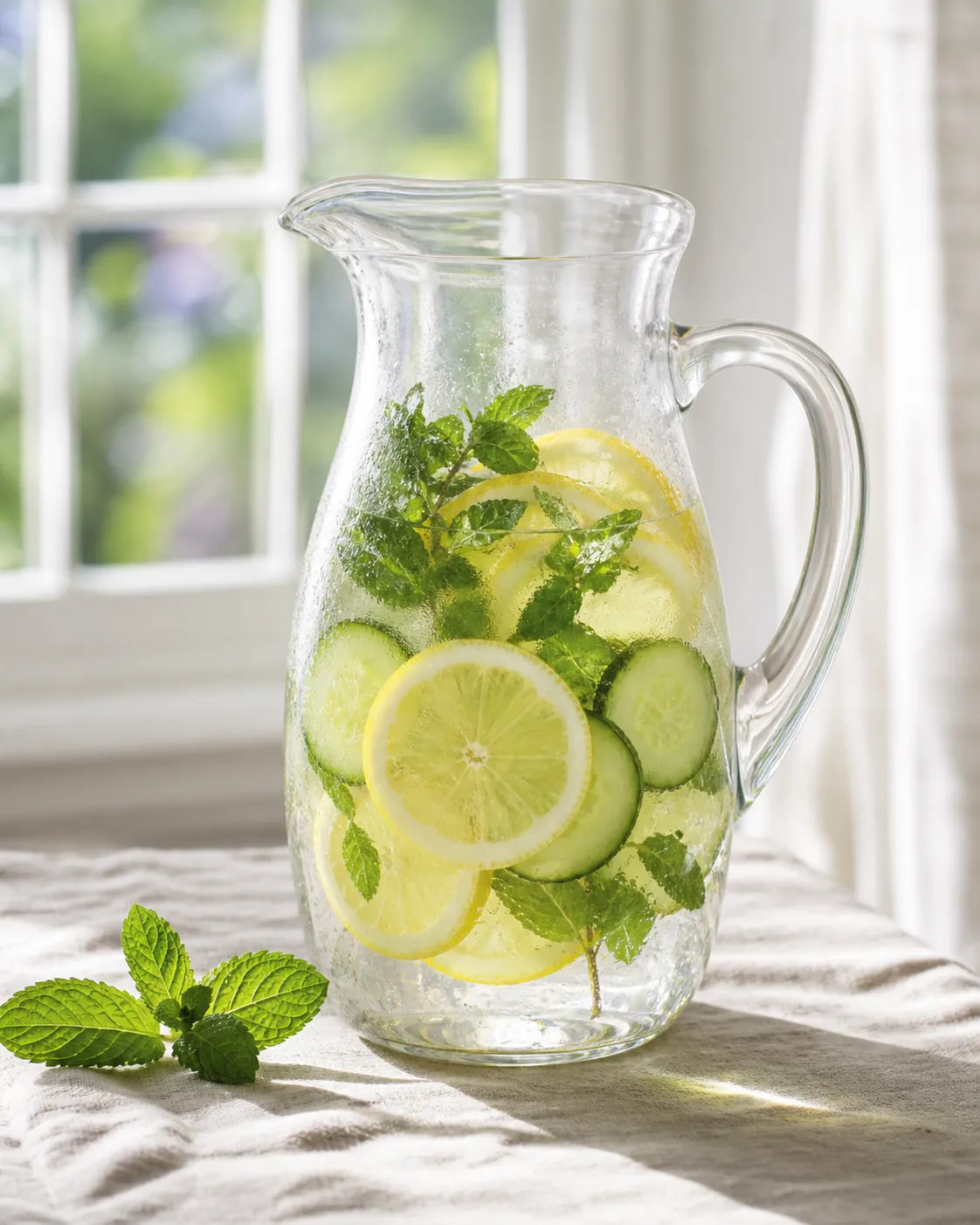
Infused water is plain cold mineral or tap water in which fruit, herbs or vegetables have been left to steep. Nothing is added and nothing is cooked, and the ingredients are usually strained out or left in the jug.
The flavour it produces is deliberately faint. Anything strong enough to taste like juice has stopped being infused water, and anything with salts dissolved in it has become an electrolyte drink instead.
Infused water at a glance
- What it is
- Cold water in which fruit, herbs or vegetables have been left to steep
- Ratio
- Roughly 100 to 150 g of fruit per litre, plus a small handful of herbs
- Time
- Two to four hours in the fridge for most combinations
- What transfers
- Aromatics and acids readily; sugars barely at all
- The usual fault
- Citrus pith left in too long, which turns the jug bitter
- Keeps
- One to two days cold and covered, less with the fruit left in
What actually transfers into the water
Cold water is a poor solvent.
What moves into the water, and what does not
- Volatile aromatics
- Transfer readily. This is most of what you taste
- Acids
- Transfer well from citrus, and give the impression of more flavour
- Sugars
- Transfer slowly and in small amounts. Infused water is not sweet
- Pigments
- Transfer from berries and herbs, which is why colour arrives before flavour
- Bitter compounds
- Transfer from citrus pith and some herbs, and increase with time
Colour arrives long before flavour does. A jug that looks vividly pink after twenty minutes will still taste mostly of water, which is the most common source of disappointment.
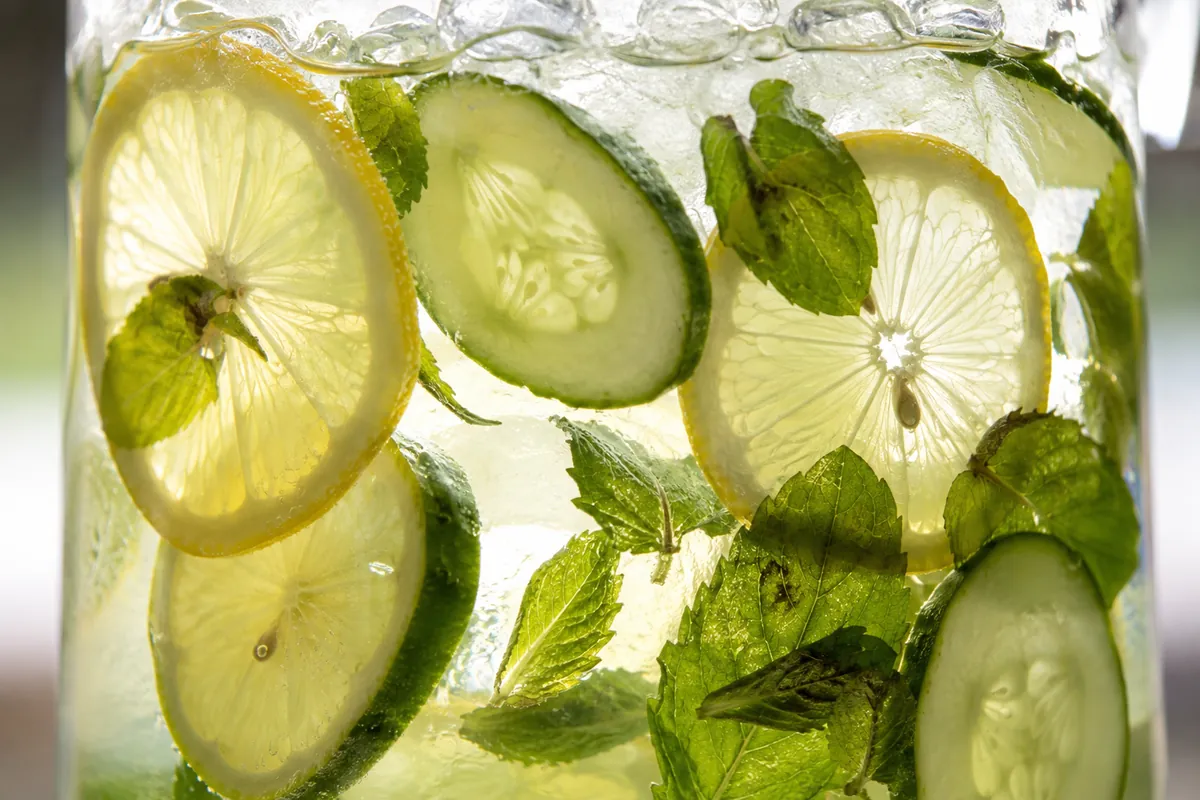
That gap between appearance and taste is why so many recipes photograph better than they drink.
Temperature is the reason for all of it. Hot water pulls sugars, acids and bitter compounds out of plant matter within minutes, and cold water reaches almost none of them, so what you are left with is the aromatic fraction and very little else.
That is a limit rather than a fault. What infused water tastes like is a short answer by design, and the method is built around accepting it.
How long each ingredient takes
Timing varies enormously between ingredients, and the single most common structural error is picking one steeping time and applying it to everything in the jug regardless of what it is.
| Ingredient | Time | Notes |
|---|---|---|
| Mint and soft herbs | 30 minutes to 2 hours | Bruise lightly. Goes grassy after about 4 hours |
| Cucumber | 1 to 2 hours | Remove after 4 hours or it turns soft and vegetal |
| Citrus slices | 1 to 4 hours | Remove the pith or it turns bitter |
| Berries | 2 to 4 hours | Crush lightly. They break down and cloud the water |
| Hard fruit, apple and pear | 4 to 12 hours | Slow, and the flavour stays faint |
| Ginger and hard spices | 4 to 12 hours | The slowest of all in cold water |
The mistake is leaving everything in overnight. Herbs and citrus are done in hours and turn bitter or grassy well before hard fruit has given up anything.
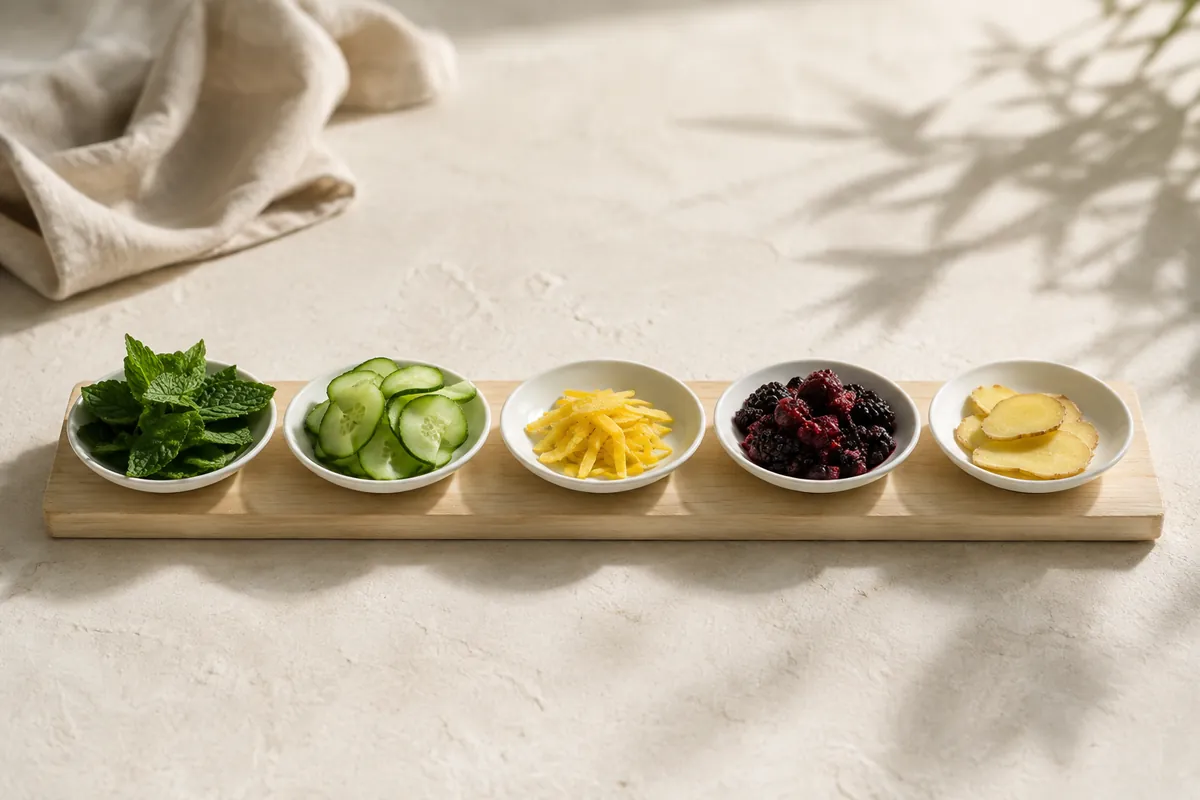
Works well
Citrus zest, mint, basil, cucumber, berries, ginger, rosemary, lemongrass.
Works slowly
Apple, pear, melon, hard herbs like thyme. Give them overnight.
Works poorly
Banana, mango and other low-acid soft fruit. They cloud the water and give little.
Does not work
Anything requiring heat, such as dried chamomile flowers or most dried spices.
Dried ingredients are the general exception. Most dried herbs and flowers are processed to release their flavour in hot water, and cold water barely touches them, which is why a hibiscus jug wants cold-brewing rather than infusing.
Density explains the rest of the table. A mint leaf is thin and its oils sit near the surface, so it gives everything up in under an hour, where a slice of ginger is dense fibrous rhizome and takes twelve to release a fraction of what it holds.
That is why mixed jugs are harder than single-ingredient ones. Anything combining a herb with a hard spice is asking two ingredients on opposite ends of that range to finish at the same moment, and they will not.
Why citrus turns a jug bitter
Citrus ruins more jugs than anything else.
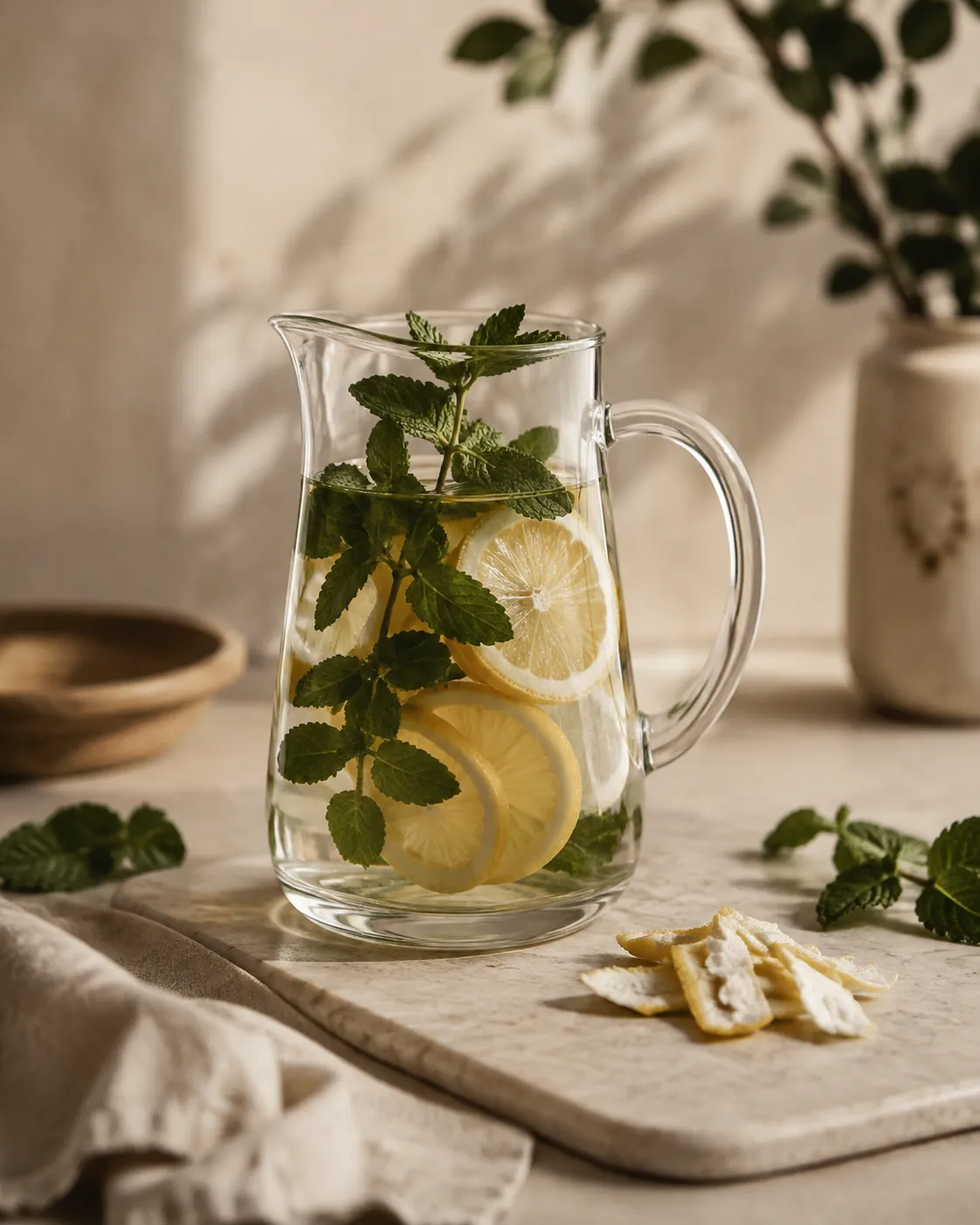
The zest carries the aromatic oils you want. The pith, the white layer beneath it, carries bitter compounds that transfer steadily into the water and keep increasing for as long as the slice is in there.
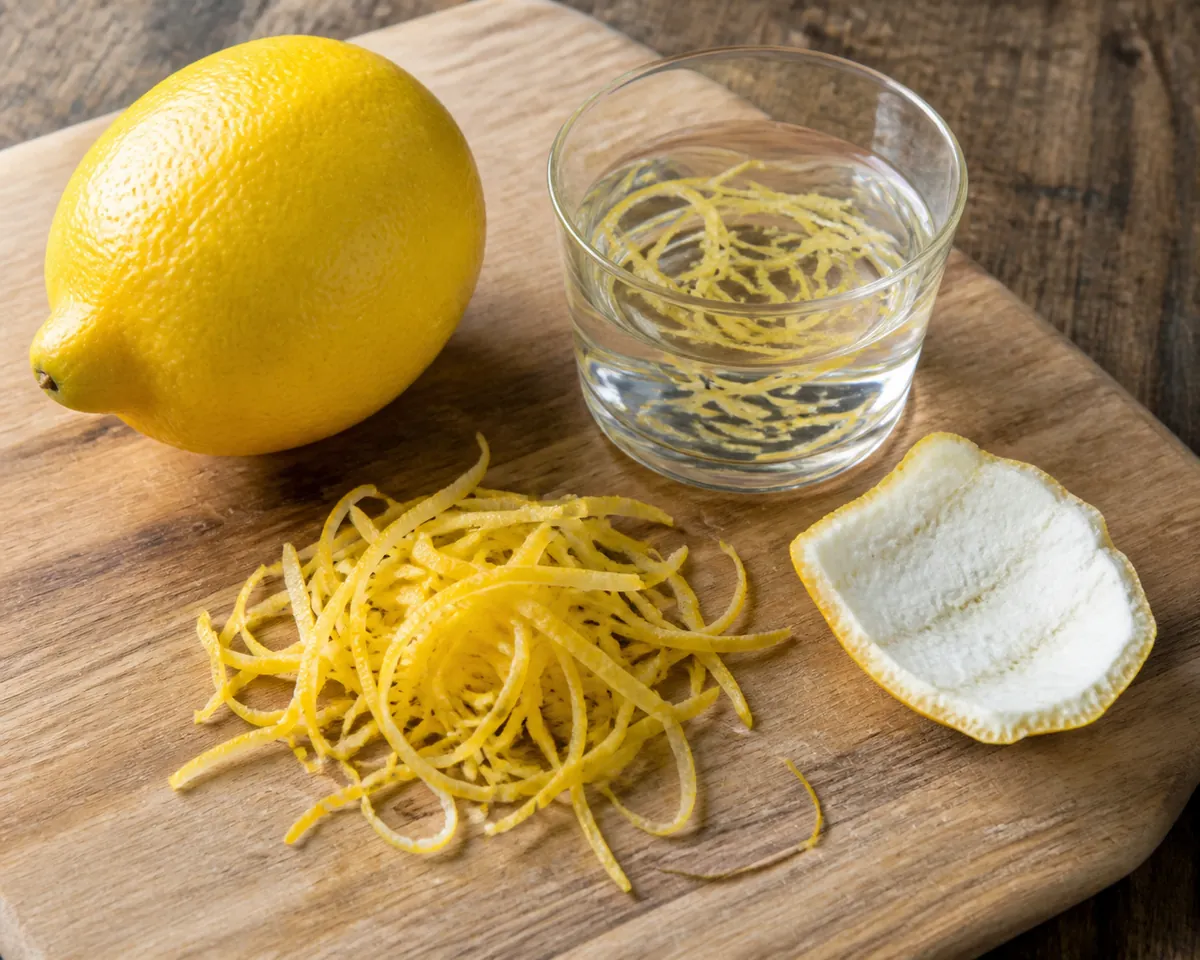
That single change fixes the most common complaint about infused water, which is that it starts pleasant and turns unpleasantly bitter by the next day.
A vegetable peeler is the whole technique. Pared strips take the coloured layer and leave the white behind, where a knife or a slicer takes both, and lemon behaves the same way here as it does anywhere else.
How to build a jug
The sequence matters, because three of these steps cannot be undone once the water is in.
A working starting point
- Water
- 1 litre, cold and filtered if your tap water is heavily chlorinated
- Fruit
- Roughly 100 to 150 g, sliced or lightly crushed
- Herbs
- A small handful, bruised between the palms
- Time
- 2 to 4 hours in the fridge for most combinations
- Strain
- Remove herbs and citrus after that; hard fruit can stay
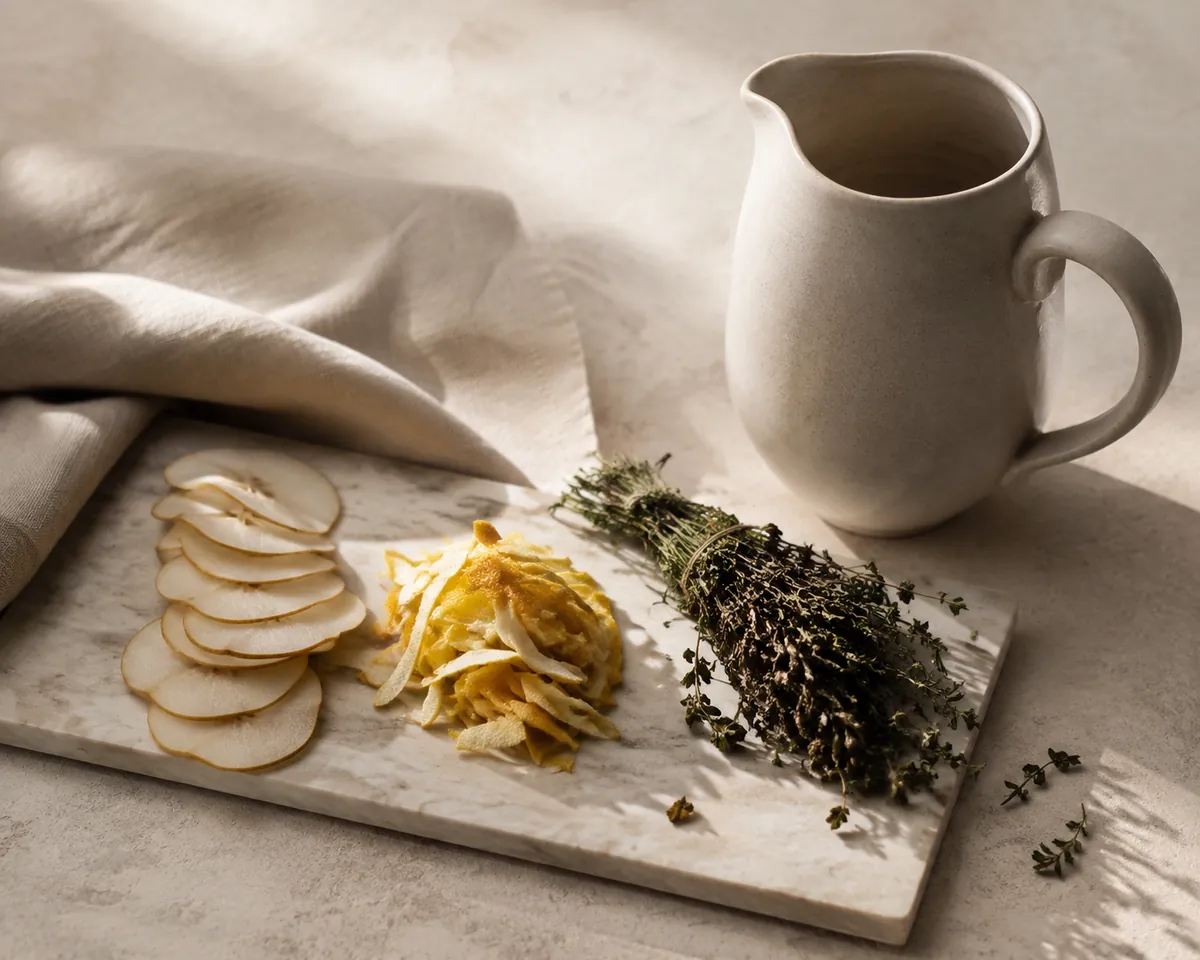
One litre, start to finish
- Chill the water firstCold water into a cold jug. Starting warm means the jug spends its first hour in the range you were avoiding.
- Prepare the hard fruitSlice apple, cucumber or citrus flesh. Thin slices give up more, and thickness is the main control you have over strength.
- Peel the citrus if you use itZest in, pith out. This is the step that decides whether the jug turns bitter overnight.
- Bruise the herbs, do not chopPress between your palms until you can smell them, then drop them in whole.
- Add the water and refrigerateStraight to the fridge rather than the counter.
- Taste at two hoursHerbs and citrus are usually done here, and hard fruit is barely started.
- Pull the herbs and citrus outLeave the apple or cucumber if you want more from them.
- Drink it within a dayStrain everything out if it will be kept overnight.
Bruising herbs matters more than chopping them. Pressing a mint sprig between your palms ruptures the oil glands on the leaf surface, where chopping releases chlorophyll as well and adds a green bitterness.
Tasting at two hours is the step that makes the rest adjustable. Every combination behaves differently, and the only way to learn a jug is to catch it before it goes past the point you wanted.
Equipment barely matters. A jug you can strain easily is the only thing that changes the result, because it makes the timing advice usable, and glass rather than plastic is worth it because citrus oils cling to plastic and carry into the next batch.
Combinations that work
One aromatic, one acid, one optional bulk ingredient.
Cucumber and mint
The classic. Clean, cooling, and ready in an hour.
Lemon zest and rosemary
Sharp and resinous. The rosemary needs longer than the lemon.
Strawberry and basil
Sweet and aromatic. Crush the strawberries lightly.
Ginger and lime
The most assertive combination here, and it needs overnight.
That logic is worth holding onto rather than collecting recipes. The acid is what carries the aroma, which is why a jug of cucumber alone reads as faintly vegetal and the same jug with a strip of lemon zest reads as clean and cold.
Adding sparkling water instead of still turns any of these into something closer to a soft drink, though the infusion has to be made in still water first and the carbonated water added at serving.
Using coconut water as the base works too and brings its own sweetness, which is enough to compete with whatever is infused into it rather than sit under it.
Why a jug disappoints
Almost every failed jug comes from a short list.
- Leaving citrus slices in overnight, which is the single most common cause of bitterness.
- Judging readiness by colour, which arrives hours before flavour does.
- Chopping herbs instead of bruising them, which adds a green bitterness.
- Using low-acid soft fruit such as banana or mango, which clouds the water and gives little.
- Infusing at room temperature, which is faster and much less sound.
The first two account for most of them. Fix the citrus and stop trusting the colour, and the method works about as well as it is ever going to.
A sixth failure is subtler and worth naming: using too little fruit. The ratio above is not generous, and a few token slices in a litre produce water that is genuinely indistinguishable from plain, which people then read as the method failing rather than the quantity.
Common problems with infused water works through the rest, including the cloudy jug and the one that tastes of nothing after eight hours.
How long a jug keeps, and making it for a crowd
Infused water has a shorter life than plain water for an obvious reason, and the limit is set by what you added rather than by the water, which is why a herb jug and a citrus jug expire on different days.
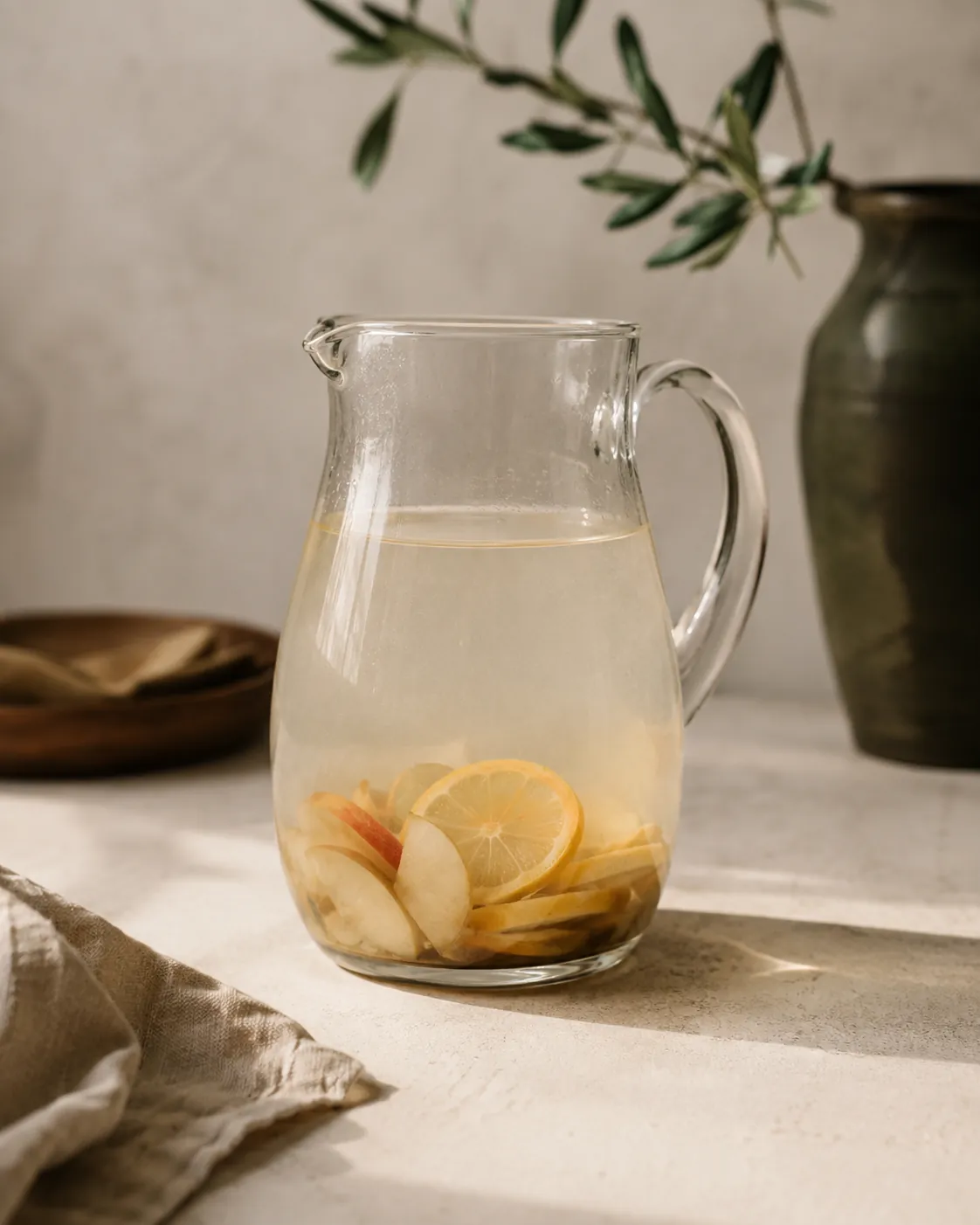
Introducing fruit introduces sugars and organic matter, and the drink is no longer sterile. Kept cold and covered, one to two days is a reasonable limit, and less if the fruit has been left in.
Refrigerate throughout and cover the jug so it does not pick up fridge odours. Strain out herbs and citrus after a few hours even if you keep the water longer, and discard anything that turns cloudy, fizzy or smells fermented.
The fizzy sign is the one to take seriously. It means fermentation has started, and that happens readily in a warm jug of fruit and water, which is why storing infused water is mostly a question of temperature rather than of container.
Scaling up changes very little. The ratios scale directly at 100 to 150 g of fruit per litre, and what does not scale is the timing: a larger vessel infuses marginally slower, and more importantly it sits out longer while people serve themselves.
Keep the bulk in the fridge and refill a serving jug from it, the way a jug of sea salt solution or any other made-up drink is handled. That single habit is what keeps a party jug drinkable for more than an hour, and it matters more here than for a sports drink, which is formulated to sit.
What to do with the leftover fruit
The strained solids are edible.
Citrus and berries
Still good. Compote, porridge, or blended into a smoothie.
Ginger
Holds plenty. Slice it finer and use it again, or cook with it.
Cucumber
Spent. Limp and watery after a few hours.
Soft herbs
Spent. Bruised, darkened and largely flavourless.
A second infusion follows the same split. Citrus zest and ginger both hold enough to give a reasonable second jug, since neither has released much of what it holds after a few hours, and a rhizome is dense enough that even ginger tea needs simmering to extract it properly.
Herbs and berries do not. Both give up most of what they have in the first infusion, and a second attempt produces coloured water with very little aroma.
Cucumber is the clearest case against reuse. After a few hours it has softened, and the second jug tastes distinctly of vegetable rather than of anything fresh.
Anything left overnight in the jug should go, whichever category it falls into. It has been sitting in water long enough that texture and flavour are both gone.
Infused water against cold-brewed tea
These two get conflated constantly, and drawing the line explains why one tastes so much stronger.
| Infused water | Cold-brewed tea | |
|---|---|---|
| Ingredient | Fresh fruit, herbs, vegetables | Dried leaf or flowers |
| Time | 1 to 12 hours | 6 to 12 hours |
| Strength | Faint, aromatic | Full-flavoured |
| Bitterness risk | From citrus pith | Very low, cold water extracts little |
| Keeps | 1 to 2 days | 3 to 4 days |
Cold-brewed tea uses dried leaf that has been processed specifically to give up its contents to water. Infused water uses fresh produce that has had no such preparation and is mostly water itself, which is the whole of the difference.
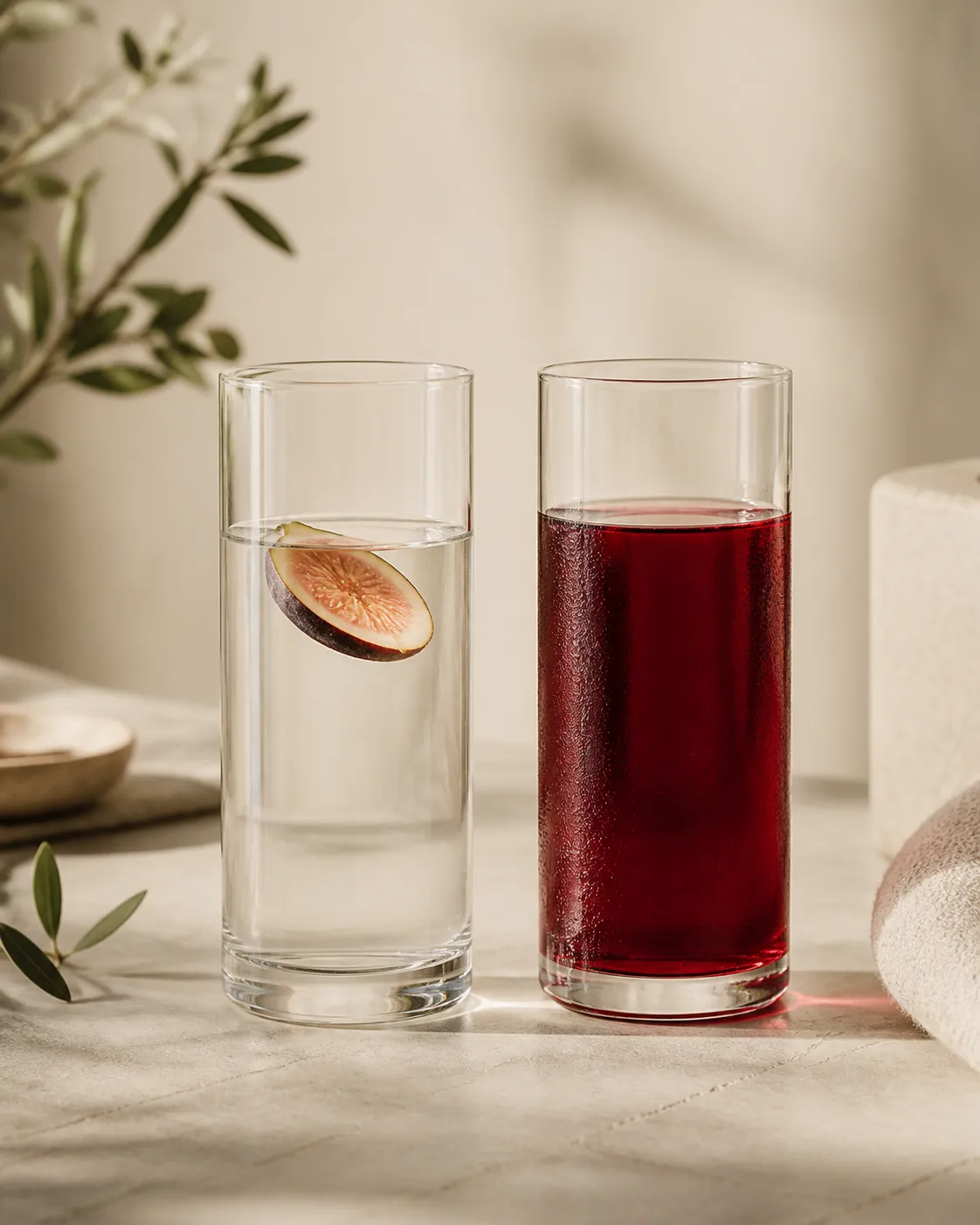
If a jug of fruit water is consistently disappointing, cold-brewing tea or hibiscus and adding fruit to that gives a drink with an actual backbone. It is a different drink rather than a better version of this one.
Why it is worth making, and the water you start with
Given how faint the flavour is, the case deserves stating honestly.
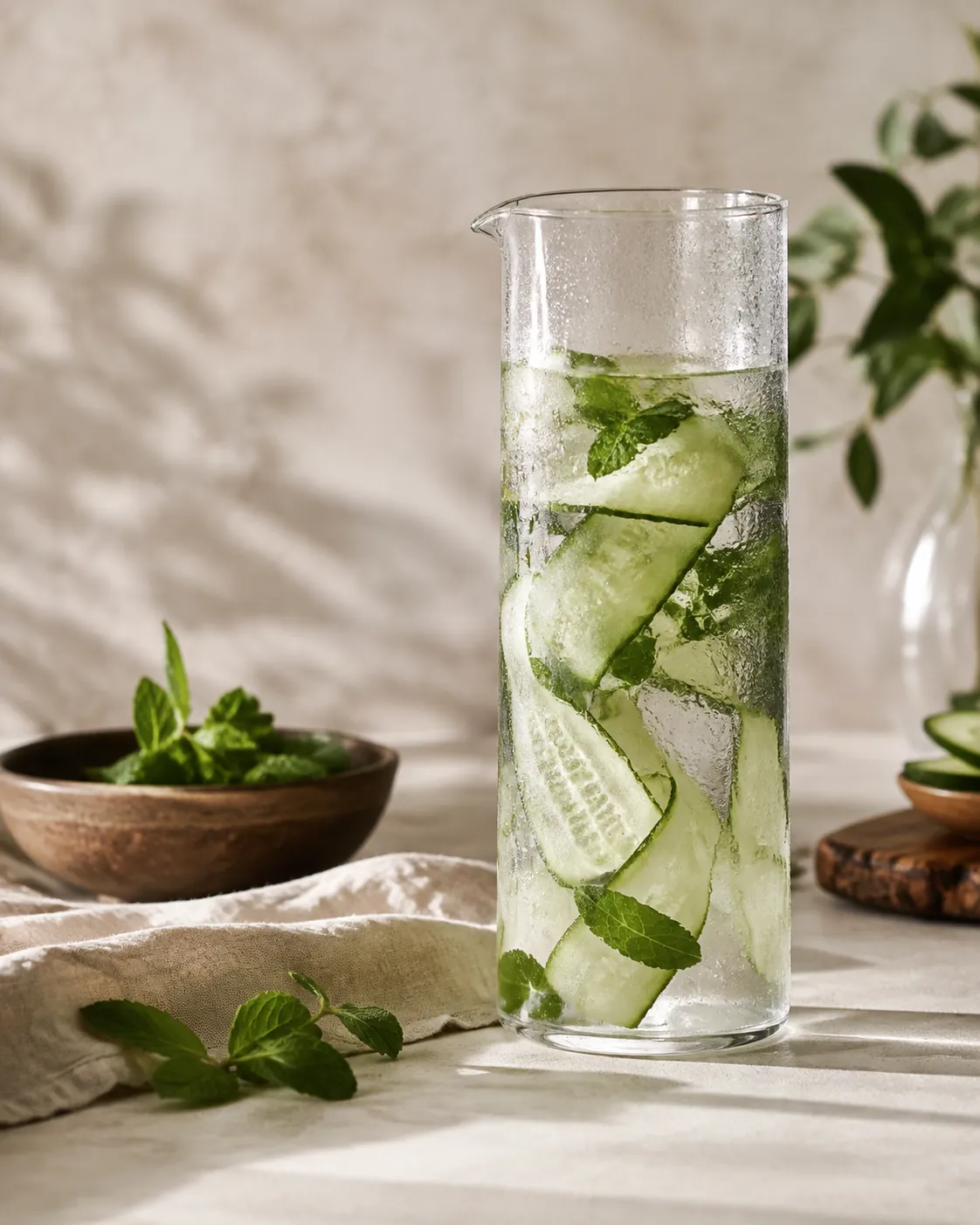
It is not a way of getting a lot of flavour cheaply, since a squeeze of lemon into a glass achieves more in a second. What it does is make plain water more interesting without adding sugar or anything manufactured.
What it does and does not offer
- Flavour
- Faint by design. Not a substitute for a juice or a tea
- Sugar
- None added, and very little transfers from the fruit
- Cost
- Low, and lower still using trimmings and zest
- Effort
- A few minutes, plus the discipline to strain on time
- Best case
- Water you will actually drink more of
Judged as a flavoured drink it is a failure. Judged as improved water it works, and most disappointment comes from expecting the first and getting the second.
The base water decides more than the recipe does. Heavily chlorinated tap water is the common problem, because the flavours here are delicate by design and chlorine sits over all of them, which is why the method above specifies filtered water for anyone whose supply is noticeable.
Very hard water flattens fruit infusions slightly and does no real harm, and very soft water is the better base without being worth buying bottled to obtain. The same water chemistry that decides a cup of coffee is at work here, with far less to hide behind.
Where the base is not neutral, use it deliberately. Alkaline water and ice both change a jug measurably, the first by flattening acidity and the second by diluting it as it melts.
Common questions
How long should you infuse water for?
It depends on the ingredient. Herbs and cucumber are done in one to two hours, citrus in one to four, berries in two to four, and hard fruit or ginger need overnight. Leaving everything in overnight is the usual mistake.
Why does my infused water taste bitter?
Almost always citrus pith. The white layer under the zest releases bitter compounds that keep increasing with time. Use pared zest instead of whole slices, or remove the slices after about four hours.
How long does infused water keep?
One to two days refrigerated and covered, less if the fruit is left in. It contains sugars and organic matter, so it is not shelf stable. Discard it if it turns cloudy or fizzy, which indicates fermentation.