Cardamom in Drinks, and Why the Pod Beats the Powder
Cardamom is sold as pods for a reason: the seeds inside lose their aroma within weeks of being ground. Buying it pre-ground is buying most of the way to no cardamom at all.
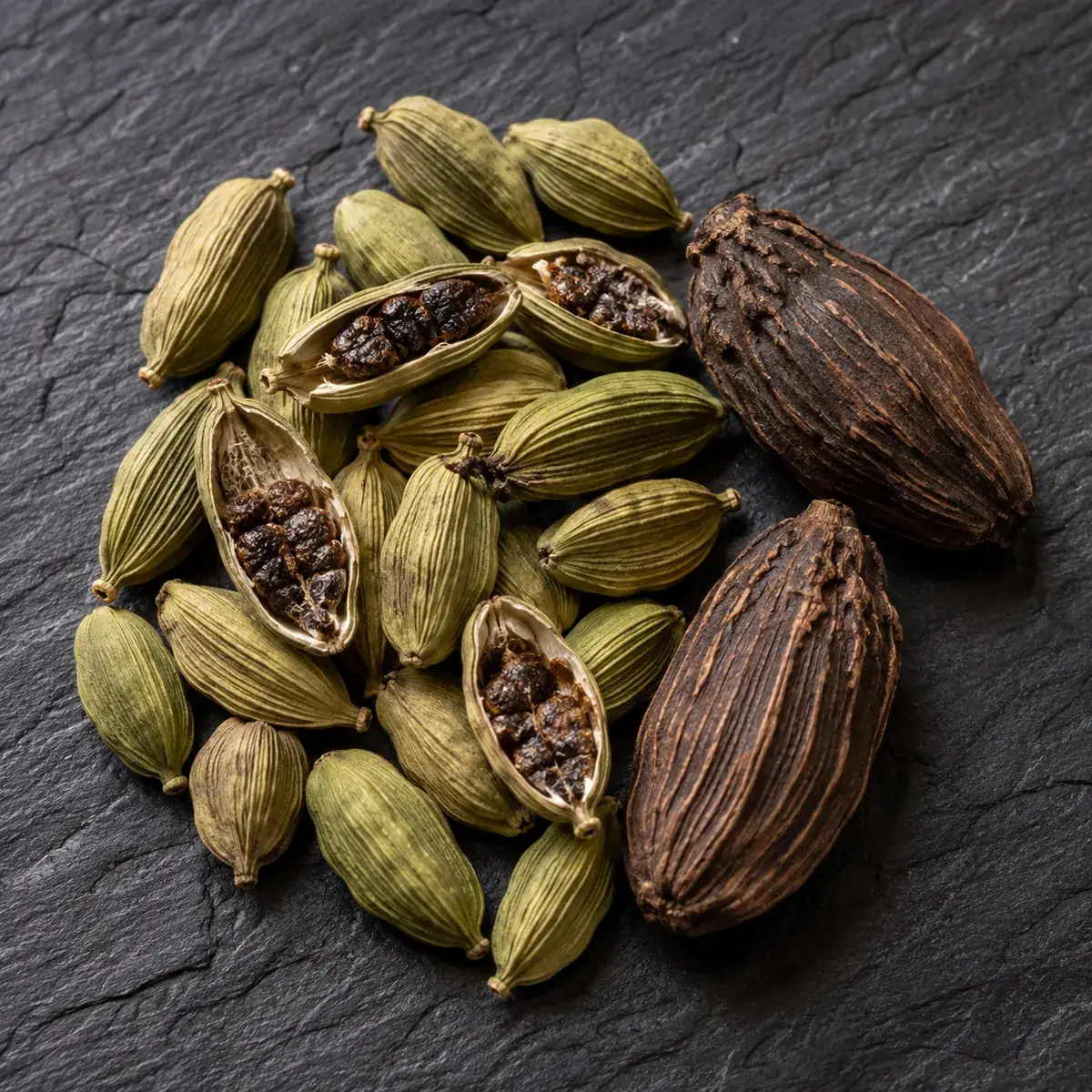
Cardamom is the seed pod of plants in the ginger family, and almost everything that makes it difficult to use in a drink comes from that fact. The flavour lives in volatile oils inside the seeds, the pod is the container that keeps those oils from escaping, and the moment the container is opened a clock starts.
Two distinct spices are sold under the name and they are not interchangeable. Green cardamom is what a recipe means when it says cardamom.
Black cardamom is a different genus, dried over open fire, and it is smoky rather than floral.
Cardamom in a drink, at a glance
- What it is
- The dried seed pod of Elettaria cardamomum, in the ginger family
- Aroma
- Floral, citrus, eucalyptus-like, from volatile oils in the seed
- Whole pods keep
- A year or more, sealed and dark
- Ground keeps
- Days at home, and pre-ground is faded before you buy it
- Extraction
- 3 to 5 minutes of simmering. Cold water gets almost nothing out
- Working dose
- One crushed pod per cup of coffee, 4 to 6 per two cups of chai
- Price
- Behind only saffron and vanilla among common spices
Green pods and black pods are different spices
The confusion between the two is common, and the two do genuinely different jobs.
| Green | Black | |
|---|---|---|
| Pod | Small, pale green, papery | Large, dark brown, wrinkled |
| Drying | Dried gently | Dried over open fire |
| Aroma | Floral, citrus, eucalyptus-like | Smoky, camphorous, resinous |
| In drinks | Chai, coffee, desserts | Rarely. Mostly savoury cooking |
| Cost | High. Among the most expensive spices | Much lower |
Black cardamom in a drink is almost always a mistake. Its smoke rolls straight over tea and coffee, and any recipe calling for cardamom without qualification means green.
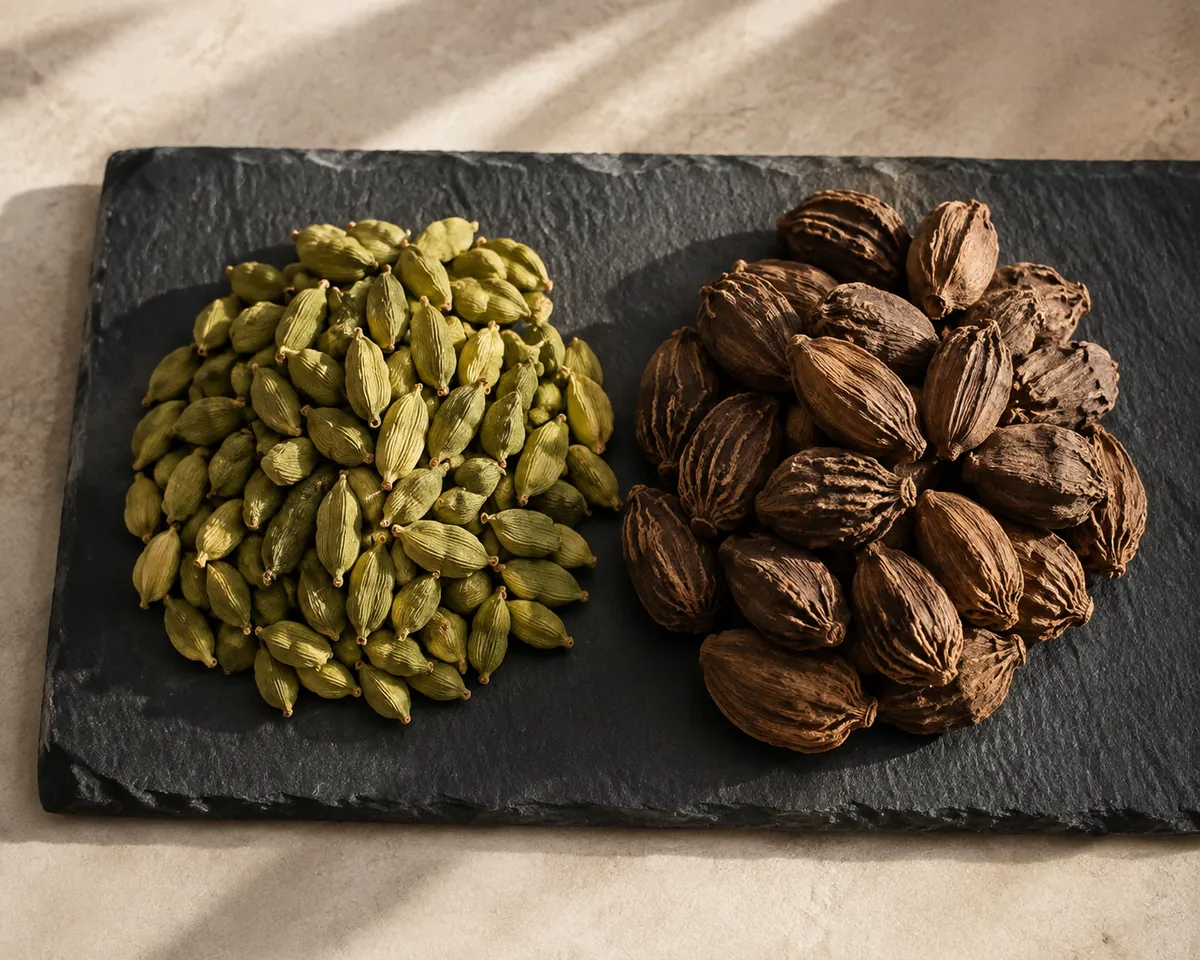
The distinction is botanical rather than stylistic, which is why no adjustment of quantity brings them closer together. Elettaria cardamomum is the green cardamom of this page; black cardamom belongs to Amomum, a separate genus in the same family.
They share a common name because early traders sorted spices by appearance, and the shelf has never corrected the error.
The pod is packaging, and pre-ground is a waste
Cardamom's aroma sits in volatile oils inside the seeds, and the papery pod is an unusually effective seal around them.
Ground cardamom starts losing those oils the instant the seeds are broken and is noticeably flat within a few weeks; whole pods hold for a year or more in a sealed jar. That gap is far wider than for most spices, which is why buying cardamom already ground is closer to buying an empty jar than to buying a convenience.
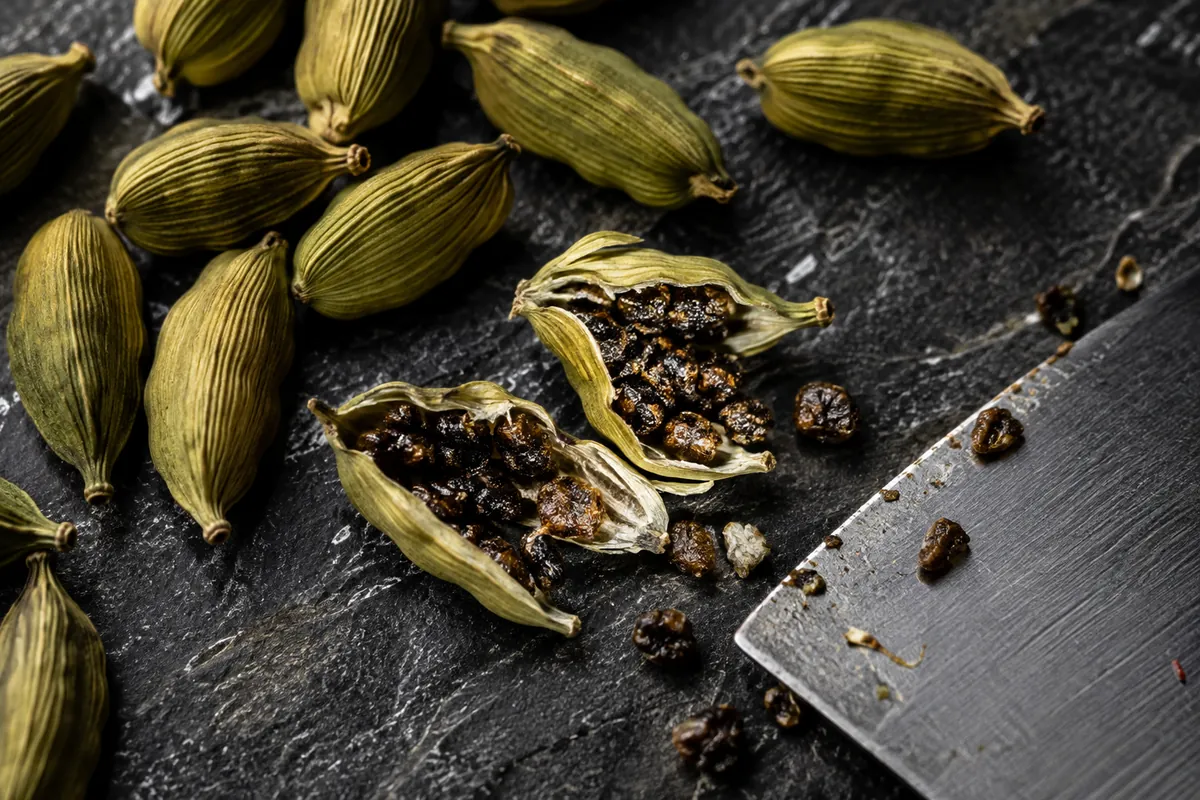
The pod itself contributes little. It is packaging, and in most drinks it goes into the pan whole and comes out in the strainer.
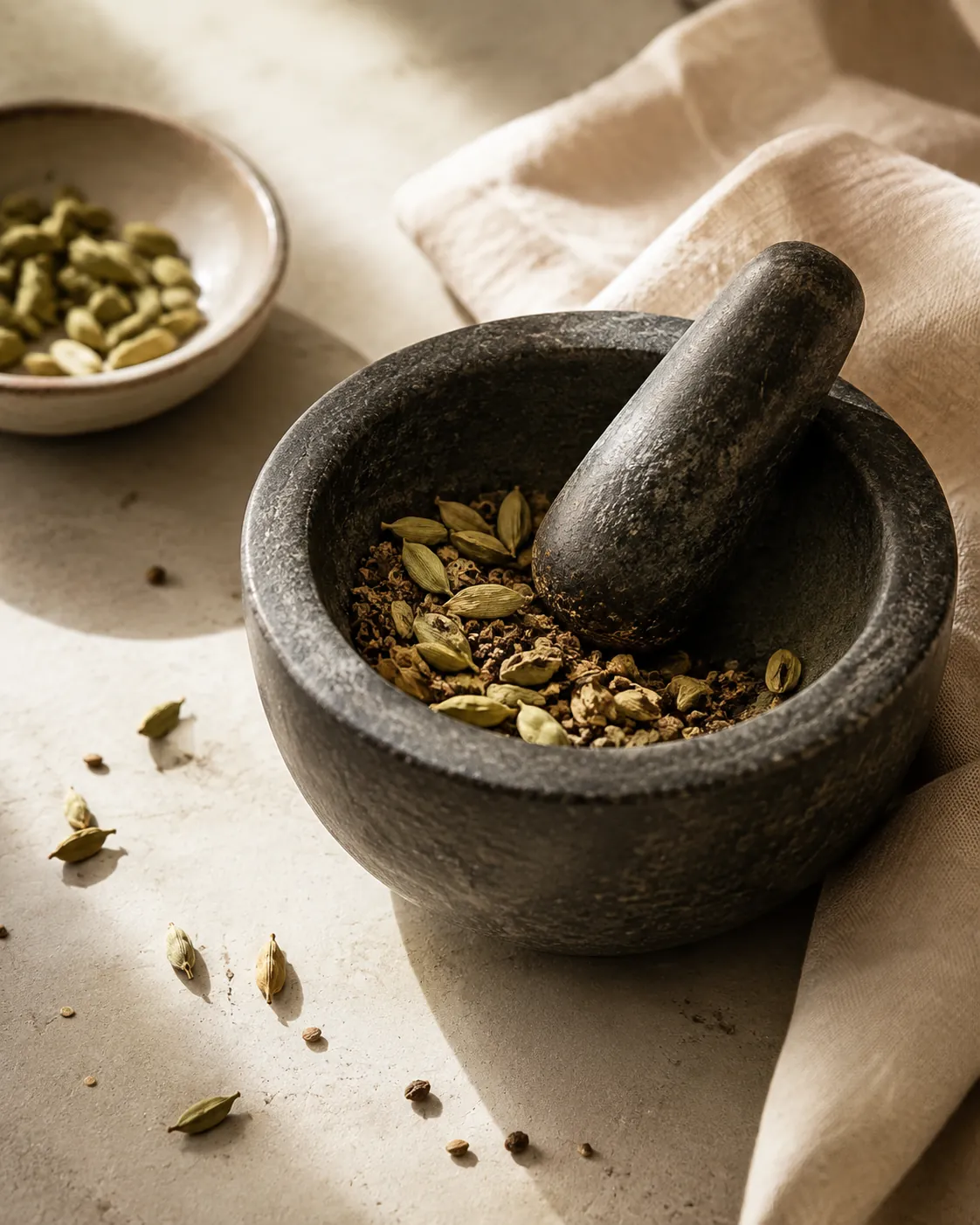
When you do need powder, the seeds resist a mill in a way most spices do not. Cardamom seed is sticky with oil, so a blade grinder smears rather than cuts, gums up, and heats the oils away in the process, which leaves you with something both less aromatic and unpleasant to clean.
A burr grinder fares no better, and cardamom is one of the few things worth keeping out of a machine you also use for coffee. A mortar works, although the seeds skid under the pestle until you give them something to bite against: a pinch of the sugar or salt the recipe already calls for turns the pestle into an abrasive and takes them to powder inside a minute.
How long the aroma lasts
- Whole podsA year or more, sealed and dark
- Decorticated seedsThree or four months, sold shelled and loose
- Ground at homeDays. Grind what the drink needs and no more
- Bought groundAlready faded by the time it reaches the shelf
Decorticated seeds are the sensible middle ground for anyone who uses cardamom weekly. They cost more per gram than pods, they save the shelling, and they keep far better than anything already milled.
How much, and where it belongs
Cardamom is assertive enough that overshooting is the normal first mistake, and the difference between one pod and two is audible in a small cup.
Rough quantities
- Chai, per 2 cups
- 4 to 6 pods, crushed
- Coffee, per cup
- 1 pod, crushed, added to the grounds
- Cardamom syrup
- 10 pods per 200 g sugar and 200 ml water
- Hot chocolate, per cup
- 1 pod, or a small pinch of freshly ground seeds
- Simmering time
- 3 to 5 minutes releases most of it
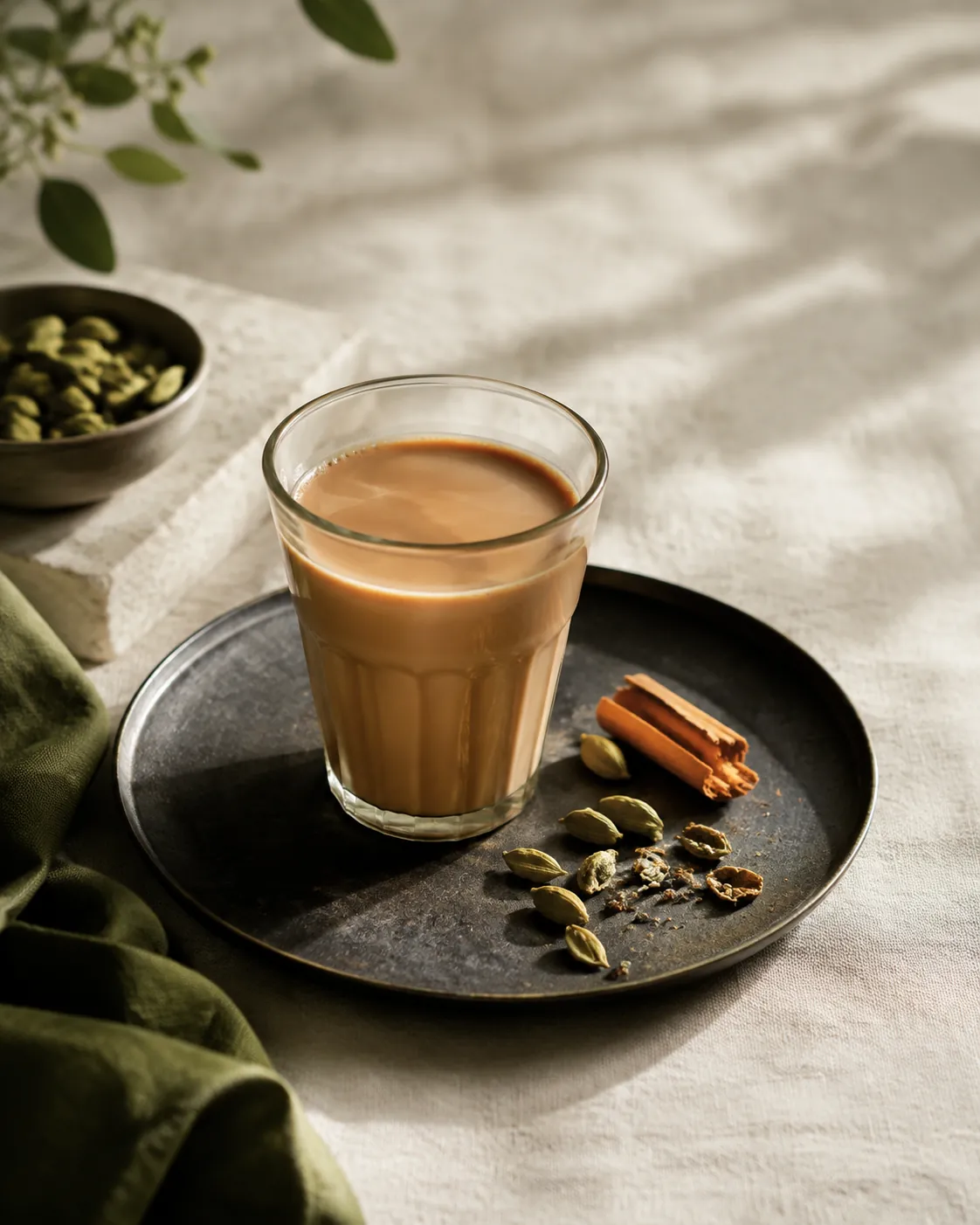
Its range is wider than the association with chai suggests, and the role it plays changes completely between them.
Masala chai
The backbone rather than an accent, alongside ginger. A blend without it does not taste like chai.
Gahwa
Arabic coffee, where cardamom is close to co-equal with the coffee itself.
Cocoa
A natural fit, and a constant pairing in Scandinavian baking.
In chai the spice carries the drink and the tea supports it. In coffee one pod per cup is the ceiling, since two produce a cup that tastes of cardamom with coffee somewhere underneath it.
Simmering time is the other lever and it is a short one: three to five minutes pulls out most of what a crushed pod holds, and leaving it longer adds a faint bitterness from the pod husk rather than more aroma. A pod that has already spent five minutes in a pan of espresso-strength coffee has very little left to give a second cup.
Buying pods, and reading a grade code
Price makes this one of the few spices where careful buying repays the attention, and there are two things to check: the pod itself, and any code on the packet.
- Buy whole green pods, never ground, unless you will use the jar within weeks.
- Look for plump, pale green pods. Brown or split ones have already lost their aroma.
- Squeeze one. It should feel firm rather than papery and hollow.
- Check that the seeds inside are black and sticky rather than pale and dry.
- Store sealed and dark, and expect a year or more of usable life.
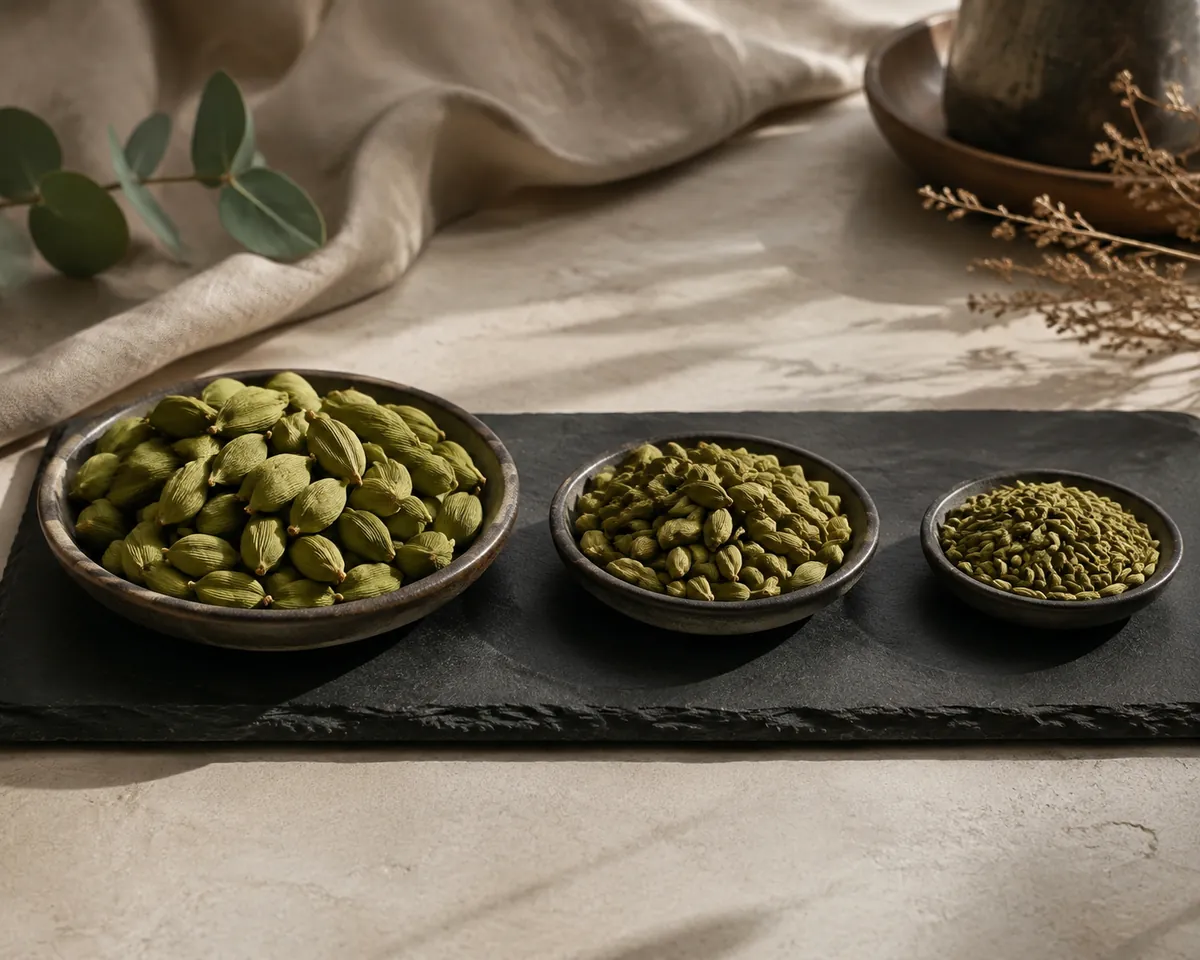
Wholesale cardamom is graded by size and colour, and those codes leak onto retail packets often enough to be worth decoding.
What the letters mean
- AGEB
- Alleppey Green Extra Bold. The largest and greenest Indian grade
- AGB
- Alleppey Green Bold. One size down
- AGS
- Alleppey Green Superior. Smaller pods, same curing
- 8 mm, 7 mm, 6 mm
- Screen size the pods were sorted over. Larger is graded higher
- Bleached or white
- Sulphur-treated for appearance. Aroma is reduced
Size correlates with maturity and therefore with aroma, which is why it gets graded at all, though it is a rough proxy rather than a guarantee: a smaller pod from a careful producer beats a large one that has spent two years in a warehouse. Bleached pods are the one grade to refuse for drinks, since the treatment exists to satisfy markets that want a pale pod and costs a noticeable amount of what you are paying for.
Kerala, Guatemala, and how the plant grows
Guatemala exports more cardamom than anywhere else and drinks almost none of it. India grows less, consumes nearly all of its own crop, and still sets the reference for what good cardamom tastes like.
| Alleppey green | Guatemalan | |
|---|---|---|
| Where | Kerala, India | Alta Verapaz, Guatemala |
| Pod | Smaller, deep green, ridged | Larger, plumper, brighter |
| Aroma | Sweet and complex, with more depth | Cleaner and more eucalyptus-forward |
| Mostly sold | Within India and to the Gulf | Into the world export trade |
| Price | Higher | Lower at the same grade |
The plant wants shade, heavy rain and a warm forest floor, which confines it to a narrow band of tropical highland: the Western Ghats in Kerala and Karnataka, Alta Verapaz, and smaller plantings in Tanzania and Sri Lanka. Guatemalan cultivation began in the twentieth century from Indian planting stock and now supplies most of what reaches European and North American shelves, so a packet that states no origin is usually Guatemalan.
Two details of how it grows explain a good deal about the trade. The flowering spikes do not sit up on the stem; they sprawl along the ground at the base of a plant that can stand three metres tall, which is why the harvest is done crouched and why nothing mechanical has ever replaced the picker.
And a new planting takes about three years to give a first real crop before producing for a decade or more, which is why cardamom prices swing so hard: a grower cannot answer a good year until three years later, by which time the market has moved on.
Six passes through a plantation
The harvest rather than the yield is what puts cardamom near the top of the spice shelf.
Picking a cardamom crop
- Ripening
- Pods on one flowering spike ripen over weeks rather than together
- Passes
- A plantation is picked over six to eight times in a season
- Timing
- Pods are cut slightly under-ripe, since a fully ripe pod splits and sheds its seeds
- Method
- Entirely by hand, at ground level, one spike at a time
- Curing
- Dried slowly and at low temperature, because heat destroys the green colour
Only saffron and vanilla routinely cost more by weight, and all three are expensive for the same underlying reason: the crop refuses to be gathered in a single operation. Every pass over the same ground is a full labour cost for a fraction of the harvest, and the curing that follows cannot be hurried without turning the pods a dull straw colour that the grading system punishes.
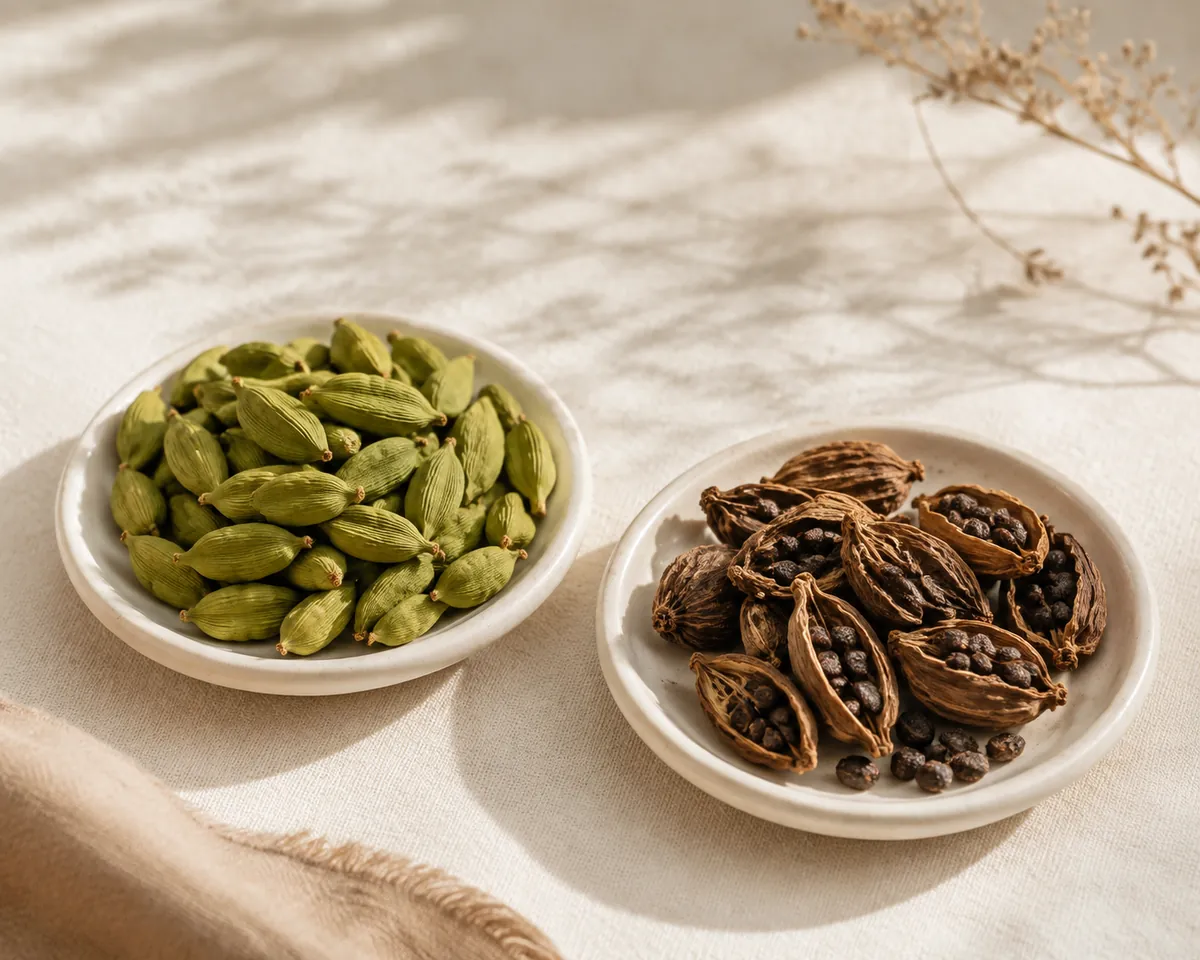
A split pod is a failed pod. That single constraint is why pickers work ahead of ripeness, why a good packet holds pods that are closed and plump, and why the split and brown ones at the bottom of a cheap bag are not simply cosmetic damage.
Cold drinks need time instead of heat
Heat is doing more work in the usual recipes than they admit, and a cold drink has to replace it with something.
Crushed pods dropped into cold liquid give up almost nothing over an hour. The oils are not water-soluble in any useful sense at room temperature, so the pods sit in the glass looking purposeful while the drink stays plain, and stirring changes nothing at all.
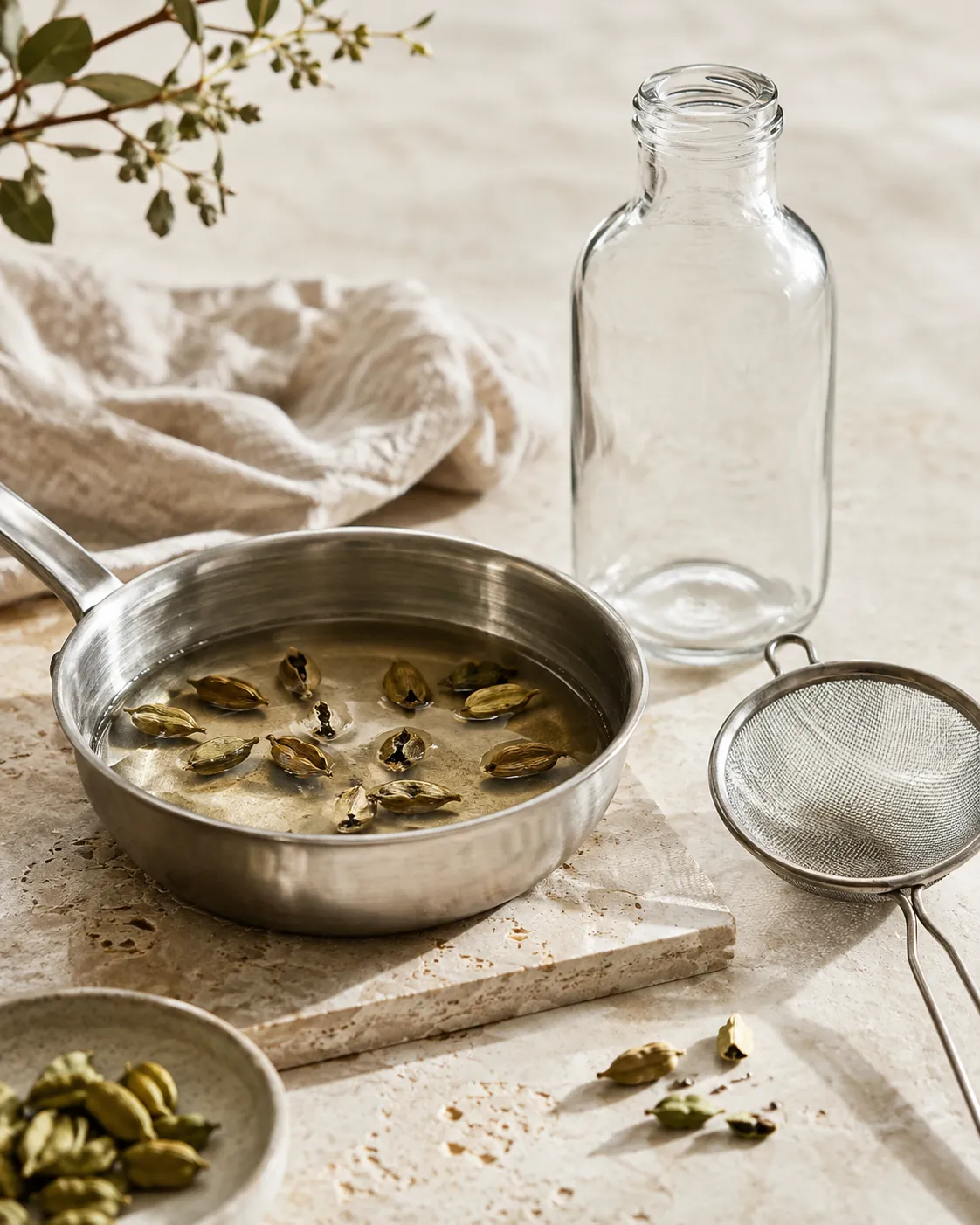
Cardamom syrup, which solves it
- Pods
- 10, crushed
- Sugar
- 200 g
- Water
- 200 ml
- Method
- Simmer 5 minutes, take off the heat, steep 30 minutes, strain
- Keeps
- Two to three weeks refrigerated
The second route is to substitute time for temperature. Crushed pods added to the grounds at the start of a twelve-hour cold brew extract properly, because the long contact does what a five-minute simmer would otherwise have to, and the same principle makes a cold-steeped spiced black tea work where a cold-mixed one does not.
Iced chai follows the same logic from the other direction. Brew it hot and strong with the spices, then chill it, rather than trying to assemble it cold and wondering why it tastes like sweetened milk.
Nothing genuinely substitutes for it
The honest answer to what replaces cardamom is that nothing does, and offering a substitute that does not work is worse than saying so.
The usual suggestion is cinnamon with a little nutmeg. That produces a warm spiced drink and it tastes nothing like cardamom.
Cardamom sits in a floral, camphorous register far closer to eucalyptus than to any baking spice, and the warm spices reach none of it.
A chai built without cardamom is a perfectly good spiced tea. It is simply a different drink, and naming it accordingly is more useful than pretending the swap succeeded.
The same goes for a cardamom latte made with a warm-spice syrup: pleasant, and not the thing on the menu board.
If the pods have run out, the better move is to leave the gap rather than fill it. A drink missing one spice reads as simpler, where a drink carrying the wrong one reads as wrong.
Gahwa, where the coffee follows the spice
Gulf coffee deserves more than the line it gets in most spice writing, because it inverts every proportion on this page.
How gahwa is made and served
- Roast
- Pale tan, well short of brown, so the coffee adds body rather than roast flavour
- Cardamom
- Often a spoonful of crushed pods to a small pot, sometimes with saffron, cloves or rose water
- Colour
- Pale gold, closer to a weak tea than to a dark coffee
- Sweetening
- None in the pot. Dates are served beside the cup instead
- Vessels
- Poured from a long-spouted dallah into small handleless finjan, filled about a third
- Refills
- Continue until the guest shakes the cup slightly. Three cups is the customary number to accept
The beans are roasted very lightly, so the coffee contributes body and a mild nuttiness rather than the roast character a European drinker expects from arabica. Into that goes cardamom at a quantity that would wreck any other cup, and the result is pale gold, tastes primarily of cardamom, and carries the coffee underneath as texture and weight.
The serving conventions are part of the drink rather than decoration around it. Cups are filled barely a third full and refilled until the guest shakes the cup slightly, dates supply the sweetness the pot deliberately lacks rather than honey or sugar going in, and three cups is the customary number to accept.
This is also the one context where a pre-ground blend makes sense. Cardamom-coffee mixes are sold ready-made across the region, the proportions are traditional rather than guessed at, and the beans are roasted for the purpose in a way no European roaster does.
Cocoa, and what a menu usually means by it
Chai and coffee take most of the attention, and cardamom's other real home is chocolate.
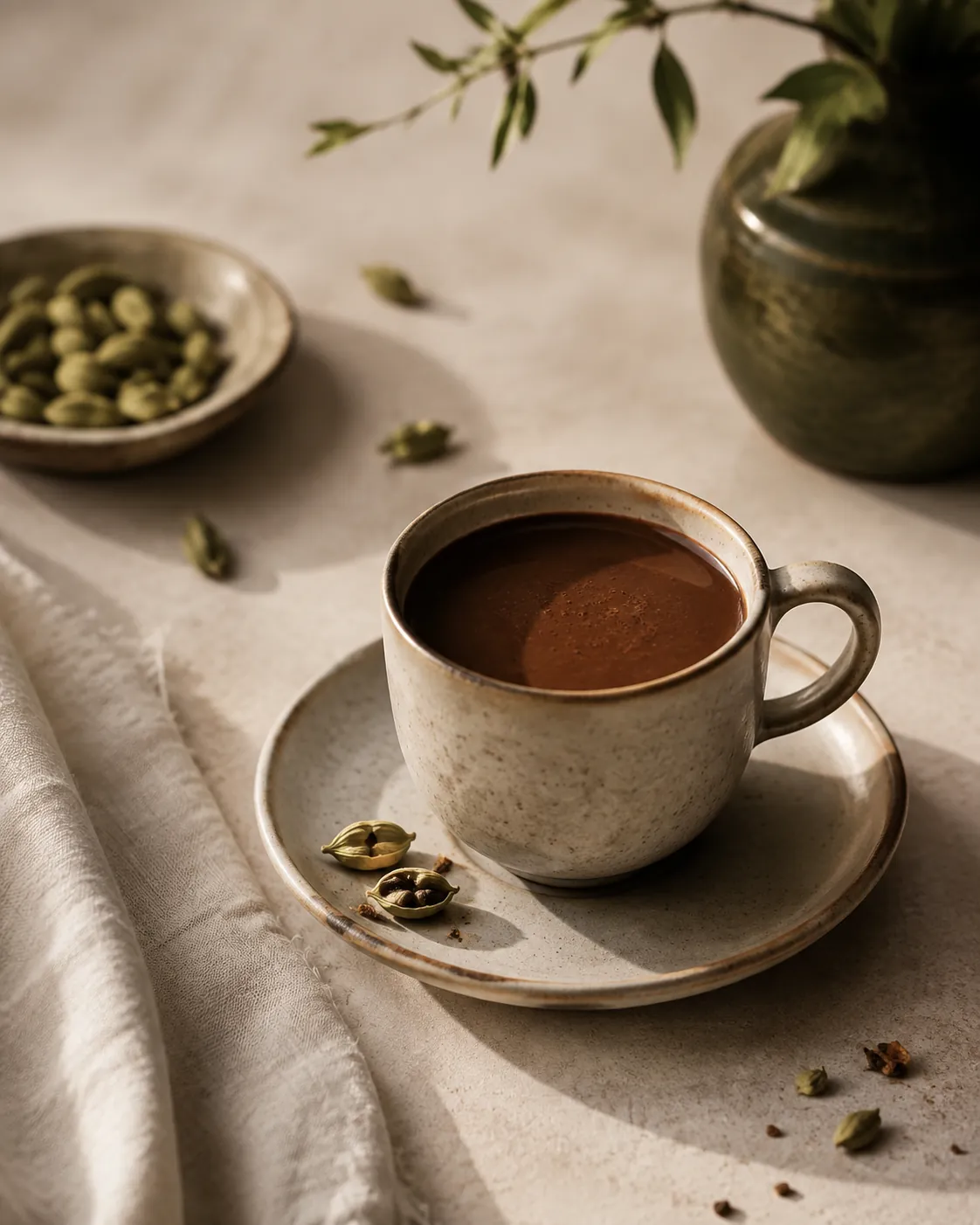
Scandinavian baking pairs the two constantly and the reason carries straight into a cup: the eucalyptus lift cuts the fat of a rich cocoa the way citrus would, without bringing acidity that could split the milk. One crushed pod per cup, simmered with the milk and strained out, is the working quantity for a hot chocolate or a stovetop cocoa, while ground cardamom stirred in at the end reads dusty and settles.
It suits white hot chocolate particularly well, since that drink has no bitterness of its own and takes an aromatic edge gratefully; against a high-percentage dark cocoa it is harder to place, because both are assertive and neither gives way.
Cafe versions have multiplied over the last decade and they differ mainly in how the spice gets in. A syrup-built latte is the common form, consistent and carrying a cooked, slightly perfumed note rather than the bright one a fresh pod gives, in much the way a bottled vanilla syrup differs from a split pod.
The Scandinavian answer puts the cardamom in a bun and leaves the coffee alone, which keeps both clean. The version worth asking for is a pod dropped into the brew itself, which some places running a moka pot or a Turkish service will do, and it is the only preparation that tastes of the pod rather than of a flavouring.
Common questions
What is the difference between green and black cardamom?
Different species and different processing. Green is small, floral and citrus-like and is what recipes mean by cardamom. Black is larger and dried over open fire, making it smoky and resinous, and it is used mostly in savoury cooking rather than drinks.
Why buy cardamom pods instead of ground?
The aroma sits in volatile oils inside the seeds, which the pod seals. Ground cardamom is noticeably flat within weeks, while whole pods hold for a year or more. Crush a pod with the flat of a knife as you need it.
How much cardamom goes in chai?
Four to six crushed pods for two cups. Cardamom is the backbone of chai alongside ginger rather than an accent, and a blend without it does not taste like chai.