Maple Syrup in Drinks, and What the Grades Actually Mean
Maple syrup is sap boiled down about forty to one. The grade names changed in 2015 and now describe colour and strength rather than implying quality, which makes choosing one much easier.
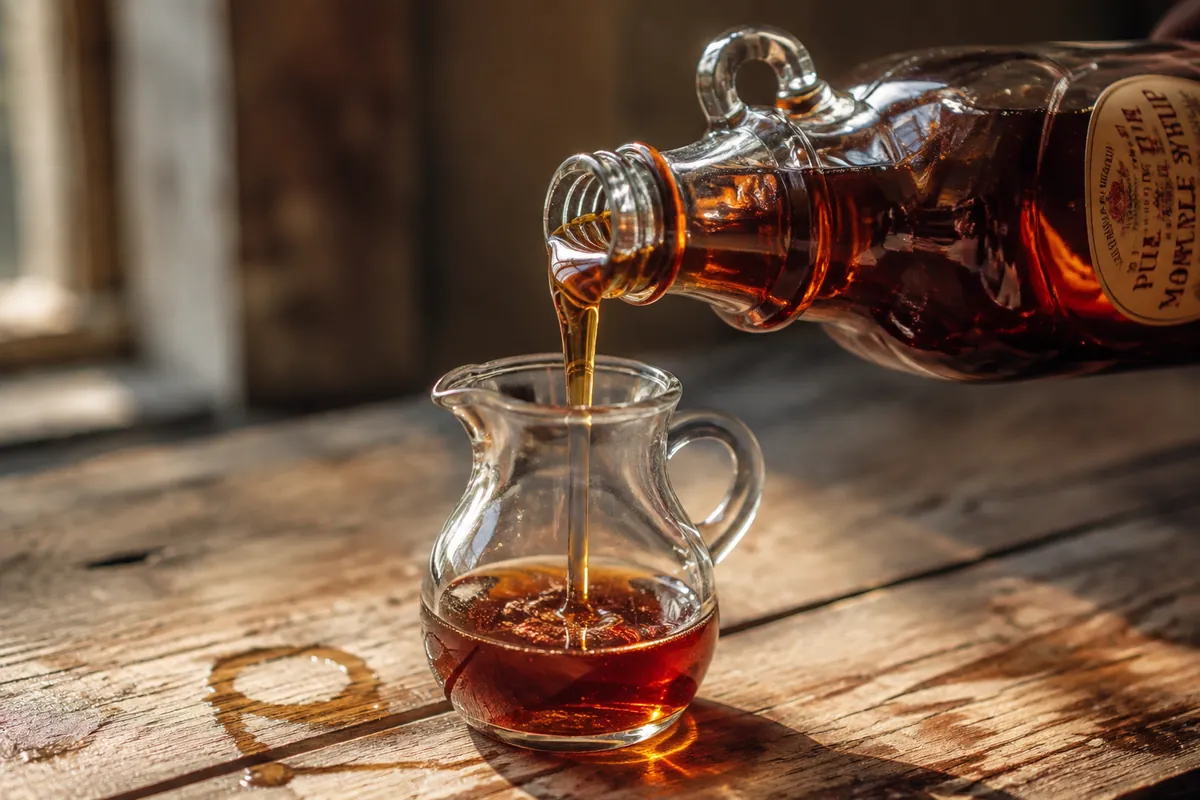
Maple syrup is the sap of sugar maples boiled until most of the water is gone. Around forty litres of sap become one litre of syrup, which is the whole explanation of the shelf price and most of the explanation of the flavour.
Two things separate it from every other sweetener in a drink. It arrives as a true syrup rather than a supersaturated one, so it pours cold and never crystallises in the bottle; and it is sold in four classes that describe strength rather than quality, which makes it the one sweetener where the label tells you what the drink will taste like.
Maple syrup at a glance
- What it is
- Sugar maple sap, reduced to about 66 Brix
- Concentration
- Roughly 40 litres of sap to 1 litre of syrup
- Sugar
- About two thirds by weight, mostly sucrose
- Classes
- Golden, amber, dark and very dark. All of them Grade A
- Colour tracks
- When in the season the sap ran, not how long it was boiled
- In a cold drink
- Disperses with a stir. No thinning required
- Keeps
- Indefinitely sealed. Refrigerate the moment it is opened
The four classes, and why dark is the one to buy
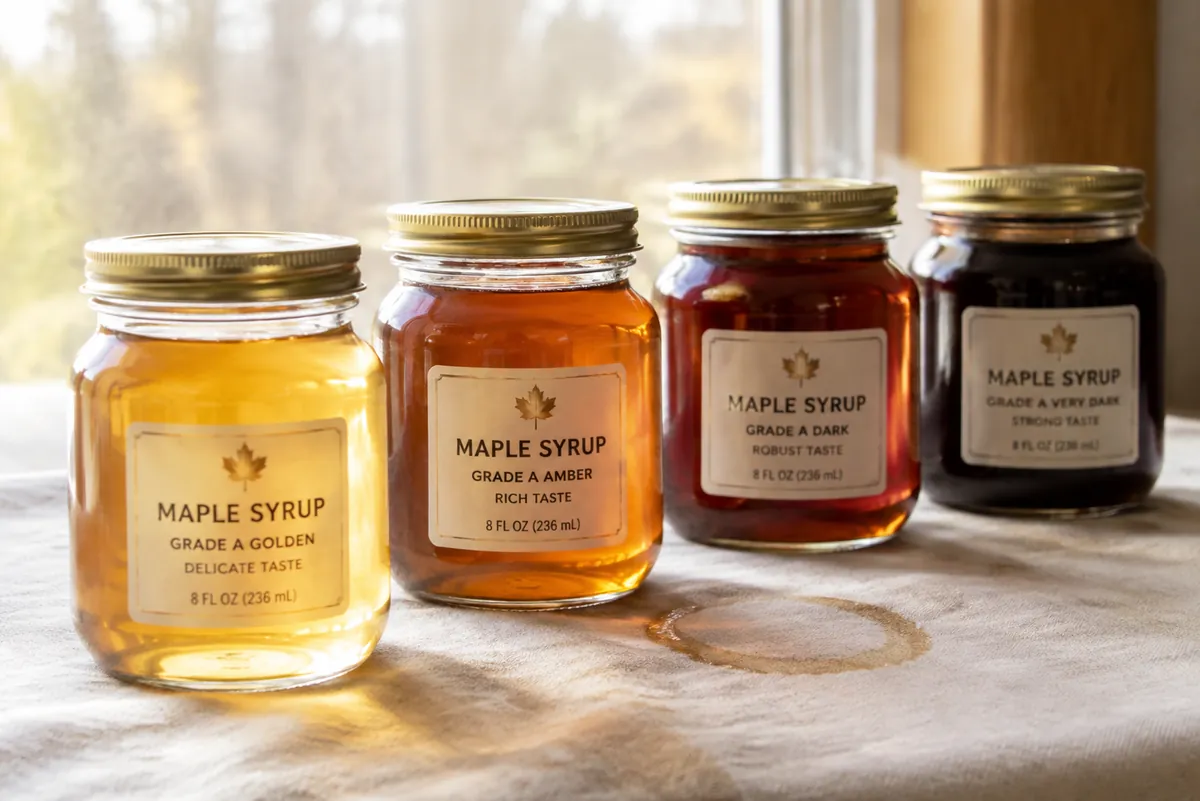
The naming was standardised in 2015. What replaced the old letter grades is genuinely informative, because each class now describes how the syrup will behave in a drink.
| Class | Colour | Flavour | Suits |
|---|---|---|---|
| Golden, delicate | Palest | Mild, subtle | Delicate drinks, where maple should whisper |
| Amber, rich | Light amber | Balanced, classic maple | General purpose |
| Dark, robust | Dark | Strong, pronounced, faintly mineral | Coffee, spiced drinks, cocoa |
| Very dark, strong | Darkest | Very intense, savoury edge, slight bitterness | Where it must survive other flavours |
All four are Grade A. The previous system implied darker syrup was a lower grade, which was never true, and the change matters because colour tracks when in the season the sap was collected rather than how good the producer was.
The chemistry behind the colour is worth knowing, because it explains why the classes cannot be substituted for one another. Early sap is close to pure sucrose, with very few amino acids and almost nothing growing in the lines.
As the weather warms, bacteria in the tubing invert some of that sucrose into glucose and fructose while amino acid levels climb, and those are exactly the two ingredients a Maillard reaction needs. The same boil applied to later sap browns far more and develops far more flavour, which is why no producer can make golden delicate syrup in April however carefully they work the evaporator.
That browning is also where the mineral note in the dark classes comes from. It reads as savoury and faintly stony underneath the caramel, and in a drink it is the part that stops maple tasting like flavoured sugar.
Why it disperses where honey will not
Maple has a straightforward mechanical advantage in a cold glass, and it is the reason to reach for it over anything else when the drink is never going near heat.
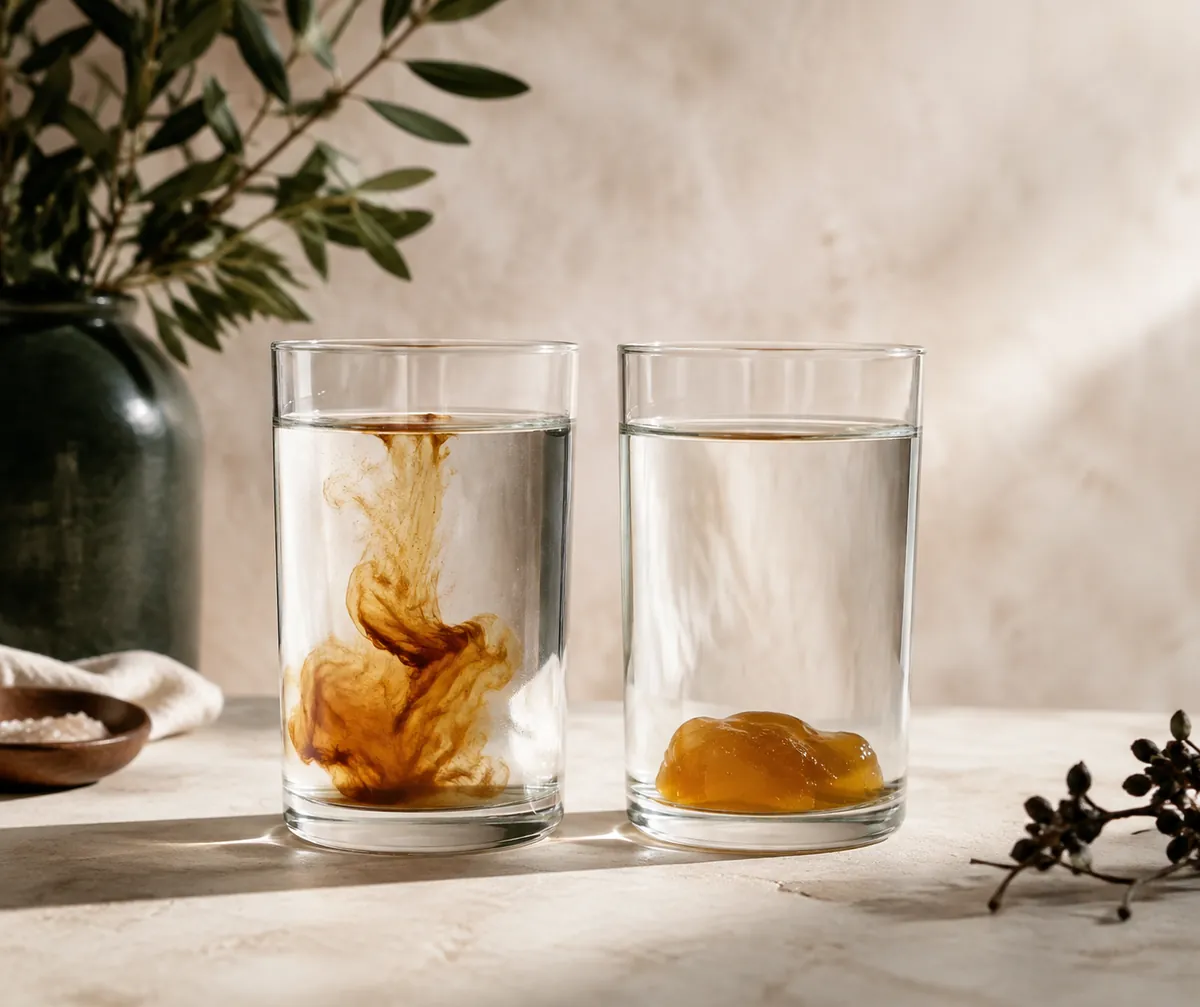
At around 66 Brix it is a true syrup, close in concentration to a rich simple syrup and nowhere near the viscosity of honey. A spoonful stirred into iced cold brew breaks up and disperses in a few seconds instead of sinking as a blob and waiting for you, which makes it the only unprocessed sweetener that needs no preparation at all before it meets a cold drink.
In hot drinks the question shifts from mechanics to matching. Maple suits anything roasted, nutty or spiced, so coffee, chai, hojicha, roasted barley tea and genmaicha all take it comfortably, since its caramel and vanilla notes land beside theirs rather than on top.
It works badly with delicacy: a white tea or a carefully brewed green tea is simply erased, and no reduction in quantity rescues that pairing because the problem is the flavour rather than the dose.
Forty litres of sap to one of syrup
Forty to one sounds like exaggeration. It is arithmetic.
Raw sap is a very dilute sugar solution, and everything a producer does between February and April is the removal of water.
A season's work
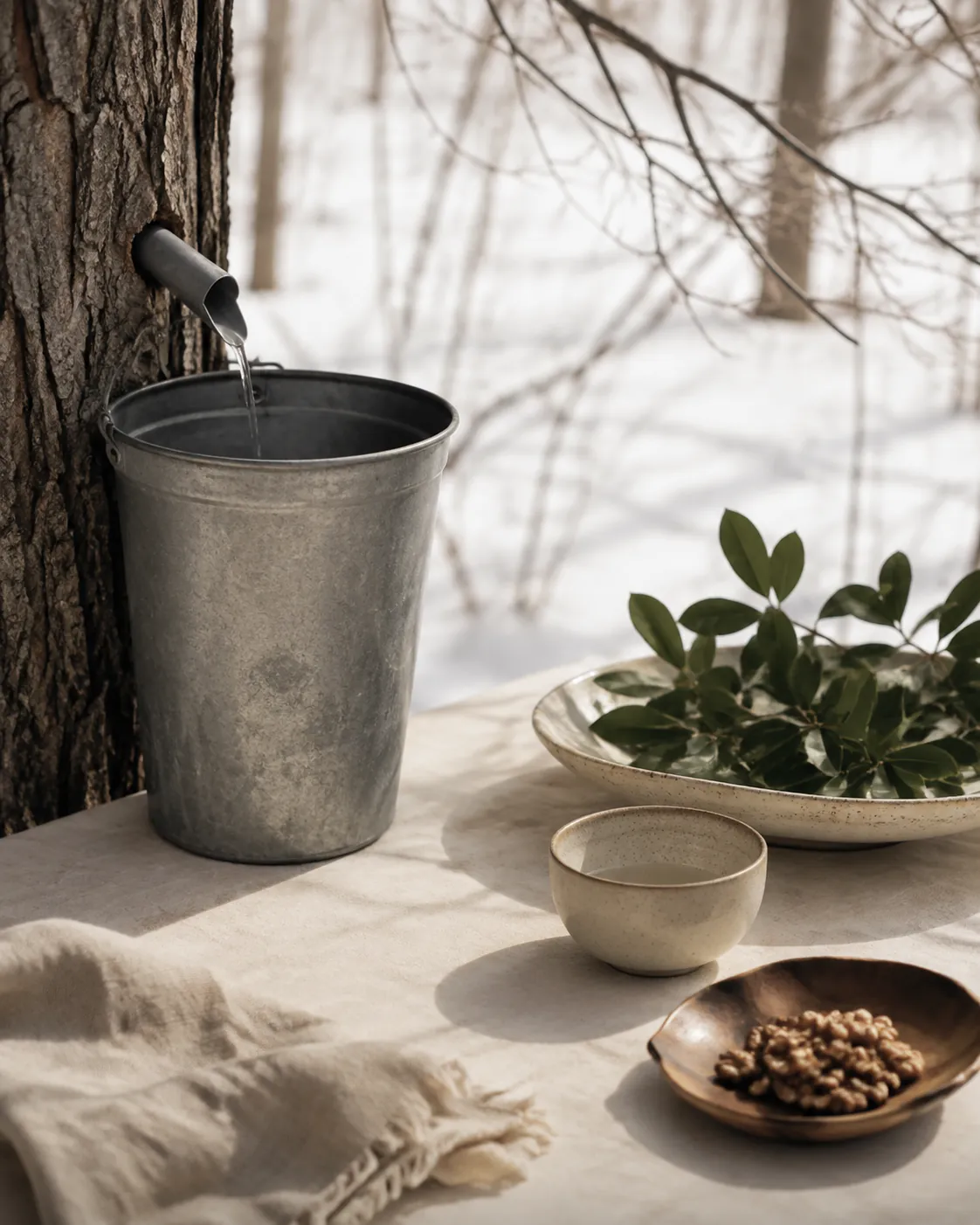
- TapA spout is drilled into the trunk in late winter, well before the leaves.
- RunSap flows on freeze-thaw cycles. Cold nights and days above freezing build and release pressure in the wood; neither on its own produces a run.
- ConcentrateMost producers now push the sap through reverse osmosis membranes first, removing much of the water without heat.
- BoilAn evaporator drives off the rest over a long, shallow, fast boil.
- FinishSyrup is drawn off at around 66 Brix, checked with a hydrometer, then filtered hot and bottled.
Raw sap is about two per cent sugar, which is where the forty to one comes from. A good stand may run nearer thirty-five to one and a poor one well past fifty.
One litre of syrup is therefore about one tree's season, which is the number sitting underneath the price and the reason maple never became cheap the way cane sugar did. Tapping itself does no lasting damage: the hole is small, the tree walls it off over following seasons, and stands are worked for a century or more.
The diameter rule exists precisely to stop young or stressed trees being tapped at all.
Quebec, the reserve, and which tree
One province makes most of the world's supply and manages it like a commodity rather than a craft product, which is unusual enough to be worth a paragraph.
Where the world's syrup comes from
- Quebec
- Roughly seven bottles in ten worldwide
- The reserve
- A strategic warehouse holding tens of millions of pounds of syrup
- Its purpose
- Released in short years, filled in heavy ones, to hold the price steady
- United States
- Vermont largest, then New York and Maine
- Also Canadian
- Ontario and New Brunswick
- Best tree
- Sugar maple, highest sap sugar. Black maple close behind
- Poorest fit
- Red maple, lower sugar and earlier buds, so a shorter season
No other food crop of this size is managed quite that way, and the reserve is why a bad spring in Quebec does not show up as an empty shelf. Birch sap is tapped by the same method and produces something else entirely, needing closer to a hundred to one and tasting savoury rather than sweet.
The window itself is narrow and it has been moving. Sap runs only when nights fall below freezing and days rise above it, and producers now report tapping earlier than their parents did on a season that opens sooner and can shut abruptly.
Reverse osmosis has absorbed much of that pressure by letting a short, heavy run be processed quickly rather than boiled for days, and it is the main reason a small operation can still make syrup economically.
For a buyer, almost none of this reaches the bottle except through price and availability. A spring that warms fast spends less of itself in the pale-sap phase, so it yields proportionally more of the dark classes.
When the season stops, and why it stops abruptly
The season ends when the buds break. Sap chemistry shifts as the tree switches from storage to growth, and syrup boiled from that sap carries an off-flavour producers call buddy: vegetal, faintly savoury, and unmistakeable once you have met it.
It cannot be boiled out, blended away or graded around, so a run that goes buddy is finished.
That is why the season closes abruptly instead of tapering, and why nobody makes a virtue of very late syrup the way they do of late-harvest fruit. Most very dark syrup comes from the last good sap of a season, and a few days past it the whole batch is unsellable.
For a drinker the practical consequence is supply rather than taste. A short, warm spring compresses the whole calendar, so the classes that reach the shelf in a given year are decided by a fortnight of weather nobody controls.
Real maple against the bottle beside it
Two bottles sit side by side on the same shelf, they cost radically different amounts, and only one of them contains any maple.
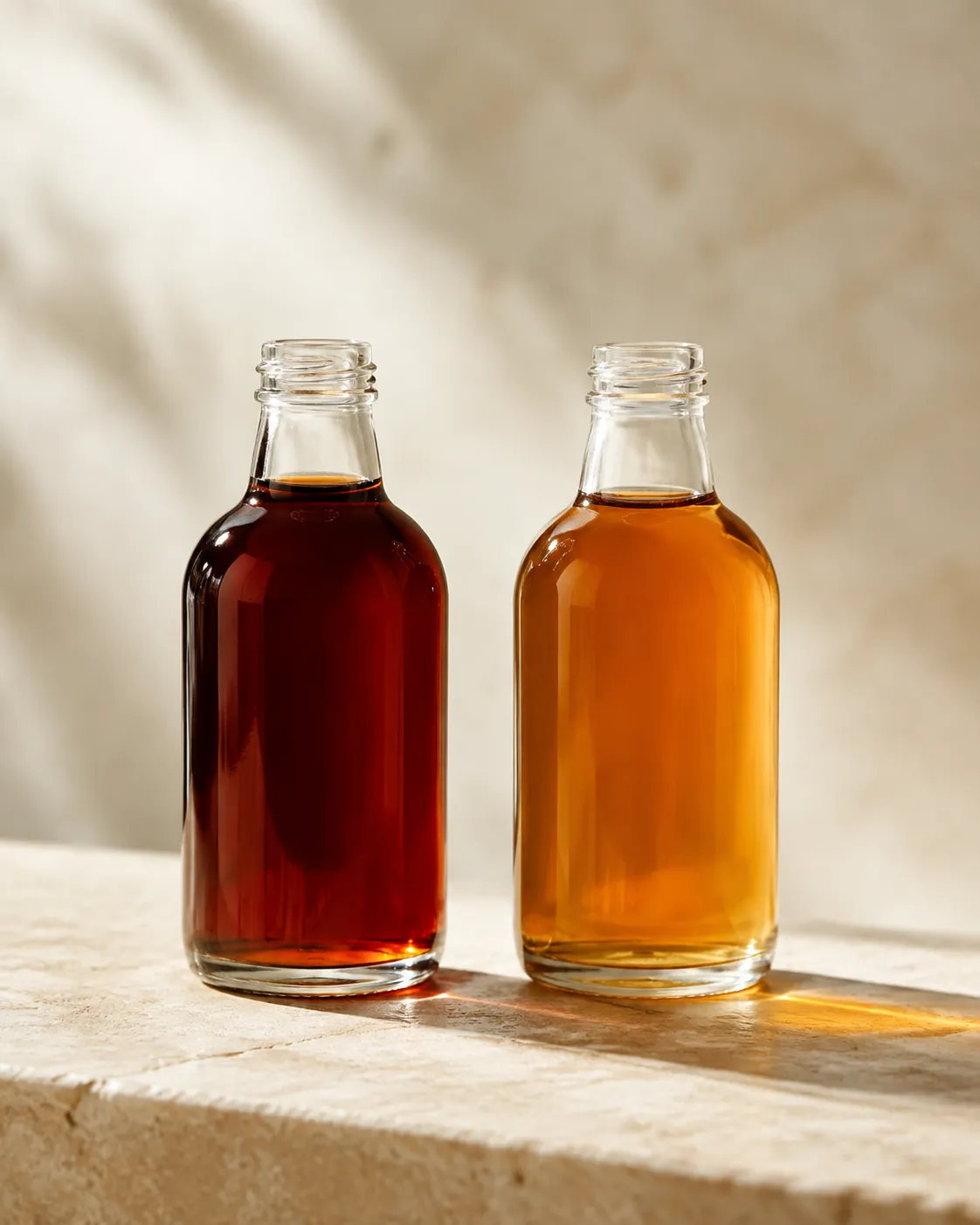
Real syrup lists a single ingredient. Maple-flavoured syrup, sold in some markets as pancake syrup, is corn syrup with colouring and flavouring and frequently no maple content whatever.
In a drink the difference is not subtle: the flavoured version tastes one-dimensionally sweet with a synthetic top note that thins out as soon as it is diluted, where real maple keeps its caramel and vanilla depth through milk, ice and coffee alike. As a sweetener for drinks it is doing simple syrup's job, worse and at a higher price.
- Check that the ingredients list has one entry on it.
- Read the class name as strength and colour, not as quality, and pick it for the drink.
- Treat a bottle marked Grade B as old stock; that letter vanished in the 2015 harmonisation.
- Prefer glass or metal over plastic if it will be open for months.
- Look for a stated country and region, since an unattributed blend is usually the cheapest available lot.
Sealed it lasts forever, opened it does not
The rules change the moment the cap comes off. That is the one thing about maple worth remembering over everything else on this page.
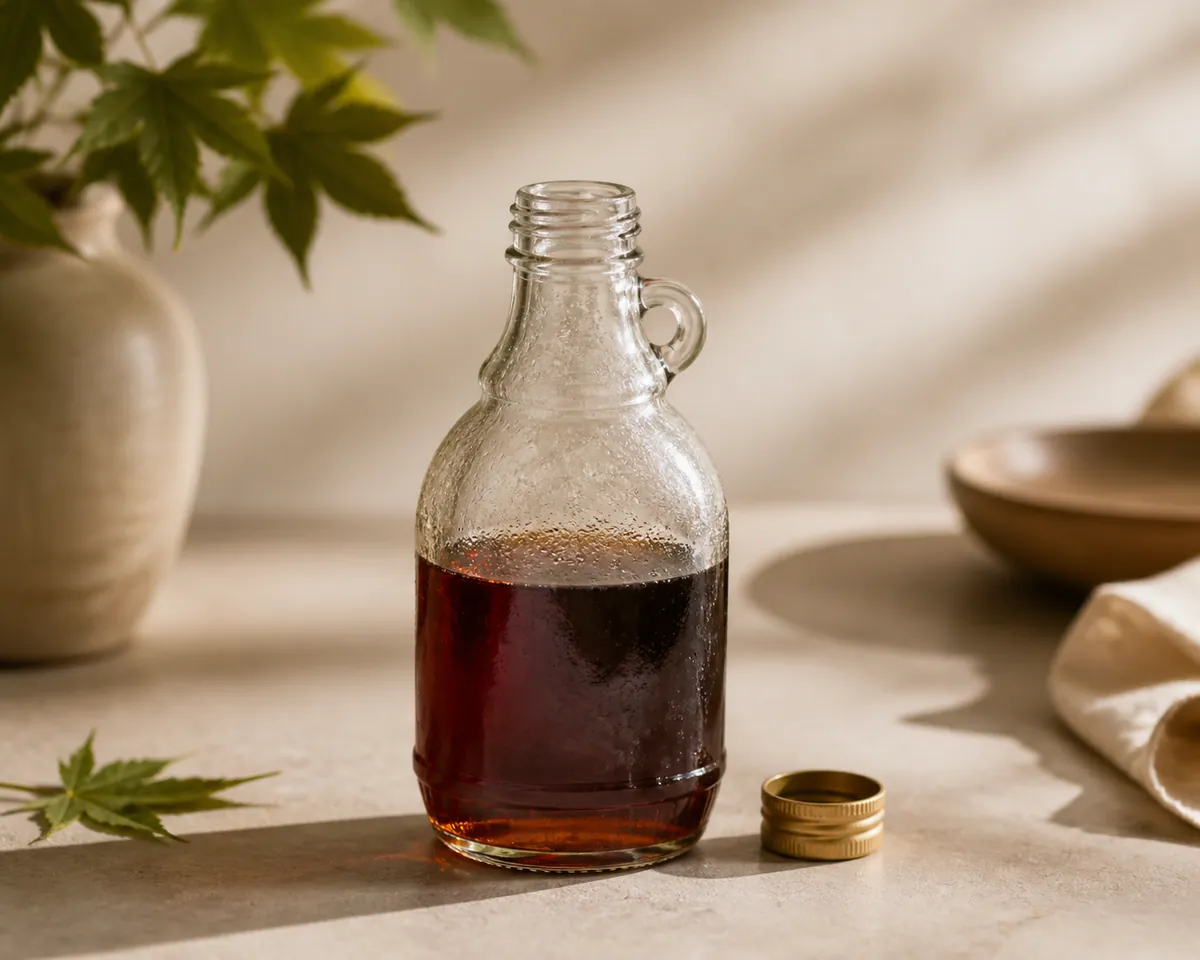
Unopened, a bottle keeps more or less indefinitely at room temperature, because the sugar concentration leaves too little available water for anything to grow in. The seal is doing all of that work.
An opened bottle left in a cupboard will grow mould on the surface within weeks, which catches out anyone who has been treating it like honey.
- Refrigerate after opening, without exception, whatever the bottle claims.
- Choose glass or metal for anything you will keep for more than a few months.
- Skim surface mould, then boil the syrup briefly and re-bottle it into a clean container.
- Warm gently to redissolve crystals at the bottom, which mean the batch was slightly over-boiled.
- Freeze it if you use it rarely; at this concentration it stays pourable rather than setting solid.
The freezer note is the useful one for anybody who bought a dark class for coffee and gets through it slowly. Maple does not set hard at domestic freezer temperature, so a bottle can be kept there for a year and poured straight from it.
Maple water, maple sugar and the rest of the line
Syrup is one point on a continuous line that runs from raw sap to solid block, and two of the other points are drinks in their own right.
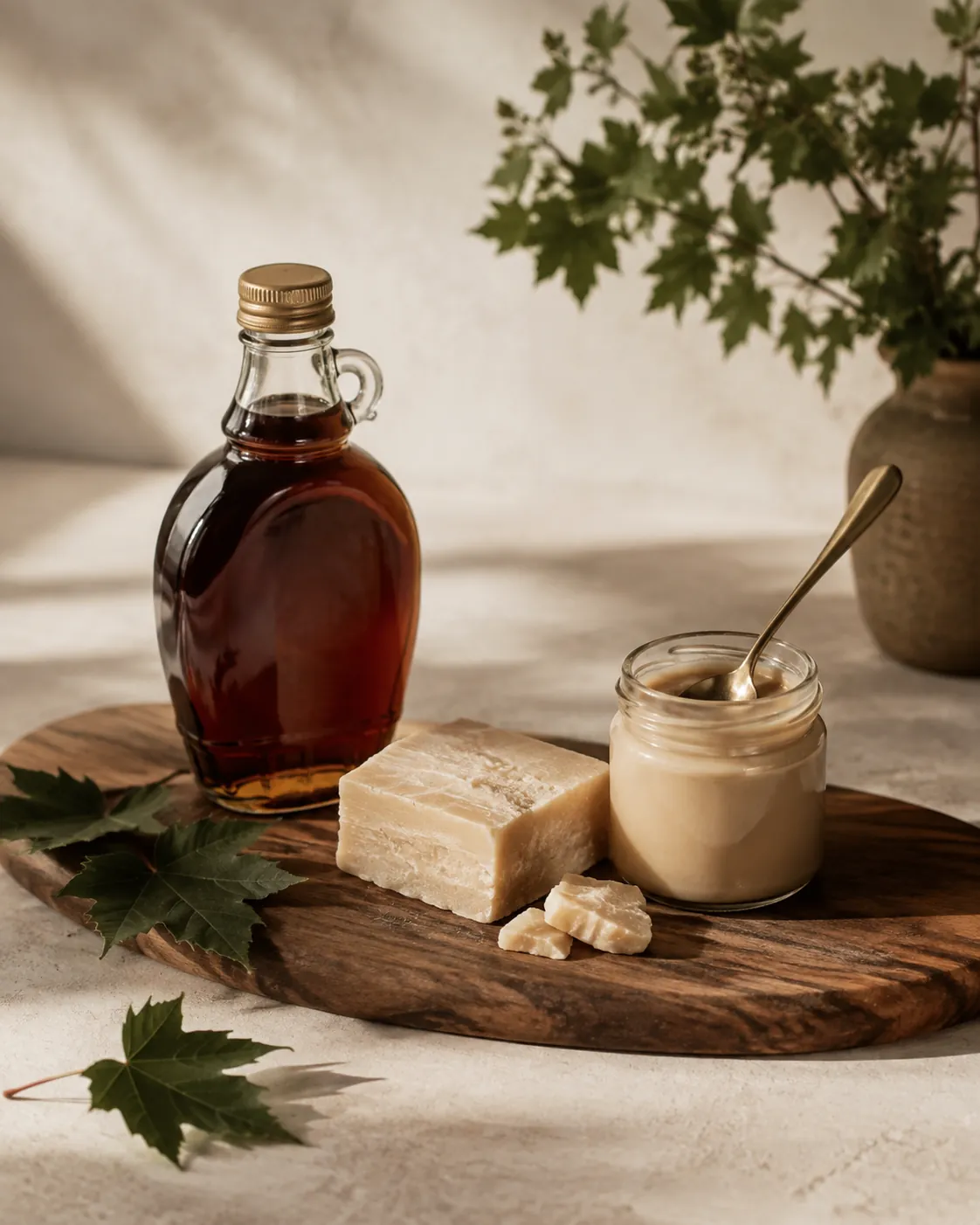
Maple water
The sap itself, filtered and pasteurised. Around two per cent sugar, barely sweet, and closer in role to coconut water than to anything on the syrup shelf.
Maple sugar
Syrup taken past syrup and crystallised. It dissolves poorly cold, which costs maple its main practical advantage.
Maple cream
Syrup boiled higher, then cooled and beaten to a spread. A food rather than a drink ingredient.
Maple taffy
Hot syrup poured onto packed snow and rolled onto a stick. Seasonal, and how many people first meet the flavour.
Maple water is the one worth understanding, because it is mis-sold constantly. It is a mild, faintly woody sweet water, not a diluted syrup, and it carries roughly a thirtieth of the sugar.
That makes it pleasant on its own and useless as a sweetener: added to anything with a flavour of its own it simply disappears, taking its price with it.
Maple sugar is the opposite trap. It reads as the convenient version, being dry and spoonable, and it behaves like granulated sugar in a cold drink, which is to say it sits at the bottom of the glass.
Swapping it into a recipe
Recipes rarely call for maple by name. Almost all of its use is substitution, and two adjustments cover nearly every case.
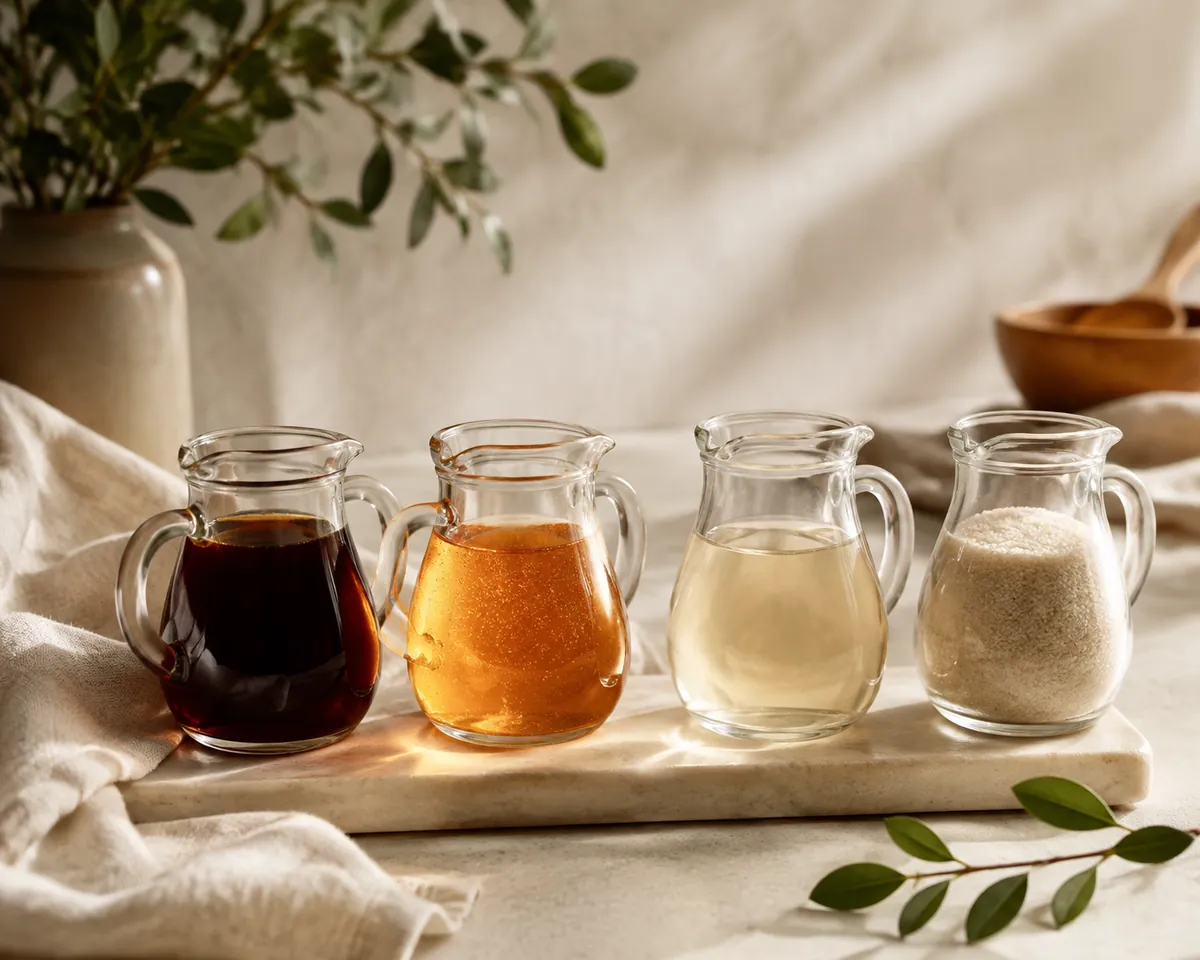
Sweetness is the easy half. Maple is roughly as sweet as granulated sugar volume for volume, so a spoonful replaces a spoonful; it is less sweet than honey, so a one-for-one swap there lands slightly under and tastes entirely different.
The second adjustment is liquid, since a tablespoon of syrup is 15 ml of actual liquid where a tablespoon of sugar is a solid. That is invisible in a mug of coffee and decisive in a small drink.
| Replacing | With maple | What changes |
|---|---|---|
| Granulated sugar | Same volume | Adds caramel and vanilla, and adds a little liquid |
| Simple syrup | Same volume | Similar body, much more flavour |
| Honey | A little more | Slightly less sweet, disperses far more easily cold |
| Brown sugar | Same volume | The closest match in flavour of any swap |
| Agave syrup | Rather more | Agave is sweeter and near-neutral; maple brings character |
Flavour rather than arithmetic decides whether the swap is a good idea. Maple in a drink that already tastes of roast, caramel or spice sinks into it agreeably; maple in a drink built on delicacy takes it over completely.
Getting it into coffee without it sinking
Maple in coffee is its commonest use after breakfast, and the two ways people get it wrong are the class they buy and the point at which they add it.
One large cup
- Espresso
- A double, or 120 ml of strong brewed coffee
- Milk
- 180 ml, steamed to 60 to 65 C
- Maple syrup
- 15 ml, one tablespoon, of a dark or very dark class
- Salt
- A few grains, which sharpens the maple noticeably
- Order
- Syrup into the hot espresso first, so it dissolves before the milk goes in
Dissolving the syrup into the espresso rather than stirring it into a finished latte is the step that decides whether the drink is sweet all the way down. Maple is denser than milk and it drops straight through, so a late addition ends up as a layer at the bottom that the first three mouthfuls never reach.
Class matters as much as timing. A delicate golden syrup vanishes completely under coffee and milk, so the money spent on it buys something the drink then removes, while a dark class holds its mineral edge against the roast.
A few grains of salt do the same job here that they do anywhere sweet, which is to stop the maple reading as flat. A pinch of cinnamon in the same cup pushes it further towards the spiced end without adding sweetness.
Cocoa, and the browning they share
Both flavours came out of the same reaction. Sugars browned under heat produce caramel and vanilla notes in maple from boiling the sap and in cocoa from roasting the bean, so the two meet rather than compete for the same space.
Fifteen millilitres of a dark class in a mug of hot chocolate replaces the sugar entirely and adds a savoury depth the drink has no other route to.
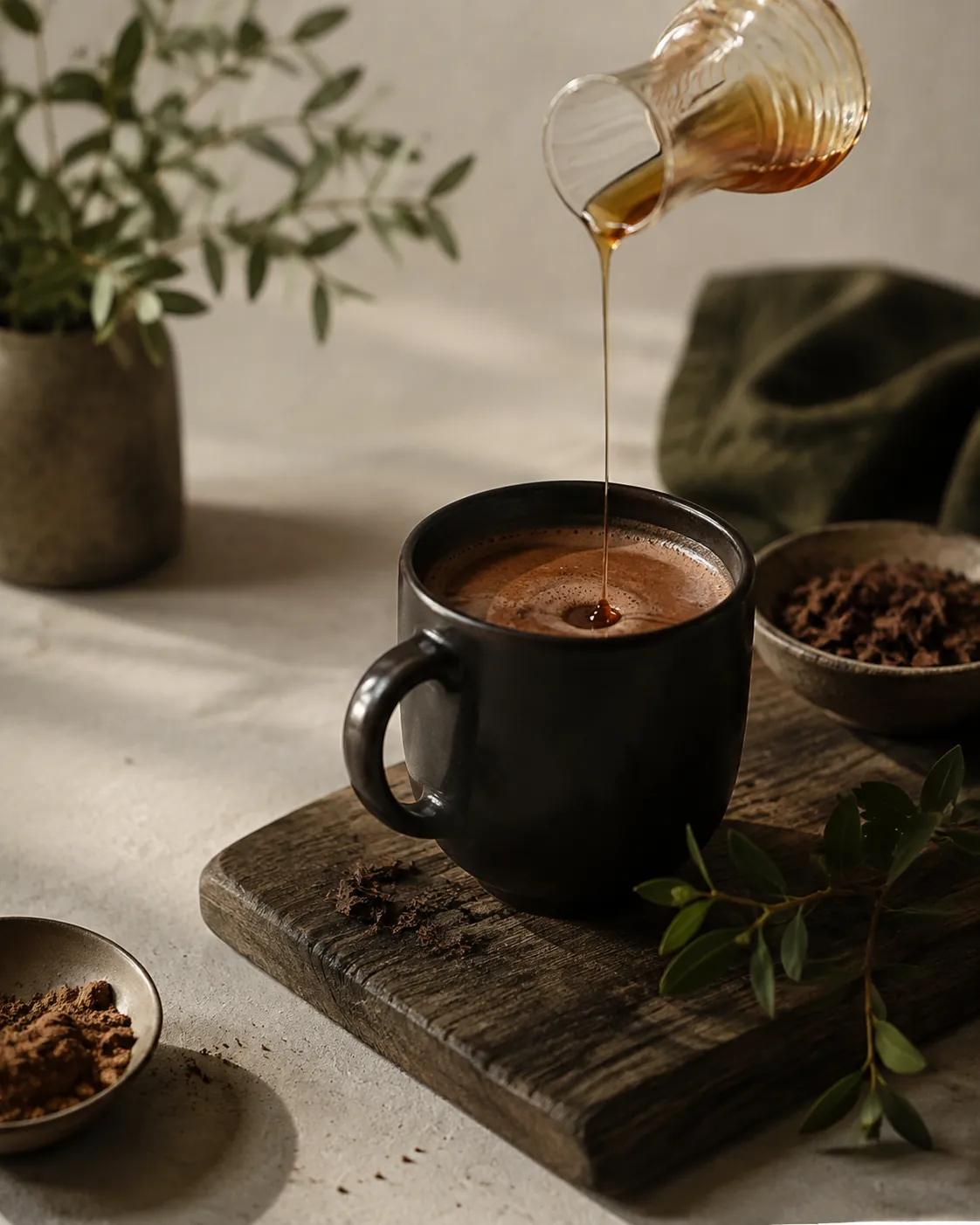
Choose the cocoa to match. A natural cocoa with real bitterness gives the maple something to sit against, and a high-percentage dark bar melted into a stovetop cocoa does the same.
It works far less well with white chocolate, which is already carrying as much sweetness as it can hold and offers nothing for the maple to push against.
Delicate classes are a waste here for the same reason they are a waste in coffee. The syrup has to survive the drink, and in cocoa there is a great deal of drink to survive.
Common questions
Is dark maple syrup lower quality?
No. All four classes are Grade A, and colour tracks when in the season the sap was collected rather than quality. The old naming implied otherwise. Darker syrup is generally the better choice for drinks because it stands up to coffee and spice.
Does maple syrup need refrigerating?
Once opened, yes, without exception. Unopened it keeps almost indefinitely because the sugar concentration is too high for microbes, but an opened bottle left in a cupboard will grow surface mould within weeks.
Can you use maple syrup in cold drinks?
Yes, and it is one of its advantages. Unlike honey it is not very viscous, so it disperses with a stir rather than sinking as a blob, and unlike granulated sugar it does not need dissolving first.