How to Make Iced Tea Strong Enough for the Ice
Strength and clarity pull against each other, because the heavy brew that survives the ice is also the one that clouds hardest in the fridge.

Brew iced tea at roughly 15 g of leaf per litre, which makes the first stage much stronger than a hot cup because the leaf steeps in only half the water, and steep it for no more than five minutes.
That fixes the watery jug. It does nothing about the second complaint, which is the jug going murky in the fridge, and those two problems pull in opposite directions.
How strong does iced tea need to be brewed?
Reach for more leaf rather than more time, because the two are not interchangeable here.
Fifteen grams per litre, or five to six bags, gives a brew strong enough to survive the ice that will be sitting in the glass with it.
Iced tea baseline
- Leaf
- 15 g per litre
- Or bags
- 5 to 6 per litre
- Hot steep
- 5 minutes, 10 at the very most
- Served
- Over ice
Melting cubes are the reason, because the ice turns into water in the glass that never appeared in the brewing ratio. A jug made at ordinary strength is diluted before you have drunk half of it.

A long steep pulls tannin faster than it pulls body, so ten minutes at ordinary strength gives you a jug that is both weak and astringent.
Weighing loose leaf is more reliable than counting bags, because bags vary in fill weight between brands.
The one exception is a jug meant to be drunk cold without ice, which can be brewed at ordinary hot-cup strength because nothing is going to dilute it.
Why does iced tea go cloudy?
Something is coming out of solution.
As the liquid cools, compounds from the leaf form a fine haze, often called tea creaming. University extension pages link cloudy iced tea to tannins released during steeping and to refrigerating hot tea before it has cooled.
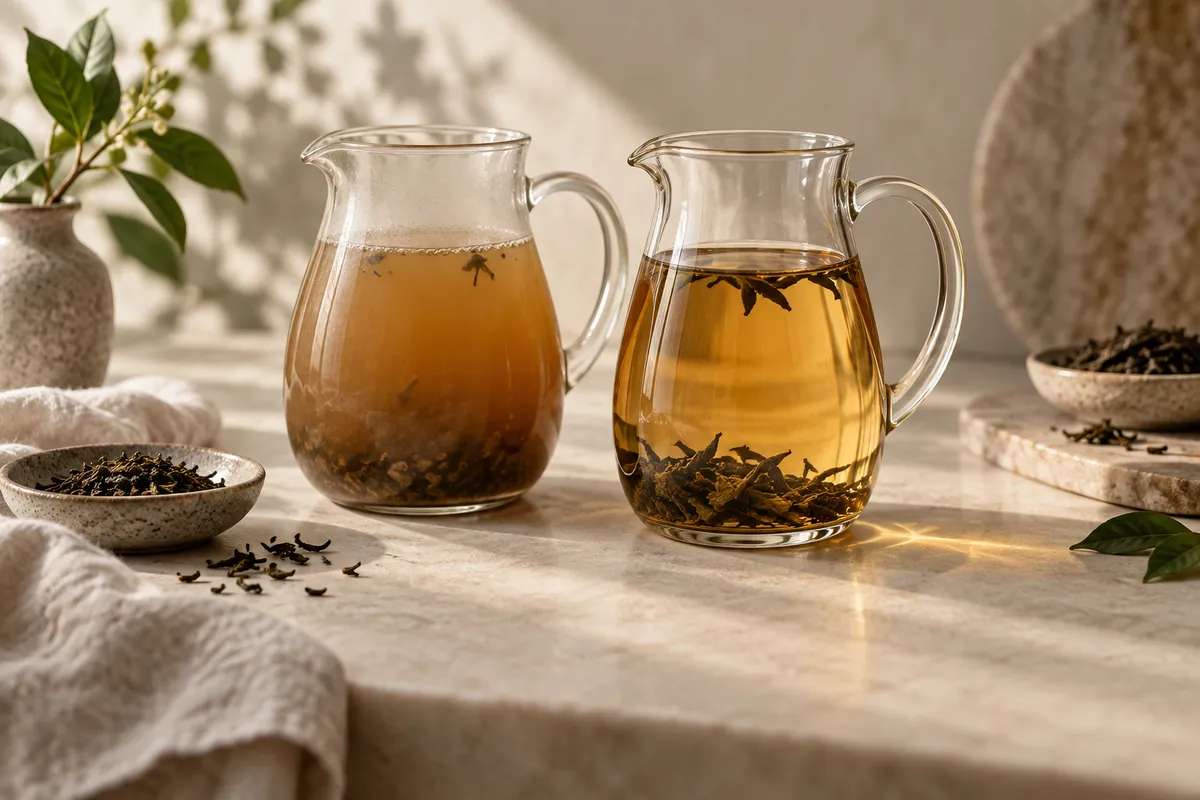
Speed is often the trigger, because a jug moved straight from a hot kettle to a cold fridge crosses the temperature range fast enough that the compounds clump rather than staying suspended.
Hotter water, longer steeps and hard water all make it worse: the first two put more tannin into the liquid, and the hard water adds minerals that can react with the same compounds.
The heavy brew that gives you strength is also the one carrying the most of what clouds, so every route below is a different compromise between the two.
How do you brew it hot and chill it down?
Steep the full dose in only half the water, then add the rest of it cold.
You are making a concentrate, not a jug, and the cold half you add afterwards does most of the cooling before the fridge is ever involved.
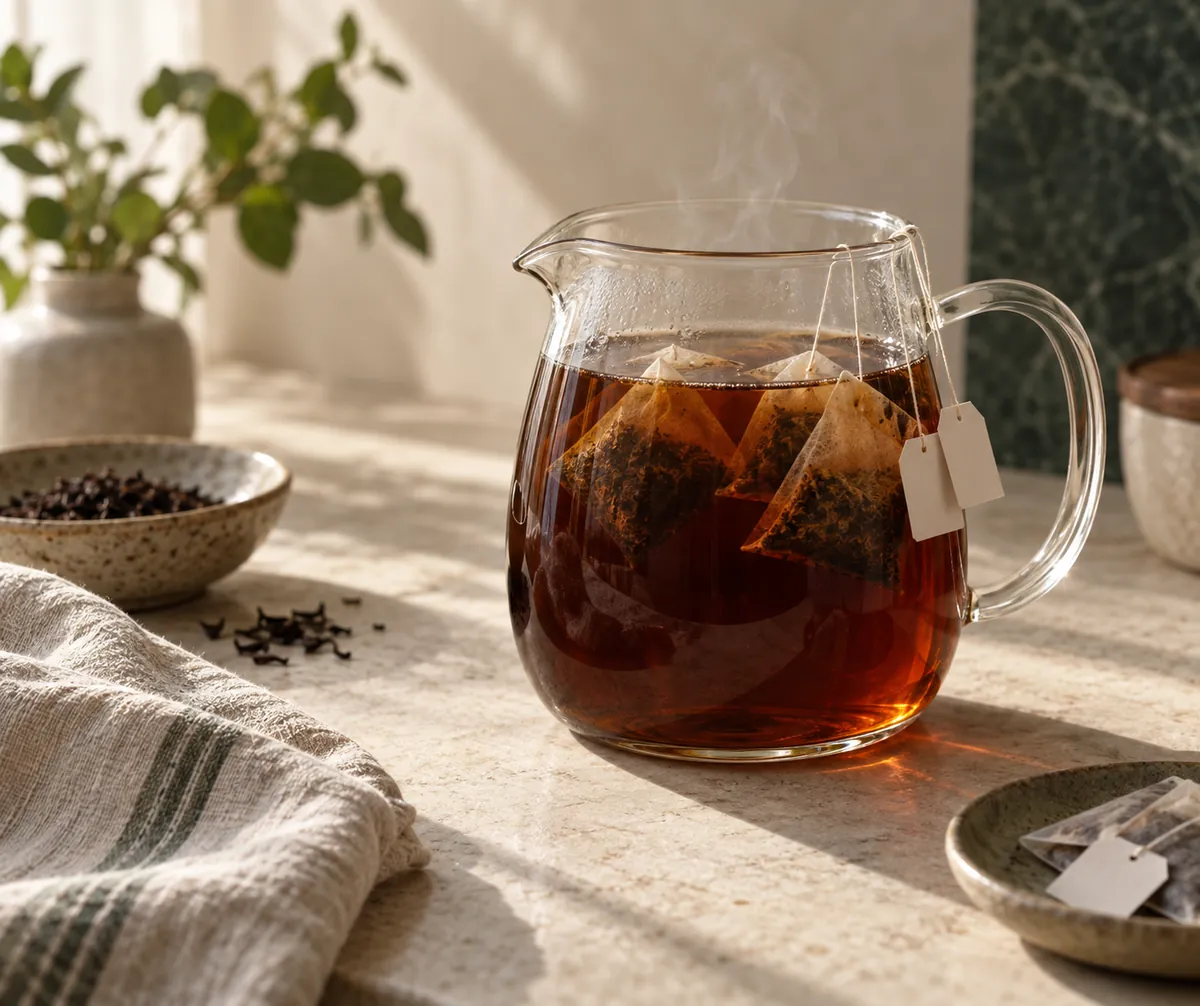
The fast route, in order
- SteepPut the full 15 g into 500 ml of hot water and time five minutes.
- StrainLift the leaf out on time, because a strong brew turns bitter faster.
- Top upAdd 500 ml of cold water straight away.
- RestLet the jug reach room temperature on the counter.
- ChillOnly then move it to the fridge.
A jug with a removable basket infuser makes that straining step trivial, which matters when the clock is the thing you are managing.
Removing the leaf on time matters more here than in a mug. There is far more leaf for the water, so every extra minute adds more astringency.
The room-temperature step is the one people skip, and it is the one that decides clarity. Ten minutes on the counter takes the edge off the temperature drop that causes the haze.
There is a practical reason too. A glass jug moved from hot to a cold shelf can crack as well as cloud, and neither is worth the ten minutes saved.
What is the hybrid method, and is it better?
It steeps twice, at two temperatures.
The hot phase runs short, then cold water and ice go in and the tea keeps infusing for about an hour at a much lower temperature.
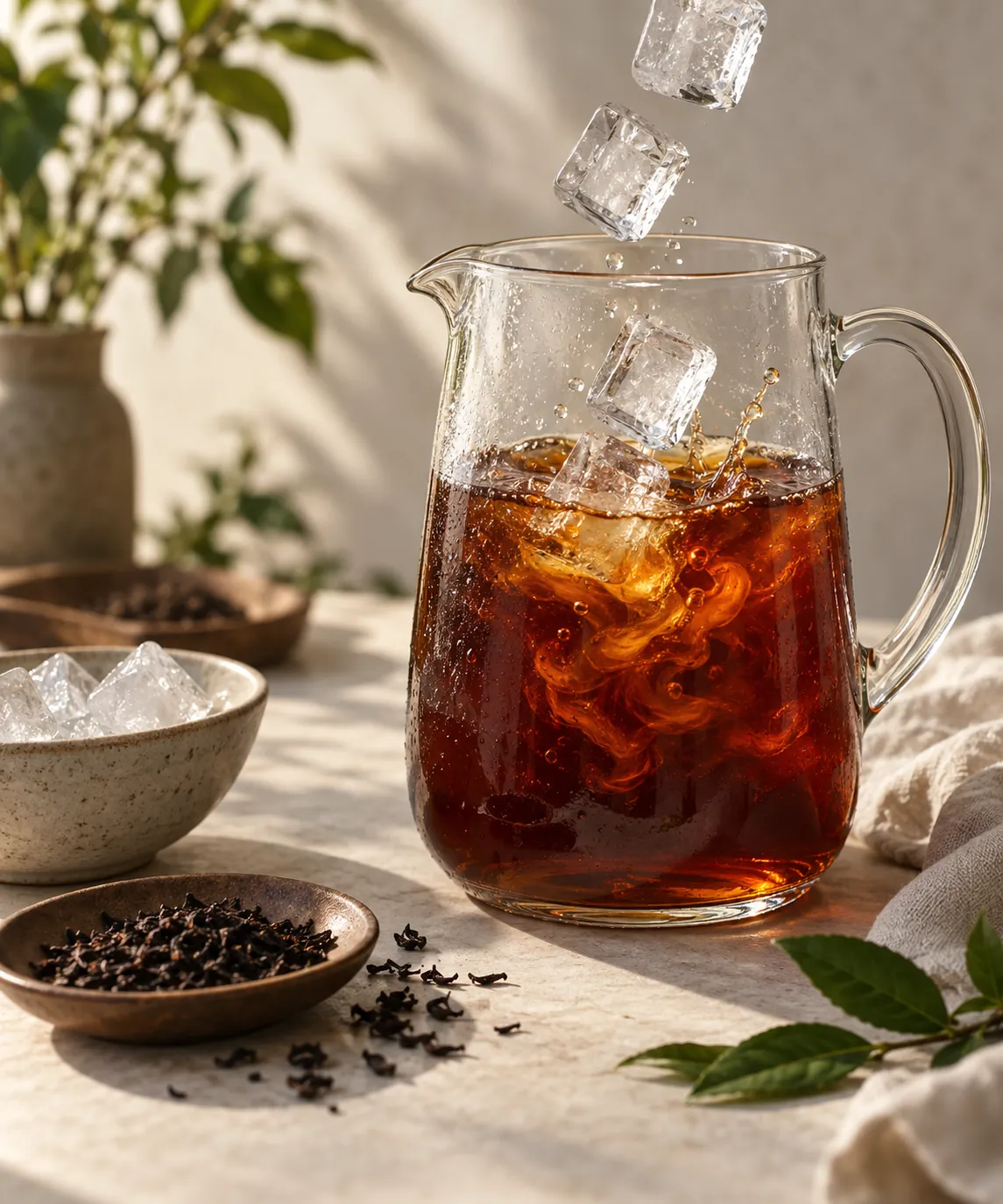
One likely reason it works is that different compounds need different temperatures. Aromatic ones keep dissolving in cool water while the astringent ones have largely stopped, so the hour adds fragrance without much bite.
You get most of the character of an overnight cold brew for an hour of waiting.
The hybrid is not free of the haze, though, because its hot phase means the jug clouds more than a fully cold-steeped one, just less than a straight hot brew.
In practice it is awkward as well: an hour ties up the jug, which makes it a poor method when you want one glass now.
Can you cold brew iced tea instead?
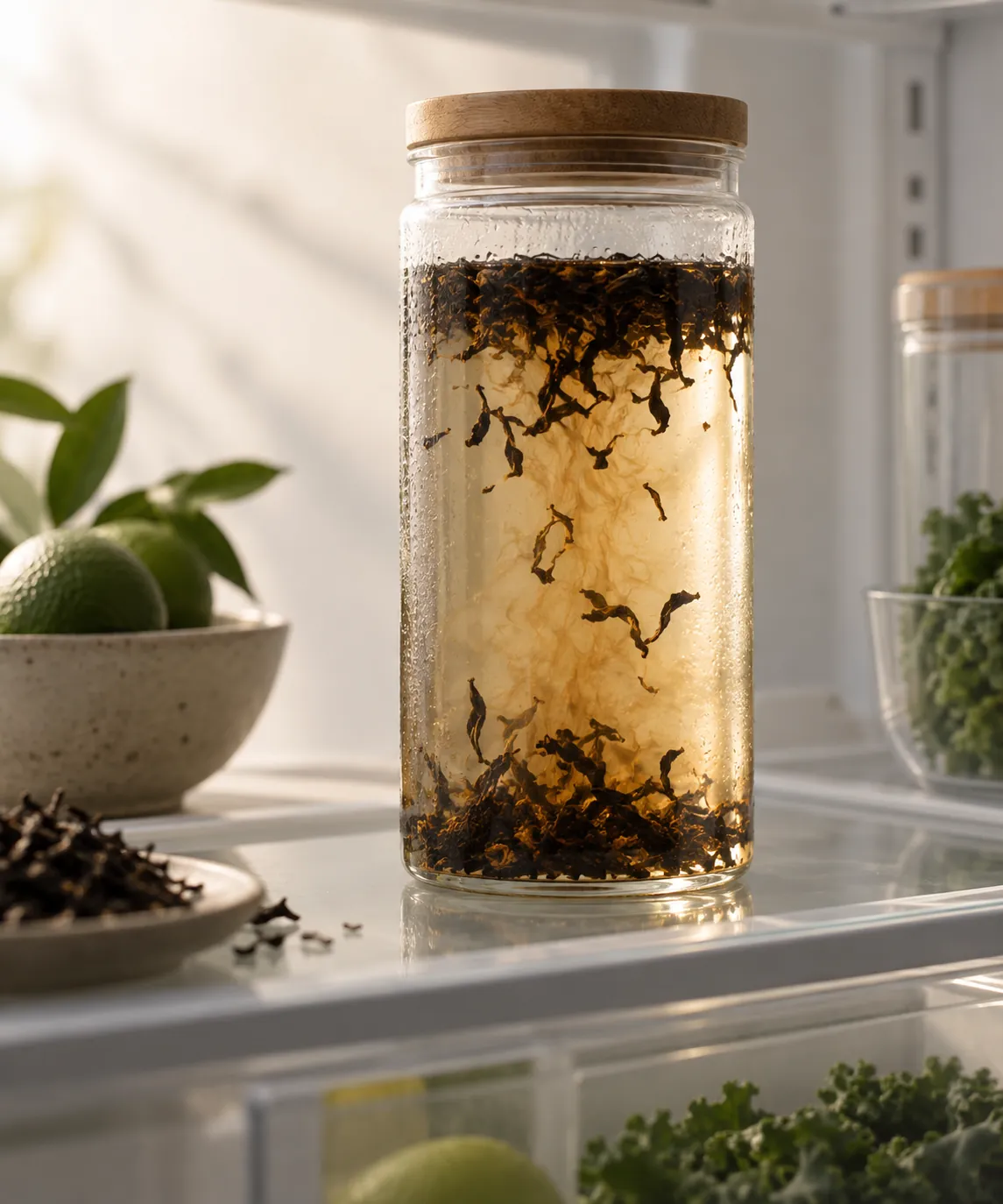
Yes, and it is the one route that removes the clouding problem rather than managing it.
Leaf left in cold water in the fridge for six to twelve hours infuses slowly, and cold water extracts fewer of the tannins that cause both bitterness and haze.
| Route | Time | Clarity | Character |
|---|---|---|---|
| Hot and chilled | About 1 hour | Clouds most | Full-bodied, brisk |
| Hybrid | About 1 hour | Clouds a little | Aromatic, rounder |
| Cold steeped | 6 to 12 hours | Stays clear | Smooth, sweeter, lighter |
There is a fourth route people ask about. Sun tea warms rather than brews, and it is a slower and less controlled version of the cold steep above.
The colour is misleading throughout: a cold steep at the halfway mark looks far too weak, and readers routinely abandon it or warm it up rather than waiting.
A cold steep needs more leaf for the same strength, since cold water extracts less overall and the same 15 g gives you a lighter jug than it would hot.
One limit is the leaf itself. Cheap broken material sometimes gives up very little in cold water however long it sits, because what it had was extracted easily and is not much.
Which teas work best iced?
Tannin decides how much a tea clouds, and body decides how well it survives the ice.
Black and oolong carry the most tannin, which makes them the briskest iced and also the ones that cloud hardest.
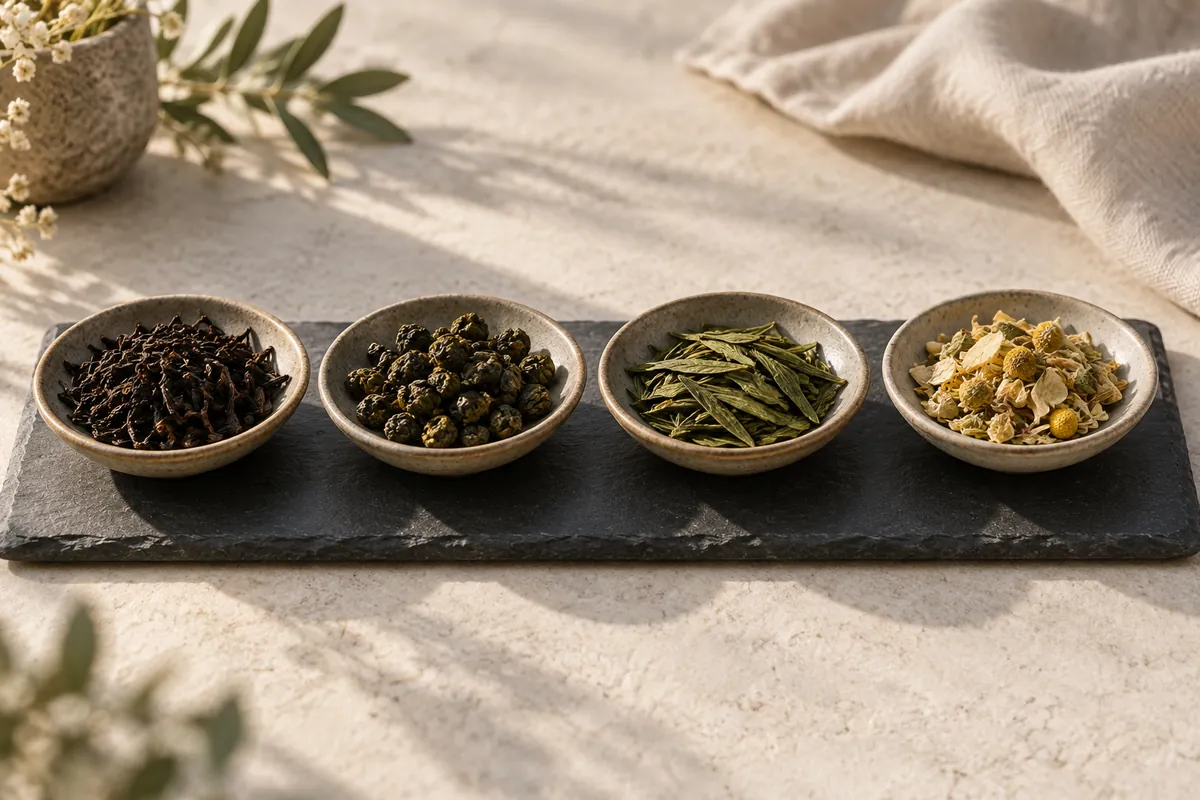
Black
Most tannin, briskest iced, clouds hardest of the four.
Green
Less tannin and clearer, but loses more character to the cold.
Herbal
Almost no tannin at all, and no clouding problem.
Robust leaf survives dilution better. A brisk assam or a ceylon still tastes of something after the ice has melted, where a delicate spring green simply disappears.
Cold changes aromatics as well as strength. Heavily scented teas can read soapy once chilled, which is worth knowing before you commit a whole jug of one.
The choice is therefore partly about looks, since a cloudy black tea tastes much as it should and tannin stops being a reason to avoid it if nobody is looking at the jug.
When should lemon, fruit, herbs, or milk go in?
Additions change more than flavour. Acid shifts colour, fresh fruit brings pulp and spoilage risk, herbs bruise into bitterness, and milk turns a clear jug into a drink that must stay cold from the moment it is mixed.
| Addition | Best moment | Why |
|---|---|---|
| Lemon or other citrus | In the glass just before serving | Keeps the jug flexible and prevents long contact with peel |
| Fresh fruit | After the tea is cold | Protects aroma and makes the fruit easy to remove |
| Mint or soft herbs | Lightly bruised at serving | Long steeping can make stems and torn leaves taste grassy |
| Simple syrup | In the jug or glass after chilling | Dissolves without reheating the tea |
| Milk or plant drink | By the glass | Keeps the main jug clear and reduces refrigerated holding time |
A squeeze of lemon brightens a brisk black tea and often makes the liquor look lighter. Add slices at serving rather than leaving peel in the jug overnight, because the white pith can contribute a hard bitter edge.
Fruit should be washed, cut with clean utensils, and kept refrigerated with the tea.
Soft berries break down quickly, so they suit a same-day jug better than one you expect to stay fresh for several days.
Milk belongs in the glass unless everyone wants it. It can split in strongly acidic tea, and a milky jug has a shorter practical life than plain brewed tea.
For herbs such as mint, a small fresh sprig gives a cleaner result than a handful crushed into the concentrate. The tea should still taste like tea after the addition, so start with less and add at the glass.
How do you sweeten iced tea properly?
Sugar barely dissolves in cold tea.
Stir granulated sugar into a cold jug and most of it will still be sitting on the bottom an hour later, however long you worked at it.
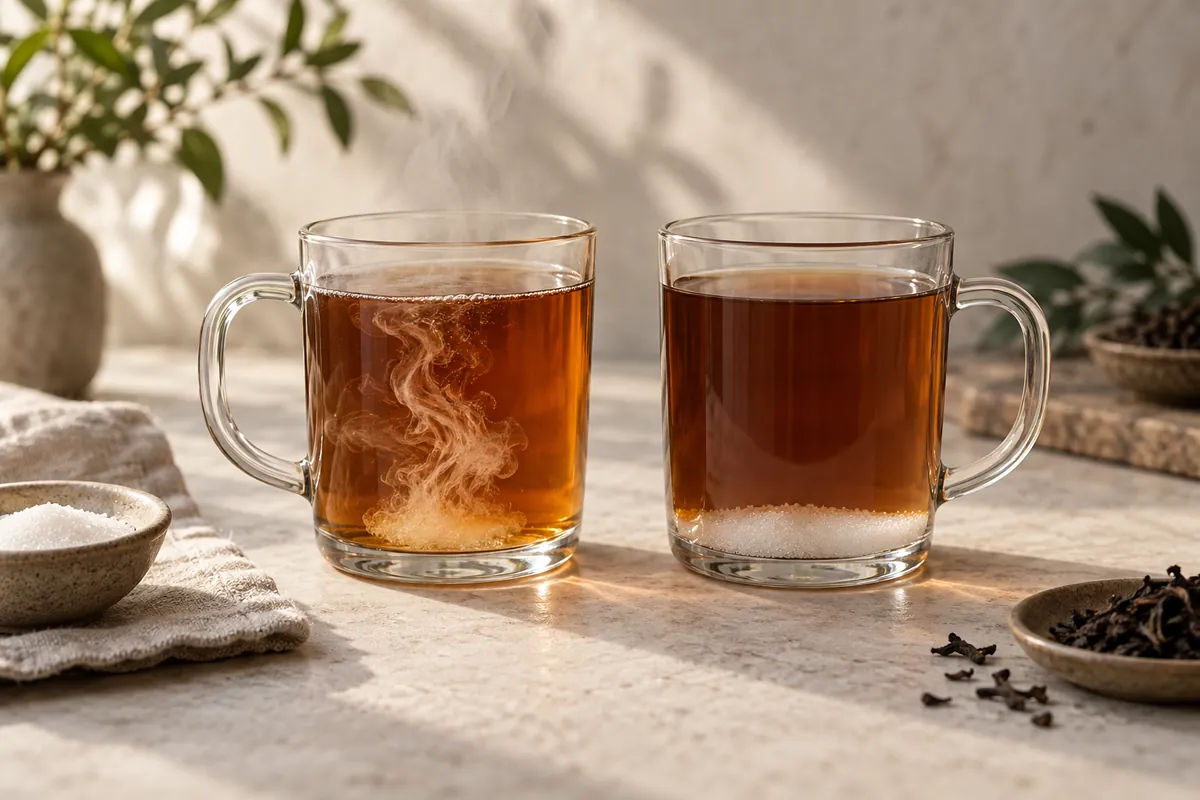
There are two moments that work. Add the sugar while the tea is still hot, which is what sweet tea recipes usually do, or keep sugar already dissolved in the fridge for jugs that are already cold.
Cold suppresses the perception of sweetness. The same quantity of sugar that reads balanced in a hot cup reads thin in a cold one, which catches people out mid-jug.
Syrup adds volume as well as sweetness, a small dilution but one that lands on top of the ice you already accounted for, so a sweetened jug wants brewing at the top of the range.
If more than one person is drinking, syrup on the table gives them the choice back, because sweetening the whole jug makes the decision for everyone.
How should you cool and store the finished jug?
Move the tea into the refrigerator once the initial heat has fallen, then keep it covered. A clean jug and clean serving utensils matter because brewed tea contains no later heating step to correct poor handling.
The sun tea method is attractive because it looks effortless, but sunlight is not a temperature control. Refrigerator cold brewing gives the same hands-off convenience with a stable environment.
- Wash and rinse the jug, lid, infuser, and tap before brewing
- Remove leaf or bags at the planned time
- Cool promptly and cover before refrigerating
- Pour with a clean utensil instead of reaching into the jug
- Discard tea that develops an off smell, fizz, ropey texture, or visible growth
Iowa State University Extension advises keeping brewed tea at room temperature for no more than eight hours and using refrigerated tea within three days. For the best aroma and clarity, a home jug is usually worth finishing sooner.
Clouding by itself is not a spoilage sign. An unexpected sour smell, gas, surface film, or texture change is different, and a doubtful jug should be discarded rather than tasted for diagnosis.
Store garnishes separately when possible. Lemon wheels, fruit, and herbs are easier to replace than an entire jug, and separating them keeps their changing flavour from being mistaken for a problem in the tea.
Iced tea method
- Makes
- 1 litre, about four glasses
- Ratio
- 15 g of leaf, or 5 to 6 bags, per litre of water
- Water temp
- Hot steep at full kettle temperature, then cooled
- Total time
- 70 min
What you need
- 15 g loose leaf tea, or 5 to 6 tea bags
- 500 ml hot water
- 500 ml cold water
- Ice to serve
Equipment
- Heatproof jug
- Kettle
- Scale or measuring spoon
- Strainer or basket infuser
Method
- SteepPut the full dose into 500 ml of hot water and time five minutes.
- StrainLift the leaf out on time, because a strong brew turns bitter faster.
- Top upAdd 500 ml of cold water straight away.
- RestLet the jug reach room temperature on the counter.
- ChillOnly then move it to the fridge.
- ServePour over a full glass of ice.
Common questions
Can you use leftover hot tea for iced tea?
Yes, if it was handled cleanly and refrigerated promptly. It will usually taste weak over ice, so serve it cold without much ice or combine it with a fresh stronger batch.
Can you freeze brewed tea into ice cubes?
Yes. Tea cubes reduce dilution in the glass, although they can pick up freezer odours unless the tray is covered.
Can decaffeinated iced tea still turn cloudy?
Yes. Removing most caffeine does not remove every polyphenol and mineral interaction that creates haze, so cooling method and water still matter.
Can you brew a second iced-tea jug from the same leaves?
A second infusion is possible with good loose leaf, but it will be lighter and should be brewed and chilled as a new batch. Do not top a fresh jug onto old wet leaves.