How to Make Sun Tea, Given What the Sun Actually Does
A jar on a step reaches perhaps 35 C on a good afternoon, which is a long way from a kettle.
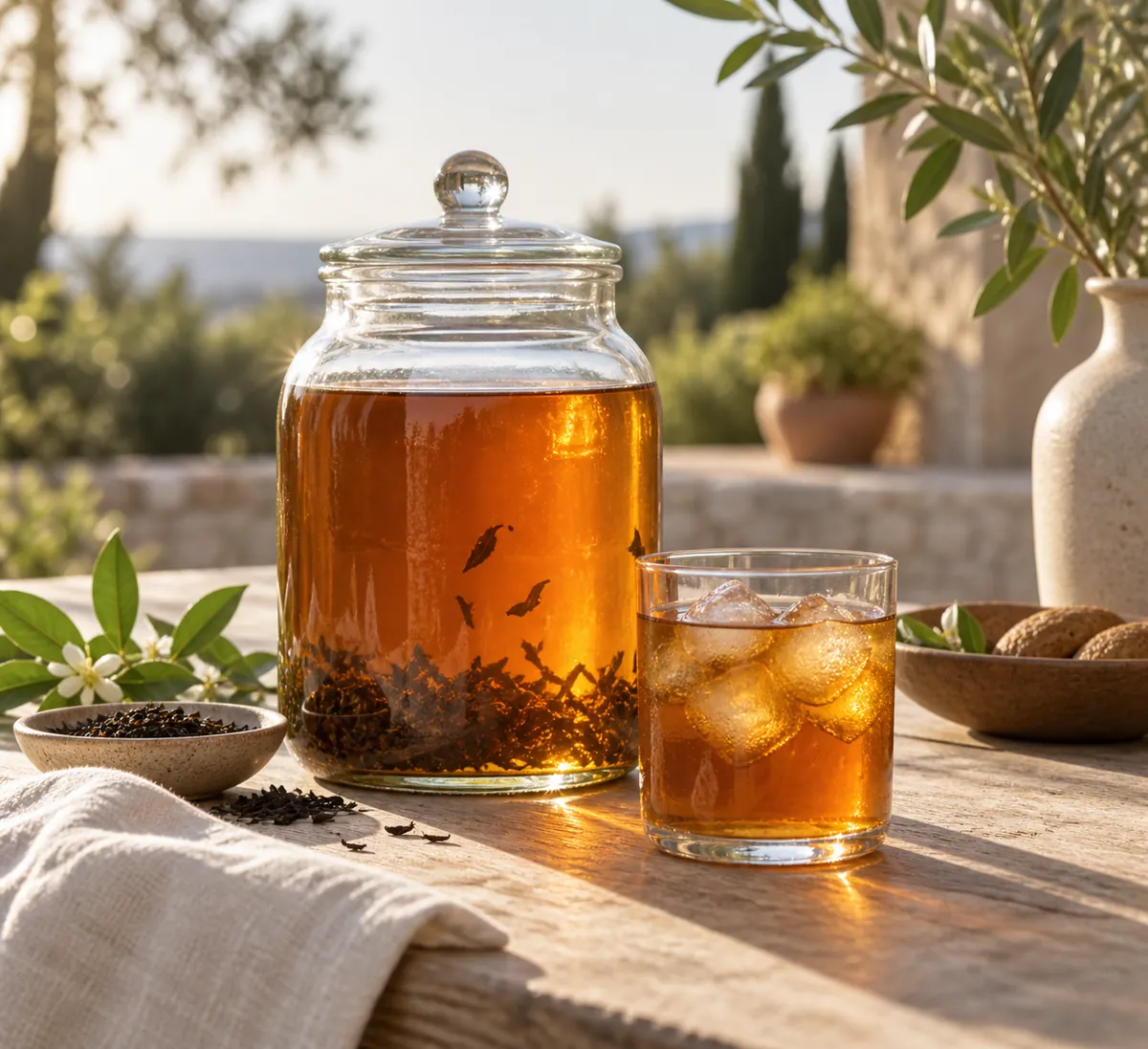
The name is doing some quiet lying.
Sun tea is warmed by sunlight rather than brewed by it, and the leaf has to make up the difference.
A jar on a step gets to perhaps 35 C on a good afternoon. That is a long way from a kettle, so the quantity of tea does the work the heat is not doing.
What do you need to make sun tea?
Glass, and somewhere the sun actually lands.
Everything else in the method follows from those two, and both of them are easier to get wrong than they sound.
| Item | Requirement | Why | Substitute |
|---|---|---|---|
| Jar | Clear glass, lidded | Light has to reach the water | Any clear lidded container |
| Place | Direct sun, unshaded | Warmth alone is not enough | None, shade changes the method |
| Water | Cool and filtered | It never gets hot enough to mask anything | Tap water if it tastes clean |
| Lid | Anything that covers | It stands outdoors for hours | Cling film or a plate |
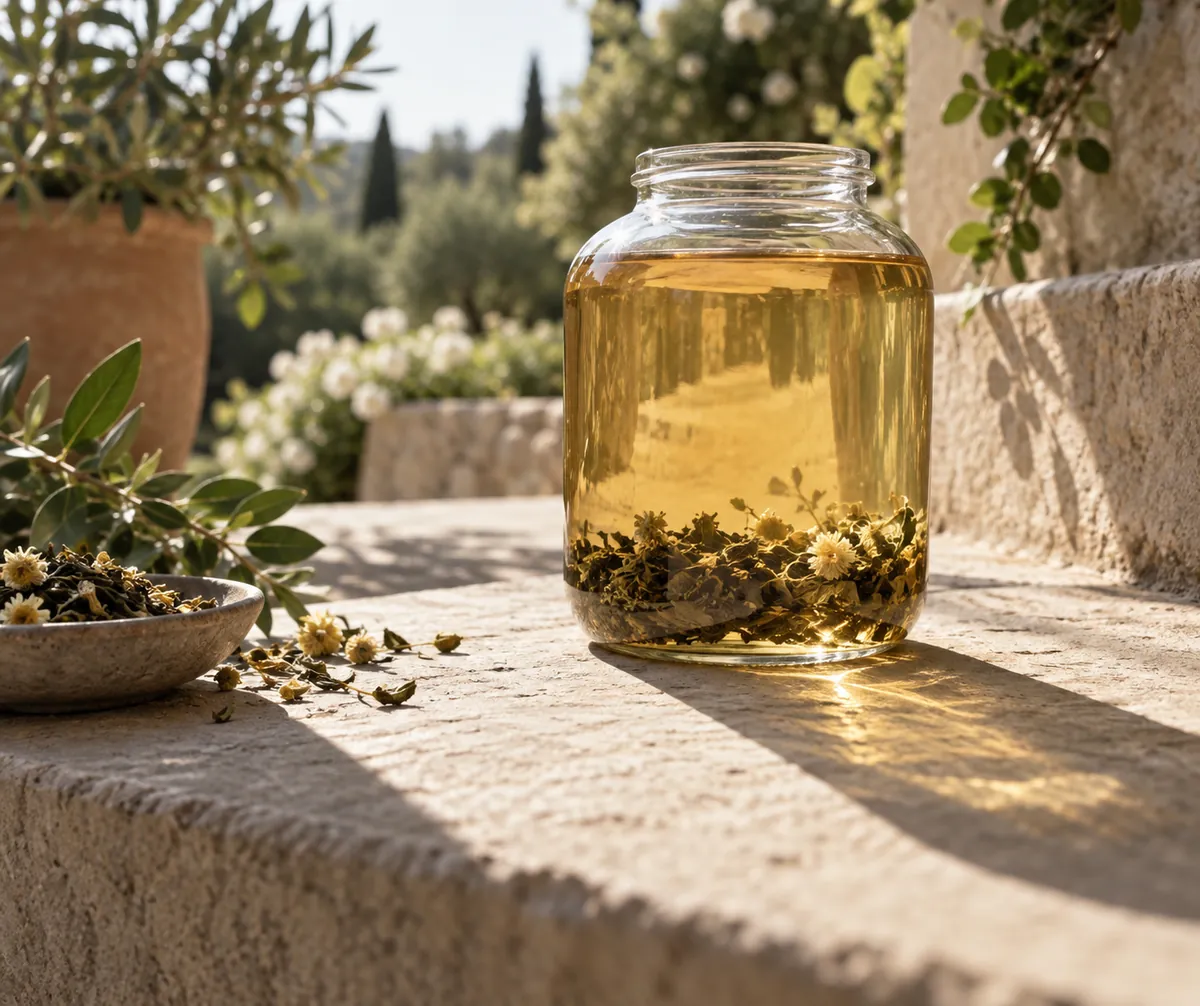
Clear glass is not decoration. The light has to get into the water to warm it, and an opaque jug simply sits at air temperature all afternoon.
The placement catches more people than the jar does. A kitchen windowsill behind glass, or a shaded patio table, both feel warm and neither delivers the direct sun this needs.
Look at the shadow if you are unsure. A hard-edged shadow means direct sun and a soft-edged one means you are effectively making cold brewed tea very slowly.
Use cool filtered water, not warm. Warm water from the tap starts an entirely different steep and defeats the point of the method.
Cover it while it stands. Four hours outdoors is four hours for things to fall into an open jar, and a lid costs nothing.
How much tea and how long in the sun?
Far more tea than you would use hot.
Nine to twelve bags to a gallon, or about fifteen grams of loose leaf to a litre, which is roughly double an ordinary brewing dose.
One jar
- Teabags
- 9 to 12 per gallon
- Loose leaf
- About 15 g per litre
- Time, bags
- 3 to 4 hours in direct sun
- Time, loose leaf
- 1 to 2 hours
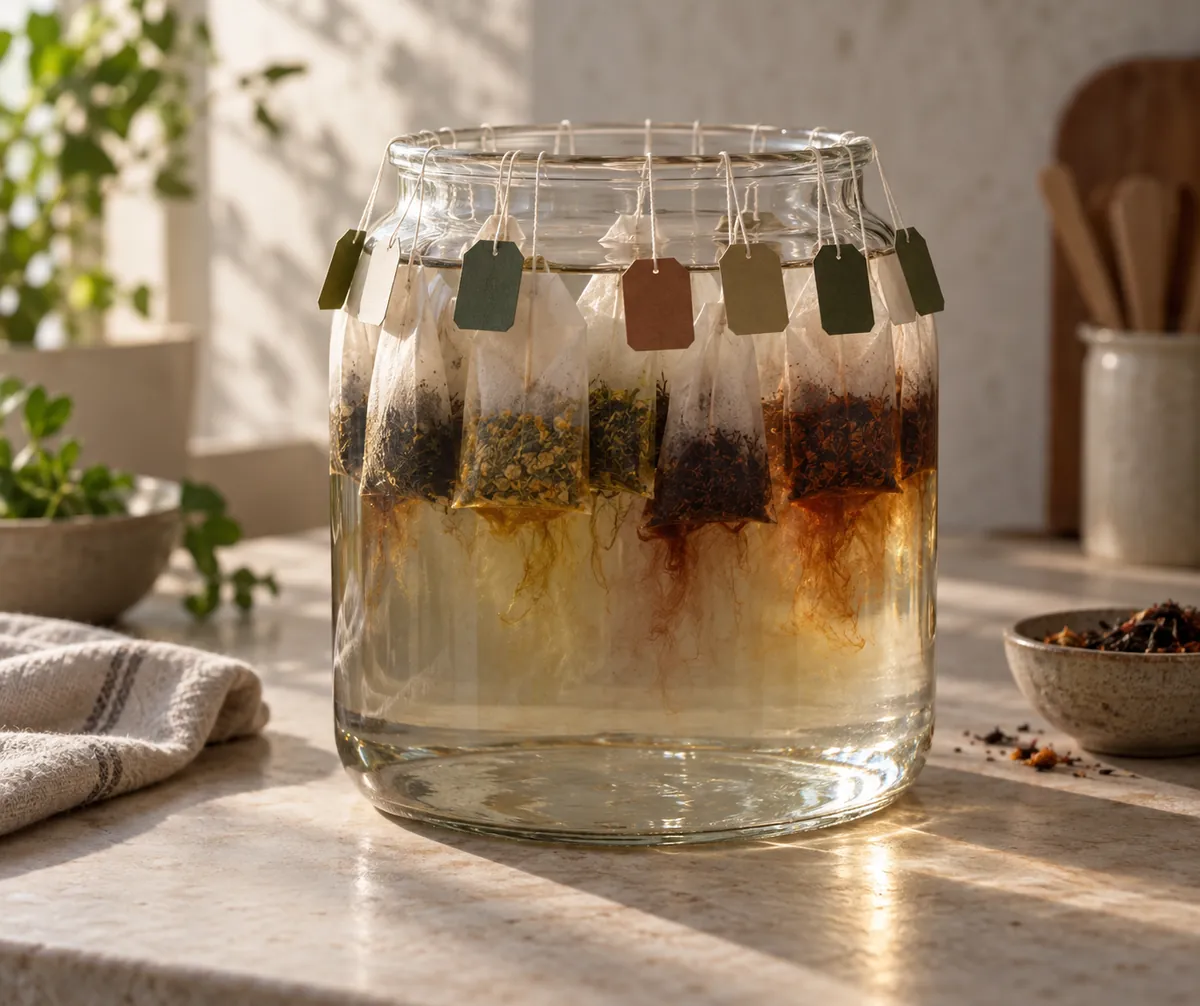
Nine bags is mild and twelve is full. Start at twelve if you intend to serve it over ice, because the ice will take a good deal of it back out again.
Loose leaf finishes much sooner than bags. Whole leaf has more surface in contact with the water, and a jar of it is often done in an hour where bags need three.
The tea type moves the clock too. Unoxidised green leaf reaches where it is going faster than black tea and gets grassy if left the full four hours.
Cloud cover slows it rather than stopping it. An overcast afternoon will still make the tea, just closer to the four hour end than the one hour end.
How do you make sun tea step by step?
Wash the jar, fill it cool, put it in the sun, and watch the colour rather than the clock.
Sun tea, in order
- WashClean the jar and its lid thoroughly. This step matters more here than anywhere else.
- FillCool filtered water, then the bags or loose leaf, then the lid.
- PlaceDirect sun, undisturbed, for one to four hours depending on the leaf.
- FinishTake out the leaf, then straight into the fridge.
The wash is not housekeeping fussiness. This is the one brewing method where nothing ever gets hot enough to change what was already in the jar, so it starts clean or it does not start well.
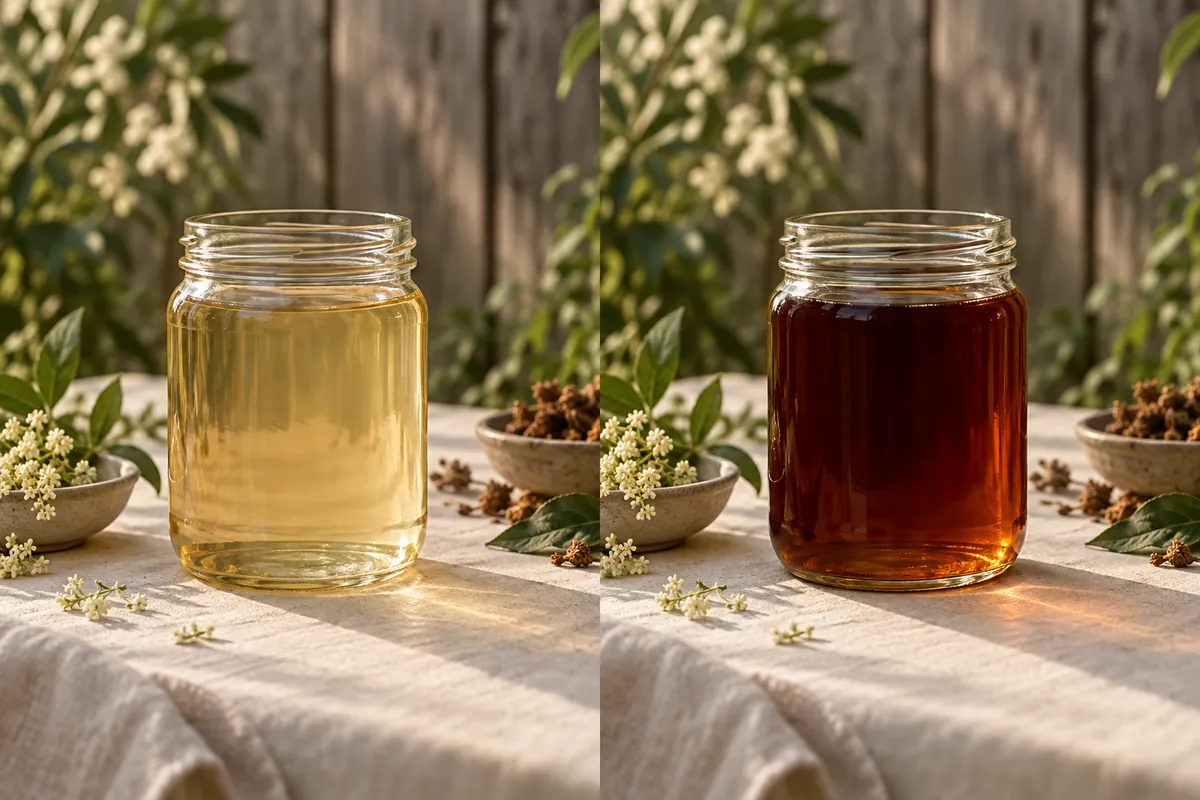
Judge it by colour. A jar you can still see clearly through is not finished, and one dark enough to hide what is behind it is.
Do not move it into shade partway. The steep more or less stops when the light does, which is why an afternoon of moving the jar around the garden gives a weak jug.
Take the leaf out before it goes in the fridge. Bags left floating keep extracting overnight in the cold, and the jug you poured at four o'clock is a different drink by breakfast.
Why does sun tea taste different from hot-brewed tea?
Tannin needs heat that a jar on a step never reaches, so the compounds that make a hot cup brisk are largely left behind in the leaf.
Three temperatures, three cups
- Fridge cold brew4 C | Sweetest, slowest, cleanest
- Sun tea30 to 40 C | Round, soft, mildly aromatic
- Hot brewed95 C | Brisk, astringent, fully aromatic
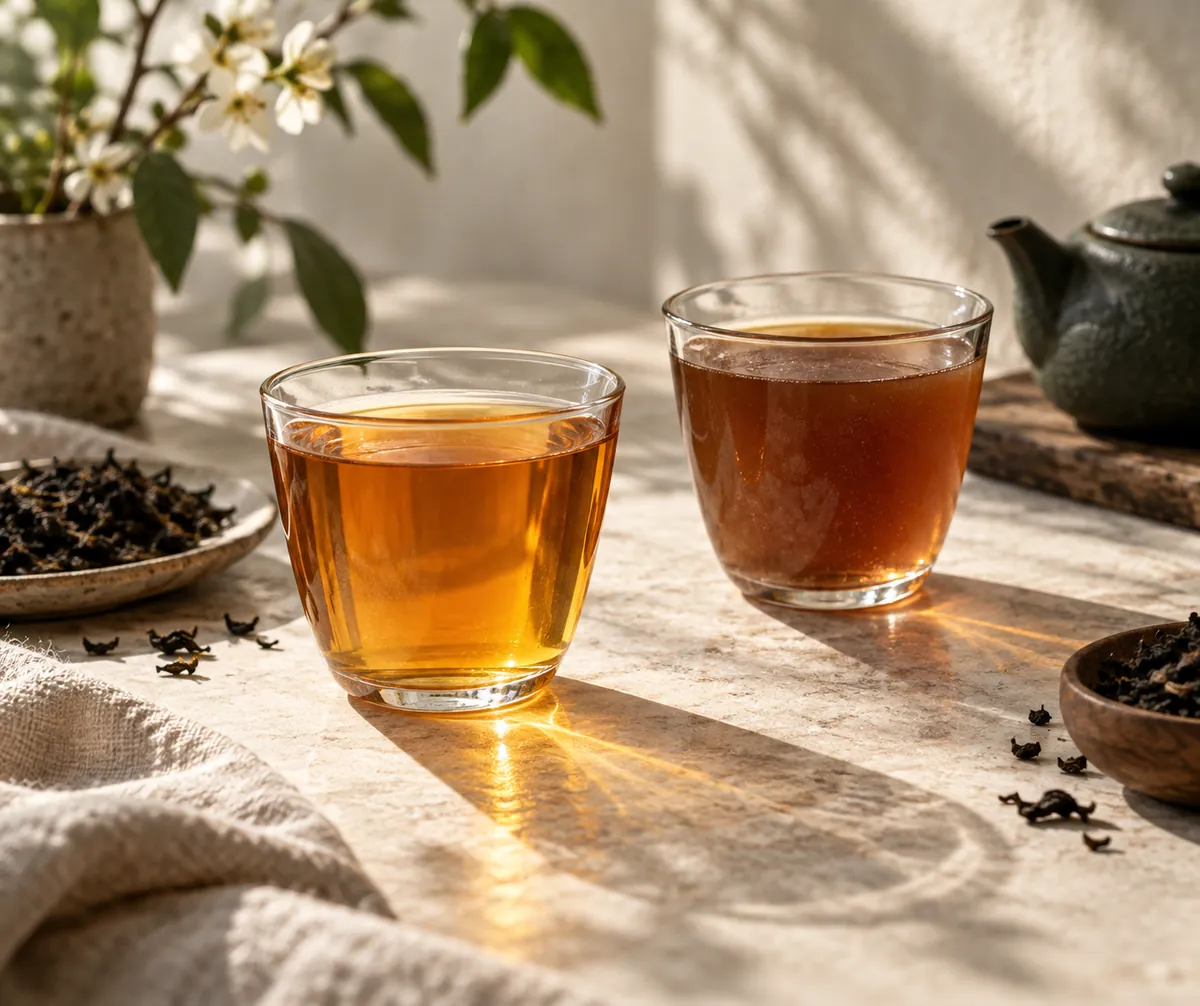
Tannins need heat and they are not getting it. That is the entire mechanism, and it is why a sun tea reads smooth and slightly flat where a hot brew reads sharp.
There is a real gain in this. You cannot make a sun tea bitter by forgetting it, because the compounds that turn a hot brew harsh are barely coming out at all.
There is a real loss too. The aromatics that lift a good leaf mostly need hot water, so a fine Darjeeling flush gives up more in this jar than a plain breakfast blend does.
Match the leaf to the method. Robust, straightforward teas suit sun tea, and anything you bought for its perfume is better off in a pot.
Why is there a four hour limit on sun tea?
Warm rather than hot is the one condition this method creates that a kettle never does, and four hours is the ceiling that comes with it.
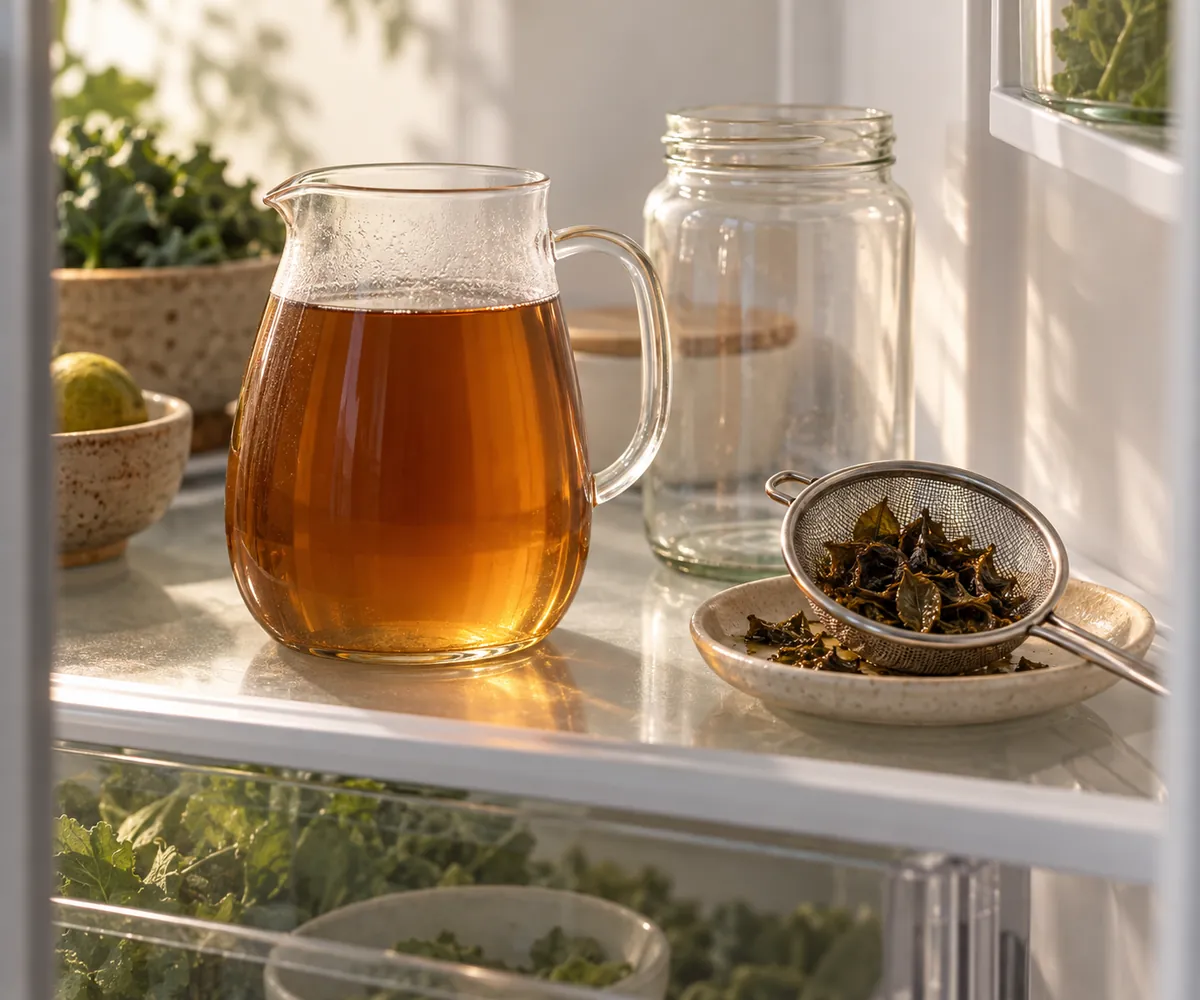
Keep the jar outside for no more than four hours, then strain and refrigerate the tea even if its colour is still light.
Straining is half the rule. Wet leaf sitting in a warm jug is the part of the jar that changes fastest, and taking it out is what lets the fridge do its job.
The keeping window is short. A day or two refrigerated, not the week a bottle of squash would last, and less than that if you added fruit.
An overnight jar is not a decision. If it stood outside past dark, it goes down the sink, and there is no version of this where waiting longer improves anything.
The alternative avoids the ceiling entirely. A jar of iced tea built cold in the fridge takes longer and has no standing limit at all.
How do you sweeten and flavour sun tea?
Sugar is the problem, and it is a physics problem rather than a taste one.
At the start
Citrus peel, mint, lemon slices. They need the whole steep to give anything.
The cost
Fruit in the jug shortens how long it keeps. Drink those the same day.
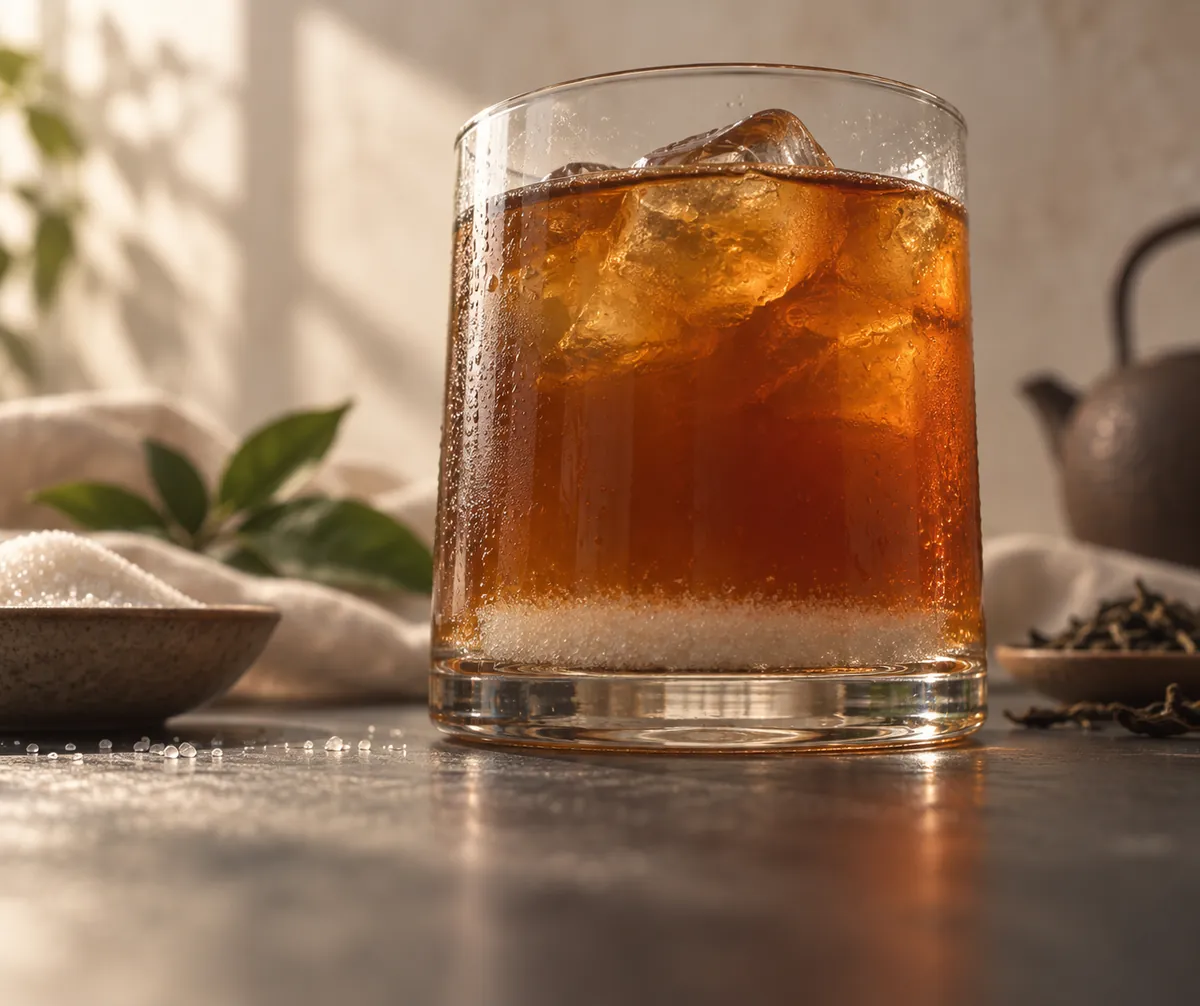
Granulated sugar will not go into cold tea. It sits on the bottom, and stirring it merely moves the layer around before it settles again.
So make it a liquid first. Equal parts cane sugar and hot water, cooled, and it mixes into a cold jug in seconds.
Southern sweet tea takes the other route. It dissolves the sugar into a small amount of hot tea at the start, then tops the jar up cold, which works and is a different drink.
Aromatics go in at the beginning. Lemon peel, a handful of fresh mint, a few slices of orange, all of them need the full three or four hours to give anything up at this temperature.
Take the herbs out with the tea. Mint left in the jug overnight goes from fresh to vegetal, and it happens faster than you would expect.
Why is my sun tea weak or cloudy?
Weak and cloudy are two different complaints, and one of them is not a fault at all.
- How many bags went in, against the nine to twelve the jar wants?
- Did the jar sit in genuinely direct sun for the whole time?
- Did the finished jug go into a very cold fridge immediately?
- How long has that box of teabags been open?
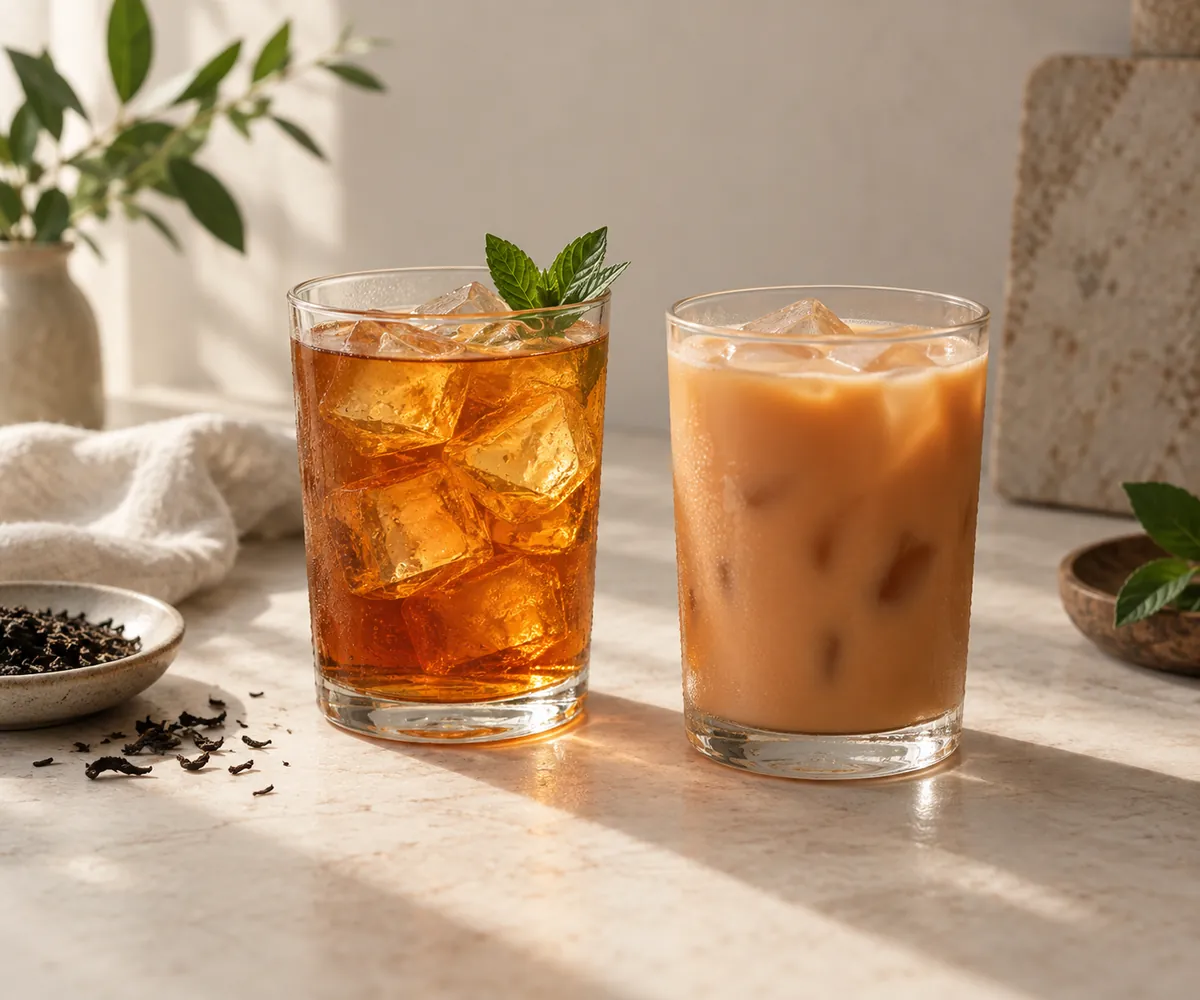
Bag count is the leading cause of a weak jug. Six bags in a gallon makes tinted water, and it is the most common version of this complaint by a distance.
Placement is the second. A jar that spent the afternoon in dappled shade has been cold brewing slowly rather than sun brewing, and four hours is nowhere near enough for that.
Cloudiness is a chilling artefact. Cooling the jug very fast makes some compounds drop out of solution, and a cloudy sun tea tastes exactly like a clear one.
Hard water makes it worse. If your jug clouds every time and your kettle scales, those two things have the same cause.
Old bags are the last case. Tea that has been open in a cupboard for a year makes a flat jar whatever the sun does, and the way it was stored matters more than the afternoon it spent outside.
Sun tea method
- Makes
- About 4 litres, one gallon jar
- Ratio
- 9 to 12 teabags per gallon, or 15 g of loose leaf per litre
- Water temp
- Whatever direct sun gives, usually 30 to 40 C
- Steep time
- Three to four hours for bags, one to two for loose leaf
- Total time
- 240 min
What you need
- 9 to 12 teabags per gallon, or 15 g of loose leaf per litre
- Cool filtered water
- Lemon peel or mint at the start, optional
- Simple syrup at the end, optional
Equipment
- Large clear glass jar with a lid
- Sieve or strainer
- Jug for the fridge
Method
- WashClean the jar and its lid thoroughly before anything goes in.
- FillCool filtered water, then the bags or loose leaf, then the lid.
- PlaceDirect sun, undisturbed, for one to four hours depending on the leaf.
- JudgeIt is ready when the jar is dark enough to hide what is behind it.
- FinishTake the leaf out, then straight into the fridge.
Common questions
How many teabags do you need for sun tea?
Nine to twelve per gallon, which is roughly double a hot brew. Start at twelve if you plan to serve it over ice.
Why is there a four hour limit on sun tea?
The jar sits warm rather than hot, so it is treated as a short afternoon project. Strain the leaf and refrigerate as soon as it comes in.
Does sun tea have to be in direct sunlight?
Yes. A shaded jar is cold brewing very slowly instead. Look at the shadow: a hard edge means direct sun, a soft one means shade.
Why is my sun tea cloudy?
Usually because it was chilled very fast, and hard water makes it worse. A cloudy jug tastes exactly the same as a clear one.