How to Make Instant Coffee Without Scalding It
The coffee was already brewed once in a factory, so boiling water has nothing left to extract and everything left to damage.
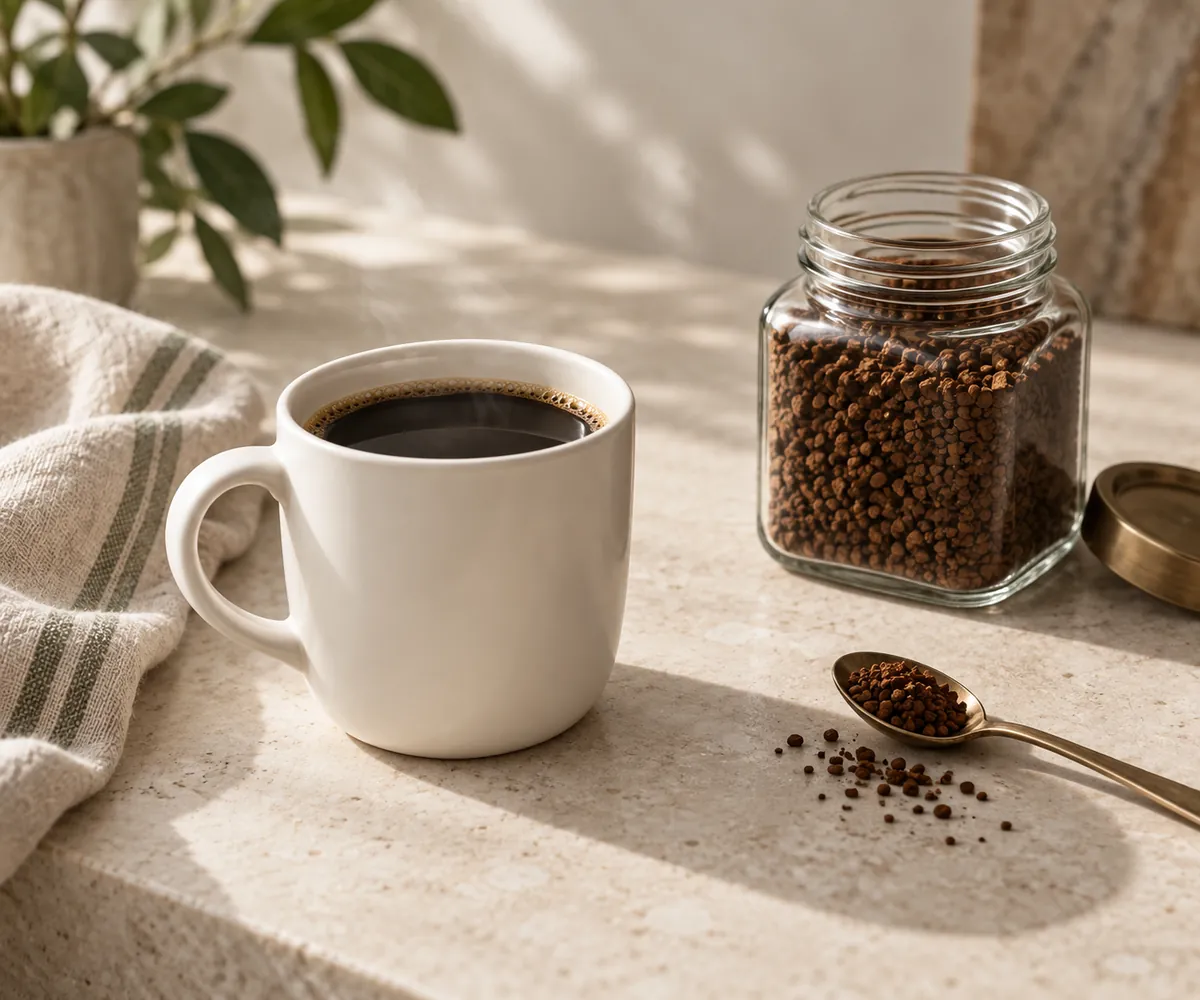
Make instant coffee with one rounded teaspoon per mug and water at about 94 C, which means waiting a minute after the kettle clicks off.
That pause is the single biggest improvement in technique available here. There is no grind to adjust and no brew time to manage, so the water and the jar are almost the whole story.
How much instant coffee, and how hot should the water be?
One rounded teaspoon to a mug.
That is roughly 2 g into 175 to 200 ml, with water at around 94 C and no contact time to think about at all.
A pour-over gets stronger the longer the water sits on the grounds, but nothing of that kind happens here. Because there is no extraction, a longer wait changes nothing and more powder is the only lever you have.
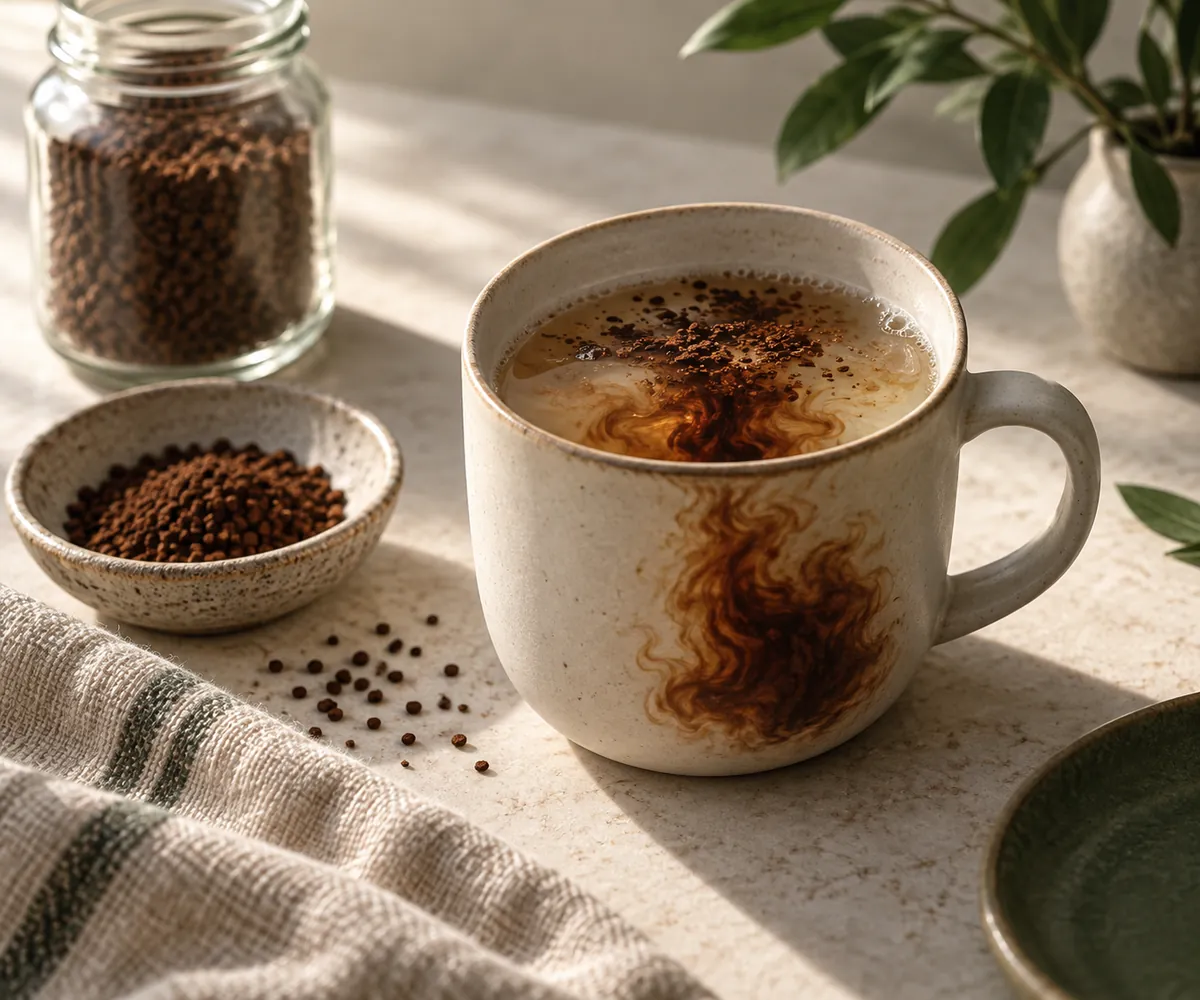
The spoon is less reliable than it looks. A heaped teaspoon can carry much more than a level one, which is a main source of the variation between a good mug and a thin one.
Granule type shifts it further. Freeze-dried crystals are less dense than spray-dried powder, so the same spoon of one carries noticeably less coffee than the other.
Why does boiling water make instant coffee taste worse?
Because the coffee has already been brewed once, in a factory, and then dried.
Everything soluble has been extracted, so there is nothing left in the granule for hotter water to reach. Heat can only act on what is already dissolved.
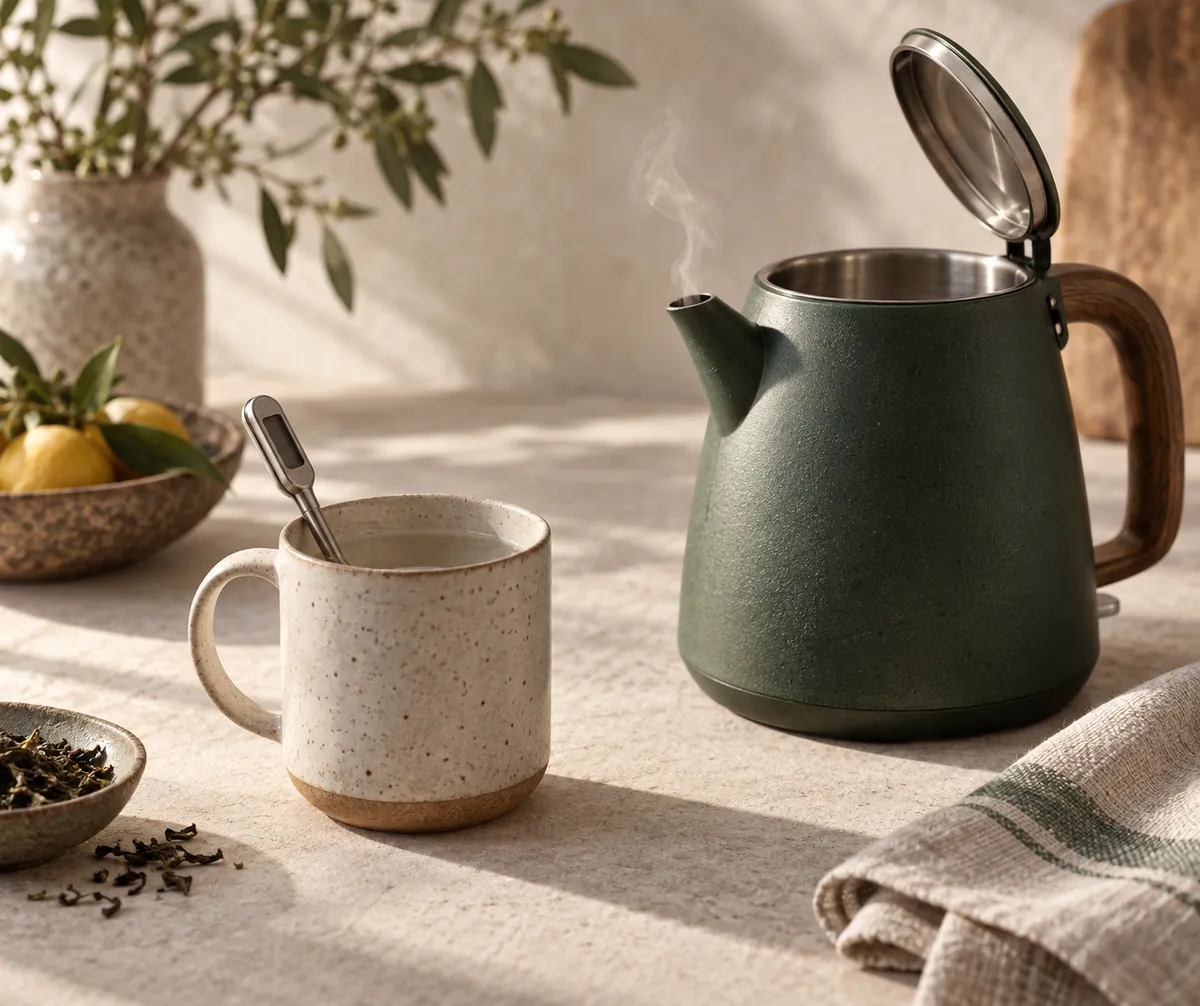
Boiling water scalds those solids. At a full boil the dissolved coffee tips into a taste we recognise as burnt, and it does it instantly.
What each water temperature does to instant coffee
- Below 85 CGranules dissolve sluggishly and the cup reads weak
- Around 94 CSolids dissolve cleanly and the aroma survives
- 100 C rolling boilThe dissolved solids scald and the cup tastes burnt
The same moment brings a second loss, because aromatic compounds are volatile and boiling water drives them off as the granules go into solution rather than letting them reach the drinker.
With ground coffee, hotter water extracts more, so the usual brewing logic misleads here: there is nothing to extract, and the same instinct does pure damage.
Two habits partly hide the fault. A cold mug pulls the water down several degrees on contact, and cold milk added immediately does the same, so the same kettle gives you a worse black coffee than a white one.
What does making a paste first actually change?
A few drops of water, stirred into the granules before the mug is filled.
They go glossy and thick, like a dark syrup, and then the rest of the water goes in on top.
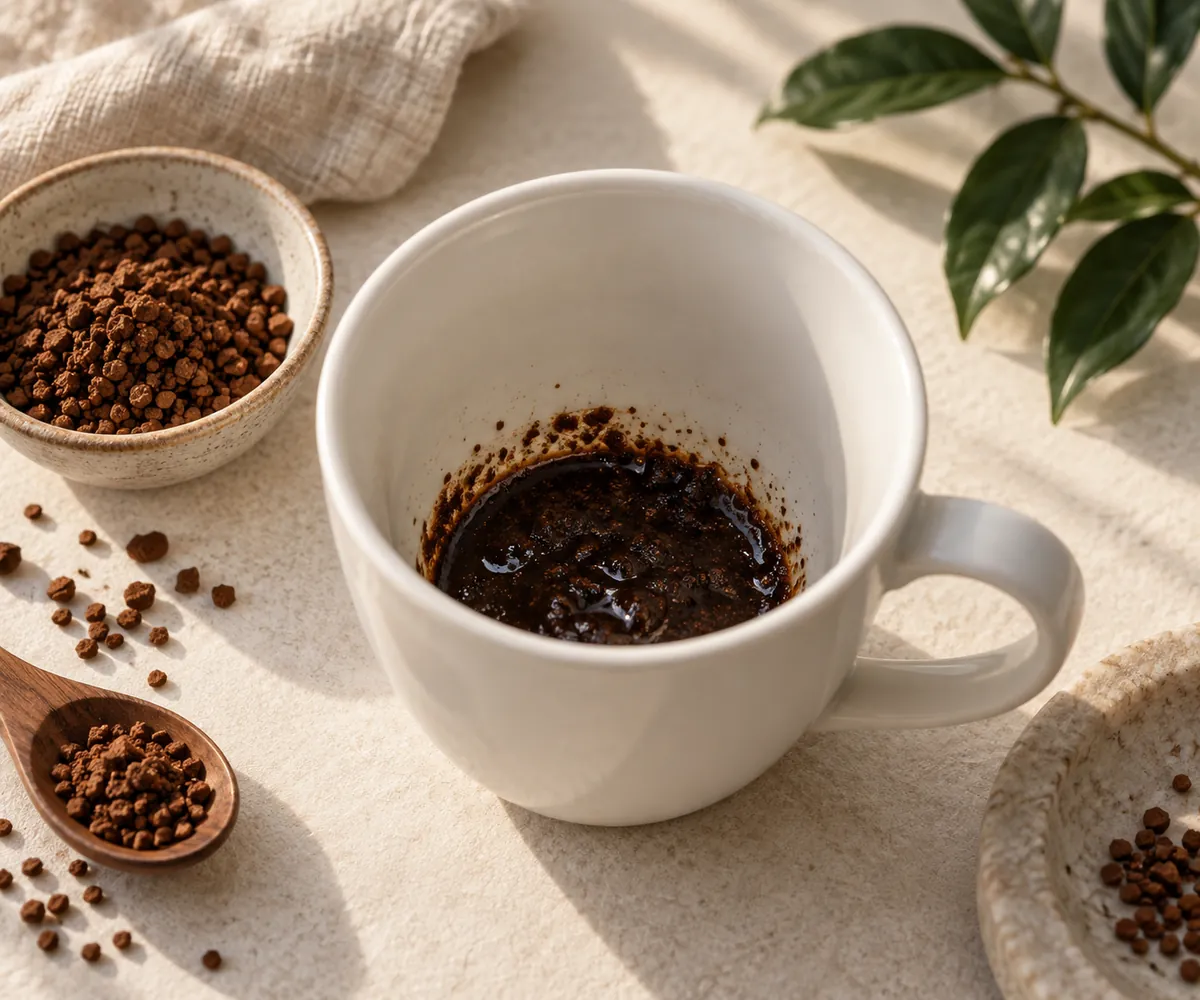
Two things genuinely improve. Every granule dissolves, so nothing gritty settles at the bottom of the mug.
The stirring also beats air into the mixture, which leaves a light pale head that looks a little like crema without being anything of the sort.
Because the same powder is in the same water, the strength stays where it was, and if you expect a stronger cup you will not find one.
The paste step improves texture and appearance for ten seconds of work and does nothing for flavour, and no amount of stirring will rescue a cup poured with boiling water.
The step matters less with fine powder, because spray-dried granules dissolve so readily that they leave little grit behind anyway, where crystals benefit more.
Freeze-dried or spray-dried: which should you buy?
The two words on the jar describe how the water was taken out of the coffee, and that single difference decides most of what you are going to taste.
Spray-drying blows liquid coffee through hot air. The heat drives off aromatics and leaves the burnt, bitter note that most people think of as the taste of instant.
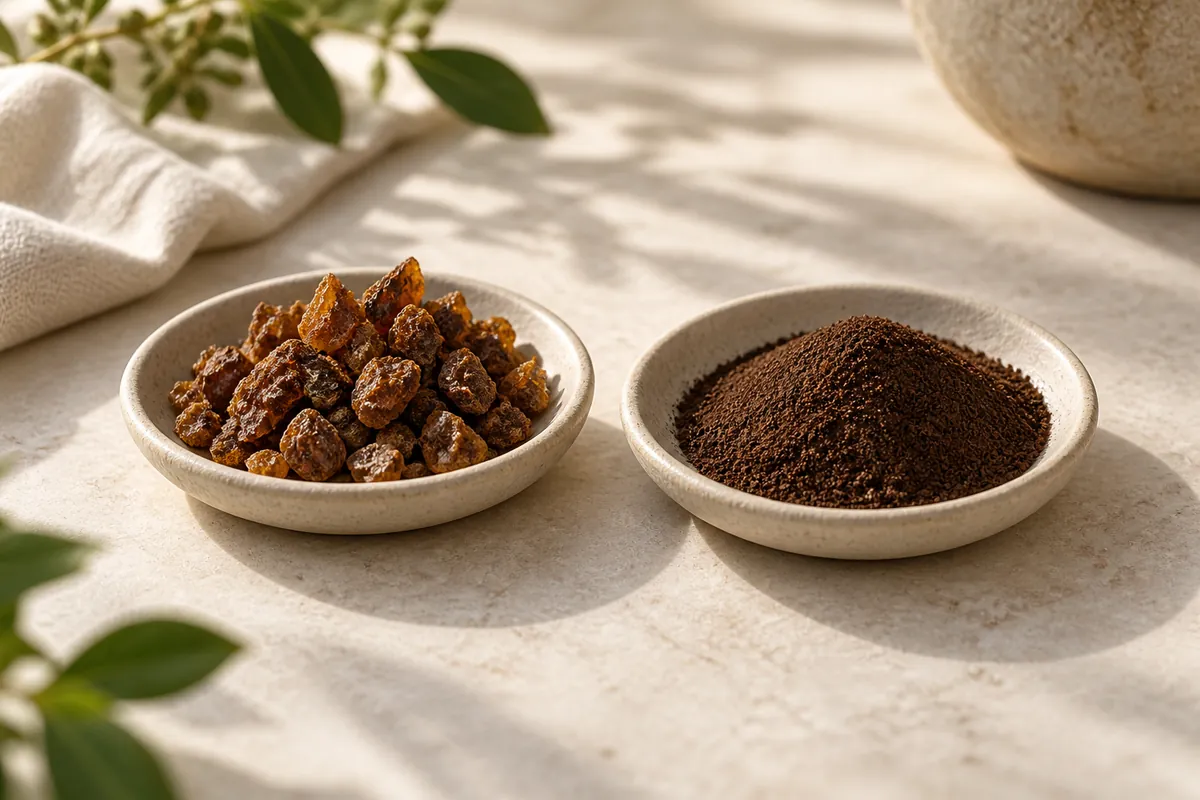
Freeze-drying takes the water out at low temperature instead. Far more of the aroma survives, and the result tastes noticeably closer to brewed coffee.
Freeze-dried
Dried cold, keeps aroma, irregular chunky crystals, costs more.
Spray-dried
Dried hot, loses aroma, uniform fine powder, dissolves fastest.
The jar test
Tip some out. Chunks mean freeze-dried, even powder means spray-dried.
Most instant is built on robusta rather than arabica, which adds its own bitterness on top of whatever the drying did.
Labels are unreliable, because some products blend both formats and the packaging does not always say so, which is why the jar test matters.
How far either format closes the gap on a brewed cup is a question for the separate comparison.
Changing the jar changes the cup more than any technique on this page. Technique has a ceiling here, and the format sets where it sits.
How do you make iced instant coffee?
Cold water dissolves it too, which no brewed coffee can manage.
That single property makes this the fastest cold coffee there is: under a minute, against twelve hours for a cold brew.
| Build | Coffee | Liquid | Notes |
|---|---|---|---|
| Hot | 1 rounded tsp | 175 to 200 ml at 94 C | Straight into the mug |
| Iced | 2 rounded tsp | 60 ml hot, then ice to fill | Dissolve first, then pour over ice |
| Iced with milk | 2 rounded tsp | 60 ml hot, ice, then 100 ml milk | Milk is a second dilution |
Dissolve in a little hot water first even when the drink is cold. Straight cold water will get there, but it leaves a faint chalky texture that the hot start avoids.
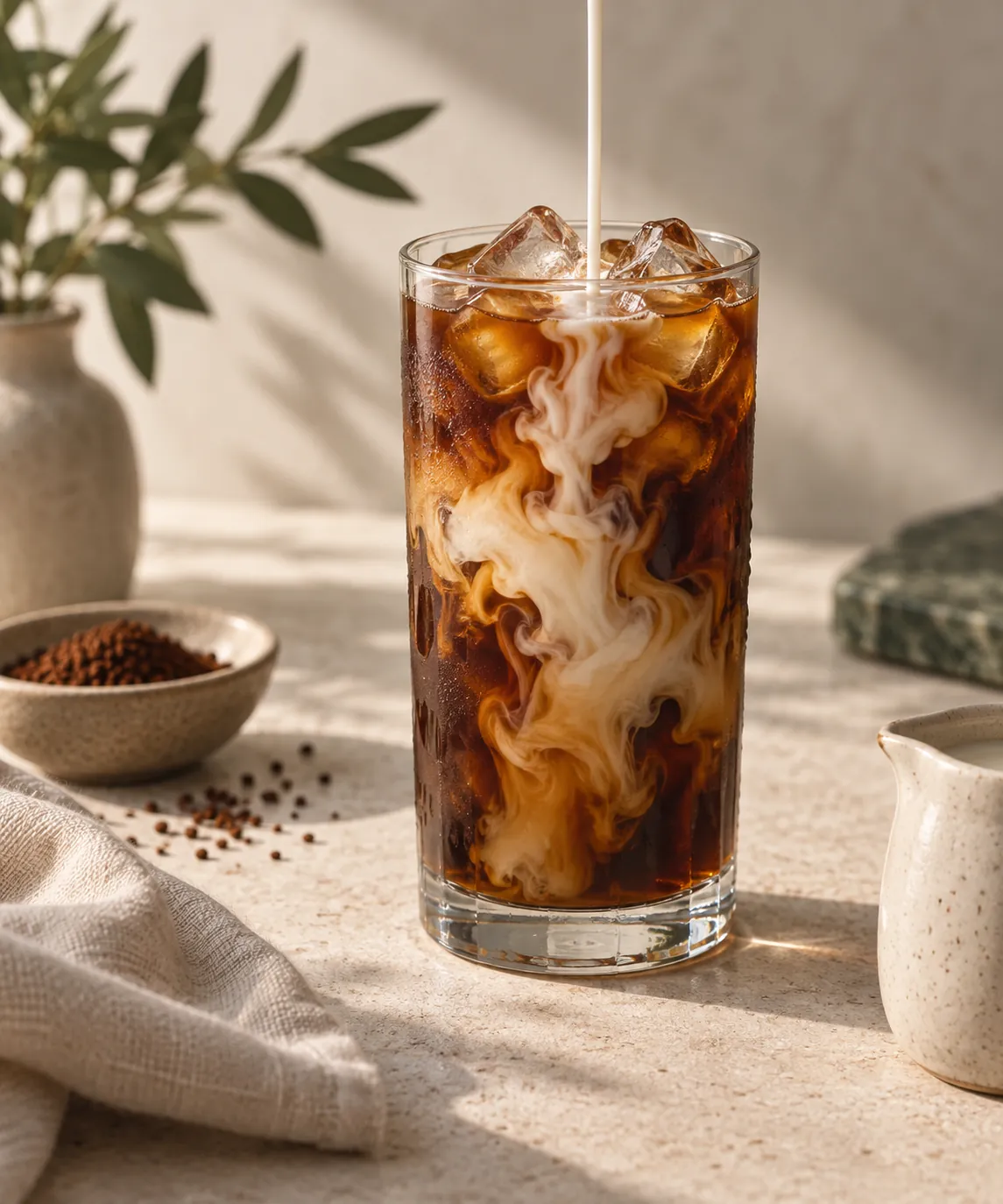
The dose doubles because the cubes in the glass melt into the drink as water nobody measured, as they do in any iced drink, and a single spoon would simply disappear into it.
If you want brewed coffee over ice rather than instant, the split-ratio method is a different route with a different arithmetic.
Milk is the second dilution and it catches people out. Adding 100 ml to a 250 ml glass thins the coffee as much as another handful of cubes would.
Can you whip instant coffee into dalgona?
Three ingredients, equal parts, whipped hard.
Whipping the three together is the one thing instant does that ground coffee cannot do at all, and the reason is the format rather than the flavour.
What the mixture passes through
- Equal partsOne spoon each of coffee, sugar and hot water in a bowl.
- Dark and liquidIt starts as a thin syrup with no structure at all.
- Pale and thickeningAir goes in, the colour lifts toward caramel, the volume climbs.
- Soft peaksIt holds its shape on the whisk, and it is done.
The foam holds because of what is dissolved in it. Coffee solids and sugar together give the bubbles walls to sit in, so a shot of espresso whipped the same way collapses immediately.
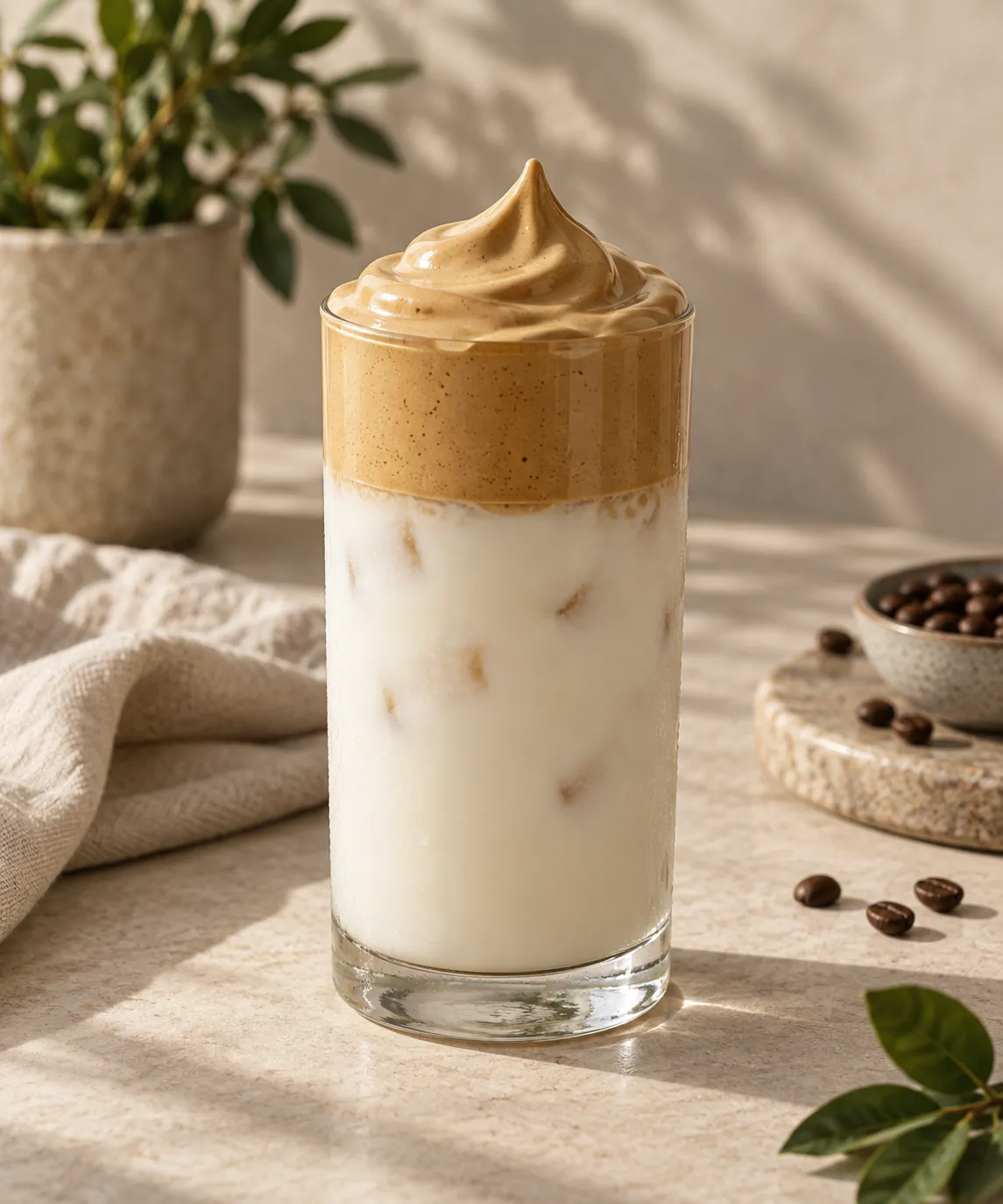
It goes on top of cold milk rather than into it. Spoon it over and let the drinker stir it down, because folding it in at the start wastes the structure you just built.
Do not cut the sugar. It is doing structural work rather than only sweetening, and a reduced-sugar version simply will not hold.
Crystals whip more slowly than powder. Freeze-dried takes longer to break down into the syrup stage, so a spray-dried jar is genuinely the better choice for this one job.
Why does mine taste flat or bitter?
These are two different faults with two different causes, and the fix most people reach for instinctively will make one of them considerably worse.
Adding more powder to a bitter cup is the move almost everyone makes, and it concentrates exactly what was already wrong.
- Was the spoon level rather than rounded?
- Was the kettle at a rolling boil when you poured?
- Has the jar clumped, which means it has taken on moisture?
- Did the mug stand for a few minutes before you drank it?
If your cup is flat, it is often the spoon: a level teaspoon is well under a rounded one, and the gap between them is the gap between a decent mug and a disappointing one.

A bitter cup almost always means the kettle, which is the scalding described earlier, and waiting fixes it where measuring cannot.
An open jar goes downhill quietly. Instant coffee is hygroscopic, so it pulls moisture out of the air, loses aroma long before anything looks wrong with it, and then clumps.
Standing hurts it too. A mug left for five minutes develops a stale papery edge, as brewed coffee does, but instant does it faster.
Two limits are worth naming. A cheap spray-dried jar has a bitterness floor no technique gets under, and hard water flattens instant coffee as it flattens everything else made with it.
Instant coffee method
- Makes
- 1 mug, about 200 ml
- Ratio
- 1 rounded teaspoon, about 2 g, per 175 to 200 ml
- Water temp
- About 94 C, a minute after the kettle clicks
- Total time
- 2 min
What you need
- 1 rounded teaspoon instant coffee
- 175 to 200 ml water at about 94 C
Equipment
- Kettle
- Mug
- Teaspoon
Method
- BoilBring the kettle to the boil and let it stand for about a minute.
- DosePut one rounded teaspoon of granules into a dry mug.
- PasteAdd a few drops of water and stir to a thick glossy paste.
- FillAdd the rest of the water and stir once.
Common questions
Can you make instant coffee with milk instead of water?
Yes, though the granules dissolve more slowly in milk. Dissolve them in a splash of hot water first, then top up with hot milk.
Does instant coffee expire?
An open jar takes on moisture, clumps and loses aroma.
Why is instant coffee cheaper than beans?
It is usually built on robusta, which yields more per hectare, and the drying is done at industrial scale rather than by the drinker.
Can you use instant coffee in an espresso machine?
No. It dissolves rather than resisting pressure, so there is no puck for the machine to push water through.