What Is Hojicha? Roasted Green Tea, and Why It Is Low in Caffeine
Hojicha is green tea that has been roasted until it is brown. Roasting drives off most of what makes green tea green, which is why it tastes of toast rather than grass and carries very little caffeine.
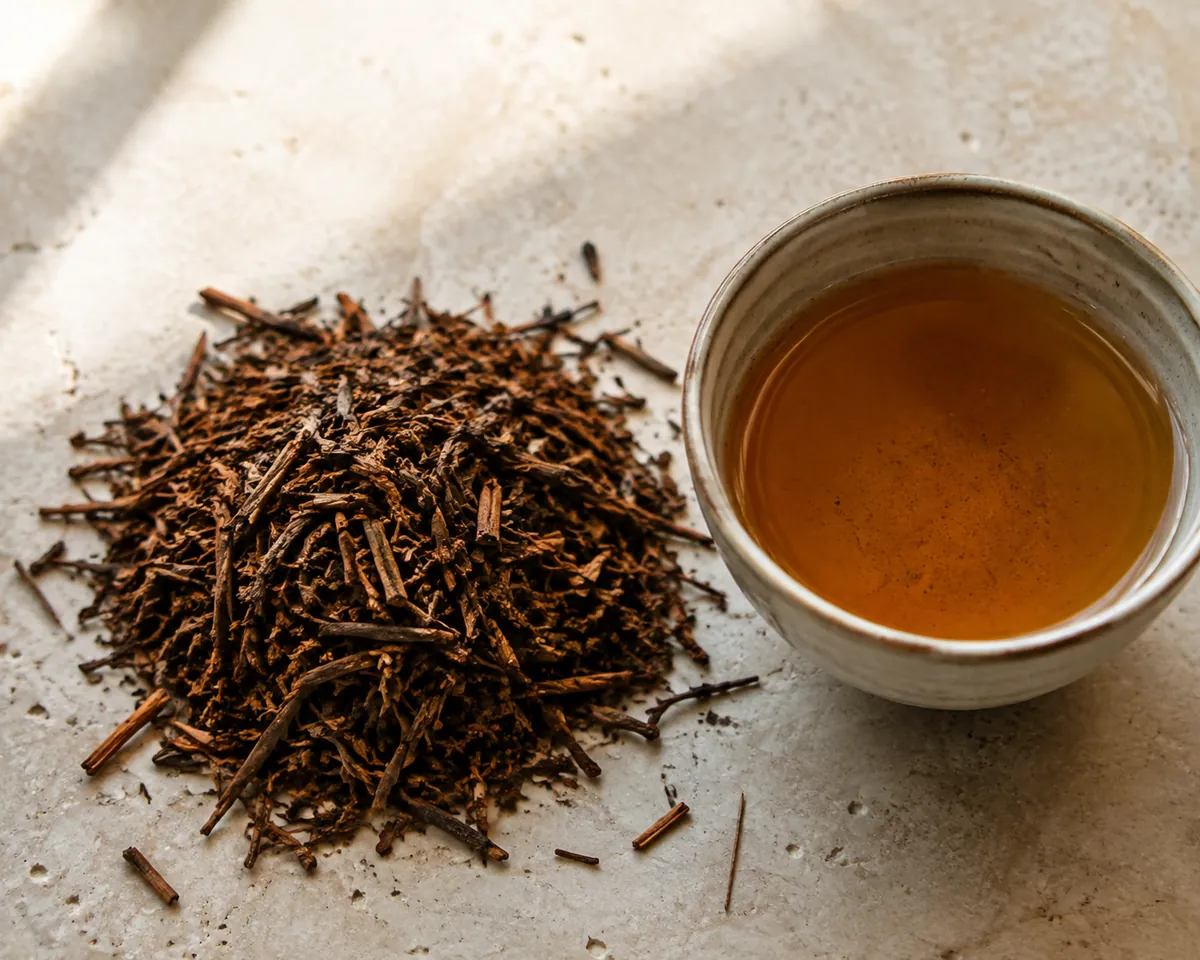
Hojicha is Japanese green tea roasted at high temperature until the leaf turns reddish-brown. Ground fine it becomes hojicha powder, whisked the way matcha is.
It was first made in Kyoto in the 1920s, reportedly to use up stems and older leaf that would not sell as sencha.
The roast changes the tea so completely that most people do not recognise it as green tea at all, and almost everything else on this page follows from what those few minutes of heat remove.
Hojicha at a glance
- What it is
- Japanese green tea roasted until the leaf turns reddish-brown
- Roast
- Around 200 C in a drum or over charcoal, for a few minutes
- Water
- 90 to 100 C, effectively boiling
- Steep
- 30 seconds to 1 minute
- Leaf
- 3 g per 200 ml, and it is bulky so this looks like a lot
- Caffeine
- Commonly cited around 7 to 10 mg per cup, the lowest of the true teas
- Keeps
- A year or more sealed, which is exceptional for a Japanese tea
What the roaster takes out, caffeine included
Around 200 C for a few minutes, in a rotating drum or over charcoal, and four separate things happen to the leaf at once.
What the roast changes
- Chlorophyll
- Breaks down, so the leaf turns from green to brown
- Catechins
- Largely destroyed, which removes almost all the astringency
- Caffeine
- Substantially driven off, since it sublimes at roasting temperatures
- Aroma
- Pyrazines form, giving the toasted, nutty, caramel character
- Amino acids
- React with sugars, deepening the sweetness
Roasting removes almost everything people find difficult about green tea. The bitterness, the astringency and the grassiness all leave together, which is why hojicha is the green tea that people who dislike green tea tend to like.
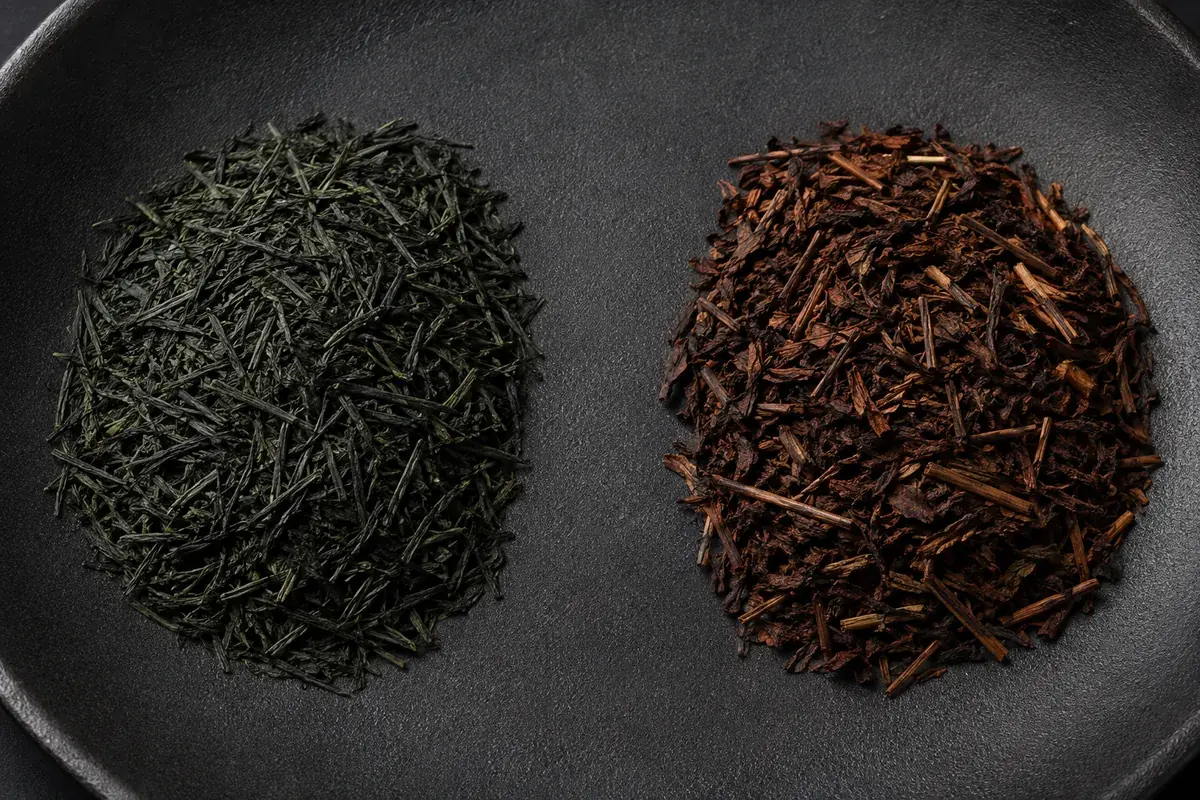
Caffeine goes for a straightforwardly physical reason. It sublimes at around 178 C, well below the temperature inside the drum, so a meaningful proportion of it simply leaves the leaf as vapour during the roast.
That is why hojicha is poured in the evening across Japan and served to children alongside barley tea rather than the sencha the adults drank at lunch. It is the one tea on this site where the processing, rather than the dose or the steep, does most of the work on the number.
The exception is the powdered form, where nothing is left behind in a strainer, and hojicha caffeine sets the two side by side.
Where the green tea rules stop applying
Almost every instruction written for Japanese tea assumes a leaf that will turn bitter if you mistreat it, and none of that applies once the catechins have been burned away.
Starting point
- Water
- 90 to 100 C, effectively boiling
- Steep
- 30 seconds to 1 minute
- Leaf
- 3 g per 200 ml, more than for sencha
- Second steep
- Yes, and often as good as the first
Boiling water is correct rather than merely tolerated. There are almost no catechins left to turn harsh, so the temperature caution that governs green tea bitterness is simply irrelevant, and cooler water only produces a weaker cup of the same thing.
The leaf is light and bulky, so 3 g looks like a large amount in the pot. Under-dosing is the commonest mistake with this tea and it produces something closely resembling weak toast water.
Time is forgiving in both directions. A minute longer deepens the roast notes rather than souring them, and this is one of the few teas that can sit in a pot at the table without punishing the last person to be poured a cup, which making hojicha treats as the whole point of the style.
Stems, leaf, and what actually goes into the roaster
What went into the drum changes the result more than the roast level does.
| Base | Also called | Character |
|---|---|---|
| Kukicha stems | Kuki hojicha, boucha | Sweetest and lightest. Very low caffeine |
| Bancha leaf | Standard hojicha | The everyday version. Balanced, toasty |
| Sencha leaf | Sencha hojicha | Fuller, more aromatic, more expensive |
| Gyokuro leaf | Karigane hojicha | Rare. Deep umami under the roast |
| Mixed | Most commercial blends | Whatever the producer had |
Stem-based hojicha is worth going out of the way for. Stems carry more of the sweet amino acids and fewer of the astringent compounds than leaf does, so a kuki hojicha comes out noticeably rounder and lighter than a leaf one roasted the same way.
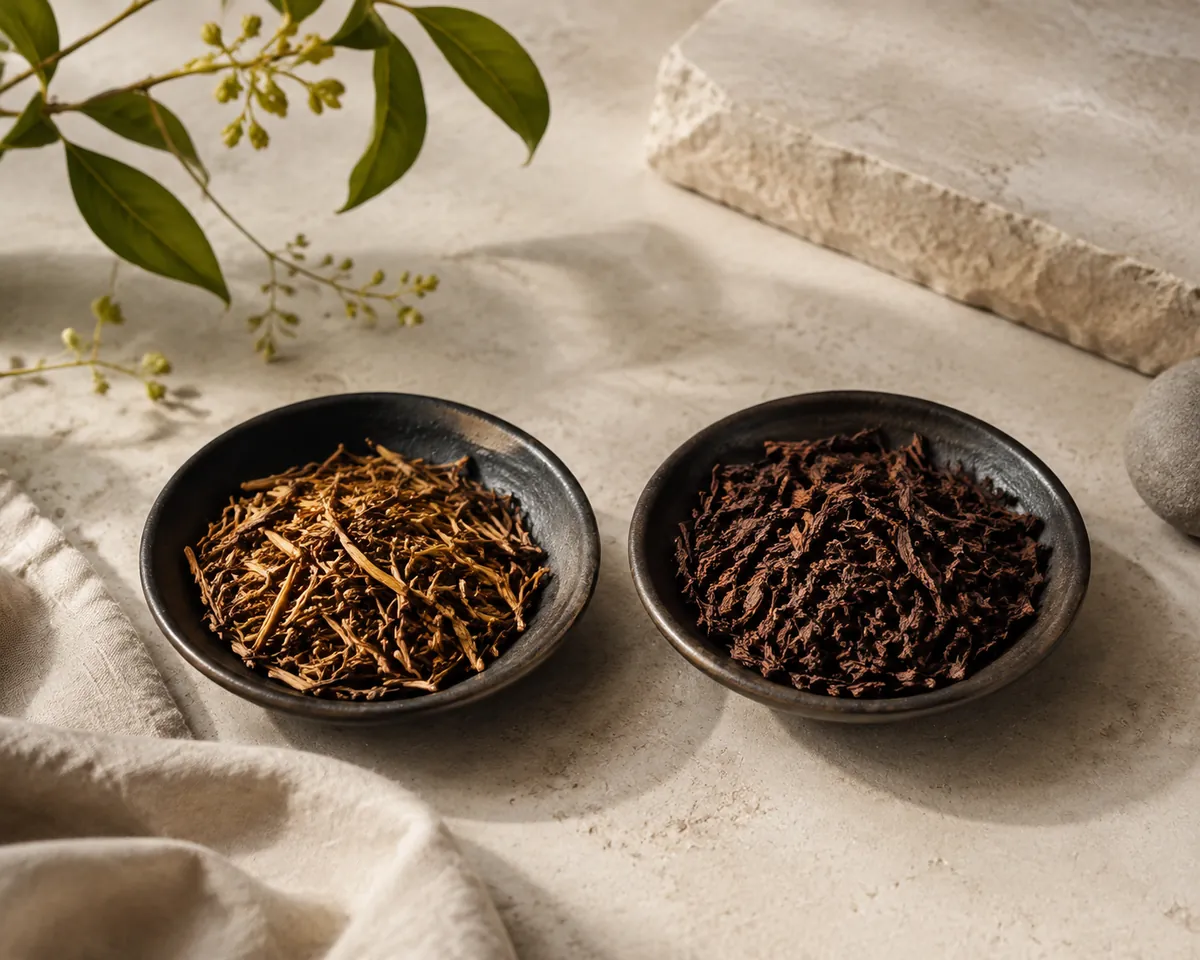
Stem hojicha
Made largely from stems. Sweeter, lighter, very mild, and the lowest in caffeine of any of them.
Leaf hojicha
From bancha or sencha leaf. Fuller in the mouth and more obviously roasted.
Dark roast
Pushed close to coffee, with a bitterness that comes from the roast itself rather than the leaf.
Hojicha powder
Ground after roasting and whisked rather than infused, so the whole leaf reaches the cup.
The rarest version inverts the origin story completely. Karigane hojicha is made by roasting gyokuro stems, which means taking the most expensive shaded leaf in Japan and applying the process invented for the cheapest.
Nobody labels the roast level in a way that transfers between producers, so the base is the only part of the description that reliably predicts the cup. A dark roast from one maker is a medium from another.
What hojicha tastes like, hot and half-cooled
Toasted grain, caramel and roasted nuts, with a light woody edge behind them.
There is almost no astringency and very little bitterness unless the roast was pushed hard, and the liquor comes out reddish-amber rather than green, which catches people expecting something that looks like a green tea. Its body is light despite that dark colour, so the drink is less filling than it appears.
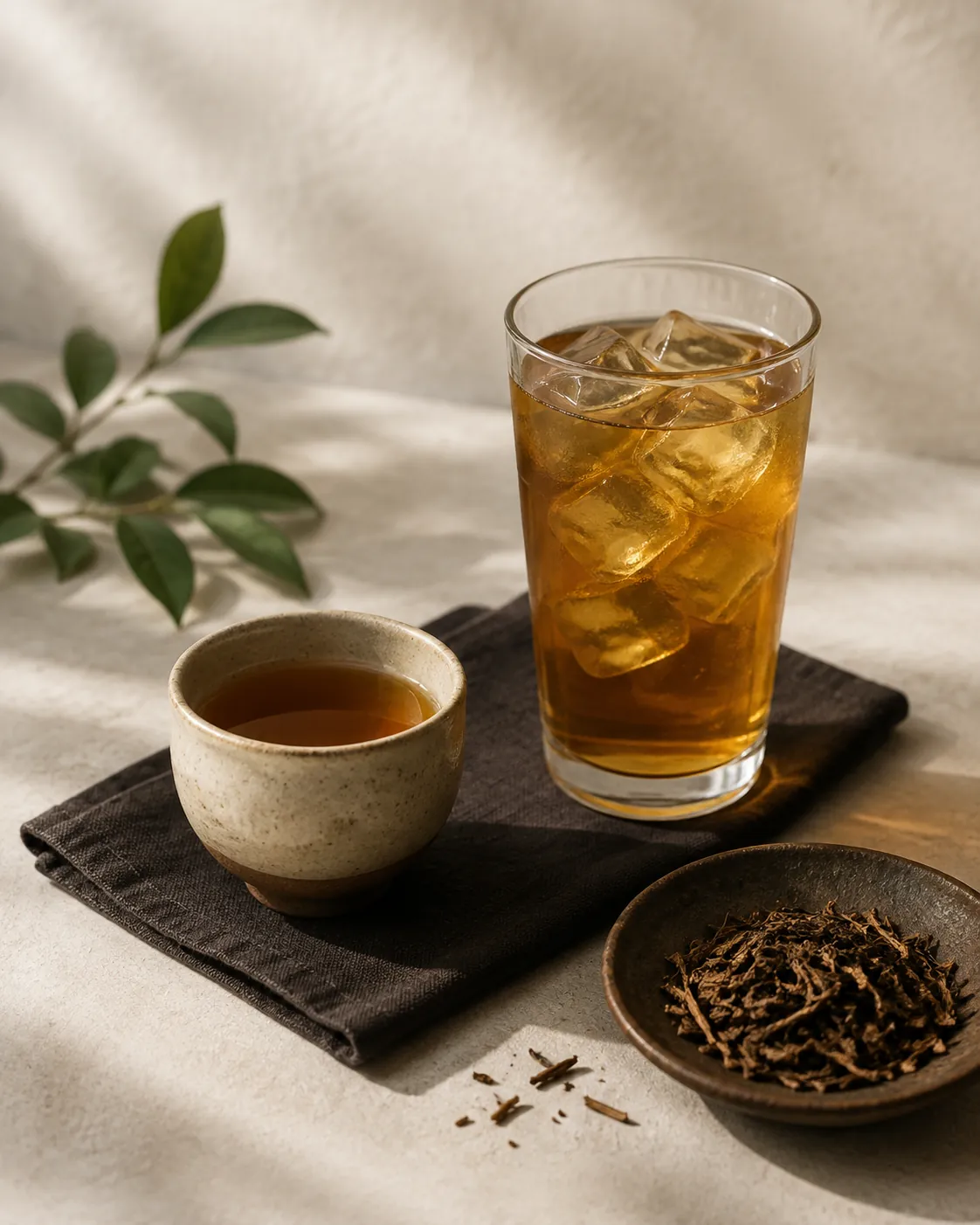
Temperature moves it further than it moves most teas. Very hot and straight from the pot, the roast notes are at their most aromatic and the drink reads closest to coffee, which is how it is served after a meal in Japan.
Left for a few minutes to reach ordinary drinking heat, the sweetness comes forward and the smoke recedes. Most people prefer it there without realising that waiting was the variable, and how hojicha tastes works through the same arc in more detail.
What it does not do at any temperature is turn bitter, which is why it tolerates standing in a way sencha never does. It takes milk unusually well for a green tea too, precisely because the catechins that would clash with it are gone.
Kyoto in the 1920s, and where it is made now
The origin is unusually well documented for a tea, and it explains what the style was for.
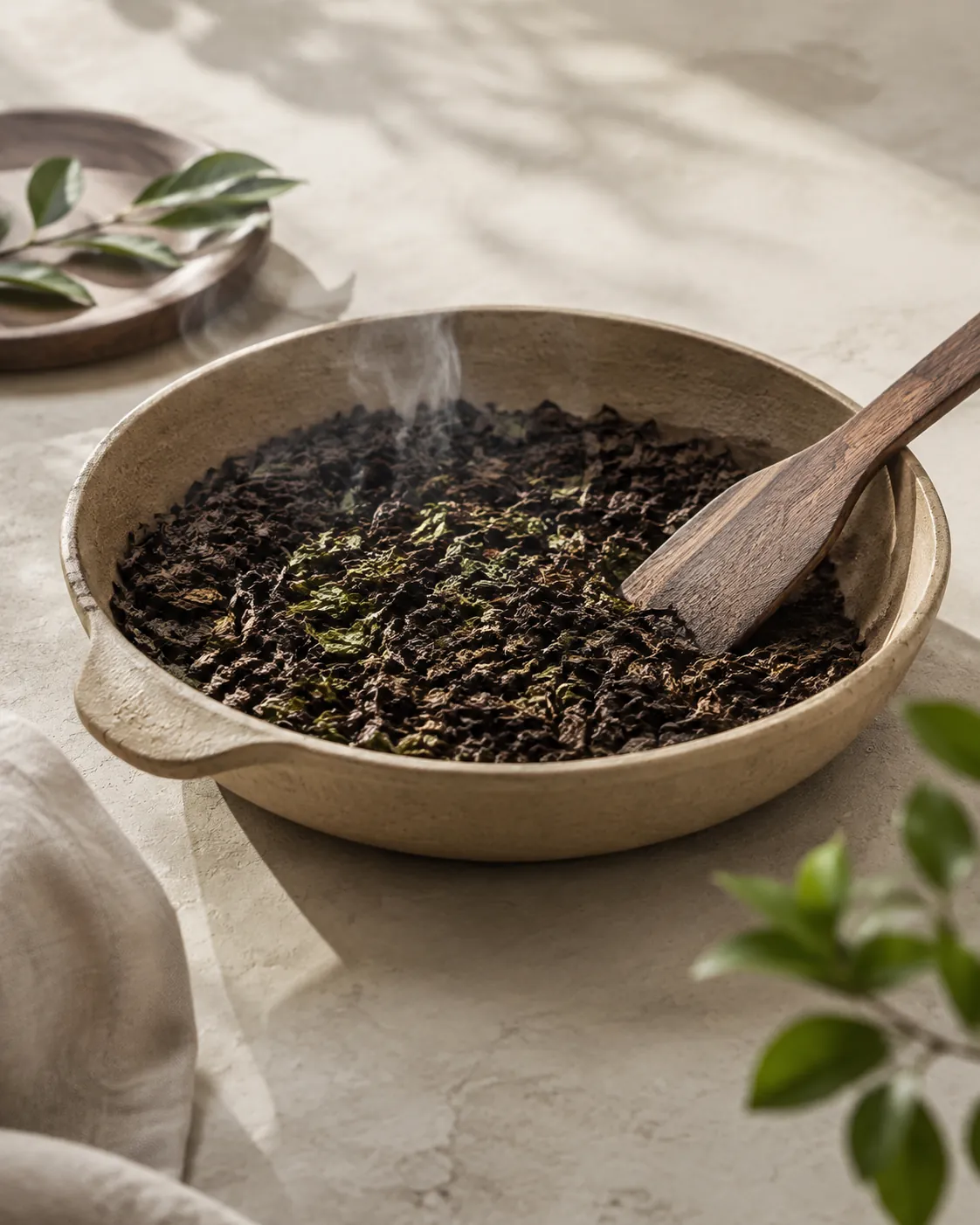
A Kyoto merchant in the 1920s, holding stems, older leaf and lower grades that would not move as sencha, put them over heat. The result sold, and the style spread quickly through Japan during a period when good tea was expensive and waste was not an option.
That history is why hojicha stays cheap relative to other Japanese teas, and why it is traditionally built from bancha and kukicha, the later harvests and the stems, rather than from first-flush leaf.
Kyoto remains the traditional home and Uji hojicha carries a premium, largely because the leaf underneath was better before anybody roasted it. Premium hojicha inverts the founding story, since roasting a good sencha produces something quite different from the everyday version and is priced accordingly.
Ishikawa has its own tradition in kaga bocha, made from roasted stems rather than leaf, which comes out lighter and noticeably sweeter. Most of the volume, meanwhile, comes from Shizuoka and Kagoshima using leaf and stems that would otherwise have been sold as bancha.
Powder, and the latte it was made for
Ground hojicha behaves like matcha rather than like leaf tea, and treating it as leaf is the source of most disappointment with it.
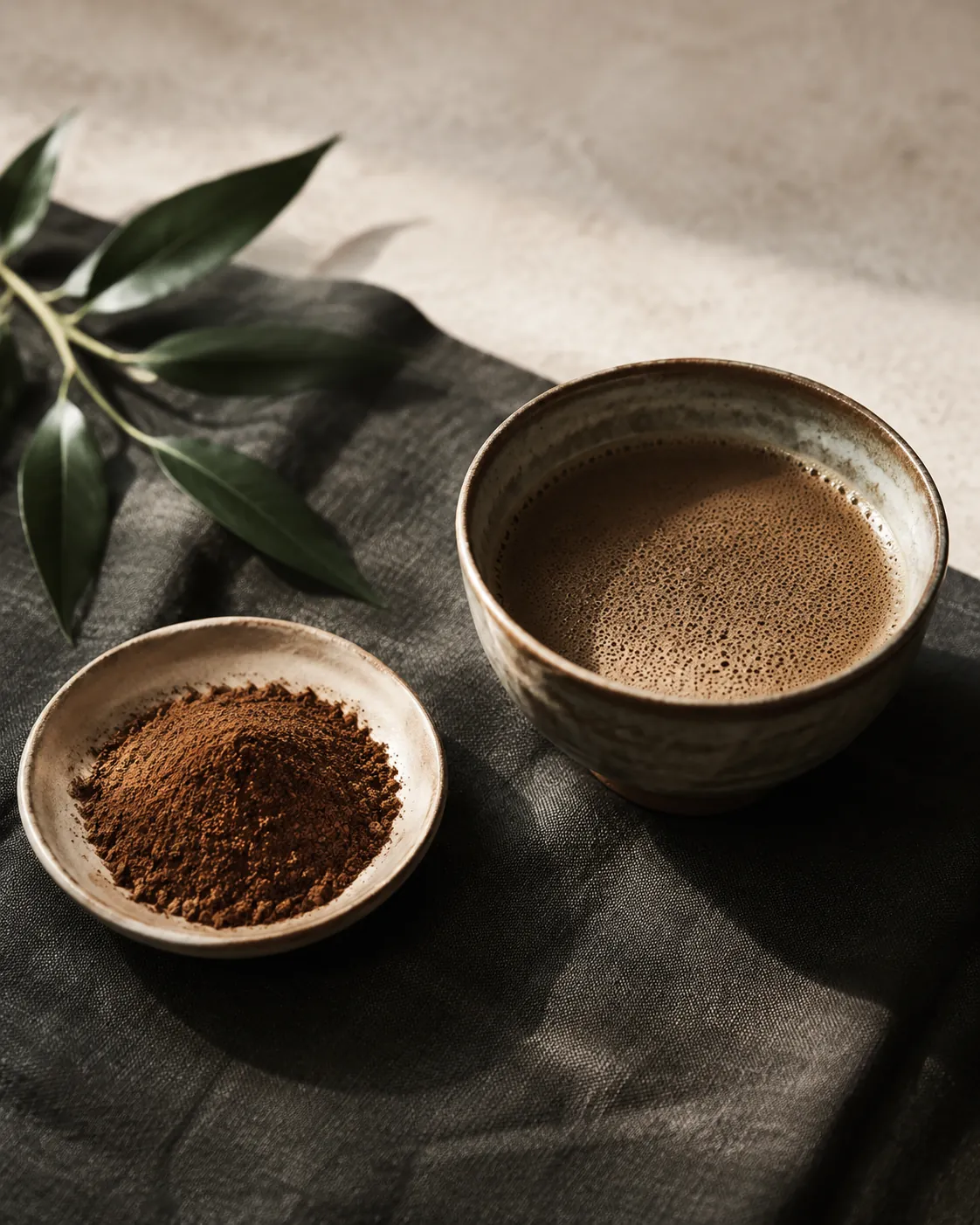
Because the whole leaf is consumed rather than infused, everything in it reaches the cup. That includes the caffeine the roast did not drive off, so the powder is not the low-caffeine drink the infusion is, whatever the packet says about hojicha in general.
Hojicha latte from powder
- Powder
- 3 to 4 g, sifted
- Hot water
- 40 ml, to make a paste
- Milk
- 200 ml, steamed or hot
- Sweetener
- Optional. The roast already reads as sweet
- Note
- Whisk the paste smooth before the milk goes in
Milk is where the roast earns its keep. Roasting removed the catechins that would clash, which is why a hojicha latte works and a sencha latte mostly tastes of milk with something green and unhappy underneath it.
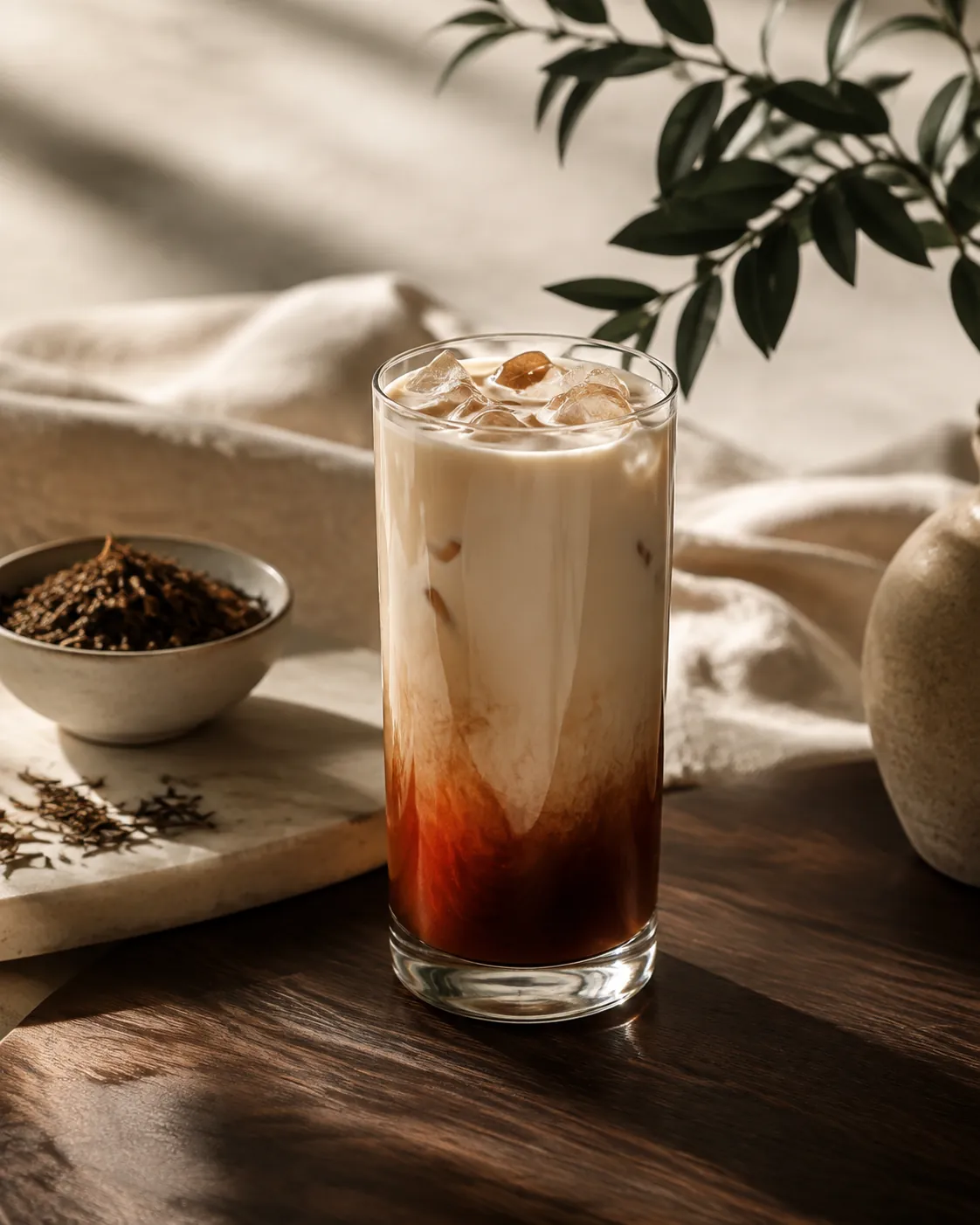
One large cup from leaf
- Hojicha
- 6 g of leaf
- Water
- 100 ml at boiling, steeped 45 seconds
- Milk
- 180 ml, steamed to 60 to 65 C
- Sweetener
- Optional. The roast reads sweet already
- Powder route
- Whisk 4 g into 40 ml of hot water, then add the milk
Brewing at double strength is the step people skip. Milk flattens a normally brewed hojicha into something that tastes only faintly of tea, and the fix is concentration rather than more leaf in the same volume of water, with a milk frother doing the rest.
Roasting your own in a dry pan
Unlike almost any other tea processing, this one is genuinely practical at home with equipment you already own.
Spread bancha or a mid-grade sencha in a dry pan over medium heat and stir it constantly. The whole thing takes five to ten minutes, and the colour moves from green through olive to reddish-brown while the smell changes completely.
Let it cool completely before it goes anywhere near a container. Warm roasted leaf sweats inside a sealed tin and goes soft within a day, which undoes the entire point of the exercise.
Home-roasted hojicha is best drunk within a few weeks rather than kept. The roast drives off moisture and opens the leaf up, so it goes stale faster than a commercially roasted tea that was packed hot and sealed immediately, and hojicha problems is mostly a list of ways this goes wrong.
Why a roasted leaf keeps and a green one does not
Hojicha sits among the most stable teas on any shelf, and the roast is the entire reason.
The compounds that fade fastest in a green tea are precisely the ones the roast already destroyed. What is left behind is closer to a roasted coffee in its behaviour than to the leaf it started as, and it holds for a year or more without changing much.
- Keep it in an opaque airtight tin, away from the kettle and the hob.
- Buy in larger quantities than you would a sencha, since it will still be good.
- Do not refrigerate it. Condensation is the one thing it handles badly.
- Judge freshness by aroma. A flat, cardboard smell means it took up moisture.
Moisture is its single vulnerability. Roasted leaf is dry and porous and pulls water out of humid air readily, and damp hojicha goes flat rather than bitter, which makes the fault easy to miss until the cup arrives.
The general container rules in storing loose-leaf tea still apply, and storing hojicha covers where a roasted tea departs from them.
Cold and iced
Roasted flavours survive chilling far better than grassy ones do, which makes this the most reliable iced tea in the Japanese range.
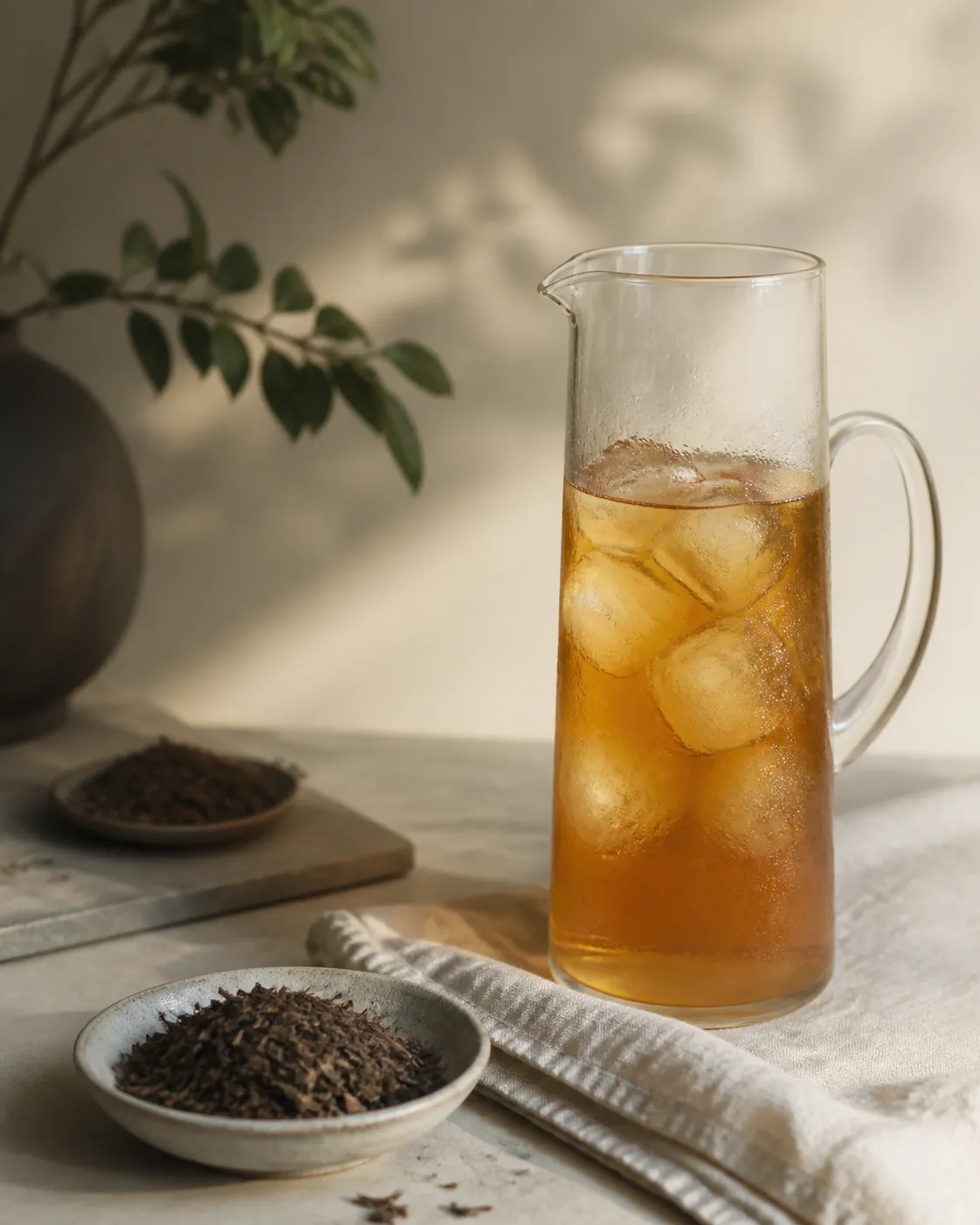
Cold brewing takes four to six hours at 10 g per litre and gives something clean, sweet and entirely without astringency. It also holds two days in the fridge without going dull, which very few teas manage and no green tea does.
Brewing hot and pouring straight over ice works here as well, unlike with a delicate green tea, because there is no fragile aroma to lose in the shock of the cold. Brew at double strength and pour over a full glass rather than a half-empty one.
The route to avoid is a long hot steep followed by slow cooling on the counter. Hojicha will not turn bitter, but it does turn dull, which is the same fate every tea meets sitting warm for an hour with the leaf still in it.
The evening cup, and the food it sits beside
Hojicha holds a defined place at a Japanese table, and it is not the place green tea holds.
It is served after a meal rather than during one, and with food rather than as a palate cleanser between dishes. The roast gives it enough body to follow something rich, where a delicate leaf tea would simply be flattened by what came before it.
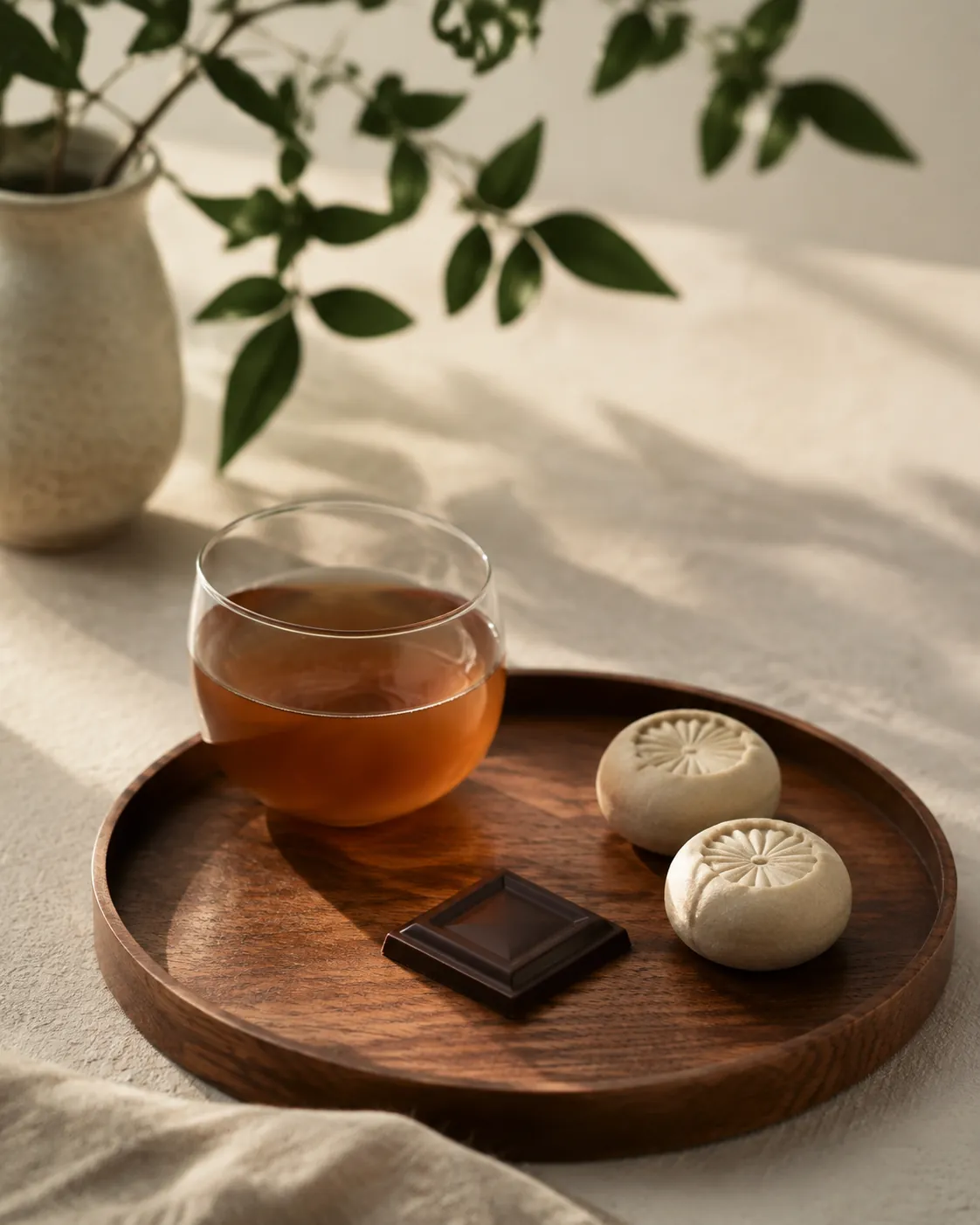
Roasted and caramel sweets
Soybean flour, chestnut and brown sugar all pick up the pyrazines the roast created.
Chocolate
Works better with hojicha than with any other tea covered here, dark chocolate especially.
Grilled and simmered dishes
Enough body to follow them without competing for attention.
Late in the evening
The slot where a sencha would be a poor idea and a herbal infusion too far from tea.
Sweets are the traditional pairing, and particularly anything carrying roasted or caramel notes of its own. Roasted soybean flour, chestnut and brown sugar all pick up on what the roast created, and chocolate is the pairing worth trying first.
The evening role is the practical one for most people outside Japan. It is the tea to make at nine o'clock when a sencha would be a poor idea and a herbal infusion would be too far from tea altogether, and it needs no adjustment to brewing temperature to fill that slot.
Where it works badly is anywhere its low astringency becomes a liability. It cannot cut through a very oily dish the way a roasted oolong does, because it has almost no tannin left to do the cutting with.
Against the other roasted drinks
Roasting is not unique to hojicha, and the small family it belongs to divides on one question, which is whether what went into the roaster was a tea leaf or a grain.
Barley tea
Roasted grain and no tea leaf at all, which means no caffeine and no tea character.
Black tea
Oxidised rather than roasted, a completely different chemistry and a much higher caffeine figure.
Roasted oolong
Roasted after a partial oxidation, so it keeps a tannic structure hojicha does not have.
Coffee
The comparison people reach for, with similar roast notes and none of the acidity.
Roasting a tea leaf keeps some tea character while removing the grassiness. Roasting a grain produces a drink with no tea character whatsoever, which is why barley tea and hojicha taste more alike than their ingredients suggest and behave completely differently in a cup with milk.
The comparison with coffee is the one worth taking seriously, since it explains why hojicha travels so well outside Japan. It arrives with the roast notes a coffee drinker already recognises, without the acidity, the body or the caffeine, which makes it an easier first Japanese tea than anything green.
Common questions
Is hojicha green tea?
Yes, made from the same plant and processed as green tea before being roasted at around 200 C. The roast turns the leaf brown and removes most of the chlorophyll, catechins and caffeine, so it tastes nothing like unroasted green tea.
Why is hojicha so low in caffeine?
Caffeine sublimes at about 178 C, well below hojicha's roasting temperature, so a large part of it leaves the leaf during roasting. Figures around 7 to 10 mg per cup are commonly cited against roughly 28 mg for green tea.
Can you use boiling water for hojicha?
Yes. Roasting destroys most of the catechins that make green tea bitter, so the temperature caution that governs sencha does not apply. Boiling water and a short 30 to 60 second steep is standard.