What Is Genmaicha? Green Tea Cut With Roasted Rice
Genmaicha is green tea mixed with roasted brown rice. The rice was originally there to make expensive tea go further, and it turned out to taste good enough to outlive the reason.
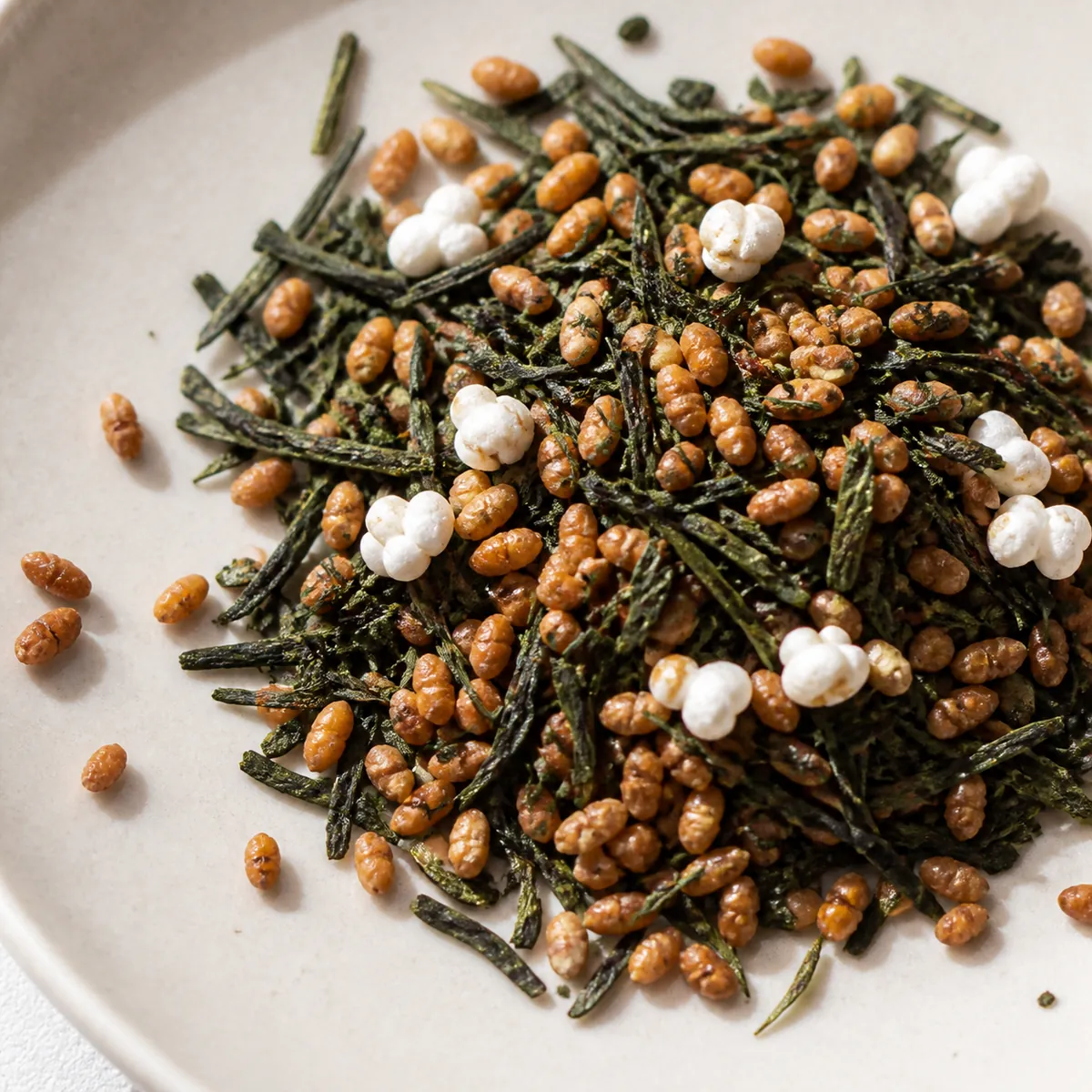
Genmaicha is Japanese green tea blended with roasted brown rice, usually in roughly equal parts by volume.
Some of the grains burst during roasting into small white puffs, which is why it is sometimes called popcorn tea, and why half of what is in the pot is not tea at all.
Genmaicha at a glance
- What it is
- Green tea blended with roasted brown rice, roughly half and half
- Usual base
- Bancha, the later-harvest everyday leaf. Sencha bases cost more
- The rice
- Uruchimai short-grain brown rice, soaked, steamed, dried and roasted
- Water
- 80 to 90 C, hotter than the same leaf unblended
- Steep
- 30 seconds to 1 minute
- Caffeine
- Around 10 to 15 mg per 200 ml, the lowest of the leaf teas
- Keeps
- Six to twelve months, and the tea half fades before the rice does
Why rice ended up in the pot, and what the name admits
Genmai means brown rice and cha means tea, so the name is a plain description with nothing poetic about it.
The reason behind that description was economic. Tea was expensive and rice was not, so bulking out the leaf with roasted grain produced a cheaper cup, and the blend was associated with poorer households for long enough to carry a faint stigma.
That has reversed completely. The blend turned out to be genuinely good on its own terms, and genmaicha is now sold at every price level including some that no household short of money would consider.
The older story about a poor household stretching expensive leaf is repeated everywhere and is hard to source precisely. What is certain is that the rice was a bulking agent before it was a flavour, and that it long outlived the reason it was introduced.
What the rice contributes, and what lies underneath it
Two things, one of them obvious and the other the reason this tea behaves unlike anything else Japanese.
How much the leaf is softened, and by what
The obvious contribution is flavour. Roasted grain gives a nutty, popcorn-like warmth that sits underneath the tea rather than blending into it, and the two stay separately audible in a good cup.
The less obvious one is arithmetic. Half the volume in the pot is not tea, so the cup is milder and lower in caffeine than the same measure of plain leaf would be, without anything having been done to the leaf itself.
What the blend does
- Flavour
- Toasted grain and popcorn over a green tea base
- Astringency
- Reduced, since there is simply less leaf per cup
- Caffeine
- Lower, for exactly the same reason
- Body
- Slightly fuller, from starch released by the rice
- Cost
- Historically cheaper. Now priced on quality like any other tea
The rice softens the tea by displacing it, not by neutralising anything. That is a different mechanism from roasting, and it is why genmaicha and hojicha arrive at similar mildness by opposite routes.
Why it takes hotter water than the leaf alone would
Genmaicha is brewed at temperatures that would ruin the same green tea unblended, and the rice is the entire reason for that.
Starting point
- Water
- 80 to 90 C
- Steep
- 30 seconds to 1 minute
- Leaf
- 3 g per 200 ml
- Second steep
- Yes, though the rice gives much less the second time
Roasted grain releases its flavour slowly and needs heat to do it at all, while the green tea underneath wants the usual 70 to 80 C. The working compromise lands around 85 C, hotter than a sencha and cooler than a black tea.
What makes the compromise survivable is the short steep. Thirty to sixty seconds is enough for the rice, whose flavour is largely on the surface, and short enough that hotter water does not drag much astringency out of the leaf.
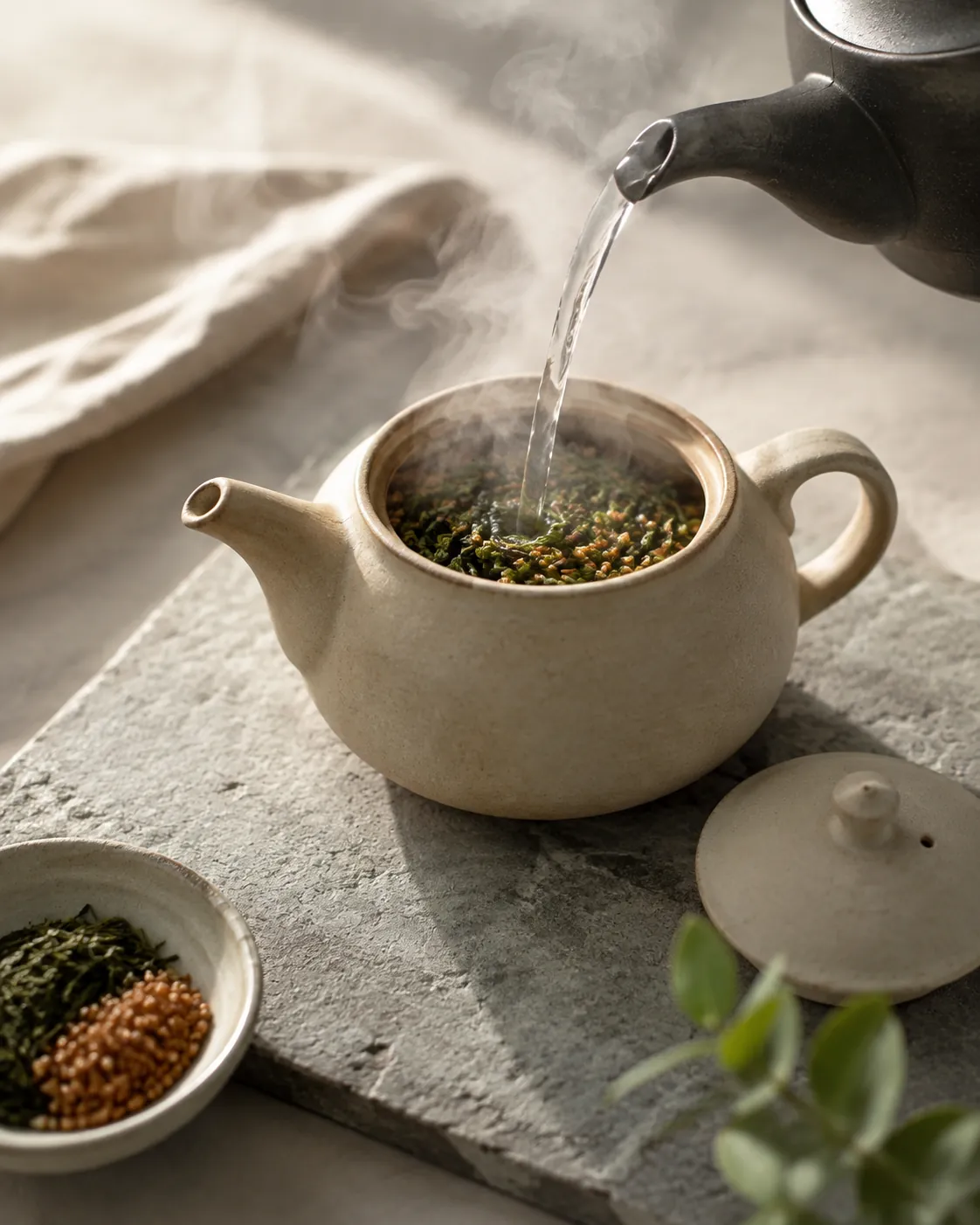
Getting it wrong in either direction is the commonest fault with this tea. Cooler water gives a cup that tastes only of green tea, and a long steep at 90 C gives one that is bitter underneath the toast, exactly as why green tea tastes bitter describes, and steeping temperature places the whole range in order.
What genmaicha tastes like
The balance shifts while it is in the cup, which is unusual and worth watching for.
The first impression is toasted rice, warm and savoury and faintly sweet. The green tea arrives behind it, grassy and marine, and the two sit alongside each other rather than merging into a single flavour the way a scented tea does.
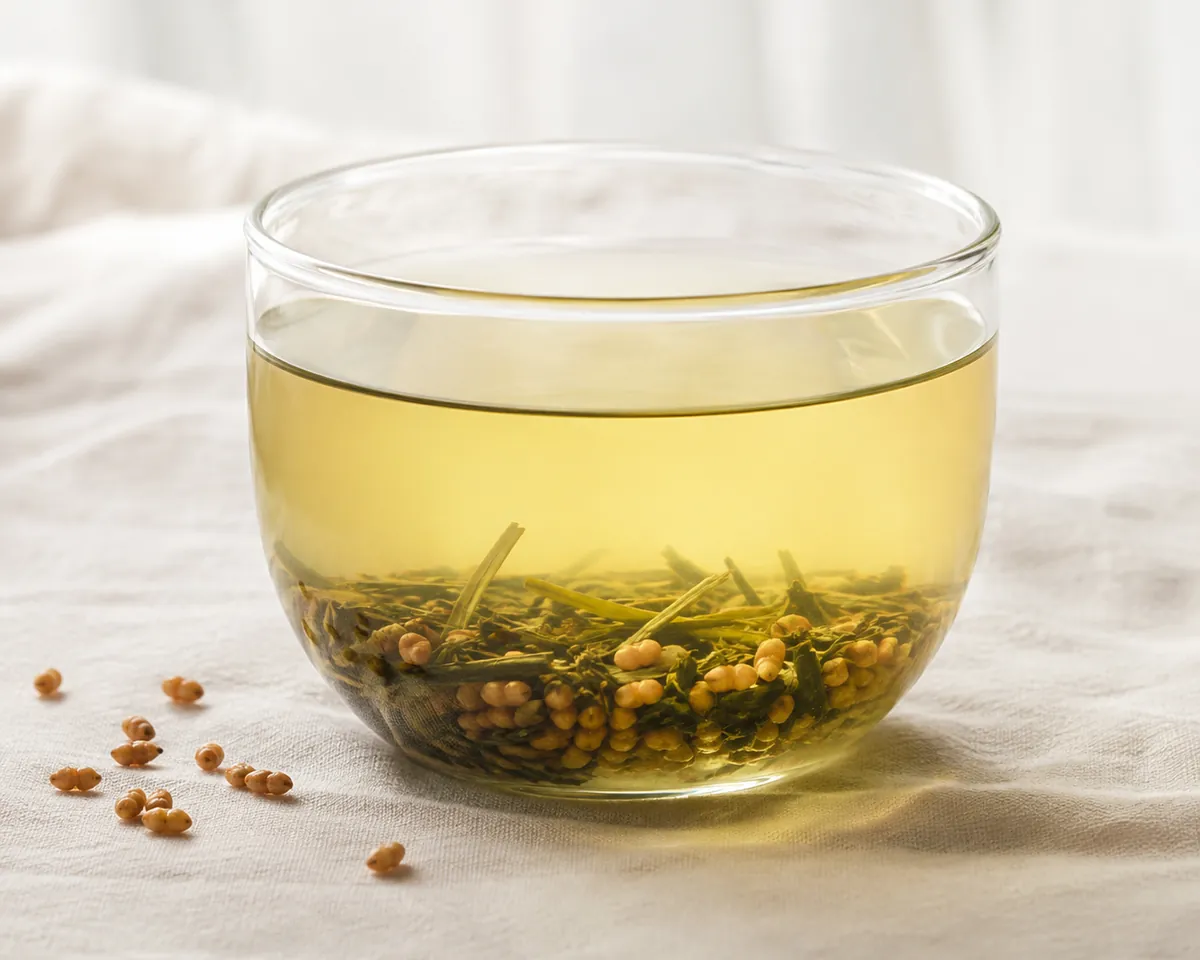
A good one keeps both halves audible from the first sip to the last. A poor one is either all rice, which means the leaf was low grade, or all tea, which means the rice was under-roasted and is contributing colour rather than flavour.
It is a savoury tea rather than a refreshing one, which is why it appears with food far more often than sencha does and why it reads oddly on its own in the middle of an afternoon. How genmaicha tastes works through the shift across a second and third infusion.
The rice itself, and how it is prepared
Ordinary table rice would not survive the process, and the grain is put through nearly as many steps as the leaf is.
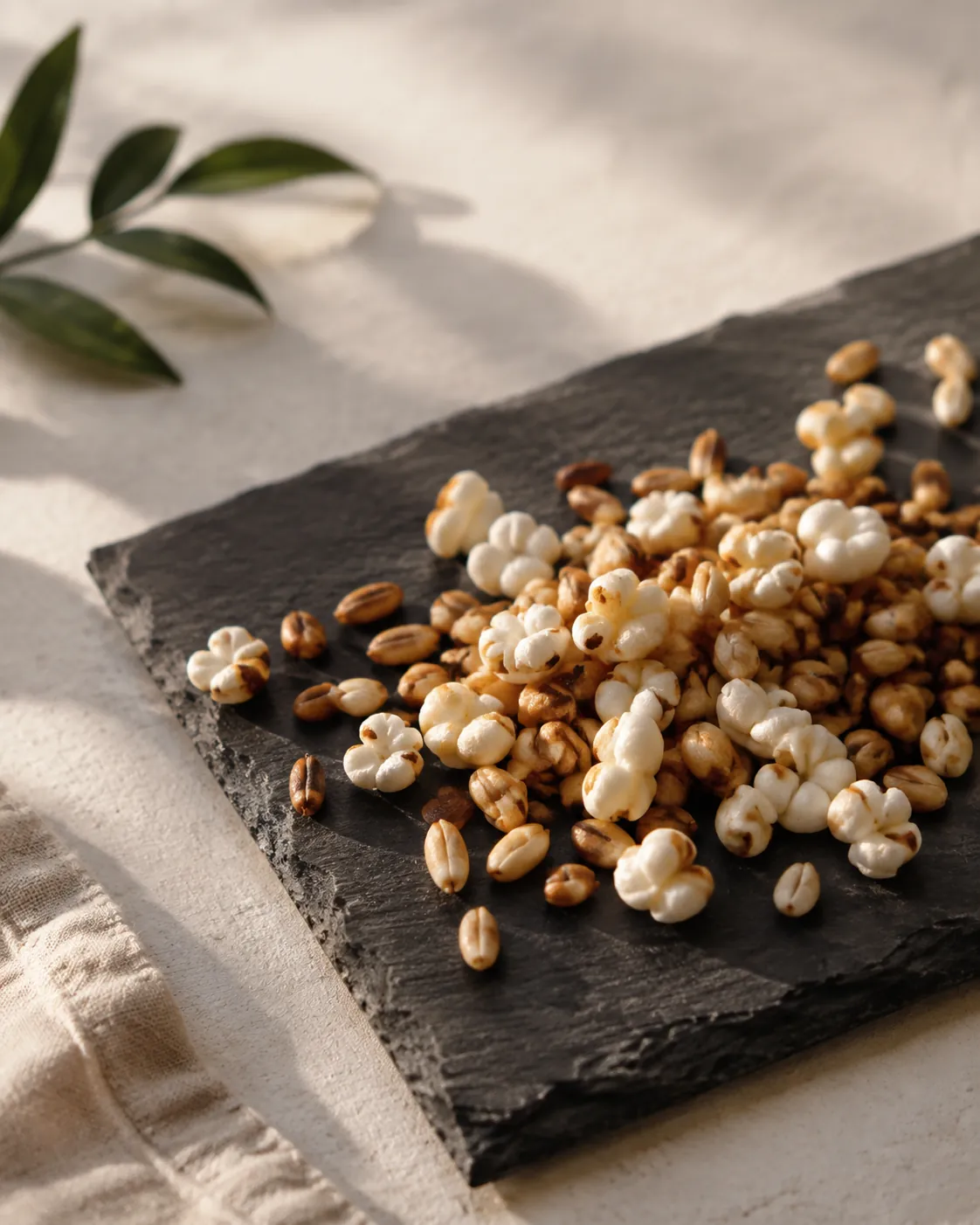
Genmai means brown rice, and the traditional choice is uruchimai, the short-grain non-glutinous rice eaten as a staple in Japan. Some producers use mochigome instead, the glutinous rice, which pops more readily and gives a sweeter result with more white puffs in the finished blend.
How the rice is prepared
- SoakWhole brown rice is soaked to soften it.
- SteamSteaming gelatinises the starch so it will roast evenly.
- DryThe grain is dried back down before roasting.
- RoastHigh heat until deep tan, which is where the flavour comes from.
- SortSome grains burst into white puffs during roasting and are usually left in.
The popped kernels are a byproduct, not an ingredient. They are simply the grains that happened to burst, and their presence tells you the roast ran hot enough rather than that anything was added to the packet.
Rice that skipped the steaming step roasts unevenly and tastes raw and starchy, which is the commonest fault in cheap genmaicha and the one no brewing adjustment can rescue. Genmaicha problems mostly trace back to that stage rather than to the leaf.
How much caffeine is in genmaicha
Dilution rather than chemistry puts this below every other leaf tea on the site.
Roughly half the volume in the pot is rice, and rice contributes no caffeine whatsoever. Combined with the short steep the style asks for, a cup lands close to hojicha territory while the leaf inside it is ordinary green tea that would measure normally on its own.
The base leaf still moves the number. A sencha-based blend sits above a bancha-based one, and a heavier hand with the leaf moves it further than the choice of base does, which is the same relationship caffeine by brewing method sets out for coffee.
That low figure is why it is poured in the evening in Japan and served to children alongside barley tea, and genmaicha caffeine compares the base leaves properly.
Buying it, and how long the good half lasts
The price range is narrow and the quality range is not.
- Look at the ratio. Roughly equal parts leaf and rice is the standard.
- Check whether the base is bancha or sencha. Sencha bases cost more and taste brighter.
- Look for some popped white kernels, which indicate a roast taken far enough.
- Consider matcha-iri versions, which add the body plain genmaicha can lack.
- Avoid anything where the rice looks pale, which means it was under-roasted.
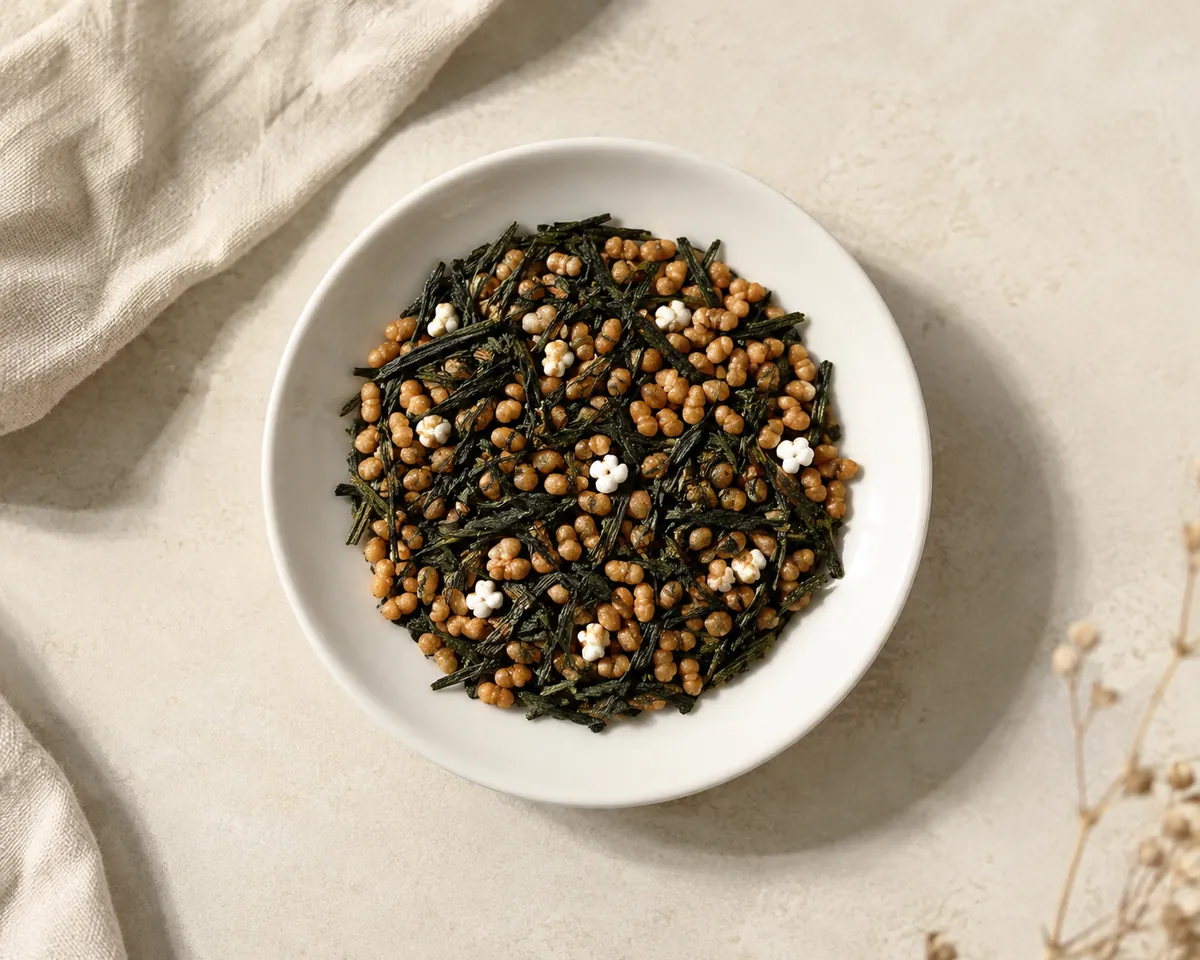
Rice quality is the thing to examine and nobody labels it. Pale, uniform, uncracked grains mean an underdone roast, while a mixture of deep tan grains with a scattering of white popped ones means the roaster went far enough for the flavour to develop.
Bagged genmaicha differs from loose leaf more than a single-leaf tea does. A bag has to cut both components small, and finely cut rice gives everything up in seconds and then contributes nothing, which is why a bagged cup tastes strong at first and thin immediately afterwards.
Six to twelve months in a sealed opaque tin is realistic, and the two halves do not age at the same rate. The roasted rice is stable, having already been cooked and dried, while the green tea fades on its usual schedule, so an old blend drifts toward tasting mostly of grain.
A genmaicha that tastes of toast and very little else has not gone off. Its tea half simply faded first, which is an argument for buying small quantities often, and storing genmaicha covers the container question alongside storing loose-leaf tea.
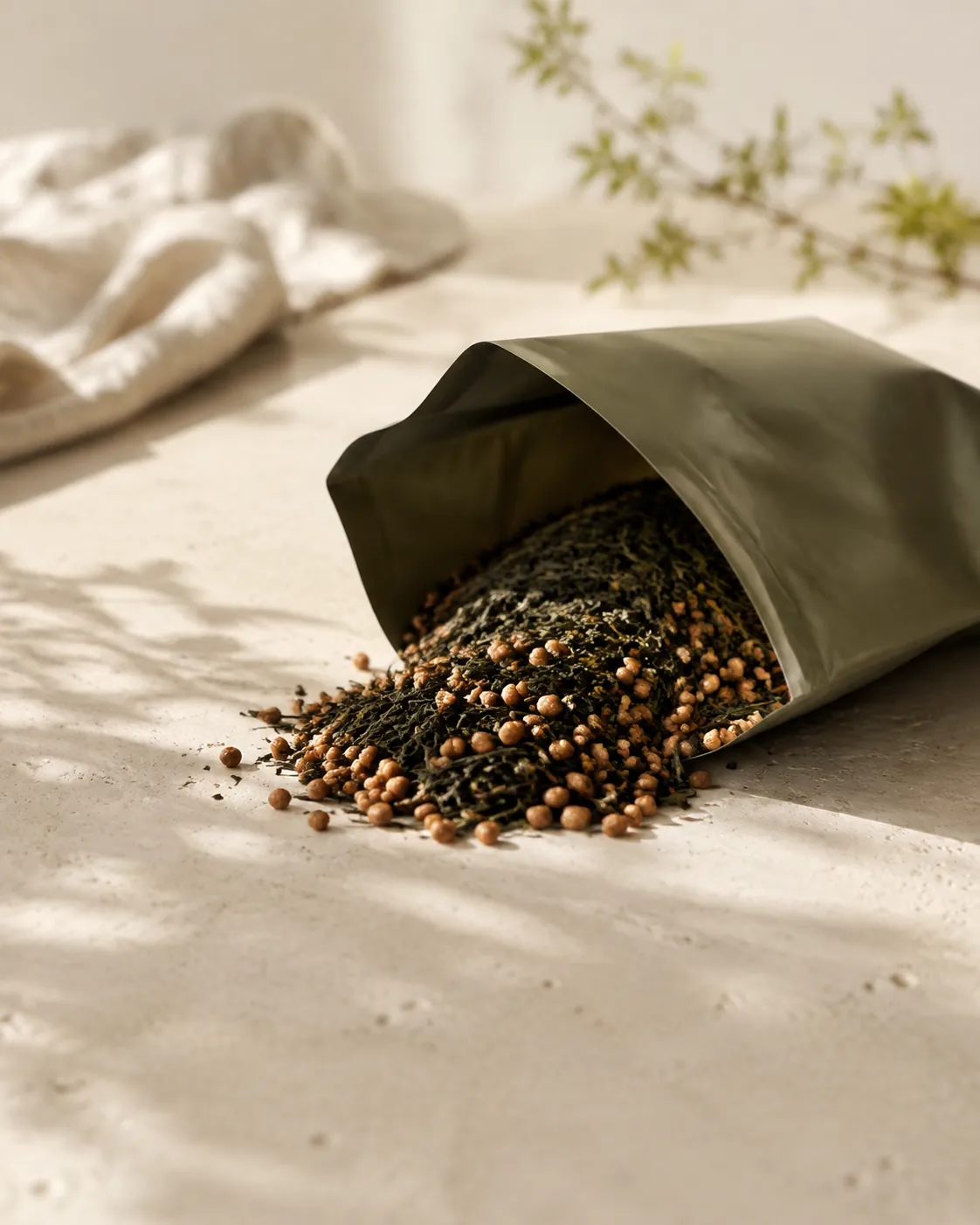
Blending your own
Making it yourself is straightforward, and the only real reason to bother is that it lets you set the ratio.
Home blend
- Brown rice
- 100 g, short grain
- Preparation
- Soak 2 hours, steam 20 minutes, dry completely
- Roast
- Dry pan over medium heat, 10 to 15 minutes, shaking constantly
- Tea
- 100 g bancha or a mid-grade sencha
- Ratio
- Equal parts by volume once both are cool
The drying step before roasting is the one people skip, and skipping it steams the grain in the pan instead of roasting it. The rice should be bone dry and rattle against the pan before it goes near any heat.
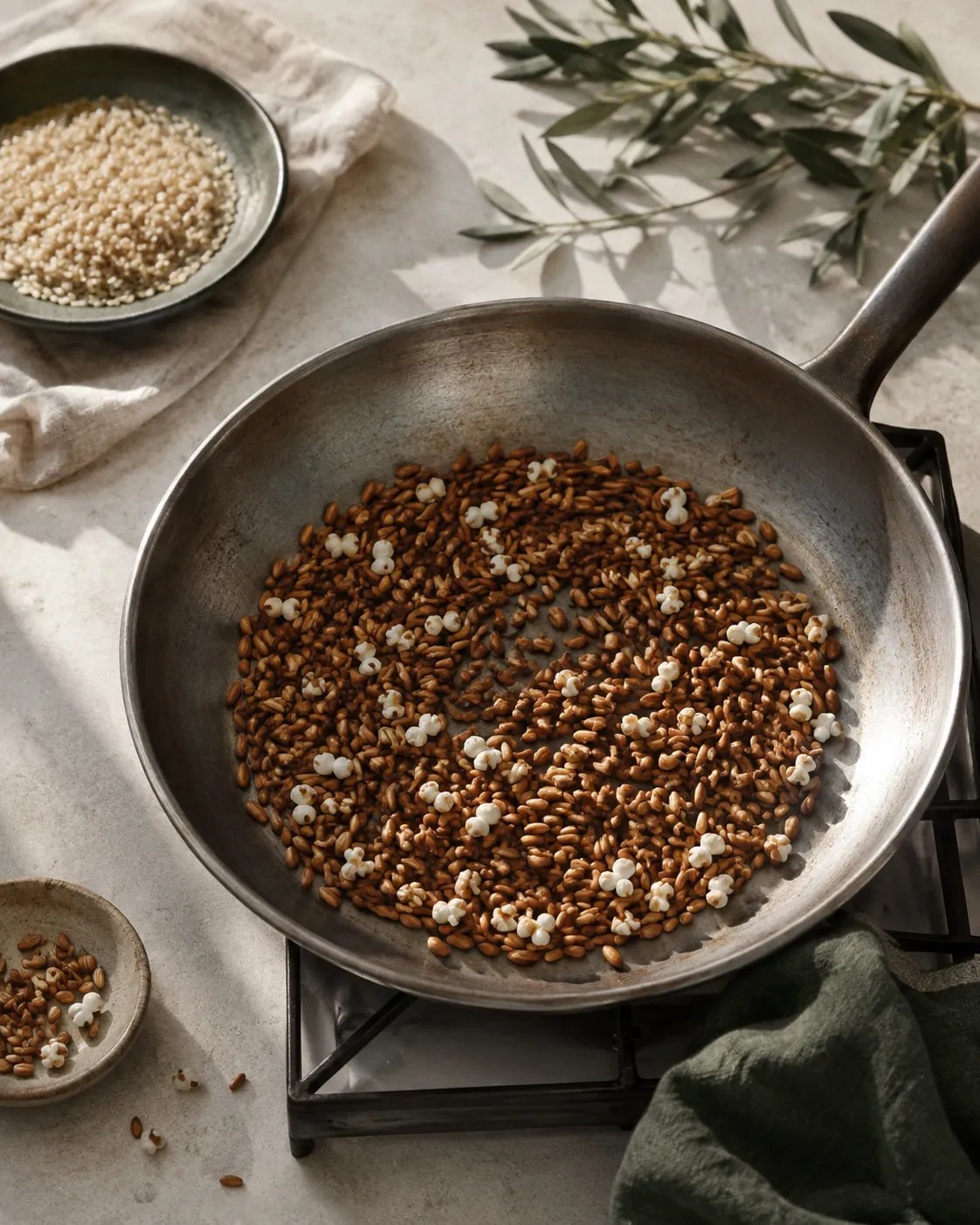
Shaking rather than stirring matters more than it sounds. Grain that sits still scorches on one side while the rest stays pale, and a batch with both faults in it tastes bitter and raw at the same time.
A third rice rather than half gives a tea-forward cup that is genuinely difficult to buy, which is the case for doing this at all. Nobody sells a one-third blend, because the ratio is what the category is named for, and making genmaicha treats the proportion as the one variable worth playing with.
Matcha-iri genmaicha
A large share of what is sold as genmaicha is not the plain blend, and the addition changes it more than the name suggests.
Matcha-iri genmaicha has powdered matcha dusted through the leaf. The liquor comes out opaque and vivid green instead of pale gold, and the drink gains body and a savoury depth that plain genmaicha does not have.
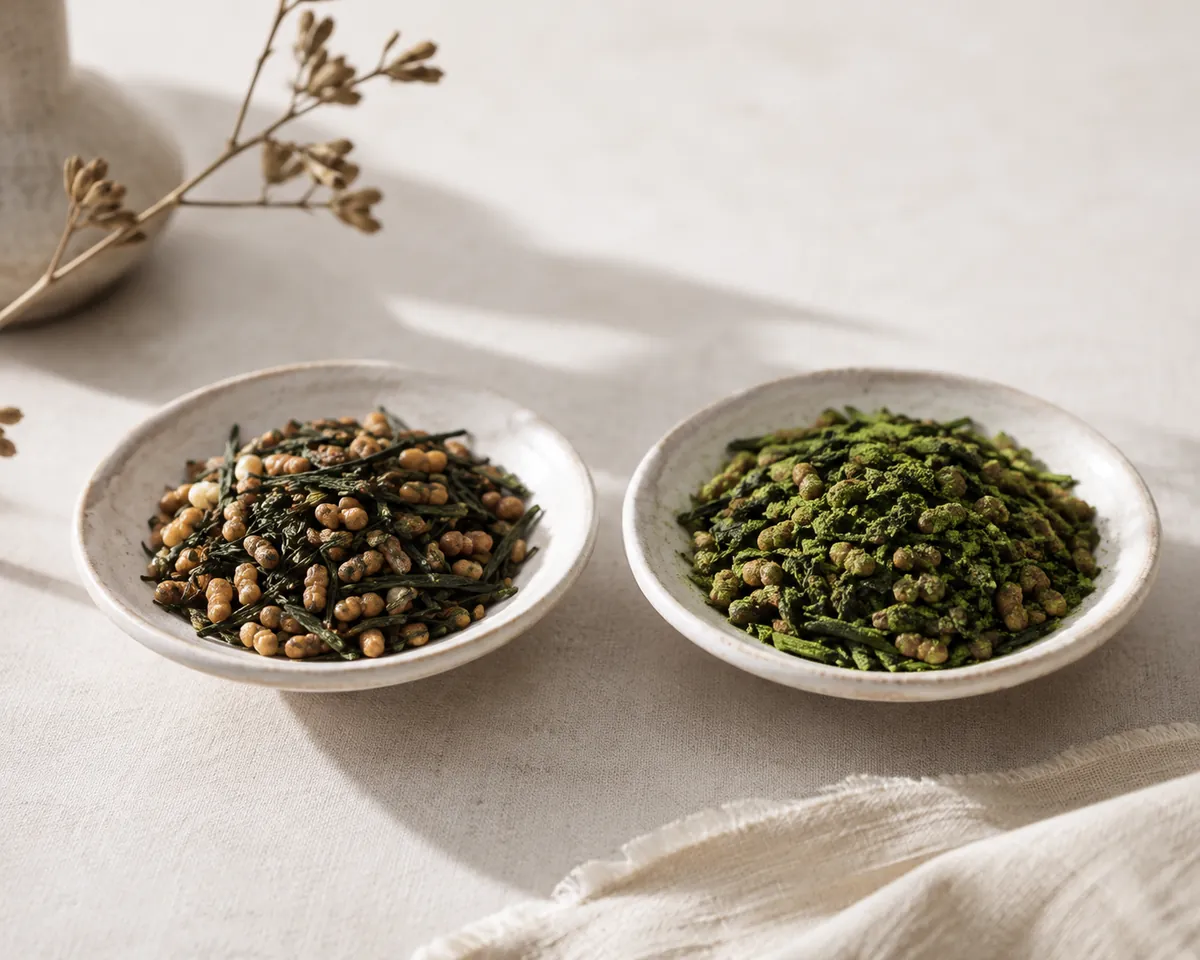
It brews differently for an obvious reason. The matcha is suspended rather than infused, so it releases the instant water touches it, and the tea will over-strengthen if left standing where plain genmaicha would simply sit there.
The powder used is a culinary grade and the quantity is small. This is a way of putting body and colour into an inexpensive blend rather than a way of drinking matcha, and it should be judged as genmaicha rather than measured against a bowl of the real thing.
When it suits, and the food it sits beside
Genmaicha is a food tea, and almost everything about where it belongs follows from that.
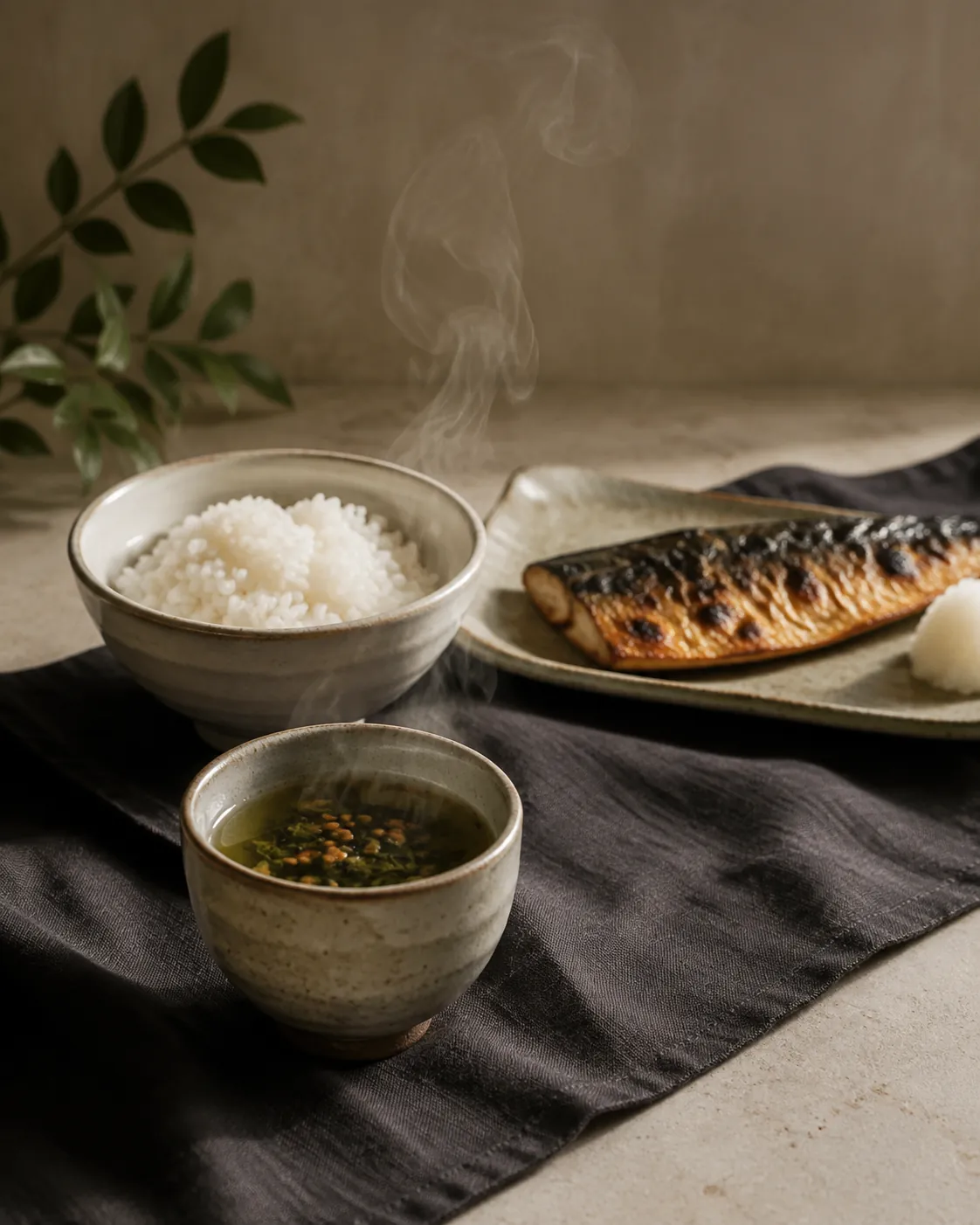
The savoury, toasted character sits alongside rice, fish and pickles rather than competing with them, which is why it is poured with meals across Japan rather than after them. It also cuts through fried food in a way a delicate leaf tea does not.
It is the tea to offer anyone who finds green tea too astringent. The rice dilutes the leaf and the roast supplies a familiar toasted sweetness, which together make it the easiest entry point into the Japanese range.
Where it works badly is with anything sweet. There is no sugar in it and no fruit character anywhere, so a dessert leaves it reading as thin and faintly savoury, and iced it needs a heavier hand with the leaf before it goes over ice.
The equivalents elsewhere
Blending a grain with tea is not a Japanese invention, though the proportion here is.
Korea makes hyeonmi-nokcha, green tea with roasted brown rice, which is close enough to be the same drink under a different name. It tends to be a touch sweeter, because the rice is often roasted lighter and keeps more of its raw sugar character.
Roasted barley and roasted corn fill the same role across the region, though usually on their own rather than blended with tea. Barley tea is the clearest example and carries no caffeine at all, since no tea leaf is involved at any point.
What sets genmaicha apart is the sheer proportion of non-tea. Half the volume in the pot being something other than leaf is a ratio no other blended tea approaches, and it is the reason the drink reads as its own category rather than as a flavoured green tea.
Common questions
Why does genmaicha have rice in it?
Originally to make expensive tea go further, since rice was far cheaper than leaf. The blend turned out to taste good on its own merits, and it is now sold at every price level rather than as an economy tea.
Does genmaicha have less caffeine?
Yes, because roughly half the volume is rice rather than leaf. There is simply less tea per cup, so the same measure carries noticeably less caffeine than plain sencha or bancha.
What is matcha-iri genmaicha?
Genmaicha with a dusting of matcha powder added. It turns the liquor cloudy green and adds body and savoury depth, filling in the thinness that the rice can otherwise leave in the cup.