What Is Natural Cocoa? The Untreated Powder, and Its Acidity
Natural cocoa is simply cocoa powder that has not been treated with alkali. It keeps its natural acidity, which is what makes it taste sharper and what makes baking soda work.
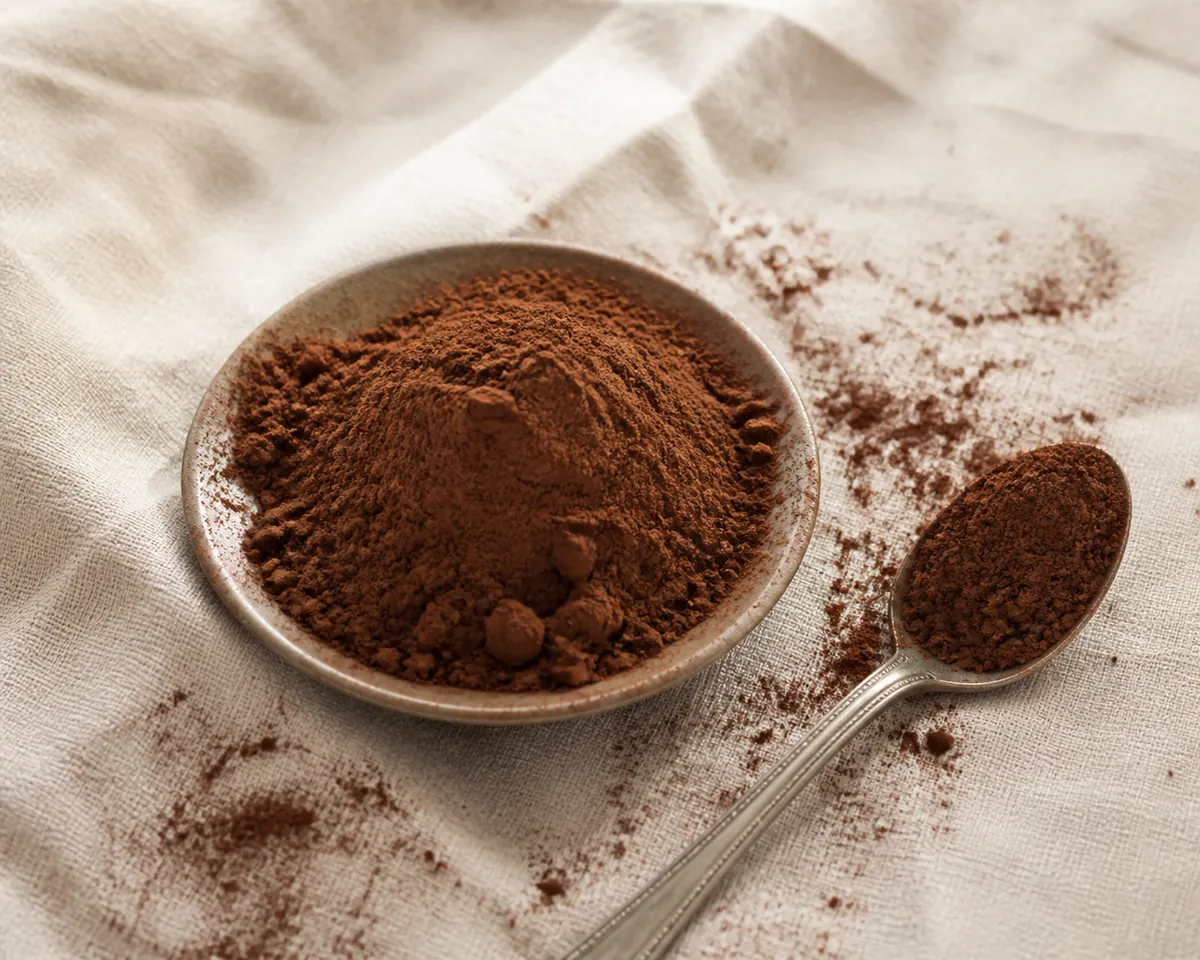
Natural cocoa is cocoa powder that has been pressed from roasted beans and nothing else. No alkali has been added, so it retains the acidity the bean naturally carries, which is the whole of what separates the two powders.
It is the default in the United States and the less common option in Europe, where Dutch-process cocoa dominates. That split is the source of a great deal of recipe confusion.
Natural cocoa, described
- pH
- Around 5.3 to 5.8, clearly on the acidic side
- Colour
- Light reddish-brown, noticeably paler than the alkalised kind
- Flavour
- Sharp, fruity, sometimes slightly sour. Distinctly cocoa
- Solubility
- Poorer. It clumps more readily and needs a paste step
- Reactivity
- Acidic, so it activates baking soda
- Fat content
- Sold from 10 to 24 per cent cocoa butter, and the number matters
- Keeps
- Two to three years dry and sealed
The acidity the bean keeps
Acidity is present in the raw material before anybody touches it, and fermentation in the pulp raises it further. Natural cocoa is simply what you get when nothing is done about that.
That acidity is not a flaw to be corrected. It carries the fruity, bright notes that people describe as tasting strongly of chocolate, and removing it is precisely what the alkali treatment does; how that treatment works and what it costs is set out from the other side in the Dutch-process powder.
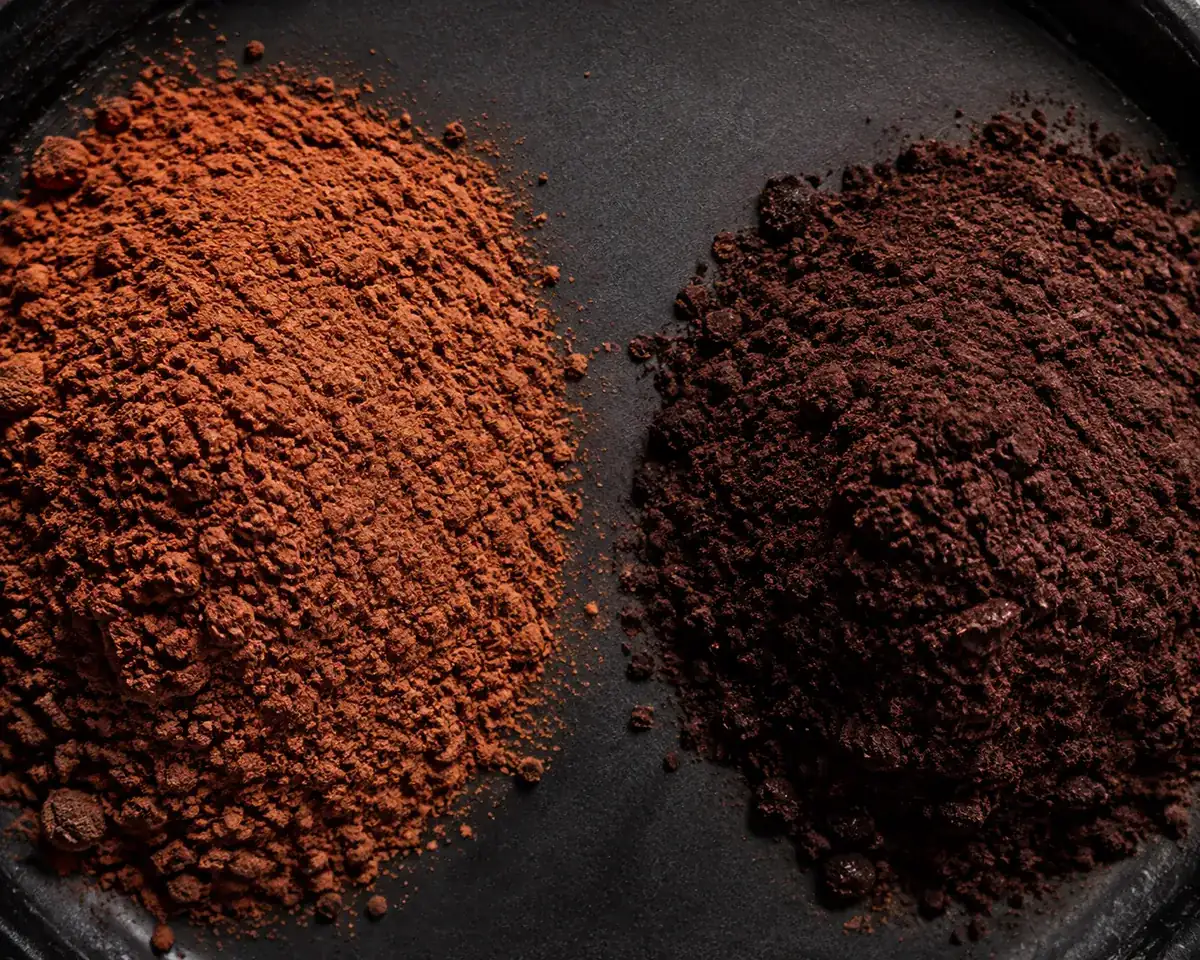
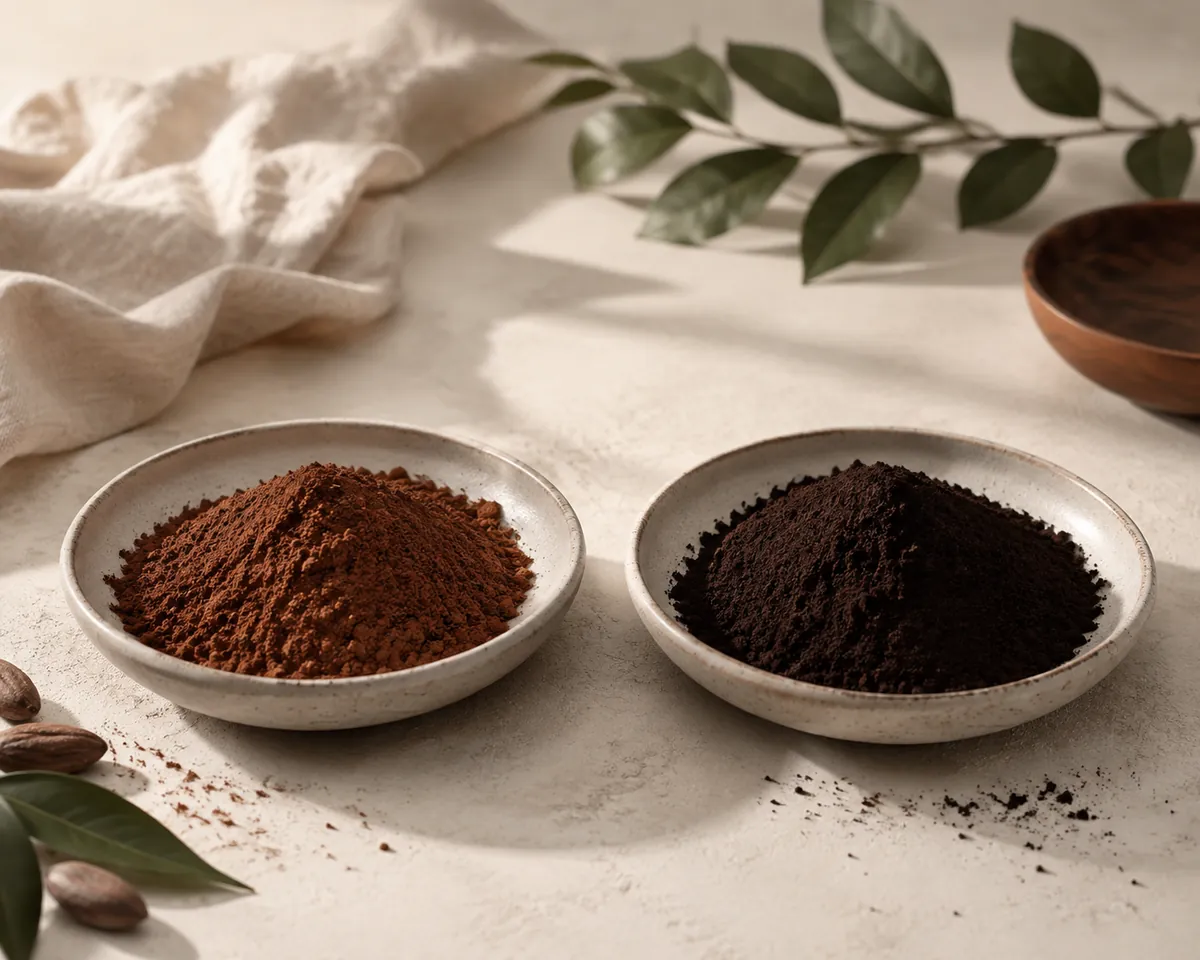
Two consequences follow from a pH sitting around 5.3 to 5.8, and both show up before anyone tastes anything. The powder is visibly paler and redder, because colour in cocoa moves with pH rather than with quality, so a dark tin is not a strong one.
And it is chemically reactive in a way the alkalised kind is not, which is the whole reason a recipe bothers to name which powder it wants rather than leaving it to the cook. Dutch-process against natural cocoa puts the two side by side on every axis at once.
Why baking soda needs it
Every recipe that specifies a leavener is making an assumption about acid, and this is where the assumption gets paid for.
Baking soda is an alkali and needs an acid to react with. Natural cocoa supplies that acid, the reaction produces carbon dioxide, and the gas raises the batter.
What happens in the bowl
- MixNatural cocoa and baking soda meet in the wet batter.
- ReactThe acid in the cocoa neutralises the alkali in the soda.
- ReleaseCarbon dioxide is produced and trapped in the batter.
- SetHeat sets the structure around those bubbles.
- BalanceThe reaction also neutralises the soda, so no soapy taste remains.
Both halves of that matter.
Without an acid the soda does not lift, and it also does not get used up, which is what leaves the soapy, metallic taste in a badly balanced bake. That failure is routinely blamed on the cocoa when it belongs entirely to the leavening.
The acidity does more in a bake than trip the leavener. Acid strengthens gluten slightly and changes how proteins set, so a batter made with natural cocoa behaves marginally differently from the same batter with the alkalised powder even after the leavening has been corrected.
Protein and acid interact the same way in a glass, which is what makes plant milk curdle in a hot drink.
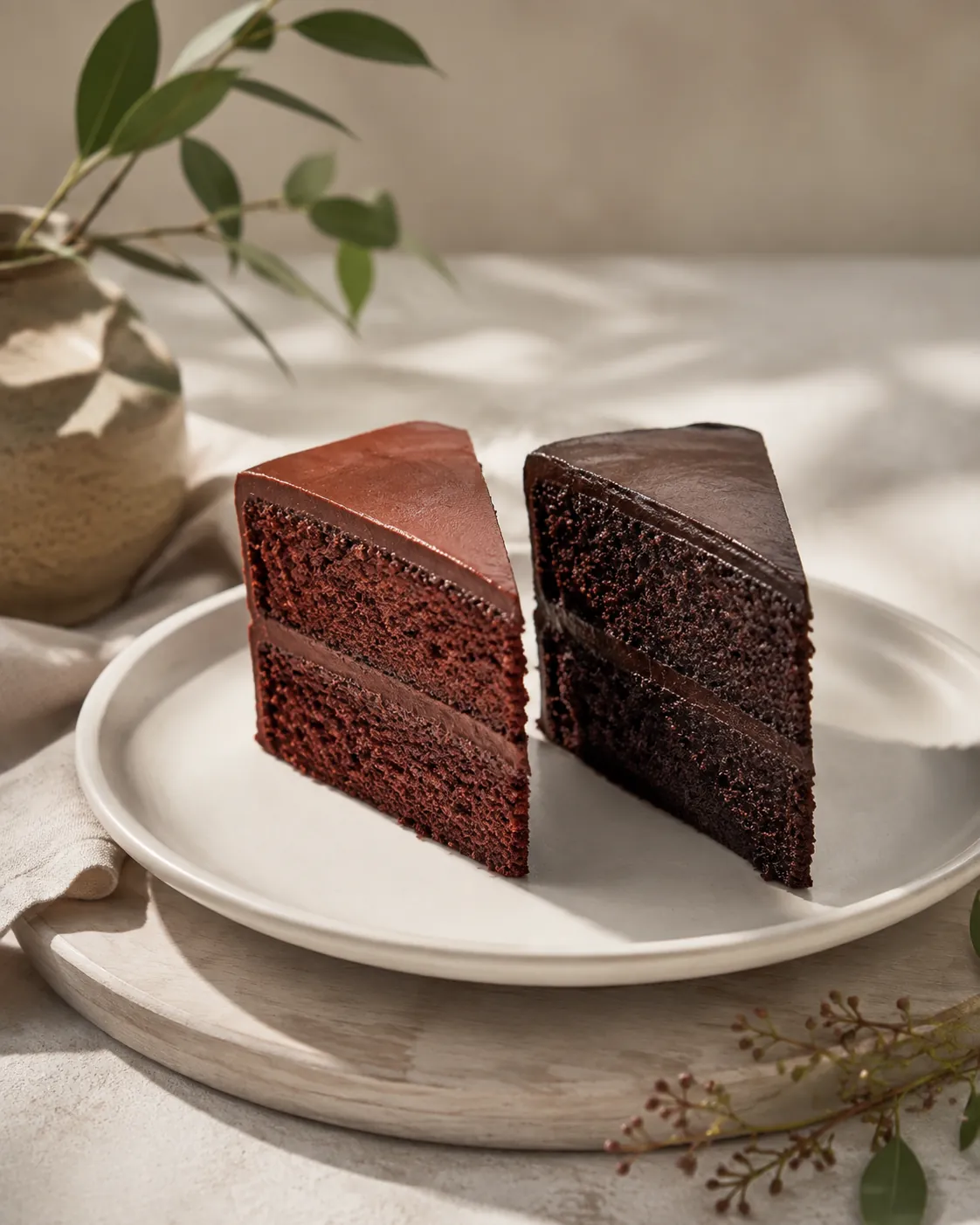
Colour follows pH here too. In an acidic batter cocoa reads redder and in an alkaline one it reads darker, which is where red velvet cake came from: natural cocoa plus buttermilk produced a genuinely reddish crumb long before anybody reached for food colouring.
Red velvet is a natural cocoa recipe, and made with Dutch-process it comes out plain brown, which is why modern versions rely on the bottle.
Sharper in the cup, and the paste step that saves it
Side by side, the untreated tin is sharper by a clear margin, and whether that sharpness reads as intensity or as sourness depends almost entirely on what else is in the cup.
Where natural cocoa sits
- Natural cocoaBright, fruity, acidic, sometimes slightly sour
- Lightly alkalisedThe edges taken off, still recognisably fruity
- Standard Dutch-processSmooth, mellow, roasted
- Heavily alkalisedEarthy and flat
- Black cocoaBiscuit-like, with the fruit entirely gone
In a brownie that sharpness reads as intensity; in a milky drink it can read as sour, particularly against a low-fat milk with little richness to hold it, where a spoonful of evaporated milk at the other extreme absorbs it without trouble. Made with water instead of milk, the same powder comes through as fruit rather than sourness and gives a cleaner, more direct drink than the alkalised kind manages.
The second caveat is mechanical rather than sensory. Lower solubility means the paste step is not optional: mix the sugar into the dry powder, work it into a little liquid until it is smooth, and only then add the rest, exactly as hot cocoa on the stove requires.
What natural cocoa tastes like goes further into those fruit notes, which are the reason to put up with the clumping in the first place.
Swapping one powder for the other
Recipes rarely explain how to swap, and there is a workable rule in each direction. Neither substitution is perfect, and the colour will differ visibly whichever way you go.
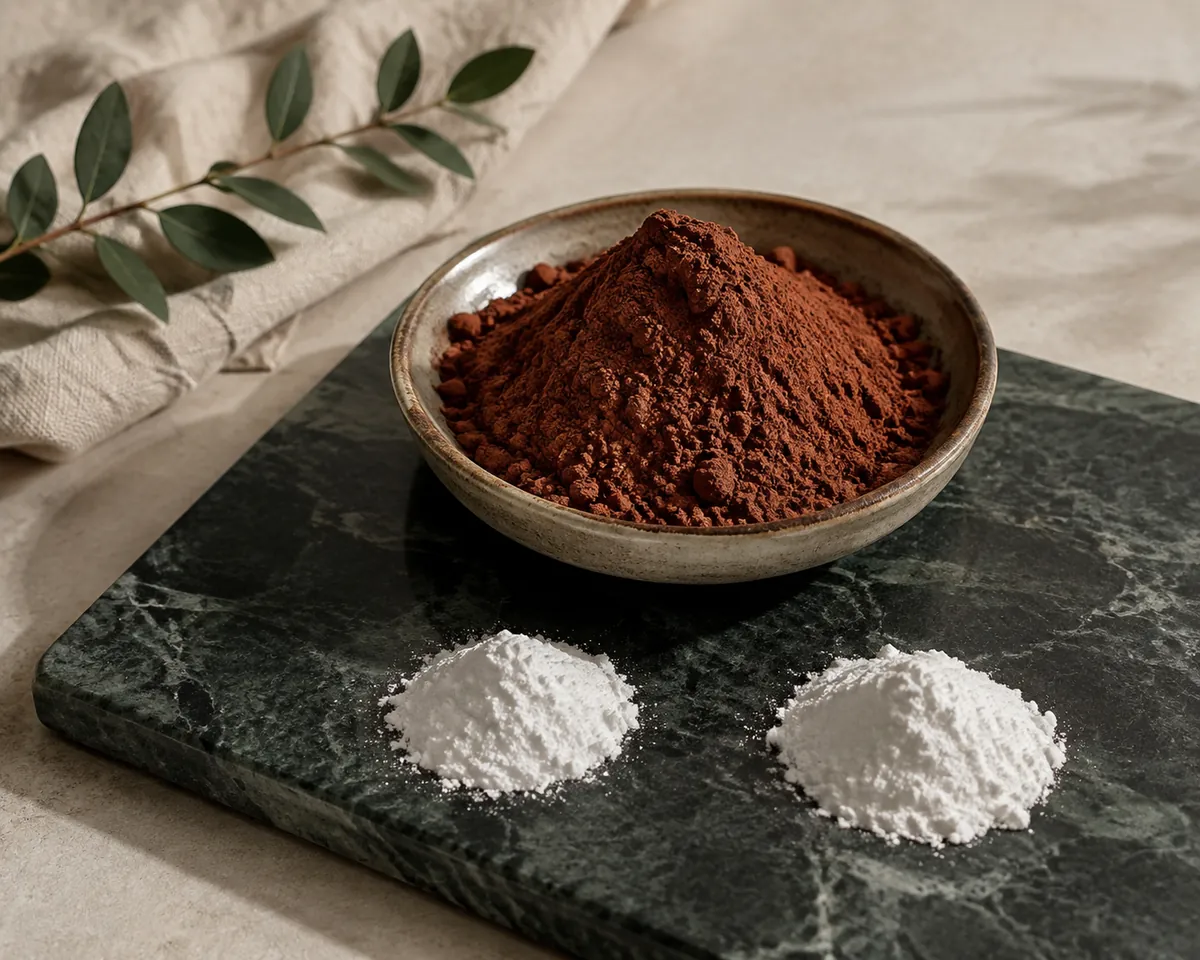
To use Dutch-process where a recipe calls for natural cocoa and baking soda, replace the soda with roughly three times as much baking powder, or keep the soda and add an acid such as a little cream of tartar so that it has something to work against.
Going the other way is easier. Natural cocoa in a recipe built around Dutch-process and baking powder can usually be dropped in unchanged, because the powder brings its own acid and tolerates the extra, though the bake will taste slightly sharper and come out lighter than the recipe intended.
For a drink none of this applies and the two swap freely, since nothing is being leavened. The only things that change in a mug are the flavour and how hard the powder fights being dissolved.
Natural cocoa substitutes covers the awkward cases, including what to do when a recipe names neither powder and assumes you already know.
Reading a tin that does not say, and keeping it once opened
Labels are the main obstacle here, because natural cocoa is often not labelled as anything at all.
- If the label says nothing about alkali, it is almost certainly natural cocoa.
- Look for the fat percentage. Twenty per cent or above makes a much better drink.
- Check the colour through the packet where you can; natural is visibly redder.
- American brands are usually natural; European brands are usually Dutch-process.
- Buy small quantities of both once, so you can taste the difference for yourself.
The absence of a claim is the signal, which is unusual on a food label. Alkalising has to be declared in most markets, so silence means untreated, and the phrases that give the other kind away are processed with alkali or European style.
Once the tin is open, very little in it can spoil. Most of the fat was pressed out, so there is almost nothing to go rancid, and kept dry and sealed it holds two to three years with only a slow loss of aroma.
It has two enemies. Moisture clumps it irreversibly, and strong smells are absorbed readily, so an airtight tin away from the spice shelf answers both at once.
A clumped tin has met humidity rather than age, and sieving recovers it for baking even after the aroma has faded. Storing natural cocoa really is that short a subject.
From fermented bean to pressed cake, and why origin shows
Manufacture explains most of how it behaves, because every property that sets an untreated tin apart is settled long before the alkali question is asked.
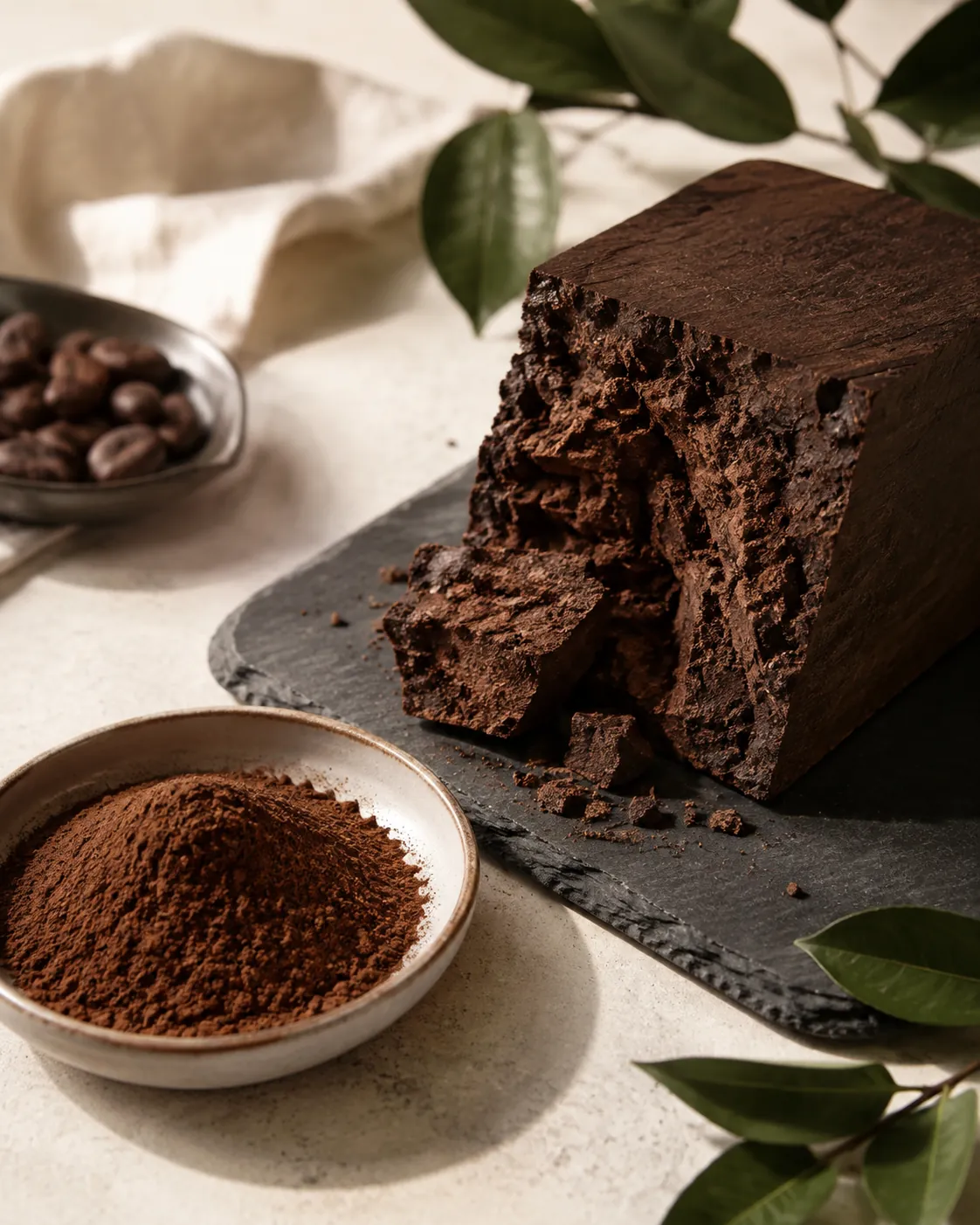
From bean to powder
- FermentHarvested beans are fermented in their pulp for several days, which develops flavour and acidity.
- DryThey are sun dried, then shipped.
- RoastRoasting develops the chocolate aroma and reduces some acidity.
- GrindNibs are milled into a thick paste called cocoa liquor, which contains all the cocoa butter.
- PressA hydraulic press separates most of the butter, leaving a solid cake.
- MillThe cake is ground and sieved into powder.
Fermentation is where the acidity comes from. The acetic and lactic acids produced during those few days in the pulp are exactly what natural cocoa retains, and that is also why origin shows through more here than in an alkalised powder.
Alkalising mellows and standardises, stripping out much of the fruit and acidity that separate one growing region from another, which is part of why the industry likes it: batches come out consistent. Natural cocoa keeps the differences intact.
West African cocoa tends to be straightforwardly chocolatey, Latin American origins often carry more fruit and acidity, and some Asian and Pacific cocoas are earthier than either.
Single-origin cocoa powder is worth trying once, and only in the natural form, since in a Dutch-process powder most of what made the origin distinctive has already been treated away. The coarse tablets used for Mexican hot chocolate hold on to that character for the same reason, having been ground rather than pressed and alkalised.
Fat percentage, and what the number buys
The other figure on the tin matters as much as the alkali question and receives a fraction of the attention. Cocoa powder is sold at several fat levels, and that number changes how it behaves in a cup more than the bean ever does.

Natural cocoa by fat content
- 10 to 12 per cent
- Budget powder. Thin in a drink, fine in a bake
- 20 to 22 per cent
- The standard for good cocoa, and the sensible default
- 22 to 24 per cent
- Rich, and noticeably better for drinking
- Effect in a drink
- Higher fat gives body and carries flavour further
- Effect in a bake
- Less important, since there is usually plenty of other fat
| Type | Cocoa butter | Behaves like | Best for |
|---|---|---|---|
| Low-fat | 10 to 12 per cent | Light, sharp, easy to clump | Baking, where fat comes from elsewhere |
| Standard | 20 to 22 per cent | Rounder, richer, dissolves more willingly | Drinking, and general baking |
| High-fat | 22 to 24 per cent | Noticeably creamy, closer to melted chocolate | Hot chocolate made with water |
| Black cocoa | 10 to 12 per cent | Very dark, almost no chocolate aroma | Colour, and not much else |
Most supermarket cocoa powder is the low-fat kind, and most of what people notice when they finally buy an expensive tin is this figure rather than the origin. Cocoa butter carries aroma, and it is what stops the powder tasting dusty in a drink made with water.
Black cocoa is worth separating out, because it is heavily alkalised rather than natural and will not react with baking soda at all. It is a colouring ingredient, and using it as a straight substitute gives a flat cake and a bitter drink.
For one tin covering both jobs, 20 to 22 per cent is the honest compromise: below it the drinks suffer, and above it you are paying for something baking cannot use.
Which tin to keep
If you are only keeping one cocoa, what you actually do with it should decide, because the two uses pull in opposite directions.
Bakers working from American recipes should keep natural cocoa, since those recipes assume it and its acidity is doing structural work rather than flavour work. For drinking, fat content decides more than the alkali does: a 22 per cent natural cocoa makes a better cup than a 10 per cent Dutch-process one, whatever either label says about processing.
Which tin to buy
- Mostly bake American recipes
- Natural cocoa, 20 to 22 per cent fat
- Mostly bake European recipes
- Dutch-process, since those recipes assume it
- Mostly make drinks
- Whichever you prefer the taste of, at 22 per cent fat or above
- Do both
- Keep both. Cocoa lasts years and the tins are cheap
- Want the darkest colour
- Dutch-process, and black cocoa for extremes
Keeping both is the sensible answer for anyone who bakes at all. They cost little, they last for years, and no single tin covers both jobs properly, so a compromise tin is a genuine compromise rather than a saving.
Anyone mostly making drinks will find the alkalised powder easier company, because it dissolves more willingly and its mellower flavour suits milk, and that is a preference rather than a correction.
Weighing it, and sifting it
Few kitchen ingredients resist a measuring spoon this stubbornly, and the error it produces is larger than anybody expects.
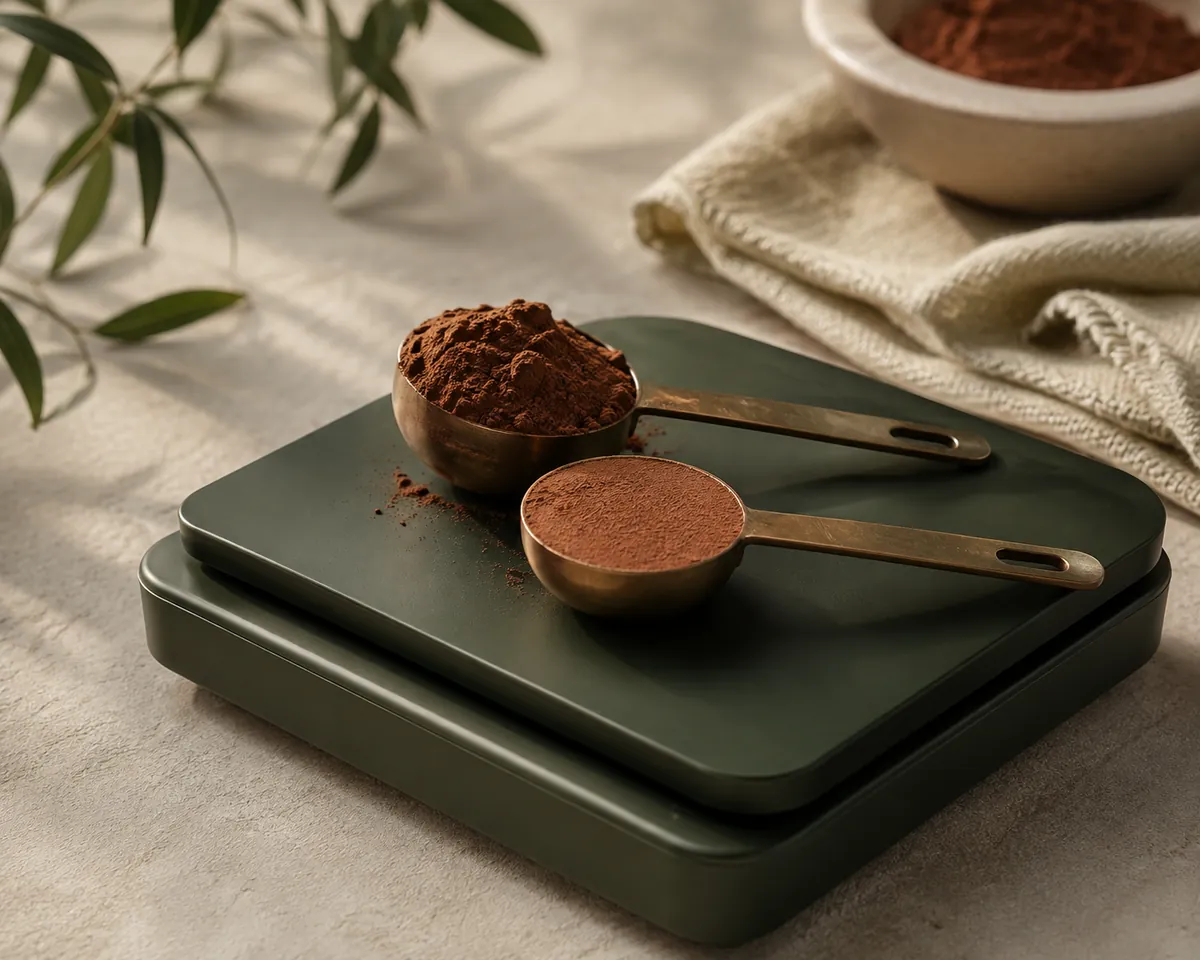
It compacts in the tin and holds air unpredictably, so a scooped cup can weigh half again what a spooned and levelled one does. In a bake that shows up as a dry crumb, and in a drink as a cup that is either weak or claggy, with no way to know in advance which you are about to get.
Cocoa by weight
- Single drink
- 10 to 12 g cocoa per 250 ml
- Sugar
- 10 to 15 g, adjusted to taste and to the cocoa
- Scooped cup
- Can weigh half again what a levelled cup does
- Method
- Sift, make a paste, then add the rest of the liquid
- Sieve
- Ten seconds, and it removes the dry pockets
Weighing removes the variable outright, and around 10 to 12 g is a generous single serving for a drink. Measuring by spoon works if you spoon the powder into the measure and level it off, rather than scooping with the measure itself, which packs it hard against the side of the tin.
Sifting earns its ten seconds for a separate reason. Natural cocoa clumps more readily than Dutch-process because of that lower solubility, and the clumps survive stirring far longer than they have any right to, which is where dry pockets at the bottom of a mug come from.
A sieve removes the most common complaint in natural cocoa problems before it can happen.
The drinks it ends up in
Baking is not the only place a tin gets opened, and which one to reach for depends on the drink in front of you.
Hot cocoa is the direct use, and natural cocoa gives it a sharper, fruitier character than the alkalised powder does, which is the whole argument for choosing it. Hot chocolate proper is built from a bar rather than a powder, so it is a different drink again: more cocoa butter, more body, and far less control over the sugar.
Drinking chocolate sits between the two, and white hot chocolate contains no cocoa solids at all, so the question never arises there.
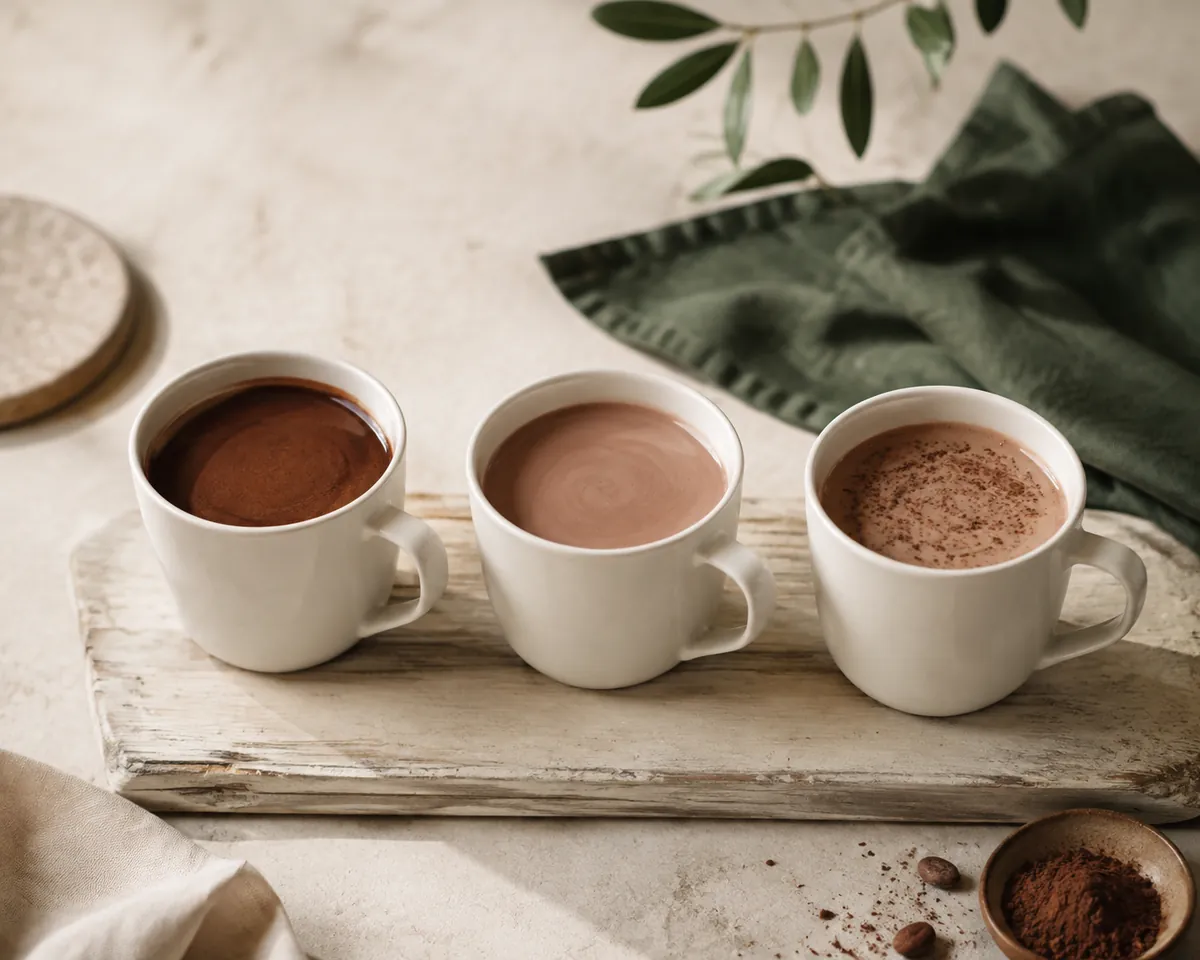
Tablet drinks sidestep it as well. The Mexican tablet is ground cocoa, sugar and cinnamon pressed together, so there is no powder decision to make and the spice would cover it in any case.
Made with water
The acidity reads as fruit rather than sourness. The best showcase for a single origin.
Made with dairy
Richer, and the fat absorbs the sharp edge. Whole milk carries it better than skimmed.
Made with a plant drink
The riskiest combination, and the one that splits.
Stirred into coffee
Works, but the two acidities stack and the cup turns thin.
Where natural cocoa is clearly the wrong choice is anything already acidic, or anything built on a plant drink, because its acidity stacks with theirs and pushes an oat milk or an almond milk toward splitting in the pan. Dutch-process is the safer powder there, and making a cup with natural cocoa is largely a matter of choosing the liquid before choosing the tin.
Common questions
How do I know if my cocoa is natural?
If the label makes no mention of alkali, it is almost certainly natural. Alkalising must be declared in most markets, so silence means untreated. Natural cocoa is also visibly lighter and redder than Dutch-process.
Why does natural cocoa need baking soda?
Baking soda is an alkali and needs an acid to react with. Natural cocoa is acidic and supplies that acid, producing the carbon dioxide that raises the batter and using up the soda so it does not taste soapy.
Can I use natural cocoa for hot chocolate?
Yes. It gives a sharper, fruitier drink than Dutch-process. It clumps more, so making a paste first is essential, and it can read as sour against low-fat milk. Made with water it comes through as fruit rather than sourness.